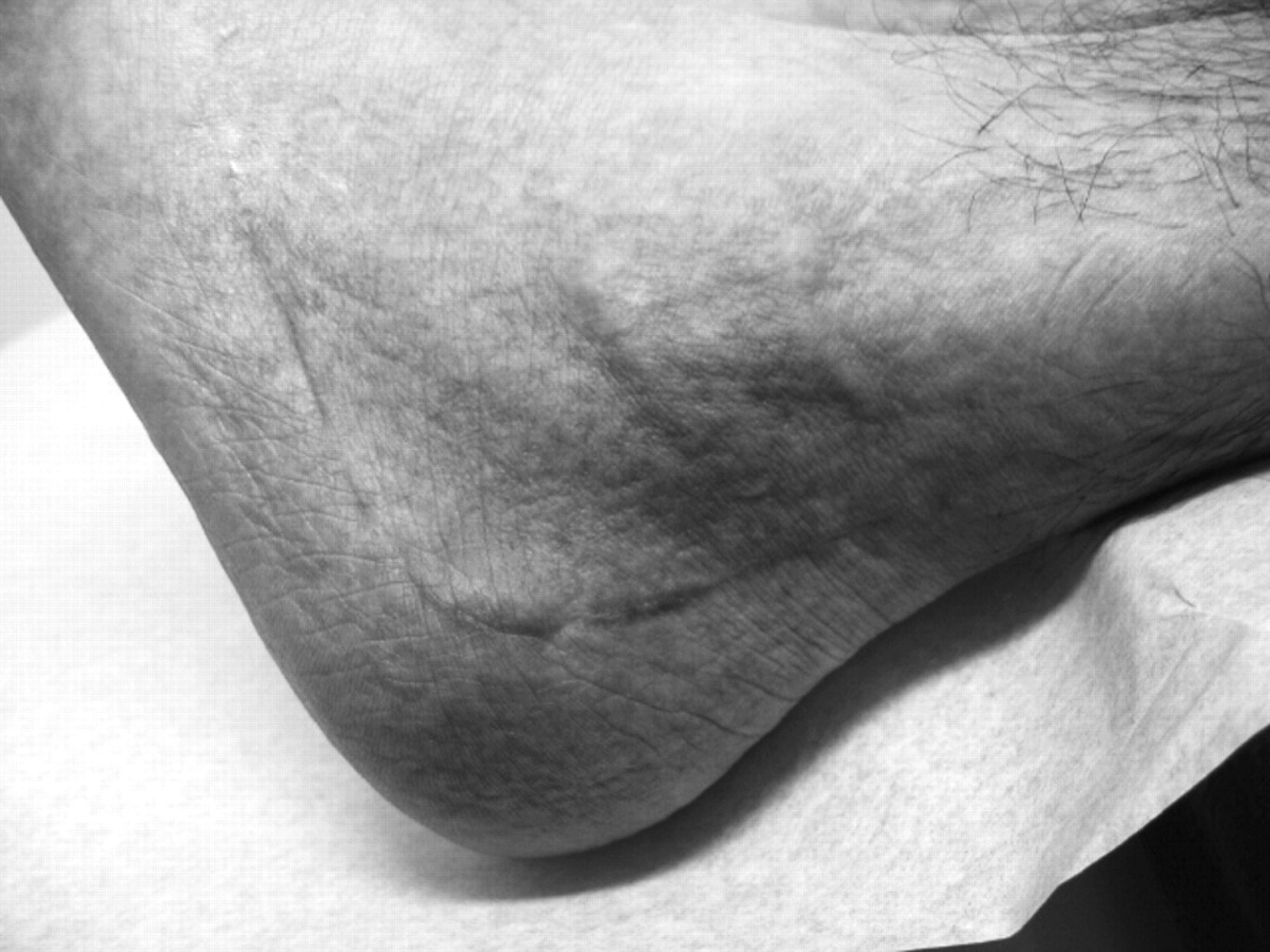
Calcaneal fractures account for approximately 2% of all fractures. It is, however, the most frequently fractured tarsal bone. The calcaneus accounts for approximately 60% of all tarsal injuries, with approximately 75% of calcaneal fractures being intra-articular in nature.[
1–
3]
Historically, conservative treatment has been advocated to treat intra-articular calcaneal fractures because they have been associated with a poor outcome even with surgical reduction. Avoiding surgery has been suggested in order to prevent additional morbidity and potential wound healing complications.[
4–
7] However, with advances in computed tomography imaging and the development of innovative surgical devices and techniques, optimal results have been achieved with open reduction and internal fixation.[
8–
12]
Some surgeons avoid open reduction and internal fixation of intra-articular calcaneal fractures because of concerns about wound healing. Furthermore, there has been a developing surgical trend of treating intra-articular calcaneal fractures with minimally invasive, percutaneous, external fixation techniques in hopes to avoid further morbidity associated with wound healing complications.[
13–
17]
The purpose of this article is not to debate the indications for conservative versus surgical treatment, but rather to present a wound-closure technique for a lateral extensile approach to calcaneal fractures. This closure technique has avoided the many pitfalls and complications associated with incision healing and sural nerve entrapment associated with a lateral extensile calcaneal incision.
Surgical Technique
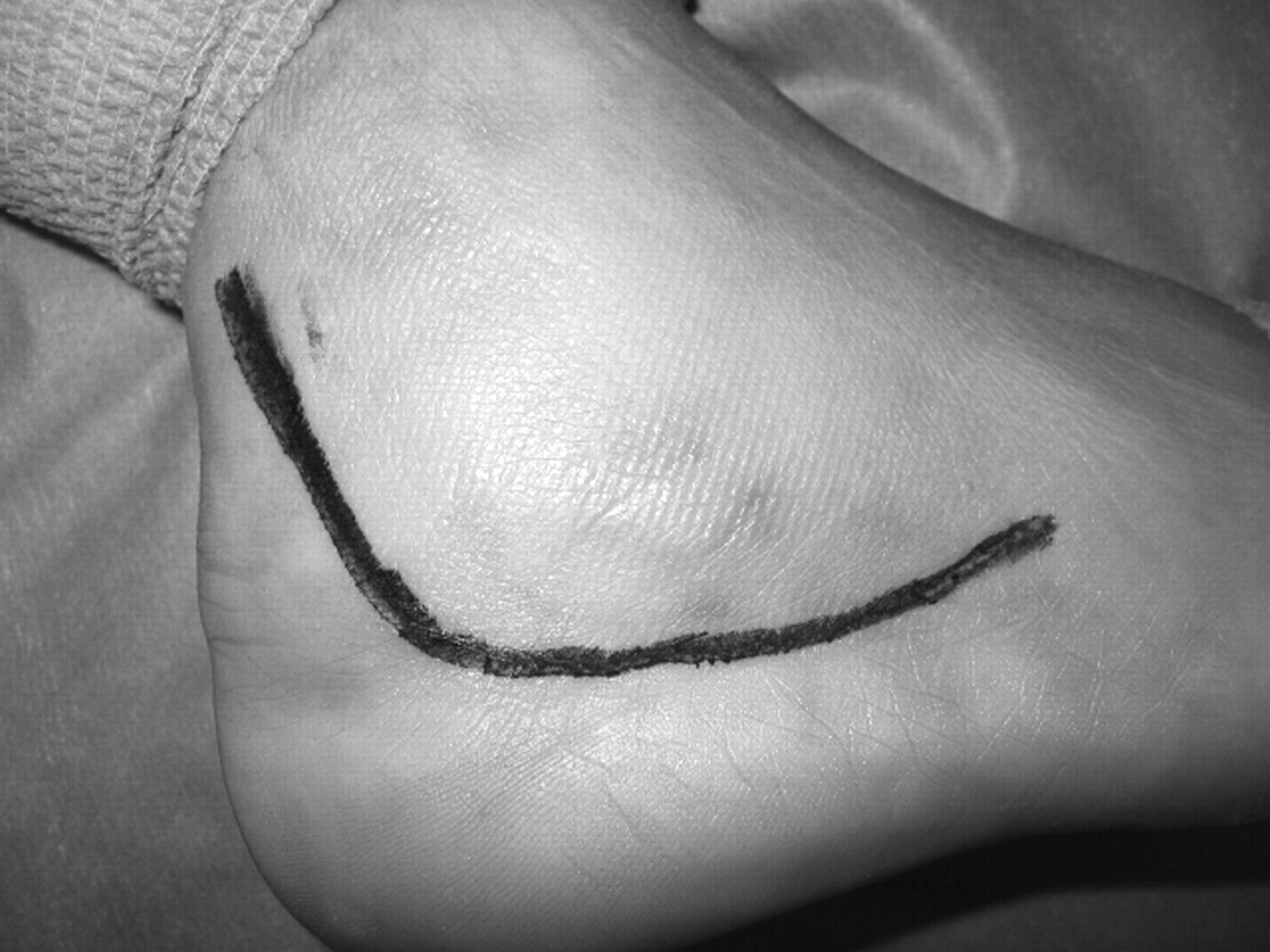
A lateral extensile incision is used to expose the lateral wall of the calcaneus, the subtalar, and calcaneal cuboid joints. The incision begins just anterior to the Achilles tendon slightly above the superior aspect of the calcaneus. The incision is carried distally below the peroneal tendon and sural nerve in a curved fashion along the plantar lateral border of the calcaneus ending at the calcaneal cuboid joint (
Fig. 1). A curved incision is recommended in this area to avoid the potential necrosis that may increase when the incision is made with a central sharp or 90°edge.[
18–
19] A full thickness flap is created to include the periosteum, subcutaneous tissue, peroneal tendons, and sural nerve. The flap is reflected superiorly to expose the entire lateral wall, superior calcaneus, subtalar, and calcaneal cuboid joints.
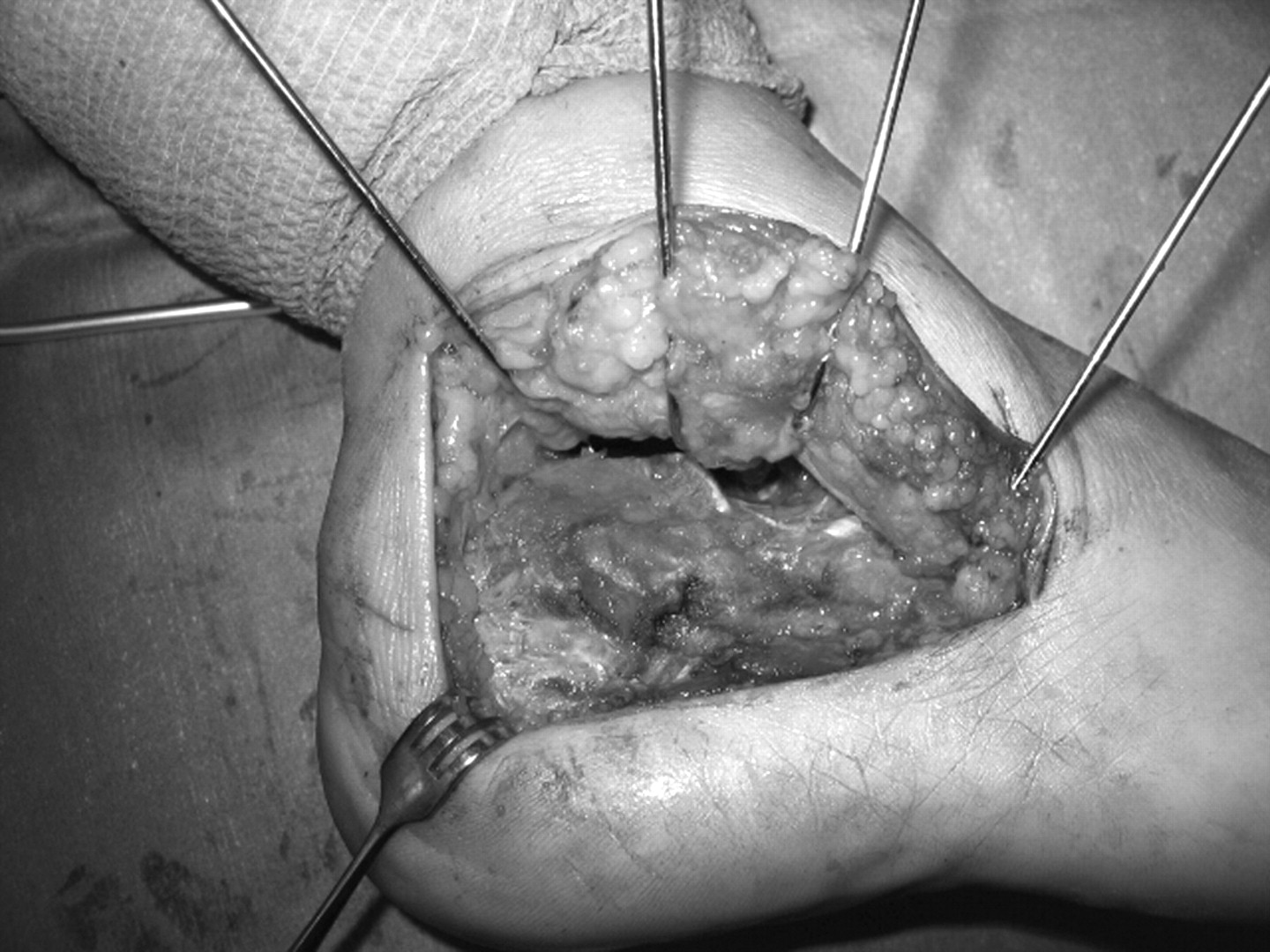
Several 0.062-inch Kirschner wires are placed into the talus, cuboid, and fibula as necessary to keep the full thickness flap retracted under minimal tension (
Fig. 2). Additional manipulation of the flap should be avoided in order to maintain as much vascularity to the tissue as possible.[
19] Standard open reduction internal fixation is performed in order to restore the height, width, and articular surface of the calcaneus under fluoroscopic imaging.
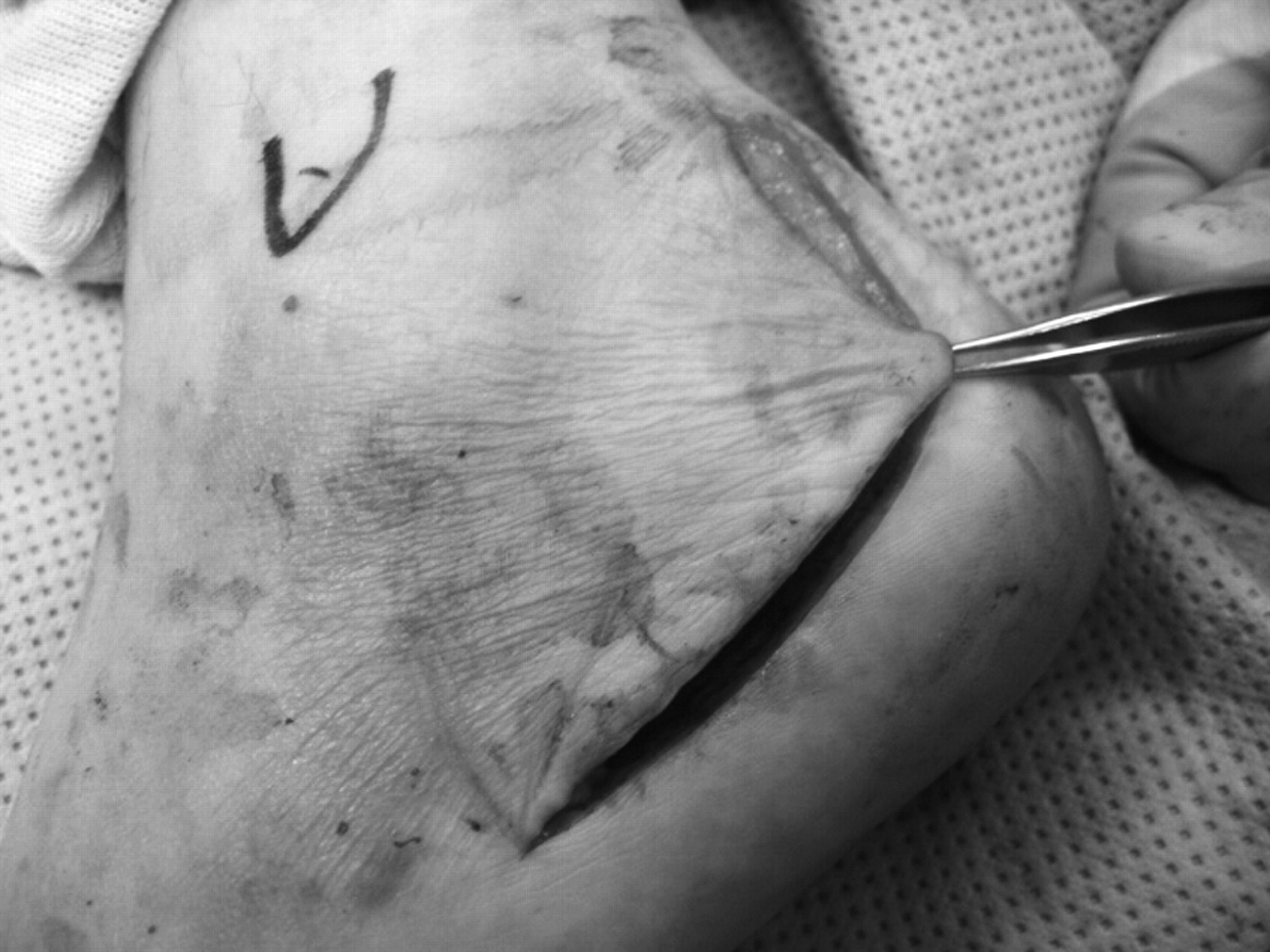
Once hardware placement is complete, the retracting Kirschner wires are removed. The surgical wound is packed with wet gauze, mild compression is held, and the tourniquet is deflated. Hyperemic response is fully expected. After several minutes of compression, bovie cauterization is used on any active bleeding vessels and wound edges. The flap is temporarily repositioned (
Fig. 3). A closed suction drain, typically a size 8 or 10 flat Jackson-Pratt, is placed over the lateral wall of the calcaneus below the entire full thickness flap. The suction portion of the drain tubing is cut to the appropriate size and placed in position prior to any deep subcutaneous closure. The drain tubing is directed proximally and placed in a position that allows the collecting tube to exit just posterior to the fibula. Gravity allows for greater blood accumulation with the collecting bulb in this position, when the patient is supine. Attention should be paid to avoid suturing the drain in place.
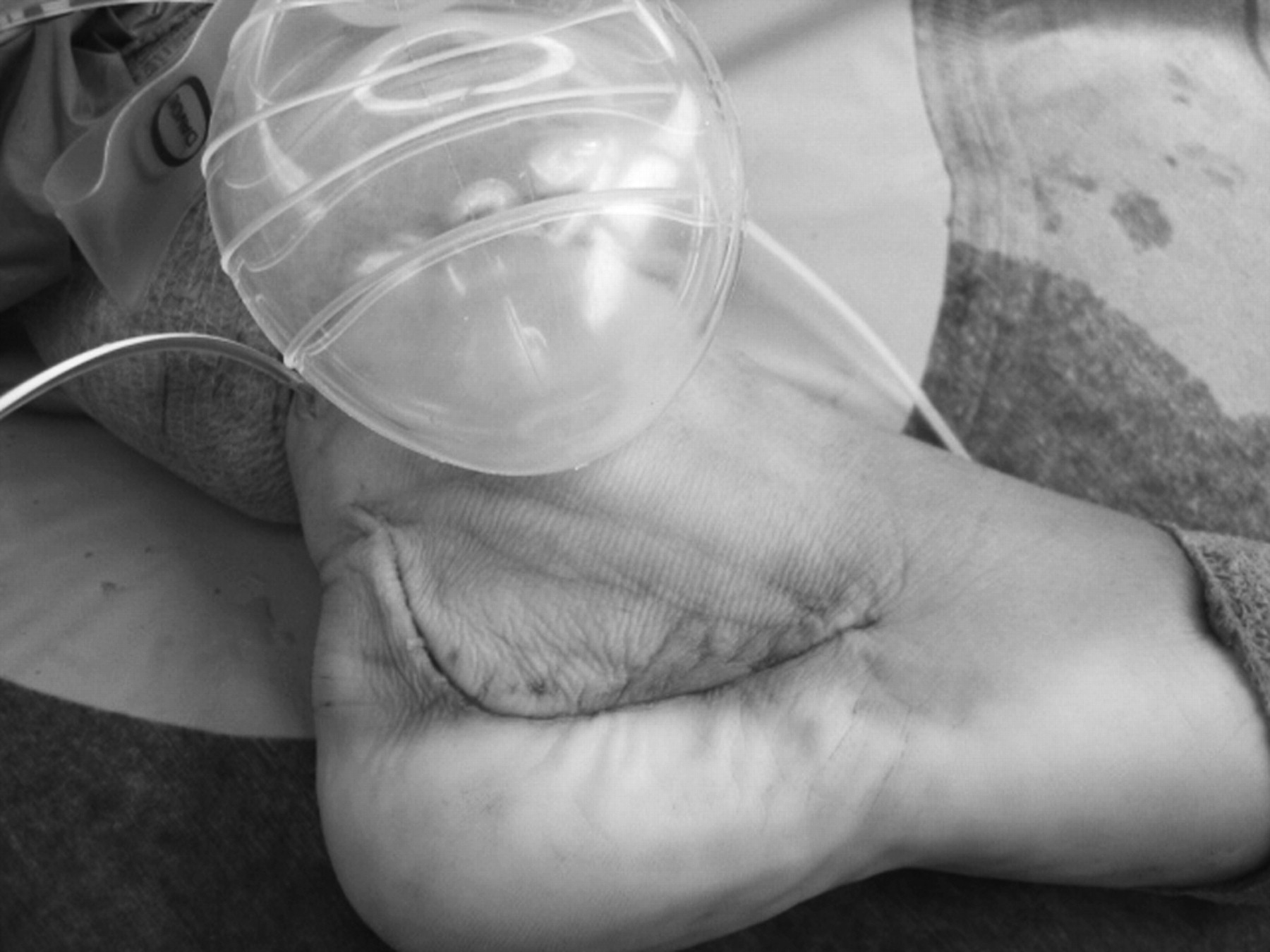
Periosteum and deep subcutaneous closure is performed in an end-to-end fashion, meeting at the central curve using either 2-0 or 3-0 Monocryl, (Ethicon Inc, Sommerville, New Jersey) using a simple-interrupted technique. Braided sutures are typically avoided due to their slightly more reactive breakdown process. A 4-0 Monocryl (Ethicon) suture is then placed in the dermal layer in a running subcuticular fashion, just below the epidermis (
Fig. 4). The layered closure is performed in such a way that the surgeon can minimize suturing or entrapping the sural nerve, while at the same time eliminating excessive tension on the wound. The incision can be easily closed, tension free, without the use of skin sutures or staples, even with the additional swelling that is created from surgery.
The drain is typically left in place for 24 to 48 hours and is removed through the dressing and splint prior to patient’s discharge from the hospital.
Discussion
Wound healing problems and sural nerve injury are inherent in most lateral approaches to intra-articular calcaneal fractures.[
6,
8] Clearly, the surgeon must be very judicious when deciding the optimal time for surgery. Surgery is not recommended if there is a significant amount of edema, excessive ecchymosis, or fracture blisters present.[
3,
4,
8–
12] Surgery often needs to be delayed for an extended period of time. The ideal time to operate on an acute calcaneal fracture is no later than 6 to 8 hours after injury, but edema-control measures must be implemented almost immediately after injury to minimize postoperative wound-healing issues. Compression casting, ice, elevation, and if available, cold compression pumps should be utilized prior to surgery to optimize postoperative wound healing. I advocate waiting for almost complete resolution of the lateral heel ecchymosis prior to proceeding with open reduction and internal fixation. However, I avoid waiting longer than 2 to 3 weeks beyond injury to perform surgery.
Many experienced surgeons have avoided surgical intervention, in particular, a lateral extensile approach, when a displaced intra-articular calcaneal fracture is encountered. Minimally invasive and even external fixation techniques have been employed for displaced calcaneal fractures to prevent the problems associated with wound healing.[
13] However, there is little doubt that the best method to visualize and restore the precise anatomic alignment to the subtalar joint is through a lateral extensile approach.[
3]
It is my opinion that the described wound-closure technique, which utilizes a deep interrupted subcutaneous Monocryl stitch followed by a 4-0 Monocryl (Ethicon) running subcuticular closure over a closed drain system, has been the primary reason that the lateral extensile incisional approach has healed expeditiously and uneventfully. Therefore, foot and ankle surgeons can comfortably utilize a standard extensile lateral incision as part of their armamentarium when surgically approaching an intra-articular calcaneal fracture.
One may be concerned when using a running subcuticular stitch for a traumatic wound closure; however, in my experience only one superficial wound dehiscence occurred in 20 calcaneal fractures. The patient group consisted of 13 work-related injuries, four non-related work injuries, and three motor vehicle injuries. There were seven smokers, two HIV-positive (same patient with bilateral fracture), and one non–insulin-dependent diabetic patient in the group. The dehisced wound occurred in one of the smokers and healed uneventfully, without the need for extensive local wound care.
The running subcuticular stitch not only approximates the wound edges very well, but also runs in a manner that parallels the sural nerve. Therefore, the potential for sural nerve entrapment is almost entirely eliminated. It is paramount that a closed drain system be part of the wound-closure protocol in order to prevent dehiscence in a lateral extensile calcaneal incision. As much as 100 to 150 mL of blood can drain from an open reduction internal fixation of an intra-articular calcaneal fracture.
Surgeons should critically reevaluate the lateral extensile incisional approach and utilize the simple aforementioned wound-closure technique to avoid the pitfalls of wound healing. Instead, we have potentially adopted less optimal techniques when attempting to anatomically restore the height, width, and joint surface of the calcaneus.
Conclusion
Many wound-closure techniques have been described in the literature for trauma incision approximation. In my experience, the best results have been achieved with a running subcuticular closure of a closed drain system to avoid the pitfalls of wound healing and sural neuritis, when closing a lateral extensile calcaneal incision (
Fig. 5).