Next Article in Journal
The Incidence of Tinea Pedis in Diabetic versus Nondiabetic Patients with Interdigital Macerations. A Prospective Study
Previous Article in Journal
Parity and Residency Training and Development
 
 
Journal of the American Podiatric Medical Association is published by MDPI from Volume 116 Issue 1 (2026). Previous articles were published by another publisher in Open Access under a CC-BY (or CC-BY-NC-ND) licence, and they are hosted by MDPI on mdpi.com as a courtesy and upon agreement with American Podiatric Medical Association.
Article

Role of Tissue-Type Plasminogen Activator in Salicylic Acid–Induced Sloughing of Human Corn Tissue

by
Ghanshyam D. Heda
1,2,* and
Lee K. Roberts
1,3,4
1
Schering-Plough HealthCare Products Inc, Memphis, TN
2
Department of Sciences and Mathematics, Mississippi University for Women, 1100 College St, MUW-100, Columbus, MS 39701
3
ODC Therapy Inc, Dallas, TX
4
Independent Consultant, Memphis, TN
*
Author to whom correspondence should be addressed.
J. Am. Podiatr. Med. Assoc. 2008, 98(5), 345-352; https://doi.org/10.7547/0980345
Published: 1 September 2008

Abstract

Background: Plasminogen activators (PAs) and their regulatory counterparts, PA inhibitors (PAIs), play a role in normal differentiation processes and various pathophysiologic conditions of the epidermis. Normal desquamation of corneocytes from the skin’s surface may, in part, be regulated by the balanced activities of tissue-type PA (tPA) and PAI-2. Salicylic acid (SA) is commonly used to remove the hyperkeratotic tissue of corns, calluses, and verrucae, and it may disrupt intercellular adhesion structures; however, its exact mechanism of keratolytic action is poorly defined. We sought to determine the effects of SA by comparing the levels of PA and PAI messenger RNA (mRNA) in normal skin, untreated corns, and SAtreated corns. Methods: Untreated and SA-treated human corn tissue samples were obtained from patients electing surgery to repair bony defects that underlay their lesions. Histopathologic examination of corns was performed by staining the tissue sections with hematoxylin and eosin and by light microscopy. Polymerase chain reaction was used to compare mRNA expression of PAs and PAIs in normal skin, untreated corns, and SA-treated corns. Results: We demonstrated lower tPA and higher PAI-2 mRNA levels in corn tissue compared with normal skin. In corn tissue treated with SA, the expression of tPA mRNA increased and of PAI-2 mRNA decreased to the levels found in normal skin. Conclusion: An altered balance in tPA and PAI-2 levels contributes to the induction of hyperkeratotic corn tissue and suggests that the keratolytic action of SA is associated with its ability to stimulate proteinase-meditated desquamation processes. (J Am Podiatr Med Assoc 98(5): 345-352, 2008)

Hard corns (heloma durum) are circumscribed hyperkeratotic skin lesions that arise on the toes at sites of long-term mechanical stress. Corns are characterized, histologically, as hyperproliferative, poorly differentiated epidermis with a greatly thickened immature stratum corneum. The buildup of hyperkeratinized corn tissue may result from delayed desquamation processes in these lesions.
The epidermis is a continuously differentiating, keratinizing epithelium that forms the protective barrier for the skin. To perform this function, the epithelial cells, ie, keratinocytes, of the epidermis are tightly held together by specialized cell surface structures known as desmosomes. Desmosomal proteins are organized into intercellular adhesion structures associated with the keratinocyte plasma membrane that serve as strong bonds to hold the viable layers of the epidermis together.[1,2] When the keratinocytes differentiate to the nonviable, highly keratinized corneocytes in the stratum corneum, ie, the outermost dead layer of the epidermis, the desmosomes are degraded into modified cell adhesion structures referred to as corneosomes,[3] and the intercellular space between corneocytes is replaced by the lipid-rich intercellular lipid lamellae matrix.[4] These structures perform the adhesive function that binds the corneocytes together in the stratum corneum. It is generally accepted that normal desquamation of corneocytes from the surface of the skin is regulated by the action of stratum corneum-associated lipases and proteinases [5,6,7] that degrade the intercellular lipid lamellar matrix and the corneosomes, respectively. However, Egelrud et al.[8] suggested that complete dissociation of the stratum corneum is induced by trypsinization rather than by lipid solvents, which indicates that proteolytic degradation of the corneosomes is absolutely required to break the corneocyte intercellular bonds.
Plasminogen activators (tissue type [tPA] and urokinase type [uPA]) are serine proteinases that by limited proteolysis convert plasminogen to the active trypsin-like, broad-specificity proteinase plasmin. Activity of these proteinases is regulated by two types of PA inhibitors (PAIs), PAI-1 and PAI-2.[9] Levels of PAs are altered during differentiation, migration, and metastasis and in some skin diseases.[9,10,11,12] The type of PA involved in these processes, however, varies from cell type to cell type, reflecting the complexity of the proteolytic mechanisms involved in these cellular and tissue processes. For example, more differentiated cells and detached squame-like cells have higher levels of PA than do less differentiated cells.[13,14] Plasmin is required to dissolve the fibrin-fibronectin matrix after reepithelialization during the process of wound healing.[15] In skin diseases, such as pemphigus and psoriasis, where epidermal cellular adhesion is altered to form blisters or surface scales, a higher level of PA has been reported.[16,17,18] Based on the observed high content of PAIs in tumor extracts combined with uPA, their role in tumor cell growth and metastasis has been postulated.[19,20,21]
No information is available on the role of PAs and PAIs in either the pathogenesis or the keratolytic removal of hyperkeratotic skin lesions, such as corns and calluses. Salicylic acid (SA) in various concentrations is used for removing lentigines, pigmented keratoses, actinically damaged skin,[22] warts, corns, and calluses.[23] Our study was designed to determine the role of PAs and PAIs in the formation of corns and to determine whether the keratolytic action of SA is associated with its ability to stimulate tissue dissociation through the activation of proteinase pathways. Comparisons of PA and PAI messenger RNA (mRNA) levels in normal skin, untreated corns, and SA-treated corns demonstrated a role for tPA and PAI-2 in the pathogenesis of corns and their removal by SA.

Materials and Methods

Materials
Cesium chloride, guanidine isothiocyanate, and sarcosine were purchased from Fluka Chemika-Biochemika (Ronkonkoma, New York). DNA molecular weight marker was obtained from BioVentures Inc (Murfreesboro, Tennessee). Recombinant RNasin ribonuclease inhibitor, AMV reverse transcriptase, oligo (dT)15 primer, deoxynucleotide triphosphates, recombinant Taq DNA polymerase, and all other reagents for polymerase chain reaction (PCR) were purchased from Promega Corp (Madison, Wisconsin). NuSieve 3:1 agarose was purchased from FMC BioProducts (Rockland, Maine). All of the other chemicals were of reagent grade and were obtained from Fisher Scientific (Pittsburgh, Pennsylvania) and SigmaAldrich Chemical Co (St Louis, Missouri).
Procurement of Human Tissues
Untreated and SA-treated corns were obtained from patients undergoing elective hammer toe surgery at a local podiatric medical clinic. Before they were excised as part of the surgical procedure, the corns were treated for 2 or 3 consecutive days with topical applications of a commercial preparation of SA formulated as 12.6% wt/wt in a flexible collodion-like vehicle. The final application of SA occurred 48 hours before the scheduled surgery. A licensed, board-certified podiatric physician performed all of the SA applications and surgical procedures. The study was conducted under a protocol approved by Western Institutional Review Board (Olympia, Washington), and all of the participants signed an informed consent agreement. Patients had already agreed to undergo the described elective surgery before they were recruited and enrolled in the SA treatment phase of the study. After their removal, the corn specimens were placed in sterile phosphate-buffered saline. The nonlesional ends of untreated corns were excised with a sterile scalpel. These tissues served as the control skin in this study. As soon as possible after collection, all of the samples were frozen in liquid nitrogen and were stored dry at –70°C until analysis.
Extraction of RNA
Total RNA from normal tissue and human corn tissue was prepared according to the procedure of Chirgwin et al.[24] Frozen tissue was pulverized with a Thermovac pulverizer (Thermovac Industries, Coupague, New York) and was resuspended in 4 M of guanidine isothiocyanate buffer to prepare cell lysates using a cold Dounce homogenizer. Crude cell lysates were further processed by passing them through a syringe fitted with needles of increasing gauge size (18 to 23 to 26). The final suspension was applied to a 4.7-M cesium chloride gradient and was centrifuged at 35,000 rpm in a swinging bucket rotor SW 41 in a Sorvall OTD55B ultracentrifuge for 18 hours at 20°C. The quantitative and qualitative measurements of RNA samples were obtained by measuring their absorption at optical density at 260 and 280 nm and comparing the absorption ratio for the two wavelengths. The quality of RNA samples was routinely checked by electrophoresing the samples on formaldehyde/agarose gels.[25]
Analysis of mRNA Expression
Reverse transcription (RT) of total RNA and amplification of specific complementary DNA fragments by PCR were performed according to previously published procedures.[20,21] Briefly, 1 μg of total RNA was transferred to a microcentrifuge tube containing 20 μL of total reaction volume consisting of 5 mM of magnesium chloride; 10 mM of Tris hydrochloride (pH 8.8); 50 mM of potassium chloride; 0.1% Triton X-100; 1 mM each of dATP, dGTP, dTTP, and dCTP; 1 U of rRNasin ribonuclease inhibitor, 15 U of AMV reverse transcriptase; and 0.5 mg of oligo (dT)15 primer. The RT reaction was performed for 20 minutes at 42°C. The PCR amplification was performed in the same tube with a total volume of 100 μL of reaction buffer containing 10 mM of Tris hydrochloride (pH 8.8); 50 mM of potassium chloride; 1.5 mM of magnesium chloride; 200 mM each of dATP, dGTP, dTTP, and dCTP; 1 μM each of sense and antisense oligonucleotide primers (see the “PCR Primers” subsection); and 2.5 U of recombinant Taq DNA polymerase. Reverse transcription PCR control reactions contained all of the ingredients except reverse transcriptase. The mixtures were covered with 50 μL of mineral oil and were transferred to a PerkinElmer Cetus Thermal Cycler (PerkinElmer Life and Analytical Sciences, Waltham, Massachusetts) for PCR. Each cycle of PCR consisted of 2 min of denaturation (95°C), 3 min of annealing (55°C), and 1.5 min of polymerization (72°C). After 35 cycles of PCR, the final product was extended for 7 min at 72°C. The RTPCR products were routinely analyzed by means of electrophoresis on agarose gel (NuSieve 3:1) in the presence of ethidium bromide.
PCR Primers
Oligonucleotide primers of PAs and PAIs used for PCR were derived from published sequences (Table 1). Primers were designed to flank one or more of the intron regions to ensure the amplification of mRNA transcripts. All of the primers were synthesized by Sigma-Aldrich Chemical Co and were obtained as lyophilized, reverse-phase, column-purified powder. A 20-μM stock solution was prepared by resuspending the lyophilized primers in filtered, sterile distilled water and was stored in small aliquots at –20°C.

Results

Histopathologic Examination of Corns
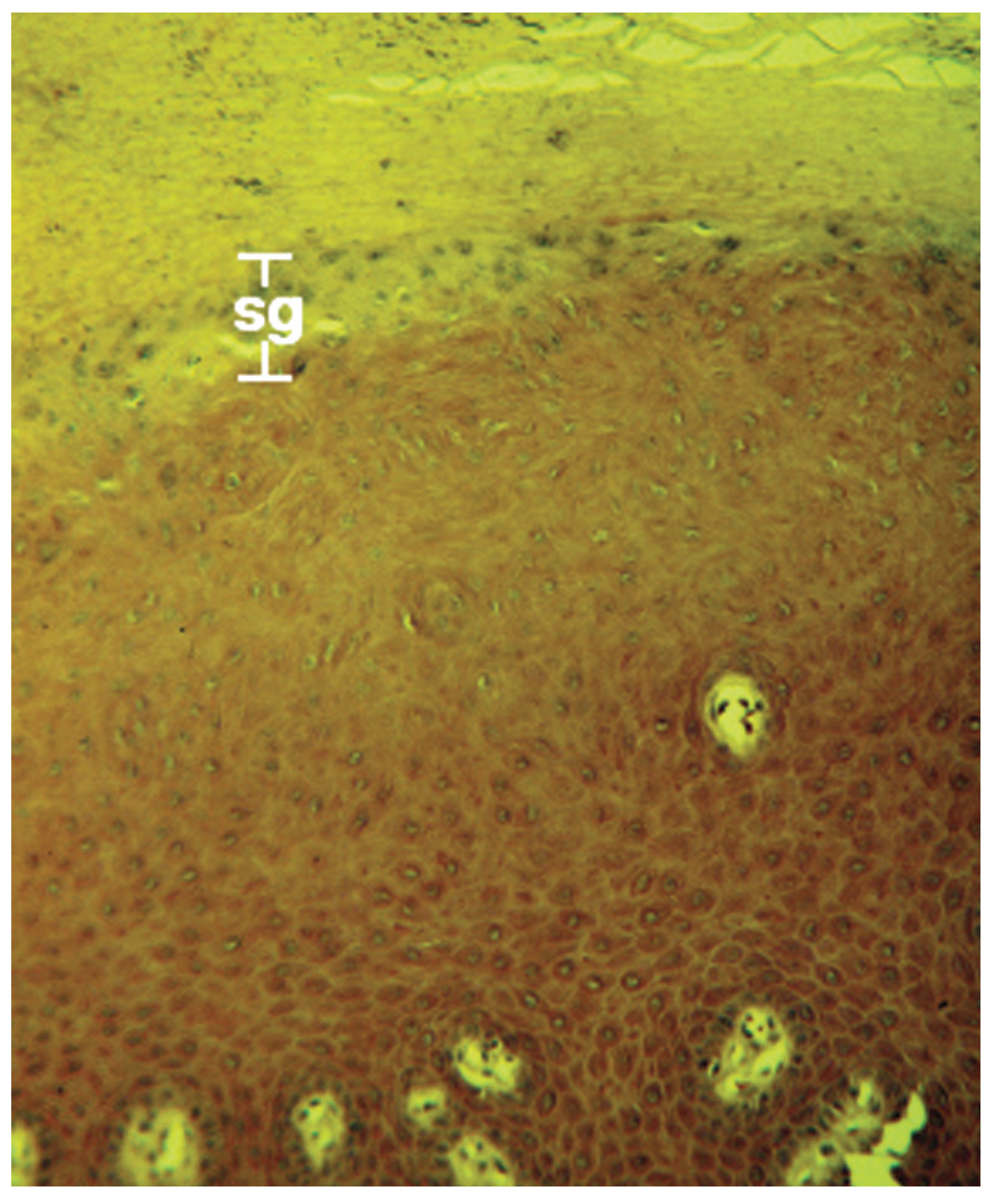
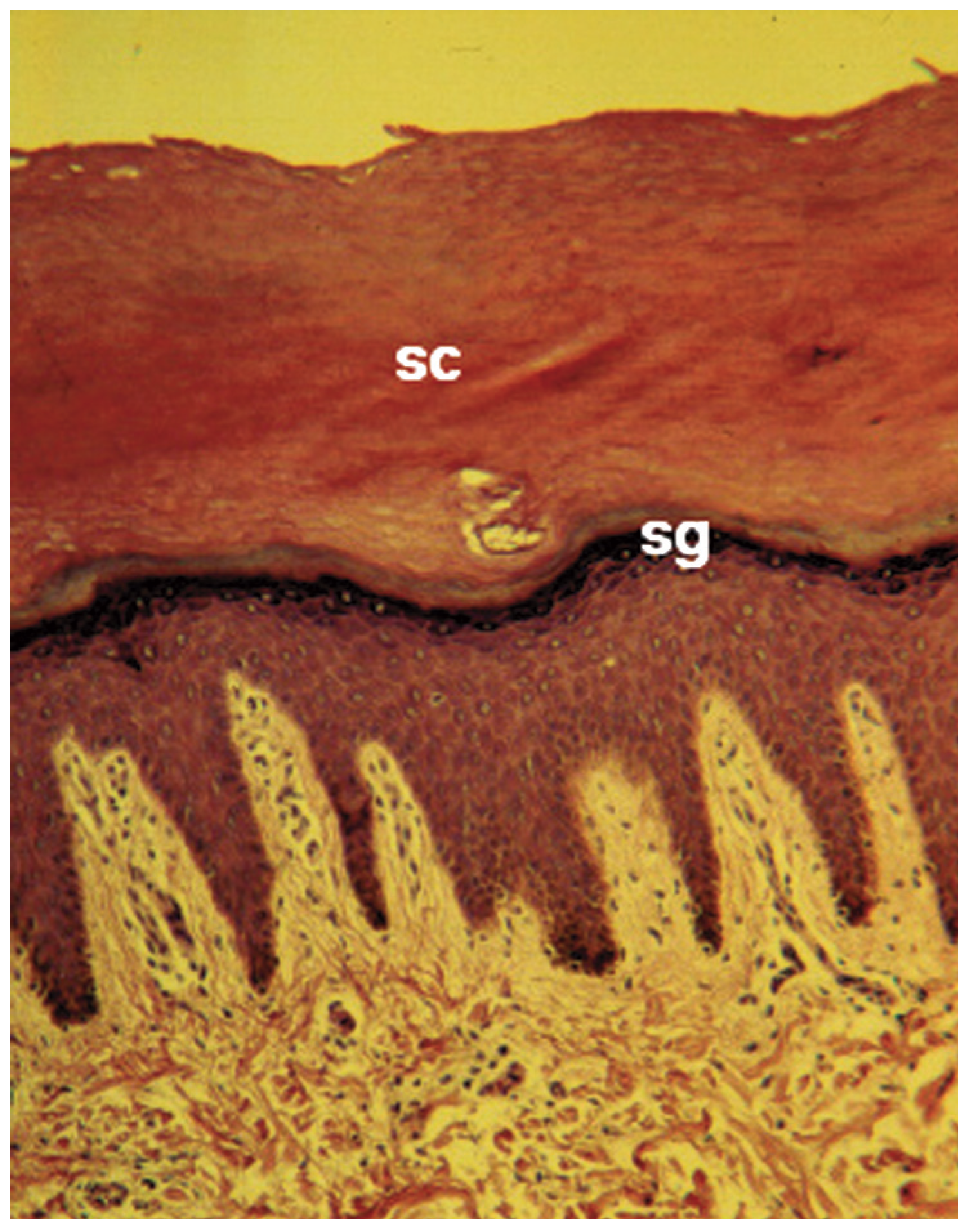
Tissue samples were processed and stained with hematoxylin and eosin for routine light microscopic examination.[31] Human hard corns are characterized by marked hypertrophy of the horny and viable layers of the epidermis; loss of the defined pattern of epidermal papillae and dermal rete ridges, especially in the area underlying the thickest portion of the corn; and an increased number of cell layers in the stratum spinosum and stratum corneum. Hyperproliferation of the keratinocytes in corns has also been reported.[10] In addition, we observed marked retention of nuclear material by the corneocytes and an obvious disruption or alteration of the stratum granulosum layer in most corn specimens at the junction demarking normal skin and the lesion (Figure 1). At higher magnification, alteration of the granulosum layer is readily apparent (Figure 2). Rather than the compact, darkly stained keratohylin granules in the two- to three-cell-thick stratum granulosum of normal toe skin (Figure 1), the keratohylin granules are lightly stained, poorly formed, and diffusely distributed throughout the five or six layers of cells in the corn. Treatment of corn tissue with SA before excision resulted in marked differentiation of the tissue (Figure 3). Furthermore, the histologic features observed in the SA-treated corn tissue were similar to those of normal skin (Figure 3). Collectively, these histologic features suggest that corn tissue arises at skin sites where epidermal differentiation is significantly delayed and that the keratolytic action of SA may involve the induction of normal differentiation of lesional epidermal tissue.
Previous studies [32,33,34] have shown that PAs and PAIs play an important regulatory role in the normal differentiation processes of the epidermis. Given the altered differentiation patterns observed in corn tissue, we hypothesized that the epidermal-associated serine proteinases and their regulatory proteins may also be altered in corns. To evaluate the level of expression of mRNA for different PAs and PAIs, total RNA was extracted from the thick, central portion of untreated and SA-treated corn specimens (the area left of the black arrow in Figure 1). RNA was also extracted from the trimmed edge pieces of untreated corns (the area right of the black arrow in Figure 1) that are histologically characteristic of normal toe skin; it was used as a control for PA and PAI mRNA expression. Analysis of RNA was chosen for this study because it is more sensitive than measurements of low levels of protein, and it was assumed that mRNA expression in these tissues would correlate with translation to functional protein.
mRNA Expression of PAs and PAIs in Normal Skin, Untreated Corns, and SA-Treated Corns
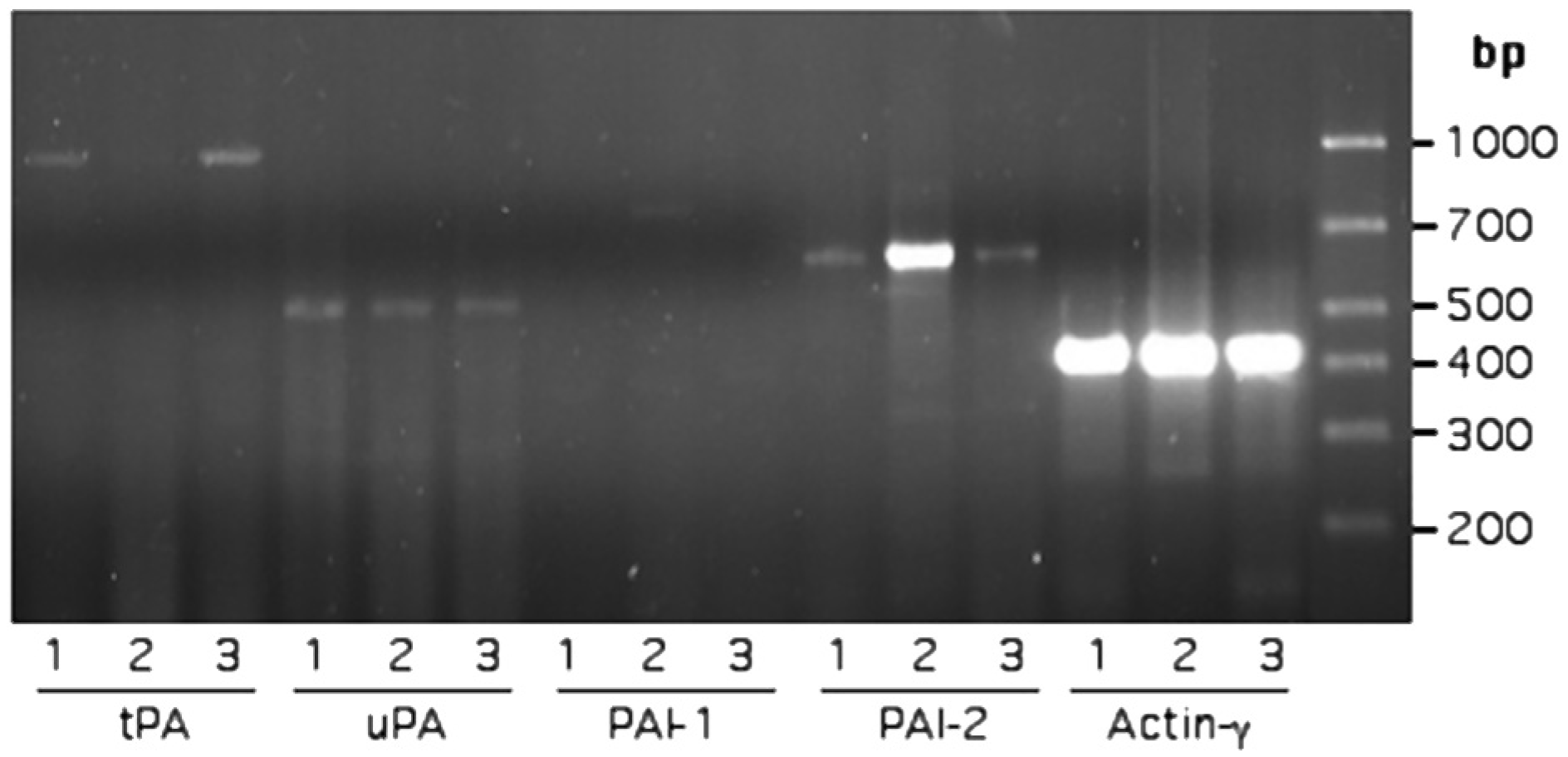
The PCR was used to determine the level of mRNA expression for PAs and PAIs in normal human skin and in untreated and SA-treated human corns. Compared with normal skin, untreated corns expressed a higher level of mRNA for PAI-2 and a decreased level of mRNA for tPA (Figure 4). The SA-treated corns showed an increase in tPA expression and a concomitant decrease in PAI-2 expression compared with the untreated corn samples. The levels of tPA and PAI-2 mRNA expression in SA-treated corns were equivalent to those observed in normal skin. Treatment with SA had no detectable effect on uPA mRNA expression, which seemed to be equivalent to that of normal skin and untreated corns. The level of mRNA expression for PAI-1 was slight and was detectable only in untreated corns (Figure 4). Expression of PAI-1 mRNA was not detected in either normal skin or SA-treated corns. The amount of mRNA for the cytoskeletal protein actin-γ was constant for all of the samples, which suggests that under the given PCR conditions, modulation of tPA, PAI-1, and PAI-2 mRNA levels resulted from a gene-targeted increase or decrease in transcription and was not due to a general increase or decrease in transcription rates of all genes.

Discussion

The presence of serine proteinases in the epidermis and their role in the degradation of desmosomal and certain other epidermal adhesion structures that leads to desquamation of the plantar stratum corneum has been demonstrated by several groups.[7,8,35,36,37,38,39,40] Plasminogen activators are serine proteinases that convert a zymogen form of plasminogen to plasmin. Plasmin plays a key role in fibrinolysis, epidermal differentiation, and desquamation.[9,32,33,34] Because normal fibrinolytic activities are observed in differentiating epithelial layers but not in terminally differentiated cornified layers or in the basal membrane,[41] we initiated this study to detect the levels of PA and PAI expression in normal and cornified human skin and their relationship with the keratolytic action of SA. These results demonstrate that human corn tissue is deprived of tPA mRNA, perhaps by the virtue of higher levels of its inhibitor, PAI-2. Although the level of PAI-1 mRNA was also increased, but to a lesser extent, it too may play a role in the formation of hyperkeratotic lesions. This increase suggests that overexpression of PAI-2 with concomitant underexpression of tPA leads to reduced differentiation and desquamation rates in corns, thereby resulting in development of the thickened hyperkeratotic tissue. The increased levels of PAI-1 mRNA in untreated corns could also be associated with other hyperkeratotic tissues. Studies with PAI-1 transgenic mice provide further support of this hypothesis in that thickening of the stratum corneum at various body sites in these animals and delayed desquamation processes in cornified layers seem to be associated with abnormally high expression of PAI-1.[34] Furthermore, in situ hybridization studies have shown higher distribution of PAI-2 but not of tPA in cornified tissue layers,[33] which suggests a role for PAI-2 in cornified envelope formation by preventing tPA function in the normal desquamation process.
The histologic evidence and molecular biological analyses presented herein demonstrate the role that serine proteinases and their regulators play in the formation of hyperkeratotic tissues, such as corns, and the ability of the keratolytic SA to alter PA levels, thus driving normal differentiation of these tissues.
The higher levels of PAI-2 mRNA in normal skin were not surprising because this is the most common form of PAI in the epidermis.[42] Urokinase-type PA is expressed at very low levels in the epidermis of normal skin and is mainly confined to the basal layer.[32,42] This may explain why uPA remained uninvolved in the desquamation of SA-treated hyperkeratotic tissue. Conversely, tPA mRNA, although not detectable in a previous investigation[43] using the conventional Northern blot hybridization procedure, was found to be present in normal epidermis using the PCR technique described herein. Not only did we demonstrate tPA mRNA in the epidermis, but these data also indicated its role in SA-induced keratolysis of corn tissue.
The role of proteinases in epidermal cell detachment (acantholysis) was originally described by Schiltz et al.[44] in 1978, in which cultured human skin epidermal cell monolayers can be detached from the surface of plastic tissue culture dishes when treated with antisera from patients with pemphigus. This process could be reversed by treating the cells with general serine proteinase inhibitors, such as α2-macroglobulin or soybean trypsin inhibitor,[44,45] which suggests the higher levels of serine proteinases associated with acantholysis. Similar findings have been reported in experiments performed with mouse epidermal cells[46] and organ-cultured human skin.[47] Interestingly, PAI-2, a naturally occurring PAI in human epidermis, is capable of blocking pemphigus IgG-induced acantholysis in organ-cultured human skin,[45] a further indication of the involvement of PAs in acantholysis. The high levels of serine proteinases that have been observed in sera from patients with pemphigus [12,18] are now known to be mostly composed of PAs.[39,48] Similarly, higher tPA antigen [16,49] and mRNA [12,40] levels and higher uPA mRNA [43] levels have been found in psoriatic lesions.
Although there is abundant information available on the role of the PA system in epithelial cell differentiation, until now, nothing was known about how this system operates within hyperkeratotic tissues, such as corn lesions. Because desmoglein and desmoplakin are retained in the immature stratum corneum of corns, the corneocytes are likely held tightly together by functional desmosomes, also described as corneodesmosomes,[50] in the absence of plasmin. The most commonly used keratolytic agent,[51] SA is approved for sale over the counter for corn and callus removal in the United States. It is reported to cause degradation of cell adhesion molecules.[51,52] Despite the widespread use of SA as a keratolytic agent, very little work has been done to define a mechanism by which it disrupts the cellular adhesion molecules. The results of our study indicate that SA normalizes tPA, PAI-1, and PAI-2 mRNA levels in hyperkeratotic lesions and suggest that SA triggers desquamation by PA-induced plasmin activation. In vitro studies using normal human epidermal keratinocytes and SCC-9 (a human tongue squamous carcinoma) cell lines have shown little or no effect of SA on either PA or PAI mRNA levels (data not shown). This result suggests that SA selectively affects the expression of these genes only in hyperkeratotic tissue, such as corns. The observations in our study regarding the gene regulatory activity of SA are not unique to hyperkeratinized corn tissue of the skin. The most recent studies in HeLa cells have shown that SA is capable of downregulating a variety of genes when cells are exposed to ultraviolet light.[53] The genes activated by SA increase cell survival after ultraviolet light exposure via suppression of p53-independent apoptosis.[54] Collectively, these data demonstrate the ability of SA to differentially regulate gene expression in cells in various stages of differentiation.
Although PAs are major activators of plasminogen, there are certain other serine proteinases that can activate plasminogen, such as kallikrein and blood coagulation factors XI and XII.[8] On the other hand, the product of plasminogen activation, plasmin, can be inactivated by α2-antiplasmin, α2-macroglobulin, α1-antitrypsin, antithrombin III, and C1 inhibitor.[9,54] It is, therefore, possible that similar to PAI-2, these additional inhibitors of plasmin may contribute to cornification of the suprabasal cell layer by decreasing the expression of serine proteinases other than PAs that are capable of activating plasminogen.

Conclusion

These data provide the first evidence of a possible key relationship for enhanced protease activity and a concomitant decrease in proteinase inhibitor activity in keratolytic agent-induced desquamation of corn tissue. Transcriptional analysis of PAs and PAIs in normal, cornified, and SA-treated cornified skin will contribute to the further understanding of the posttranscriptional events associated with normal tissue differentiation. Studies on the in situ distribution of these genes in corn tissue and their relative levels of protein expression and studies of other serine proteinases and their inhibitors may contribute to a better understanding of the keratolytic mechanisms of SA and other potential disease-mitigating keratolytic agents. Use of the analytical approach described herein can help facilitate the selection and formulation of efficacious products to alleviate and improve various hyperkeratotic skin conditions.

Acknowledgments

Donald R. Skwor, DPM, Memphis, for providing untreated and SA-treated human corn tissues; Mary A. Chryssanthis Montgomery and Diane Hood for assisting with tissue preparation and histologic examinations; and Frank Anthony, PhD, for helpful review and comments during the drafting of the manuscript and for assisting with compiling data for the preparation of the manuscript.

Financial Disclosure

Drs. Heda and Roberts were employees of Schering-Plough HealthCare Products Inc at the time of study and received financial support to conduct this study.

Conflicts of Interest

None reported.

References

  1. BIZZOZERO G: Sulla struttura degli epiteli pavimentosi stratificati [abstract]. Zentral Medizinisches Wochenschrift 9: 482, 1871.
  2. STAEHELIN LA: Structure and function of intercellular junctions. Int Rev Cytol 39: 191, 1974.
  3. CHAPMAN SJ, WALSH A: Desmosomes, corneosomes and desquamation: an ultra structural study of adult pig epidermis. Arch Dermatol Res 282: 304, 1990.
  4. ELIAS PM, GRAYSON S, LAMPE MA, ET AL: “The Intercorneocyte Space,” in Stratum Corneum, ed by R Marks, G Plewig, p 53, Springer-Verlag, Berlin-Heidelberg, 1986.
  5. BIDMEAD MC, RODGER ML: The effect of enzymes on stratum corneum. J Soc Cosmet Chem 24: 493, 1973.
  6. BJELLAND S, GILDBERG A, VOLDEN G: Degradation of human epidermal keratin by fish pepsin. Dermatol Res 280: 119, 1988.
  7. LUNDSTROM A, EGELRUD T: Stratum corneum chymotryptic enzyme: a proteinase which may be generally present in the stratum corneum and with a possible involvement in desquamation. Acta Derm Venereol 71: 471, 1991.
  8. EGELRUD T, HOFER P-A, LUNDSTROM A: Proteolytic degradation of desmosomes in plantar stratum corneum leads to cell dissociation in vitro. Acta Derm Venereol 68: 93, 1988.
  9. DANO K, ANDREASEN J, GRONDAHL-HANSEN J, ET AL: Plasminogen activators, tissue degradation, and cancer. Adv Cancer Res 44: 140, 1985.
  10. MCCARTHY DJ, HABOWSKY JE: Histochemistry and anthropometric analysis of heloma durum. JAPA 65: 4, 1975.
  11. HASHIMOTO K, WUN TC, BAIRD J, ET AL: Keratinocyte inhibitors of plasminogen activator: characterization and ability to prevent pemphigus IgG induced acantholysis. J Invest Dermatol 92: 310, 1989.
  12. SINGER KH, HASHIMOTO K, LAZARUS GS: Antibody-induced proteinase activation: a proposed mechanism for pemphigus. Springer Semin Immunopathol 4: 17, 1981.
  13. JENSEN PJ, JOHN M, BAIRD J: Urokinase and tissue type plasminogen activators in human keratinocyte culture. Exp Cell Res 187: 162, 1990.
  14. ISSEROFF RR, FUSENIG NE, RIFKIN DB: Plasminogen activator in differentiating mouse keratinocytes. J Invest Dermatol 80: 217, 1983.
  15. CLARK RAF, LANIGAN JM, DELLAPELLE P, ET AL: Fibronectin and fibrin provide a provisional matrix for epidermal cell migration during wound reepithelialization. J Invest Dermatol 79: 264, 1982.
  16. GRONDAHL-HANSEN J, OTTEVANGER V: Tissue-type plasminogen activator concentrations in plasma from patients with psoriasis. Acta Derm Venereol 69: 391, 1989.
  17. LOTTI T, BONAN P, PANCONESI E: Plasminogen activation in psoriasis. Acta Derm Venereol Suppl 146: 36, 1989.
  18. GRANDO SA: Decompensation in proteinase-inhibitor system and application of proteinase inhibitors in pemphigus and pemphigoid. J Dermatol Sci 4: 95, 1992.
  19. SIER CFM, VERSPAGET HW, GRIFFIOEN G, ET AL: Imbalance of plasminogen activators and their inhibitors in human colorectal neoplasia. Gastroenterology 101: 1522, 1991.
  20. REILLY D, CHRISTENSEN L, DUCH M, ET AL: Type-1 plasminogen activator inhibitor in human breast carcinomas. Int J Cancer 50: 208, 1992.
  21. NAGAYAMA M, SATO A, HAYAKAWA H, ET AL: Plasminogen activators and their inhibitors in non-small cell lung cancer: low content of type 2 plasminogen activator inhibitor associated with tumor dissemination. Cancer 71: 1398, 1994.
  22. SWINEHART JM: Salicylic acid ointment peeling of the hands and forearms. Effective nonsurgical removal of pigmented lesions and actinic damage. J Dermatol Surg Oncol 18: 495, 1992.
  23. PARISH LC, MONROE E, REX IH: Treatment of common warts with high-potency (26%) salicylic acid. Clin Ther 10: 462, 1988.
  24. CHIRGWIN JM, PRZYBYLA AE, MACDONALD RJ, ET AL: Isolation of biologically active ribonucleic acid from sources enriched in ribonuclease. Biochemistry 18: 5249, 1979.
  25. Sambrouk J, Fritch EF, Maniatis T: Molecular Cloning: A Laboratory Manual, p 7.43, Cold Spring Harbor Laboratory Press, Cold Spring Harbor, NY, 1989.
  26. PENNICA D, HOLMES WE, KOHR WJ, ET AL: Cloning and expression of human tissue-type plasminogen activator cDNA in E. coli. Nature 301: 214, 1983.
  27. VERDE P, STOPPELLI MP, GALEFFI P, ET AL: Identification and primary sequence of an unspliced human urokinase poly (A)+ RNA. Proc Natl Acad Sci U S A 81: 4727, 1984.
  28. GINSBURG D, ZAHEB R, YANG AY, ET AL: cDNA cloning of human plasminogen activator-inhibitor from endothelial cells. J Clin Invest 78: 1673, 1986.
  29. SCHLEUNING WD, MEDCALF RL, HESSION C, ET AL: Plasminogen activator inhibitor-2: regulation of gene transcription during phorbol ester-mediated differentiation of U-937 human histiocytic lymphoma cells. Mol Cell Biol 7: 4564, 1987.
  30. ERBA HP, EDDY R, SHOWS T, ET AL: Structure, chromosome location, and expression of the human γ-actin gene: differential evolution, location, and expression of the cytoskeletal β- and γ-actin genes. Mol Cell Biol 8: 1775, 1988.
  31. LUNA LG: “Manual of Histologic Staining,” in Methods of the Armed Forces Institute of Pathology, 3rd Ed, McGraw-Hill, New York, 1968.
  32. LAZARUS GS, JENSEN PJ: Plasminogen activators in epithelial biology. Semin Thromb Hemost 17: 210, 1991.
  33. CHEN CS, LYONS-GIORDANO B, LAZARUS GS, ET AL: Differential expression of plasminogen activators and their inhibitors in an organotypic skin coculture system. J Cell Sci 106: 45, 1993.
  34. LYONS-GIORDANO B, LAZARUS GS: Skin abnormalities in mice transgenic for plasminogen activator inhibitor 1: implications for the regulation of desquamation and follicular neogenesis by plasminogen activator enzymes. Dev Biol 170: 289, 1995.
  35. LUNDSTROM A, EGELRUD T: Evidence that cell shedding from plantar stratum corneum in vitro involves endogenous proteolysis of the desmosomal protein desmoglein I. J Invest Dermatol 94: 216, 1990.
  36. LUNDSTROM A, EGELRUD T: Cell shedding from human plantar skin in vitro: evidence that two different types of protein structures are degraded by a chymotrypsinlike enzyme. Arch Dermatol Res 282: 234, 1990.
  37. EGELRUD T, LUNDSTROM A: A chymotrypsin-like proteinase that may be involved in desquamation in plantar stratum corneum. Arch Dermatol Res 283: 108, 1991.
  38. SUZUKI Y, NOMURA J, HORI J, ET AL: Detection and characterization of endogenous protease associated with desquamation of stratum corneum. Arch Dermatol Res 285: 372, 1993.
  39. IMAI S: The effect of the proteolytic enzyme savinase on plantar skin in vitro. Arch Dermatol Res 283: 377, 1991.
  40. KASHIMA M, FUKUYAMA K, KIKUCHI M, ET AL: Limited proteolysis of high molecular weight histidine-rich protein of rat epidermis by epidermal proteinases. J Invest Dermatol 90: 829, 1988.
  41. ASTRUP T: “Cell Induced Fibrinolysis: A Fundamental Process,” in Cold Spring Harbor Conference on Cell Proliferation, Vol 2, ed by E Reich, DB Rifkin, E Shaw, p 343, Cold Spring Harbor Press, Cold Spring Harbor, NY, 1975.
  42. HIBINO T, IZAKI S, OHKUMA M, ET AL: Epidermal plasminogen activator inhibitor (PAI) is immunologically identical to placental-type PAI-2. FEBS Lett 231: 202, 1988.
  43. SPIERS EM, LAZARUS GS, LYONS-GIORDANO B: Expression of plasminogen activator enzymes in psoriatic epidermis. J Invest Dermatol 102: 333, 1994.
  44. SCHILTZ JR, HU C, MICHEL B: Pemphigus antibody interaction with human epidermal cells in culture: a proposed mechanism for pemphigus acantholysis. J Clin Invest 62: 778, 1978.
  45. HASHIMOTO K, SHAFRAN KM, WEBBER PS, ET AL: Anti-cell surface pemphigus auto antibody stimulates plasminogen activator activity of human epidermal cells: a mechanism for the loss of epidermal cohesion and blister formation. J Exp Med 157: 259, 1983.
  46. FARB RM, DYKES R, LAZARUS GS: Anti-epidermal-cell-surface pemphigus antibody detaches viable epidermal cells from culture plates by activation of proteinase. Proc Natl Acad Sci U S A 75: 459, 1978.
  47. MORIOKA S, NAITO K, OGAWA H: The pathogenic role of pemphigus antibodies and proteinase in epidermal acantholysis. J Invest Dermatol 76: 337, 1981.
  48. BAIRD J, LAZARUS GS, BELIN D, ET AL: mRNA for tissue-type plasminogen activator is present in lesional epidermis from patients with psoriasis, pemphigus, bullous pemphigoid, but is not detected in normal epidermis. J Invest Dermatol 95: 548, 1990.
  49. GISSLER HM, FRANK R, KRAMER MD: Immunohistochemical characterization of the plasminogen activator system in psoriatic epidermis. Br J Dermatol 128: 612, 1993.
  50. SERRE G, MILS V, HAFTEK M, ET AL: Identification of late differentiation antigens of human cornified epithelia, expressed in re-organized desmosomes and bound to cross-linked envelope. J Invest Dermatol 97: 106, 1991.
  51. DAVIES M, MARKS M: Studies on the effect of salicylic acid on normal skin. Br J Dermatol 95: 187, 1976.
  52. HUBER C, CHRISTOPHER E: “Keratolytic” effect of salicylic acid. Arch Derm Res 257: 293, 1977.
  53. PAUNESKU T, CHANG-LIU CM, SHEARIN-JONES P, ET AL: Identification of genes regulated by UV/salicylic acid. Int J Radiat Biol 76: 189, 2000.
  54. ROBBINS KC: “Fibrinolysis,” in Thrombosis, ed by HC Kwaan, EJW Bowie, p 23, WB Saunders, Philadelphia, 1982.
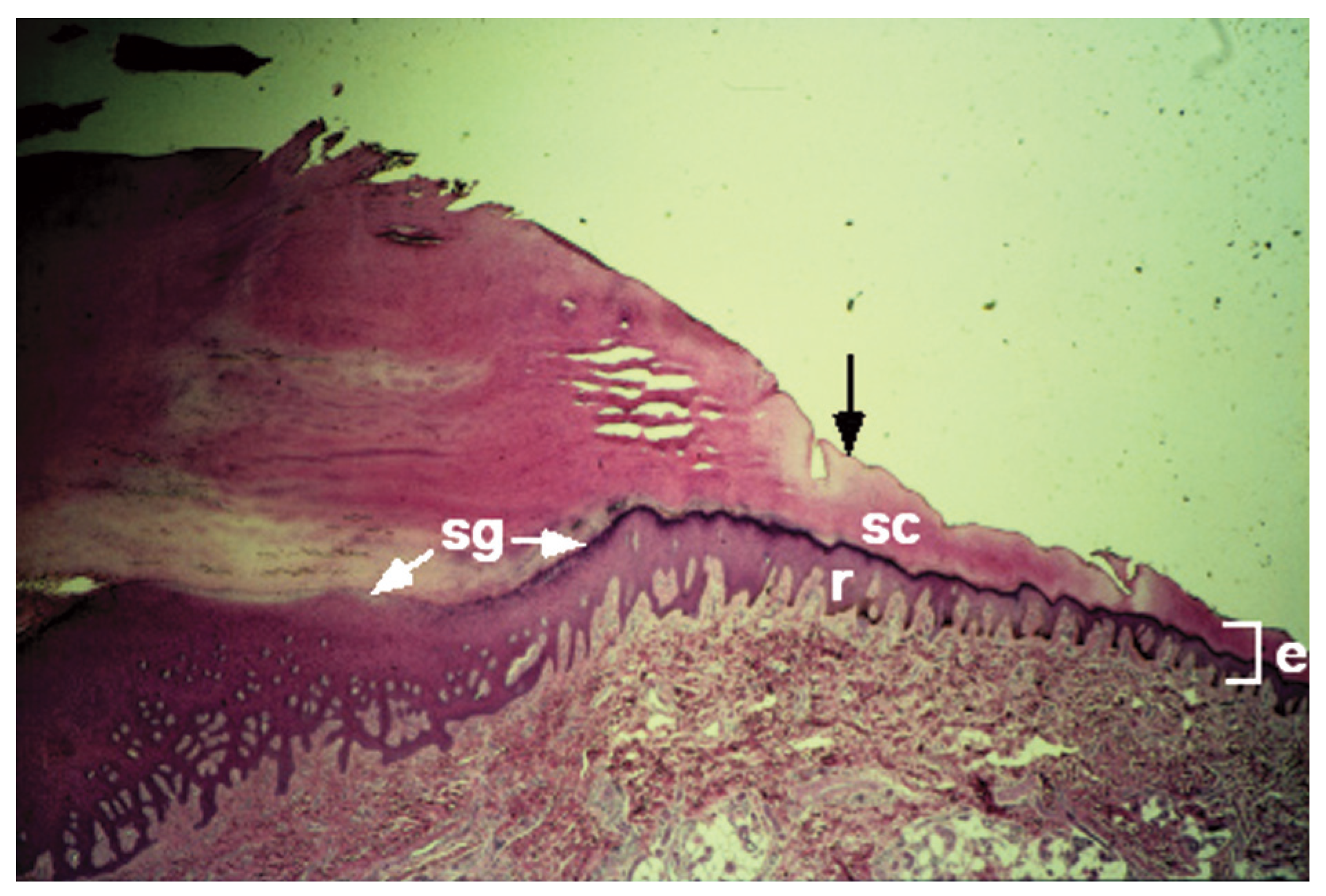
Figure 1. Photomicrograph of corn tissue at the margin with normal skin (H&E, ×40). Corn tissue was removed during elective hammer toe surgery and was stained with hematoxylin and eosin for routine histologic examination by means of light microscopy. The black arrow marks the margin between normal skin (right of arrow) and the corn tissue (left of arrow). At this magnification, the marked thickening of the epidermis (e) in the corn tissue is readily apparent. Other histologic differences in the corn tissue include the elongation and disorganization of the rete ridges (r), the diffuse and poorly differentiated stratum granulosum layer (sg), and the immature, poorly differentiated corneocytes (retention of hematoxylin-staining remnants of the nucleus) in the stratum corneum (sc).
Japma 98 00345 g001
Figure 2. Photomicrograph of corn tissue (H&E, ×100). At higher magnification, the diffuseness and poorly differentiated granulosum layer (sg) are apparent in the corn tissue. At this magnification, the normally dark hematoxylin staining of compact granules in the cells of this layer are lightly stained and diffused within the cells. Furthermore, the granulosum cell layer is thickened 2- to 3-fold.
Japma 98 00345 g002
Figure 3. Salicylic acid (SA)-treated corn tissue (×100). After treatment with SA (before surgical removal), the histologic features of the SA-treated corn tissue are similar to those of normal skin. That is, the granulosum layer (sg) is now well demarcated, with darkly staining, compact granules in the cells. In the stratum corneum (sc), the corneocytes directly above the stratum granulosum are now well differentiated. Furthermore, the thickness of the tissue is greatly reduced in that the full thickness of the epidermis can be seen in this photomicrograph compared with only a portion of the epidermis being present in the untreated corn tissue in Figure 2, which was taken at the same magnification.
Japma 98 00345 g003
Figure 4. Levels of messenger RNA (mRNA) expression for plasminogen activators (PAs) and PA inhibitors (PAIs) in normal human skin, untreated corns, and salicylic acid-treated corns. Polymerase chain reaction–generated products were analyzed on 1% agarose gel to measure the relative amounts of mRNA for tissue-type PA (tPA), urokinase-type PA (uPA), PAI-1, and PAI-2 in normal human skin (lane 1), untreated corn (lane 2), and salicylic acid-treated corn (lane 3). Actin-γ was used as mRNA control. Abbreviation: bp, base pairs.
Japma 98 00345 g004
Table 1. PCR Primers Used for RT-PCR Analyses. 
Japma 98 00345 i001