The views and conclusions in this paper do not reflect the official views of the US Public Health Service or the US government.
Measuring foot and ankle volume is important in clinical and research settings to determine response to treatment and to assess and compare the efficacy of various experimental interventions.[
1] For example, in oncology, sensitive measurement tools are required to detect the subtle changes in limb volume that indicate the development or resolution of lymphedema.[
2] These techniques should be easy to use, fast, and reliable.[
3]
The foot and ankle together create a complex geometric form. Determining the volume of this form poses a clinical challenge. Common methods used today in the clinic include water volumetry (WV),[
1,
4–
6] which may be cumbersome; the figure-of-eight method,[
1,
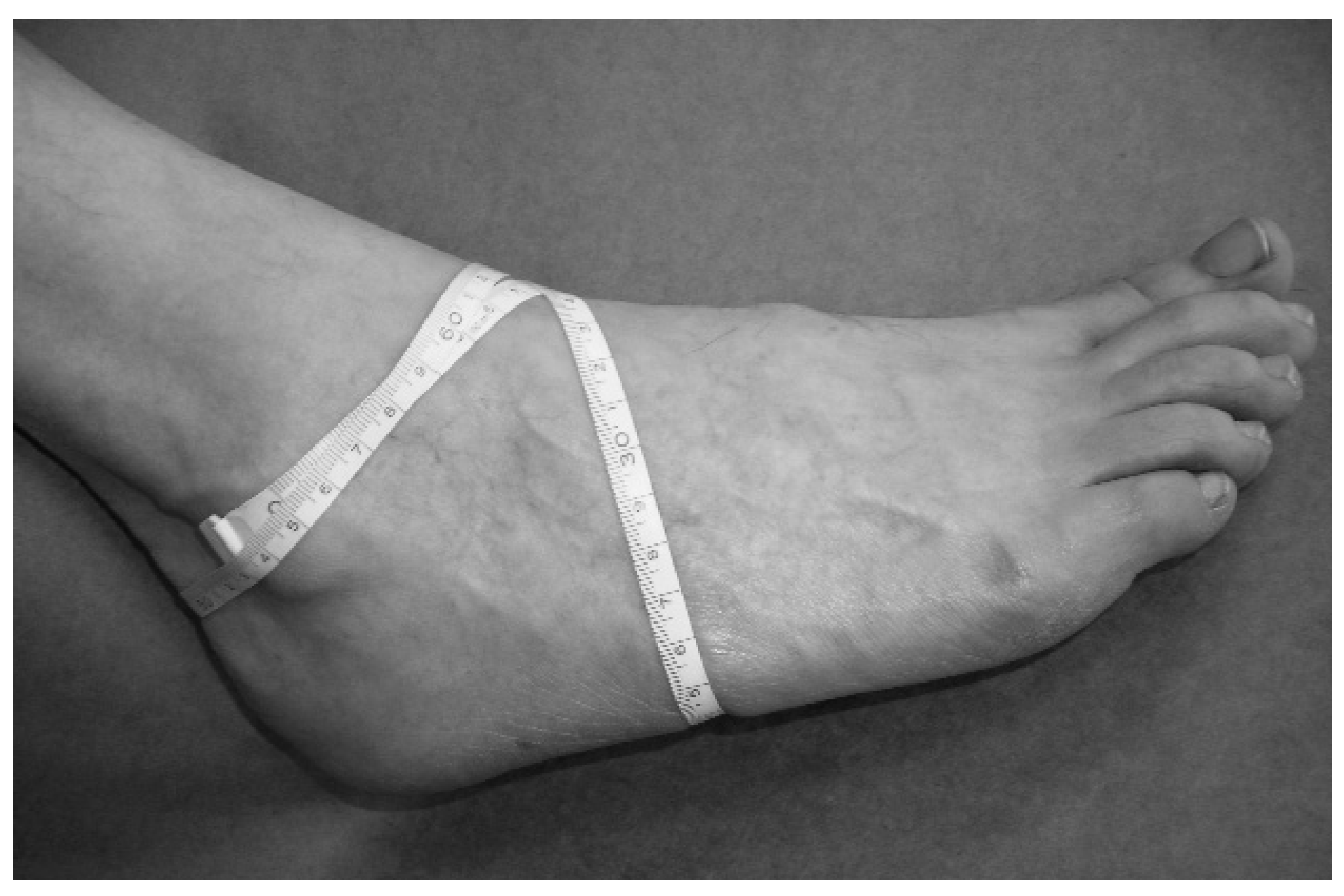
7] which is an indirect measure of volume (
Fig. 1); and optoelectric methods,[
4] for which reliability and validity have not yet been well established for foot and ankle volume measurement.
Figure 1.
Tape measure in position for the figure-of-eight technique.
Figure 1.
Tape measure in position for the figure-of-eight technique.
Water volumetry has long been accepted as the gold standard for limb volume determination.[
5,
8] The reliability of WV in measuring foot and ankle volume was demonstrated by Petersen et al.[
1] In a study of 29 subjects with swollen ankles, they reported interrater reliability to be intraclass correlation coefficient (ICC)[2,3] = 0.99 and intrarater reliability to be ICC[3,1] = 0.99. However, standard, commercially available volumeters do not allow for differences in how much of the foot, ankle, and lower leg is included in the volume measurement. For one commercially available volumeter, a vertical length of 9 inches is immersed. Using this device on a 5-foot 11-inch male, the volume includes approximately 4 inches of the distal lower leg in addition to the foot and ankle. Another commercial volumeter provides 1-, 2-, and 3-inch risers to adjust for different leg lengths. However, this device is 24 inches deep, so although the volume of leg immersed is adjustable, a significant portion of the lower leg is still included. Nowhere in the literature has a volumetric technique been described that captures only the foot and ankle. No published discussions on the boundaries of the foot and ankle have been found. Stanton et al[
4] suggested the use of bony landmarks for reference. Stanton et al[
4] and Tierney et al[
5] agreed that although water displacement is considered the gold standard, this technique is time consuming, cumbersome, and inappropriate in the early postoperative period or for limbs with open wounds. In addition, extra time and expense are needed to ensure sanitation of the volumeter.
Tierney et al[
5] and Stanton et al[
4] described two indirect methods of measuring limb volume: the disc and frustum methods. Both methods involve taking various measurements of the leg, making certain assumptions about the shape of the leg, and applying a mathematical formula to calculate the volume. For the disc method, the leg is assumed to be a collection of cylinders varying in height from 3 mm to 4 cm, depending on the author. The circumference of each cylinder is determined with a tape measure, and the volume is calculated from the formula (
C2/4π)
h. The volumes of the cylinders are summed to determine total limb volume. The frustum method assumes that the leg approximates the shape of a truncated cone. The upper and lower circumferences are measured along with the height, and these values are applied to the following formula:

where
C is the upper circumference and
c is the lower circumference. The disc and frustum techniques were shown to overestimate limb volume in normal and diseased (lymphedema) limbs, with the disc method overestimating by 8% and the frustum method by 12%.[
5] Stanton et al[
4] concluded that the accuracy of each model depends on the shape of the limb segment. Either method of calculation, used consistently, is sufficiently accurate to monitor changes in limb volume.
In 1969, Jones and Pearson[
9] used the following formula:
to estimate foot and ankle volume as part of total lower-extremity volume, where dimensions in the formula were referenced to specific anatomical landmarks of the foot and ankle. With measurements taken according to this technique and WV,
R values were 0.91 and 0.83 for men and women, respectively. Katch et al[
10] were dismissive of this method, claiming that it involved too much calculation to be practical. They used regression analysis to compare the direct water-displacement technique with various leg girth measurements. They also compared leg weight with volumetric measurements. Despite their criticism of the methods of Jones and Pearson,[
9] Katch et al[
10] offered “prediction equations” that use the variables of body weight and maximum calf circumference to calculate an estimate of leg volume (standard error of the estimate = 57.2 mL).
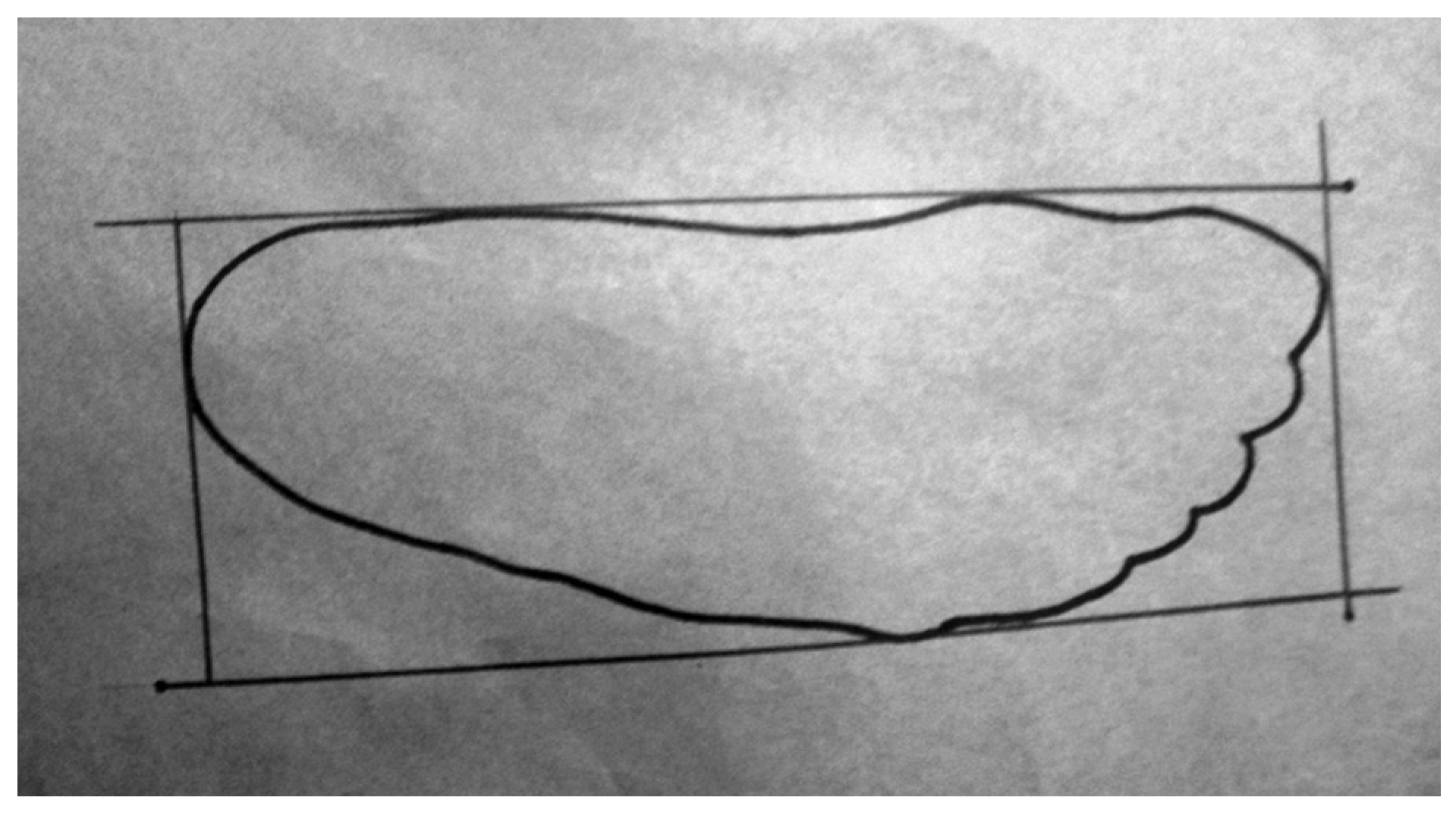
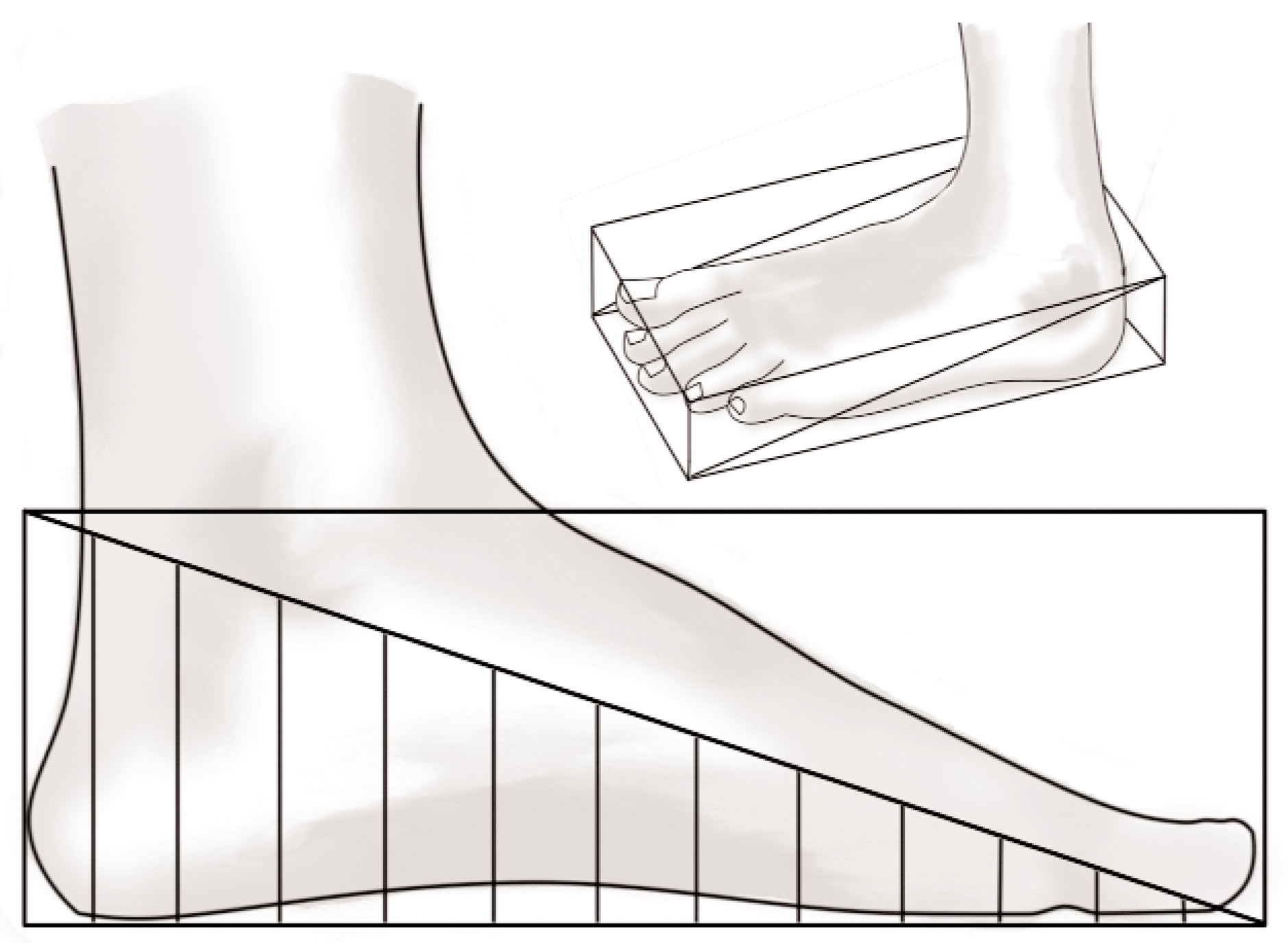
Although not mentioned often in the literature, the prism method is another method of estimating foot and ankle volume that has been used clinically by one of the authors of this study (E.A.). This method involves determining the length (
L) and width (
W) of the foot from a pen-and-paper tracing and measuring the height (
H) of the ankle to the lateral malleolus (
Fig. 2 and
Fig. 3). The estimate is calculated as follows:
Figure 2.
Tracing of the footprint to be used in the prism method.
Figure 2.
Tracing of the footprint to be used in the prism method.
Figure 3.
Schematic representation of the prism method. (Courtesy of Sagar Parikh)
Figure 3.
Schematic representation of the prism method. (Courtesy of Sagar Parikh)
To our knowledge, no studies, published or unpublished, have been found that discuss the reliability or validity of this method.
A common technique shown to be highly reliable for measuring ankle volume is the figure-of-eight method. In 29 subjects with ankle swelling, Petersen et al[
1] found interrater reliability to be ICC[2,3] = 0.98 and intrarater reliability to be ICC[3,1] = 0.98. Tatro-Adams et al[
7] reported ICCs of 0.99 for both interrater and intrarater reliability. However, these authors did not indicate the specific ICC calculation used. This method has also been shown to have concurrent validity as a measure of edema in the hand[
11,
12] and ankle.[
13] However, its validity as a measure of foot and ankle volume has not been shown in the literature. If the figure-of-eight method does correlate well with volumetry, regression might be used to estimate foot and ankle volume.
The Brannock device (The Brannock Device Co Inc, Liverpool, New York) is a commercially manufactured device for measuring foot size (length and width). It is sometimes used in foot clinics where shoes are modified for extra depth and similar fabrications. No literature has been found on specific mathematical relationships between shoe size measurements and foot and ankle volume measurements.
A device mentioned only once in the literature used a manual digitizer/computer analysis system to determine lower-limb volume, including the foot and ankle. The device was found to have strong concurrent validity compared with WV (
r = 0.992) and to be highly reliable when used with edematous (
r = 0.997) and nonedematous (
r = 0.962) limbs.[
14] However, this device is not commercially available, and the primary author of the article reported that no further work was performed on this device. Computer-aided design analysis[
15] and spiral x-ray tomography have been used to determine residual limb volume with a fair degree of reliability and validity, but these methods have not been used for the same purpose with the foot and ankle.
Optoelectric volumetry (Perometer 300 S; Pero-System GmbH, Wuppertal, Germany) has been used reliably to measure upper- and lower-extremity volume.[
3,
5,
16] It has also been shown to be a valid tool for measuring limb volume.[
3,
5,
17] Tierney et al[
5] demonstrated that the mean volume of the limbs of healthy individuals measured with the Perometer was not significantly different from the mean volume measured by WV. They concluded that the Perometer is as accurate as the current gold standard. Mayrovitz et al[
17] found that the Perometer volumes and volumes calculated from 4-cm-spaced circumferential tape measurements differed by a mean ± SD of 260 ± 170 mL (4.14% ± 0.54%) in human legs and 170 ± 90 mL (6.97% ± 1.18%) in human arms. The linear correlation coefficients were 0.98 and 0.96, respectively. They also reported that the Perometer consistently overestimated volumes compared with those determined with the circumferential tape method. Stanton et al[
16] demonstrated that the Perometer and the sequential circumferential tape method differ by a mean ± SD of 81.2 ± 64.6 mL (6.1% ± 4.2%) in normal human arms and 116.9 ± 69.4 mL (6.8% ± 4.3%) in lymphedematous arms. Stanton et al[
4] said that the Perometer is “becoming the new gold standard.”
(p128)Man et al[
18] determined that limb volume measurements taken optoelectronically are not consistent across various joint angles. They showed a statistically significant difference between the measured volume of the lower extremity with the knee at full extension compared with the knee flexed greater than 20°.
The Perometer used by Stanton et al[
4,
16] comes with software to determine circumferential measurements of the foot and ankle but not volume. The cross-section of the limb must have a circular or elliptical shape for the optoelectric measurement technique to be used successfully. Therefore, Stanton et al[
16] do not believe that the hand and foot can be reliably measured with this device because they deviate markedly from a circular or elliptical cross section. Although this is true theoretically, no studies were found in the literature that test the reliability of the Perometer in measuring hand or foot volume. In listing the drawbacks of the Perometer, Stanton et al[
4] stated that it is less accurate for hand and foot measurements; but, they did not provide a reference for this statement. Although Stanton et al[
16] showed that in measuring the circumference of the cubital region (elbow) the tape measure was more accurate than the Perometer, they still concluded that the Perometer is an expensive but convenient, reliable, and accurate device for recording limb volume.
The purposes of this study were 1) to establish the reliability of WV for determining the volume of the foot and ankle combined; 2) to establish the reliability and validity of the figure-of-eight technique, the prism method, the Brannock device, and the Perometer for determining the volume of the foot and ankle combined; 3) to establish prediction equations of foot and ankle volume for the figure-of-eight technique, the prism method, the Brannock device, and the Perometer, which could be used to determine foot and ankle volume based on data derived from using these techniques; and 4) to compare the accuracy of the figure-of-eight technique, the prism method, the Brannock device, and the Perometer (with reference to WV) and to determine which of these techniques would provide the best agreement with foot and ankle volume determined by means of WV.
Methods
Subjects
Ten asymptomatic individuals (5 men and 5 women) aged 27 to 64 years (mean [SD] age, 41.5 [11.8] years) volunteered for this study and agreed to have measurements taken of both ankles and feet. Subjects were screened for any acute ankle or foot swelling or trauma (within the past 2 years) and for history of ankle or foot pathologic abnormalities. Each subject read and signed an institutionally approved consent form. This study was approved by the institutional review board of the National Institutes of Health Cancer Institute, Bethesda, Maryland.
Procedures
To determine reliability, one rater applied each of the five methods three times to both ankles and feet of the first five subjects for a total of 30 measurements per subject (5 methods × 3 applications × 2 ankles and feet). For the remaining five subjects, one trial of each method was taken bilaterally (5 methods × 2 sides = 10 measurements per subject). Data for each subject were collected at a single session, and all of the measurements were taken by the same rater. The order of the measurement methods was the same for all of the subjects.
Water volumetry.
The procedure for WV began by marking the distal tip of the lateral malleolus with a pen. The subject’s foot was placed in the empty tank, with the back of the heel in light contact with the back of the tank and the ankle in talocrural neutral. Water was added to the tank up to the level of the pen mark. A flexible tape applied to the side of the tank was used to record the height of the water level in centimeters. A piece of tape was then placed on the side of the tank to mark the level of the water. The subject’s foot was removed from the tank, allowing time for water to drip off the foot back into the tank until the dripping decreased to one drip per second. The height of the water level was recorded again. Width and depth dimensions of the tank were measured. A precisely filled 1,000-mL graduated cylinder was used to add water to the tank until it was filled to the tape mark. The amount of water added was recorded in milliliters.
Prism method.
The prism method involved having the subject sit with the ankle in the neutral position with the foot resting on a piece of paper on the floor. The foot was traced and the height from the floor to the distal tip of the lateral malleolus was measured (
Fig. 2). From the tracing, drafting tools (a straightedge and a T square) were used to create a rectangle fitting the foot. The rectangle was based on a straight line connecting the most medial point on the heel with the most medial point on the forefoot. The toe and heel lines were drawn at right angles to the medial line. The lateral line was drawn at a right angle to the toe and heel lines to complete a rectangle. A ruler was used to measure the length and width of the rectangle. These values and the height of the lateral malleolus were used to define a parallelogram. This parallelogram could be divided into two prisms by passing a plane obliquely from the highest dimension at the heel down to the ground in front of the toes. The volume of the foot and ankle would be equal to the volume of the prism, or approximately half the volume of the parallelogram (
Fig. 3):
Brannock device.
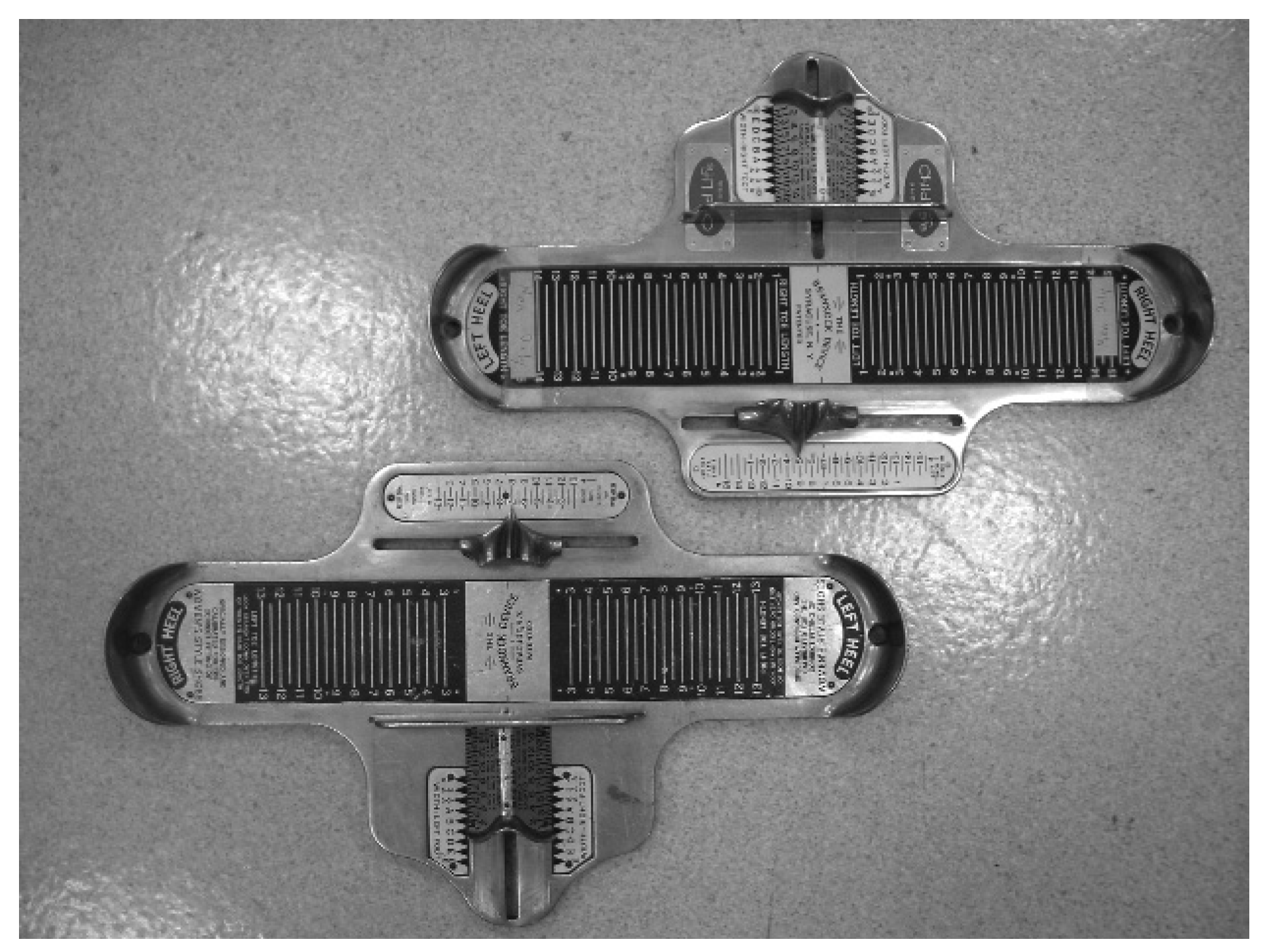
We measured foot size with the Brannock device following the instructions available at the manufacturer’s Web site (http://www.brannock.com/instructions.html) (
Fig. 4). The seated subject’s bare foot was placed in the device with the heel firmly against the heel cup and the lateral aspect of the head of the first metatarsal snug against the “arch length pointer.” The subject was then instructed to stand, and the arch length pointer was adjusted as needed to capture the head of the first metatarsal. Total foot length and arch length were read from the device. Then the width bar was adjusted, and the foot width was read from the device. Only “foot size” as marked on the Brannock device (ie, size 9, size 9.5, size 10, etc) was used to predict volume.
Figure 4.
Brannock device used to determine shoe size.
Figure 4.
Brannock device used to determine shoe size.
Perometer.
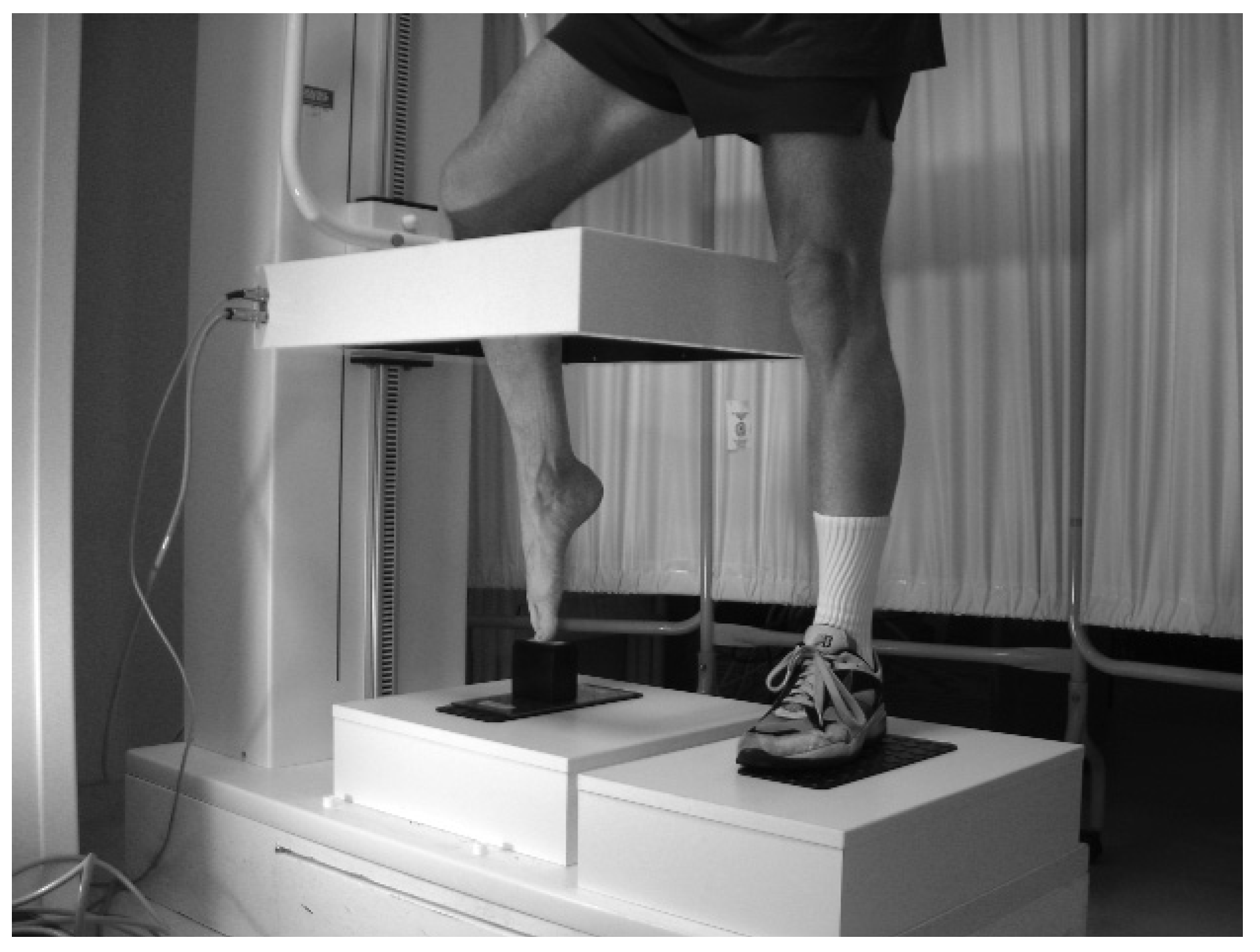
To measure foot and ankle volume with the Perometer, the subject was asked to stand on the base of the Perometer and to place one foot on the black adapter in full ankle plantarflexion with the toes in the neutral position (
Fig. 5). The infrared scanner was elevated and lowered by the side of the foot and ankle. The software was set to determine the volume of the segment between the top of the black adapter (where the toes make contact) and the distal tip of the lateral malleolus (the distance had been previously measured by hand with a tape measure; the lateral malleolus is not visible in
Fig. 5).
Figure 5.
Foot and ankle in position in the Perometer.
Figure 5.
Foot and ankle in position in the Perometer.
Data Analysis
Intraclass correlation coefficient [3,1] and SEM were used to determine intrarater reliability for all of the methods. The WV was operationally defined as the gold standard, and all of the other methods were then compared with WV by linear regression analysis. This was considered to be representative of the validity of the other methods. Regression analysis was run to compare the methods with WV to determine the precision of other methods and to produce prediction equations for nondirect volume measurements.
Results
Reliability
The ICC[3,1] and SEM values for the various volume methods are listed in
Table 1. These values are based on repeated measurements by one rater. High ICC and low SEM implies good intrarater reliability.
Table 1.
Reliability Coefficients for Foot and Ankle Volume Measurements
Table 1.
Reliability Coefficients for Foot and Ankle Volume Measurements
Validity and Accuracy
Regression relationships between WV and the other four methods of volume measurement are given in
Table 2. The ICC and
R2 values in this table refer to agreement between the measurement technique and the WV method and are representations of criterion-based validity. In
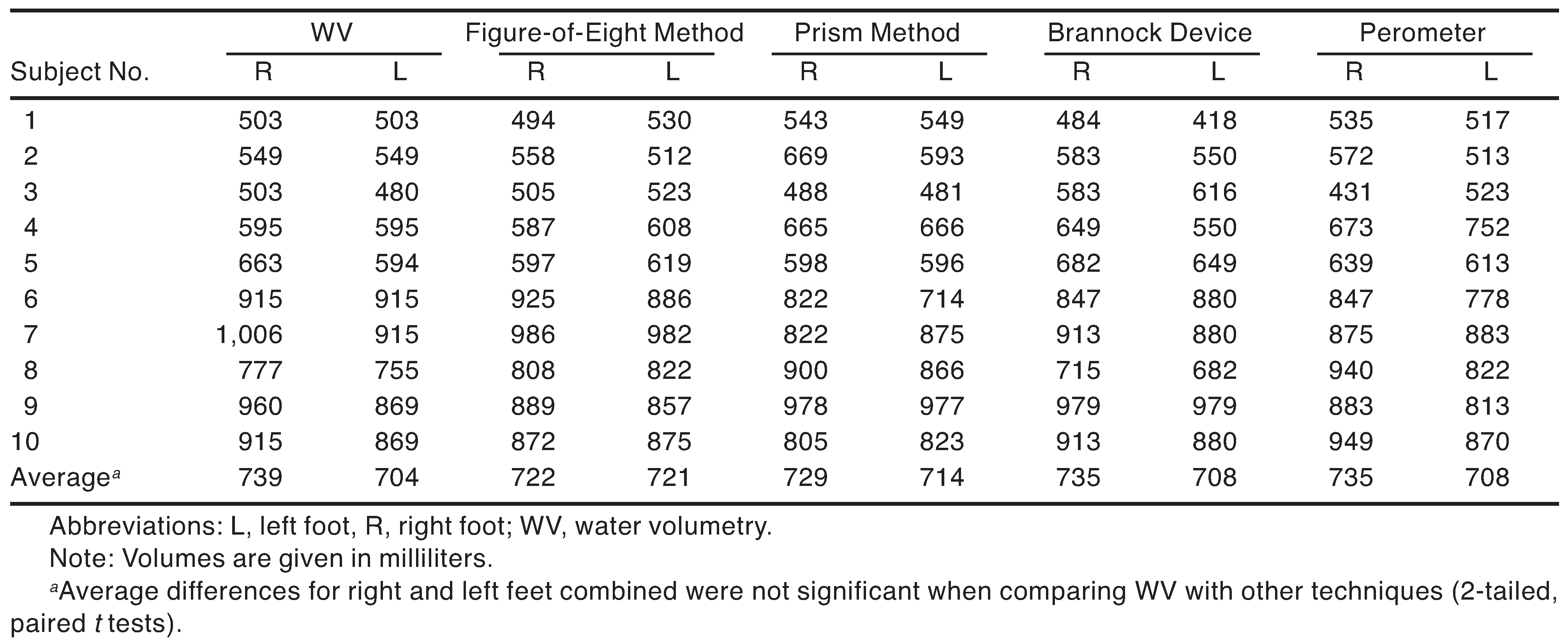
Table 3, volumes predicted by the regression equations from
Table 2 are compared with the WV values (considered to be the gold standard). When predicted foot volumes of all of the feet for each technique were compared with the foot volumes from WV using paired
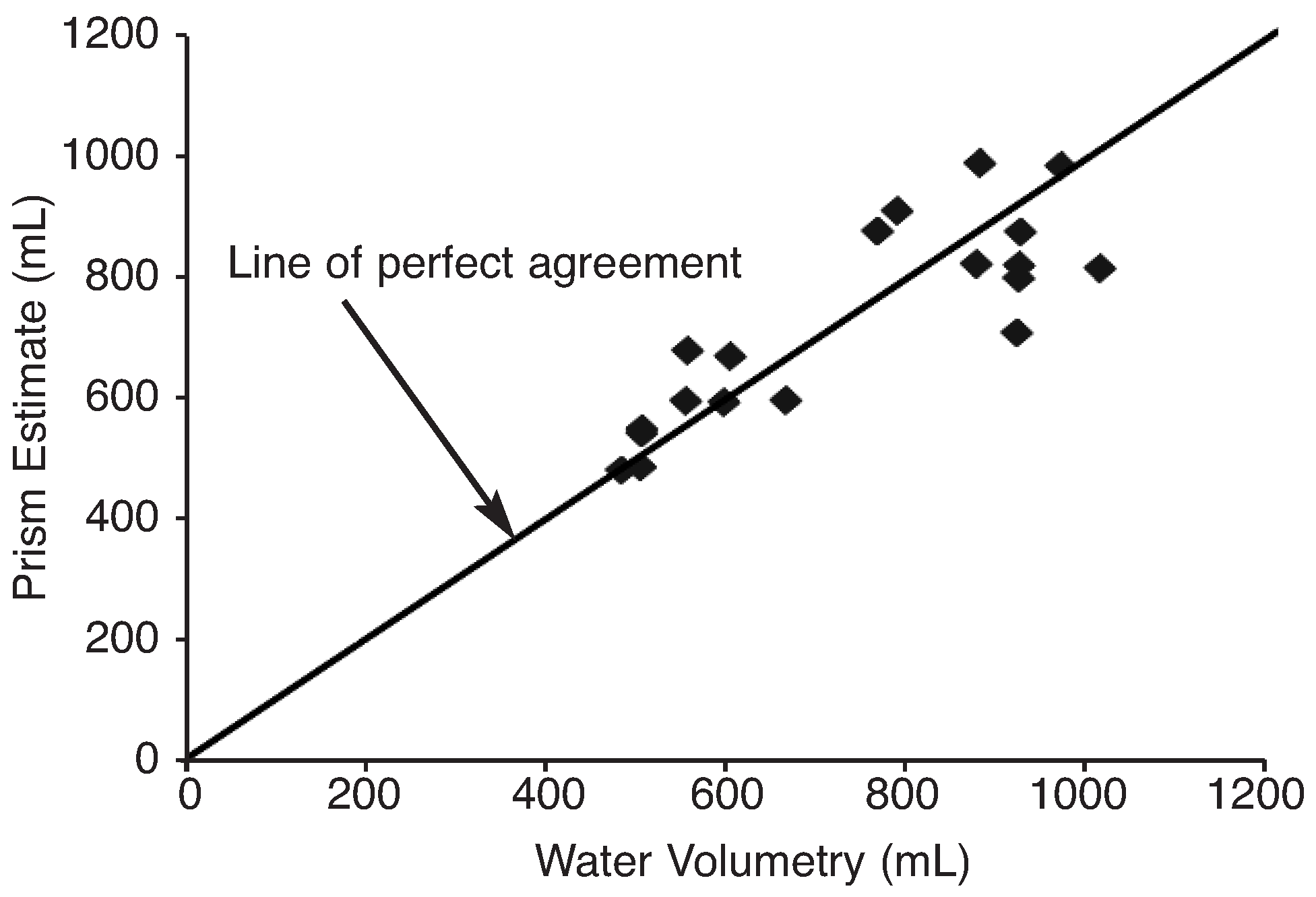
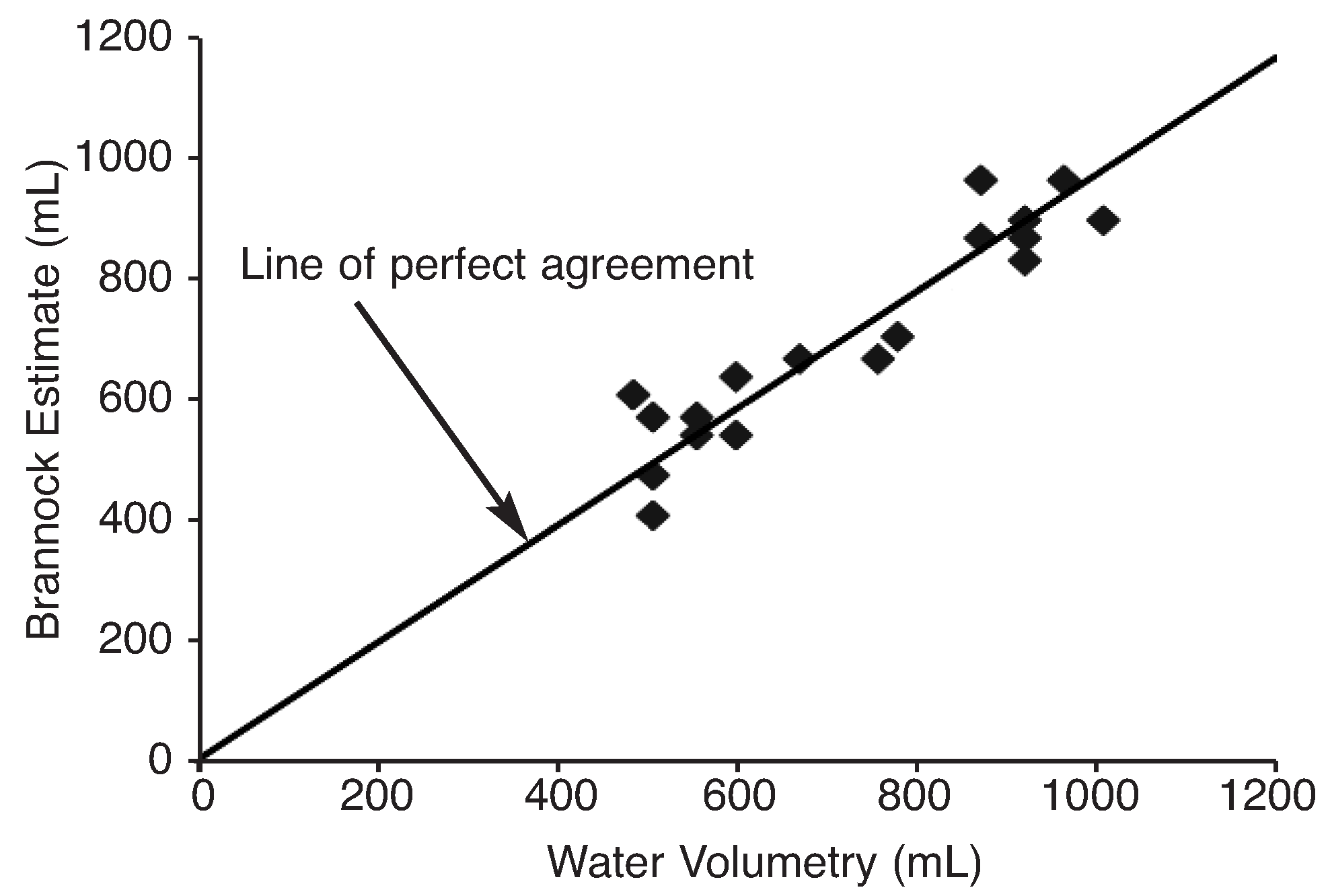
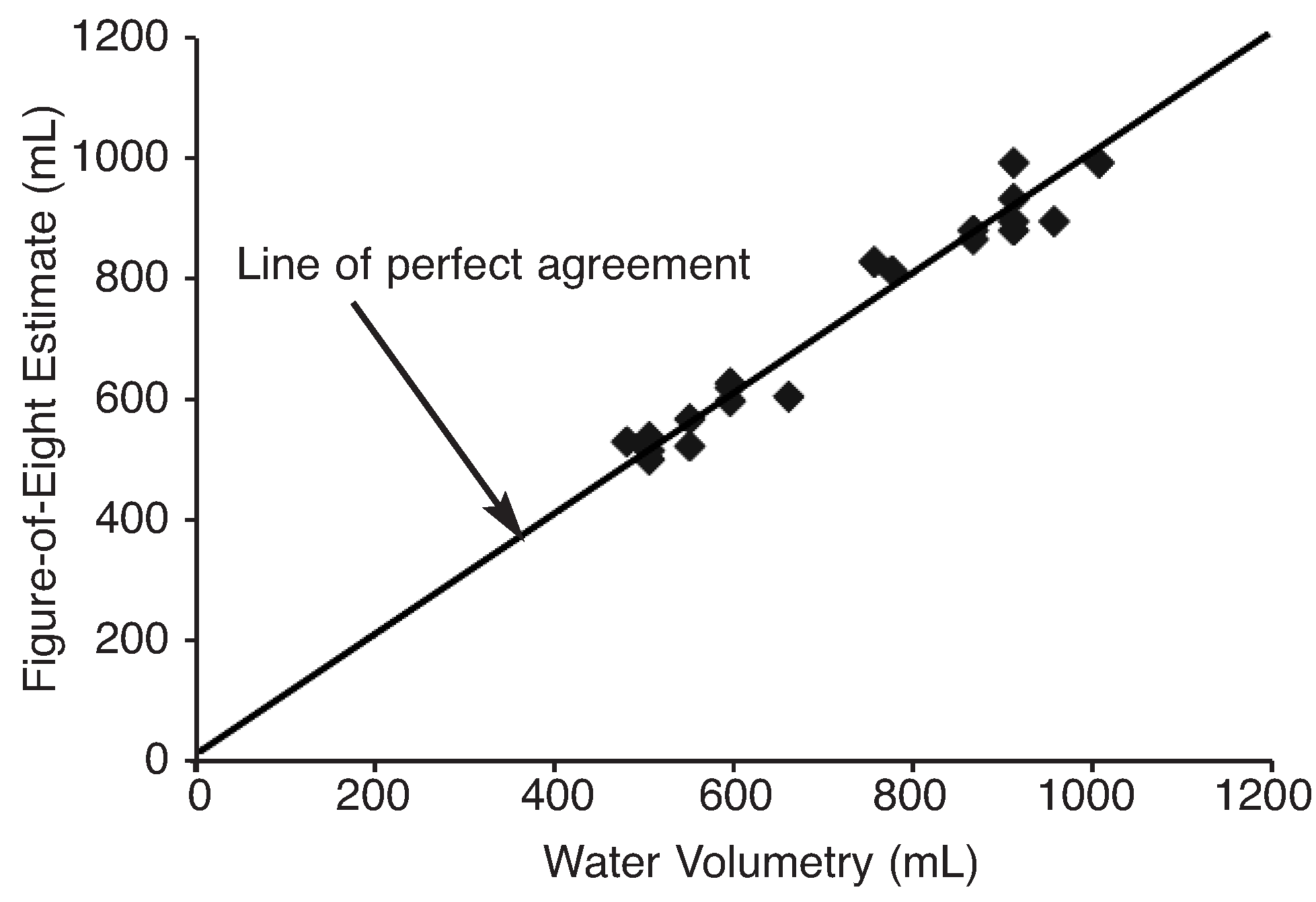
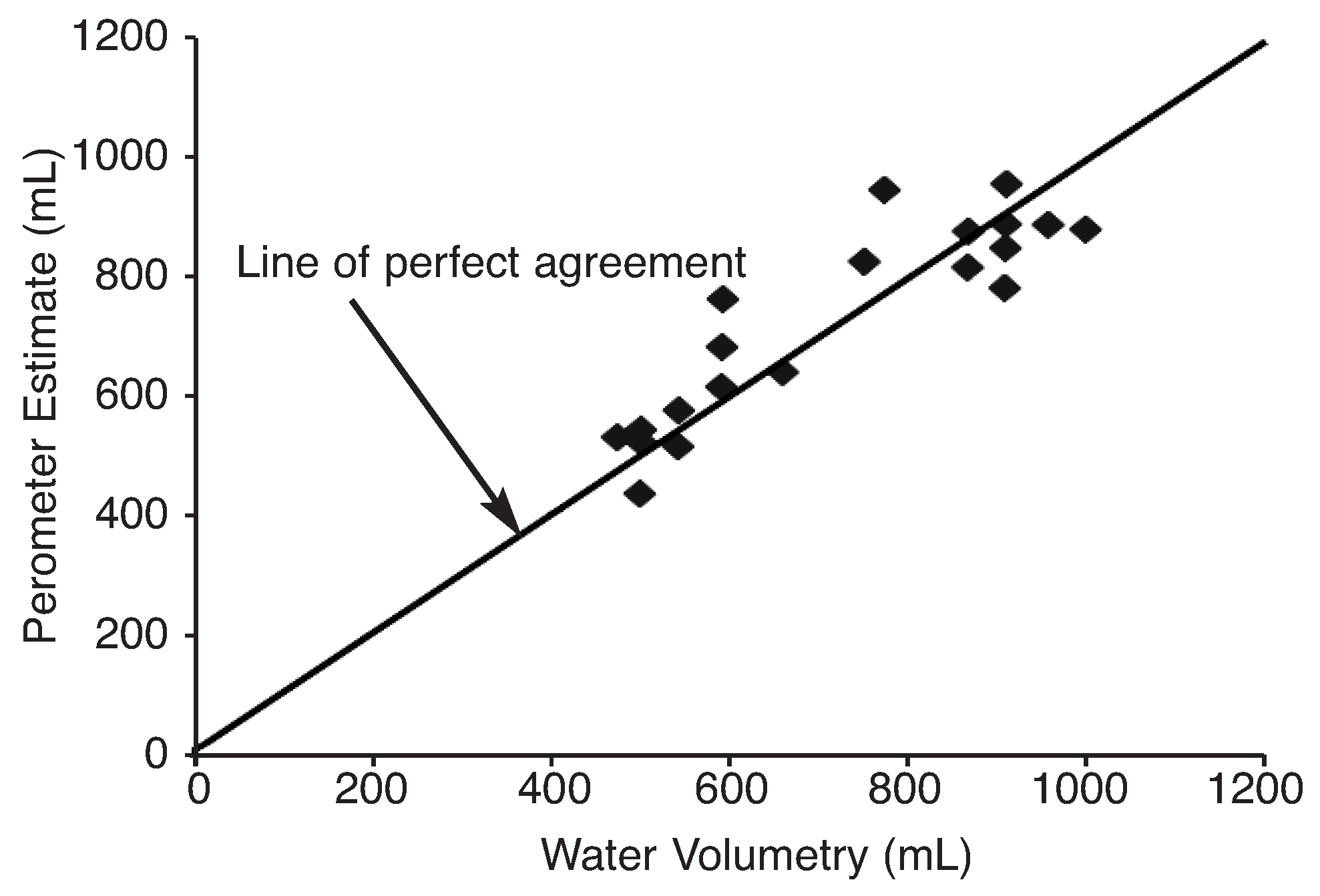
t tests (ie, figure-of-eight vs WV, prism vs WV, Brannock device vs WV, and Perometer vs WV), the differences were not significant. Regression relationships are graphed in
Figure 6,
Figure 7,
Figure 8 and
Figure 9 for all of the feet in this study.
Table 2.
Regression Between Alternative Foot and Ankle Volume Measurement Methods and Water Volumetry
Table 2.
Regression Between Alternative Foot and Ankle Volume Measurement Methods and Water Volumetry
Table 3.
Predicted Foot and Ankle Volumes Compared with WV Values
Table 3.
Predicted Foot and Ankle Volumes Compared with WV Values
Figure 6.
Foot and ankle volume (in milliliters) estimated using the figure-of-eight technique compared with water volumetry.
Figure 6.
Foot and ankle volume (in milliliters) estimated using the figure-of-eight technique compared with water volumetry.
Figure 7.
Foot and ankle volume (in milliliters) estimated using the prism method compared with water volumetry.
Figure 7.
Foot and ankle volume (in milliliters) estimated using the prism method compared with water volumetry.
Figure 8.
Foot and ankle volume (in milliliters) estimated using the Brannock device compared with water volumetry.
Figure 8.
Foot and ankle volume (in milliliters) estimated using the Brannock device compared with water volumetry.
Figure 9.
Foot and ankle volume (in milliliters) estimated using the Perometer compared with water volumetry.
Figure 9.
Foot and ankle volume (in milliliters) estimated using the Perometer compared with water volumetry.
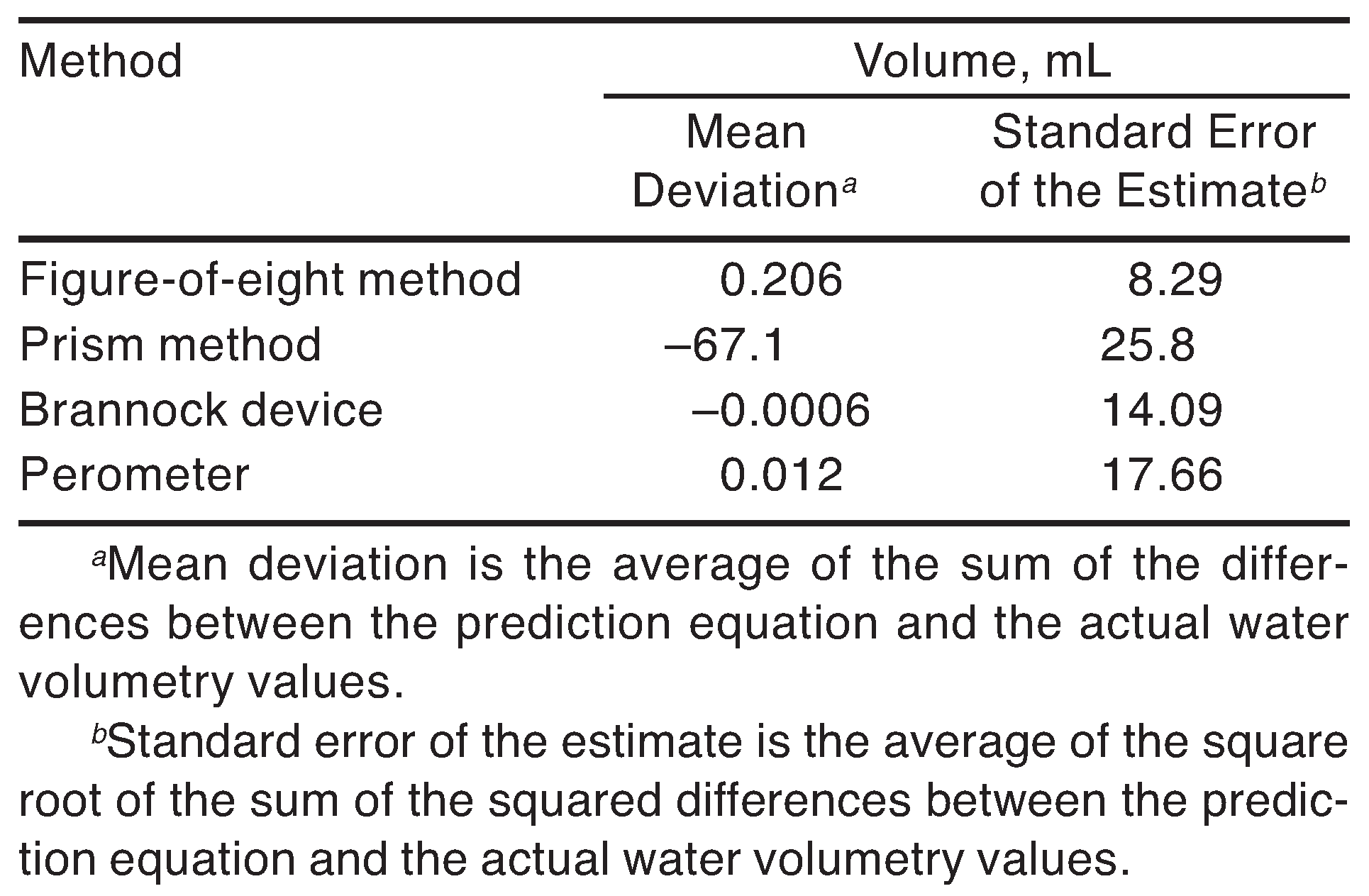
Closeness of fit between the WV data points and the regression (predicted) lines provides a quantified representation of the accuracy of these techniques. Two statistics that can be used to represent closeness of fit are mean deviation and standard error of the estimate. These values are presented in
Table 4.
Table 4.
Closeness of Fit Between Actual and Predicted Volumes
Table 4.
Closeness of Fit Between Actual and Predicted Volumes
Applicability
The regression equations in
Table 2 can be used to predict foot and ankle volumes based on the measurements taken using the four techniques other than WV. Units for these measurements (x
1, x
2, x
3, and x
4) are unit-corrected by the coefficients appearing before each x (eg, the equation for figure-of-eight would be interpreted as: y [volume of the foot and ankle, mL] equals 35.616 [mL/cm] times x
1 [cm] minus 1108.6 [mL]). This is a standard method for interpretation of regression (prediction) equations.
To create
Table 3, we applied the four regression equations listed in
Table 2. In
Table 3, one can see that most predictions are quite close to the volumes determined via WV but not uniformly exact for all of the individual subjects. Finally,
Table 4 presents two measures related to closeness of fit, which indicates how well any particular regression lines agree with an entire data set, in this case, 10 subjects.
Discussion
The findings from this study indicate that all of the methods investigated can be reliably used by a single rater to estimate the volume of the foot and ankle in healthy individuals (
Table 1). However, there are some differences among the techniques related to how accurately they can be used to predict true volume.
In this study, only intrarater reliability was considered. There were two reasons for this emphasis. First, our principal interest was to investigate the innate reliability of these measurement techniques without introducing statistical errors associated with multiple raters. Second, many volumetric measurements taken clinically are for the purpose of either comparing one limb with another or to monitor changes in volume across time. This is also why ICC[3,1] was chosen as the statistic, as discussed by Shrout and Fleiss.[
20]
Given that WV is considered the gold standard for true volume, concurrence between predicted volumes and volumes determined via WV can be considered to represent the validity of these techniques. The
R2 values in
Table 2 can be interpreted as the percentage of variation in foot and ankle volume identified by the given technique. The figure-of-eight technique, with 96% concurrence after application of the regression equation in
Table 2, comes closest to matching the WV method.
Table 3 provides the predicted volumes together with the actual volumes for this sample. Differences in techniques are not easily discerned from this array, and average values are not significantly different. However, averages alone can hide variability in data. To obtain a clearer picture of how these techniques compare, we plotted the predicted volumes for each technique against the WV values in
Figure 6 to
Figure 9. The scales on the ordinate and abscissa are approximately identical, and, therefore, a diagonal line represents a “line of perfect agreement” between WV and the other technique represented in each figure. “On the average” close agreement can be seen between the predicted values and the true values. Mean deviation is the average of positive and negative deviations (
Table 4). The closer this value is to zero, the more symmetrically the points are distributed around the reference line.
However, another important characteristic of how well these lines represent the true data is the scatter (or regression) between the data points and the line, independent of direction (ie, positive or negative). The standard error of the estimate is a measure of this quality. This statistic is similar to an SD but instead of regressing around the mean of a data set, it regresses around the prediction line. Based on the standard error of the estimate, the figure-of-eight method provides the best prediction values, followed by the Brannock device and the Perometer. Finally, the prism method is the least successful of these techniques.
Although WV is among the most reliable of these methods and is considered the gold standard for determining the volume of any extremity, several associated difficulties may indicate the need for other volume determination methods.[
4,
7,
13] This procedure is time consuming and messy, and it may be contraindicated for patients with ulcers, open wounds, or postoperative wounds on the body part being immersed. Furthermore, the current collection of commercially available volumeters does not allow consistent isolation of the foot and ankle. When comparing multiple subjects, the same anatomical reference point must be consistently used for each subject. The WV technique used in the present study was designed to minimize measurement error. However, even with this method there were four possible sources of measurement error: 1) filling the tank to the appropriate level on the ankle, 2) reading the water level with the foot and ankle submerged, 3) unaccounted loss of water volume with removal of the foot and ankle (ie, drips and splashes), and 4) reading the level of water with the foot and ankle removed. A tank with a height-adjustable spout might better allow for foot and ankle isolation and reduce possible measurement error.
The figure-of-eight method can be used reliably as a measure of ankle girth to show changes in swelling and edema.[
4,
7,
13,
19] However, this is strictly a linear measurement that allows a researcher or clinician to determine changes in ankle girth from session to session or to compare differences in the affected versus unaffected ankle. The figure-of-eight method was not used to estimate the actual volume of the foot and ankle. In 1973, Katch et al[
10] investigated the relationship of various girth measurements of the leg to determine their relationship to total leg volume. Their results produced a prediction equation for total leg volume based on body weight and maximum calf circumference. The present study produced a similar equation for the foot and ankle based on the figure-of-eight measurement with a standard error of the estimate of only a few milliliters. A virtue of this method is its ease of use, requiring nothing more of the patient than his or her tolerance of the tape measure against the skin. The technique can be performed with the patient in almost any position. Disposable tape measures are commercially available and are very inexpensive.
Little mention has been found in the literature of the prism method or the Brannock device. Although the prism method is relatively simple, it produced the most variability in its prediction of actual volume, with a standard error of the estimate of 25.8 mL. This may be related to the natural irregularities found in feet, for which this method does not account. The ability of the Brannock device to predict true volume has a smaller error (14.1 mL), but this is still greater than the figure-of-eight technique. In addition, this device is not a common piece of clinical equipment and costs approximately $50. More importantly, the strong association between foot size and volume suggests that the feet we measured are similar in shape, with very good agreement on relative dimensions. For these feet, a single number—shoe size—is a good predictor of foot volume. This approach would not be satisfactory when working with edematous or deformed feet, which would be expected to have irregular shapes.
The Perometer has been used reliably for the measurement of upper- and lower-extremity volumes, excluding the hands and feet. Although there was not a significant difference between the mean volume measured with the Perometer and the mean volume measured using WV, the Perometer resulted in a greater standard error of the estimate (17.7 mL). In addition, the testing position required to take the measurement may not be suitable for some individuals. Although there is a Perometer on the market that allows the patient’s lower extremity to be horizontal, this position is still restrictive for patient positioning. Furthermore, the cost of the Perometer is likely to be prohibitively expensive for many clinics. Finally, measurement error rates are affected by varying joint angles and by limb orientation within the infrared array.[
16,
18]
Of future interest is the determination of what would be a clinically significant change in volume. Gerber et al[
21] described evaluation criteria for lymphedema of the upper extremity. Changes from 0 to 80 mL were described as being a sign of initial subclinical reversible and acute lymphedema. However, they did not describe what would be considered a clinically significant change in volume. Stanton et al[
4] expounded on the virtues of defining “a quantitative threshold, above which the limb swelling may be said to be present.”
(p123) For upper-extremity swelling, they suggested that the most sensitive indicator is a difference in arm volume greater than 200 mL. They also said that looking at percentage differences seemed to be more universally applicable, offering 10% as the appropriate cutoff point, again speaking of the upper extremity. If the clinically significant percentage volume change for the foot and ankle is similar to that of the upper extremity, any of the methods addressed in this study might be useful. However, based on the standard error of the estimate in
Table 4, the figure-of-eight technique seems to be the most accurate.
When measuring the volume of any anatomical component, the boundaries must be defined. For the methods of the present study, the foot and ankle were defined as the distal portion of the lower extremity, with the proximal boundary being drawn at the level of the distal tip of the lateral malleolus. We found no discussion in the literature of a clear distinction between where the lower leg ends and the ankle begins, so our boundaries may seem somewhat arbitrary. Our choice was based on the location of an easily palpable bony landmark. We could just as easily have chosen the distal tip of the medial malleolus, which would have resulted in a slightly different foot and ankle volume.
Study Limitations and Future Research
A larger sample size may result in an improved fit of curves. We tested only intrarater reliability and not interrater reliability. However, the three measures believed to be worthy of continued use have shown, as discussed previously, good interrater reliability (WV: ICC[2,3] = 0.99
1; figure-of-eight method: ICC[2,3] = 0.98l[
1]; and the Perometer: ICC > 0.96[
3]).
Finally, and most importantly, we studied only normal feet. Landmarks on edematous feet are more difficult to locate, and positioning may not be as manageable for the different techniques. Therefore, we believe that the validity and reliability of all of the techniques may be reduced when working with seriously swollen, deformed, or injured feet. We encourage additional studies to include patients with lower-extremity lymphedema and rheumatoid arthritis and to try different lower-extremity positions.
Conclusion
Valid and reliable measures are the foundation of research and clinical practice. Any of the techniques evaluated in this study could be used to determine volumes of healthy foot and ankle complexes with reasonable levels of validity (accuracy) and reliability. The clinician would need to take the measurements as described and enter them into the regression equations in
Table 2. However, the figure-of-eight method may be expected to provide the best agreement with volumes obtained via WV, the recognized standard for volume measurement, and this technique is less expensive and less time consuming than the other techniques studied. If future research shows similar results for the edematous foot, investigators and clinicians will have at their disposal a volume measurement method that is truly inexpensive and easy to use.