In 1934, Castellani classified nonfilarial lymphedema disorders with the adjective
nostras to differentiate temperate zone disease from similar cutaneous changes seen in the traditional tropical lymphedema that results from
Wuchereria bancrofti, Wuchereria malayi, or
Wuchereria pacifica infestations.[
1,
2] However, Castellani also proposed a common mechanism between filarial elephantiasis and elephantiasis nostras verrucosa. “Castellani’s theory” proposed that recurrent attacks of streptococcal lymphangitis (either primary or secondary to an underlying filarial infection) result in chronic enlargement of a limb or body region, with subsequent epidermal and dermal changes.[
1] In addition, Castellani formed a classification system divided into four subtypes: 1) elephantiasis tropica—due to filariasis; 2) elephantiasis nostras or elephantiasis of the temperate zone—due to bacterial infection; 3) elephantiasis symptomatica—caused by various conditions, such as tuberculosis, mycotic infection, syphilis, and neoplasm, all of which cause blockage of the lymphatics due to pressure; and 4) elephantiasis congenita.[
1,
3] Paramount to the natural history of the disease is the lymphangitis caused by streptococcal—and less often, staphylococcal—infections from irritating traumatic agents, such as filaria, versus an anatomical predisposition in elephantiasis nostras verrucosa from minor trauma—commonly interdigital fissures produced by
Tinea pedis.[
1,
2,
4]
A variety of etiologies lead to chronic lymphatic obstruction and edema, with consequent predilection for elephantiasis nostras verrucosa (
Table 1).[
2,
5] The more common causes include obesity, venous stasis, inflammation and infection, congestive heart failure, portal hypertension, and irradiation. Lymphatic blockage results in enlargement of the limb, with permanent thickening and fibrosis of the subcutaneous tissues and skin. A cycle develops in the affected region, as recurrent infections result in increased edema.[
2–
8] The protein-rich interstitial edema then leads to increased susceptibility to further infection and pronounced fibroblast proliferation. The first or early stage is the “soft” or “water bag” type, characterized by smooth and moderately thickened skin that is freely movable over the underlying fascia. The second or late stage is the “hard” or “wooden” type, identified by less swelling of the extremity, strongly fibrotic skin fixed to the deep structures, and the probable presence of verrucous, firm nodules with ulcerated plaques.[
7]
The clinical appearance is striking, most notably due to the marked edema and malformation of the involved body region. Usually associated with the skin changes are malodor, generalized lichenification, cobblestoned or pebbly papules and nodules, and verrucous malformations.[
2–
8]
The diagnosis of lymphedema is divided into two categories: primary and secondary. Secondary lymphedema originates as a result of recurrent lymphangitis, filariasis, neoplasm, surgery, or irradiation. Conversely, primary lymphedema may be congenital and is further divided into subcategories: appearing shortly after birth; onset at puberty, with an age range of 9 to 25 years (lymphedema praecox); and late onset, usually after age 35 years (lymphedema tarda or Meige’s disease). Inherited as autosomal dominant, autosomal recessive, or sex-linked traits, familial forms of congenital lymphedema (Milroy’s disease) and lymphedema praecox result from an abnormal development of the lymphatic system in the form of hypoplastic vessels.[
9–
11] The most common form of primary lymphedema is lymphedema praecox.[
9–
13] In fact, lymphedema praecox accounts for 65% to 80% of all primary lymphedema cases, most of which arise during puberty. The diagnosis is based on the history and physical examination, but imaging studies may be used.[
11] Lymphoscintigraphy has replaced lymphangiography because the lymphatic channels remain undisturbed. Computed tomography, magnetic resonance imaging, and ultrasound may also be of use in the diagnosis.[
11]
Case Report
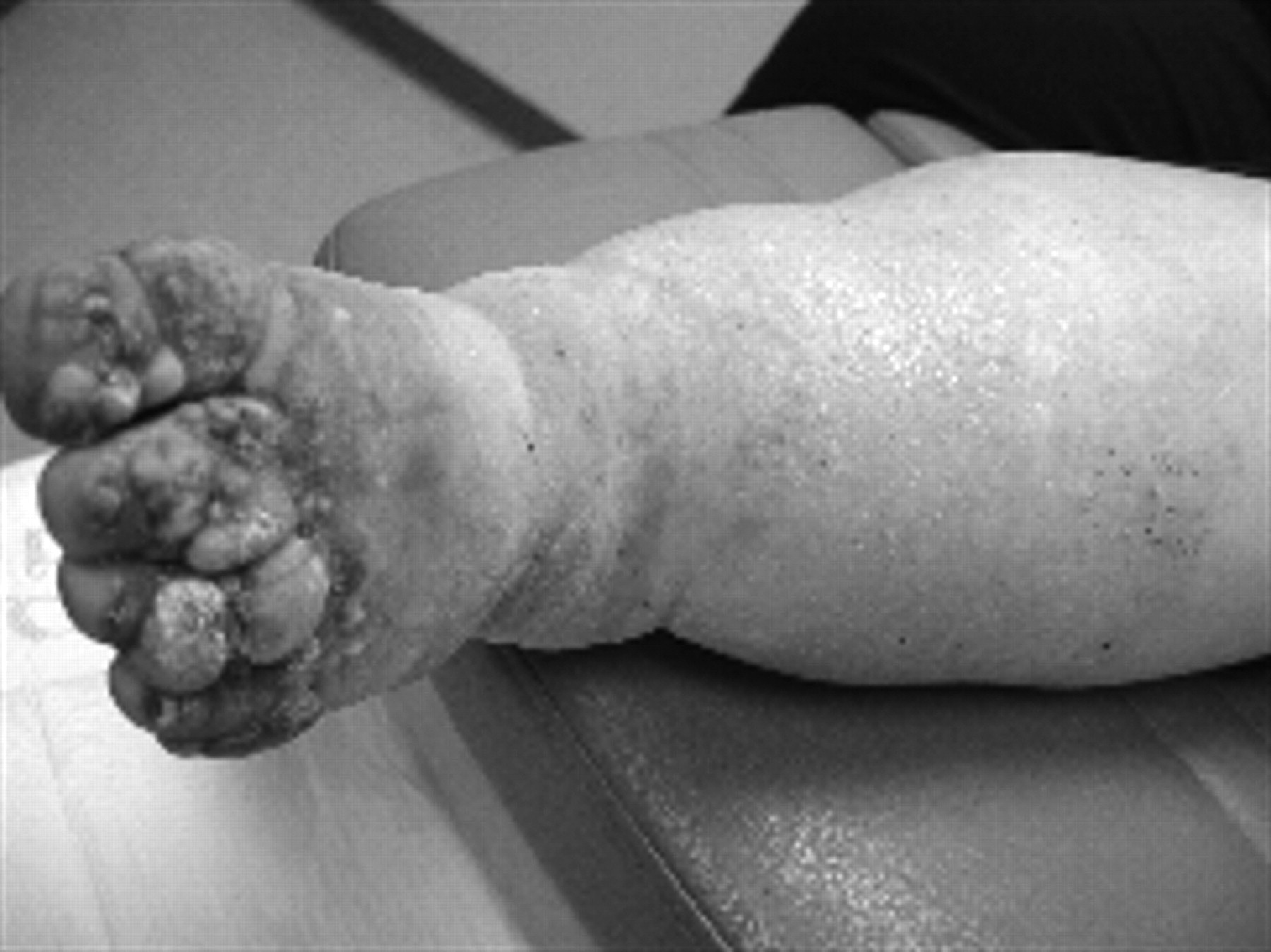
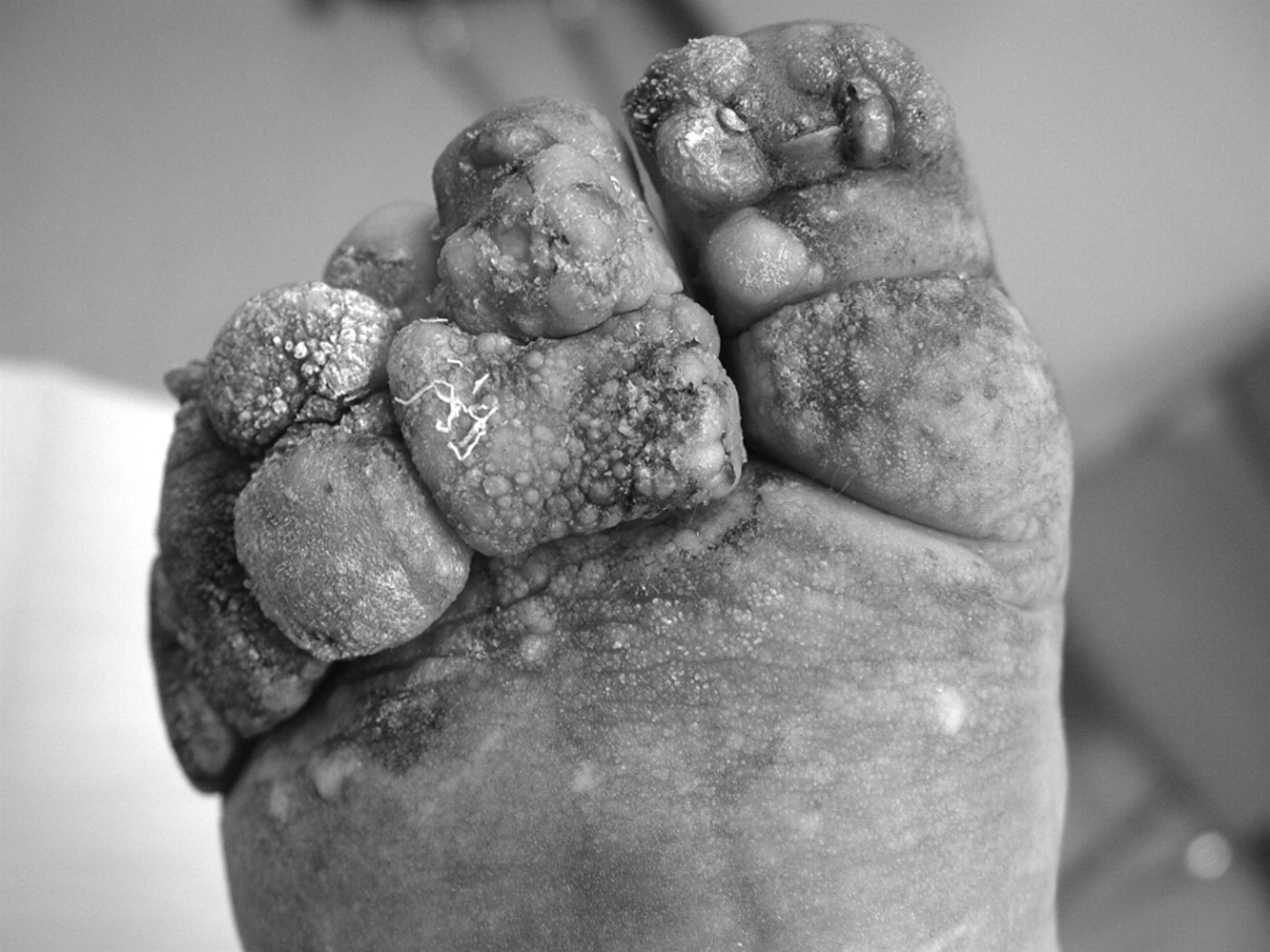
A 32-year-old woman presented with a chief complaint of slowly enlarging lesions on both feet (
Figure 1 and
Figure 2). The patient related that the lesions, which had been present for more than 1 year, began insidiously and had been slowly enlarging. The patient also complained of malodor associated with the lesions but denied significant pain—only minor discomfort with certain shoes. The patient had undergone periodic lymphedema treatments in the form of compression therapy during the previous 2 years because her lymphedema had become markedly worse. The patient’s medical history was significant for lymphedema praecox for 15 years and a resultant ulceration on the right lower extremity. Her surgical history consisted of a cesarean section. A focused physical examination of the lower extremity revealed severe, bilateral lower-extremity nonpitting edema, with no open lesions or signs of infection on the legs (
Figure 1). Examination of the feet revealed a generalized moss-covered appearance, with verrucous-type lesions covering the entire dorsal forefoot bilaterally, lichenification, malodor, and many papules and nodules ranging in diameter from 1 mm to 4 cm (
Figure 2). Two weeks after the initial visit, two incisional biopsies were performed on separate lesions on the left foot.
Pathologic Findings
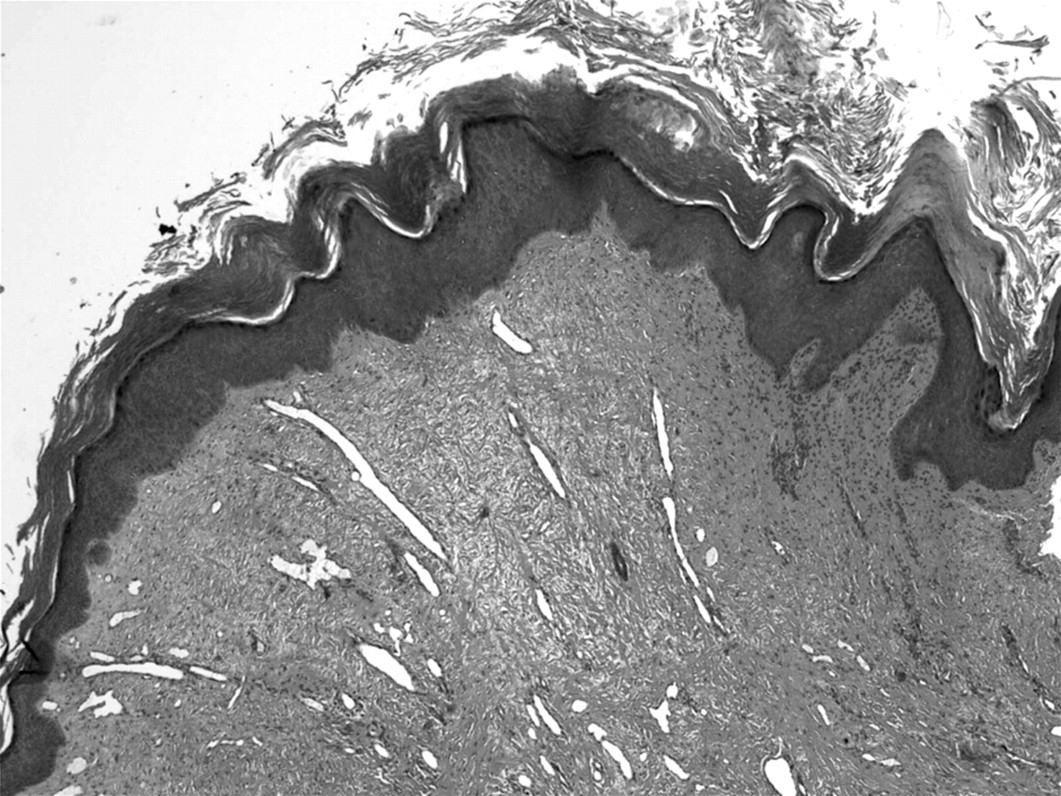
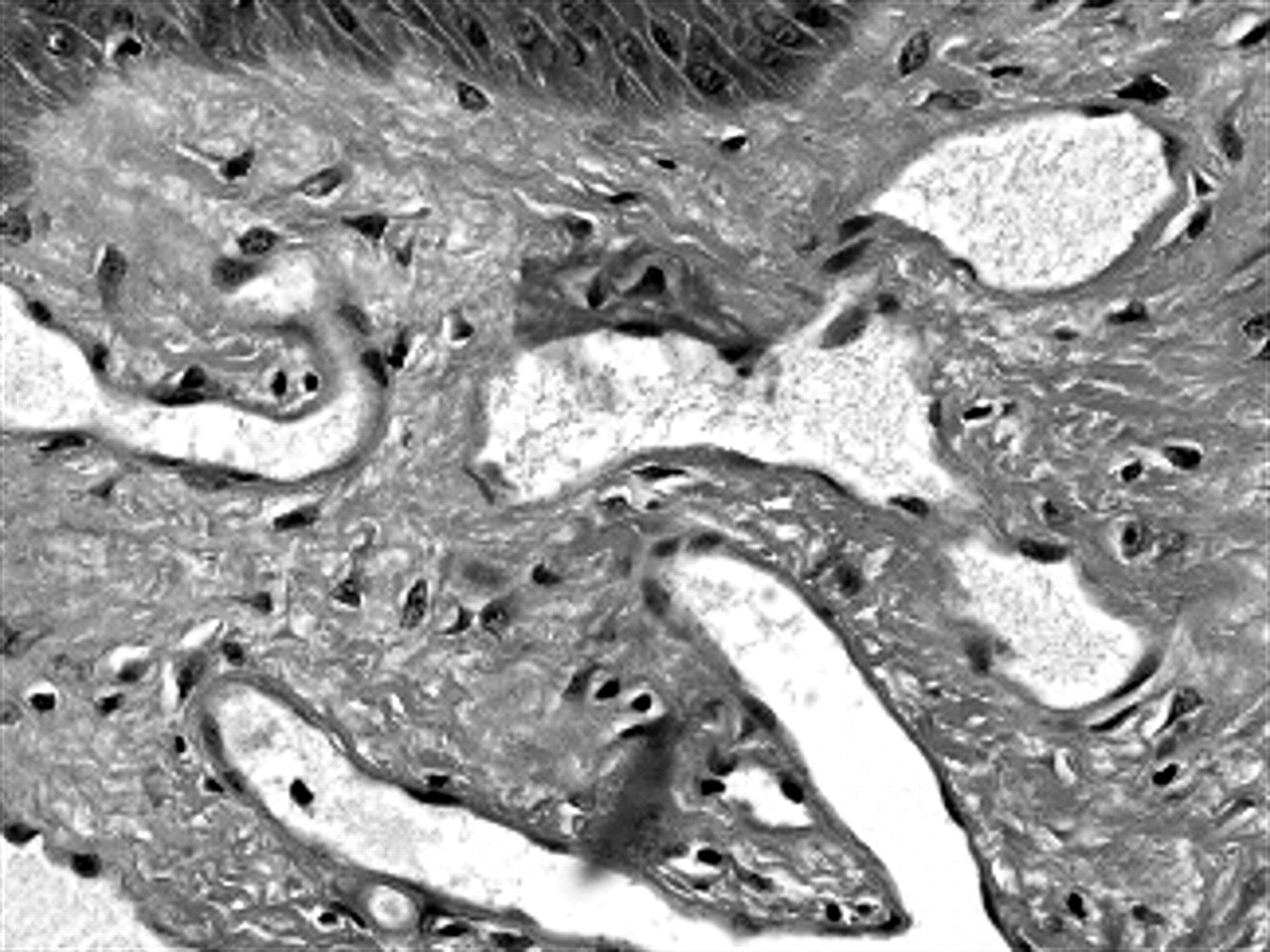
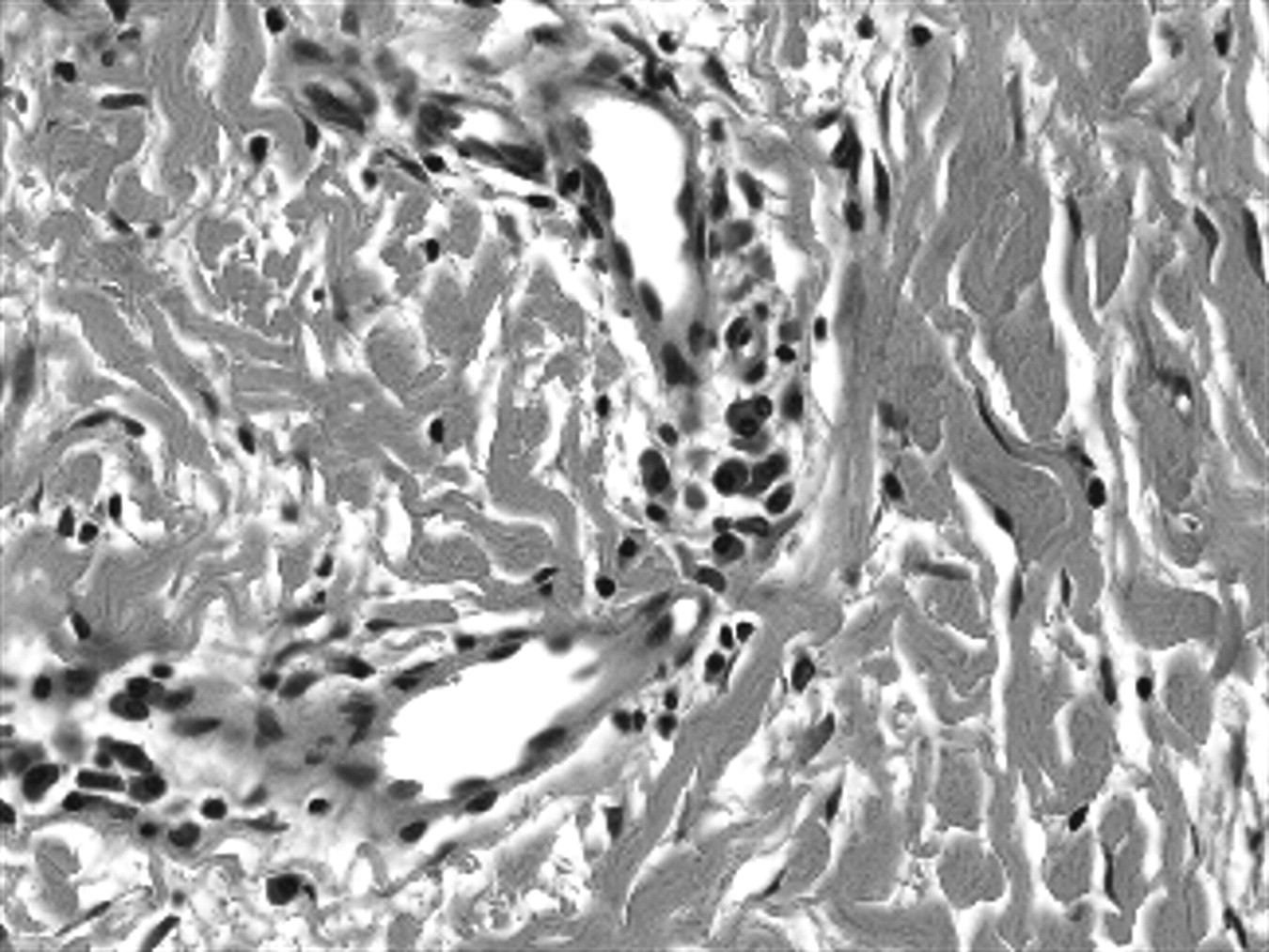
Sections of skin showed verrucous changes, including hyperkeratosis, parakeratosis, slight papillomatosis, and irregular acanthosis. The dermis was fibrotic, with stellate fibroblasts interspersed between numerous dilated lymphatic channels that were lined by a single layer of bland endothelial cells (
Figure 3 and
Figure 4). Scattered lymphocytes, plasma cells, and mast cells were present in the dermis (
Figure 5). There was no dermal or epidermal atypia. Periodic acid–Schiff, Gomori methenamine silver, and acid-fast bacilli stains were negative for fungal and mycobacterial organisms.
Discussion
Although elephantiasis nostras verrucosa is an uncommon disorder, it represents the cutaneous manifestations of chronic edema that results from numerous etiologies. In all cases, edema control and preclusion of recurrent infection are tantamount to treatment. Conservative management in the form of compression therapy is ongoing and difficult at best. In fact, compression therapy combined with elevation techniques has not changed much since its inception in 1784 by Hendy.[
4] Compression therapy includes elastic bandages, pneumatic stockings, mechanical massage, exercise, and elevation, all of which may be combined with other conservative treatments, such as antimicrobials, diuretics, and topical agents, to reduce edema and infection.[
7,
8,
14] Moreover, several surgical options are available for cases refractory to conservative management. Lymphovenous anastomosis, microsurgical lymphatic anastomosis, and lymphatic transplantation have all been advocated for surgical intervention to improve lymphatic drainage from the involved extremity, decrease retention of lymphatic fluid, remove fibrotic tissue, and debulk the extremity.[
2,
4,
6,
8] Lastly, amputation may be a consideration for failed conservative and surgical treatments.[
2,
4,
6,
8]