Hammer toe is a toe deformity characterized by dorsiflexion of the metatarsophalangeal joint, plantarflexion of the proximal interphalangeal joint, and dorsiflexion of the distal interphalangeal joint. Claw toe is a similar deformity characterized by dorsiflexion of the metatarsophalangeal joint and plantarflexion of the proximal and distal interphalangeal joints. These terms are often used interchangeably because both types of deformity involve the metatarsophalangeal joint.
In 1969, Sarrafian and Topouzian[
1] demonstrated on cadavers that the common extensor tendon of the toes, or extensor digitorum longus (EDL) tendon, has an extensor action on the distal and proximal interphalangeal joints only when the proximal phalanx is held in plantarflexion through the action of the intrinsic or short musculature of the foot. Sandeman[
2] reported that when the proximal phalanx is in the dorsal position at the expense of metatarsophalangeal joint dorsiflexion, the axis of the intrinsic muscles shifts, causing a loss of competence of the intrinsic musculature of the foot, which in turn loses its capacity to maintain the proximal phalanx in a plantar position. When this happens and the flexor digitorum longus (FDL) contracts, there is a greater contraction of the intrinsic musculature, which loses its ability to plantarflex the metatarsophalangeal joint. In a closed kinetic chain, this causes pathological dorsiflexion of the metatarsophalangeal joint, placing the proximal phalanx in a dorsal position and resulting in a claw or hammer deformity of the involved toe or toes. The causes of dorsiflexion of the interphalangeal joint have been described by various authors, including Coughlin and Mann,[
3] Richardson,[
4] Scheck,[
5] and Engle and Morton.[
6]
Correction of this type of flexible digital deformity by means of a tendinous transposition of the flexor musculature to the extensor area of the toes has been described by Lutter,[
7] Cyphers and Feiwell,[
8] Barbari and Brevig,[
9] Newman and Fitton,[
10] Parrish,[
11] Pyper,[
12] and Taylor.[
13] During the action or contraction of the plantar flexor musculature, plantarflexion of the metatarsophalangeal joint is thus achieved, keeping the proximal phalanx in a plantar position on the surface of the floor and preventing the metatarsophalangeal joint dorsiflexion that occurs in claw or hammer toe deformity. This approach uses the action of the FDL to transform the deforming forces into corrective forces.
Thus far, it has always been recommended that correction of claw or hammer toe deformities be performed by transferring the FDL tendon to the dorsum of the proximal phalanx. Transposition of the flexor digitorum brevis (FDB) tendon has not been previously described. In order to determine the feasibility of transferring the lateral and medial tendinous fascicles of the FDB as an approach to correction of claw and hammer toe deformities, it is necessary to know whether these fascicles are long enough to allow for transposition to the dorsum of the EDL tendon in the dorsal area of the proximal phalanx, as well as directly to the dorsum of the proximal phalanx of the second, third, fourth, and fifth toes.
The advantage of an FDB tendon transfer is that the FDL tendon does not have to be detached from the plantar base of the distal phalanx and therefore does not lose its ability to plantarflex the distal interphalangeal joint, thus helping to maintain the stability of the foot during gait.
Materials and Methods
Transfer of the FDB tendon was attempted in 180 toes. Initially, the FDB tendinous fascicle was transferred to the dorsum of the EDL tendon of the toe in the proximal area of the proximal interphalangeal joint to ascertain whether its length would allow for the intended transfer. Subsequently, tenotomy of the extensor digitorum brevis (EDB) was performed, releasing the proximal tendinous end of the proximal phalanx of the toe in order to facilitate the tendon transposition to the dorsal area.
Technique
The technique used to transfer the distal hemitendons of the FDB to the dorsal area of the EDL tendon, and subsequently to the dorsal area of the proximal phalanx of the toe, is described below:
- 1)
An S-shaped longitudinal incision is made on the plantar aspect of the toe, preserving any vessels in the medial and lateral areas (
Fig. 1).
- 2)
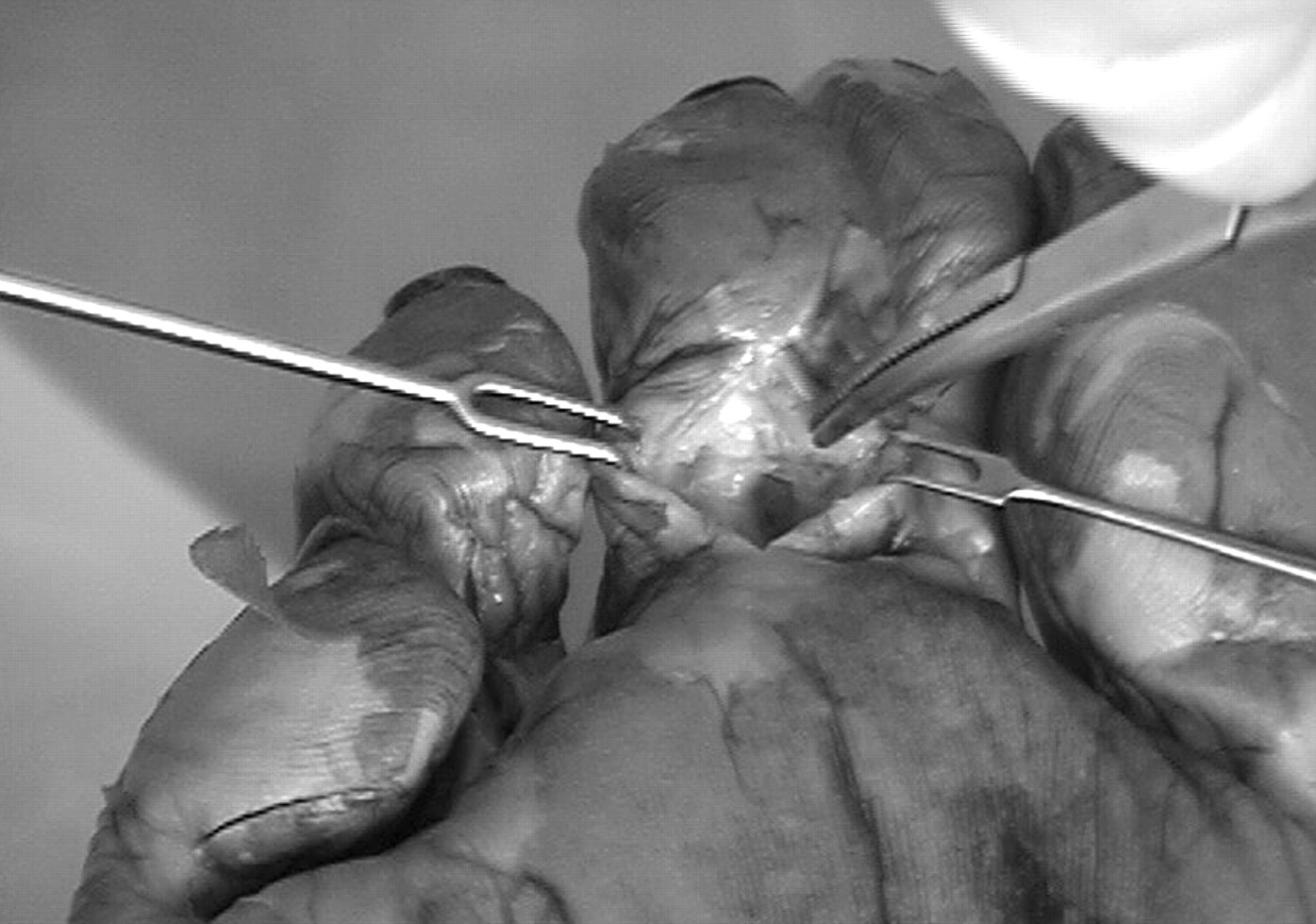
After retraction of the skin on both sides, the fibroaponeurotic surface of the plantar area of the EDL is exposed, as well as the tendinous sheath of the plantar flexor musculature of both the FDL and the FDB (
Fig. 2). The proximal segment of this fibroaponeurotic structure, or extensor aponeurosis, has transverse fibers originating from the lateral and medial borders of the aponeurotic “tunnel” surrounding the corresponding extensor tendons, called the transverse extensor aponeurosis. These aponeurotic fibers are also called the transverse lamina, quadrilateral lamina, or extensor sling.[
14] These transverse aponeurotic fibers are located around the metatarsophalangeal joint capsule and join the glenoid plate, as well as the deep metatarsal ligament and the sheath of the flexor tendons, through the plantar area. The structure has a firm insertion point extending distally to the plantar base of the proximal phalanx, thus contributing to metatarsophalangeal joint dorsiflexion when the EDL tendon pulls on the proximal phalanx through the proximal aspect of its base. The transverse fibers encapsulating the base of the proximal phalanx from its plantar aspect have a much greater extensor capacity on the metatarsophalangeal joint compared with that of the EDL on the proximal and distal interphalangeal joints from the insertion point on the dorsal base of the medial and distal phalanges, respectively.
- 3)
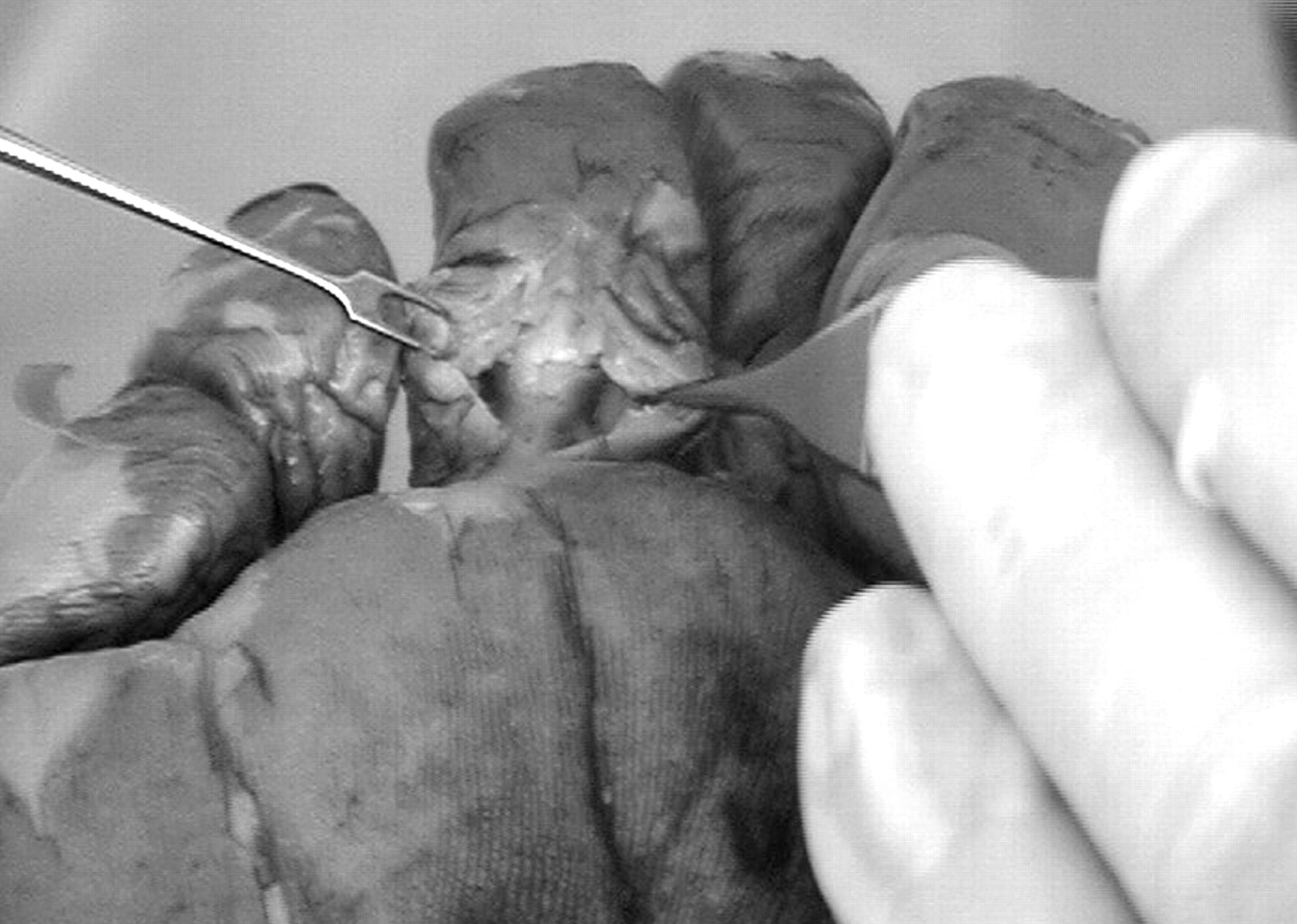
The plantar area of the extensor aponeurosis and the tendinous sheath are then isolated (
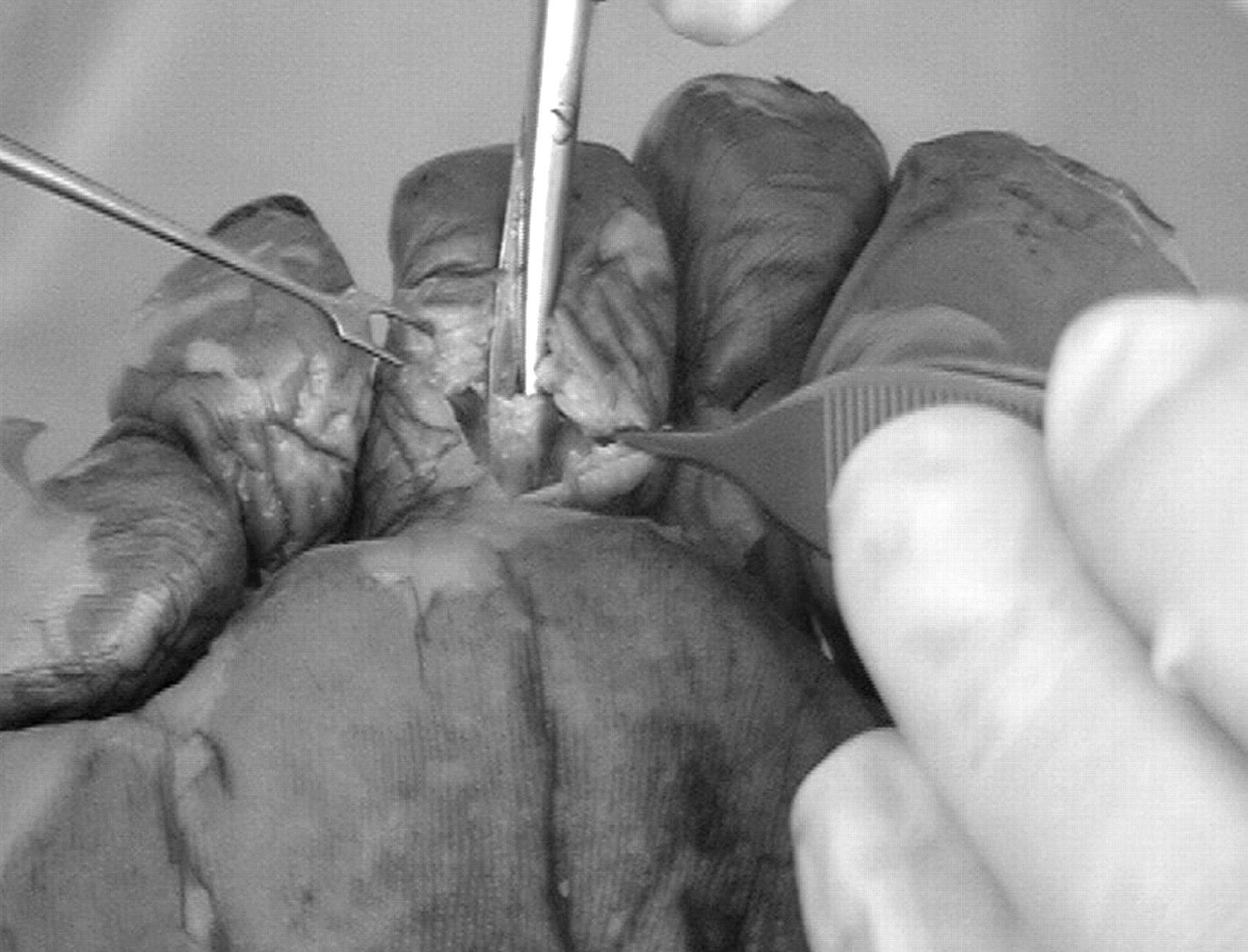
Fig. 3). Once this is achieved, the tendinous sheath is cut longitudinally (
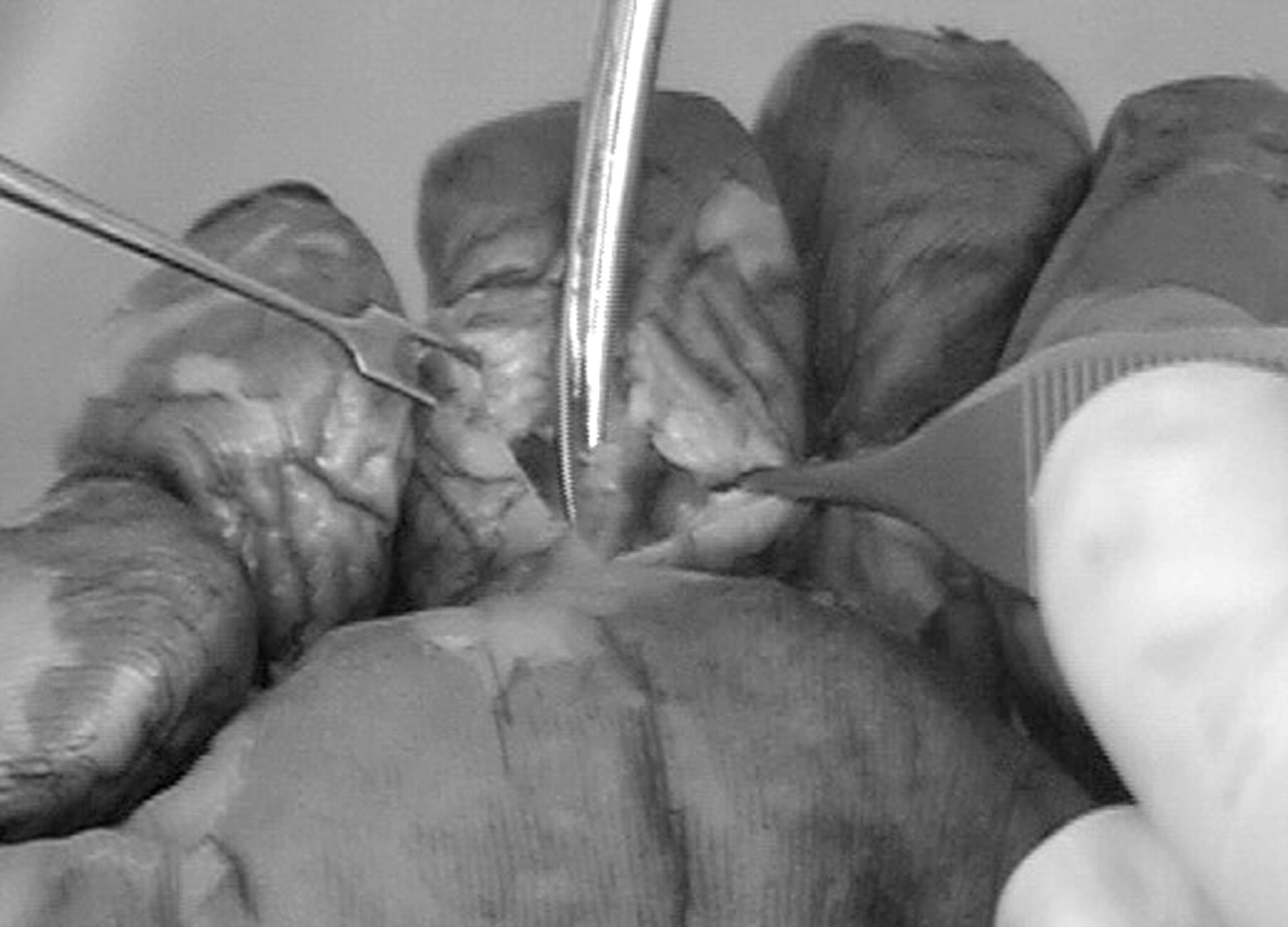
Fig. 4) and retracted to expose the FDL tendon (
Fig. 5).
- 4)
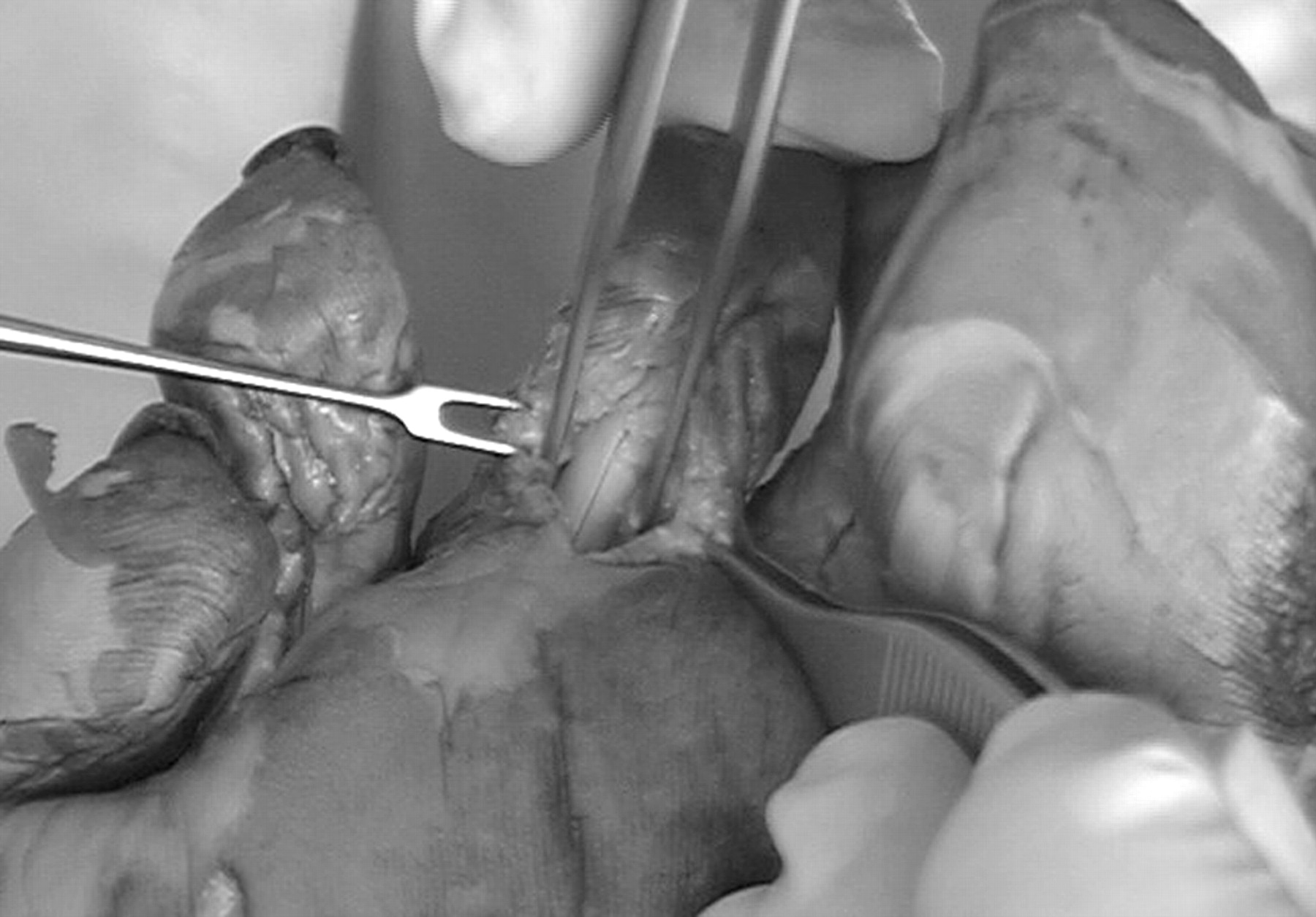
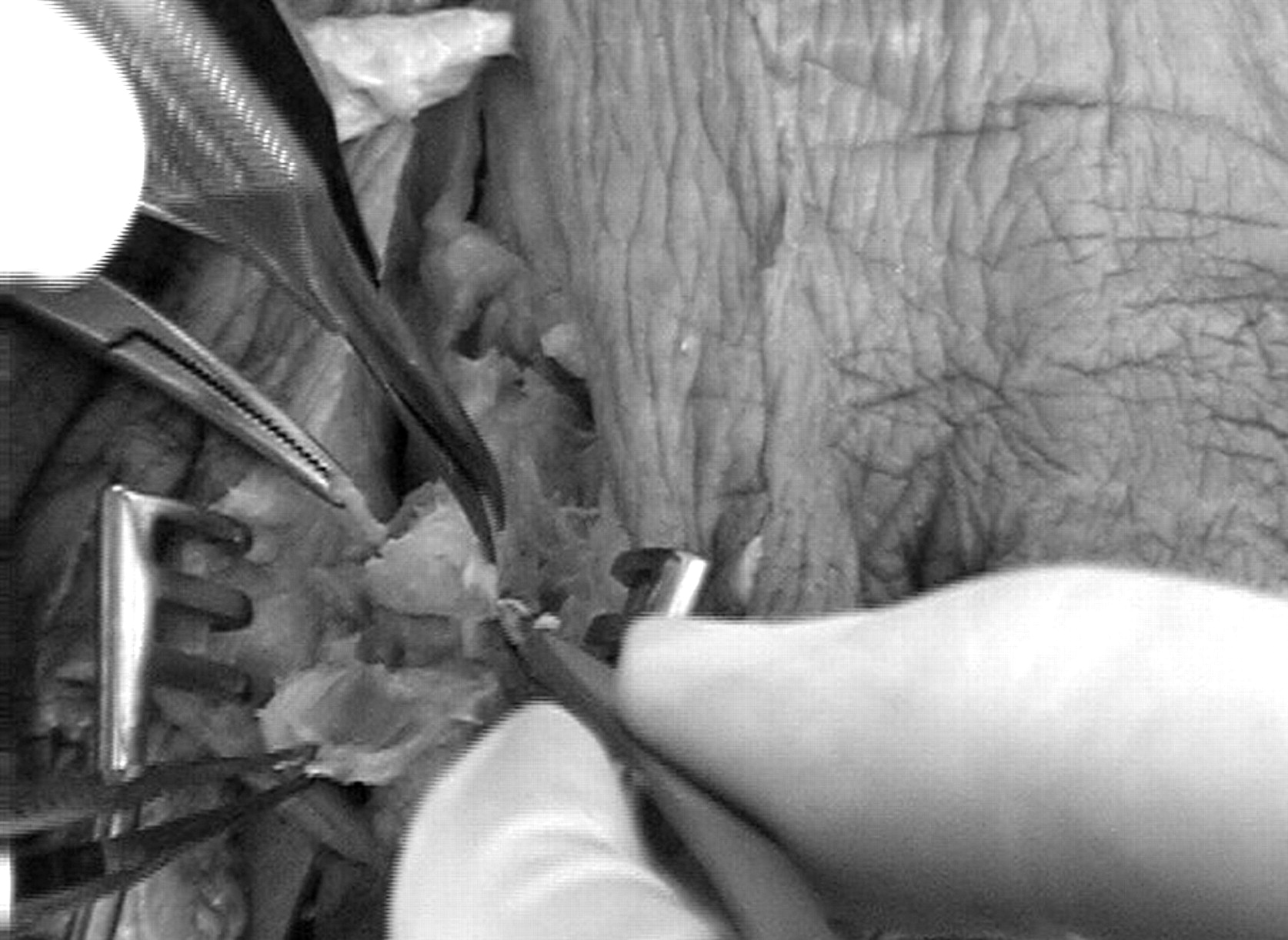
A curved hemostat is inserted by means of a blunt technique in the dorsal and medial area toward the FDB, and the medial fascicle of the FDB tendon is located and isolated (
Fig. 6).
- 5)
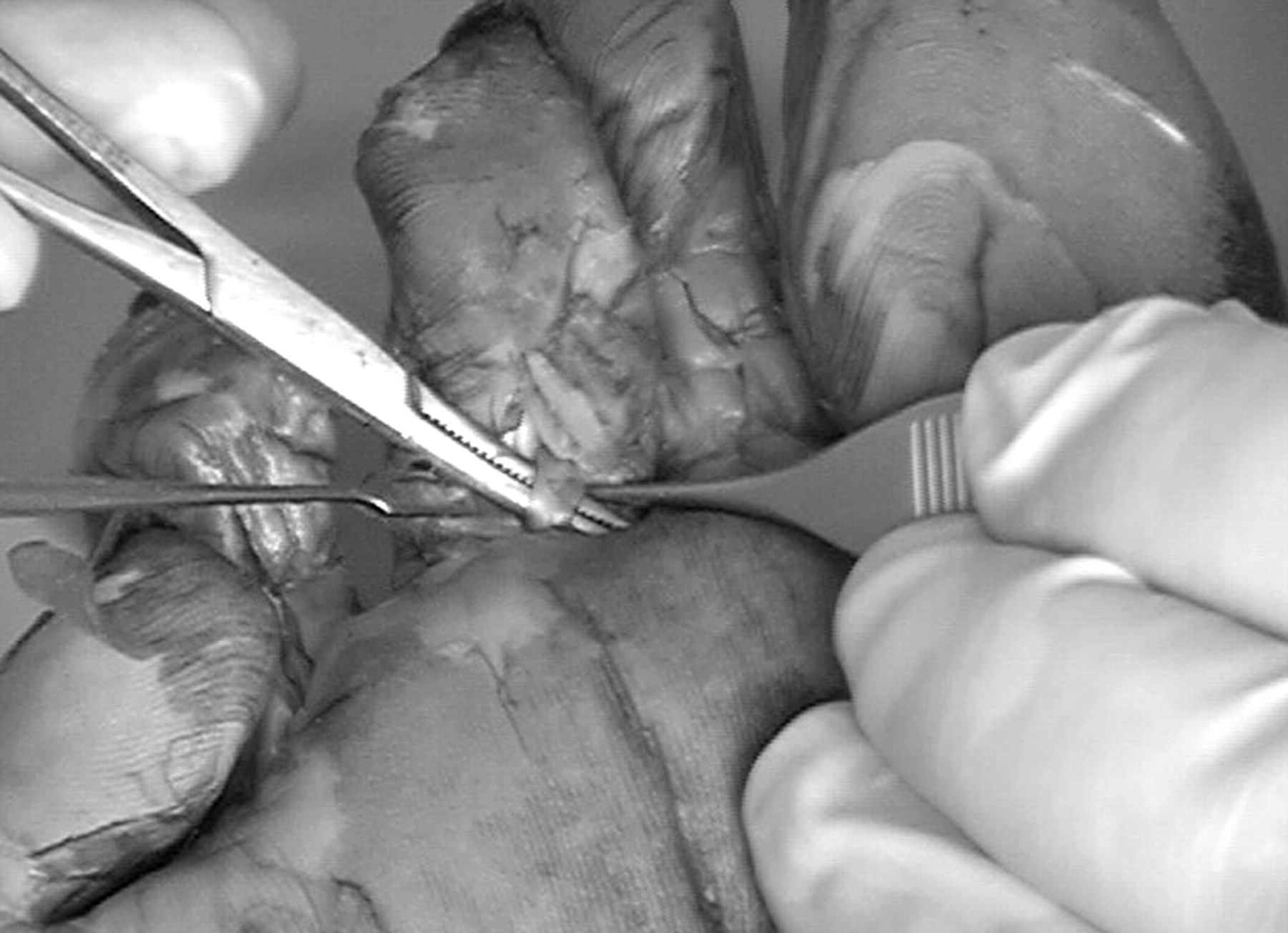
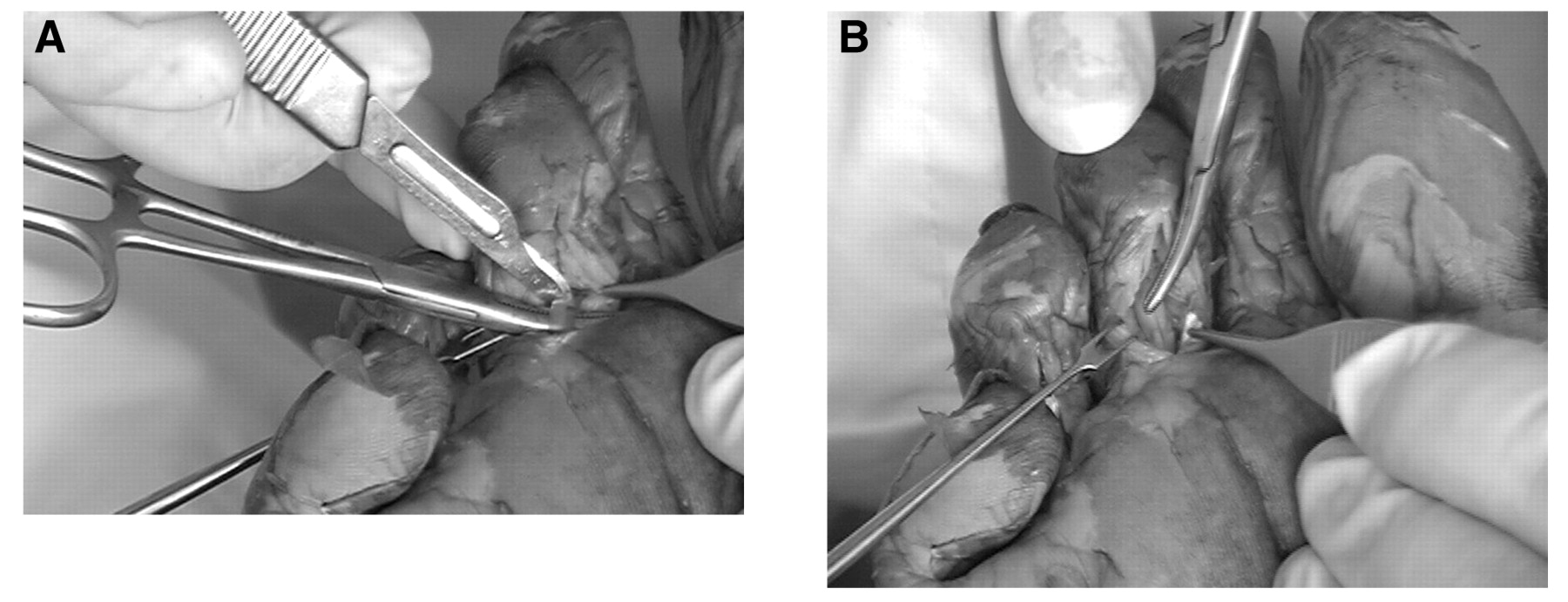
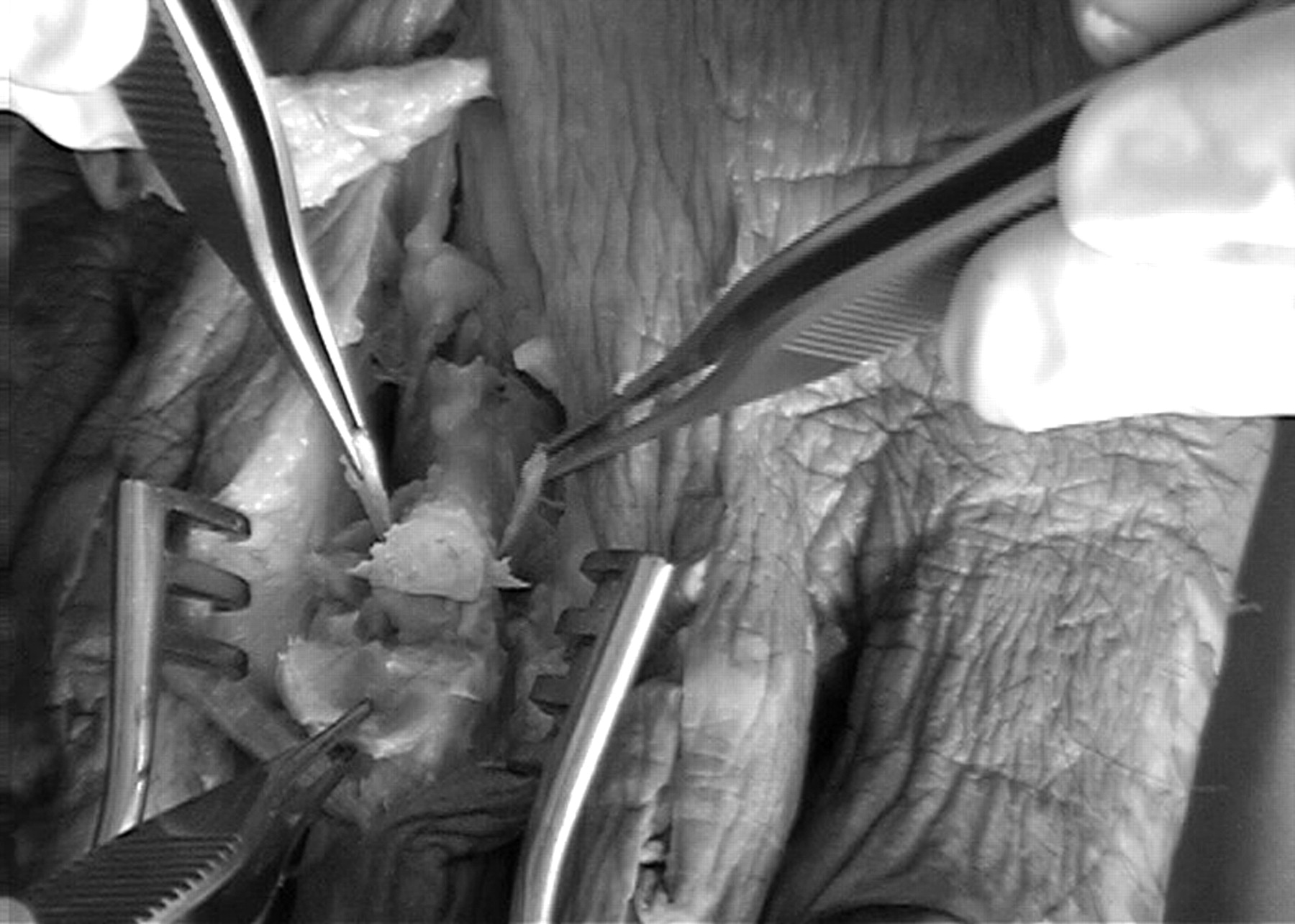
The tendon is cut through its insertion point as distally as possible to maximize the length of the free proximal tendinous stump, which is then clamped at its free proximal end (
Fig. 7).
- 6)
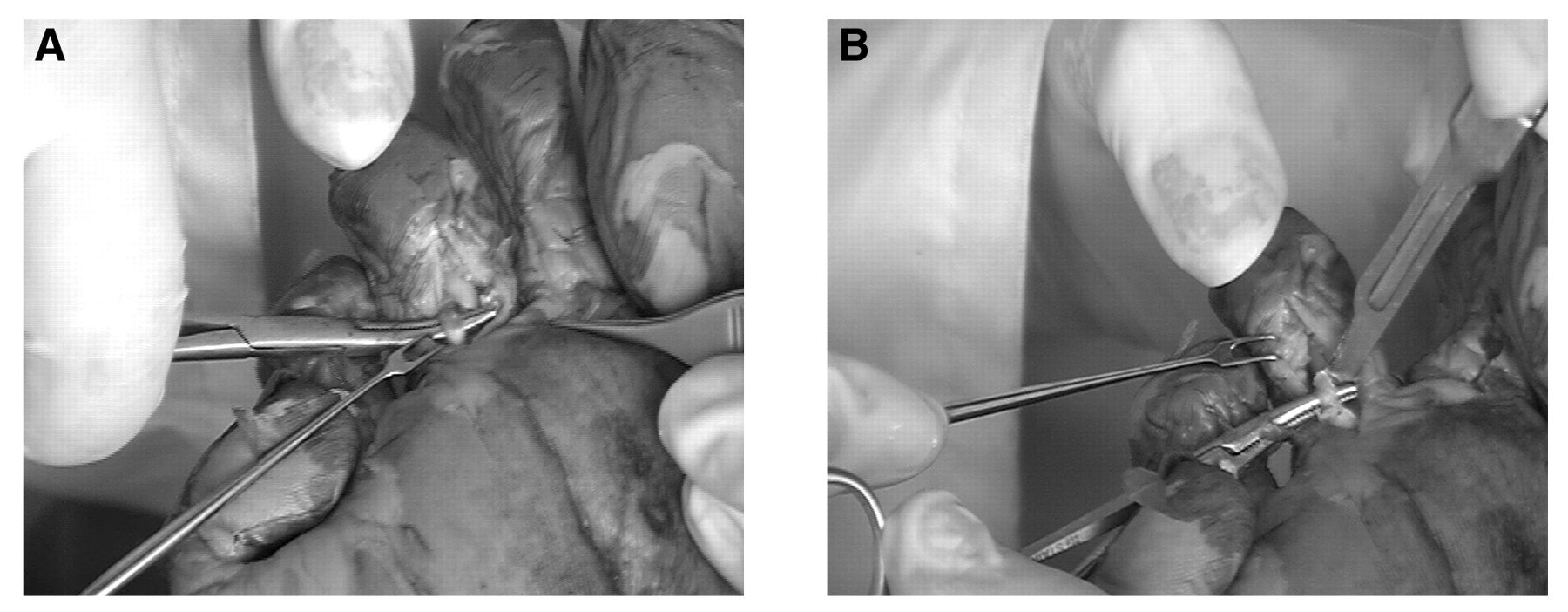
The operation is repeated on the lateral fascicle of the FDB tendon, which is located and isolated, cut distally, and clamped at its free tendinous end for later transfer (
Fig. 8).
- 7)
Both free proximal FDB distal tendons are then exposed and clamped with a hemostat in each hemitendon for later transfer to the dorsal area of the proximal phalanx (
Fig. 9).
- 8)
To perform the tendinous transfer of the FDB, a longitudinal incision is made on the dorsum of the proximal phalanx of the toe, from its dorsal base to the proximal interphalangeal joint, to expose the EDL tendon.
Once the EDL tendon is exposed, along with the transverse aponeurosis that shapes the digital extensor apparatus, other associated surgical procedures may be performed if semirigid or rigid deformities are present. In this study, capsulotomy and arthroplasty of the proximal phalanx were performed to reduce the fixed extension deformity of the metatarsophalangeal joint.
- 9)
To transfer the FDB tendon, a hemostat is passed through the dorsal incision and through the medial aspect of the transverse aponeurosis and then clamped to the free medial fascicle of the FDB tendon. Another hemostat is passed through the lateral aspect of the dorsal incision and through the transverse aponeurosis and clamped to the free lateral fascicle of the FDB tendon.
Once the medial and lateral fascicles of the FDB tendon have been clamped, a dorsal cutaneous incision is made to transpose them to the dorsal area of the EDL tendon through the transverse aponeurosis of the medial and lateral aspects. The tendinous fascicles of the FDB are then sutured in the dorsal area of the EDL (
Fig. 10).
- 10)
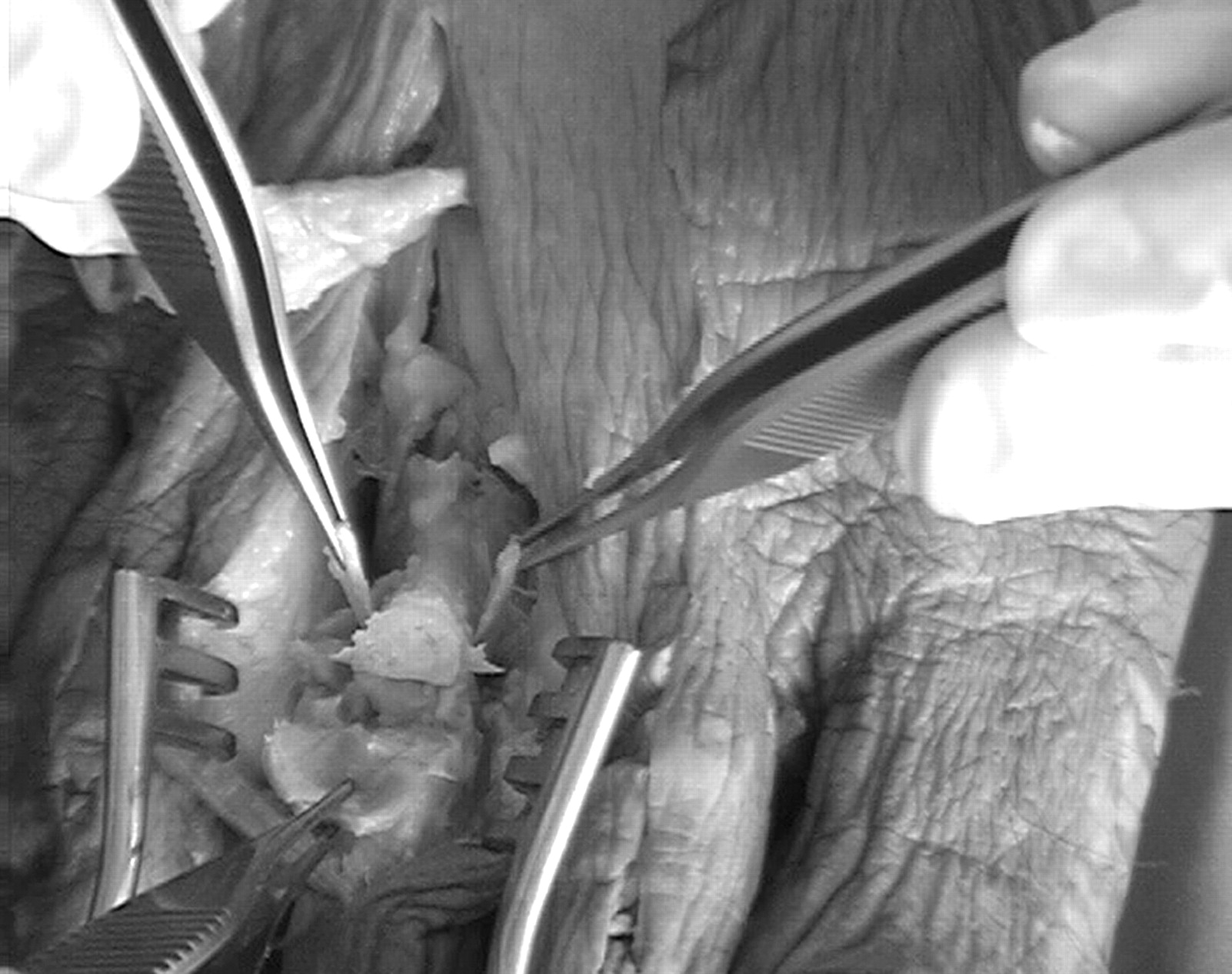
During this procedure, the length of the tendinous fascicles of the FDB was evaluated to ascertain whether it was sufficient to allow for their transposition over the dorsal area of the proximal phalanx. To this end, an EDL tenotomy was performed, releasing the proximal tendinous stump to expose the dorsal area of the proximal phalanx and to transpose the medial and lateral fascicles of the FDB to the medial and lateral borders of the proximal phalanx, respectively (
Fig. 11).
- 11)
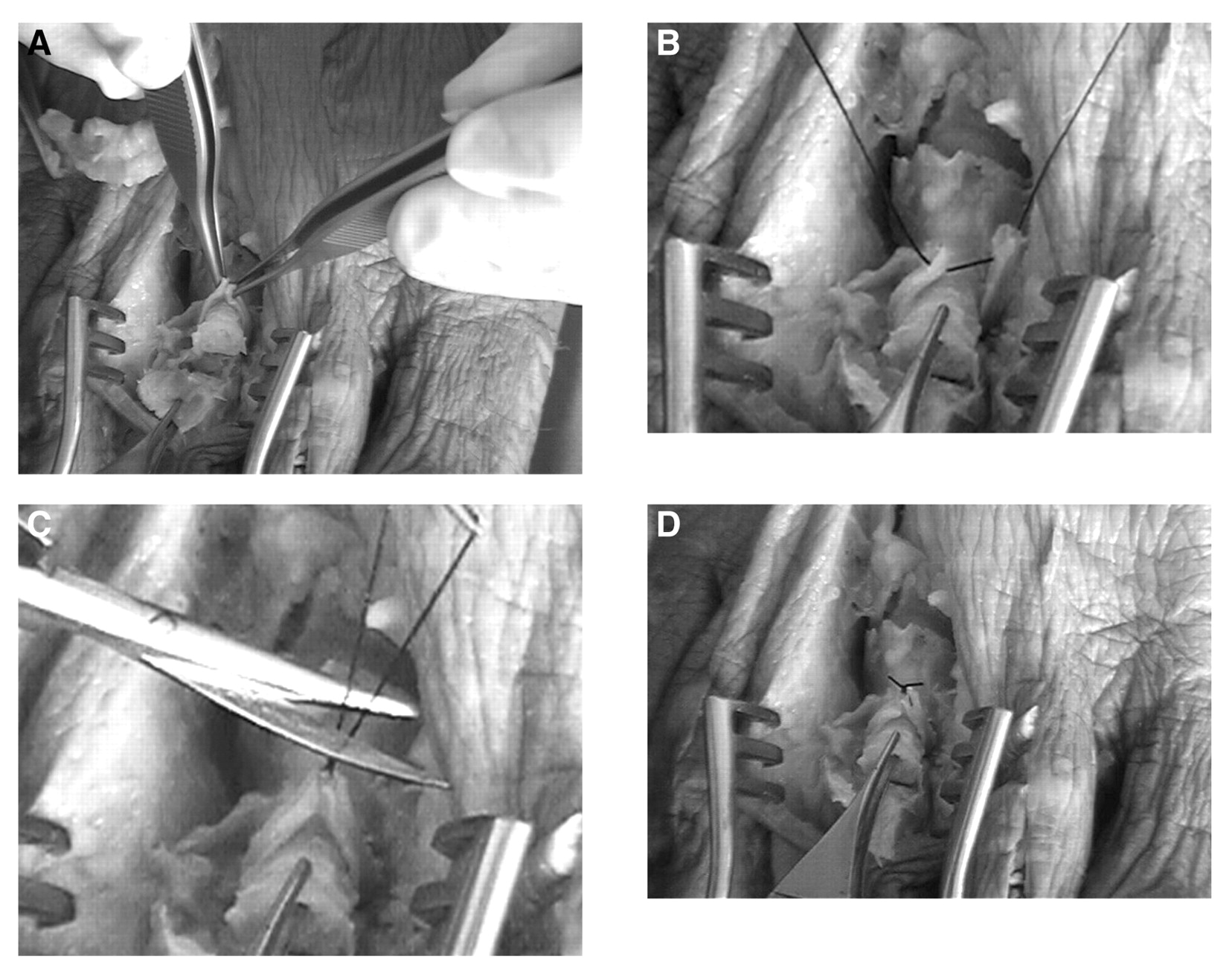
The medial and lateral FDB tendinous stumps may be sutured either in the dorsal area of the EDL muscle or on the dorsum of the proximal phalanx after the EDL tendon is released (
Fig. 12).
Figure 1.
Plantar incision preserving the medial and lateral vessels and nerves of the toe.
Figure 1.
Plantar incision preserving the medial and lateral vessels and nerves of the toe.
Figure 2.
The tendinous sheath of the plantar flexor musculature is exposed.
Figure 2.
The tendinous sheath of the plantar flexor musculature is exposed.
Figure 3.
The tendinous sheath is opened.
Figure 3.
The tendinous sheath is opened.
Figure 4.
The tendinous sheath is cut longitudinally.
Figure 4.
The tendinous sheath is cut longitudinally.
Figure 5.
The flexor digitorum longus tendon is exposed.
Figure 5.
The flexor digitorum longus tendon is exposed.
Figure 6.
The medial tendon of the flexor digitorum brevis is isolated with a curved hemostat.
Figure 6.
The medial tendon of the flexor digitorum brevis is isolated with a curved hemostat.
Figure 7.
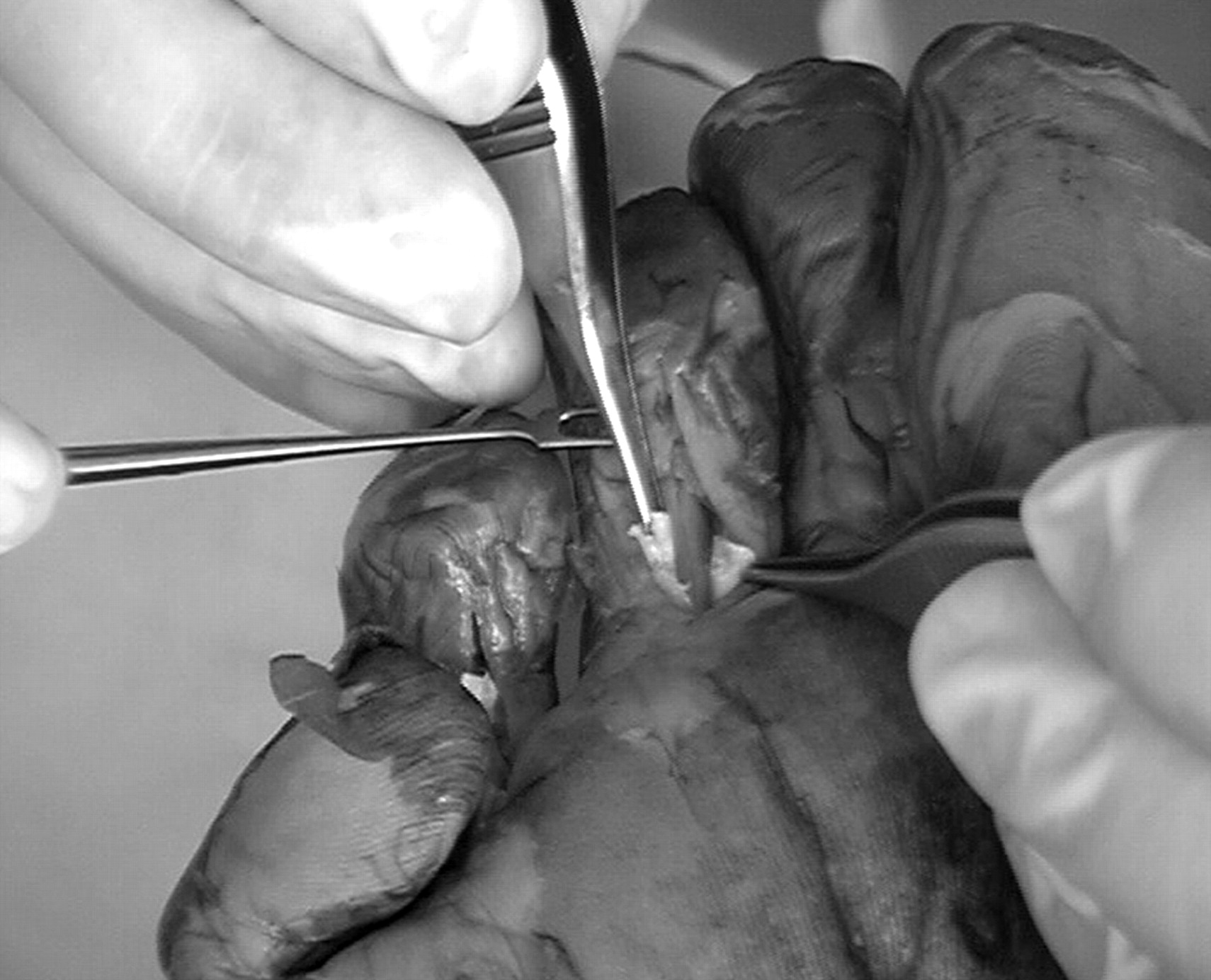
The medial hemitendon of the flexor digitorum brevis is cut distally (A) and then clamped (B).
Figure 7.
The medial hemitendon of the flexor digitorum brevis is cut distally (A) and then clamped (B).
Figure 8.
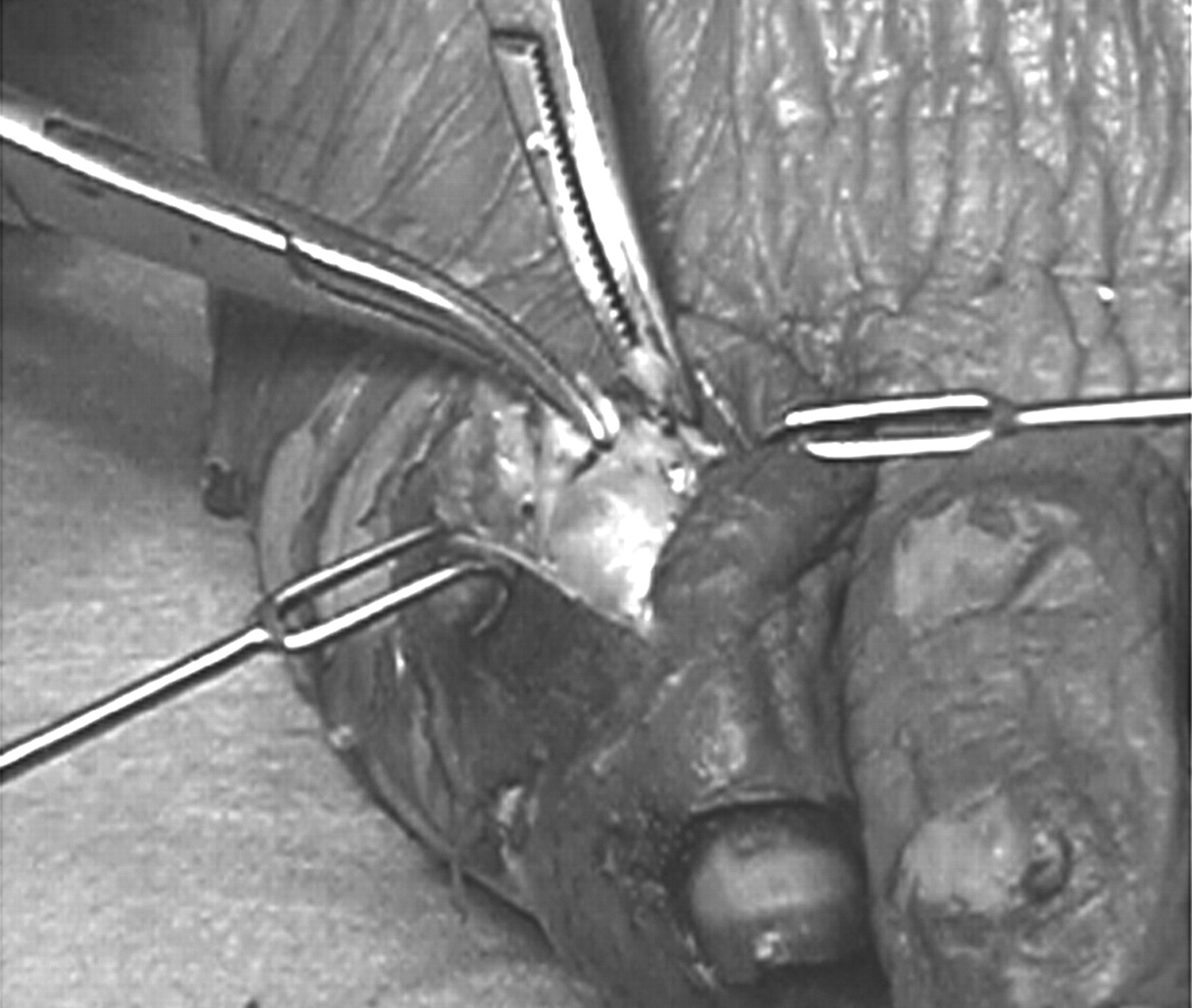
The lateral hemitendon of the flexor digitorum brevis is isolated with a curved hemostat (A) and cut distally and clamped (B).
Figure 8.
The lateral hemitendon of the flexor digitorum brevis is isolated with a curved hemostat (A) and cut distally and clamped (B).
Figure 9.
The flexor digitorum brevis distal tendons are clamped for later transfer.
Figure 9.
The flexor digitorum brevis distal tendons are clamped for later transfer.
Figure 10.
In another specimen, the flexor digitorum brevis tendon is transferred to the dorsum of the extensor digitorum longus tendon of the fifth toe.
Figure 10.
In another specimen, the flexor digitorum brevis tendon is transferred to the dorsum of the extensor digitorum longus tendon of the fifth toe.
Figure 11.
The medial and lateral fascicles of the flexor digitorum brevis tendon are transferred to the medial and lateral aspects of the proximal phalanx, respectively.
Figure 11.
The medial and lateral fascicles of the flexor digitorum brevis tendon are transferred to the medial and lateral aspects of the proximal phalanx, respectively.
Figure 12.
A, The distal tendinous stumps of the flexor digitorum brevis are approximated to ensure sufficient length before suturing; B, the stumps are sutured with 3-0 resorbable suture; C, the suture is cut; D, suture of both tendons at the dorsal aspect of the proximal phalanx.
Figure 12.
A, The distal tendinous stumps of the flexor digitorum brevis are approximated to ensure sufficient length before suturing; B, the stumps are sutured with 3-0 resorbable suture; C, the suture is cut; D, suture of both tendons at the dorsal aspect of the proximal phalanx.
Results
The FDB tendon transfer was attempted on 180 cadaverous toes: 45 second toes, 45 third toes, 45 fourth toes, and 45 fifth toes. The success rates were as follows: 100% (45 toes) for the second toe, 100% (45 toes) for the third toe, 100% (45 toes) for the fourth toe, and 93.3% (42 toes) for the fifth toe. In three fifth toes (6.7%), the FDB tendon was absent, which was a known anatomical variation.
Discussion
Transposition of the flexor to the extensor musculature through a dorsal cut, with FDL and FDB transfer to the dorsolateral area of the proximal phalanx, was performed by Girdlestone in 1947 and developed by Taylor[
13] (
Fig. 13). In his study, Taylor included 68 patients with claw or hammer toe deformity treated with this technique and associated procedures, such as dorsal capsulotomy of the metatarsophalangeal joint; occasionally, he also performed plantar capsulotomy of the interphalangeal joints or stabilization of the proximal phalanx with an external splint. The results he achieved were good in 50 of the 68 patients (73%), fair in 10 patients (15%), and poor in 8 patients (12%). He obtained the best results in young patients and reported that the failures were due to persistent dorsiflexion of the metatarsophalangeal joint. In his study, Taylor did not discriminate between patients with a flexible digital deformity and those whose deformity was rigid or semirigid. As a result, older patients, whose deformities are more rigid, had worse outcomes than younger patients, whose deformities were of a shorter duration.
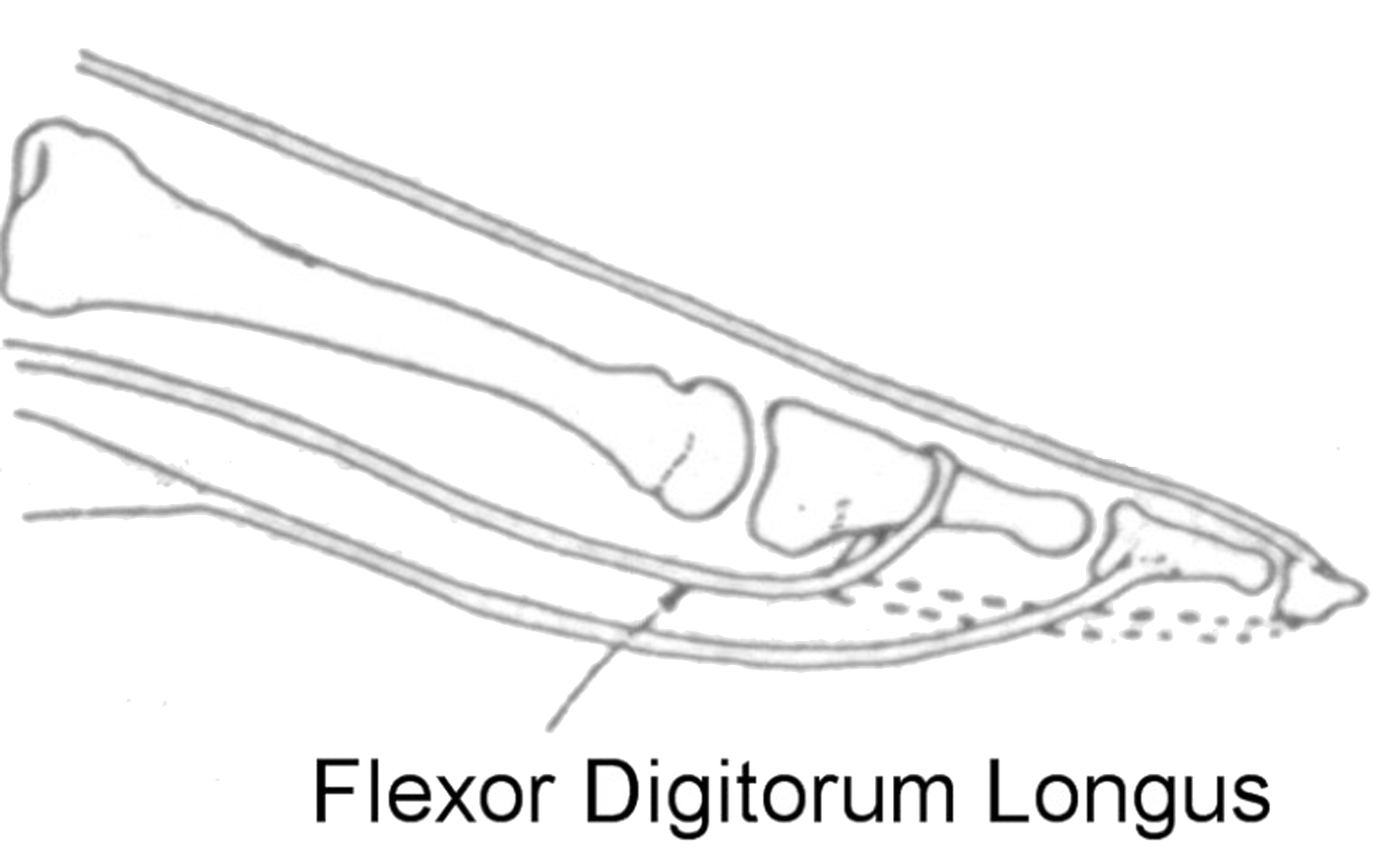
Figure 13.
The flexor digitorum longus is exposed and transected distally (A) and is then sutured end-to-side to the extensor digitorum longus (B). (Reprinted with permission from Foot and Ankle International[
9]).
Figure 13.
The flexor digitorum longus is exposed and transected distally (A) and is then sutured end-to-side to the extensor digitorum longus (B). (Reprinted with permission from Foot and Ankle International[
9]).
Pyper[
12] performed the technique described by Taylor[
13] on 45 feet in 23 patients. To correct the digital deformity, he combined it with lengthening of the EDL tendon and dorsal capsulotomy of the metatarsophangeal joint. Subsequently, Parrish[
11] modified this technique by detaching the FDL tendon and dividing the proximal tendinous stump longitudinally, repositioning its medial and lateral aspects in the extensor area. He performed FDL and FDB transfer on the first five patients of his series, but did not do so on the remaining 18 patients, stating that “the FDB tendon had a smaller calibre and its length was insufficient for the transposition”[
11] (p. 97).
The literature up to now reveals no attempts to discover why Parrish[
11] found it so difficult to perform the FDB transfer and gave up on this technique. His opinion seems to have been accepted by the scientific community without confirmation or challenge. We sought to correct flexible claw or hammer toe deformity by means of transposition of the FDB to the extensor or dorsal area of the base of the proximal phalanx, a modification of the procedure used by Parrish. A search of the indexed literature found no previous reports of this procedure.
A literature search was performed to identify any anatomical variations in the insertion of the FDB tendon. Three such variations were found: 1) absence of the tendon; 2) absence of the lateral and medial tendinous fascicles but presence of a single tendon running parallel to the FDL tendon; and 3) fusion of the FDB tendon to the FDL tendon.[
15-
18] LeDouble[
15] and Nathan and Gloobe[
16] found the FDB tendon to be absent in the fifth toe in 21.5% of cases. Testut[
18] found the FDB tendon to be absent in the fourth and fifth toes in 3% of the dissections performed. This same author, in an 1884 study,[
17] along with the one he performed later in 1892,[
18] found that the FDB medial and lateral fascicles are not divided and run parallel to the FDL tendon before inserting in a side of the intermediate phalanx of the fifth or fourth toe in 5% of cases. Although he did not specify individual percentages for each of these toes, he established that the FDB tendon of the fifth toe is fused to the FDL tendon in 2% of cases.
Thus the anatomical variations found appear more frequently in the FDB insertion of the fifth toe; this insertion is missing in a certain percentage of cases, ranging from 21.5% [
15,
16] to 3%.[
17,
18] Anomalies or variations in the insertion of the FDB tendon in the third and second toes have not been found; our findings are consistent with those results.
These findings should be taken into account in assessment of the length of the FDB tendinous fascicles prior to their transposition to the dorsum of the EDL and the proximal phalanx. We should expect to find no cases of variation in the insertion of the FDB in the second and third toes, a small number of cases of variation in the fourth toe, and the greatest number of variations, including the absence of this tendon, in the fifth toe.
Correction of a flexible claw or hammer toe deformity by means of transposition of the FDL tendon involves its detachment from the plantar aspect of the distal base of the distal phalanx of the toe and relocation on the extensor apparatus. This detachment is accompanied by loss of plantarflexion of the distal interphalangeal joint, which is important in the propulsive phase of gait and for stabilization of the distal phalanx against the ground to obtain proper balance. Thus cutting the FDL tendon results in this joint’s loss of competence during the take-off stage of gait, with subsequent dorsiflexion of the interphalangeal joint caused by the weight of the body. Over time, this will cause hyperextension and distal interphalangeal joint instability, increasing in proportion to the number of tendinous transfers that have been performed on that foot to correct this flexible digital deformity. The clinical consequences will be greater in younger people, who are more active and have a greater incidence of this type of flexible deformity than older people.
Transfer of the FDB tendon allows the FDL tendon to maintain its capacity to enable plantarflexion of the distal interphalangeal joint, contributing to stability of the take-off stage of gait and to proper balance. Transfer of the FDB tendon to the extensor apparatus in the area of the proximal phalanx also enables plantarflexion of the metatarsophalangeal joint, which was previously achieved with the FDL tendon transfer. The FDL tendon should be sutured in its anatomical position to avoid flexion or extension of any involved joint.
We have found that transfer of the FDB tendon to the dorsum of the EDL is extremely difficult in the proximal phalanx area because of the need to open a “tunnel” through the transverse aponeurosis of the extensor apparatus. Following the technique described by Parrish,[
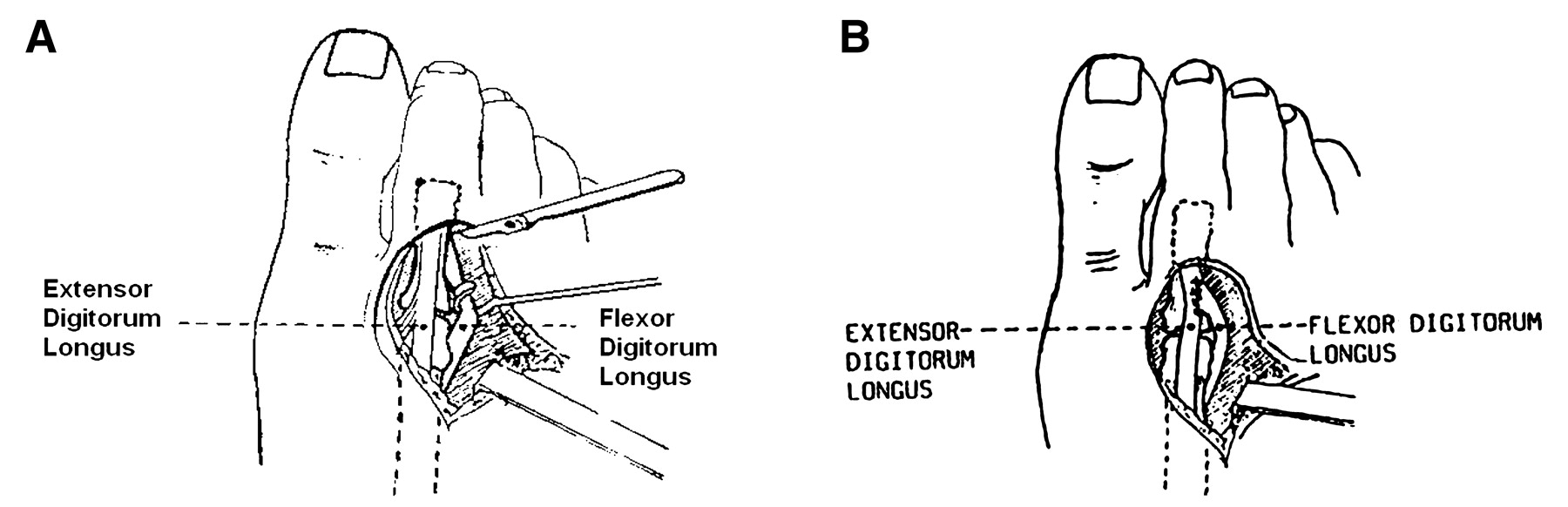
11] we found that the free ends of the FDB lateral and medial hemitendons were too short, making it impossible to transfer them to the dorsal area of the toe’s proximal phalanx, exactly as described by Parrish in 1973 (
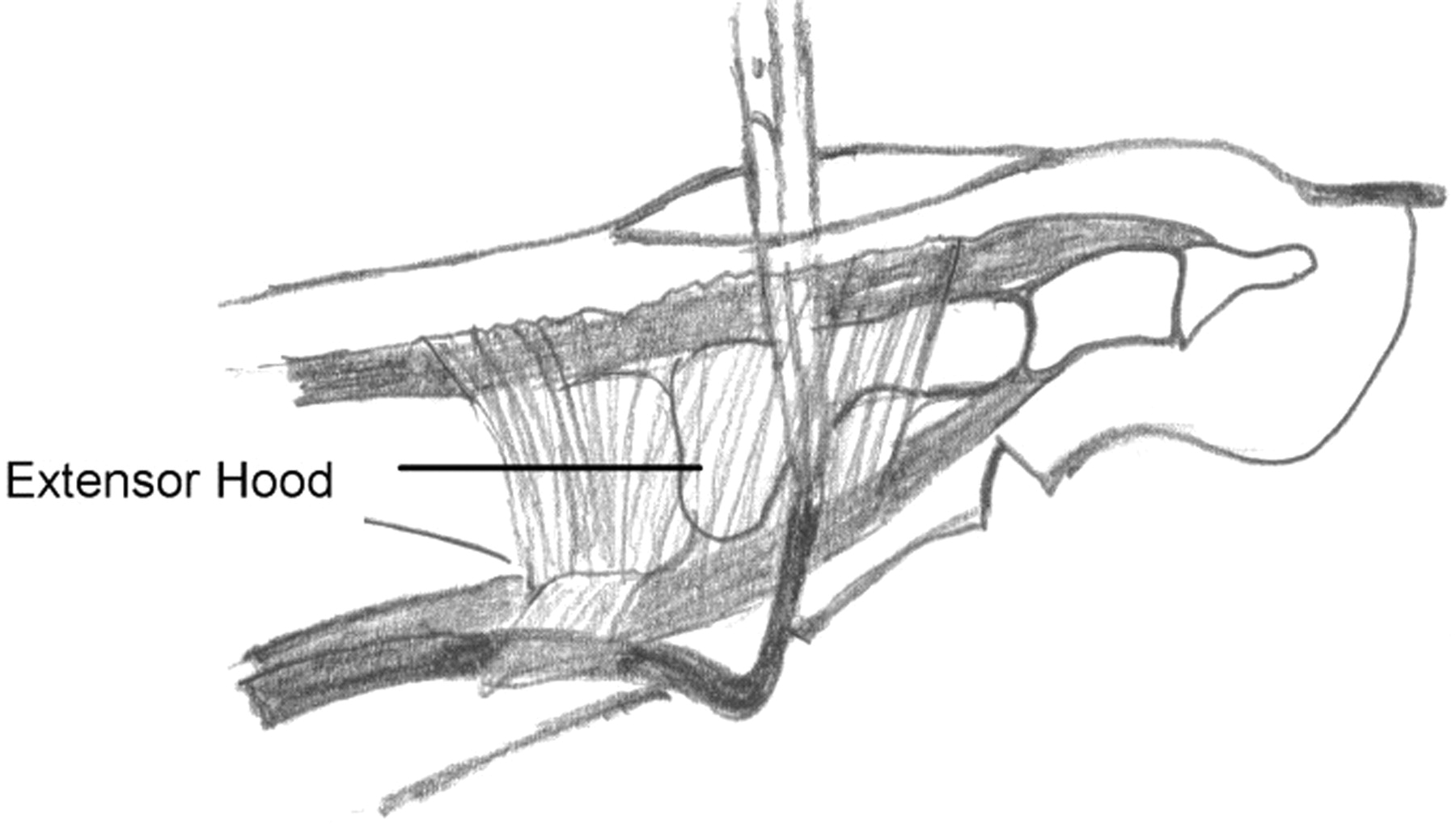
Fig. 15). We believe that this “tunnel” in the extensor apparatus limits the motion of the FDB tendinous fascicles, which are trapped in the extensor’s transverse aponeurosis. Cutting this transverse aponeurosis provides sufficient length to the tendinous fascicles for them to be transferred to the dorsum of the EDB. We found that the difficulty in transposing this tendon stems not from the length of the FDB medial and lateral tendinous fascicles, but rather from the transverse aponeurotic fibers originating from the EDL that surround the metatarsophalangeal joint capsule and join in the plantar area with the glenoid plate, the deep metatarsoplantar ligament, and the sheath of the flexor tendons to insert distally into the plantar base of the proximal phalanx. These aponeurotic fibers and the sheath of the flexor tendons must be cut (
Fig. 16) to allow the FDB lateral and medial tendinous fascicles to be repositioned on the dorsal area of the proximal phalanx of the toe; with this procedure, a longitudinal tenotomy of the tendon in order to lengthen it is no longer necessary. By releasing the FDB hemitendons from the transverse fascicles of the extensor apparatus, they can be lengthened and sutured on the dorsal area of the proximal phalanx (
Fig. 17). Before stitching both tendinous stumps, the position in which the pertinent joints must be placed should be assessed, bearing in mind that because of the FDB point of origin, the position of the ankle during the suturing will have no effect on the traction of this muscle on the proximal phalanx. In contrast, when performing the FDL tendon transfer, the ankle position during stitching is very important: If the ankle is in plantarflexion, the tendon is long enough to allow it to be sutured on the dorsal area of the proximal phalanx without difficulty. When the patient is weightbearing or walking, however, the ankle is in dorsiflexion, shortening the FDL tendon and forcing the metatarsophalangeal joint into plantarflexion.
We believe that transfer of the FDB tendinous fascicles can be performed on all of the toes, provided that the aponeurotic fibers of the extensor apparatus, as well as the sheath that covers the flexor tendinous assembly, have been correctly released. The possible exception is the fifth toe, in which the FDB tendon was absent in three cases (6.7%).
The difficulty of transferring the FDB tendon is reduced by performing a tenotomy of the EDL tendon in the area of the proximal interphalangeal joint and then cutting the medial and lateral aspects of the extensor apparatus expansions. This virtually eliminates the resistance of these fibers during transfer of the hemitendon of the corresponding side through the “tunnel” created between the fibers. If the FDB tendinous fascicles are not sutured on the dorsal side of the EDL tendon when it passes over the dorsum of the proximal phalanx, but are stitched directly on the dorsum of the proximal phalanx, the suture distance is reduced, along with the required length of these FDB tendinous fascicles.
Figure 14.
The flexor digitorum longus tendon is divided longitudinally. Each half is extended on each side of the proximal phalanx and sutured to itself and then to the dorsal expansions of the extensor tendon. (Reprinted with permission from Foot and Ankle International[
9]).
Figure 14.
The flexor digitorum longus tendon is divided longitudinally. Each half is extended on each side of the proximal phalanx and sutured to itself and then to the dorsal expansions of the extensor tendon. (Reprinted with permission from Foot and Ankle International[
9]).
Figure 15.
This drawing demonstrates the difficulty encountered by Parrish[
11] in transferring the flexor digitorum brevis tendon due to the presence of the extensor apparatus.
Figure 15.
This drawing demonstrates the difficulty encountered by Parrish[
11] in transferring the flexor digitorum brevis tendon due to the presence of the extensor apparatus.
Figure 16.
The fibers of the extensor hood prevent the distal aspect of the flexor digitorum brevis tendon from reaching the dorsal aspect of the proximal phalanx and must be cut.
Figure 16.
The fibers of the extensor hood prevent the distal aspect of the flexor digitorum brevis tendon from reaching the dorsal aspect of the proximal phalanx and must be cut.
Figure 17.
The extensor hood fibers are cut to allow the lateral and medial tendinous fascicles of the flexor digitorum brevis to be repositioned.
Figure 17.
The extensor hood fibers are cut to allow the lateral and medial tendinous fascicles of the flexor digitorum brevis to be repositioned.
Conclusion
The results of our study confirm that the FDB tendon can be transferred to the dorsum of the proximal phalanx after cutting the EDL tendon and releasing it from the aponeurotic expansions and cutting the tendinous sheath of the tendinous flexor apparatus, which provides sufficient length to the medial and lateral FDB tendinous fascicles. Moreover, this procedure can be performed in any one of the toes, except in cases where the FDB tendon is absent as an anatomical variation, which has been observed in the fifth toe. This technique can provide increased stability to correction of claw or hammer toe deformities. The transverse aponeurotic fibers originating from the EDL impede transfer of the FDB tendon, and meticulous excision of these fibers is essential to the success of the procedure.