Hallux limitus deformity is defined as that in which the base of the proximal phalanx of the hallux is plantarly subluxated with respect to the head of the first metatarsal so that the first metatarsophalangeal joint cannot accomplish the whole range of dorsiflexion.[
1] For this deformity to be produced, the first metatarsophalangeal joint must have less than 65° of dorsiflexion, the amount considered by various authors as being essential for gait.[
1–
9] Actually, there is no known clinical or diagnostic threshold separating the terms hallux limitus and hallux rigidus. It is generally accepted that hallux limitus is the state preceding hallux rigidus.[
1,
2,
10] Stuck et al[
11] established a limit, defining the deformity of hallux rigidus as that in which the hallux cannot achieve more that 10° of dorsiflexion. The present work uses the definition of Stuck et al when referring to hallux rigidus deformity.
Hallux limitus is a pathologic condition with a multifactorial origin.[
9,
10,
12] Its etiology can be influenced by hereditary, systemic, iatrogenic, traumatic, and biomechanical factors, among others. One of the biomechanical factors on which many authors have opined over the years is biomechanical dysfunction caused by alterations in the size of the first metatarsal and of the hallux.
In the scientific literature, many authors have referred to alterations in the length of the first metatarsal, making it excessively long or excessively short, as a causal factor of hallux limitus. There is often no indication as to whether such alterations are in the absolute first metatarsal length or in its length relative to the second. An excessively long first metatarsal with respect to the second metatarsal (positive first metatarsal protrusion) has been associated with hallux limitus[
13–
17] more often than has a short first metatarsal in relation to the second metatarsal (negative first metatarsal protrusion).[
18] We also found authors who do not associate alteration in the relative lengths of the first and second metatarsals with this deformity.[
19]
When speaking of excessive absolute or anatomical length of the first metatarsal, it does not mean that it is longer than the second metatarsal. Rather, the first metatarsal is longer than normal, while still being shorter than the second metatarsal. Jack[
20] noted that the first metatarsal and the great toe tend to be longer than normal in feet with hallux rigidus and, along with authors such as Hanft et al[
21] and Lichniak,[
7] claimed that an excessively long first metatarsal could cause hallux limitus. Paradoxically, an excessively short first metatarsal has also been attributed to the etiology of hallux limitus.[
22–
24] The alteration in the length of the hallux that has been related to the etiology of hallux limitus deformity is always, to our knowledge, an excessive length.[
25,
26]
In view of the controversy in the literature about the role of the size of the first metatarsal and the hallux in the etiology of hallux limitus deformity, the present study was designed with the following aims: 1) to furnish reference values for the size of the first metatarsal and the hallux and 2) to confirm whether the lengths of the first metatarsal and hallux, absolute and relative, are greater than normal in the incipient phase of hallux limitus deformity.
Materials and Methods
The sample for this study comprised 144 feet belonging to 72 subjects, 33 women and 39 men, with a mean ± SD age of 23.53 ± 2.74 years. These subjects were patients attending the Clinical Podiatric Service at the University of Seville between January 1, 2004, and December 31, 2006, and podiatric medical students who volunteered to take part in the research. Each participant gave written consent. This work was approved by the Experimental Ethics Committee of the University of Seville.
The subjects of the sample had to fulfill the following inclusion criteria: 1) to be in the third decade of life (20–29 years), so that the growth physes had closed,[
27–
29] ruling out the possibility that any limitation of hallux dorsiflexion was due to age[
30]; 2) never to have undergone osteoarticular surgery of the foot; 3) never to have experienced serious trauma to the foot that might have altered its bone morphology; 4) not to have degenerative osteoarticular diseases or neuromuscular imbalance; and 5) not to present evident deformities of the forefoot that could affect the results of the study.
The sample was divided into two groups: a control group and a group of feet with incipient hallux limitus. In this work, hallux limitus is considered to be incipient when there are no symptoms and hallux dorsiflexion values are between 30° and 50°. The subjects in the control group had to have hallux dorsiflexion of 70° or more bilaterally. The individuals in the hallux limitus group had to have a hallux abductus angle smaller than or equal to 15° bilaterally and 50° or less of hallux dorsiflexion bilaterally. This margin (50°–70°) was established to prevent confusion in cases where values for hallux dorsiflexion were close to normal. Hallux dorsiflexion was determined as described by Buell et al.[
30] However, in this study the neutral position of the first metatarsophalangeal joint was considered that in which the hallux is in its relaxed position relative to the first metatarsal. Of the 144 feet, 94 formed the control group and 50 the hallux limitus group.
A dorsoplantar radiograph under weightbearing conditions was taken for each individual, with both feet together, the x-ray centered between the naviculars of the two feet, with the tube inclined 15° to the vertical and at a tube-to-object distance of 1 m. A scanner that allowed the exploration of images on positive film was used to make a digital image of each radiograph. The radiographic measurements were made with a software program (AutoCAD 2006; Autodesk Inc, San Rafael, California) of proven efficacy for the task.[
31] The following variables were studied: first metatarsal protrusion, first metatarsal length and width, proximal phalanx of the hallux length and width, distal phalanx of the hallux length, and hallux length (obtained from the sum of the proximal and distal phalanges lengths). Other measurements made were the hallux abductus angle and the second metatarsal length. All clinical and radiographic measurements were made by the same observer (P.V.M.).
The hallux abductus angle was measured in accord with the procedure described by Coughlin et al.[
32] The method used to measure the relative first metatarsal protrusion was that proposed by Hardy and Clapham.[
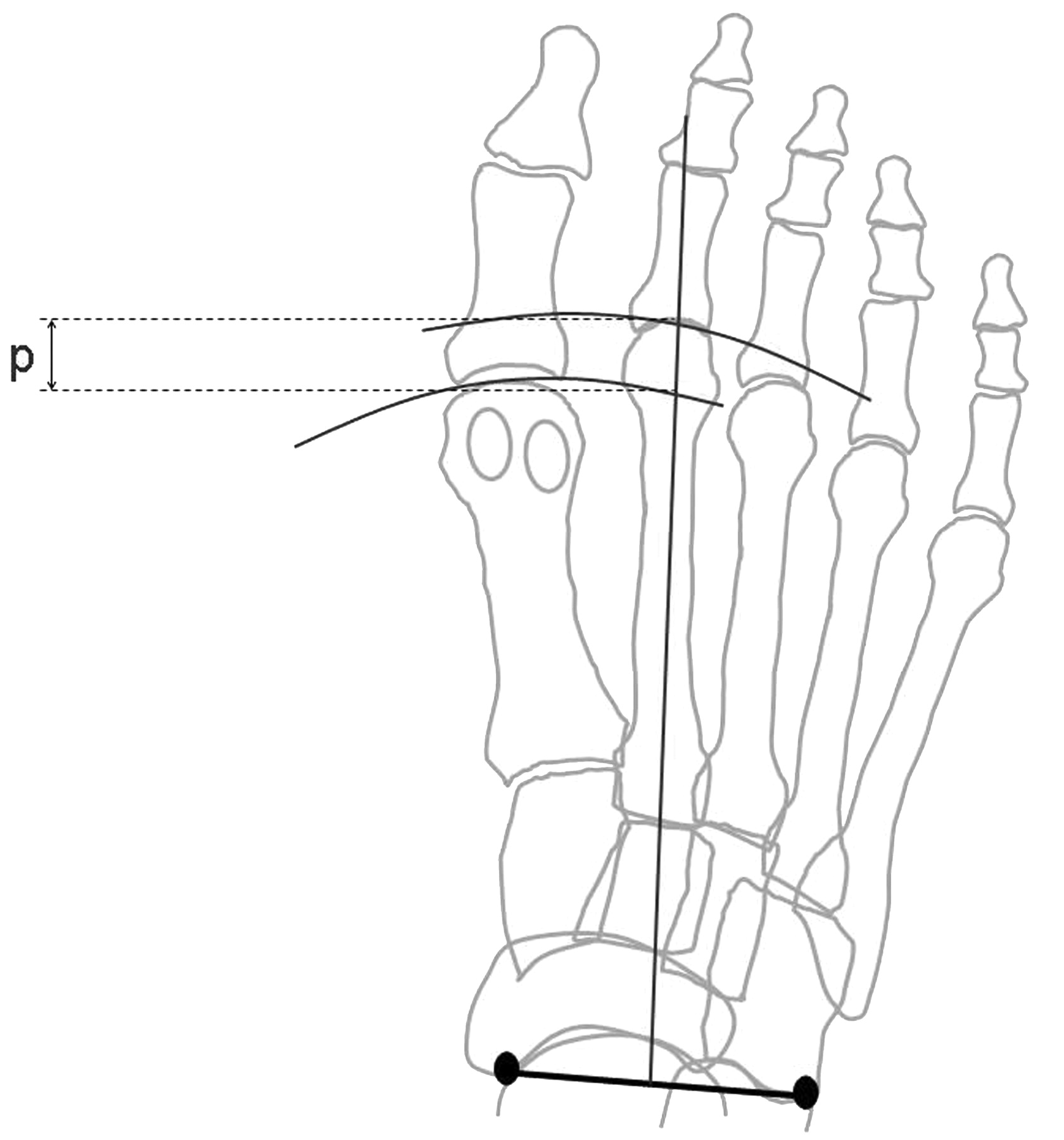
33] This method consists of tracing a transverse line on the tarsus, joining the posterior end of the tubercle of the navicular and the lateral-distal end of the calcaneus. The point where the axis of the second metatarsal intersects this line is the center of two arcs that pass through the most distal points of the first and second metatarsal heads (
Fig. 1). The relative protrusion between these two metatarsals is obtained by measuring the distance between the two arcs. This method is recommended by the American Orthopaedic Foot and Ankle Society.[
34]
Figure 1.
Method of measuring the relative metatarsal protrusion (p) between the first and second metatarsals, according to the method of Hardy and Clapham.[
33]
Figure 1.
Method of measuring the relative metatarsal protrusion (p) between the first and second metatarsals, according to the method of Hardy and Clapham.[
33]
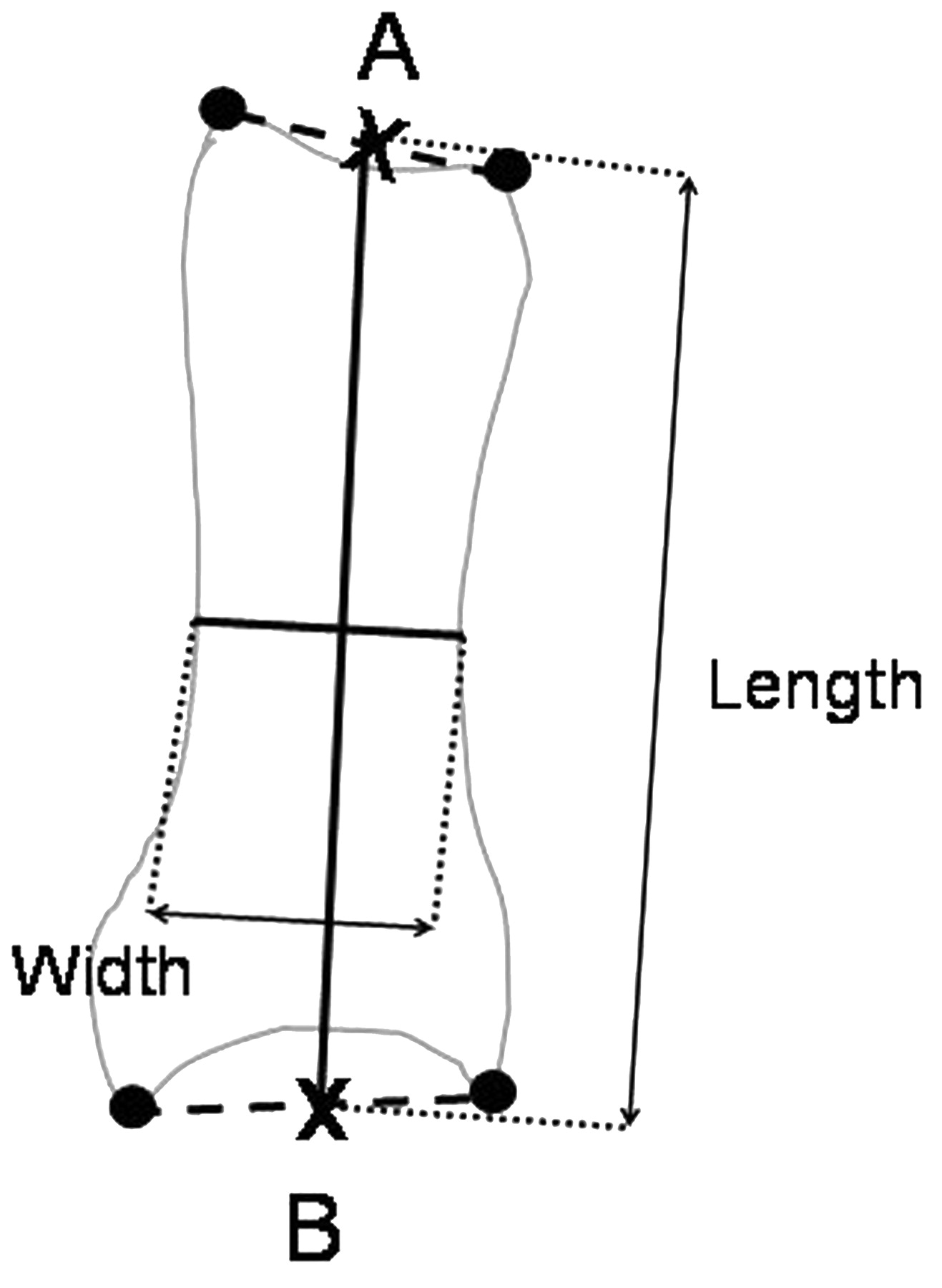
The method of measuring the length of the first and second metatarsals was that used by Heden and Sorto[
35] in 1981 (
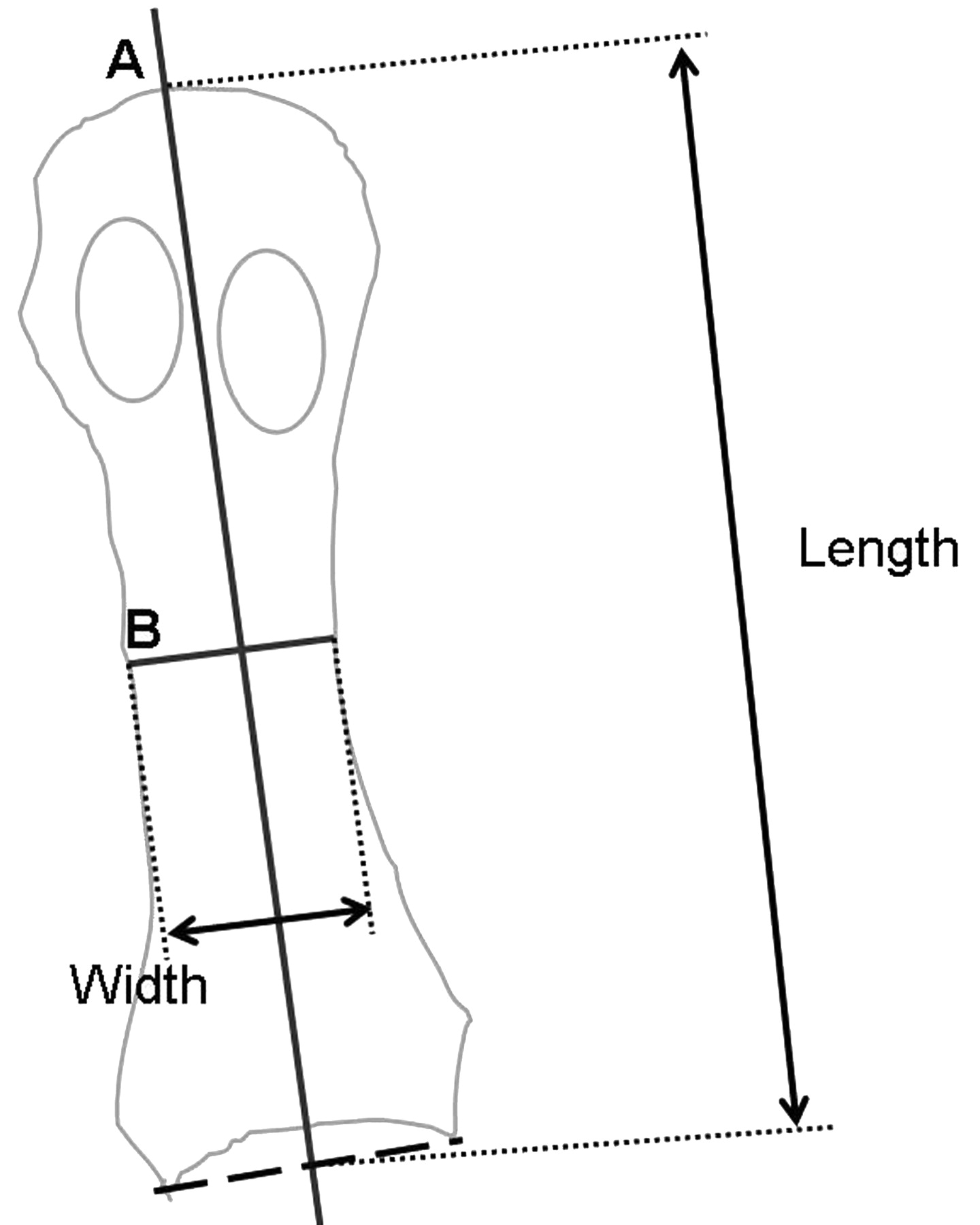
Fig. 2). It consists of determining the distance between the distal end of the metatarsal head and the bisection of its base. The point that the authors identify as the bisection of the metatarsal base is the point of intersection of the longitudinal axis of the metatarsal (line A) with a line connecting the proximal-medial and proximal-lateral ends of the metatarsal base. The width of the first and second metatarsals was measured according to a method previously used by other authors.[
36] This method consists of measuring the width of the bone using a line (line B) perpendicular to the longitudinal axis of the metatarsal at the midpoint of its length.
Figure 2.
Method of measuring the length and width of the first and second metatarsals. Line A represents the longitudinal axis of the metatarsal; B, the line perpendicular to the longitudinal axis at the midpoint of its length.
Figure 2.
Method of measuring the length and width of the first and second metatarsals. Line A represents the longitudinal axis of the metatarsal; B, the line perpendicular to the longitudinal axis at the midpoint of its length.
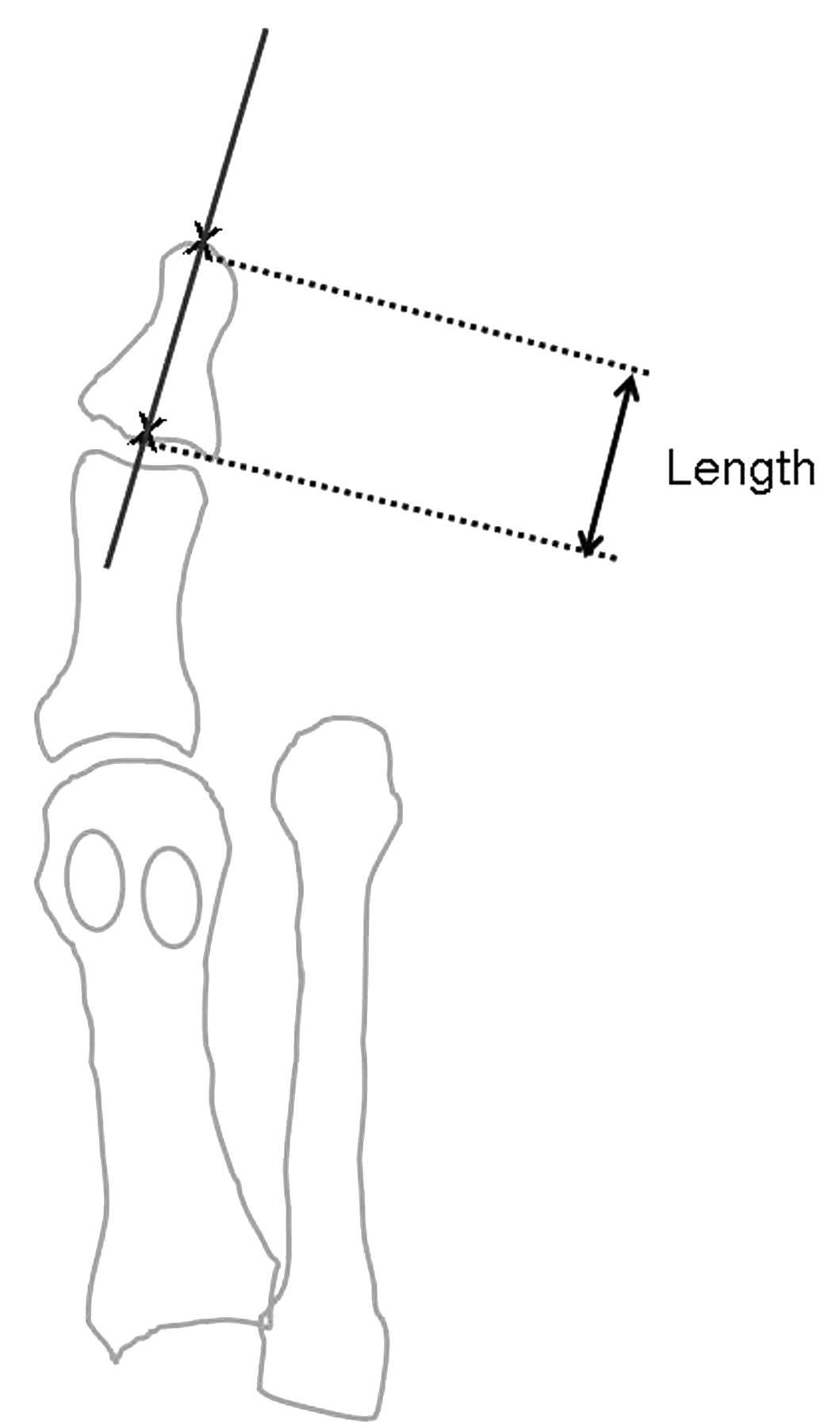
The proximal phalanx length was determined by locating the distal-medial and distal-lateral ends of the phalanx head (
Fig. 3). These ends were joined by a line, and its midpoint was calculated (point A). Then the proximal-medial and proximal-lateral ends of the phalanx base were located. These ends were joined by another line, and its midpoint was calculated (point B). The line joining points A and B was used to obtain the proximal phalanx length. This method has been used previously by other authors.[
37] The proximal phalanx width was measured using the same method as for the first metatarsal width (
Fig. 3). To measure the distal phalanx length, a line was drawn joining the distal end of this segment with the midpoint of its articular surface, following the method proposed by Coughlin and Shurnas[
38] to measure the interphalangeal angle of the hallux (
Fig. 4).
Figure 3.
Method of measuring the length and width of the proximal phalanx of the hallux. Point A represents the midpoint of a line joining the distal-medial and distal-lateral ends of the proximal phalanx head; B, the midpoint of a line joining the proximal-medial and proximal-lateral ends of the proximal phalanx base.
Figure 3.
Method of measuring the length and width of the proximal phalanx of the hallux. Point A represents the midpoint of a line joining the distal-medial and distal-lateral ends of the proximal phalanx head; B, the midpoint of a line joining the proximal-medial and proximal-lateral ends of the proximal phalanx base.
Figure 4.
Method of measuring the length of the distal phalanx of the hallux.
Figure 4.
Method of measuring the length of the distal phalanx of the hallux.
A bidimensional measurement could be unsuitable for a tridimensional structure. This is a drawback of measuring the length of a bone on a radiograph. To circumvent this problem, Davitt et al[
39] compared the first and second metatarsal lengths on radiographs with those on computed tomographs and found no significant differences. To standardize the set of measurements of the first metatarsal length, proximal and distal phalanges lengths, and hallux length, these measurements have also been expressed as a percentage of the second metatarsal length. This procedure has previously been used to the same end by other authors.[
40,
41] The widths are expressed as a percentage of the length of the corresponding segment, that is, for example, the first metatarsal width is also expressed as a percentage of the first metatarsal length. These variables have been denominated “relative” to distinguish them from the absolute values.
A software package (SPSS 12.0 for Windows; SPSS Inc, Chicago, Illinois) was used to analyze the data. To check the reproducibility of the measurement procedure, three radiographs were chosen at random from each group, and the measurements were made on three occasions, with intervals of a week between measurements. The data obtained from this group of measurements were used to calculate the intraclass correlation coefficient. The descriptive analysis gave the mean, SD, and 95% confidence interval for each variable. To decide whether to use parametric or nonparametric tests, the Kolmogorov-Smirnov test was performed as a check of normality. Its results suggested that the t test for independent samples—with the test of Levene used for the equality of variance—was the best to use for comparing the means between the control group and the hallux limitus group because the data followed a normal distribution, except for the first metatarsal protrusion. The Mann-Whitney U test was used to compare the first metatarsal protrusion between the two groups. A P < .05 was considered statistically significant.
Results
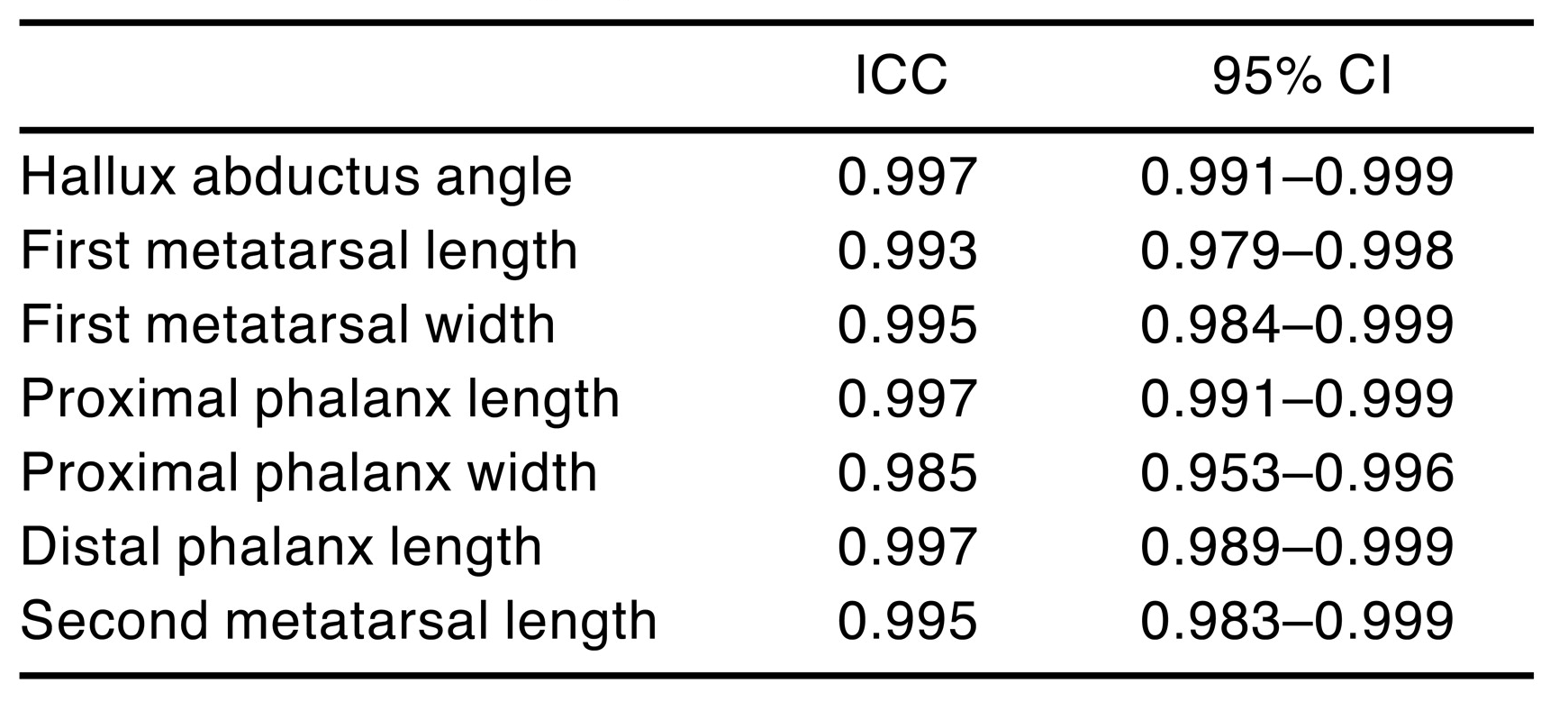
The intraclass correlation coefficient was greater than 0.90 for all of the variables measured on the radiographs (
Table 1). All of these coefficients can be considered very high,[
42] so that the reproducibility of the measurements is acceptable with the methods used.[
19,
43]
The control group comprised 94 feet of 47 subjects (18 men and 29 women) with a mean ± SD age of 23.43 ± 2.66 years. The hallux limitus group comprised 50 feet of 25 subjects (21 men and 4 women) with a mean ± SD age of 23.88 ± 2.85 years.
Table 1.
Intraclass Correlation Coefficients (ICCs) and 95% Confidence Intervals (CIs) for the Variables Measured on the Radiographs
Table 1.
Intraclass Correlation Coefficients (ICCs) and 95% Confidence Intervals (CIs) for the Variables Measured on the Radiographs
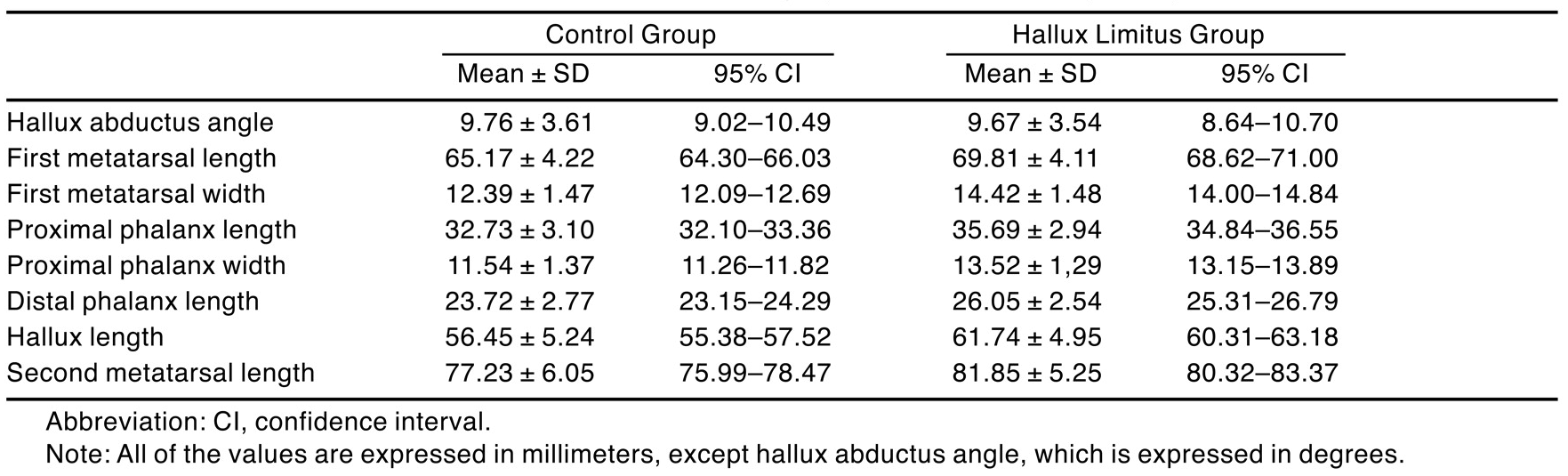
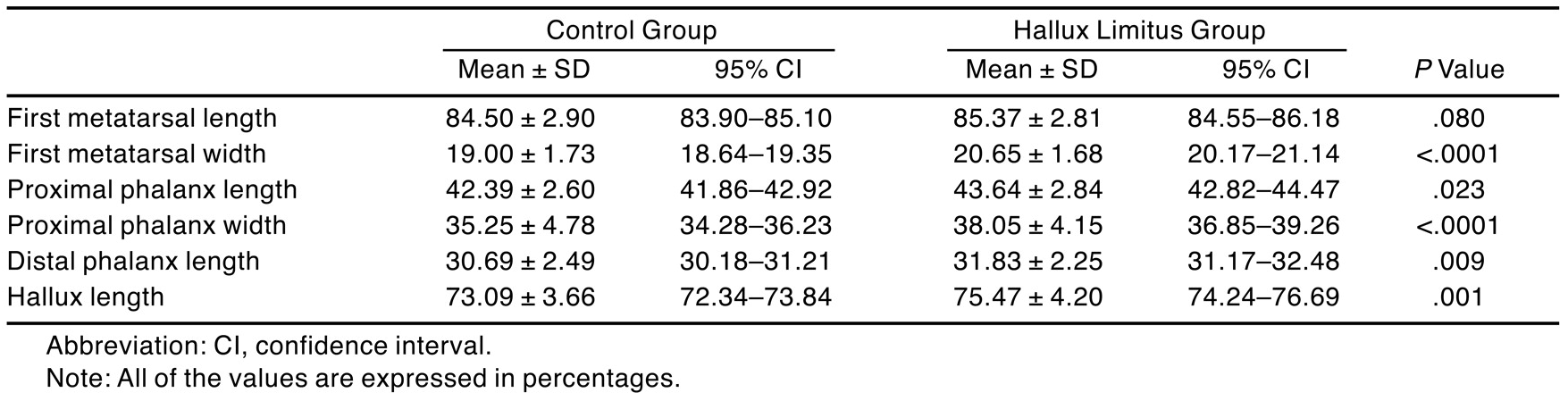
The values from the descriptive analysis of the variables as absolute values are shown in
Table 2. The values from the descriptive analysis of relative first metatarsal protrusion, and the comparison between the two groups, are shown in
Table 3.
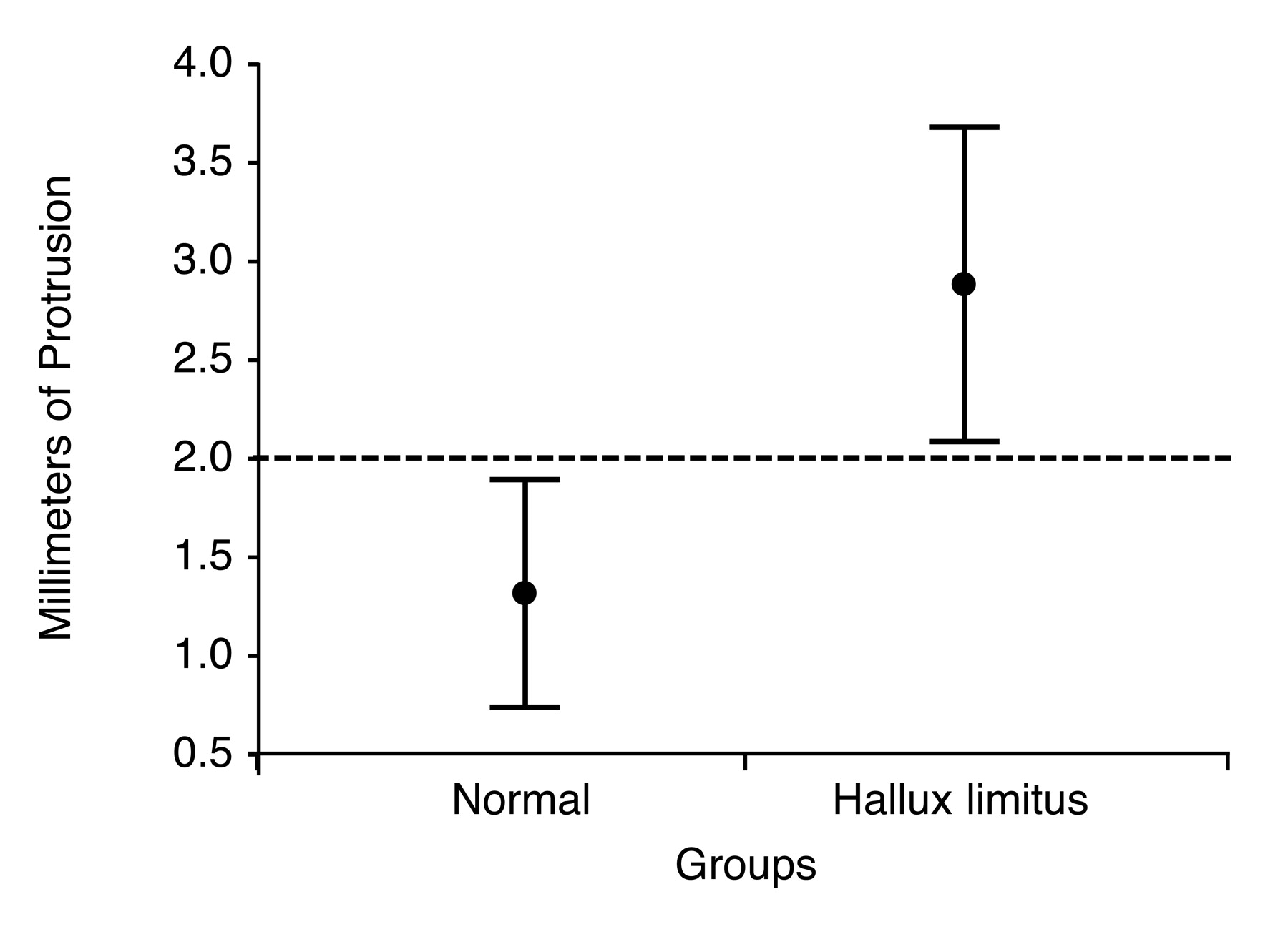
Figure 5 shows that the relative first metatarsal protrusion is greater in the hallux limitus group than in the control group (
P < .0001). So that the bone lengths and widths are not affected by the stature of the person or the overall size of the foot, these variables were compared using the relative values. The values from the descriptive analysis of the relative variables and the results of the comparisons of these values between the groups are shown in
Table 4.
Table 2.
Absolute Values of Variables Measured on the Radiographs for the Two Study Groups
Table 2.
Absolute Values of Variables Measured on the Radiographs for the Two Study Groups
Table 3.
Relative Protrusion of the First Metatarsal with Respect to the Second Metatarsal in the Two Study Groups
Table 3.
Relative Protrusion of the First Metatarsal with Respect to the Second Metatarsal in the Two Study Groups
Figure 5.
Bar graph of error showing the mean (circle) and 95% confidence interval (error bars) of the relative first metatarsal protrusion in the two study groups. The broken line is the baseline value.
Figure 5.
Bar graph of error showing the mean (circle) and 95% confidence interval (error bars) of the relative first metatarsal protrusion in the two study groups. The broken line is the baseline value.
Table 4.
Relative Values of Variables Measured on the Radiographs for the Two Study Groups
Table 4.
Relative Values of Variables Measured on the Radiographs for the Two Study Groups
The length of the first metatarsal is 84.50% and 85.37% that of the second metatarsal in the control and hallux limitus groups, respectively. Comparison of the first metatarsal length between the two groups reveals that there is no statistically significant difference, although the trend was for the first metatarsal to be slightly larger in the hallux limitus group. However, the first metatarsal is wider in the hallux limitus group than in the control group (20.65% and 19.00% of the first metatarsal length, respectively), and this difference is significant (P < .0001). In contrast to the first metatarsal, the proximal phalanx of the hallux is longer (P = .023) and wider (P < .0001) in the hallux limitus group than in the control group. The length of the distal phalanx of the hallux also showed a significant difference between the two groups (P = .009), and the hallux total length (the sum of the proximal and distal phalanges lengths) was significant too (P < .001).
Discussion
Alterations in the first metatarsal length have often been related to the etiology of hallux limitus.[
4,
7,
9,
12,
13,
21–
24,
26,
38,
44–
47] On some occasions, the authors did not state whether the alterations in length referred to the protrusion of the first metatarsal relative to the second metatarsal or to a first metatarsal whose length is increased or decreased anatomically. The biomechanical dysfunction that associates a long first metatarsal with limited dorsiflexion of the hallux is related to difficulty of the first ray in making the movement of plantarflexion, a movement essential for articulation of the hallux with the cartilaginous dorsal surface of the first metatarsal head.[
3,
12,
44,
48] The biomechanical dysfunction that associates a short first metatarsal with limited dorsiflexion of the hallux would be a flexed position of the hallux, to compensate the lack of support of the first metatarsal and, thereby, provide medial support.[
49]
From the results of this study, we can relate the excessive functional length of the first metatarsal to the etiology of hallux limitus, as the relative first metatarsal protrusion was greater in the hallux limitus group than in the control group. In this regard, these results are not in accord with those of Bryant et al,[
19] possibly because of the differences in sample characteristics between the two studies. The patients with hallux limitus in the study by Bryant et al were older (mean, 52.8 years; range, 28–67 years), and the deformity was more advanced (all of the cases had signs and symptoms sufficiently severe to require corrective surgery) than in the present study. In advanced hallux limitus or hallux rigidus deformities, first metatarsal length could be altered due to degenerative changes in the metatarsophalangeal joint.
Zgonis et al[
50] sustained a relationship between a long first metatarsal and hallux limitus. In their study, a significant difference was noted in the first metatarsal length between the hallux rigidus and control groups, with patients with hallux rigidus demonstrating a shorter first metatarsal than controls. Roukis et al,[
51] although not obtaining a statistically significant difference in first metatarsal protrusion between the least severe and the most severe cases of hallux rigidus, observed a general trend toward greater protrusion (first metatarsal longer than second metatarsal) in less severe cases and less protrusion (first metatarsal shorter than second metatarsal) in more severe cases. In accordance with that trend and the results of the present study, it seems that the protrusion of the first metatarsal is increased in the most incipient cases of hallux limitus and that the protrusion decreases as the deformity advances. This could be because the degenerative changes taking place in the first metatarsophalangeal joint in severe cases of hallux rigidus could shorten the metatarsal, as they cause flattening of its head.
In contrast, we cannot relate alterations in anatomical first metatarsal length (either excessively long or excessively short) to hallux limitus. Although the trend was for the first metatarsal to be slightly larger in the hallux limitus group, the difference was not statistically significant. However, the difference between the two groups regarding first metatarsal width was more important. Given the characteristics of the sample, it is the authors’ personal opinion that this increase in width is not due to advanced states of deformity but that it is a morphologic feature typical of feet that will go on to develop hallux limitus deformity. We do not know to what extent it could be considered a risk factor for establishment of the deformity. We think that excessive width, without excessive length, could make the first metatarsal morphologically more square. If that squaring affects the whole metatarsal, including the head, there could be a relationship with the development of this deformity, as the association between hallux limitus/rigidus and a square-shaped first metatarsal head is somewhat more accepted.[
15,
47,
52–
54]
We found few references[
25,
26,
55] regarding association of the length of the proximal phalanx of the hallux with the pathologic disorder studied, and most of these studies speak about the length of the great toe, not of the proximal phalanx. The results of the present study show that the proximal and distal phalanges of the hallux are longer in feet with hallux limitus than in normal feet (
P = .023 and
P = .009, respectively). Thus, when the total length of the hallux is compared between the two groups, the different is also significant.
As with the first metatarsal, the proximal phalanx was also wider in the hallux limitus group than in the control group. In accordance with the hypothesis proposed previously herein, this finding suggests that in the foot that is going to develop hallux limitus deformity, the proximal phalanx of the hallux is more rectangular and larger than normal. Consequently, the transverse stability characterizing a metatarsophalangeal joint that develops hallux limitus[
19,
38,
52] could be attributed not only to the square shape of the head of the first metatarsal but also to the proximal phalanx, that is, to the metatarsophalangeal joint as a whole (
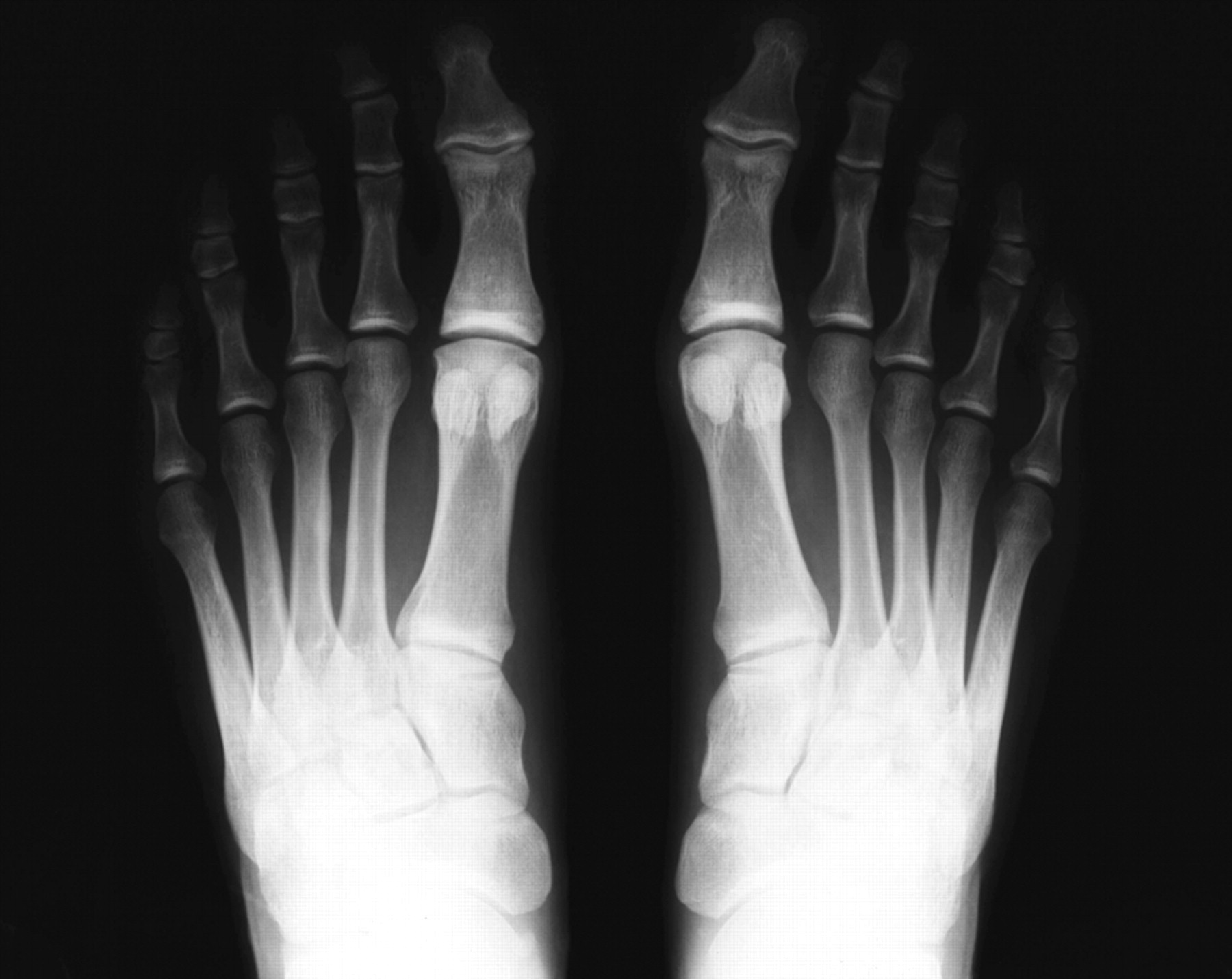
Fig. 6).
Figure 6.
Dorsoplantar radiograph of a foot with incipient hallux limitus (40° of hallux dorsiflexion in both feet). Note the size of the first metatarsal and the proximal phalanx of the hallux compared with the other rays.
Figure 6.
Dorsoplantar radiograph of a foot with incipient hallux limitus (40° of hallux dorsiflexion in both feet). Note the size of the first metatarsal and the proximal phalanx of the hallux compared with the other rays.
From the results of this study, and those of the works that have been consulted, we propose the following hypothesis on the origin of hallux limitus deformity. The problem begins with the presence of a first metatarso-digital segment longer than normal: a long hallux, increased first metatarsal protrusion, and a first metatarsal that tends to be anatomically longer than normal. Separately analyzing the first metatarsal protrusion, first metatarsal length, proximal and distal phalanges lengths, and total length of the hallux, the differences between the control and hallux limitus groups might be considered clinically insignificant (although they were statistically significant) because they are relatively small differences. Nevertheless, we think that these differences should not be considered to be isolated. Thus, when the increases in length of these elements are combined, the result will be a very long first metatarso-digital segment. For adequate dorsiflexion of the hallux, there must be some difference in the protrusion of the second metatarsal with respect to the first so that while the second metatarsal is bearing weight the first metatarsal can be plantarflexed, transferring the rotational axis of the joint posteriorward.[
2,
51] A long first metatarsal with respect to the second metatarsal constrains plantarflexion in the propulsive phase of gait. The metatarsophalangeal joint axis of rotation will not migrate posteriorly, and the hallux will not be dorsiflexed as a whole.[
49] We consider that under these circumstances, a first metatarsophalangeal joint that is very stable in the transverse plane (square morphology) could cause excessive compression in the joint in the propulsive phase of gait when the ground reaction forces acting on the hallux become greater. This excessive compression in the metatarsophalangeal joint by a retrograde effect of such forces would explain the decrease in the interarticular space observed in these cases[
21] and the deviations produced in other joints, such as the interphalangeal.[
56,
57]
The main limitation of this study is the use of two-dimensional images to evaluate three-dimensional elements. An attempt has been made to minimize the risk of errors related to this aspect by following a standardized and rigorous radiologic protocol. Previous research has demonstrated that whenever the radiographs are made with the same protocol, the real differences can be nonsignificant, at least regarding the first metatarso-digital segment.[
39] Another limitation to be considered is that of having used only dorsoplantar radiographs. The use of lateral radiographs would have given greater exactitude to the results, as the length and width of the studied segments could also have been compared in that projection. Our aim was to avoid unnecessary exposition of the subjects to radiation, taking into account that some of them were volunteers and that many did not need a radiograph to make a correct diagnosis when they consulted. We also think that the differences in the groups, including number and sex, may be a limitation. We do not know whether matching the groups would modify the results of this study. Further research using groups with the same number of subjects, males and females, should be conducted to check this point.
Conclusion
The results of this study indicate that in incipient hallux limitus, the absolute, or anatomical, first metatarsal length is no greater than in normal feet. However, the functional length of the first metatarsal, that is, the protrusion of the first metatarsal in relation to the second metatarsal, is increased in this type of foot. The hallux length was also greater in the cases of hallux limitus. First metatarsal width and that of the proximal phalanx of the hallux were greater in cases of hallux limitus than in normal feet. This could contribute to the morphologic features of the first metatarsophalangeal joint being squarer in shape and, thereby, could also contribute to the stability of this joint in the transverse plane. Such stability, together with a long first metatarso-digital segment, may be the reason for excessive compression forces on the first metatarsophalangeal joint and for the beginning of the hallux limitus deformity.