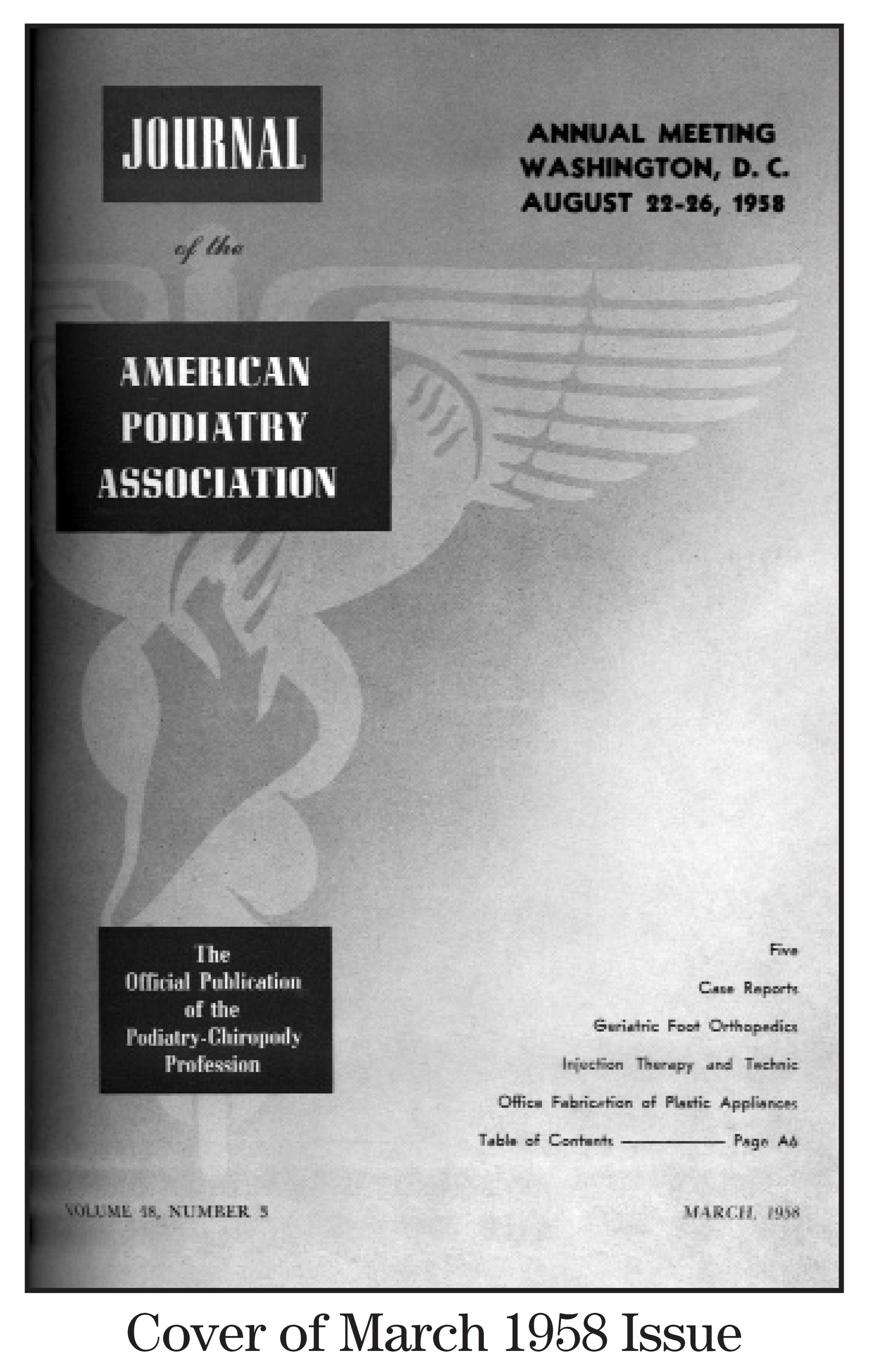
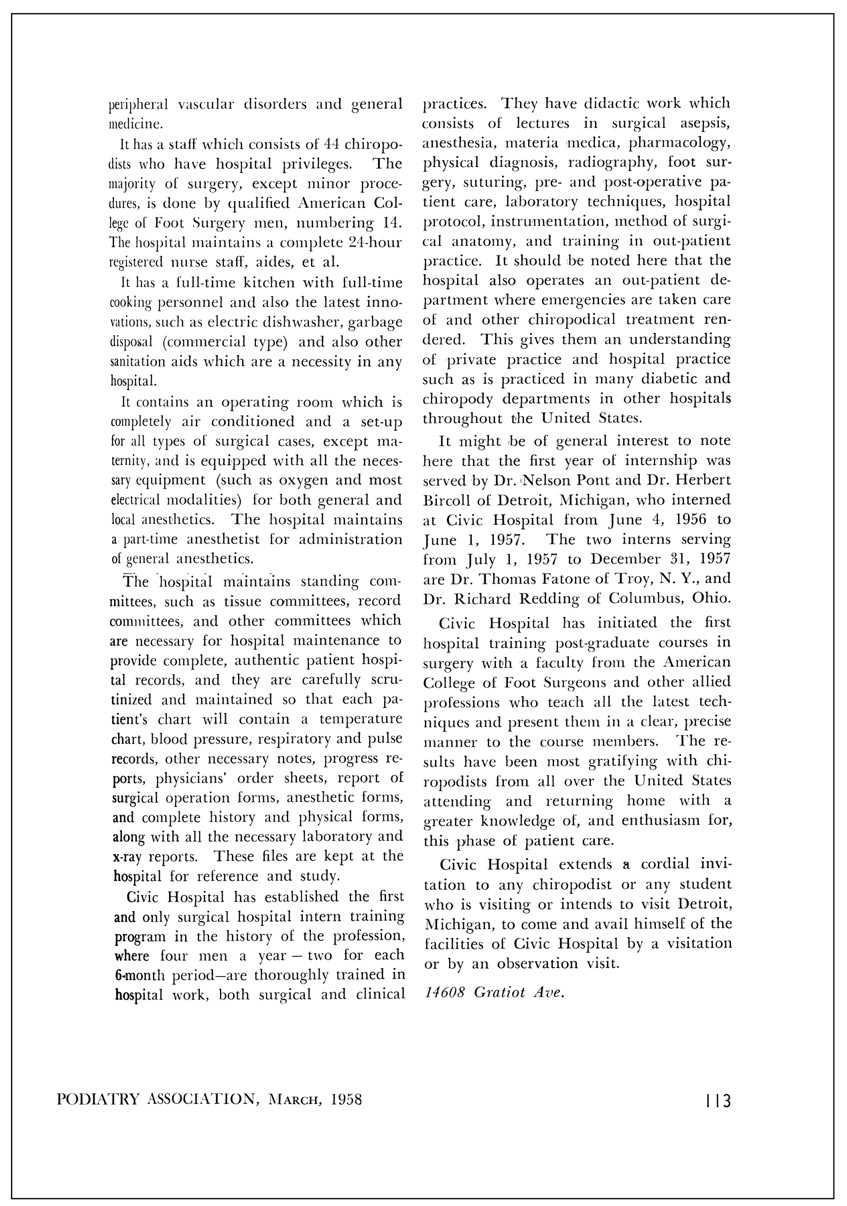
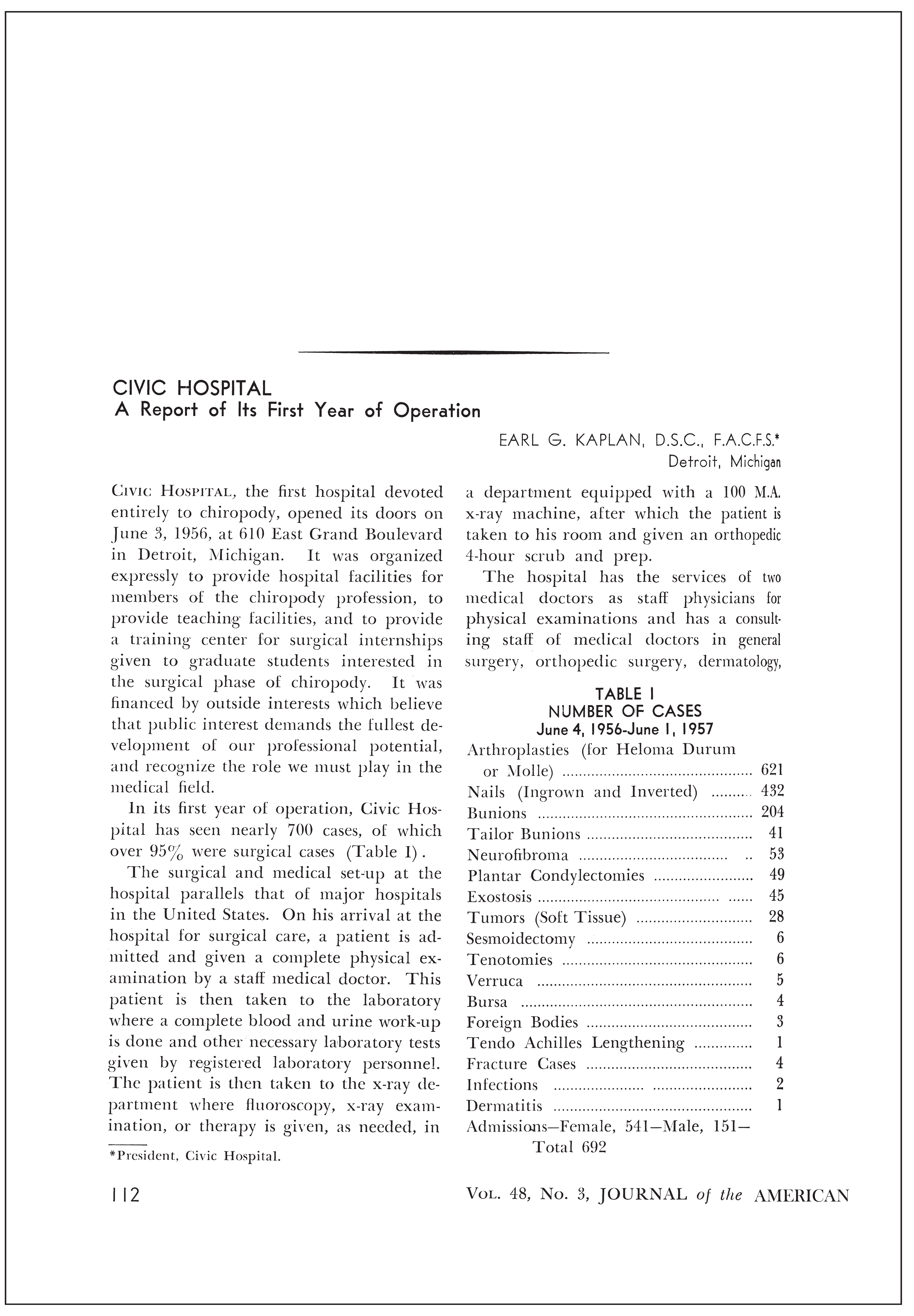
Webster’s Collegiate Dictionary defines the word milestone as “a significant point in development.” Any further description of the birth of Civic Hospital seems unnecessary. How is it possible to characterize the launch of an institution that is so well known and so important in the development of an entire profession? How can one explain the consequences of this seminal event for postgraduate education, foot surgery, interprofessional and intraprofessional relations, personal successes, public awareness, and much of the advancement and progress of the field of podiatry?
Civic Hospital sponsored a nationally acclaimed postgraduate surgical educational seminar that was attended by more than 2,200 members of APMA from all over the nation during the period from 1957 to 1965. It was the first hospital dedicated to foot surgery and to the advancement of the podiatric profession. The hospital has had a well-regarded teaching program, currently boasting more than 400 graduates of its podiatric residency program. It also became a center of national political influence that continues today in the form of the Podiatry Political Action Committee. But perhaps most importantly, it served as a unifying force that brought together the leaders of the profession throughout the 1950s and 1960s in a concerted effort to achieve higher levels of achievement in a still-fledging profession. This heritage is still evident in the professional fraternity of alumni of the Civic Hospital residency program, who have gathered annually for 50 uninterrupted years to celebrate the accomplishment of the Civic Hospital founder and “father” of it all, Earl G. Kaplan.
At the 2006 meeting of the House of Delegates of the American Podiatric Medical Association, the Civic Hospital legacy was recognized in a resolution commemorating its 50th anniversary. That resolution recounted the development of the first hospital-based residency program and hospital devoted to podiatric surgery, the establishment of a series of postgraduate educational seminars attended by podiatrists from around the country, the subsequent creation of residency programs using the Civic Hospital experience as a model, and the emergence of a cradle of podiatric leadership.
Join me in recognizing the milestone of Civic Hospital: “Where it all began.”
Irvin O. Kanat, DPM Providence Hospital, Southfield, Michigan, Genesys Regional Medical Center, Grand Blanc, Michigan