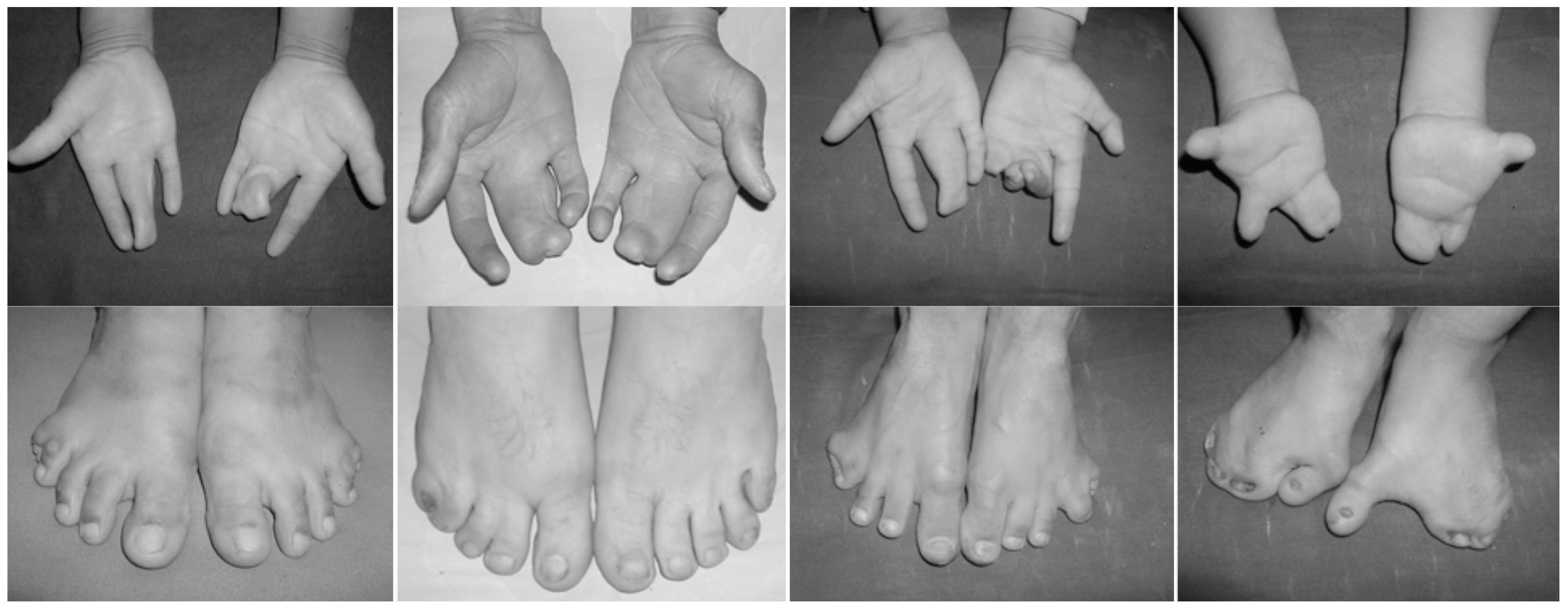
Syndactyly and polydactyly are among the most frequently observed extremity anomalies. When these are found together in the foot or hand, the deformity is called “synpolydactyly.”[
1] Various associated anomalies include hypoplastic tibia and distal radius, congenital heart diseases, and craniofacial anomalies. [
2,
3,
4] Polydactyly of the foot is usually classified into three major groups based on ray involvement: preaxial (medial ray), central ray, and postaxial (lateral ray). [
4] Postaxial and preaxial polydactyly consist of subgroups; if found together in the same foot, the deformity is called “mixed polydactyly.” When the polydactyly types of the hands and feet are different, the clinical entity is named “crossed polydactyly.” [
5]
Synpolydactyly has autosomal dominant inheritance, with reduced penetrance and variable degrees of expression. [
6] The mutation in the
HOXD13 gene is responsible for the development of this deformity. [
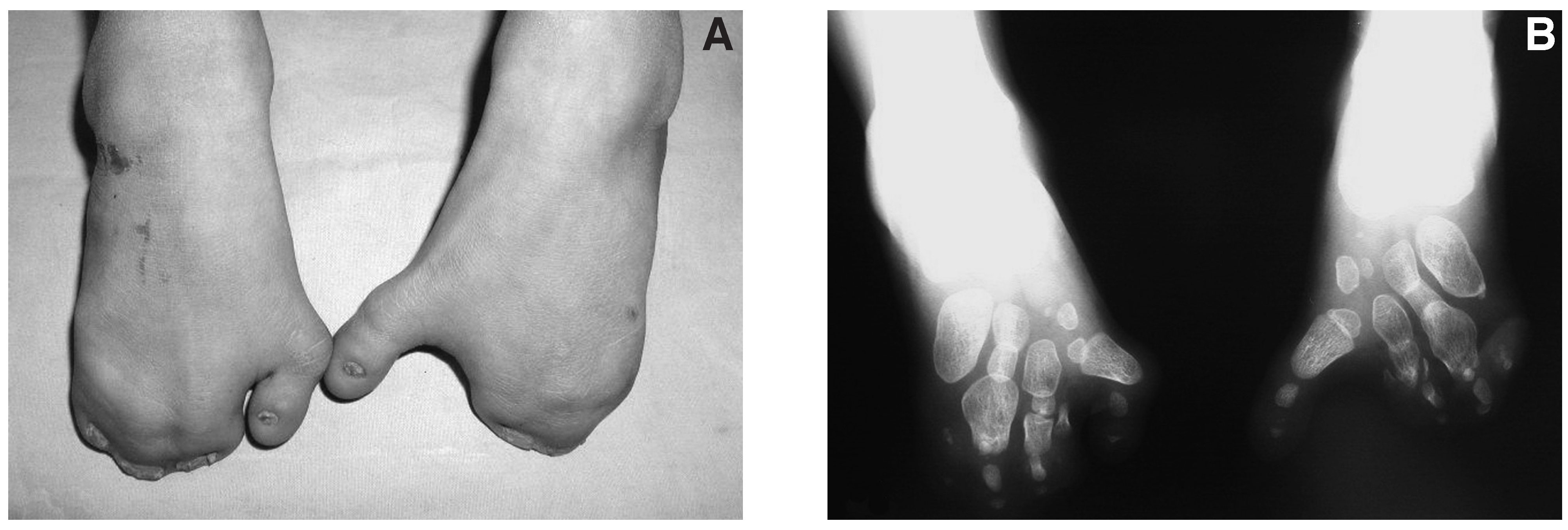
7] Heterozygous children with synpolydactyly inherit the deformity from only one of their parents and have similar variations of the parents’ anomalies. However, homozygous children with synpolydactyly inherit the deformity from both of their affected parents. In the latter case, the deformity is so different from that of heterozygotes or those of the parents that it seems to be a component of complex syndromes or an entity in isolation (
Figure 1).
Akarsu et al [
6] studied seven homozygous individuals from this kindred in 1995 and described their deformity as a “homozygote phenotype.” We reinvestigated the same kindred in 2002 and found 12 homozygous individuals with synpolydactyly. [
8] We called their hand deformity “hypoplastic synpolydactyly” in view of the clinical and surgical findings. [
9] The foot deformities also had distinctive features not found in the classic form of synpolydactyly or its subgroups. The classic forms, mentioned in this study as heterozygote types of synpolydactyly, consist of well-differentiated polydactyly (preaxial, postaxial, or central) with a simpler type of syndactyly. In contrast to the homozygote type, the heterozygote forms do not feature severely hypoplastic toes, fused bones, and unaffected toes, and the forefoot seems to be normal. On completion of the detailed diagnostic workup, we surgically treated the feet and hands of four homozygous individuals, which resulted in the suggestion that the homozygote synpolydactylized foot features a different type of synpolydactyly of the foot. The aims of this study were to evaluate this distinctive foot deformity; to report radiographic, clinical, and surgical findings together with the histologic findings of removed bones during surgery; and to propose that this entity be included in the list of subgroups of foot synpolydactyly.
Patients and Methods
The kindred was larger in 2002 than in 1995 with the inclusion of 89 new members. In seven families in which both parents were affected, 12 offspring were identified who were thought to be homozygotes owing to atypical phenotypic features. These individuals had one of the six different phenotypes present in the kindred. They had severe hypoplasia of their hands. Also, they had severe and distinctive foot deformities. Four patients with homozygote deformities attended the clinic of the Department of Orthopedics and Traumatology, Afyon Kocatepe University School of Medicine, Afyon, Turkey, for further investigation and for consideration of surgical intervention. Each individual underwent detailed clinical and radiographic examinations. Genetic studies were performed to rule out any additional abnormalities or syndromes. The surgically removed bones of these homozygous patients were investigated histologically. After observing typical and distinctive features on histopathologic examination, the surgically removed bones of the heterozygous members of the same kindred were included in the study to reveal differences. Bone samples were stained with hematoxylin-eosin, and histopathologic sections were evaluated using a light microscope.
Results
The kindred consisted of 245 members of five generations, 125 of whom were affected. [
8] The only accompanying anomaly in homozygous males was hypospadias. Typically, these homozygous individuals had severely hypoplastic hands. [
9] One consistent and clear finding in their feet was a prominent and supinated great toe. Hallux valgus was present in six people, and another two had hallux varus. The minor toes were hypoplastic and severely synpolydactylized, with complex synonychia and duplication of the second or fifth minor toe. The synonychia and syndactyly between the minor toes were so complex that it was impossible to perform complete desyndactylization with web reconstruction. The midfoot and rearfoot seemed to be normal in all of the affected individuals. Other clinical findings were secondary problems or deformities, such as hard corns, flexion contractures in minor toes, and metatarsalgia.
In the radiographic examination of the feet, the most evident initial finding was the underdeveloped, unshaped, and large fused bones in the midfoot and forefoot. The rearfoot was normal in radiographic appearance. One consistent finding was a prominent first ray and a duplicated second toe in the first web. The web between the first and second rays was very large because of the adducted first metatarsal and the abduction of the other side of the foot. The hands consisted of underdeveloped, unshaped, and hypoplastic metacarpal and phalangeal bones with other special findings, such as delta metacarpals and phalanges, biepiphyseal phalanges, fused bony islands, and a kissing delta phalanx. [
9] We did not encounter any complications in the early postoperative period, and considerable improvement was observed in all of the patients. A need for additional surgery during growth remains to be seen.
Case 1
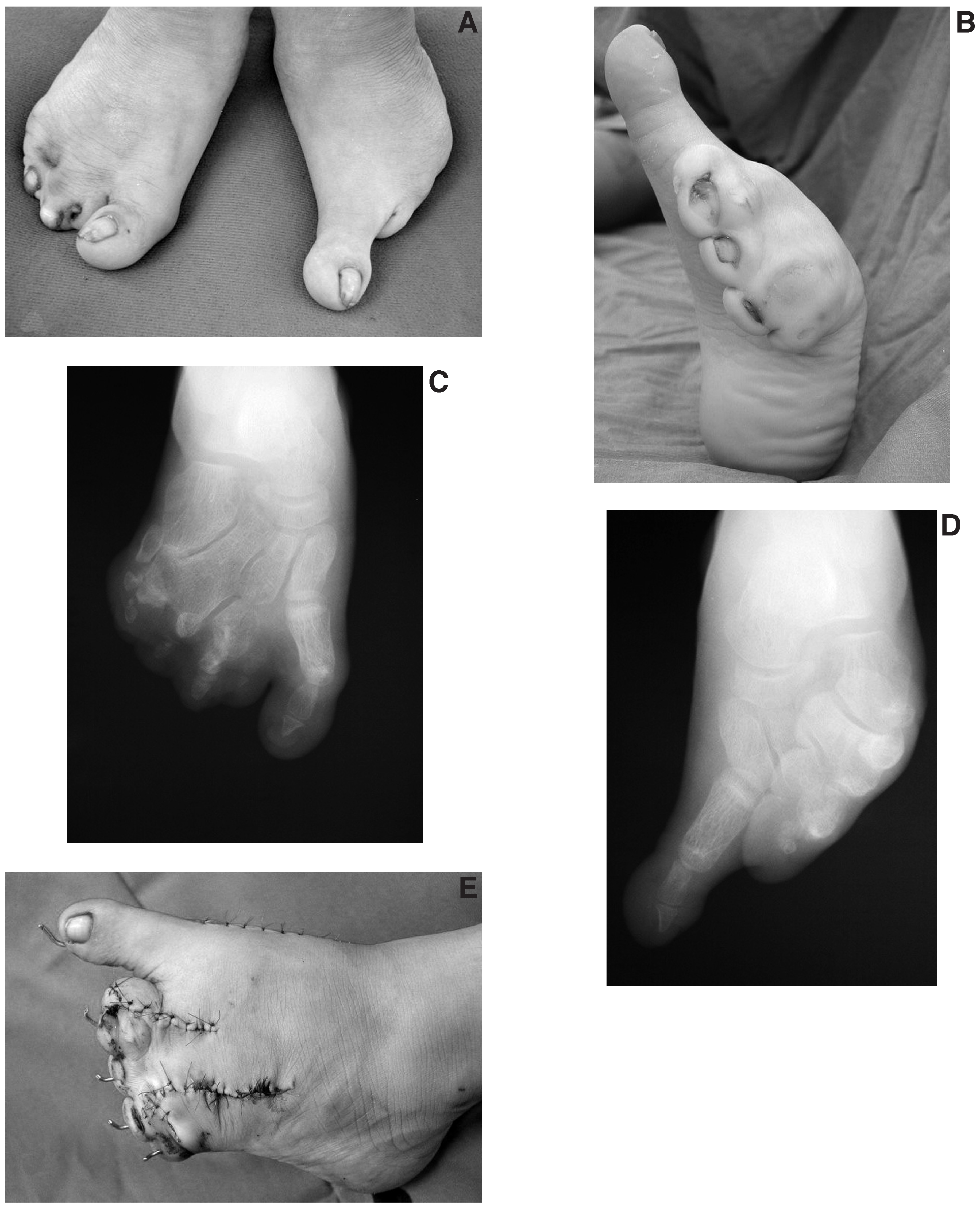
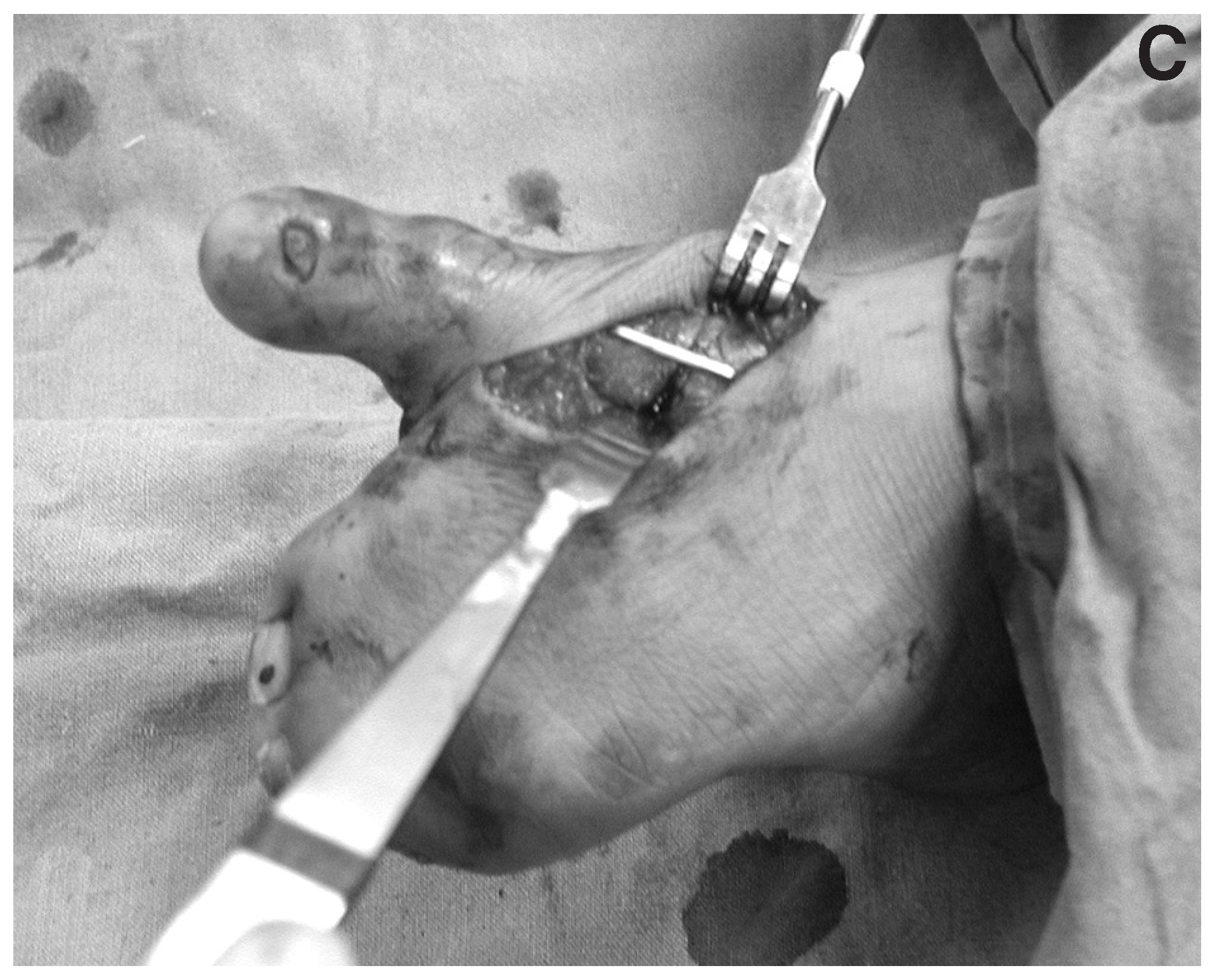
The first child was an 8-year-old boy. Because of severely flexed and synpolydactylized minor toes, he could hardly walk on the dorsum of the minor toes of the left foot. Hallux varus, supination of the great toe, and second toe duplication in the first web were also present in the same foot. Approached through dorsomedial and laterolongitudinal incisions, duplicated bones were removed and flexion deformity was corrected by means of 1-cm shortening at the distal region of the metatarsals opposing the flexed minor toes. The cartilage layer was excessive and thick on the bones and joints, covering the complete surface of the bones and creating bridges between the neighboring bones. The tendons in the surgical area seemed to be normal on the metatarsals and were dividing into multiple parts inserting into the bones. The first ray was corrected by means of a derotation-valgus osteotomy at the proximal base of the first metatarsal through a longitudinal incision on the medial edge of the foot. The right foot was operated on only for hard corns causing disability. Hard corns and the excessive bony-chondral prominences underneath were resected. In the first year after surgery, he had no disability when wearing shoes and during walking (
Figure 2).
Case 2
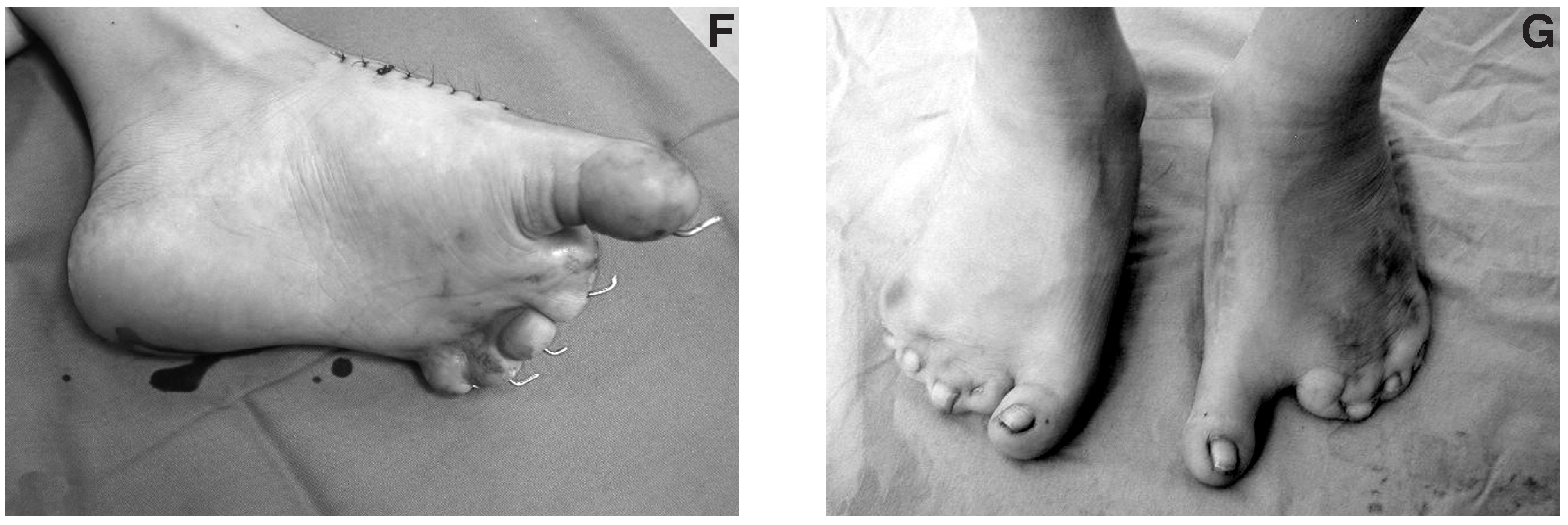
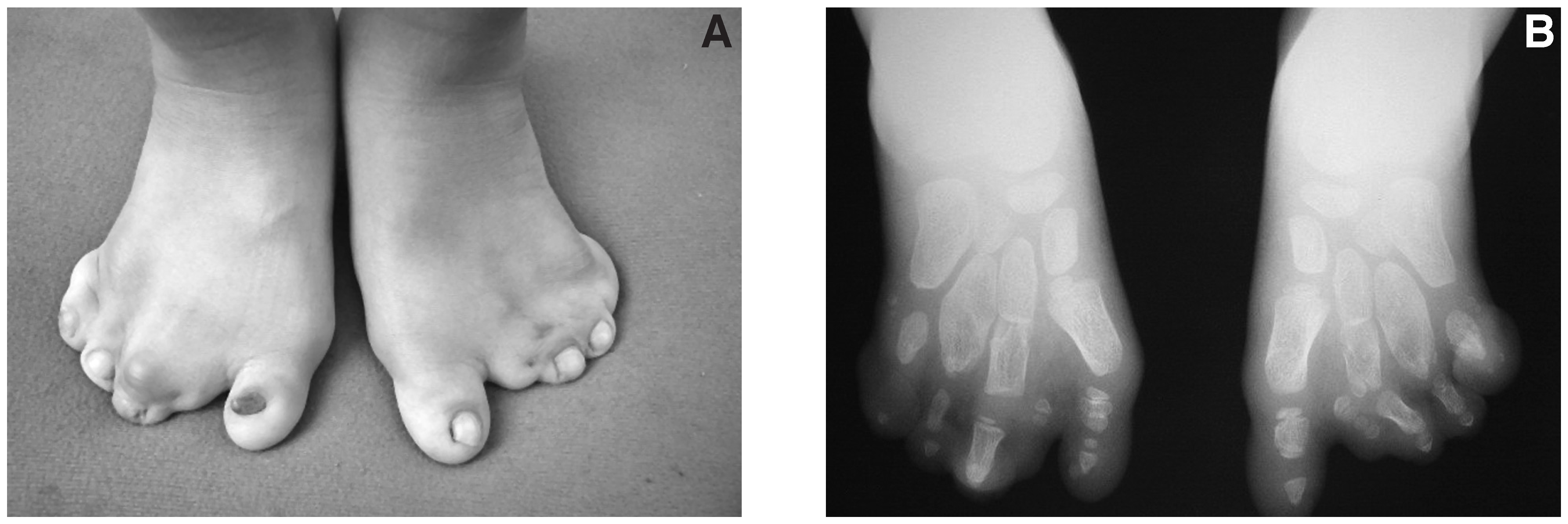
The second child was a 12-year-old girl. She had problems with wearing shoes and with weightbearing because of a polydactylized curly toe in the left foot and very long great toes with a duplicated second toe in both feet. The first rays were shortened, the duplicated bones in the first web were resected, and hard corns with bony prominences on the lateral edge were resected. The curly toe and the articulated metatarsal were resected. Because of improvements in the 15 months after surgery, she has no disability with walking or with weightbearing (
Figure 3).
Case 3
The third child was a 4-year-old boy. The right foot had hallux valgus deformity, and the metatarsophalangeal angle of the first ray in the left foot was reversed. He underwent surgery for severe hallux varus deformity only. A corrective osteotomy was performed at the distal base of the first metatarsal. Hallux valgus in the other side did not lead to disability. At postoperative month 18 he could walk while wearing shoes (
Figure 4).
Case 4
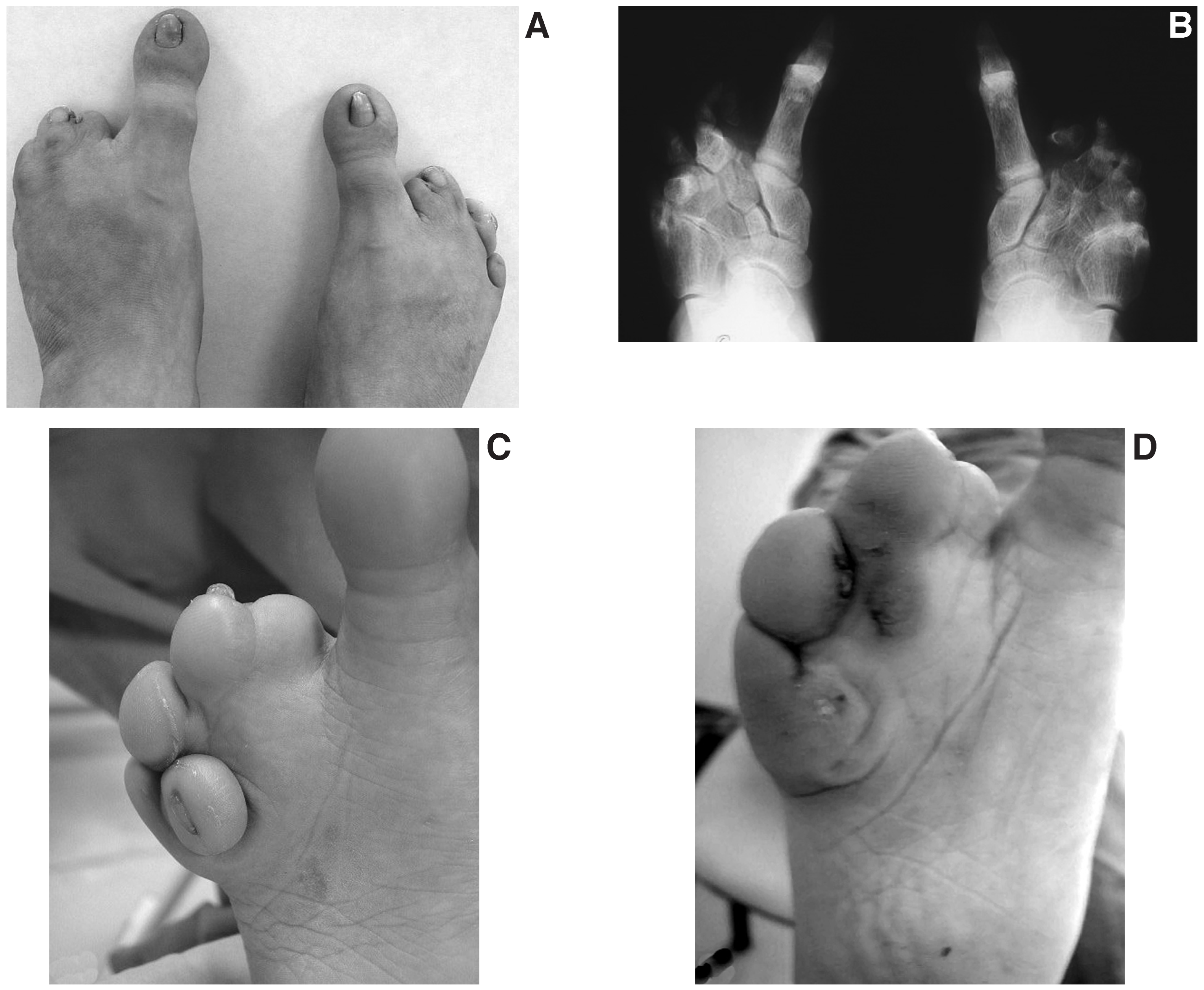
The fourth child was a 5-year-old boy. He had hard corns in both feet because of duplicated bones in the first webs and lateral sides. He underwent surgery for resection of the corns and bony prominences. He had no disability during walking in the second postoperative year (
Figure 5).
Histopathologic Analysis
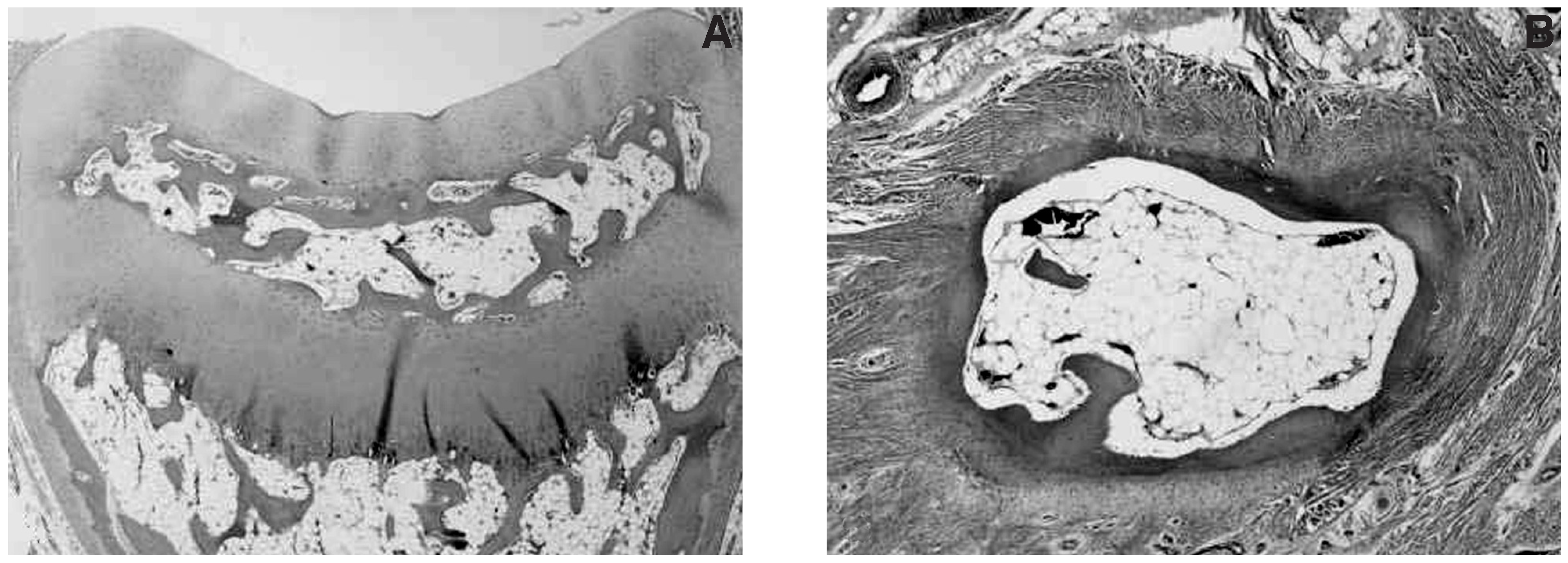
Retardation in growth and in ossification of epiphyses was observed in heterozygous and homozygous materials. Most of the bones had the epiphyseal growth plate.
The organization of the cartilage struts was wider than the normal epiphyseal growth plate in some homozygote bones. Some of these bones had a secondary ossification center in their epiphysis. The epiphyseal growth plate had reached the middle of the metaphysis in heterozygote bones. Another finding was a collar-like articular cartilage surrounding the ossification center in some homozygote bones. These bones did not have epiphyseal growth plates (
Figure 6).
Genetics
Using the technique of Goodman et al, [
10] sequence analysis of
HOXD13 identified a 27–base pair duplication previously described by Akarsu et al. [
7] The heterozygous individuals carried a wild-type band and a poly (A) duplicated band. The homozygous siblings had inherited only a poly (A) duplicated band from their heterozygous parents. [
10]
Discussion
Although in homozygote synpolydactyly the components of the deformity are syndactyly and polydactyly, as well as underdevelopment and undifferentiation, the main problems were loss of function in the hands and secondary problems in the feet. Homozygote synpolydactyly of the foot causes severe disabilities compared with the classic heterozygote synpolydactyly of the foot and should be considered a different type of synpolydactyly. Unlike in the hands, reconstructive procedures should not be preferred in the feet, because the main problem is disability rather than functional loss. Whereas synpolydactyl hands are operated on to improve function, feet with simple synpolydactyly are operated on for secondary problems. Because homozygote foot synpolydactyly causes progressive deformities, the surgery should be performed before the development of secondary deformities.
Venn-Watson [
11] described a morphological classification, reviewing the medical records of 65 patients. Analyzing 265 cases, Watanabe et al [
4] classified polydactyly of the foot by type of ray involvement and level of duplication. However, neither Venn-Watson nor Watanabe encountered or described homozygote foot synpolydactyly. Akarsu et al [
6] were the first authors to describe the homozygote phenotype, without their surgical and histologic findings. Thus we are unaware of any other descriptions of homozygote foot synpolydactyly with its surgical, detailed clinical, radiographic, and histologic findings.
Classic syndactyly of the toes generally causes minimal disability, and the main concern of surgery is usually cosmetic. [
12] Various techniques have been described for desyndactylization of the toes in classic synpolydactyly of the fifth toe. [
13] On the other hand, in complex deformities, as reported by Nakamura et al, [
13] constructing the web space is so difficult that flap necrosis, skin grafting requirements, and vascular insufficiency of the toes can be encountered. Therefore, in terms of surgical treatment, homozygote foot synpolydactyly should be evaluated in complex deformities of the foot.
Homozygote foot synpolydactyly has no similarity to the foot deformity of the heterozygous parents, which is simple fifth toe synpolydactyly in this kindred. Although the severity of abnormalities varies owing to variable penetrance and expression, homozygotes have unique characteristics of their feet, such as a prominent great toe with supination, severe hallux valgus or varus, and hypoplastic synpolydactylized minor toes. Radiographically, the condition can be characterized by large fused bony islands, underdeveloped minor toes, unshaped bones, and mixed polydactylism. Histologically, the homozygote bones have immature bones surrounded by excessive cartilage. Although homozygote foot synpolydactyly seems to be a part of complex syndromes or a separate deformity owing to consistent differences from classic synpolydactyly forms, in fact it is a synpolydactyly form that is not included in recent synpolydactyly classifications. Therefore, the identified subgroups of foot syndactyly should include homozygote foot synpolydactyly. It can be diagnosed and differentiated from other forms with two affected spouses. Consequently, the subgroups of foot polydactyly should now be the heterozygote types (preaxial, central, postaxial, and mixed) and the homozygote type.