


Abstract
Among the elderly, osteoarthritis often causes chronic pain and disability. Although research has addressed the association between exercise and osteoarthritis, few studies have examined the effect of exercise on the radiographic progression of osteoarthritis. We investigated the relationship between ongoing exercise and radiographic progression of foot osteoarthritis. The first metatarsophalangeal and medial cuneiform–first tarsometatarsal joints were assessed. Joint-specific osteoarthritis radiographic progression scores were determined using four assessments: joint space narrowing, osteophytes, sclerosis, and a composite score. This cohort study included a subset of 221 men and women aged 40 to 91 years participating in a community-based osteoarthritis study. Adjusted risk estimates (95% confidence intervals) summarizing the relationship between ongoing exercise and radiographic progression in the first metatarsophalangeal joint ranged from 0.34 (0.11–0.99) for osteophytes to 0.66 (0.23–1.92) for sclerosis; because only eight individuals experienced medial cuneiform–first tarsometatarsal joint progression, these estimates were less stable, ranging from 2.41 (0.49–11.83) for composite to 4.29 (0.11–166.52) for osteophytes. Overall, our findings do not suggest that regular exercise is a risk factor for foot osteoarthritis progression. Future replication studies are warranted to confirm these findings. (J Am Podiatr Med Assoc 95(4): 342–346, 2005)
Although many advances have been made in the field of podiatric medicine, osteoarthritis of the foot joints continues to have a substantial negative impact on the quality of life in the elderly population. Questions remain unanswered regarding the recommendation of exercise for individuals with osteoarthritis. In light of the prevailing studies suggesting that physical activity can be beneficial in those with osteoarthritis,[1] we believe that clinicians should have adequate information summarizing this relationship. We hypothesized that individuals who exercise regularly experience a similar rate of foot osteoarthritis progression as do their counterparts who do not exercise regularly. Information on the prevalence and extent of degenerative morphologic changes in the joints of the lower extremity, including foot joints, is sparse.[2] To our knowledge, this is the first study to evaluate exercise and the radiographic progression of foot osteoarthritis.
Methods
We examined two groups that differed by exercise status, with physical activity (strength training and aerobics) as the study exposure. Clearwater Exercise Study participants composed the exposed group. Initiated by The Arthritis Research Institute of America Inc, the Clearwater Exercise Study is an ongoing, community-based study evaluating regular exercise and osteoarthritis in a group of volunteer participants. The study included men and women, 40 years and older, with radiologic evidence of osteoarthritis (grade 2 and higher, per Kellgren and Lawrence[3]) at the hands, feet, knees, shoulders, or cervical spine (n = 60). Participants provided written approval from their health-care provider and signed an informed consent form. Overseen by a certified fitness trainer, this group followed an exercise routine at The Arthritis Research Institute of America Inc three times per week. Flexibility, endurance, and strength were the program aims. The 20- to 25-min routine had three components. An aerobic warm-up period started the session, with participants selecting either the treadmill or the stationary bicycle (5–7 min). This was followed by a weight-training routine designed for each participant, personalizing the level of volume, intensity, and progression.[4] The Clearwater Exercise Study participants used equipment such as a universal gym, a hip extension and flexion machine, a leg press, and a freestanding handgrip. The session concluded with a 3-min aerobic cool-down period on either the treadmill or the stationary bicycle.
The control group, those not exposed to regular exercise, was made up of a subset of individuals participating in the Clearwater Osteoarthritis Study. Also initiated by The Arthritis Research Institute of America Inc, the Clearwater Osteoarthritis Study is a prospective cohort study examining major risk factors for the development and progression of osteoarthritis. This 25-year longitudinal study collects radiologic, demographic, clinical, and historical data. Since 1988, more than 3,600 community-based participants, with and without radiologically confirmed osteoarthritis, have enrolled. Participants are 40 years and older, are predominantly white (96%), and include men and women. All study participants signed informed consent forms. A modified module of exercise questions is added to the Clearwater Osteoarthritis Study questionnaire starting at the participants’ fourth visit. Therefore, only Clearwater Osteoarthritis Study participants who have been examined four or more times were eligible for inclusion in our study sample. Of the participants completing four or more histories (n = 1,704), 215 were classified as “no” exercise status during their entire follow-up. In an effort to select participants similar to the exposed group, only those who had radiographic evidence of osteoarthritis (at any site) were included (n = 161).
The study outcome was foot osteoarthritis progression (yes versus no). The first metatarsophalangeal and medial cuneiform–first tarsometatarsal joints were evaluated using four measures of foot osteoarthritis progression assessment. Using a scale from 0 to 3, the left and right first metatarsophalangeal and medial cuneiform–first tarsometatarsal joints were individually scored. Specifically, the first of the eight study outcomes was defined as the radiographic osteoarthritis progression status of the combined left and right first metatarsophalangeal joints as assessed by joint space narrowing (possible scores, 0–6). The second and third study outcomes, osteophytes and sclerosis, were evaluated in the same manner. The fourth study outcome was an aggregate composite score of joint space narrowing, osteophytes, and sclerosis (possible scores, 0–18). The remaining four study outcomes identified the progression status of the medial cuneiform–first tarsometatarsal joint in the same manner as described for the first metatarsophalangeal joint. Each participant’s outcome was determined by the change in osteoarthritis progression score between baseline and follow-up radiography. Progression status was dichotomized as yes versus no. No radiographic change, as well as radiographic regression, was categorized as “no” for progression status. At the beginning of follow-up, the exposed and control groups included individuals who were assigned osteoarthritis scores of 0 or higher based on the grading scale from 0 to 3. The current literature has not delineated a suggested assessment method for the progression of the metatarsophalangeal or medial cuneiform–first tarsometatarsal joints. We adopted the 1987 method of Altman and colleagues[5] set forth for assessing radiographic progression of osteoarthritis in the knee, another weightbearing joint. Using standard exposure techniques, radiographs were taken by a licensed radiography technician. Weightbearing anteroposterior views were taken of the feet. All of the radiographs were interpreted by a board-certified orthopedic surgeon with an extensive background in osteoarthritis who was blinded to the study group status.
The intraobserver variability of the radiographic readings (15% random sample) was calculated using the κ coefficient.[6] Potential confounders for foot osteoarthritis progression and exercise were identified and considered in the adjusted analyses. Study participants were observed for differing lengths of time, and some observations were censored. Accordingly, Cox proportional hazards regression[7,8] was used to summarize the relationship between exercise and foot osteoarthritis progression. Statistical analysis software (SAS, version 8.02; SAS Institute Inc, Cary, North Carolina)[9] was used to analyze these data. All risk estimates reported here are hazard ratios. Power calculations indicated that this study had more than 80% power to detect a 15% or greater difference in radiographic foot osteoarthritis progression, by activity level, if indeed a difference existed (two-tailed; α = .05).[10]
Results
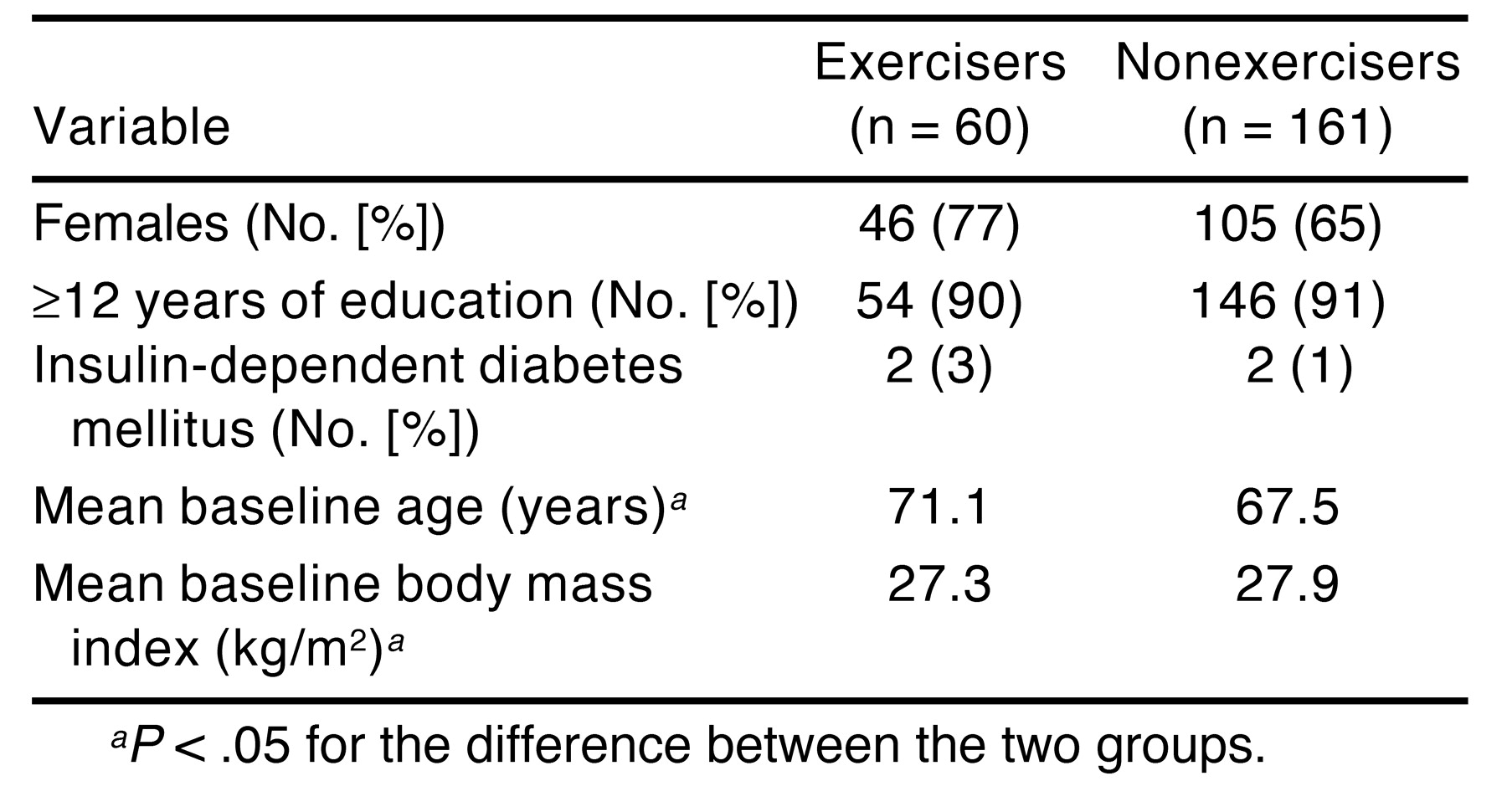
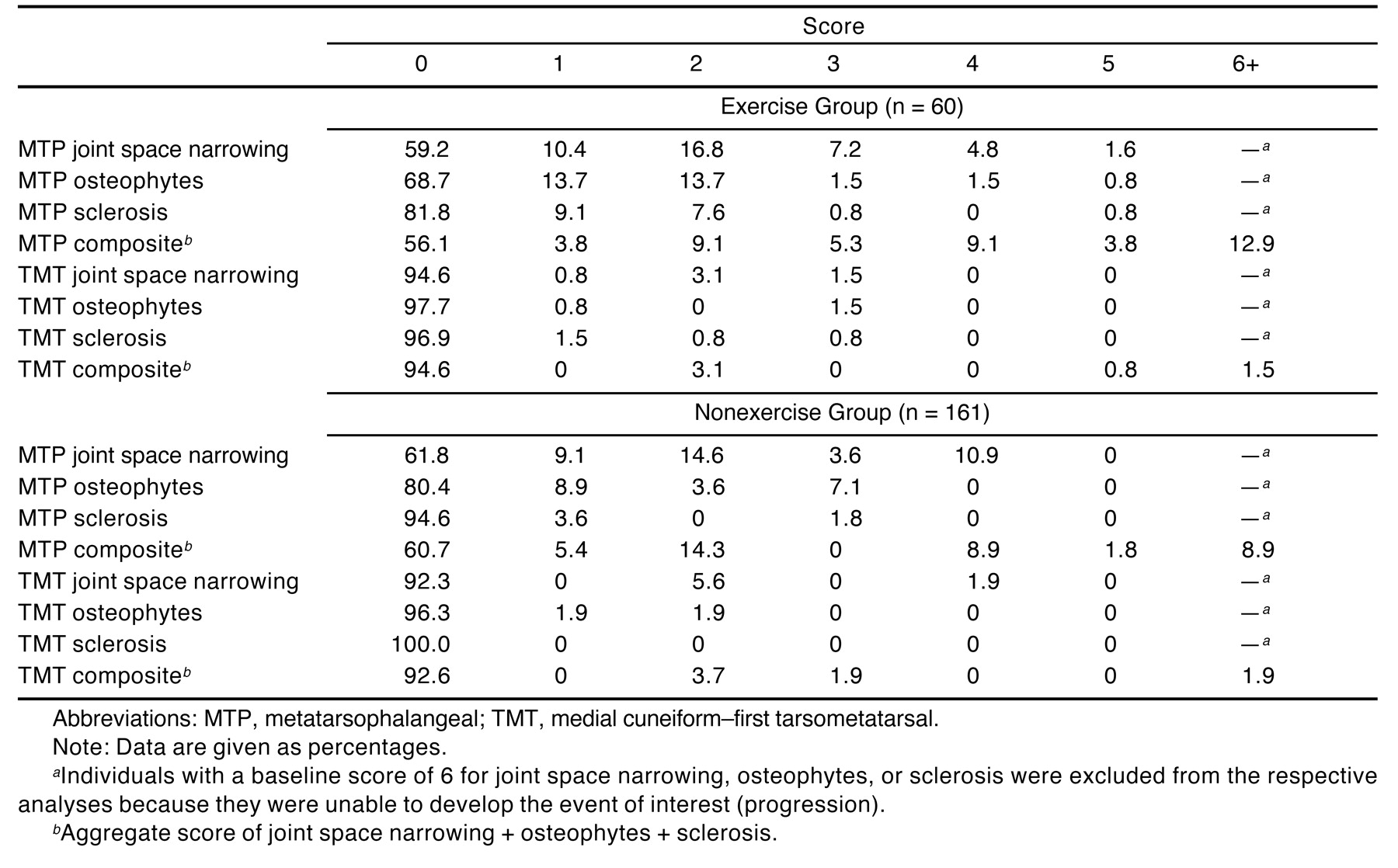
The intraobserver variability test indicated a high percentage of agreement between the first and second radiographic readings ranging from 90% to 92%. The κ coefficients ranged from 0.65 to 0.75. Table 1 displays the characteristics of the study groups. Although the groups had similar baseline attributes, statistically significant differences were noted for age and body mass index (weight in kilograms divided by the square of the height in meters). Adjusted risk ratios reported here considered these factors and the participant’s baseline osteoarthritis score. Mean follow-up for the exercise group was 42 months (range, 19–53 months). Mean follow-up for the nonexercise group was 36 months (range, 23–55 months). Because proportional hazards regression was used, this difference in follow-up was accounted for in the adjusted analyses. At the beginning of follow-up, of the 60 exercisers and 161 nonexercisers, 44% and 39%, respectively, had a baseline osteoarthritis score of 1 or higher for the first metatarsophalangeal joint (Table 2). Analogously, 5% and 8% of individuals had a baseline score of 1 or higher for the medial cuneiform–first tarsometatarsal joint.

Table 1.
Characteristics of the Exercise and Nonexercise Study Groups
Table 2.
Baseline Foot Osteoarthritis Scores
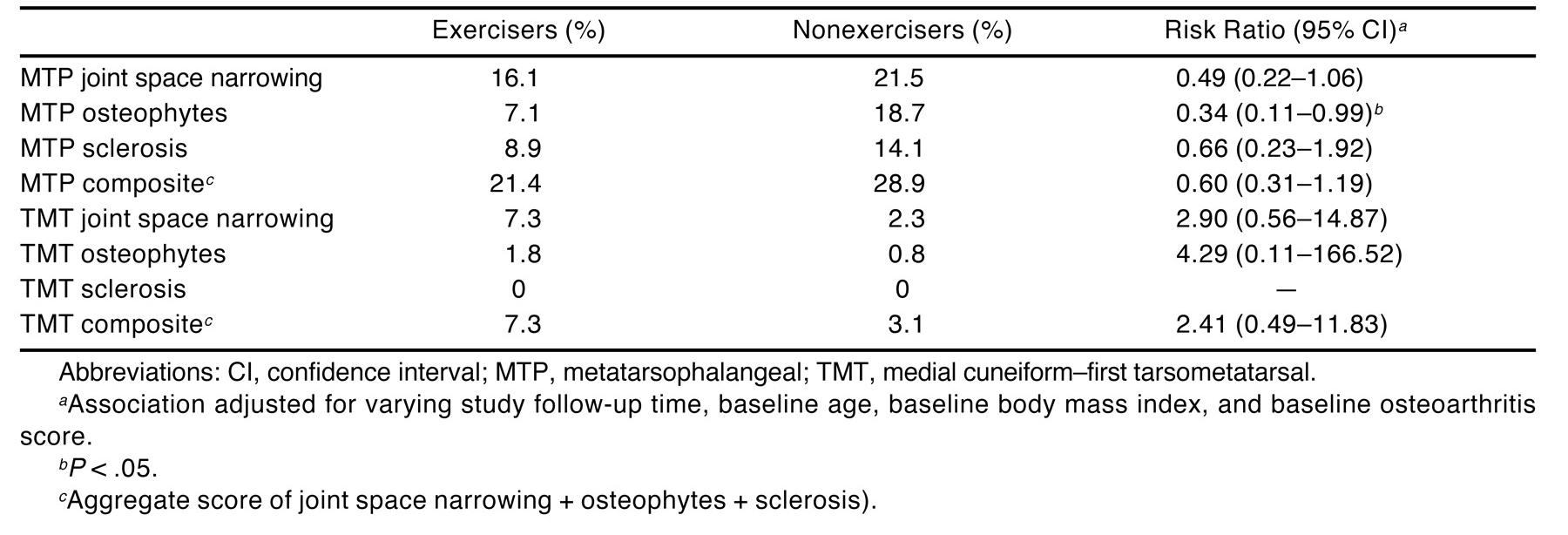
Metatarsophalangeal joint space narrowing was noted in 16% of the exercisers versus 22% of the nonexercisers (Table 3). Compared with joint space narrowing, the assessment methods of osteophyte formation and sclerosis demonstrated far lower rates of osteoarthritis progression in exercisers and nonexercisers. For both groups, the first metatarsophalangeal joint demonstrated a higher rate of progression during the study than the medial cuneiform–first tarsometatarsal joint. Final results display risk estimates that adjust for the influence of follow-up time, baseline body mass index, baseline age, and baseline osteoarthritis score (Table 3). For the first metatarsophalangeal joint, risk estimates ranged from 0.34 (95% confidence interval [CI], 0.11–0.99) for progression as measured by osteophytes to 0.66 (95% CI, 0.23–1.92) as measured by sclerosis. Risk estimates from the analyses of the medial cuneiform–first tarsometatarsal joint, ranging from 2.41 to 4.29, were all statistically nonsignificant.
Table 3.
Foot Osteoarthritis Progression in the Study Groups
Discussion
This study, using a population of men and women aged 40 to 91 years, evaluated regular exercise as a potential risk factor for osteoarthritis progression of the first metatarsophalangeal and medial cuneiform–first tarsometatarsal joints. Four methods of determining foot osteoarthritis progression were used: joint space narrowing, osteophytes, sclerosis, and a composite score. The number of individuals who experienced medial cuneiform–first tarsometatarsal progression was small (n = 8) compared with the number who progressed at the first metatarsophalangeal joint (n = 51). Consequently, meaningful analyses for the medial cuneiform–first tarsometatarsal joint were difficult to perform. Findings reported for this joint are to be interpreted with caution. Overall, our findings do not suggest that regular exercise is a risk factor for the progression of established foot osteoarthritis. However, these results demonstrate that individuals who exercised regularly were 66% less likely to demonstrate progression of osteoarthritis at the first metatarsophalangeal joint, as measured by osteophytes, than were those who did not exercise (risk ratio, 0.34; 95% CI, 0.11–0.99). It should be noted that these findings, although significant at the conventional level of .05, just approach statistical significance because the CI is close to including the null value of 1.0.
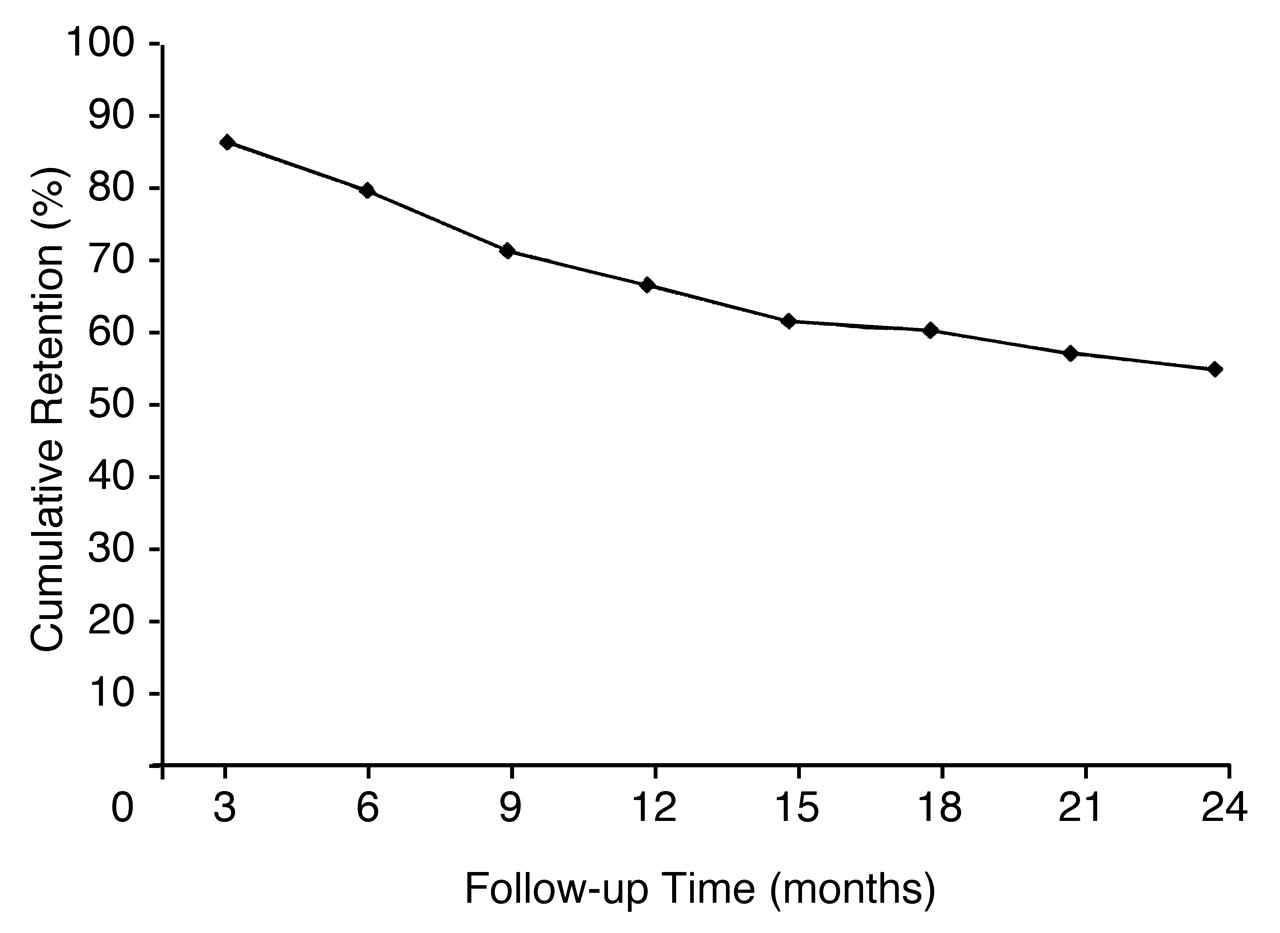
As with any longitudinal study, participant retention is an important issue to address. Eighty percent of the exercise group was retained for 6 months or longer. At 12 and 24 months, the retention percentages were 66% and 54%, respectively. Figure 1 depicts the cumulative retention curve at the 24-month point in the study. The reason for study dropout was recorded. Of participants with foot osteoarthritis at study entry who subsequently dropped out, 7% died, 3% moved, and 90% withdrew. Of individuals without foot osteoarthritis at study entry who subsequently dropped out, 5% died, 16% moved, and 79% withdrew. Follow-up varied from 5 to 64 months. The mean length of time in the study was 30 months. A limitation of the study was the inability to report participants’ exercise habits before study enrollment.
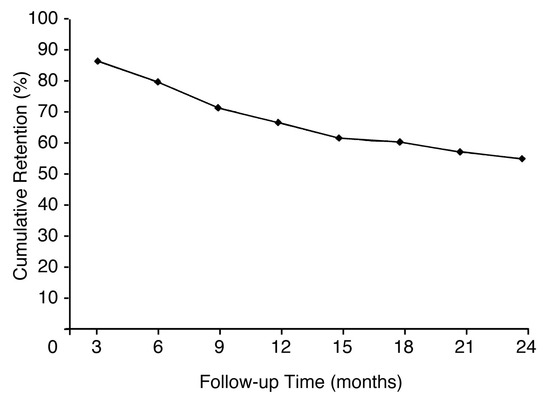
Figure 1.
Cumulative participant retention curve: the Clearwater Exercise Study.
Assessment of the impact of regular exercise on radiographic osteoarthritis progression of the first metatarsophalangeal and medial cuneiform–first tarsometatarsal joints has not been previously published. Similar studies examining this relationship at the knee, another weightbearing joint, have been conducted. Although some study findings have suggested caution regarding exercise in the presence of knee osteoarthritis,[11,12] others have noted that exercise may play a protective role in knee osteoarthritis.[13–15] Relative to the number of osteoarthritis studies investigating the knees, hands, and spine, there seems to be a paucity of foot osteoarthritis research. The foot may be more susceptible to arthritis than other body parts because each foot has 33 joints. In addition, the weightbearing nature of the feet only exacerbates the symptoms caused by cartilage degeneration. Risk factors for foot osteoarthritis have not been defined as clearly as they have been for knee and hand osteoarthritis.
Conclusion
Clinicians who care for patients with osteoarthritis need to identify an appropriate exercise routine that addresses the strength, balance, flexibility, and aerobic needs of patients. Our findings, although inconclusive for the medial cuneiform–first tarsometatarsal joint, suggest that regular exercise is not a risk factor for the progression of osteoarthritis at the first metatarsophalangeal joint. To our knowledge, this is the first documentation of this finding. Future replication studies are warranted to confirm these findings. In addition, epidemiologic investigations are merited to evaluate the effects of regular exercise on related foot osteoarthritis symptoms. Although our findings are of interest, patients in a podiatric medical practice may express more interest in relief of symptoms. Future research quantifying this will provide podiatric physicians with information that may be relevant to a growing number of patients.
References
- American Geriatric Society Panel on Exercise and Osteoarthritis: Exercise prescription for older adults with osteoarthritis pain: consensus practice recommendations. J Am Geriatr Soc 49: 808, 2001.
- Muehleman C, Bareither D, Huch K, et al: Prevalence of degenerative morphological changes in the joints of the lower extremity. Osteoarthritis Cartilage 5: 23, 1997.
- Kellgren JH, Lawrence JS: Atlas of Standard Radiographs: The Epidemiology of Chronic Rheumatism, Vol 2, Blackwell Scientific, Oxford, 1963.
- O’Grady M, Fletcher J, Ortiz S: Therapeutic and physical fitness exercise prescription for older adults with joint disease: an evidence-based approach. Rheum Dis Clin North Am 26: 617, 2000.
- Altman RD, Fries JF, Bloch DA, et al: Radiographic assessment of progression in osteoarthritis. Arthritis Rheum 30: 1214, 1987.
- Kelsey JL, Thompson WD, Evans AS: “Measurement Error,” in Methods in Observational Epidemiology, p 290, Oxford University Press, New York, 1986.
- Bull K, Spiegelhalter DJ: Tutorial in biostatistics: survival analysis in observational studies. Stat Med 16: 1041, 1997.
- Dawson-Saunders B, Trapp RG: “Statistical Methods for Multiple Variables,” in Basic and Clinical Biostatistics, 2nd Ed, p 221, Appleton & Lange, Norwalk, CT, 1994.
- SAS Institute Inc: SAS Procedures Guide, Version 6, 3rd Ed, p 705, SAS Institute Inc, Cary, NC, 1990.
- Hulley SB, Cummings SR: Designing Clinical Research: An Epidemiologic Approach, p 216, Williams & Wilkins, Baltimore, 1988.
- McAlindon TE, Wilson PW, Aliabadi P, et al: Level of physical activity and the risk of radiographic and symptomatic knee osteoarthritis in the elderly: the Framingham study. Am J Med 106: 151, 1999.
- Coggon D, Croft P, Kellinggray S, et al: Occupational physical activities and osteoarthritis of the knee. Arthritis Rheum 43: 1443, 2000.
- Ettinger WH Jr, Burns R, Messier SP, et al: A randomized trial comparing aerobic exercise and resistance exercise with a health education program in older adults with knee osteoarthritis: the Fitness Arthritis and Seniors Trial (FAST). JAMA 277: 25, 1997.
- Rogers LQ, Macera CA, Hootman JM, et al: The association between joint stress from physical activity and self-reported osteoarthritis: an analysis of the Cooper Clinic data. Osteoarthritis Cartilage 10: 617, 2002.
- Clyman B: Exercise in the treatment of osteoarthritis. Curr Rheumatol Rep 3: 520, 2001.
© 2005 American Podiatric Medical Association