Diabetes mellitus, as well as its secondary complications, is a serious public health issue not only in the United States but worldwide. Diabetic foot complications alone cost health-care payers at least
$1 billion annually in the United States.[
1] This already serious problem is bound to become worse in the next several years with an aging population, an increasing life expectancy, and the increasing prevalence of diabetes mellitus in the elderly population.[
2,
3] Any reduction in the rate of diabetic foot complications would be significant to health-care providers and payers and, more important, would improve the quality of life for individual patients.
Research has identified many factors that contribute to the development of diabetic foot ulcerations: peripheral neuropathy, peripheral vascular disease, biomechanical and structural abnormalities of the foot, and trauma, which is often the result of walking barefoot or in poorly fitting shoes.[
4,
5] Most individuals who have experienced a lower-extremity amputation can identify a pivotal incident starting a chain of events that ultimately led to amputation of the limb. Nearly half of these events were footwear-related.[
6]
Proper diabetic footwear has been shown to be effective in reducing the rate of neuropathic foot ulcerations.[
7] Studies using in-shoe pressure-sensing systems, such as the F-Scan (Tekscan, Boston, Massachusetts), have demonstrated that diabetic footwear is effective in reducing plantar foot pressures.[
8,
9] This reduction of plantar foot pressure is critical in the prevention of diabetic foot ulcerations. Chantelau et al[
10] clearly demonstrated the success and importance of diabetic footwear in the prevention of diabetic foot ulcerations. In their study, the recurrence rate in patients who continued to use their own shoes was 87%, while patients wearing proper footwear had a recurrence rate of 42%. Chantelau and Hagge[
11] further demonstrated the importance of compliance. Patients wearing protective footwear for more than 60% of the daytime reduced the ulcer recurrence rate by more than 50%. The necessity of wearing proper shoes to prevent diabetic foot complications has long been recognized. Medicare’s therapeutic shoe benefit has been in place since 1993.[
12] This Medicare model has been adopted by many health-care payers and is widely available to patients who have a history of diabetic foot complications or are at high risk of developing them.
Despite the proven effectiveness of appropriate diabetic footwear, patient compliance is a major issue. Research suggests that only 22% of individuals with diabetic shoes use them all day, although most people use them periodically, such as when dressing their best or for outdoor activities.[
13] Reports indicate that many individuals who receive therapeutic footwear do not use it as prescribed, negating the potential benefits. The most common reasons for noncompliance have been cited as aesthetics, comfort, durability, and cost.[
13,
14] Additional suggestions have been made that offering a wider range of footwear colors, styles, and materials would improve compliance.[
13] However, the factors determining the degree of compliance are poorly understood.
Basic diabetic education includes diabetic foot care. This education provides information about danger signs that could lead to significant complications, which could ultimately result in amputation of the lower extremity.[
15] Diabetic patients who are compliant in one aspect of a disease-control regimen may not be compliant in another.[
16] The highest compliance is generally found in the use of medications and the lowest in lifestyle changes such as diet and exercise.[
17] Research indicates that in some aspects of diabetes education, including diabetic foot care, there is little association between diabetes knowledge and compliance.[
18] This is commonly referred to as the “knowledge–action gap.”[
18,
19] Providing knowledge is only one step in the process of facilitating patient participation and compliance. It is essential to understand individuals’ attitudes, motives, demands, and priorities to understand their compliance behavior.[
15,
18]
Materials and Methods
At the Diabetic Foot and Wound Center in Denver, Colorado, we conducted a retrospective review to evaluate patients’ perceptions of their diabetic foot condition; information regarding the use of diabetic footwear, including patterns of use; and perceived importance of the shoes. In 2000, 161 patients were provided with diabetic footwear: New Balance 587 (New Balance, Boston, Massachusetts) or PW Minor shoes (PW Minor & Son, Batavia, New York) of various styles. Patients with severe pedal deformities received Tru-Mold custom-molded shoes (Tru-Mold Shoes, Inc, Buffalo, New York). In most cases, one pair of full-contact, custom-molded inserts was dispensed every 4 months. All shoes dispensed met Medicare Therapeutic Shoe Bill requirements and were fit by a certified pedorthist. Patients were given verbal education regarding the need for diabetic footwear and instructions on the use of their new shoes.
All patients receiving diabetic footwear were surveyed in May 2001, at least 5 months after the footwear was dispensed. The survey consisted of 16 questions written in a large font and simple language, with multiple-choice answers using a Likert scale model. Participation in the patient survey was voluntary and anonymous. This format was used to provide patients with a completely unbiased opportunity to respond to questions positively or negatively. Study questions focused on several areas: 1) How do patients perceive their diabetic foot condition? 2) Are patients compliant in the use of their diabetic footwear both at home and away from home? 3) What importance do patients place on the use of diabetic footwear? 4) Do patients like their shoes? If not, why not?
All patients were mailed a questionnaire along with a return envelope and postage. Survey responses were collected for 3 weeks, with a goal of 30% participation. Survey data were collected on Microsoft Excel (Microsoft Corp, Redmond, Washington) for data analysis using SAS software (SAS Institute Inc, Cary, North Carolina). Patient responses were evaluated in terms of how they replied to each individual question and how they replied to a combination of questions. For example, are patients who have had a previous diabetic foot complication (partial-foot amputation) more inclined to be compliant in the use of their diabetic footwear? The statistical correlation between patient responses was determined using the χ2 test. These types of relationships are examined to determine patients’ true feelings regarding diabetic footwear.
Results
Fifty patients, 31% of those surveyed, responded within the 3 weeks. All patient questionnaires were used in the evaluation of patient responses, although some patients did not respond to all of the questions. Many patients annotated the responses, although this was not requested or expected.
Basic information was asked of the patients, including age, duration of diabetic condition, perception of severity of diabetic condition and diabetic foot condition, and frequency of professional diabetic foot care. In an attempt to make the survey as simple as possible, ranges were used for many questions. For example, the possible responses to the first question, “What is your age?” were “less than 25 years old,” “25 to 40,” “41 to 65,” “66 to 80,” and “81 or older.”
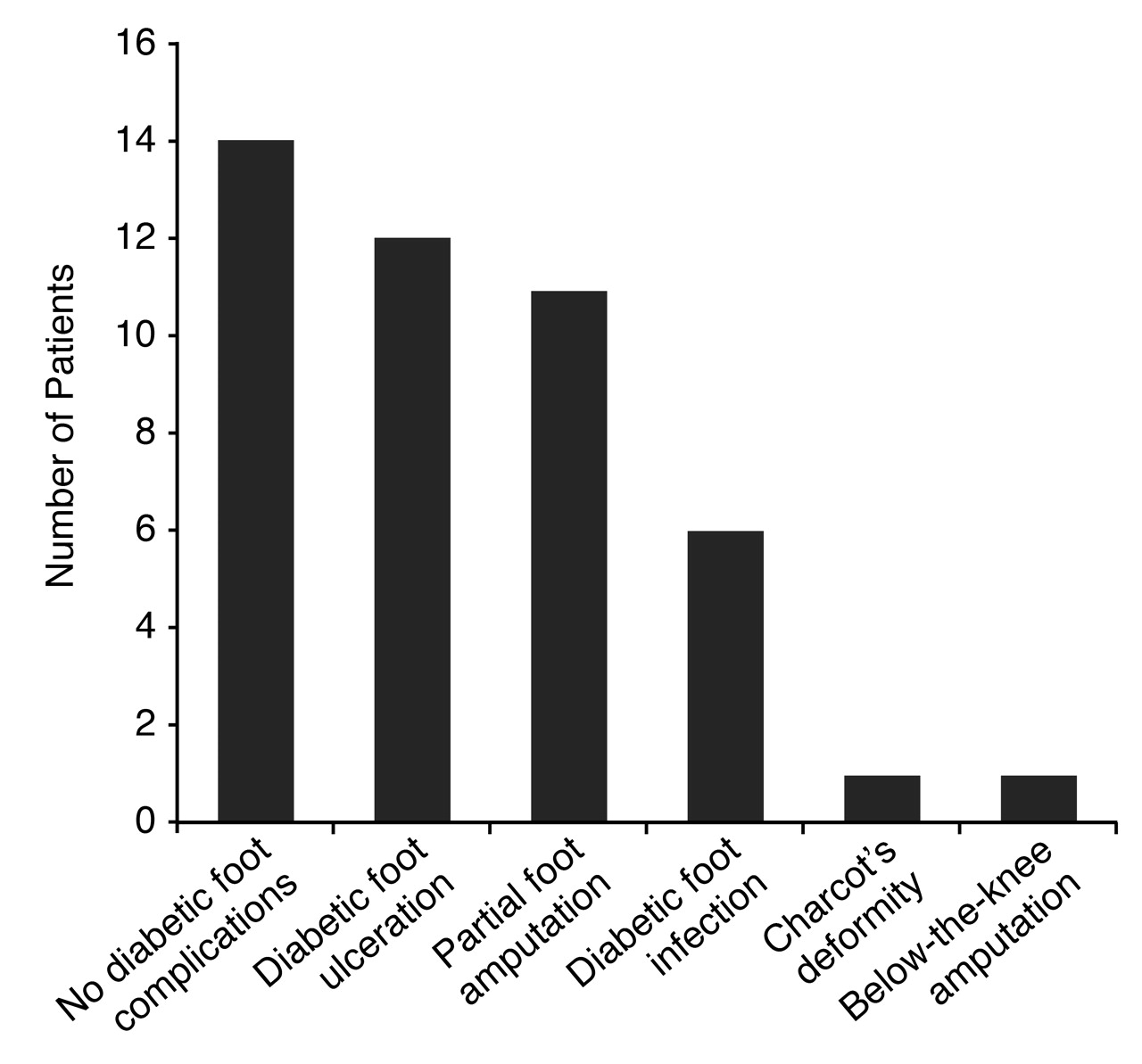
In this population, 70% of patients were older than 65 years, and 16% were older than 80 years. Most patients have had diabetes mellitus for more than 15 years. Most patients considered their general diabetic condition to be better than that of most people with the same condition. When asked the same question regarding the condition of their feet, again most patients felt that they were better than most people, and only 11% considered their condition to be worse than that of most patients with diabetes. However, 62% of patients had a history of diabetic foot complications (
Fig. 1).
Figure 1.
History of diabetic foot complications in 50 patients.
Figure 1.
History of diabetic foot complications in 50 patients.
Additional information was collected regarding duration of diabetic shoe use, type of shoes worn, how long and where the shoes were worn, and use of other shoes. Use of diabetic footwear was relatively short term for most patients, with 73% having used diabetic footwear for less than 3 years. Patients used several types of diabetic footwear: New Balance 587 (36%), PW Minor of various styles (36%), or Tru-Mold custom-molded shoes (18%). Interestingly, 9% of patients were unable to identify the type of shoe provided or were unaware that they had diabetic shoes.
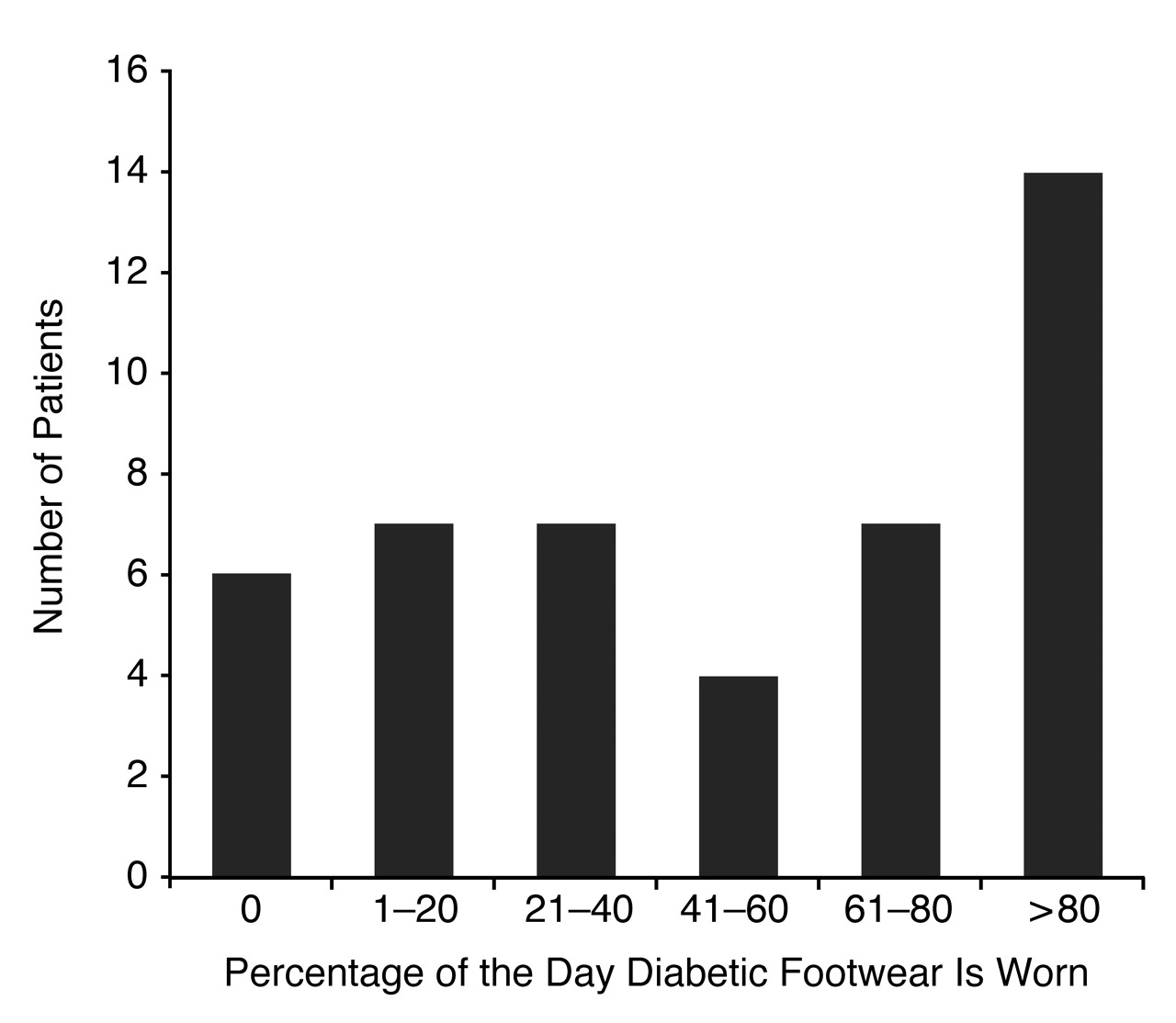
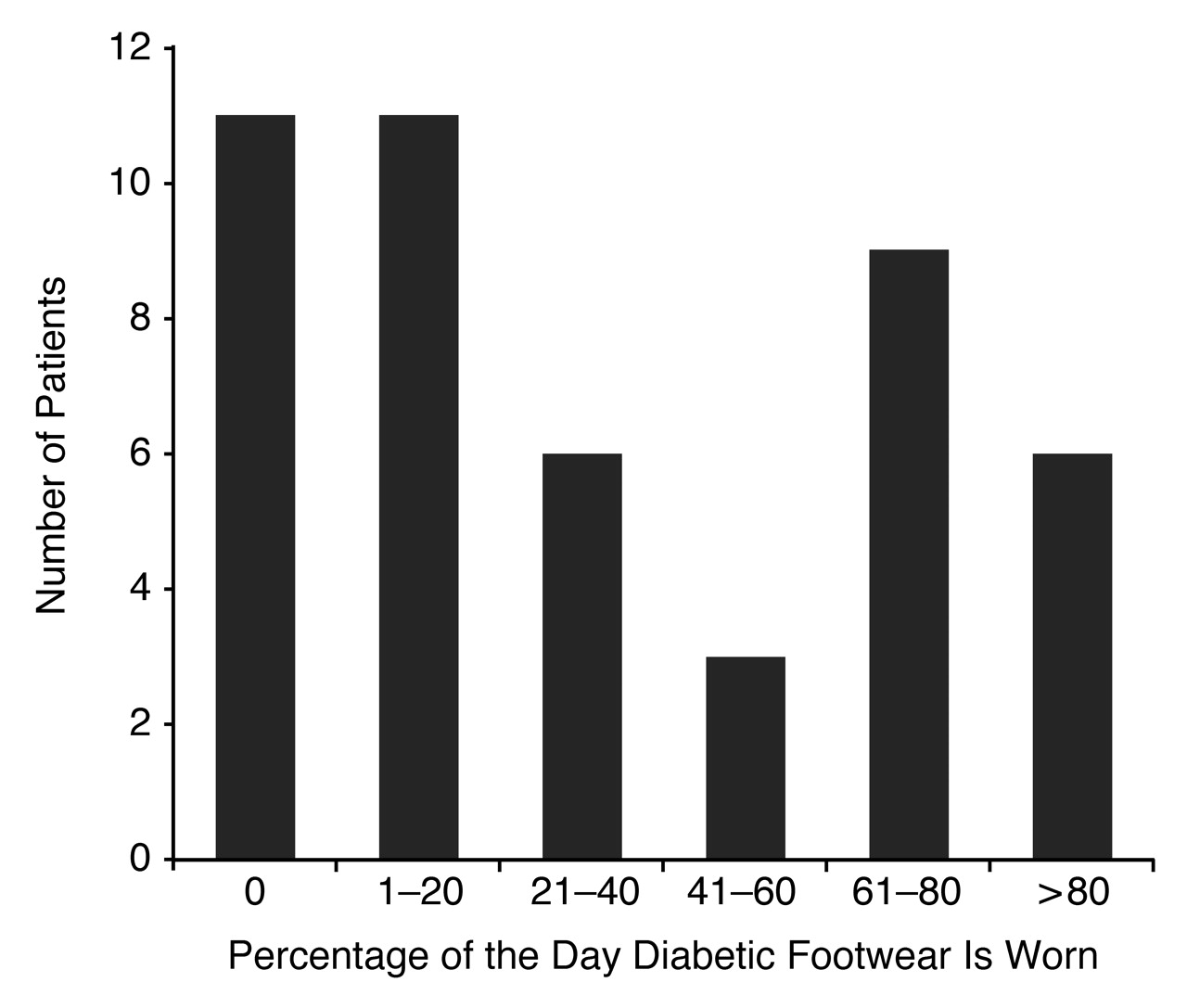
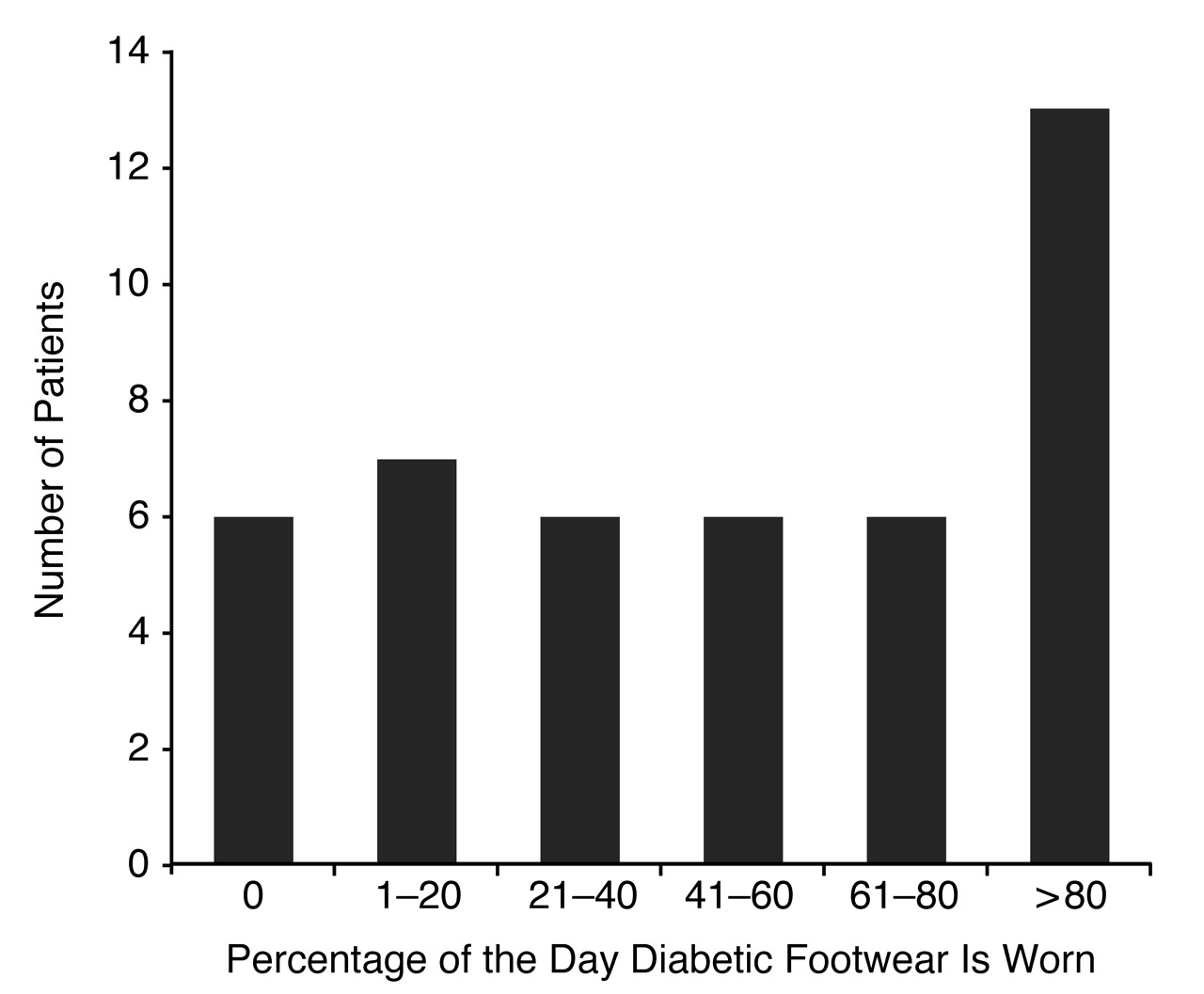
Patient compliance in the use of diabetic footwear indicated that 28% of patients wore diabetic footwear more than 80% of the day. The threshold of compliance, that is, the use of diabetic footwear for more than 60% of the day, was found in 42% of patients (
Figs. 2 and
3). Patients were more likely to wear their shoes when going out than at home (
Fig. 4). Only 30% of patients met the 60% threshold of compliance while at home.
Figure 2.
Patient compliance in the use of diabetic footwear overall.
Figure 2.
Patient compliance in the use of diabetic footwear overall.
Figure 3.
Patient compliance in the use of diabetic footwear at home.
Figure 3.
Patient compliance in the use of diabetic footwear at home.
Figure 4.
Patient compliance in the use of diabetic footwear away from home.
Figure 4.
Patient compliance in the use of diabetic footwear away from home.
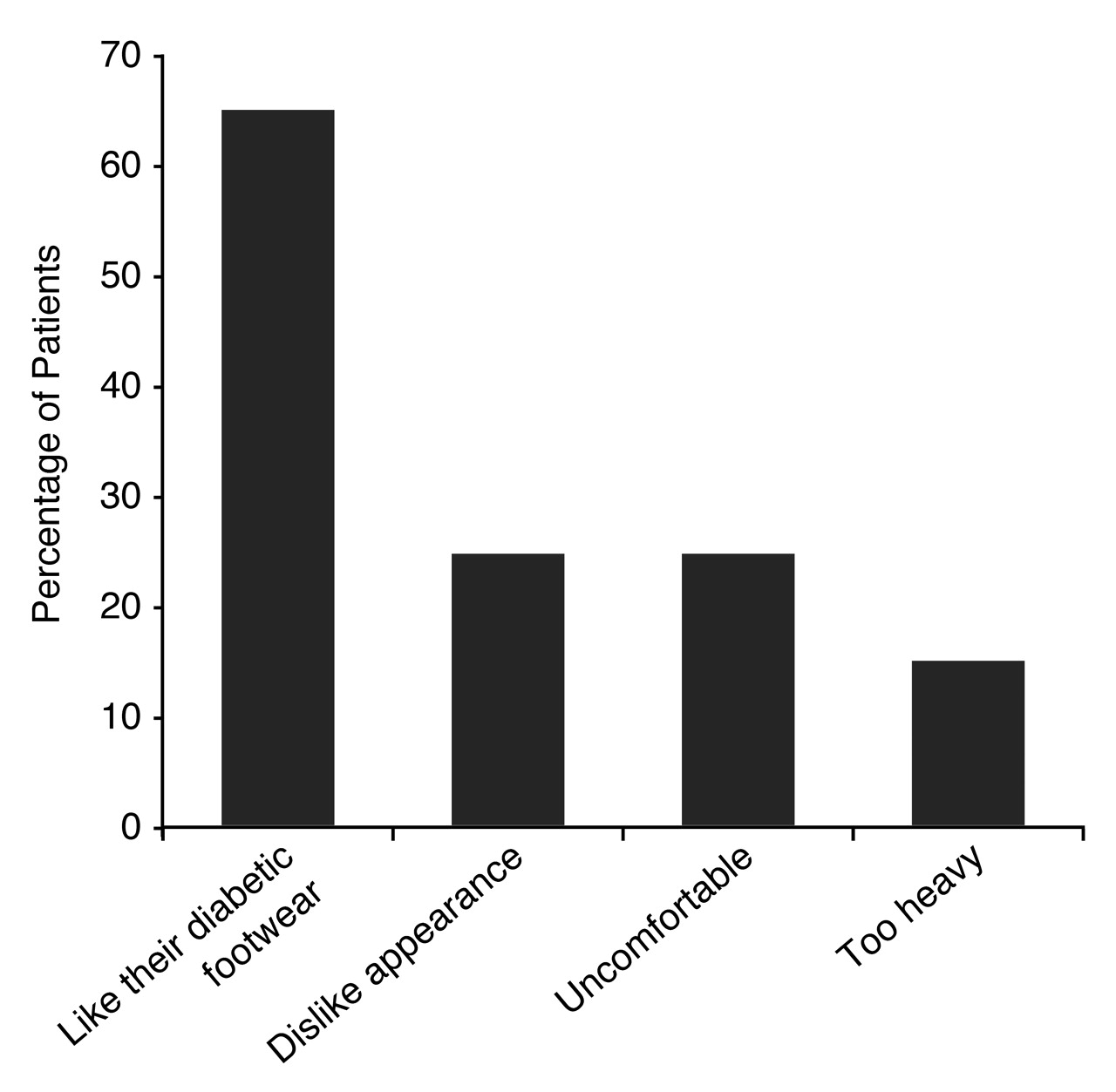
The last questions queried patients’ perceptions regarding the importance of diabetic footwear; whether they liked the shoes; and what features they did not like, if any. Ninety percent of patients thought that wearing diabetic footwear was important or very important, and 63% of patients “liked wearing diabetic shoes.” The most common complaints regarding the shoes were appearance (24%), comfort (24%), and weight (14%) (
Fig. 5).
Figure 5.
Patient complaints regarding diabetic footwear.
Figure 5.
Patient complaints regarding diabetic footwear.
Several patients made unsolicited comments regarding their shoes: “I won’t wear them . . . they are too ugly!” and “I have never worn your shoes they are difficult to put on . . . I will never wear them.”
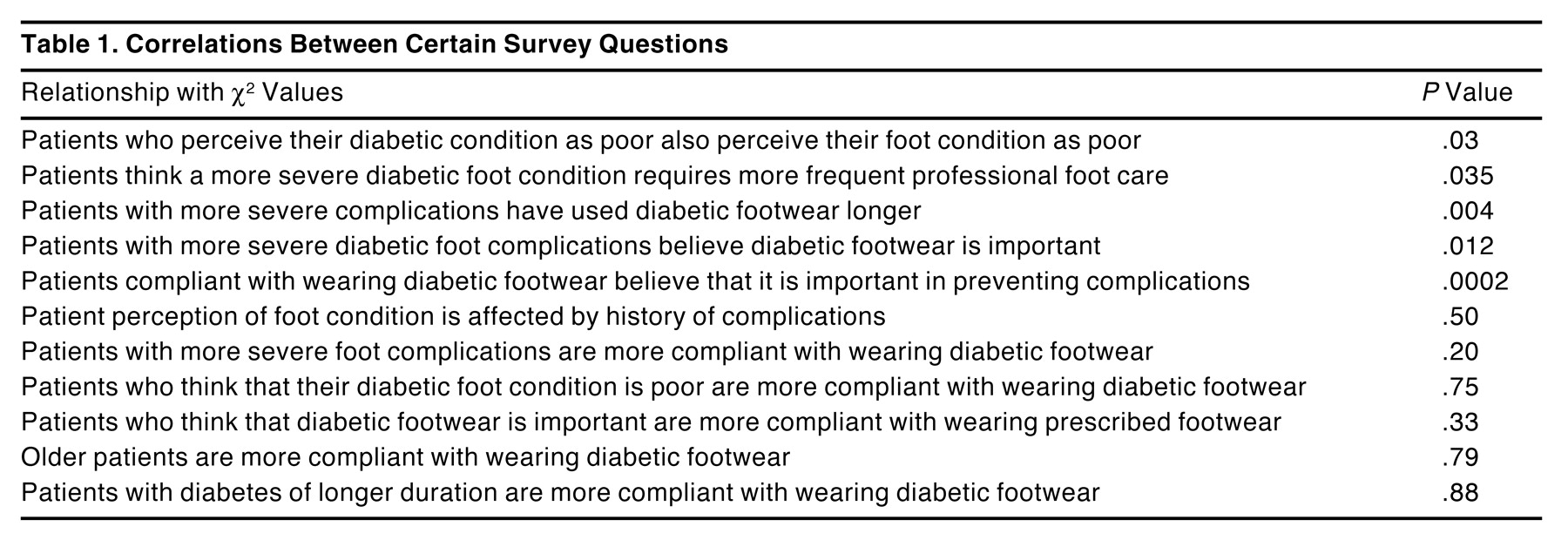
The authors’ primary interest in patient response was how a series of questions were answered. For example, are patients who have had serious diabetic foot complications, such as a partial-foot amputation, more inclined to use their diabetic footwear regularly? Using the χ
2 test, the correlation between certain questions was evaluated. Several interesting relationships were identified. Many of the relationships were expected; however, several relationships that intuitively seem likely were not statistically significant in the survey (
Table 1).
Table 1.
Correlations Between Certain Survey Questions.
Table 1.
Correlations Between Certain Survey Questions.
The most surprising relationships are those that lack statistical significance. Patient perception of diabetic foot condition has no basis in the severity of previous diabetic foot complications (P = .50). Patients with more severe diabetic foot complications are no more inclined to be compliant in the use of diabetic footwear than are those with less severe complications (P = .20). Patients who perceive their diabetic foot condition to be more severe than that of other patients with diabetic foot complications are no more likely to be compliant in the use of diabetic footwear (P = .75). Even those patients who feel the use of diabetic footwear is important are no more compliant in its use than other patients (P = .33). Duration of diabetic condition and age are not statistically significant when correlated to compliance or the perceived importance of the use of diabetic shoes.
Discussion
The most common diabetic foot complication is ulceration. It is estimated that 15% of patients with diabetes mellitus develop lower-extremity ulceration during the course of the disease.[
20,
21,
22] Fourteen percent to 20% of diabetic foot ulcerations require amputation for resolution of the complication, and most amputations (85%) in diabetic patients are preceded by foot ulceration.[
6,
23,
24] Patients responding to the survey were at high risk of diabetic foot complications, as outlined in the Therapeutic Shoe Bill. These patients have one or more of the following conditions: 1) previous amputation of the foot or part of the foot, 2) a history of previous foot ulcerations, 3) a history of preulcerative calluses, 4) peripheral neuropathy with evidence of callus formation, and 5) foot deformity with poor circulation.[
25] In fact, 62% of patients responding to the survey had a previous history of diabetic foot complications ranging from diabetic foot ulcerations to below-the-knee amputations. According to survey responses, only 11% of patients viewed their condition as being worse than that of most others with diabetes mellitus. This is clearly not the case. Diabetic patients with a history of diabetic foot complications do not recognize the severity of their condition or falsely assume that most other diabetic patients are “just as bad off” as they are. Even patients who perceive their general diabetic condition or their diabetic foot condition to be worse or much worse than that of other diabetic patients are no more likely to be compliant in the use of diabetic footwear. Furthermore, the survey results indicate that patients who have more severe diabetic foot complications, who have used diabetic footwear, and who feel that the use of proper diabetic footwear is important are no more likely to be compliant in the use of prescribed diabetic footwear than are other patients.
Diabetic footwear compliance is less than ideal. It is reported that 22% to 36% of patients use their diabetic footwear all day.[
11,
24] This low level of compliance has often been attributed to patients’ perceptions that the diabetic footwear is inappropriate, uncomfortable, and unsightly, and it has been suggested that providing patients with a wider selection of colors, styles, and materials would improve patient satisfaction.[
26,
27] Patients responding to the survey were offered a choice of footwear types and styles. The survey responses indicate that 63% of patients liked their diabetic footwear and that 90% felt that diabetic footwear is important or very important, yet only 42% of patients wore their diabetic footwear more than 60% of the time, the threshold that has been thought to be effective in reducing the rate of ulceration.[
10] Just 28% of patients responding to the survey used their diabetic footwear more than 80% of the time. This finding is consistent with previous compliance studies.[
13,
27] If patients feel that diabetic footwear is important and generally like their shoes, why do only 28% use them as instructed?
Research in the field of diabetic education has illustrated that a change in behavior requires education and motivation. Developing the desire to change or be compliant is just as important as educating patients regarding diabetic foot problems.[
15] Achieving compliance is often most difficult when a change in lifestyle is required. This resistance has also been identified in patients’ poor acceptance of low-fat diets and moderate exercise programs.[
28,
29]
Patients at risk for diabetic foot complications must be convinced of the severity of their diabetic foot condition and of the potential benefit of using proper diabetic footwear.[
13] Providing patients with appropriate footwear is not enough. Clear instructions on expected use patterns should be provided to patients, and health-care providers should seek an acknowledgment of expectations and commitment to follow through. Typically, patients provided with diabetic footwear are seen every 4 months for replacement of shoe inserts. During these visits, health-care providers can monitor compliance and reinforce educational messages in an attempt to change behavior. For the therapy to be effective, providing patients with diabetic footwear must be coupled with motivation to change patient behavior. Health-care professionals and patients often differ in their priorities. When educating patients on the importance of diabetic footwear, the expectations of the patient and attitudes toward preventive care must be considered.[
15] Compliance in the use of diabetic footwear lies in patients’ willingness to change their behavior. Cause-and-effect relationships seem to have limited influence on patients’ decisions regarding use of diabetic footwear. Health-care providers must assess patients’ readiness to change their behavior. If patients are not ready to change, behavior-modification instruments could be helpful in moving patients from the precontemplation and contemplation stages to action in their diabetic footwear compliance.[
30] For health-care providers, prevention of diabetic foot ulcerations and complications is paramount.[
31] If diabetic footwear is to be effective, there must be agreement between the health-care provider and the patient on this point.
A particular area of interest is patient compliance at home. Published literature reports that 85% of patients wear their diabetic footwear most or all of the time while away from home but that only 15% use it at home. Furthermore, patients at risk for diabetic foot complications seem to be as active at home as they are outside the home.[
32] This research found that only 12% of patients wear diabetic footwear more than 80% of the time while at home. This is particularly troubling in that 70% of the respondents were older than 66 years. These patients are apparently spending a great deal of their time at home with their feet unprotected.
The patient’s decision to wear or not to wear protective footwear is a subjective one, and rejection of the footwear is related not only to the appearance of the shoes but also to the lack of perceived value, which must be corrected to increase acceptance.[
15] The assumption that patients do not use proper footwear largely for aesthetic reasons[
13,
14] and that simply improving the appearance of the shoes will improve patient compliance is not based in fact. Diabetic footwear is made to accommodate feet with significant pathologic features. The nature of the problem necessitates shoe design that may not be fashionable. A variety of shoe makes, styles, colors, and materials are available; however, this does not overcome the stigma of orthopedic shoes. To increase patient compliance in the use of diabetic footwear, the patient must be convinced that the footwear is of real therapeutic value and should be viewed in a similar manner as pharmacologic agents for a complete diabetic-care regimen.
Conclusion
Because diabetic footwear is effective in reducing plantar foot pressures, shoes are an important tool in the prevention of diabetic foot ulcerations; however, patient acceptance and compliance are low. To improve compliance in the use of diabetic footwear, patients must be motivated to make lifestyle changes and must be supported in their efforts to change their behavior.
Although this research is consistent with other reported literature, additional points would be of interest. Patients report compliance based on memory; patient logs would likely be a more accurate method of data collection. Evaluation of compliance based on gender could provide additional insights into acceptance and use patterns of diabetic footwear.