Next Article in Journal
Plantar Fasciitis. A Degenerative Process (Fasciosis) Without Inflammation
Previous Article in Journal
The Fitting of Amputated and Nonamputated Diabetic Feet. A French Experience at the Villiers-Saint-Denis Hospital
 
 
Journal of the American Podiatric Medical Association is published by MDPI from Volume 116 Issue 1 (2026). Previous articles were published by another publisher in Open Access under a CC-BY (or CC-BY-NC-ND) licence, and they are hosted by MDPI on mdpi.com as a courtesy and upon agreement with American Podiatric Medical Association.
Article

Charcot-Marie-Tooth Disease and Vincristine

by
Ángel M. Orejana-García
1,*,
Javier Pascual-Huerta
2 and
Andrés Pérez-Melero
3
1
Department of Podiatric Pathology, E.U. Enfermería, Fisioterapia y Podología, Universidad Complutense de Madrid, Madrid, Spain
2
Clínica Universitaria de Podología, Universidad Complutense de Madrid, Madrid, Spain
3
Department of Geriatrics, E.U. Enfermería, Fisioterapia y Podología, Universidad Complutense de Madrid, Madrid, Spain
*
Author to whom correspondence should be addressed.
J. Am. Podiatr. Med. Assoc. 2003, 93(3), 229-233; https://doi.org/10.7547/87507315-93-3-229

Published: 1 May 2003

Abstract

This article reports on a case of sensorimotor neuropathy in a 55-year old man that developed after vincristine therapy. Subsequent biopsy of the sural nerve and electromyographic studies revealed the presence of Charcot-Marie-Tooth disease. Only 17 patients who developed severe neuropathy with very low accumulated doses of vincristine have been described in the literature. Pain and lateral ankle instability were treated with a functional orthosis. Orthopedic treatment and the biomechanical basis of foot and ankle problems in patients with vincristine therapy–induced Charcot-Marie-Tooth disease are discussed.

Charcot-Marie-Tooth disease is a hereditary peripheral neuropathy named for the three physicians (Jean-Martin Charcot, Pierre Marie, and Howard Tooth) who independently described it in 1886. Charcot-Marie-Tooth disease represents a broad spectrum of peripheral hereditary sensorimotor neuropathies. It is characterized by a slow and progressive loss of axonal or myelin fibers of the peripheral nerves. The presence of deficit, which is essentially motor and to some degree sensory, has a distal and symmetrical distribution.[1] Charcot-Marie-Tooth disease is the most common problem affecting the peripheral nervous system. It has an estimated frequency of 1 in 2,500,[2] but its clinical heterogeneity makes accurate assessment of its true prevalence difficult.[1] Clinical manifestations of Charcot-Marie-Tooth disease include distal muscle weakness and atrophy, especially in the leg and foot; absent or reduced deep tendon reflexes; and cavus foot deformity.[3,4,5]
Electromyographic studies and biopsies performed on the sural nerve in patients with Charcot-Marie-Tooth disease have allowed for its subdivision into two major types: type 1 and type 2. The most common form, type 1, is usually an autosomal dominant trait caused by mutations in chromosomes 1 and 17.[1] However, most of these patients have mutations in chromosome 17 (Charcot-Marie-Tooth disease type 1A), where the major locus linked to it was found on p11.2-p12.[6,7,8,9] Mutations located in chromosome 1 are known as Charcot-Marie-Tooth disease type 1B, and the major locus linked to it was found on q21.1-q23.[10,11,12,13] Warner et al[14] found autosomal dominant traits of type 1 disease in which mutations were located in the early growth response 2 gene or Krox 2.
The most common problems of Charcot-Marie-Tooth disease affecting the foot are cavus deformity, claw toe deformity, lateral ankle instability, muscular weakness, and pain.[15] Motor problems result in imbalance among muscle groups affecting the foot. Lumbrical and interosseous denervation has been reported to be responsible for claw toe deformity.[16] Mann and Missirian[17] noted a relative weakness of the tibialis anterior muscle against its antagonist, the peroneus longus muscle. This muscle imbalance has been postulated to be responsible for the plantarflexed first-ray deformity and forefoot equinus deformity typically seen in patients with Charcot-Marie-Tooth disease.[18] A strong tibialis posterior muscle is opposed by a weak peroneus brevis muscle, which results in a varus position of the heel, increasing internal longitudinal arch height[15] and lateral ankle instability. Vincristine is a chemotherapeutic agent widely used in the treatment of different types of malignancies, and neurotoxicity is one of its most important adverse effects. This neurotoxicity is related to the dose and duration of treatment, and it is present in most patients. It consists of sensorimotor peripheral neuropathy that can vary from mild to moderate. Paresthesia, pain, tingling, and numbness can appear as sensory problems. Loss of Achilles reflex, cramping in the legs, and weakness of the hands are usually the first motor manifestations noted. There is also posterior weakness that affects the extensor muscles of the hand and the dorsiflexor muscles of the foot and ankle. Recovery from neurotoxicity usually begins after discontinuing vincristine therapy.[19,20] Earlier studies suggest that vincristine therapy–induced neuropathy could be more severe in patients with Charcot-Marie-Tooth disease. However, recognition of this relationship is not widespread.[21]
In 1972, Weiden and Wright[22] and Hildebrand et al[23] first described severe neurotoxic effects that had developed in two patients with Charcot-Marie-Tooth disease after treatment with vincristine (cumulative dose, 4 mg and 2 mg, respectively). Since then, 15 additional cases have been reported in the literature. Before therapy with vincristine, the 17 cases reported had no neurologic problems. After receiving cumulative doses of vincristine, they experienced rapid and marked neuropathy. Sixteen patients were diagnosed as having type 1A disease,[21,24,25,26,27,28,29,30,31,32,33,34] with only one case of type 2 disease observed.[27]
The authors were unable to locate any published articles describing the pathomechanical characteristics of the foot and ankle in patients with vincristine therapy–induced Charcot-Marie-Tooth disease. Published articles do not focus on the treatment of foot and ankle problems in these patients. Described here is a previously asymptomatic 55-year-old man who developed a severe case of Charcot-Marie-Tooth disease after receiving the second dose of vincristine as part of a chemotherapeutic protocol for the treatment of lymphoma.

Case Report

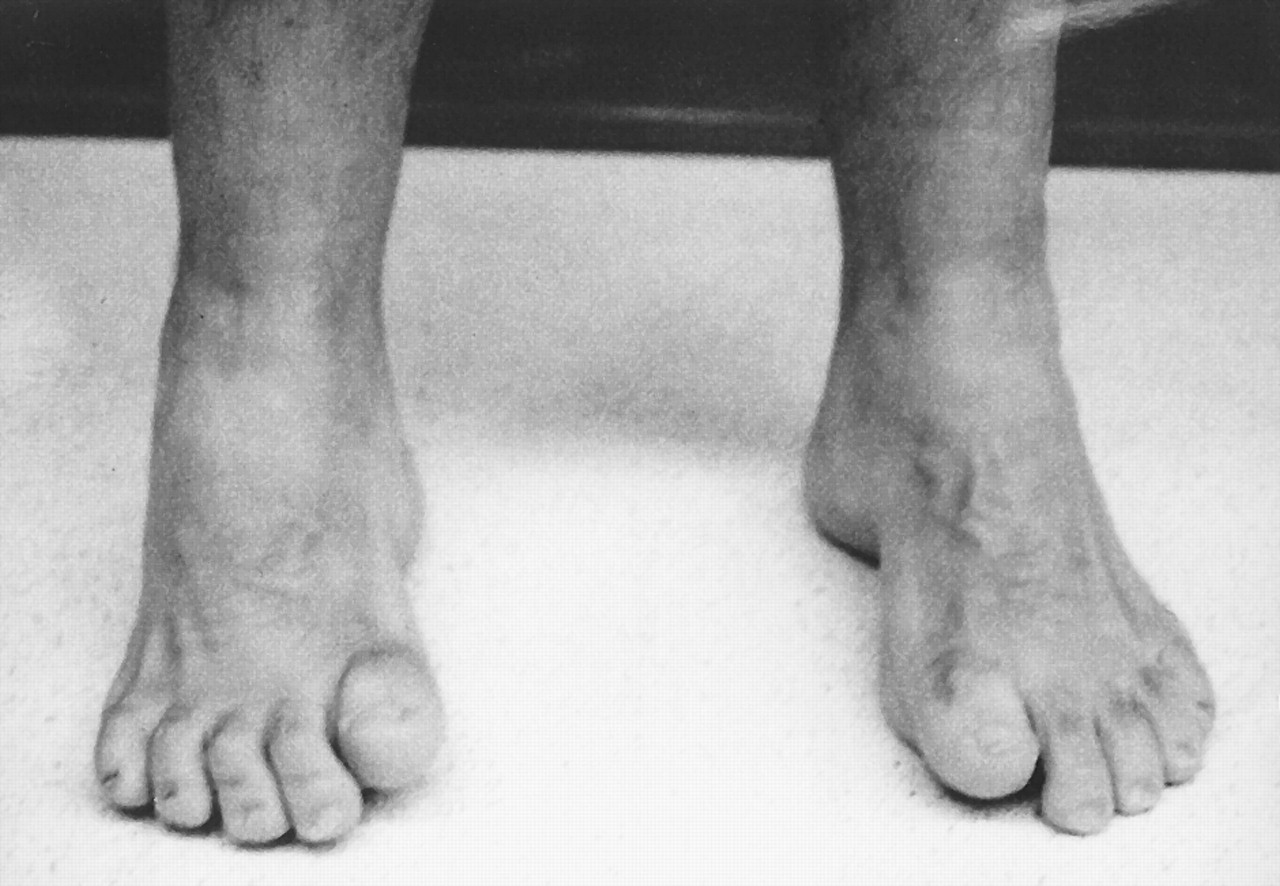
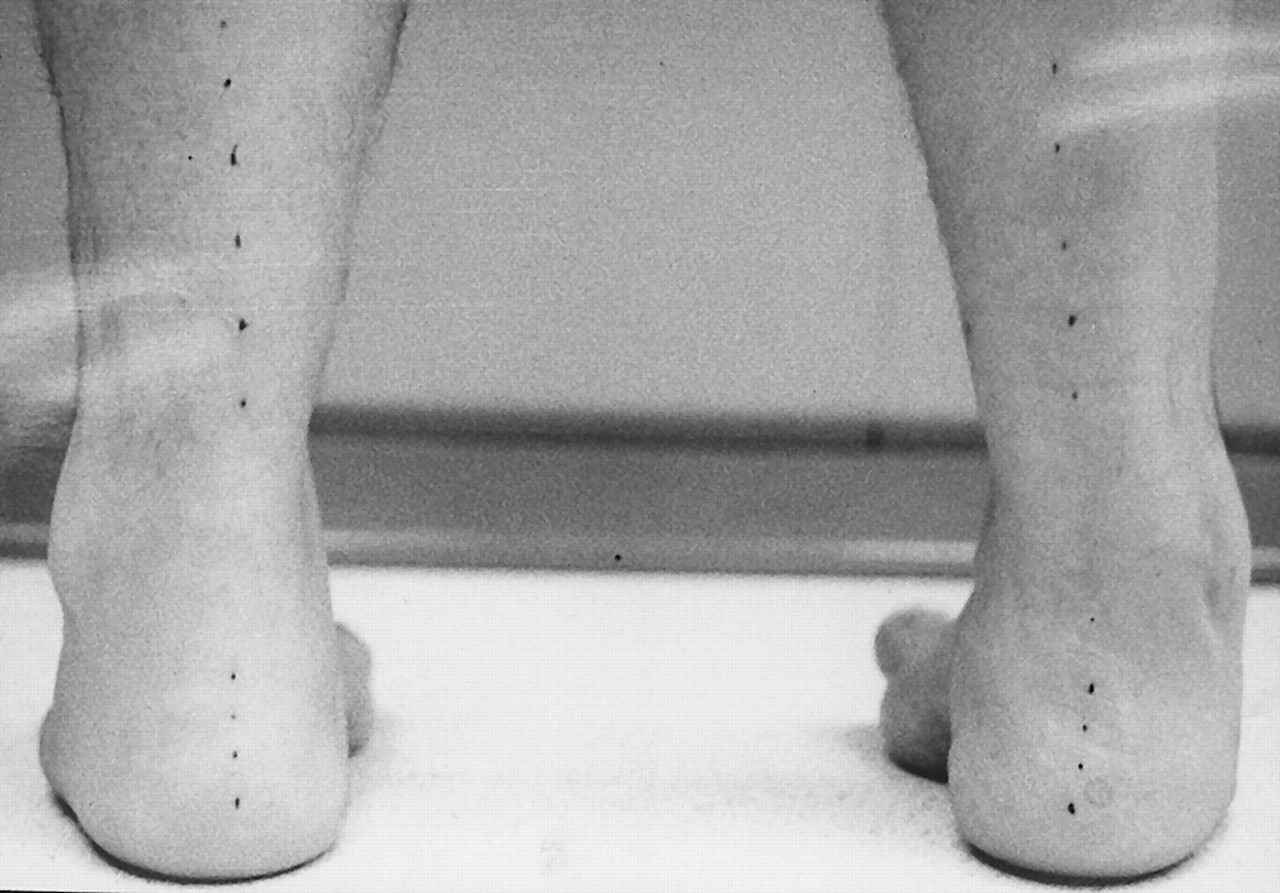
A 55-year-old man presented to the Clínica Universitaria de Podología, Universidad Complutense de Madrid, Madrid, Spain, with the chief complaint of mechanical pain induced in the fifth metatarsal heads of both feet. His medical history revealed an adenopathy excision in his right inguinal region performed 2 years earlier. The pathologic study revealed the presence of peripheral follicular lymphoma subtype 1. Tumoral extension studies (bone scans) were performed later, showing the presence of infiltration into the bone marrow. The patient was started on an induction chemotherapeutic regimen with cyclophosphamide-vincristine-prednisone. After the second cycle of treatment (4 mg of vincristine), the patient experienced tingling symptoms in the distal extremities. Neurologic studies showed loss of Achilles and patellar reflexes, distal muscular weakness, and an increase in cavus deformity of both feet. Electromyographic studies revealed the presence of severe peripheral sensorimotor neuropathy. Biopsy of the sural nerve revealed a marked reduction in myelinated fibers, especially those of medium and high diameter; abundant “onion bulbs” formation; and segmental demyelination. The patient was diagnosed as having Charcot-Marie-Tooth disease. There was no family history of peripheral neuropathy. Nerve conduction studies were performed on his two sons, and the results were negative. Physical examination revealed high medial arches during weightbearing and nonweightbearing, with the heels inverted during static stance (3° of varus in the left foot and 6° of varus in the right foot), and hammer toes of the first through fifth metatarsals (Figs. 1 and 2). The patient presented with muscular atrophy of the posterior calf muscles, showing a typical “inverted champagne bottle” presentation. A marked forefoot equinus and forefoot valgus deformity was also present, with plantarflexed first-ray deformity in both feet. Hyperkeratotic lesions beneath the first and fifth metatarsal heads could be seen, and palpation of the fifth metatarsal heads of both feet produced pain. First-ray motion was restricted dorsally, and ankle dorsiflexion range of motion showed marked limitations (82° in the left foot and 75° in the right foot). Mild vibratory and positional sense reductions were noted over the distal portion of both feet, along with loss of Achilles and patellar reflexes. Using the Polio Foundation Ratio (from 0 to 5), the patient showed marked weakness over the tibialis anterior (1/5) and peroneus brevis (0/5) muscles. No signs of weakness over the peroneus longus and tibialis posterior muscles were noted (5/5 in both).
The gait cycle examination revealed a supinated position of the subtalar joint during the entire stance phase, with toe-off about the oblique axis of the metatarsal heads. During the swing phase, the patient showed a mild steppage gait pattern.
Figure 1. Frontal plane view of the patient. Note the arch height and hammer toe of the hallux in both feet.
Japma 93 00229 g001
Figure 2. Posterior plane view of the patient showing varus position of both heels.
Japma 93 00229 g002
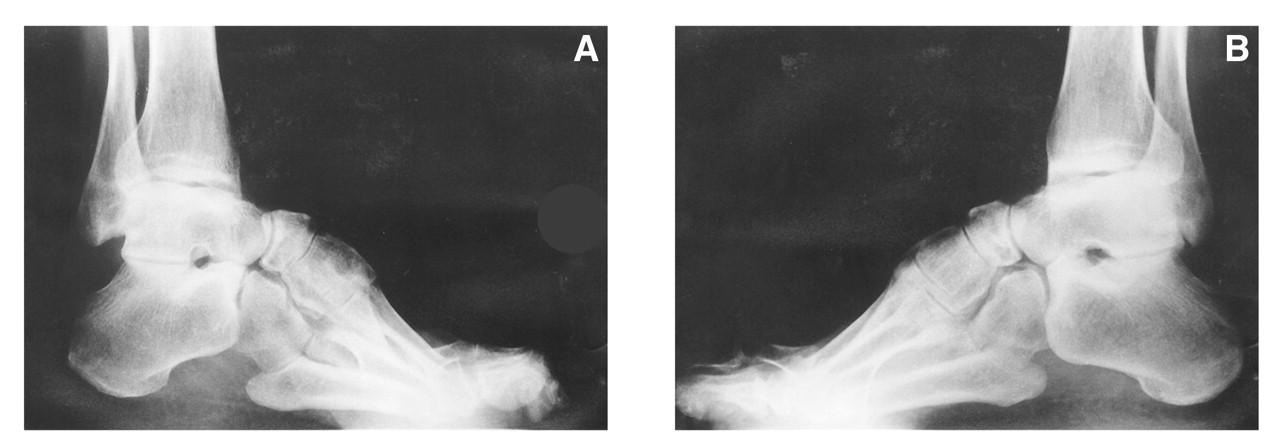
Lateral radiographs of both feet (Fig. 3) revealed metatarsal declination angles of 44° on the left foot and 61° on the right foot, talar declination angles of 9° on the left foot and 8° on the right foot, and calcaneal declination angles of 25° on the left foot and 30° on the right foot. Anteroposterior radiographs of both feet revealed metatarsus adductus angles of 27° on the left foot and 37° on the right foot.
The patient had a diagnosis of cavus feet with rigid forefoot valgus and rigid plantarflexed first-ray deformity due to type 1 Charcot-Marie-Tooth disease. Conservative treatment with a custom-made orthotic device was proposed. The biomechanical deformity of the patient was captured with a nonweightbearing plantar cast. A 3-mm polypropylene shell was molded to the positive model. The forefoot valgus and plantarflexed first-ray deformities were extrinsically posted. A 0° rearfoot post was added, with a heel lift of 9 mm stabilizing the heel in a vertical position. After 4 weeks of treatment, the mechanical pain in the fifth metatarsal heads of both feet disappeared.

Discussion

Vincristine is a vinca alkaloid frequently used in the treatment of several types of malignancies. Its cytostatic activity relates to its union with tubulin, a protein whose function is inactivated, stopping the process of microtubule formation. This activity stops cell division in metaphase.[19,20] It has been documented that neurotoxicity is the main adverse effect of vincristine. However, the molecular mechanism related to vincristine neurotoxicity is not well understood. The use of animal models and the possibility of reproduction of vincristine neurotoxicity have increased the knowledge of this process. Changes have been observed affecting the orientation, size, and density of microtubules in the cell bodies of neurons, both myelinated and unmyelinated.[35,36] In patients treated with vincristine, it is thought that the changes shown in microtubules may be the cause of neuropathy. These changes could be the reason for modifications in sensory and motor action potentials that have been observed in animal models.[37] An increase of Ca++ ion concentration in neuron cells has also been observed.[38] Bartus[39] suggests that this increase is the main factor in the activation of calpain, initiating the axon-degeneration process.
Figure 3. Lateral radiographic views of the right (A) and left (B) feet. Note the increased first metatarsal declination angles and the inverted position of the subtalar joints.
Japma 93 00229 g003
Vincristine neurotoxicity is dose-dependent.[40] It has been estimated that with cumulative doses smaller than 10 mg, the patient’s symptoms are mild, and, after discontinuing therapy, all of them revert.[29] Graf et al[21] point out duplication of p11.2-p12 in chromosome 17 as the predisposing factor for the development of severe neuropathy after vincristine therapy. Seventeen cases have been documented of severe neuropathy after vincristine therapy in doses smaller than 10 mg.[22,23,24,25,26,27,28,29,30,31,32,33,34,41] With the exception of the patient described by Weiden and Wright,[22] the patients had no previous diagnosis of Charcot-Marie-Tooth disease.
The patient described here had no previous diagnosis of Charcot-Marie-Tooth disease. Electromyographic studies and sural nerve biopsy showed the presence of type 1 disease. However, the patient had no family history of the disease, and electromyographic studies performed in his two sons yielded normal findings. It was not possible to perform genetic studies in his family to clarify this aspect.
Half of the cases published in the literature have been described in pediatric and teenaged patients (5 to 18 years old),[21,25,26,27,29,30] and the other half in adults (28 to 52 years old).[21,22,24,32,41] Only one case has been described in older patients (61 years old).[23,33,34]
Clinical manifestations at the lower extremities of patients with vincristine therapy–induced Charcot-Marie-Tooth disease include cavus foot deformity, loss of deep tendon reflexes, sensory alterations (usually vibration sensations), and marked muscular weakness or atrophy that affects the patient’s gait. However, the biomechanical problems of the foot have not been documented in the 17 cases reported. The patient described here presented with marked forefoot equinus with plantarflexed first-ray deformity of both feet. First metatarsal declination angles were 44° on the left foot and 61° on the right foot (reference values, 23° ± 8°). The heel was inverted during static stance, with talar declination angles of 9° on the left foot and 8° on the right foot (reference values, 21° ± 4°), and the metatarsus adductus angles were 27° on the left foot and 37° on the right foot (reference values, 5° to 17°).[42] These data are consistent with those presented by Holmes and Hansen[15] for patients with common Charcot-Marie-Tooth disease. They suggest that the foot pathomechanics of patients with vincristine therapy–induced Charcot-Marie-Tooth disease and those with common Charcot-Marie-Tooth disease are the same.
The goal of the treatment of this patient was pain relief by controlling biomechanical abnormalities of the gait cycle. The extrinsic forefoot valgus post of the orthotic device prevents excessive loading over the fifth metatarsal head. Furthermore, it controls the rearfoot varus position and lateral ankle instability during midstance. The 0° rearfoot post also prevents lateral ankle instability at heel strike. The heel lift improves dorsiflexion range of motion of the ankle joint during the stance phase. In this patient, the insole was enough to relieve the pain over the fifth metatarsal heads of both feet, providing lateral stability of the patient’s gait.

Conclusion

Neurotoxicity is one of the main adverse effects of vincristine therapy. Some patients have rapidly developed Charcot-Marie-Tooth disease even at very small dosages. The authors were unable to locate any published articles in which orthopedic treatment for patients with Charcot-Marie-Tooth disease is analyzed and its efficacy statistically proven in a scientific manner. Some cases have been published of orthopedic treatment of Charcot-Marie-Tooth disease as a way of improving the gait cycle of these patients.[41] However, the authors have found no studies that analyze this issue in depth. The authors agree with Holmes and Hansen[15] that orthopedic treatment of Charcot-Marie-Tooth disease must be based on accurate assessment of the muscular function of the patient, the degree of flexibility of the deformity, and the articular instability. Functional orthoses could be useful in relieving foot pain and controlling lateral ankle instability in these patients. Prospective studies are still necessary to properly evaluate the effectiveness of these treatments in patients with Charcot-Marie-Tooth disease.

References

  1. ADAMS, R.D.; VICTOR, M.; ROPPER, A.H. “Enfermedades de los Nervios Periféricos,”. In Principios de Neurología; Adams, R.D., Victor, M., Ropper, A.H., Eds.; Interamericana-McGraw-Hill: Mexico City, 1999; p. 1159. [Google Scholar]
  2. SKRE H: Genetics and clinical aspects of Charcot-Marie-Tooth’s disease. Clin Genet 1974, 6, 98. [CrossRef]
  3. COMBARROS-PASCUAL O: Enfermedad de Charcot-Marie-Tooth tipo 2. Rev Neurol 2000, 30, 79. [CrossRef]
  4. WARNER, L.E.; GARCIA, C.A.; LUPSKI, J.R. Hereditary peripheral neuropathies: clinical forms, genetics and molecular mechanisms. Annu Rev Med 1999, 50, 263. [Google Scholar] [CrossRef] [PubMed]
  5. GARCIA, C.A. The Clinical Features of Charcot-Marie-Tooth Disorders. In Charcot-Marie-Tooth Disorders: A Handbook for Primary Care Physicians; Parry, G.J., Ed.; Charcot-Marie-Tooth Association: Upland, PA, 1995; p. 5. [Google Scholar]
  6. VANCE, J.M.; NICHOLSON, G.A.; YAMAOKA, L.H. ET AL: Linkage of Charcot-Marie-Tooth neuropathy type 1A to chromosome 17. Exp Neurol 1989, 104, 186. [Google Scholar] [CrossRef] [PubMed]
  7. TIMMERMAN, V.; RAEYMAEKERS, P.; DE JONGHE, P. ET AL: Assignment of the Charcot-Marie-Tooth neuropathy type 1 (CMT 1A) gene to 17p11.2-p12. Am J Hum Genet 1990, 47, 680. [Google Scholar]
  8. MATSUNAMI, N.; SMITH, B.; BALLARD, L.; et al. Peripheral myelin protein-22 gene maps in the duplication in chromosome 17p11.2 associated with Charcot-Marie-Tooth 1A. Nat Genet 1992, 1, 176. [Google Scholar] [CrossRef] [PubMed]
  9. ROA, B.B.; GARCIA, C.A.; SUTER, U.; ET, A.L. Charcot-Marie-Tooth disease type 1A: association with a spontaneous point mutation in the PMP-22 gene. N Engl J Med 1993, 329, 96. [Google Scholar] [CrossRef]
  10. BIRD, T.D.; OTT, J.; GIBLETT, T.R. Evidence for linkage of Charcot-Marie-Tooth neuropathy to the Duffy locus on chromosome 1. Am J Hum Genet 1982, 34, 388. [Google Scholar]
  11. GUILOFF, P.J.; THOMAS, P.K.; CONTRERAS, M.; et al. Linkage of autosomal dominant type I hereditary motor and sensory neuropathy to the Duffy locus on chromosome 1. J Neurol Neurosurg Psychiatry 1982, 45, 669. [Google Scholar] [CrossRef]
  12. HAYASAKA, K.; HIMORO, M.; SATO, W. ET AL: Charcot-Marie-Tooth neuropathy type 1B is associated with mutations of the myelin P0 gene. Nat Genet 1993, 5, 31. [Google Scholar] [CrossRef]
  13. KULKENS, T.; BOLHIUS, P.A.; WOLTERMAN, R.A.; et al. Deletion of the serine 34 codon from the major peripheral myelin protein P0 gene in Charcot-Marie-Tooth disease type 1B. Nat Genet 1993, 5, 35. [Google Scholar] [CrossRef]
  14. WARNER, L.E.; MANCIAS, P.; BUTLER, I.J.; et al. Mutations in the early growth response 2 (EGR-2) gene are associated with hereditary myelinopathies. Nat Genet 1998, 18, 382. [Google Scholar] [CrossRef]
  15. HOLMES, J.R.; HANSEN, S.T. Foot and ankle manifestations of Charcot-Marie-Tooth disease. Foot Ankle 1993, 14, 476. [Google Scholar] [CrossRef]
  16. SABIR M, LYTTLE D: Pathogenesis of pes cavus in Charcot-Marie-Tooth disease. Clin Orthop 1983, 175, 173. [CrossRef]
  17. MANN, R.A.; MISSIRIAN, J. Pathophysiology of Charcot-Marie-Tooth disease. Clin Orthop 1988, 234, 221. [Google Scholar] [CrossRef]
  18. ALEXANDER, I.J.; JOHNSON, K.A. Assessment and management of pes cavus in Charcot-Marie-Tooth disease. Clin Orthop 1989, 246, 273. [Google Scholar] [CrossRef]
  19. AMERICAN SOCIETY OF HEALTH-SYSTEM PHARMACISTS: “Antineoplastic Agents”. In American Hospital Formulary Service Drug Information 1999; American Society of Health-System Pharmacists: Bethesda, MD, 1999; p. 1021.
  20. HILKENS PHE, VAN DEN BENT MJ: Chemotherapy-induced peripheral neuropathy. J Peripher Nerv Syst 1997, 2, 350.
  21. GRAF, W.D.; CHANCE, P.F.; LENSCH, M.W.; et al. Severe vincristine neuropathy in Charcot-Marie-Tooth disease type 1A. Cancer 1996, 77, 1356. [Google Scholar] [CrossRef]
  22. WEIDEN, P.L.; WRIGHT, S.E. Vincristine neurotoxicity. N Engl J Med 1972, 286, 1369. [Google Scholar] [PubMed]
  23. HILDEBRAND, J.; KENIS, Y.; MUBASHIR, B.A. ET AL: Vincristine neurotoxicity. N Engl J Med 1972, 287, 517. [Google Scholar]
  24. UNO, S.; KATAYAMA, K.; DOBASHI, N. ET AL: Acute vincristine neurotoxicity in a non-Hodgkin’s lymphoma patient with Charcot-Marie-Tooth disease [abstract]. Rinsho Ketsueki 1999, 40, 414. [Google Scholar]
  25. OLEK, M.J.; BORDEAUX, B.; LESHNER, R.T. Charcot-Marie-Tooth disease type I diagnosed in a 5 year old boy after vincristine neurotoxicity, resulting in maternal diagnosis. J Am Osteopath Assoc 1999, 99, 165. [Google Scholar]
  26. NEUMAN, Y.; TOREN, A.; RECHAVI, G. ET AL: Vincristine treatment triggering the expression of asymptomatic Charcot-Marie-Tooth disease. Med Pediatr Oncol 1996, 26, 280. [Google Scholar] [CrossRef]
  27. IGARASHI, M.; THOMPSON, E.I.; RIVERA, G.K. Vincristine neuropathy in type I and type II Charcot-Marie-Tooth disease (hereditary motor sensory neuropathy). Med Pediatr Oncol 1995, 25, 113. [Google Scholar] [CrossRef] [PubMed]
  28. GRIFFITHS, J.D.; STARK, R.J.; DING, J.C. ET AL: Vincristine neurotoxicity in Charcot-Marie-Tooth syndrome. Med J Aust 1985, 143, 305. [Google Scholar] [CrossRef] [PubMed]
  29. Hogan-Dann, C.M.; Fellmeth, W.G.; McGuire, S.A. ET AL: Polyneuropathy following vincristine therapy in two patients with Charcot-Marie-Tooth syndrome. JAMA 1984, 252, 2862. [Google Scholar] [CrossRef]
  30. MERCURI, E.; POULTRON, J.; BUCK, J. ET AL: Vincristine treatment revealing asymptomatic hereditary motor sensory neuropathy type 1A. Arch Dis Child 1999, 81, 442. [Google Scholar] [CrossRef]
  31. MCGUIRE, S.A.; GHOSPE, S.M.; DAHL, G. Acute vincristine neurotoxicity in the presence of hereditary motor and sensory neuropathy type I. Med Pediatr Oncol 1989, 17, 520. [Google Scholar] [CrossRef]
  32. NAUMANN, R.; MOHM, J.; REUNER, U.; et al. Early recognition of hereditary motor and sensory neuropathy type 1 can avoid life-threatening vincristine neurotoxicity. Br J Haematol 2001, 115, 323. [Google Scholar] [CrossRef]
  33. MOUGDIL, S.S.; RIGGS, J.E. Fulminant peripheral neuropathy with severe quadriparesis associated with vincristine therapy. Ann Pharmacother 2000, 34, 1136. [Google Scholar]
  34. HILDEBRANDT, G.; HOLLER, E.; WOENKHAUS, M. ET AL: Acute deterioration of Charcot-Marie-Tooth disease 1A (CMT 1A) following 2 mg of vincristine chemotherapy. Ann Oncol 2000, 11, 743. [Google Scholar] [CrossRef]
  35. TANNER, K.D.; LEVINE, J.D.; TOPP, K.S. Microtubule disorientation and axonal swelling in unmyelinated sensory axons during vincristine-induced painful neuropathy in rats. J Comp Neurol 1998, 395, 481. [Google Scholar] [CrossRef]
  36. TOPP, K.S.; TANNER, K.D.; LEVINE, J.D. Damage to the cytoskeleton of large diameter sensory neurons and myelinated axons in vincristine-induced painful peripheral neuropathy in the rat. J Comp Neurol 2000, 424, 563. [Google Scholar] [CrossRef]
  37. GREEN, L.S.; DONOSO, J.A.; HELLER-BETTINGER, I.E. ET AL: Axonal transport disturbances in vincristine-induced peripheral neuropathy. Ann Neurol 1977, 1, 255. [Google Scholar] [CrossRef]
  38. WANG MS, WU Y, CULVER DG, ET AL: Pathogenesis of axonal degeneration: parallels between Wallerian degeneration and vincristine neuropathy. J Neuropathol Exp Neurol 2000, 59, 599. [CrossRef] [PubMed]
  39. BARTUS R: The calpain hypothesis in neurodegeneration: evidence for a common cytotoxic pathway. Neuroscientist 1997, 3, 314. [CrossRef]
  40. ROSENTHAL, S.; KAUFMAN, S. Vincristine neurotoxicity. Ann Intern Med 1974, 80, 733. [Google Scholar] [CrossRef]
  41. GENI, C.; GAIO, J.M.; MALLARET, M.; et al. Maladie de Charcot-Marie-Tooth révélée par un traitment á la vincristine au cours d’une maladie de Hodking familiale. Ann Med Interne (Paris) 1990, 141, 709. [Google Scholar]
  42. OSHEN L: “Review of Adult Foot Radiology,”. In Hallux Valgus and Forefoot Surgery; Hetherington, V.J., Ed.; Churchill Livingstone: New York, 1994; p. 67. [Google Scholar]