Next Article in Journal
Use of a Needleless Injection System for Digital Ring Block Anesthesia
Previous Article in Journal
Knowledge of Aging and Attitudes Toward Older People. A Survey of Australian Podiatric Medical Students
 
 
Journal of the American Podiatric Medical Association is published by MDPI from Volume 116 Issue 1 (2026). Previous articles were published by another publisher in Open Access under a CC-BY (or CC-BY-NC-ND) licence, and they are hosted by MDPI on mdpi.com as a courtesy and upon agreement with American Podiatric Medical Association.
Article

External Thermoregulation of Wounds Associated with Lower-Extremity Osteomyelitis. A Pilot Study

by
Jeffrey C. Karr
Private practice, 1045 East Rd 540A, Lakeland, FL 33813
J. Am. Podiatr. Med. Assoc. 2003, 93(1), 18-22; https://doi.org/10.7547/87507315-93-1-18
Published: 1 January 2003

Abstract

External thermoregulation using noncontact normothermic wound therapy accelerates wound closure by second intention in areas of existing osteomyelitis before surgical excision compared with standard wound care. This pilot study consisted of two arms. The control arm received standard wound care, which resulted in complete ulcer healing at an average of 127 days. The treatment arm received noncontact normothermic wound therapy, which resulted in complete ulcer healing at an average of 59 days, or 54% faster than in the control arm. This new treatment allows the physician to decrease the rate of limb loss and recurrent osteomyelitis by decreasing the morbidity of bone reinfection through the wound bed. There have been no published studies or case presentations addressing thermoregulation in the management of wounds associated with osteomyelitis. Although noncontact normothermic wound therapy is not a direct treatment for osteomyelitis, this new treatment option results in significantly accelerated healing of wounds associated with osteomyelitis. (J Am Podiatr Med Assoc 93(1): 18-22, 2003)

Normothermia of human tissue as defined in the literature is 37° ± 1° C.[1] Cellular functions, enzymatic reactions, and biochemical reactions are optimized in this physiologic state.[1-4] Hypothermic wounds range in temperature from 25° to 34° C.[5-9] Hypothermia inhibits wound healing, creates local immune system impairment, decreases subcutaneous oxygen tension, increases morbidity of infection, and increases the negative effect of chronic wound fluid.[1-9]
The average time needed for a wound dressing change has been reported to be 15 min. Wound hypothermia ensues while the wound is uncovered, with an average wound bed temperature decrease of 3°C, compared with a 1°C decrease in the periwound skin temperature. In vitro studies[10,11] have shown that cooling to 33°C, a decrease of 4°C, inhibits fibroblast proliferation, fibroblast migration, and epithelial proliferation but not epithelial migration. In addition, in vitro fibroblast studies[12,13] of intermittent radiant heat demonstrate an effect of stimulating fibroblast proliferation and decreasing the growth of quiescent fibroblasts. Full-thickness pressure wounds, diabetic wounds, and venous stasis wounds demonstrated accelerated healing with radiant heat from the Warm-Up therapy device (Augustine Medical Inc, Eden Prairie, Minnesota).[3,8,14]
Wound hypothermia has been shown to directly impair the immune system through vasoconstriction, increasing hemoglobin’s affinity for oxygen and decreasing oxidative bacterial killing by neutrophils.[1,15-20] In a double-blind, randomized study[19] of perioperative hypothermia, a decline of 2°C from the normal temperature tripled the incidence of wound infection and prolonged the hospital stay by 20%. Warm-Up therapy application on painful wounds has been shown to significantly decrease the pain experienced by the patient.[1,14] Chronic wound fluid has been shown to inhibit cell proliferation and wound healing.[21-24] Chronic wound fluid contains elevated levels of proteases that inhibit wound healing such as collagenase, elastase, and metalloproteinases; cytokines; and tumor necrosis factor α.[25] In vitro studies[24,25] have demonstrated that thermoregulation counteracts the growth-inhibitory effect of chronic wound fluid.
Warm-Up therapy manages the changes in subcutaneous oxygen tension seen with wound hypothermia that are related to ulcer vasoconstriction and hemoglobin’s increased affinity for oxygen.[16] A significant linear correlation was found between subcutaneous oxygen tension and subcutaneous temperature.[9,17] The risk of postoperative wound infection has been shown to be inversely proportional to subcutaneous oxygen tension.[26,27] Oxygen tension increased significantly with application of pulsed radiant heat, which correlated well with resistance to infection and prevention of wound colonization through oxidative killing.[8,15,28-32]
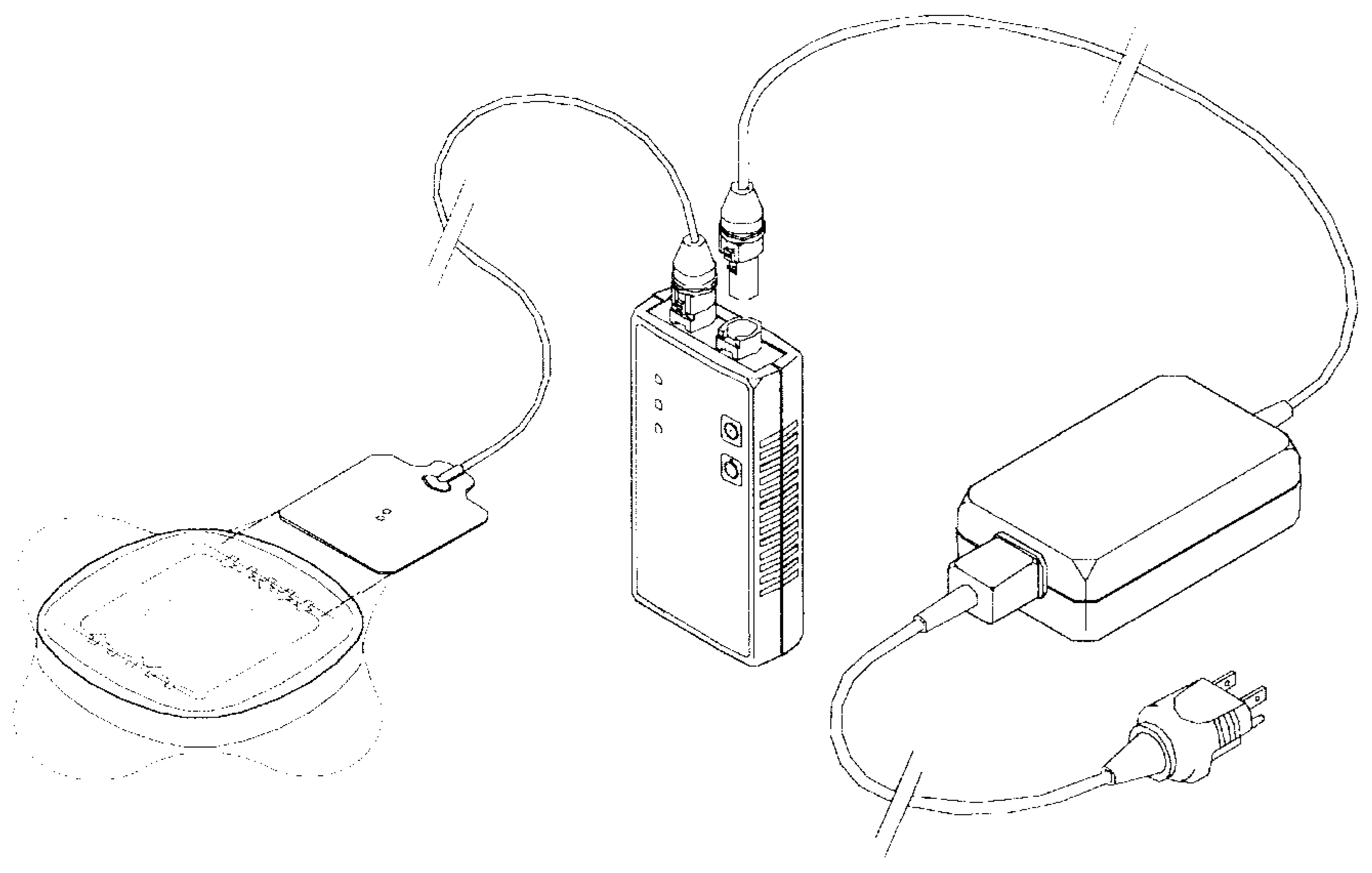
The Warm-Up therapy system consists of a temperature control unit, an AC adapter, a disposable wound cover, and a warming card (Fig. 1). The temperature control unit allows three 1-hour warming sessions per day. The temperature control unit can be operated from either an AC outlet or a rechargeable battery. The AC adapter recharges the control unit and supplies power for operation when batteries need recharging. The disposable wound cover provides a noncontact surface that will not disrupt the wound. The wound cover is sterile and is intended for one-time, single-patient use. The transparent window of the disposable wound cover provides for easy monitoring of wound progress. A comfortable, adhesive foam collar absorbs wound exudates and conforms to the periwound skin. Wound covers are available in a broad range of shapes and sizes. The infrared warming card slides into a sleeve in the cover of the disposable wound cover and warms to a temperature of 100.4°F (38°C). The heating element does not come into direct contact with the wound.
Noncontact normothermic wound therapy has an important role in the management of wounds in areas of osteomyelitis. It is not a direct treatment for osteomyelitis but rather an important treatment modality for accelerating wound closure by second intention and decreasing the morbidity of bone reinfection through the wound bed.

Methods

This single-center, prospective study was conducted at Bartow Wound Care Center in Bartow, Florida. Institutional review board approval and patient consent were obtained before study initiation and patient enrollment. Patients were randomized to either the control arm or the treatment arm of the study using numbered envelopes, which were opened as a patient was enrolled in the study. The control arm had more patients enrolled than the treatment arm. The treatment arm was closed out early, as it was believed that sufficient patient data had been collected for the pilot study. The primary end point of the study was complete wound healing, defined as complete epithelialization with no drainage.
This study included males and females aged 1 to 85 years who were able to administer self-care or assisted care to the lower extremities and who had a diagnosis of a wound in an area of osteomyelitis that had been present for at least 6 weeks. Exclusion criteria were as follows: history of sensitivity to adhesive products; human immunodeficiency virus–positive status; current diagnosis of cancer; significant medical condition with less than 6 months’ expected survival; current systemic steroid therapy at a dose equivalent to greater than 10 mg/day of prednisone; excessive use of alcohol or any drug; wound treatment in the past 30 days with biologic agents, including platelet-derived growth factors (Procuran, Curative Health Services, Hauppauge, New York; Regranex, Ortho-McNeil Pharmaceutical, Inc, Raritan, New Jersey), human skin equivalent (Apligraf, Novartis Pharmaceutical Corp, East Hanover, New Jersey; Dermagraft, Advanced Tissue Sciences, La Jolla, California), skin graft, xenograft, or allograft; and proximal arterial occlusion greater than 50% as demonstrated by arterial noninvasive vascular examination. Vascular examination was performed on all participants. Comorbidities such as coronary artery disease, diabetes mellitus, hypertension, history of cerebrovascular accident, and other systemic disease were within the inclusion criteria. A smoking-cessation program tailored to individual patient needs and based on tobacco use and socioeconomic factors was initiated.
Eligible patients had documented osteomyelitis with a wound in the area of involvement or a wound communicating with the area of osteomyelitis. The osteomyelitis was initially evaluated with plain film radiographs. Magnetic resonance imaging with gadolinium was used for identification, diagnosis, and surgical management of osteomyelitis in all enrolled patients. The control group received wound-care treatment consisting of normal saline solution with dry gauze dressing. The treatment group received treatment with the Warm-Up therapy system as the sole wound dressing; the wound cover was changed every third day per established protocol. Wound assessment consisted of weekly clinical evaluation by the same physician. Both groups received weekly wound-care evaluation and wound debridement, osseous debridement as necessary, and placement of antibiotic-impregnated polymethyl methacrylate beads and bone grafting as deemed appropriate. Both groups were subject to possible partial surgical excision of osteomyelitic bone. All patients with wounds in axial loading areas received appropriate nonweightbearing instructions. Depending on the wound location, the patient was fitted with an off-loading device, for example, a cast shoe, a surgical wedge shoe, or a fiberglass posterior splint with significant accommodations to off-load the ulcer. Additional measures were undertaken to further off-load ulcer sites, including use of crutches, a walker, or a wheelchair. The off-loading efforts were not required for all patients but were incorporated evenly between the treatment and control groups. This study did not aim to relate ulcer off-loading to healing times.
Time to heal (in days), patient age, wound size, wound location, osteomyelitis location, osteomyelitis treatment, Cierny-Mader classification,[33] duration of the wound before treatment, and comorbidity factors were all noted. Patients requiring osseous surgical management underwent partial excision of bone, placement of antibiotic-impregnated polymethyl methacrylate beads, and bone culture for aerobic, anaerobic, fungal, and acid-fast bacteria every 2 weeks. The fungal culture was incubated on BHI-CC plates for increased accuracy. Appropriate antibiotic management was administered for a minimum of 6 weeks. Osseous partial excision was continued every 2 weeks until a negative, no-growth bone culture of multiple cancellous and cortical bone fragments was obtained and the area of involvement appeared clinically stable. At this time, an autogeneic or allogeneic bone graft was applied with no further surgery.

Results

The control arm consisted of 11 patients with 11 ulcers. The average patient age was 61.5 years. Areas of osteomyelitis involved the tibia, calcaneus, metatarsal, and phalanx bones. Pedal ulcers were located on the plantar aspect of the foot. The average duration of the ulcer before initial evaluation was 267 days. The average time to heal after initiation of standard ulcer treatment was 127 days. Six patients (55%) underwent surgical excision of osteomyelitic bone.
The treatment arm consisted of five patients with six ulcers. Pedal ulcers were located on the plantar aspect of the foot. The average patient age was 62.8 years. Areas of osteomyelitis involved the calcaneus and tibia bones. The average duration of the ulcer before initial evaluation was 391 days. The average time to heal after presentation was 59 days. Three patients (60%) in the treatment arm underwent surgical excision of osteomyelitic bone. The average difference in healing time between the control and treatment arms was 68 days.
Statistical analyses of the data from the control and treatment groups were completed using t-tests, Mann-Whitney tests, and proportional hazards regression analysis. Because of the number of patients enrolled in both arms of the study, the proportional hazards regression analysis and t-tests did not demonstrate a statistically significant difference in wound-healing time between the two groups (P = .33). Although the mean ± SD wound-healing times were quite different for the two groups (control group, 127.0 ± 113.6 days; treatment group, 59.0 ± 49.9 days), the median values were quite similar (control group, 70 days; treatment group, 68 days). A review of the proportional hazards regression results shows that the type of treatment approached significance (P = .11) as a predictor of time to wound healing, suggesting that a larger sample size may reveal significant differences between treatments.

Discussion

A wound in an area of osteomyelitis is of particular concern, as this integument defect increases the morbidity of bacterial or fungal reinfection of the bone and can result in higher rates of limb loss. The study results confirm that the Warm-Up device significantly accelerates healing of wounds in areas of managed osteomyelitis. Three important observations emerge from this study.
First, dressing changes were reduced by 12 per week, as the Warm-Up therapy wound cover is changed once every 3 days and standard dressings are changed twice per day. Cost-effectiveness was improved, partly because of this reduction in dressing changes. The average cost per day of treatment was $260 for the control group and $83 for the treatment group. Second, there were no problems with patient compliance in the treatment group, which was monitored by home health-care reports and weekly physician assessment. Patients, according to their own statements, actually preferred to be empowered to participate in their wound care and recovery. Third, patients in the treatment group reported a significant decrease in pain at the wound site, which was noted after the first week of therapy. Some patients had a marked decrease in or elimination of pain medication after the first week of therapy. Patients were asked to report changes in pain at each weekly physician assessment or home care visit, and these comments were recorded by the clinician.
There has been no recurrence of osteomyelitis in either group to date. These patients will be followed at 1-, 3-, 5-, 7-, and 10-year intervals for osteomyelitis or ulcer recurrence. Follow-up of the patients with refractory osteomyelitis warrants further research.

Conclusion

The thermoregulation of wounds using noncontact normothermic wound therapy in areas of osteomyelitis significantly decreases healing time by 54%, or an average of 68 days. In addition, patients experience a significant reduction in pain. The morbidity of reinfection of the bone through the wound is decreased, and patient outcome is enhanced. The Warm-Up therapy system provides clinicians with an excellent modality to facilitate wound closure.
A larger prospective study that evaluates noncontact normothermic wound therapy for ulcers in an area of osteomyelitis is warranted and is currently under way. It is a controlled, open-labeled, comparative, randomized study.

References

  1. Santilli SM, Valusek PA, Robinson C: Use of a noncontact radiant heat bandage for the treatment of chronic venous stasis ulcers. Adv Wound Care12: 89, 1999.
  2. Ryan TJ: “Warming the Skin,” in Warming and Wound Healing: Warm-Up Active Wound Healing, ed by TF Ryan, GW Cherry, KG Harding, p 3, Royal Society of Medicine Press, London, 2000.
  3. McCulloch JM: “The Effects of a Radiant Heater Dressing on Wound Healing in Diabetics,” in Warming and Wound Healing: Warm-Up Active Wound Healing, ed by TF Ryan, GW Cherry, KG Harding, p 61, Royal Society of Medicine Press, London, 2000.
  4. Vosskuhler RJ: “Warm-Up® Active Wound Therapy: Clinical Studies Executive Summary for Oxford,” in Warming and Wound Healing: Warm-Up Active Wound Healing, ed by TF Ryan, GW Cherry, KG Harding, p 77, Royal Society of Medicine Press, London, 2000.
  5. Hellgren L, Vincent J: Degradation and liquefaction effect of streptokinase-streptodornase and stabilized trypsin on necroses, crusts of fibrinoid, purulent exudate and clotted blood from leg ulcers. J Int Med Res5: 334, 1977.
  6. Sato A, Xia Z, Hughes M, et al: “Basic Research in Warming and Wound Healing,” in Warming and Wound Healing: Warm-Up Active Wound Healing, ed by TF Ryan, GW Cherry, KG Harding, p 15, Royal Society of Medicine Press, London, 2000.
  7. Leaper DJ: “The Effect of Warming on the Treatment of Wounds,” in Warming and Wound Healing: Warm-Up Active Wound Healing, ed by TF Ryan, GW Cherry, KG Harding, p 31, Royal Society of Medicine Press, London, 2000.
  8. Kloth LC, Berman JE, Sutton CH, et al: “Effects of Heated and Unheated Warm-Up® Dressings on Full-Thickness Pressure Ulcers,” in Warming and Wound Healing: Warm-Up Active Wound Healing, ed by TF Ryan, GW Cherry, KG Harding, p 43, Royal Society of Medicine Press, London, 2000.
  9. Rabkin JM, Hunt TK: Local heat increases blood flow and oxygen tension in wounds. Arch Surg122: 221, 1987.
  10. Yang QR, Berghe VD: Effect of temperature on in vitro proliferative activity of human umbilical vein endothelial cultures. Experientia51: 126, 1995.
  11. Jensen PKA, Therkelsen AJ: Cultivation at low temperature as a measure to prevent contamination with fibroblast in epithelial cultures from human skin. J Invest Dermatol77: 210, 1981.
  12. Xia Z, Sato A, Hughes MA, et al: Stimulation of fibroblast growth in vitro by intermittent radiant warming. Wound Repair Regen8: 138, 2000.
  13. Xia Z, Sato A, Hughes MA, et al: Increased fibroblast cell number and metabolic activity following pulsed radiant heating [abstract]. Presented at the Plastic Surgery Council Meeting, May 23, 1999, Pittsburgh, PA.
  14. Cherry GW, Wilson J: “Treatment of Ambulatory Venous Ulcer Patients with Warming Therapy,” in Warming and Wound Healing: Warm-Up Active Wound Healing, ed by TF Ryan, GW Cherry, KG Harding, p 67, Royal Society of Medicine Press, London, 2000.
  15. Ikeda T, Tayefeh F, Sessler DI, et al: Local radiant heating increases subcutaneous oxygen tension. Am J Surg175: 33, 1998.
  16. Sessler DI, Moayeri AQ, StØen R, et al: Thermoregulatory vasoconstriction decreases subcutaneous heat loss. Anesthesiology73: 656, 1990.
  17. Ikeda T, Tayefeh F, Kurz A, et al: The effect of three different local heating temperatures on subcutaneous oxygen tension. Anesth Analg84: 241, 1997.
  18. Jönsson K, Jensen JA, Goodson WH, et al: Tissue oxygenation, anemia, and perfusion in relation to wound healing in surgical patients. Ann Surg214: 605, 1991.
  19. Kurz A, Sessler DI, Lenhardt R: Perioperative normothermia to reduce the incidence of surgical-wound infection and shorten hospitalization. N Engl J Med334: 1209, 1996.
  20. Babior BM, Woodson R: Chronic granulomatous diseases. Semin Hematol27: 247, 1990.
  21. Al Amoudi H: Correlation of inhibitory activity of chronic wound fluid on growth of human dermal fibroblast and response to graft procedure. J Invest Dermatol106: 863A, 1995.
  22. Bucalo B, Eaglstein WH, Falanga V: Inhibition of cell proliferation by chronic wound fluid. Wound Repair Regen1: 181, 1993.
  23. Grinell F, Zhu M: Identification of neutrophil elastase as the proteinase in burn wound fluid responsible for degradation of fibronectin. J Invest Dermatol103: 155, 1994.
  24. Park H-Y, Shon K, Phillips T: “Warm-Up® Reduced the Growth Inhibitory Effects of Chronic Wound Fluid on Fibroblasts in Vitro,” in Warming and Wound Healing: Warm-Up Active Wound Healing, ed by TF Ryan, GW Cherry, KG Harding, p 23, Royal Society of Medicine Press, London, 2000.
  25. Park H-Y, Shon K, Phillips T: The effect of heat on the inhibitory effects of chronic wound fluid on fibroblast in vitro. Wounds Compend Clin Res Pract10: 186, 1998.
  26. Hopf H: “Role of Warming and Oxygen Tension in Wounds,” in Warming and Wound Healing: Warm-Up Active Wound Healing, ed by TF Ryan, GW Cherry, KG Harding, p 33, Royal Society of Medicine Press, London, 2000.
  27. Hopf HW, Hunt TK, West JM, et al: Wound tissue oxygen tension predicts the risk of wound infection in surgical patients. Arch Surg132: 997, 1997.
  28. Gottrup F, Firmin R, Rabkin J, et al: Directly measured tissue oxygen tension and arterial tension assess tissue perfusion. Crit Care Med15: 1030, 1987.
  29. Jönsson K, Hunt TK, Mathes SJ: Oxygen as an isolated variable influences resistance to infection. Ann Surg208: 783, 1988.
  30. Hohn DC, Mackay RD, Halliday B, et al: Effect of O2 tension on microbicidal function of leukocytes in wounds and in vitro. Surg Forum27: 18, 1976.
  31. Babior BM: Oxygen-dependent microbial killing by phagocytosis. N Engl J Med298: 659, 1984.
  32. Bemheim P, Hunt TK: Natural resistance to infection: leukocyte functions. J Burn Care Rehabil13: 287, 1992.
  33. Cierny G, Mader JT, Pennick H: A clinical staging system of adult osteomyelitis. Contemp Orthop10: 17, 1985.
Figure 1. Schematic representation of the Warm-Up therapy system.
Japma 93 00018 g001