Next Article in Journal
American Podiatric Medical Association. 82nd Regular Sessions, House of Delegates. March 24, 25, and 26, 2002, Washington, DC
Previous Article in Journal
How and Why to Surgically Debride Neuropathic Diabetic Foot Wounds
 
 
Journal of the American Podiatric Medical Association is published by MDPI from Volume 116 Issue 1 (2026). Previous articles were published by another publisher in Open Access under a CC-BY (or CC-BY-NC-ND) licence, and they are hosted by MDPI on mdpi.com as a courtesy and upon agreement with American Podiatric Medical Association.
Article

Technique for Fabrication of an “Instant Total-Contact Cast” for Treatment of Neuropathic Diabetic Foot Ulcers

by
David G. Armstrong
1,2,
Brian Short
3,
Eric H. Espensen
4,
Patricia L. Abu-Rumman
3,
Brent P. Nixon
5 and
Andrew J. M. Boulton
6
1
Director of Research and Education, Department of Surgery, Podiatry Section, Southern Arizona Veterans Affairs Medical Center, Tucson; Visiting Senior Lecturer, Department of Medicine, Manchester Royal Infirmary, Manchester, England
2
Department of Surgery, Podiatry Section, Southern Arizona Veterans Affairs Medical Center, 3601 S Sixth Ave, Tucson, AZ 85723
3
Submitted during second-year residency, Department of Surgery, Podiatry Section, Southern Arizona Veterans Affairs Medical Center, Tucson
4
Attending Physician, Diabetic Foot Center, Providence St Joseph Medical Center, Burbank, CA
5
Chief, Department of Surgery, Podiatry Section, Southern Arizona Veterans Affairs Medical Center, Tucson
6
Professor, Department of Medicine, Manchester Royal Infirmary, Manchester, England
J. Am. Podiatr. Med. Assoc. 2002, 92(7), 405-408; https://doi.org/10.7547/87507315-92-7-405
Published: 1 July 2002

Abstract

Addressing pressure reduction in the treatment of diabetic foot wounds is a critical component of therapy. The total-contact cast has proven to be the gold standard of treatment because of its ability to reduce pressure and facilitate patient adherence to the off-loading regimen. Removable cast walkers have proven to be as effective as total-contact casts in pressure reduction, but this has not translated into equivalent time to healing. A simple technique to convert the removable cast walker into a device that is not as easily detached from the lower extremity, thereby encouraging the use of this device over a 24-hour period, is presented in this article. The procedure involves wrapping the cast walker with cohesive bandage or plaster of Paris. In the authors’ opinion, this technique addresses many of the disadvantages of the total-contact cast, resulting in an adequate compromise in this aspect of care.

Total-contact casting has been called the gold standard modality in off-loading the diabetic foot.[1] Without question, it is as effective as any other existing therapeutic treatment in off-loading the foot.[2] Armstrong et al [3] recently published results of the first randomized controlled trial comparing the total-contact cast with two other readily available and popular devices, removable cast walkers and half-shoes, in the healing of ulcers. The authors found that the proportion of patients healed using the total-contact cast was significantly higher than the proportions healed using the other devices. The researchers also found similar activity levels in patients wearing a total-contact cast and those wearing a removable cast walker. Previous studies have suggested that certain removable cast walkers, including the one reviewed in the above-mentioned study, reduce pressure in the laboratory approximately as well as the total-contact cast.[2,4] One may, therefore, rightly question why a higher proportion of patients healed in the total-contact cast than in the removable cast walker. It could be argued that pressure reduction is not important, and that some other characteristic of the cast promotes healing better than other modalities, or that patients remove their removable cast walker and walk without protective footwear. Certainly, numerous studies have suggested that plantar pressure is an important aspect of the pathogenesis and healing of diabetic foot wounds.[5-10] The literature includes two descriptive reports evaluating compliance with footwear off-loading modalities in patients at high risk for lower-extremity amputation. Knowles and Boulton [11] reported that only 22% of 50 patients at risk for ulceration regularly wore their protective shoes. Armstrong et al [12] evaluated a similar patient population using a novel, computerized, Internet-based continuous activity monitor. In this study, only 15% of the patients indicated that they wore their shoes at home, where they conducted more than 50% of their daily activity. On the basis of these results and the clinical experience of the current authors with patients with profound neuropathy, it is suggested that the easier a device is to remove, the more difficult it may be to reapply.
The removable cast walker is a very attractive off-loading device. It is probably less expensive in terms of time and material costs than the repeated application of total-contact casts. It requires very little training to apply and is reusable. In the authors’ experience, the removable cast walker is better tolerated than a total-contact cast by patients and preferred by most clinicians. It could be argued that the least attractive attribute of the removable cast walker is its ease of removal. For several years, the authors have suggested to various manufacturers of these devices that they develop a system that could lock in place, thereby reducing the risk of loosening or early removal. Unfortunately, there appears to be no movement on behalf of the manufacturers to modify these devices. Therefore, the current authors present a technique for rapidly converting a removable cast walker to one that is less easily removed.
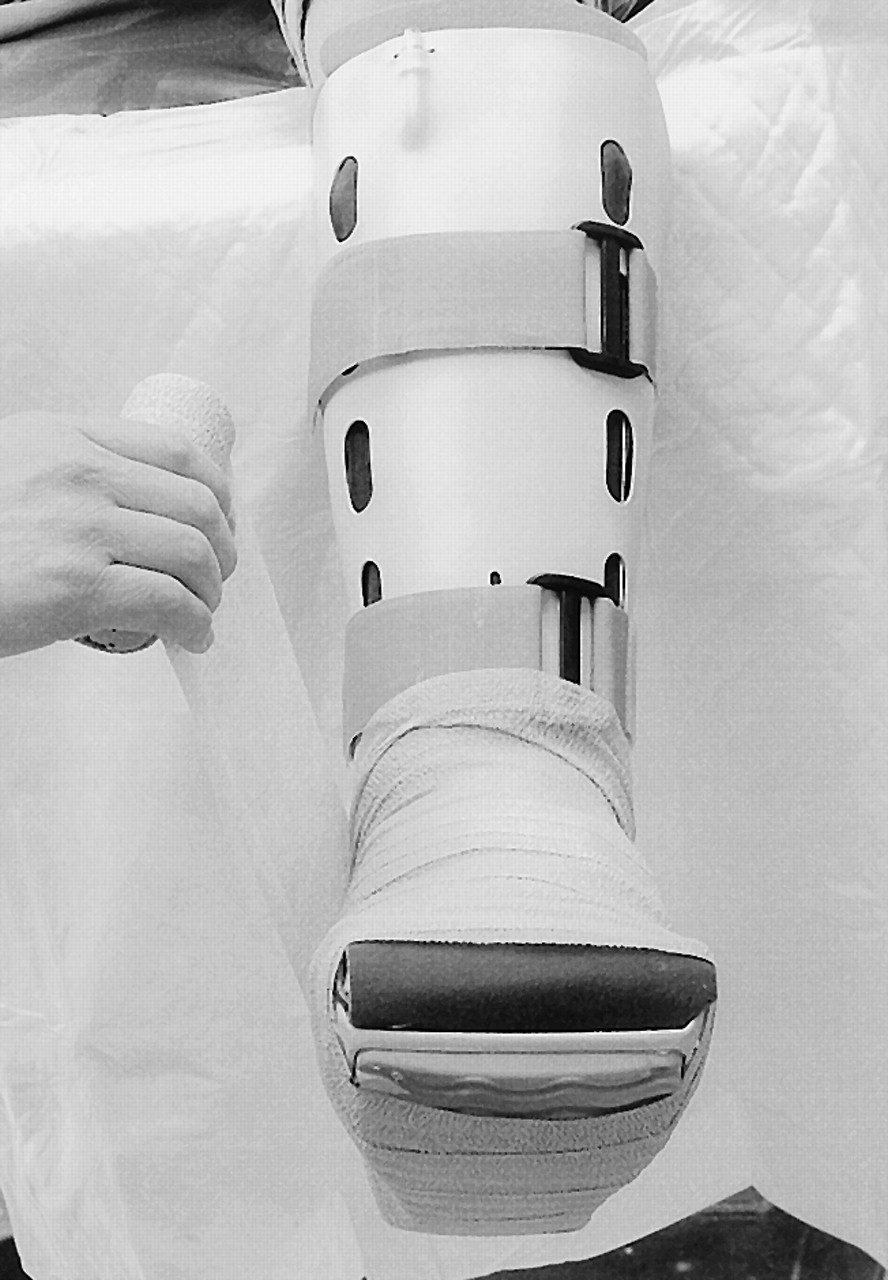
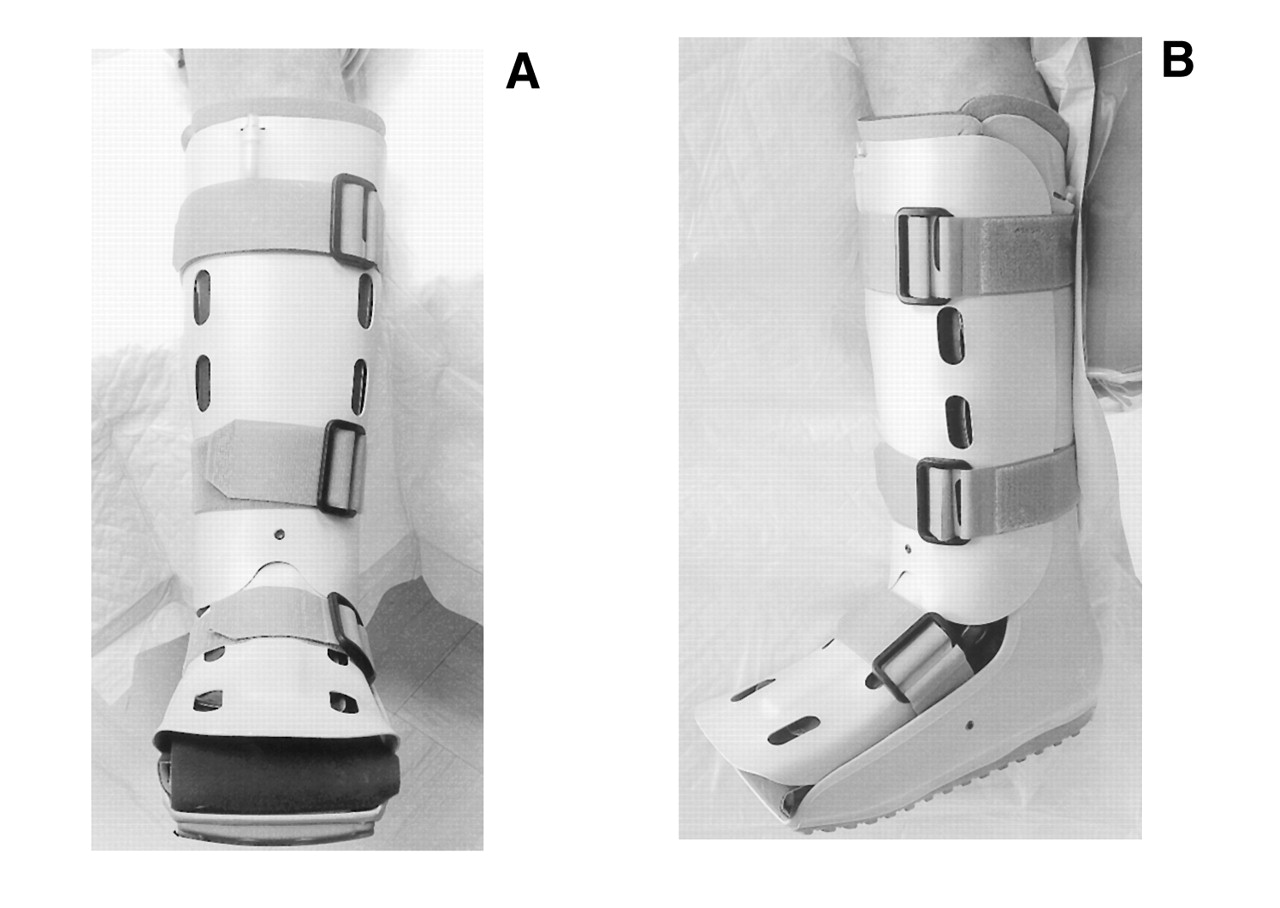
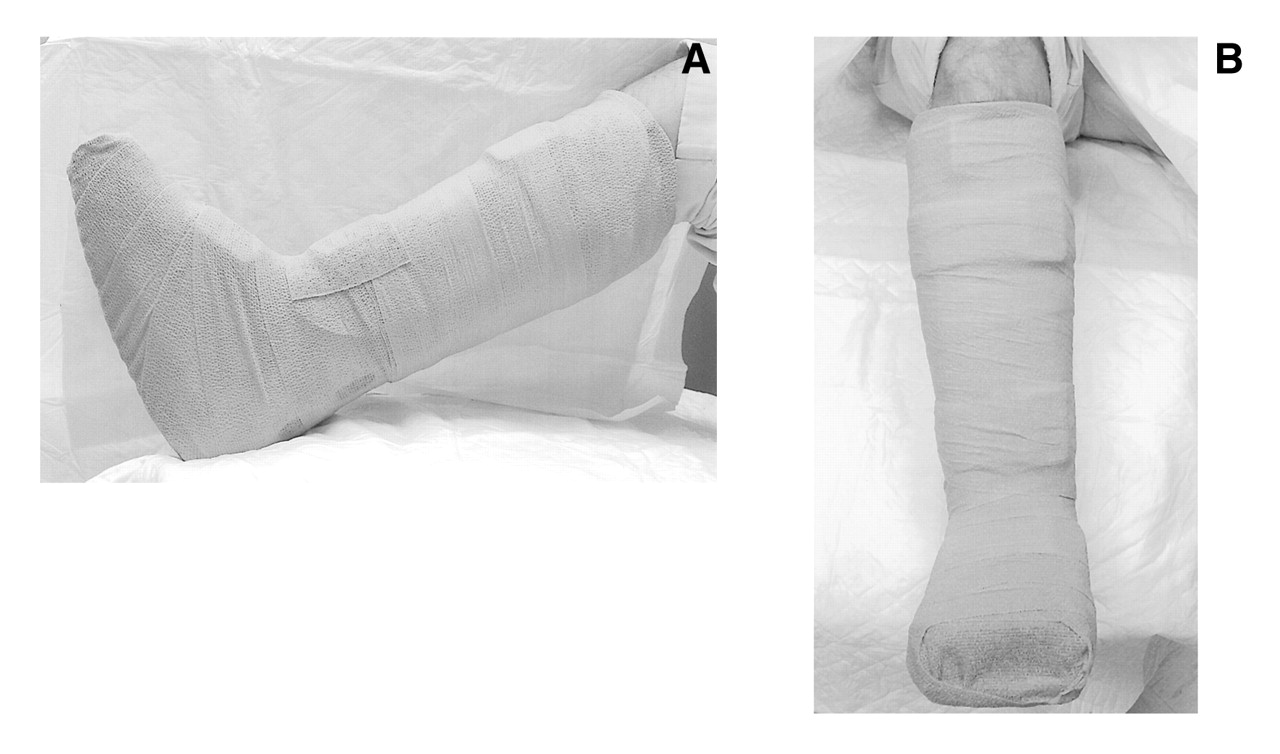
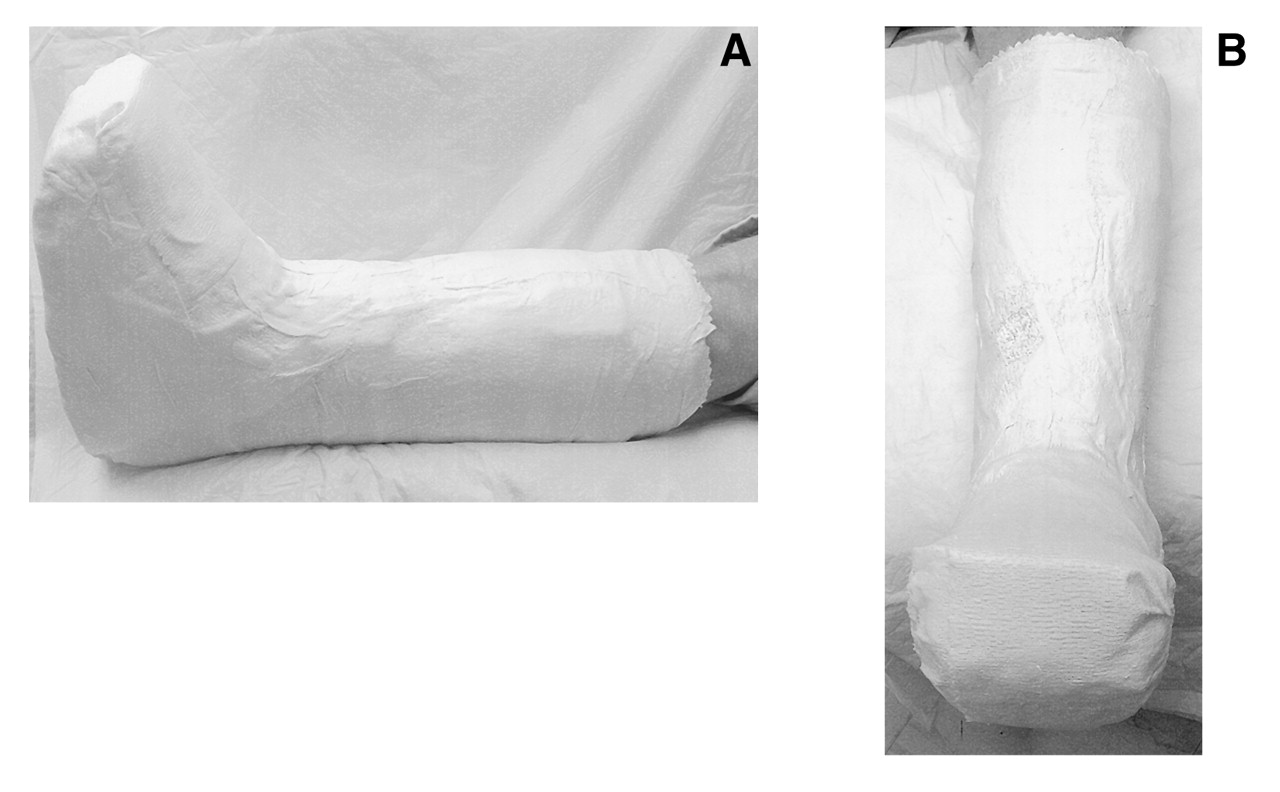
Any removable cast walker can be used for this technique. The authors generally prefer the Aircast removable cast walker (Aircast Inc, Summit, New Jersey) or DH Pressure Relief Walker (Centec Orthopaedics, Camarillo, California), as these two devices have generally excellent off-loading characteristics.[2] The devices should be applied in the recommended manner. If warranted, cast padding can be applied to the patient’s leg. Two layers of 4-inch cohesive bandage or plaster of Paris should be applied around the removable cast walker (Fig. 1, Fig. 2, Fig. 3 and Fig. 4). If plaster of Paris is used, the device should be covered with 4-inch cohesive bandage or a stockinet before the plaster of Paris is applied to prevent soiling the removable cast walker and facilitate its reuse. Care should be taken not to extend casting material or bandage proximal to the foam padding of the walker to avoid skin irritation or impingement of the common peroneal nerve as it courses near the fibular head. The digits can be padded with self-adhesive foam (Reston Self-Adhering Foam, 3M, St Paul, Minnesota) if the clinician wants to cover the toes to prevent foreign objects from entering the cast walker. The clinician may then consider dispensing a cast protector to allow the patient to shower more easily. Alternatively, the patient may use a large, thick trash bag to protect the cast walker.

Conclusion

A simple, rapid technique to convert a removable cast walker into a device that is less easily removed has been presented. Rather than being punitive, this approach emphasizes the clinician’s understanding of the importance of aggressive off-loading of diabetic foot wounds. The authors eagerly await a randomized trial comparing the use of this modification with a standard total-contact cast.

References

  1. American Diabetes Association: Consensus Development Conference on Diabetic Foot Wound Care. Diabetes Care 22: 1354, 1999.
  2. Lavery LA, Vela SA, Lavery DC, et al: Reducing dynamic foot pressures in high-risk diabetic subjects with foot ulcerations: a comparison of treatments. Diabetes Care 19: 818, 1996.
  3. Armstrong DG, Nguyen HC, Lavery LA, et al: Offloading the diabetic foot wound: a randomized clinical trial. Diabetes Care 24: 1019, 2001.
  4. Baumhauer JF, Wervey R, McWilliams J, et al: A comparison study of plantar foot pressure in a standardized shoe, total contact cast, and prefabricated pneumatic walking brace. Foot Ankle Int 18: 26, 1997.
  5. Frykberg RG, Lavery LA, Pham H, et al: Role of neuropathy and high foot pressures in diabetic foot ulceration. Diabetes Care 21: 1714, 1998.
  6. Boulton AJ, Betts RP, Franks CI, et al: Abnormalities of foot pressure in early diabetic neuropathy. Diabet Med 4: 225, 1987.
  7. Boulton AJ, Betts RP, Franks CI, et al: The natural history of foot pressure abnormalities in neuropathic diabetic subjects. Diabetes Res 5: 73, 1987.
  8. Boulton AJ, Betts RP, Newrick PG, et al: Foot pressure abnormalities: a sensitive marker of early sensory neuropathy. Diabetes 12 (suppl 1): 35, 1986.
  9. Boulton AJ, Hardisty CA, Betts RP, et al: Dynamic foot pressure and other studies as diagnostic and management aids in diabetic neuropathy. Diabetes Care 6: 26, 1983.
  10. Boulton AJM: “The Importance of Abnormal Foot Pressure and Gait in Causation of Foot Ulcers,” in The Foot in Diabetes, ed by CH Boulton, AJM Ward, p 11, John Wiley and Sons, Chichester, England, 1987.
  11. Knowles EA, Boulton AJ: Do people with diabetes wear their prescribed footwear? Diabet Med 13: 1064, 1996.
  12. Armstrong DG, Abu-Rumman PL, Nixon BP, et al: Continuous activity monitoring in persons at high risk for diabetes-related lower-extremity amputation. JAPMA 91: 451, 2001.
Figure 1A and B. Aircast removable cast walker.
Japma 92 00405 g001
Figure 2A and B. Removable cast walker converted to nonremovable cast walker with cohesive bandage wrap.
Japma 92 00405 g002
Figure 3A and B. Removable cast walker converted to nonremovable cast walker with plaster of Paris.
Japma 92 00405 g003
Figure 4. Application of cohesive bandage.
Japma 92 00405 g004