Brachymetatarsia is the abnormal shortness of the metatarsals that is usually due to an arrest in physeal growth.[
1] When this causes the clinical appearance of short toes, the term “brachymetapody” is used. Controversy over the metatarsal most commonly affected is noted in the literature. In 1971, Lelievre[
2] evaluated the metatarsal parabola and reported that the first and second metatarsals should be equal in length with a gradual decrease in the remaining lesser metatarsal (1 = 2 > 3 > 4 > 5). In 1949, Harris and Beath[
3] reviewed 7,167 military recruits in the Canadian Army Foot Survey and found that the first metatarsal was longer 40% of the time, shorter 38% of the time, and equal 22% of the time when compared with the second metatarsal within 1-mm measurements. Based on this research, some authors have reported that the first metatarsal is the most commonly affected metatarsal. This is termed “metatarsus primus atavicus.” Of the lesser metatarsals, the fourth is the most commonly affected. The incidence of brachymetatarsia in the literature varies greatly according to the geographic location reported. In 1983, Mah et al[
4] reported an incidence in the United States of 1 in 1,820. In 1968, Sugiura and Nakazawa,[
5] and in 1978, Urano and Kobayashi,[
6] reported an incidence in Japan of 1 in 4,586 and 1 in 10,918, respectively. A strong predominance for the female sex has been shown as a female:male ratio of 98:4 with 72% of the cases being bilateral.[
6In 1964, Kite[
7] stated that the shortening was due to premature fusion of the epiphyseal line at the distal end of the metatarsal, occurring most often in the fourth metatarsal. The exact etiology of the premature closure is unknown, but may be congenital, traumatic, iatrogenic, or environmental.[
8] It is associated with several disease processes, such as pseudohypoparathyroidism, pseudo-pseudohypoparathyroidism, poliomyelitis, malignancy, Down syndrome, Albright’s hereditary osteodystrophy, diastrophic dysplasia, multiple epiphyseal dysplasia, myositis ossificans, and Turner’s syndrome.[
9-
13] In poliomyelitis, the shortened fourth metatarsal is primarily asymmetrical, involving the paralyzed limb only.[
14] Brachymetatarsia of the third and fourth metatarsals is frequently the result of pseudohypothyroidism or chromosome abnormalities of the trisomy 21 pattern.[
15The clinical picture of brachymetatarsia is largely dependent on the age and sex of the patient. The deformity is usually seen in patients from 5 to 14 years of age.[
6] In younger patients, the major concern is cosmesis of the foot. Self-consciousness can lead to psychological problems when the patient fears wearing open-toed shoes or going barefoot. In older patients, the major concern is the painful callosities or metatarsalgia caused by the excess loading of the adjacent metatarsal heads. As the deformity progresses, the affected digit dorsally dislocates, allowing the convergence of the adjacent digits, a condition known as “floating toe”. A linear plantar crease is sometimes observed due to the void in plantar pressure.
Surgical treatment centers on re-creating a normal parabola to distribute the weightbearing forces evenly across the metatarsal heads during gait. Several procedures have been reported, including syndactylization,[
16] joint spacing Calnan-Nicolle implants,[
4,
17] transpositional osteotomies,[
18-
20] sliding osteotomies,[
21-
26] callus distraction,[
11,
27-
35] and bone grafting.[
6,
8,
35-
42] In 1999, Choi et al[
35] retrospectively reviewed and compared the outcomes of 15 one-stage lengthening with 10 callus distraction lengthening procedures. He noted little difference in the outcomes between the two groups in terms of length gained, percent increase, and complications. However, the period to achieve bony consolidation was longer in the callotasis group (2.7 months/cm) than in the one-stage lengthening group (1.5 months/cm).[
35In 1995, Magnan[
30] reported that the amount of lengthening should not exceed 50% of the preoperative length when using callus distraction. However, recent studies with callus distraction show the overall length of the metatarsal should not exceed 40% of the preoperative length to prevent joint stiffness, neurovascular compromise, subluxation, or axial deviation of the digit.[
30] In 1995, Masuda et al[
11] reported on two cases of callus distraction in which greater than 40% of the preoperative length was obtained and a significant decrease in the range of motion at the metatarsophalangeal joint was noted. In one-stage lengthening, the average length gained was approximately 30% with minimal complications. Choi et al[
35] retrospectively reviewed the outcomes of both one-stage lengthening and callus distraction and reported the average percent increases to be 30.8% and 39.1%, respectively.
Soft tissue, such as tendons, muscles, joint capsules, ligaments, skin, and fascia, show time-dependent viscoelastic properties that reflect the complex interaction of collagen and ground substances. Creep and stress relaxation are important viscoelastic characteristics. The first denotes an increase in the deformation over time under a constant load. Rapidly applied distraction forces will cause the soft tissue to react by contracting. When a constant distraction force is applied, the soft tissue responds in a more compliant and ductile manner with plastic deformation resulting. The deformation and elongation of the soft tissues are continuous, but slow, and require sufficient time. Stress relaxation denotes a decline in stress over time under constant deformation due to the realignment and elongation of the soft tissue held in a fixed position for a prolonged period of time.[
41 Case Report
A 20-year-old woman presented to the podiatry clinic at the Scott & White Clinic and Memorial Hospital in Temple, Texas, with a chief complaint of short third and fourth toes and pain under the ball of her left foot. She stated that the pain was gradual in onset, dull and achy in nature, and localized to the second toe. The pain was increased during ambulation and following extended periods of weightbearing. She stated that her toes were normal and perfect when she was born, and that her parents began noticing changes when she was 7 years of age. The first, second, and fifth digits continued to lengthen as the third and fourth digits remained the same length. She was self-conscious of the deformity and remained in closed-toe shoes to avoid public notice.
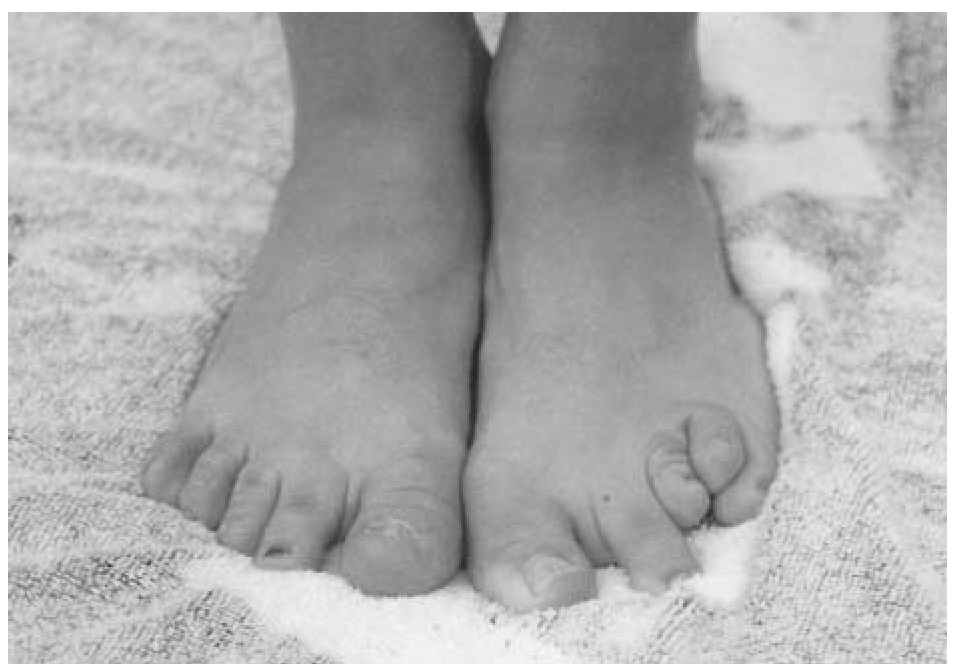
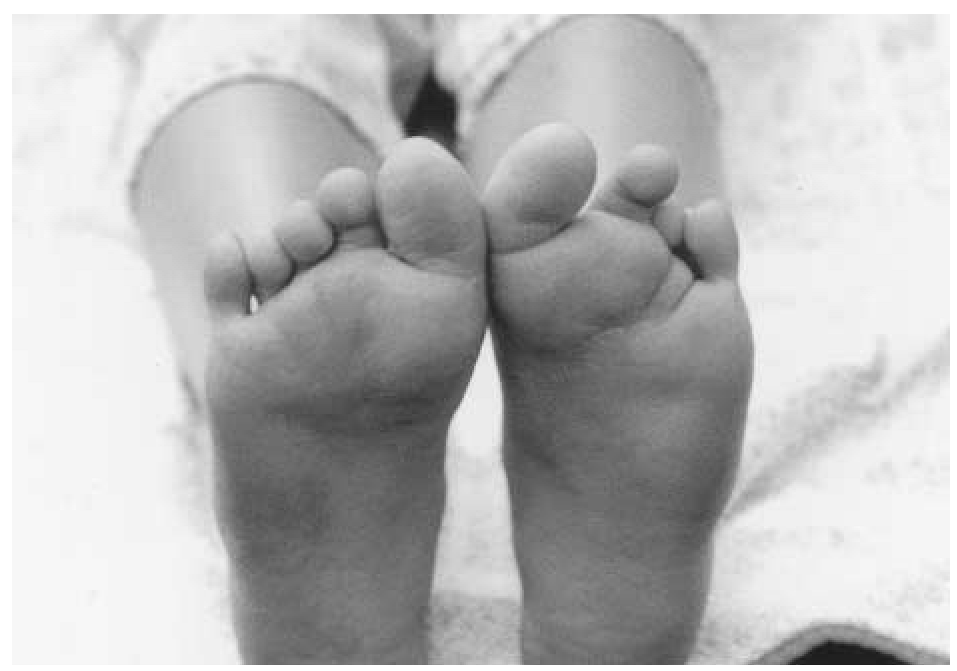
The patient was a healthy young woman with no remarkable medical history or history of trauma. Upon physical examination, the integument showed two plantar linear skin creases under the third and fourth metatarsal heads, extending proximally 2 cm. The underlying fat pad appeared to be indented in this area secondary to the lack of weightbearing (
Figs. 1] and
2).
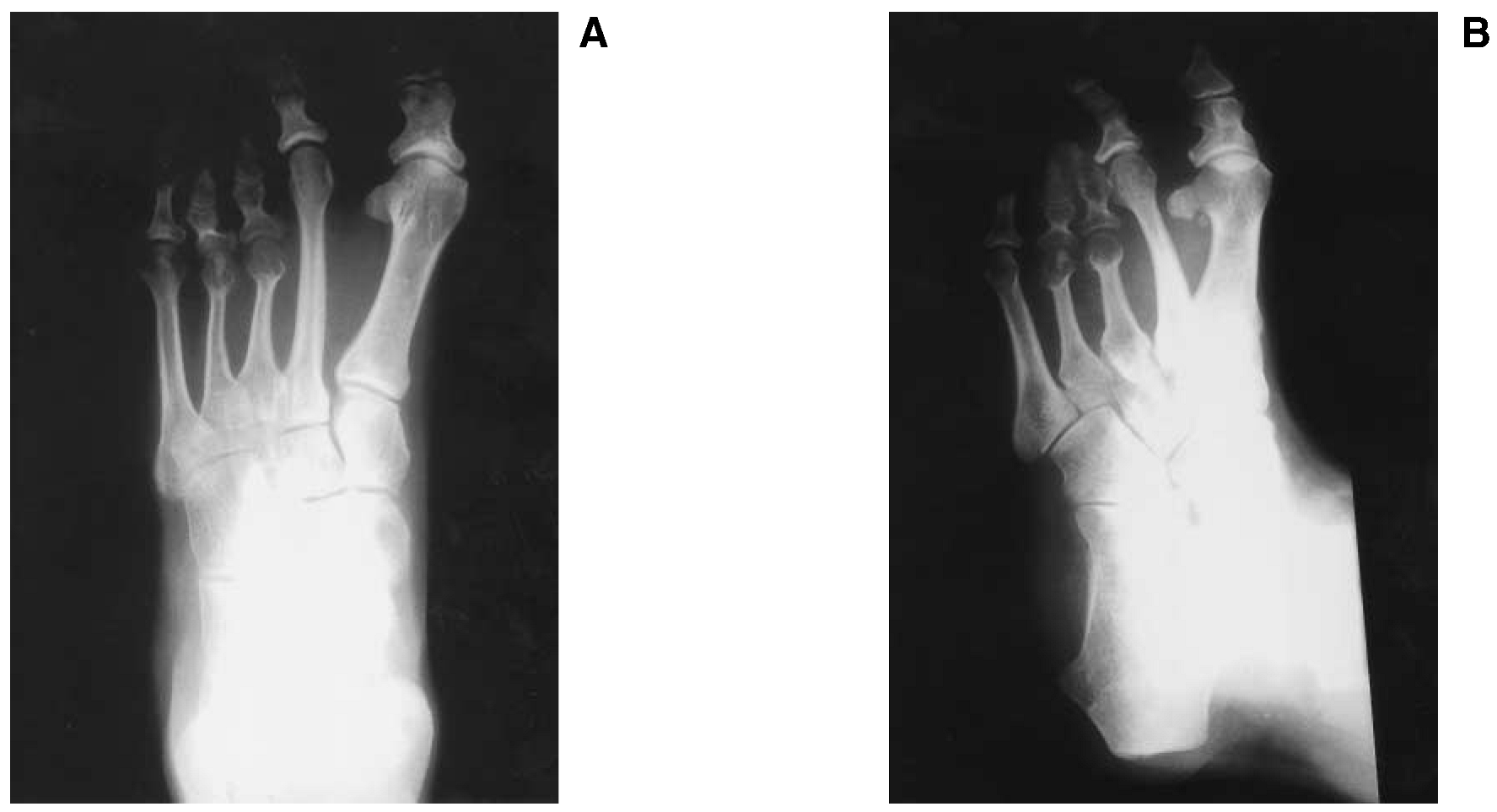
The neurovascular status was intact and within normal limits. The musculoskeletal examination revealed short third and fourth metatarsals. The fourth digit was dorsally dislocated (floating toe) and slightly overlapping the third. The adjacent second and fifth digits were converging toward each other with the fifth digit placed in a varus orientation. Clinical hallux interphalangeus was noted with gapping observed in the first interspace. Plain radiographs revealed short third and fourth metatarsals, which were slightly shorter than the neighboring fifth metatarsal. The second metatarsal was exceedingly long, with thickened cortices, owing to the increase in the transmission of the weightbearing forces. Synphalangism was seen in the third, fourth, and fifth digits (
Fig. 3).
Conservative therapy had been attempted. Accommodative footwear aided in relieving the pain, but the cosmetic appearance remained problematic. The patient was counseled on the surgical options and underwent one-stage lengthening of the third and fourth metatarsals and shortening of the second and fifth metatarsals. Rather than establishing the third and fourth metatarsals to their full normal length, autogenous diaphyseal bone graft was taken from the adjacent second and fifth metatarsals to restore a normal metatarsal parabola. A derotational proximal interphalangeal joint arthroplasty was also performed on the fifth digit.
Procedure
A V-shaped incision with the apex proximally was placed over the dorsum of the left foot with the arms extending to the second and fifth metatarsal heads. Sharp and blunt dissection was carried down to expose the second through fifth metatarsal heads and shafts. A “Z” tenotomy was made in the third and fourth extensor digitorum longus tendons with transection of the extensor digitorum brevis tendons, respectively. Based on premeasured templates from the radiographs, the second and fifth metatarsals were shortened at the anatomical neck by 8 mm and 4 mm, respectively, creating a cylindrical bony segment for grafting. A single transverse osteotomy was made in the metatarsal neck of the third and fourth metatarsals. The third and fourth metatarsal capital fragments then were carefully distracted to length under constant tension. The cylindrical bone segments from the second and fifth metatarsals were rotated within the wound to the neighboring metatarsal, with care taken to preserve most of the soft-tissue attachments. The second through the fifth metatarsals were then fixated with 2.0 cortical bone screws in one-third tubular bone plates. The “Z” tendon lengthening of the third and fourth extensor digitorum longus tendons was completed. Irrigation and closure were completed in the standard manner. The patient was placed in a compressive sterile dressing followed by a nonweightbearing Jones posterior splint.
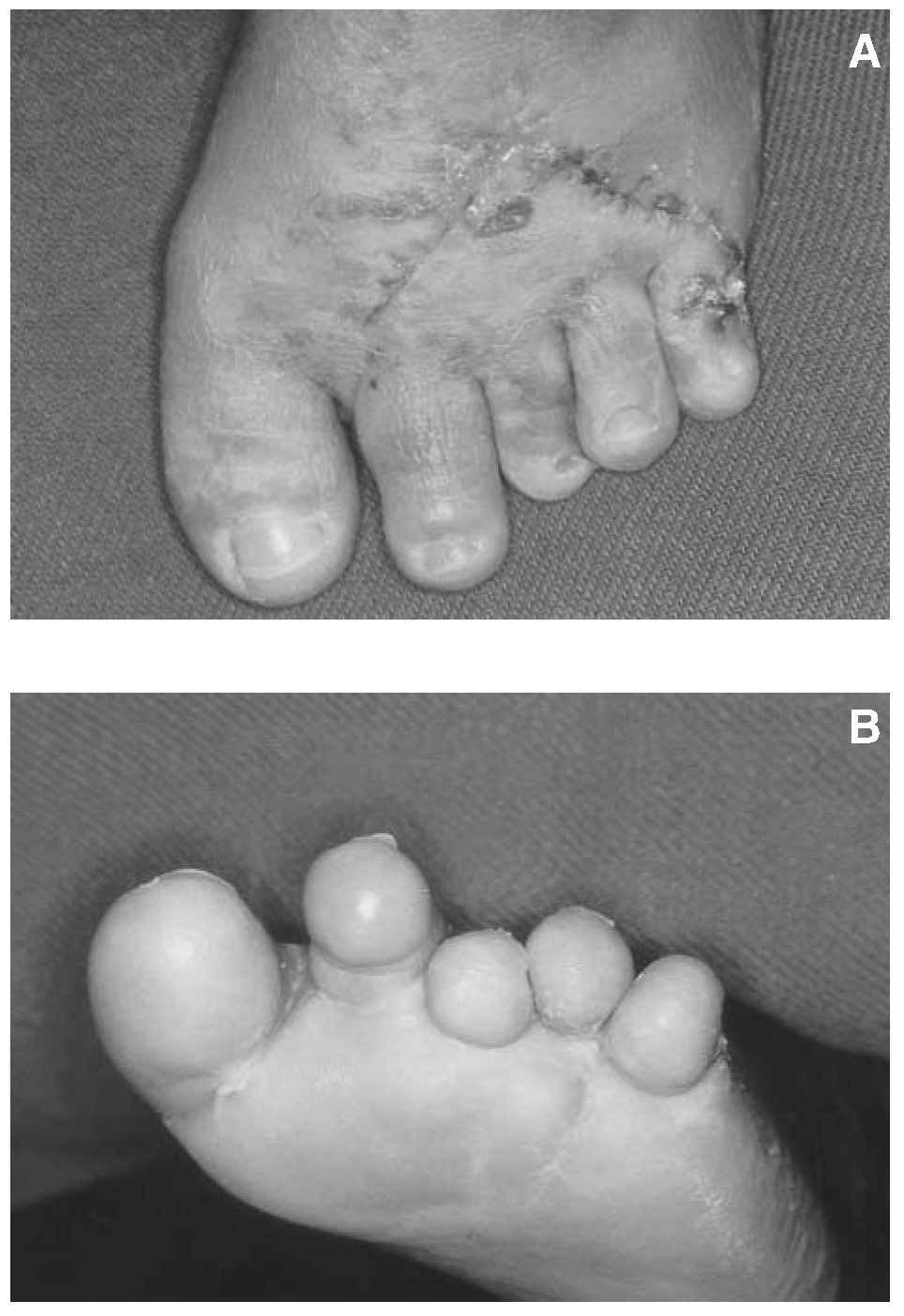
The patient was followed up in 4 days, at which time she was placed into a nonweightbearing below-the-knee cast. Sutures were removed at 3 weeks and the patient was placed back into a nonweightbearing below-the-knee cast. She was seen 8 weeks after the operation, healing uneventfully (
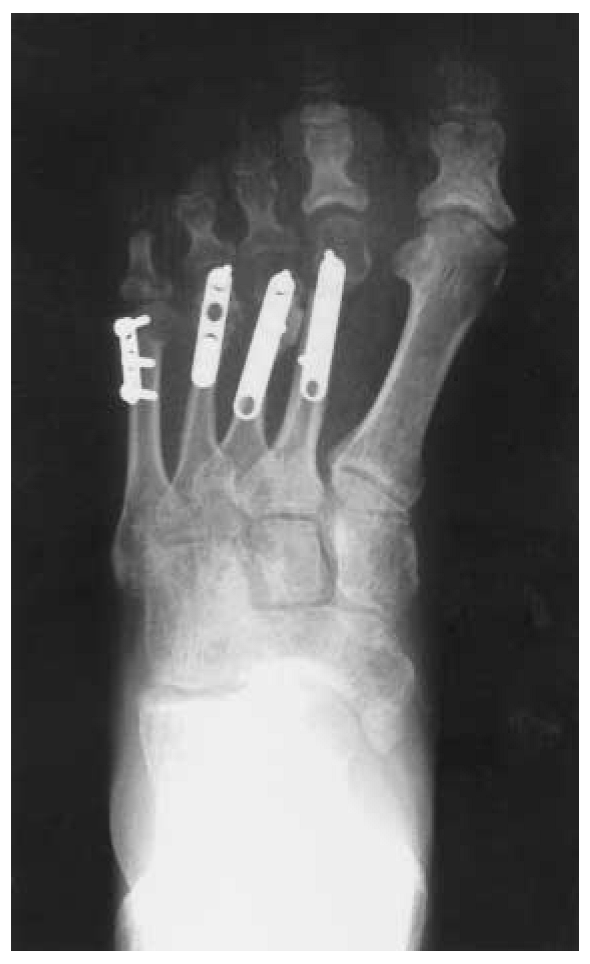
Fig. 4). Plain radiographs showed good alignment and no bony callus formation (
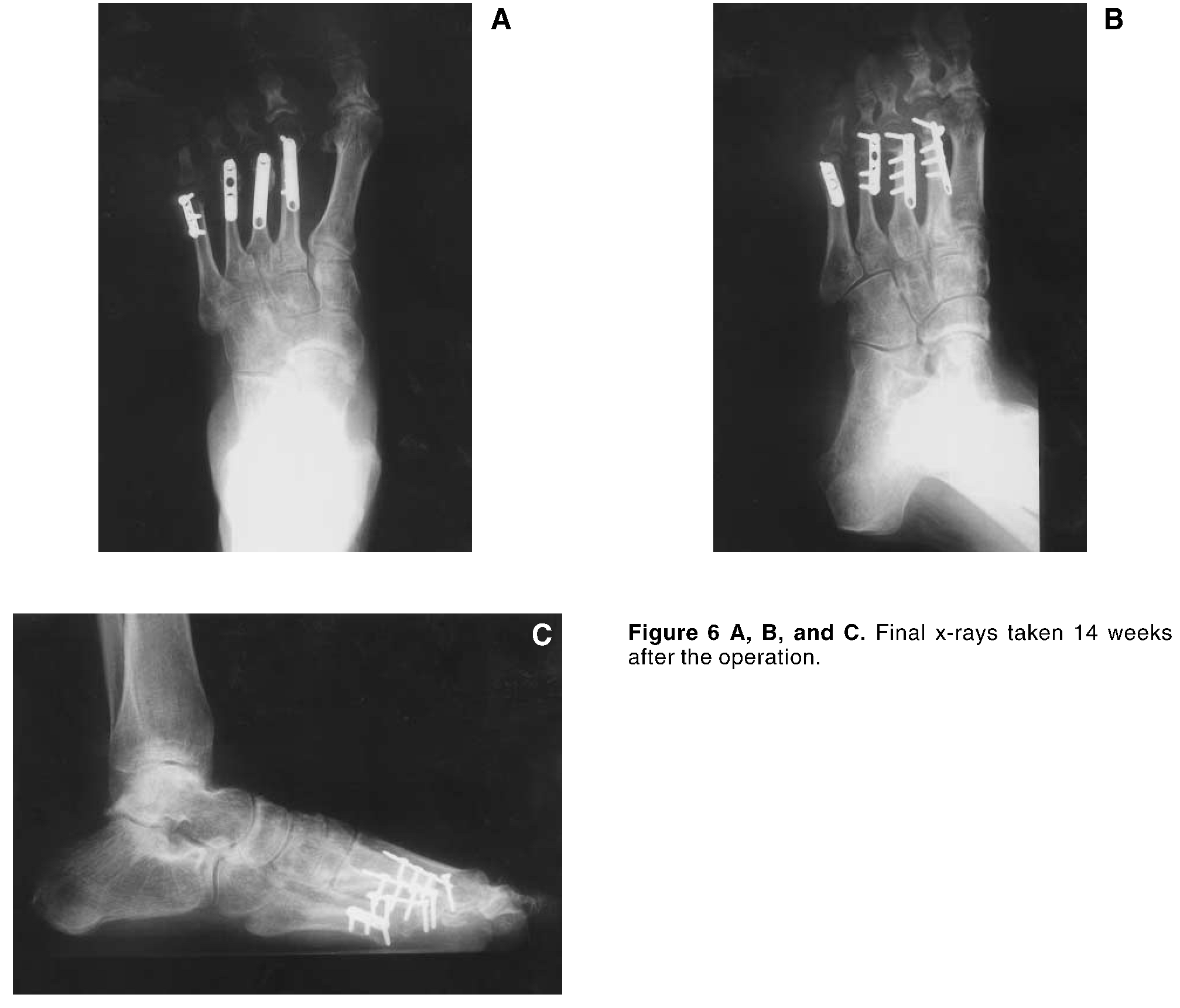
Fig. 5). The patient was placed into a removable cast walker and instructed to remain nonweightbearing for an additional week, followed by 50% weightbearing the following week, and a gradual increase to 100% weightbearing over the last week. She progressed into a postoperative shoe followed by an athletic shoe as tolerated. Final x-rays were taken at 14 weeks postoperative with good alignment and union noted (
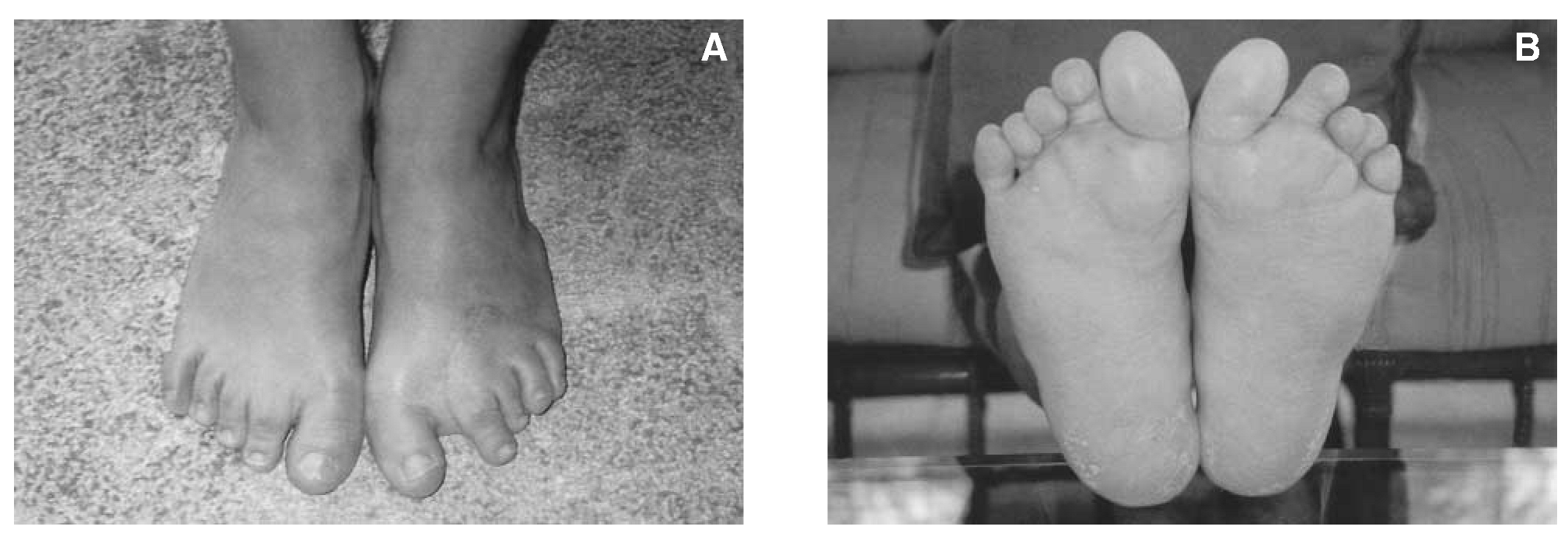
Fig. 6). The patient sent pictures 18 months postsurgical treatment (
Fig. 7). The patient was contacted by telephone 3½ years following the procedure and she reported no complaints. She stated that she is ambulatory in all footwear without discomfort and has not developed any callus formation to date.
Conclusion
Brachymetatarsia is an uncommon clinical entity that affects patients both functionally and socially. Several different surgical approaches have been described in the literature, but none has shown superior outcomes. Treatment must center not only on restoring the metatarsal parabola, but also on the individual patient and the pathology present.
Figure 1.
Clinical photograph showing brachymetatarsia of the third and fourth metatarsals. Note the classic “floating toe” of the fourth digit.
Figure 1.
Clinical photograph showing brachymetatarsia of the third and fourth metatarsals. Note the classic “floating toe” of the fourth digit.
Figure 2.
Clinical photograph showing brachymetatarsia of the third and fourth metatarsals. Note the atrophied fat pad under the third and fourth metatarsal heads with plantar skin creases.
Figure 2.
Clinical photograph showing brachymetatarsia of the third and fourth metatarsals. Note the atrophied fat pad under the third and fourth metatarsal heads with plantar skin creases.
Figure 3 A and B.
Radiographs showing brachymetatarsia of the third and fourth metatarsals.
Figure 3 A and B.
Radiographs showing brachymetatarsia of the third and fourth metatarsals.
Figure 4 A and B.
Clinical photographs taken of patient’s feet 8 weeks after the operation.
Figure 4 A and B.
Clinical photographs taken of patient’s feet 8 weeks after the operation.
Figure 5.
Radiograph taken 8 weeks after the operation. Note the good alignment with no bony callus.
Figure 5.
Radiograph taken 8 weeks after the operation. Note the good alignment with no bony callus.
Figure 6 A, B, and C.
Final x-rays taken 14 weeks after the operation.
Figure 6 A, B, and C.
Final x-rays taken 14 weeks after the operation.
Figure 7 A and B.
Clinical photographs of patient’s feet taken 18 months after the operation.
Figure 7 A and B.
Clinical photographs of patient’s feet taken 18 months after the operation.