Next Article in Journal
Wound Healing and Infection in Nail Matrix Phenolization Wounds
Previous Article in Journal
Introduction
 
 
Journal of the American Podiatric Medical Association is published by MDPI from Volume 116 Issue 1 (2026). Previous articles were published by another publisher in Open Access under a CC-BY (or CC-BY-NC-ND) licence, and they are hosted by MDPI on mdpi.com as a courtesy and upon agreement with American Podiatric Medical Association.
Article

Foot Pain Impairs Balance and Functional Ability in Community- Dwelling Older People

by
Hylton B. Menz
1 and
Stephen R. Lord
2
1
Prince of Wales Medical Research Institute, High St, Randwick, New South Wales 2031, Australia
2
Prince of Wales Medical Research Institute, New South Wales, Australia
J. Am. Podiatr. Med. Assoc. 2001, 91(5), 222-229; https://doi.org/10.7547/87507315-91-5-222
Published: 1 May 2001

Abstract

Foot problem assessments were performed on 135 community-dwelling older people in conjunction with clinical tests of balance and functional ability. Eighty-seven percent of the sample had at least one foot problem, and women had a higher prevalence than men of foot pain, hallux valgus, plantar hyperkeratosis, lesser digital deformity, and digital lesions. Postural sway did not differ between older people with and without each of these foot conditions. However, the presence of specific foot conditions impaired performance in a more challenging balance test and in some functional tests. In particular, older people with foot pain performed worse in a leaning balance test, stair ascent and descent, an alternate step-up test, and a timed six-meter walk. Furthermore, multiple regression analyses revealed that foot pain was a significant independent predictor of performance in each of these tests. These results show that the presence of foot problems, particularly foot pain, impairs balance and functional ability. As foot pain is amenable to treatment, podiatric intervention has the potential to improve mobility and independence in older people. (J Am Podiatr Med Assoc 91(5): 222-229, 2001)

Foot problems are very common in older people, and may result in considerable pain and disability. Epidemiologic studies have shown that up to 80% of older people have at least one foot problem,[1-4] and many older people report that foot impairment limits their mobility and ability to perform activities of daily living.[2, 5 ,6] Older people with foot problems have been shown to walk more slowly than those without foot problems, and have more difficulty doing housework and shopping.[6] Furthermore, many older people who are housebound attribute their immobility to foot problems.[5]
One of the limitations of the available literature regarding foot impairment and functional ability is that foot problems are often coded as a single dichotomous variable (ie, foot problems versus no foot problems), and only occasionally is any attempt made to determine the effect of specific foot conditions.[7] Using this approach, older people with relatively minor, asymptomatic foot problems may be placed in the same category as older people with painful, severely deformed feet. It is likely that not all foot problems will have the same impact on functional tasks, and that the presence of foot pain may be a more important consideration than the presence of any particular condition. For this reason, there is a need to determine the effects of individual foot conditions on balance and mobility, and to consider foot pain as a separate factor.
The aims of this study were to compare performance in clinical tests of balance and functional ability between older adults with and without specific foot conditions, and to determine the relative contribution of individual foot problems to performance in each of these tests.

Methods

Subjects

One hundred and thirty-five older adults (55 males, 80 females) aged 75 to 93 years (mean [±SD] age of 78.9 ± 4.1 years) were recruited from the community as part of a larger prospective falls prevention study. Names and addresses of people over the age of 75 years were randomly drawn from a membership database of a private health insurance company, and were initially contacted by letter and asked to participate in the study. Subjects were then contacted by telephone and invited to the Falls Assessment Clinic at the Royal North Shore teaching hospital in Sydney, Australia. To maximize the participation rates of older people with mobility limitations, transportation was provided for those who could not make their own way to the hospital.
Subjects were excluded from the study if they had Parkinson’s disease (as determined by self-report on the initial telephone interview) or cognitive impairment (a Short Portable Mental Status Questionnaire[8] score < 7). One subject who participated in the foot problem assessment was subsequently excluded due to a poor performance on the Short Portable Mental Status Questionnaire. The Human Studies Ethics Committee at the University of New South Wales gave approval for this study, and informed consent was obtained from all subjects prior to their participation.

Foot Problem Assessment

The presence of foot problems was determined by a clinical assessment performed by the primary author [H.B.M], a podiatric physician with seven years of postgraduate experience. Although numerous clinical grading systems for foot problems are available, none of these were considered appropriate because they are either specific to evaluating surgical interventions, or only address factors such as pain.[9] Therefore, a simple assessment form was developed to objectively document foot problems and record the presence or absence of foot pain. Subjects were asked whether they suffered from painful feet, and their response was recorded as a dichotomous variable (ie, yes or no). Subjects then removed their footwear and hosiery, and the presence of hallux valgus, plantar hyperkeratosis, lesser digital deformities (ie, hammer-, mallet- and clawtoes) and digital lesions was documented. Hallux valgus deformities were further categorized as mild, moderate, or severe based on the degree of hallux abduction. Mild hallux valgus was defined as less than 15° of abduction, moderate hallux valgus between 15° and 45° of abduction, and severe hallux valgus as greater than 45° of abduction.
To evaluate the intertester reliability of the foot problem assessments, two podiatric physicians, both with seven years of postgraduate experience, independently assessed foot problems in 20 older people (6 males, 14 females, mean age 78.8 ± 6.4 years) in a geriatric ward at a public hospital. As the presence or absence of individual conditions is considered nominal data, intertester agreement was determined by the absolute percentage agreement statistic. Levels of agreement for observations of hallux valgus were evaluated for the presence or absence of the condition, and for the degree of severity of the condition (ie, mild, moderate, or severe).

Balance Tests

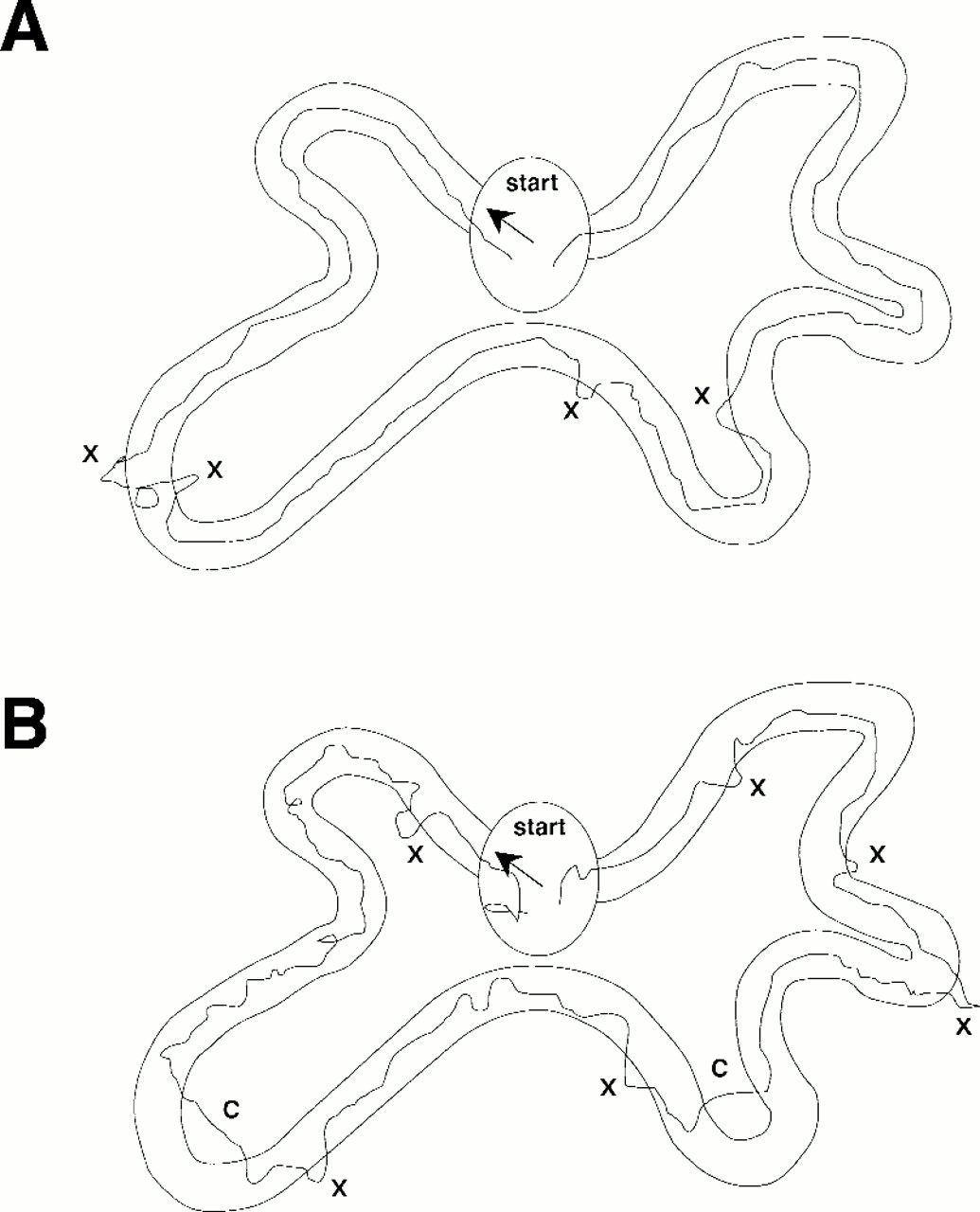
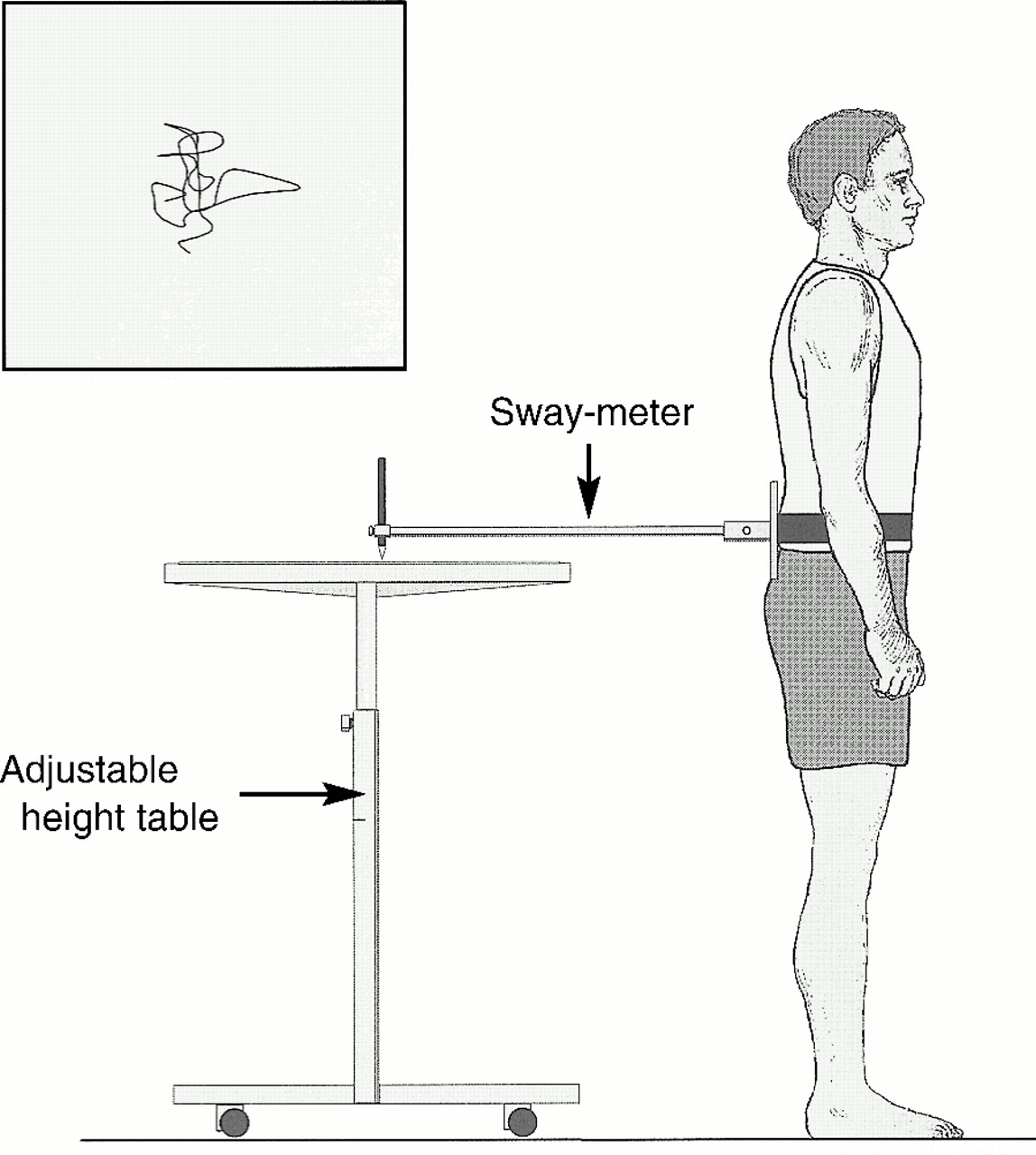
Balance was evaluated using tests of postural sway and coordinated stability. Postural sway was assessed using a sway-meter that measured displacements of the body at the level of the waist (Fig. 1). Testing was performed for 30 sec with eyes open with the subject standing on the floor and on a foam rubber mat (70 × 62 × 15 cm). The coordinated stability test measured the subjects’ ability to adjust body position in a steady and coordinated way while placing them at or near the limits of their equilibrium. In this test, the sway-meter was attached to the subject at waist level with the rod extending anteriorly. The subjects were then asked to adjust the position of their body without moving the feet so that the pen on the end of the rod followed and remained within a convoluted track marked on a piece of paper attached to the top of an adjustable height table. To complete the test without errors, subjects had to remain within the path, which was 1.5 cm wide, and be capable of adjusting the position of the pen 29 cm laterally and 18 cm in the anteroposterior plane. A total error score was calculated by summing the number of occasions that the pen on the sway-meter failed to stay within the path. When subjects failed to negotiate an outside corner, five additional points were accrued (Fig. 2). Subjects attempted the test twice, and the better of the two trials was taken as the test result. This score was then corrected for differences in height by multiplying it by the average height of the sample divided by the subject’s height. All balance tests were performed barefoot. High test-retest reliability of these two balance tests (reliability coefficients of .81 for postural sway and .82 for coordinated stability) has been confirmed previously in community samples of older people.[10, 11]
Figure 1. The sway-meter used to measure postural sway at the level of the waist when standing, and a typical test recording (inset).
Japma 91 00222 g001
Figure 2. Test recordings of two subjects in the coordinated stability test. X represents a failure to stay within the path, and C represents a failure to negotiate a corner. A, Subject 1 failed to stay within the path on four occasions, for a score of 4; B, Subject 2 failed to negotiate two corners (accruing 10 error points) and failed to stay within the track on six other occasions, for a total score of 16.
Japma 91 00222 g002

Functional Tests

Functional abilities were evaluated using a range of simple clinical tests that were chosen because they provide an indicator of the ability to perform common mobility tasks integral to daily life. All tests were timed in seconds. Stair ascent and stair descent were assessed on a flight of eight stairs (15 cm high × 27.5 cm deep). The alternate step-up test evaluated the ability of the subjects to alternately step up onto a raised platform (19 cm high) eight times (four each leg). The timed six-meter walk test involved timing how long it took subjects to walk a distance of six meters on a flat corridor. The alternate step-up test was performed barefoot. However, for safety and hygiene reasons, the subjects wore their own footwear during the stair walking and timed six-meter walk tests. The test-retest reliability of stair walking and the timed six-meter walk has previously been shown to be very high (reliability coefficient of .93) when performed as part of the Physical Performance Test battery[12] in older people. The test-retest reliability of the alternate step-up test has also been shown to be very high (reliability coefficient of .98) when performed as part of the Berg balance scale.[13]

Statistical Analysis

Foot problems were coded as dichotomous variables. The balance and functional test scores were coded as continuous variables. Variables with skewed distributions were log10 transformed prior to analysis. Differences in the prevalence of specific foot problems between men and women, and comparisons between prevalence of specific foot problems, were assessed using chi-square tests. To determine whether the total number of foot problems per subject was associated with prevalence of foot pain, the eta correlation coefficient (η) was used with foot pain as the dichotomous variable and the sum of foot problems as the continuous variable. Differences in performance in the balance and functional tests according to the presence or absence of specific foot conditions were determined with a series of independent samples t-tests. To assess for differences in performance in the tests between subjects with different levels of hallux valgus, an independent samples t-test was performed comparing those with severe hallux valgus versus those with no, mild, or moderate hallux valgus.
To evaluate the relative importance of specific foot problems on performance in the balance and functional tests, hierarchical multiple regression analyses were used. Since foot problems can be considered to be nominal variables, they cannot be treated as “scores” as they would in a conventional regression analysis. For this reason, foot problems were coded as “dummy” variables by assigning arbitrary scores of zero (ie, foot problem absent) or one (ie, foot problem present). In the regression analyses, a stepwise procedure initially was used to identify the set of foot problems that significantly and independently explained part of the variance in the balance and functional test scores. Age of the subject was then included in the regression model to assess whether this variable could explain further variance. Beta weights for the independent variables included in the regression equations and the multiple correlation coefficients are presented. Beta weights provide an indication of the relative importance of each variable in explaining the variance in the balance and functional tests. The multiple r2 values provide an indication of how much variance in the balance and functional test scores can be explained by the regression models.

Results

Reliability of Foot Problem Assessments

The results of the reliability study are shown in Table 1. Absolute percentage agreement was very high for each specific foot condition and the total number of conditions observed. Van Gisbergen et al[14] have previously reported a similar high level of intertester reliability for the clinical diagnosis of simple foot problems by foot-care specialists.
Table 1. Results of the Intertester Reliability Study
Japma 91 00222 i001

Rates of Foot Problems

Of the 135 community-dwelling older people in the study group, 87% (117/135) had at least one foot problem. The most common problem was hallux valgus, which affected 74% (100/135) of the sample. The next most common foot problems were lesser digital deformity, which affected 49% (66/135) of the subjects, plantar hyperkeratosis (31%, 42/135 subjects), and digital lesions (14%, 19/135 subjects). Less common foot problems included bony exostoses on the dorsal aspect of the first metatarsophalangeal joints (5/135), onychauxis (4/135), pes planus (3/135), lesser digit amputation (1/135), and plantar neuropathic ulceration (1/135).
Despite the high prevalence of foot problems, only 20% percent of the sample (27/135) reported that they suffered from painful feet. There was no significant difference in the prevalence of foot pain between men and women (20 versus 21%, χ2 = .03, df = 1, P = .8). Subjects with foot pain were not more likely to have hallux valgus (75 versus 74%, χ2 = .01, df = 1, P = .9) or severe hallux valgus (25 versus 38%, χ2 = .31, df = 1, P = .6), plantar hyperkeratosis (39 versus 29%, χ2 = 1.10, df = 1, P = .2), lesser digital deformity (57 versus 47%, χ2 = .90, df = 1, P = .3) or digital lesions (18 versus 13%, χ2 = .42, df = 1, P = .5) than those without foot pain. The total number of foot problems per subject was not associated with prevalence of foot pain (η = .10).
Subjects with hallux valgus were more likely to have lesser digital deformity than those without hallux valgus (54 versus 34%, χ2 = 4.00, df = 1, P < .05), and subjects with severe hallux valgus were more likely to have plantar hyperkeratosis (73 versus 27%, χ2 = 9.68, df = 1, P < .01) than those with no, mild, or moderate hallux valgus. Subjects with plantar hyperkeratosis were more likely to have digital lesions (29 versus 7%, χ2 = 10.60, df = 1, P < .01), and subjects with digital deformity were more likely to have digital lesions (21 versus 7%, χ2 = 5.40, df = 1, P < .05) than subjects without these foot problems.

Balance and Functional Tests

Means and standard deviations for balance and functional tests performance between subjects with and without specific foot problems are shown in Tables 26, along with results of independent samples t-tests. Subjects with foot pain performed significantly worse in the coordinated stability test, stair ascent and descent, the alternate step-up test, and the timed six-meter walk. There were no differences in performance between subjects with and without hallux valgus although subjects with severe hallux valgus performed significantly worse on the coordinated stability test. Subjects with plantar hyperkeratosis performed significantly worse in the coordinated stability test, stair ascent and descent, the alternate step-up test, and the timed six-meter walk. Subjects with digital lesions performed significantly worse in the coordinated stability test, stair ascent and descent, and the alternate step-up test. Subjects with lesser digital deformity performed significantly worse in the coordinated stability test, stair ascent and descent, the alternate step-up test, and the timed six-meter walk.
Table 2. Results of t-tests for Independent Samples for Subjects With and Without Foot Pain
Japma 91 00222 i002
Table 3. Results of t-tests for Independent Samples for Subjects With and Without Severe Hallux Valgus
Japma 91 00222 i003
Table 4. Results of t-tests for Independent Samples for Subjects With and Without Plantar Hyperkeratosis
Japma 91 00222 i004
Table 5. Results of t-tests for Independent Samples for Subjects With and Without Digital Lesions
Japma 91 00222 i005
Table 6. Results of t-tests for Independent Samples for Subjects With and Without Lesser Digital Deformity
Japma 91 00222 i006

Multiple Regression Analyses

Results of the multiple regression analyses are shown in Table 7. Foot pain was found to be a significant independent predictor of performance in the coordinated stability test and each of the functional tests. Forcing the age of the subjects into the regression equation explained significantly more variance in each of the measures than foot problems alone. The regression models explained between 19% and 27% of the variance in the balance and functional test scores.
Table 7. Results of Multiple Regression Analyses for Each of the Balance and Functional Tests Affected by Foot Problems
Japma 91 00222 i007

Discussion

The rates of foot problems and gender differences reported in this study are in broad agreement with previous epidemiological studies on community-dwelling older people of a similar age range.[1-3] The significantly higher rate of foot problems in older women may be due to the narrow fitting of women’s fashion shoes.[15, 16] The comparatively low prevalence of lesions on the lesser toes, despite the high prevalence of lesser-toe deformity, could be accounted for by the likelihood that many of the subjects were currently receiving regular podiatry treatment. The low prevalence of foot pain (20%) could also be accounted for by the influence of podiatry treatment; however, this may be due to the fact that many older people tend not to identify foot pain as a problem when interviewed.[4] Nevertheless, the prevalence of foot pain reported here is similar to previous epidemiological investigations.[2, 4]
The associations between the prevalence of individual foot conditions generally conformed to what would be expected given the inter-relationship between different structural deformities and development of hyperkeratotic lesions. Subjects with hallux valgus were more likely to have lesser digital deformity, and subjects with lesser digital deformity were more likely to have plantar hyperkeratosis and digital lesions. Subjects with severe hallux valgus were also more likely to have plantar hyperkeratosis, which can be explained by the observation that hallux valgus alters forefoot plantar pressure distribution when walking.[17] However, this association was not evident in subjects with hallux valgus of mild or moderate severity, which suggests that the disruption of normal forefoot loading may only occur if the deformity is severe enough to alter the alignment and weightbearing patterns of the lateral four toes.
No association was found between the prevalence of foot pain and specific foot problems, even when the total number of foot problems per subject was considered. It was expected that older people with hallux valgus or hyperkeratotic lesions would be more likely to suffer from foot pain, and that the prevalence of foot pain would be associated with the total number of foot problems each subject had. There are three possible explanations for this lack of association. First, it could be that the observation of structural foot deformity and lesions is not a good predictor of symptoms, as it does not take into account the wide range of variables that contribute to pain, such as activity level, musculoskeletal or neurological impairment, and psychological factors. Second, it is likely that a number of subjects were receiving podiatric medical treatment at the time of the study, and despite the presence of foot problems, were currently asymptomatic. Finally, it is possible that simply documenting pain as present or absent did not allow sufficient discrimination between subjects, and that a more detailed measure, such as a visual analog pain scale, may have been more appropriate.
Foot problems did not impair performance on the postural sway tests, but they did have a significant detrimental effect on the coordinated stability test. The lack of association between foot problems and postural sway measures was expected, as unperturbed standing results in only small variations in foot pressure distribution, and swaying within the large stability limit provided by bipedal stance does not place great demands on the support function of the feet. The coordinated stability test, however, is a more challenging balance test that places the subject at or near the perimeter of the stability limit provided by the feet. The large excursions of the center of mass required to successfully complete this test rely on the ability of the subject to shift body weight to all regions of the sole of the foot. In the presence of foot pain or deformity, this weight-shifting ability is impaired, particularly in the anterior direction if severe hallux valgus or lesser-toe deformity limits the ability of the toes to contact the ground. The multiple regression analyses revealed that the strongest predictors of performance on this test were the presence of foot pain and the presence of lesser digital deformity. The association between lesser digital deformity and impaired balance is consistent with the results of Tanaka et al,[18, 19] who found that older people exert less pressure with their toes when standing.
Functional test performances were also significantly affected by the presence of foot problems. Stair ascent and descent, which require greater load bearing on the forefoot than standing,[20] were significantly affected by foot pain, plantar hyperkeratosis, and lesser digital deformity. The association between stair walking ability and plantar hyperkeratosis, independent of the presence of foot pain, may be explained by the fact that stair walking also requires the subject to adequately detect foot position. In the presence of plantar hyperkeratosis, proprioceptive information from the sole of the foot may be impaired, resulting in a more cautious (and therefore slower) performance. Alternatively, it could be that the mechanical imbalances associated with the development of the forefoot plantar lesions (such as excessive foot pronation[21]) also impair stability of the foot when walking on stairs. The effect of lesser digital deformity on stair walking ability has not been reported previously, but it is consistent with biomechanical investigations that have shown that the toes accept a considerable load when performing this task.[20, 22] Interestingly, the presence of hallux valgus had only a minor effect on balance and functional ability, with the only significant impairments being evident on the coordinated stability test between those with severe hallux valgus and those with less severe forms of the condition. A possible explanation for this surprisingly small effect is that the mobility of the first ray and metatarsophalangeal joint may be more functionally important measures than the lateral deviation of the hallux.
Overall, the greatest contributor to impaired performance was foot pain, which was an independent predictor of the coordinated stability test and all of the functional tests. Subjects with foot pain made, on average, twice the number of errors when performing the coordinated stability test, and took between 18% and 38% longer to perform the functional tests. This finding is consistent with Benvenutti et al,[6] who found that older people with foot pain exhibited a slower walking velocity than those without foot pain, and reported more difficulty performing activities of daily living such as housework and shopping. Given that foot pain, in many cases, is amenable to treatment with conservative measures, these results suggest that podiatric interventions known to reduce pain, such as lesion debridement[23, 24] and orthotic therapy,[25] may play an important role in improving balance and functional ability in older people. The role of lesser digital deformity, the second greatest contributor to balance and functional ability, has not been reported before. This finding highlights the importance of the toes in performing functional tasks, and raises the possibility that conservative and surgical interventions to improve toe function may have more far-reaching benefits in older people than previously recognized.
A number of limitations of the study design need to be considered when interpreting these findings. First, the sample consisted of generally healthy, active older people recruited from the general community. Institutionalized older people have poorer balance, greater mobility impairment, and more foot problems than community-dwelling older people,[7] so it is likely that the results of the current study underestimate the relationships between these factors in the older population as a whole. Second, although foot problems were found to be significant independent predictors of performance in the balance and functional tests, it is clear that a considerable proportion of variance remains unexplained. Given that balance and mobility are dependent on the interaction of a range of physiological systems, it is likely that measures of vision, sensation, strength, and reaction time would explain further variance in these test measures.[11] The authors are currently investigating the relationships between such measures. Finally, although documenting individual foot problems has allowed a more detailed insight into the mechanisms underlying foot impairment and mobility, it is clear that certain conditions, particularly hallux valgus, vary considerably in their severity and therefore need to be categorized to provide sufficient discrimination among subjects.
In conclusion, this investigation has shown that foot problems are common in community-dwelling older people, and that specific foot problems, particularly foot pain and digital deformity, lead to impaired performance in a range of balance and functional tests. These findings confirm the results of a number of previous studies and provide further evidence to support the commonly held view that foot problems have a significant impact on mobility, and therefore, independence and quality of life. Further research is required to determine whether podiatric treatment, by decreasing foot pain, can improve balance and mobility in older people.


Acknowledgement

Dr. Stephen R. Lord is currently supported by funding from the National Health and Medical Research Council, Medical Benefits Fund of Australia, and the Vincent Fairfax Family Foundation. Anne Tiedemann, Kirsten Chapman, Susan Murray, and Bridget Munro for conducting the balance and functional tests, and Elizabeth Barr for assisting with the reliability study.

References

  1. Elton PJ, Sanderson SP: A chiropodial survey of elderly persons over 65 years in the community. Public Health 100: 219, 1986.
  2. Black JR, Hale WE: Prevalence of foot complaints in the elderly. JAPMA 77: 308, 1987.
  3. White E, Mulley G: Footcare for very elderly people: a community survey. Age Ageing 18: 275, 1989.
  4. Munro BJ, Steele JR: Foot-care awareness: a survey of persons aged 65 years and older. JAPMA 88: 242, 1998.
  5. Cartwright A, Henderson G: More trouble with feet: a survey of the foot problems and chiropody needs of the elderly. Department of Health and Social Security, HMSO, 1986..
  6. Benvenutti F, Ferrucci L, Guralnik J, et al: Foot pain and disability in older persons: an epidemiologic survey. J Am Geriatr Soc 43: 479, 1995.
  7. Menz HB, Lord SR: Foot problems, functional impairment, and falls in older people. JAPMA 89: 458, 1999.
  8. Pfeiffer E: A short portable mental status questionnaire for the assessment of organic brain deficit in elderly patients. J Am Geriatr Soc 23: 433, 1975.
  9. Kitaoka HB, Patzer GL: Analysis of clinical grading scales for the foot and ankle. Foot Ankle Int 18: 443, 1997.
  10. Lord SR, Clark RD, Webster IW: Physiological factors associated with falls in an elderly population. J Am Geriatr Soc 39: 1194, 1991.
  11. Lord SR, Castell S: Physical activity program for older persons: effect on balance, strength, neuromuscular control, and reaction time. Arch Phys Med Rehabil 75: 648, 1994.
  12. Reuben DB, Siu AL: An objective measure of physical function of elderly outpatients: the physical performance test. J Am Geriatr Soc 38: 1105, 1990.
  13. Berg KO, Wood-Dauphinee SL, Williams JI, et al: Measuring balance in the elderly: validation of an instrument. Can J Public Health 83 (suppl 2): S7, 1992.
  14. Van Gisbergen MJ, Dekker J, Zuijderduin W: Reliability of the diagnosis of impairments in survey research in the field of chiropody. Disabil Rehabil 15: 76, 1993.
  15. Frey CC, Thompson F, Smith J, et al: American Orthopaedic Foot Ankle Society women’s shoe survey. Foot Ankle 14: 78, 1993.
  16. Coughlin MJ, Thompson FM: The high price of high-fashion footwear. Instr Course Lect 44: 371, 1995.
  17. Bryant A, Tinley P, Singer K: Plantar pressure distribution in normal, hallux valgus and hallux limitus feet. Foot 9: 115, 1999.
  18. Tanaka T, Hashimoto N, Takeda H, et al: Influence of the toe pressure and tactile sense of the great toe on dynamic standing balance in healthy subjects. J Hum Mov Stud 30: 35, 1995.
  19. Tanaka T, Noriyasu S, Ino S, et al: Objective method to determine the contribution of the great toe to standing balance and preliminary observations of age-related effects. IEEE Trans Rehab Eng 4: 84, 1996.
  20. Rozema A, Ulbrecht JS, Pammer SE, et al: In-shoe plantar pressures during activities of daily living: implications for therapeutic footwear design. Foot Ankle Int 17: 352, 1996.
  21. Woodburn J, Helliwell PS: Relation between heel position and the distribution of forefoot plantar pressures and skin callosities in rheumatoid arthritis. Ann Rheum Dis 55: 806, 1996.
  22. Lundeen S, Lundquist K, Cornwall MW, et al: Plantar pressures during level walking compared with other ambulatory activities. Foot Ankle Int 15: 324, 1994.
  23. Redmond AC, Allen N, Vernon W: The effect of scalpel debridement and enucleation on the pain associated with symptomatic plantar hyperkeratosis. JAPMA 89: 515, 1999.
  24. Prud'homme PJ, Curran MJ: A preliminary study of the use of the algometer to investigate whether or not patients benefit when podiatrists enucleate corns. Foot 9: 65, 1999.
  25. Landorf KB, Keenan A-M: Efficacy of foot orthoses: what does the literature tell us? JAPMA 90: 149, 2000.