Next Article in Journal
Primary-Care Interventions for the Population at Risk for Amputation
Previous Article in Journal
Introduction
 
 
Journal of the American Podiatric Medical Association is published by MDPI from Volume 116 Issue 1 (2026). Previous articles were published by another publisher in Open Access under a CC-BY (or CC-BY-NC-ND) licence, and they are hosted by MDPI on mdpi.com as a courtesy and upon agreement with American Podiatric Medical Association.
Article

Rehabilitation After Amputation

by
Alberto Esquenazi
1,* and
Robert DiGiacomo
2
1
Director, Gait and Motion Analysis Laboratory and Moss Regional Amputee Rehabilitation Center, 1200 W Taber Rd, Philadelphia, PA 19141
2
Team Leader, Musculoskeletal Service, Moss Regional Amputee Rehabilitation Center, Philadelphia, PA
*
Author to whom correspondence should be addressed.
J. Am. Podiatr. Med. Assoc. 2001, 91(1), 13-22; https://doi.org/10.7547/87507315-91-1-13
Published: 1 January 2001

Abstract

The principles of amputee rehabilitation, from preamputation to reintegration into the work force and community, are reviewed. The authors discuss exercise techniques, training programs, and environmental modifications that have been found to be helpful in the rehabilitation of the amputee. The exercise programs presented here are divided into four main components: flexibility, muscle strength, cardiovascular training, and balance and gait. The programs include interventions by the physical, occupational, and recreational therapist under the supervision and guidance of a physician.

In the fairly recent past, patients who had undergone amputation received artificial limbs, but found that little attention was paid to rehabilitation training or other special needs. In the last two decades, with the advent of specialized treatment teams and better prosthetic devices, the prospects for the amputee, old and young alike, have improved.
Amputations are performed for a variety of reasons. Among adults, the most frequent causes of amputation are arteriosclerotic occlusive disease and complications of diabetes mellitus, followed by trauma and malignancies.[1] Comorbidity is usually present in the elderly amputee; this may involve such conditions as hypertension, peripheral neuropathy, nicotinism, reduced vision, balance and flexibility problems, and deconditioning. Lower-limb amputees are usually in the 51- to 69-year-old age bracket, although they range from children with congenital limb deficiencies to patients in late life. In children, the primary causes of limb amputation are congenital limb deficiencies, trauma, and malignancies.
More amputations are done at the transtibial level than at any other level. In some highly specialized rehabilitation facilities, upper-limb amputation may account for up to 30% of all patients served.
Limb amputation should not be viewed as a failure but as a way of enabling the patient to function at a higher level. The importance of approaching amputation with a positive, constructive frame of mind cannot be overemphasized.

Stages of Rehabilitation

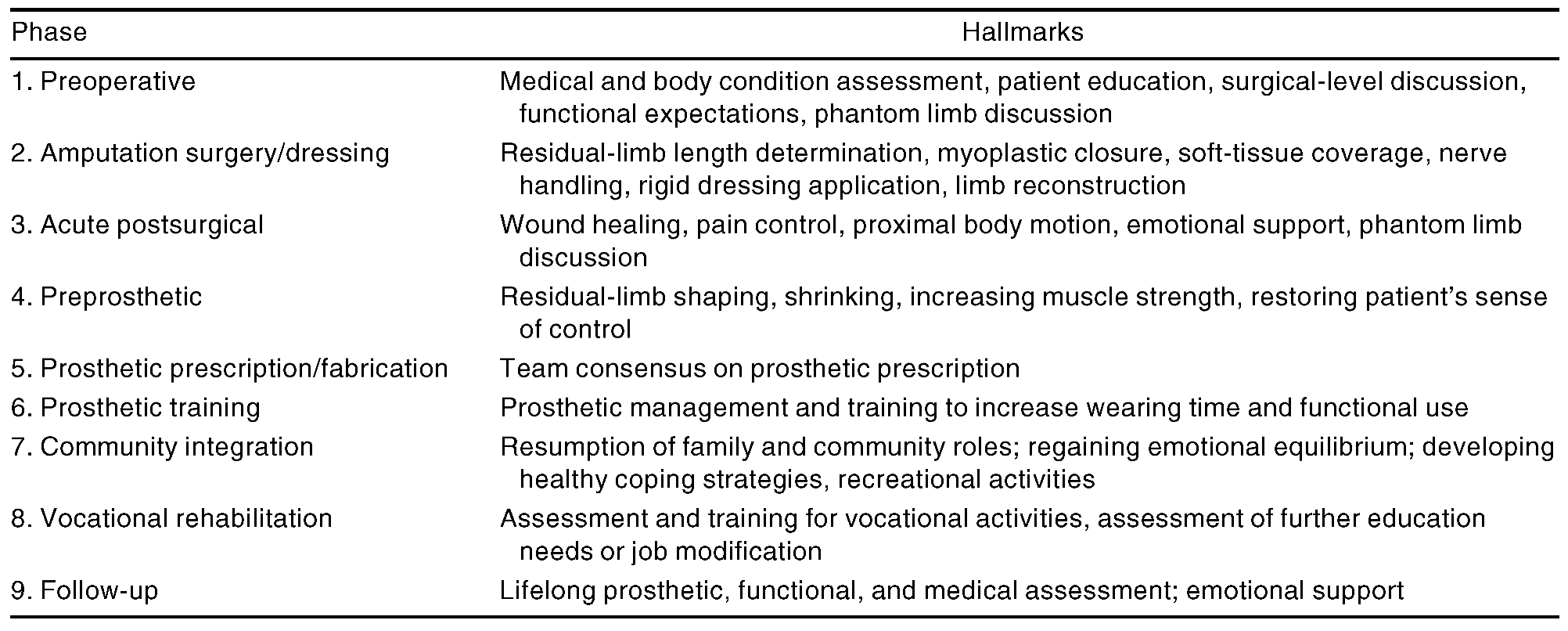
Rehabilitation after limb amputation can be divided into nine discrete periods of evaluation and intervention (Table 1). Each phase involves specific evaluation items and treatment goals and objectives. The stages of amputation rehabilitation and the types of interventions to be used can be delineated according to the specific rehabilitation goals.[1]
Optimally, rehabilitation of the amputee begins prior to the amputation and should be provided by a specialized treatment team. Communication among the team members, the patient, and family members is essential. The team needs information to develop a treatment plan. From the team, the patient should learn what to expect after surgery and rehabilitation. In providing this information, the treatment team will take into account the patient’s physical and medical status, level of amputation, premorbid lifestyle, and cognition and will help the patient set realistic short- and long-term goals. The information given by the team should include the implications of amputation and the phenomenon of phantom sensation.[2]

Preprosthetic Phase

The preprosthetic stage of rehabilitation begins with the surgical closure of the wound and culminates in suture removal and wound healing. The patient who has undergone a lower-limb amputation may become deconditioned and will probably be depressed. A preprosthetic rehabilitation program must be initiated as soon as possible. The physician should expect patients to attain high functional levels and should help them attain this goal, especially if the amputation is seen as a reconstructive procedure that is intended to remove the burden of pain and open wounds. Thus all patients should participate in a program of multidisciplinary rehabilitation care.[1,3]
The goals at this stage are pain control, maintenance of range of motion and strength, and promotion of wound healing. To prepare for this stage, patients should, whenever possible, be placed in a cardiopulmonary conditioning program before the amputation. As soon as the patient is medically stable after the amputation, general endurance and strengthening exercises should be implemented; the exercises should emphasize the muscles that stabilize the proximal muscles and the avoidance of joint contractures. In this stage, rehabilitation interventions to improve balance are also initiated. Strengthening of upper-limb musculature is essential for wheelchair propulsion, transfers, and ambulation with crutches or a walker.
A rigid dressing as proposed by Burgess et al[4] or a removable rigid dressing as proposed by Wu et al[5] can be used to help control pain and aid residual limb maturation in the transtibial amputee. Many centers use elastic compressive dressings as an alternative.[3] A skin-desensitization program that includes gentle tapping, massage, and soft-tissue and scar mobilization and lubrication is recommended.
For the lower-limb amputee, such devices as the Universal Below-the-Knee Bicycle Attachment (Allied Orthotic/Prosthetics, Philadelphia, Pennsylvania),[6] the Versa-Climber (Heart Rate Inc, Costa Mesa, California), or a modified stationary bicycle ergometer could be used to assist in strengthening and endurance exercises. This type of exercise allows for cardiovascular training that uses large lower-limb muscles with controlled weightbearing while wound healing occurs.
A preparatory or training prosthesis should be used at this stage. This promotes residual limb maturation and acts as a short-term gait-training tool while permitting progression in physical fitness and exercise. In most instances, the prosthetic components are of simple design. All unilateral lower-limb amputees should be taught to ambulate safely without a prosthesis but using bilateral crutches; this skill is needed because there may be occasions when the artificial limb will not be used.
Most amputees will need upper-limb support for balance in the preparatory prosthesis-fitting stage. For the unilateral amputee, a cane or single crutch held on the side opposite to the amputated limb should suffice. Some patients with comorbidity will need a wheeled or reciprocating walker or two crutches during ambulation. Gait training should start on flat surfaces with emphasis initially on technique and style and then on velocity, and should then progress to uneven surfaces and elevations as tolerated. Weight-shifting training using stepping techniques and a balance board should be encouraged.
In addition to the involved limb, the remaining limbs must be evaluated as to range of motion, strength, sensation, coordination, skin integrity, vascularity, and deformities. In the patient whose amputation is due to ischemia related to atherosclerosis or diabetes mellitus, similar arterial insufficiency involving the cardiac and cerebral vessels should be suspected. The cardiac and pulmonary status is evaluated by means of clinical parameters such as heart rate, blood pressure, respiratory rate, and, if necessary, finger oximetry to assess the patient’s ability to tolerate the rigors of a rehabilitation and exercise program. Telemetry cardiac monitoring or stress testing has not proved sensitive enough to identify patients at risk. Nutritional status has a considerable impact on wound healing and strength and should be carefully monitored. Cognitive and psychological evaluations are very important, as are the patient’s willingness and ability to acquire new knowledge and to participate in a variety of new activities in the rehabilitation program. The presence of comorbidities, such as diabetic retinopathy, peripheral polyneuropathy, nephropathy, and degenerative joint disease, may also influence rehabilitation outcomes.[7-9]
Trunk balance and strength must not be neglected. Sitting balance, bed mobility, and transfers are facilitated by strong, flexible back and abdominal rotators, flexors, and extensors and hip extensors. Patients are often not eager to perform the upper-limb exercises that promote the strength and range of motion required for self-care activities. However, they need to be reminded that arms provide the power needed to propel a wheelchair and use walking aids. In particular, shoulder stabilizers, adductors, and depressors, elbow extensors, wrist stabilizers, and hand-grasp strength are of prime importance for supporting the body for transfers and the use of walking aids.
The importance of lower-limb exercise is obvious. For the unilateral lower-limb amputee, the remaining limb temporarily becomes the sole support limb. Stance-phase stability requires adequate strength in the hip extensors and abductors, knee extensors, and plantar flexors. Swing-phase limb advancement and clearance require adequate hip flexor and ankle strength. Frequently, the remaining limb can develop symptoms consistent with overuse.
Lower-limb contractures are a common complication in amputees.[10] Contractures can significantly impair future mobility and compromise the integrity of the nonamputated limb. Unfortunately, often the positions that promote comfort also promote contractures. The transfemoral amputee frequently develops contractures of the hip flexors, abductors, and external rotators. The transtibial amputee may develop hip and knee flexion contractures. Contractures of intact-limb hip flexors, knee flexors, and plantar flexors often result from prolonged bed rest in the comfortable semi-Fowler position. If soft-tissue contracture results in an equinus posture, the normal weightbearing posture of the foot is compromised, with a reduction of forces on the heel and rearfoot and pressure concentration on the forefoot. The increased pressure on the forefoot can lead to local pain and tissue breakdown, particularly significant in the presence of peripheral neuropathy or arteriosclerotic occlusive disease.
Several factors may contribute to contractures, including preoperative positioning, surgical technique, pain, and limited mobility; these may be related to ischemia, skin grafts, delayed wound healing, infection, or trauma that may have led to the amputation. Treatment of contractures may include heating modalities, prolonged passive stretch, spring-loaded orthoses, serial casting, nerve blocks, or soft-tissue surgery.[10] To avoid contractures, patients are instructed to move limbs frequently through the full range of motion and to avoid prolonged postures of comfort. Periods of lying prone should be included in the exercise program for lower-limb amputees. A posterior splint or a rigid dressing may help prevent knee flexion contractures in the transtibial amputee. For the transtibial amputee, contractures are readily averted through the use of an immediate postoperative rigid dressing.[4,5] The rigid dressing extends proximally, enclosing the knee, preventing it from flexing and promoting extension at the hip.
The lower-limb amputee’s outlook brightens considerably with the discovery of not being confined to bed. Bed mobility exercises include rolling from side to side and sitting up; these allow the patient to get into a position without help and prevent the skin breakdown caused by sustained pressure. Independence in transfers and functional mobility are extremely important. Transfer training allows patients to expand their world beyond their bed and room. In some cases, patients may use a front-on/back-off sliding board or stand (squat) pivot transfers to move from one surface to another.
Ambulation training without the prosthesis is very important. Initially, this training addresses standing balance and tolerance. Once the patient can manage standing, then ambulation (hopping) using the parallel bars can begin if the remaining foot is in good condition. As balance, strength, and endurance improve, the patient may advance to a walker and then to crutch walking. In addition to allowing greater mobility, these activities improve lower- and upper-limb strength and range of motion and remind the patient that bipedal walking will start soon.
Returning to bipedal ambulation is the stated goal of most lower-limb amputees. Amputees often feel that only by returning to ambulation can they resume their previous lifestyles, roles, activities, and socialization.[11] The ability to walk again is an important transition for the amputee. The clinician begins rehabilitation with the preparatory prosthesis by explaining to the patient how the prosthesis fits, where weight is borne, where and why discomfort may occur in the socket, and how adjustments can be made. It is useful to remind patients that to walk, they must be able to use some pressure-tolerant portion of the residual limb to support their weight. Pressure is to be expected in certain areas; this may be uncomfortable at first but should not be painful.
Gait training begins with weightbearing and weight-shifting activities, with the parallel bars used for upper-limb support. The patient gradually progresses to ambulation in the parallel bars. Gait deviations frequently develop because of the patient’s eagerness to begin walking. The patient should be encouraged to use proper technique, including equal step length and appropriate weight shifting. As patients establish a consistent gait pattern and maintain good form, they advance from the parallel bars to crutches and then to unilateral support. Once patients are comfortable with level surfaces, they progress to stairs, curbs, and ramps, as well as uneven terrain. Stairs are often a concern for the amputee. While walking up and down stairs may not be possible at this early stage, many individuals use a “bumping” technique to ascend or descend. Patients should also learn safe techniques for transfers, including transfers to and from the floor.[12] Many amputees initially use a box or low stool as a step between the floor and the wheelchair or a standing posture.

Exercises for the Amputee

The exercise programs and goals are derived from physical, occupational, and recreational therapies, with physician guidance and supervision. The exercise program for the amputee focuses on four main components of exercise: flexibility, muscle strength, cardiovascular training, and balance.

Flexibility

Adequate lower-extremity flexibility following an amputation is critical to residual limb preparation for prosthetic use given the need to avoid postoperative contractures.[12,13] Initially, bed mobility exercises should be geared toward independent achievement of the prone position. Lying prone for extended periods can deliver a prolonged, low-load stretch to the hip flexors.[14] Knee flexion contractures can also be prevented by adding resistance to the residual limb in the prone position. Prone-lying programs should begin with a maximally tolerated period of comfortable stretch and increase consistently each day.
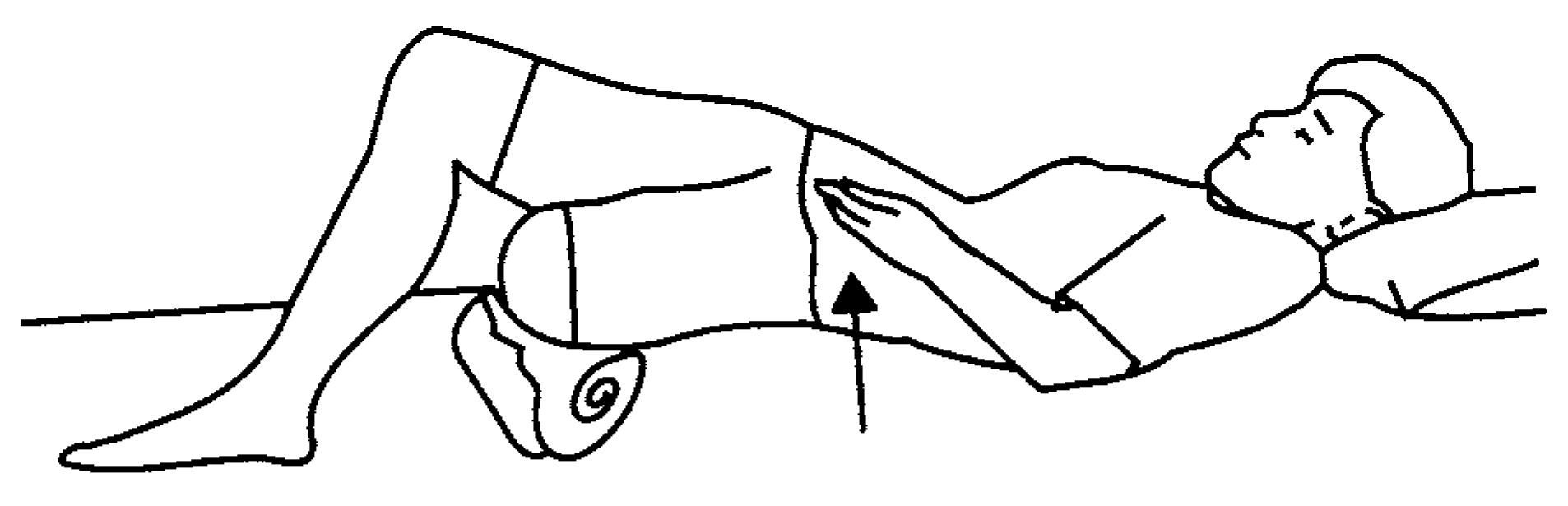
Positioning programs should be supplemented with self-stretches that the patient can perform in addition to therapy. The traditional Thomas test position (Figure 1) for the hip flexors and extensors and long sitting hamstring self-stretches are easy and effective. Each stretch should be performed bilaterally for 30 seconds with at least five repetitions for each extremity.[15] If a patient’s techniques are deemed correct, three to five sessions should be performed independently throughout the day.
With regard to the intact limb, adequate range of motion at the ankle, as well as at the hip and knee, is required. Loss of available dorsiflexion can cause problems for the patient who has vascular disease and peripheral neuropathy as increased stress is placed on the plantar structures. This may lead to foot deformities, which can further increase the risk of foot breakdown. Daily stretches of the gastrocnemius soleus complex can be done with towel pulls while sitting on a surface that lets the knee stay extended or while standing with an appropriate shoe and upper-limb support for balance.

Muscle Strength

Exercises to strengthen the amputated extremity should immediately focus on neuromuscular reeducation of the muscles traumatized by surgery. In addition to functioning as primary movers, these muscle groups play a major role in force distribution at the socket-limb interface. Kegel et al[16] recommend electromyogram biofeedback for volitional firing of the residual muscles. A transtibial amputee should receive a focus on the gastrocnemius soleus group, as well as on the peroneal and pretibial muscles. For the transfemoral amputee, residual hamstring, quadricep, adductor, and abductor muscle groups should all receive periods of training. When postoperative swelling diminishes, neuromuscular electrical stimulation can be considered for persistent problems with residual muscular firing patterns.[17]
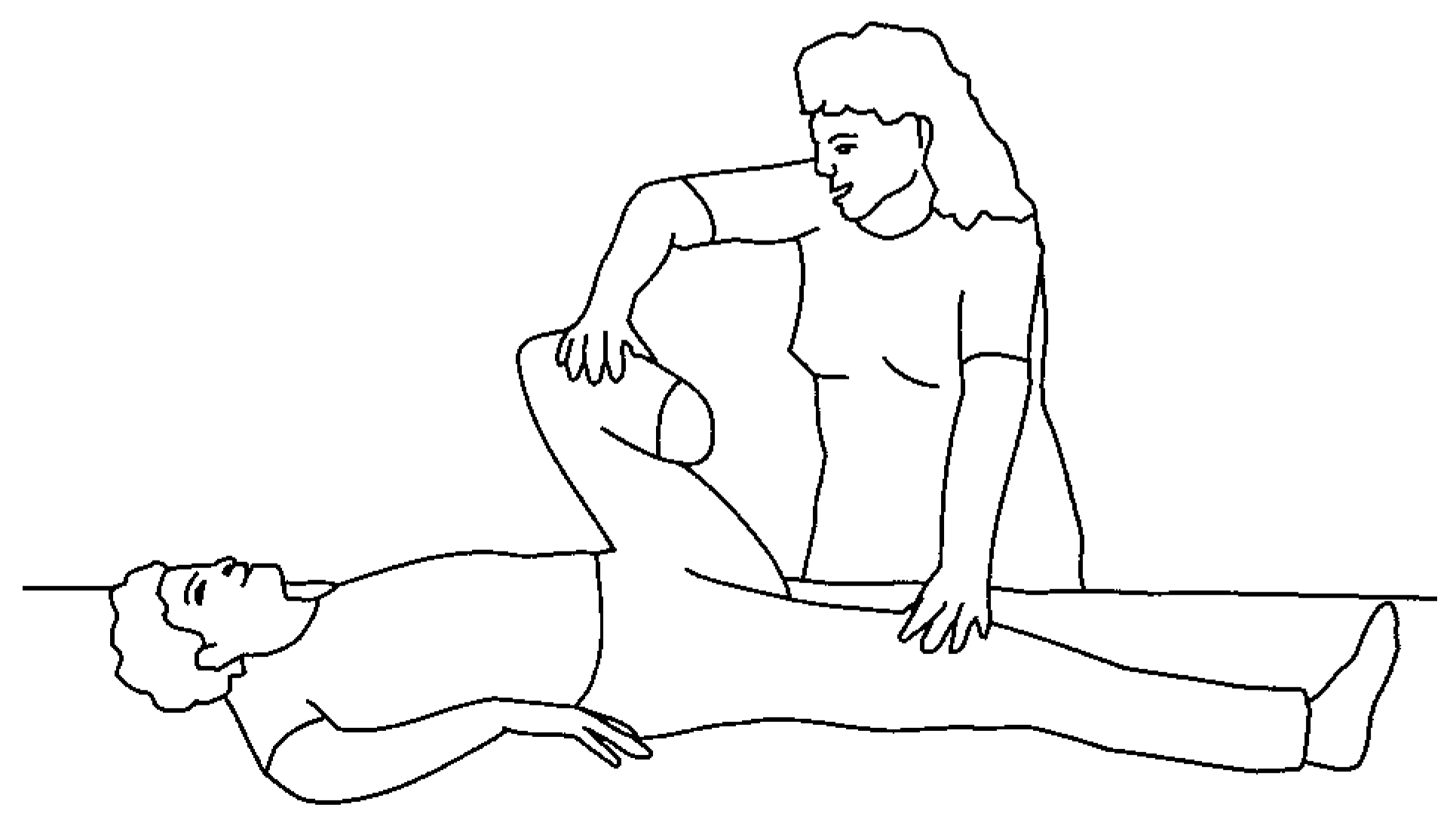
By the end of postoperative week 1, a patient can begin a total-body strengthening program designed specifically for proximal stability and distal mobility. Open- and closed-chain therapeutic exercises can use the overload principle as a goal for strengthening.[18] The DeLorme protocol can be followed, with three sets each of ten repetitions performed at 50%, 75%, and 100% of a one-repetition maximum strength test.[19,20] The lower-extremity regimen should include exercises for the surrounding hip muscles, with particular attention to the hip abductor and hip extensor groups for pelvic stabilization.[1,21] Quadricep and hamstring strength of the transtibial residual limb plays a crucial role in knee stability, which will be needed when a prosthetic device is used.[21,22] Traditional open-chain exercises can easily be modified into closed-chain exercises that are more specific to muscular performance during gait (Figure 2).[23]

Cardiovascular Conditioning

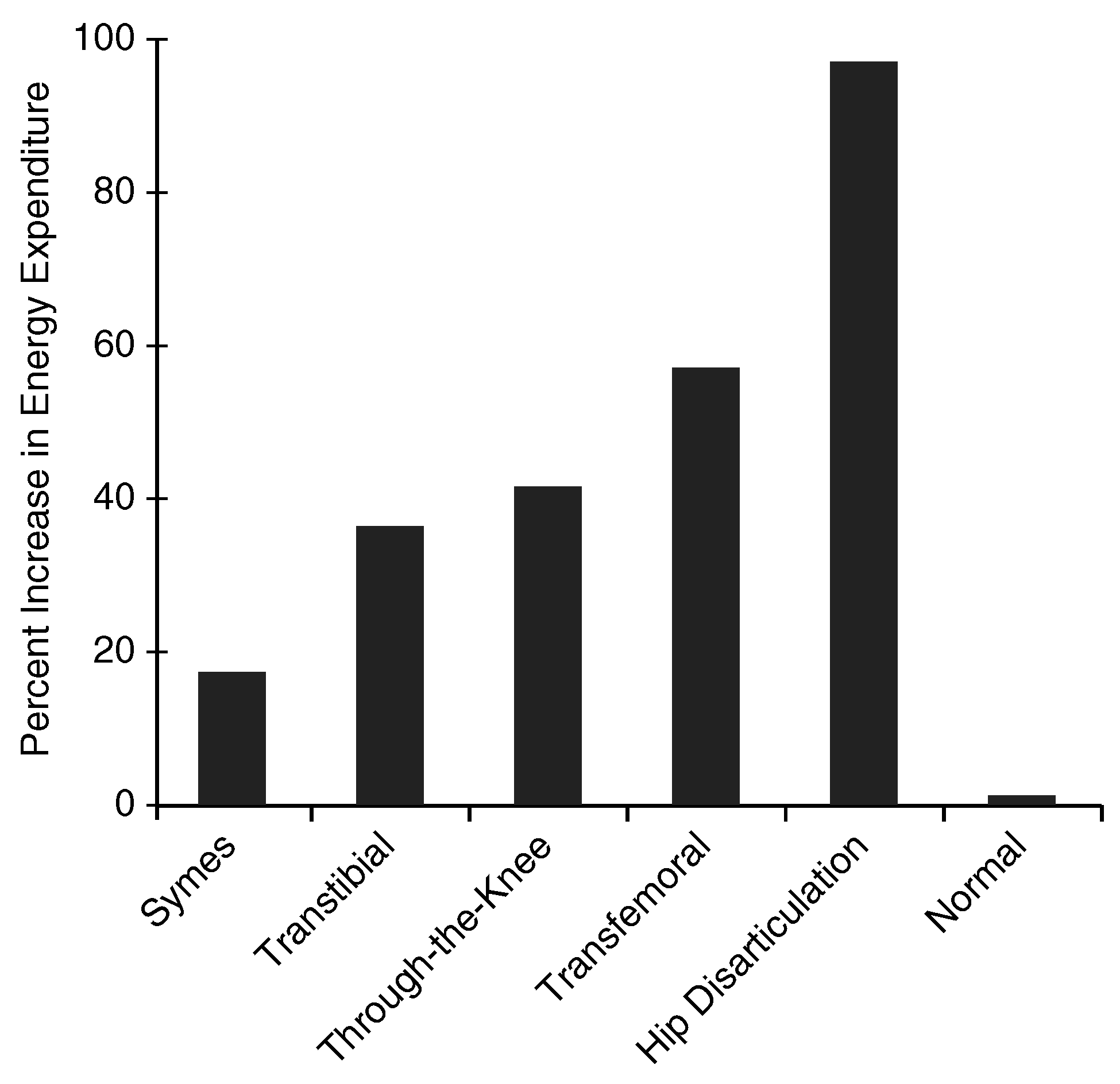
It is imperative that cardiovascular conditioning be initiated as early as possible in the postoperative phase. Whenever possible, patients are placed in a cardiovascular conditioning program before the amputation. Amputees must improve their aerobic fitness levels to meet the increased energy demands associated with prosthetic ambulation as depicted in Figure 3.[3,24,25]
Cardiovascular training should begin with low-impact aerobic activities for periods of time commensurate with the patient’s level of fitness. Accepted formulas can be used to establish a target heart rate range on the basis of the following basic fitness principles: low-to-moderate intensity maintains 50% to 65% of maximum heart rate; moderate-to-high intensity maintains 65% to 85% of maximum heart rate.[8,26,27] Exercise sessions should ideally begin as 10 minutes of continuous activity, with the goal of working up to 30 to 40 minutes of continuous aerobic activity.[28] If 10 minutes cannot be initially achieved, shorter exercise periods at increased frequency can be used effectively.[29]
The use of ambulation to improve cardiopulmonary endurance is well established. Unfortunately, for the recent lower-extremity amputee, upper-extremity aerobic conditioning may be the only choice.[9] This may be the case when severe postoperative pain, limited functional mobility, and wound protection prohibit lower-extremity involvement.
Alternative exercise techniques include the use of the upper-body ergometer, which requires the patient to perform clockwise or counterclockwise arm revolutions on a cam-shaft device similar to a bicycle wheel mechanism.[30] The Versa-Climber requires an up-and-down climbing motion on a vertically oriented device; it can involve one or both lower limbs and/or upper limbs.
As the patient’s endurance and residual limb tissue tolerance improve, aerobic conditioning can begin to involve the intact lower extremity with the use of a Kinetron II (Cybex, Chattanooga, Tennessee), the traditional stationary bicycle, and, if available, a stationary bicycle that allows for both upper- and lower-extremity participation training (eg, Airdyne Ergometer, Schwinn, Boulder, Colorado).[31,32] Research has shown that stationary bicycling takes less of a toll on the cardiovascular system, with the cost of exercise significantly lower as compared with the upper-body ergometer.[7] Patients who can perform safe transfers and who have an intact uninvolved leg and foot are good candidates for using a stationary bicycle. A device developed at the authors’ facility by one of them (A.E.) can accommodate the early use of the residual limb during stationary bicycling. The Universal Below-the-Knee Bicycle Attachment permits early endurance exercise with controlled weightbearing through the amputated limb by means of a stationary bicycle and a modified adjustable bicycle–residual limb interface. The device was clinically tested in a group of 12 unilateral below-the-knee amputees and two bilateral below-the-knee amputees in the early postoperative period.[6] The subjects were able to pedal without residual limb or systemic complications during this testing, and cardiac and respiratory responses necessary for conditioning were present. The subjects appeared to derive both physiologic and psychological benefit from training with the device. To protect the intact foot while participating in aerobic exercise, a patient must use an appropriate, well-fitting shoe that accommodates all deformity and provides protection, especially to the insensate foot.
A typical low-to-moderate-intensity exercise program using little or no resistance can begin with 10 minutes at 30 to 40 rpm, with the goal of gradually working up to 30 to 40 minutes. For moderate-to-high-intensity exercise, a regimen begins with a 30-minute session at 40 to 90 rpm and progresses to 40 minutes. Resistance upgrades can be made thereafter.

Balance

The unilateral lower-extremity amputee must develop adequate single-leg stance balance and stability to ensure safe, functional mobility without the use of a prosthesis, as well as to prepare for gait training.[33] For the intact limb itself, the patient can be retrained in proper ankle and hip balance strategies through simple unilateral lower-extremity standing progressions. These begin with bilateral upper-extremity support and progress to unsupported unilateral standing balance. Dynamic upper-extremity movements, within and out of the base of support, are a more advanced challenge. Early weightbearing activities can reduce complaints of residual and phantom limb pain, as well as prepare the residual limb for prosthetic use.[2,12] Preprosthetic bilateral amputees can gain trunk stability through challenging sitting balance exercises performed on a bolster or a therapeutic ball.

Prosthetic Training

During this phase of rehabilitation, patients are expected to have their prostheses prescribed and fabricated. After the patient receives a prosthesis, frequent monitoring of the skin allows for prompt corrections of socket-fit problems and prevents skin breakdown. Skin checks are done more frequently for the first-time prosthesis user and for the patient with delicate or insensate skin. Initially, it may be necessary to check the skin every 10 to 15 minutes or after every one or two walks. Once the patient and clinical staff are comfortable with the socket fit, the frequency of skin monitoring decreases. Monitoring of the intact foot must also take place daily and should become a lifelong practice to prevent complications from the increased stresses imposed with ambulation. Particular attention should be given to bony prominences, the area in between toes, and the heel.
Tolerance of prosthetic use gradually increases over the first several weeks. Some patients can wear the prosthesis for only 1 to 3 hours per day during the first week of gait training. This time gradually increases until the prosthesis is worn during all waking hours. Throughout the rehabilitation process, the patient should become well versed in skin care. The patient should learn the necessary steps to achieve volume adjustment to the prosthesis to accommodate normal swelling, noting signs of appropriate weightbearing and watching for evidence of skin irritation or breakdown. When the prosthesis is not worn, the patient wears a stump shrinker or an elastic compression bandage to prevent residual limb edema and provide volume containment.[3,5]
Treadmill use should be considered for cardiovascular conditioning when the patient can maintain a self-selected speed of ambulation of approximately 1 mph. The main advantage of this activity is endurance training in the specific context of ambulation.[34,35] Other features include the ability to easily modify speed and inclination. Because of the increased duration of weightbearing by the residual limb, walking programs should start conservatively and progress gradually to 30 to 40 minutes per session.[22] Most patients exercising at the low-to-moderate levels of intensity achieve the desired target heart rate range. For patients who do not, or for patients who can tolerate moderate-to-high levels of intensity, speeds should be increased by 0.2 to 0.4 mph until a more appropriate heart rate is achieved. Another way to increase intensity, as well as change the environmental context, is by inclining the platform by 0.5° at a time until a manageable hill is found. Frequent monitoring of the sound foot is imperative, as high traction and friction are prime conditions for the development of skin breakdown, particularly in the heel and toes of the insensate foot.[36] One cannot overemphasize the need to select appropriate footwear as part of the preventive-care program necessary for the amputee.
As long as the amputee has an intact, matured incision, swimming may be an alternative form of aerobic training.[35]

Flexibility

At this point, the patient should be independently following the self-stretch program learned during the period after surgery. Many patients neglect stretching once they begin walking again; therefore, the clinician must emphasize strict adherence to this program. In addition to the recumbent stretches, a weightbearing stretch program, incorporating the prosthesis, can be initiated. When these stretching techniques are abandoned after prosthetic fitting and training, hip and knee flexion contractures may develop. Hip stretching should include a long stretch with the patient positioned in single-leg kneeling and then leaning forward, allowing the kneeling limb to go into a position of hip extension. An erect hamstring stretch can be accomplished by placing one extremity forward of the other and then bending the trunk toward the limb, maintaining lumbar lordosis. Ankle dorsiflexion of the intact limb can be maintained through the traditional heel-cord stretch, which has the target leg in a position of hip and knee extension with the foot kept flat on the ground. A slightly forward body lean stretches the gastrocnemius soleus complex. Modifying this stretch by allowing the heel to rise and the toes to flex will stretch the arch and other plantar structures.

Muscle Strength and Endurance

Muscle strength and endurance during the prosthetic training phase may be more demanding. The goal is to achieve sufficient muscular force and endurance from the lower extremities to support prolonged periods of gait.[12] The approach begins with pregait activities centered on acceptance of weightbearing by the residual limb.[23]
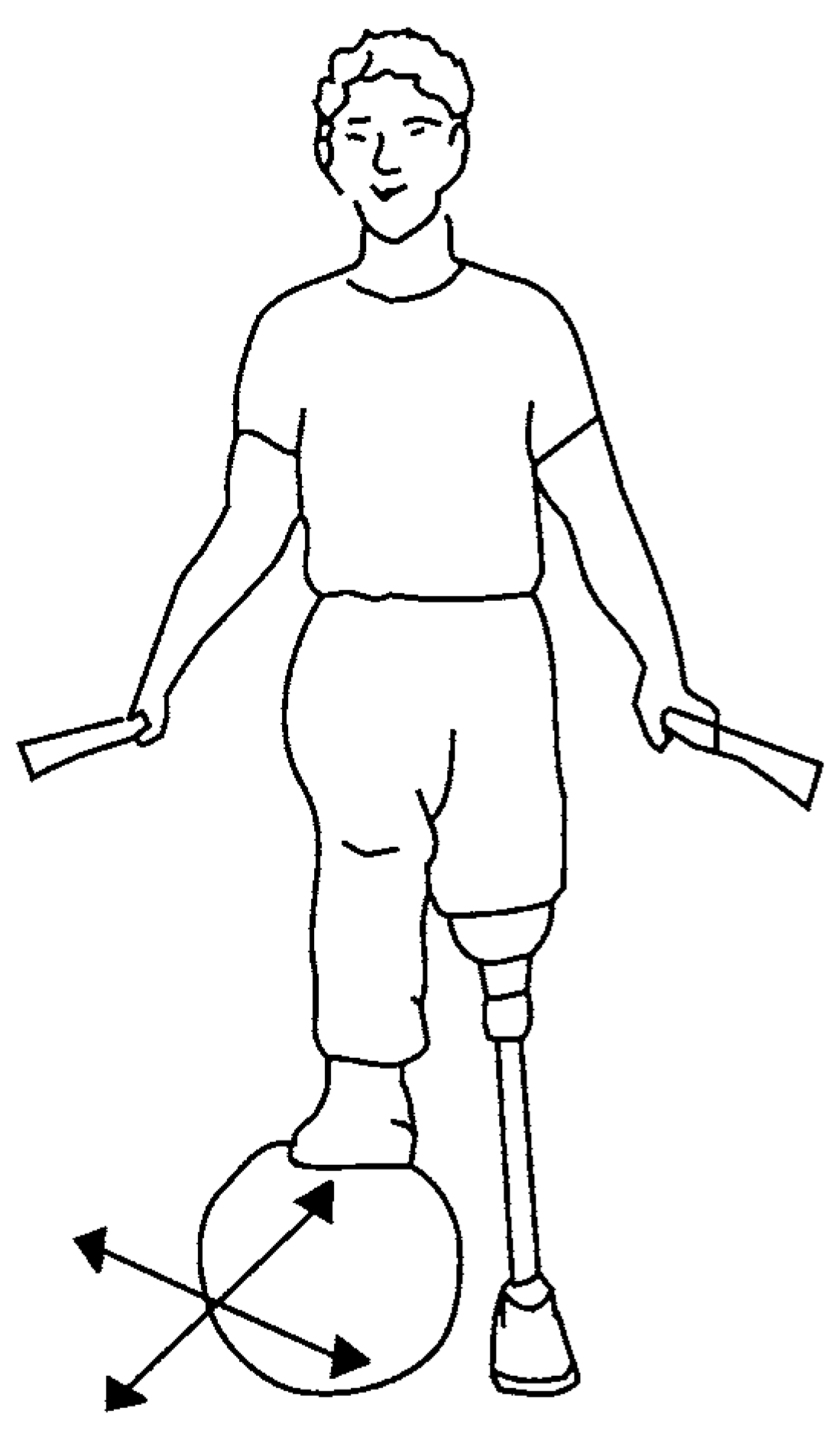
The ability of the residual limb to accept sufficient weight during the single-leg stance phase of gait forms the foundation of effective prosthetic ambulation. A pregait program starts in the safety of the parallel bars under the close supervision of the therapist. After the patient is taught what an equilibrated base of support is, training in initial weight-shifting skills can begin. Shifting weight from anterior to posterior (from the toes to the heels), from side to side, and circumducting over the lower extremities should be done with the pelvis remaining at neutral tilt and rotation (Figure 4).[23] In a normal gait and stride position, the patient is instructed to transfer body weight from the toes of the extended limb to the heel of the opposite leg. This activity practices the fundamental weight transfer necessary for gait, progressing to both lower extremities and then to activities of weightbearing by the prosthetic limb. The authors as well as others[12,23,37] recommend the use of steps of varying heights starting at a height of 2 to 4 inches for intact limb stepping. This encourages pronounced residual limb weightbearing through an exaggerated single-leg support period. This activity allows transfemoral amputees to receive concentrated pelvic stabilization training through the hip abductors’ firing the residual limb into the lateral wall of the socket. Heel raises to strengthen the plantar flexors and toe raises for the dorsiflexors should be done with diminishing upper-extremity support.

Balance and Coordination

In the early stages of prosthetic training, patients will feel insecure when trying to balance without upper-extremity support. They will often flail their arms like a tightrope walker regaining balance. This may be related to loss of the direct proprioceptive input and sensory feedback from the foot. Other possible causes may be an inadequate or improper hip balance reaction on the prosthetic side.[12] A balance program geared to maximizing available proprioception and retraining hip reactions is the logical approach to address these deficits.
Balance training continues with purposefully perturbing the patients out of their base of support and then manually cueing their hips into properly countering this motion.[38] Retraining balance reactions for bilateral lower-extremity amputees may be more difficult in the static, unsupported posture. Lower-extremity amputees may find retraining in this posture harder than performing dynamic reactions, owing to their need to use compensatory trunk movements to offset severe sensory and proprioceptive losses.

The Active Ambulator

The active amputee has a myriad of choices for recreational activity, and numerous publications detail recreational activities for the amputee.[34,39,40] The members of the amputee’s clinical team have especially interdependent roles when they are attempting to train the patient for recreational activities. The therapeutic-recreation therapist interviews patients to determine their recreational interests and explains the specific physical demands inherent in the chosen sport to the team members in the other disciplines. The physical and occupational therapists help the patient achieve the requisite conditioning for the various components. In addition, the team physician should evaluate the patient to give medical clearance for the desired activity and, in conjunction with the prosthetist, determine possible prosthetic components, adjustments, and adaptations. Once all basic physical and adaptive needs are met, the recreational therapist begins the sports-specific training, with other clinicians acting as consultants.
Activities of low-to-moderate intensity that are popular with amputees include gardening, walking, golfing, bicycling, and swimming.[39] Swimming, in particular, is an attractive recreational activity[40] owing to the relatively low stress imposed on the joints, its accessibility, and, for the unilateral amputee, the lack of a need for specialized equipment. A kickboard can be an excellent adjunct training tool for lower-extremity strengthening prior to stroke training.[39] Individuals using a swim prosthesis will have the advantage of involving their residual limb musculature more, but will not necessarily improve their swimming proficiency. If a swimming fin can be attached to the utility prosthesis, there is greater propensity for success with the crawl stroke.[34]
For the amputee seeking moderate-to-high activity levels, there are many choices, including running, aerobic dance, weightlifting, water and downhill skiing, and racquet and team sports, to name just a few.[34,40] Primary wheelchair users, as well as the ambulatory amputee, can participate in racquet sports, particularly tennis or basketball. Those who choose to exercise with their prosthesis must have a proper socket fit and suspension because of the significant increase in friction experienced during sports.[39] Special prosthetic devices[41-43] and socket interfaces need to be considered prior to sport-specific instruction. Once again, properly fitting footwear is essential for the intact limb, especially for individuals who have vascular disease.


Community Reintegration and Vocational Rehabilitation

Community reintegration and vocational rehabilitation are closely linked. On the basis of residual functional capacity, patients may be able to return to their previous line of work. In many cases, because of the events surrounding the limb loss or the inability to return to a physically demanding job, patients may choose a different line of work. For safety reasons, some activity limitations may be imposed when the patient returns to work. Examples of such limitations might be avoiding the following: unprotected walking or climbing to heights exceeding 4 feet; lifting or transporting more than 40 pounds for the transtibial-level amputee or 25 pounds for the transfemoral level; and working around moving vehicles or on uneven surfaces while carrying objects. For some amputees, jobs that require crawling, running, or jumping may be undesirable and, when possible, alternative work should be considered. In the authors’ experience, it is advisable to have a work program that starts with job simulation off site and then progresses to work on the job with close supervision. It is important to the successful reintegration of the amputee that the return to work take place gradually, with time and workload increasing over several weeks and the clinical staff being available for counseling and consultation. Early return to work when this is safe and possible is advisable. A good system to foster community reintegration is the “day rehabilitation program,” in which the patient participates in rehabilitation for 3 hours a day 5 days a week, or for 6 hours a day 2 to 3 days a week; this allows the return to part-time modified work, sports, and social activities when the patient is not in therapy.

Long-Term Follow-up

The patient who has successfully completed a rehabilitation program should be seen for follow-up by one of the team members at least every 3 months for the first 18 months. Physician follow-up every 6 months is recommended. These scheduled visits may need to be more frequent and include other members of the team if the patient is having difficulties with prosthetic fitting, the residual limb, specific activities, or psychosocial adjustment.

References

  1. Esquenazi A, Meier R: Rehabilitation in limb deficiency: part 4. limb amputation. .Arch Phys Med Rehabil77: (suppl):18. ,1966. .
  2. Kamen LB, Chapis GJ: Phantom limb sensation and phantom pain. .PM&R State of the Art Reviews8::73. ,1994. .
  3. Esquenazi A: Geriatric amputee rehabilitation. .Clin Geriatr Med9::731. ,1993. .
  4. Burgess EM, Romano RL, Zettl JH: The Management of Lower-Extremity Amputations: Surgery, Immediate Postsurgical Prosthetic Fitting, Patient Care, Prosthetic and Sensory Aids Service, Veterans Administration, Washington, DC, 1969..
  5. Wu Y, Keagy RD, Krick HJ, et al: An innovative removable rigid dressing technique for below-the-knee amputation. .J Bone Joint Surg Am61::724. ,1979. .
  6. Esquenazi A, Micheo W, Vachranukunkiet T: “Design and Construction of a Bicycle Attachment for Conditioning of Below Knee Amputees and Its Clinical Application,” in Proceedings of the International Society for Prosthetics and Orthotics, IV World Congress, p 373, International Society for Prosthetics and Orthotics, Copenhagen, 1986..
  7. Glaser RM, Sawka MN, Laubach LL, et al: Metabolic and cardiopulmonary responses to wheelchair and bicycle ergometry. .J Appl Physiol46::1066. ,1979. .
  8. Laslett L, Paumer L, Amsterdam EA: Exercise training in coronary artery disease. .Cardiol Clin5::211. ,1987. .
  9. Priebe M, Davidoff G, Lampman RM: Exercise testing and training in patients with peripheral vascular disease and lower extremity amputation. .West J Med154::598. ,1991. .
  10. Mensch G, Ellis P: “Contractures,” in Rehabilitation Management of Amputees, ed by SN Banerjee, p 213, Williams & Wilkins, Baltimore, 1982..
  11. Dise-Lewis J: “Psychological Adaptation to Limb Loss,” in Comprehensive Management of the Upper-Limb Amputee, ed by JD Atkins, HR Meier III, p 165, Springer-Verlag, New York, 1989..
  12. Mensch G, Ellis PM: Physical Therapy Management of Lower Extremity Amputations, Aspen Publishers, Rockville, MD, 1986..
  13. Mital MA, Pierce DS: “Contractures,” in Amputees and Their Prostheses, ed by MA Mital, DS Pierce, p 175, Little, Brown, Boston, 1971..
  14. Light KE, Nuzik S, Personius W, et al: Low-load prolonged stretch vs. high-load brief stretch in treating knee contractures. .Phys Ther64::330. ,1984. .
  15. Beaulien JA: Developing a stretching program. .Physician Sports Med9::59. ,1981. .
  16. Kegel B, Burgess EM, Starr TW, et al: Effects of isometric muscle training on residual limb volume, strength, and gait of below-knee amputees. .Phys Ther61::1419. ,1981. .
  17. DeVahl J: “Neuromuscular Electrical Stimulation,” in Electrotherapy in Rehabilitation, ed by MR Gersh, p 218, FA Davis, Philadelphia, 1992..
  18. Hellebrandt PA, Houtz SJ: Mechanisms of muscle training in man: experimental demonstration of the overload principle. .Phys Ther Rev36::371. ,1956. .
  19. DeLorme TL, Watkins A: Progressive Resistance Exercise: Technic and Medical Application, Appleton-Century-Crofts, New York, 1951..
  20. DeLorme TL, Watkins A: Techniques of progressive resistance exercise. .Arch Phys Med Rehabil29::263. ,1948. .
  21. Powers CM, Boyd LA, Fontaine CA, et al: The influence of lower extremity muscle force on gait characteristics in individuals with below-knee amputations secondary to vascular disease. .Phys Ther76::367. ,1996. .
  22. Czerniecki JM, Gitter A: Insights into amputee running: a muscle work analysis. .Am J Phys Med Rehabil71::209. ,1992. .
  23. Gailey RS: One Step Ahead: An Integrated Approach to Lower Extremity Prosthetics and Amputee Rehabilitation, Advance Rehab Therapy Inc, Miami, 1994..
  24. Traugh GH, Corcoran PJ, Reyes RL: Energy expenditure of ambulation in patients with above-knee amputations. .Arch Phys Med Rehabil56::67. ,1975. .
  25. Pinzur MS, Gold J, Schwartz D, et al: Energy demands for walking in dysvascular amputees as related to the level of amputation. .Orthopedics15::1033. ,1992. .
  26. Badenhop DT, Cleary PA, Schaal SF, et al: Physiological adjustments to higher- or lower-intensity exercise in elders. .Med Sci Sports Exerc15::496. ,1983. .
  27. Pitetti KH, Snell PG, Stray-Gunderson J, et al: Aerobic training exercises for individuals who had amputation of the limb. .J Bone Joint Surg Am69::914. ,1987. .
  28. Wenger NK, Hallerstein HK: Rehabilitation of the Coronary Patient, John Wiley & Sons, New York, 1984..
  29. Pollack M, Geltman L, Milesis C: Effects of frequency and duration of training on attrition and incidence of injury. .Med Sci Sports9::31. ,1977. .
  30. Davidoff GN, Lampman RM, Westbury L, et al: Exercise testing and training of persons with dysvascular amputation: safety and efficacy of arm ergometry. .Arch Phys Med Rehabil73::334. ,1992. .
  31. Bostom AG, Bates E, Mazzarella N, et al: Ergometer modification for combined arm-leg use by lower extremity amputees in cardiovascular testing and training. .Arch Phys Med Rehabil68::244. ,1987. .
  32. Mostardi RA, Gandee RN, Norris WA: Exercise training using arms and legs versus legs alone. .Arch Phys Med Rehabil62::332. ,1981. .
  33. Serroussi RE, Gitter A, Czerniecki JM, et al: Mechanical work adaptations of above-knee amputee ambulation. .Arch Phys Med Rehabil77::1209. ,1996. .
  34. Burgess EM, Rappaport A: Physical Fitness: A Guide for Individuals with Lower Limb Loss, Department of Veterans Affairs–Veterans Health Administration, Washington, DC, 1994..
  35. Karacoloff LA: Lower Extremity Amputations: A Guide to Functional Outcomes in Physical Therapy Management, Aspen Publishers, Rockville, MD, 1985..
  36. Malone JM, Snyder M, Anderson G, et al: Prevention of amputation by diabetic education. .Am J Surg158::520. ,1989. .
  37. Esquenazi A, DiGiacomo R: “Exercise Prescription for the Amputee,” in Exercise Prescription, ed by K Shank-ar, p 297, Hanley & Belfus, Philadelphia, 1999..
  38. Gentile AM: “Skill Acquisition: Action, Movement, and Neuromotor Processes,” in Movement Science: Foundations for Physical Therapy in Rehabilitation, p 93, Aspen Publishers, Rockville, MD, 1987..
  39. Kegel B, Webster JC, Burgess EM: Recreational activities of lower extremity amputees: a survey. .Arch Phys Med Rehabil61::258. ,1980. .
  40. Kegel B: Sports for the Amputee, Medic Publishing Co, Washington, DC, 1986..
  41. Esquenazi A, Torres M: Prosthetic feet and ankle mechanisms. .Phys Med Rehab Clin North Am2::299. ,1991. .
  42. Leonard JA Jr: Lower limb prosthetic sockets. .PM&R State of the Art Reviews8::129. ,1994. .
  43. Michael J: Prosthetic knee mechanisms: PM&R. .PM&R State of the Art Reviews8::147. ,1994. .
Table 1. Phases of Amputee Rehabilitation
Japma 91 00013 i001
Figure 1. The Thomas test position stretches the hip flexors and strengthens the hip flexors and extensors.
Japma 91 00013 g001
Figure 2. Closed-chain hip and pelvic exercise.
Japma 91 00013 g002
Figure 3. Energy expenditure during ambulation with different levels of lower-limb amputation.
Japma 91 00013 g003
Figure 4. Weight shifting with a ball.
Japma 91 00013 g004