To the Editor:
There are various maladies related to a diabetic foot wound that may lead to amputation [
1], but the triad of peripheral neuropathy, peripheral arterial disease, and infection is the harbinger of the final cataclysmic events of gangrene and amputation.
Extensive foot burn injuries occurring in patients with diabetes mellitus may present an added challenge to the clinician. Associated injuries, as well as acute and chronic medical conditions, increase morbidity and mortality of burned patients [
2]. Deep burns of any part of an extremity may restrict circulation and lead to ischemia and limb loss.
The goals of immediate management of a burn wound are the same as those of management of any wound [
3]. These goals are to limit infection by eliminating necrotic tissue, to provide a moist healing environment in order to promote epithelialization, and to protect the wound and the surrounding tissue from further trauma.
There are a variety of techniques used for cleansing burn wounds. Topical agents have significantly decreased the incidence of sepsis and have improved wound healing. The choice of dressings depends on many patient- and wound-related factors; synthetic, biologic, and biosynthetic dressings are used to treat burn wounds at different skin depths. Split-thickness skin grafts are the primary method of coverage used in reconstruction of the burned foot [
4]. The successful use of skin grafts requires adequate blood supply to the underlying tissues.
Studies conducted by Boss and Arons in 1982 determined that although all burns of the feet do not necessarily have to be treated by debridement and skin grafting, this technique allows for early return to work with stable, well-healed wounds [
5]. Early excision and skin grafting has become a popular method of burn treatment, although the procedure is limited by difficulty in diagnosing burn depth, limitation of donor sites, and the technical skills needed to excise three-dimensional areas.
There are few reports in the literature on the management of partial-thickness burns in the diabetic foot. The authors present an interesting case report on this subject.
Case Report
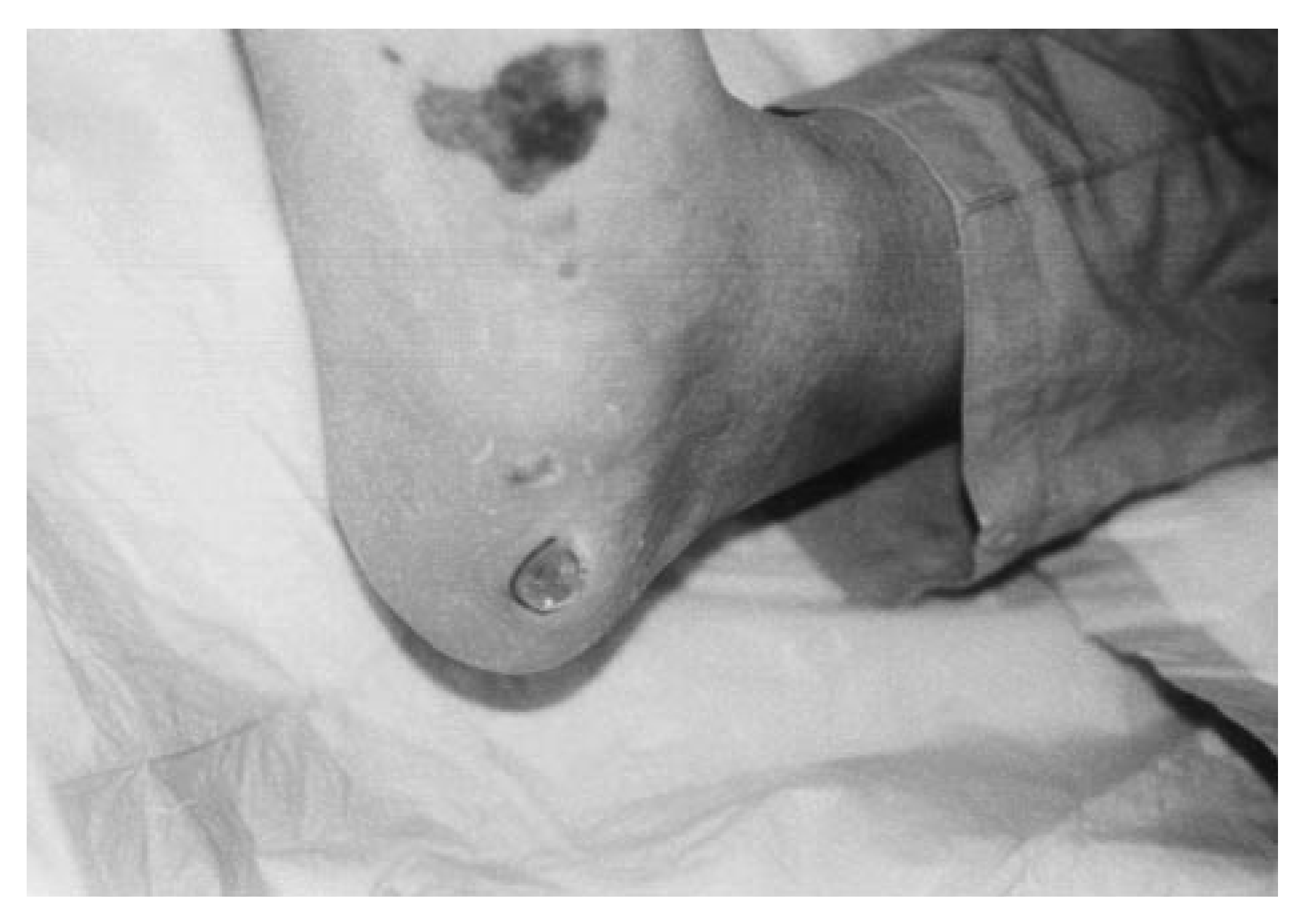
A 60-year-old man with diabetes mellitus presented to the emergency department at Staten Island University Hospital in Staten Island, New York, with the chief complaint of burns on the right foot of 1 week’s duration. The patient reported that his foot was burned after he soaked it in water that did not feel hot to him. He was soaking his foot to clean a diabetic ulcer on the plantar aspect of his right heel (
Fig. 1).
The patient’s medical history was significant for insulin-dependent diabetes mellitus, peripheral neuropathy, and ulceration on the plantar aspect of the right heel. His only medication was insulin therapy, which maintained strict control of glycemia.
On initial presentation, the patient had fever and chills. Vascular examination revealed palpable dorsalis pedis pulses bilaterally. Neurologic examination indicated that vibratory, sharp/dull, and light-touch sensations were diminished in both feet.
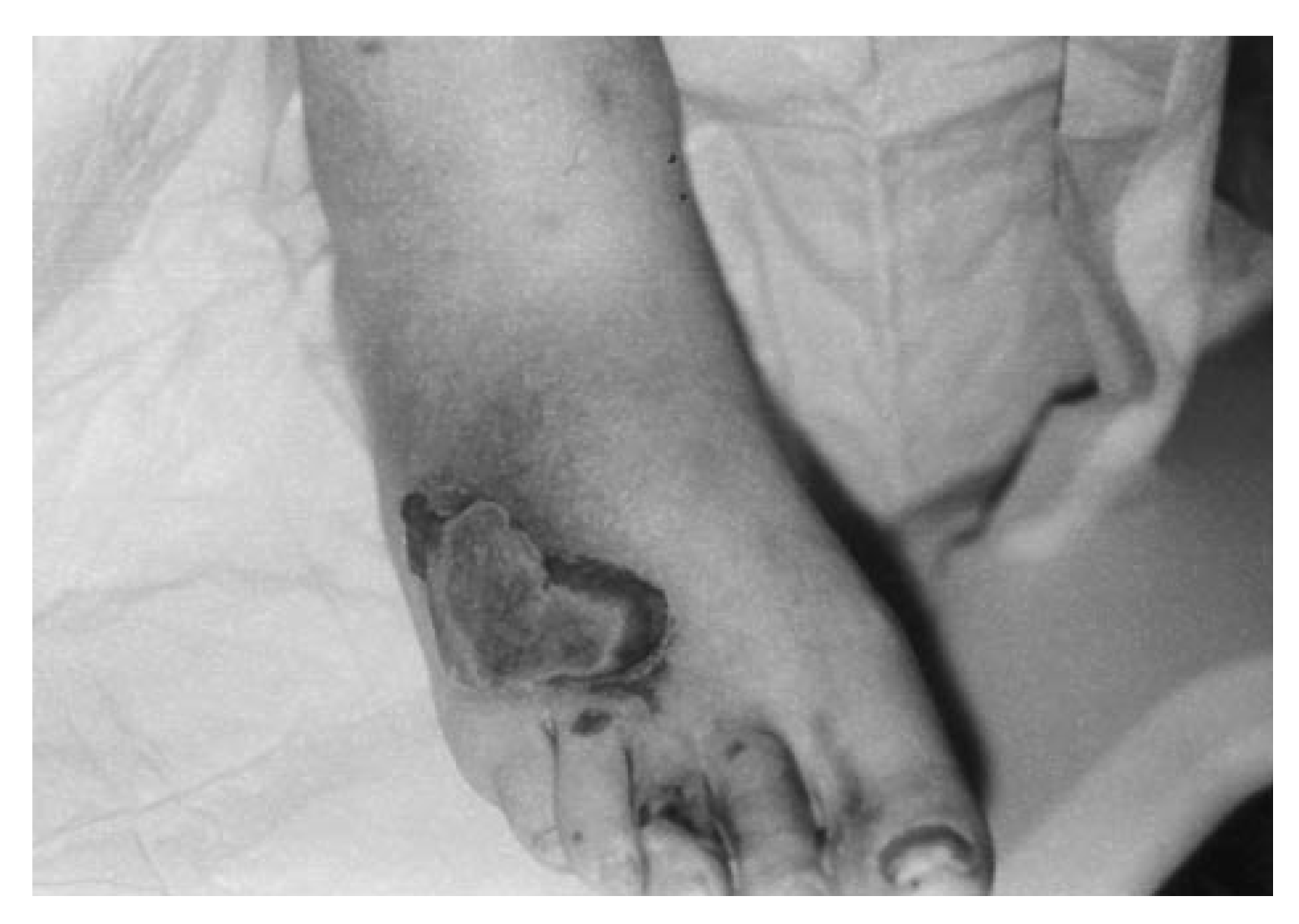
On physical examination, partial-thickness burns were noted on the plantar medial aspect of the right foot (
Fig. 1), the dorsal aspect of the right foot (
Fig. 2), and the lateral aspect of the right heel. These wounds measured 2 × 3 cm, 5 × 4 cm, and 2 × 4 cm, respectively. There was evidence of infection at the dorsal foot burn, with surrounding erythema and edema. Also noted was a 1 × 1-cm partial-thickness ulcer on the plantar aspect of the right heel. This area showed signs of epithelialization and no signs of infection.
The patient was admitted because of cellulitis and was administered intravenous antibiotics. Local wound care included debridement of devitalized tissue, cleansing with soap and water, and application of silver sulfadiazine cream, followed by coverage with a nonadherent dressing and dry gauze.
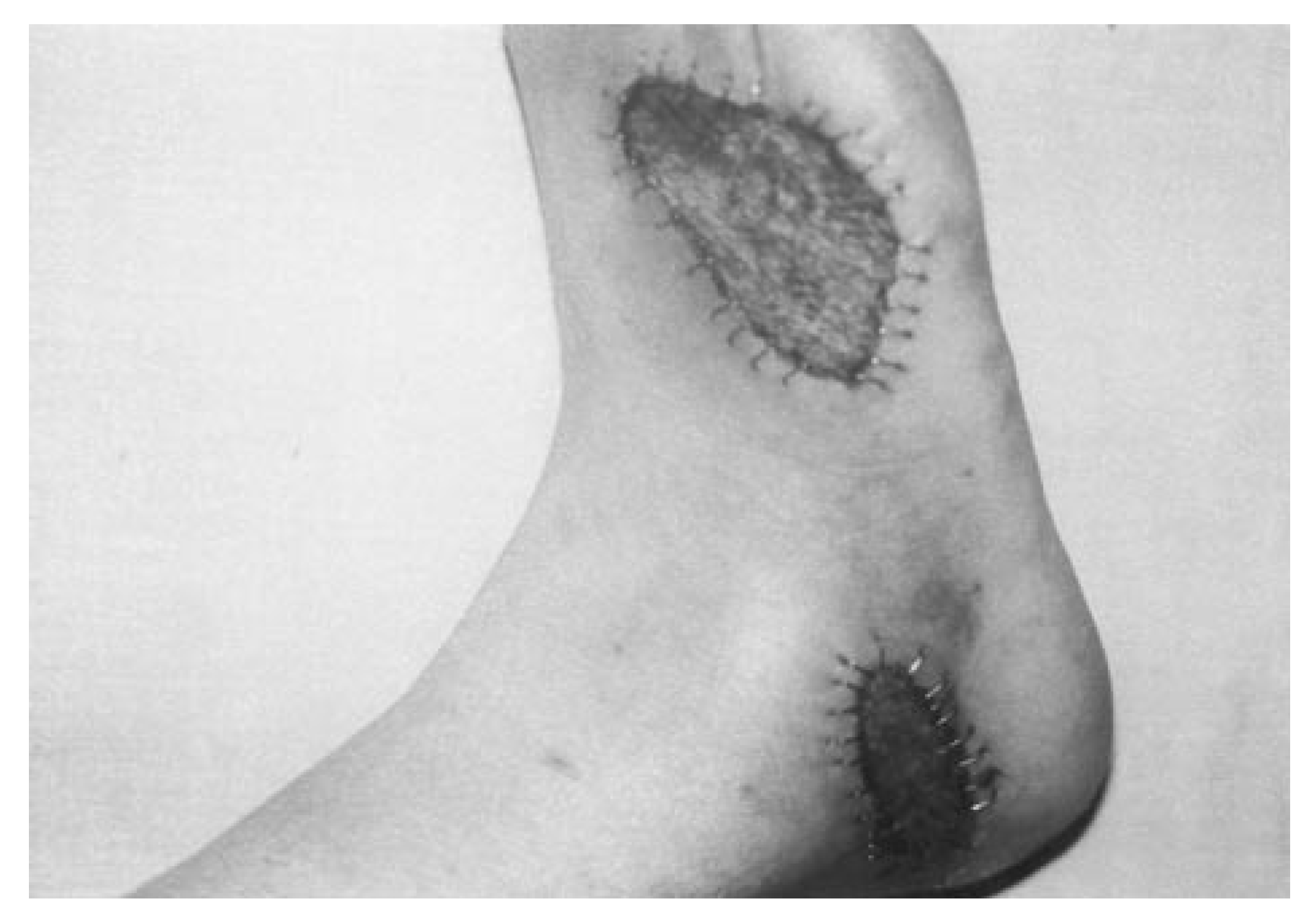
After 1 week, the cellulitis disappeared; however, the foot burns located on the dorsum of the foot and the lateral aspect of the heel showed no evidence of re-epithelialization. The plantar foot burn did show signs of adequate re-epithelialization. The assessment was that the wound was a deep second-degree burn or a deep partial-thickness burn requiring debridement and skin grafting. The patient was brought to the operating room for debridement, irrigation, and skin grafting (
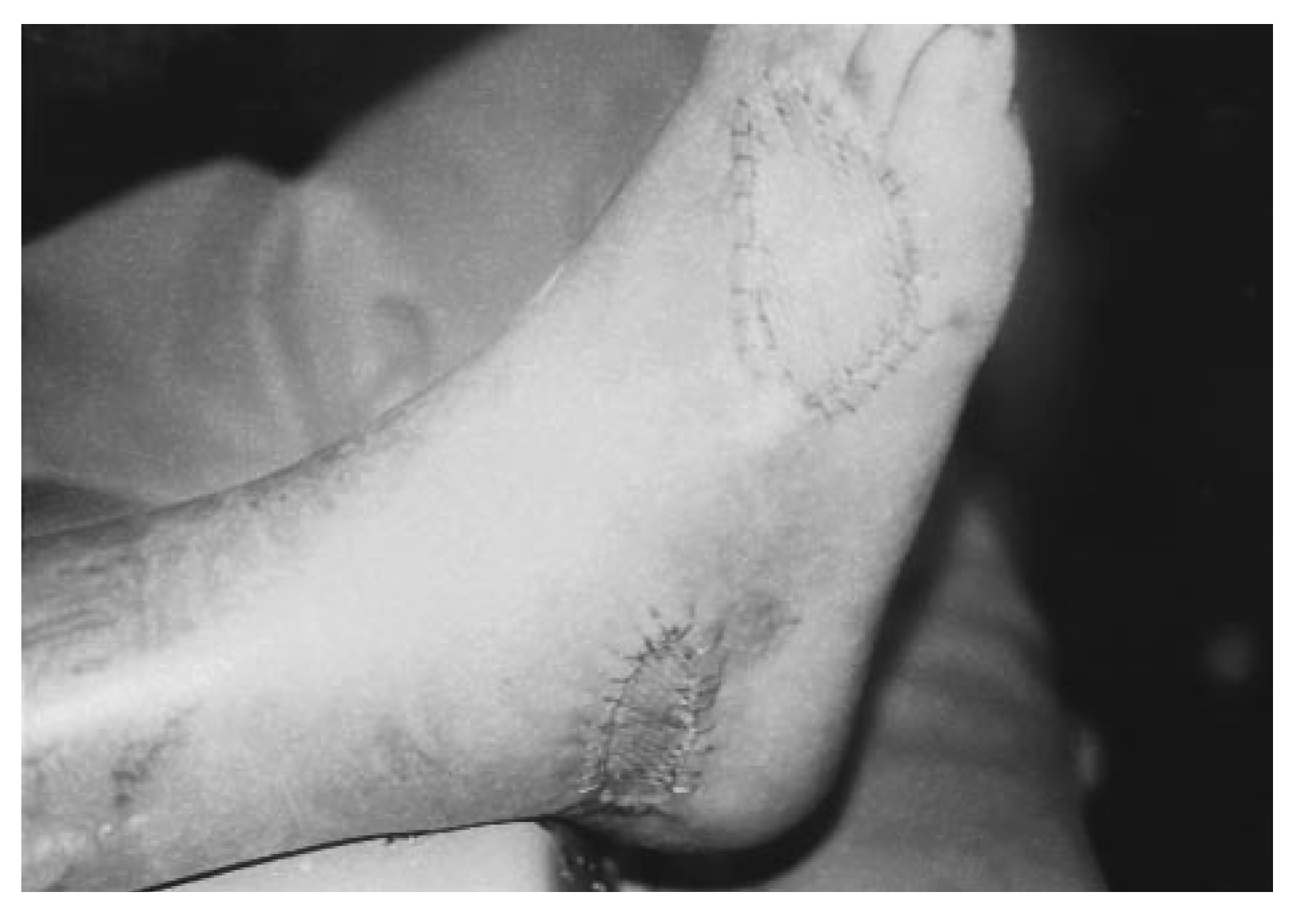
Fig. 3). The skin graft was secured to the skin with staples. This process was followed by application of a nonadherent dressing and a bulky protective dressing, immobilizing the patient’s leg. After 5 days, the skin graft was well adhered (
Fig. 4). The donor site healed well. The patient was discharged on postoperative day 6.
Discussion
When factors such as peripheral vascular disease and infection have been ruled out in cases of nonhealing wounds and when conservative management has been unsuccessful, early debridement and grafting can be the mainstay of treatment. Generally, partialthickness burns that show no signs of healing after 2 to 3 weeks can be treated with skin grafting [
2]. Deeper injuries may require flap reconstruction with skin grafting. Burns on the feet of diabetic patients may be predisposed to infection. Early wound closure prevents the sequelae of infection, gangrene, and amputation.