A variety of etiologies have been proposed for forefoot pain, including capsulitis, neuromas, arthritis, and pain associated with systemic disease. This article presents a rare case of multiple intermetatarsal neuromas coexisting with rheumatoid synovitis and a rheumatoid nodule.
In 1974, Hofbauer [
1] reported on a case of a rheumatoid nodule that caused symptoms similar to those associated with an intermetatarsal neuroma. The patient complained of pain and swelling between the third and fourth toes. Physical examination revealed a well-visualized mass, which was more prominent when the patient was weightbearing. Following excision of the mass, pathologic analysis revealed findings consistent with a rheumatoid nodule with entrapped nerve fibers.
The following year, Kratzer and Gorman [
2] reported on a case of a recurrent rheumatoid nodule within the third intermetatarsal space of the right foot as well as a rheumatoid nodule within the second intermetatarsal space of the left foot. The patient also had multiple other rheumatoid nodules, including on the dorsal aspect of the right metatarsophalangeal joint, the right plantar hallux interphalangeal joint, the left Achilles tendon, and the base of the xiphoid process. Radiographic examination revealed visible swelling in the intermetatarsal spaces as well as soft-tissue thickening. Intraoperatively, the intermetatarsal rheumatoid nodules were found to be firmly adherent to the capsular structures and the flexor digitorum longus tendon. No nerve pathology was found in the authors’ intraoperative observation or in the pathologist’s microscopic examination.
In 1978, Canter [
3] described a patient with neuromalike pain in the third intermetatarsal space of the left foot. A soft-tissue mass was identified and excised. Because the nerve appeared normal, it was left intact. Findings of the microscopic examination of the mass were consistent with a rheumatoid nodule.
In 1983, Miller et al [
4] published a report of a patient with multiple rheumatoid nodules. The nodules were excised from the left and right olecranons and the left forearm as well as from the plantar aspect of the left foot. Prior to surgery, all lesions were well visualized and could be palpated. The pathology report for the lesion from the left foot indicated normal nerve trunks traversing the center of a rheumatoid nodule.
A case of pedal rheumatoid synovitis coexisting with a neuroma was described by Higgins et al [
5] in 1988. Prior to surgery, a firm, raised, tender, and slightly movable mass measuring several centimeters in diameter was identified beneath the third metatarsal head. Radiographic examination demonstrated cystic changes in the first, third, and fifth metatarsal heads, as well as in the metacarpals and phalanges of both hands. Examination of the plantar lesion following its excision revealed chronically inflamed rheumatoid synovium and nerve trunks with endoneural and perineural fibrosis. The final diagnosis was rheumatoid synovitis with Morton’s neuroma.
The following case report describes a patient with a rare presentation of multiple intermetatarsal neuromas coexisting with rheumatoid synovitis and a rheumatoid nodule.
Case Report
A 64-year-old woman presented to the office of one of the authors (S.J.K.) with a primary complaint of pain and a burning sensation on the plantar aspect of her left foot of 3 months’ duration. The patient described the pain as sharp and throbbing; the burning sensation was located at the third intermetatarsal space and radiated into the third and fourth toes. She also complained of generalized pain with stiffness in both feet and hands that lasted from 30 min to 1 hour in the morning.
The patient was being treated with prednisone and a nonsteroidal anti-inflammatory drug for rheumatoid arthritis, which had been diagnosed during the previous year. She had undergone two surgeries: a carpal tunnel release and the simultaneous excision of two neuromas from the second and third intermetatarsal spaces of her right foot in 1994. There had been no exacerbation of symptoms since the surgeries. The patient had no other significant personal or family medical history.
Physical examination revealed well-perfused feet with no gross neurologic deficits. There was an asymptomatic palpable exostosis over the right first metatarsophalangeal joint with decreased range of motion. There was also a minimal amount of tenderness in the left fourth digit and mild pain with range of motion of the left first metatarsophalangeal joint. In addition, there was severe pain with direct plantar pressure within the third interspace of the left foot. The patient described the pain as sharp and said that it radiated into the third and fourth digits. No mass or swelling could be seen or felt.
Radiographs of both feet revealed no soft-tissue swelling. They did reveal a slightly elongated third metatarsal bilaterally and a dorsal exostosis with joint-space narrowing of the right first metatarsophalangeal joint.
On initial presentation, a preliminary diagnosis was made of a neuroma within the third interspace of the left foot. The patient was treated with an injection of 0.5 mL of 2% lidocaine and 0.5 mL of betamethasone. When the patient returned 2 weeks later, she reported that the injection had provided no relief of the symptoms. She was also experiencing pain and a burning sensation within the second interspace of the left foot that was more intense than that in the third interspace. Physical examination again revealed no visible or palpable masses within the second or third interspace. The only symptom was severe pain with direct plantar pressure within both the second and third interspaces, with radiation of the pain into the second, third, and fourth digits. Because of the patient’s increasing discomfort and the successful prior excision of simultaneously occurring neuromas in the right foot, she elected to undergo surgery.
A single dorsal linear incision, approximately 5 cm in length, was centered over the third metatarsal of the left foot. Blunt and sharp dissection into the second interspace revealed a glistening soft-tissue mass, measuring 1.8 × 1.2 × 0.5 cm, deep to the intermetatarsal ligament. The mass was contained entirely within the interspace, surrounded by subcutaneous adipose tissue, and not adherent to the tendon sheath or synovium. The soft-tissue mass had one proximal projection and two distal projections into the second and third digits; its appearance was most consistent with a neuroma. The mass was excised. Dissection was continued into the third intermetatarsal space through the same incision. A second glistening soft-tissue mass, this one measuring 1.7 × 1.5 × 0.4 cm, was visualized. This mass was also confined to the interspace without synovial or tendon sheath attachments, and was identical in appearance to the previous mass. The second mass was also excised. Deep soft tissues were reapproximated using an absorbable suture and the skin was reapproximated with a nonabsorbable suture. There were no perioperative complications, and the patient was discharged.
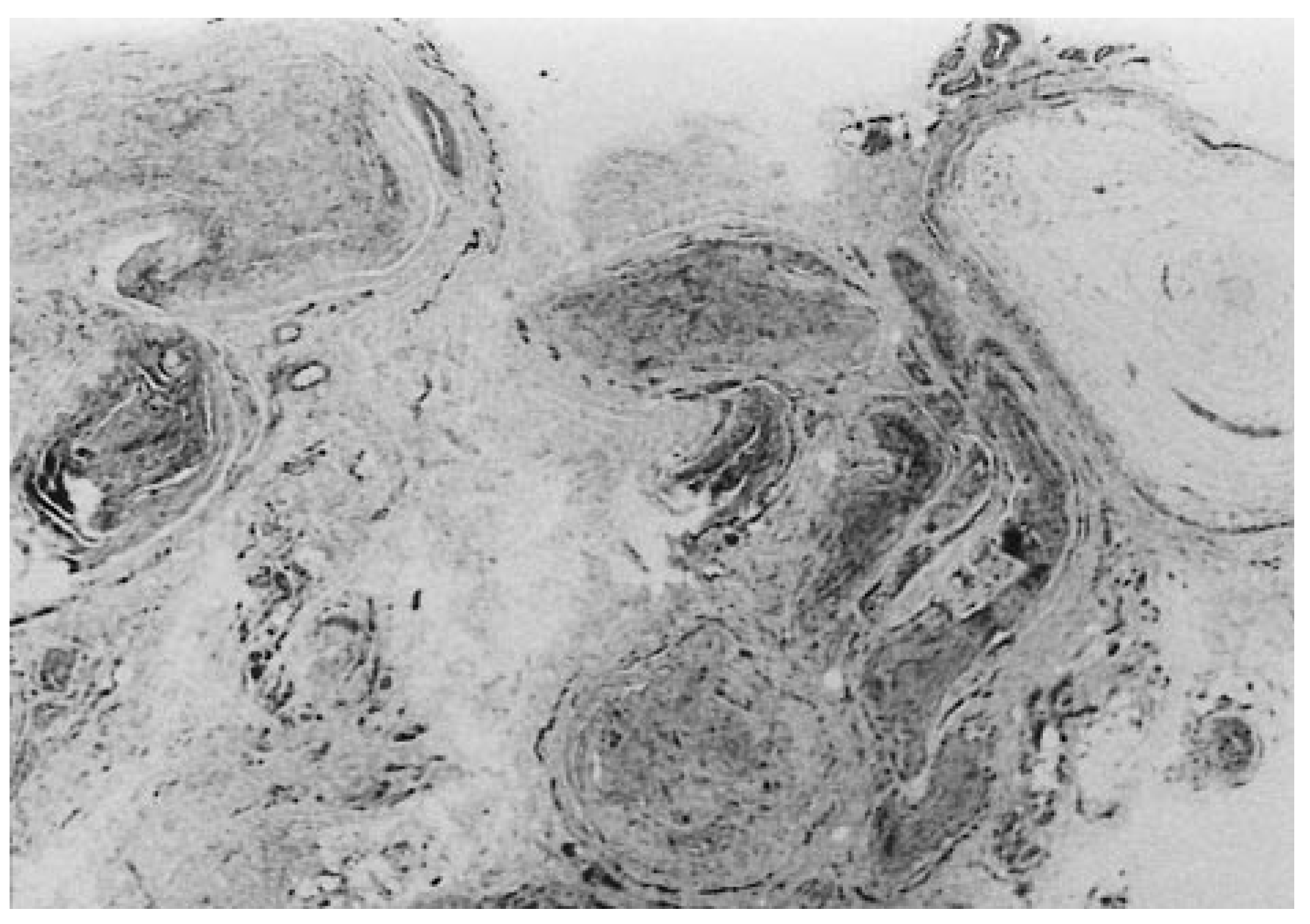
Histopathologic analysis of the soft-tissue mass from the second interspace revealed peripheral nerve segments with degenerative changes and perineural fibrosis (
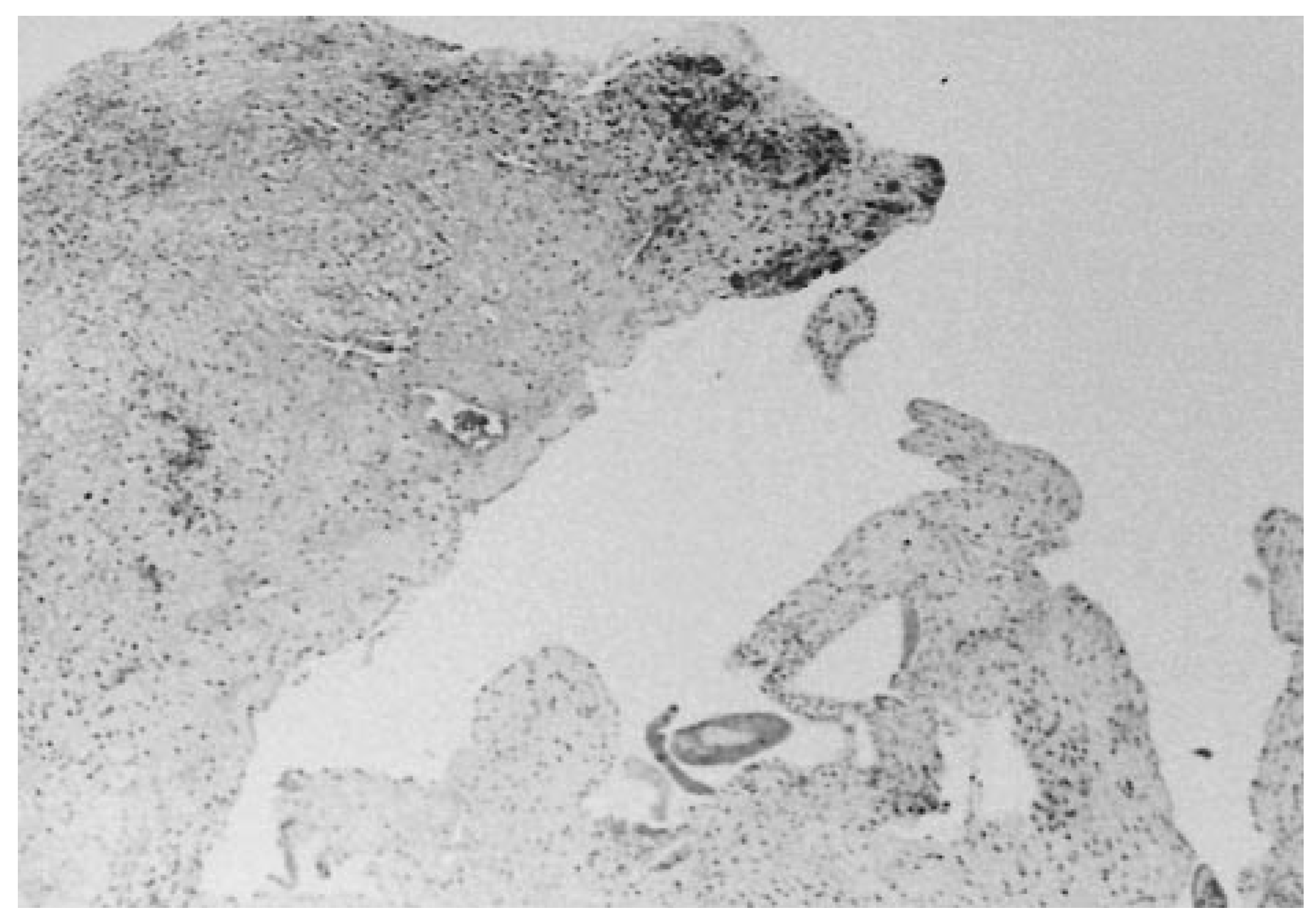
Figure 1), consistent with a Morton’s neuroma. There were also findings of chronic rheumatoid (lymphoplasmacytic) synovitis (
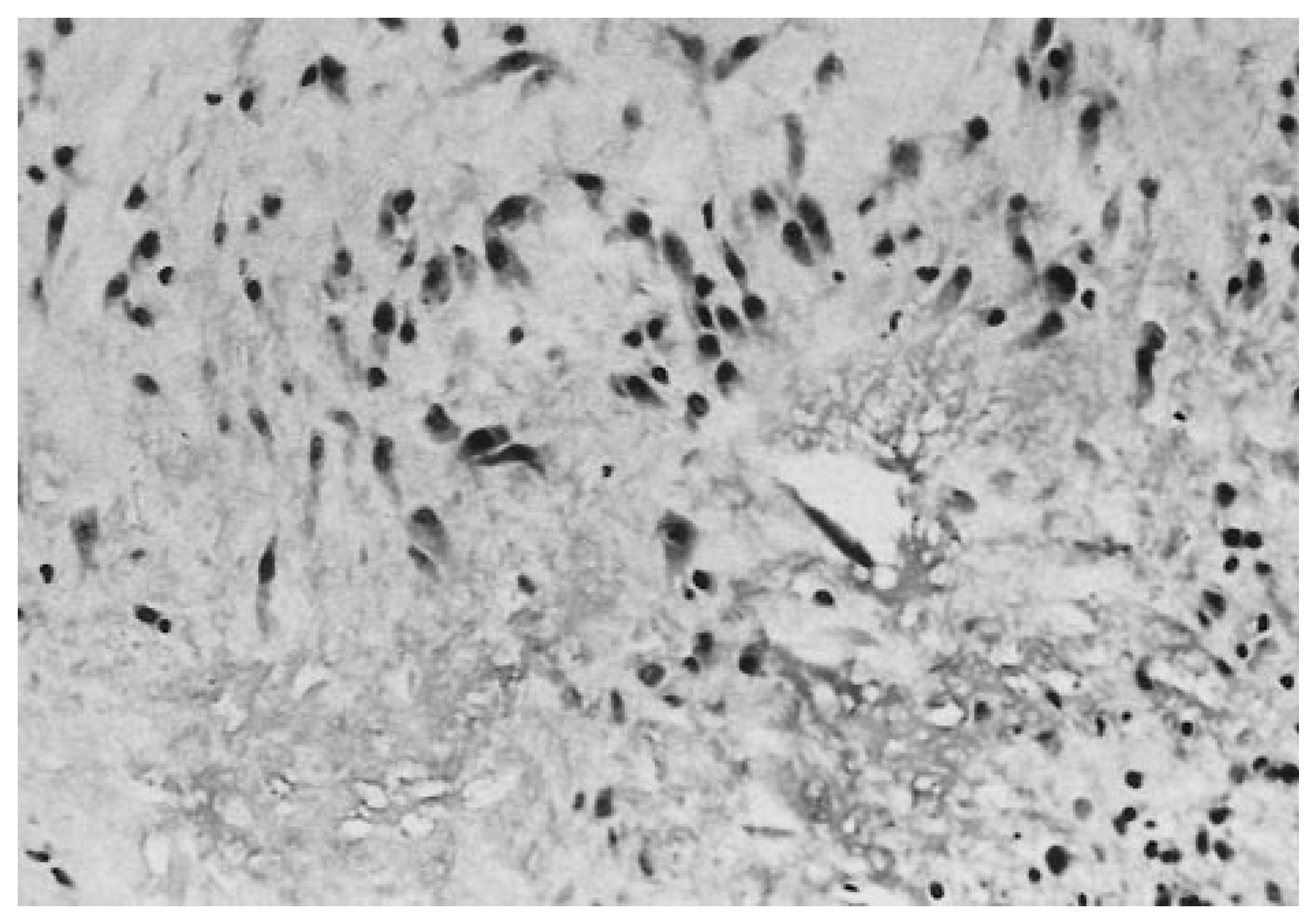
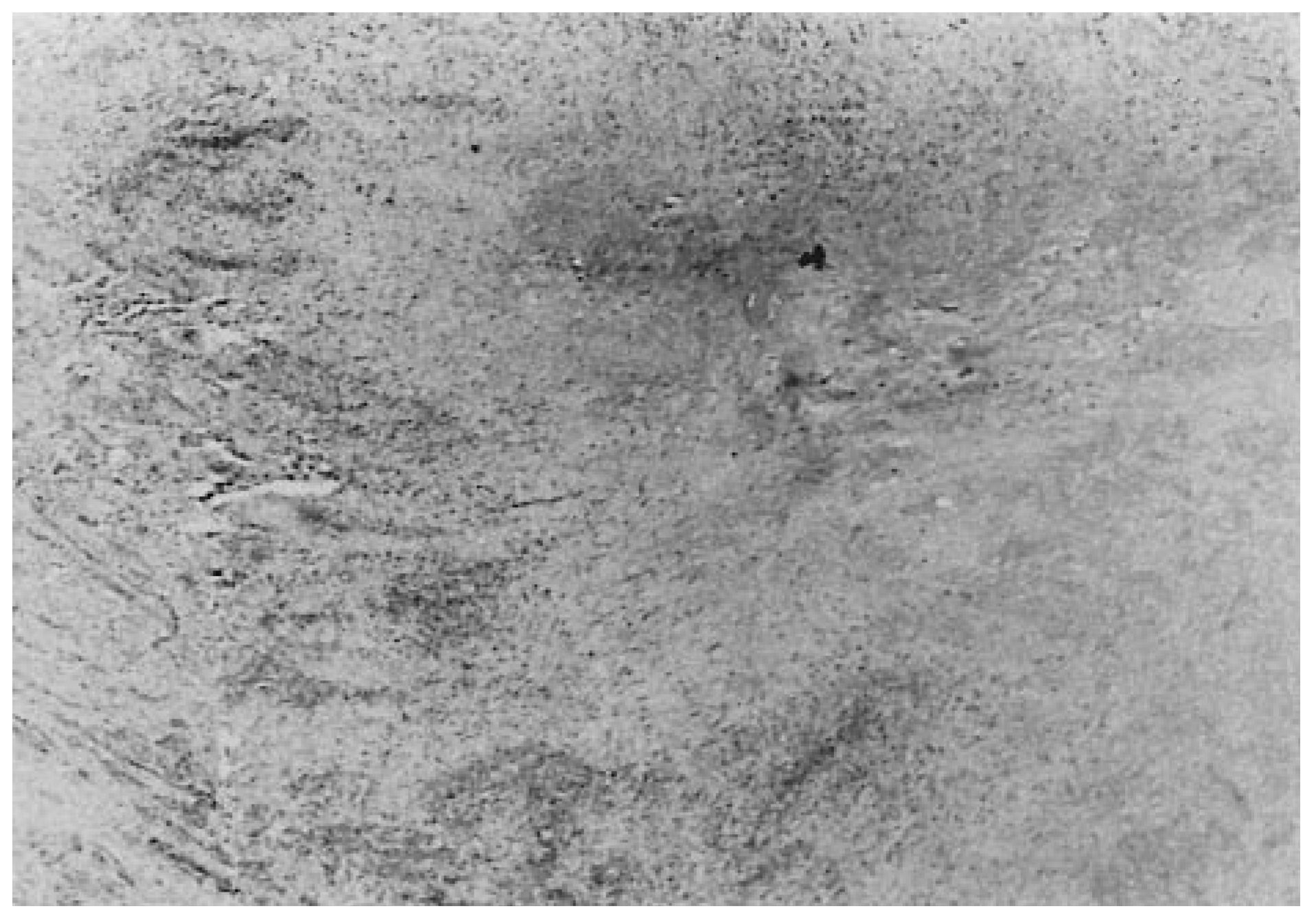
Figure 2). Histopathologic analysis of the third interspace revealed similar findings; in addition, there were foci of necrobiotic collagen surrounded by palisaded histiocytes, lymphocytes, and a few plasma cells, and—most peripherally—vascular connective tissue, consistent with rheumatoid nodules (
Figure 3 and
Figure 4).
The patient healed uneventfully without complications. At 2 weeks postoperatively, the sutures were removed. By 4 weeks postoperatively, the patient was symptom-free, denying any pain or burning sensation in the left foot. Physical examination confirmed that there was no pain with either plantar or dorsal pressure to the second and third intermetatarsal spaces. None of the preoperative symptoms could be reproduced. At the 13-month follow-up examination, the patient was still symptom-free.
Discussion
This case presentation of multiple pedal neuromas coexisting with a rheumatoid nodule and rheumatoid synovitis is rare in several respects. First, the simultaneous occurrence of two interdigital neuromas is rare, observed in less than 4% of patients undergoing surgical excision of a neuroma [
6]. The patient also had had surgery 4 years prior to presentation for excision of two simultaneously occurring neuromas from the second and third interspaces of her right foot. This makes the presentation of the neuromas in this patient both bilateral and symmetric.
More unique and interesting, however, is the presence of a rheumatoid nodule coexisting with a neuroma in the third interspace, as well as rheumatoid synovitis coexisting with a neuroma in the second interspace. The patient had no visible or palpable mass or swelling within either interspace, nor did she have a history of rheumatoid nodules occurring anywhere on her body. All of her symptoms were identical to those caused by interdigital neuromas, predominantly pain and a burning sensation on the plantar aspect of her left foot, as well as some pain radiating into the second, third, and fourth toes.
Pedal rheumatoid nodules and synovitis producing symptoms similar to those of a neuroma have been previously reported [
1,
2,
3,
4,
5]. Other reports, however, have usually described a well-visualized mass or swelling [
1,
2,
4,
5]. Rheumatoid nodules are frequently found in subcutaneous tissue overlying bone or attached to tendons, allowing them to be easily felt or visualized. In this case, the nodule was strictly interdigital, making it unidentifiable prior to surgery.
In previous reports of pedal rheumatoid nodules or synovitis, either nerve pathology was not identified by microscopic examination or the nerve appeared normal intraoperatively [
2,
3,
4]. In this case, nerve pathology was clearly identified by histopathologic examination as peripheral nerve segments with degenerative changes and perineural fibrosis, consistent with two interdigital Morton’s neuromas. This case demonstrates the true coexistence of a neuroma with rheumatoid synovitis and a neuroma with a rheumatoid nodule.
It is also interesting to consider in this case the simultaneous excision of neuromas from the second and third interspaces in the right foot 4 years previously. Systemic disease such as rheumatoid arthritis is generally bilateral and symmetric. The authors wonder whether rheumatic synovitis or a rheumatoid nodule may have been overlooked at the first pathologic examination.
Many differential diagnoses must be considered for patients with forefoot pain and symptoms similar to those observed with an interdigital neuroma. They include lumbar radiculopathy, tarsal tunnel syndrome, metatarsal stress fracture, Freiberg’s infraction, peripheral neuritis and neuropathy, intermetatarsal bursitis, rheumatoid arthritis, metatarsal or soft-tissue tumors, and rheumatoid nodules [
7]. In this particular case, because of the coexistence of a Morton’s neuroma with rheumatoid synovitis and a rheumatoid nodule, the true etiology of this patient’s pain was unable to be determined. Regardless of the exact etiology, surgical excision provided complete relief of the patient’s pain.
Conclusion
A rare presentation of multiple neuromas coexisting with a rheumatoid nodule and rheumatoid synovitis has been presented. Although the patient had a history of rheumatoid arthritis, this was the first extra-articular manifestation of the disease. There was no other associated pathology, such as bony erosions, swelling within the interspaces, or a visible or palpable mass. Rheumatoid arthritis, synovitis, or a rheumatoid nodule must be considered as a possible diagnosis when evaluating patients with symptoms similar to those associated with an interdigital neuroma.