Next Article in Journal
The Use of Low-Dose Trazodone in the Treatment of Painful Diabetic Neuropathy
Previous Article in Journal
The Increased Prevalence of Severe Necrotizing Infections Caused by Non–Group A Streptococci
 
 
Journal of the American Podiatric Medical Association is published by MDPI from Volume 116 Issue 1 (2026). Previous articles were published by another publisher in Open Access under a CC-BY (or CC-BY-NC-ND) licence, and they are hosted by MDPI on mdpi.com as a courtesy and upon agreement with American Podiatric Medical Association.
Article

Foot Problems, Functional Impairment, and Falls in Older People

by
Hylton B. Menz
and
Stephen R. Lord
University of Western Sydney-Macarthur, New South Wales, Australia
J. Am. Podiatr. Med. Assoc. 1999, 89(9), 458-467; https://doi.org/10.7547/87507315-89-9-458
Published: 1 September 1999

Abstract

Falls in older people are common and may lead to considerable disability. Although a number of risk factors for falling have been identified, the role of foot problems has received relatively little attention in the literature. This article reviews the literature pertaining to the prevalence of foot problems in older people and discusses the relationship of foot problems to functional impairment and falls. In addition, a number of theoretical considerations regarding specific foot conditions and postural instability are outlined.

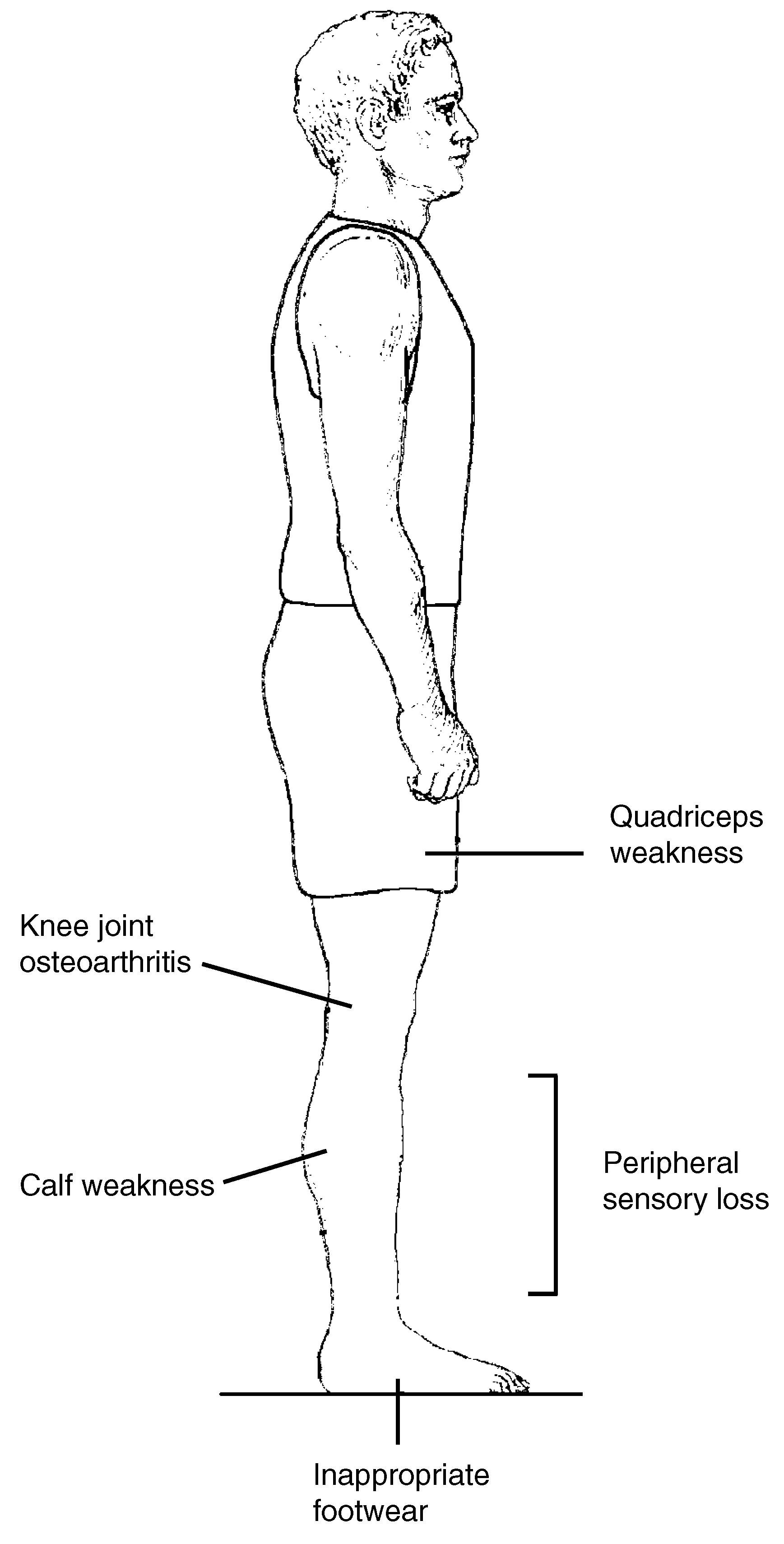
Falls in older people are common and constitute a major public health concern. Every year, approximately one-third of community-dwelling people older than age 65 years experience a fall. [1,2,3] In many cases, the injuries sustained from these falls have a significant detrimental effect on physical functioning and increase the likelihood of admission to a nursing home. [4,5] A number of lower-extremity risk factors for falling have been identified, including knee osteoarthritis,[6,7] peripheral sensory loss, [8,9] lower-limb muscle weakness, [10,11,12] and inappropriate footwear (Figure 1). [13,14] However, the role of foot problems in functional impairment and the subsequent risk of falling has not been widely evaluated.
The human foot plays an important and complex role in the maintenance of efficient locomotion. The foot provides the only source of direct contact with the ground during walking; it contributes to both the absorption of impact after heel contact and the generation of power required for forward momentum. Each of these functions requires the complex interaction of joint motions at specific times if smooth transferral of body weight is to be achieved. It is rea-sonable to expect that foot dysfunction may interfere with normal progression of the body during walking and may therefore be a contributing factor to functional disability and falling in older people. The aims of this article are 1) to review the relevant literature pertaining to the prevalence of foot problems in older people and their relationship to functional impairment and falling, and 2) to discuss some theoretical considerations regarding specific foot conditions and postural stability.

Prevalence of Foot Problems in Older People

Lower-extremity problems have long been regarded as extremely prevalent in older people. [15,16] However, reliable data on the prevalence of foot problems in large samples of older people are lacking, and the studies that have been undertaken have reported variable findings. Establishing the prevalence of foot problems in older people is difficult owing to the lack of consensus as to what actually constitutes a “foot problem,” variations in the populations that have been assessed, and the variety of approaches used to collect the data. Foot problems in older people may result from age-related decreases in joint range of motion,[17] dermatologic conditions,[18] detrimental effects of footwear, [19,20,21,22] and systemic conditions such as peripheral vascular disease,[23] diabetes mellitus, [24,25,26] and arthritis. [27,28] Furthermore, the definition of a foot problem may also include an individual’s inability to maintain basic foot hygiene (eg, cutting toenails) or difficulty in purchasing comfortable shoes. [29,30] Research on the prevalence of these problems can be divided into two main groups: 1) studies that use foot specialists to directly assess the presence of a condition or problem, and 2) studies that rely on self-reporting by the subject. In addition, these studies must be further categorized according to the sample population evaluated (ie, in institutional care, in a clinical setting, or community-dwelling).
Many investigations into the prevalence of foot problems in older people have focused on the objective documentation of the presence of lesions and structural deformity in order to determine the need for podiatry services in nursing homes or residential care facilities. An early study of 1,011 nursing-home residents by Merrill et al. [31] reported that 25% suffered from corns, 23% from hallux valgus, and 14% from calluses. Women had a higher prevalence of these conditions than men. However, only 44% of patients were receiving podiatric medical care; this suggests a need to educate nursing staff about treatment of these conditions.
In an attempt to quantify structural foot deformities in older people more accurately, Hung et al.[32] evaluated 166 hospital inpatients older than age 65, using clinical observations, a footprint mat, and goniometric assessments of joint position and range of motion. At least one foot deformity was found in 50% of the subjects. The most common clinically observed structural deformities were hallux valgus (20%) and digital deformity (20%). With regard to joint range of motion, 40% exhibited a limitation in foot eversion and 70% exhibited a limited range of ankle joint dorsiflexion. Despite the high prevalence of these deformities, only 7% of subjects reported foot discomfort. Unfortunately, the results of this investigation pertaining to the prevalence of structural deformities need to be viewed cautiously, as no data were provided on the reliability of the goniometric assessments. Recent investigations have suggested that goniometric measurements of the foot and ankle have moderate to poor reliability [33−36].
A similar study by Helfand et al.[37] evaluated subjective foot complaints and clinically determined foot problems in 417 people aged 61 years and older living in residential care facilities. The study reported that 84% had one or more subjective foot complaints, 84% presented with one or more dermatologic conditions affecting the foot, and 86% presented with one or more orthopedic foot deformities. The most common subjective complaint was pain in the foot, followed by swelling, corns and calluses, and bunions. The clinical assessments revealed the most common dermatologic condition to be calluses and onychomycosis, while the most common orthopedic deformities were hallux valgus, abnormal medial arch structure, and prominent metatarsal heads. Given that the reliability of clinical assessment of arch height has been previously reported to be poor,[38] the finding of abnormal medial arch structure could be questioned and may explain the higher prevalence of deformity reported in this study as compared with the results of Hung et al.[32]
Numerous investigations have evaluated the prevalence of foot problems in clinical populations. An early study conducted by Hsu[39] reported that in 426 people older than 65 years attending a hospital foot clinic, the most prevalent foot problems were related to nail and skin disorders (36%). Similarly, Ebrahim et al.[40] assessed foot problems in 100 hospital inpatients older than 64 years and reported that 66% had difficulty cutting their toenails, 49% exhibited pitting edema, and 39% had lesser toe deformities. However, only 19% complained of painful feet, and these subjects did not have appreciably more foot problems. This suggests that the presence of visible foot deformity does not necessarily correlate with the development of symptoms.
The role of diabetes mellitus in the development of foot problems in older people is unclear. Crawford et al.[41] assessed the prevalence of foot problems in 248 people aged 75 years and older who were receiving podiatric medical treatment. The three most frequently reported problems were difficulty with cutting toenails (96%), corns (48%), and calluses (36%). A comparison of these results with those for older people not receiving podiatric medical treatment revealed a higher incidence of diabetes, rheumatoid arthritis, and vascular disease in the older people receiving podiatric medical treatment. However, similar studies on clinical populations by Evans et al.[42] and Plummer and Albert[43] reported equivalent rates of foot problems in older people with and without diabetes; this suggests that all older people should be provided with similar foot-care screening and treatment. This is perhaps not surprising when one considers that the normal aging process leads to deficits in vascular[23] and sensory function[44] that are not dissimilar to the effects of diabetes on younger people.
Although these investigations suggest a high prevalence of foot problems in older people, sampling bias limits their generalizability. Clearly, rates of foot problems obtained from frail older people in institutional care or from older people attending health clinics cannot be considered representative of older people in the general community. In an attempt to determine the prevalence of foot problems in community-dwelling older people, numerous investigations have been undertaken. In the early 1960s, Helfand[45] conducted a large 3-year study that assessed general health and foot problems in 1,366 older people from a range of community seniors groups. The most commonly observed problems were hyperkeratosis (78%), dry skin (65%), and mycotic nail infection (56%). A subsection of the survey inviting subjects to report foot complaints revealed the most common concern to be generalized foot pain (74%), followed by corns (56%), calluses (56%), and foot swelling (39%).
In contrast to the high prevalence of both objective and subjective foot problems reported by Helfand,[45] a discrepancy between observed conditions and subjective concerns was reported by Cartwright and Henderson,[29] who conducted a survey to determine the chiropody needs of 382 community-dwelling people older than age 65 years in the United Kingdom. Results revealed that while 52% of subjects perceived that they had a foot problem, the podiatrists reported a much larger figure: 84%. The most common problems reported by the subjects were difficulty in cutting toenails, nail problems, corns, aching or swollen feet, and bunions. In addition to these common conditions, the podiatrists frequently diagnosed lesser toe deformities, varicose veins, osteoarthritis, pronated foot, and edema. The reliability of the podiatrists’ observations ranged from good to poor; this calls into question the view that information obtained from clinical assessments is more valid than that from selfreporting of foot problems.
Elton and Sanderson[46] employed chiropodists to assess 999 people older than age 65 in the community. They reported that while 71% were diagnosed with a foot problem, only 27% of these individuals had previously sought treatment. Whether this discrepancy represents unmet needs cannot be determined, as no information on the subjective concerns of the subjects was obtained. A similar study by White and Mulley[47] employed podiatrists and a medical practitioner to clinically assess the presence of foot problems in 96 people older than 80 years living in their own homes. They reported that 70% had difficulty in maintaining basic foot care. Only six subjects were considered by the examining clinician to have normal, healthy feet. The most common problems observed were corns or calluses (68%), nail pathology (56%), lesser toe deformities (48%), and hallux valgus (34%). However, only 30% of the subjects experienced pain in their feet.
More recently, a large community-based study by Harvey et al.[48] randomly assessed 792 people aged 60 years and older for toe deformities, corns and calluses, ingrown toenails, and toenail thickening. They reported that 53% of the study population had three or more of these foot problems. An evaluation of footcare practices revealed that 40% of the subjects requiring foot treatment did not receive any specialized care. The authors concluded that although foot problems are prevalent in older people, provision of footcare services is a low priority in the National Health Service in the United Kingdom.
These findings provide further insight into the prevalence of foot problems in the general community; however, it has been suggested that much larger studies need to be undertaken to determine the true prevalence of foot problems in older people. The largest investigations of foot-problem prevalence in the community have been performed in the United States, generally as part of broader evaluations of overall health status. As part of a large-scale hypertension screening program in Florida, 733 homedwelling subjects older than age 65 (mean age, 80 years) completed a questionnaire that included a section on the presence of foot problems. Sixty percent of the women and 32% of the men reported that they were troubled by foot problems. Commonly reported foot conditions were toenail problems (22%), calluses (20%), corns (16%), dry skin (15%), and bunions (13%). Women reported a significantly higher prevalence of corns and bunions than men.[49]
The most recent large-scale investigations were the National Health Interview Survey (NHIS), undertaken by the US Public Health Service, and a study by the marketing communications company BrimmComm, acting on behalf of a coalition of various organizations, including the American Podiatric Medical Association. The NHIS involved face-to-face interviews of 119,631 individuals, while the BrimmComm study evaluated 1,003 individuals by telephone. The prevalence of foot problems for subjects older than 65 was 31% for the NHIS and 38% for the BrimmComm study. With regard to specific foot problems, the findings of the two studies are in close agreement; the most commonly reported conditions were (in descending order) corns and calluses, nail disorders, hallux valgus, and foot infections.[50]
It is evident from the above discussion that studies in which foot specialists directly assess the subjects for the presence of a foot problem generally report higher prevalence than those that rely on self-reporting. It may be that many older people consider foot disorders an inevitable part of the aging process and therefore do not report them to health-care professionals.[51] A recent survey of 128 people older than 65 years found that although 71% of the subjects suffered from foot problems, only 26% identified them as medical conditions.[52] It could be argued that older people perceive foot problems as serious only if they significantly affect their ability to perform basic activities of daily living.
Sex- and age-related differences in the prevalence of foot problems are clearly evident from the available literature. There is a general consensus that women both develop and report more foot problems than men. This has been attributed primarily to the influence of fashion footwear commonly worn by females, which has been found to contribute to foot problems owing to the detrimental effect of high heels and a narrow toe box.[19,20,22,53] The prevalence of foot problems tends to increase significantly with advancing age; this has been attributed to the cumulative effect of chronic systemic diseases that affect the integrity of anatomic structures in the foot.[32,41,47,49]

Foot Problems and Functional Impairment

Although the high incidence of foot problems in older people is widely recognized and reasonably well supported in the literature, the contribution of foot problems to both functional impairment and postural instability has not been examined in detail. In many cases, support for a relationship between foot problems and mobility impairment is derived from large-scale studies of general health status that reveal associations between the presence of foot problems and self-reported impairment. Nevertheless, a number of recent studies do provide some evidence to support this long-accepted (and plausible) assumption.
In the epidemiologic study of 733 people older than age 72 by Black and Hale,[49] it was reported that 9% of subjects indicated that their daily activities and lifestyle were impaired by their foot problems, with females reporting greater impairment than males. Similarly, Cartwright and Henderson[29] reported that 4% of 382 older people believed that foot trouble contributed to their disability, and 20% of those who were housebound blamed this on foot problems. These relatively low figures, however, must be interpreted in the light of whether older people are aware of the possible functional implications of foot impairment. It has been suggested that because many older people consider foot problems a normal accompaniment of aging, they are more likely to attribute their immobility to other, more easily recognizable factors.[54]
More recently, Benvenutti et al.[30] assessed the level of disability in the performance of activities of daily living in 459 residents older than age 65 in a small Italian town. A significant association was found between the presence of a clinically assessed foot problem and self-reported difficulty in performing basic activities such as cutting toenails, performing housework, shopping, and walking 400 m. In addition, a short gait evaluation revealed that subjects with foot pain required a greater number of steps and more time to walk 3 m than those free of foot problems. The authors suggested that assessment and treatment of foot problems may prevent foot pain and reduce the risk of disability.
The suggestion that lower-limb problems may influence gait speed has been investigated by a number of authors. Bendall et al.[55] assessed factors affecting the walking speed of 67 subjects older than age 65 years and reported that the presence of leg pain was significantly associated with a reduction in the speed of walking. Unfortunately, foot pain or the contribution of foot dysfunction to leg pain was not addressed. Similarly, a longitudinal study of 588 people older than age 60 by Gibbs et al.[56] assessed the relationship between physical impairments and walking velocity. It reported that the best predictors of slowed gait function were reduced quadriceps muscle strength and joint impairment (tenderness, deformity, or limitation of motion) in the lower spine, hips, knees, ankles, and feet. Unfortunately, lower-extremity joint impairment was a single variable in this investigation, so the relative contribution of each specific anatomic region is unclear.
An article by Guralnik et al.[57] suggests that diminished lower-extremity function may have even broader functional significance. In this large prospective study, 5,174 community-dwelling people older than age 71 were followed for 6 years and were assessed for general health status, medication usage, and physical abilities. Lower-extremity functional status was measured by means of standing balance tests, walking velocity, and ability to rise from a chair. Comparison of these results with self-reported physical capabilities and general health status revealed that measurement of lower-extremity function characterizes older people over a wide spectrum of functional status and is capable of predicting both nursing-home admission and mortality.
Although more work needs to be done to clarify the relationship between foot problems and functional disability, these investigations provide some evidence to support the widely held view that foot and leg problems contribute to functional impairment in physical activities and may therefore affect quality of life in older people.

Foot Problems and Falls

Given that the foot provides the structural foundation for both static support and progression of the body during locomotion, it is also reasonable to suggest that foot impairment may be a contributing factor to postural instability and falling in older people. In 1958, DeLargy[58] suggested that hammer-toe deformities, exostoses, metatarsal problems, fracture, and other orthopedic deformities may lead to inactivity and subsequent weakness and falls. The author also suggested that the importance of podiatric medical care in the prevention of falls resulting from foot problems is often underemphasized. Similarly, both Helfand[59] and Gibson et al.[4] have suggested that painful foot lesions and structural foot deformities may contribute to a fall by detrimentally altering the foot’s functional base of support.
While the suggestion that people with foot problems are more likely to experience balance difficulties is logical and plausible, few studies have adequately addressed this issue. A retrospective investigation by Wild et al.[60] of 125 older subjects who had fallen revealed that these subjects had a higher prevalence of muscle weakness and foot disorders than an agematched control group. Similarly, a retrospective investigation of 1,042 community-dwelling older people by Blake et al.[6] reported a higher prevalence of undefined “foot trouble” in those who had fallen previously, and Dolinis and Harrison[7] reported that the presence of a corn or bunion was an independent risk factor for falling (odds ratio, 1.4) in 1,947 community-dwelling older people.
Three prospective investigations provide further evidence that foot problems may increase the risk of falls. Gabell et al.[14] evaluated predisposing factors in falling in 100 subjects older than age 65 and reported that the probability of experiencing a fall increased threefold in the presence of an undefined “minor foot problem.” However, self-reported foot pain was not a factor discriminating between fallers and nonfallers. Similarly, in a prospective investigation of 336 community-dwelling people older than 75 years, Tinetti et al.[1] reported that the presence of a severe bunion, toe deformity, ulcer, or deformed nail (recorded as a “serious foot problem”) was a small (odds ratio, 1.8) but statistically significant risk factor for falling. Foot problems, however, were not an independent risk factor for falls after the use of sedative medications and presence of cognitive impairment were included in the logistic regression analysis. Furthermore, it is unclear what criteria were employed to classify a bunion deformity as “severe”; whether a nail deformity can justifiably be classified as a “severe foot problem” is debatable.
Finally, a relatively recent prospective investigation by Koski et al.[61] was undertaken to determine predictors of falls in 979 home-dwelling subjects older than age 70 in Finland. The presence of a foot problem (defined simply as the presence of a “bunion”) was found to be a significant risk factor (odds ratio, 2.0) for falls leading to major injuries in women, but not in men. Unfortunately, the authors did not report the criteria used to diagnose the presence of a bunion, nor did they attempt any classification of the severity of the deformity.
Although these results suggest that foot problems may be a risk factor for falling, one difficulty in interpreting the significance of generalized “foot problems” is that some degree of foot pathology is very common in older people. An investigation by Speechley and Tinetti[62] sought to determine three subgroups of older people—frail, vigorous, and “transition”—on the basis of demographic, physical, and psychological assessments and to correlate these subgroups with the risk of falling. The results revealed that even among the most vigorous subjects, some pathology was observed. Prevalence of undefined “serious foot problems” was very similar across the three functional subgroups, despite the finding that people in the frail group were much more likely to fall than those in the vigorous group. This study highlights the need for further investigations of falls that adequately define and categorize specific foot conditions and their severity, rather than simply record “foot problems” as present or absent.

Specific Foot Conditions and Postural Instability: Some Theoretical Considerations

No studies in the literature have adequately evaluated the effect of specific foot conditions on postural stability. Nevertheless, plausible explanations as to how certain foot conditions can lead to balance deficits can be developed by drawing inferences from the information available on the mechanical and somatosensory contributions to postural stability. Theories about the contribution of three common foot problems (hallux valgus, lesser digital deformity, and restricted joint mobility) to postural instability are provided below.

Hallux Valgus

Hallux valgus is the condition in which the first metatarsophalangeal joint is progressively subluxed, often leading to lateral displacement of the hallux. The etiology of the condition is multifactorial, involving hereditary, biomechanical, and footwear-related factors.[63,64] Although the exact incidence of the condition is unknown, it is believed to be the most common structural disorder affecting the first-ray segment of the foot and is one of the most common foot problems observed in older people. The two largest epidemiologic studies revealed the condition to be the third most common foot problem, after corns and calluses and nail disorders.[50]
The effect of hallux valgus on foot function has been extensively studied, primarily by the use of pedobarograph systems that enable the evaluation of the timing and magnitude of vertical pressures applied to the sole of the foot. Grundy et al.[65] evaluated plantar pressures in ten subjects with normal feet and four with “gross” hallux valgus; they reported that the subjects with hallux valgus exhibited less loading on the toes and a more lateral deviation of the center-of-pressure pathway through the foot. Similarly, investigations by Stokes et al.[66] and Hutton and Dhanendran[67] compared plantar pressure in normal subjects and in subjects with hallux valgus and reported that the presence of hallux valgus caused a comparative decrease in pressure applied to the toes and a more lateral displacement of the center of pressure. Hutton and Dhanendran suggest that the normal loading of the first metatarsophalangeal joint does not occur in subjects with hallux valgus, which leads to a decreased ability to actively propel the body forward.
Whether these changes in foot function have detrimental effects on postural stability is unknown; however, it could be suggested that changes in first metatarsophalangeal joint function may affect the transferral of body weight during the propulsive phase of gait. The first metatarsophalangeal joint provides the final pivot over which the body moves during propulsion and is known to be important for maintaining the body’s forward momentum.[68] The deviation of the hallux associated with the condition clearly affects the transferral of pressure through the foot, which suggests that hallux valgus may affect the displacement of the center of gravity in a detrimental manner, possibly leading to postural instability and an increased likelihood of falling.

Lesser Digital Deformity

Digital deformity, such as hammer toes, retracted toes, and claw toes, is one of the most common foot problems in older people. The etiology of lesser digital deformity is also thought to be multifactorial, involving age-related changes in joint range of motion, changes in the line of action of long flexor and extensor tendons, and occlusion by poorly fitting footwear.[69] While there are morphologic differences between hammer toes, claw toes, and retracted toes, in each case the deformity alters the normal weightbearing function of the toes during gait. In particular, the retracted toe deformity, caused by contracture of the long extensor tendons, may result in the digits’ becoming completely nonweightbearing during gait.
Digital deformities may affect balance by reducing somatosensory input from the toes or by altering the mechanical stability of the foot. The importance of digital pressure in standing balance was highlighted in an investigation by Tanaka et al.[70] In this study, the tactile sensitivity of the toes, the peak pressure exerted by the toes, and postural sway in unipedal stance were measured in 15 healthy, young subjects. The results revealed a significant linear relationship between the postural sway parameters and the pressure exerted by the toes. A subsequent investigation by Tanaka et al.[71] compared a group of young subjects (mean age, 21 years) and older subjects (mean age, 71 years) and found that the older group exhibited less tactile sensitivity of the great toe, greater standing postural sway, and increased great-toe pressure. These results suggest that older people require greater force to be exerted by the toes to stabilize standing posture than younger people. Therefore, the absence of toe pressure due to the presence of digital deformity may lead to balance impairment.
Further evidence to support the importance of toe contact in the maintenance of balance is provided by an investigation by Mueller et al.[72] In this study, 15 subjects with transmetatarsal amputation were compared with 15 normal control subjects in a number of physical performance tests, including the functional reach test. The functional reach test is a measure of balance that assesses the maximal distance that a person can reach forward while maintaining a fixed base of support in a standing position. Subjects with transmetatarsal amputation performed significantly worse on the functional reach test than the controls; this was attributed to the absence of digital function and associated loss of foot strength.
Finally, gait studies reveal that the toes accept a large proportion of body weight before the foot leaves the ground, which may be important in maintaining balance when walking.[65,73,74] Therefore, it is possible that the presence of digital deformity, due to the reduction in toe contact during gait, may affect balance by reducing the level of somatosensory input to the brain about foot position and by causing mechanical instability during propulsion.

Restricted Joint Mobility

It is widely recognized that the foot plays a major role in adaptation to uneven terrain and that postural corrections by the joints of the foot and ankle significantly contribute to the maintenance of postural stability. Thus limitations in joint range of motion associated with aging may affect an individual’s ability to maintain stable posture during standing and walking. Age-related reduction in foot and ankle range of motion has been reported by Nigg et al. [17] who found a significant difference in foot and ankle range of motion when comparing subjects aged 20 to 39 years with subjects aged 70 to 79 years. Of particular interest is that the authors reported a highly significant reduction in eversion range of motion in women associated with increasing age. Similarly, investigations conducted by James and Parker[75] and Vandervoort et al.[76] both reported significant age-related reduction in ankle joint dorsiflexion range of motion.
The effect of age-related changes in range of motion on postural stability has not been widely evaluated in the literature; however, mathematical modeling work by Hoogvliet et al.[77] and in vivo studies by Matsusaka[78] and Gauffin and Tropp[79] suggest that inversion and eversion movements of the foot and ankle are important for controlling posture in the frontal plane. This suggestion is supported by the observation that subjects who have undergone surgical fusion of the subtalar joint[80] or talonavicular joint[81] have difficulty walking on uneven ground.
Two studies have suggested that loss of range of motion in the joints of the foot may be a contributing factor to falls in older people. A small retrospective study by Studenski et al.[82] reported that 10 subjects with a history of falling had significantly smaller range of ankle plantarflexion compared with 24 controls who had not fallen. Furthermore, Cummings et al.[83] reported that older Chinese women whose feet had been bound during childhood exhibited marked disability in such functional tasks as walking, rising from a chair, and squatting and were also more likely to fall than those who had not had their feet bound.
Although further research is required to support a causal link between restricted joint mobility, instability, and falls, these studies suggest that age-associated loss of joint range of motion in the foot may affect postural stability by diminishing the ability of the foot to adapt to changes in terrain.

Treatment of Foot Problems to Prevent Falls

Despite the limited evidence in the literature as to the contribution of foot problems to falling, many authors have suggested that treatment of foot problems is an important component of a falls-prevention program.[4,7,59,84,85,86,87] In addition, foot-care specialists have been employed in multidisciplinary clinics specifically designed for older people at risk of falling. WolfKlein et al.[88] reported that 77% of 36 subjects with a history of falling had not experienced another fall in the 12 months following treatment in a multidisciplinary falls clinic. The clinic employed a geriatrician, a neurologist, a cardiologist, a physiatrist, an audiologist, an ophthalmologist, and a podiatrist.
Foot-related problems treated by the clinic included hammer toes, calluses, and the need for footwear modifications. Similarly, a falls and balance clinic established by Hill et al.[85] involved treatment of foot and footwear problems in 10% of cases. Although the efficacy of such a clinic in preventing falls was not fully investigated, the authors suggested that audits of the clinic every 6 months may clarify the role of multidisciplinary care in falls prevention.
The potential role of the foot-care specialist in falls-prevention clinics could involve both patient education and therapeutic interventions. First, wearing inappropriate footwear exacerbates postural instability[89,90,91,92] and is associated with an increased risk of falling.[13,14,93,94] Given that many older people are unaware of the dangers of ill-fitting footwear,[93,95] appropriate advice as to the features of a “safe” shoe may eliminate this unnecessary risk factor. Second, routine palliative treatment of corns and calluses may decrease foot pain and therefore improve mobility.[16,30,96] Finally, recent studies suggest that foot orthoses may have beneficial effects on postural stability by improving mechanical stability of the foot and enhancing proprioceptive awareness of foot position.[97,98,99] Although no studies have been undertaken to specifically evaluate the effects of foot orthoses on postural stability in older people, this intervention may be of some benefit and therefore warrants further investigation.

Conclusion

The available literature suggests that foot problems—in particular calluses, hallux valgus, and lesser digital deformity—are common in older people and may contribute to functional impairment and falls in this age group. Although the literature suggests a relationship between foot impairment and falls, the underlying mechanisms responsible for this relationship have not been adequately assessed. Foot problems have generally been poorly defined in falls studies, in many cases being coded as a single variable (ie, presence or absence) or clustered together with other leg conditions and labeled “lower-extremity problems.” This makes it difficult to delineate the contribution of specific foot conditions to falls and raises the possibility that the contribution of less obvious foot problems has been overlooked. Plausible suggestions have been put forward regarding how hallux valgus, lesser digital deformity, and restricted joint motion may affect postural stability; in each case, however, the suggestion is purely conjectural and not yet supported by sufficient evidence. Further research is therefore required to clarify whether specific foot conditions affect balance ability in older people and whether therapeutic interventions by foot-care specialists may decrease the risk of falls.

References

  1. TINETTI, ME; SPEECHLEY, M; GINTER, SF. Risk factors for falls among elderly persons living in the community. N Engl J Med 1988, 319, 1701. [Google Scholar] [CrossRef] [PubMed]
  2. NEVITT, M; CUMMINGS, S; KIDD, S.; et al. Risk factors for recurrent non-syncopal falls. JAMA 1989, 261, 2663. [Google Scholar] [CrossRef] [PubMed]
  3. CAMPBELL, AJ; BORRIE, MJ; SPEARS, GF; et al. Circumstances and consequences of falls experienced by a community population 70 years and over during a prospective study. Age Ageing 1990, 19, 136. [Google Scholar] [CrossRef] [PubMed]
  4. GIBSON, MJ. ANDRES RO, ISAACS B; et al. The prevention of falls in later life. Dan Med Bull 1987, 34 (Suppl 4), 1. [Google Scholar]
  5. LORD, SR. Predictors of nursing home placement and mortality in residents in intermediate care. Age Ageing 1994, 23, 499. [Google Scholar]
  6. BLAKE, A; MORGAN, K; BENDALL, M; et al. Falls by elderly people at home: prevalence and associated factors. Age Ageing 1988, 17, 365. [Google Scholar] [CrossRef]
  7. DOLINIS, J; HARRISON, JE. Factors associated with falling in older Adelaide residents. Aust N Z J Public Health 1997, 21, 462. [Google Scholar] [CrossRef]
  8. LORD, SR; CLARK, RD; WEBSTER, IW. Physiological factors associated with falls in an elderly population. J Am Geriatr Soc 1991, 39, 1194. [Google Scholar] [CrossRef]
  9. CAVANAGH, P; DERR, J; ULBRECHT, J; et al. Problems with gait and posture in neuropathic patients with insulindependent diabetes mellitus. Diab Med 1992, 9, 469. [Google Scholar] [CrossRef]
  10. WHIPPLE, RH; WOLFSON, LI; AMERMAN, PM. The relationship of knee and ankle weakness to falls in nursing home residents: an isokinetic study. J Am Geriatr Soc 1987, 35, 13. [Google Scholar] [CrossRef]
  11. GEHLSEN, GM; WHALEY, MH. Falls in the elderly: part II. balance, strength, and flexibility. Arch Phys Med Rehabil 1990, 71, 739. [Google Scholar]
  12. SIMPSON, JM. Elderly people at risk of falling: the role of muscle weakness. Physiotherapy 1993, 179, 831. [Google Scholar] [CrossRef]
  13. BARBIERI, E. Patient falls are not patient accidents. J Gerontol Nurs 1983, 9, 165. [Google Scholar] [CrossRef] [PubMed]
  14. GABELL, A; SIMONS, MA; NAYAK, USL. Falls in the healthy elderly: predisposing causes. Ergonomics 1985, 28, 965. [Google Scholar] [CrossRef] [PubMed]
  15. RICCITELLI, M. Foot problems of the aged and infirm. J Am Geriatr Soc 1966, 14, 1058. [Google Scholar] [CrossRef] [PubMed]
  16. HELFAND, A. At the foot of South Mountain: a 5-year longitudinal study of foot problems and screening in an elderly population. JAPA 1973, 63, 512. [Google Scholar] [CrossRef]
  17. NIGG, B; FISHER, V; ALLINGER, T; et al. Range of motion of the foot as a function of age. Foot Ankle 1992, 13, 336. [Google Scholar] [CrossRef]
  18. SCHIRALDI, FG. Common dermatologic manifestations in the older patient. Clin Podiatr Med Surg 1993, 10, 79. [Google Scholar] [CrossRef]
  19. GORECKI, G. Shoe related foot problems and public health. JAPA 1978, 4, 24. [Google Scholar] [CrossRef]
  20. CHUNG, S. Foot care: a health care maintenance program. J Gerontol Nurs 1983, 9, 213. [Google Scholar] [CrossRef]
  21. HERMAN, H; BOTTOMLY, J. Anatomical and biomechanical considerations of the elder foot. Top Geriatr Rehab 1992, 7, 1. [Google Scholar] [CrossRef]
  22. FREY, CC; THOMPSON, F; SMITH, J; et al. American Orthopedic Foot and Ankle Society women’s shoe survey. Foot Ankle 1993, 14, 78. [Google Scholar] [CrossRef]
  23. ROBBINS J, AUSTIN C. Common peripheral vascular diseases. Clin Podiatr Med Surg 1993, 10, 205. [Google Scholar] [CrossRef]
  24. GREEN, D. Acute and chronic complications of diabetes mellitus in older patients. Am J Med 1986, 80, 39. [Google Scholar] [CrossRef]
  25. JACOBS, A. Diabetes mellitus. Clin Podiatr Med Surg 1993, 10, 231. [Google Scholar] [CrossRef]
  26. BENBOW, SJ; WALSH, A; GILL, GV. Diabetes in institutionalised elderly people: a forgotten population? BMJ 1997, 314, 1868. [Google Scholar] [CrossRef] [PubMed]
  27. D’AMICO, J. The pathomechanics of adult rheumatoid arthritis affecting the foot. JAPA 1976, 66, 227. [Google Scholar] [CrossRef] [PubMed]
  28. BLACK, JR; CAHALIN, C; GERMAINE, BF. Pedal morbidity in rheumatic disease. JAPA 1982, 72, 360. [Google Scholar]
  29. CARTWRIGHT, A; HENDERSON, G. More Trouble with Feet: A Survey of the Foot Problems and Chiropody Needs of the Elderly; Department of Health and Social Security, HMSO: London, 1986. [Google Scholar]
  30. BENVENUTTI, F; FERRUCCI, L; GURALNIK, J; et al. Foot pain and disability in older persons: an epidemiologic survey. J Am Geriatr Soc 1995, 43, 479. [Google Scholar] [CrossRef]
  31. MERRILL, HE; FRANKSON, J; TARARA, EL. Podiatry survey of 1011 nursing home patients in Minnesota. JAPA 1967, 57, 57. [Google Scholar] [CrossRef]
  32. HUNG, L; HO, Y; LEUNG, P. Survey of foot deformities among 166 geriatric inpatients. Foot Ankle 1985, 5, 156. [Google Scholar] [CrossRef]
  33. ROME, K; COWIESON, F. A reliability study of the universal goniometer, fluid goniometer, and electrogoniometer for the measurement of ankle dorsiflexion. Foot Ankle Int 1996, 17, 28. [Google Scholar] [CrossRef]
  34. ROME, K. Ankle joint dorsiflexion measurement studies: a review of the literature. JAPMA 1996, 86, 205. [Google Scholar] [CrossRef]
  35. MENZ, HB; KEENAN, A-M. Reliability of two instruments in the measurement of closed chain subtalar joint positions. Foot 1997, 7, 194. [Google Scholar] [CrossRef]
  36. BUCKLEY R, HUNT D. Reliability of clinical measurement of subtalar joint movement. Foot Ankle Int 1997, 18, 229. [Google Scholar] [CrossRef]
  37. HELFAND, AE; COOKE, HL; WALINSKY, MD; et al. Foot problems associated with older patients: a focused podogeriatric study. JAPMA 1998, 88, 237. [Google Scholar] [CrossRef] [PubMed]
  38. COWAN, DN; ROBINSON, JR; JONES, BH. Consistency of visual assessment of arch height among clinicians. Foot Ankle Int 1994, 15, 213. [Google Scholar] [CrossRef] [PubMed]
  39. HSU, JD. Foot problems in the elderly patient. J Am Geriatr Soc 1971, 19, 880. [Google Scholar] [CrossRef]
  40. EBRAHIM, SBJ; SAINSBURY, R; WATSON, S. Foot problems in the elderly: a hospital survey. BMJ 1981, 283, 949. [Google Scholar] [CrossRef]
  41. CRAWFORD, VLS; ASHFORD, RL; MCPEAKE, B; et al. Conservative podiatric medicine and disability in elderly people. JAPMA 1995, 85, 255. [Google Scholar] [CrossRef] [PubMed]
  42. EVANS, SL; NIXON, BP; LEE, I; et al. The prevalence and nature of podiatric problems in elderly diabetic patients. J Am Geriatr Soc 1991, 39, 241. [Google Scholar] [CrossRef] [PubMed]
  43. PLUMMER E, ALBERT S. Focused assessment of foot care in older adults. J Am Geriatr Soc 1996, 44, 310. [Google Scholar] [CrossRef] [PubMed]
  44. MASER, RE; LAUDADIO, C; DECHERNEY, GS. The effects of age and diabetes mellitus on nerve function. J Am Geriatr Soc 1993, 41, 1202. [Google Scholar] [CrossRef]
  45. HELFAND, AE. Keep them walking. JAPA 1968, 58, 117. [Google Scholar] [CrossRef]
  46. ELTON, PJ; SANDERSON, SP. A chiropodial survey of elderly persons over 65 years in the community. Public Health 1986, 100, 219. [Google Scholar] [CrossRef]
  47. WHITE E, MULLEY G. Footcare for very elderly people: a community survey. Age Ageing 1989, 18, 275. [Google Scholar] [CrossRef]
  48. HARVEY, I; FRANKEL, S; MARKS, R; et al. Foot morbidity and exposure to chiropody: population based study. BMJ 1997, 315, 1054. [Google Scholar] [CrossRef][Green Version]
  49. BLACK, JR; HALE, WE. Prevalence of foot complaints in the elderly. JAPMA 1987, 77, 308. [Google Scholar] [CrossRef]
  50. GREENBERG, L. Foot care data from two recent nationwide surveys: a comparative analysis. JAPMA 1994, 84, 365. [Google Scholar] [CrossRef]
  51. WILLIAMSON, J; STOKOE, I; GRAY, S. Old people at home: their unreported needs. Lancet 1964, ii, 1117. [Google Scholar] [CrossRef] [PubMed]
  52. MUNRO, BJ; STEELE, JR. Foot-care awareness: a survey of persons aged 65 years and older. JAPMA 1998, 88, 242. [Google Scholar] [CrossRef]
  53. COUGHLIN, MJ; THOMPSON, FM. The high price of highfashion footwear. Instr Course Lect 1995, 44, 371. [Google Scholar] [PubMed]
  54. SCHANK M, CONRAD D. Foot education and screening programs for the elderly. JAPA 1978, 68, 419. [Google Scholar] [CrossRef]
  55. BENDALL, MJ; BASSEY, EJ; PEARSON, MB. Factors affecting walking speed of elderly people. Age Ageing 1989, 18, 327. [Google Scholar] [CrossRef] [PubMed]
  56. GIBBS, J; HUGHES, S; DUNLOP, D; et al. Predictors of change in walking velocity in older adults. J Am Geriatr Soc 1996, 44, 126. [Google Scholar] [CrossRef]
  57. GURALNIK, J; SIMONSICK, E; FERRUCCI, L; et al. A short physical performance battery assessing lower extremity function: association with self-reported disability and prediction of mortality and nursing home admission. J Gerontol 1994, 49, M85. [Google Scholar] [CrossRef]
  58. DELARGY, D. Accidents in old people. Medical Press 1958, 239, 117. [Google Scholar]
  59. HELFAND, A. Foot impairment: an etiologic factor in falls in the aged. JAPA 1966, 56, 326. [Google Scholar] [CrossRef]
  60. WILD D, NAYAK U, ISAACS B. Characteristics of old people who fell at home. J Clin Exp Gerontol 1980, 2, 271. [Google Scholar]
  61. KOSKI, K; LUUKINEN, H; LAIPPALA, P; et al. Physiological factors and medications as predictors of injurious falls by elderly people: a prospective population-based study. Age Ageing 1996, 25, 29. [Google Scholar] [CrossRef]
  62. SPEECHLEY, M; TINETTI, M. Falls and injuries in frail and vigorous community elderly persons. J Am Geriatr Soc 1991, 39, 46. [Google Scholar] [CrossRef]
  63. INMAN, VT. Hallux valgus: a review of etiologic factors. Orthop Clin North Am 1974, 5, 59. [Google Scholar] [CrossRef]
  64. KILMARTIN, TE; WALLACE, WA. The aetiology of hallux valgus: a critical review of the literature. Foot 1993, 3, 157. [Google Scholar] [CrossRef]
  65. GRUNDY, M; TOSH, PA; MCLEISH, RD; et al. An investigation of the centres of pressure under the foot while walking. J Bone Joint Surg Br 1975, 57, 98. [Google Scholar] [CrossRef] [PubMed]
  66. STOKES, IAF; HUTTON, WC; STOTT, JRR; et al. Forces under the hallux valgus foot before and after surgery. Clin Orthop 1979, 142, 64. [Google Scholar] [CrossRef]
  67. HUTTON, WC; DHANENDRAN, M. The mechanics of normal and hallux valgus feet: a quantitative study. Clin Orthop 1981, 157, 7. [Google Scholar] [CrossRef]
  68. MIYAZAKI, S; YAMAMOTO, S. Moment acting at the metatarsophalangeal joints during normal barefoot level walking. Gait Posture 1993, 1, 133. [Google Scholar] [CrossRef]
  69. COUGHLIN, MJ. Mallet toes, hammer toes, claw toes and corns. Postgrad Med 1984, 75, 191. [Google Scholar] [CrossRef]
  70. TANAKA, T; HASHIMOTO, N; TAKEDA, H; et al. Influence of the toe pressure and tactile sense of the great toe on dynamic standing balance in healthy subjects. J Hum Mov Stud 1995, 30, 35. [Google Scholar]
  71. TANAKA, T; NORIYASU, S; INO, S; et al. Objective method to determine the contribution of the great toe to standing balance and preliminary observations of age-related effects. IEEE Trans Rehabil Eng 1996, 4, 84. [Google Scholar] [CrossRef]
  72. MUELLER, MJ; SALSICH, GB; STRUBE, MJ. Functional limitations in patients with diabetes and transmetatarsal amputations. Phys Ther 1997, 77, 937. [Google Scholar] [CrossRef]
  73. HUGHES, J; CLARK, P; KLENERMAN, L. The importance of the toes in walking. J Bone Joint Surg Br 1990, 72, 245. [Google Scholar] [CrossRef]
  74. MIYAZAKI, M. Role and movement of the toes during walking. J Jap Orthop Assoc 1993, 67, 606. [Google Scholar]
  75. JAMES B, PARKER AW. Active and passive mobility of lower limb joints in elderly men and women. Am J Phys Med Rehabil 1989, 68, 162. [Google Scholar] [CrossRef]
  76. VANDERVOORT, AA; CHESWORTH, BM; CUNNINGHAM, DA; et, al. Age and sex effects on mobility of the human ankle. J Gerontol 1992, 47, M17. [Google Scholar] [CrossRef]
  77. HOOGVLIET, P; DUYL WAV, BAKKER JVD; et al. A model for the relation between the displacement of the ankle and the centre of pressure in the frontal plane, during one-leg stance. Gait Posture 1997, 6, 39. [Google Scholar] [CrossRef]
  78. MATSUSAKA, N. Control of the medial-lateral balance in walking. Acta Orthop Scand 1986, 57, 555. [Google Scholar] [CrossRef] [PubMed]
  79. GAUFFIN H, TROPP H. Postural control in single limb stance strategies for correction. J Hum Mov Stud 1994, 26, 267. [Google Scholar]
  80. JOHANSSON, JE; HARRISON, J; GREENWOOD, FAH. Subtalar arthrodesis for adult traumatic arthritis. Foot Ankle 1982, 2, 294. [Google Scholar] [CrossRef] [PubMed]
  81. FOGEL, GR; KATOH, Y; RAND, JA; et al. Talo-navicular arthrodesis for isolated arthrosis. Foot Ankle 1982, 3, 105. [Google Scholar] [CrossRef]
  82. STUDENSKI, S; DUNCAN, PW; CHANDLER, J. Postural responses and effector factors in persons with unexplained falls: results and methodological issues. J Am Geriatr Soc 1991, 39, 229. [Google Scholar] [CrossRef]
  83. CUMMINGS, SR; LING, X; STONE, K. Consequences of foot binding among older women of Beijing, China. Am J Public Health 1997, 87, 1677. [Google Scholar] [CrossRef] [PubMed]
  84. TINETTI, ME; SPEECHLEY, M. Prevention of falls among the elderly. N Engl J Med 1989, 320, 1055. [Google Scholar] [PubMed]
  85. HILL, KD; DWYER, JM; SCHWARTZ, JA; et al. A falls and balance clinic for the elderly. Physio Canada 1994, 45, 20. [Google Scholar]
  86. TINETTI, ME. “Falls,” in Principles of Geriatric Medicine and Gerontology, 3rd Ed ed; ed by WR Hazzard, EL Bierman, JP Blass, et al; McGraw-Hill: New York, 1994; p. 56. [Google Scholar]
  87. TIDEIKSAAR, R. Preventing falls: how to identify risk factors, reduce complications. Geriatrics 1996, 51, 43. [Google Scholar]
  88. WOLF-KLEIN, GP; SILVERSTONE, FA; BASAVARAJU, N; et al. Prevention of falls in the elderly population. Arch Phys Med Rehabil 1988, 69, 689. [Google Scholar] [PubMed]
  89. ROBBINS, S; GOUW, GJ; MCCLARAN, J. Shoe sole thickness and hardness influence balance in older men. J Am Geriatr Soc 1992, 40, 1089. [Google Scholar] [CrossRef]
  90. CHANG, MW; WONG, E; RICHARDS, T. Footwear and falls: a case involving new cowboy boots. Arch Phys Med Rehabil 1994, 75, 1266. [Google Scholar] [CrossRef]
  91. BRECHT, JS; CHANG, MW; PRICE, R; et al. Decreased balance performance in cowboy boots compared with tennis shoes. Arch Phys Med Rehabil 1995, 76, 940. [Google Scholar] [CrossRef]
  92. LORD, SR; BASHFORD, G. Shoe characteristics and balance in older women. J Am Geriatr Soc 1996, 44, 429. [Google Scholar] [CrossRef]
  93. FINLAY, OE. Footwear management in the elderly care program. Physiotherapy 1986, 72, 172. [Google Scholar]
  94. FREY, CC; KUBASAK, M. Faulty footwear contributes to why seniors fall. Biomechanics 1998, 5, 45. [Google Scholar]
  95. DUNNE, RG; BERGMAN, AB; ROGERS, LW; et al. Elderly persons’ attitudes towards footwear: a factor in preventing falls. Public Health Rep 1993, 108, 245. [Google Scholar]
  96. HELFAND, A. The foot: a geriatric overview (part 2). Foot 1995, 5, 19. [Google Scholar] [CrossRef]
  97. ORTEZA, LC; VOGLEBACH, WD; DENEGAR, CR. The effect of molded and unmolded orthotics on balance and pain while jogging following inversion ankle sprain. J Athlet Train 1992, 27, 80. [Google Scholar]
  98. GUSKIEWICZ K, PERRIN D. Effect of orthotics on postural sway following inversion ankle sprain. J Orthop Sports Phys Ther 1996, 23, 326. [Google Scholar] [CrossRef] [PubMed][Green Version]
  99. STUDE, DE; BRINK, DK. Effects of nine holes of simulated golf and orthotic intervention on balance and proprioception in experienced golfers. J Manipulative Physiol Ther 1997, 20, 590. [Google Scholar] [PubMed]
Figure 1. Lower-extremity risk factors for falling in older people.
Japma 89 00458 g001