To the Editor:
Verrucae are commonly found in the lower extremity, particularly on the plantar surface of the foot.[
1] Diagnosis of these lesions is based on such features as a cauliflower appearance, coagulated capillaries, disruption of skin lines, and pain on lateral palpation.[
2] Pinpoint bleeding upon debridement is pathognomonic. These lesions do not always occur on the plantar aspect of the foot. Occasionally they occur subungually, in which case they do not exhibit their typical characteristics. Moreover, chronic shoe irritation may change the clinical appearance of any soft-tissue tumor.[
3] The atypical presentation of subungual verrucae can lead to confusion with other conditions. The following report of a case of subungual carcinoma mistaken for a verruca underlines the importance of careful analysis of any soft-tissue lesion that does not fit the classic description of the presumed pathologic entity.
Case Report
A 77-year-old woman presented to the office of one of the authors (F.D.) with the chief complaint of a painful right hallux. The patient reported a dull aching type of pain associated with a soft-tissue lesion protruding distally and subungually from the right hallux. The lesion had been present for many years. The patient reported an insidious onset and a progressive course and denied any trauma to the digit. The use of normal footwear exacerbated the condition. Padding, trimming the toenail, and shoe modifications had failed to result in healing of the lesion.
The patient was taking fluoxetine hydrochloride, lovastatin, levothyroxine sodium, and nizatidine. Her surgical history included tonsillectomy and adenoidectomy, thyroidectomy, hysterectomy, and unspecified knee surgery. She was euthyroid, and related a history of gastric ulceration. A review of systems was unremarkable.
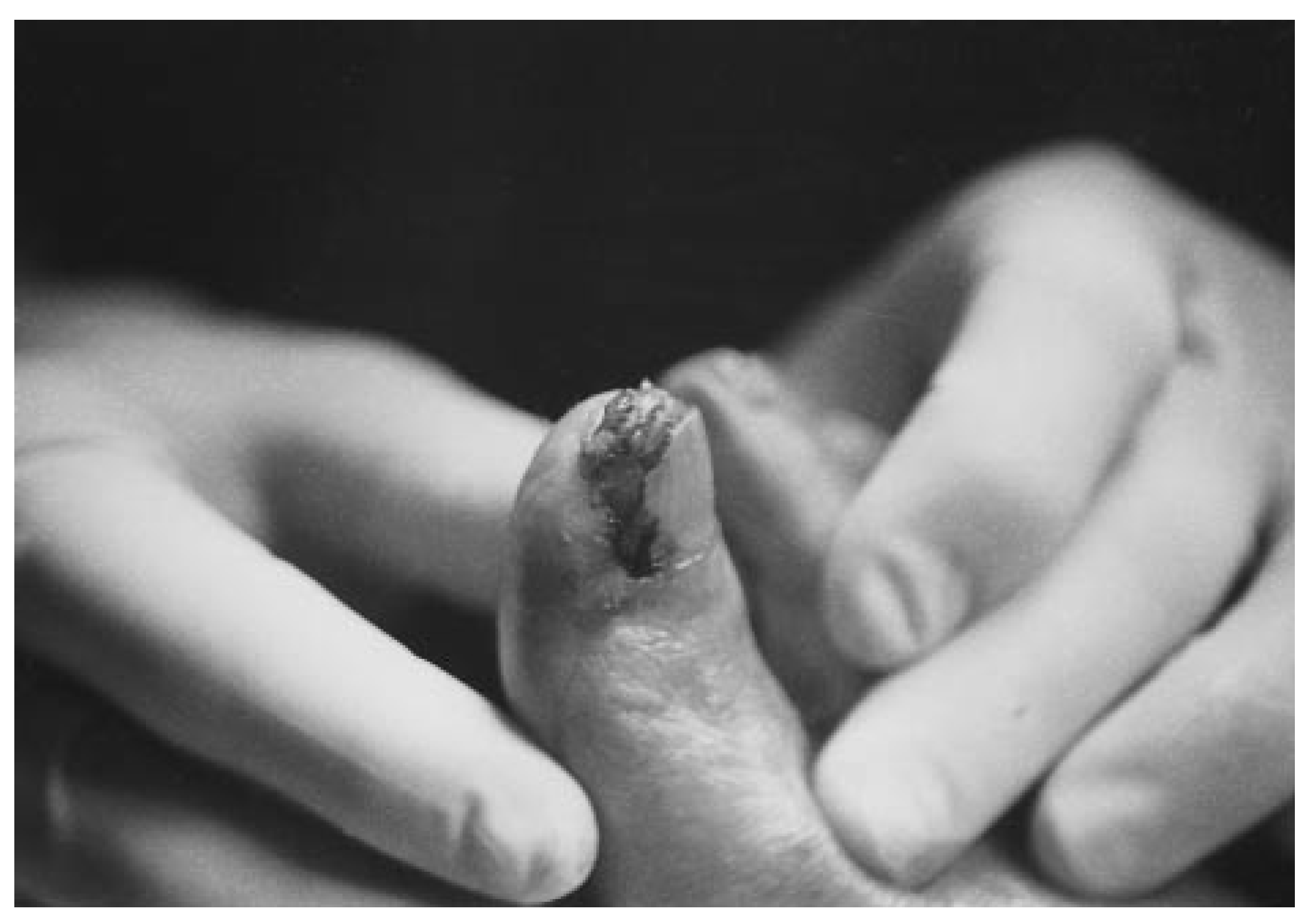
Examination of the lower extremity revealed a palpable dorsalis pedis pulse and a nonpalpable posterior tibial pulse bilaterally. Capillary filling times were less than 3 sec in each toe. No advanced trophic changes were observed, and hair growth was normal. The patient’s skin was warm to cool from her knee to her toes. Vibratory sensation, deep tendon reflexes, proprioception, light-touch sensation, Babinski’s reflex, and clonus were all within normal limits. The ankle joint, subtalar joint, midtarsal joint, first ray, and first metatarsophalangeal joint were all pain-free on full range of motion. Neuromuscular status was intact in all compartments of the lower extremity. The skin was well hydrated. A flesh-colored lesion protruded distally and subungually from the right hallux. The lesion was irregular and had a crusted papillary surface, consistent with a subungual verruca (
Fig. 1).
The patient was brought to the operating room and placed in the supine position. The operative limb was then prepared and draped in the usual aseptic manner. Following intravenous sedation, the right hallux was anesthetized with 2 mL of 1% plain lidocaine mixed with 2 mL of 0.5% plain bupivacaine. A digital tourniquet was applied to the hallux. When adequate anesthesia had been achieved, the nail plate was freed from the nail bed and avulsed in toto. A #15 blade was used to circumscribe the lesion. The lesion was then curetted from the healthy-appearing tissues. The specimen was sent to the pathology department for gross and microscopic evaluation. The base and rim of the defect in the soft tissue were thoroughly ablated with a carbon dioxide laser.
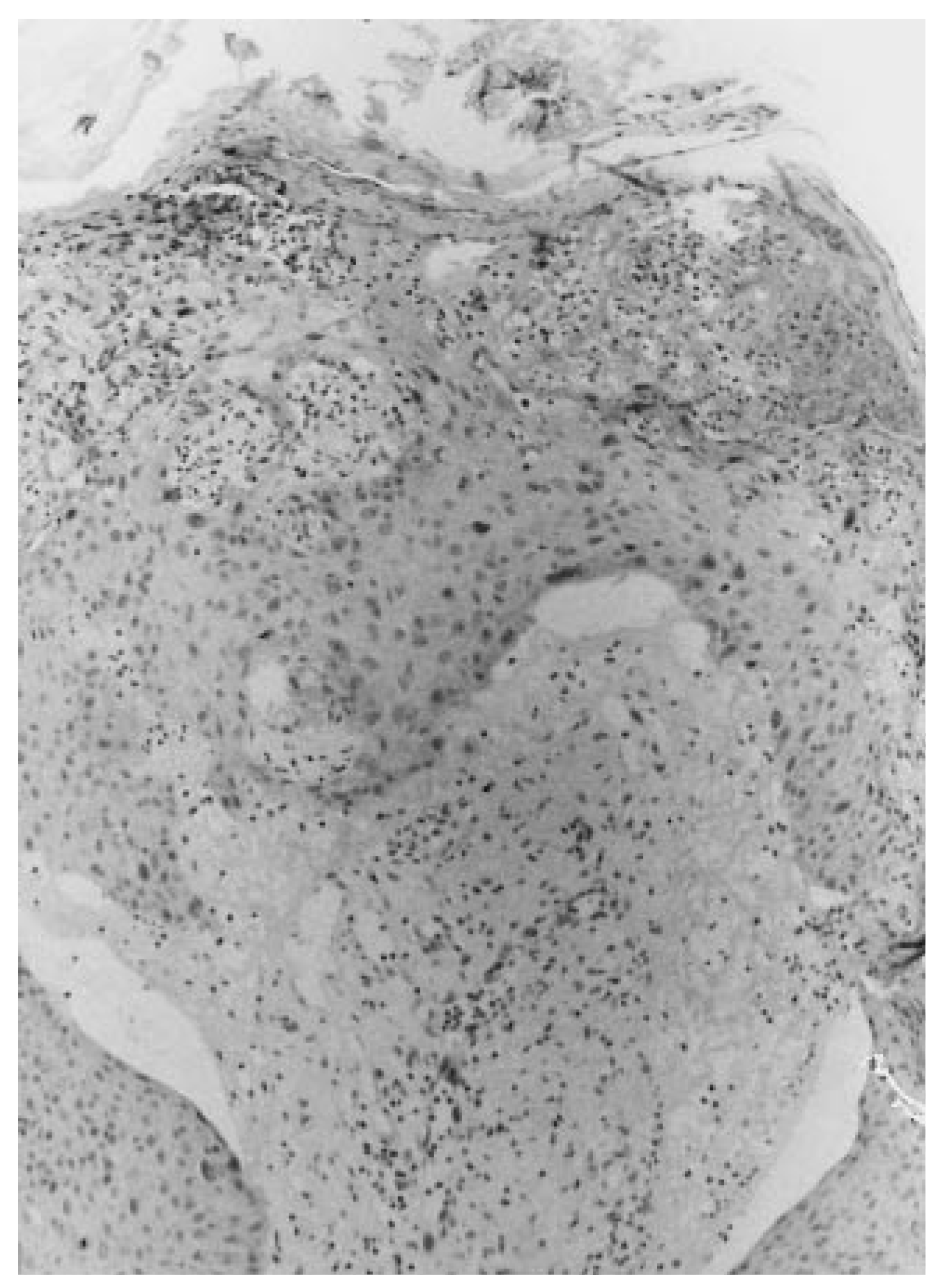
The gross description of the lesion given in the pathology report was consistent with the clinical evaluation, with analysis revealing an irregular lesion measuring 1.5 × 0.8 × 0.3 cm and having a crusted papillary surface. Microscopic evaluation revealed marked hyperkeratosis, parakeratosis, and focal areas of hemorrhage suggestive of irritation (
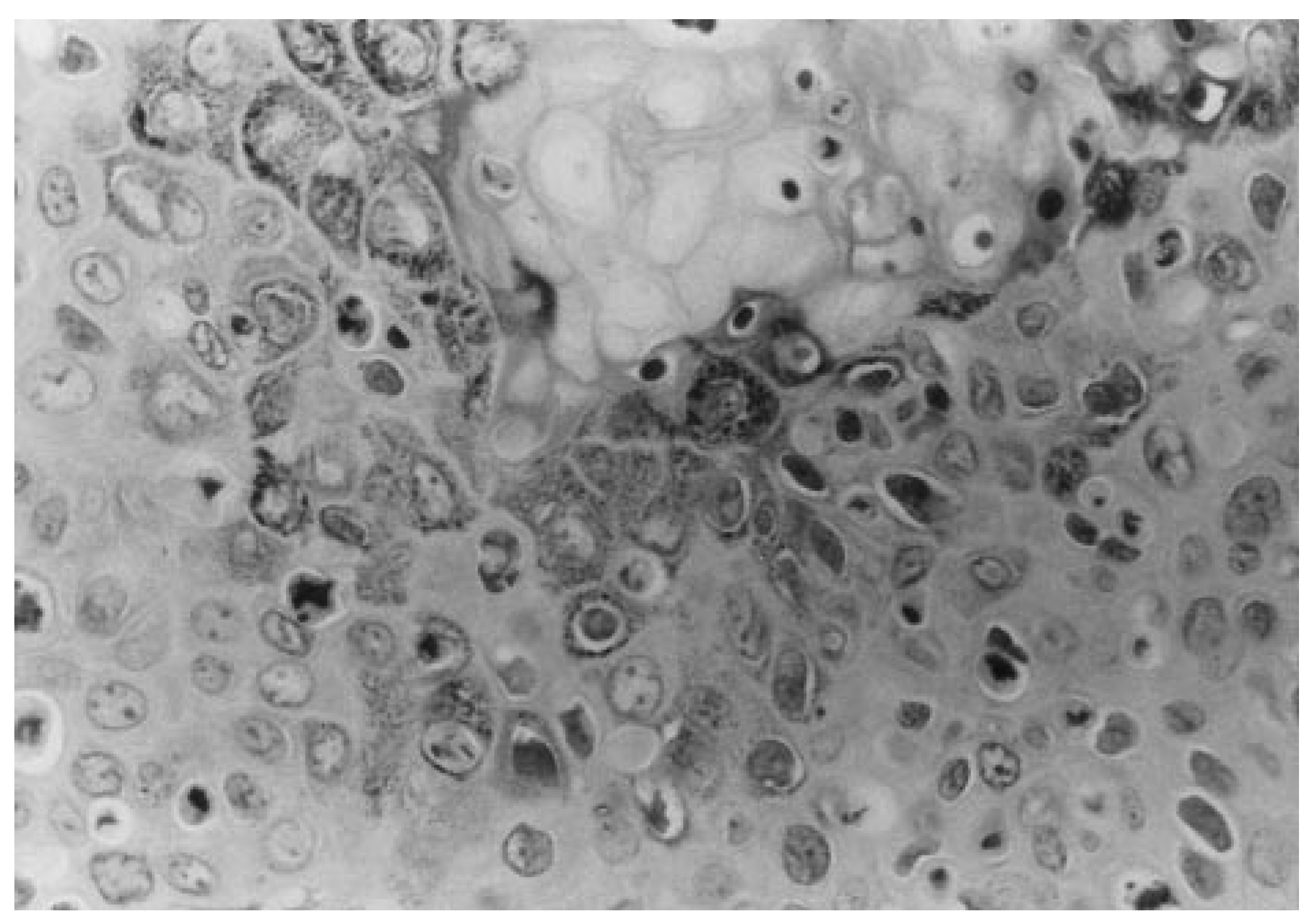
Fig. 2). The underlying epithelium showed irregular acanthosis, papillomatosis, and vacuolation of the superficial cells. Cellular atypia was noted, especially in the basal areas, standing up to four layers in thickness. Here the cells had large, prominent nuclei with clumping of the chromatin. Some nuclei were irregular, with few mitotic figures present. In some locations nests of atypical cells were present (
Fig. 3). The atypia extended to the lateral margins of the specimen. In the dermis, cells indicative of chronic inflammation were present, and degenerative changes were noted. These findings strongly suggested a diagnosis of carcinoma
in situ.
Discussion
When any type of lesion occurs subungually, it may not exhibit its usual clinical characteristics, making diagnosis more difficult. The ratio of benign to malignant tumors is approximately 100 to 1.[
4] The subungual occurrence of carcinoma is extremely rare. Carcinomas are often located on sun-exposed areas, chronic scars, ulcers, and points of constant irritation.[
5] Carcinomas that are not related to sun exposure tend to be more aggressive, and their metastatic potential is great.[
6] Lesions that appear clinically as warty, piled-up growths that may not ulcerate have a lower incidence of malignancy.[
1] Biopsy should be performed in the case of any suspicious lesion. Definitive treatment of confirmed carcinoma consists of excision via terminal Syme’s amputation. Fortunately, the use of a carbon dioxide laser is an acceptable treatment regimen for this condition.[
5] Because of the serious nature of the condition in the case reported here, the patient was followed closely after surgery. She healed uneventfully and was lost to follow-up after 1 year. Prompt surgical intervention would have been employed in the event of recurrence. In retrospect, preoperative radiographs including anteroposterior, oblique, and lateral views should have been obtained to evaluate for possible osseous invasion, which would not be expected in a case of verruca.