The treatment of onychomycosis of the toenail has been revolutionized by the introduction of new oral antifungal agents. Whereas previous therapies for fungal infection of the toenail were largely ineffective, clinical cure rates of 80% to 100% have been reported after treatment with itraconazole, terbinafine, or fluconazole. [
1]
A variety of adverse reactions have been associated with these new therapeutic agents, however. Most reactions are minor and involve gastrointestinal symptoms, headache, or skin eruptions. The triazole antifungal agents itraconazole and fluconazole have been associated with additional reactions related to interference with the cytochrome P-450 system. [
2] The authors report their experience with onychocryptosis occurring in patients who have undergone oral antifungal treatment for toenail onychomycosis.
One hundred consecutive patients treated with these new oral agents for microscopically and culturally confirmed toenail onychomycosis at the West Little Rock Foot Clinic in Little Rock, Arkansas, between 1992 and 1998 were identified. For each patient, therapy had to have been initiated at least 1 year before the start of data collection. Information was collected from patient charts and by telephone surveys. Onychocryptosis was defined as a painful ingrowth of a nail edge with or without redness, swelling, or drainage. Onychomycosis was defined as dystrophy or onycholysis of the nail with microscopically and culturally confirmed fungal infection.
Of the 100 patients treated with oral agents for toenail onychomycosis, 47 were female and 53 were male. The median age was 55.5 years. Thirty-three of the patients in the group (33%) had a history of previous ingrown toenails, and 18 (18%) reported a history of injury to the nail before the onset of onychomycosis. Thirty-seven patients (37%) developed onychocryptosis following treatment of onychomycosis. Nineteen (19%) required a minor surgical procedure to control onychocryptotic symptoms. Thirty-two partial matrixectomies were required, as well as three total nail excisions. In patients who did not receive surgery, trimming of the nails, education, and behavior modification resulted in control of symptoms. The median time from initiation of effective therapy to the development of onychocryptosis was 270 days. The median age of those who developed onychocryptosis was 51 years; 23 of the patients were male and 14 were female. Seventeen of the patients in this group (46%) had a history of previous ingrown toenails. All ingrown nails were on the first digits except in the case of one patient, who had ingrown nails on two lesser digits as well. There were no observable differences between the group that developed onychocryptosis and the group that did not develop onychocryptosis with respect to organisms cultured, the particular oral antifungal agent used, or the extent of onychomycosis.
The development of onychocryptosis following treatment of toenail onychomycosis has been reported by others. [
3,
4,
5] In a trial comparing itraconazole and terbinafine for treatment of onychomycosis, 5 of 53 patients (9%) developed ingrown toenails, all of which responded to minor surgery. Three of the patients were in the itraconazole group and two were in the terbinafine group.4 Thus, as in the current study, no association was noted between development of onychocryptosis and the use of a particular pharmacologic agent. Three of 21 patients (14%) treated with terbinafine by a Dr. Polay in Budapest, Hungary, developed severe ingrown toenails after 6 months of treatment.5
The large number of patients in the present series who reported a history of ingrown nails is notable. The overall prevalence of ingrown nails in people aged 45 to 64 has been reported to be about 3.4%. [
6] This is far less than the 33% of patients in the current study who reported a history of ingrown toenails. Some anecdotal reports have indicated that ingrown toenails are predisposed to fungal infection. [
7] It should be noted that the strong association between onychomycosis and ingrown toenails found in the current study does not prove causation or indicate which condition preceded the other.
The association of onychocryptosis with onychomycosis seen here could have occurred by chance. Both of these conditions are very common. Onychocryptosis is the most common nail condition seen in clinical practice, while onychomycosis is the fourth most common nail condition. [
8] However, the confirmation provided by the observations of others, the relatively large number of patients reported on here, and the temporal relationship between the start of treatment and the occurrence of onychocryptosis seem to point to a cause-and-effect relationship.
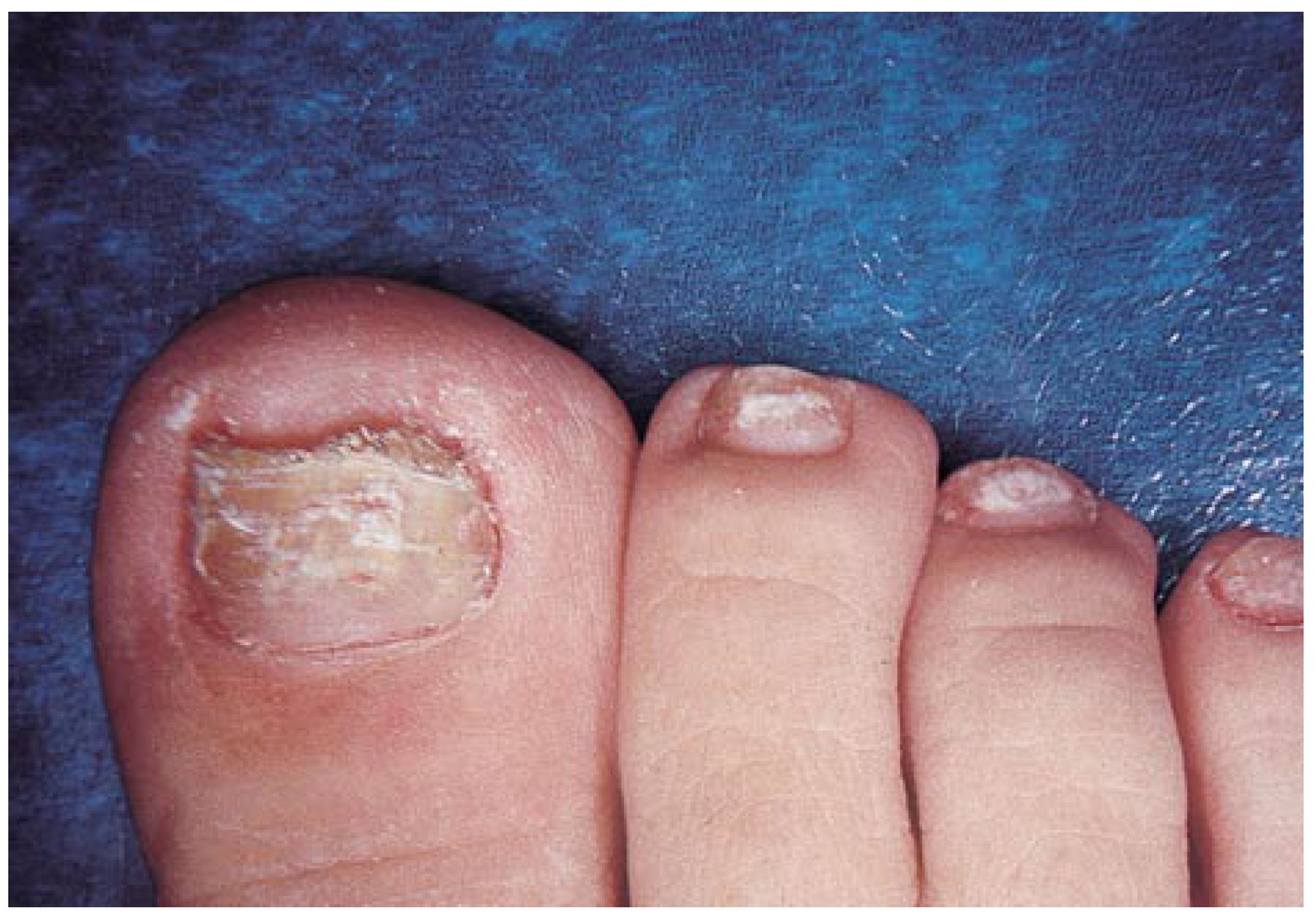
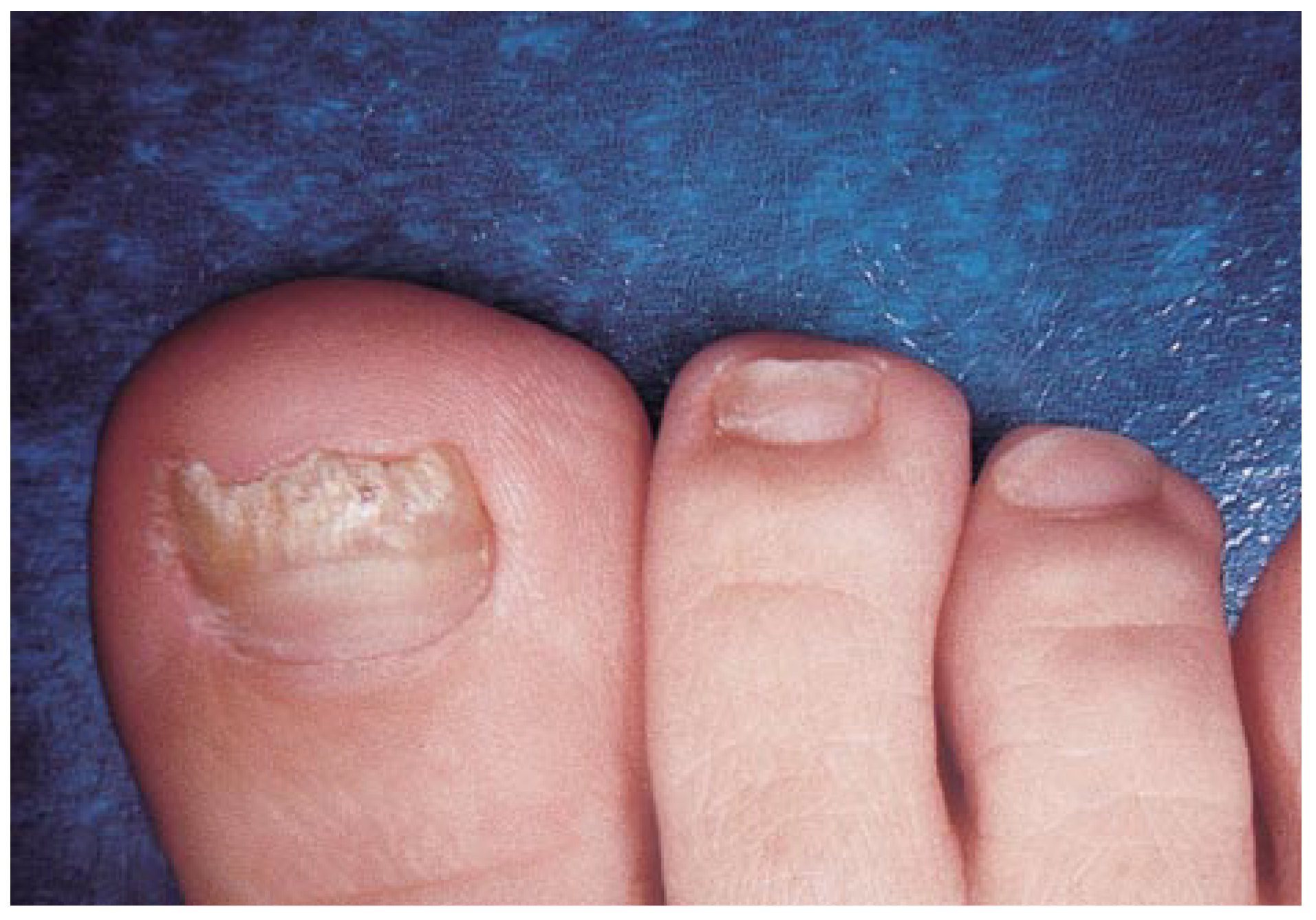
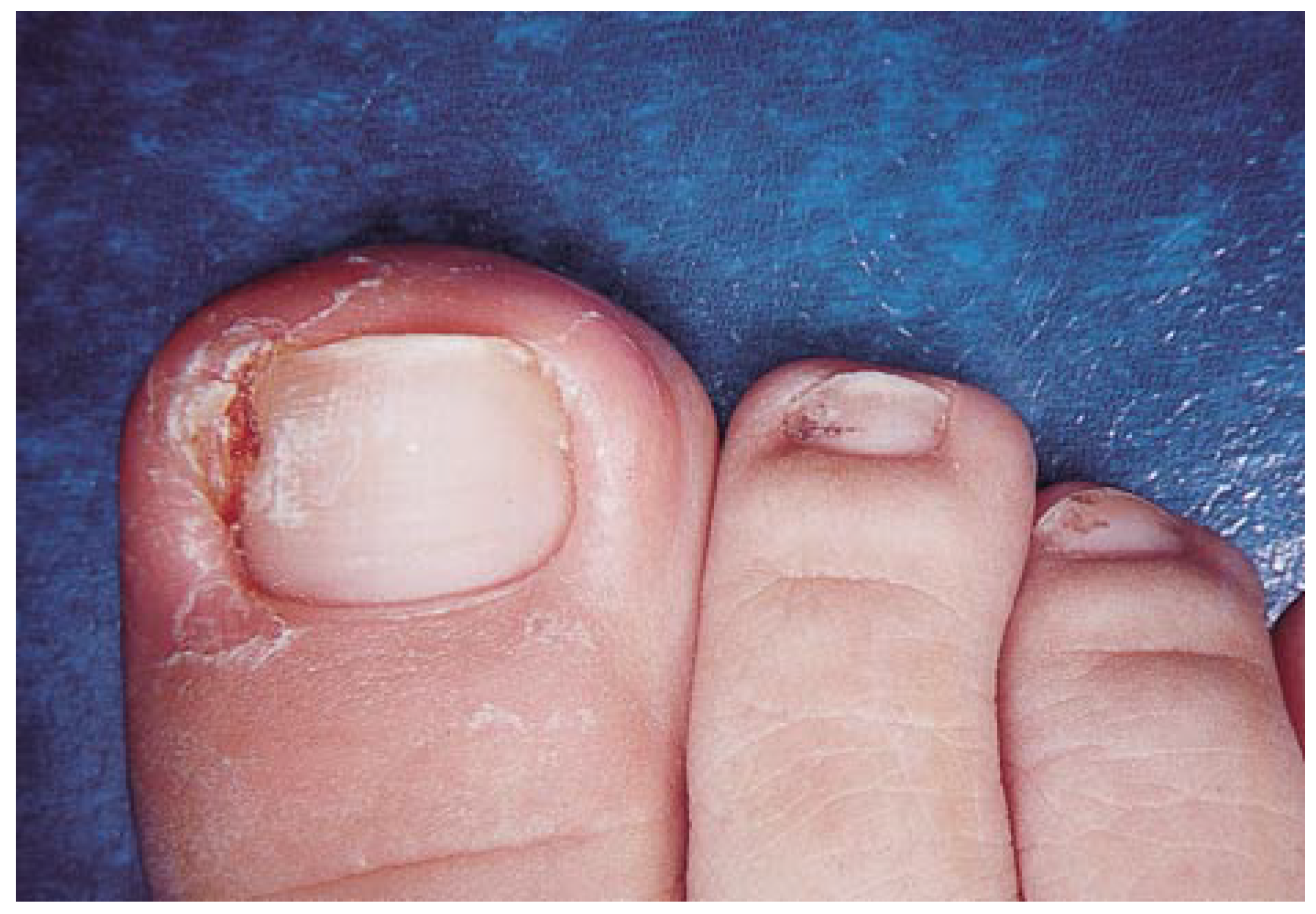
Why would successful treatment of fungally infected nails lead to ingrown nails? The most likely explanation is that as treatment for onychomycosis progresses, the nail becomes thinner, in some cases broader, and less friable (
Fig. 1,
Fig. 2 and
Fig. 3). Thinness of the nails is one of three anatomic risk factors for onychocryptosis. [
9]
There is evidence that some antifungal medications, such as itraconazole, are associated with faster nail growth. [
10] Faster nail growth might result in a greater likelihood of ingrown nails. However, the cases of ingrown toenails in the current study were not associated with any particular oral antifungal agent, undermining this theory. Other medications have been associated with ingrown toenails, with no obvious explanation for the association. [
11]
Podiatric physicians treating patients with toenail onychomycosis should be aware that ingrown toenails may be an adverse consequence of effective treatment. Because of this, practitioners should exercise particular caution when prescribing these new oral antifungal agents to high-risk patients such as patients with diabetes mellitus who have neuropathic and vascular complications and patients with compromised immune systems. Patients should be informed of the risk of onychocryptosis before the initiation of treatment. A focus on minimizing the risk factors for ingrown nails and instructing patients on proper methods of trimming their nails may reduce the incidence of this adverse event.