Falls are common occurrences in the older population and account for considerable morbidity and mortality in this age group. Community-based studies suggest that approximately one-third of people over the age of 65 years will experience a fall within any given year [
1,
2,
3]. In many cases, the injuries sustained from these falls have a significant detrimental impact on physical functioning and increase the risk of admission to a nursing home [
4,
5]. The prevention of falls, therefore, is a major focus of medical research.
Because the foot provides the only source of direct contact with the ground during walking, it is reasonable to expect that any modification to the interface between the sole of the foot and the ground may affect postural stability and therefore the risk of falling. The most obvious modification of this interface is that provided by footwear, as shoes not only constitute a barrier between the foot and the supporting surface but also directly alter the alignment of the joints of the foot, most notably in the case of high heels. It is plausible that wearing footwear may alter postural stability by a combination of mechanical and neurophysiologic alterations.
Evidence to support the suggestion that shoes may influence postural stability can be derived from epidemiologic investigations regarding falls in older people. Barbieri [
6] conducted interviews with older people who had fallen while hospitalized, and found that poorly fitting shoes played a role in 51% of the cases. In a prospective study of 100 older subjects, Gabell et al [
7] reported that 45% of the subjects who fell were wearing “unhelpful” footwear at the time, including Wellington boots with cutaway heels, heavy boots, slip-on shoes worn during a country walk, slippers with worn soles, and slippers with an excessively slip-resistant sole. The authors also found that the best predictor of multiple falls was a previous history of wearing high heels.
Finlay [
8] evaluated footwear in 274 patients admitted to a geriatric unit and outpatient hospital, and reported that only 53% were wearing adequate footwear. A number of potentially detrimental footwear features were observed, including high heels (25%), narrow heels (20%), and heel slippage (50%). In addition, of the 28% of subjects who wore slippers, half had a history of falling. The author concluded that mobility and independence in older people may be hindered by bad footwear, and stressed the need for appropriate footwear education to prevent accidents.
More recently, Hourihan et al (unpublished data, 1997) reported that 33% of 147 subjects hospitalized for fall-related hip fracture were wearing slippers when they fell. In addition, the heel counter was found to be soft and easily deformable in the footwear in 44% of cases. When questioned as to their reasons for their choice of footwear, most subjects (73%) reported that comfort, not safety, was the primary concern.
Although these investigations provide some preliminary evidence to suggest an association between footwear and falls, the wearing of a particular style of shoe at the time of a fall does not necessarily confirm a direct causal relationship, as there are a number of other factors involved. Nevertheless, it is probable that footwear plays a more significant role in falls than the relatively small volume of literature would suggest, as footwear assessment is often overlooked in research on falls. For example, a number of investigations have attributed falls to environmental factors such as poorly maintained footpaths, walking up stairs, or uneven terrain without considering the role of footwear in adapting to these environmental hazards [
1,
3,
9,
10,
11]. Furthermore, the fact that a high proportion of falls occur when walking [
10,
11,
12] suggests that footwear is a hidden variable that may con-tribute to a larger proportion of accidental falls than is widely recognized [
8,
13].
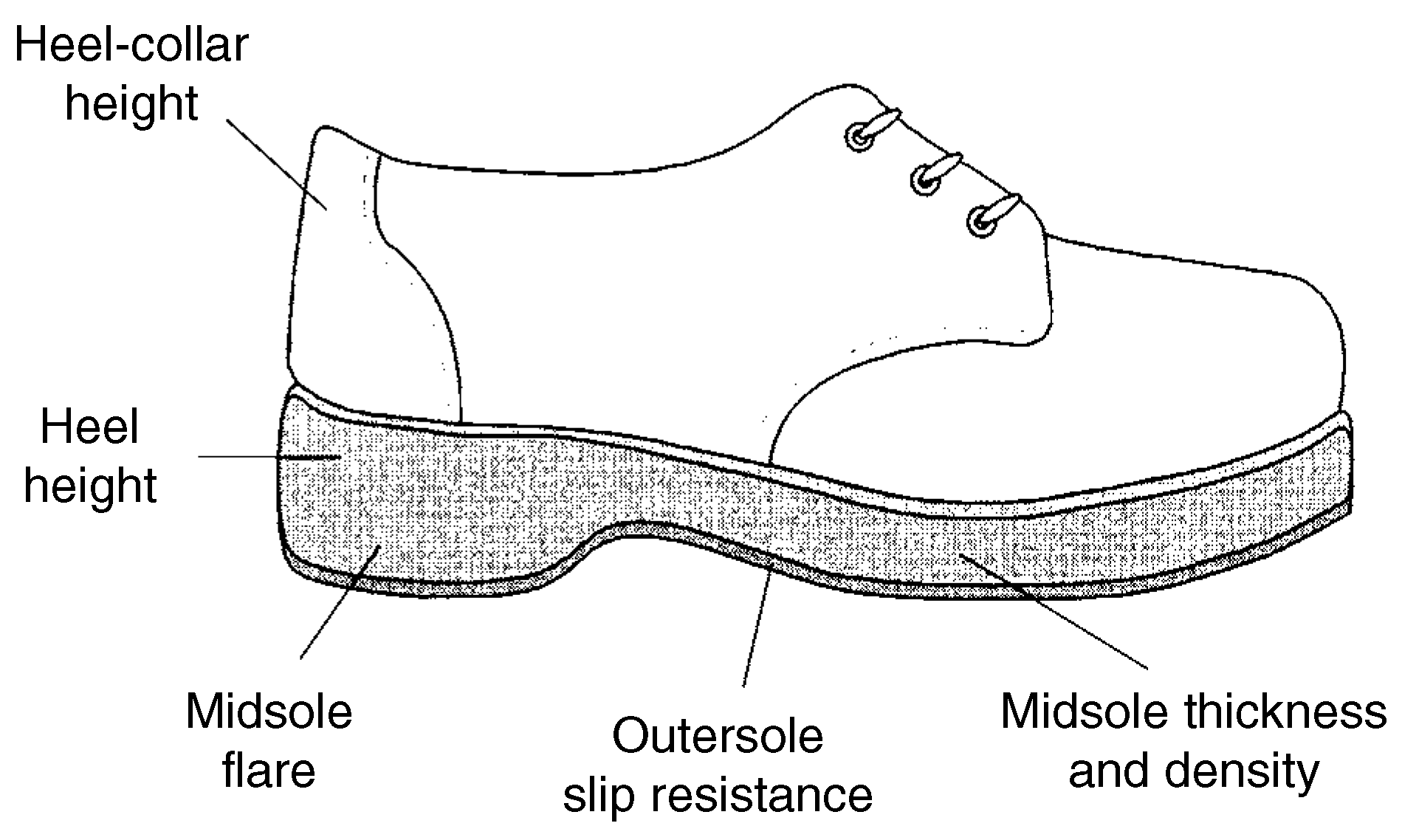
A number of specific features of shoe design have been implicated as having an impact on postural stability (Fig. 1). While each feature is thought to affect stability by altering the body’s ability to control the displacement of the center of mass during walking, the mechanism responsible for this has been variably explained using biomechanical or neurophysiologic concepts. The main features of shoe design that are implicated as playing a role in postural stability are heel height, the cushioning properties of the midsole, and the slip resistance of the outersole. Two additional features, the height of the heel collar and midsole flare, have not been widely evaluated in the context of postural stability, but rather have been studied in the context of prevention of sports-related ankle sprains and excessive foot pronation, respectively. A number of authors have recommended the wearing of high-top boots or shoes with broad heels as a means of improving stability in older people [
8,
14,
15,
16], and these features warrant further investigation.
Figure 1.
Features of shoe design that are thought to affect postural stability.
Figure 1.
Features of shoe design that are thought to affect postural stability.
Each of the design components that may affect postural stability is discussed in more detail in the following sections.
Heel Height
Heel elevation has been incorporated into footwear design for centuries; this variable has been influenced more by the dictates of fashion than by functional considerations. High heels first became popular in the early 1600s, and they remain a dominant feature of women’s footwear [
17,
18]. However, heel elevation in footwear design is by no means restricted to women’s shoes—a number of boots worn by men also feature a raised heel (eg, safety footwear, cowboy boots). Research on the effects of heel elevation has tended to focus on postural and kinematic alterations because of the proposed relationship between wearing high heels and the development of overuse symptoms in the foot, knee, hip, and lower spine. These studies have revealed that heel elevation leads to a reduction in lumbar lordosis [
19,
20,
21,
22], increased loading on the forefoot [
23,
24,
25,
26,
27], alterations in the function of the first metatarsophalangeal joint during the propulsive phase of gait [
28,
29], decreased stride length [
30], increased energy consumption [
31], increased arch height [
32], and kinematic alterations at the ankle and knee joints [
21,
26,
31,
33,
34,
35,
36,
37,
38]. These alterations have generally been interpreted as being detrimental to normal lower-extremity function; however, kinematic differences between inexperienced and experienced wearers of high heels suggest that some habituation occurs, which may act to minimize these adverse effects [
39].
The suggestion that some habituation occurs following long-term use of high heels has also been made by Lee et al [
40,
41], who evaluated electromyographic muscle function in men and women. Results revealed that the wearing of high heels by men led to an increase in the activity of the tibialis anterior muscle, while in females accustomed to high heels, the activity of this muscle decreased. This finding suggests that the contraction action of the tibialis anterior muscle to stabilize the ankle joint during gait becomes unnecessary in women who wear this type of footwear on a regular basis.
A number of authors have suggested that the changes in function produced by high-heeled footwear may be responsible for instability and falling in older people [
4,
8,
13,
14,
15,
42], and there is some epidemiologic evidence to support this suggested relationship. In a prospective investigation of falls experienced by 100 older subjects, Gabell et al [
7] reported that the best predictor of multiple falling episodes was a history of wearing high-heeled footwear. However, all of the subjects with a history of high heel use were wearing a low-heeled shoe when they fell, suggesting that alterations in lower-limb posture caused by years of wearing high heels may make subjects less stable when they change to wearing shoes with a lower heel.
In response to the suggestion that high-heeled footwear may predispose a person to accidental falling, a number of authors have attempted to determine the mechanisms responsible for this suspected causal relationship. Adrian and Karpovich [
43] evaluated gait patterns in ten subjects wearing low- and highheeled shoes with an electrogoniometer, and reported a reduction in total subtalar joint range of motion during gait when high heels were worn. However, although the total range of motion at the subtalar joint decreased, the authors reported that in six of the ten subjects, significant wobbling of the foot into pronation and supination occurred when high heels were worn. The authors suggested that this observation was indicative of foot instability and thus that wearing high heels would have a detrimental effect on balance.
More recently, Snow and Williams [
26] evaluated kinematic alterations in rearfoot motion of [
11] subjects who each wore shoes of three different heel heights. Results revealed that increased heel height was associated with an increase in the supination angle of the foot at heel strike. Consistent with the conclusions of Adrian and Karpovich [
43], the authors suggested that this finding could be interpreted as representing foot instability, as a more supinated position of the foot may subject the wearer to an increased risk of inversion ankle sprain.
Brecht et al44 compared the ability to balance in 27 healthy female subjects wearing high-heeled cowboy boots and low-heeled tennis shoes in order to test the hypothesis that cowboy boots would make the wearer more susceptible to a fall in the posterior direction. Subjects stood on a balance platform that was perturbed by an anterior translation at a variety of accelerations. When subjects could maintain their balance for two out of three trials at a given acceleration, a higher speed was selected until a balance failure (defined as loss of forefoot contact on the platform) was recorded. The maximum acceleration at which the subject could maintain balance was recorded as the maximum break acceleration and was compared for the two types of footwear. Results revealed significantly lower maximum break acceleration values for the cowboy boots condition, suggesting that this type of footwear may predispose the wearer to falling.
A number of limitations of the Brecht et al [
44] study, however, raise considerable concerns regarding the significance of the authors’ findings. First, the tennis shoes worn by the subjects were their own, while the cowboy boots were all the same and recently purchased. In order to make the cowboy boots comfortable, a number of subjects wore insoles or extra socks, which may have introduced an additional variable into the study by further altering the interface between the sole of the foot and the supporting surface. Second, the assumption that loss of forefoot contact on the platform is indicative of a fall could be questioned, as the authors conceded that there was significant variation in the degree to which the subjects could elevate the forefoot and still maintain balance in both types of shoes.
Lord and Bashford [
45] evaluated the ability to balance in 30 older women when barefoot, wearing lowheeled walking shoes, wearing high-heeled shoes, and wearing shoes of their own that they routinely wore. Balance was assessed by the use of a “sway meter,” which measured body displacements at the level of the waist when standing; measurement of maximal balance range, representing the maximal stability limit of the subject in the anteroposterior plane; and a coordinated stability task that placed the subjects near the limits of their postural equilibrium. The balance tests utilized in this study had been assessed for acceptable reliability in previous reports by the authors [
46,
47]. The results revealed that in the sway and coordinated stability tests, subjects performed best when barefoot, and in the maximal balance range test, subjects performed best in lowheeled shoes. The worst performances in all balance tests occurred when the subjects wore high heels. The results suggested that wearing of high heels may be a risk factor for falling in older women that could easily be eliminated.
Midsole Cushioning
The use of expanded polymer foam materials in the construction of footwear midsoles is widely accepted as a means of enhancing the level of comfort the shoe offers and, as such, is commonly recommended as a beneficial feature in footwear for older people [
16,
48]. Following the rapid increase in the popularity of recreational running in the early 1980s, midsole cushioning became an important feature of running footwear, on the assumption that the increased impact forces of running needed to be attenuated to prevent overuse injury. Subsequent investigations into material properties of footwear midsoles focused primarily on the ability of the material to reduce impact during running [
49,
50,
51].
The continued high incidence of lower-extremity overuse injuries in recreational runners who wore shoes with soft midsoles [
52] prompted the development of an alternative hypothesis regarding the relationship between impact attenuation and injury. Robbins and colleagues [
53,
54,
55,
56], in a series of investigations, tested a hypothesis that modern athletic footwear is unsafe because the cushioning properties in the midsole material attenuate normal perception of impact and prevent normal impact-moderating behavior, leading to subsequent overuse injury. More recently, a modification of the hypothesis tested by Robbins and colleagues has been used to explain the interaction between midsole properties and stability in older adults. In this context, the hypothesis suggests that the use of thick, soft materials in footwear midsoles leads to instability, as the midsole material induces a state of “sensory insulation,” thereby reducing afferent input to the brain regarding foot position [
57].
To test this hypothesis, Robbins et al [
57] evaluated the balance ability of 25 healthy older men (mean age, 69 years) when wearing standardized footwear with varying midsole thickness and hardness. Midsole thickness ranged from 6.5 mm under the forefoot and 13 mm under the heel (thinnest) to 16 mm under the forefoot and 27 mm under the heel (thickest). Midsole hardness, measured using the Shore classification system of material compressibility, ranged from Shore A15 (softest) to Shore A50 (hardest). The shoe combination with the thickest, softest midsole resembled a modern athletic shoe, and the shoe combination with the thinnest, hardest midsole resembled a conventional leather walking shoe. To evaluate balance ability, subjects were asked to walk along a beam 9 m long and 7.8 cm wide without observing their foot position at a fixed speed of approximately 0.5 m/sec. The number of times the subjects stepped off the beam was recorded, and balance failure frequency, defined as the number of steps from the beam after ten trials, was used to compare footwear conditions. The results revealed a significantly higher balance failure frequency when subjects wore the shoe with the thickest, softest midsole. The best performance occurred when the subjects wore the shoe with the thinnest, hardest midsole, suggesting that this type of shoe should be recommended for older people. A particularly surprising result, however, was the poor performance of the subjects when barefoot, which was 19% worse than performance while wearing the most “destabilizing” shoe. The authors attributed this finding to age-related loss of plantar sensation, and suggested that older people should be advised not to walk barefoot.
The findings of the Robbins et al [
57] study have been criticized, primarily because of the use of the beam to assess balance ability. Grabiner and Davis [
58] argue that the use of a narrow beam prevented the subjects from establishing a normal gait pattern and, because of this, the results should not be extrapolated to normal walking. However, beams have been used to identify balance deficits in subjects with labyrinthine disturbances [
59] and ataxia [
60], conditions known to predispose people to falling. Furthermore, assessment of standing postural sway is widely used as a test of balance ability, yet this is considerably less challenging and less similar to normal walking than the beam method. Although further investigation is required to evaluate the ability of the beam method to predict falling, it could be suggested that, despite its limitations, this technique may provide a useful indicator of balance ability during walking that can complement other tests that assess subjects in static and dynamic stance.
A subsequent investigation by Robbins et al [
61] utilized the same beam method to evaluate the effect of midsole properties on balance ability in 17 younger men (mean age, 32 years). Similar results were obtained in that a higher balance failure frequency occurred when subjects wore shoes with the softest, thickest midsoles. However, poor performances were again evident when the subjects were barefoot (the worst condition, with the exception of the thickest, softest midsole shoe), suggesting that even some of the relatively “destabilizing” shoes produced fewer instances of stepping off the beam compared with the barefoot condition.
Although the two aforementioned studies [
57,
61] suggested that balance is detrimentally affected by wearing shoes with thick, soft soles, the underlying reason for this finding was not directly evaluated. To assess whether soft-soled shoes may affect instability by a reduction in one’s ability to sense one’s foot position, Robbins et al [
62] evaluated the ability of 36 young male subjects (mean age, 30 years) and 15 older male subjects (mean age, 73 years) to detect the position of their feet when standing on blocks of varying surface slope (from 0° to 25°) in the sagittal plane. Subjects were tested either barefoot or in shoes with a midsole that was 16 mm thick under the forefoot and 27 mm thick under the heel, and were asked to report the perceived direction and amplitude of the surface without viewing the blocks. Results revealed that the subjects’ perceptions of the surface slope were significantly less accurate when wearing shoes, and that the perceptions of the older subjects were less accurate on average than those of the younger subjects. The authors attributed the poorer performances in the older subjects and when wearing shoes to a reduction in plantar sensitivity, and suggested that this may explain why balance ability is detrimentally affected by wearing soft-soled footwear.
In order to evaluate whether the relationship between foot position sense and footwear established in the prior investigation was also evident during dynamic function, a follow-up study by Robbins et al [
63] assessed the ability of 13 young men (mean age, 28 years) and 13 older men (mean age, 72 years) to perceive the maximally supinated (inverted) position of their feet when walking. The balance beam technique employed in previous studies by the authors was again used, and the position of the foot was recorded by video camera by placing two markers on the posterior aspect of the heel and two markers on the lower part of the leg. Subjects were asked to estimate the maximum angle of supination achieved by the foot when walking on the beam. Subjects were tested in shoes of varying midsole hardness and thickness. Supination of the foot was highest in the shoe with the thickest, softest midsole; however, subjects were most likely to underestimate the degree of supination in this footwear condition. Older subjects underestimated the maximum foot supination more than younger subjects. The results suggest that soft midsoles predispose the wearer to falling, as they induce a more unstable position of the foot (greater maximum supination angle) that is underestimated by the subject, thereby limiting postural adjustments to maintain stability.
The most recent investigation by Robbins et al [
64] evaluated the balance ability of 12 healthy men (mean age, 30 years) when standing on three ethyl vinyl acetate foams of varying hardness, placed over a force plate. A unipedal stance test was used in which subjects placed the left foot on the right foot with their eyes open and maintained balance for 30 seconds. Sway velocity and area of the displacement of the center of pressure were recorded. The results revealed higher values for the sway variables on the softer surfaces, again suggesting that the deformable surfaces alter afferent feedback from the plantar surface of the foot.
Despite the somewhat controversial nature of the early work of Robbins and colleagues [
65,
66] on the dangers of running shoes, it would appear that the sensory insulation hypothesis has some merit in the context of instability in older subjects, as it is consistent with the protocol of experimental studies on somatosensation, which often modifies sensory input by having subjects stand on thick, soft foam. However, a number of inconsistencies are apparent in the work of Robbins and colleagues [
57,
61,
62] with regard to balance ability when barefoot. The Robbins et al hypothesis would suggest that barefoot walking is preferable to wearing shoes, as sensory feedback from the sole of the foot is maximized. However, in the 1992 and 1994 investigations (in older [
57] and young men [
61], respectively), the authors reported that the worst performances on the balance beam occurred when subjects were barefoot. Therefore, even the most destabilizing shoe actually improved performance compared with wearing no shoes.
In contrast, the study evaluating foot position sense when standing on blocks with sloping surfaces reported that the best performances occurred when subjects were barefoot [
62]. This suggests that the “block-standing” test may be an appropriate method of specifically testing the role of sensation, and the results of the beam-walking test may be significantly confounded by mechanical influences. Therefore, the work of Robbins et al needs to be viewed with some caution, because their sensory-insulation hypothesis does not account for the possibility of footwear improving balance by enhancing mechanical stability.
Contrary to the findings of Robbins et al [
57], Lord et al [
67] reported no association between firmness of shoe sole and balance ability in 42 older women. In this study, subjects wore either a hard-soled (Shore A58) or soft-soled (Shore A42) shoe, and their balance ability was evaluated using tests of body sway, maximal balance range, and a coordinated stability task. Results revealed no difference between the two shoe conditions for each of the balance tests. A direct comparison between these results and those of Robbins et al [
57]. however, is not possible because of the different methods of balance testing and the different densities in footwear midsoles that were evaluated.
There is now some epidemiologic evidence to suggest that soft footwear may be a causative factor in falls in older people. A retrospective study by Frey and Kubasak [
68] evaluated 106 community-dwelling older people who had fallen in the preceding year, and reported that 42% of subjects were wearing softsoled athletic shoes when they fell. When subjects were asked to state what they believed was the primary cause of the fall, 28% blamed their footwear; of these, 33% were wearing athletic shoes at the time of the fall. Although the validity of these results is hampered by the retrospective method used, it would appear that the interaction between sensory feedback and stability proposed by Robbins et al is plausible and may provide an explanation as to why some otherwise healthy older people experience falls. Largescale prospective investigations are needed to clarify whether a direct causal relationship exists between cushioning footwear and falls in older people.
Heel-Collar Height
High heel collars are commonly found in safety foot-wear and in shoes designed for specific sporting activities such as soccer and basketball [
84,
85]. Much of the literature regarding the effects of heel-collar height evaluates the ability of the shoe to prevent ankle sprains. Two main theories have been suggested to explain why high heel collars may be of benefit in ankle sprain prophylaxis. First, the mere presence of the material surrounding the ankle region is thought to provide mechanical stability to the ankle and subtalar joints in the frontal plane such that rapid excursions of the foot into eversion or inversion are restricted by the shoe. Johnson et al [
86] applied loads to the ankle of a single subject wearing soccer boots and developed a mathematical model to demonstrate that a high-top soccer boot was capable of attenuating a larger force than a low-top soccer boot when forces were applied in the direction of inversion and eversion.
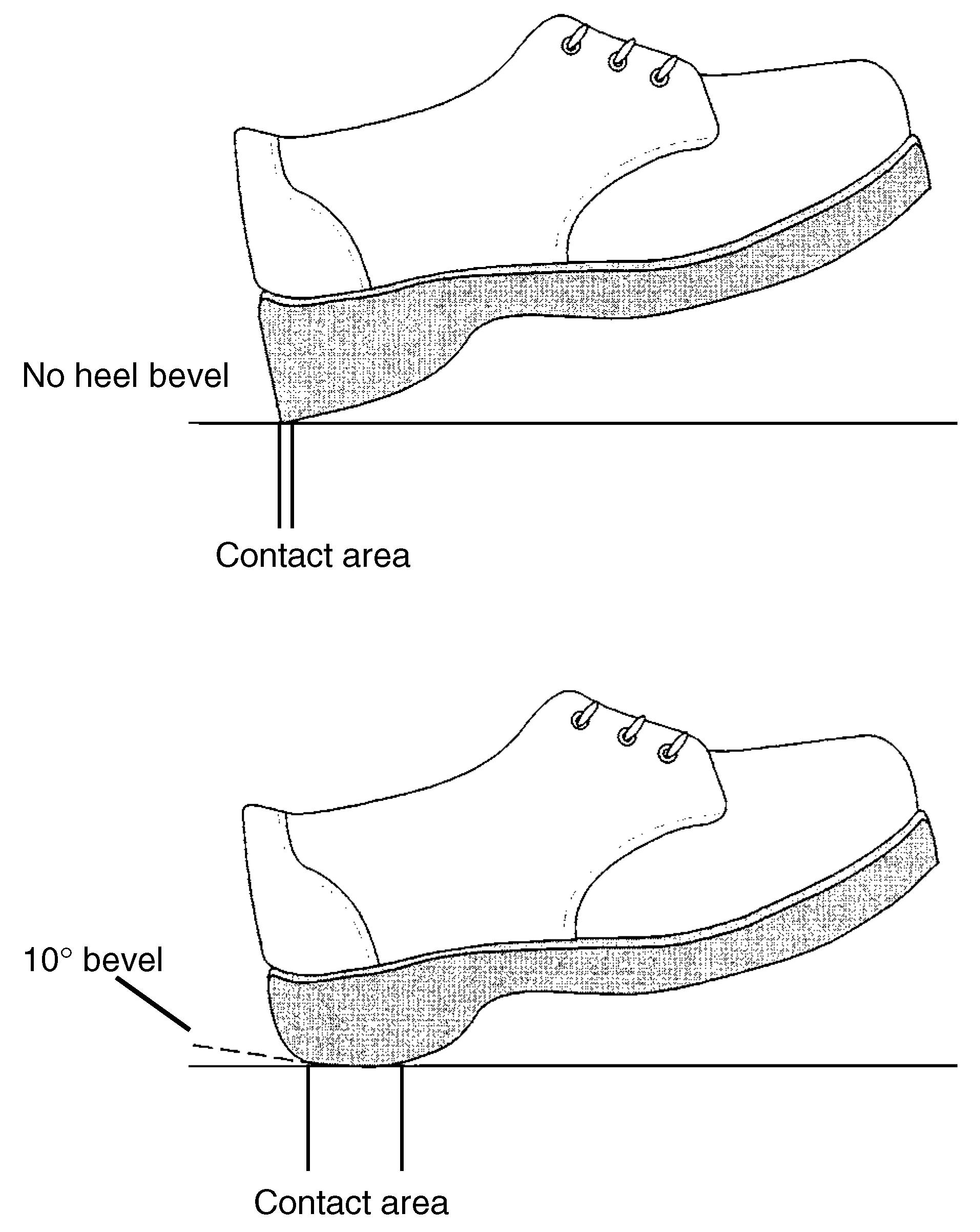
Figure 2.
Effect of heel beveling on slip resistance at heel contact, as described by Lloyd and Stevenson.82.
Figure 2.
Effect of heel beveling on slip resistance at heel contact, as described by Lloyd and Stevenson.82.
Using the same paradigm, Ottaviani et al [
87] evaluated the ability of a high-top basketball boot to resist inversion and eversion moments. Twenty healthy subjects wore either a low-top or a three-quarter-top basketball boot and were tested using a special apparatus that applied inversion and eversion loads at varying weightbearing sagittal plane ankle positions. Neither footwear type was capable of resisting an eversion moment at any angle of ankle plantarflexion, nor was the low-top shoe capable of providing any resistance to inversion. However, the three-quarter-
top boot was found to increase resistance to ankle inversion moments by 29% when the ankle was placed in 0° of plantarflexion.
To assess whether this finding also applied to dynamic function, Stacoff et al [
88] assessed the ability of five different shoe designs to control inversion of the foot when 12 subjects performed sideways cutting movements (ie, rapid change of direction when running) while recorded with a video camera. The shoes differed according to their sole flexibility and heelcollar height. Results revealed that the best lateral stability was afforded by the shoe with the highest heel collar. The authors suggested that shoes with high heel collars improve lateral stability by reducing the leverage for supination movements around the subtalar joint.
An alternative explanation as to how high-top boots may prevent ankle sprains is that the presence of the high heel collar may provide additional tactile cues to the subject, thereby improving proprioceptive feedback of ankle position [
84]. Although this is a widely held view among athletic trainers and physical therapists, there is little evidence available in the literature to support such a view. Nevertheless, the suggestion that tactile stimulation may enhance position sense has been reported in relation to ankle taping [
89], ankle bracing [
90], and knee bandaging [
91]; thus it is not unreasonable to expect that a high-top ankle boot may produce similar effects.
Despite the recognition that high heel collars may improve ankle stability under experimental conditions, their ability to prevent injury is unclear. Garrick and Requa [
92] investigated the incidence of injuries in college athletes and reported a lower incidence of ankle sprains in subjects who wore high-top boots. However, the footwear in this study was not standardized, and it is difficult to determine what constituted a high-
versus low-top shoe. Contrary to these findings, a 6-year retrospective study of 297 football players by Rovere et al [
93] reported a lower incidence of ankle sprain in those players who wore low-top boots. A prospective investigation of 622 basketball players reported no significant differences in injury incidence between those who wore highand low-top shoes [
94] It appears, then, that there is some disagreement in the literature as to the benefits of high heel collars in injury prevention.
Stability around the heel is widely regarded as a desirable feature in footwear intended to increase postural stability in older people [
8,
14,
15,
16,
48] However, to the authors’ knowledge, only one study has specifically assessed the effect of heel-collar height on balance ability in this age group. Lord et al [
67] assessed the balance ability of 42 older women (mean age, 76 years) when barefoot and in shoes with standard collar height (Oxford-style shoe) and a raised collar height (eight-laced Doc Marten boot [Air Wair Ltd, Northants, United Kingdom]). The results revealed that subjects performed better in the high-collared shoe for both the body sway and coordinated stability tasks. The authors attributed this finding to the high heel collar’s providing greater ankle stability and increased proprioceptive feedback compared with the standard footwear condition.
Midsole Flaring
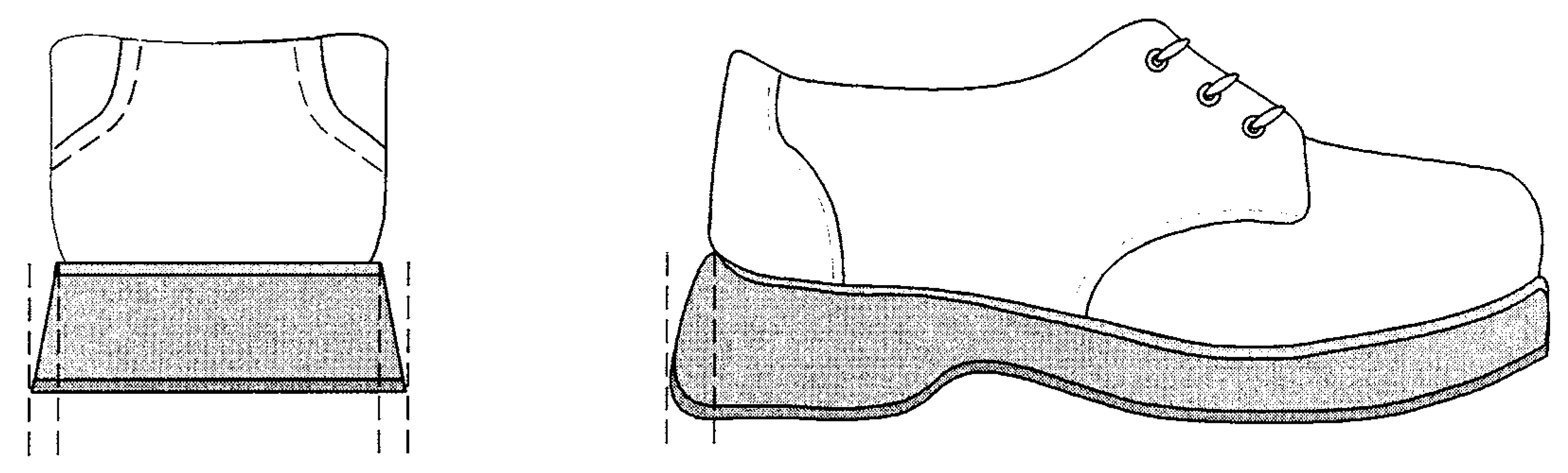
The term “midsole flare” refers to the difference between the width of the midsole at the level of the upper and its width at the level of the outersole (Fig. 3). A number of authors have suggested that a large midsole flare is beneficial in shoes of older people, as it provides a broader base of support, thereby enhancing the stability of the shoe [
4,
8,
14,
15,
16]. These recommendations appear to have been developed in response to the recognition that narrow heels (such as those found in most high-heeled footwear) may cause instability in older people. However, there are no studies in the literature that have directly evaluated the effect of midsole flaring on balance ability.
Recently, Hoogvliet et al [
95] developed a mathematical model to describe the relationship between frontal plane displacements of the ankle and the center of pressure during single-limb stance. In this model, the center of pressure is regarded as a measure of the tilting movements of the foot, which are important for the maintenance of postural stability. Using this model, the authors determined in a follow-up investigation that an increased base of support, due either to anatomic variations in foot breadth or to footwear or orthotic interventions, leads to improvements in single-limb stance ability [
96]. It could there-fore be suggested that increasing the lateral flare on a shoe may be beneficial because it increases the base of support during the single-limb stance phase of gait. However, it is unclear whether a midsole flare would be capable of improving stability during locomotion. Furthermore, it is possible that by increasing the surface area for weightbearing, groundreactive force would be spread over a larger region, thereby altering somatosensory feedback from the sole of the foot.
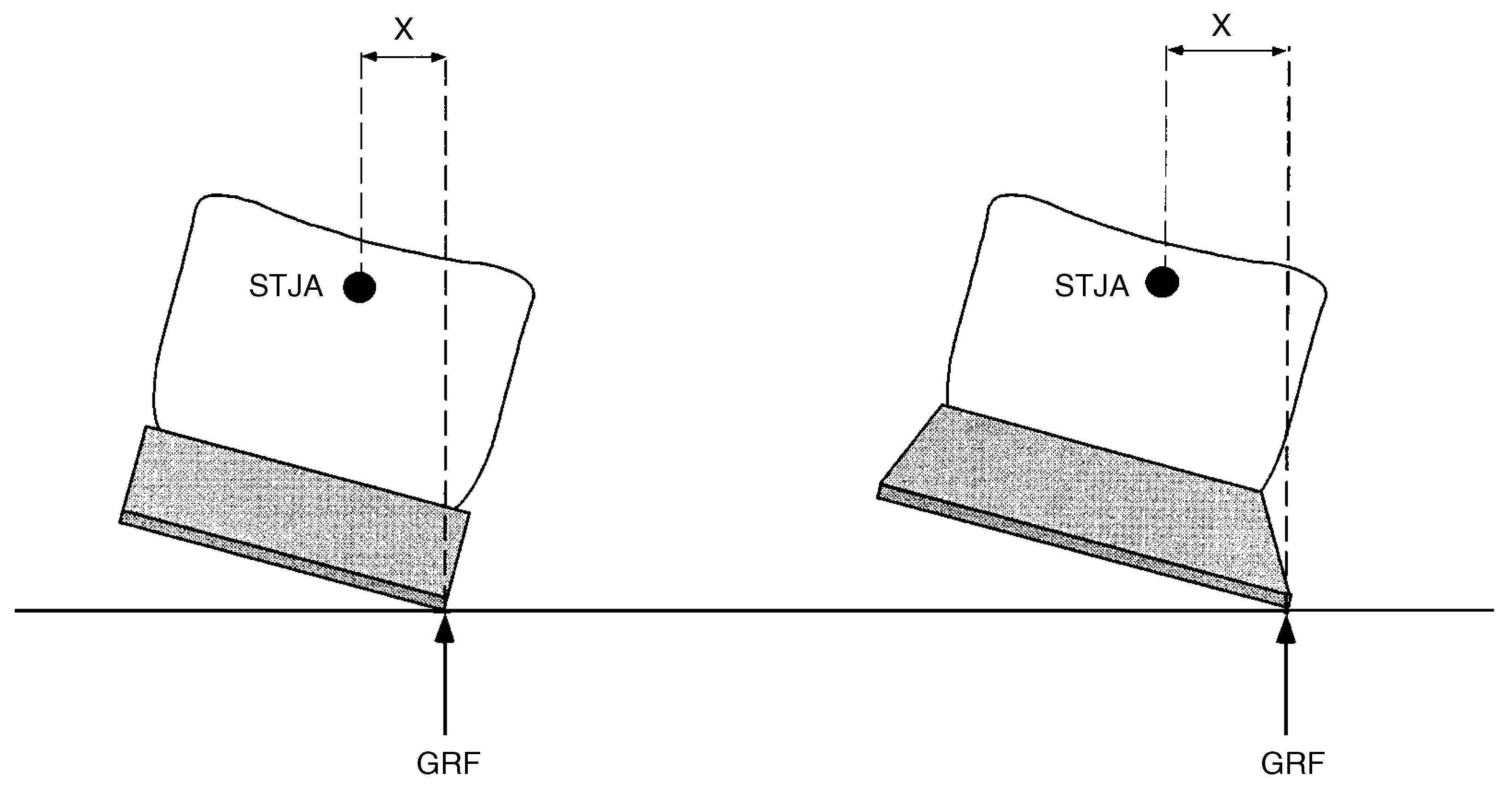
An alternative view in the literature suggests that lateral flaring may be detrimental to stability because it increases foot pronation by increasing the lever arm for eversion moments around the subtalar joint during the contact phase of gait (Fig. 4) [
97,
98]. However, whether this proposed detrimental effect of midsole flaring has significant ramifications for postural stability in older people is uncertain. Clearly, the mechanical influence of a lateral-sole flare depends on the heel contacting the ground in an inverted position. During running, the lower limb adopts an inverted position as the base of gait decreases; thus lateral flaring may be important only in activities involving running. Recent studies of walking gait have suggested that the foot strikes the ground in a slightly everted (or pronated) position [
99,
100]. Therefore, during walking the shoe will contact the ground more medially, making the influence of the lateral flare less functionally significant. Furthermore, the literature on lateral flaring and instability has focused specifically on foot pronation. Whether increasing contact-phase foot pronation has detrimental effects on whole-body stability is unknown.
Figure 3.
The midsole flare of a shoe.
Figure 3.
The midsole flare of a shoe.
Figure 4.
Effect of midsole flaring on foot pronation at heel strike during running. Ground-reactive force (GRF) is applied to the lateral plantar aspect of the shoe sole. The addition of a 30° lateral flare to a running shoe increases the lever arm for pronation (X) around the subtalar joint axis (STJA).
Figure 4.
Effect of midsole flaring on foot pronation at heel strike during running. Ground-reactive force (GRF) is applied to the lateral plantar aspect of the shoe sole. The addition of a 30° lateral flare to a running shoe increases the lever arm for pronation (X) around the subtalar joint axis (STJA).
Conclusion
On the basis of a review of the literature, it is clear that the wearing of footwear may influence postural stability in either a beneficial or detrimental manner. Shoes alter the interface between the sole of the foot and the ground, both mechanically and neurophysiologically. However, despite a number of published recommendations as to which features should be implemented in shoe design for older adults with postural instability, it appears that many questions remain unanswered regarding the influence of specific design features on postural stability. It seems reasonable to suggest that older people should be advised against the wearing of high-heeled shoes because of the detrimental effects of this style of footwear on stability and lower-extremity function. The influence of midsole thickness and density remains to be clarified; however, there is some evidence to suggest that the use of thick, soft materials in midsole construction may cause instability by reducing afferent feedback from the sole of the foot.
The influence of outersole slip resistance on stability is difficult to determine because this factor needs to be considered with regard to the interaction between the shoe and the mechanical properties of the supporting surface. Logically, shoes with a low coefficient of friction could be considered a hazard in most environments; however, excessive slip resistance may also cause instability under certain conditions. Footwear recommendations for older people should perhaps advise the use of an outersole material with a medium coefficient of friction to provide stability over a range of surfaces encountered in normal daily activities.
The effect of both heel-collar height and midsole flaring in older subjects requires further investigation because much of the research in this area has been performed on athletic populations in the context of injury prevention. However, there is some evidence that a high-top shoe may improve balance ability in older people, and mathematical modeling studies suggest that midsole flaring may increase the surface area of the sole of the shoe and produce beneficial changes in balance.
In conclusion, although a number of recommendations have been made regarding the optimal shoe for older people at risk of falling, the concept of the ideal stable shoe is still somewhat nebulous. Randomized, controlled investigations into the effect of each specific footwear variable are required to validate what appear to be commonsense recommendations reported in the literature.