To the Editor:
Purpura fulminans is a rare multisystem disorder characterized by hemorrhagic skin lesions that progress to gangrene. The gangrene most commonly occurs in the distal lower extremities and tends to be symmetrical in nature [
1]. The trunk and face can also be affected [
1,
2]. Clinically, the patient with purpura fulminans has concomitant disorders including septicemia, shock, and disseminated intravascular coagulation. Other entities that can cause peripheral gangrene include congestive heart failure, myocardial infarction, pulmonary emboli, endocarditis, vasculitis, obstetric complications, leukemia, trauma, and acute hepatic failure [
3,
4,
5].
The diagnosis of disseminated intravascular coagulation can be confirmed by several laboratory findings. Prothrombin time, activated partial thromboplastin time, and thrombin time may be either elevated or decreased in patients with disseminated intravascular coagulation. Elevated fibrin split products are found in 85% to 100% of patients with disseminated intravascular coagulation [
4]. In a review of patients at the University of California at Davis Medical Center, leukocytosis, prolongation of clotting time, and decreased fibrinogen levels were common [
4]. A decreased platelet count of below 50,000/mm
3, however, was the most consistent clinical finding [
4,
6].
Purpura fulminans usually occurs in children, but cases have been reported in adults. There are two clinical presentations of this illness. The acute state is associated with infection and septicemia. The chronic state is diagnosed in patients who present several days after a febrile illness such as streptococcal group A throat infection.
Several microorganisms have been reported to cause purpura fulminans and disseminated intravascular coagulation. Meningococcus and varicella are most often associated with these illnesses. Other organisms, including
Staphylococcus, Streptococcus, and several others, are causative factors in disseminated intravascular coagulation (
Table 1). The mucopolysaccharides of the bacterial coat damage endothelial cells by activating the Hageman factor, thus activating the coagulation cascade. Platelets and leukocytes are also involved in this initial reaction. Because of the initiation of the coagulation process, hemorrhage and intravascular thrombosis occur in the venous capillaries, leading to disseminated intravascular coagulation [
5,
6].
As the disease process continues, increased vascular permeability originating from septic shock causes intravascular volume loss. In turn, hypovolemia causes peripheral vasoconstriction and circulatory stasis. The end result is intravascular coagulation and thrombosis in the vessels of the lower extremities and skin. The resulting purpura varies in color from light brown to dark red and blue, which indicates a deep vascular thrombosis and progression into the subcutaneous tissue.
The case report presented here describes a patient with human immunodeficiency virus (HIV) and endocarditis caused by S aureus that was complicated by purpura fulminans with subsequent loss of lower-extremity digits bilaterally.
Case Report
A 42-year-old woman presented to the emergency department with the chief complaint of epigastric pain and fever that had begun 4 days previously. The patient’s medical history was significant for HIV infection, peptic ulcer disease, chronic active hepatitis C, and endocarditis. The patient denied having any allergies and was not taking any medications. Physical examination of the lower extremities revealed that her neurovascular status was grossly intact. No clubbing or cyanosis was noted, and there were no remarkable changes to the lower extremities. The patient was admitted to the hospital, after which she developed respiratory failure and was intubated. Blood cultures repeatedly revealed S aureus organisms. A transesophageal echocardiogram showed vegetations on the prosthetic valve in the tricuspid area. The patient developed multisystem organ failure.
Laboratory studies, including complete blood cell count with differential, prothrombin time, partial thromboplastin time, and fibrinogen levels, were performed during the patient’s hospital stay. The white blood cell count ranged from a high of 22,300/mm3 during the first week after admission to 8,900/mm3 within a month’s time. The initial platelet count of 227,000/mm3 dropped to 42,000/mm3. Prothrombin time was elevated at 16.1 seconds and partial thromboplastin time was elevated, with the highest value being 45 seconds. The disseminated intravascular coagulation profile showed the fibrin split product to be greater than 20 μg/mL. The fibrinogen value was 424 mg/dL and the D-dimer was +2 mg/mL. The patient was initially treated with intravenous fluids and antibiotics.
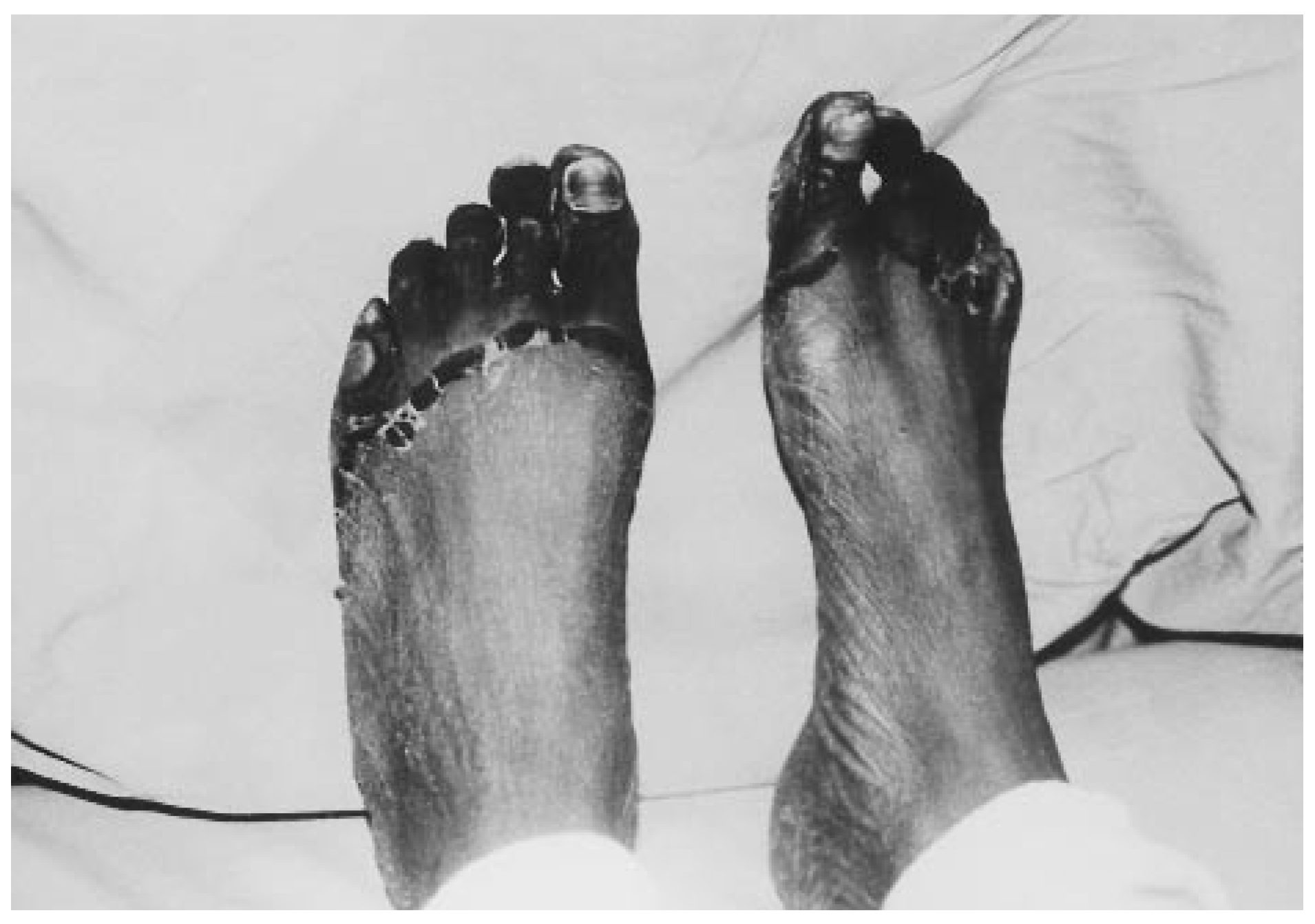
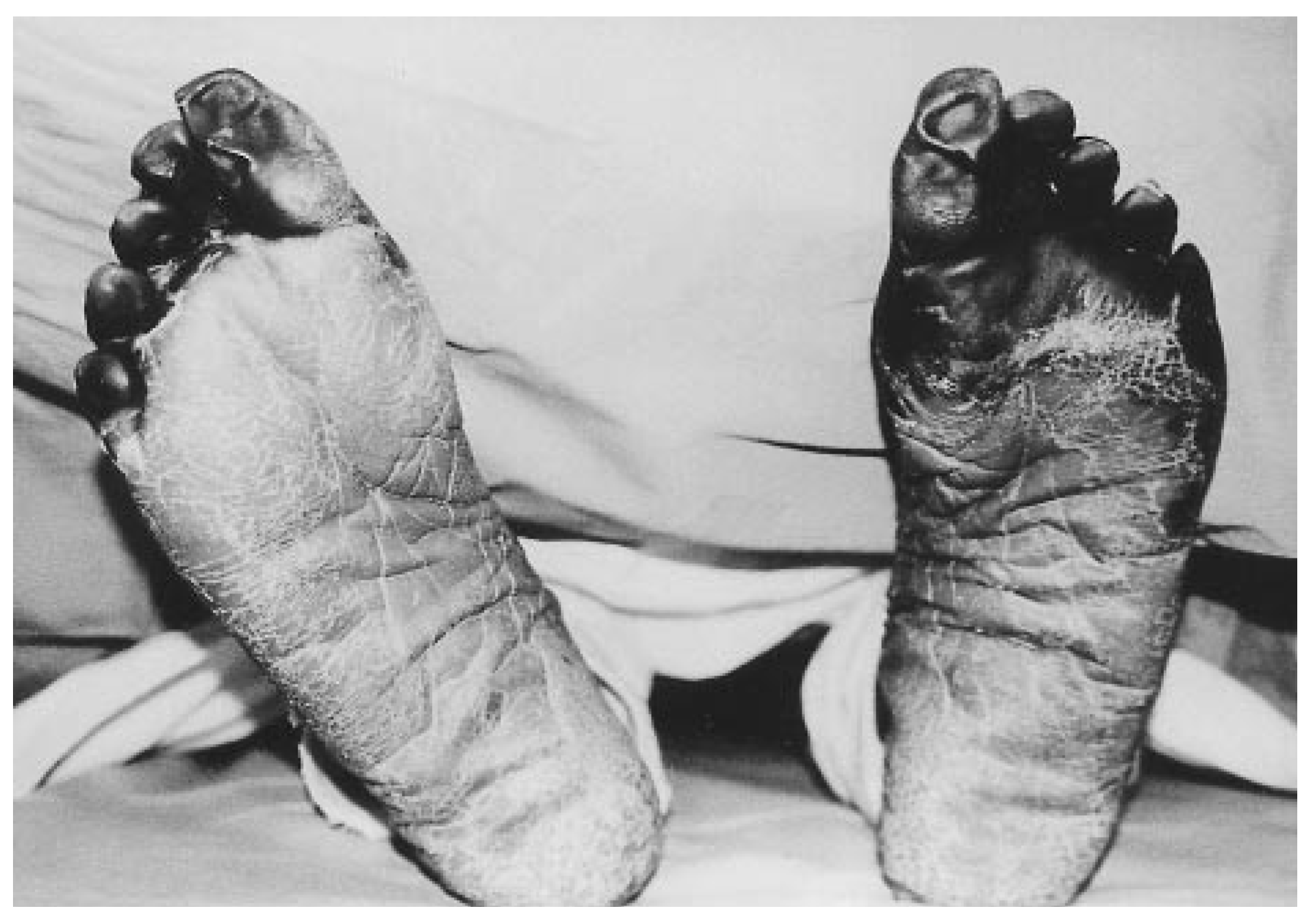
One week after the patient was admitted, a podiatric consultation was obtained because of ischemic, cyanotic changes that were noted on all digits of the patient’s lower extremities. These changes began distally and progressed to the base of the digits just proximal to the web space. No cellulitis or edema was noted. Both legs were warm to the touch and had palpable pedal pulses. Dry gangrenous changes (nonsupple, black, nonviable skin without any drainage) progressed until full demarcation occurred at the distal forefoot level (
Figure 1 and
Figure 2).
After the acute phase of the purpura fulminans subsided, it was decided to operate; the surgical plan was to perform bilateral transmetatarsal amputations once the patient was medically stable. Almost 6 weeks after admission to the hospital, the patient underwent surgery. Two convex incisions were deepened using blunt and sharp dissection to the level of the metatarsophalangeal joints of the right foot. The distal aspect of the forefoot was disarticulated from the foot at the level of the metatarsophalangeal joints. Linear capsular incisions were made on the dorsal aspects of metatarsals one through five, and all capsular and periosteal tissue was reflected to expose the metatarsal heads and shafts. A sagittal saw was used to transect each metatarsal from dorsal distal to proximal plantar. The natural parabola of the foot was maintained. Upon inspection, the remaining portions of skin and soft tissue were noted to be healthy and viable. A plantar flap was brought from the plantar to dorsal aspect to provide adequate coverage of the metatarsals. The left-foot amputation was performed 7 days later because of an intraoperative increase in blood pressure in the first surgery. The same operative procedure was used in the second surgery.
The pathology report stated the diagnosis of gangrene, acute necrotizing inflammation of the forefoot. The postoperative history was unremarkable and the patient was discharged from the hospital 7 days after the second surgery (54 days after admission). The patient made follow-up visits to the podiatric clinic. Sutures were removed 2 weeks postoperatively, and the patient had eventual complete healing of both amputation sites.
Discussion
This case demonstrates one of the effects of septicemia on the lower extremities. Devastating skin changes can occur that range from multiple areas of thrombosis to frank gangrene of the digits, the entire foot, or the leg [
7,
8].
The treatment of purpura fulminans varies according to the phase of the illness. Treatment of the acute phase, which is characterized by skin lesions, shock, fever, and signs of disseminated intravascular coagulation, is mostly supportive [
7,
9]. Correction of the hypovolemia and prescription of specific antibiotics are the priorities at this time. Shock can be treated with correction of the intravascular and interstitial volume deficit.
Heparin therapy has been advocated in the treatment of the coagulopathy [
10]. The mechanism of action in heparin therapy involves inhibition of the coagulation cascade, which inhibits development of intravascular thrombosis. In this case, the use of heparin was contraindicated because of the patient’s endocarditis. After the acute phase has passed, treatment becomes rehabilitative, consisting of meticulous wound care to prevent secondary infections. Debridement or amputation of nonviable tissue may be necessary. Amputation should not be performed until optimal demarcation occurs and the patient is medically stable. Skin grafting may be necessary if initial amputation sites are not closed at surgery.
Amputations were performed on the patient in the case presented here only after the digital necrosis demarcated to the level of the bases of the proximal phalanges. With careful dissection and a good blood supply, the patient healed completely without any complications.
It is important for the podiatric physician to be aware of the rapidly progressing skin changes associated with a laboratory diagnosis of disseminated intravascular coagulation. If they are detected early enough, heparin therapy, if not contraindicated, and supportive care can minimize damage to the extremities, thus decreasing the need for amputation and extensive debridement.