Next Article in Journal
Reevaluation of the relaxed calcaneal stance position. Reliability and normal values in children and adults
Previous Article in Journal
Use of the ROC anchor in foot and ankle surgery. A retrospective study
 
 
Journal of the American Podiatric Medical Association is published by MDPI from Volume 116 Issue 1 (2026). Previous articles were published by another publisher in Open Access under a CC-BY (or CC-BY-NC-ND) licence, and they are hosted by MDPI on mdpi.com as a courtesy and upon agreement with American Podiatric Medical Association.
Article

Management of heel pain syndrome with acetic acid iontophoresis

by
Christopher J. Japour
,
Richa Vohra
,
Praveen K. Vohra
,
Loretta Garfunkel
and
Nena Chin
Department of Surgery, Veterans Affairs Medical Center, Brooklyn, NY 11209, USA
J. Am. Podiatr. Med. Assoc. 1999, 89(5), 251-257; https://doi.org/10.7547/87507315-89-5-251

Published: 1 May 1999

Abstract

This study was undertaken to determine the effectiveness of acetic acid iontophoresis in the treatment of heel pain. Thirty-five patients with chronic heel pain were treated with acetic acid iontophoresis over a 4-year period. Ninety-four percent of patients had complete or substantial relief of heel pain after an average of 5.7 sessions of acetic acid iontophoresis over an average period of 2.8 weeks. Heel pain levels were rated from 0 to 10, with 10 representing the most severe pain. Heel pain prior to iontophoresis treatment received an average rating of 7.5; by the end of therapy, the average rating had decreased to 1.8. At an average follow-up time of 27 months, heel pain levels averaged 0.64, indicating continued reduction in heel pain. Ninety-four percent of participants said that they would recommend acetic acid iontophoresis to someone with similar heel pain.

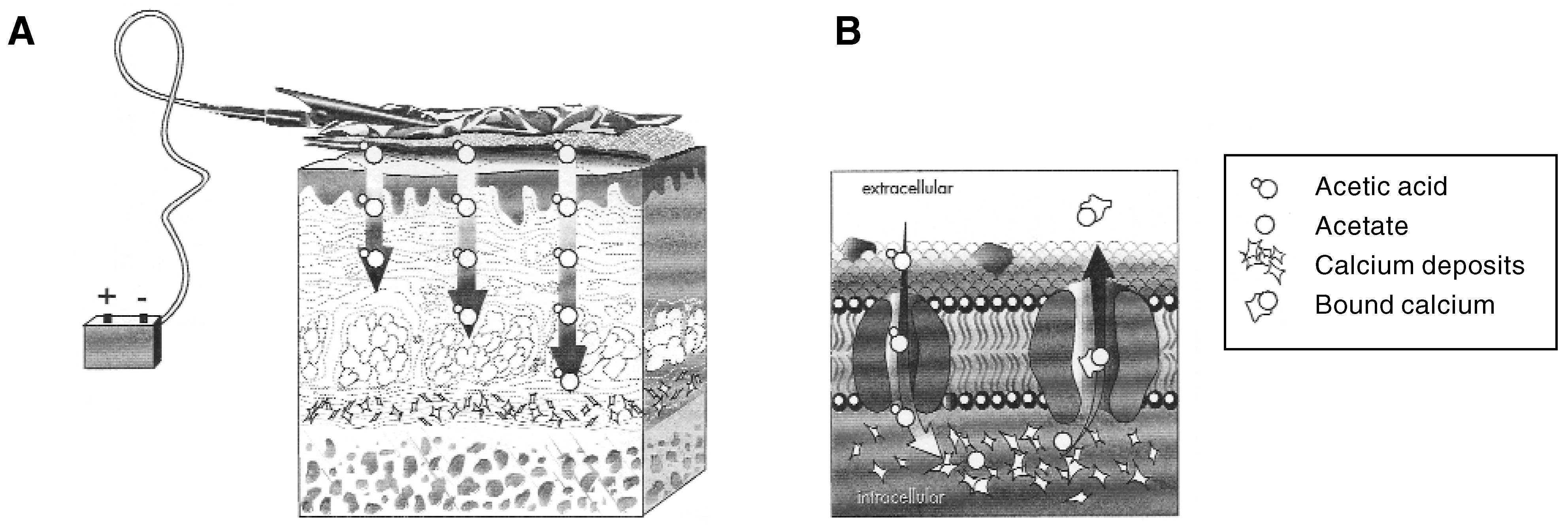
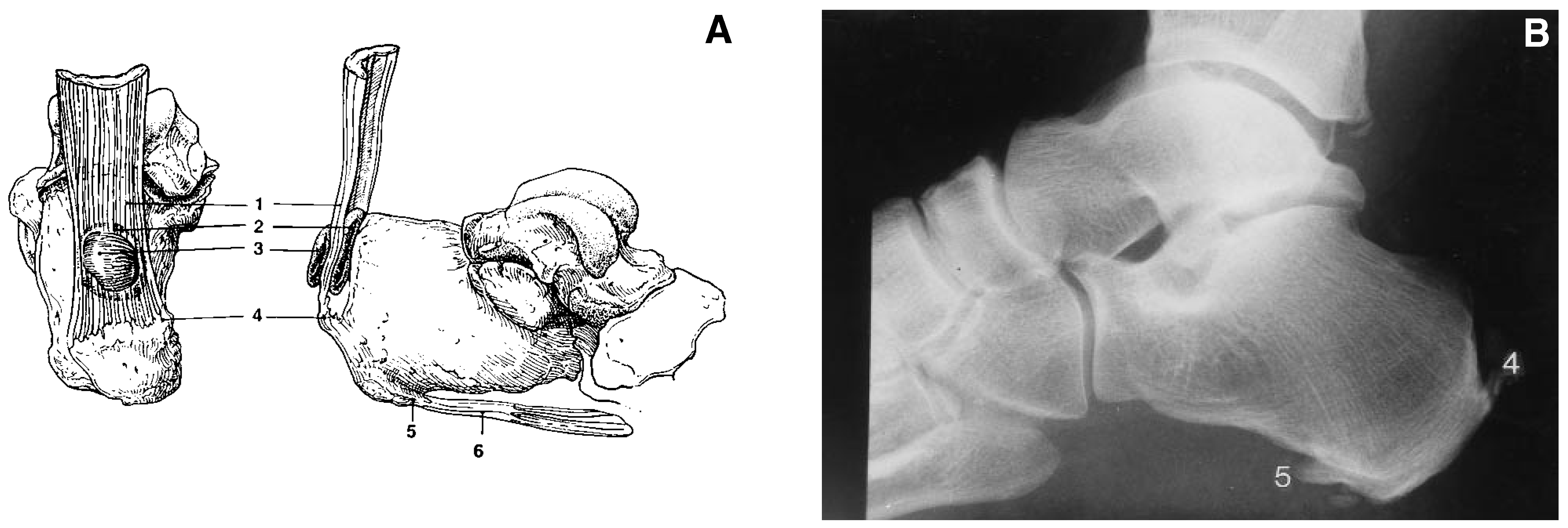
Acetic acid iontophoresis has been considered an effective treatment modality for the relief of heel pain[1] and has become a standard approach to the treatment of calcific bursitis and tendinitis of the shoulder.[2] Iontophoresis introduces ionizable substances into the body for therapeutic purposes by means of a direct current (Table 1).[1] In this case, the acetate radical is introduced under the cathode and deposited subcutaneously, permeating the area around the calcific deposit (Fig. 1). Potential areas of inflammation and subsequent calcium deposition leading to retrocalcaneal spurs are the tendo Achillis insertion on the calcaneus, retrocalcaneal bursae, and superficial Achilles bursae (Fig. 2). Infracalcaneal spurs are formed in the same manner in areas of inflammation and subsequent calcium deposition at the insertion of the plantar fascia on the calcaneus (Fig. 2).
Table 1. Iontophoretic Substances: Source and Properties/Indications.
Japma 89 00251 i001
Figure 1. Diagram showing mechanism of acetic acid iontophoresis. A, Acetic acid introduced under the cathode changes to acetate (which has a negative charge), which is deposited subcutaneously, permeating the area of inflammation where the calcium deposit is found. B, The acetate ion then binds to calcium, forming calcium acetate, which is removed from the area of inflammation.
Japma 89 00251 g001
Figure 2. A, Diagram of the rearfoot showing potential areas of inflammation and subsequent calcium deposition. 1 = Tendo Achillis; 2 = retrocalcaneal bursa; 3 = superficial Achilles bursa; 4 = retrocalcaneal spur; 5 = infracalcaneal spur; 6 = plantar fascia. B, Lateral radiograph depicting both retrocalcaneal (4) and infracalcaneal (5) spurs.
Japma 89 00251 g002
The acetate radical is more chemically active than the carbonate radical in the calcific area, replacing the carbonate radical and forming calcium acetate, which is blood-soluble. The presumed chemical reaction is as follows[3]:
CaCO3 + H(C2H3O2) → Ca(C2H3O2)2 + H2O + CO2
Although acetic acid iontophoresis has been used to treat heel pain, no controlled study of this therapeutic modality has been reported in the literature. This report investigates acetic acid iontophoresis as an alternative conservative physical therapy modality for the management of heel pain.

Iontophoresis Theory

Ion transfer, or iontophoresis, is the introduction of topically applied, physiologically active ions into the epidermis and mucous membranes of the body by means of a continuous direct current. Discovered by LeDuc[4] in 1903, iontophoresis is based on the principle that an electrically charged electrode will repel a similarly charged ion. Therefore, ions with a positive charge can be introduced into the tissues from the positive electrode, and negatively charged ions can be introduced by the negative pole.
The force acting to move an ion through the surface of the body depends on the strength of the electric field and the resistance of the tissues of the body to current flow. The medical specialist may compensate for skin resistance by altering the applied voltage as necessary to achieve the desired current density. It is the current density at the electrode-skin interface that is responsible for the velocity of the charged ions as they pass into the body. The current density may be increased either by decreasing the size of the electrode or by increasing the amount of current. Because body tissues, especially the skin and mucous membranes, have a limited tolerance for the passage of an electric current, the principal guide to a safe current density is the comfort of the patient.
Continuous direct (galvanic) current is the preferred mode of current, as it ensures maximum ion transfer per unit of applied current. Other current forms, such as conventional high-voltage galvanic, sine wave, and interferential currents, are not effective for iontophoresis.[5] Normal, intact skin will not tolerate a current density greater than 1 mA/cm when the applied current is continuous direct current. Skin resistance is even lower in areas where the skin is abraded or lacerated, in areas of scarring, and in individuals with fair skin.
The alkaline reaction occurring under the cathode is much more caustic to the skin than is the acidic reaction occurring at the anode. To minimize the possibility of tissue destruction under the cathode while still maintaining an effective treatment, the therapist should selectively decrease the current density under the cathode. This can be accomplished by increasing the surface area of the cathode. As the current density under the cathode decreases, the magnitude of the caustic alkaline reaction in the body tissue, which occurs as the continous direct current passes through the cathode, also decreases. The cathode should be twice as large as the anode at all times.[5]
An additional concern is the anesthetic effect of continuous direct current.[5] Therefore, close monitoring of the skin underlying the electrodes is recommended during treatment. In addition, as a normal response to current flow, mild-to-moderate hyperemia (capillary dilation) is to be expected under both electrodes.
The effectiveness of a specific ion depends on the number of ions transferred, the depth of penetration, whether the ions combine chemically with other substances in the skin and precipitate, and whether the ions enter the capillaries and are carried away from the site of application by the blood.
The number of ions transferred into the body through iontophoresis is related to the current density at the active electrode, the duration of the current flow, and the concentration of the ions in the solution. The quantity of ions introduced across the body surface is directly proportional to the current density. The amount of time that the current is allowed to flow also influences the number of ions transferred, as it is the direct current passing through the electrolytic solution that causes the ions to migrate according to their charge. The number of ions transferred is proportional to the cube root of the product of the current density and the duration of its application. Therefore, the longer a current is applied, the greater the number of ions that will be transferred. However, as the duration of the treatment increases, the resistance decreases and the chance of an electrical burn increases.
Resistance to current flow and to ion transfer is primarily a function of the skin. However, certain dermal structures such as hair follicles and sweat glands represent areas of decreased skin resistance and provide gaps in the skin through which an electric current and ions may readily flow. Moreover, the overall resistance of the skin to current flow will fall somewhat during the treatment as the skin becomes more saturated with the electrolyte and as the physiologic reaction to the current flow results in increased vasodilation to the area under the electrodes. Another factor inhibiting the transfer of ions is the tendency of some ions to form insoluble precipitates as they pass into the tissue. Precipitates are formed with the transfer of heavy-metal ions, such as iron, silver, copper, and zinc.

Materials and Methods

From 1994 to 1998, 35 patients with chronic heel pain were treated with acetic acid iontophoresis by one of the authors (L.G.) at St. Albans Veterans Affairs Extended Care Center in St. Albans, New York. Patients were recruited by referral to the Department of Physical Medicine and Rehabilitation from the podiatry clinics and primary care clinics located at the Veterans Affairs Medical Centers in St. Albans, Brooklyn, Manhattan, and Staten Island, New York.
All patients enrolled in the study had a previous diagnosis of recalcitrant heel pain. There were 31 men and 4 women with an average age of 58.6 years (range, 33 to 78 years). The right heel was involved in 17 cases and the left heel in 12 cases. Six patients had bilateral heel pain and subsequent bilateral iontophoresis therapy. Of the 35 patients completing the treatment, 33 patients were available for follow-up evaluation.
Comorbid conditions contributing to heel pain were noted. Patients were interviewed before each treatment by a licensed occupational therapist. Individuals were asked about their current pain level, ability to walk without pain, and pain with the first step in the morning and during the day. The body mass index, defined as the weight in kilograms divided by the square of the height in meters, was calculated for each patient. Patients with a body mass index of 27.8 or greater were considered obese.[6,7,8]
Heel pain was measured using a numeric pain-intensity scale ranging from 0 to 10, with 0 representing no pain and 10 representing the worst possible pain.[9] First-step pain was used as a measure of heel pain for the purposes of this study. Pain levels before and after completing treatment were compared using the t-ratio. The conservative treatment of patients before the beginning of the study varied. However, during the treatment regimen patients received no therapy other than acetic acid iontophoresis.

Iontophoresis Technique

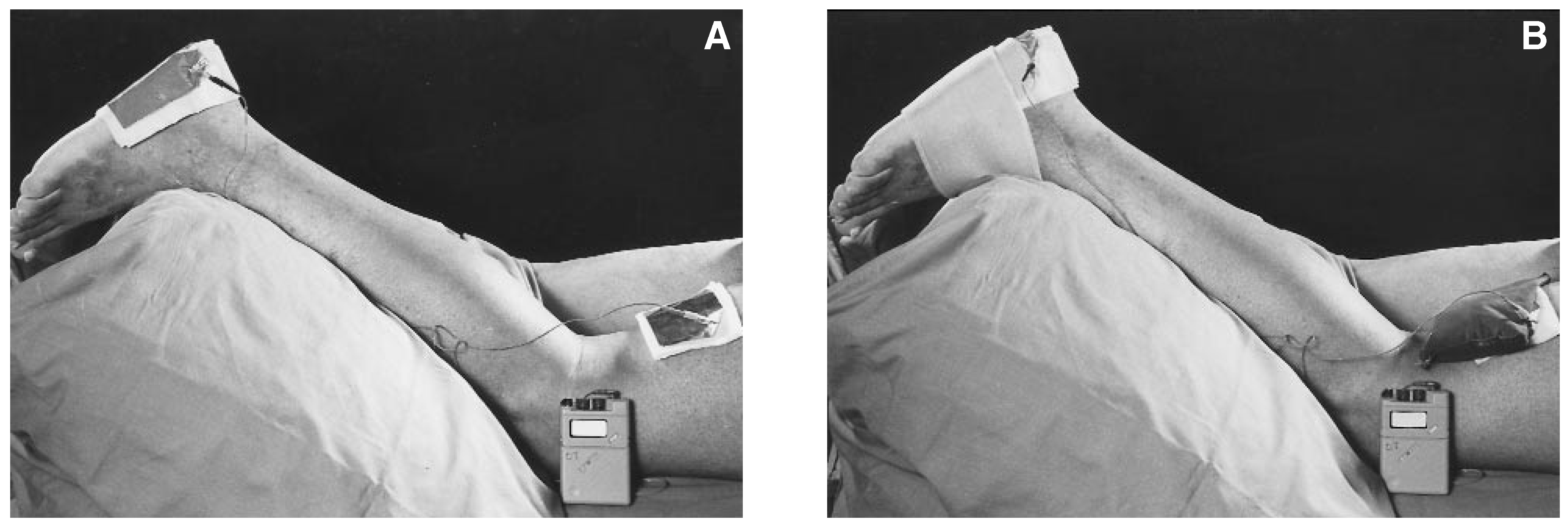
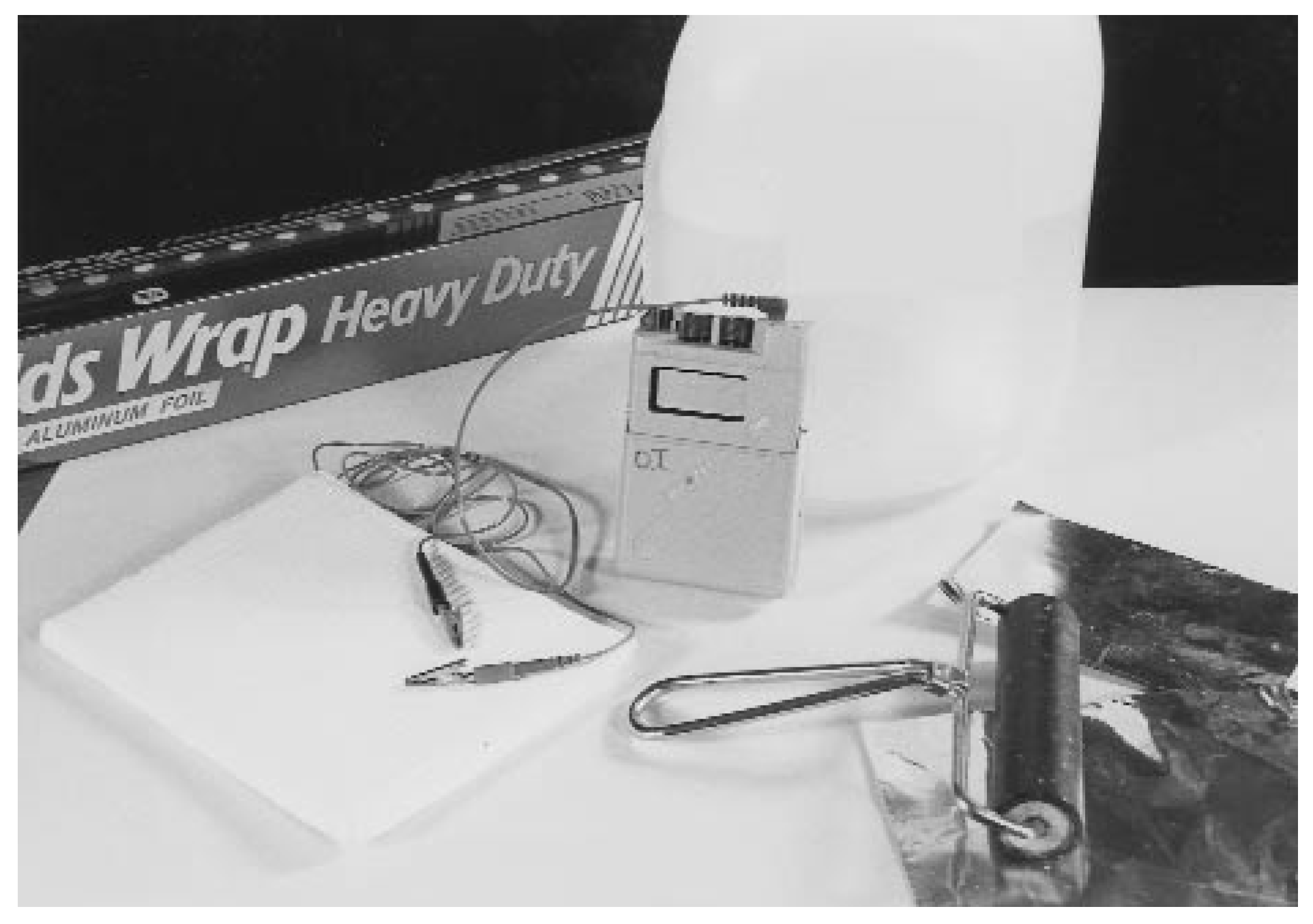
A solution of acetic acid diluted to 5% in distilled water was used. Two Crosstex (Cross County Paper Products Co, Hauppage, New York) uncoated paper towels measuring approximately 5 × 7 inches were soaked in this solution and placed over the heel (Fig. 3). A pad of household heavy-duty aluminum foil folded to several thicknesses and rolled smooth was superimposed on the towels and connected to the negative pole lead of a continuous direct current generator (Dupel, Empi, Inc, St Paul, Minnesota) with an “alligator” clip (Fig. 4). The reference (positive) electrode (one 5 × 7-inch Crosstex paper towel, folded to measure 3 × 5 inches, soaked in plain tap water) was placed homolaterally above the popliteal fossa to reduce resistance in the circuit. The electrodes were held in position by lightweight sandbags or Nylatex (Chattanooga Group, Chattanooga, Tennessee) wraps depending on the anatomy involved. Two or three milliamperes of continuous direct current was passed through the circuits for approximately 15 to 20 minutes. Treatment was administered two or three times weekly. Patients were checked after each treatment for hyperemia. Patients had x-rays taken both before and after the procedure.
Figure 3. A, Application of iontophoresis electrodes with unit for treatment of heel spur; B, electrodes secured at foot and thigh.
Japma 89 00251 g003
Figure 4. Materials needed for iontophoresis: heavyduty aluminum foil, acetic acid solution, dual-channel iontophoresis system, paper towels, roller device.
Japma 89 00251 g004

Results

The average heel pain rating decreased significantly, from 7.5 before treatment to 1.8 after the end of treatment (P < .01; t = 28.9). Obese patients experienced significantly higher levels of heel pain (mean rating, 8.04) than nonobese patients (mean rating, 6.92) before treatment (P < .01; t = 2.32). Patients required an average of 2.8 weeks of treatment with acetic acid iontophoresis to alleviate first-step pain; this is significantly less than the average of 7.8 weeks reported in other studies of conservative treatment modalities for heel pain (P < .01; t = 10.4) (Table 2). Ninety-four percent of patients reported total or substantial improvement of heel pain after completion of acetic acid iontophoresis therapy. Ninety-four percent said that they would recommend acetic acid iontophoresis therapy to someone with similar heel pain. No gross changes were noted on x-rays of calcaneal spurs after completion of treatment.
Table 2. Effectiveness of Conservative Treatment Modalities in Various Studies.
Japma 89 00251 i002

Discussion

In this first long-term, prospective study of iontophoresis in the treatment of heel pain, 94% of patients treated with acetic acid iontophoresis reported relief of heel pain that had been present for a number of years. Patients obtained lasting relief with just 3 weeks of noninvasive, relatively inexpensive therapy. Studies of the effectiveness of various conservative modalities in the treatment of heel pain tend to show good results, with between 65% and 95% of patients obtaining relief from a variety of conservative therapies often used in combination (Table 2).
It is interesting that in the present study, obese patients did not respond as well to therapy as nonobese patients. Whereas obese patients obtained short-term relief after 3 weeks of therapy, when questioned during the follow-up period these patients reported that the heel pain had returned. Obesity is known to be a predisposing factor in heel pain,[15] and other studies have found that obese patients respond less well to conservative treatment for heel pain than nonobese patients.[12]
The final question to be explored is the mechanism by which acetic acid iontophoresis reduces heel pain. Acetic acid iontophoresis shifts calcium away from the site of inflammation. Calcium has been shown to be a component of the inflammatory response in the standard arachidonic acid cascade model.[21] Monocytes are theorized to raise calcium levels by inducing phospholipase A2, leading to cleavage of arachidonic acid from membrane glycolipid.
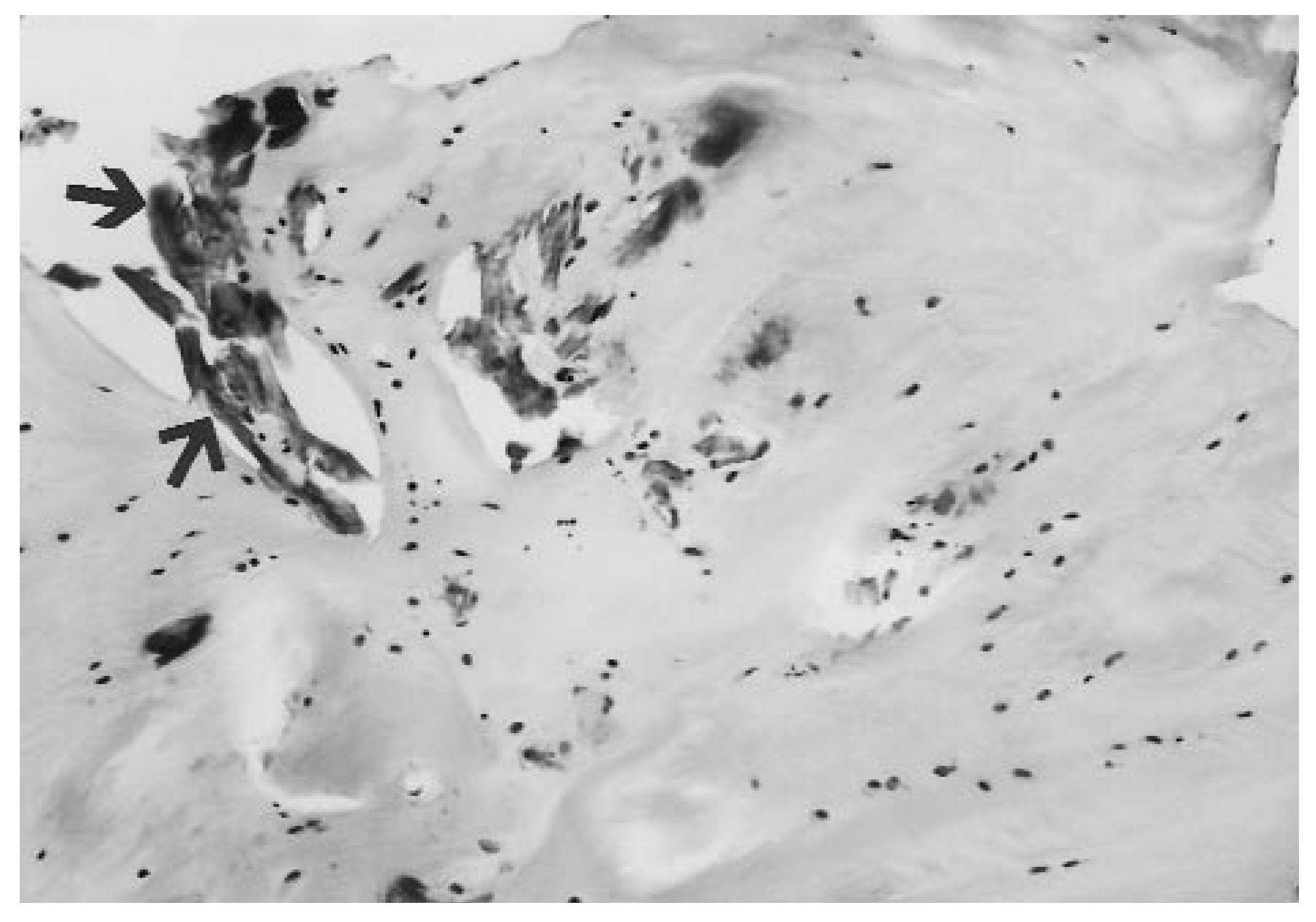
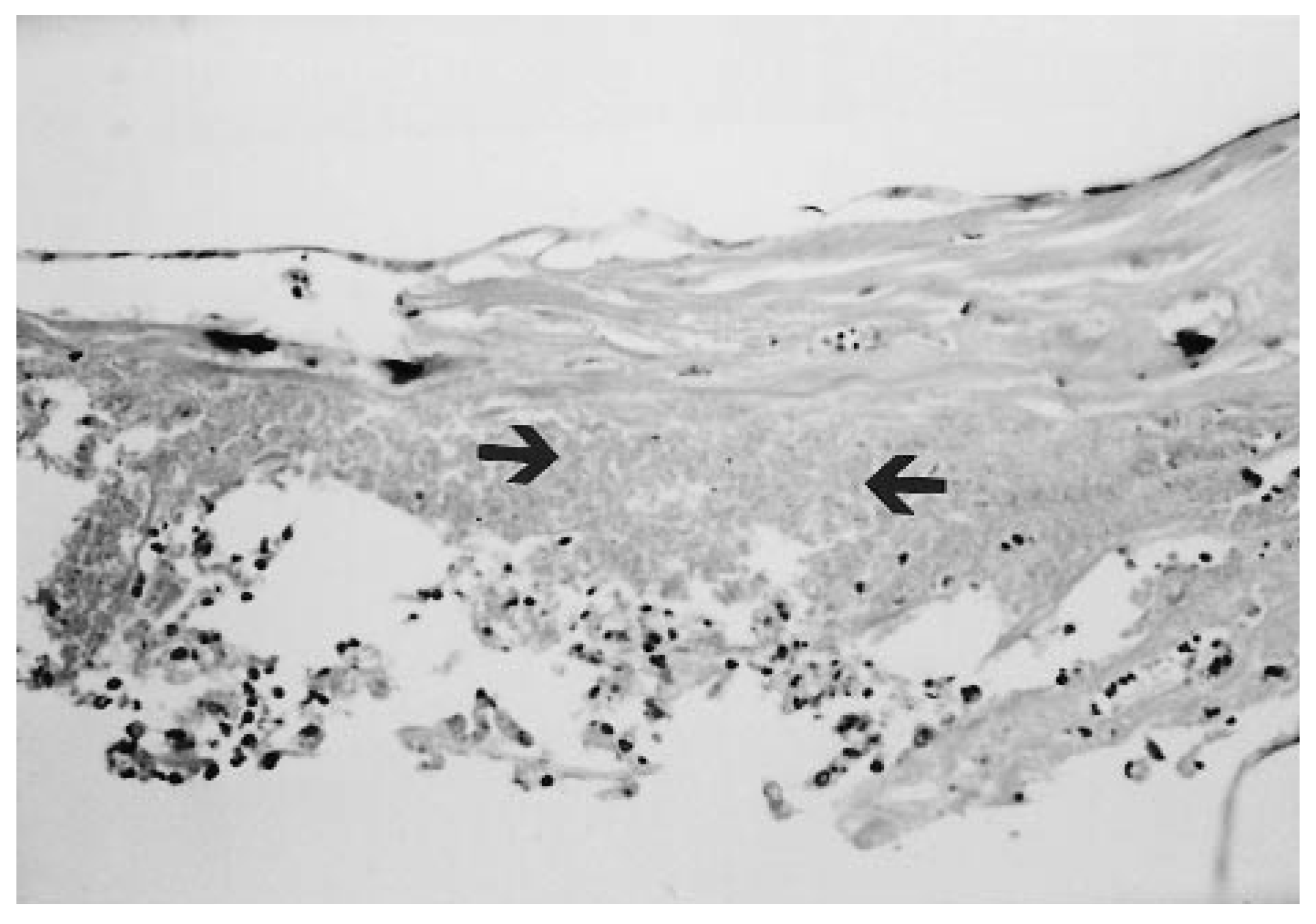
Histopathologic changes of calcaneal tendons and ligaments of patients who have heel pain include an initial low-grade chronic periosteal inflammation, edema, fibroblastic proliferation, and inflammatory cell proliferation. Dystrophic calcification will then occur, leading to acute pain at the fascial and tendon attachments.[22] Dystrophic calcification refers to calcium deposits found in inflamed, dead, or dying tissue despite normal blood calcium levels and normal calcium metabolism (Fig. 5).[23] One theory proposes that denatured proteins from damaged cells unmask reactive groups that bind phosphate radicals. In turn, the phosphate radicals bind calcium ions. The calcium ions then open tendon collagen fiber bundles, which cause tissue swelling and fat saponification and ultimately tissue disruption. These calcium ions break protein crosslinkages with chondroitin sulfate or other polysaccharides, disrupting hydrogen bonds or protein-interchange linkages.[24] The chronicity of the inflammation and necrosis will progress to fibrocartilage formation and eventually to osseous spur formation (Fig. 6). In addition, tendon thickening and nodularity with tendon calcification will occur. Tears of the tendo Achillis have been noted through areas of calcification immediately proximal to its insertion.[25] The patient will remain symptomatic as long as the inflammatory phase of adventitial bursitis, periostitis, or plantar fasciitis is present.
Figure 5. Photomicrograph showing dystrophic calcification (between arrows) of the tendo Achillis (H&E, ×20).
Japma 89 00251 g005
Figure 6. Photomicrograph showing necrosis (between arrows) of the tendo Achillis (H&E, ×20).
Japma 89 00251 g006

Conclusion

The results of this study indicate that acetic acid iontophoresis is an effective conservative treatment modality for acute or recalcitrant heel pain. Further studies should be conducted to confirm these results.

Acknowledgments

Anne Erickson, MA, CMI, and Mike Yu for the medical illustrations and photographs; William Glynn for word processing; Kevin Cusack, PhD, Bimal C. Ghosh, MD, and Joseph Kahn, PhD, PT, for guidance.

References

  1. KAHN, J. Principles and Practices of Electrotherapy; Churchill Livingstone: New York, 1987; p. 165. [Google Scholar]
  2. PSAKI, CG; CAROLL, J. Acetic acid ionization: a study to determine absorptive effects upon calcified tendinitis of the shoulder. Phys Ther 1955, 35, 84. [Google Scholar] [CrossRef]
  3. KAHN, J. Acetic acid iontophoresis for calcium deposits: suggestion from the field. Phys Ther 1977, 57, 658. [Google Scholar] [CrossRef]
  4. LEDUC, S. Electric Ions and Their Use in Medicine; Rebman: Liverpool, England, 1903. [Google Scholar]
  5. CUMMINGS, J. “Iontophoresis,” in Clinical Electrotherapy; Nelson, RM, Currier, DP, Eds.; Appleton and Lange: Norwalk, CT, 1987; p. 231. [Google Scholar]
  6. TELSON, DT; ZHANG, Y; ANTYONY, JM; et al. Weight loss reduces the risk for symptomatic knee osteoarthritis in women: the Framingham Study. Ann Intern Med 1992, 116, 535. [Google Scholar]
  7. MANSON, JE; COLDITZ, GA; STAMPFER, MJ. ET AL: A prospective study of coronary heart disease in women. N Engl J Med 1990, 322, 882. [Google Scholar] [CrossRef]
  8. US PUBLIC HEALTH SERVICE. Healthy People 2000: National Health Promotion and Disease Prevention Objectives; DHHS publication PHS91-50212; US Government Printing Office: Washington, DC, 1990. [Google Scholar]
  9. DILIMA, S. Pain Management Patient Education Manual; Aspen Publishers: Gaithersburg, MD; p. 12.
  10. CAMPBELL, JW; INMAN, VT. Treatment of plantar fasciitis and calcaneal spurs with the UC-BL shoe insert. Clin Orthop 1974, 103, 57. [Google Scholar] [CrossRef][Green Version]
  11. CHANG, CC. MILTNER LJ: Periostitis of the os calcis. J Bone Joint Surg 1934, 16, 355. [Google Scholar]
  12. FUREY, JG. Plantar fasciitis: the painful heel syndrome. J Bone Joint Surg Am 1975, 57, 672. [Google Scholar] [CrossRef] [PubMed]
  13. AMIS, J; JENNINGS, L; GRAHAM, D. ET AL: Painful heel syndrome: radiographic and treatment assessment. Foot Ankle 1988, 9, 91. [Google Scholar] [CrossRef]
  14. KENZORA, JE. The painful heel syndrome: an entrapment neuropathy. Bull Hosp Jt Dis Orthop Inst 1987, 47, 178. [Google Scholar] [PubMed]
  15. LAPIDUS, PW; GUIDOTTI, FP. Painful heel: report of 323 patients with 364 painful heels. Clin Orthop 1965, 39, 178. [Google Scholar] [CrossRef]
  16. O’BRIEN, D. MARTIN WJ: A retrospective analysis of heel pain. JAPMA 1985, 75, 416. [Google Scholar] [CrossRef]
  17. SHIKOFF, MD; FIGURA, MA; POSTAR, SE. A retrospective study of 195 patients with heel pain. JAPMA 1986, 76, 71. [Google Scholar] [CrossRef]
  18. SNOOK, GA. CHRISMAN OD: The management of subcalcaneal pain. Clin Orthop 1972, 82, 163. [Google Scholar] [CrossRef]
  19. LUTTER, LD. Surgical decisions in athletes’ subcalcaneal pain. Am J Sports Med 1986, 14, 481. [Google Scholar] [CrossRef]
  20. MCBRYDE, AM, JR. Plantar fasciitis. Instr Course Lect 1984, 33, 278. [Google Scholar] [PubMed]
  21. HOTCHKISS, RS. KARL IE: Calcium, a regulator of the inflammatory response: the good, the bad and the possibilities. Shock 1997, 7, 308. [Google Scholar] [CrossRef] [PubMed]
  22. LEACH, RE; DILORIO, E. HARNEY RA: Pathologic hindfoot conditions in the athlete. Clin Orthop 1983, 177, 116. [Google Scholar] [CrossRef]
  23. BLACK, AS; KANAT, IO. A review of soft tissue calcifications. J Foot Surg 1985, 24, 243. [Google Scholar]
  24. SPEER, DP; URIST, MR. Calcium binding by chondroitin sulfate. Calcan Tiss Res 1968, 2, 253. [Google Scholar]
  25. FIAMENGO, SA; WARREN, RF; MARSHALL, JL. ET AL: Posterior heel pain associated with a calcaneal step and Achilles tendon calcification. Clin Orthop 1982, 163, 203. [Google Scholar] [CrossRef]

Additional References

  1. ANGERMANN, P. Chronic retrocalcaneal bursitis treated by resection of the calcaneus. Foot Ankle 1990, 10, 285. [Google Scholar] [CrossRef]
  2. BASSIOUNI, M. Incidence of calcaneal spurs in osteoarthrosis and rheumatoid arthritis and in control patients. Ann Rheum Dis 1965, 24, 490. [Google Scholar] [CrossRef]
  3. BAXTER, DE; THIGPEN, CM. Heel pain: operative results. Foot Ankle 1984, 5, 16. [Google Scholar] [CrossRef] [PubMed]
  4. BORDELON, RL. “Heel Pain,” in Surgery of the Foot and Ankle, 6th Ed; Mann, RA, Coughlin, MJ, Eds.; CV Mosby: St Louis, 1993; p. 837. [Google Scholar]
  5. BORDELON, RL. Subcalcaneal pain: a method of evaluation and plan for treatment. Clin Orthop 1983, 177, 49. [Google Scholar] [CrossRef]
  6. BRUN, JG; JONSSON, R; HAGA, HJ. Measurement of plasma calprotectin as an indicator of arthritis and disease activity in patients with inflammatory rheumatic diseases. J Rheumatol 1994, 21, 733. [Google Scholar]
  7. CONTI, RJ; SHINDER, M. Soft tissue calcifications induced by local corticosteroid injection. J Foot Surg 1991, 30, 34. [Google Scholar] [PubMed]
  8. EGGERS, GWN. Shoe pad for treatment of calcaneal spur. J Bone Joint Surg Am 1957, 39, 219. [Google Scholar] [CrossRef]
  9. FREEMAN, C, JR. “Heel Pain,” in The Foot Book; Gould, JS, Ed.; Williams & Wilkins: Baltimore, 1988; p. 228. [Google Scholar]
  10. GERSTER, JC; VISCHER, TL; BENNANIK, A. ET AL: The painful heel. Ann Rheum Dis 1977, 36, 343. [Google Scholar] [CrossRef]
  11. KLEMPT, M; MELKONYAN, H; NACKEN, W; ET, AL. The hetrodimer of the calcium binding protein MRP8 and MRP14 binds arachidonic acid. FEBS Lett 1997, 408, 81. [Google Scholar] [CrossRef]
  12. KOPELL, HP. THOMPSON WAL: Peripheral Entrapment Neuropathies; Robert E Krieger: Huntington, NY, 1976; p. 27. [Google Scholar]
  13. KOVACS, R. Electrotherapy and Light Therapy; Lea & Febiger: Philadelphia, 1949; p. 136. [Google Scholar]
  14. LIBERSON, F. Deep x-ray therapy in the treatment of “painful heel.”. J Urol 1932, 28, 105. [Google Scholar] [CrossRef]
  15. MANN, RA (Ed.) Surgery of the Foot, 5th Ed; CV Mosby: St Louis, 1986; p. 244. [Google Scholar]
  16. MANTELL, BS. Radiotherapy for painful heel syndrome. BMJ 1978, 2, 90. [Google Scholar] [CrossRef][Green Version]
  17. MCCARTHY, DJ; GORECKI, GE. Anatomical basis of inferior calcaneal lesions: a cryomicrotomy study. JAPA 1979, 69, 527. [Google Scholar] [CrossRef]
  18. MCGLAMRY, ED. Comprehensive Textbook of Foot Surgery; Williams & Wilkins: Baltimore, 1992; Vol 1, p. 453. [Google Scholar]
  19. MICHETTI, ML; JACOBS, SA. Calcaneal heel spurs: etiology, treatment and a new surgical approach. J Foot Surg 1983, 22, 235. [Google Scholar]
  20. MURPHY, PC. BAXTER DE: Nerve entrapment of the foot and ankle in runners. Clin Sports Med 1985, 4, 753. [Google Scholar] [CrossRef] [PubMed]
  21. PREISSNITZ, O. The combined calcium-antihistamine injection in the treatment of acute epicondylitis calcanodynia [in German]. Munch Med Wehnschr 1954, 96, 140. [Google Scholar]
  22. PRZYLUCKI, H; JONES, CL. Entrapment neuropathy of muscle branch of lateral plantar nerve: a cause of heel pain. JAPA 1981, 71, 119. [Google Scholar] [CrossRef]
  23. ROSE, GK. The painful heel. BMJ 1955, 2, 831. [Google Scholar]
  24. RUBIN, G; WITTEN, M. Plantar calcaneal spurs. Am J Orthop 1963, 5, 38. [Google Scholar]
  25. SALMUNI, J. Espolón del calcaneo. Rev Assoc Med Argent 1955, 69, 292. [Google Scholar]
  26. SAVASTANO, AA. Surgical neurectomy for the treatment of resistant painful heel. R I Med J 1985, 68, 371. [Google Scholar]
  27. SNIDER, MP; CLANCY, WG; MCBEATH, AA. Plantar fascia release for chronic plantar fasciitis in runners. Am J Sports Med 1983, 11, 215. [Google Scholar] [CrossRef]
  28. TANZ, SS. Heel pain. Clin Orthop 1963, 28, 169. [Google Scholar] [CrossRef] [PubMed]
  29. WILLIAMS, PL; SMIBERT, JG; COX, R. ET AL: Imaging study of the painful heel syndrome. Foot Ankle 1987, 7, 345. [Google Scholar] [CrossRef] [PubMed]
  30. WOOLNOUGHI, BS. Tennis heel. Med J Aust 1954, 2, 857. [Google Scholar] [CrossRef]