Heel spur syndrome is one of the most commonly treated disorders in podiatric medical practice and includes acute bursitis and plantar fasciitis. While its diagnosis is typically straightforward, its management can be frustrating, expensive, and unpredictable. The stubbornness of this syndrome is attested to by the existence of numerous conservative treatment modalities, including oral anti-inflammatory and steroid preparations, localized injections, physical therapy, night splints, orthotic devices, and various strapping and padding techniques. When conservative treatment modalities have been exhausted, surgical intervention may be indicated.
Numerous surgical approaches to the treatment of heel spur syndrome have been described. Griffith [
1], in 1910, described a transverse U-shaped incisional approach that retracted the heel distally as a full-thickness flap. The calcaneal tuberosity and plantar fascia were exposed; the fascia was released and the infracalcaneal spur resected. In 1925, Steindler [
2] recommended a medial horizontal approach with resection of the spur. Spitzy [
3], in 1937, postulated that the pain was due to the strain and pull of the plantar fascia on the spur, not the spur itself; he recommended only release of the plantar fascia without resection of the spur. Rotational osteotomies, which entailed burying the spur into the calcaneus, were described in 1938 by Steindler and Smith [
4] and in 1951 by Michele and Krueger [
5]. Rotational osteotomies have not been widely accepted as a viable approach for patients with typical heel spur syndrome recalcitrant to conservative treatment modalities.
Many other procedures have been described, but the most common and popular approach for many years has been the medial incisional approach with partial excision of the plantar fascia with or without concomitant excision of the infracalcaneal spur. Described first by Hiss [
6], in 1949, and later by DuVries [
7], the incision is placed along the nonweightbearing aspect of the medial heel, providing good exposure to the fascia and spur. Mercado [
8] espoused an osteotripsy procedure through a smaller medial incision in which a rasp could be used to remove the spur. Because of postsurgical nerve entrapment syndromes and wound complications such as wound dehiscence and painful scars, the medial incisional approach has lost much of its popularity.
A number of newer surgical approaches have been advocated in the last decade. These have included endoscopic plantar fasciotomy, first described by Barrett and Day [
9] in 1993 and Barrett et al [
10,
11] in 1995, and the fluoroscopy-assisted plantar fasciotomy described by Graves et al [
12] in 1994. A myriad of plantar incisions have more recently been described. Each of these approaches was developed to allow greater appreciation of the pathologic structures with less disruption of the normal surrounding anatomical structures.
Some authors have continued to prefer the use of a variety of plantar approaches. In 1985, Kahn et al [
13] described a plantar transverse incision just distal to the weightbearing area of the heel in which a 2-inch square of fascia was removed. Two years later, Ward and Clippinger [
14] recommended a long curvilinear plantar approach to transect the medial band of the plantar fascia without spur resection. Lewis et al [
15] performed a longitudinal approach directly beneath the heel pad and parallel to Langer’s lines [
16] for release of the plantar fascia and resection of the heel spur. Although their report did not indicate any specific wound-healing complications, it has always been recognized that a transverse incision on the plantar aspect of the foot would be more appropriate and correct. A transverse incisional approach follows the relaxed skin tension lines [
17] and will help avoid potential scar problems. In 1993, Boike et al [
18] and then Self et al [
19] described plantar transverse approaches to the heel. Although Kahn had earlier described the plantar transverse incision located in the arch, Boike chose to place his incision directly over the plantar calcaneal fat pad. He located the distal medial tuberosity and spur via fluoroscopy and located his approximately 3.5-cm transverse incision at this point. A munion was inserted beneath the fascia, and the plantar fascia was resected across its entire width. The spur was also resected. Self chose a 3.0-cm transverse incision that was placed 1.5 cm distal to the insertion of the plantar fascia. The fascia was released from medial to lateral and the spur was resected. In 1994, Braly [
20] described an oblique incision, about 3 to 4 cm long, made distal and medial to the heel pad; in this incision, the medial and central bands of the fascia were transected, the lateral band of the fascia was spared, and the spur was resected.
Visser et al [
21] and then Perelman et al [
22] recommended an L-shaped incision placed approximately 1.5 cm distal to the anterior aspect of the plantar heel pad with subsequent release of the central fascial band. Boberg [
23] proposed that a 1.5- to 2.0-cm transverse incision be made just distal to the heel pad in the arch over the tight fascial band that can be isolated by holding the hallux in forced dorsiflexion. The lateral band is spared and a wedge of fascia may be resected if appropriate. Malay [
24] described an oblique incision that directly overlies the heel and allows adequate exposure to the prominent spur and access to the plantar fascia while avoiding the larger segments of the medial calcaneal nerve branches. Recently, Brekke and Green [
25] described a 5- to 10-mm transverse plantar incision that was placed over the distal aspect of the medial calcaneal tubercle. The digits were held in dorsiflexion, and only the fibers from the medial tubercle were released. No concomitant osseous resection was performed.
The authors have used a plantar transverse incision that is placed at or just slightly distal to the insertion of the plantar fascia. This study is a retrospective evaluation of patients who have undergone this procedure to determine its clinical efficacy and to identify any postoperative complications associated with it. The authors also wished to gain further insight into the economic aspects and implications of both conservative treatment and surgical intervention.
Materials and Methods
A retrospective study was undertaken to evaluate the efficacy of the open transverse incisional approach for the management of chronic heel spur syndrome unresponsive to conservative treatment. From 1991 to 1998, 19 patients underwent a total of 20 plantar fasciotomies that involved a plantar transverse incision. All patients who underwent plantar fasciotomy with or without spur resection were included in the study. Any patient who had concurrent pedal surgical procedures performed was excluded.
A thorough patient chart review was performed to determine the history of the presenting complaint, including any prior treatment modalities received. The initial physical examination was reviewed, and each patient’s height and weight, foot type, biomechanical abnormalities, location of the pain, and neurologic symptoms were noted. All radiographs were reviewed, and any spurring, plantar protrusion, or other deformity was noted.
A review was conducted of conservative modalities rendered; the review included the cost of the therapy. An evaluation of the off-site physical therapy costs was not possible. The number of patient visits and the length of conservative therapy were included.
The surgical records were compared for any variations in technique, including changes in incisional approach, number of bands resected, and suturing techniques. The presence of any aberrant nerve or bursa was noted.
The cost of the surgery itself was also evaluated. The surgeon’s charge was compared with the reimbursement received. The facility and anesthesia charges were also obtained; unfortunately, it was not possible to determine reimbursement for these.
Finally, the postoperative course was reviewed. The length of nonweightbearing, patient compliance, and complications were noted. The length of in-office follow-up and the number of postoperative visits were also assessed. If the patient required further physical therapy or orthotic devices, this was also noted.
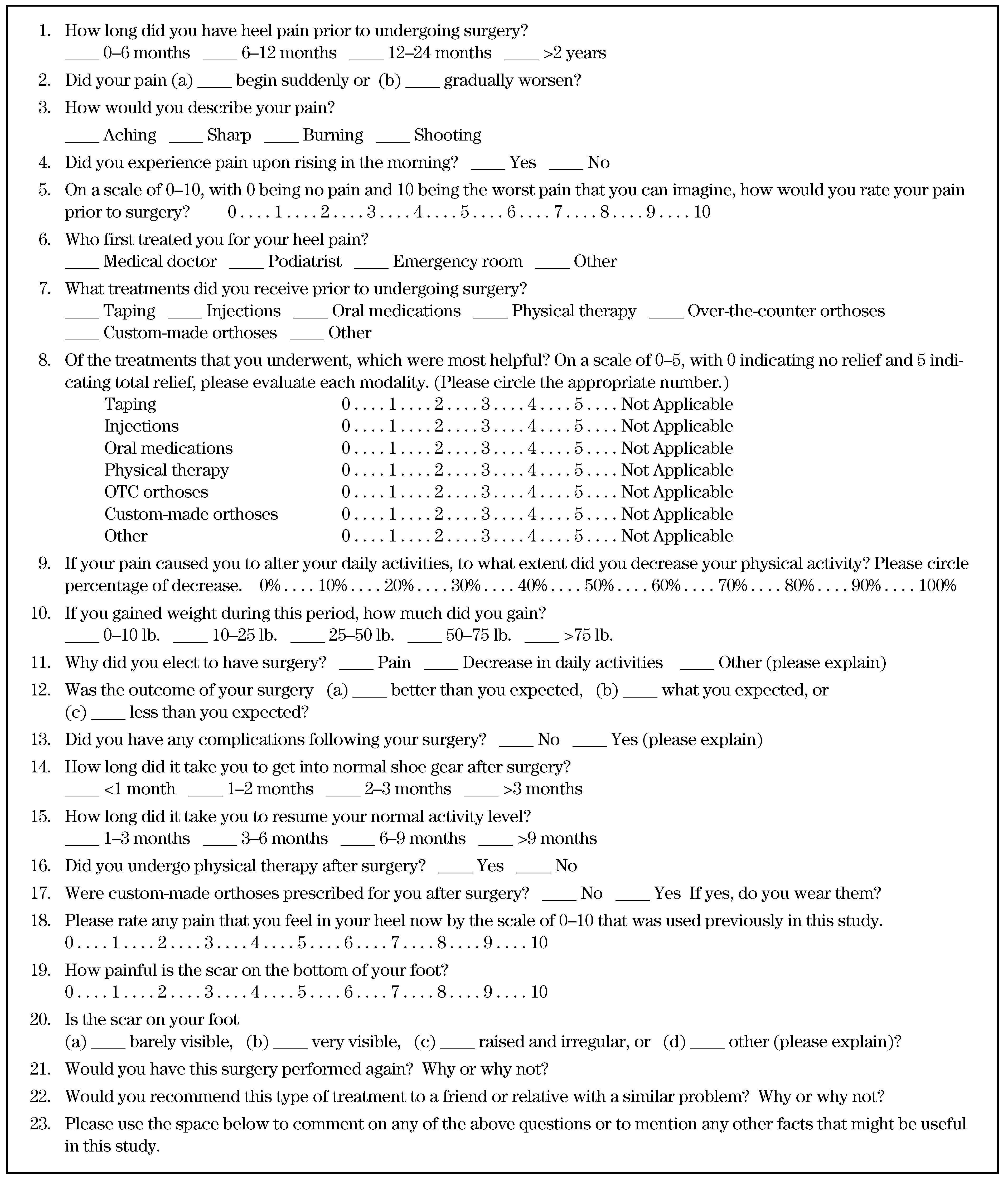
Each of the operative patients was sent a detailed questionnaire (
Figure 1). Ten of the questions dealt with preoperative symptoms and treatment. A visual analog pain scale was used to determine the level of preoperative pain. The patient was also questioned about the treatment modalities used and how successful these were. The length and type of pain and disability were ascertained as well as the presence of poststatic dyskinesia (pain with activity after rest).
Thirteen questions dealt with the surgery itself and the postoperative course. The patients were asked why they elected to have surgery, whether their expectations were met, and whether they would recommend this type of surgery to a friend or relative. Questions concerning any perceived postoperative complications were also asked. The appearance of the scar and any pain associated with the scar were addressed. An attempt was made to telephone any patient who did not return a questionnaire. The information received in the returned questionnaires was compared with the information in the patient charts, and any discrepancies were noted.
Surgical Technique
The patient is placed in the supine position with the heel resting slightly distal to the end of the table to allow ease of dorsiflexion of the foot. A tourniquet of the surgeon’s preference is used. A posterior tibial nerve block consisting of 0.25% bupivacaine without epinephrine is given. To facilitate hemostasis, both during the surgery and postoperatively, 0.25% bupivacaine with epinephrine 1:200,000 is injected along the incision site unless contraindicated.
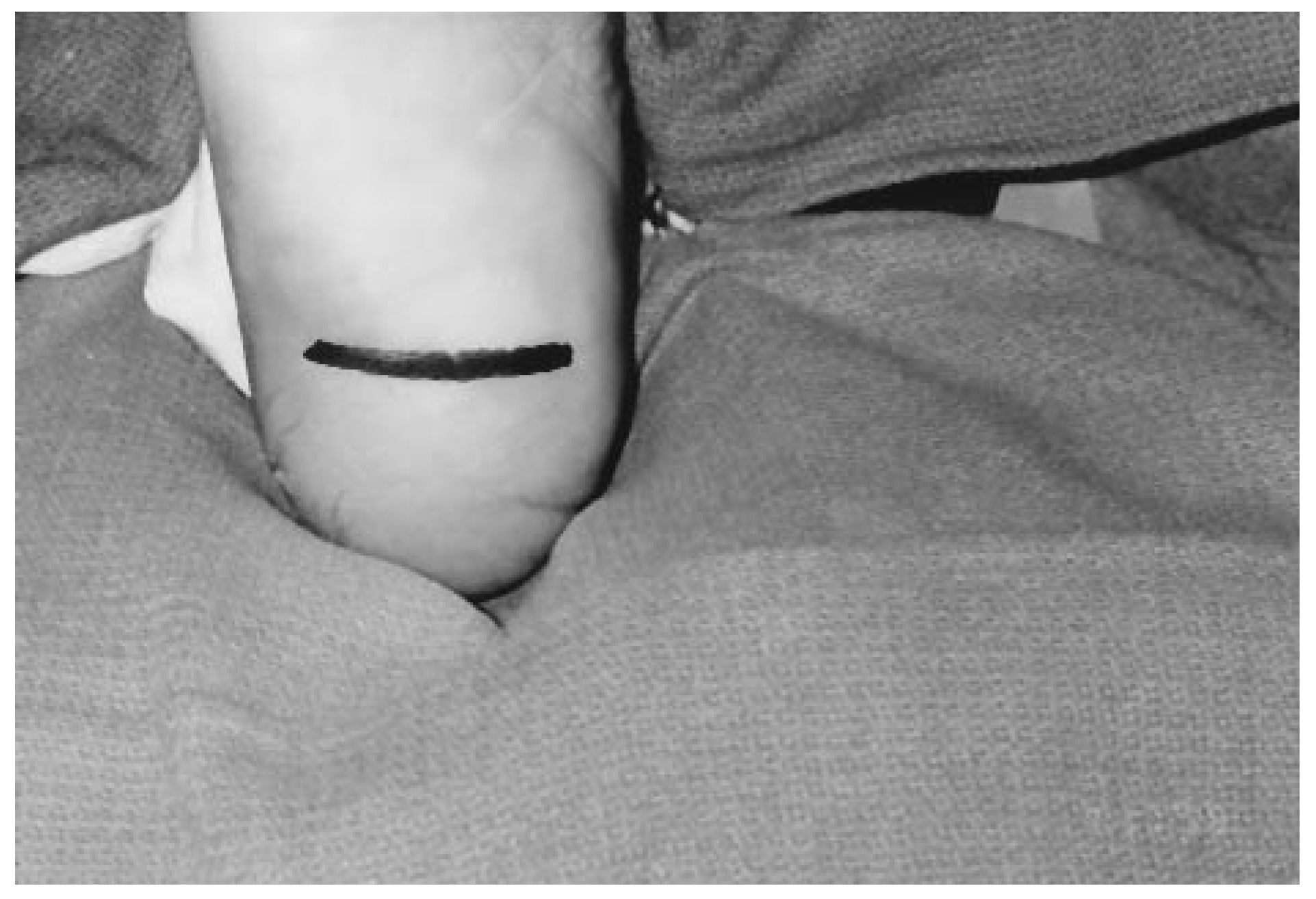
A plantar 2.5- to 3.0-cm transverse incision is made oriented within the relaxed skin tension lines from medial to lateral just distal to the infracalcaneal tuberosity (
Figure 2). To ensure exact placement, the distance from the posterior heel to the distal aspect of the infracalcaneal tuberosity is measured on the lateral radiograph. In addition, the patient is asked preoperatively to identify the point of maximum tenderness with one finger. These two areas should correspond. Finally, prior to the skin incision, a 25-gauge needle is introduced plantarly to determine the “step-off” of the infracalcaneal spur. The incision is placed directly over this area and within the relaxed skin tension lines.
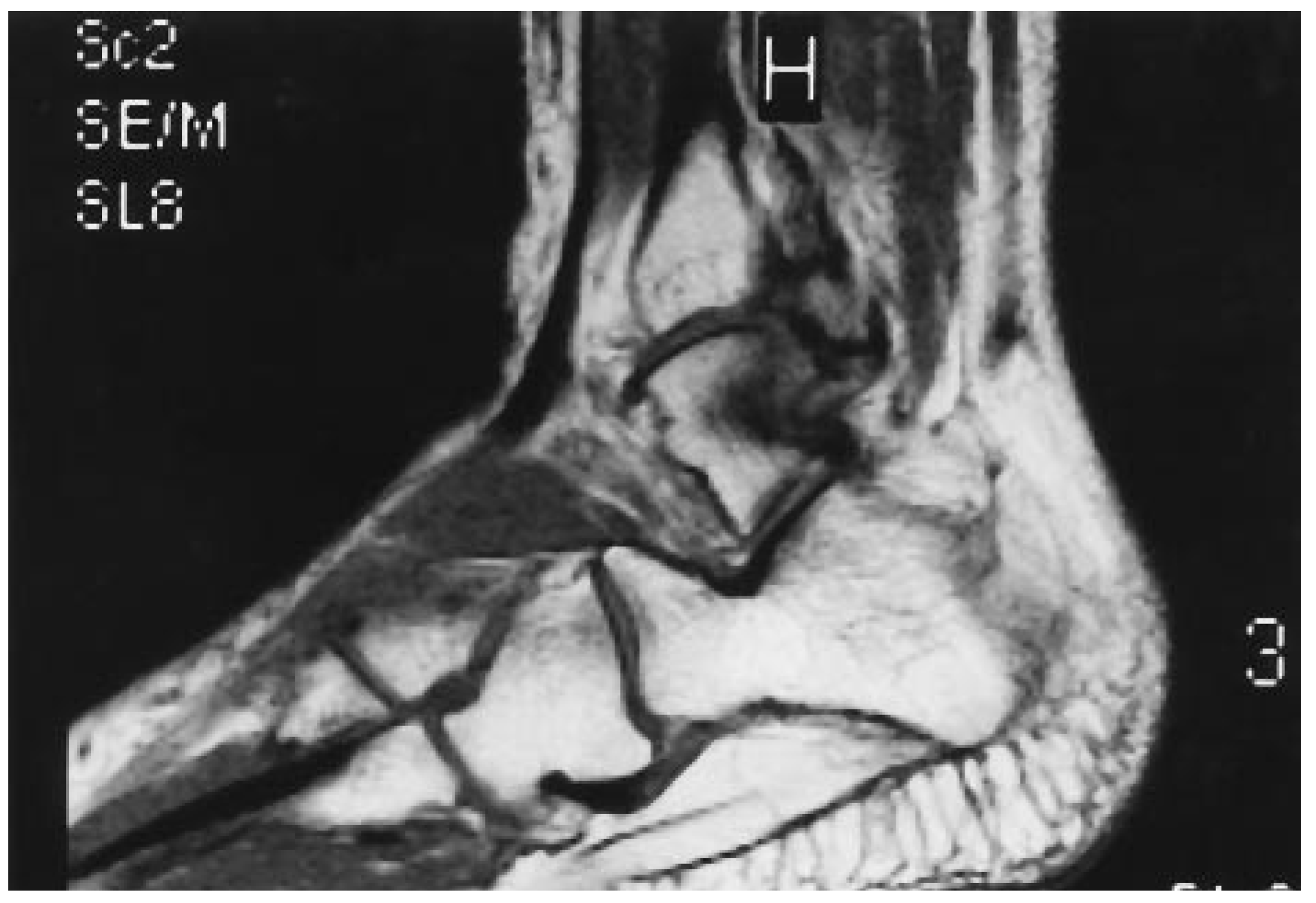
Once the skin has been incised, the blunt dissection technique is used to separate the tissues. Sharp dissection is strongly discouraged, not only because of disruption of the vertically oriented hydraulic chambers of the fat pad (
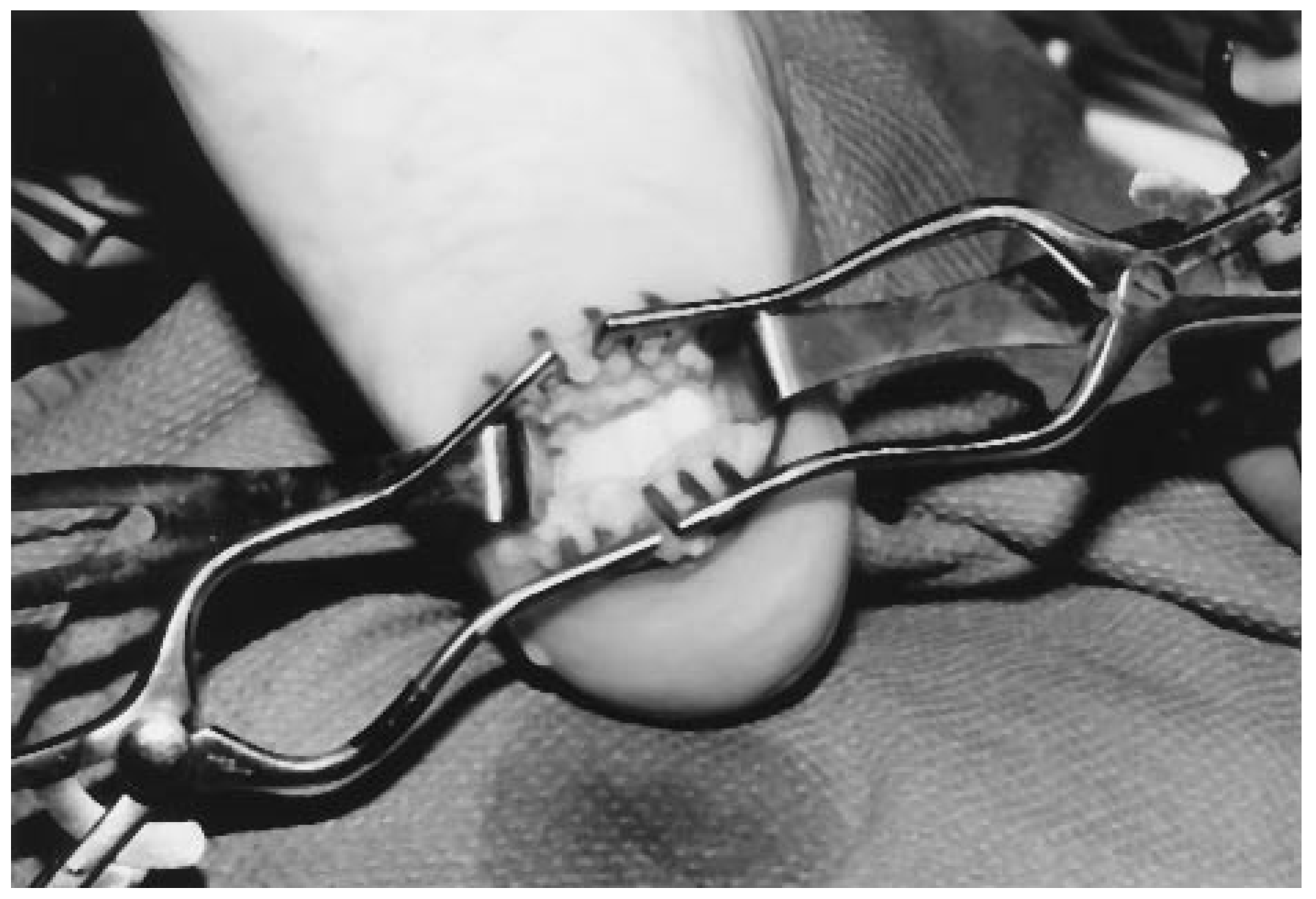
Figure 3), but also because of the possibility of disturbing any unsuspected neurovascular structures that may be traversing the area. The skin and subcutaneous tissues are readily separated from the underlying plantar fascia with the use of Metzenbaum scissors or a hemostat. Once the plantar fascia is identified (
Figure 4), its most medial and lateral borders are determined. The surgeon then determines the amount of plantar fascia to be released and the total width of fascia to be excised. The lateral band is visualized and isolated. A longitudinal incision is placed at the natural separation of the central and lateral bands extending approximately 1 cm distally from the infracalcaneal spur. This initial longitudinal incision provides a landmark for protecting the lateral fascial band. A Senn retractor is then placed at the medial extent of the medial band to protect the neurovascular structures. The central and medial bands are transversely severed at the distal aspect of the spur from lateral to medial, beginning at the previously performed longitudinal incision. The fascia is then gently teased away from the underlying musculature and reflected distally. A 1-cm section is excised. The underlying muscle should be left undisturbed.
Under certain circumstances, the infracalcaneal spur is resected with the use of a combination of rasps and rongeurs. If the spur is particularly large, a small osteotome may be used. Regardless of the technique of bone resection, one must be careful to avoid disruption of the plantar cortex of the calcaneus. A calcaneal fracture can lead to severe consequences.
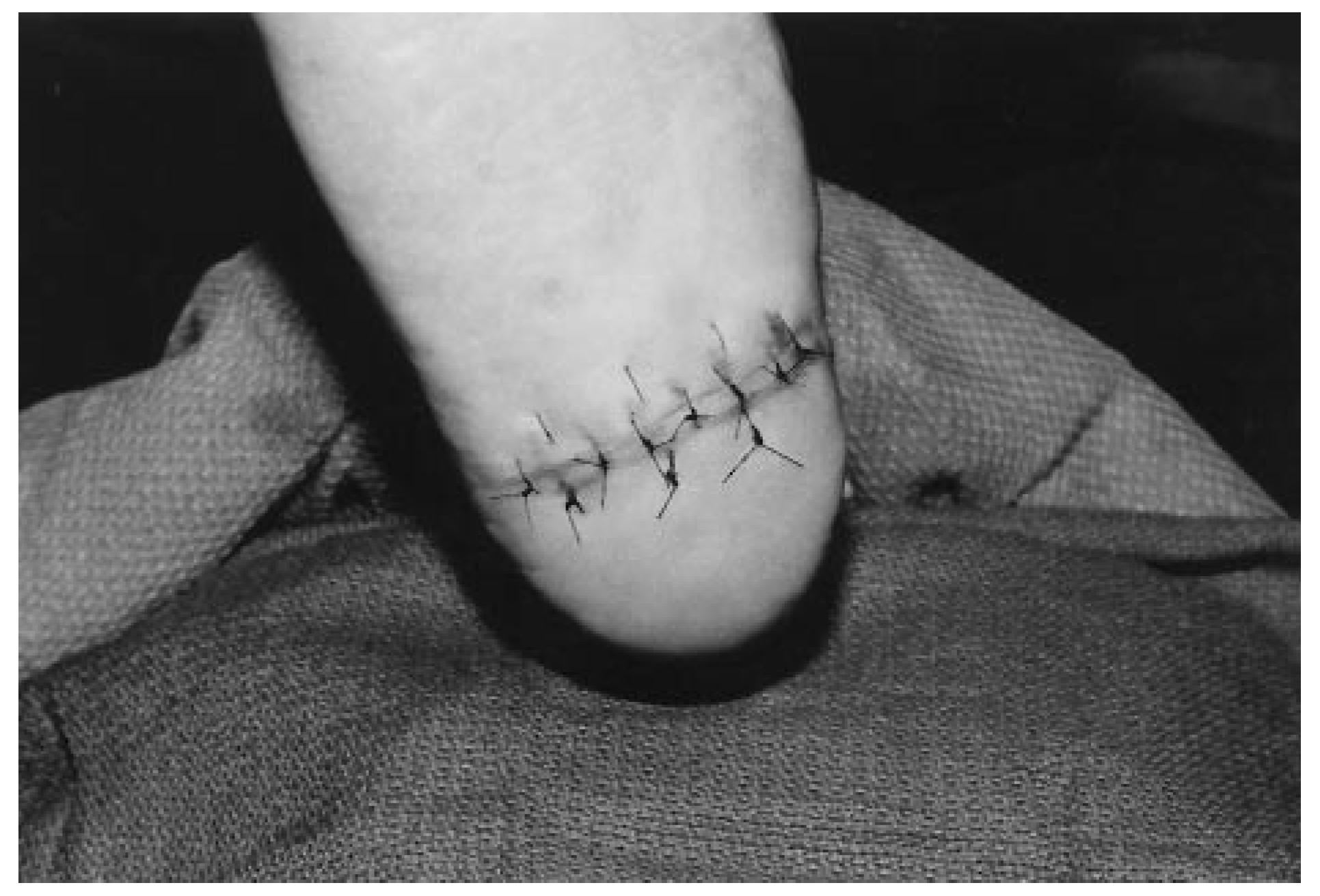
The foot is manipulated and the forefoot dorsiflexed to ensure that all desired fibers of the plantar fascia have been released. The wound is then flushed with sterile normal saline solution. A hemostatic agent, such as topical thrombin impregnated in cellulose, is placed within the wound, and the tourniquet is released after application of a temporary compressive wrap. Further hemostasis is achieved as needed. The wound is copiously irrigated and final inspection is performed. No subcutaneous closure is performed. The skin is typically reapproximated with a combination of horizontal mattress and simple interrupted sutures of 3-0 nylon or 4-0 nylon (
Figure 5). No wound-closure strips are used. A dry, sterile dressing is placed on the foot, followed by a compressive wrap consisting of alternating layers of elastic wraps and compressive cast padding to minimize edema. No splint or cast is used.
Postoperative Care
The patient is not allowed to bear weight on the operated extremity until the sutures are removed at 3 weeks. No postoperative shoe is dispensed, and a short-leg cast is not applied. The first dressing change is at 1 week. The patient may begin range-of-motion exercises of the ankle and foot after the initial dressing change. The sutures are removed at 3 weeks, and the patient may begin gradual weightbearing at that time, with gradual return to normal footwear and activity as tolerated. If necessary, a custom-made orthotic device is recommended to provide support to the foot. Physical therapy is used as needed to return the patient to normal function and range of motion.
Results
From 1991 to 1998, 19 individuals underwent 20 open transverse plantar fasciotomies with or without concurrent heel spur resection. Included in the study were 14 women and 5 men, with an average age of 44 years (range, 25 to 71 years). There were 12 left feet and 8 right feet affected. One patient had bilateral complaints.
The average weight was 211 pounds (range, 150 to 270 pounds). The average body mass index (the weight in kilograms divided by the square of the height in meters) was 33 (range, 24 to 44). Normal range of body mass was considered to be less than 25, with overweight being 25 to 29, and obesity 30 or more. One individual was of normal weight; 6 were overweight; and 12 were obese.
All individuals initially presented with the complaint of sharp pain. Only two patients related an additional burning component. All patients said that the pain was insidious in nature. Poststatic dyskinesia was reported by 100% of the patients. Eight patients were referred by other podiatric physicians; four patients were referred by their private physician, and one patient was referred by the emergency room physician. The remaining six patients sought help on their own. The average duration of symptoms upon presentation was 24 months (range, 2 weeks to 180 months).
Fifteen patients related prior treatment. Eight of those receiving prior therapy had a course of nonsteroidal anti-inflammatory agents. Seven received custom-made orthotic devices, while five received overthe-counter orthotic devices. Five patients received localized injections. Physical therapy was prescribed for three patients, and two patients had taping performed. One patient was prescribed an oral steroid preparation. Six patients had received only one modality, four had two modalities prescribed, and the remaining five patients had three or more different treatments performed. All patients related failure of the prescribed treatment at presentation. It was difficult to ascertain from the chart review exactly how long each modality was used.
Initial examination revealed pain on palpation of the medial plantar tubercle of the calcaneus in 19 of the 20 cases. One patient had pain in the area of the central heel. Patients had a rectus foot type in 15 cases, a pes planus foot type in 3 cases, a forefoot valgus in 1 case, and a cavus foot in 1 case. Only one patient, the patient with the central heel pain, had a palpable mass. No neurologic signs were noted.
All patients had radiographs taken at their initial examination or brought radiographs with them. These radiographs were reviewed for evidence of fracture, spurring, plantar protrusion, or other abnormalities. All patients were found to have some degree of infracalcaneal spurring. No fractures or plantar protrusion was noted.
Conservative therapy received after initial examination was reviewed. An average of 8 months (range, 1 to 50 months) of conservative care was rendered. It was noted that all patients with less than 6 months of conservative therapy rendered in the operative physician’s office had been treated for a protracted period by one or more physicians. A conservative treatment plan was reviewed with every patient in detail upon initial examination. Stretching and localized ice massage were recommended to all patients. This information was presented verbally as well as in writing. Formal physical therapy, consisting of hydrotherapy, ultrasound, myocutaneous electrical nerve stimulation, and stretching and strengthening exercises, was received in 75% of the 20 cases (15/20). Nonsteroidal anti-inflammatory agents were prescribed in 60% of cases (12/20). Up to three steroid injections were given in 60% of cases (12/20). Over-the-counter orthotic devices were prescribed in 50% of cases (10/20), and custom-made orthotic devices were prescribed in 45% of cases (9/20). One or more tapings were applied to the foot in 45% of cases (9/20). No patients wore night splints, although a night splint was prescribed to one patient. The average number of treatment modalities used by a given patient was four (range, one to six). The average number of visits preoperatively was 8 (range, 1 to 17).
In determining the cost of conservative therapy, the authors performed a review of each patient ledger. The charges were compared with the amount collected. Professional charges were separated from charges for physical therapy, radiographs, injections, and orthoses. The average overall charge for conservative in-office treatment was $385 (range, $0 to $1,515). The average reimbursement was $275 (range, $0 to $1,200). This is a reimbursement rate of 71%. The overall reimbursement was 83% for professional services, 81% for radiographs, 66% for injections, 60% for physical therapy, and 95% for orthotic devices. The reimbursement for orthotic devices may be misleading because only the patients who had preauthorization from their insurance companies received orthotic devices.
The operative reports were reviewed for each patient. All procedures were performed under general, spinal, or monitored anesthesia. Ankle, calf, or thigh tourniquets were used for all cases. All incisions were made at the level of the infracalcaneal spur in a transverse fashion. As described earlier, the incisions were reported to be 2.5 to 3.0 cm long. Blunt dissection was used to deepen all incisions, and bursa formation was noted in two cases. Each bursa was excised and confirmed by histologic examination. Nineteen cases had the medial and central bands of the plantar fascia resected with the lateral band preserved. In one case, complete transection of all fascial bands was reported. This was a very early case in the study, and no reason is given for the transection of all bands. Subcutaneous closure was accomplished in the first ten cases with 4-0 absorbable suture. The later ten cases did not undergo subcutaneous closure. In all cases a 3-0 or 4-0 synthetic monofilament nonabsorbable (nylon or polypropylene) suture was used for closure of the skin. Skin closure was performed with simple interrupted or horizontal mattress sutures.
The cost of surgical treatment was determined by review of each patient ledger and by contacting the facility at which the surgery was performed. The average professional charge was $948 (range, $350 to $1,900); the average reimbursement was $626 (66%). The average facility charge was $1,300 (range, $1,200 to $1,500). The average anesthesia charge was $300 (range, $250 to $500) but varied with type of anesthetic administered. This brings the average overall charge to approximately $2,500. The authors were unable to determine reimbursement to the facility or the anesthesiologist.
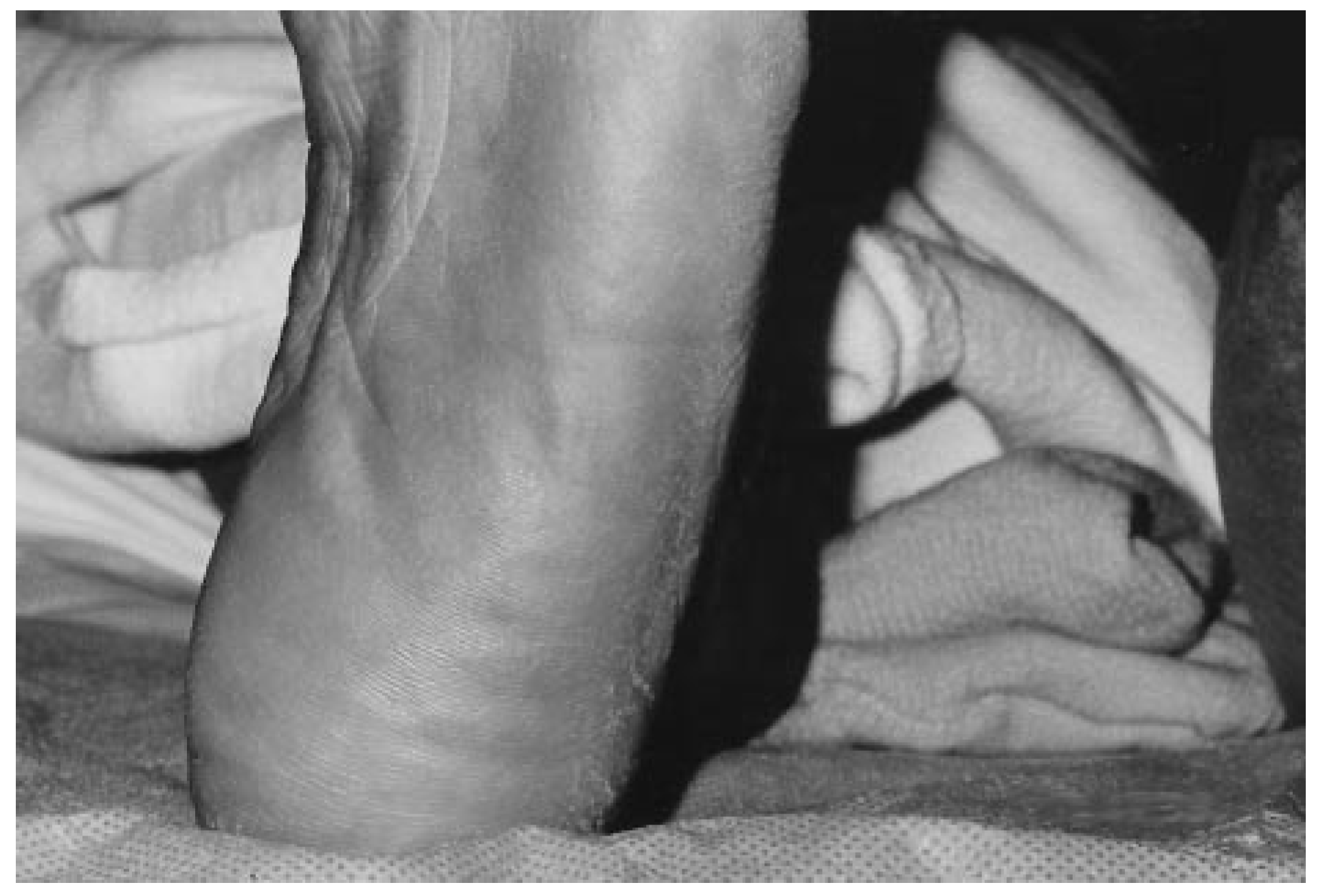
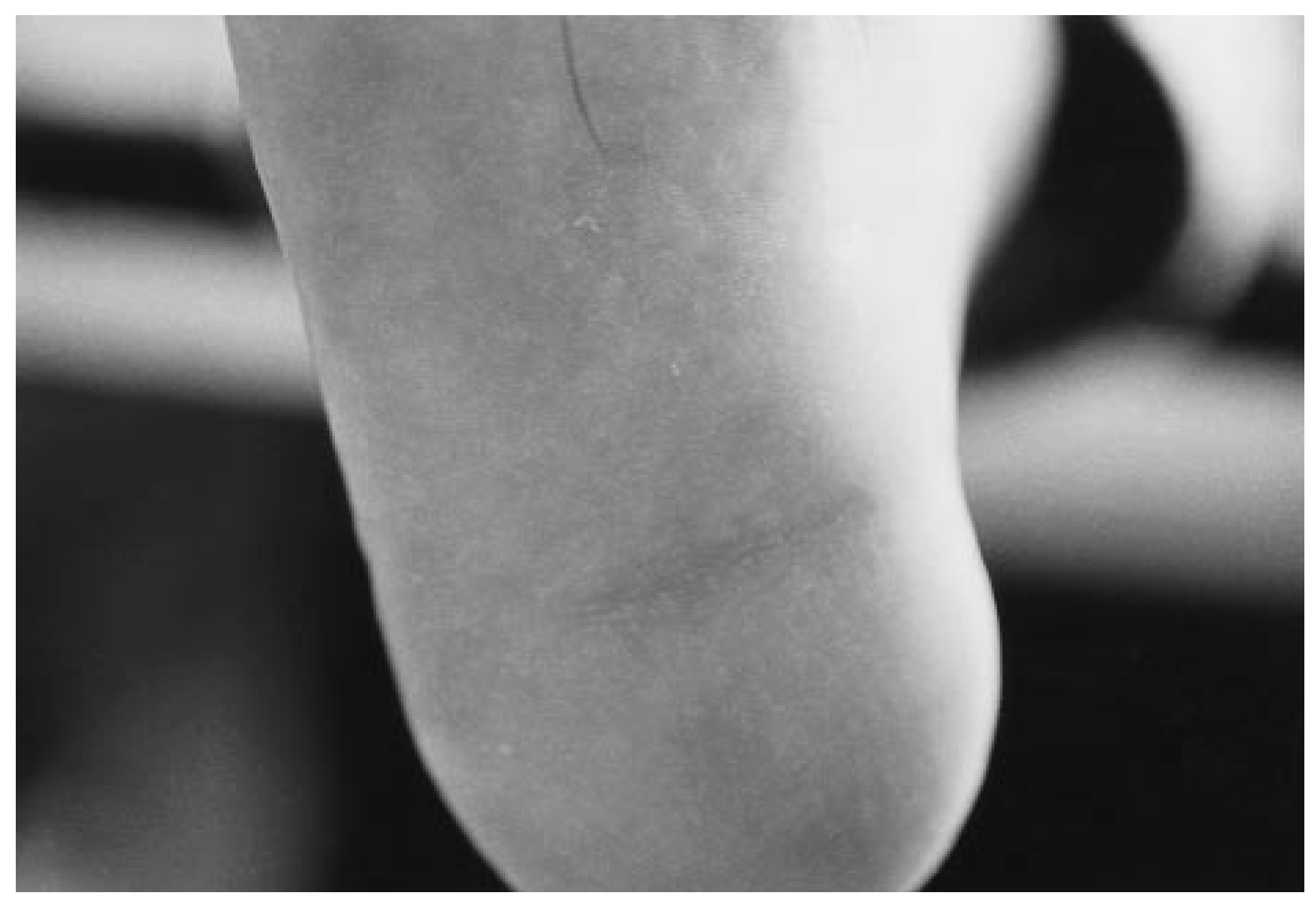
The postoperative course was reviewed. All patients were nonweightbearing with crutchor walkerassisted ambulation until the sutures were removed, usually at 3 weeks following surgery. Two patients were unable to maintain their nonweightbearing state. One patient developed a cuboid contusion, as described below, and the other patient had no complication associated with early weightbearing. The appearance of the wounds was followed over the postoperative course, and all scars were noted to be fine-lined and regular (Figs. 6 and 7). On average, there were 6 (range, 2 to 12) postoperative visits per patient. The average follow-up time according to the chart review was 6 months (range, 1 to 36 months).
A few complications were noted. Two patients who had subcutaneous closure developed stitch abscesses. These healed uneventfully with removal of the suture material. One patient had a stress fracture of the second metatarsal 7 months after surgery. The fracture healed with immobilization, and it was never determined whether it was related to the heel spur surgery. However, it should be noted that this patient had all fascial bands transected. Another patient developed a cuboid contusion 2 months postoperatively, which was confirmed by magnetic resonance imaging. This injury also resolved with immobilization. Finally, one patient had a minor superficial wound dehiscence that healed quickly and uneventfully.
Five patients were referred to the physical therapy department for assistance in returning to normal function because of their slow postsurgical progression. Seven patients received custom-made orthotic devices after surgery. All patients were discharged when pain was absent and the patient was able to return to a normal activity level.
A questionnaire was sent to each of the patients to assess the efficacy of the transverse plantar approach to heel spur surgery. (Two questionnaires were sent to the patient who had bilateral surgical procedures.) Fourteen of the 20 questionnaires were completed and returned. Attempts were made to contact the remaining six patients by telephone. Four of the patients were no longer at their previous addresses and could not be located. One patient declined to participate in the survey with no reason offered, and one patient did not return the authors’ telephone calls.
The first five questions dealt with the characteristics of the pain. Nine of the 14 questionnaires reported pain for more than 1 year, while 4 reported pain for more than 6 months, and 1 reported pain for less than 6 months. In all cases the pain was described as insidious. In all cases the pain was described as sharp, while in four cases an aching component was also reported. No patients reported burning or shooting pain. In correlating the questionnaires to the patient charts, the authors found that no patients completing questionnaires related burning pain in their initial history. In all 14 cases, patients related poststatic dyskinesia. On an 11-point visual analog scale, the pain was rated as 8 in seven cases, as 7 in four cases, as 6 in one case, and as 5 in two cases.
The next five questions dealt with preoperative morbidity and treatment. In all but one case, patients related a decrease in physical activity. In 8 of the 14 cases, patients related a 50% decrease in physical activity, while in five cases patients related a 30% to 40% decrease. In eight cases patients reported gaining weight during this time. In five cases patients reported gaining 10 to 25 pounds; in two cases patients reported gaining 25 to 50 pounds, and in one case the patient reported gaining more than 75 pounds.
Figure 6.
Well-healed incision 5 years following plantar fasciotomy using plantar transverse approach.
Figure 6.
Well-healed incision 5 years following plantar fasciotomy using plantar transverse approach.
Figure 7.
Well-healed incision 3 months following plantar fasciotomy using plantar transverse approach.
Figure 7.
Well-healed incision 3 months following plantar fasciotomy using plantar transverse approach.
The patients were asked to comment on treatment modalities received and to evaluate on a 6-point visual analog scale the degree to which a given modality relieved the pain. The most frequently reported modality was physical therapy (11 of 14 cases), with an average relief of 3 (range, 2 to 4). Injection therapy, oral medications, and over-the-counter orthotic devices were all equally prescribed (9 of 14 cases). Injection therapy provided the most relief at 4 (range, 1 to 4), while oral medications had an average relief of 3 (range, 1 to 4). Over-the-counter orthotic devices provided little relief, with an average score of 1 (range, 0 to 4). Custom-made orthotic devices were prescribed in seven cases. The average relief was scored at 3 (range, 2 to 5). Finally, taping modalities were provided in four cases. The average score was 2 (range, 0 to 3). No patient reported success with the conservative modalities, and because of pain, all elected to have surgery. In eight cases, patients also cited their decrease in daily activities as a secondary reason for electing surgery.
The remaining 12 questions dealt with the surgery itself, the recovery period, any perceived complications, and any scar problems. In nine cases, patients felt that the outcome of the surgery was as expected. In three cases, patients felt the outcome was better than expected, while in two cases patients felt the outcome was less than expected. In 11 cases patients related no complications, while in three cases patients related problems that they felt might have been related to the surgical procedure. In one of these cases the patient related knee pain; in another case the patient related an unspecified tendinitis (with no documentation in the patient chart), and in a third case the patient related a temporary period of being able to stand for only 2 to 3 hours. It is interesting to note that the patient who sustained the cuboid contusion reported no postoperative problems.
The patients were asked to comment on their return to normal activity. In 10 of the 14 cases, patients reported a return to normal footwear in 1 to 2 months, while in two cases patients reported returning to normal footwear in less than a month and in two cases in 2 to 3 months. In nine cases patients reported returning to normal activity in less than 3 months. In four cases patients returned to normal activity in 3 to 6 months, while in one case the patient was unable to return to normal activity for 6 to 9 months.
In ten cases patients required no physical therapy, and in four cases patients required physical therapy owing to their slow progression to normal activity. Orthotic devices were prescribed in eight cases. In four of those cases patients report wearing the devices currently.
Each patient was asked to quantify the pain currently felt on an 11-point visual analog scale. In 9 of the 14 cases patients reported no pain, a rating of 0; there was one report of a current pain rating of 1; there were three reports of a current pain rating of 2; and there was one report of a current pain rating of 4.
Two questions addressed the scar on the bottom of the foot. Again, an 11-point visual analog scale was used. In 12 cases patients reported no pain (a rating of 0); in one case the patient described the scar as being mildly painful (a rating of 1); and in one case the patient related a more moderate pain (a rating of 4). When asked about scar appearance, patients in 13 of the 14 cases related a barely visible scar, while in one case the patient related a very visible scar. It should be noted that this patient related no pain with his very visible scar. No patient noted a raised or irregular scar.
Finally, the patients were asked if they would have the surgery performed again and if they would recommend the procedure to a family member or friend. In 12 of the 14 cases, patients said that they would have the surgery performed again. In one case the patient would definitely not have the surgery performed again because of the inability to walk on the foot postoperatively. In another case the patient was unsure because of the tendinitis sustained after surgery. In all 14 cases, patients would recommend the procedure to a friend or family member.
Discussion
The results of this study confirm the notion that surgical intervention is rarely required in cases of heel spur syndrome. A few patients who fail to respond to conservative therapy will require surgery. From 1991 to 1998, only 20 plantar fasciotomies were performed by the authors. All of these procedures were performed with the use of the plantar transverse incisional approach described earlier. To further understand the need for surgical intervention, a year was chosen at random to evaluate how many new complaints of heel pain were received and how many total patient encounters were recorded for that complaint. In 1997, 222 patients presented with a new complaint of heel pain that was subsequently diagnosed as heel spur syndrome or plantar fasciitis. A total of 697 patient encounters were recorded for the same entities during that year. In 1997, only seven patients underwent heel spur surgery.
Obesity may be a common factor contributing to or aggravating this problem. In 65% of cases (13/20) the operative patient was obese (body mass index, ≥30). In addition, in 8 of the 14 cases respondents reported gaining weight while suffering from heel spur syndrome or plantar fasciitis, and in 13 of the 14 cases respondents related an inability to sustain their normal activity level. Females appear to be affected far more commonly than males, with a ratio of 15:5. The entity appears to affect primarily middle-aged individuals. The average age of the patients undergoing surgery in this study was 44 years (range, 25 to 71 years).
Medial calcaneal neuritis or an atypical tarsal tunnel syndrome remains an important differential diagnosis. An improper diagnosis is likely to result in an undesirable surgical outcome owing to inappropriate treatment. All of the patients who underwent surgery presented with sharp pain that began insidiously. In addition, a component of pain after rest was common. In all but one case, pain was localized to the medial tubercle of the calcaneus. One patient had pain in the plantar central area of the calcaneus.
The significance of a plantar traction exostosis of the calcaneal tubercle continues to be an area of controversy and interest. The authors do not have any new information or new evidence that the spur itself is the actual cause of pain. The decision of whether or not to remove the spur is based simply on the preference of the individual surgeon. All of the patients who underwent surgery had radiographic evidence of infracalcaneal spurring; however, no evidence of abnormal plantar calcaneal protrusion was noted.
Once the diagnosis has been established, how long should conservative treatment be rendered before surgical intervention is undertaken? The answer will continue to be a topic of debate. Perhaps the length of time of conservative treatment is not nearly as important as the number and frequency of the various modalities employed. The average length of conservative therapy in this group of patients was 8 months (range, 1 to 50 months). Many of these patients received a plethora of treatments prior to presenting to the office. Modalities previously rendered included nonsteroidal anti-inflammatory agents as well as attempts at biomechanical control by means of custommade orthotic devices. The questionnaire did show that patients felt injection therapy to be the most effective means of providing at least temporary relief of pain. This was followed by several equally rated categories: assorted oral nonsteroidal anti-inflammatory medications, custom-made orthoses, and various physical therapy modalities. Taping and over-thecounter orthoses were seen as the least effective in relieving symptomatology by the respondents.
There are and will continue to be certain economic considerations that bear on the decision of surgical versus conservative intervention. In this study, the authors attempted to ascertain the costs of these two types of intervention. The average in-office patient charge for conservative treatment was $385 (range, $0 to $1,515), and the average reimbursement to the podiatric physician was $275 (range, $0 to $1,200). Although the authors were clearly able to document average patient cost and reimbursement to their own practice, they were not able to determine the actual cost to the patient for conservative care inasmuch as this study does not include the cost of prescription or nonprescription medication, outside physical therapy, or biomechanical devices. One must also consider the financial implications of significant time lost from employment because of pain and disability as well as patients’ need for time away from work to seek out professional services and treatment. It is clear that when all factors and variables are considered, the cost of conservative care is monumental—not only from a monetary standpoint but also from a quality-of-life perspective. Nonetheless, the authors believe that all reasonable treatment modalities should be rendered prior to surgical intervention, as the vast majority of patients will indeed respond favorably to nonsurgical treatment.
The cost of surgery to the patient was determined as well as the rate of reimbursement to the physician. As stated previously, the overall average patient cost was $2,500, with the surgeon’s fee averaging $948. The reimbursement for the surgeon’s services averaged $626 (66%). Of course, as with conservative care, the significant costs of medications, postoperative physical therapy, and lost income are not included.
Although there are many viable approaches to heel spur surgery, other researchers have found that the plantar transverse approach offers excellent exposure while preventing damage of structures that could ultimately result in a nerve entrapment syndrome or, more commonly, the ill-defined lateral column pain syndrome. The authors have used this approach in all patients who are able to maintain a nonweightbearing status of the operative foot for the first 2 or 3 weeks. Consideration should be given to an alternative approach in patients who cannot limit weightbearing on the operative foot. The plantar transverse incisional approach described above may heal uneventfully, even with partially protected weightbearing. Each physician dedicated to the treatment of this entity must give consideration to the role and importance of nonweightbearing versus weightbearing following the release of the plantar fascia by any particular approach. The precise role that weightbearing plays in the development of postoperative complications is not well understood. Merely changing the procedure because the patient can or cannot be nonweightbearing may not be the answer, as no one knows whether weightbearing is detrimental. It may be that weightbearing is not beneficial no matter how one performs the surgery. Thus it may be more beneficial to avoid the surgery altogether in the patient who is unable to be nonweightbearing until there is a better understanding of whether weightbearing following release of the plantar fascia has positive or negative implications.
The authors have modified the procedure with increasing experience. In the first ten cases, where absorbable suture was used to reapproximate the subcutaneous tissues prior to skin closure, several stitch abscesses were noted. Closure of the subcutaneous layer has been abandoned. Following copious irrigation of the wound, deeper closure is not performed. The skin is closed with simple interrupted and horizontal mattress sutures with the use of a synthetic, monofilament, nonabsorbable suture. Since deep closure was abandoned, no further wound problems or complications have occurred. Weightbearing and the extent of release of the three bands of the plantar fascia are also suspected to play a role in the eventual outcome. Much information regarding these two issues remains anecdotal. In 19 of the 20 cases, only the medial and central bands of the fascia were released; the lateral band of the plantar fascia was preserved. Two months postoperatively, one patient sustained a cuboid contusion, which was confirmed by magnetic resonance imaging; this patient had only the medial and central bands released. It should be noted that against advice, this patient began walking on the operative foot just a few days after surgery. The one patient who underwent a complete release of the medial, central, and lateral bands sustained a stress fracture of the second metatarsal 7 months postoperatively, which was confirmed by conventional radiographs and by bone scan. The relationship between these different variables is an enigma.
The authors’ postoperative care regimen has remained consistent. The hallmark has been nonweightbearing of the operative extremity and a gradual, progressive return to weightbearing and activity with removal of the sutures at 3 weeks postoperatively. This approach has consistently resulted in an excellent fine-lined, pliable, supple scar with full restoration of weightbearing on the plantar aspect of the heel. Nonweightbearing may be an important component of a successful postsurgical regimen to ensure a full return to normal activities.
When conservative treatment modalities have failed, surgical intervention can be very rewarding. In 86% of cases (12/14), patients who participated in the survey indicated that they would have the surgery performed again and found the outcome to be what they expected or better. In all 14 cases, respondents said they would recommend the surgery to a family member or friend. From a clinical perspective, all patients had little or no pain at the time of discharge and demonstrated a well-healed, fine-lined scar.
Conclusion
Although the number of patients involved in this study is small, the results are very encouraging. The open transverse incisional approach for partial release or resection of the plantar fascia with or without resection of the plantar spur seems to be a viable procedure for a potentially difficult problem recalcitrant to conservative treatment modalities. Postoperative complications were few and minimal. Direct visualization of the plantar structures ensures an accurate and precise release and may contribute to the avoidance of commonly reported complications, such as entrapment neuropathies and lateral column pain syndrome. Patient satisfaction was consistently high. The authors look forward to accumulating and evaluating more data in the years to come.