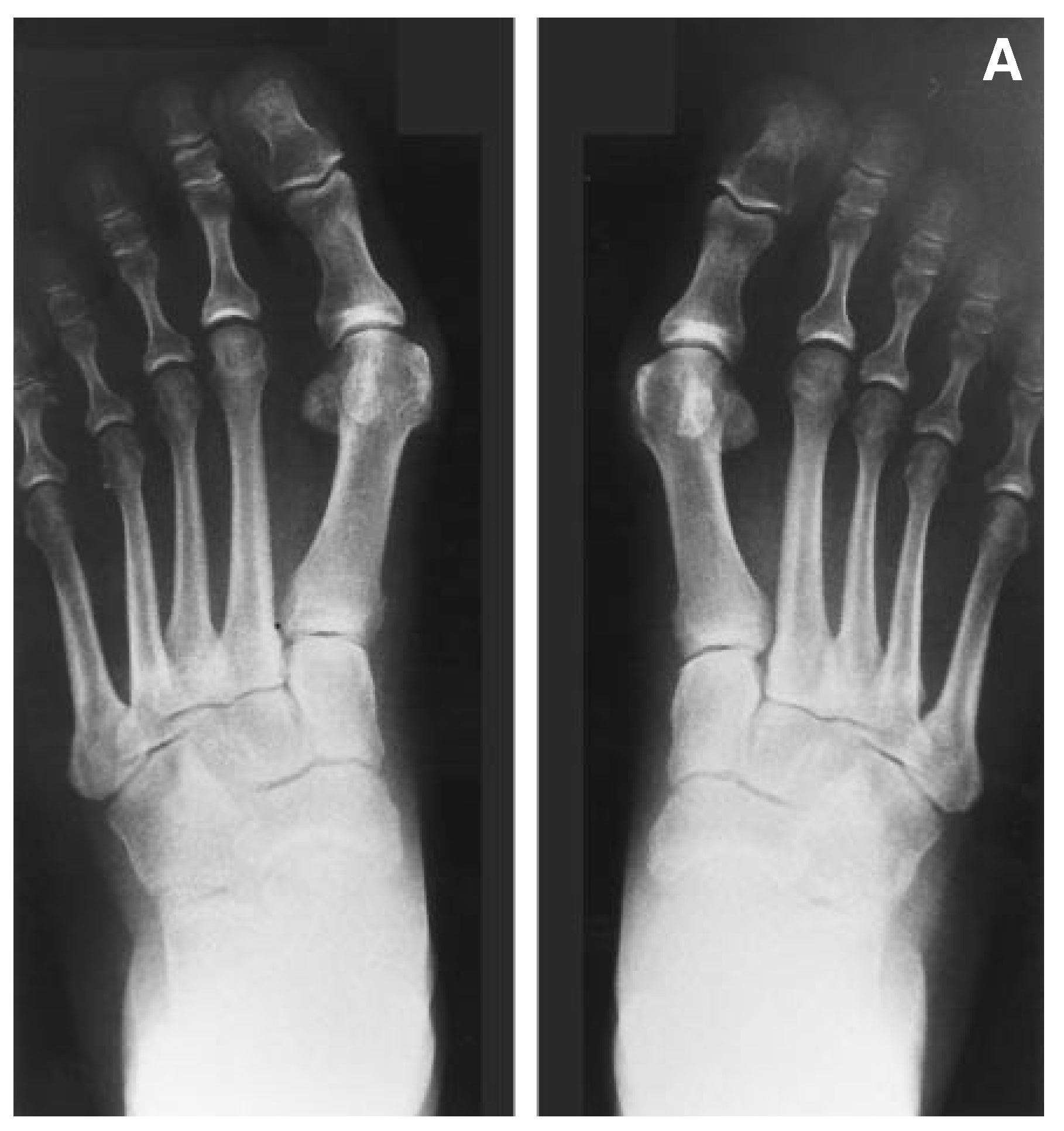
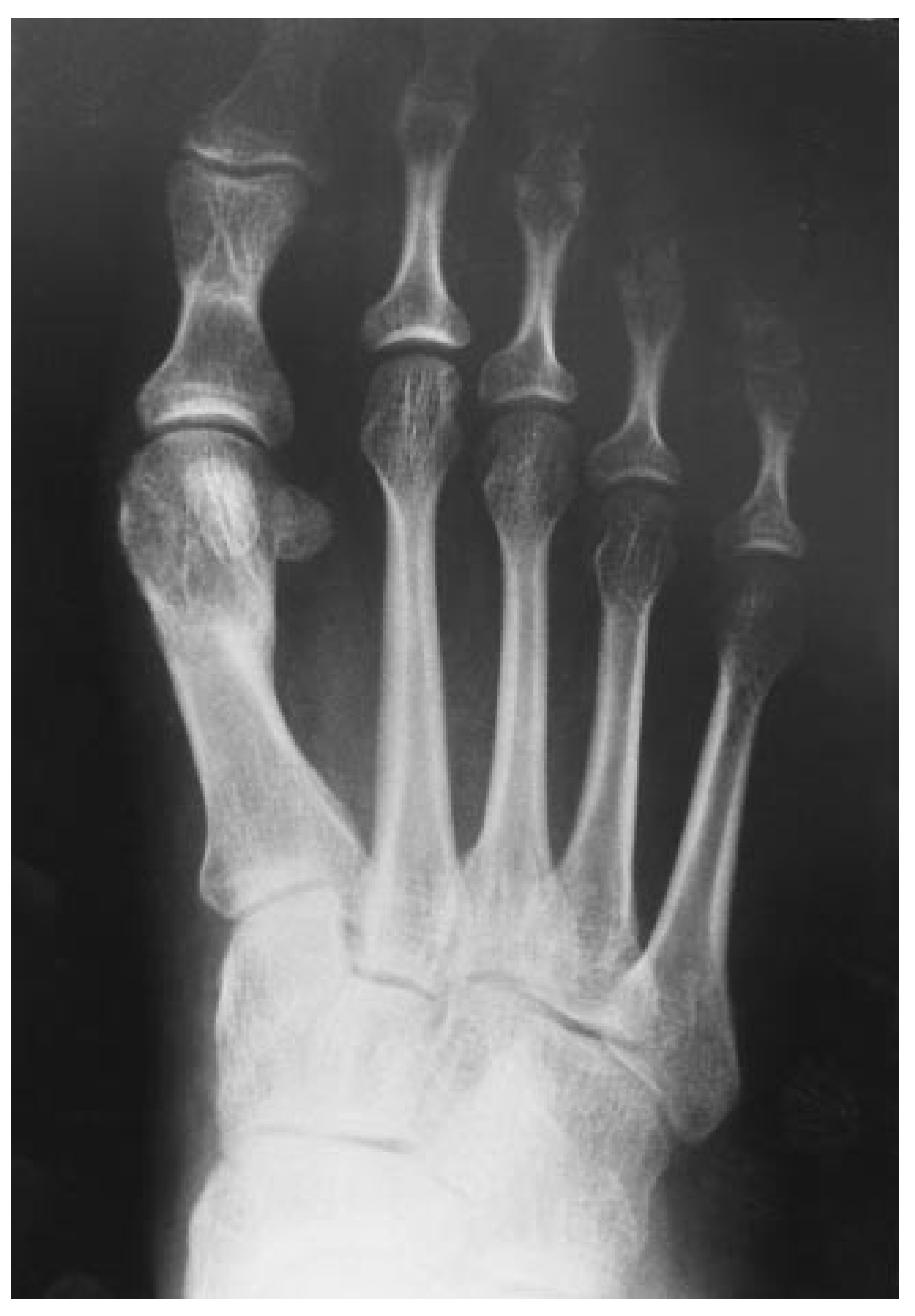
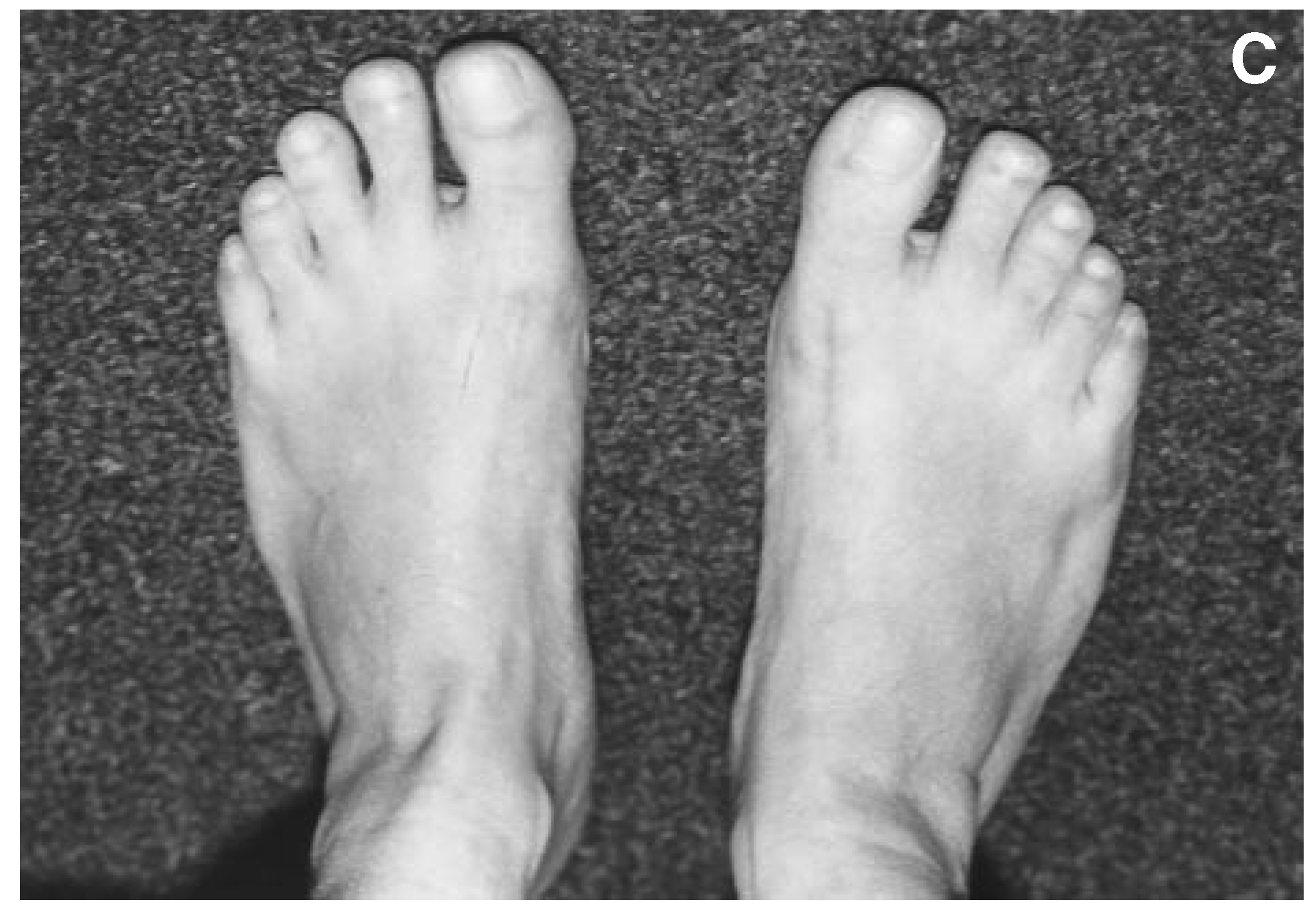
Hallux abducto valgus is one of the most common deformities encountered in podiatric medical practice. Hallux abducto valgus, commonly referred to as a bunion, may have two components: a rigid or structural component and a dynamic or flexible one. One component usually predominates over the other. The dynamic or flexible component is reducible clinically or after lateral soft-tissue release intraoperatively. The rigid or structural component is not reducible (
Figure 1). Some have suggested that a hallux abducto valgus deformity of a dynamic nature can be corrected by the use of musculotendinous balancing procedures alone, precluding the need for any type of osteotomy [
1,
2,
3,
4,
5,
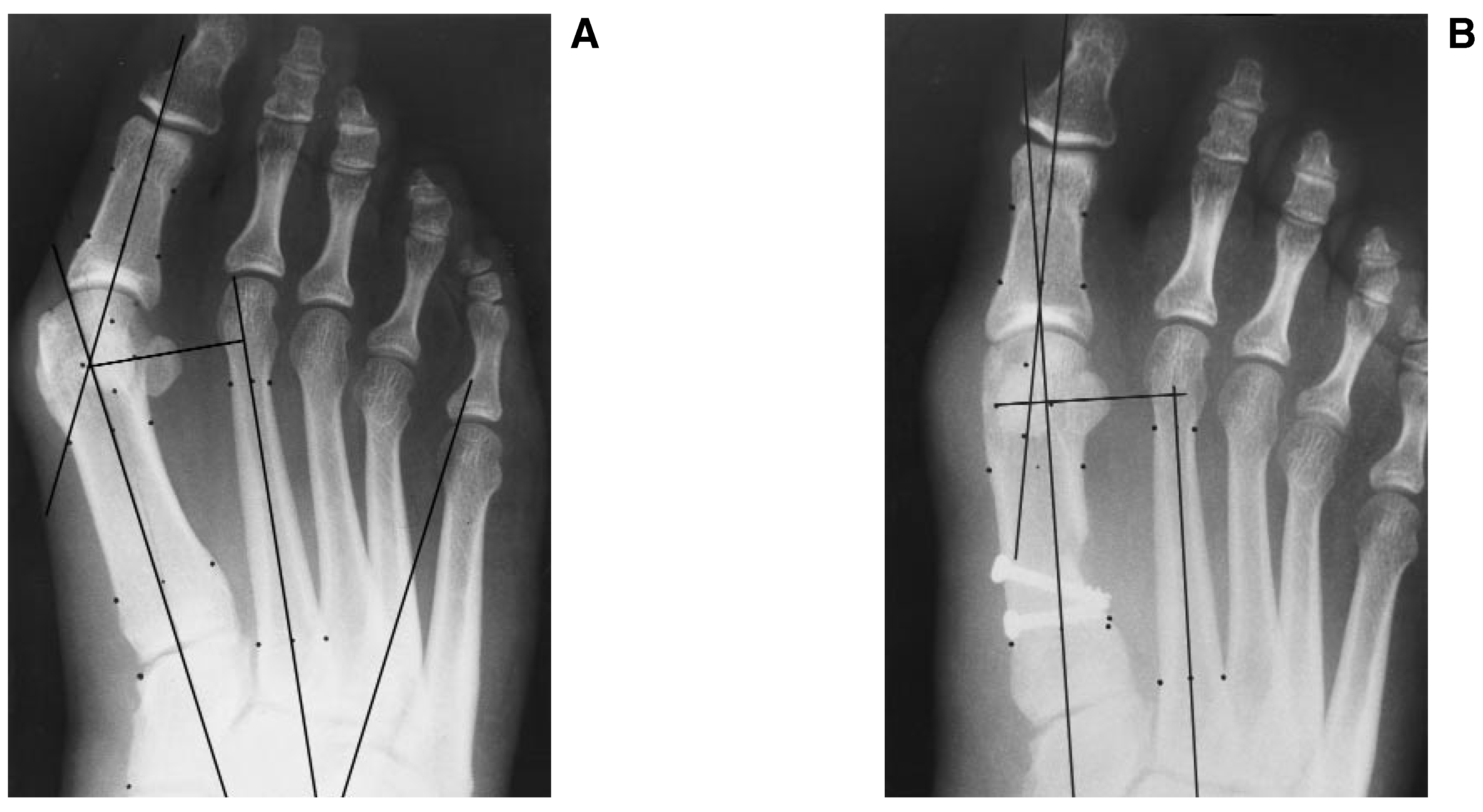
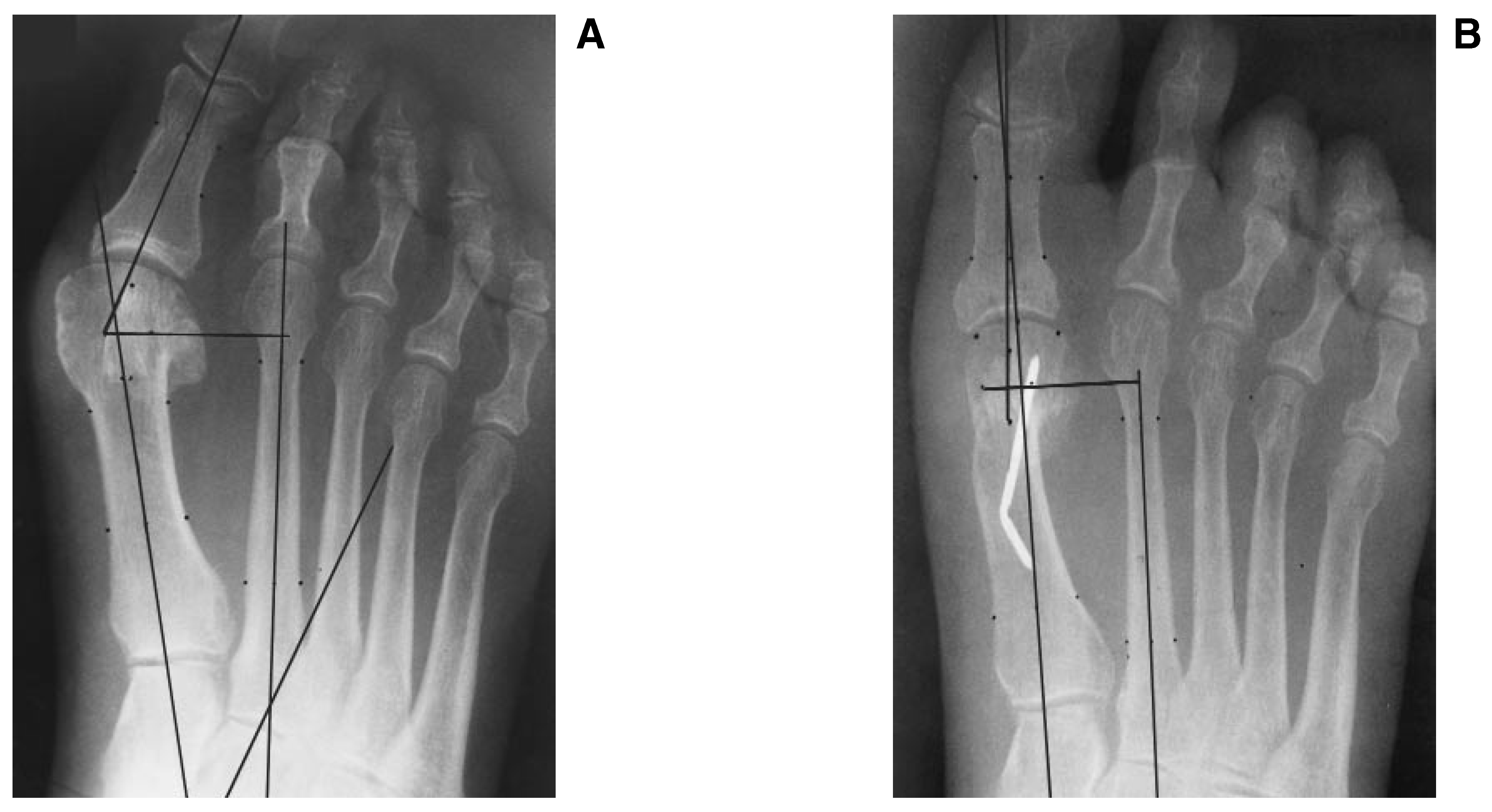
6].When the increase in the intermetatarsal angle is secondary to a structural abnormality, an osteotomy or arthrodesis procedure is necessary to achieve the desired correction (
Figure 2) [
7,
8,
9,
10,
11,
12,
13,
14,
15,
16,
17,
18,
19]. Soft-tissue manipulation and osseous correction are often combined in hallux abducto valgus surgery.
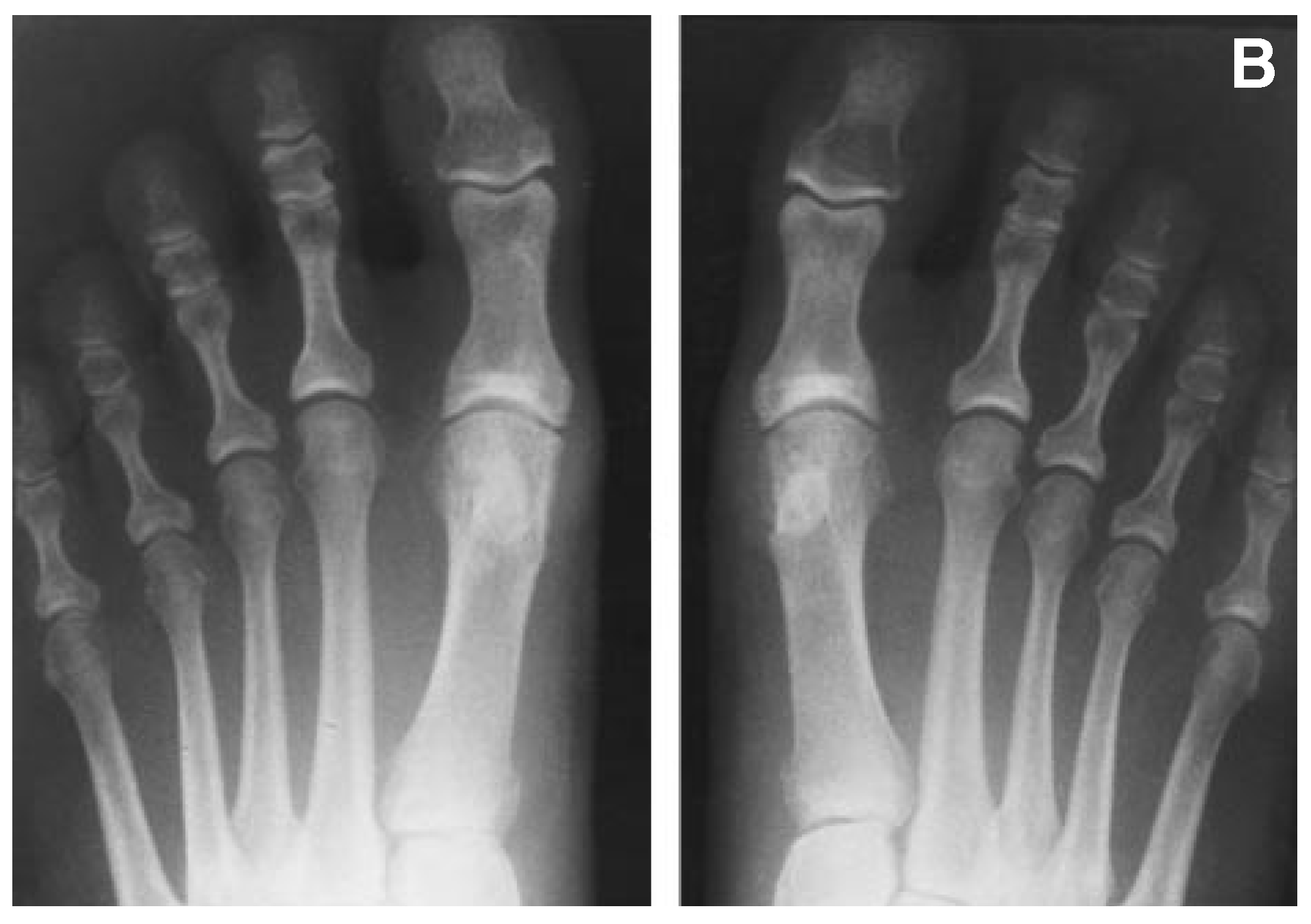
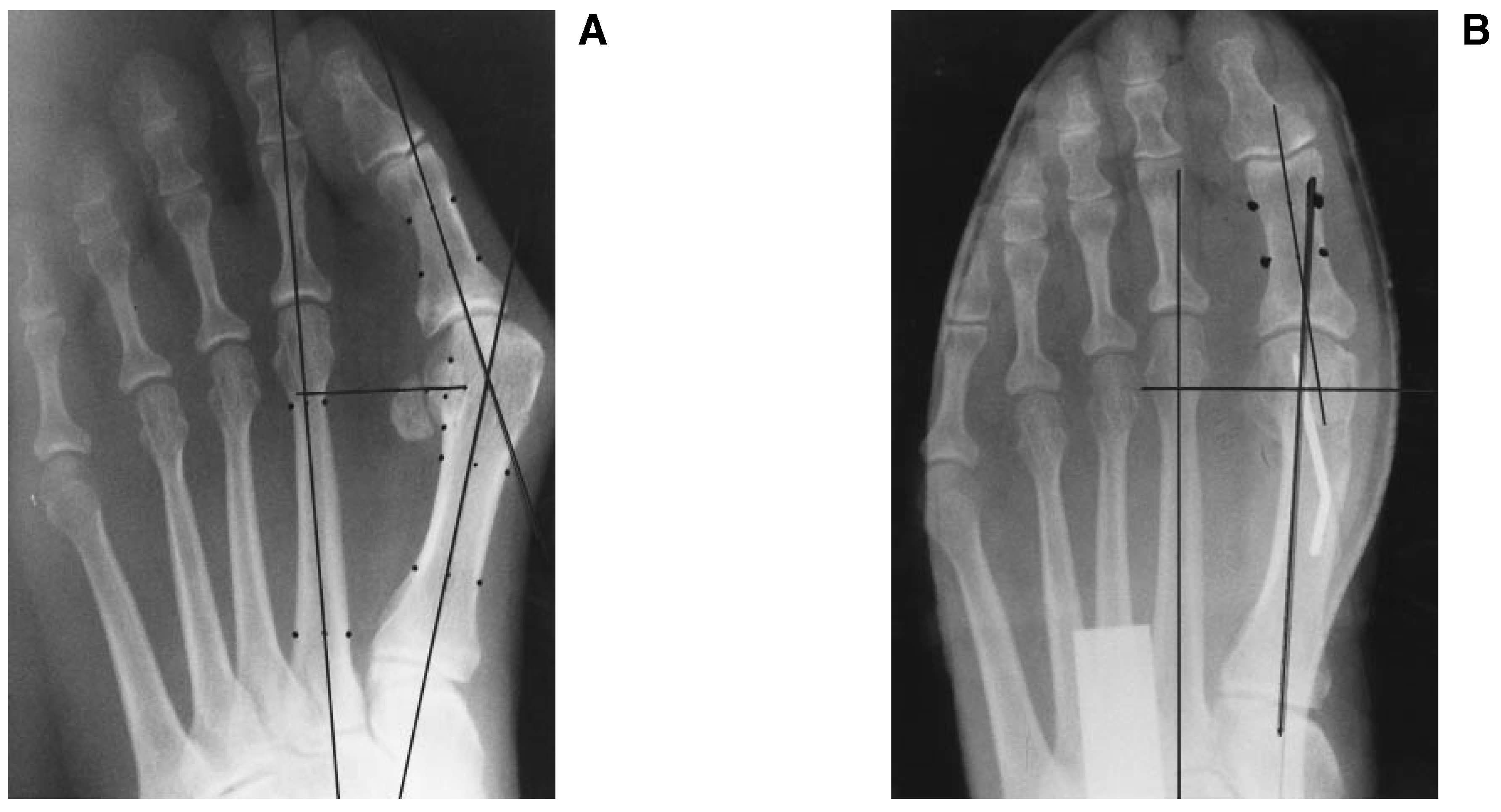
The stepwise approach to soft-tissue correction involves release of the adductor tendon followed by the fibular sesamoidal ligament. The lateral head of the short flexor tendon is often resected. This usually permits reduction of the deformity intraoperatively. Rarely, a lateral capsulotomy and excision of the fibular sesamoid may be performed to further reduce the deformity (
Figure 3). Many osteotomies have been described for the correction of hallux abducto valgus deformity. Osseous correction involves either a distal metaphyseal or a base osteotomy. The Austin osteotomy and the oblique base wedge are the most common distal and proximal osteotomies, respectively. The osteotomy reduces the functional intermetatarsal angle resulting from structural deformity (
Figure 4). Almost all bunion surgery incorporates reduction of the dorsomedial osseous prominence. A medial capsulorrhaphy is often performed as part of the softtissue balancing of the forces at the metatarsophalangeal joint. Transfer of the adductor tendon assists in the relocation of the sesamoid apparatus beneath the metatarsal head and in maintaining correction of the intermetatarsal angle [
20,
21]. Most bunion surgery involves both soft-tissue and osseous correction to eliminate the dynamic and structural components of the deformity, respectively (
Figure 5).
One of the objectives of hallux abducto valgus surgery is repositioning of the sesamoid apparatus to a more anatomical location beneath the metatarsal head [
22,
23,
24,
25,
26,
27,
28,
29,
30]. The long flexor tendon runs between the sesamoids. When the sesamoids are found within the interspace, the pull of the flexors results in retrograde buckling at the metatarsophalangeal joint in the transverse plane. The buckling causes an increase in both the hallux abducto valgus deformity and the intermetatarsal angle. Relocation of the sesamoids under the metatarsal head produces a rectus line of pull of the flexors and improved musculotendinous balance across the metatarsophalangeal joint. Because the sesamoids play such an integral part in restoration of normal physiologic function of the metatarsophalangeal joint, repositioning of the sesamoid apparatus has been considered a key component of bunion surgery [
22,
24,
25,
31,
32].
Accurate evaluation of a hallux abducto valgus deformity is critical to the selection of a proper surgical procedure [
33,
34,
35,
36] Various parameters for evaluating the success of hallux abducto valgus correction have been described [
31,
32,
33,
34,
37,
38,
39,
40,
41]. Success has been defined as the improvement of radiographic parameters such as the intermetatarsal angle, the hallux abductus angle, and the tibial sesamoid position. Many foot and ankle surgeons routinely measure the tibial sesamoid position preoperatively. The orthopedic method of determining the tibial sesamoid position uses a four-grade system rather than the seven-position system previously described and recognized by the podiatric medical profession [
28]. Both systems, however, depend on the longitudinal bisector of the first metatarsal as the reference point for the tibial sesamoid position. The four-grade scale is as follows:
Grade 0: No sesamoid displacement with respect to the reference line.
Grade 1: Less than 50% overlap of the sesamoid and reference line.
Grade 2: More than 50% overlap of the sesamoid and reference line.
Grade 3: Extension of the sesamoid into the intermetatarsal space.
The seven-position scale is as follows:
Position 1: The entire sesamoid is medial to the first metatarsal bisector.
Position 2: The lateral aspect of the sesamoid is tangential to the metatarsal bisector.
Position 3: The lateral one-third of the sesamoid overlaps the bisector.
Position 4: The sesamoid is centered over the bisector.
Position 5: The medial one-third of the sesamoid overlaps the bisector.
Position 6: The medial aspect of the sesamoid is tangential to the bisector.
Position 7: The entire sesamoid is lateral to the bisector.
The American Orthopaedic Foot and Ankle Society has published an extensive report on guidelines for assessing hallux abducto valgus deformity [
28]. That text reviews methods of assessing traditional radiographic parameters as well as an alternative method of evaluating the tibial sesamoid position.
Most studies that have been conducted to investigate the efficacy of bunion surgery have focused on other parameters, such as reduction of the intermetatarsal angle. The importance of the position of the sesamoids with respect to the first metatarsal head prior to surgery has been the subject of a few studies [
31,
32,
37,
38,
42]. Although three studies have assessed the position of the sesamoid apparatus as a result of hallux abducto valgus surgery [
21,
32,
41], only two of these published both preoperative and postoperative data [
21,
41].
A comparison of preoperative and postoperative radiographs shows a significant change in the tibial sesamoid position. Because the sesamoid position is measured relative to the bisector of the metatarsal head, this change of position is due at least in part to translocation of the metatarsal head following the osteotomy. It is unclear whether the sesamoids undergo any change in position relative to the foot that might contribute to this change in position. No data have been found resulting from comparison of the position of the sesamoid apparatus against a fixed reference point within the forefoot prior to and following hallux abducto valgus surgery. The objective of this study was to assess whether the sesamoids undergo translocation as a result of hallux abducto valgus correction, thereby contributing to improved tibial sesamoid position and function of the first metatarsophalangeal joint.
Materials and Methods
Tibial Sesamoid–Second Metatarsal Distance
A new radiographic measurement, the tibial sesamoid–second metatarsal distance (TSMD), was designed to evaluate changes in position of the sesamoid apparatus relative to the forefoot caused by hallux abducto valgus surgery. This measurement is defined as the distance from the medial border of the tibial sesamoid to the bisector of the second metatarsal. This distance perpendicular to the second metatarsal bisector was measured in millimeters and recorded in half-millimeter increments.
Reliability of the TSMD
Whenever a new measurement technique is introduced, its reliability should be proven. It is important that individual testers reach the same results when repeating the measurement. For a new parameter to be universally accepted, different raters from a crosssection of the population that will be performing the measurement should also obtain consistent results.
To determine intrarater (same-tester) reliability, three examiners—a student, a resident, and a podiatrist in private practice—each measured the same ten radiographs on three occasions. The raters were blinded as to the prior measurements. The intraclass correlation coefficient was calculated to determine the reliability for each rater. The averages of the measurements from each rater were used to calculate the interrater reliability through the interrater intraclass correlation coefficient.
The Effect of Hallux Abducto Valgus Surgery on the TSMD
Following the reliability assessment, a multicenter investigation was conducted. The institutions involved in the study were Northlake Regional Medical Center in Tucker, Georgia, and PHS Mt Sinai Medical Center in Cleveland, Ohio. Each of three investigators evaluated 25 feet with hallux abducto valgus deformities before and after surgery. Radiographic evidence of hallux abducto valgus deformity consistent with the clinical assessment was required. All surgical procedures involved either a McBride or a modified McBride procedure along with an osteotomy. The osseous work consisted of a distal metaphyseal osteotomy (Austin or modified Austin), diaphyseal shaft osteotomy (Scarf or Z), or proximal metaphyseal osteotomy (closing base wedge osteotomy). A follow-up period of at least 1 month (with radiographs) was necessary for inclusion in the study. Patients who underwent surgical correction by resection arthroplasty, implant arthroplasty, or an arthrodesis type of procedure were not included. A total of 60 patients (75 feet) participated in the study. The patients ranged in age from 13 to 72 years, with an average age of 44.4 years. Length of the follow-up period averaged 7.6 months, with a minimum of 1 month.
Each of three investigators performed measurements on 25 feet before and after hallux abducto valgus correction. The following radiographic parameters were reviewed on angle and base-of-gait weightbearing radiographs: tibial sesamoid position, TSMD, intermetatarsal angle, and hallux abductus angle.
Tibial Sesamoid Position
The position of the tibial sesamoid was measured according to the previously described seven-position scale.
Tibial Sesamoid–Second Metatarsal Distance
This measurement was performed as described above for the reliability study.
Intermetatarsal Angle
The intermetatarsal angle was determined by the angular relationship formed between the bisectors of the first and second metatarsal bones. The bisector of the first metatarsal on the preoperative radiographs was determined by identifying the midpoint of the diaphyseal-metaphyseal junction proximally and distally and forming a line connecting the two points. This was repeated for the second metatarsal in all radiographs.
The bisector of the first metatarsal on the postoperative radiographs was determined as follows: The line was drawn connecting the midpoint of the proximal metaphyseal-diaphyseal junction and the center of the effective articular surface distally.
Hallux Abductus Angle
The hallux abductus angle was determined by the angular relationship formed between the bisector of the first metatarsal as previously described and the bisector of the proximal phalanx of the hallux.
Results
Reliability of the TSMD
The interrater and intrarater reliability data are shown in
Table 1.
The Effect of Hallux Abducto Valgus Surgery on the TSMD
The means for the radiographic parameters and the resulting change in each as a result of surgical correction are listed in
Table 2. The results of the paired
t-tests for each of the four radiographic parameters are listed in
Table 3.
Because the result of the paired t-test for the TSMD was not statistically significant, a power analysis was performed on this parameter. The power of this experiment to detect a 1-mm change in TSMD was greater than 99%.
Discussion
Interest in radiographic evaluation of hallux valgus deformity dates back to 1951, when Hardy and Clapman [
27] reported their observations on hallux valgus. The principal measurements obtained were the hallux abductus angle, intermetatarsal angle, and sesamoid displacement; these show good correlation with those data reported later in the literature. Hallux valgus measurements in the morbid group (165 patients, with operative cases excluded) averaged 32° and ranged from 12° to 60°. In the morbid group, the intermetatarsal angle averaged 13° and ranged from 4° to 27°. The hallux valgus angle for controls averaged 15.7° and ranged from 0° to 36°. The intermetatarsal angle for controls averaged 8.5° and ranged from 0° to 17°. The sesamoid displacement was derived on the seven-position scale, with the following results: Of the morbid group, 88% were greater than or equal to a position 4, ranging in position from 1 to 7. In the control group, 90% showed a position 3 or less, with a range of 1 to 6. This is directly comparable to the authors’ study data; unfortunately, no observations were made regarding postoperative findings or the significance of change in these data from preoperative to postoperative status [
27].
To date, few reports in the literature compare radiographic data before and after surgery in an attempt to comment on the efficacy of the procedure performed. The authors of the present article have found a high degree of consistency between their results and other reports in the literature. Kempe and Singer [
21] reported data before and after a combination of the modified McBride procedure and adductor transfer. The patient population included 52 feet in which the preoperative average values for the hallux abductus angle, intermetatarsal angle, and tibial sesamoid position were 25°, 13.5°, and 5, respectively. Postoperative average values for these parameters were 5°, 7°, and 1.7, respectively. Although no specific statistics appeared in that study, the raw data correlated well with those found in this investigation.
Luthje [
43] performed a long-term investigation of proximal metatarsal osteotomies in hallux valgus surgery, reporting an average hallux valgus angle of 30° preoperatively and 24° postoperatively, a 20% decrease in this parameter overall. Intermetatarsal angle averages of 14° preoperatively and 10° postoperatively produced a 29% decrease in this angle. Interestingly, Luthje reported a measure of the average distance between the first and second metatarsal heads, noting a considerable change (a 15% decrease) in the average distance as a result of this surgery. The average metatarsal head distance preoperatively and postoperatively was 13° and 11°, respectively. In another longterm follow-up study, the Austin or chevron distal metaphyseal osteotomy produced similar results [
41]. Hetherington et al [
44] reported a 30% decrease in the metatarsal head distance. However, no rationale for performing this measurement was described in either report. The reduction in the intermetatarsal angle seems to be sufficient for an overall assessment of the relationship between the first and second metatarsals before and after surgical correction (the use of the corrected bisection of the first metatarsal is necessary for these postoperative measures).
The present study introduced the TSMD, a new radiographic measurement, to assess the position of the sesamoid apparatus relative to the forefoot. The intraclass correlation coefficient was used to assess the reliability of this new measurement. The accepted minimum value for the intraclass correlation coefficient on a clinical measurement is 0.70, with reliability increasing as the value approaches 1.00. The intraclass correlation coefficients (
Table 1) show high reliability for each rater when the measurements were repeated on three separate occasions. The student rater did have a slightly lower intraclass correlation coefficient value. The student was not one of the investigators used to evaluate the TSMD in the patient population. The ability of each rater to achieve the same result was evaluated by calculating the interrater intraclass correlation coefficient. The reliability among the three raters—a student, a resident, and a podiatrist—was excellent, with an interrater intraclass correlation coefficient of 0.97.
Bunion surgery significantly reduced the hallux abductus angle, the intermetatarsal angle, and the tibial sesamoid position by 17.2°, 7.9°, and 2.2, respectively. The only parameter that was not significantly affected was the TSMD. A power analysis was performed to determine the likelihood of a significant difference in the TSMD undetected by this experiment. A change in position of 1 mm was used to calculate the power of the experiment. The power of the experiment was greater than 99%, much higher than the accepted minimum of 80%. The average change in the TSMD was negligible, as 0.05 mm is less than the 0.5 mm that is clinically measurable. However, the average change in tibial sesamoid position was 2.2, more than twothirds the width of the sesamoid.
These results imply that the sesamoid apparatus is a relatively fixed structure embedded within the soft tissue of the plantar aspect of the foot. The change in position is a direct result of lateral migration of the metatarsal head itself, regardless of the procedure performed. Surgeons correcting hallux abducto valgus deformity have long appreciated the importance of the change in the position of the first metatarsal head with respect to the sesamoid apparatus. To achieve correction, the surgeon often performs lateral release of soft tissues, including the adductor tendon and the fibular sesamoidal ligament. The purpose of the lateral release is to allow the sesamoids to move back under the metatarsal head. Given that the authors have shown that the sesamoids do not move in relation to the foot, whether this lateral release is necessary is debatable. It may be that without the lateral release, the sesamoids would follow the metatarsal head. This would result in a correction of the intermetatarsal angle without improvement in the sesamoid position. The deforming force of the long flexor tendon would still be present, and recurrence would be more likely. Further study of the effects of the lateral soft-tissue release is necessary and is currently being undertaken by the authors.
Close inspection of the data presented here shows that reported ranges are wide. Because the authors assessed measurements from various foot types in patients who met criteria for inclusion, extremes of baseline foot position must be taken into account. Metatarsus adductus is one foot type that leads to isolated data points that fall beyond the range of the population majority. By including the greatest variability of foot types, the authors have further challenged the reliability of the parameters commonly used in the evaluation of the hallux abducto valgus deformity. The new radiographic parameter of the TSMD withstood the test of a population with a large variation in morphology.
The major weakness of this study is the lack of data that evaluate the radiographic parameters—hallux abductus angle, intermetatarsal angle, tibial sesamoid position, and TSMD—without the lateral release. The podiatric physicians performing the surgery in this study were all trained to perform lateral soft-tissue release for bunion surgery. However, two podiatric physicians who no longer perform the lateral release have been located. Their data will be evaluated and reported in a future study.
Conclusion
The objective of this study was to determine whether displacement of the sesamoid apparatus relative to the foot contributes to the correction in the sesamoids’ position with bunion surgery. A new parameter, the TSMD, was established to determine whether the sesamoids move relative to the foot in bunion surgery. The reliability of this new measurement was assessed. The intrarater and interrater reliability for this measurement was excellent, permitting its use in the evaluation of changes in sesamoid apparatus position. To contribute to an improvement in tibial sesamoid position, the TSMD would increase with bunion surgery. The change of 0.05 mm was not statistically or clinically significant. The tibial sesamoid position did improve by 2.23, more than two-thirds the width of the sesamoid. The sesamoids did not move relative to the foot, and the tibial sesamoid position improved. Therefore, the correction achieved was due to lateral translocation of the metatarsal head over the sesamoids during osseous correction.