Throughout much of history, the martial arts have been shrouded in mystery. The roots of many of today’s combat systems can be traced back to the early part of this century. The origin of the first martial art is poorly documented. It is possible that many styles developed simultaneously during the same period.
Review of the Literature
To the best of the authors’ knowledge, no previous survey of martial arts injuries devoted exclusively to the lower extremity has been conducted. Because of the rapidly increasing popularity of the martial arts, the podiatric physician must become aware of the often unique injuries associated with their practice. A search of the literature of the past 20 years revealed the following.
In 1975 Schmidt [
8]. discussed three cases of death following anterior chest trauma resulting from martial arts kicks. One young man died from a ruptured spleen, one from massive hemorrhaging following a midsection kick or kicks, and the third from a blow to the left lower lateral portion of the chest, resulting in pulmonary edema and congestion. According to the US Consumer Products Safety Commission, between 1985 and 1994 there was one death directly related to a blow sustained during a karate competition. Three other deaths have been associated with the martial arts during the past 10 years, but none resulted directly from karate maneuvers [
9]. In response to such injuries, protective measures have been implemented in the martial arts. As would be expected, most of the injuries occurred during sparring sessions (simulated fighting). As a result, many styles of equipment have been developed that offer protection to the head and midsection. However, only limited protection is provided for the extremities.
Nonfatal but still serious cases have been reported in which kicks resulted in pancreatic transection [
10], partial permanent blindness [
11], and myoglobinuria [
12]. Numerous cases of head and neck injuries have been reported [
11,
13,
14], and there has even been a case of Paget-Schroetter syndrome (“effort” thrombosis) secondary to martial arts training [
15].
Of course, not all injuries are fatal, and many require little, if any, rehabilitation time. Many surveys have been conducted of martial arts practitioners that include reference to lower-extremity injuries, although none has focused exclusively on foot and ankle trauma. The Consumer Products Safety Commission reported that in 1984 there were 2,913 foot, 681 ankle, and 1,381 toe injuries involving the martial arts [
16].
In 1988 Birrer and Halbrook [
17] reported on their use of the National Electronic Injury Surveillance System to evaluate injuries sustained while participating in the martial arts. Of 1,916 injuries reported from 1980 to 1985, they found that 47% involved the lower extremity. Ninety-five percent of the injuries were considered mild to moderate in severity. Unfortunately, limited data are available with regard to the severity of the lower-extremity injuries specifically. Of the total number of injuries reported, 36% were classified as contusions or abrasions, 14% were lacerations, 28% were sprains or strains, and 15% were dislocations and fractures [
17] As reported in other studies [
18,
19,
20], Birrer and Halbrook stated that the number and severity of the injuries increased in unsupervised situations and in instances when protective equipment was not used.
Johannsen and Noerregaard [
21] reported on their findings from four martial arts tournaments in Denmark. Of 290 matches fought in 1983 and 1986 by 270 participants, there were 74 injuries, of which 4% were to the extremities. In 1984 and 1985 there were 620 matches involving 403 participants; a total of 153 injuries were sustained, of which 18% were to the extremities.
In 1983, Stricevic et al [
13] reported that in the six tournaments they reviewed, there were 82 injuries, 14 (17%) of which were to the lower extremity. McLatchie et al [
19] identified hematomas of the forearms, thighs, and calves as the most common injuries in the tournament they analyzed, with compartment syndrome following injury being the greatest concern. Myositis ossificans was also considered a late complication of intramuscular hematoma.
An extensive study of 295 martial arts contests by McLatchie [
22] revealed that 255 (86%) of the contestants were injured, with the injury severe enough to force withdrawal from competition in 105 of these cases. There was a single case of superficial peroneal nerve injury subsequent to the use of a strong footsweeping technique. Immediately after sustaining the injury, the participant complained of paresthesia over the anterolateral aspect of the left leg and weakness upon active eversion. Six weeks later, the patient still complained of a tingling in the leg and foot when he attempted to lie on the affected side. There was a total of one digital dislocation, one digital sprain, and four ankle sprains. All of these injuries were caused by foot-sweeping maneuvers [
22].
Oler et al [
14] reported on injury results from two tae kwon do tournaments, one at the junior level and one at the adult level. There were 22 lower-extremity injuries in the two tournaments combined, out of a total of 154 injuries (14%). Three of the lower-extremity injuries were contusions, three were digital sprains, eight were contusions or hematomas, two were contusions to the knee, and one injury was a strained knee. There was a hematoma to the shin region, an ankle strain, and a digital fracture. One laceration was reported, along with one case of a foreign-body injury. These authors agree with Agnew [
23] that tae kwon do, which, like tang soo do, emphasizes kicking to the head and torso, poses a greater risk of lower-extremity injuries than other martial art forms. This style also involves full-contact blows, but it demands protective padding for the chest, head, and extremities [
13]. In an analysis by Birrer et al [
24] of injuries sustained in the practice of tae kwon do, 18% were found to affect the foot.
The incidence of injuries to the lower extremity is not surprising when one considers the power of a well-placed kick. A kick’s peak acceleration rivals that of a boxer’s punch [
25]; thus kicks may fracture ribs and cause organ damage [
8,
10,
11,
22] or even death [
8,
14]. A misplaced kick may strike an unintended body part, most commonly an elbow, knee, or forearm, and leave the attacker severely injured with a contusion, hematoma, sprain, dislocation, or frank fracture. Because the main striking area of the kick is the foot, it is the body part most subject to injury, followed closely by the ankle and the distal part of the leg. It is estimated that 63% of injuries related to practice of the martial arts go unreported [
26].
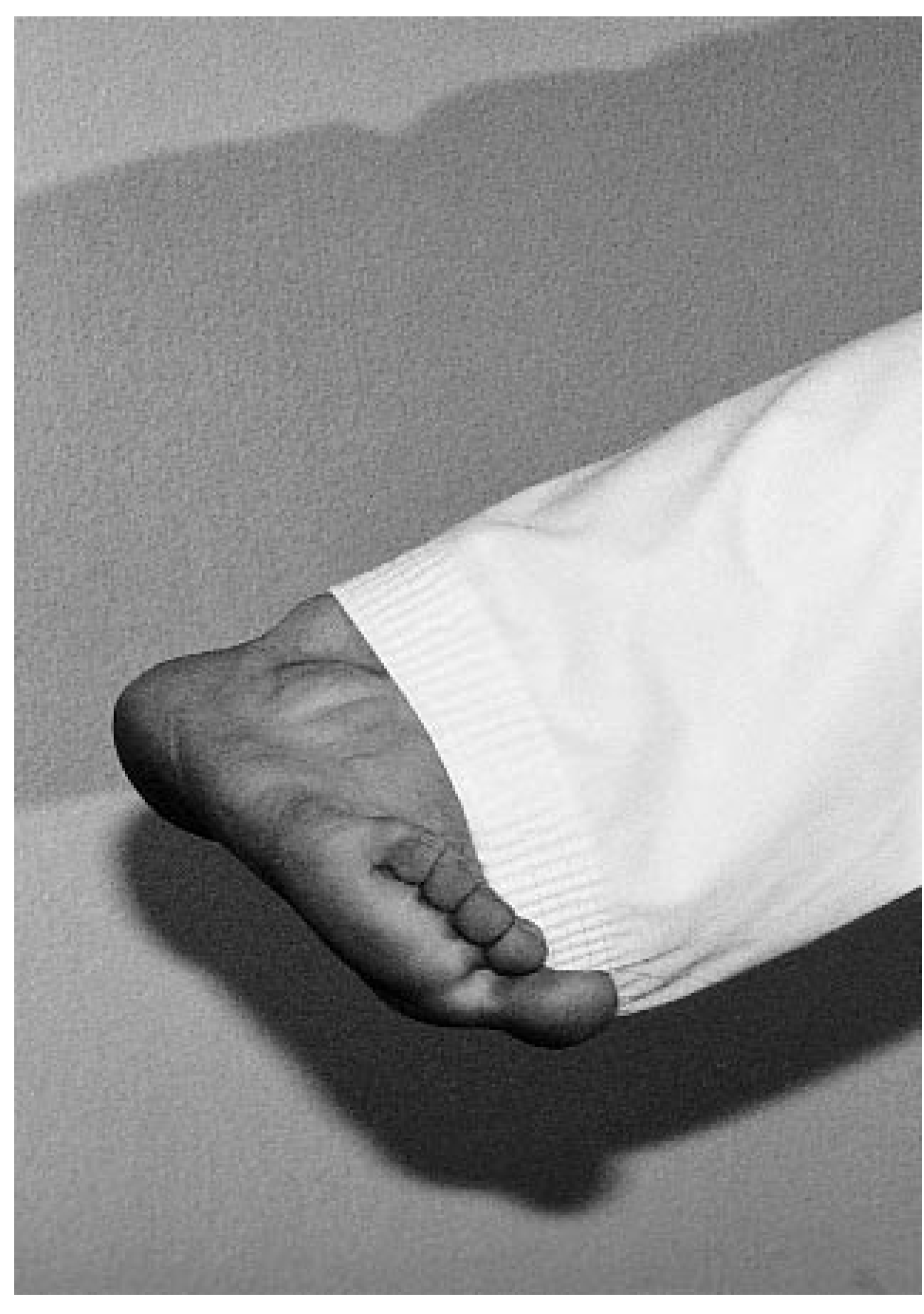
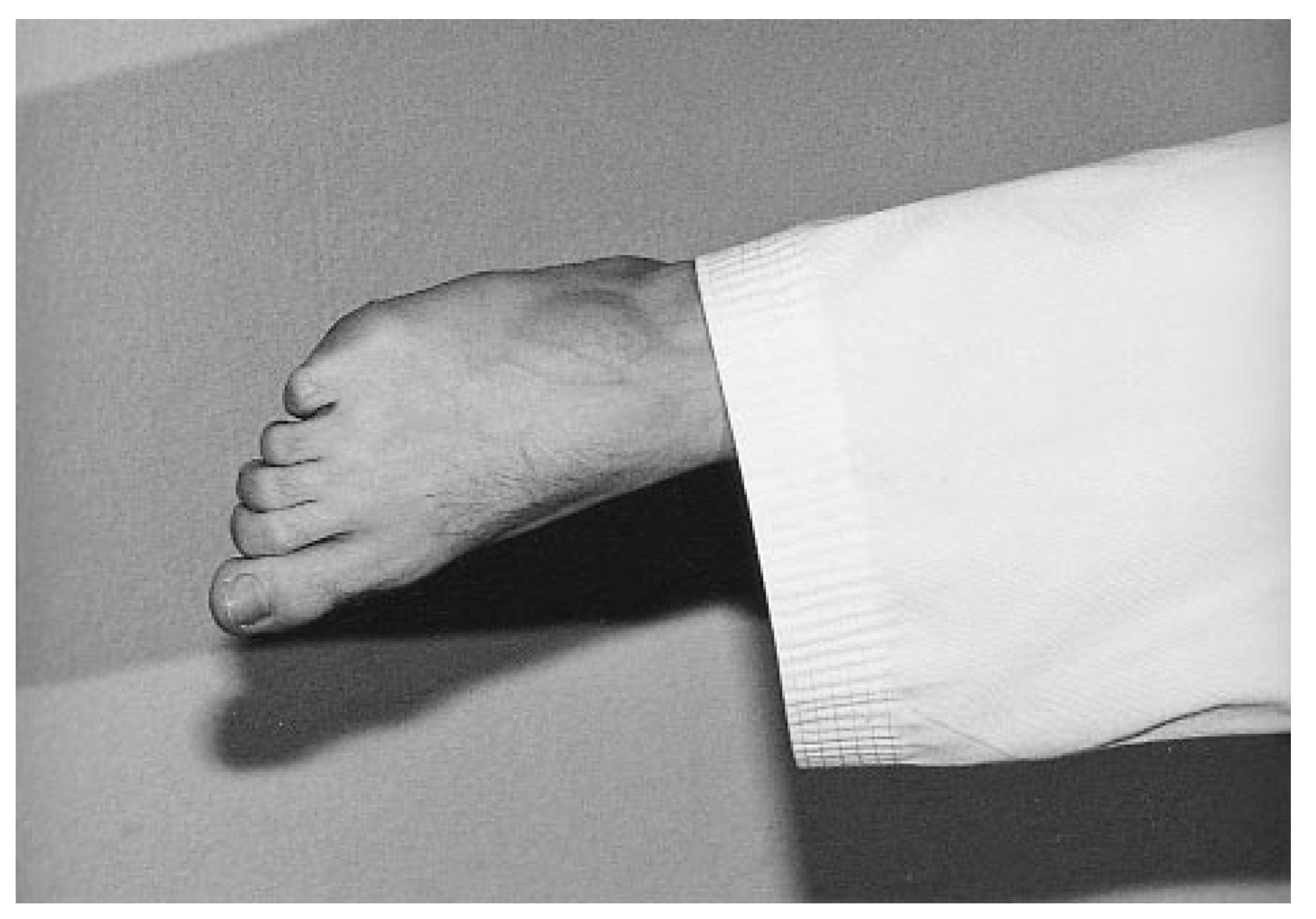
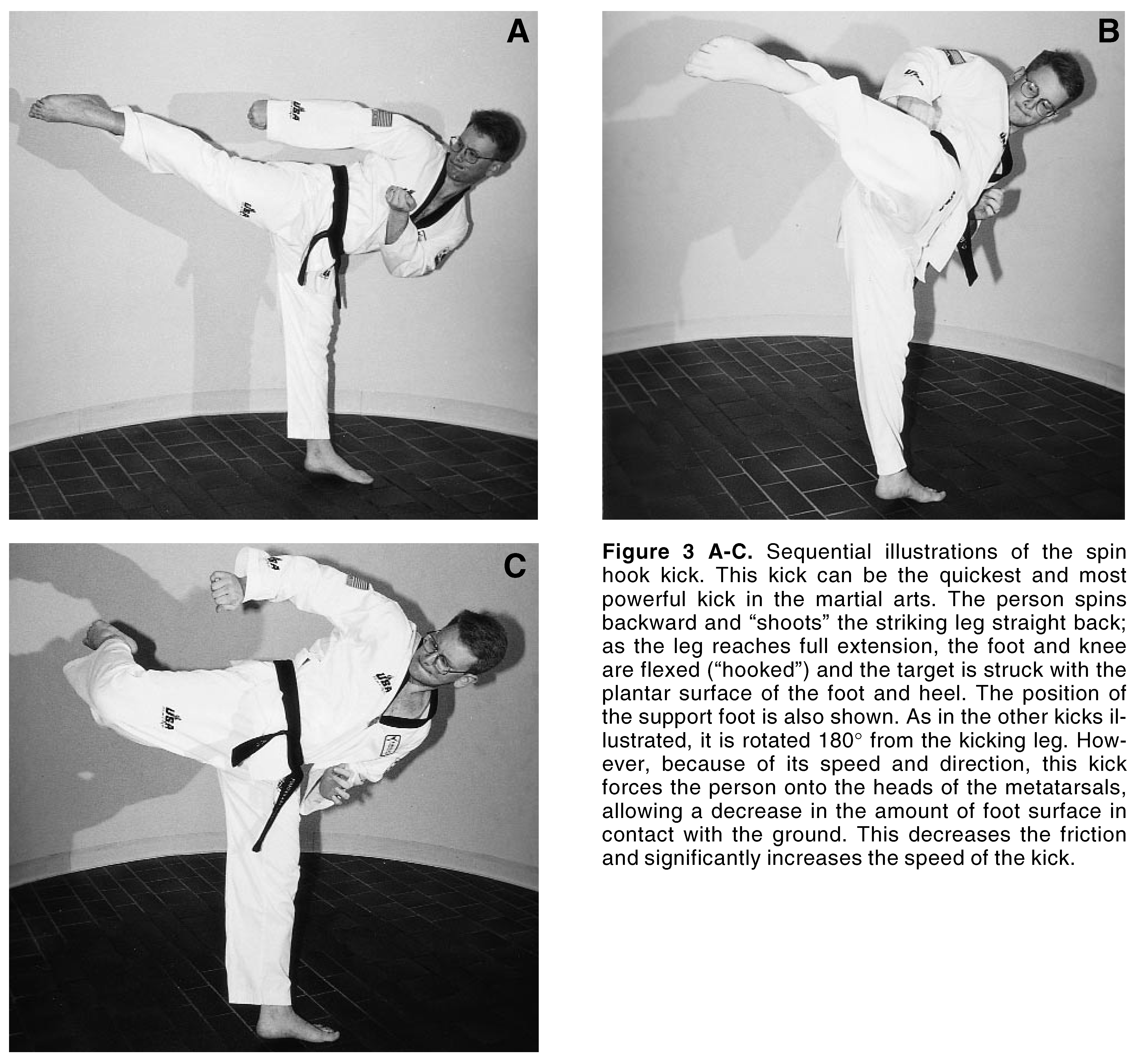
Figure 1 through
4 illustrate the position of the striking foot and the support foot in some of the more common kicks employed by martial artists. These photographs should help illustrate the mechanism of injury when the various maneuvers are performed.
Figure 1A.
Illustration of the side kick. Note that the foot is inverted and dorsiflexed at the time of contact. The digits are also dorsiflexed. This allows the lateral column of the foot and heel to become the striking surface.
Figure 1A.
Illustration of the side kick. Note that the foot is inverted and dorsiflexed at the time of contact. The digits are also dorsiflexed. This allows the lateral column of the foot and heel to become the striking surface.
Figure 1B.
Illustration of the position of the support foot during performance of the side kick. The foot is rotated 180° from the kicking leg. In order to maintain this foot position while performing the side kick, the martial artist must roll the kicking hip over; the leg is thrust in a somewhat posterior motion, generating much more power than could be attained from a strictly sideways kick.
Figure 1B.
Illustration of the position of the support foot during performance of the side kick. The foot is rotated 180° from the kicking leg. In order to maintain this foot position while performing the side kick, the martial artist must roll the kicking hip over; the leg is thrust in a somewhat posterior motion, generating much more power than could be attained from a strictly sideways kick.
Figure 2A.
Illustration of the roundhouse kick. Note that the foot and digits are maximally plantarflexed. This allows the striking surface to be the entire dorsum of the foot as well as the anterior surface of the ankle joint. This particular kick can be delivered with greater peak acceleration than a punch and with much greater force [
26].
Figure 2A.
Illustration of the roundhouse kick. Note that the foot and digits are maximally plantarflexed. This allows the striking surface to be the entire dorsum of the foot as well as the anterior surface of the ankle joint. This particular kick can be delivered with greater peak acceleration than a punch and with much greater force [
26].
Figure 2B.
Illustration of the position of the support foot during the roundhouse kick. As in the side kick, the support foot is rotated 180° from the kicking leg. Because of the speed of this kick, the individual often rises up on the toes during the peak of the kick, allowing a greater height or distance to be reached.
Figure 2B.
Illustration of the position of the support foot during the roundhouse kick. As in the side kick, the support foot is rotated 180° from the kicking leg. Because of the speed of this kick, the individual often rises up on the toes during the peak of the kick, allowing a greater height or distance to be reached.
Figure 3.
(A–C) Sequential illustrations of the spin hook kick. This kick can be the quickest and most powerful kick in the martial arts. The person spins backward and “shoots” the striking leg straight back; as the leg reaches full extension, the foot and knee are flexed (“hooked”) and the target is struck with the plantar surface of the foot and heel. The position of the support foot is also shown. As in the other kicks illustrated, it is rotated 180° from the kicking leg. However, because of its speed and direction, this kick forces the person onto the heads of the metatarsals, allowing a decrease in the amount of foot surface in contact with the ground. This decreases the friction and significantly increases the speed of the kick.
Figure 3.
(A–C) Sequential illustrations of the spin hook kick. This kick can be the quickest and most powerful kick in the martial arts. The person spins backward and “shoots” the striking leg straight back; as the leg reaches full extension, the foot and knee are flexed (“hooked”) and the target is struck with the plantar surface of the foot and heel. The position of the support foot is also shown. As in the other kicks illustrated, it is rotated 180° from the kicking leg. However, because of its speed and direction, this kick forces the person onto the heads of the metatarsals, allowing a decrease in the amount of foot surface in contact with the ground. This decreases the friction and significantly increases the speed of the kick.
Figure 4A.
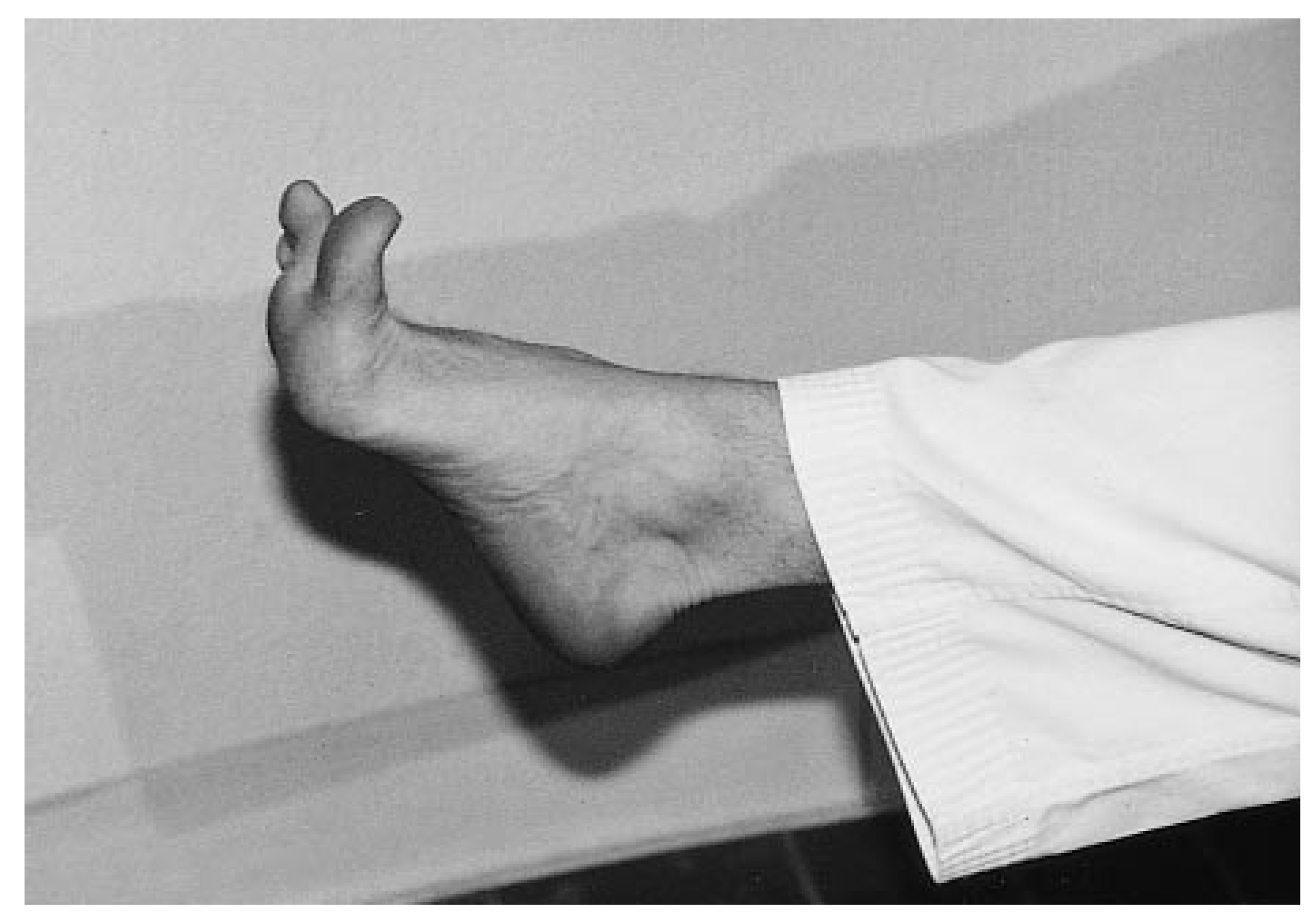
Illustration of the position of the foot during the front snap kick. The foot is maximally plantarflexed, and the digits are maximally dorsiflexed. This allows the metatarsal heads to act as the striking surface. When this kick is delivered in competition, the likelihood of digital injury is very high.
Figure 4A.
Illustration of the position of the foot during the front snap kick. The foot is maximally plantarflexed, and the digits are maximally dorsiflexed. This allows the metatarsal heads to act as the striking surface. When this kick is delivered in competition, the likelihood of digital injury is very high.
Figure 4B.
Illustration of the position of the support foot during the front snap kick. Unlike in the other kicks, the support foot is parallel to the kicking leg. The support leg is usually slightly bent, allowing the person to kick higher than with the leg fully extended.
Figure 4B.
Illustration of the position of the support foot during the front snap kick. Unlike in the other kicks, the support foot is parallel to the kicking leg. The support leg is usually slightly bent, allowing the person to kick higher than with the leg fully extended.
Of course, not all injuries occur during sparring sessions. However, the severity and number of injuries sustained in competition are much greater than in regular, “traditional” training settings. Indeed, many people practice the martial arts for years without sustaining any injuries. In fact, martial arts training has been utilized as a rehabilitative measure in the treatment of injuries, particularly spinal injuries [
27,
28,
29].
Materials and Methods
A questionnaire on foot and ankle injuries sustained during the practice of the martial arts was distributed to martial arts studios around the country. Any martial artist with any type of foot or ankle injury was encouraged to complete a form. Because questionnaires were distributed only to certain groups and presumably all of the respondents had sustained some type of lower-extremity injury, the results of this survey cannot be generalized to all martial artists. The results, however, do help clarify the nature of the injuries sustained. This study also can serve to lay the groundwork for future podiatric studies involving the martial arts. The survey form used is shown in
Figure 5.
The survey form included a short explanation of the purpose of the survey. Participants were questioned about age, gender, style of martial art, and the amount of time devoted to practice. Also requested was the purpose of their martial arts training and their present rank as well as their rank at the time of injury. A checklist of some of the more common injuries was provided, and participants were encouraged to give a detailed description of their injuries.
The question about the purpose of the martial arts training was included in the survey because it was hypothesized that people involved in martial arts competition would sustain more injuries than those pursuing other goals, for two reasons: First, sparring requires more aggression on the part of the participant than does a traditional class; second, facing an opponent provides more opportunities for contact injury than does the traditional class, in which techniques are customarily practiced without contact. (Some styles include sparring in traditional classes, but most do not.) Although this survey did not collect data on the specific number of injuries sustained, it did permit review based on the number of positive responses to the questions on the types of injuries sustained.
Rank at the time of injury and the total amount of time spent in training were considered important because the extent of the martial artist’s experience might influence the type and/or the severity of the injury.
Table 2 shows the length of time required to achieve various belt rankings.
The frequency and length of training sessions (hours per day and days per week spent in training) were also requested on the assumption that the more time the martial artist spends in training, the greater the likelihood of injury. Gender and age were also included so that their possible effect on injury levels could be evaluated.
The checklist of common injuries allowed the participants to easily indicate the types of injuries that they had sustained. The choices for osseous injuries were ankle fractures, pedal fractures, and digital fractures. The choices for soft-tissue injuries were contusions, lacerations, ankle sprains, and digital jamming. In developing the list of options, the authors examined reports of past studies of injuries. The injuries reported by Oler et al [
14] seemed to represent the most common injuries affecting the lower extremity; therefore, the list for this survey was based on their report. Because the list was by no means comprehensive, ample space on the form was provided for people to describe other injuries and/or expound on the injuries that they had checked on the list.
Every survey has weaknesses. The authors found that a major weakness of the present survey was the variation in what people considered an “injury.” For example, some people appeared not to acknowledge an injury unless it was debilitating and required treatment. Others considered small annoyances, such as hyperkeratotic buildup underneath the metatarsal heads, to be injuries. The authors acknowledge that these reliability issues constitute a limitation on the validity of this study. All of the questionnaires were analyzed to ensure that all information included was pertinent to this project.
Results
The survey forms were placed in various martial arts studios in Iowa, Indiana, and Connecticut, and all students who had sustained injuries were encouraged to complete the forms. Seventy-seven questionnaires were returned. The respondents included 42 practitioners of tae kwon do, 11 of hap ki do, 9 of shotokan, 5 of shoryn-ryu, 5 of kenpo, 3 of tang soo do, and 2 of judo.
The average age of the martial artists was 27.5 years, with a range of 8 to 46 years. Of the 74 respondents who noted their gender, 21 were female.
Fifty-five of the respondents indicated self-defense as a reason for studying the martial arts. Competition was indicated by 26, exercise by 58, and recreation by 36. Ten people did not provide a response in this section. As expected, most respondents had multiple reasons for pursuing martial arts training.
Because different martial art forms have different requirements for time needed to attain the various belt rankings, and because the color ranking system varies across styles, the respondents were divided into those with 0 to 11 months’ experience, 12 to 35 months’ experience, 36 to 60 months’ experience, and more than 60 months’ experience. Twenty respondents had less than 12 months’ experience, 22 had between 12 and 35 months’, 12 had between 36 and 60 months’, and 22 had more than 60 months’ experience. The average length of experience, based on 76 questionnaires (one form was not complete in this section), was 43.9 months, with a range of 1 to 192 months.
Training regimens differed only slightly among the artists surveyed. The mean number of days per week spent in training was 3.5 (range, 2 to 6), based on 71 completed surveys, while the mean number of hours per training session was 1.6 (range, 1 to 5), based on 74 completed surveys.
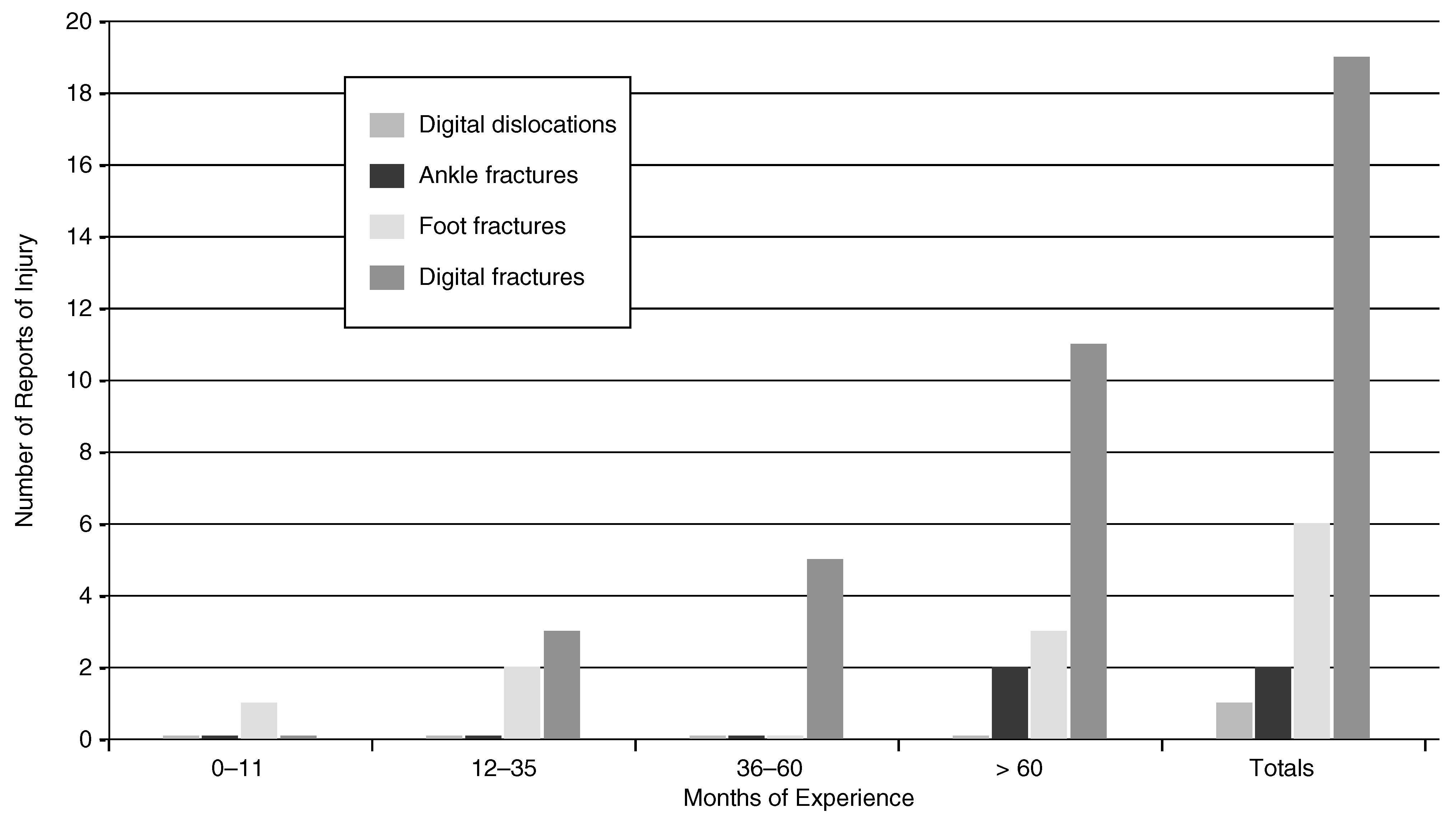
A total of 186 positive responses on the foot and ankle injury section of the survey form were noted. This number includes both soft-tissue and osseous injuries. It must be remembered that this survey gathered information only on the types of injuries sustained, and not the number of injuries. (For example, two people may have checked that they had sustained ankle sprains, but one of them might have had five such injuries while the other had only one.) There were 28 reports of bony injury. Only one person reported digital dislocation affecting the left hallux. Two respondents reported ankle fractures. Six reported fractures of the foot, and 19 reported fractures of a digit. There were 158 reports of soft-tissue injury. Twenty-three people reported ankle sprains. There were 54 reports of bruising. There were 33 reports of lacerations, and 48 reports of digital jamming.
The percentage distribution of the 186 reports of injury is as follows: digital dislocations, 0.54%; ankle fractures, 1.1%; fractures of the foot, 3.2%; digital fractures, 10.2%; ankle sprains, 12.4%; bruising, 29.0%; lacerations, 17.7%; and digital jamming, 25.8%. Of the 77 people injured, 22 sought treatment and 39 did not, with 16 failing to indicate whether or not they sought treatment.
Discussion
In the review of the survey results, one area examined was the relationship between purpose of martial arts training and the number of reports of injury. In many martial arts, contact is either nonexistent or minimal. The reasoning behind this is that a skilled martial artist should be able to aim a punch or kick with enough control to be able to stop short of actual contact. (Tae kwon do is an example of a martial art that employs full-contact kicks to both the head and body, with punching allowed to the torso.) The results indicate that in the group of 26 respondents who indicated that competition was among their motives for pursuing martial arts training, there were 74 indications of injury. These 26 respondents accounted for 33.8% of the total number of respondents, but accounted for 39.8% of the reports of injury. The 55 respondents who reported self-defense as a motive accounted for 71.4% of the total number of respondents and 75.3% (140) of the reports of injury. The 58 respondents (75.3%) who chose exercise as a reason had 138 (74.2%) reports of injury. The 36 (46.8%) people citing recreation as a motive had 95 (51.1%) indications of injury. It is important when considering these numbers to remember that some of the survey respondents marked more than one reason for studying the martial arts and therefore may be included in more than one category.
The authors originally predicted that any of the motivating factors might be found to have affected the number and types of indications of injury. Although statistical tests were not performed, the actual findings show only slight differences in the percentages. It is reasonable to assume that, as other researchers have noted, the injuries sustained by martial artists involved in competition are both greater in number and more severe than those of artists not involved in competition [
13,
14,
17,
25]. This would seem to be the case especially in the martial arts that emphasize partial- or full-contact sparring and more kicking than punching. Twelve of the 28 indications of osseous injury (42.9%) were made by respondents who reported competition as a motive. Of those, seven involved fractures of the digits, constituting 36.8% of the total of 19 indications of digital fractures.
Only slight differences in injuries reported were found between males and females. The 21 (27.3%) respondents who identified themselves as female accounted for 48 (25.8%) of the indications of injury. The 53 (68.8%) respondents who reported their gender as male had 134 (72.0%) indications of injury. Again, it is important to understand that “injury” was defined differently by different respondents: What some respondents reported as injuries might not be considered as such by others. These data indicate that male and female martial artists are equally prone to foot and ankle injuries.
The authors’ review of the literature did not reveal any previously proposed correlation between age and frequency or type of injury. Although the relationship was not statistically tested for, the authors suggest that age is a factor in the type of injuries sustained. A primary reason for suspecting this is that younger participants tend to be involved in more competitive facets of the martial arts and therefore have more opportunities for injury.
The final area examined was the relationship between the nature or severity of the injuries sustained and the total amount of experience possessed by the martial artist.
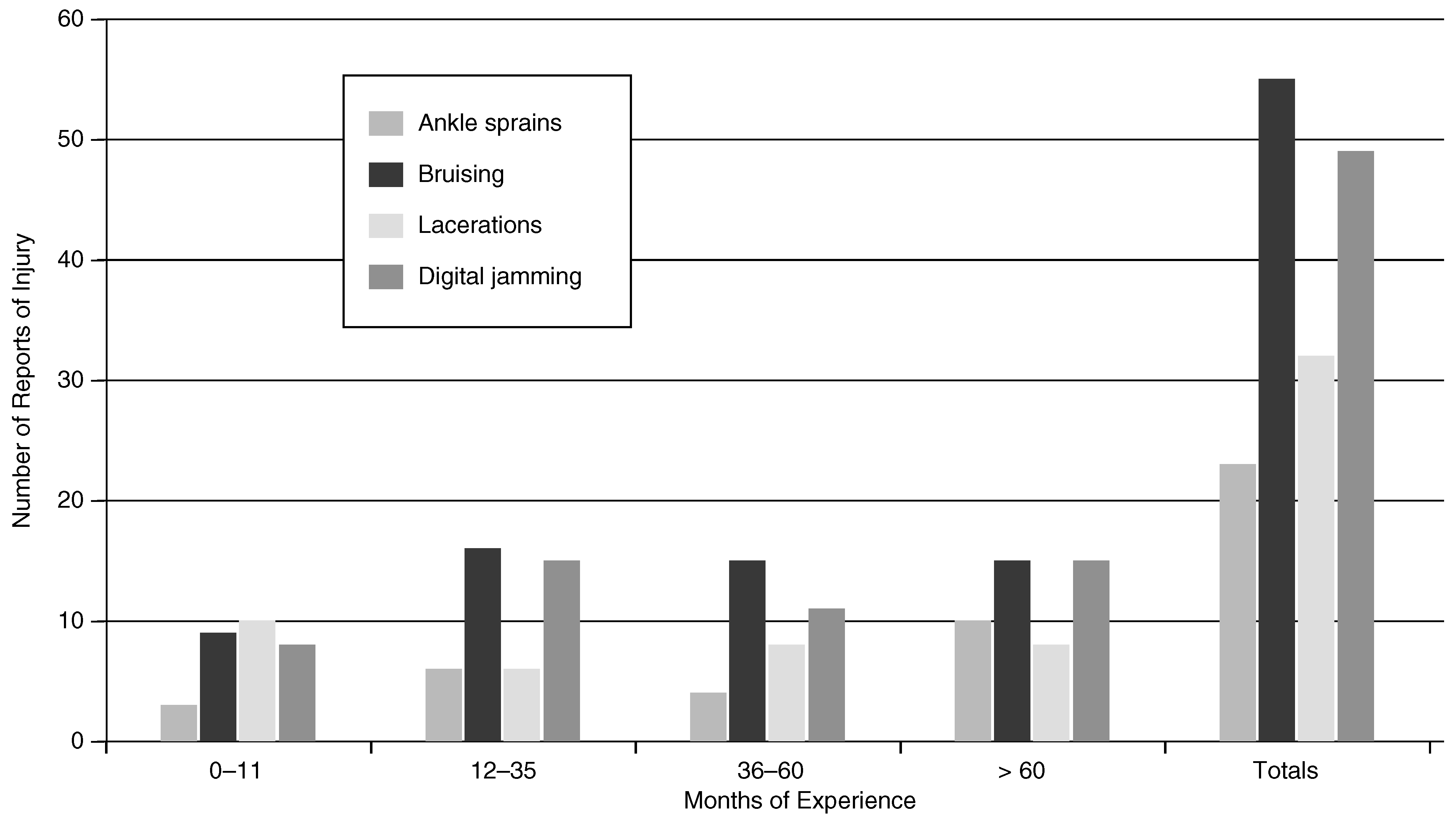
Figure 6 shows that as the level of experience increases, the number of reports of osseous injuries increases. In contrast,
Figure 7 illustrates that all types of soft-tissue injuries were reported in similar numbers by martial artists of varying levels of experience. For the purpose of this survey, it was assumed that the osseous injuries were more serious than the soft-tissue injuries. (Of course, this is not always the case.) On the basis of this assumption, the authors propose that as martial artists become more advanced, their incidence of severe injuries increases but their incidence of minor injuries remains the same.
One explanation for this finding is that in all martial arts, as the rank increases, so does the level of difficulty. For example, in tae kwon do, jumping and spinning maneuvers are performed only at the higher ranks. The general principle holds true for all of the styles surveyed. (Judo uses more technically difficult throwing maneuvers at the higher ranks, and not necessarily kicking maneuvers.) In many styles, board and brick breaking are required for advancement through the ranks. Wirtz et al [
30] cite three cases of calcaneal apophysitis as a result of board breaking by children. Moreover, the greater demands placed on the experienced student certainly provide more opportunities for more severe injuries to occur.
Because the martial arts are practiced in bare feet, they are more conducive to many lower-extremity injuries than are other sports. Digital fractures and digital jamming are good examples. In this survey, digital injuries accounted for 36.6% of the total number of reports of injury. (This includes osseous and soft-tissue injuries combined, plus the single episode of digital dislocation.) Digital fractures were the most commonly reported type of osseous injury and were the second most commonly reported type of injury overall, surpassed only by bruising. It appears that in the absence of protective shoes, the digits constitute the area most vulnerable to injury in the practice of the martial arts.
Many of the respondents described a “wrenching” of the digit when spinning kicks are performed. Also, as illustrated in
Figure 1 through
4, the digits are often exposed to injury not only to the striking foot but also to the support foot. Not only is the ankle in an unstable position during many of the kicks because of its plantarflexed position (stemming from the structure of the ankle joint), but the digits are prone to hyperextension and excessive transverseplane motion. Coupled with the friction generated beneath the digits when a spinning or jumping maneuver is performed, these factors could easily lead to fracture and “jamming.” The authors suggest that a lightweight, protective shoe be worn during participation in the martial arts to reduce the incidence of digital injuries, even in noncontact settings.