Next Article in Journal
Neuropathy Associated with Prostate Cancer
Previous Article in Journal
Foot Problems Associated with Older Patients. A Focused Podogeriatric Study
 
 
Journal of the American Podiatric Medical Association is published by MDPI from Volume 116 Issue 1 (2026). Previous articles were published by another publisher in Open Access under a CC-BY (or CC-BY-NC-ND) licence, and they are hosted by MDPI on mdpi.com as a courtesy and upon agreement with American Podiatric Medical Association.
Article

Foot-Care Awareness. A Survey of Persons Aged 65 Years and Older

by
Bridget Jean Munro
and
Julie Robyn Steele
Department of Biomedical Science, University of Wollongong, Northfields Ave, Wollongong, New South Wales 2522, Australia
J. Am. Podiatr. Med. Assoc. 1998, 88(5), 242-248; https://doi.org/10.7547/87507315-88-5-242
Published: 1 May 1998

Abstract

The authors conducted a mail survey that examined foot problems, rates of utilization of foot-health services, and the perception of foot problems as medical conditions in a sample of people aged 65 years and older who lived independently. Although 71% of the 128 respondents reported suffering from foot problems, only 39% had consulted medical personnel about their feet, and only 26% identified their foot pathologies as medical conditions. More female than male respondents experienced foot problems and had visited medical personnel about their feet. Increased education of older individuals about their foot-care requirements, as well as increased access to podiatric medical services, is recommended.

The rate of foot problems among the elderly is nearly double that for the general population. The percentage of individuals aged 65 years and older who suffer from foot problems has been found to vary from 40% to 86% [1,2,3,4,5]. The most common foot problems reported by elderly individuals are nail problems (in particular, hard, thickened nails), calluses, bunions, corns, hallux valgus, aching and swollen feet, and circulatory problems [4,6]. Foot problems can lead to foot pain and discomfort, limiting opportunities for sustained activity [4,6]. Furthermore, foot problems have been implicated as a risk factor for falls [7]. Therefore, elderly individuals require appropriate foot care if they are to remain mobile and maintain independence and freedom from pain [8]. However, many elderly individuals do not visit medical personnel about their feet. In 1977 it was found that between 65% and 75% of individuals with specific foot problems had never sought professional care for these problems and that less than 5% were receiving treatment at the time of the survey [8]. Nevertheless, many elderly individuals do regularly visit their general practitioner [9]. Thus, although foot problems have serious consequences for the older individual, it would seem that many individuals surveyed 20 years ago did not attribute great importance to foot pain or discomfort and did not visit medical personnel about their feet owing to such factors as the cost, inaccessibility, or lack of services specific to foot care or a lack of knowledge of the importance of proper foot care [4].
With increased podiatric medical services now available in the community, the question arises whether these services are used more frequently today compared with 2 decades ago. The purpose of the present study was to examine the foot problems, rates of utilization of foot-health services, and the perception of foot problems as medical conditions among persons aged 65 years and older who were living independently in the community. Furthermore, the study aimed to identify differences between patterns of foot problems and foot care experienced by elderly males versus elderly females.

Methods

Subjects

A total of 1,715 residences located in the Illawarra region of New South Wales, Australia, were contacted by telephone. Telephone numbers were chosen from the 1996 Illawarra telephone directory by means of random selection of page number, column number, and row number. Of these 1,715 residences, the telephone was answered at 1,226 homes, and 276 (22.5%) respondents were eligible for the survey (ie, aged 65 years or older and living independently in the community). Two hundred of these 276 individuals (72.5%) indicated a willingness to participate in a survey pertaining to their foot problems and shoe-wearing habits and were mailed a questionnaire. One hundred twenty-eight respondents (64.0%) completed the questionnaire, thereby providing a random sample of independently living individuals aged 65 years and older. No follow-up of the participants in the survey was performed owing to ethical restrictions (University of Wollongong Human Research Ethics Committee, personal communication, November 14, 1996).

Questionnaire

The survey instrument was composed of 51 questions that documented general characteristics including age, gender, demography, ethnicity, socioeconomic status, general health status, incidence of foot problems, use of health services, and rates of falls for the 12 months prior to the survey; shoe-wearing habits; and shoe-purchasing habits. Items for the questionnaire were derived from the literature [8,10,11,12,13,14], previous questionnaires [4,6,15], and interviews with older individuals. The questionnaire used in the present survey was found to be valid and reliable. The survey and questionnaire were approved by the University of Wollongong Human Research Ethics Committee [16].
Answers to the closed questions in the survey were coded and analyzed to determine the frequency of responses to each item, expressed as a percentage of the total cases. The frequency data were then analyzed using chi-square statistical tests with Yates correction (if df < 1) [17] to determine whether the observed frequencies differed significantly (P < 0.05) from what was expected and whether gender was significantly related to any factor. Independent t tests and z scores were then used to indicate differences between responses of males and females for specific items. Descriptive comments from the open questions were tabulated and used to obtain further information on selected topics.

Results

General Subject Characteristics

Of the 128 people who returned questionnaires, 60 respondents (46.9%) were male (mean [±SD] age, 72.5±5.2 years) and 68 respondents (53.1%) were female (mean [±SD] age, 71.6±6.5 years). There were no significant differences between men and women in terms of mean age (t = 0.811; P = 0.42) or number of respondents completing the survey (t = 0.529; P = 0.60). Sixty-three out of 111 respondents (56.8%) indicated that they had an approximate yearly income below $12,000 (AUD). However, there was no significant relationship between gender and approximate yearly income (P = 0.12). Although there was no significant relationship (P = 0.93), more women (10.3%) indicated that their health was poor compared with men (8.3%). There were no significant relationships between gender and length of time the respondent was able to walk before requiring a rest (P = 0.60) or assistance required to perform daily chores, such as bathing, cooking, cleaning, and shopping (P = 0.40). However, a greater number of men (63.3%) could walk for more than 30 minutes compared with women (54.4%), and there was a trend for more women (41.2%) to require assistance in performing everyday house-hold chores compared with men (33.3%). The community-dwelling older individuals making up the present sample were independently mobile and considered themselves to be healthy. Thus, the sample was considered a good representation of the population of interest.

Medical Conditions

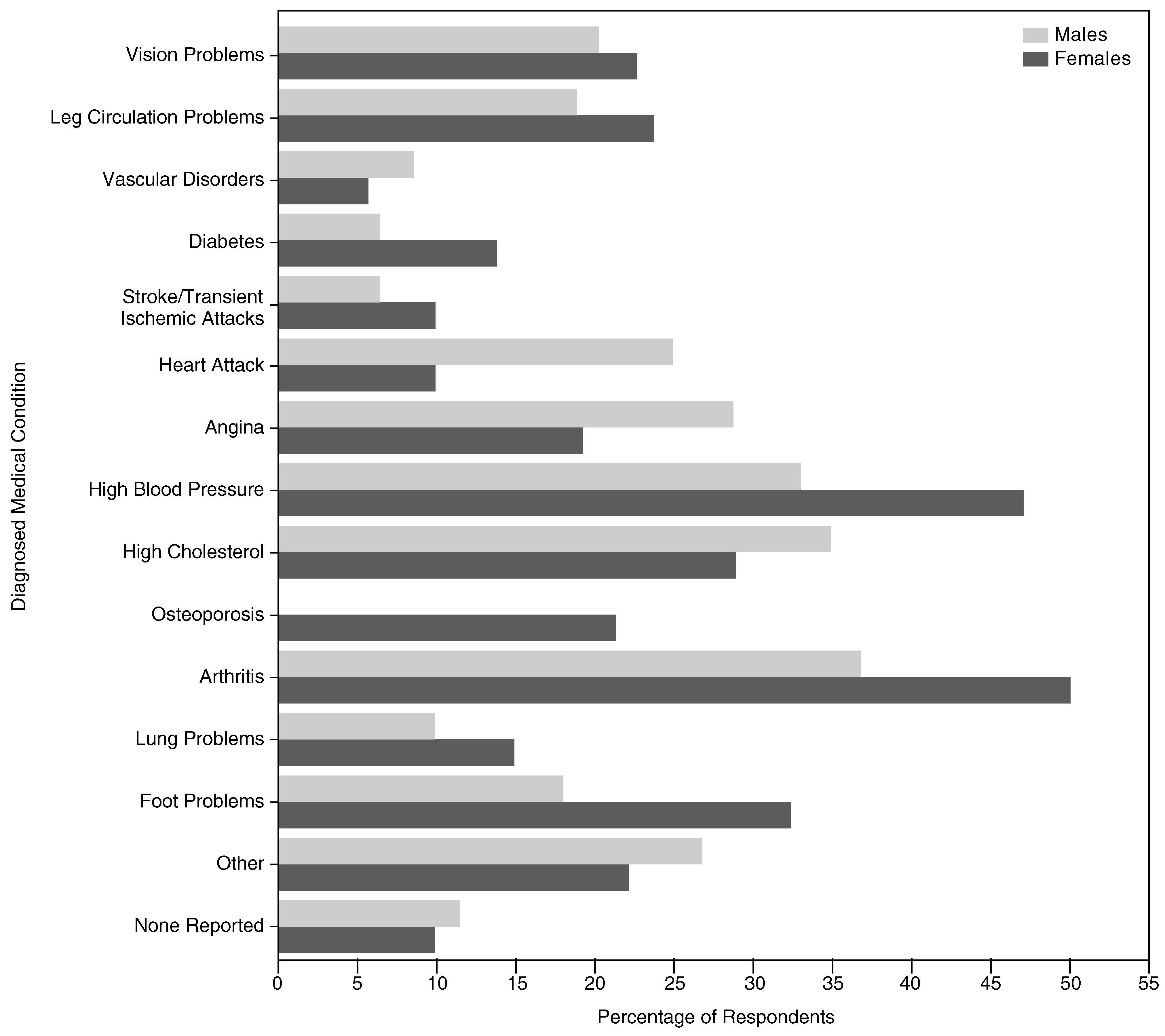
The diagnosed medical conditions reported by male and female respondents in the present study are shown in Figure 1. There was no significant relationship between gender and diagnosed medical condition (P = 0.34). Furthermore, female respondents did not display significantly more medical conditions than male respondents (t = −1.11; P = 0.27), although the average number of medical conditions per female respondent was 3.2, as compared with 2.7 for male respondents. Only 7 male (11.7%) and 7 female (10.3%) respondents reported that they did not suffer from any diagnosed medical conditions. Among those reporting diagnosed medical conditions, the three most commonly reported conditions for women were arthritis (50.0%), high blood pressure (47.1%), and foot problems (32.4%), while those for men were arthritis (36.7%), high cholesterol (35.0%), and high blood pressure (33.3%) (Figure 1).

Visits to Medical Personnel

In the present study, a similar number of men (45.0%) had visited a physician in the 2 weeks prior to completing the survey compared with women (42.6%). Furthermore, gender was not significantly related to physician visits in the 2 weeks prior to survey completion (P = 0.91). The most commonly reported reasons for visiting medical personnel for both male and female respondents were circulatory problems (39.3%), checkups (21.4%), musculoskeletal problems (16.1%), diseases and infections (14.3%), and to renew medical prescriptions (8.9%).

Foot Problems

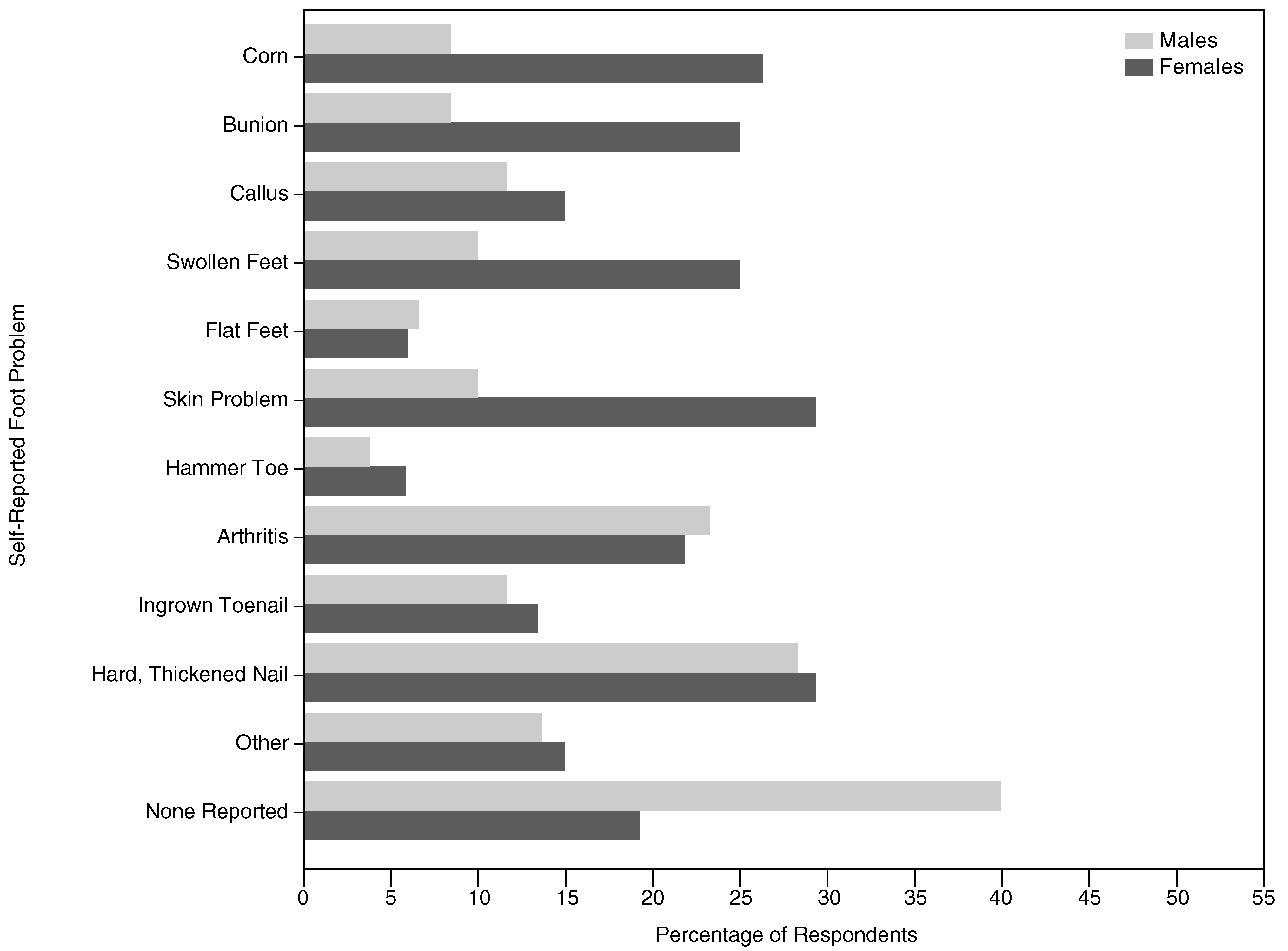
The self-reported foot problems indicated by male and female respondents are shown in Figure 2. Women reported significantly (t = −2.68; P < 0.01) more foot problems than men, with an average of 2.1 foot problems per female respondent, compared with 1.4 foot problems per male respondent. However, although approaching significance, the reporting of specific foot problems was not significantly related to gender (P = 0.07). The most common foot problems reported by female respondents were hard, thickened nails (29.4%), skin problems (29.4%), corns (26.5%), swollen feet (25.0%), bunions (25.0%), and arthritis (22.1%). Male respondents commonly reported hard, thickened nails (28.3%) as their major foot problem, along with arthritis (23.3%), ingrown toenails (11.7%), and calluses (11.7%) (Figure 2).
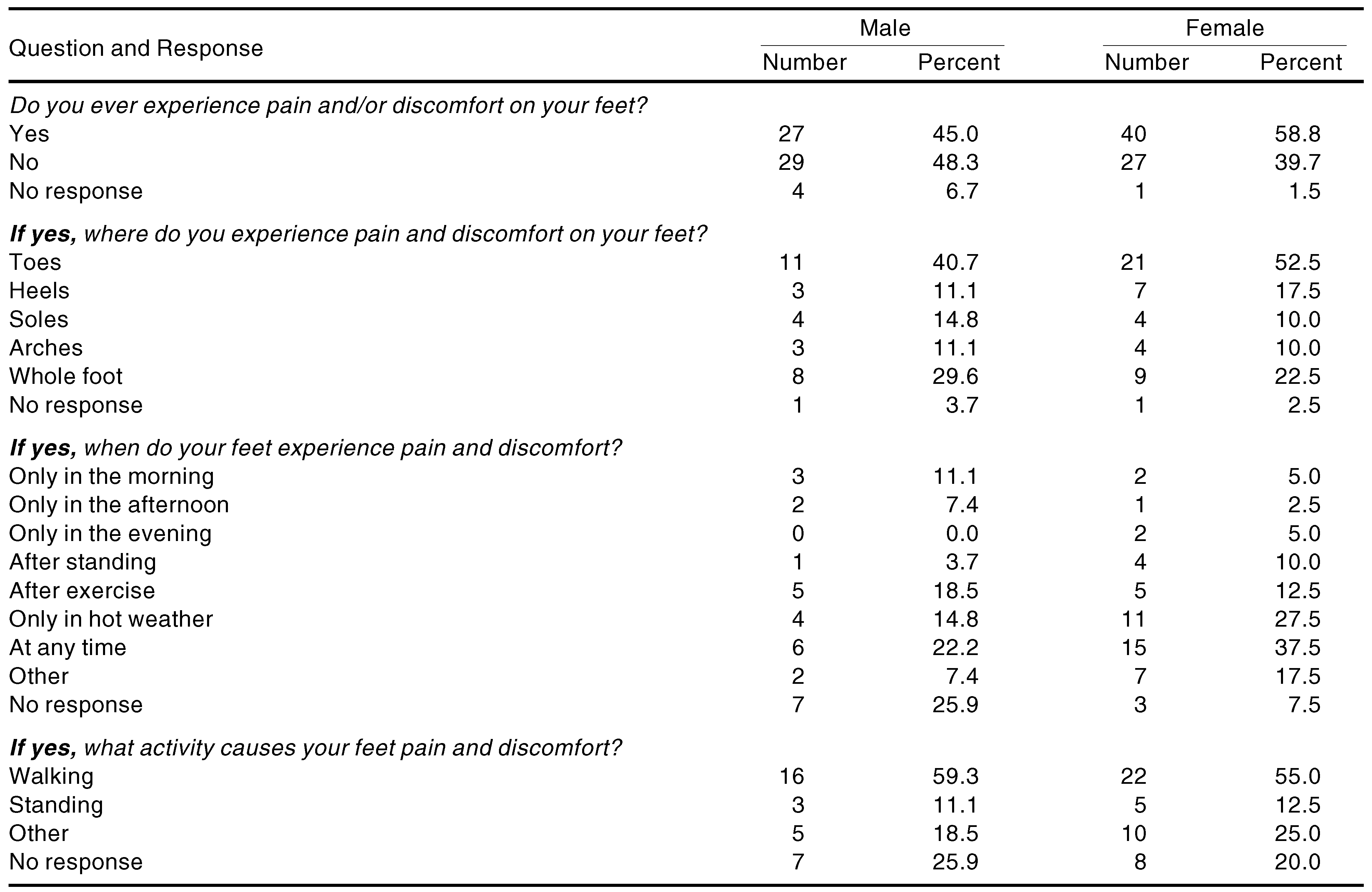
Foot pain and discomfort reported by male and female respondents are described in Table 1. Although the difference was not significant (z = 1.19; P = 0.23), more women (58.8%) experienced pain and discomfort in their feet compared with men (45.0%). For both men and women, this pain and discomfort was predominantly experienced around the toes (47.8%), over the whole foot (25.4%), or around the heels (14.9%), and was experienced at any time of day (31.3%) or only in hot weather (22.4%). The activity that caused the most pain and discomfort for both men and women was walking (56.7%) (Table 1).

Visits to Medical Personnel for Foot Problems

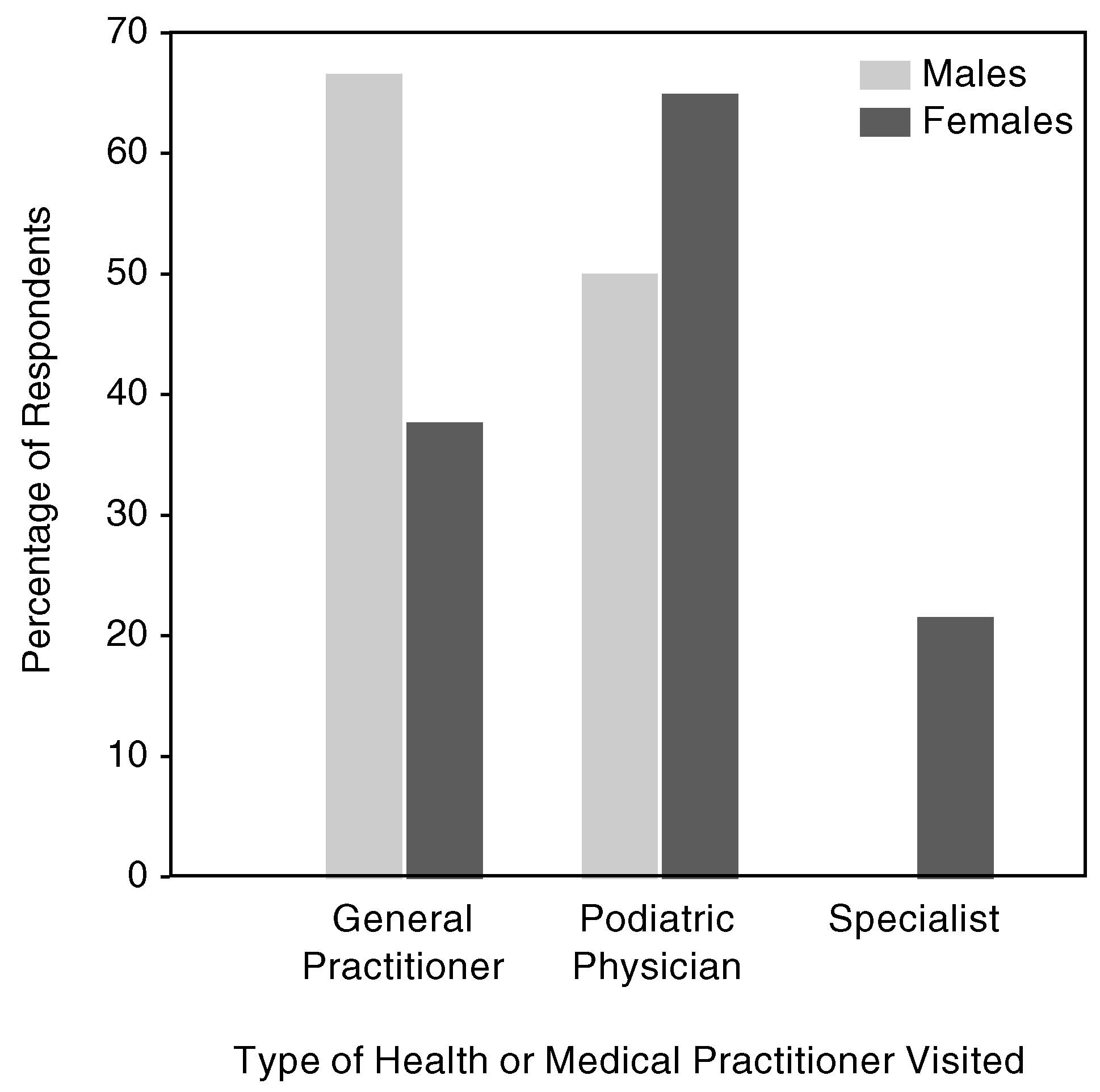
Visits to medical personnel specifically for foot problems reported by male and female respondents are indicated in Figure 3. In the present study, more women (47.1%) had visited medical personnel about their feet compared with men (30.0%). However, this difference was not significant (z = 0.67; P = 0.51). Of the respondents who did seek medical advice about their feet, female respondents predominantly visited podiatric physicians (65.6%) and general practitioners (37.5%), with a minority visiting a specialist other than a podiatric physician (21.9%). Male respondents predominantly visited general practitioners (66.7%), followed by podiatric physicians (50.0%) (Figure 3).

Discussion

Eighty-nine percent of the respondents in the present study indicated that they suffered from diagnosed medical conditions, with an average of three conditions reported. Only seven male and seven female respondents reported that they did not suffer from any diagnosed medical condition. In accordance with the results of the present study, Helfand[18] and the Australian Bureau of Statistics in its National Health Survey [19] reported that 77% and 99.4% of persons aged 65 years and older, respectively, suffered from chronic medical conditions. However, in contrast to the present findings, Helfand[18] found that no subject aged 65 years or older was pathology-free. Therefore, the reporting of numerous diagnosed medical conditions was expected from the current sample of older individuals.
The most commonly reported diagnosed medical condition in the present study was arthritis (Figure 1). Other commonly reported conditions included foot problems, high cholesterol, and high blood pressure. It has been documented that between 16% and 69% of persons aged 65 years and older suffer from some form of arthritis as a long-term medical condition [6,18,19], and that 38.3% and 11.2% of persons aged 65 years and older have hypertension and high cholesterol, respectively.[19] Therefore, the high incidences of these diagnosed medical conditions in the present study were expected. Arthritis is an inflammatory joint disease that can cause pain and incapacitation due to joint deformity. Thus, on the basis of the high incidences of arthritis and foot problems reported in the present study, it was anticipated that respondents would have limited mobility and would consider themselves to be in poor health. However, respondents appeared to be unaffected by these chronic conditions in terms of mobility and considered themselves to be in good health.
Despite the high rates of diagnosed medical conditions reported in the present study, only 43.8% of respondents had visited their physician during the 2 weeks prior to data collection, with a similar percentage of men (45.0%) visiting their physician compared with women (42.6%). A similar trend was reported by the Australian Bureau of Statistics in its National Health Survey [19], which found that only 38.0% of persons aged 65 years and older had visited their physician during the 2 weeks prior to data collection, with a similar percentage of women (35.6%) visiting their physician during these 2 weeks compared with their male counterparts (31.8%) [19]. The relatively low numbers of respondents visiting their physician relative to the percentage of subjects reporting medical conditions may be explained by the reasons provided by the respondents for visitation, which were similar to those reported in the National Health Survey [19]. These reasons included circulatory problems, checkups, musculoskeletal problems, disease and infection, and prescription renewal. This suggests that because most diagnosed medical conditions were long-term, chronic conditions treated by medications and life-style changes, there was little need to make frequent visits to the doctor about them.
The pattern of reported foot problems and foot pain and discomfort in the present study was similar to that reported in other studies [11,20], with female respondents reporting more foot problems, a greater incidence of foot pain and discomfort, and a greater incidence of toe pain and discomfort than male respondents (Figure 1 and Figure 2; Table 1). This pattern of response is thought to be due to the fact that a high proportion of women habitually wear high-heel shoes and shoes with pointed, shallow toe boxes [11], whereas men typically wear flat shoes or work boots with rounded toe boxes. The high incidence of nail problems (41.4%; Figure 2) reported in the present study may be due to the inability of the older respondents to reach their nails due to decreased mobility, poor eyesight, or some other impairment or due to a lack of equipment that may result in the patient being unable to properly trim his or her nails [3,19]. The other foot problems commonly reported in the present study, such as swollen feet, corns, and bunions (Figure 2), are problems associated with inappropriate footwear and suffered by mobile individuals.6 Immobile individuals display different types of foot problems, such as warts, dry skin, and cold feet [6]. Thus, although foot pain and discomfort or foot problems are important determinants of mobility in older individuals [4,6], the respondents in the present study were mobile individuals who may have required education pertaining to more appropriate types of footwear.
Although 71.1% of the respondents in the present study noted self-reported foot problems and 25.8% reported foot problems as diagnosed medical conditions, over half of all respondents (57.8%) reported never having visited medical or health personnel about their feet. Of those respondents who sought medical attention for their foot problems, 60.0% visited a podiatric physician, 48.0% visited a general practitioner, and 14.0% visited a foot specialist other than a podiatric physician (Figure 3). In accordance with these results, statistics from US studies [8] indicated that between 65% and 75% of individuals with specific foot problems had never sought professional care for those problems. A comparable Australian survey [4] indicated that the percentage of the total population reporting foot problems (40%) was three times the percentage who sought assistance from any type of health practitioner in the 12 months prior to the survey. Furthermore, it was 11 times the percentage who sought treatment specifically from a podiatric physician during the 12 months prior to survey completion [4].
From these results it is apparent that a large number of community-dwelling older individuals are not currently receiving any professional care for their foot problems.[4] Furthermore, the New South Wales Department of Health[4] found that general practitioners were the major providers of foot care for people of all ages in the 12 months prior to its survey. For some foot pathologies, such as pain and injury, treatment by a general practitioner is adequate [4,8]. However, in most cases, adequate foot care can be provided only by a practitioner trained specifically in foot problems, such as a podiatric physician [4,8]. In a study of the treatment of elderly people’s foot pathologies, Cartwright and Henderson [21] found that there was not much crossreferral between general practitioners and podiatric physicians and that respondents frequently referred themselves to podiatric physicians for treatment of their foot problems.
An interesting finding in the present study was that respondents did not identify their reported foot problems as diagnosed medical conditions (Figure 1 and Figure 2). The New South Wales Department of Health[4] suggested that foot problems may not be generally recognized by the population as medical conditions. That is, the number of persons aged 65 years and older reporting specific foot conditions was found to be less than the number of persons observed (by qualified podiatric physicians) to have these conditions. In the present study, women consistently reported more foot problems as diagnosed medical conditions and as self-reported foot problems compared with men. Furthermore, although the difference was not significant, more women visited medical personnel—especially podiatrists—about their feet, which may explain why more women than men reported foot problems as diagnosed medical conditions. The results suggest either that men have fewer foot problems than women because men wear more appropriate shoes throughout their lives or that men are less aware of different types of foot problems, and thus less able to identify them, owing to their limited visits to medical personnel.
People in the community may not seek care for their feet despite the presence of problems for several reasons. They may assign a low priority to this type of health care, be unable to identify foot problems, or feel that foot problems are an inevitable part of aging [6]. They may be unaware of the potential seriousness of foot problems or be unaware of the services available to treat these problems. Furthermore, they may be unable to use foot-care services because of those services’ inaccessibility or unaffordability [4,6]. Thus, educating older, independently living individuals about foot problems and foot care may be a key to maintaining mobility, freedom from pain, and general well-being in these individuals [6,8,22]. General practitioners also need to be educated about the importance of proper foot care in the elderly as well as the importance of referring patients with specific foot problems to foot-care specialists.


Conclusion

The independence and quality of life of many older individuals may be maintained, if not improved, by increasing the awareness and education of older individuals regarding foot care; increasing communication among general practitioners, podiatric physicians, and other providers of foot-care services; and increasing access to foot-care services.

References

  1. HSU JD: Foot problems in elderly patients. J Am Geriatr Soc 19: 880, 1971.
  2. HUNG LK, HO YF, LEUNG PC: Survey of foot deformities among 166 geriatric inpatients. Foot Ankle 5: 156, 1985.
  3. KARPMAN RR: Foot problems in the geriatric patient. Clin Orthop 316: 59, 1995.
  4. NEW SOUTH WALES DEPARTMENT OF HEALTH PODIATRY SURVEY STEERING COMMITTEE: Podiatry Survey: Survey of Foot Problems in Households and Health Institu-tions in NSW, State Health Publication No. (CDB) 91-31, Department of Health, Sydney, 1991.
  5. RICCITELLI ML: Foot problems of the aged and infirm. J Am Geriatr Soc 14: 1058, 1966.
  6. ROBINSON J: The Aldersgate Study, Vols 1 and 2, Flinders Medical Centre, Bedford Park, Australia, 1989.
  7. TINETTI ME, SPEECHLEY M, GINTER SF: Risk factors for falls among elderly persons living in the community. N Engl J Med 319: 1701, 1988.
  8. GREENBERG L: Foot care data from two recent nationwide surveys: a comparative analysis. JAPMA 84: 365, 1994.
  9. AUSTRALIAN BUREAU OF STATISTICS: Estimated Resident Population by Age and Sex in Statistical Local Areas: New South Wales, ABS Catalogue No. 3209.1, Com-monwealth Government of Australia, Canberra, 1995.
  10. DUNNE RG, BERGMAN AB, ROGERS LW, ET AL: Elderly persons’ attitudes towards footwear: a factor in prevent-ing falls. Public Health Rep 108: 245, 1993.
  11. EDELSTEIN JE: If the shoe fits: footwear considerations for the elderly. Phys Occup Ther Geriatr 5: 1, 1987.
  12. EBRAHIM SB, SAINSBURY R, WATSON S: Foot problems of the elderly: a hospital survey. BMJ 283: 949, 1981.
  13. FINLAY OE: Footwear management in the elderly care programme. Physiotherapy 72: 172, 1986.
  14. FREY C, THOMPSON F, SMITH J, ET AL: American Orthopaedic Foot and Ankle Society women’s shoe survey. Foot Ankle 14: 78, 1993.
  15. ILLAWARRA HEALTH PROMOTION UNIT: Footwear and Hip-Fracture Related Falls, Illawarra Health Promotion Unit, Warrawong, Australia, 1997.
  16. NATIONAL HEALTH AND MEDICAL RESEARCH COUNCIL: NHMRC Statement on Human Experimentation, Nation-al Health and Medical Research Council, Canberra, Australia, 1994.
  17. ARY D, JACOBS LC: Introduction to Statistics: Purposes and Procedures, Holt, Rinehart and Winston, New York, 1976.
  18. HELFAND AE: At the foot of South Mountain: a 5-year longitudinal study of foot problems and screening in an elderly population. JAPA 63: 512, 1973.
  19. AUSTRALIAN BUREAU OF STATISTICS: National Health Survey, ABS Catalogue No. 4392.0, Australian Bureau of Statistics, Canberra, 1996.
  20. MERRILL HE, FRANKSON J JR, TARARA EL: Podiatry survey of 1011 nursing home patients in Minnesota. JAPA 57: 57, 1967.
  21. CARTWRIGHT A, HENDERSON G: More Trouble with Feet: A Survey of the Foot Problems and Chiropody Needs of the Elderly, Department of Health and Social Security, HMSO, London, 1986.
  22. QUINE S, MARR S: Foot problem prevalence in different populations: implications for health promotion. Health Promotion J Aust 3: 44, 1993.
Figure 1. Diagnosed medical conditions reported by male (n = 60) and female (n = 68) respondents.
Japma 88 00242 g001
Figure 2. Specific foot problems reported by male (n = 60) and female (n = 68) respondents.
Japma 88 00242 g002
Figure 3. Percentage of male (n = 60) and female (n = 68) respondents visiting health or medical personnel about their feet.
Japma 88 00242 g003
Table 1. Foot Pain and Discomfort Reported by Male (n = 60) and Female (n = 68) Respondents.
Japma 88 00242 i001
Note: Percentages may not total 100 because of rounding and multiple answers.
Disclaimer/Publisher’s Note: The statements, opinions and data contained in all publications are solely those of the individual author(s) and contributor(s) and not of MDPI and/or the editor(s). MDPI and/or the editor(s) disclaim responsibility for any injury to people or property resulting from any ideas, methods, instructions or products referred to in the content.