The rate of foot problems among the elderly is nearly double that for the general population. The percentage of individuals aged 65 years and older who suffer from foot problems has been found to vary from 40% to 86% [
1,
2,
3,
4,
5]. The most common foot problems reported by elderly individuals are nail problems (in particular, hard, thickened nails), calluses, bunions, corns, hallux valgus, aching and swollen feet, and circulatory problems [
4,
6]. Foot problems can lead to foot pain and discomfort, limiting opportunities for sustained activity [
4,
6]. Furthermore, foot problems have been implicated as a risk factor for falls [
7]. Therefore, elderly individuals require appropriate foot care if they are to remain mobile and maintain independence and freedom from pain [
8]. However, many elderly individuals do not visit medical personnel about their feet. In 1977 it was found that between 65% and 75% of individuals with specific foot problems had never sought professional care for these problems and that less than 5% were receiving treatment at the time of the survey [
8]. Nevertheless, many elderly individuals do regularly visit their general practitioner [
9]. Thus, although foot problems have serious consequences for the older individual, it would seem that many individuals surveyed 20 years ago did not attribute great importance to foot pain or discomfort and did not visit medical personnel about their feet owing to such factors as the cost, inaccessibility, or lack of services specific to foot care or a lack of knowledge of the importance of proper foot care [
4].
With increased podiatric medical services now available in the community, the question arises whether these services are used more frequently today compared with 2 decades ago. The purpose of the present study was to examine the foot problems, rates of utilization of foot-health services, and the perception of foot problems as medical conditions among persons aged 65 years and older who were living independently in the community. Furthermore, the study aimed to identify differences between patterns of foot problems and foot care experienced by elderly males versus elderly females.
Discussion
Eighty-nine percent of the respondents in the present study indicated that they suffered from diagnosed medical conditions, with an average of three conditions reported. Only seven male and seven female respondents reported that they did not suffer from any diagnosed medical condition. In accordance with the results of the present study, Helfand[
18] and the Australian Bureau of Statistics in its National Health Survey [
19] reported that 77% and 99.4% of persons aged 65 years and older, respectively, suffered from chronic medical conditions. However, in contrast to the present findings, Helfand[
18] found that no subject aged 65 years or older was pathology-free. Therefore, the reporting of numerous diagnosed medical conditions was expected from the current sample of older individuals.
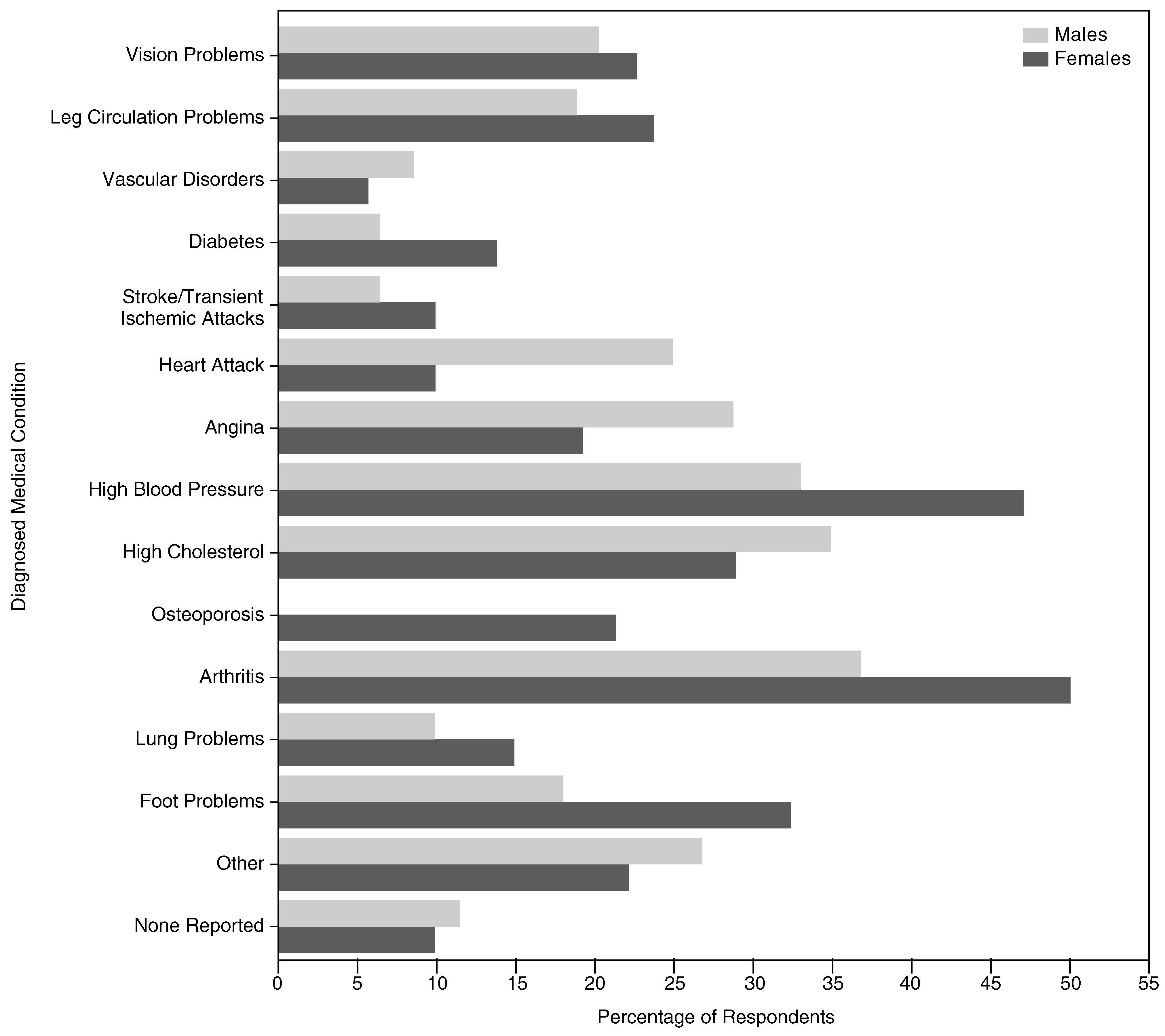
The most commonly reported diagnosed medical condition in the present study was arthritis (
Figure 1). Other commonly reported conditions included foot problems, high cholesterol, and high blood pressure. It has been documented that between 16% and 69% of persons aged 65 years and older suffer from some form of arthritis as a long-term medical condition [
6,
18,
19], and that 38.3% and 11.2% of persons aged 65 years and older have hypertension and high cholesterol, respectively.[
19] Therefore, the high incidences of these diagnosed medical conditions in the present study were expected. Arthritis is an inflammatory joint disease that can cause pain and incapacitation due to joint deformity. Thus, on the basis of the high incidences of arthritis and foot problems reported in the present study, it was anticipated that respondents would have limited mobility and would consider themselves to be in poor health. However, respondents appeared to be unaffected by these chronic conditions in terms of mobility and considered themselves to be in good health.
Despite the high rates of diagnosed medical conditions reported in the present study, only 43.8% of respondents had visited their physician during the 2 weeks prior to data collection, with a similar percentage of men (45.0%) visiting their physician compared with women (42.6%). A similar trend was reported by the Australian Bureau of Statistics in its National Health Survey [
19], which found that only 38.0% of persons aged 65 years and older had visited their physician during the 2 weeks prior to data collection, with a similar percentage of women (35.6%) visiting their physician during these 2 weeks compared with their male counterparts (31.8%) [
19]. The relatively low numbers of respondents visiting their physician relative to the percentage of subjects reporting medical conditions may be explained by the reasons provided by the respondents for visitation, which were similar to those reported in the National Health Survey [
19]. These reasons included circulatory problems, checkups, musculoskeletal problems, disease and infection, and prescription renewal. This suggests that because most diagnosed medical conditions were long-term, chronic conditions treated by medications and life-style changes, there was little need to make frequent visits to the doctor about them.
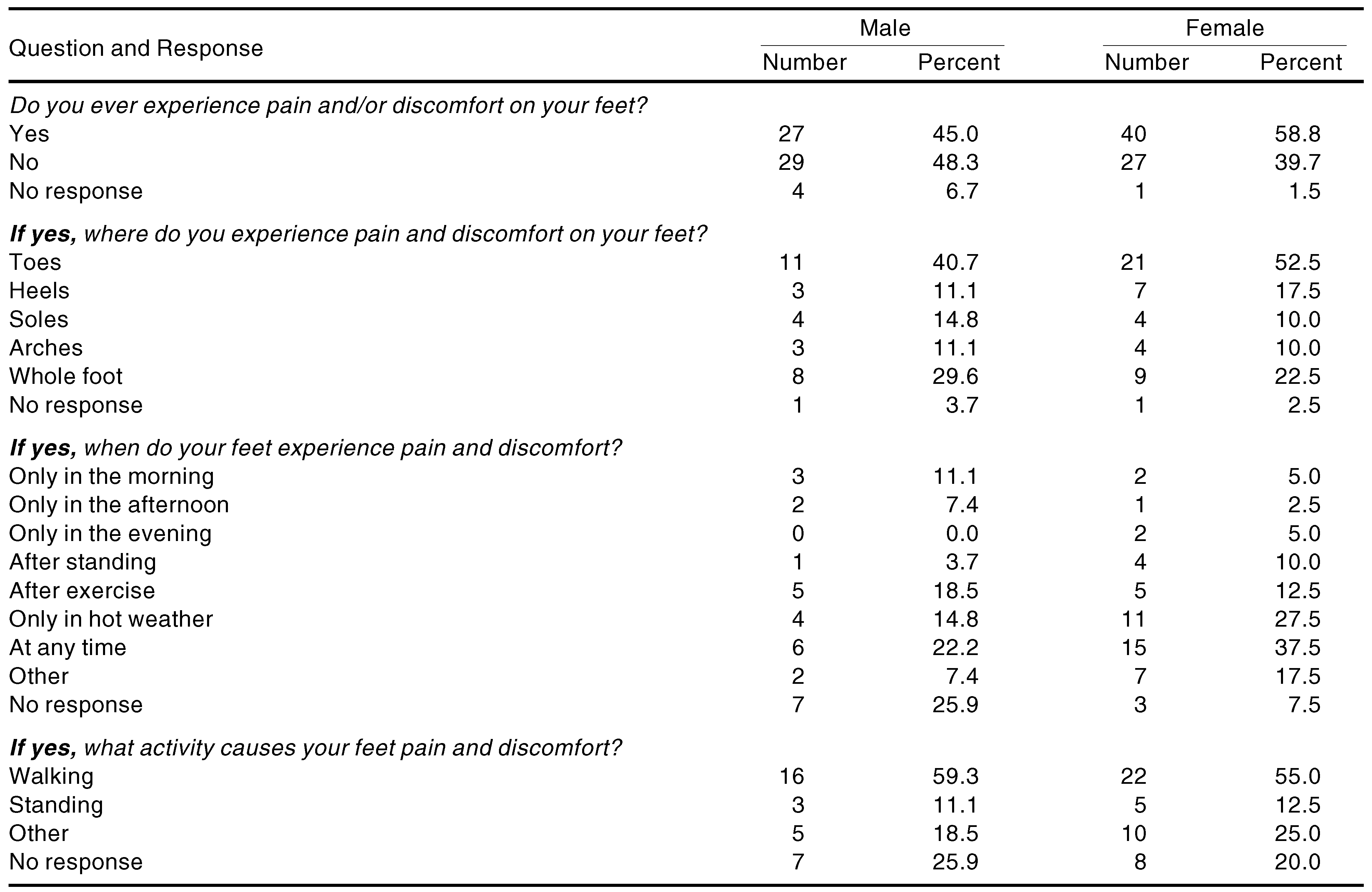
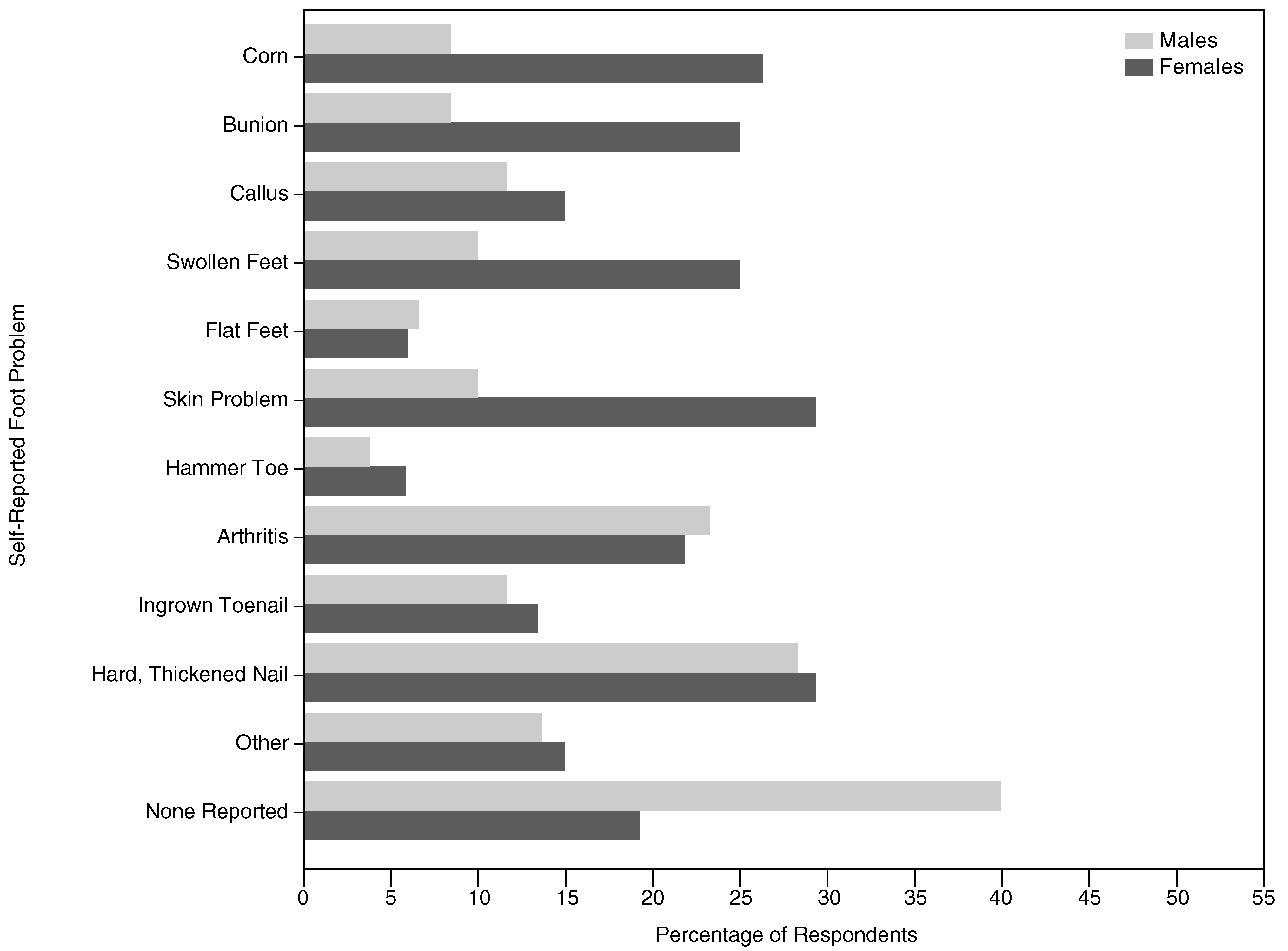
The pattern of reported foot problems and foot pain and discomfort in the present study was similar to that reported in other studies [
11,
20], with female respondents reporting more foot problems, a greater incidence of foot pain and discomfort, and a greater incidence of toe pain and discomfort than male respondents (
Figure 1 and
Figure 2;
Table 1). This pattern of response is thought to be due to the fact that a high proportion of women habitually wear high-heel shoes and shoes with pointed, shallow toe boxes [
11], whereas men typically wear flat shoes or work boots with rounded toe boxes. The high incidence of nail problems (41.4%;
Figure 2) reported in the present study may be due to the inability of the older respondents to reach their nails due to decreased mobility, poor eyesight, or some other impairment or due to a lack of equipment that may result in the patient being unable to properly trim his or her nails [
3,
19]. The other foot problems commonly reported in the present study, such as swollen feet, corns, and bunions (
Figure 2), are problems associated with inappropriate footwear and suffered by mobile individuals.6 Immobile individuals display different types of foot problems, such as warts, dry skin, and cold feet [
6]. Thus, although foot pain and discomfort or foot problems are important determinants of mobility in older individuals [
4,
6], the respondents in the present study were mobile individuals who may have required education pertaining to more appropriate types of footwear.
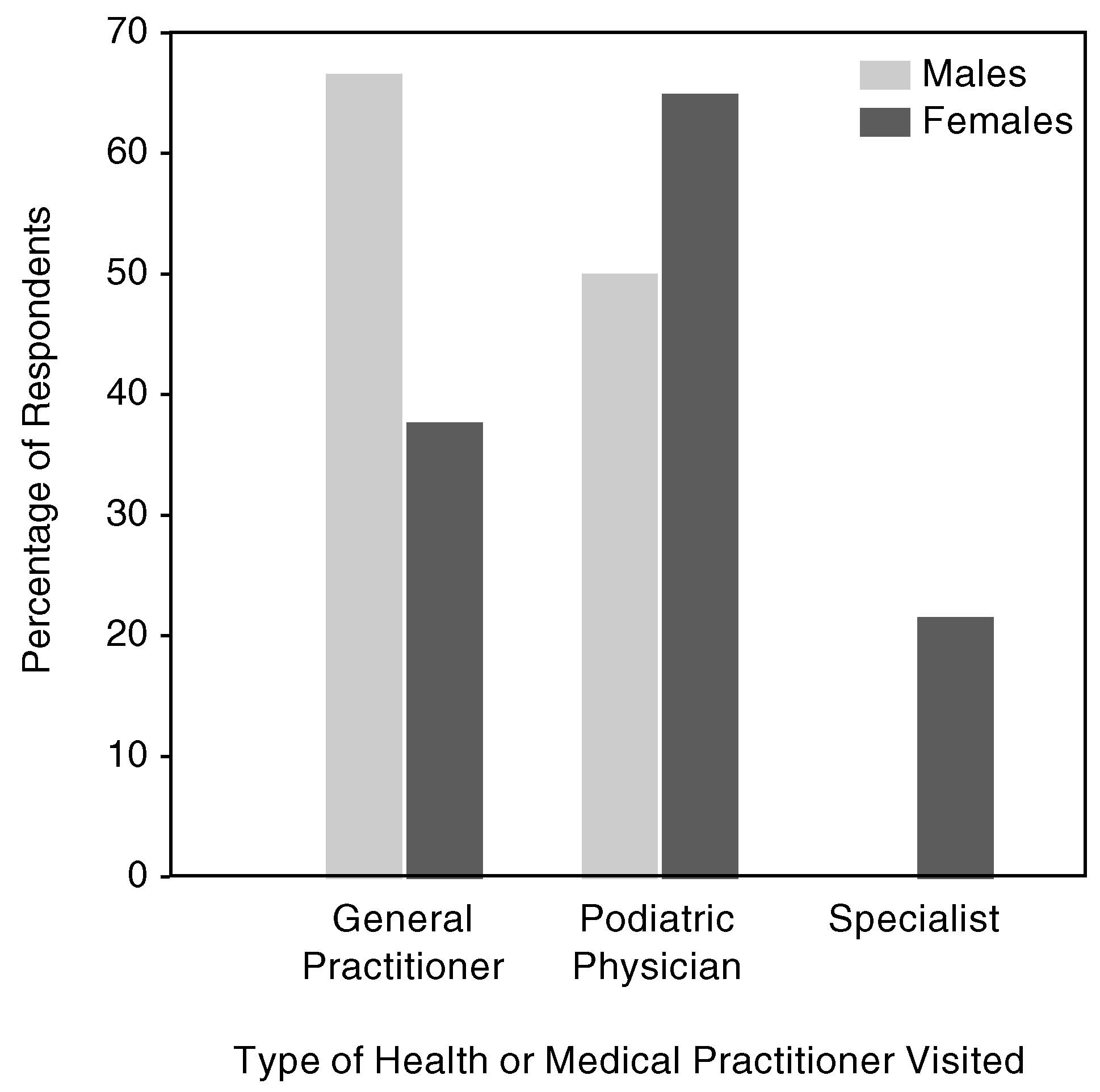
Although 71.1% of the respondents in the present study noted self-reported foot problems and 25.8% reported foot problems as diagnosed medical conditions, over half of all respondents (57.8%) reported never having visited medical or health personnel about their feet. Of those respondents who sought medical attention for their foot problems, 60.0% visited a podiatric physician, 48.0% visited a general practitioner, and 14.0% visited a foot specialist other than a podiatric physician (
Figure 3). In accordance with these results, statistics from US studies [
8] indicated that between 65% and 75% of individuals with specific foot problems had never sought professional care for those problems. A comparable Australian survey [
4] indicated that the percentage of the total population reporting foot problems (40%) was three times the percentage who sought assistance from any type of health practitioner in the 12 months prior to the survey. Furthermore, it was 11 times the percentage who sought treatment specifically from a podiatric physician during the 12 months prior to survey completion [
4].
From these results it is apparent that a large number of community-dwelling older individuals are not currently receiving any professional care for their foot problems.[
4] Furthermore, the New South Wales Department of Health[
4] found that general practitioners were the major providers of foot care for people of all ages in the 12 months prior to its survey. For some foot pathologies, such as pain and injury, treatment by a general practitioner is adequate [
4,
8]. However, in most cases, adequate foot care can be provided only by a practitioner trained specifically in foot problems, such as a podiatric physician [
4,
8]. In a study of the treatment of elderly people’s foot pathologies, Cartwright and Henderson [
21] found that there was not much crossreferral between general practitioners and podiatric physicians and that respondents frequently referred themselves to podiatric physicians for treatment of their foot problems.
An interesting finding in the present study was that respondents did not identify their reported foot problems as diagnosed medical conditions (
Figure 1 and
Figure 2). The New South Wales Department of Health[
4] suggested that foot problems may not be generally recognized by the population as medical conditions. That is, the number of persons aged 65 years and older reporting specific foot conditions was found to be less than the number of persons observed (by qualified podiatric physicians) to have these conditions. In the present study, women consistently reported more foot problems as diagnosed medical conditions and as self-reported foot problems compared with men. Furthermore, although the difference was not significant, more women visited medical personnel—especially podiatrists—about their feet, which may explain why more women than men reported foot problems as diagnosed medical conditions. The results suggest either that men have fewer foot problems than women because men wear more appropriate shoes throughout their lives or that men are less aware of different types of foot problems, and thus less able to identify them, owing to their limited visits to medical personnel.
People in the community may not seek care for their feet despite the presence of problems for several reasons. They may assign a low priority to this type of health care, be unable to identify foot problems, or feel that foot problems are an inevitable part of aging [
6]. They may be unaware of the potential seriousness of foot problems or be unaware of the services available to treat these problems. Furthermore, they may be unable to use foot-care services because of those services’ inaccessibility or unaffordability [
4,
6]. Thus, educating older, independently living individuals about foot problems and foot care may be a key to maintaining mobility, freedom from pain, and general well-being in these individuals [
6,
8,
22]. General practitioners also need to be educated about the importance of proper foot care in the elderly as well as the importance of referring patients with specific foot problems to foot-care specialists.