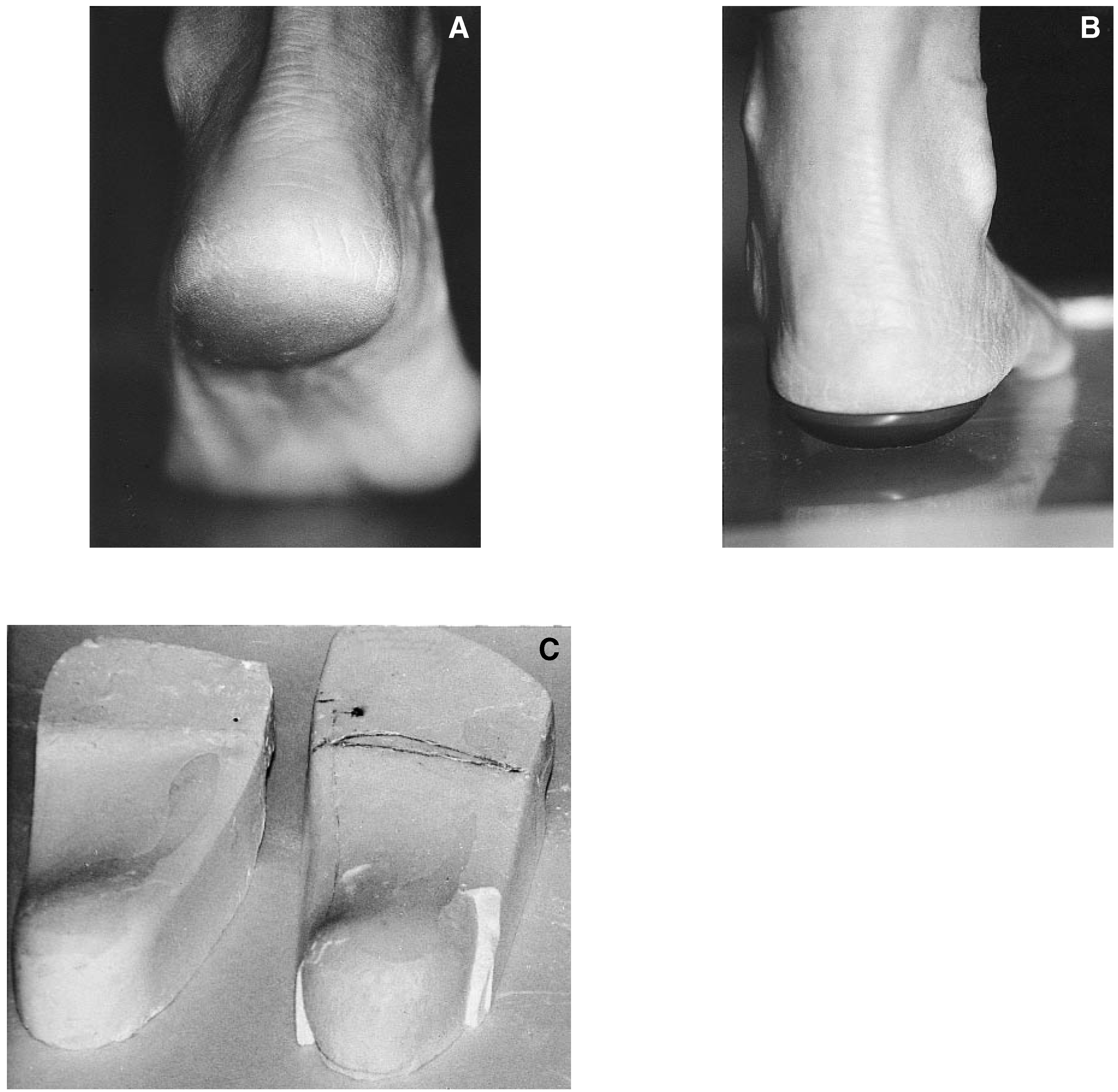
Functional foot orthoses made from a neutral-suspension cast capture the shape of the fat pad in its nonweightbearing state. The positive cast made from the neutral-suspension negative cast must be modified in order to make the orthosis comfortable (Root J, 1985, unpublished data). This modification of the heel-cup area of the positive cast is achieved with lateral-expansion plaster. The lateral expansion on the positive cast increases the width of the heel cup of the orthosis to accommodate the change in shape of the calcaneal fat pad that occurs when the foot bears weight. The purpose of the lateral expansion is to prevent blistering or callus formation where the top of the heel cup of the orthosis comes into contact with the skin (
Figure 1A–C). The authors are unaware of any previous scientific attempt to determine how large this expansion should be, although it has been suggested that the expansion be no greater than 0.125 inch [
1]. The purpose of this study was to determine whether a lateral expansion of a uniform width should be added to all positive casts.
Materials and Methods
Thirty-three subjects were chosen at random from the student body and staff of the California College of Podiatric Medicine. All subjects gave their consent to have their calcaneal fat pads measured. This study protocol was approved by the Research Committee and the Research and Human Utilization Committee at the California College of Podiatric Medicine. The subjects ranged in age from 23 to 41 years, with a mean (±SD) of 27.2±3.6 years. The subjects’ mean (±SD) weight was 148.7±35.8 pounds. There were 19 male and 14 female subjects.
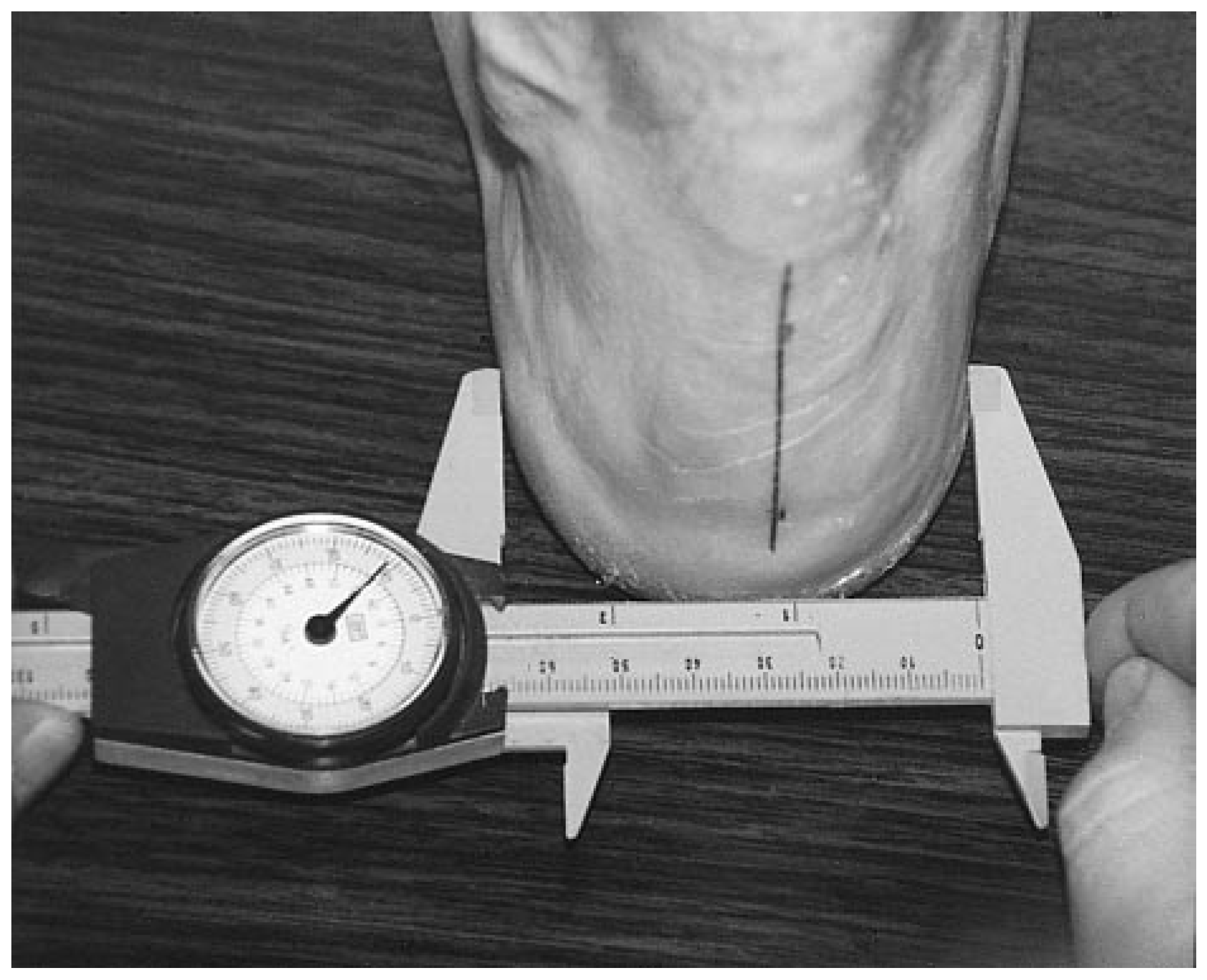
One investigator made all of the measurements. A single set of calipers was used in the data collection. The calipers were labeled at 0.01-inch intervals. The measurements taken were rounded up or down to the nearest hundredth of an inch depending on whether the gauge needle was positioned on the high or the low side of the hundredth-inch. The measurement was made at the widest point of the fat pad that the arms of the calipers touched. (In a few feet, the widest point may not have been reached because of limitations imposed by the length of the arms of the calipers. The authors felt that this did not compromise the study.) The calipers were adjusted until both the medial and lateral caliper arms visibly touched but did not deform the skin of the subject (
Figure 2).
The participating individuals removed their shoes and socks from both feet. They were instructed to kneel on a cushioned chair, exposing the posterior aspect of the heel. This provided a good vantage point from which to measure the fat pad during non-weightbearing in the transverse plane of the foot. The calipers were opened and adjusted until the arms of the calipers could be slipped past the non-weightbearing heel and were just touching the skin on the medial and lateral sides of the fat pad at the widest portion. The resultant measurement was then recorded. This process was repeated three times for both left and right heels. The three measurements of each heel were averaged to arrive at a representative measurement for that heel.
The subject was then instructed to step onto a raised platform, which allowed clear visualization of the resultant expansion of the heel pad in the transverse plane upon normal weightbearing. (Normal weightbearing is defined here as a position in which the participant is in the angle and base of gait with his or her weight comfortably distributed between the forefoot and the rearfoot.) The expansion of the fat pads of both right and left feet was measured according to the method described above (
Figure 2). Three measurements were taken of both the right and left heels, and the resultant values were averaged.
For each foot, the representative nonweightbearing measurement was subtracted from the representative weightbearing measurement. The resulting value indicates the difference in heel width between the weightbearing and nonweightbearing states. This value was identified as the amount of fat-pad expansion.
Results
The question of measurement reliability must first be addressed. For each subject, the three heel measurements for left and right feet during both weightbearing and nonweightbearing were averaged and the standard deviation for each category of measurement was calculated. Then, for each category of measurement, the standard deviations for all subjects were averaged. The overall mean (±SD) standard deviations were 0.006±0.004, 0.005±0.002, 0.006±0.003, and 0.005±0.004 for the right weightbearing, right non-weightbearing, left weightbearing, and left nonweight-bearing foot, respectively. The maximum standard deviations for the four categories of measurement were 0.012, 0.009, 0.012, and 0.016, respectively. The four sets of measurements were kept separate to ensure that aberrations in one category would not be masked by low errors in the other categories. The fact that the mean standard deviation (0.006 inch) for the measurements was less than the stated level of accuracy (0.01 inch) of the measurements themselves led to the conclusion that the measurements were reliable.
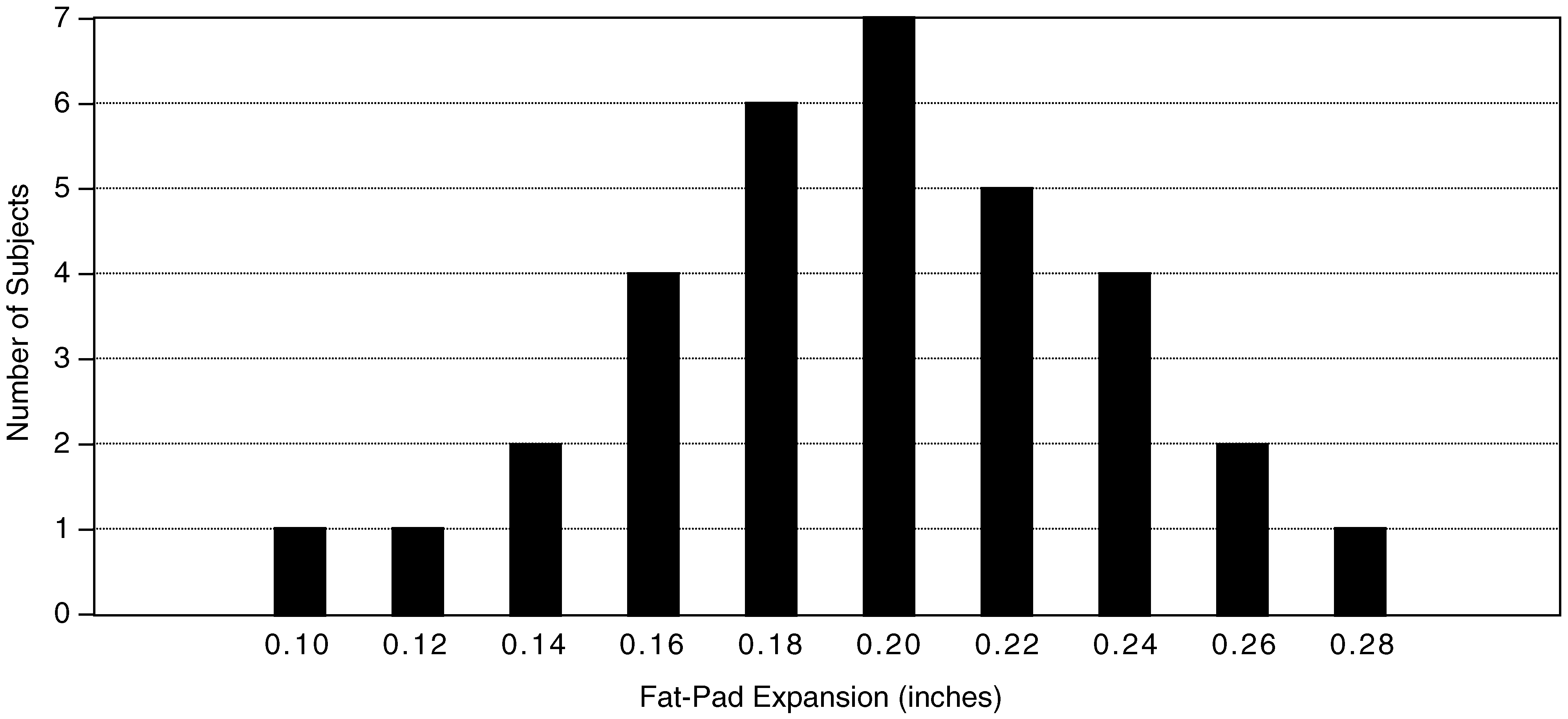
The mean difference in fat-pad width between weightbearing and nonweightbearing states was 0.19 inch. The amount of fat-pad expansion varied widely across individuals. The minimum expansion observed was 0.10 inch. The maximum expansion was 0.27 inch. The distribution of the amount of expansion is shown in
Figure 3.
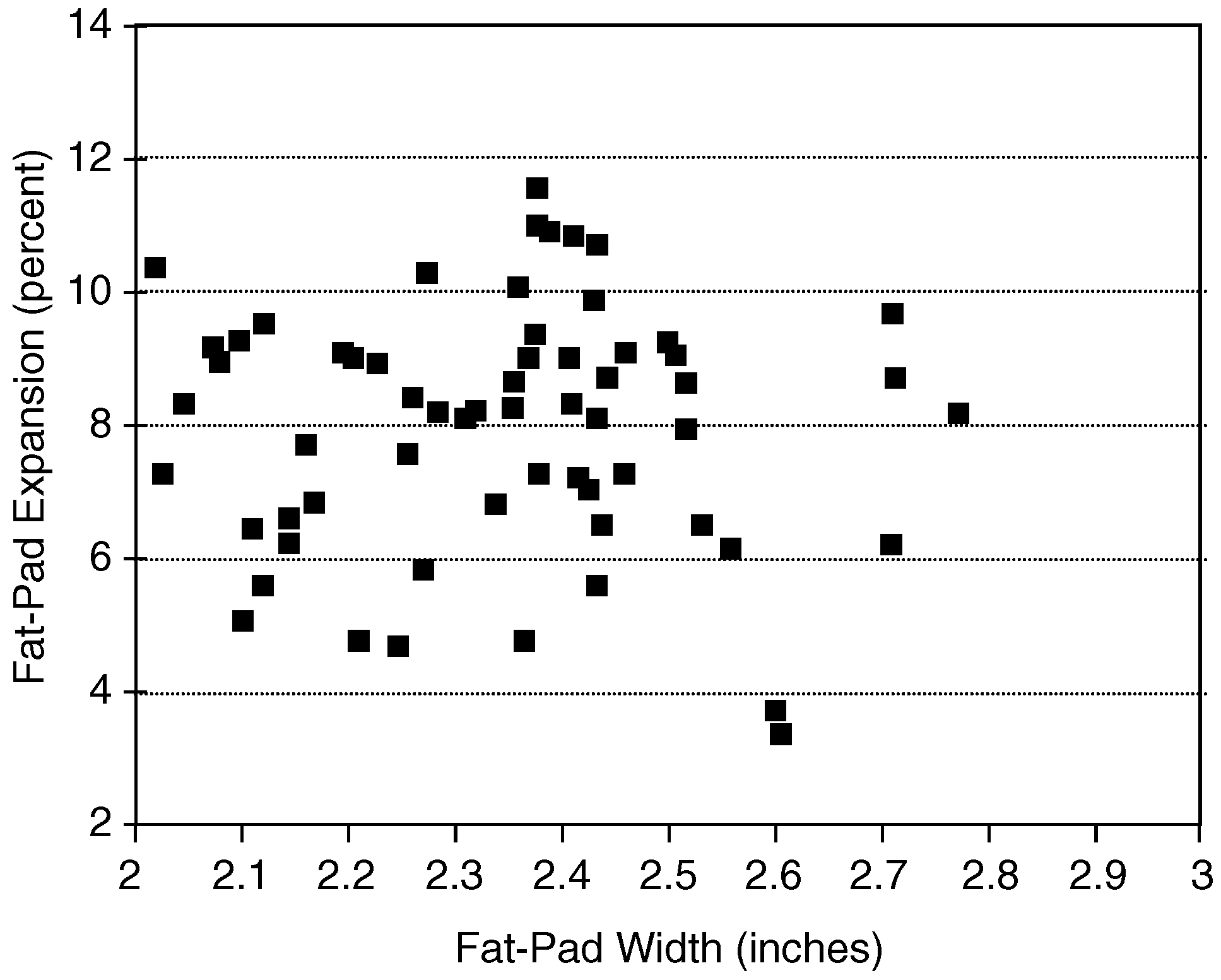
There was no correlation between the width of the fat pad during nonweightbearing and the percent increase in width of the fat pad upon weightbearing (percent increase equals change in width divided by nonweightbearing width) (
Figure 4). In other words, a wider heel did not necessarily expand more upon weightbearing than a narrower heel.
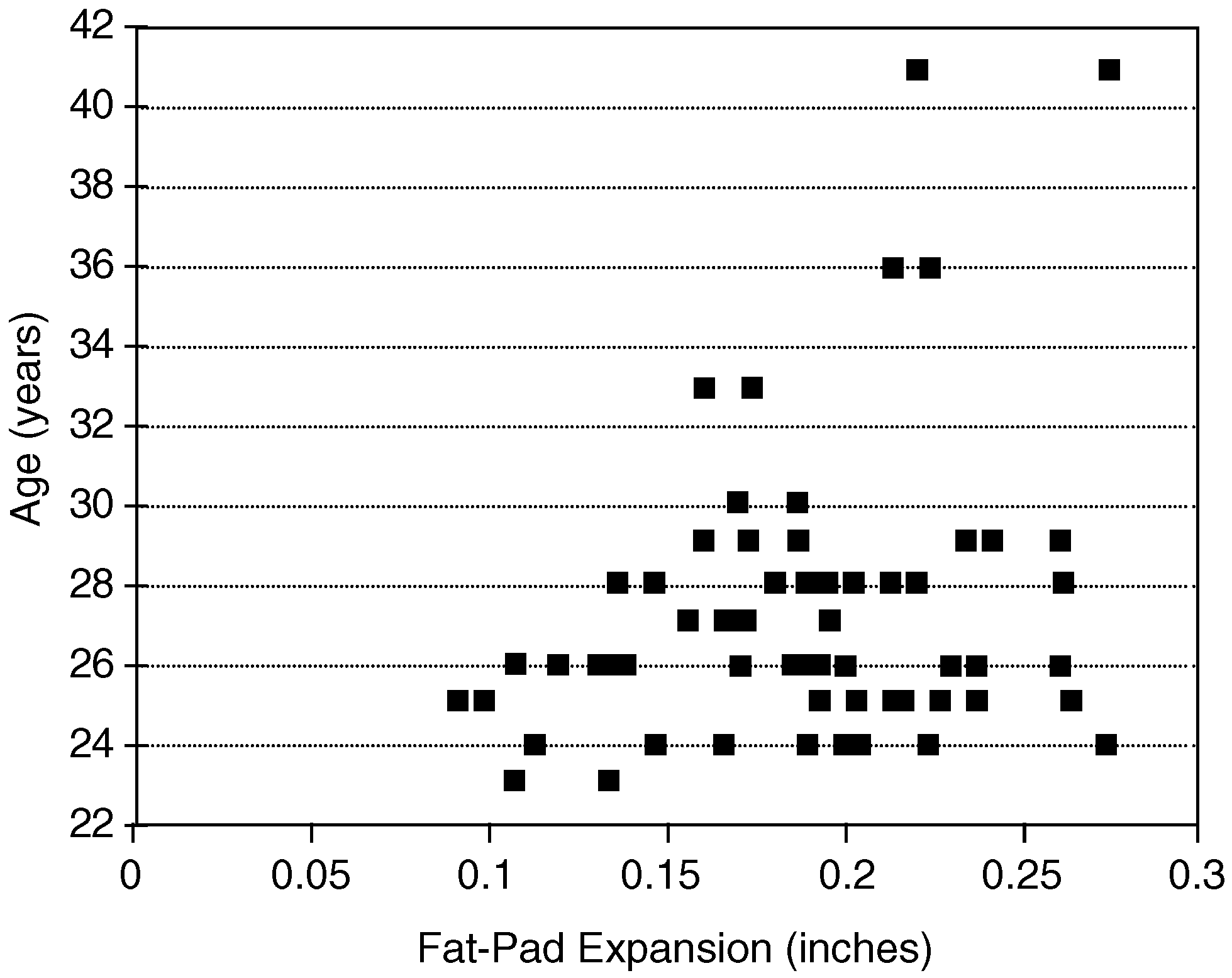
The relationship between age and change in fatpad width between weightbearing and nonweight-bearing states is shown in
Figure 5. No relationship was found between age and amount of fat-pad expansion. These results could be questioned because of the limited range of ages of subjects in this study.
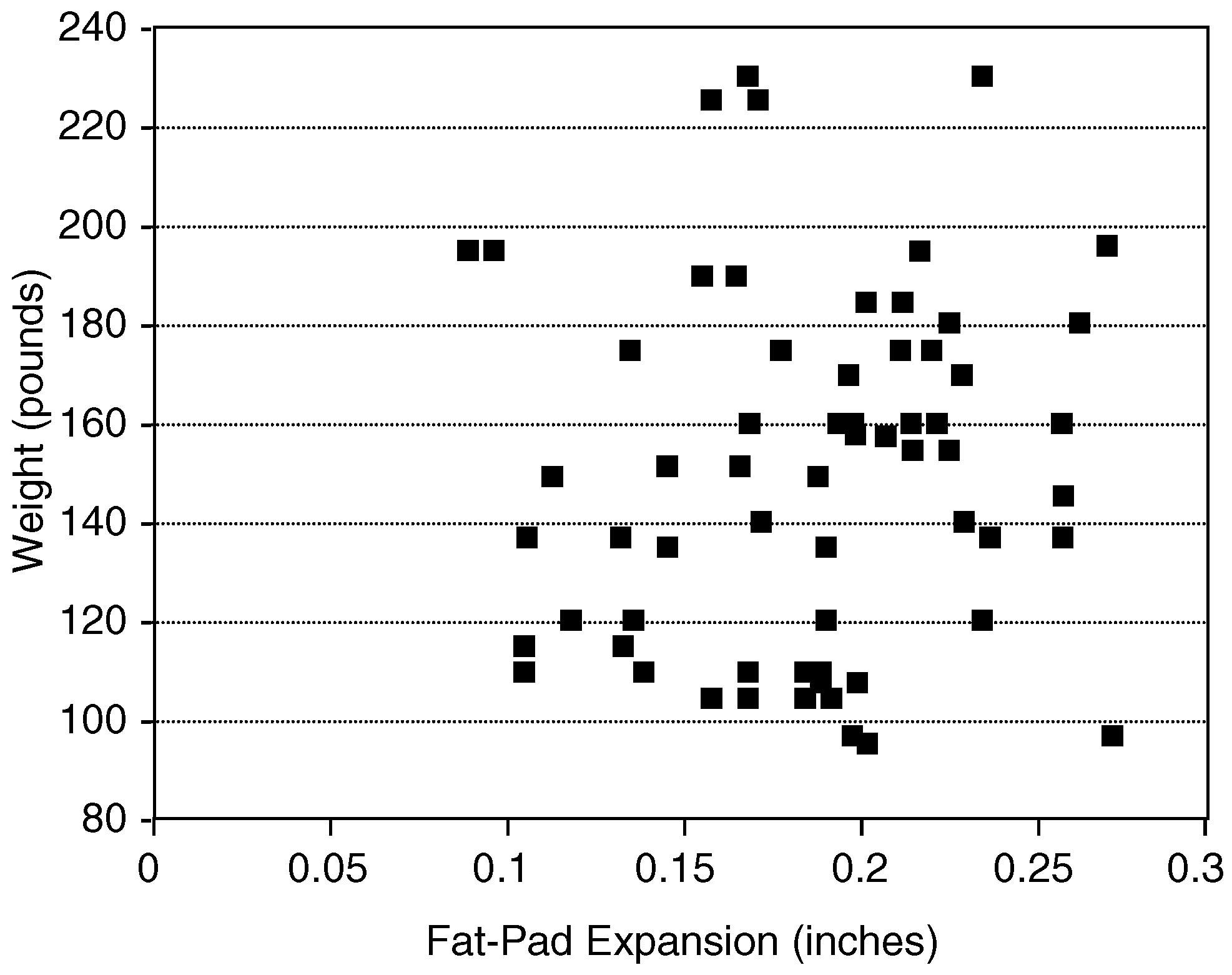
The relationship between subject weight and change in fat-pad width between weightbearing and nonweightbearing states is shown in
Figure 6. There appears to be no relation between weight and fat-pad expansion upon weightbearing.
Left and right heels were compared in terms of the amount of fat-pad expansion. The maximum difference between left and right heels of a single individual was 0.07 inch. The mean (±SD) of the absolute values of the differences between left and right heels was 0.03±0.02 inch. In the population studied, the left and right heels appear to be symmetrical in terms of fat-pad expansion.
Discussion
The importance of this study lies in its relevance to the fabrication of orthotic devices made from non-weightbearing casts. The size of the heel cup of the orthosis is subject to two constraints: It must be wide enough so that it does not cause heel irritation, and it must be narrow enough to fit within the heel counter of the shoe.
The amount of an individual’s fat-pad expansion should be considered when ordering an orthosis for that patient. If the amount of expansion that has been suggested in the literature (0.125 inch) were added to every positive cast, then a significant number of patients might experience heel discomfort, because that suggested amount of expansion is less than the actual average amount of fat-pad expansion (0.19 inch) observed in this study. The measurement of the width of the heel during weightbearing should be noted on the orthotic prescription when the practitioner observes that the individual’s calcaneal fat pad spreads more than average.
Conclusion
The results of this study show that the amount of fatpad expansion upon weightbearing varies significantly across individuals. However, the left and right heels of a single subject tend to expand by the same amount. The variance in fat-pad expansion does not seem to be explained by the subject’s weight, age, or width of the heel during nonweightbearing, although the age findings should be confirmed over a wider range of ages.
Further studies are needed on the amount of fatpad expansion in relation to patient comfort so that recommendations can be made as to how wide the heel cup of the orthosis should be in relation to the amount the fat pad spreads upon weightbearing. It is possible that a standard amount of lateral expansion added to the positive cast of orthoses will not be comfortable for all patients.