Ulcerations of the foot play a pivotal role in one of the most serious complications associated with chronic diabetes mellitus: amputation of the lower extremity. Of the approximately 80,000 amputations performed on patients with diabetes annually, 84% (67,000) present with a foot ulceration initially.[
1,
2,
3,
4] Direct and indirect costs associated with these amputations are estimated to exceed two billion dollars annually, [
2,
3,
5] and leave many patients devastated in the process.
The high rate of amputations in patients with diabetes is partially a result of the prevailing lack of knowledge regarding the prevention and management of foot disease. Early and effective treatment is needed to reach the US Department of Health’s goal for the year 2000 (
ffealthy People 2000) of a 40% reduction in amputation rates among patients with diabetes. [
5] Although a large portion of these foot ulcerations will heal when treated with a comprehensive treatment strategy that includes reduction in peak pressures from the ulcerated area, treatment of infection, and restoration of arterial perfusion, these methods are extremely labor and cost intensive, and do not prevent recurrence of the ulcers once the patient returns to normal ambulation. [
6,
7] Because the underlying and persistent cause of local elevated pressures is not addressed, a pattern of continual ulceration, infection, immobilization, hospitalization, physical therapy, and repeated fabrication and modification of custom-molded shoes and insoles is seen time and again. Ultimately, the ulcer can no longer be closed and amputation becomes inevitable because of a lack of patient compliance, uncontrolled infection, formation of scar tissue, or progression of vascular disease.
Numerous mechanisms have been proposed to be the cause of ulcer formation in diabetes. Although it is still widely believed, there is considerable evidence that indicates that ulcerations on the plantar surface of the foot usually do not occur because of vascular disease. [
8,
9,
10] Although vascular supply plays some role in all wound healing, foot ulcerations typically first appear when the blood supply is adequate for healing. Rather, the scientific literature supports a mechanical etiology. Pathologic forces applied to the tissue surface will result in ulcerations.
Brand et al [
11,
12,
13,
14,
15] demonstrated that there was a mechanical etiology involved in the formation of ulcers in profoundly neuropathic patients with Hansen’s disease. They demonstrated that prolonged repetitive loads to the neuropathic foot resulted in ulcer formation in the mechanically loaded region. They found that a more uniform redistribution of peak pressures away from ulcer sites was effective for achieving wound closure. In order to accomplish this, they recommended custom shoes with prescription insoles, and special casts (total contact casts) that they believed would immobilize the lower leg and redistribute the peak pressures away from the ulcer site.
Stokes et al[
16] also found that foot ulcers typically occurred in regions of highest plantar pressure, and inferred that diabetic foot ulcers had a mechanical etiology as well. Drawing on parallels between their own work and that of Brand et al, Stokes et al realized that there was an association between local pressures and ulceration in both chronic diabetes and patients with Hansen’s disease. Furthermore, the common link between these two conditions appeared to be the presence of chronic neuropathy prior to the presentation of plantar ulcers.
Clinical studies support the perceived relationship between moderate repetitive stress, and plantar pedal ulcerations in patients with diabetes mellitus. Duckworth et al[
17] demonstrated that during ambulation, normal peak pressures greater than 10 kg/cm
2 frequently occur in regions where plantar ulcers occur. Although other investigators have shown that regions of high pressure correspond to regions where ulcers occur, there are considerable differences in the magnitude of pressure required to form an ulcer. Similarly, estimates of dangerous pressure thresholds vary considerably, and little or no work has been done to determine the detrimental effects associated with varied load durations.[
14]
Despite the multitude of data indicating that ulcers occur in regions of elevated pressures, none have demonstrated a direct mechanism whereby ulcerations are produced in response to a specific, characteristic mechanical load. Brand[
15] attempted to show a direct correlation with an animal model in which anesthetized laboratory rats were subjected to a 20 psi load, applied in a sinusoidal fashion using a rotating cam. Load was applied at a constant rate of 13.3 Hz (800 repetitions per minute). Local changes in surface temperature, indicative of inflammation, were measured by infrared thermography. During the study, the foot pad of the rat was loaded for 28 days with 10,000 repetitions per day, while the other group experienced 8,000 repetitions per day (at the same rate) for 5 days, followed by 2 days off per week. Animals in both groups ulcerated, but animals in the first test group ulcerated much more quickly than the animals in the second group. Based on this, they concluded that damage to the skin resulted from accumulated injury, and that prolonged inflammation would result in the skin becoming more susceptible to ulceration, as shown by progressive histologic sections. This model provides clear evidence that a direct link between mechanical loads and ulceration exists. Critics of this study point out, however, that these tests were conducted at a nonphysiologic loading frequency of more than 13 Hz, which may be an important factor to consider. Also, it is notable that ulcers were formed despite a normal vascular supply, which may refute the theory that ulcers result from poor blood supply.
Neuropathy is Associated With Diabetic Foot Ulcerations
Neuropathy, infection, and ischemia are the principal pathogenic factors in foot disease related to diabetes.[
9] In various clinical studies, it has been shown that neuropathy is present in more than 80% of diabetic patients with foot ulcerations.[
2,
8,
10] As a result of advanced sensory neuropathy, it has been hypothesized that the diabetic patient cannot perceive the existence of an offending focal pressure on the surface of the foot. As a result of the inability to perceive a noxious stimulus, the patient does not compensate to avoid the offending object, and a lesion develops. Although loss of protective sensation can result in local irritation and subsequent ulceration, the more common cause of pedal ulcerations in patients with diabetes appears to be excessive, repetitive pressure at focal locations on the plantar surface of the foot.9
Motor neuropathy is also quite common among patients with chronic diabetes. Typically, the loss of motor control affects distal and anterior compartment nerves earlier than proximal and posterior nerves, creating significant muscle imbalances, and will occur in a stocking or glove distribution.[
18,
19,
20] Both intrinsic and extrinsic muscular control of the foot are impacted by this condition, which results in clawing of the toes, retrograde buckling of the digits, and plantarflexion of the metatarsals.[
19] The metatarsal heads protrude against the plantar fat pad in response to the retrograde force of the digits, resulting in prominences where ulcers typically occur.[
21]
Anterior muscle group atrophy in the distal leg is also commonly seen, and has profound effects on foot function as well.[
20] Normally, this muscle group acts to decelerate the foot as it strikes the ground by counteracting the inertial and gravitational effects, while simultaneously opposing the posterior muscle contraction. When strength in the anterior compartment of the leg is diminished, high-velocity impact or “foot slap” may result from the lack of deceleration, producing increased load, greater loading rate, and possibly subsequent ulceration.[
20] This condition is further exacerbated by the prominence of the metatarsal heads plantarly, which results from the loss of intrinsic musculature strength, as described earlier. The accelerated impact of the foot with the ground associated with anterior compartment atrophy is a critical aspect of the study presented here.
Clinically, it has been shown that anterior compartment motor neuropathy is often found in conjunction with foot ulcerations in patients with diabetes.[
20] However, no study has shown how this increased impact velocity may contribute to the formation of ulcerations. Earlier work by one of the authors[
21] demonstrated that in a cell culture model, the diabetic cell model was more likely to be injured as a result of high-velocity load, than when the same magnitude of load was applied at a slower rate. Based on this model, there is reason to believe that the rate of deformation may be more critical than the actual magnitude of load applied.
Glycosylation of Soft Tissues is Associated With Diabetes
Soft tissue changes also occur with chronic diabetes, which may further predispose the patient to ulcer formation. Previous studies indicate that as diabetes progresses, patients will show changes in the soft tissue mechanical properties. Glycosylation of the tissues directly affects the tissues, resulting in excessive cross linking between collagen strands, which makes the collagen much stiffer.[
23,
24,
25,
26] This stiffened viscoelastic tissue is unable to deform as quickly, and may be more susceptible to splitting and cracking in response to rapid deformation associated with high-velocity foot impact.[
27] Also, death at the cellular level has been demonstrated at high strain rates (>10 sec-1).[
28,
29]
Atrophy of the plantar fat pad is also associated with chronic diabetes, and may further exacerbate the problem of accelerated loading.18 Tissue stiffening and fat-pad atrophy both directly affect the resiliency of the skin to mechanical forces. In addition, excessive callus formation associated with diabetes leads to thickening of the skin, making it even less malleable.[
2,
18] Lack of flexibility may result in the skin simply splitting in response to an applied load. Tensile, shear, and compressive loads at the skin surface may each play contributory roles.
The wound-formation model described earlier may unintentionally support the theory that increased deformation rates will lead to foot ulcerations. In that model, the foot pad was loaded at more than 13 Hz, in an effort to decrease the amount of time the animal had to be subjected to the stimulus, and to simulate a specified number of steps. This is far in excess of normal physiologic loading rates, and is more indicative of high-velocity loads. Even with a sinusoidal loading pattern, this loading rate is much more indicative of the response to loading of the diabetic patient with anterior compartment motor neuropathy than of the normal patient. In light of this fact, it is not surprising that all of the animals in the study by Brand et al eventually ulcerated under this high loading rate.
Cellular Studies Focused on the Responses of Tissues to Mechanical Loads
In previous studies conducted by one of the authors and others,[
21,
28,
29,
30,
31,
32] it has been shown that mechanical deformation of tissues at the cellular level may result in injury or death, as shown by uncontrolled alterations in intracellular calcium levels. Brownlee[
23] and Brownlee et al[
24,
25,
26] have demonstrated that senescent (aged) cells have similar biochemical characteristics to those found in patients with diabetes. Specifically, increased glycosylation of cell membranes affects both cell lines, and may predispose them to injury from certain specific types of mechanical stimulus. Based on a recent study[
21], it appears that the rate, rather than the magnitude of load applied, is the critical factor causing injury at the cellular level in cells from senescent (and thereby in diabetic) tissues.
This is an important finding, because it brings into question the wisdom of treating ulcerations solely by off-loading the foot, rather than by controlling the rate of mechanical loading of the tissues. This work may also help to explain why the foot reulcerates after it is taken out of a total contact cast, and why a simple device, such as an ankle-foot orthosis, which prevents high-velocity impact between the ground and the plantar surface of the foot, is effective at stopping ulcer reoccurrence.
Clinical Study
Numerous studies have documented the efficacy of total contact casts. However, the idea of treating plantar ulcerations with a simple ankle-foot orthosis is a relatively recent treatment strategy. For this reason, a prospective clinical pilot study was conducted in which patients with diabetes and chronic plantar foot ulcerations were treated using the ankle-foot orthosis technique.
Materials and Methods
Subjects were selected with a history of chronic ulcerations of the foot, and insulin-dependent diabetes mellitus. All subjects had developed Charcot’s neuroarthropathy with varying degrees of resultant bony changes, and were in phase 3 when entering the study. All had been stable for at least 1 year at the time of enrollment. Each subject underwent a battery of other treatments prior to enrollment in this study, including total contact casts, local debridement, off-loading with custom insoles and shoes, surgical resection of exostoses, and consistent wound care. In each case, a recalcitrant ulcer had been present for at least 19 months, with an average duration of 28.25 months prior to treatment.
Subjects were included with a history of chronic diabetes, and a Wagner grade 1 or 2 ulcer with no obvious signs of clinical infection, as determined by the absence of cellulitis, purulent drainage, fever, and white blood cell and erythrocyte sedimentation rates within normal limits.[
35] There were no limitations placed on ulcer size, but all were between 1 and 4 cm in diameter. Each subject exhibited sensory neuropathy and had evidence of autonomic neuropathy. Motor neuropathy was evaluated grossly, and was found to follow the typical distribution in all subjects, including contracture of the digits. In some cases, metatarsal heads were prominent, while in others, midfoot prominences were present as a result of arch collapse associated with Charcot’s neuro-arthropathy. Anterior compartment weakness was detectable in some subjects, but was not specifically quantified to determine the extent.
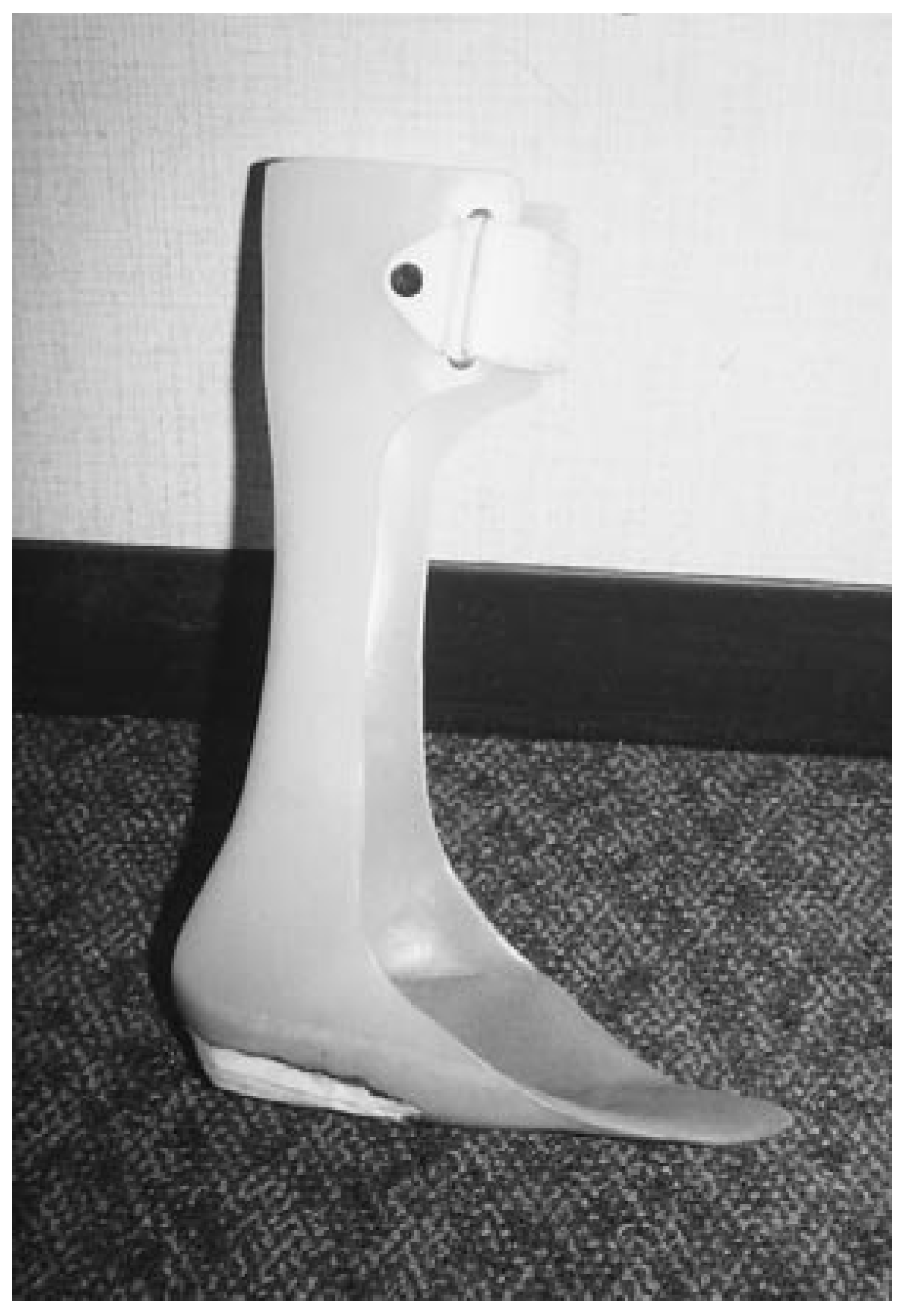
After completion of an informed consent form, subjects were casted for the ankle-foot orthosis using a standard plaster impression technique. Casts were submitted to a laboratory for fabrication by a prosthetist. The ankle-foot orthosis consisted of a poly-propylene shell, and extended distally to the tips of the toes and proximally to the distal calf. Plastazote
1 liners were used because of the material’s ability to closely mold to the contours of the foot, and to provide a soft seat upon which to rest the foot. The malleable quality of the Plastazote helps to maintain a larger contact area, especially in the case of a foot disfigured by Charcot neuroarthropathy. The ankle foot orthosis was secured to the leg with a single Velcro
2 strap proximally, and required a shoe to hold the foot portion in place distally (
Figure 1). All subjects were able to wear the ankle-foot orthosis within their existing extra-depth or custom shoes.
Local wound care was performed every 2 weeks. With each visit, documentation of the wound diameter and overall appearance was performed. Debridement of overlapping margins, and removal of fibrotic tissue to the level of a freely bleeding granular base were performed. This was followed with a sterile flushing of the wound with normal saline, and a dry sterile dressing with Silvadene Cream 1%
3.
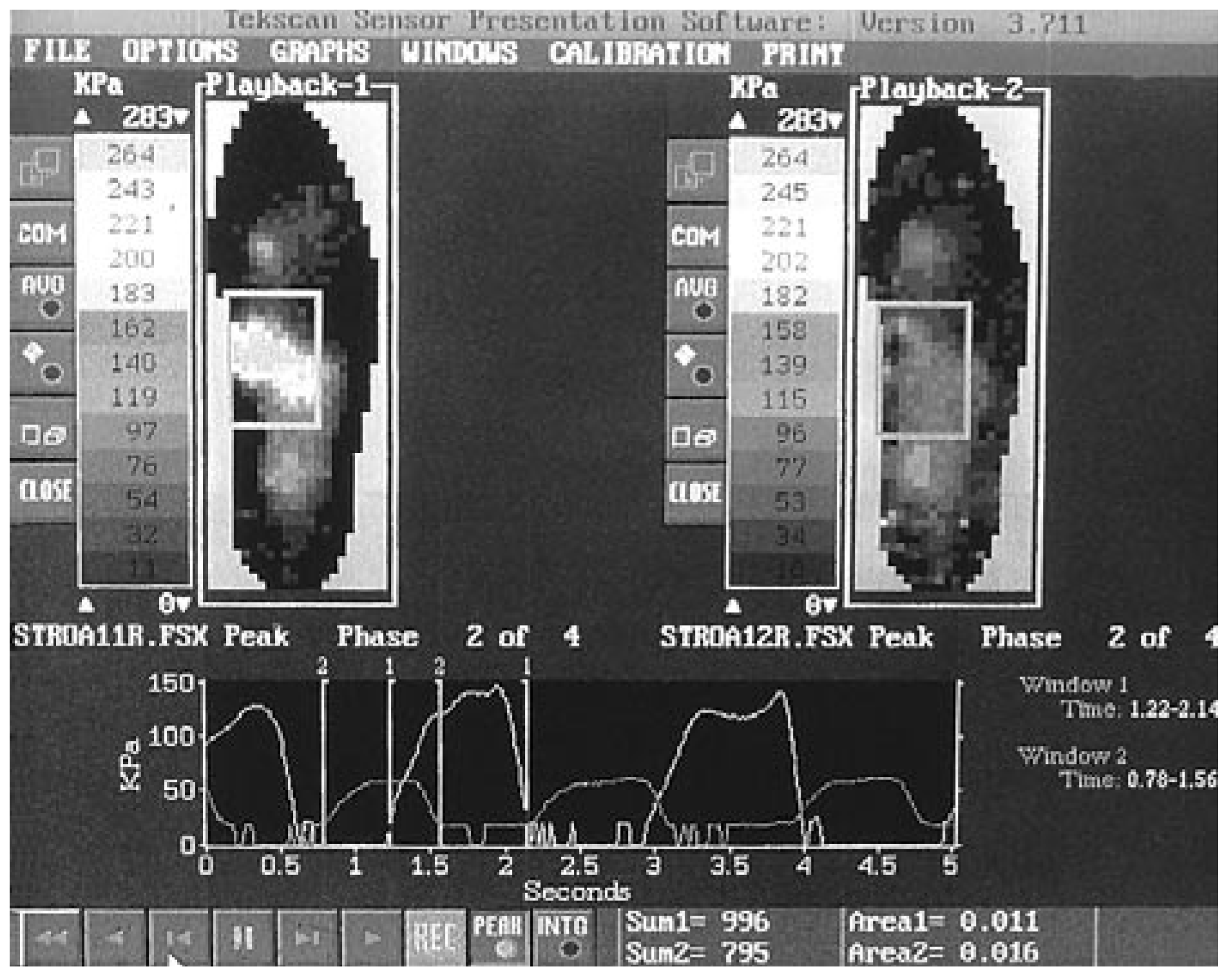
Pressure studies were performed under the guidance of either a podiatric physician or a physical therapist using the F-Scan®
4 computerized pressure analysis system. All calibrations were performed in accordance with the technique of Werner et al[
32]. F-Scan data were collected with the subject walking barefoot, with the subject wearing shoes plus a Plastazote liner, and with the subject wearing the same shoes without the Plastazote liner but with the Plastazote-lined ankle-foot orthosis. Peak pressure and total pressure
versus time were measured. The F-Scan pressure-sensing innersole is only 0.004 inches thick, and consists of 960 sensor cells per innersole, distributed at 5-mm intervals. The sensing range of each sensor is 8 to 124 pounds/in[
2]. The thinness and pliability of the sensor eliminates influences on pressure when used to evaluate patients wearing shoes, or other accommodative devices.[
36]
Results
Using this technique, the following results were noted (Table 1): Average time to closure was 9 weeks. Reulceration occurred in three of the four cases, but in each case, reulceration occurred only when the subject stopped wearing the ankle-foot orthosis. It is particularly notable that all three reulcerations closed in approximately 7 weeks once the ankle-foot orthosis use was resumed. In all four cases, each subject has been ulcerfree for at least 1 year since resuming the use of the ankle-foot orthosis.
Case Study 1
A 64-year-old female with a 23-year history of insulin-dependent diabetes mellitus was referred for treatment of an ulcer on the right plantar aspect related to a stage 3 Charcot’s joint. The ulcer was grade 1, 1.5 cm in diameter, and 0.5 cm deep, and was located beneath the first cuneiform. There was moderate keratosis surrounding the ulcer, which had been present for 2 years. The patient was previously treated, with little success, using accommodative shoes, local debridement, and dressing changes. No measures were taken to prevent weightbearing.
On the initial visit, pulses were palpable in both feet and sensorium was grossly intact. The ulcer was debrided and gauze dressings were applied. A 1/4-inch Plastazote liner was applied to the patient’s inlay within extra-depth shoes, and the patient was advised to use a cane. The following week, the patient returned and the ulcer had enlarged to 1.0 × 1.5 cm. Limited weightbearing, daily cleansing, and treatment with a thermoplastic Plastazote-lined ankle-foot orthosis were begun. In addition, an F-Scan analysis was performed. After 6 weeks of wearing the ankle-foot orthosis, the ulcer diminished to 1.0 × 0.5 cm. At subsequent visits, the patient admitted to increased activity, as well as noncompliance with the ankle-foot orthosis, and no further change in ulcer size was noted. The patient then returned to using the ankle-foot orthosis with increased frequency, and the ulcer showed marked healing by diminishing in depth, and decreasing to only 0.5 cm in diameter. Eventually total closure was achieved with the ankle-foot orthosis, and there has been no reccurrence.

Case Study 2
A 60-year-old male with a 20-year history of insulin-dependent diabetes mellitus and bilateral Charcot’s joint presented with a grade 1 chronic ulcer on the plantar aspect of the foot, over the calcaneocuboid joint. The ulcer was superficial and had a diameter of 4 cm. The patient had sensory neuropathy. Initially, the patient was admitted to the hospital and treated with intravenous antibiotics to treat cellulitis. Local wound care and compression therapy, including a Jones dressing, was applied. A posterior splint was used to protect the foot as well. The ulcer remained chronic, with little signs of improvement.
Initially, the patient was placed in an ankle-foot orthosis that was modified following F-scan analysis to relieve pressure beneath the ulcerated area. Within 6 weeks of using the ankle-foot orthosis, the ulceration was closed. After healing, the patient became noncompliant with the ankle-foot orthosis, and a grade 1 ulceration measuring 4.0 × 5.6 cm re-formed. The patient began using the ankle-foot orthosis again, and within 2 months, had no ulcers or points of irritation. He remains free of ulcers as long as he is compliant with the ankle-foot orthosis.
Case Study 3
A 60-year-old male with a 35-year history of insulin-dependent diabetes mellitus presented in the third stage of Charcot’s joint with an ulceration present over the cuboid area. This grade 1 ulcer was 1.5 cm in diameter.
The ulcer was initially treated with local wound care, debridement, and surgical shoes with a cut-out Plastazote liner. The ulcer decreased to 0.8 × 1.2 cm. One month later, the patient received an ankle-foot orthosis, and F-Scan analysis was performed. Within 3 months, the ulcer had closed. Following healing, the patient began taking frequent long walks for exercise. Reulceration subsequently occurred with increased activity. The patient continued ankle-foot orthosis use but decreased his activity level, causing the ulcer to heal. Currently, the ulcer is closed and the patient can walk up to four blocks daily, without problems.
Case Study 4
A 58-year-old male with a 26-year history of insulin-dependent diabetes, morbid obesity, and hypertension presented with a stage 3 Charcot’s joint, which he had for 1 year. Subsequently, the patient has had a series of plantar ulcerations beneath the calcaneocuboid joint. The ulcers were initially treated with intravenous antibiotics, local wound care, incision and drainage, and use of a walker, cast boot, and activity restriction.
A Plastazote-lined ankle-foot orthosis was dispensed, activity was further limited, and the ulceration healed. Over the last 2 years, the patient has had multiple recurrences that coincide with noncompliance in wearing the ankle-foot orthosis. Each time, ulcerations are readily closed once he returns to the ankle-foot orthosis.
Conclusion
Based on the preliminary data presented, it appears that the ankle-foot orthosis modality is a significant improvement over other currently available treatments for recalcitrant foot ulcerations. In addition to being an effective technique for stimulation of wound closure, it allowed the physician to have easy access to the wound, and did not hinder daily monitoring and dressing changes by the patient. Furthermore, it was not a hindrance with regard to bathing, and did not require unusual shoes.
Admittedly, no statistically significant data can be drawn from this small sample size. However, the results are promising enough to warrant the next in-depth study that will begin later this year.
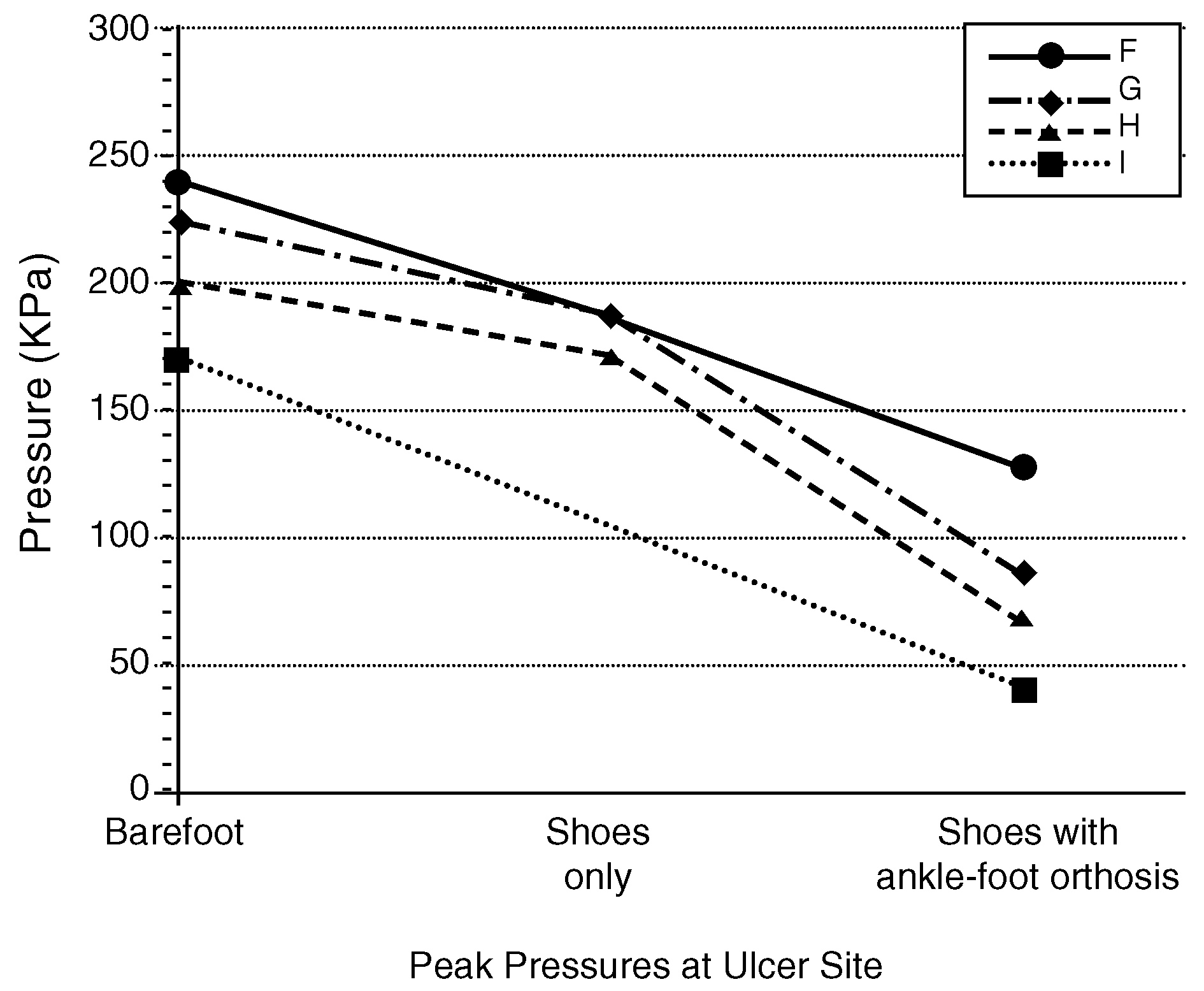
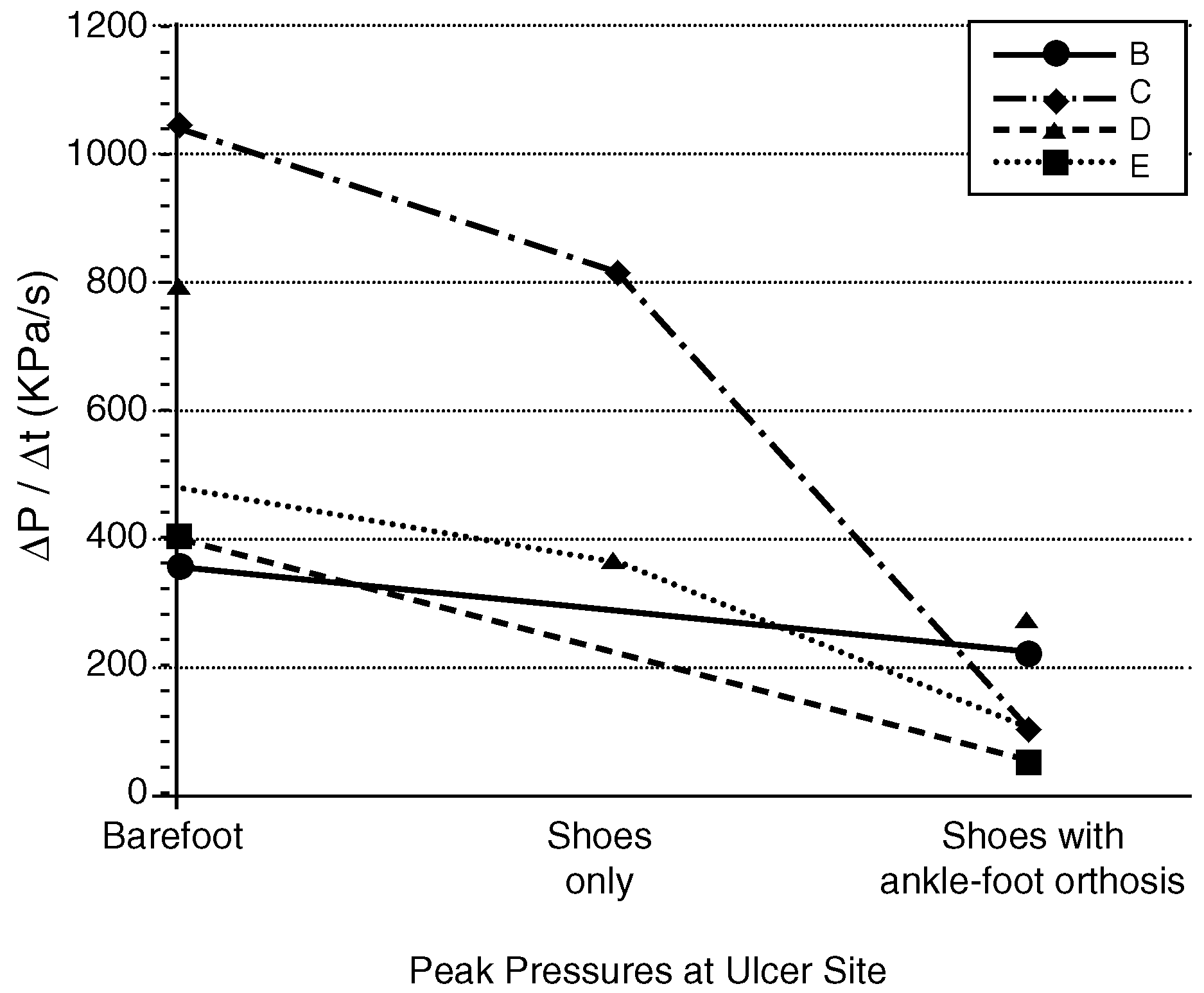
The data collected thus far indicate that the Plasta-zote-lined ankle-foot orthosis is effective in reducing the peak pressure at the ulcer site, and also at providing decreased loading rates (
Figure 3,
Figure 4). Thus far, it is not clear which of these two factors is more beneficial to the subject, since both aspects are improved. However, the combination is reminiscent of the off-loading capabilities of the total contact cast technique, without the associated difficulties.
The cost in terms of dollars, costs associated with complications, and management time required by both the physician and subject is difficult to gauge in this preliminary report because of the absence of controls, and the lack of any complications encountered. Nonetheless, some comparisons can clearly be made. The costs associated with total contact casts can be staggering. The cast itself must be changed on a weekly basis, and may require as long as an hour to remove the old one, and replace it with a new one. This is in addition to time required for debridement, wound cleaning, and other necessary steps. The actual dollar costs associated with materials alone may run as high as $100 per cast, and typically 12 to 16 casts may be required to close a solitary lesion. In comparison, the ankle-foot orthosis is a device that can be purchased one time, and can be reused. The typical ankle-foot orthosis may cost between $300 and $650, depending on the design and features. Furthermore, removal and reapplication times are trivial. Adjustments to the liner and shell can easily be performed in the office to accommodate changing foot morphology.
The ambulatory walker lined with a cushioning material is similar to the ankle-foot orthosis in some respects, including ease of use and low cost. These plastic, hard-shelled, rocker-bottomed devices may cost less initially, but do not contour nearly as well to the foot, and do not allow the patient to wear them within a regular shoe. Consequently, long-term compliance is likely to be problematic, and “off-the-shelf” fit is likely to slow the healing time because of shear forces associated with shifting of the foot within the walker.
Plastazote-lined custommolded shoes may be beneficial for off-loading the ulcer sites; however, these devices do nothing to control the ankle joint, and thus have little capability for deceleration of the foot as it makes contact with the ground.
Cost factors aside, the clear advantages to using the ankle-foot orthosis are that it is efficacious, very safe, and likely to encourage compliance. It works rapidly in cases where abnormal forces are a critical detriment to wound closure. Even in this preliminary study, the authors found that the ease of use and comfort associated with the device helped control a patient’s condition. Most important, this device worked where all of these other modalities failed, without any complications specific to this treatment modality. The authors anticipate that this device will play a leading role in the future care regimen for recalcitrant and recurrent foot ulcers in patients with diabetes.