Hyperbaric Oxygen Therapy and The Diabetic Foot
Abstract
Rationale for the Use of Hyperbaric Oxygen Therapy
- (1)
- oxygen is a controlling factor in wound healing and the control of infection. Oxygen has significant effects with respect to collagen deposition, angiogenesis, and leukocyte function [2,3,4,5]. Normal wound healing alone can probably use more oxygen than is usually delivered [8]. Hypoxic wounds benefit by correction of local tissue oxygen tension;
- (2)
- the primary method of killing bacteria by phagocytic leukocytes is an oxygen-dependent process [9,10,11]. The common pathogenic species involved in infections in humans are destroyed by oxidative killing after phagocytosis [12]. Hypoxia leads to impaired wound healing and defects in control of infection [5,7,12,13,14,15];
- (3)
- perfusion is the fundamental determinant of tissue oxygen tension [16,17]; ischemia and hypoxia are not the same thing [18]. Large vessel disease is the most important cause of impaired oxygen delivery to the wound and is the primary defect that must be addressed initially in all hypoxic wounds. It is likely that most, if not all, wounds occurring in ischemia vascular watersheds have some degree of local tissue hypoxia. Tissue hypoxia, however, may also arise as a result of local processes. Infection, ischemia-reperfusion injury, microangiopathic peripheral vascular disease, autonomic neuropathy with altered flow creating arteriovenous shunting, and hemorrheologic abnormalities each contribute to tissue hypoxia. These defects are not bypassable, and in concert with abnormal inflammatory responses and abnormal wound-healing responses, result in delayed wound healing;
- (4)
- (5)
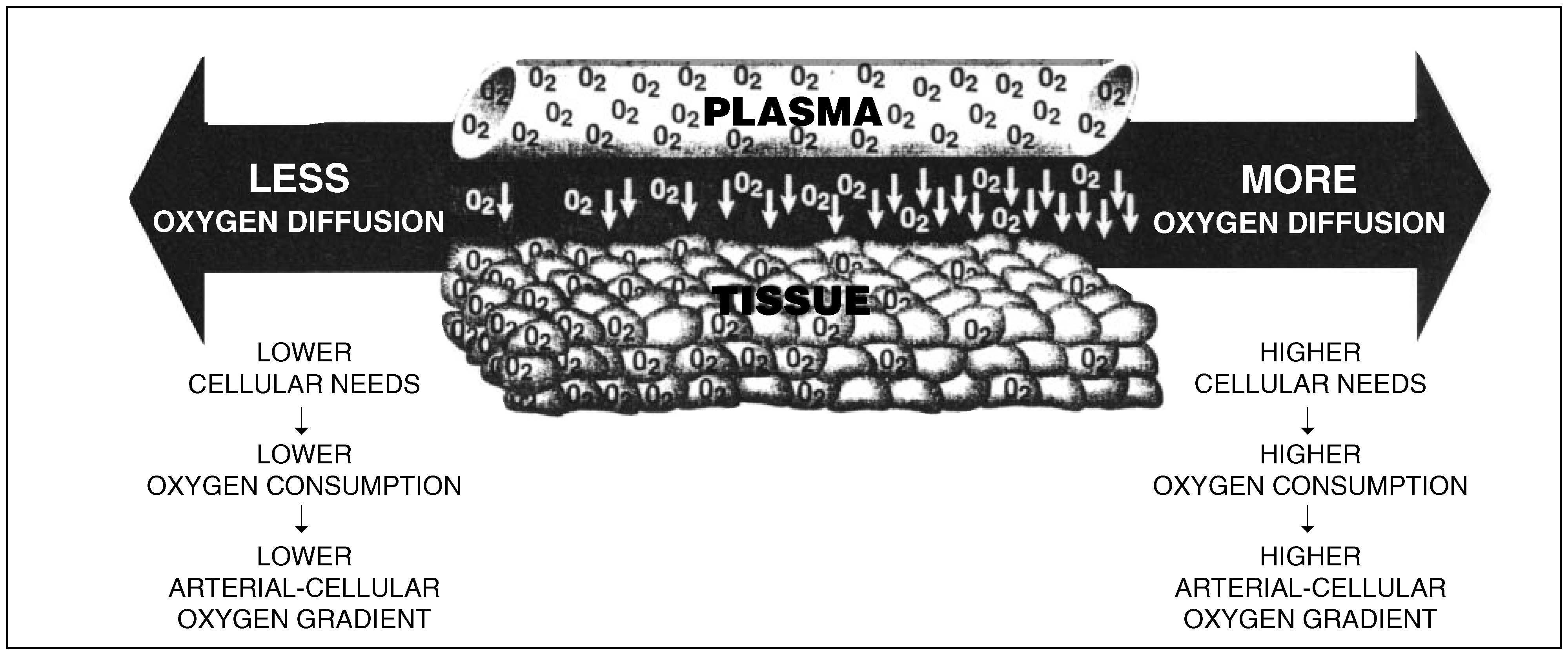
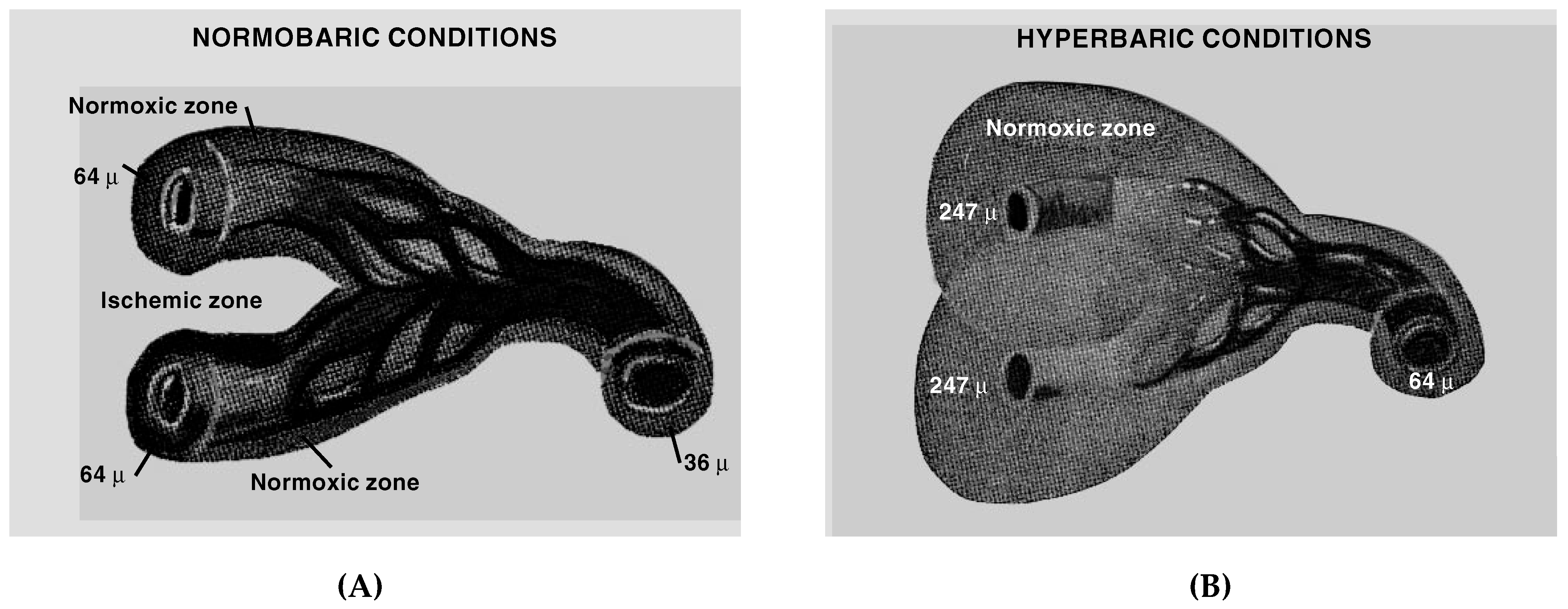
- tissue oxygen tension is the ultimate factor affecting the progress of wound healing and the control of infection. The supply of oxygen to tissues is diffusion limited [21,22,23,24]. Wounds do not discriminate as to the method of delivery of oxygen. Oxygen supplied to the wound diffuses along a partial pressure gradient into the wound space to supply tissue needs. This is true whether oxygen is bound to hemoglobin or carried in dissolved form in the plasma [16];
- (6)
- the microcirculation may exert an independent effect on tissue perfusion. Occlusive microangiopathy is not an important issue. However, altered autonomic and microvascular pathophysiologic responses, combined with the effects of activated leukocytes and hemorrheologic abnormalities, may independently affect perfusion, tissue oxygenation, and outcome [25,26,27,28,29,30,31].
Physical Laws and Physiology of Hyperbaric Oxygen Therapy
Pathophysiology of the Diabetic Foot
Mechanisms of Action
Indications and Patient Selection for Hyperbaric Oxygen Therapy
Hyperbaric Studies
Complications of Hyperbaric Oxygen Therapy
Conclusion
References
- SILVER IA: The measurement of oxygen tension in healing tissue. Progr Resp Res 1969, 3, 124.
- NIINIKOSKI, J; GRISLIS, G. HUNT TK: Respiratory gas tensions and collagen in infected wounds. Ann Surg 1972, 175, 588. [Google Scholar] [CrossRef] [PubMed]
- HUNT, TK. PAI MP: The effect of varying ambient oxygen tension on wound metabolism and collagen synthesis. Surg Gynecol Obstet 1972, 135, 561. [Google Scholar]
- HUNT TK, LINSEY M, GRISLIS G, ET AL: The effect of differing ambient oxygen tensions on wound infec-tion. Ann Surg 181: 35, 1975. [CrossRef]
- HOHN, DC; MACKAY, RD; HALLIDAY, B. ET AL: Effect of O2 tension on microbicidal function of leukocytes in wounds and in vitro. Surgical Forum 1976, 27, 18. [Google Scholar]
- ZEDERFELDT B: Studies on wound healing and trauma. Acta Chir Scand 1957, 224, 1.
- KNIGHTON, DR; SILVER, MA; HUNT, TK. Regulation of wound-healing angiogenesis: effect of oxygen gradients and inspired oxygen concentrations. Surgery 1981, 90, 262. [Google Scholar] [PubMed]
- HUNT, TK; ZEDERFELDT, B. GOLDSTICK TK: Oxygen and healing. Am J Surg 1969, 118, 521. [Google Scholar] [CrossRef] [PubMed]
- BABIOR, BM. Oxygen-dependent microbial killing by phagocytes: part I. N Engl J Med 1978, 298, 659. [Google Scholar] [CrossRef] [PubMed]
- BABIOR, BM. Oxygen-dependent microbial killing by phagocytes: part II. N Engl J Med 1978, 298, 721. [Google Scholar] [CrossRef]
- BABIOR BM: The respiratory burst of phagocytes. J Clin Invest 1984, 94, 769.
- MANDELL, GL. Bactericidal activitiy of aerobic and anaerobic polymorphonuclear neutrophils. Infect Immun 1974, 9, 337. [Google Scholar] [CrossRef]
- KNIGHTON, DR; HALLIDAY, B. HUNT TK: Oxygen as an antibiotic: the effect of inspired oxygen on infection. Arch Surg 1984, 119, 199. [Google Scholar] [CrossRef]
- KNIGHTON, DR; HALLIDAY, B. HUNT TK: Oxygen as an antibiotic: a comparison of the effects of inspired oxygen concentration and antibiotic administration on in vivo bacterial clearance. Arch Surg 1986, 121, 191. [Google Scholar] [CrossRef] [PubMed]
- KNIGHTON, DR; FIEGEL, VD. Oxygen as an antibiotic: the effect of inspired oxygen on bacterial clearance. Arch Surg 1990, 125, 97. [Google Scholar] [CrossRef] [PubMed]
- HUNT TK: Tissue oximetry: an interim report. World J Surg 1987, 11, 126. [CrossRef]
- JONSSON, K; JENSEN, JA; GOODSON, WH. ET AL: Tissue oxygenation, anemia, and perfusion in relation to wound healing in surgical patients. Ann Surg 1991, 214, 605. [Google Scholar] [CrossRef]
- DAVIS, JC; BUCKLEY, CJ; BAU, P. “Compromised Soft Tissue Wounds; Correction of Wound Hypoxia,” in Problem Wounds: The Role of Oxygen; Davis, JC, Hunt, TK, Eds.; Elsevier Science Publishing: New York, 1988. [Google Scholar]
- HEUGHAN, C; GRISLIS, G. HUNT TK: The effect of anemia on wound healing. Ann Surg 1974, 179, 163. [Google Scholar] [CrossRef] [PubMed]
- JENSEN, JA; GOODSON, WH; VASCONEZ, LO. ET AL: Wound healing in anemia. West J Med 1986, 144, 465. [Google Scholar]
- NIINIKOSKI, J; HUNT, TK. DUNPHY JE: Oxygen supply in healing tissue. Am J Surg 1972, 123, 247. [Google Scholar] [CrossRef]
- NIINIKOSKI, J; HEUGHAN, C. HUNT TK: Oxygen tensions in human wounds. J Surg Res 1972, 12, 77. [Google Scholar] [CrossRef]
- JONSSON, K; JENSEN, JA; GOODSON, WH. III, ET AL: Wound healing in subcutaneous tissue of surgical patients in relation to oxygen availability. Surgical Forum 1986, 37, 86. [Google Scholar]
- HEPPENSTALL, RB; LITTOOY, FN. FUCHS R: Gas tensions in healing tissues of traumatized patients. Surgery 1974, 75, 874. [Google Scholar] [PubMed]
- FLYNN MD, TOOKE JE: Diabetic neuropathy and the microcirculation. Diabet Med 1995, 12, 298. [CrossRef]
- JAAP, AJ; TOOKE, JE. Pathophysiology of microvascular disease in non-insulin-dependent diabetes. Clin Sci 1995, 89, 3. [Google Scholar] [CrossRef]
- SCHMIDSCHÖNBEIN, GW. Activated leukocytes: a double-edged sword. Wounds 1995, 7, 189. [Google Scholar]
- DITZEL J: Changes in red cell oxygen release capacity in diabetes mellitus. Federation Proc 1979, 38, 2484.
- SCHMIDSCHÖNBEIN, H; VOLGER, E. Redcell aggregation and redcell deformability in diabetes. Diabetes 1976, 25, 897. [Google Scholar] [PubMed]
- NEUMANN, FJ; WAAS, W; DIEHM, C. ET AL: Activation and decreased deformability of neutrophils after intermittent claudication. Circulation 1990, 82, 922. [Google Scholar] [CrossRef]
- PÉCSVARADY Z, FISHER TC, DARWIN CH, ET AL: Decreased polymorphonuclear leukocyte deformability in NIDDM. Diabetes Care 17: 57, 1994. [CrossRef]
- WOOD S, LEWIS R, MULHOLLAND JH, ET AL: Assembly, insertion and use of a modified rabbit ear chamber. Bull Johns Hopkins Hosp 119: 86, 1966.
- HUNT TK: A new method of determining tissue oxygen tension. Lancet 1964, 2, 1370.
- GOTTRUP F, FIRMIN R, CHANG N, ET AL: Continuous direct tissue oxygen tension measurement by a new method using and implantable silastic tonometer and oxygen polarography. Am J Surg 146: 399, 1983. [CrossRef]
- OPITZ, N; LUBBERS, DW. Theory and development of fluorescence-based optochemical oxygen sensors: oxygen optodes. Int Anesthesiol Clin 1987, 25, 177. [Google Scholar] [CrossRef] [PubMed]
- CHANG, N; GOODSON, WH, III; GOTTRUP, F. ET AL: Direct measurement of wound and tissue oxygen tension in postoperative patients. Ann Surg 1983, 197, 470. [Google Scholar] [CrossRef] [PubMed]
- Meier-Hellman, A; Hannemann, L; Schaffartzik, W. ET AL: The relevance of measuring O2 supply and O2 consumption for assessment of regional tissue oxygenation. Adv Exp Med Biol 1994, 345, 741. [Google Scholar]
- ABBOT NC, BECK JS, CARNOCHAN FM, ET AL: Estimating skin respiration from transcutaneous PO2/PCO2 at 1 and 2 atm abs on normal and inflamed skin. J Hyperbaric Med 5: 91, 1990.
- FALCONE, PA; CALDWELL, MD. Wound metabolism. Clin Plast Surg 1990, 17, 443. [Google Scholar] [CrossRef]
- Hofer, SOP; Van der Kleij, AJ; Gründeman, PF. ET AL: Tissue oxygen tension indicates tissue oxygen debt during progressive ischemia: an experimental study. Crit Care Med 1995, 23, 931. [Google Scholar] [CrossRef] [PubMed]
- NUNN, A; LINDER, K; STRAUSS, W. Nitroimidazoles and imaging hypoxia. Eur J Nucl Med 1995, 22, 265. [Google Scholar] [CrossRef]
- VINK R: “Nuclear Magnetic Resonance Spectroscopy and the Study of Tissue Oxygen Metabolism: A Review,” in Oxygen Transport to Tissue, 13th Ed, ed by TK Goldstick, M McCabe, DJ Maguire, Plenum Press, New York, 1992.
- LOGERFO FW: “The Diabetic Foot,” in Current Diagnosis and Treatment in Vascular Surgery, ed by R Dean, J Yao, D Brewster, Appleton & Lange, Norwalk, CT, 1995.
- KROGH A: The number and distribution of capillaries in muscle with calculations of the oxygen pressue head necessary for supplying the tissue. J Physiol 1919, 52, 409. [CrossRef]
- DAVIS, JC. The use of adjuvant hyperbaric oxygen in treatment of the diabetic foot. Clin Podiatr Med Surg 1987, 4, 429. [Google Scholar] [CrossRef]
- WIPKETEVIS, DD. Subcutaneous tissue oximetry. Crit Care Nurs Clin North Am 1995, 7, 275. [Google Scholar] [CrossRef]
- BOYKIN, JV, JR. Hyperbaric oxygen therapy: a physiological approach to selected problem wound healing. Wounds 1996, 8, 183. [Google Scholar]
- SHEFFIELD PJ: “Tissue Oxygen Measurements,” in Problem Wounds: The Role of Oxygen, ed by JC Davis, TK Hunt, Elsevier Press, New York, 1988.
- SHEFFIELD, PJ. Tissue oxygen measurements with respect to softtissue wound healing with normobaric and hyperbaric oxygen. Hyperb Oxyg Rev 1985, 6, 18. [Google Scholar]
- SHEFFIELD PJ, HEIMBACH RD: “Respiratory Physiology,” in Fundamentals of Aerospace Medicine, ed by RL DeHart, Lea & Febiger, Philadelphia, 1985.
- WELLS CH, GOODPASTURE JE, HORRIGAN DJ, ET AL: “Tissue Gas Measurements During Hyperbaric Oxygen Exposure,” in Proceedings of the Sixth International Congress on Hyperbaric Medicine, ed by G Smith, Aberdeen University Press, Aberdeen, UK, 1977.
- CIUFFETTI, G; MERCURI, M; MANNARINO, E. ET AL: Free radical production in peripheral vascular disease: a risk for critical ischaemia? Int Angiol 1991, 10, 81. [Google Scholar]
- CIUFFETTI, G; MERCURI, M; MANNARINO, E. ET AL: Are leucocyte-derived free radicals involved in ischaemia in human legs? Eur J Clin Invest 1991, 21, 111. [Google Scholar] [CrossRef] [PubMed]
- Schröder, S; Palinski, W; Schmid-Schönbein, GW. Activated monocytes and granulocytes, capillary non-perfusion, and neovascularization in diabetic retinopathy. Am J Pathol 1991, 139, 81. [Google Scholar] [PubMed]
- GRAU, AJ; BERGER, E; SUNG, KL. ET AL: Granulocyte adhesion, deformability, and superoxide formation in acute stroke. Stroke 1992, 23, 33. [Google Scholar] [CrossRef] [PubMed]
- RICEVUTI, G; MAZZONE, A; PASOTTI, D. ET AL: Role of granulocytes in endothelial injury in coronary heart disease in humans. Atherosclerosis 1991, 91, 1. [Google Scholar] [CrossRef]
- SCHMIDSCHÖNBEIN, GW. The damaging potential of leukocyte activation in the microcirculation. Angiology 1993, 44, 45. [Google Scholar] [CrossRef]
- THOM SR: Xanthine dehydrogenase conversion to oxidase and lipid peroxidation in brain after CO poisoning. J Appl Physiol 1992, 10, 413.
- VISONÀ, A; LUSIANI, L; RUSCA, F. ET AL: Therapeutic, hemodynamic, and metabolic effects of hyperbaric oxygenation in peripheral vascular disease. Angiology 1989, 40, 994. [Google Scholar] [CrossRef]
- ZAMBONI WA: “The Microcirculation and Ischemia-Reperfusion: Basic Mechanisms of Hyperbaric Oxygen,” in Hyperbaric Medicine Practice, ed by EP Kindwall, Best Publishing, Flagstaff, AZ, 1994.
- EDMONDS ME: The neuropathic foot in diabetes. I. blood flow. Diabet Med 1986, 3, 111. [CrossRef]
- EDMONDS, ME; ROBERTS, VC; WATKINS, PJ. Blood flow in the diabetic neuropathic foot. Diabetologia 1982, 22, 9. [Google Scholar] [CrossRef]
- WATKINS, PJ; EDMONDS, ME. Sympathetic nerve failure in diabetes. Diabetologia 1983, 25, 73. [Google Scholar] [CrossRef]
- TOOKE JE: Microvascular haemodynamics in diabetes mellitus. Clin Sci 1986, 70, 119. [CrossRef]
- BOULTON, AJM; SCARPELLO, JHB; WARD, JD. Venous oxygenation in the diabetic neuropathic foot: evidence of arteriovenous shunting? Diabetologia 1982, 22, 6. [Google Scholar] [CrossRef] [PubMed]
- RENDELL, M; BERGMAN, T; O’DONNELL, G. ET AL: Microvascular blood flow, volume, and velocity measured by laser Doppler techniques in IDDM. Diabetes 1989, 38, 819. [Google Scholar] [CrossRef] [PubMed]
- JAAP, AJ; TOOKE, JE. Is Microvascular Disease Important in the Diabetic Foot? In The Foot in Diabetes, 2nd Ed; Boulton, AJM, Connor, H, Cavanagh, PR, Eds.; John Wiley & Sons: Chichester, UK, 1994. [Google Scholar]
- FLYNN, MD. TOOKE JE: Aetiology of diabetic foot ulceration: a role for the microcirculation? Diabet Med 1992, 8, 320. [Google Scholar] [CrossRef] [PubMed]
- MCMILLAN DE. The microcirculation: changes in diabetes mellitus. Mayo Clin Proc 1988, 63, 517. [Google Scholar] [CrossRef] [PubMed]
- PECORARO, RE; AHRONI, JH; BOYKO, EJ. ET AL: Chronology and determinants of tissue repair in diabetic lower-extremity ulcers. Diabetes 1991, 40, 1305. [Google Scholar] [CrossRef] [PubMed]
- TOOKE, JE; RAYMAN, G; BOOLELL, M. Diabetes and Wound Healing: The Skin Response to Injury, and White Cell Behaviour in Vivo in Diabetic Patients. In Beyond Occlusion: Wound Care Proceedings; Ryan, TJ, Ed.; Royal Society of Medical Services: London, 1988. [Google Scholar]
- PECORARO RE: “The Nonhealing Diabetic Ulcer: A Major Cause for Limb Loss,” in Clinical and Experimental Approaches to Dermal and Epidermal Repair: Normal and Chronic Wounds, ed by A Barbul, MD Caldwell, WH Eaglstein, et al, Wiley-Liss, New York, 1991.
- LIHNER F, TOMBIORN N: Gangrene localized to the feet in diabetic patients. Acta Med Scand 1984, 215, 75. [CrossRef]
- APELQVIST, J; LARSSON, J; AGARDH, CD. The importance of peripheral pulses, peripheral oedema and local pain for the outcome of diabetic foot ulcers. Diabet Med 1990, 7, 590. [Google Scholar] [CrossRef]
- RAYMAN, G; HASSAN, A. TOOKE JE: Blood flow in the skin of the foot related to posture in diabetes mellitus. Br Med J 1986, 292, 87. [Google Scholar] [CrossRef]
- WALMSLEY, D; WALES, JK; WILES, PG. Reduced hyperemia following skin trauma: evidence for an impaired microvascular response to injury in the diabetic foot. Diabetologia 1989, 32, 736. [Google Scholar] [CrossRef]
- SUEMATSU M, SCHMID-SCHöNBEIN, CHAVEZCHAVEZ RH: In vivo visualization of oxidative changes in microvessels during neutrophil activation. Am J Physiol 264: H881, 1993.
- RAYMAN, G; MALIK, RA; METCALF, J. ET AL: Reduced skin capillary size in the feet of insulindependent diabetic patients. Diabet Med 1990, 7, 9A. [Google Scholar]
- GOLDENBERG, S; ALEX, M; JOSHI, RA. ET AL: Nonatheromatous peripheral vascular disease of the lower extremity in diabetes mellitus. Diabetes 1959, 8, 261. [Google Scholar] [CrossRef]
- LOGERFO, FW; COFFMAN, JD. Vascular and microvascular disease of the foot in diabetes. N Engl J Med 1984, 311, 1615. [Google Scholar] [CrossRef]
- MORAIN, WD; COLEN, LB. Wound healing in diabetes mellitus. Clin Plast Surg 1990, 17, 493. [Google Scholar] [CrossRef]
- STRANDNESS, DE; PRIEST, RE; GIBBONS, GE. Combined clinical and pathological study of diabetic and nondiabetic peripheral arterial disease. Diabetes 1964, 13, 366. [Google Scholar] [CrossRef]
- CONRAD MC: Large and small artery occlusion in diabetics and nondiabetics with severe vascular disease. Circulation 1967, 36, 83. [CrossRef]
- GIBBONS, GW. Vascular evaluation and longterm results of distal bypass surgery in patients with diabetes. Clin Podiatr Med Surg 1995, 12, 129. [Google Scholar] [CrossRef]
- GIBBONS, GW; MARCACCIO, EJ; BURGESS, AM. ET AL: Improved quality of diabetic foot care, 1984 versus 1990: reduced length of stay and costs, insurance reimbursement. Arch Surg 1993, 128, 576. [Google Scholar] [CrossRef] [PubMed]
- LOGERFO, FW; GIBBONS, GW; POMPOSELLI, FB. JR: Trends in the care of the diabetic foot: expanded role of arterial reconstruction. Arch Surg 1992, 127, 617. [Google Scholar] [CrossRef] [PubMed]
- THOM SR: Functional inhibition of leukocyte 2 integrins by hyperbaric oxygen in carbon monoxidemediated brain inury in rats. Toxicol Appl Pharmacol 1993, 123, 248. [CrossRef]
- MATHIEU, D; COGET, J; VINCKIER, F. ET AL: Red blood cell deformability and hyperbaric oxygen. Med Subaquatique Hyperbar 1984, 3, 100. [Google Scholar]
- NEMIROFF, PM. Synergistic effects of pentoxifylline and hyperbaric oxygen on skin flaps. Arch Otolaryngol Head Neck Surg 1988, 114, 977. [Google Scholar] [CrossRef] [PubMed]
- ZHAO, LL; DAVIDSON, JD; WEE, SC. ET AL: Effect of hyperbaric oxygen and growth factors on rabbit ear ischemic ulcers. Arch Surg 1994, 129, 1043. [Google Scholar] [CrossRef]
- SIDDIQUI, A; DAVIDSON, JD; MUSTOE, TA. Ischemic tissue oxygen capacitance after hyperbaric oxygen therapy: a new physiologic concept. Plast Reconstr Surg 1997, 99, 931. [Google Scholar] [CrossRef]
- MYERS B, WOLF M: Vascularization of the healing wound. Am Surg 1974, 40, 716.
- UHL, E; SIRSJÖ, A; HAAPANIEMI, T. ET AL: Hyperbaric oxygen improves wound healing in normal and ischemic skin tissue. Plast Reconstr Surg 1994, 93, 835. [Google Scholar] [CrossRef] [PubMed]
- RABKIN JM, HUNT TK: “Infection and Oxygen,” in Problem Wounds: The Role of Oxygen, ed by JC Davis, TK Hunt, Elsevier Science Publishing, New York, 1988.
- LAVAN, FB. HUNT TK: Oxygen and wound healing. Clin Plast Surg 1990, 17, 463. [Google Scholar] [CrossRef]
- CAMPORESI EM, CHAIRMAN: “Hyperbaric Oxygen Therapy: A Committee Report,” Undersea and Hyperbaric Medical Society, Kensington, MD, 1996.
- LAZARUS, GS; COOPER, DM; KNIGHTON, DR. ET AL: Definitions and guidelines for assessment of wounds and evaluation of healing. Arch Dermatol 1994, 130, 489. [Google Scholar] [CrossRef]
- CAMPAGNOLI, P; ORIANI, G. Prognostic value of TcPO2 during hyperbaric oxygen therapy. J Hyperbaric Med 1992, 7, 223. [Google Scholar]
- WAGNER FW: The dysvascular foot: a system for diagnosis and treatment. Foot Ankle 1981, 2, 64. [CrossRef]
- MATOS LA, NUÑEZ AA: “Enhancement of Healing in Selected Problem Wounds,” in Hyperbaric Medicine Practice, ed by EP Kindwall, Best Publishing, Flagstaff, AZ, 1994.
- BRAKORA, MJ; SHEFFIELD, PJ. Hyperbaric oxygen therapy for diabetic wounds. Clin Podiatr Med Surg 1995, 12, 105. [Google Scholar] [CrossRef] [PubMed]
- KNIGHTON, DR; FYLLING, CP; FIEGEL, VD. ET AL: Amputation prevention in an independently reviewed atrisk diabetic population using a comprehensive wound care protocol. Am J Surg 1990, 160, 466. [Google Scholar] [CrossRef]
- ORENSTEIN, A; MAZKERETH, R. TSUR H: Mapping of the human body skin with the transcutaneous oxygen pressure method. Ann Plast Surg 1988, 20, 419. [Google Scholar] [CrossRef] [PubMed]
- DOWD, GSE; LINGE, K; BENTLEY, G. Measurement of transcutaneous oxygen pressure in normal and ischaemic skin. J Bone Joint Surg 1983, 65B, 79. [Google Scholar] [CrossRef]
- WHITE, RA; KLEIN, SR. Amputation Level Selection by Transcutaneous Oxygen Pressure Determination. In Lower Extremity Amputation; Moore, WS, Malone, JM, Eds.; WB Saunders: Philadelphia, 1989. [Google Scholar]
- HAUSER, CJ. Tissue salvage by mapping of skin surface transcutaneous oxygen tension index. Arch Surg 1987, 122, 1128. [Google Scholar] [CrossRef]
- HARWARD, TRS; VOLNY, J; GOLBRANSON, F. Oxygen inhalation-induced transcutaneous PO2 changes as a predictor of amputation level. J Vasc Surg 1985, 2, 220. [Google Scholar] [CrossRef]
- WYSS, CR; HARRINGTON, RM; BURGESS, EM. ET AL: Transcutaneous oxygen tension as a predictor of success after an amputation. J Bone Joint Surg 1988, 70A, 202. [Google Scholar]
- MAGNANT, CM; MILZMAN, DP. HIRENDA D: Hyperbaric medicine for outpatient wound care. Emerg Med Clin North Am 1992, 10, 847. [Google Scholar] [CrossRef] [PubMed]
- KINDWALL EP, GOLDMANN RW: “TcPO2,” in Hyperbaric Medicine Procedures, 7th Ed, St. Luke’s Medical Center, Aurora HealthCare, Milwaukee, 1995.
- OISHI, CS; FRONEK, A; GOLBRANSON, FL. The role of noninvasive vascular studies in determining levels of amputation. J Bone Joint Surg 1988, 70A, 1520. [Google Scholar] [CrossRef]
- SCHEFFLER, A; RIEGER, H. Clinical information content of transcutaneous oxymetry (tcpO2) in peripheral arterial occlusive disease: a review of the methodological and clinical literature with a special reference to critical limb ischaemia. VASA 1992, 21, 111. [Google Scholar] [PubMed]
- GIBBONS, GW. Vascular evaluation and long-term results of distal bypass in patients with diabetes. Clin Podiatr Med Surg 1995, 12, 129. [Google Scholar] [CrossRef]
- NEMIROFF, PM. “Hyperbaric Oxygen Therapy in Skin Grafts and Flaps,”. In Hyperbaric Medicine Practice; Kindwall, EP, Ed.; Best Publishing: Flagstaff, AZ, 1994. [Google Scholar]
- DAVIS, JC. “Enhancement of Healing,” . In Hyperbaric Oxygen Therapy: A Critical Review, 2nd Ed; Camporesi, EM, Barker, AC, Eds.; Undersea and Hyperbaric Medical Society: Bethesda, MD, 1991. [Google Scholar]
- CIANCI, P; HUNT, TK. “Adjunctive Hyperbaric Oxygen Therapy in the Treatment of Diabetic Wounds of the Foot,”. In The Diabetic Foot, 5th Ed; Levin, ME, O’Neal, LW, Bowker, JH, Eds.; Mosby Year Book: St Louis, 1993. [Google Scholar]
- FELDMEIER, JJ; COURT, WS; MATOS, LA. Must we demand double-blind studies to establish the efficacy of hyperbaric oxygen in clinical trials? Undersea Hyperb Med 1996, 23, 10. [Google Scholar]
- CIANCI, P; PETRONE, G; DRAGER, SW; ET, AL. Salvage of the problem wound and potential amputation with wound care and adjunctive hyperbaric oxygen therapy: an economic analysis. J Hyperbaric Med 1988, 3, 127. [Google Scholar]
- CIANCI P: Adjunctive hyperbaric oxygen therapy in the treatment of the diabetic foot. JAPMA 1994, 84, 448. [CrossRef] [PubMed]
- HART, GB; STRAUSS, MD. Responses of Ischemic Ulcerative Condition to OHP. In Proceedings of the Sixth International Congress on Hyperbaric Medicine; Smith, G, Ed.; Aberdeen University Press: Aberdeen, UK, 1979. [Google Scholar]
- PEDESINI, G; ORIANI, G; BARNINI, C. ET AL: Hyperbaric Oxygen Therapy in the Treatment of Diabetic Vasculopathies. In Proceedings of the IX Congress of the European Undersea Biomedical Society; Desola, AJ, Ed.; Ediciones C.R.I.S.: Barcelona, Spain, 1984. [Google Scholar]
- PERRINS, JD. BARR PO: Hyperbaric Oxygenation and Wound Healing. In Proceedings of the First Swiss Symposium on Hyperbaric Medicine; Schmutz, J, Ed.; Foundation for Hyperbaric Medicine: Basel, Switzerland, 1986. [Google Scholar]
- ORIANI, G; MICHAEL, M; MEAZZA, D. ET AL: Diabetic foot and hyperbaric oxygen therapy: a tenyear exprience. J Hyperbaric Med 1992, 7, 213. [Google Scholar]
- STONE, JA; SCOTT, RG; BRILL, LR. ET AL: The Role of Hyperbaric Oxygen in the Treatment of Diabetic Foot Wounds. Diabetes Abstract Book, 55th Annual Meeting and Scientific Sessions 1995, 71A (S:Abstract #267), 44. [Google Scholar]
- STONE, JA. SCOTT RG: The role of hyperbaric oxygen and platelet derived growth factors in the treatment of the diabetic foot. Undersea Biomed Res 1995, 22, 78, Abstract. [Google Scholar]
- BARONI, G; PORRO, T; FAGLIA, E. ET AL: Hyperbaric oxygen in diabetic gangrene treatment. Diabetes Care 1987, 10, 81. [Google Scholar] [CrossRef] [PubMed]
- STONE, JA; CIANCI, P. The adjunctive role of hyperbaric oxygen therapy in the treatment of lower extremity wounds in patients with diabetes. Diabetes Spectrum 1997, 10, 1. [Google Scholar]
- HAMMARLUND, C; SUNDBERG, T. Hyperbaric oxygen reduced size of chronic leg ulcers: a randomized double-blind study. Plast Reconstr Surg 1994, 93, 829. [Google Scholar] [CrossRef]



 |
© 1997 American Podiatric Medical Association
Share and Cite
Williams, R.L. Hyperbaric Oxygen Therapy and The Diabetic Foot. J. Am. Podiatr. Med. Assoc. 1997, 87, 279-292. https://doi.org/10.7547/87507315-87-6-279
Williams RL. Hyperbaric Oxygen Therapy and The Diabetic Foot. Journal of the American Podiatric Medical Association. 1997; 87(6):279-292. https://doi.org/10.7547/87507315-87-6-279
Chicago/Turabian StyleWilliams, R. Lee. 1997. "Hyperbaric Oxygen Therapy and The Diabetic Foot" Journal of the American Podiatric Medical Association 87, no. 6: 279-292. https://doi.org/10.7547/87507315-87-6-279
APA StyleWilliams, R. L. (1997). Hyperbaric Oxygen Therapy and The Diabetic Foot. Journal of the American Podiatric Medical Association, 87(6), 279-292. https://doi.org/10.7547/87507315-87-6-279