The digital deformity commonly described in the English literature as boutonnière has been well documented as a deformity of the hand. Paradoxically, the French literature calls this same contracture “la difformité button hole.” [
1].
It was not until 1991 that the entity was described in the foot. In that case report, Rau and Manoli [
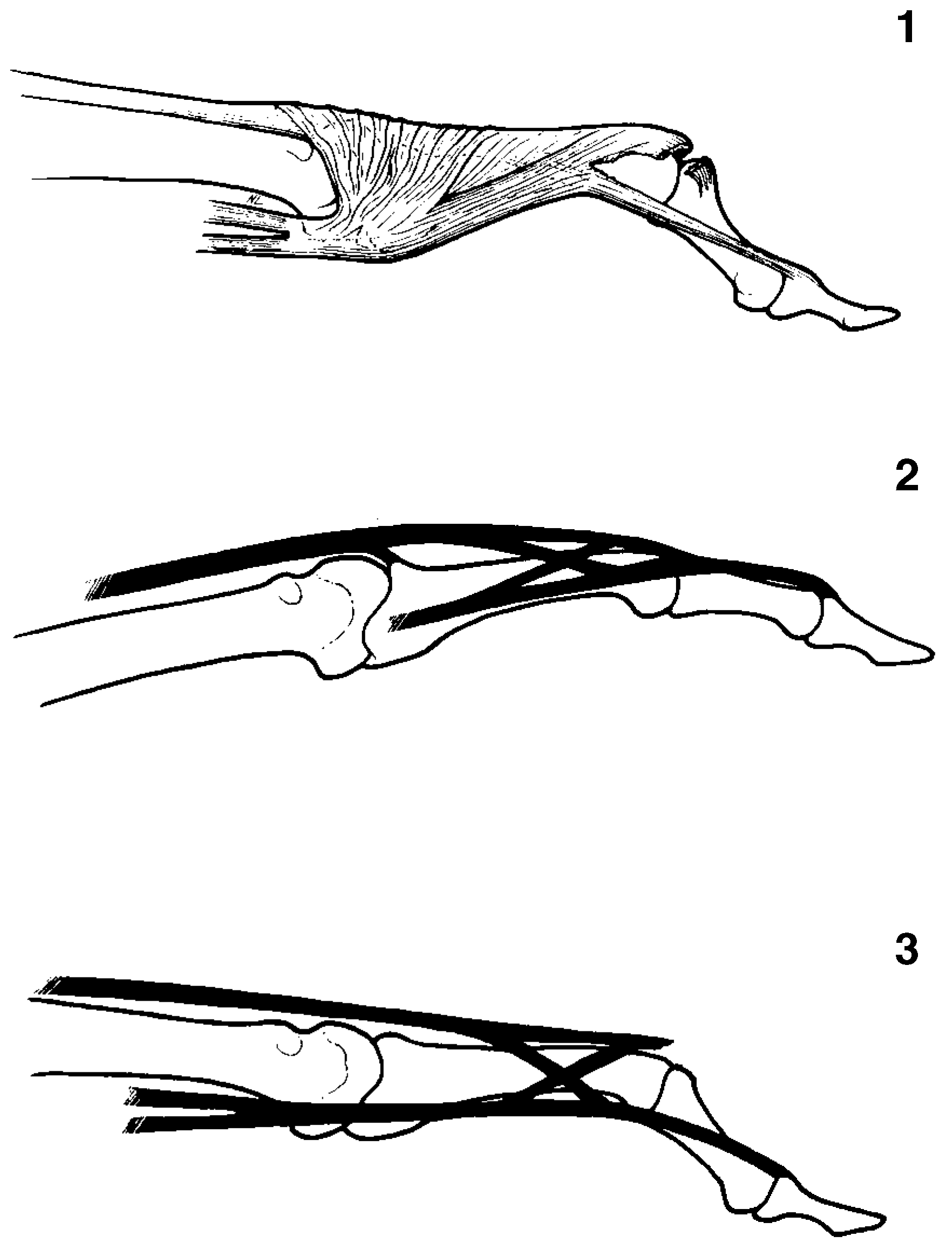
2] described the pedal form of boutonnière as a traumatically induced acute entity. The presumed precipitating mechanism for the deformity is forcible passive flexion on an actively extended proximal interphalangeal joint. The resultant severance of the central slip of the extensor apparatus (
Figure 1) causes the lateral bands (Figure 2) to drift plantar to the rotational axis of the proximal interphalangeal joint, thus flexing that joint while extending the distal interphalangeal joint (Figure 3).
To the authors’ knowledge, there are no references of pedal boutonnière deformity secondary to chronic disease, namely rheumatoid arthritis, in the medical literature. The authors summarize two cases of boutonnière deformity, one acute and the other chronic, and discuss potential treatment schemes for these maladies.
Case 1
A 39-year-old male was struck by a motor vehicle on June 26, 1993. The patient suffered an open right subtrochanteric femur fracture, and an open right tibia and fibula fracture, and left inferior and superior pelvic rami fractures. He underwent open reduction internal fixation with intramedullary rod placement in his right tibia. The patient spent 4 months in a rehabilitation facility. On January 19, 1994, the orthopedics department consulted the podiatric service for evaluation of a contracted digit that was painful with ambulation in shoes. The patient stated that the deformity had been present since the accident. No pain or deformity was reported until he began walking in January 1994.
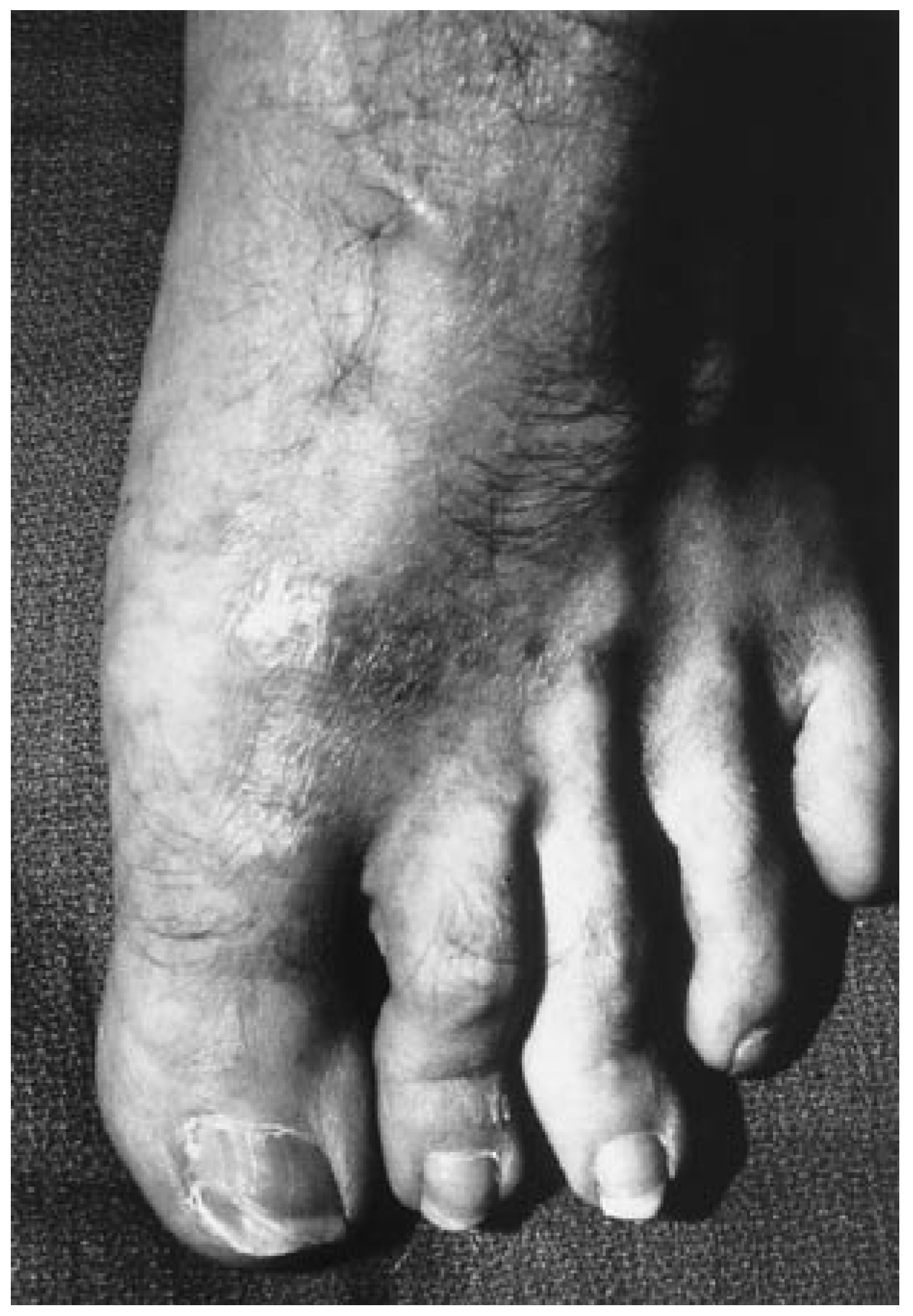
The patient presented to the University Health Center Podiatric Surgery Clinic on March 22, 1994. Physical examination revealed a flexion deformity at the proximal interphalangeal joint and a hyperextension deformity of the distal interphalangeal joint of the second and third toes of the left foot. The proximal interphalangeal joint of the second toe had a rigid contracture. The second distal phalanx deviated medially. The third digit also revealed rigidity and contracture at the proximal interphalangeal joint; however, the distal phalanx deviated laterally (
Figure 4). Radiographs showed the previously described deformities and the left subtalar joint degeneration. Computed tomography of the left talocalcaneal joint showed a coalition in the middle and anterior facet. This, however, was not a source of pain for the patient. The patient had pain on axial loading of the digits and pain on palpation of the second interspace.
After a differential block with 1% plain lidocaine, the patient reported 90% relief of pain. The patient was still complaining of second and third digital pain. After complete explanation of the nonsurgical and surgical options with their inherent risks, complications and prognosis, the patient elected and consented to surgical intervention.
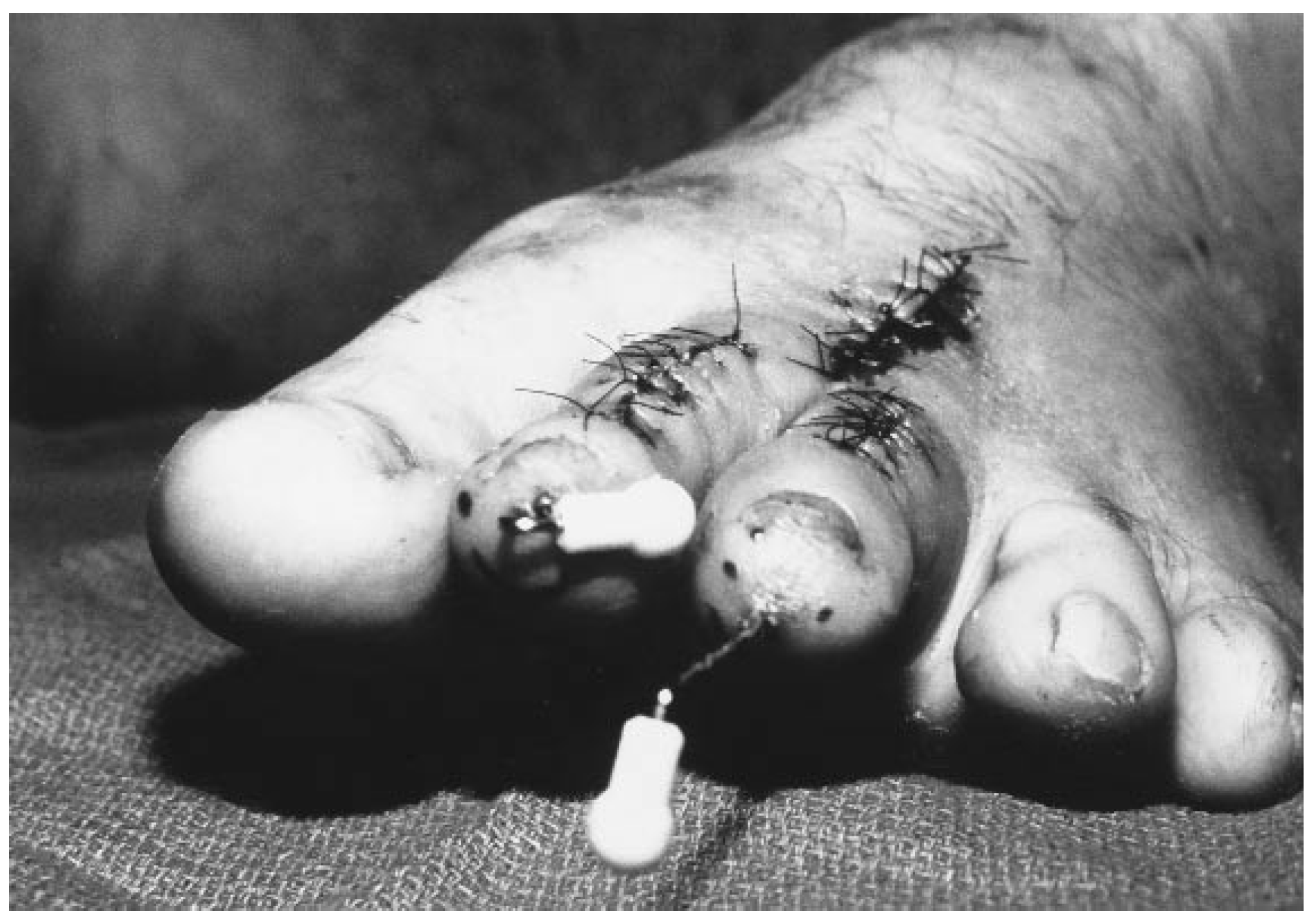
The operative procedure involved arthrodesis of the second and third proximal and distal interphalangeal joints. The arthroplasties were completed through two dorsal incisions coursing over the proximal and distal interphalangeal joints of each respective digit. Intraoperative inspection revealed a complete rupture of the central slip of the second and third digital extensor tendon complexes. Also noted was significant articular damage at both the second and third proximal interphalangeal joints. Because of the length of time between initial injury and surgical presentation, significant soft tissue contracture was encountered. For this reason, flexor tenotomies were performed at the level of the proximal and distal interphalangeal joints of both digits. Following reduction, the digits were stabilized with 0.035 external Kirschner wires (
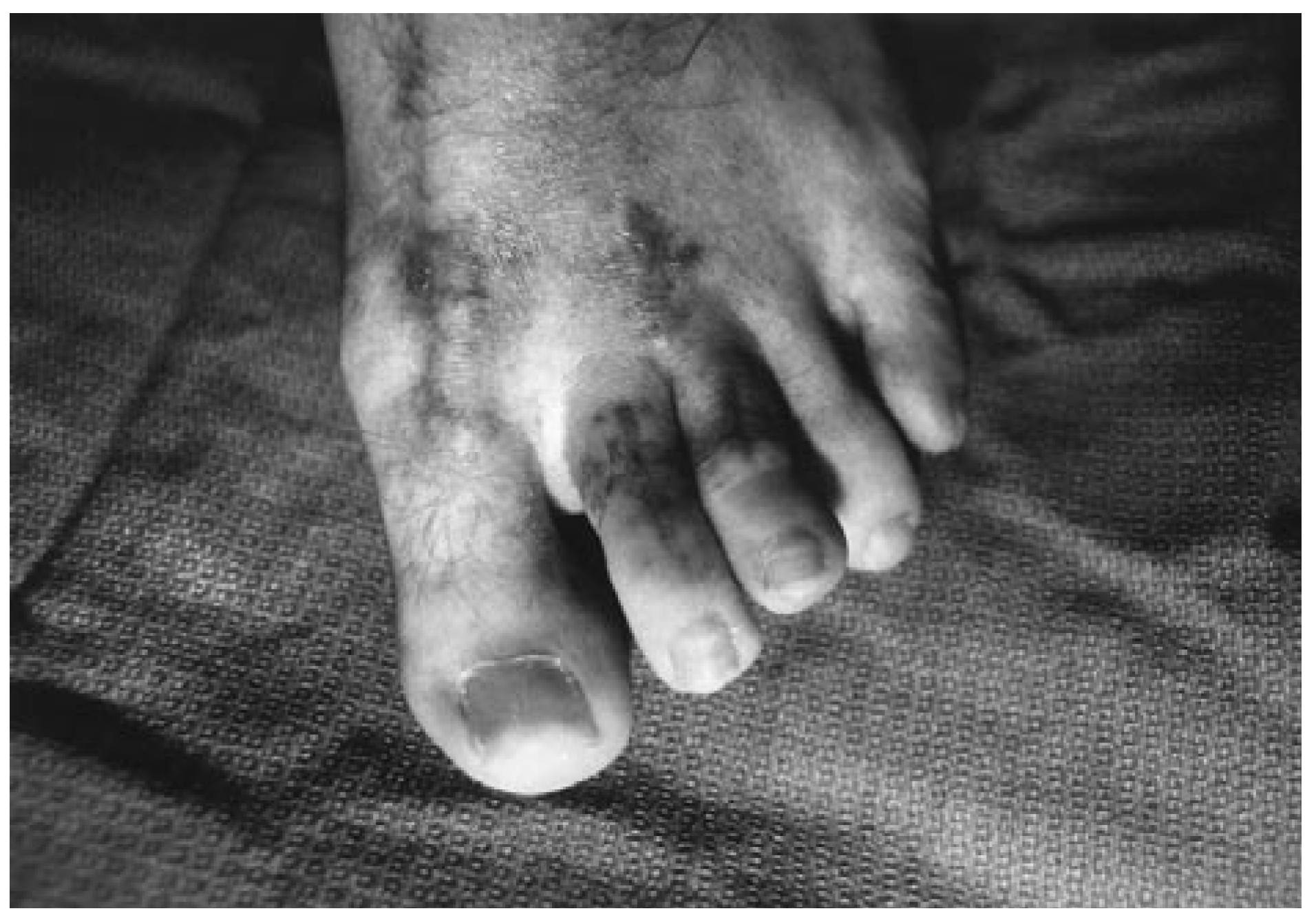
Figure 5). The wires were removed after approximately 1 month. The patient is currently walking asymptomatically in tennis shoes with rectus digits (
Figure 6).
Case 2
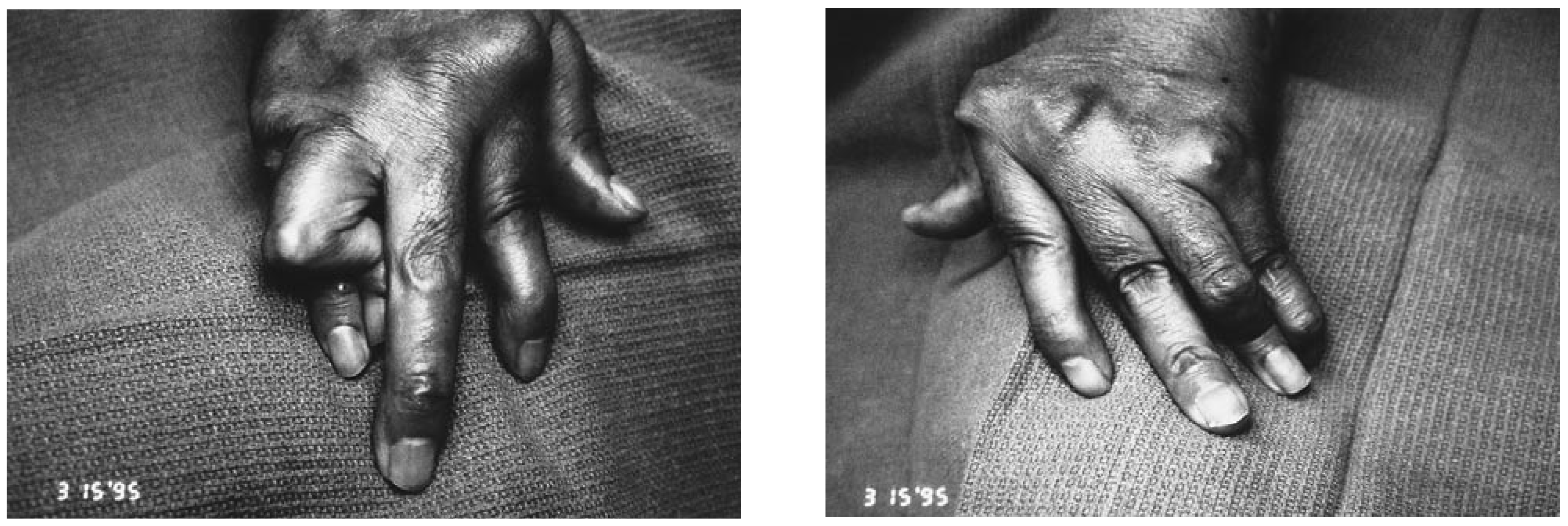
A 60-year-old male with a 20-year history of rheumatoid arthritis presented to podiatric surgery clinic for palliative care of his feet. Physical examination revealed significant rheumatoid involvement of the hands (
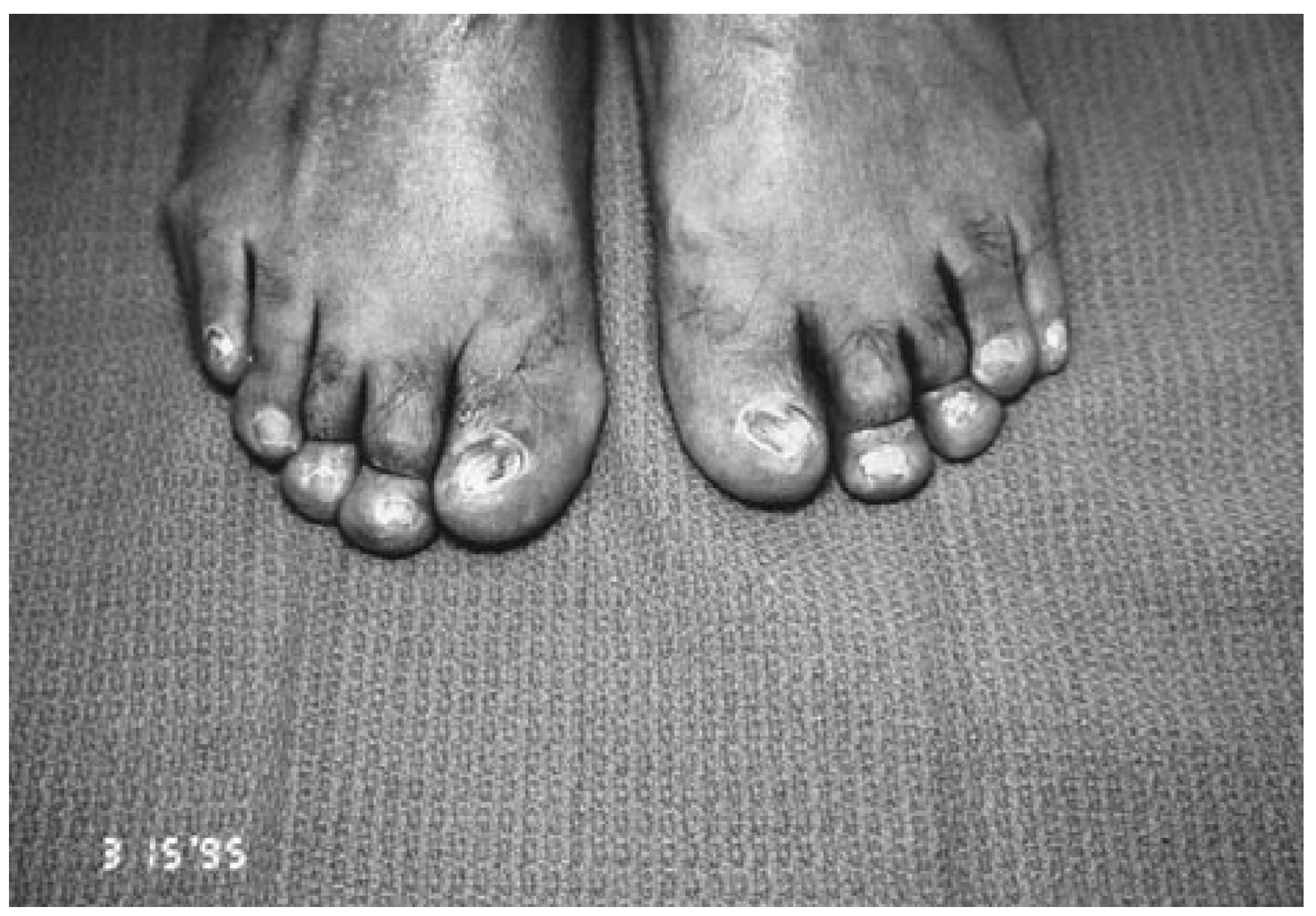
Figure 7 and Figure 8). Rheumatoid nodules were present on both elbows. The patient’s knees were enlarged and edematous, following total knee replacement surgery, bilaterally. He displayed rigid boutonnière deformity of the second and third digits bilaterally. The patient first noticed the deformities approximately 10 years prior to presentation. His affected distal interphalangeal joints were in flexion with the proximal interphalangeal joints rigidly hyperextended (
Figure 9). The patient was treated with shoe accommodation and remains asymptomatic on follow-up examination.
Discussion
The literature describes two major etiologies of chronically induced boutonnière deformity in the hand. These are rheumatoid arthritis and Dupuytren’s contracture. [
3] While the authors have not encountered boutonnière’s secondary to pedal Dupuytren’s, several cases of rheumatoid-induced pedal deformity were reviewed. Classically, there are three stages of rheumatoid boutonnière deformity. The first stage reveals swelling of the proximal interphalangeal joint, presumably secondary to synovitis. The second stage involves contractures of the lateral bands of the extensor apparatus. At this point in development, the contracture at the proximal interphalaneal joint is reducible in nature. The final stage yields development of a rigid flexion deformity at the proximal interphalangeal joint. [
4] What differentiates this deformity from the common hammer toe deformity is the lack of involvement of the metatarsophalangeal joint.
The authors have seen this deformity affect only the central digits. This observation may be explained by the fact that the first and fifth digits operate with only one true interphalangeal joint. While the fifth digit normally possesses a distal interphalangeal joint, the weak fulcrum generated by the short lever arm of the middle phalanx negates any true function.
The authors believe the treatment for the acute form of boutonnière deformity is most commonly a surgical one. It is the author’s experience that this acute entity is most commonly seen in younger, active individuals, in whom lesser toe purchase may be of some propulsive value. The chronic form of the deformity, however, generally strikes older, less propulsive individuals in whom toe purchase may be of less practical import. These patients may benefit from conservative splinting or shoe accommodation. If the deformity becomes difficult to accommodate, then a joint destructive arthroplasty procedure or digital fusion may be indicated.