


Abstract
The authors examine the future of podiatric medicine through an analysis of the characteristics of students presently enrolled in the colleges of podiatric medicine and the characteristics of college graduates from 1990 to 1995. Specific attention is also given to a number of critical issues surrounding graduate podiatric medical education. The authors conclude that despite a growing number of challenges awaiting podiatric medical education, the present complement of students and graduates of the colleges of podiatric medicine appear to offer the public reasonable expectations for quality foot care.
Podiatric medical education is a comprehensive system of formal and informal educational activities designed to provide podiatric students and physicians with those competencies necessary to render the highest form of foot and ankle care. This system has been in place for almost a century but has been modified to adjust to the changing demands of society as a whole and to patients in particular.
As the profession approaches the 21st century, it is appropriate to ask, what type of podiatric physician will be providing patient care? Insights into this are readily available through the educational data bases of the American Association of Colleges of Podiatric Medicine (AACPM). Focusing on the last 5 years of data will provide an adequate basis for a look into the future and will include information from six of the seven podiatric medical colleges.
Applicants and Matriculants
In podiatric medical education, frequent attention is given to the characteristics of the applicant pool.
The colleges of podiatric medicine financially depend on the number of students they accept into their programs, while together with the profession and the public, the colleges depend significantly on the quality of the students admitted. Questions of academic preparedness are central to the recruitment and admission procedures of each college.
Since 1990, the applicant pool to the colleges of podiatric medicine has gone from a historic low of 603 to a high of 1,139 applicants in the 1990s. The highest number of applicants to the colleges occurred in the mid 1970s when the pool exceeded 1,400. (Applicants to the New York College of Podiatric Medicine are included in this figure). During this time, the colleges extracted students from the pool of applicants at rates that varied from 62% to 93%.
These rates appear to be related to the total number of students in the pool. For example, in 1990, there were only 603 applicants and the colleges enrolled 93% of them, while in 1993, there were 1,139 applicants and the colleges enrolled 62%. This relationship between the size of the applicant pool and the number of students enrolled from that pool appears to be consistent from 1980 to 1989.
However, the number of applicants to the colleges reveals only part of picture. Member colleges of AACPM require that each applicant present Medical College Admission Test (MCAT) scores.
Another means of determining academic preparedness is the undergraduate grade point average of applicants. Table 1 and Table 2 present these data.
Table 1.
Grade Point Averages of Podiatric Medical School Applicants, 1991 to 1995.
Table 2.
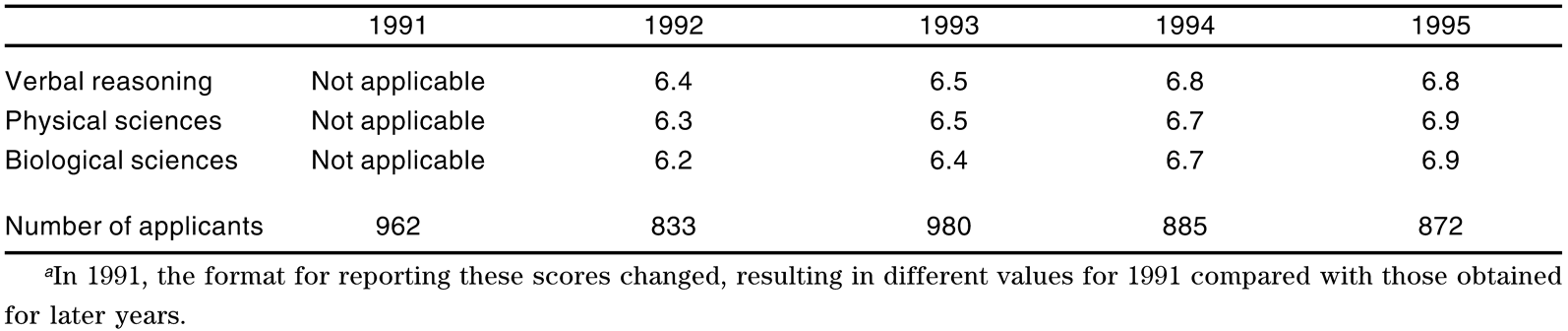
Medical College Admission Test Averages of Podiatric Medical School Applicants, 1991 to 1995a.
Consistent increases have also been seen in the MCAT scores of applicants to the colleges. Specifically, MCAT scores have increased from 1991 to 1995: verbal by 6.3%, physical sciences by 9.5%, and biological sciences by 11.3%. Approximately 90% of the applicants to the colleges have a bachelor’s degree and 43% major in biology. An additional 20% major in other physical sciences, while 4% of this group are premedicine majors.
Much like the increases identified in the applicant pool, college matriculants’ grade point averages have been on the rise. Despite an 11% decrease in the number of matriculants since 1991, in each of the reported areas—science, nonscience, and overall—new students are showing increased academic preparedness. As Table 1 shows, grade point averages have increased in each reported area by 7%.
There are clear increases in the scores of matriculants on the MCAT from 1991 to 1995. Here again, in each of the reported areas of verbal reasoning, physical sciences, and biological sciences, increases are recorded despite the 11% decrease in the matriculant population. For this period, in both verbal reasoning and physical sciences, scores increased by 10% while in the biological sciences, the increase was 5%.
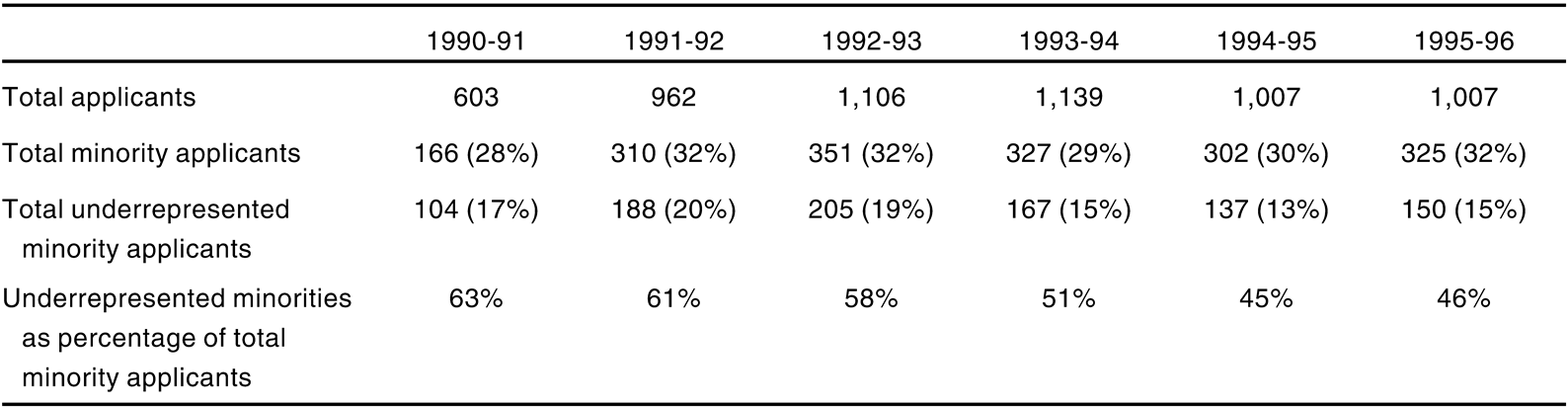
Perhaps the greatest change in the characteristics of applicants to the colleges is the representation of minorities. Minorities represent 30% of all applicants (Table 3). Asians are excluded from the pool of underrepresented minorities because their numbers in the health professions schools usually exceed their percentage in the overall population. Underrepresented minorities include those who designate themselves as African Americans, Native Americans, Hispanics, and others.
Table 3.
Number of Minority Applicants to Podiatric Medical Schools, 1990 to 1995.
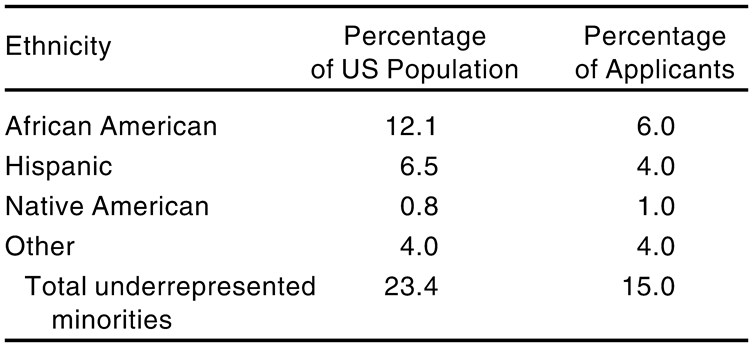
The data indicate that minority applicants and matriculants will continue to be a significant factor in admissions processes of the colleges. Compared with other health disciplines, podiatric medicine has succeeded in attracting and matriculating underrepresented minorities into the colleges based on their representation in the overall US population. However, care must be exercised by the colleges in order to ensure that all individuals, regardless of their ethnic backgrounds, will feel comfortable and secure in the academic community because the trend indicates that the number of underrepresented minorities may be decreasing (Table 4).
Table 4.
Comparison of the Percentage of Ethnic Minorities in the US Population and Their Representation in the Podiatric Medical School Applicant Pool, 1995.
For the colleges of podiatric medicine, the source generating the most applicants is the podiatric physician. For example, in the entering class of 1994, nearly 25% of all applicants came from podiatric physician referrals; the next largest source was the premedical advisor, who referred more than 12% of all applicants. The colleges appear to be well positioned for the immediate future relative to the preparedness of the students. Continued success in this area will only help to continue the trend of identifying and matriculating students of the highest academic standards.
Enrollment
During the past 5 years, the most significant increase in first-year enrollment occurred in 1991, when it increased from 453 in 1990 to 636, a 40% increase in 1 year. Such increases are unusual among the colleges as Table 5 shows. During the past 2 years, the first-year enrollment has decreased to an average of 4% (Table 5).
Table 5.
First Year and Total Enrollment of Students in Podiatric Medical Schools, 1990 to 1995.
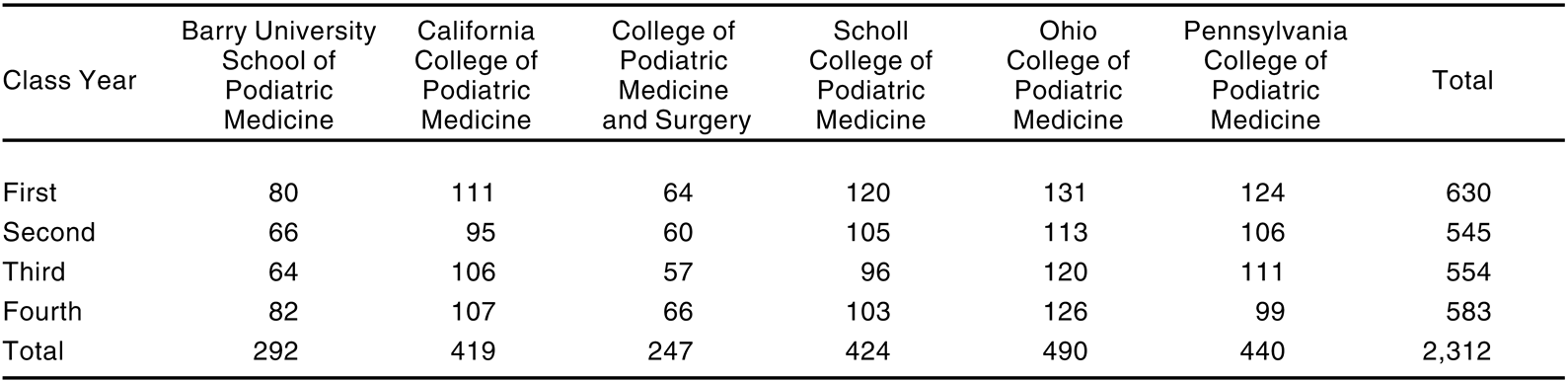
Enrollment in the colleges has been on a steady increase, but will likely not reach the peak periods of the early 1980s when enrollment exceeded 2,600 students. In fact, total enrollment in 1995 suggests a new direction; a similar pattern has been occurring in first-year enrollments since 1993. This trend is expected to continue for the next several years. These data are not comprehensive and therefore cannot be projected for the entire profession; nevertheless, among AACPM member colleges, enrollment is on a downward path. Enrollment in each college for the current academic year is presented in Table 6.
Table 6.
Podiatric Medical Student Enrollment by College and Class Year, 1995.
As was noted in the applicant pool, standardized scores and grade point averages for first-year enrolled students are on the increase. In the case of overall grade point averages, first-year students’ averages increased by 6.9% from 1992 to 1995 while for the same period MCAT scores increased: verbal by 10%, physical sciences by 10%, and biological sciences by 5%.
Unlike any of its sister professions, podiatric medicine’s ability to attract female students appears to be diminishing (Fig. 1). In 1994, females represented 30% of the colleges’ total enrollment; in 1995, the pattern of enrolling increasing numbers of females leveled off with a decrease of 1%. This incipient pattern is reflected in the applicant pool. Historically, females constituted 30% of the pool but since 1994, their share of the pool has decreased from 28% to 25.7% in 1995.
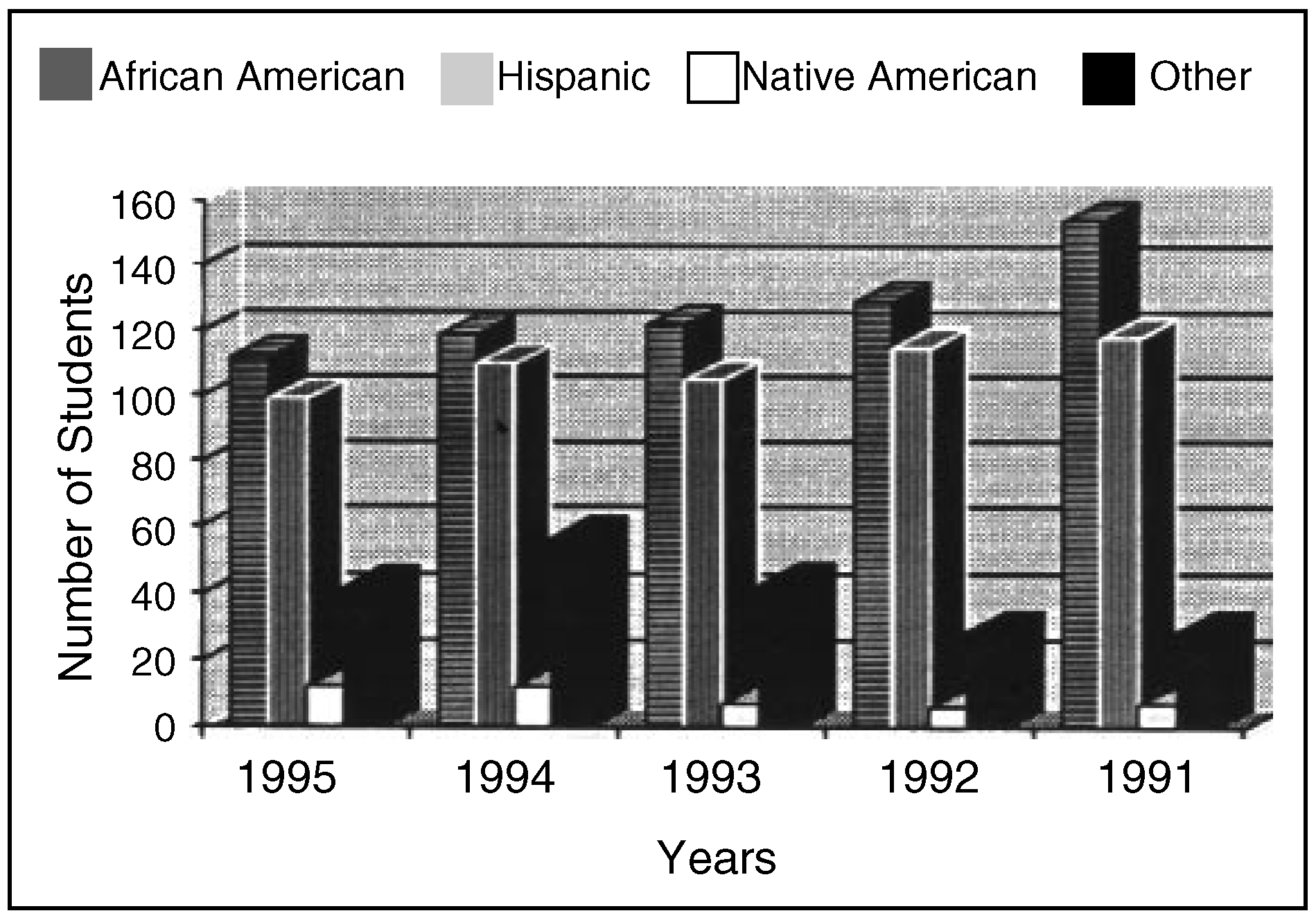
Between 1991 and 1995, the number of underrepresented students enrolled decreased by 7% (Fig. 2). It has already been noted that a similar trend has appeared in the applicant populations for the same period. For example, the total number of minorities that includes Asians decreased by 4%; African Americans decreased by 5%; and Hispanic students decreased by 3%. As the American population changes and becomes ethnically more diverse, the podiatric medical profession will need to search out ways to ensure that the graduates of the colleges are equally diverse.
Graduates
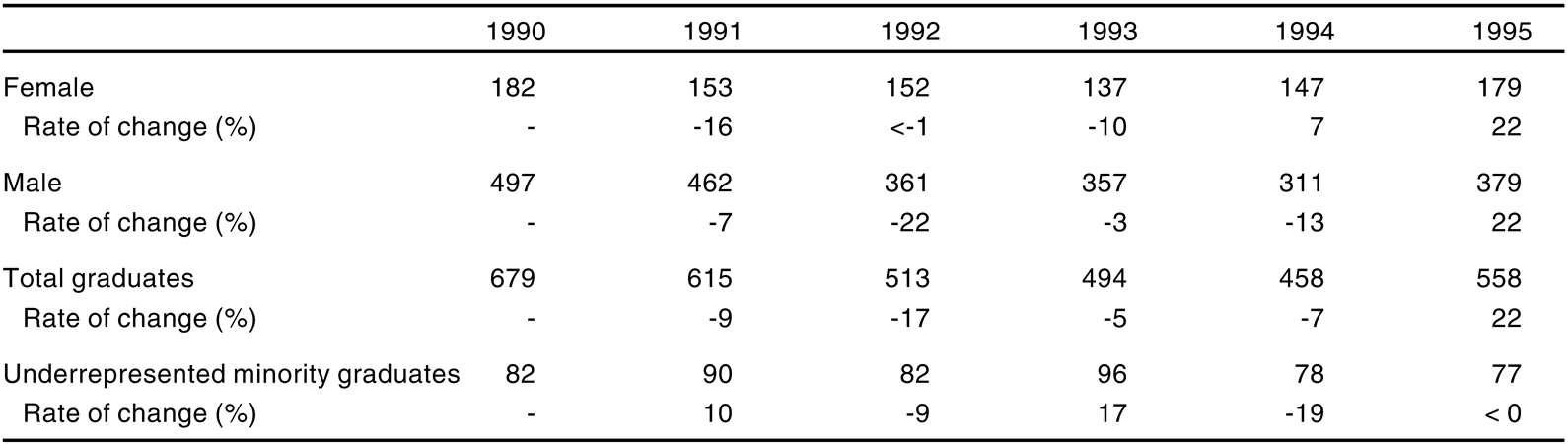
From 1990 to 1995, the colleges graduated smaller classes than in the preceding 5 years because of the low number of students admitted in the late 1980s. During the early 1990s, the colleges graduated increased numbers of females, while the number of underrepresented minorities was a mixed picture with a major increase in 1993 and a major decrease in 1994 (Table 7). Perhaps 1995 marks a positive turn of events.
Table 7.
Doctor of Podiatric Medical Degrees Conferred During Academic Years 1990 to 1995.
As noted earlier, the number of females is dropping. This pattern may become a trend for the future. Equally disturbing, yet uncertain is the trend discerned in the number of underrepresented minorities. Significant gains were made from 1990 to 1993 and then a 36% decrease in 1994. The activity here is volatile and uncertain for the immediate future.
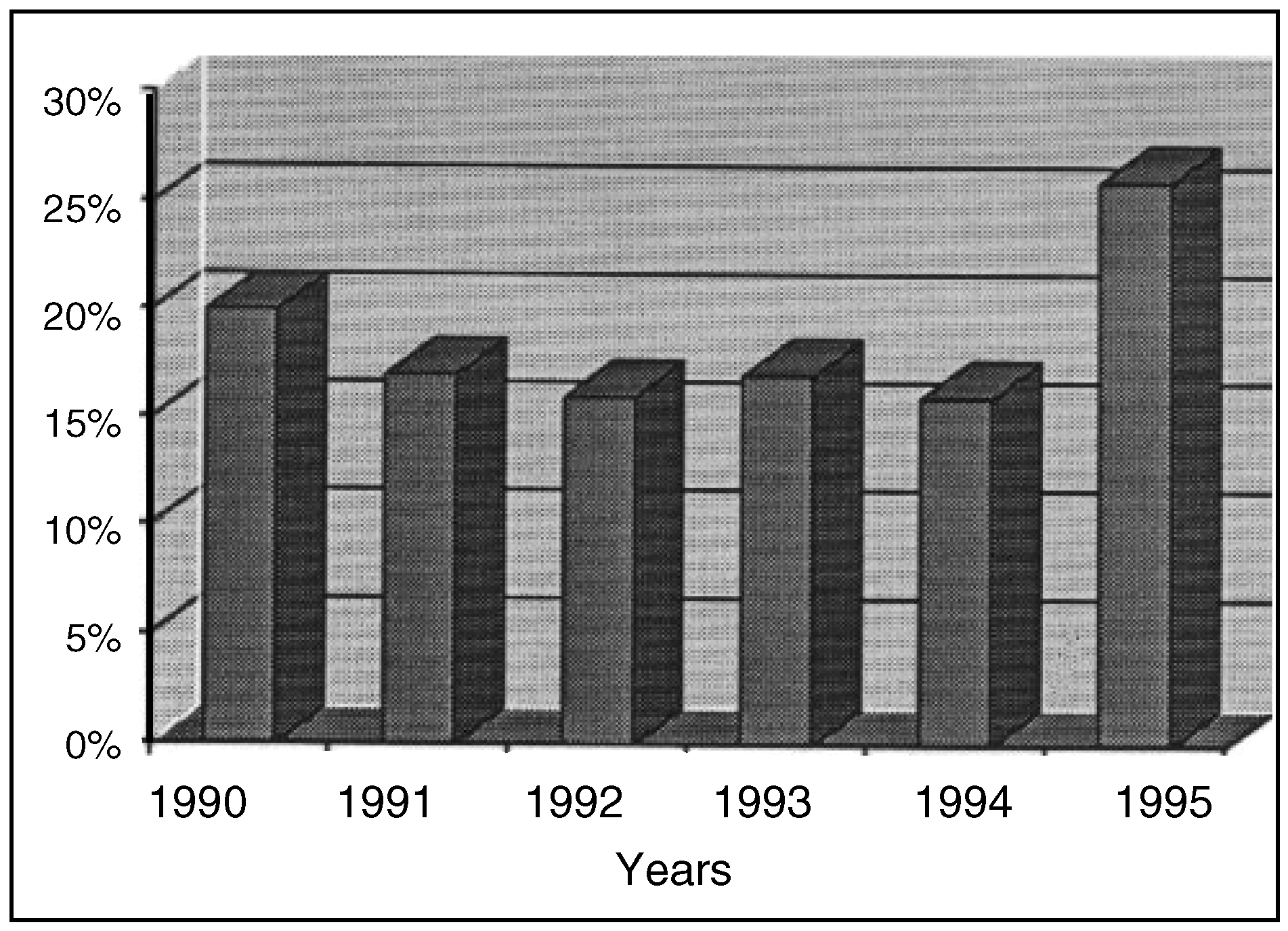
The most alarming aspect of podiatric medical education at the predoctoral level is the high attrition rate experienced by the colleges (Fig. 3). Since the beginning of the 1990s, the rate has steadily increased to a high of 26% in 1995.
The reasons for this phenomenon are not clear. The data as reported by the colleges clearly indicate that a very small number of students drop out of their programs because of academic reasons, while the number of those leaving for financial reasons is increasing. The nondescriptive reason offered for the majority of departures is “other.” Further study is required to determine more precisely the reasons behind these rates in predoctoral programs.
An overview of the issues in predoctoral podiatric medical education would be deficient if focus were not brought to bear on the matter of educational debt. Such debt will continue to be a major issue for the profession for the foreseeable future. For the past academic year, first year students completed their year with an average debt of $25,000. By the end of the second year, it increased to $54,000, and by the end of the predoctoral program, it amounted to an average of $106,000. Average debt for graduates of the 1995 class ranged from $95,910 to $134,000.
Figure 1.
Number of enrolled male and female students enrolled in podiatric medical schools during academic years 1991 to 1995.
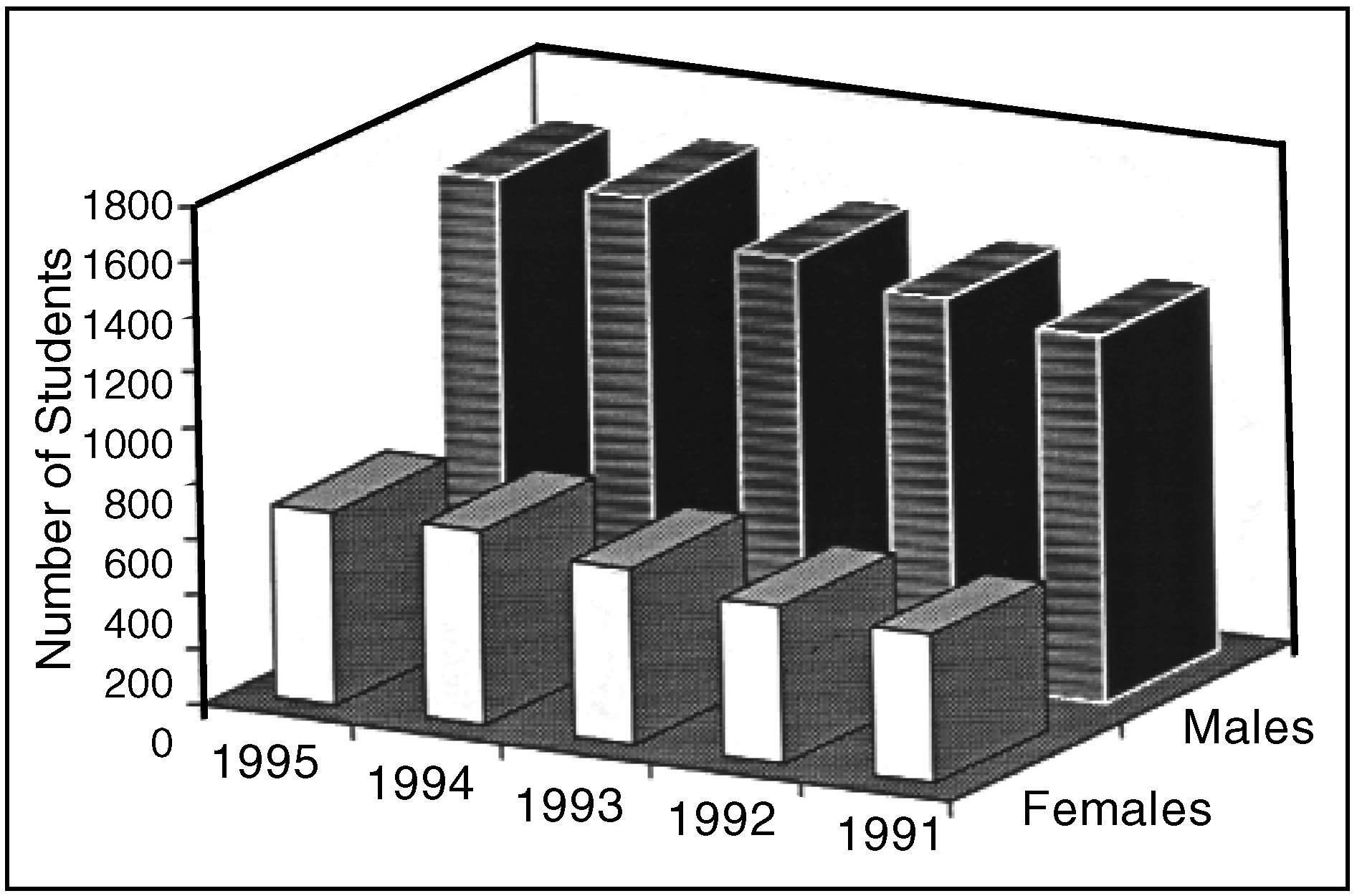
Figure 2.
Number of underrepresented minority students enrolled in podiatric medical schools during academic years 1991 to 1995.
Graduate Podiatric Medical Training
One of the truly unfortunate aspects of graduate training in podiatric medicine is that the podiatric medical community knows little about it. Not all residency programs are members of the AACPM and, consequently, the AACPM does not regularly collect data on these programs. Several years ago, efforts were undertaken to collect programmatic and financial data from these programs. This effort did not meet with success.
Figure 3.
Rates of attrition in colleges of podiatric medicine during academic years 1990 to 1995.
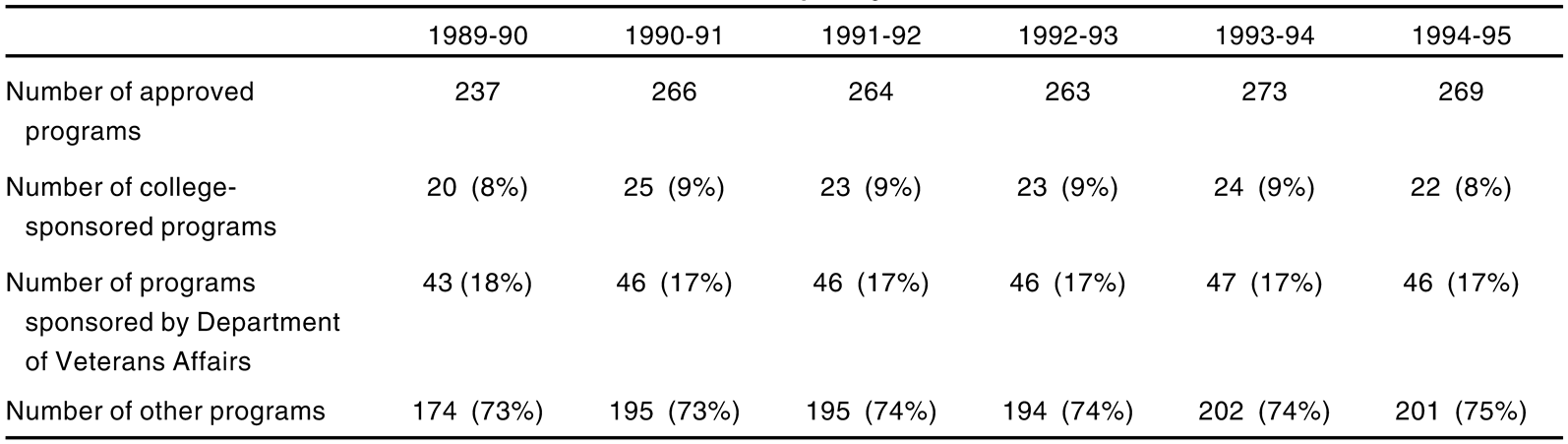
The number of institutions offering residency training has remained somewhat stable during the past 5 years. For example, there has been little change in the number of approved programs offered by the colleges where only two new programs began during this period. Similarly, in 1990, there were 43 programs sponsored by the Department of Veterans Affairs throughout the US; in 1995, three new programs were added. The only measurable growth in programs came in that collection of institutions, some of which are private, others public, and others surgical centers. Programs in these types of institutions grew by 13%, from 174 to 201 programs.
Table 8 summarizes of the scope of training programs available to graduates of the colleges of podiatric medicine. The table also provides insight into the distribution of programs by sponsoring organizations.
Table 8.
Distribution of Approved Podiatric Medical Residency Programs, 1990 to 1995.
Over this same period, there has been a significant increase in the number of entry-level specialty positions that now require a prerequisite year of training. In other words, specialty programs that previously accepted graduates directly now require that they complete 12 months of experience prior to acceptance into the specialty program. In 1990, the number of specialty programs requiring a rotating podiatric residency was 16; by 1995, this number increased to 110. This phenomenon has, in effect, reduced the number of entry-level positions by 110, because what used to be the first year of specialty training is now the second year of graduate training.
Perhaps the most disturbing dimension of podiatric medical education today is that which deals with the search, by both students and practicing podiatric physicians, for residency training positions (Fig. 4). The number of those seeking such training has increased during the past 5 years and, as a result, college graduates find themselves vying for entry-level positions with their colleagues in practice. The latter have determined that without additional training and certification, securing positions in managed care organizations or privileges in hospitals can be impossible. Of the 739 applicants in 1990 to Centralized Application Service for Podiatric Residencies (CASPR), 11% or 82 applicants were graduate podiatric physicians. By 1995, 17% of the 655 CASPR applicants were graduate podiatric physicians. In 1996, that number will grow to 24%, or 206 of the total CASPR applicant pool.
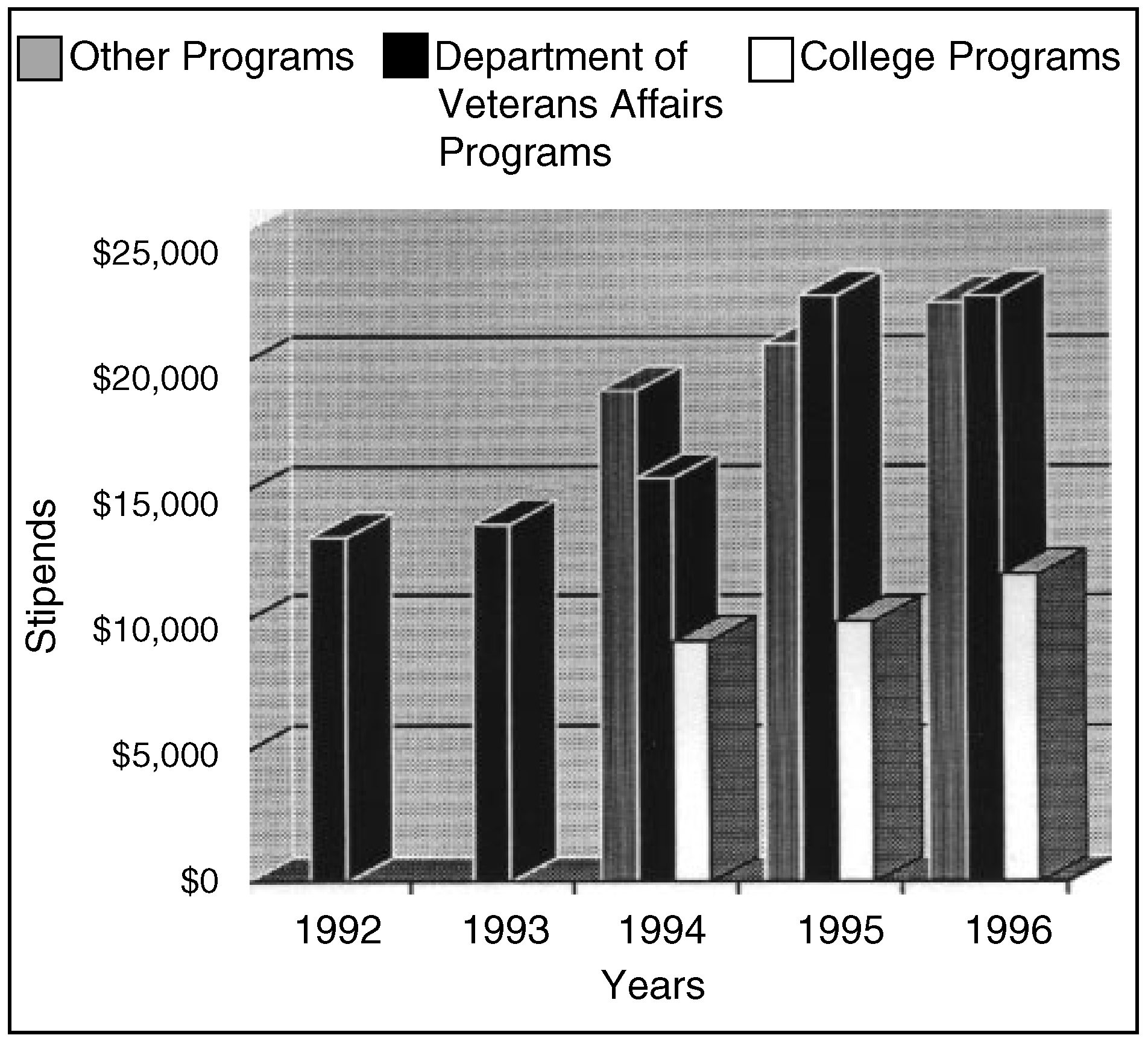
Stipends for those in graduate training programs have risen substantially during the past several years (Fig. 5). This is a welcome change given that not too many years ago, too many residents were subjected to impoverishment during their years of training.
For programs participating in CASPR, stipends rose 46% from 1992 to 1995. The largest gains have come from Department of Veterans Affairs programs, with an increase from $13,188 in 1992 to $22,500 in 1995. The fact that the Department of Veterans Affairs was able to increase stipend rates in 1992 is, in large part, the explanation for increases in all programs since that time.
Another factor has been information widely distributed through the AACPM that indicated that the average Medicare reimbursement to hospitals per trainee in 1992 was $92,000 and, in many cases, the rate exceeded $150,000.
The difference between the stipend received and the amount a hospital receives from Medicare for training was an eye-opening experience for many.
Residency directors brought this information to their chief financial officers and, as a result, were successful in obtaining higher stipends for their residents.
Medicare, however, is not the only funding source for podiatric medical education. The colleges of podiatric medicine have contributed substantially to the education of their students beyond their initial 4 years spent at a college. For example, in the 1995-96 academic year, the colleges contributed $1,063,120 to non-Department of Veterans Affairs programs and $309,700 to Department of Veterans Affairs programs. In the case of the Department of Veterans Affairs programs, these funds exceed the $1 million made available by Congress in 1992 specifically for podiatric medical training in Veterans Affairs hospitals.
The source of these funds varies from college to college. Some use operating funds for this purpose, while others rely on student fees. In most cases, a college will condition these expenditures for positions that accept graduates of that college exclusively. In 1995, 152 positions were made available to graduates: 44 in Department of Veterans Affairs stations and 108 in others. Since 1993, the colleges expended three quarters of a million dollars in support of residency training.
There are major disparities in the amount of stipends offered to first year residents. For example, in 1996, the stipend for a resident at a collegefunded program would average $11,174; if, at an “other” institution, the stipend would be $22,267; and, if at a Department of Veterans Affairs station, the stipend would be $22,500.
Figure 4.
Entry number of podiatric medical residency positions versus the combined number of podiatric medical college graduates and practicing podiatric physicians.
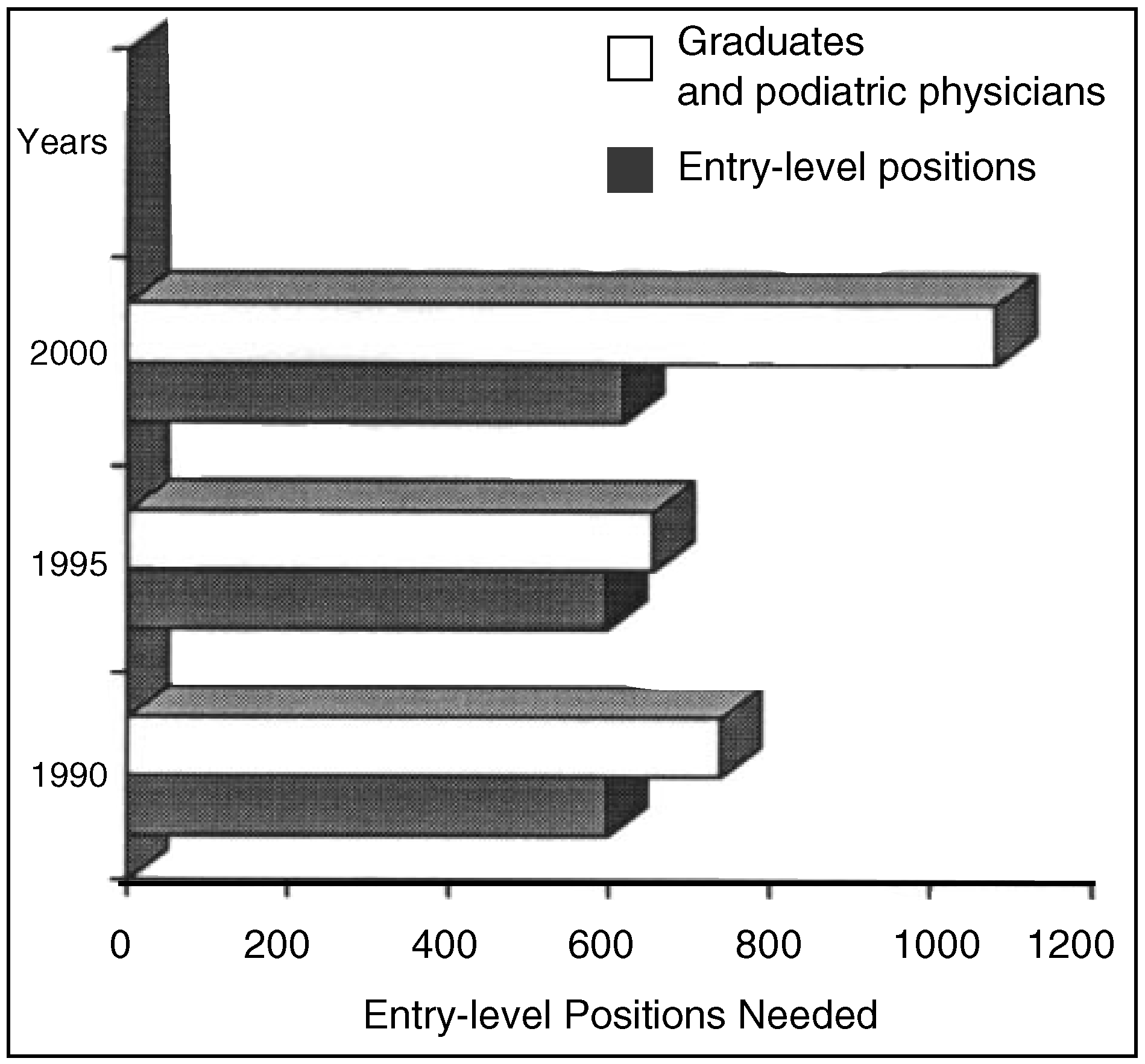
Figure 5.
Distribution of first year stipends in podiatric medical residency programs participating in CASPR match during academic years 1992 to 1996 (a CASPR, Centralized Application Service for Podiatric Residencies. B The category of “other” refers to the majority of residency programs; specifically, those that are neither funded by a college of podiatric medicine or the Department of Veterans Affairs. The AACPM began the collection of stipend information in 1993.).
Conclusion
The future for podiatric medical education will be both challenging and demanding. Podiatric educators and administrators will be pressured to develop new curricula and locate new sites for clinical training to prepare their students more adequately for a new practice world. The entire profession will need to assess its image, while the colleges will need to reexamine their student marketing strategies to ensure that women and underrepresented minorities will assume their rightful places within the profession. The profession will no doubt expect the colleges to continue to meet the challenge of searching out and recruiting candidates for the profession who are as well prepared academically as those students being admitted today. Ultimately, expectations will rise within the profession to have college administrators address the issue of educational debt, particularly as the demands of servicing the debt exceed practitioners’ incomes, especially in the early years of practice.
Perhaps the greatest challenge lies in the area of graduate podiatric medical education and the demand to obtain increased numbers of residency training positions for all who seek and need them. The AACPM has created a special task force specifically to address this significant issue. The final report of the task force was published in March 1996. It is clear that the task force will be calling on the entire profession to address this most serious problem.
Additionally, ways must be found to assist residency directors in obtaining and reporting information about their programs so that the profession can establish and act upon meaningful policy, particularly in the public policy arena.
Finally, provision must be made for those who cannot continue their practice of the profession without additional training and the credentials that accrue to it. Managed care will dominate the practice of medicine. Podiatric physicians, whether newly graduated or not, deserve the opportunity to meet the demands society appears to be imposing.



© 1996 American Podiatric Medical Association