In 1887, Weichselbaum revealed the cause of meningitis to be
Neisseria meningitidis, a gram-negative coccus.[
1] Infections by this bacterium can affect nearly every organ system, often unpredictably. One of the most devastating syndromes of meningococcal disease is acute fulminating meningococcemia, also known as Waterhouse-Friderichsen syndrome. This syndrome is present in 20% of those with meningococcal infection.[
2] This generally results in widespread purpura, encephalitis, and adrenal failure. Mortality in this condition is most often attributed to circulatory collapse secondary to disseminated intravascular coagulation.[
3]
The most damaging sequela of meningococcemia is vascular in nature. This condition, in its most severe state, is known as purpura fulminans. This sequela characteristically presents as sudden and rapidly spreading hemorrhage to the skin. This damage to vascular tissue is thought to be immunologically mediated, secondary to a Shwartzman reaction.[
4] This reaction is elicited by a secondary exposure to endotoxins (and other complement-activating complexes) some time after a patient is exposed primarily. It is thought that the primary exposure to endotoxins promotes a mild adhesion of neutrophils to postcapillary venules. The second exposure causes aggregation of platelets and white cells within the circulation, causing vasculitis and subsequent ischemic insult. While vascular damage is usually limited to superficial structures, deep tissues are sometimes involved, often yielding devastating results. Gangrene secondary to purpura fulminans may be so extensive as to involve an entire extremity.[
5]
Case Report
On January 15, 1995, a 30-year-old Hispanic male presented to the University of Texas University Hospital emergency department with a chief complaint of a sore throat, productive cough, and generalized arthralgia of 2 to 3 days’ duration. The patient related minimal improvement from a short course of amoxicillin. The patient’s social history was significant for marked ethanol, tobacco, marijuana, and cocaine use.
Initial physical examination revealed a well developed, well nourished male in acute distress secondary to rigors. The patient was febrile, tachycardic, with a stable blood pressure. The patient’s tonsillar tissues were covered with a yellow exudate. His lungs were clear to auscultation and the abdominal examination was benign. The dermal examination revealed multiple papular, purpuric lesions on the face, chest, arms, knees, legs, and hands. The neurologic examination was significant for nuchal rigidity, but was otherwise nonfocal with no papilledema noted.
The laboratory tests ordered on admission included complete blood count, chemistry 20 profile, cerebrospinal fluid analysis, chest radiograph, and blood cultures. Significant serum laboratory values included a platelet count of 95 × 103/mm3, blood urea nitrogen of 23 mg/dl, creatinine of 3.3 mg/dl, partial thromboplastin time of 42.3 s, and a prothrombin time of 16.4 s. All other serum laboratory values, including white cell indices, were grossly normal. The analysis of collectant from the lumbar puncture revealed protein of 800/100 ml, glucose of 18/100 ml, 1,000 polymorphonuclear leukocytes/100 ml. The chest radiographs were unremarkable. Cultures of blood and cerebrospinal fluid performed on the day of admission were returned positive for N. meningitidis.
Following the initial examination and prior to culture results, the patient was admitted to the medical intensive care unit at the University Hospital with a preliminary diagnosis of meningococcal septicemia, disseminated intravascular coagulation secondary to sepsis, and acute renal failure. The initial medical intervention included institution of intravenous penicillin G, 5 million units daily. The dosage was slowly increased to 24 million units daily as renal function improved. On the second day, the patient developed mental status changes and visual hallucinations. A computed tomography scan of the head, ordered to rule out intracranial hemorhage, was negative. Steadily progressive thrombocytopenia necessitated transfu- sion of platelets on the third day. On the fourth day, the infectious disease department was consulted. Subsequently, the intravenous antibiotic was changed to ceftriaxone. The patient’s mental status improved slowly over the next several days.
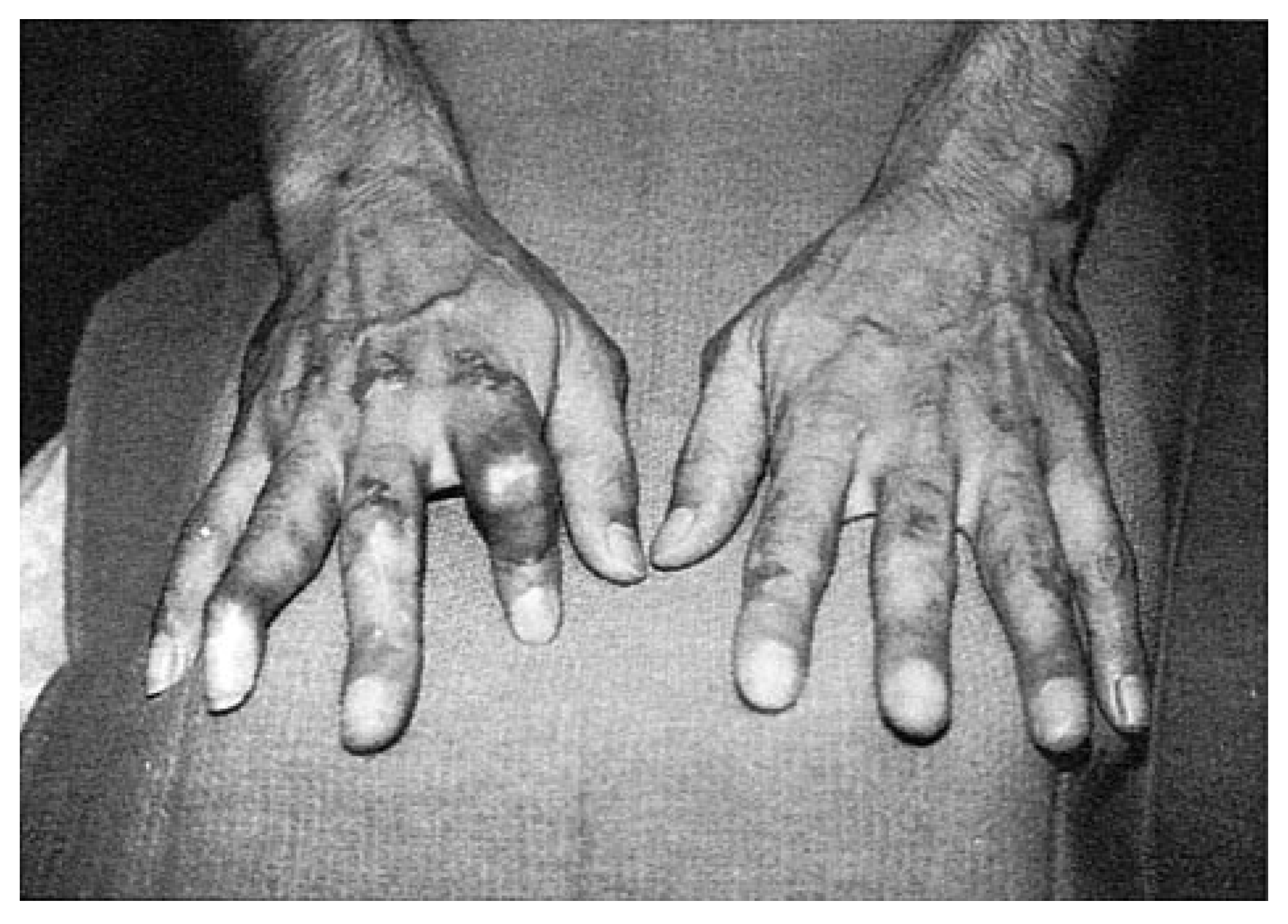
On the sixth day, pregangrenous changes consistant with ischemic insult were seen on the distal aspects of the toes, plantar aspect of the right heel pad, and anterior aspect of the knees. The patient also revealed a boutonniere deformity of the right index finger secondary to significant joint contracture (
Figure 1). Isolated joint contractures were also noted in the wrists, knees, and elbows.
The orthopedic and podiatric surgical services were consulted to evaluate these regions of insult. As there were no signs of infection in any of the lesions, observation and local wound care were recommended. Following the consultations, physical therapy was begun. The patient gradually showed an improvement in both movement and transfer over the course of therapy. The patient was discharged on the fortieth day. He was followed on a regular basis in the podiatric and orthopedic clinics for care of his multiple extremity complications.
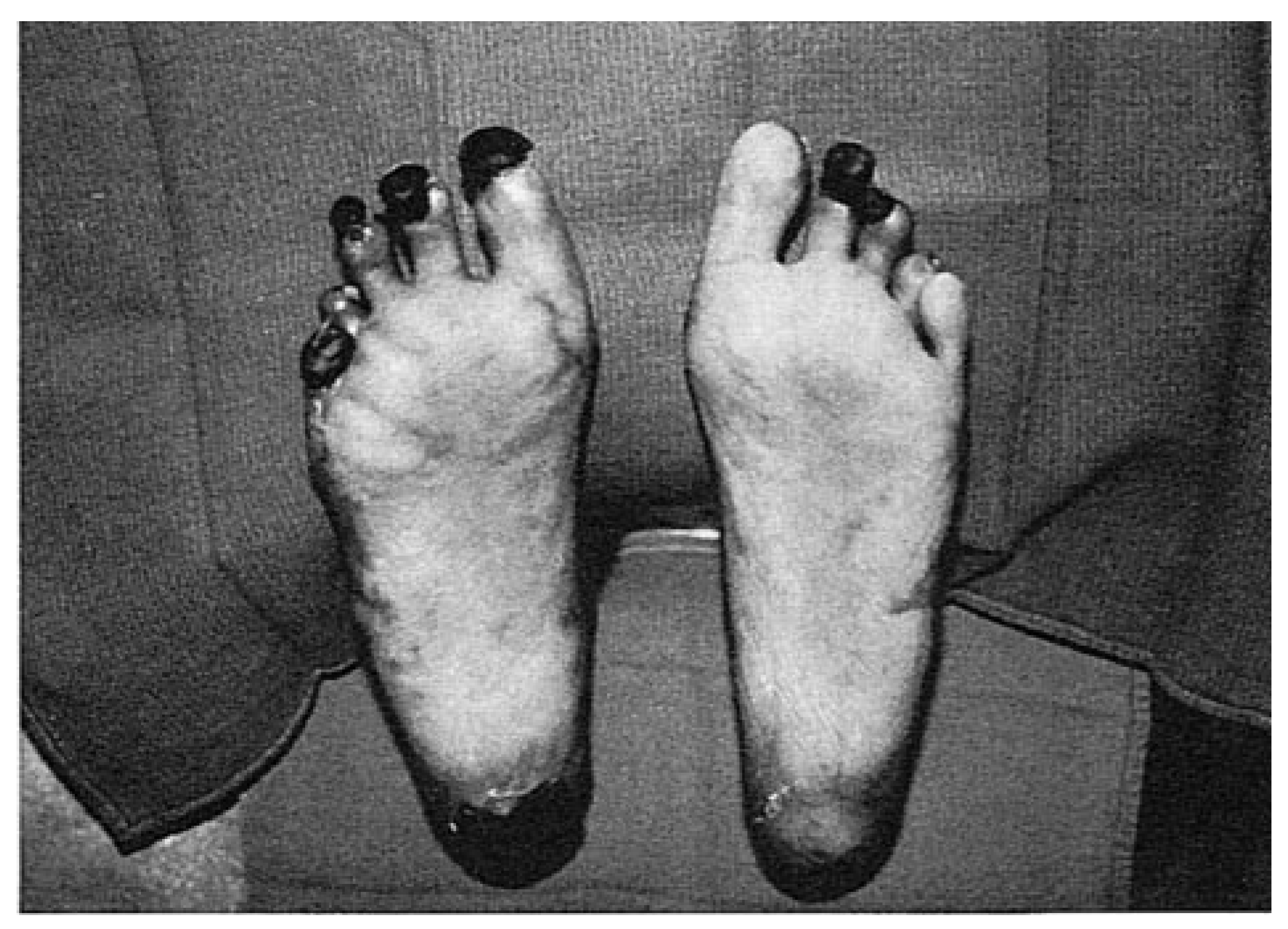
The affected toes remained clean and dry with no signs of infection over the next several months and were thus allowed to demarcate (
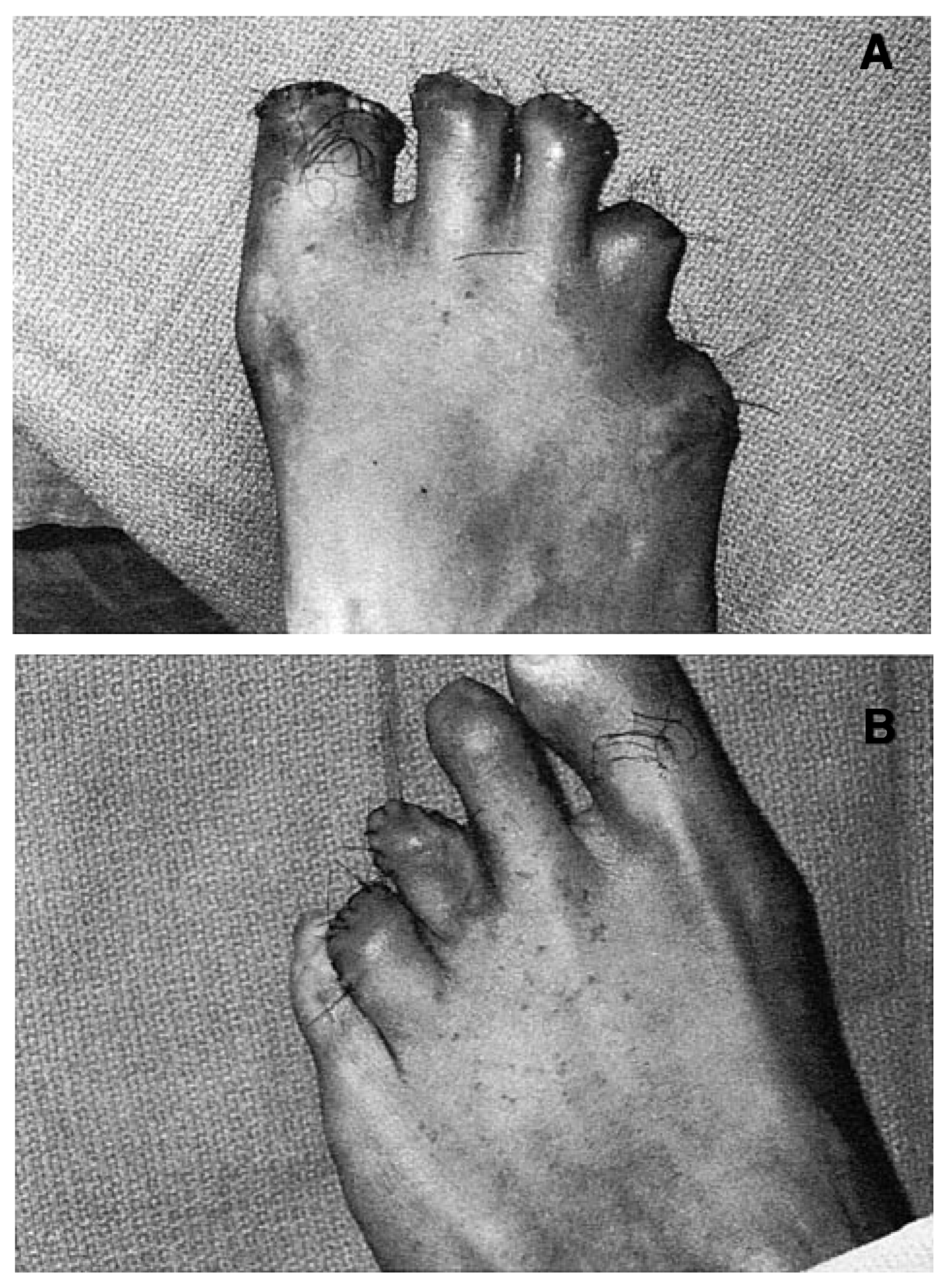
Figure 2). On August 22, 1995, the patient underwent partial amputation of the first through fourth digits and total amputation of the fifth digit on the right foot (
Figure 3A). The left foot had partial digital amputations of the third and fourth digits. All wounds were primarily closed (
Figure 3B). The gangrenous lesion on the right heel was debrided to healthy subcutaneous fat, yielding a superficial defect, measuring 7 × 5 cm. The patient was treated with meticulous local wound care for this right heel ulceration. On the twentieth postoperative day, following epithelialization of the heel defect, the patient gradually returned to full weightbearing activity with accomodative Plastazote (BXL Plastics Limited, ERP Division, Croydon, England) inlays in his shoes. He experienced no further complications.