Article

Healthcare Provider Knowledge and Utilization of the Medicare Therapeutic Shoe Benefit
by
Carol Szmuilowicz Kurth
1,2,* and
Ryan Thomas Crews
2
1
UCSF Stanyan Hospital Podiatry Residency Program, San Francisco, CA 94117, USA
2
Dr. William M. Scholl College of Podiatric Medicine’s Center for Lower Extremity Ambulatory Research (CLEAR) at Rosalind Franklin University, North Chicago, IL 60064, USA
*
Author to whom correspondence should be addressed.
J. Am. Podiatr. Med. Assoc. 2026, 116(3), 32; https://doi.org/10.3390/japma116030032
Submission received: 2 February 2026 / Revised: 11 May 2026 / Accepted: 12 May 2026 / Published: 20 May 2026

Abstract

The Therapeutic Shoe Benefit (TSB) allows Medicare insurance beneficiaries to reduce their diabetic foot ulcer risk by providing offloading shoes. Anecdotal evidence suggests that the process is cumbersome and that not all providers are aware of this benefit. This study evaluated TSB awareness across multiple healthcare disciplines and documented barriers to utilization. An online study surveyed healthcare providers practicing in the United States to determine familiarity with TSB and barriers to prescribing therapeutic shoes. The project was IRB-reviewed and received exempt status. The survey was sent to a wide variety of healthcare practitioners including: podiatrists, primary care providers, physical therapists, orthotist/prosthetists, specialty providers, and diabetes educators. This was done through targeted emails from professional organizations, word-of-mouth messaging through private practice groups, and marketing on LinkedIn. The survey was administered via Qualtrics with embedded branching logic used to gather data from the TSB’s three classifications of healthcare specialists: certifying physicians, prescribing practitioners, and suppliers. A total of 580 valid completions of the survey were analyzed. Irrespective of the TSB, podiatric physicians and medical professionals providing direct patient care recommend supportive shoes for patients with diabetes 98.2% (336/342) of the time. When asked about knowledge of the TSB, 522 or 90% of respondents indicated awareness of this Medicare benefit. Knowledge by specialty was hard to differentiate due to low responses by some specialties; however, prescribing podiatrists and prosthetic providers both responded with a familiarity rate above 92%. Common obstacles to providers prescribing shoes were: complexity of documentation (67.8%), challenges communicating with other providers (55.0%), and financial reasons/labor-to-reimbursement ratio (38.4%). TSB has the potential to reduce amputations and wound care costs. However, therapeutic shoes are underutilized with less than 20% of potential beneficiaries accessing this benefit. This research strengthens the argument that streamlining the process may increase access to therapeutic shoes.

1. Introduction

Foot ulceration is a common complication of diabetes mellitus affecting up to 34% of patients with diabetes within their lifetimes [1]. Once an ulceration occurs there is significant burden to the patient and healthcare system, with the most unfortunate sequela of diabetic foot ulcers being loss of limb or life. Although lower extremity amputations in the US declined in the early 2000s in persons with diabetes, they subsequently increased from 2009 to 2020 [2,3]. Despite estimates that up to 75% of diabetic foot ulcers are preventable [4], the burden of diabetic foot ulcers presently remains unacceptably high. The etiology of these wounds typically entails feet with peripheral-neuropathy-induced loss of protective sensation being exposed to physical trauma imposed by engagement in weight-bearing physical activity [5]. Accordingly, a key component to preventing diabetic foot ulcers is the provision of therapeutic footwear that optimize the loading of feet, or more specifically, that ‘offload’ regions at high risk for ulceration [6]. The early 2000s’ decline in the US rate of lower extremity amputations was likely due in part to the 1993 passage of the Therapeutic Shoes for Individuals with Diabetes Bill [7]. The bill affords Medicare insurance beneficiaries—individuals in the United States age 65 and older or younger individuals with qualifying disabilities—access to therapeutic shoes, inserts, and shoe modifications through their medical insurance.
Major professional groups consistently recommend custom footwear for patients at the highest risk of ulceration [6,8,9]. A 2024 meta-analysis determined that the risk ratio for ulcer development is 0.62 (95%CI: 0.26–1.47) for patients with pressure-optimized shoe gear or insoles while therapeutic footwear has a risk ratio of 0.53 (95% CI: 0.24–1.17) for ulcer development when compared to “normal” shoes [10]. Criteria for those at highest risk include vascular issues to the foot, foot deformities, or previous ulceration/amputation [6,9,11]. Unfortunately, therapeutic shoes may be cost prohibitive for patients in need, especially for patients who have other life-sustaining expenses such as insulin. In 1993, the United States Government established coverage of shoes or custom-molded inserts as a benefit for Medicare members to broaden access to preventative care to those who otherwise may not be able to afford protective shoes on a regular basis; this benefit is casually referred to as the Therapeutic Shoe Benefit (TSB) [12]. By 1999, it was estimated that 25% of all patients with diabetes would benefit from therapeutic shoes but only 12% of patients surveyed utilized protective shoes or orthoses [13].
In 2010, nearly a million people were benefiting from the TSB, but since then the number of individuals receiving therapeutic shoes has been declining despite the increasing numbers of individuals with a diabetes diagnosis and expansion of healthcare policies covering therapeutic shoes [14,15]. Several reasons have been proposed for the decline of healthcare providers referring patients to the Therapeutic Shoe Benefit including limitations of those who may prescribe or authorize use of the devices [15]. An article in the November/December 2022 edition of Podiatric Management set out to explain some of the reasons for the decline, focusing mostly on podiatric providers with anecdotal evidence pointing to administrative burden and limited financial return on time investment required as reasons podiatrists may be moving away from therapeutic shoe prescribing [14].
It is important to note that for patients to access custom footwear for diabetic foot ulcer (DFU) prevention via Medicare coverage, they must have verification of diabetes mellitus (DM) diagnosis with continued treatment in addition to documented pedal pathology that places them at risk. This requires documentation coordination from two to three healthcare providers: the practitioner that manages the patient’s diabetes (certifier), a podiatrist or other clinician who provides a prescription (prescriber), and a podiatrist, pedorthist or other accredited provider (supplier) that fits the patient for the medical device. Any one of these professionals may initiate the process for a patient to access insoles or shoes but all participate in the acquisition process. While this documentation can be completed using only one form, it requires signatures verifying the patient’s eligibility from a minimum of two healthcare professionals which adds to administrative burden on healthcare providers. Additionally, advanced practice providers (nurse practitioners and physician assistants), who often serve as primary care providers and manage patients’ DM in areas where healthcare is hard to access, are not eligible to provide documentation of a patient’s DM diagnosis. Lack of support or signature verification by any one of the required individuals in the prescription and verification process will hinder a patient from acquiring shoes from the Medicare program. Understanding barriers to utilization of the TSB such as lack of knowledge, ability to prescribe, and compensation concerns is essential to helping overcome these obstacles and expand use of these limb-preserving devices.
This study sought to examine awareness of the Medicare shoe benefit by healthcare providers that interact with patients with diabetes and what challenges practitioners face when utilizing the TSB for their patients. By identifying systemic gaps in patient care and access to preventative resources, it is believed patient outcomes will improve. It was hypothesized that individuals who are not directly involved in foot care have limited awareness of the TSB, while foot care specialists will be aware of the program, but due to several limitations, they may not be accessing the benefits of the TSB for all patients. Reasons for not utilizing TSB were hypothesized to be a lack of reimbursement and administrative burden in the verification process.

2. Materials and Methods

This prospective online-survey-based study was reviewed and approved by the Rosalind Franklin University IRB. The survey was administered via Qualtrics (Seattle, WA, USA). Prior to completing the actual survey, potential participants were asked within Qualtrics to read a consent form and check a virtual box confirming they had read the form and consented to participate in the study. The survey (Appendix A) included items asking healthcare providers about their knowledge of the Therapeutic Shoe Benefit, how often they utilize or refer patients to this benefit, and for any specific barriers that limit their interest in the benefit, and was developed by the primary researcher. The question format included a combination of question types including: drop-down, multiple-choice, select all that apply, and yes/no. There was no back/review process enabled in the survey. The survey was administered over four sections with a maximum of nine questions per section. The section breakdown is documented in Appendix A. The survey also included questions related to respondents’ demographics and the primary type of medical practice they worked in, as well as the insurance status of the patient population they served. The survey was trialed on a small cohort of DPMs for feedback on question clarity, functionality of the survey software, and appropriate answer choices. A number of security features were utilized in an effort to prevent fraudulent survey responses from humans or computer bots. These included the incorporation of a challenge-response authentication (CAPTCHA) as well as Qualtrics’ “prevent indexing” and “prevent multiple submissions” security features.
Recruitment was accomplished by sending a recruitment email and digital flyer to professional organizations, asking individuals to share the survey in their work place, and posting the digital flyer on common web forums (LinkedIn and Reddit) where healthcare professionals communicate. The survey was open from 26 September 2023 through 7 May 2024. The professions/specialties targeted included: any medical professional that treats individuals with diabetes (medical doctors, nurse practitioners, physician assistants, physical therapists, diabetes educators), podiatrists that prescribe therapeutic shoes, and orthotists that fit and furnish the shoes (i.e., suppliers of shoes). Those who participated were able to opt-in for a raffle for a $50 Amazon gift card.
Descriptive statistics were used to identify general trends in the data. Due to extremely small samples in subgroups, no test for significance was performed. For identifying general barriers in implementation, descriptive statistics were used to identify the most common concerns related to why healthcare providers might not suggest patients obtain therapeutic shoes through the Medicare benefit. Responses to the survey were considered invalid if there was no data captured or the participating individual did not live in the United States.

3. Results

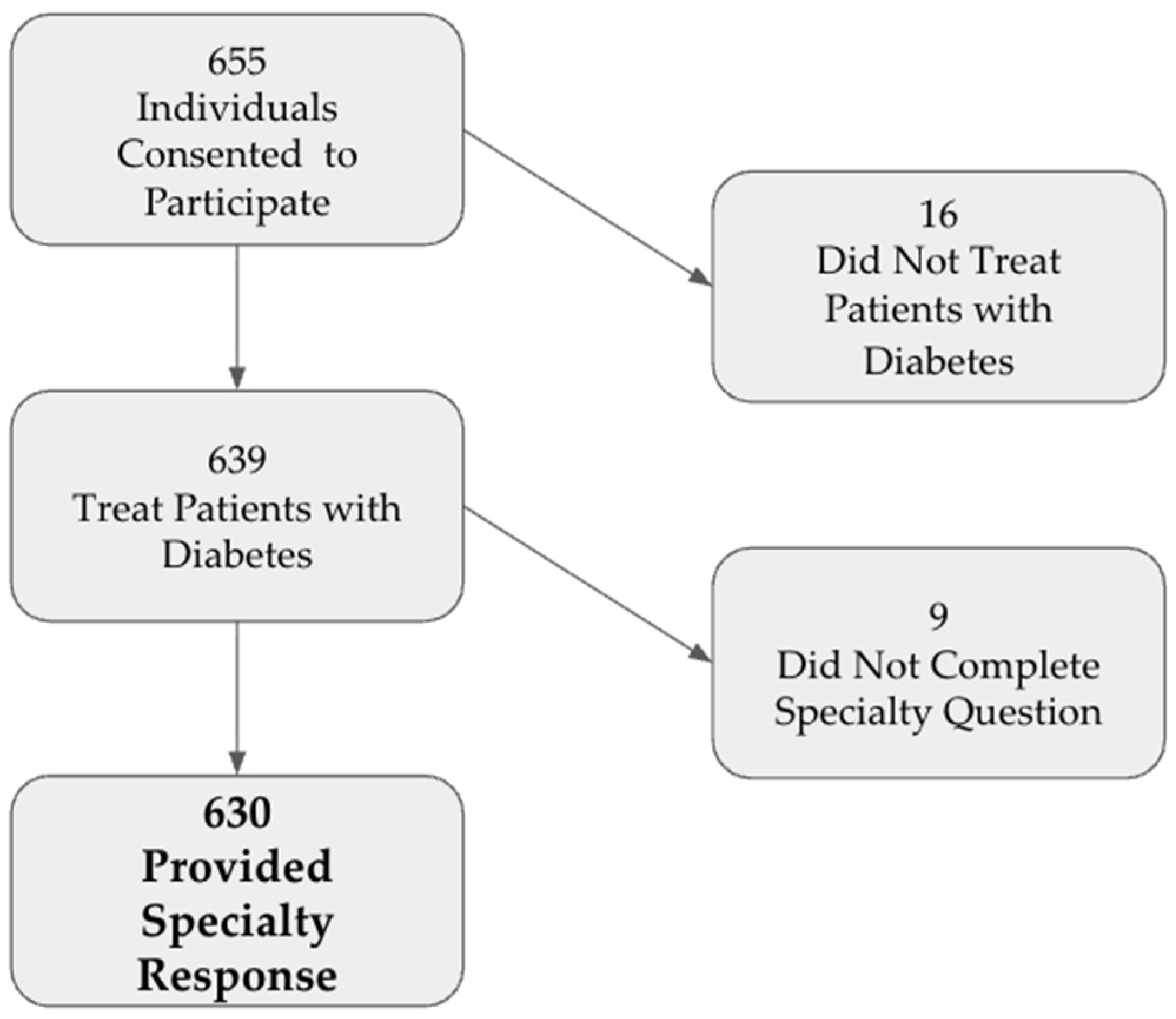
In total, 677 individuals began the survey as of 7 May 2024 and 22 did not consent to participate. Through the initial screening process, 630 responses related to practice specialty were recorded. Figure 1 demonstrates the flow of responses that were not deemed eligible for further data analysis.
The 630 responses that identified an area of practice were examined for further exclusion criteria. Table 1 documents responses by specialty that were further excluded from data analysis. Descriptors of the prevalence of diabetes in respondents’ practices are provided in Appendix B.
After cleaning invalid responses, including surveys completed in an extraordinarily fast manner (less than 30 s), 580/630 (92.1%) valid completions of the survey were analyzed. Independent of the TSB, nearly all doctors of podiatric medicine (DPM) and medical professionals involved in direct patient care (98.2%: 336/342) responded that they recommend supportive shoes for patients with diabetes. When asked about their knowledge of the TSB, 90% (522/580) of all survey respondents indicated awareness of this Medicare benefit. The distribution of answers by provider type is displayed in Table 2. When focusing on providers’ knowledge of TSB that are essential members of the documentation process, 13 participants that would count as certifying providers (primary care provider, endocrinologist, or vascular surgeon) responded to the survey but only 38.5% of the respondents knew of the benefit, compared to 92.6% of the prescribers (DPM) and 92.4% of professionals supplying the shoes (orthotists, etc.).
Across all survey respondents, complexity of documentation is reported as the largest barrier to using the TSB with 67.8% of respondents that have knowledge of the TSB indicating this as a challenge, as demonstrated in Figure 1 below. Communication with other providers was also a common challenge with 55% of respondents having noted communication as an issue. These two barriers were regularly cited as the largest concerns among all professions. Table 3 below lists all barriers and response rates; responses were not exclusive, and respondents were instructed to select all barriers that applied to them.

Secondary Findings

Participants in the study tended to know the least about the TSB if their patients reported financial barriers to high-quality shoe gear. Table 4 below documents the rates of knowledge of TSB based on the proportion of patients within a respondent’s practice who report financial concerns to accessing quality shoes.

4. Discussion

Overall knowledge of the TSB is high (90%) among medical professionals that interact with patients who have diabetes. The small number of certifiers makes their response of only 38.5% knowing about TSB unreliable compared to the larger responses from prescribers and suppliers who reported knowledge of the bill 96.2% and 96.4% of the time respectively.
It is also reassuring that even among the individuals who are not aware of the TSB, a majority of healthcare providers are recommending their patients with diabetes wear high-quality shoes (98.2%). (Note: The question asked about quality of shoes and did not specify between therapeutic or generic footwear.) However, several challenges exist in having healthcare providers help their patients gain the benefits of the TSB. The most commonly reported challenges included the complexity of documentation (reported by 67.8% of all survey respondents) and communication issues (reported by 55% of all survey respondents) in completing required verification. These two challenges compound on each other as providers must communicate well between specialties to complete the required documentation necessary to complete a shoe prescription.
Providers reporting patients with the highest rates of financial concerns tend to overlap with the providers that are not aware of the TSB. A possible explanation for this connection is that patients who are not offered shoes covered by insurance are more likely to speak up about financial troubles if they are recommended shoe gear but cannot afford it, given 98% of providers recommend supportive shoe gear to their patients. The highest rates of provider awareness of TSB is associated with less financial concern which supports this hypothesis. Because these shoes are a medical necessity for amputation prevention, it is important to expand awareness of TSB to providers to reduce economic factors leading to patients wearing inappropriate or over-worn shoes which increases risk of wounds and therefore amputation.

4.1. Implications of Findings

In the current political environment, where healthcare fraud is under increased scrutiny, providers may be more hesitant to complete verification of a patient’s diabetes mellitus (DM) status. This hesitancy may manifest as reluctance to certify patients not recently seen in clinic, and some providers have requirements for in-person visits despite prolonged wait times for routine care. Such barriers may disproportionately affect patients whose hemoglobin A1c (HbA1c) values fluctuate near diagnostic thresholds, particularly those transitioning between pre-diabetes and diabetes. An illustrative anecdotal scenario includes a patient with well-controlled diabetes and an HbA1c below 6% due to consistent monitoring, dietary modification, and medication adherence. This patient’s primary care provider was uncertain whether the patient qualified for the Therapeutic Shoe Benefit because of perceived disease control. Despite the patient’s DM being controlled at this time, it does not reverse the prior years of damage from elevated blood glucose. In fact, length of DM is an independent risk factor for DFU development [16]. This anecdotal scenario highlights how ambiguity regarding qualification criteria may result in incomplete documentation and delayed access to offloading footwear. In this study, documentation complexity was identified as the most significant barrier to therapeutic footwear access, with 67.8% of respondents citing it as a challenge. At present, the absence of standardized documentation further compounds this issue. Development of standardized certification forms could improve Medicare insurance beneficiaries’ access to therapeutic footwear by providing clear guidance regarding qualifying DM criteria, including whether historic or current HbA1c values meet certification requirements. Alternatively, allowing laboratory evidence of HbA1c values consistent with a DM diagnosis to satisfy certification requirements could reduce the administrative burden associated with multi-provider documentation. Streamlining the certification process in this manner may mitigate the primary barrier of documentation complexity and facilitate broader access to therapeutic footwear for patients at risk.

4.2. Limitations

This study is limited by a small overall sample size, particularly within the “Other Medical Providers” category. Although efforts were made to recruit a diverse group of healthcare professionals who interact with patients with diabetes, participation from certifying clinicians—those directly responsible for managing diabetes and verifying diagnosis—was limited. Greater representation from these providers may have offered additional insight into how documentation complexity and other identified barriers affect their ability or willingness to complete certification requirements. While the findings demonstrate differences in knowledge of the Therapeutic Shoe Bill (TSB) across practice types, the small subgroup sample sizes limit the generalizability of these results. Despite targeted recruitment of providers in roles essential to the certification process, the limited participation, especially by certifying providers (only five individuals), underscores the exploratory nature of this study and highlights the need for further research with broader and more representative participation.
Potential sources of bias in the study stem from its opt-in and self-reporting format. Responders were not asked to verify their responses with chart data, leaving opportunities for recall bias. Furthermore, all DPMs were evaluated as prescribers alone although they can also serve as suppliers. This was a data analysis decision that may omit more nuanced subgroup responses to the TSB. It is hypothesized that DPMs that serve both as suppliers and providers would have even higher rates of familiarity with the TSB.

4.3. Further Research

A continuation of this study or a new survey focused towards certifying providers would help to identify opportunities for education and/or communication support to prescribing providers in helping their patients receive shoes. This may provide concrete evidence to demonstrate that policy clarity or standardized forms would increase their participation in completion of required documentation in a shoe prescription. One area that warrants further research with certifying providers is understanding the cost to the provider to complete the verification of a patient’s DM diagnosis as this was of much higher concern to the Other Medical Provider demographic than DPMs. Perhaps an economic analysis of the reimbursement process would also give insight to systemic changes necessary to engage more providers in the TSB prescription process.
It would be valuable to assess patient knowledge of TSB as well. A well-informed patient is able to advocate for themselves and rely less on communication between providers if they know about the TSB. Patients may be better advocates for themselves during the reported arduous documentation process if they have a clear understanding of the requirements, which in turn could reduce provider complaints about communication issues. If overall patient knowledge of the bill is low, there may be a role for diabetic educators to assist in developing awareness of this benefit.

5. Conclusions

Diabetes increases the risk of foot ulcerations and amputations. Since the introduction of the Therapeutic Shoe Bill, Medicare patients have been able to get customized offloading shoes and/or inserts to reduce this risk. Recently prescriptions for therapeutic shoes have decreased. This study suggests that healthcare providers have decent knowledge of the Therapeutic Shoe Bill or at least believe that supportive shoes are important; however, the administrative burden of communicating with other healthcare professionals and reimbursement concerns are the leading reasons more patients are not offered this avenue of protective shoe gear. Through streamlined and more clearly defined parameters of requirements it is possible to increase access to therapeutic shoes to individuals at risk for wounds and amputation.

Author Contributions

Conceptualization, C.S.K.; methodology, C.S.K.; validation, C.S.K. and R.T.C.; formal analysis, C.S.K.; investigation, C.S.K.; resources, C.S.K.; data curation, C.S.K.; writing—original draft preparation, C.S.K.; writing—review and editing, R.T.C.; visualization, C.S.K.; supervision, R.T.C.; funding acquisition, C.S.K. All authors have read and agreed to the published version of the manuscript.

Funding

This research was funded by the American Podiatric Medical Student Association.

Institutional Review Board Statement

The study was conducted in accordance with the Declaration of Helsinki, and approved by the Institutional Review Board (or Ethics Committee) of Rosalind Franklin University of Medicine and Science (protocol code SCPM23-410, March 4, 2024).

Informed Consent Statement

Informed consent was obtained from all subjects involved in the study.

Data Availability Statement

The data presented in this study are available on request from the corresponding author to gain access due to restrictions mentioned during the IRB approval process.

Acknowledgments

The authors would like to thank Susan Huntington for her support and recommendations on statistical analysis. During the preparation of this manuscript/study, the author(s) used ChatGPT-5.2 and 5.3 for the purposes of proof reading and evaluation of writing quality. The authors have reviewed and edited the output and take full responsibility for the content of this publication.

Conflicts of Interest

The authors declare no conflicts of interest. The funders had no role in the design of the study; in the collection, analyses, or interpretation of data; in the writing of the manuscript; or in the decision to publish the results.

Abbreviations

The following abbreviations are used in this manuscript:
TSBTherapeutic Shoe Benefit
DMDiabetes Mellitus
DPMDoctor of Podiatric Medicine
PCPPrimary Care Provider
DFUDiabetic Foot Ulcer

Appendix A. Survey Questions

Section 1 (one question)
  • Do you treat patients with diabetes?
    a.
    Yes (Respondent continues to Section 2)
    b.
    No (Respondent directed to end of survey)
Section 2 (one question)
  • Which of the following most accurately defines your area of practice? (If you are an NP/PA please identify which practice you work in your career.)
    a.
    Vascular specialist (Respondent continues to Section 3.a)
    b.
    Physical Therapist (Respondent continues to Section 3.b)
    c.
    Certified diabetes educator (Respondent continues to Section 3.b)
    d.
    Primary care provider (Respondent continues to Section 3.a)
    e.
    Endocrinologist (Respondent continues to Section 3.a)
    f.
    Nephrologist (Respondent continues to Section 3.b)
    g.
    Wound care specialist—Non DPM (Respondent continues to Section 3.b)
    h.
    Doctor of Podiatric Medicine (Respondent continues to Section 3.c)
    i.
    Orthotist/prosthetist (Respondent continues to Section 3.d)
Section 3.a Certifying Providers (9 Questions)
  • In which state do you currently practice?
    a.
    State drop down selection
  • Which of the following best describes your practice facility?
    a.
    Hospital
    b.
    Private clinic
    c.
    Community clinic
  • What types of insurance do your patients most commonly carry?
    a.
    Private PPO
    b.
    Private HMO
    c.
    Medicare
    d.
    Medicaid
    e.
    Private payer
  • How many patients with diabetes do you see in a week?
    a.
    0–25
    b.
    25–50
    c.
    50–75
    d.
    75–100
    e.
    100 or more
  • How many patients with diabetes do you encounter weekly with wounds or history of wounds?
    a.
    0%
    b.
    25%
    c.
    50%
    d.
    75%
    e.
    100%
  • Do you recommend supportive or protective footwear to patients with diabetes?
    a.
    Yes
    b.
    No
  • At what point do you believe a person with diabetes would benefit from therapeutic shoe gear?
    a.
    Before wounds develop for prevention
    b.
    After wounds to help them heal
    c.
    After amputation or significant deformity to accommodate the shape of the foot
  • How frequently do patients mention finances as a barrier to protective shoe gear?
    a.
    100% of the time
    b.
    75% of the time
    c.
    50% of the time
    d.
    25% of the time
    e.
    0% of the time
    f.
    N/A do not discuss shoe gear
  • Are you familiar with Medicare’s Therapeutic Shoes for Persons with Diabetes benefit?
    a.
    Yes (Respondent continues to Section 4.a)
    b.
    No (Respondent directed to end of survey)
Section 3.b Other Medical Professionals (9 Questions)
  • In which state do you currently practice?
    a.
    State drop down selection
  • Which of the following best describes your practice facility?
    a.
    Hospital
    b.
    Private clinic
    c.
    Community clinic
  • What types of insurance do your patients most commonly carry?
    a.
    Private PPO
    b.
    Private HMO
    c.
    Medicare
    d.
    Medicaid
    e.
    Private payer
  • How many patients with diabetes do you see in a week?
    a.
    0–25
    b.
    25–50
    c.
    50–75
    d.
    75–100
    e.
    100 or more
  • How many patients with diabetes do you encounter weekly with wounds or history of wounds?
    a.
    0%
    b.
    25%
    c.
    50%
    d.
    75%
    e.
    100%
  • Do you recommend supportive or protective footwear to patients with diabetes?
    a.
    Yes
    b.
    No
  • At what point do you believe a person with diabetes would benefit from therapeutic shoe gear?
    a.
    Before wounds develop for prevention
    b.
    After wounds to help them heal
    c.
    After amputation or significant deformity to accommodate the shape of the foot
  • How frequently do patients mention finances as a barrier to protective shoe gear?
    a.
    100% of the time
    b.
    75% of the time
    c.
    50% of the time
    d.
    25% of the time
    e.
    0% of the time
    f.
    N/A do not discuss shoe gear
  • Are you familiar with Medicare’s Therapeutic Shoes for Persons with Diabetes benefit?
    a.
    Yes (Respondent continues to Section 4.b)
    b.
    No (Respondent directed to end of survey)
Section 3.c DPM (8 Questions)
  • In which state do you currently practice?
    a.
    State drop down selection
  • Which of the following best describes your practice facility?
    a.
    Hospital
    b.
    Private clinic
    c.
    Community clinic
  • What types of insurance do your patients most commonly carry?
    a.
    Private PPO
    b.
    Private HMO
    c.
    Medicare
    d.
    Medicaid
    e.
    Private payer
  • How many patients with diabetes do you see in a week?
    a.
    0–25
    b.
    25–50
    c.
    50–75
    d.
    75–100
    e.
    100 or more
  • How many patients with diabetes do you encounter weekly with wounds or history of wounds?
    a.
    0%
    b.
    25%
    c.
    50%
    d.
    75%
    e.
    100%
  • Do you recommend supportive or protective footwear to patients with diabetes?
    a.
    Yes
    b.
    No
  • How frequently do patients mention finances as a barrier to protective shoe gear?
    a.
    100% of the time
    b.
    75% of the time
    c.
    50% of the time
    d.
    25% of the time
    e.
    0% of the time
    f.
    N/A do not discuss shoe gear
  • Are you familiar with Medicare’s Therapeutic Shoes for Persons with Diabetes benefit?
    a.
    Yes (Respondent continues to Section 4.c)
    b.
    No (Respondent directed to end of survey)
Section 3.d Orthotist/Prosthetist (7 Questions)
  • In which state do you currently practice?
    a.
    State drop down selection
  • Which of the following best describes your practice facility?
    a.
    Hospital
    b.
    Private clinic
    c.
    Community clinic
    d.
    Large commercial shoe supply store
    e.
    Privately owned shoe supply store
  • What types of insurance do your patients most commonly carry?
    a.
    Private PPO
    b.
    Private HMO
    c.
    Medicare
    d.
    Medicaid
    e.
    Private payer
  • How many patients with diabetes do you see in a week?
    a.
    0–25
    b.
    25–50
    c.
    50–75
    d.
    75–100
    e.
    100 or more
  • What percentage of your patients getting therapeutic shoes are replacing previous therapeutic shoes?
    a.
    100% of the time
    b.
    75% of the time
    c.
    50% of the time
    d.
    25% of the time
    e.
    <25% of the time
  • How frequently do patients mention finances as a barrier to protective shoe gear?
    a.
    100% of the time
    b.
    75% of the time
    c.
    50% of the time
    d.
    25% of the time
    e.
    0% of the time
    f.
    N/A do not discuss shoe gear
  • Are you familiar with Medicare’s Therapeutic Shoes for Persons with Diabetes benefit?
    a.
    Yes (Respondent continues to Section 4.d)
    b.
    No (Respondent directed to end of survey)
Section 4.a Certifying Providers (4 Questions)
  • Which of the following roles do/would you most likely fill under Medicare’s Therapeutic Shoes for Persons with Diabetes benefit?
    a.
    Certifying provider
    b.
    Prescribing provider
    c.
    Supplying provider
  • If you serve as a certifying provider, for what proportion of your likely eligible patients is the prescription process initiated?
    a.
    Offered to 100% of patients that qualify
    b.
    Offered to 75% of patients that qualify
    c.
    Offered to 50% of patients that qualify
    d.
    Offered to 25% of patients that qualify
    e.
    Offered to 0% of patients that qualify
  • How often do you discuss or refer patients to use Medicare’s Therapeutic Shoes for Persons with Diabetes benefit to help them access protective shoe gear?
    a.
    100% of patients
    b.
    75% of patients
    c.
    50% of patients
    d.
    25% of patients
    e.
    <25% of patients
    f.
    Not applicable (do not serve as certifying provider)
  • What barriers prevent you from utilizing or recommending services under Medicare’s Therapeutic Shoes for Persons with Diabetes benefit?
    a.
    Lack of awareness
    b.
    Unclear who qualifies
    c.
    Complexity of documentation
    d.
    Financial reasons-labor-to-reimbursement ratio
    e.
    Financial reasons-risk of non-reimbursement
    f.
    Patient resistance
    g.
    Challenges communicating with other providers
(END OF SURVEY)
Section 4.b Other Medical Professionals (3 Questions)
  • Which of the following roles do/would you most likely fill under Medicare’s Therapeutic Shoes for Persons with Diabetes benefit?
    a.
    Certifying provider
    b.
    Prescribing provider
    c.
    Supplying provider
  • How often do you discuss or refer patients to use Medicare’s Therapeutic Shoes for Persons with Diabetes benefit to help them access protective shoe gear?
    a.
    100% of patients
    b.
    75% of patients
    c.
    50% of patients
    d.
    25% of patients
    e.
    <25% of patients
    f.
    Not applicable (do not serve as certifying provider)
  • What barriers prevent you from utilizing or recommending services under Medicare’s Therapeutic Shoes for Persons with Diabetes benefit?
    a.
    Lack of awareness
    b.
    Unclear who qualifies
    c.
    Complexity of documentation
    d.
    Financial reasons-labor-to-reimbursement ratio
    e.
    Financial reasons-risk of non-reimbursement
    f.
    Patient resistance
    g.
    Challenges communicating with other providers
(END OF SURVEY)
Section 4.c DPM (4 Questions)
  • Which of the following roles do/would you most likely fill under Medicare’s Therapeutic Shoes for Persons with Diabetes benefit?
    a.
    Certifying provider
    b.
    Prescribing provider
    c.
    Supplying provider
  • How often do you discuss or refer patients to use Medicare’s Therapeutic Shoes for Persons with Diabetes benefit to help them access protective shoe gear?
    a.
    100% of patients
    b.
    75% of patients
    c.
    50% of patients
    d.
    25% of patients
    e.
    <25% of patients
    f.
    Not applicable (do not serve as certifying provider)
  • If you serve as a prescribing practitioner, for what proportion of your likely eligible patients is the prescription process initiated?
    a.
    100% of patients
    b.
    75% of patients
    c.
    50% of patients
    d.
    25% of patients
    e.
    <25% of patients
    f.
    Not applicable (do not serve as prescribing practitioner)
  • What barriers prevent you from utilizing or recommending services under Medicare’s Therapeutic Shoes for Persons with Diabetes benefit?
    a.
    Lack of awareness
    b.
    Unclear who qualifies
    c.
    Complexity of documentation
    d.
    Financial reasons-labor-to-reimbursement ratio
    e.
    Financial reasons-risk of non-reimbursement
    f.
    Patient resistance
    g.
    Challenges communicating with other providers
(END OF SURVEY)
Section 4.d Orthotist/Prosthetist (1 Question)
  • What barriers prevent you from utilizing or recommending services under Medicare’s Therapeutic Shoes for Persons with Diabetes benefit?
    a.
    Lack of awareness
    b.
    Unclear who qualifies
    c.
    Complexity of documentation
    d.
    Financial reasons-labor-to-reimbursement ratio
    e.
    Financial reasons-risk of non-reimbursement
    f.
    Patient resistance
    g.
    Challenges communicating with other providers
(END OF SURVEY)

Appendix B. Additional Survey Responses

Table A1. How many patients with diabetes are seen in a week?
ProfessionNumber of
Responses
0–25
n/N (%)
26–50
n/N (%)
51–75
n/N (%)
76–100
n/N (%)
Over 100
n/N (%)
Doctor of Podiatric Medicine (DPM) (Prescriber)29663/296 (21.3)116/296 (39.2)72/296 (24.3)29/296 (9.8)15/296 (5.1)
Orthotist/Prosthetist/Pedorthist (Supplier)238152/238 (63.9)69/238 (29.0)14/238 (5.9)4/238 (1.7)0/238 (0.0)
Primary Care Provider (PCP)32/3 (66.7) 0/3 (0.0)1/3 (33.3)0/3 (0.0)0/3 (0.0)
Vascular Specialist73/7 (42.9)3/7 (42.9)0/7 (0.0)0/7 (0.0)1/7 (14.3)
Endocrinologist31/3 (33.3)2/3 (66.7) 0/3 (0.0)0/3 (0.0)0/3 (0.0)
Certified Diabetes Educator102/10 (20.0)2/10 (20.0)4/10 (40.0)2/10 (20.0)0/10 (0.0)
Physical Therapist1411/14 (78.60/14 (0.0)2/14 (14.3)1/14 (7.1)0/14 (0.0)
Wound Care Specialist (Non-DPM)95/9 (55.6)2/9 (22.2)1/9 (11.1)0/9 (0.0)1/9 (11.1)
Total Survey Responses580239/580 (41.2)194/580 (33.4)94/580 (16.2)36/580 (6.2)17/580 (2.9)
Table A2. How many patients with diabetes do you encounter weekly with wounds or history of wounds?
ProfessionNumber of
Responses
0–20
n/N (%)
21–40
n/N (%)
41–60
n/N (%)
61–80
n/N (%)
Over 81
n/N (%)
Doctor of Podiatric Medicine (DPM) (Prescriber)296190/296 (64.2)75/296 (25.3)26/296 (8.7)2/296 (0.7)3/296 (1.0)
Orthotist/Prosthetist/Pedorthist (Supplier)238 *204/238 (85.7)33/238 (13.9)0/238 (0.0)0/238 (0.0)0/238 (0.0)
Primary Care Provider (PCP)33/3 (100.0)0/3 (0.0)0/3 (0.0)0/3 (0.0)0/3 (0.0)
Vascular Specialist74/7 (57.1)1/7 (14.3)1/7 (14.3)0/7 (0.0)1/7 (14.3)
Endocrinologist33/3 (100.0)0/3 (0.0)0/3 (0.0)0/3 (0.0)0/3 (0.0)
Certified Diabetes Educator102/10 (20.0)1/10 (10.0)5/10 (50.0)2/10 (20.0)0/10 (0.0)
Physical Therapist1411/14 (78.6)1/14 (7.1)2/14 (14.3)0/11 (0.0)0/11 (0.0)
Wound Care Specialist (Non-DPM)96/9 (66.7)0/9 (0.0)1/9 (11.1)0/9 (0.0)2/9 (22.2)
Total Survey Responses580423/580 (72.9)110/580 (19.0)35/580 (6.0)4/580
(0.7)
6/580
(1.0)
* One Orthotist/Prosthetist/Pedorthist reported “unsure” which is why the values for this profession do not add up to total number of responses.

References

  1. Armstrong, D.G.; Boulton, A.J.M.; Bus, S.A. Diabetic foot ulcers and their recurrence. N. Engl. J. Med. 2017, 376, 2367–2375. [Google Scholar] [CrossRef] [PubMed]
  2. Saelee, R.; Bullard, K.M.; Hora, I.A.; Pavkov, M.E.; Pasquel, F.J.; Holliday, C.S.; Benoit, S.R. Trends and inequalities in diabetes-related complications among U.S. adults, 2000–2020. Diabetes Care 2024, 48, 18–28. [Google Scholar] [CrossRef] [PubMed]
  3. Zhou, X.; Andes, L.J.; Rolka, D.B.; Imperatore, G.; Benoit, S.R. Trends in nontraumatic lower-extremity amputation among privately insured adults with diabetes in the U.S., 2004–2018. Diabetes Care 2021, 44, e93–e94. [Google Scholar] [CrossRef] [PubMed]
  4. Bus, S.A.; van Netten, J.J. A shift in priority in diabetic foot care and research: 75% of foot ulcers are preventable. Diabetes/Metab. Res. Rev. 2016, 32, 195–200. [Google Scholar] [CrossRef] [PubMed]
  5. Wu, S.C.; Crews, R.T.; Armstrong, D.G. The pivotal role of offloading in the management of neuropathic foot ulceration. Curr. Diabetes Rep. 2005, 5, 423–429. [Google Scholar] [CrossRef] [PubMed]
  6. Bus, S.A.; Sacco, I.C.N.; Monteiro-Soares, M.; Raspovic, A.; Paton, J.; Rasmussen, A.; Lavery, L.A.; van Netten, J.J. Guidelines on the prevention of foot ulcers in persons with diabetes (IWGDF 2023 update). Diabetes/Metab. Res. Rev. 2024, 40, e3651. [Google Scholar] [CrossRef] [PubMed]
  7. Janisse, D.J. The Therapeutic Shoe Bill: Medicare coverage for prescription footwear for diabetic patients. Foot Ankle Int. 2005, 26, 42–45. [Google Scholar] [CrossRef] [PubMed]
  8. Hingorani, A.; LaMuraglia, G.M.; Henke, P.; Meissner, M.H.; Loretz, L.; Zinszer, K.M.; Driver, V.R.; Frykberg, R.; Carman, T.L.; Marston, W.; et al. The management of diabetic foot: A clinical practice guideline by the Society for Vascular Surgery in collaboration with the American Podiatric Medical Association and the Society for Vascular Medicine. J. Vasc. Surg. 2016, 63, 3S–21S. [Google Scholar] [CrossRef] [PubMed]
  9. American Diabetes Association Professional Practice Committee. Retinopathy, neuropathy, and foot care: Standards of care in diabetes—2024. Diabetes Care 2024, 47, S231–S243. [Google Scholar] [CrossRef] [PubMed]
  10. van Netten, J.J.; Raspovic, A.; Lavery, L.A.; Monteiro-Soares, M.; Paton, J.; Rasmussen, A.; Sacco, I.C.N.; Bus, S.A. Prevention of foot ulcers in persons with diabetes at risk of ulceration: A systematic review and meta-analysis. Diabetes/Metab. Res. Rev. 2024, 40, e3652. [Google Scholar] [CrossRef] [PubMed]
  11. McDermott, K.; Fang, M.; Boulton, A.J.; Selvin, E.; Hicks, C.W. Etiology, epidemiology, and disparities in the burden of diabetic foot ulcers. Diabetes Care 2023, 46, 209–221. [Google Scholar] [CrossRef] [PubMed]
  12. Brunner, J.E. Does your patient need diabetic therapeutic footwear? Where benefit, evidence, and bureaucracy collide. Clin. Diabetes 2015, 33, 51–53. [Google Scholar] [CrossRef] [PubMed][Green Version]
  13. Pinzur, M.S.; Shields, N.N.; Goelitz, B.; Slovenkai, M.; Kaye, R.; Ross, S.D.; Suri, M. American Orthopaedic Foot and Ankle Society shoe survey of diabetic patients. Foot Ankle Int. 1999, 20, 703–707. [Google Scholar] [CrossRef] [PubMed]
  14. White, J. Therapeutic shoes for diabetics are proven to be helpful: So why aren’t they prescribed more? Here’s how to tackle the barriers to patient usage. Podiatry Manag. 2022, 41, 73–81. [Google Scholar]
  15. Anderson, M.; Arvidson, C. Nurse practitioners and barriers to diabetic foot treatment. J. Am. Assoc. Nurse Pract. 2020, 32, 795–799. [Google Scholar] [CrossRef] [PubMed]
  16. Tang, W.; Zhao, Y.; Cheng, Z.; Xu, J.; Zhang, Y.; Liu, X. Risk factors for diabetic foot ulcers: A systematic review and meta-analysis. Vascular 2023, 32, 661–669. [Google Scholar] [CrossRef] [PubMed]
Figure 1. Flow diagram of responses ineligible for inclusion.
Japma 116 00032 g001
Table 1. Excluded responses by specialty.
SpecialtyTotal ResponsesNot in USA n/N (%)Incomplete Survey
n/N (%)
Final Included
Responses
n/N (%)
Doctor of Podiatric Medicine (DPM) (Prescriber)3046/304 (2.0)2/304 (0.7)296/304 (96.7)
Orthotist/Prosthetist/Pedorthist (Supplier)2587/258 (2.7)13/258 (5.0)238/258 (92.2)
Certifying Health Professional (Certifier) (Total )293/29 (10.3)13/29 (44.8)13/29 (44.8)
Primary Care Provider (PCP)142/14 (14.3)9/14 (64.3)3/14 (21.4)
Vascular Specialist80/8 (0.0)1 /8 (12.5)7/8 (87.5)
Endocrinologist71/7 (14.3)3/7 (42.9)3/7 (42.9)
Other Medical Professions (Total ‡)390/39 (0.0)6/39 (15.4)33/39 (84.6)
Certified Diabetes Educator140/14 (0.0)4/14 (28.6)10/14 (71.4)
Physical Therapist140/14 (0.0)0/14 (0.0)14/14 (100.0)
Wound Care Specialist (Non-DPM)100/10 (0.0)1/10 (10.0)9/10 (90.0)
Nephrologist10/1 (0.0)1/1 (100.0)0/1 (0.0)
Overall Total Responses63016/630 (2.5)34/630 (5.4)580/630 (92.1)
† Certifying Health Professionals include: primary care provider, vascular specialist, and endocrinologist. ‡ Other Medical Professions are calculated as a total of the professions: Certified Diabetes Educator, Physical Therapist, and Wound Care Specialist.
Table 2. Footwear recommendation and TSB knowledge among surveyed healthcare professionals.
ProfessionNumber of
Responses
Respondents Recommending Footwear, n/N (%)Knowledge of TSB, n/N (%)
Doctor of Podiatric Medicine (DPM) (Prescriber)296293/296 (99.0)274/296 (92.6)
Orthotist/Prosthetist/Pedorthist (Supplier)238N/A *220/238 (92.4)
Certifying Health Professional (Certifier) (Total †)1313/13 (100.0)5/13 (38.5)
Primary Care Provider (PCP)33/3 (100.0) **1/3 (33.3)
Vascular Specialist77/7 (100.0)3/7 (42.9)
Endocrinologist33/3 (100.0) ***1/3 (33.3)
TSB Documentation Subgroup (Total ‡)547306/309 (99.0)499/547 (91.2)
Other Medical Professions (Total ‡‡)3330/33 (91.0)23/33 (69.7)
Certified Diabetes Educator1010/10 (100)10/10 (100.0)
Physical Therapist1411/14 (78.6)8/14 (57.1)
Wound Care Specialist (Non-DPM)99/9 (100.0)5/9(55.6)
Overall Total580336/342 (98.2)522/580 (90.0)
* Because this group does not prescribe footwear they were not asked this question. ** Three individuals reported “maybe” of the primary care providers. *** One individual reported “maybe” in the endocrinologist specialty. † Certifying Health Professionals include: primary care provider, vascular specialist, and endocrinologist. ‡ TSB Documentation Subgroup includes the categories: Doctor of Podiatric Medicine, Orthotist/Prosthetist/Pedorthist, and Certifying Health Professional. ‡‡ Other Medical Professions are calculated as a total of the professions: Certified Diabetes Educator, Physical Therapist, and Wound Care Specialist.
Table 3. Barriers to accessing TSB.
ProfessionNCommunicationFinancial—
Labor
Financial—
Risk
DocumentationLack of Qualifying ProvidersLack of Prescribing ProvidersPatient ResistanceUnclear EligibilityUnclear RoleLack of Awareness
DPM (Prescriber)261143 (54.8%)76 (29.1%)86 (33.0%)139 (53.3%)0 (0%)0 (0%)97 (37.2%)25 (9.6%)0 (0%)18 (6.9%)
Orthotist/Prosthetist/Pedorthist216122 (56.5%)105 (48.6%)86 (39.8%)190 (88.0%)81 (37.5%)25 (11.6%)29 (13.4%)0 (0%)0 (0%)0 (0%)
Certifying Health Professionals51 (20.0%)1 (20.0%)1 (20.0%)2 (40.0%)0 (0%)0 (0%)2 (40.0%)1 (20.0%)1 (20.0%)2 (40.0%)
Other Medical Professions189 (50.0%)10 (55.6%)9 (50.0%)8 (44.4%)0 (0%)0 (0%)5 (27.8%)6 (33.3%)2 (11.1%)4 (22.2%)
Total500275 (55.0%)192 (38.4%)182 (36.4%)339 (67.8%)81 (16.2%)25 (5.0%)133 (26.6%)32 (6.4%)3 (0.6%)24 (4.8%)
Footnote: Respondents could select multiple barriers; percentages represent the proportion of respondents within each profession selecting each barrier. For ease of reading and due to small sample sizes, Certifying Health Professionals (primary care providers, vascular specialists, and endocrinologists) are reported as one category. Similarly, Other Medical Professionals (physical therapists, diabetes educators, and wound care specialists) are combined in this table.
Table 4. Patient financial concern and knowledge of TSB.
Respondents’ Self-Reported
Proportion of Patients Treated with Financial Barriers
Knowledge of TSBTotal
NoNo %YesYes %
0% of the time68.76391.369
25% of the time84.616695.4174
50% of the time147.816592.2179
75% of the time2015.610784.4127
100% of the time625.01875.024
Total549.451990.6573
Disclaimer/Publisher’s Note: The statements, opinions and data contained in all publications are solely those of the individual author(s) and contributor(s) and not of MDPI and/or the editor(s). MDPI and/or the editor(s) disclaim responsibility for any injury to people or property resulting from any ideas, methods, instructions or products referred to in the content.