1. Introduction
Plantar fasciitis is one of the most common causes of heel pain in adults, affecting approximately 10% of the population [
1]. It results from chronic overloading of the plantar fascia. The condition is characterized by intense pain in the medial plantar aspect of the heel, which sharpens with the first steps in the morning or after rest and increases during weight-bearing activities [
2]. Despite the availability of various treatment options for plantar fasciitis, it may remain resistant to therapy, potentially leading to patient dissatisfaction [
3]. Most cases are managed with non-surgical interventions; however, recurrence of pain is frequent [
4]. In patients with severe plantar fasciitis, the risk of persistent plantar fasciitis is 50.0% at 5 years, 45.6% at 10 years, and 44.0% at 15 years after symptom onset [
5].
Google Trends data can serve as a valuable supplementary resource for public health planning. It has previously been used to track public interest in electronic cigarette use, monitor influenza outbreaks, and analyze attitudes toward abortion. By providing real-time insights into population behaviors, it may support healthcare policymakers in developing timely and targeted health strategies [
6]. Data obtained through the internet creates unconventional opportunities for medical research. The analysis of Google search queries can help identify unmet health needs within a population, which would otherwise require comprehensive epidemiological studies [
7]. Analyzing the popularity of a specific disease plays a significant role in the development, implementation, management, and facilitation of scientific practices and educational programs aimed at meeting the needs of various organizations, companies, academic institutions, and patients [
8]. One method, and perhaps the most significant, for measuring public interest in plantar fasciitis is analyzing internet search traffic data. Google Trends, an open-source tool, offers a method to monitor public interest in specific search terms entered into the Google search engine [
9]. Previous literature has linked Google Trends data to actual healthcare utilization for a wide range of medical procedures, demonstrating the potential benefits of this approach [
10,
11,
12].
Based on the information outlined above, this study aims to monitor public interest in information related to plantar fasciitis and to examine potential temporal, seasonal, and income-related trends that may influence public interest in plantar fasciitis. The study utilizes the Google Trends tool to provide insights for patient counseling, shared decision-making processes, and future clinical studies.
2. Materials and Methods
When a search term is entered, Google Trends (Google LLC, Mountain View, CA, USA) visualizes the search volume based on its peak popularity within the defined time period. The data is presented as relative search volume (RSV), calculated as a percentage of searches for a term in a specific location during a given period. RSV values in Google Trends range from 0 to 100, representing search interest across different regions and time periods. An RSV of 0 indicates that search queries for the term were not popular enough, accounting for less than 1% of the highest RSV. An RSV of 50 signifies that the search term was half as popular, whereas an RSV of 100 denotes the peak popularity of the term [
13].
The primary output of this study is the public interest in plantar fasciitis as reflected in RSV data obtained from Google Trends. To investigate variations in public interest in plantar fasciitis, a dataset was created using the keyword “Plantar Fasciitis” to retrieve search volume data in the USA and globally from 2004 to the present. This search was conducted on 2 January 2025. A linear growth model was constructed to demonstrate changes in public interest over time. Additionally, regression analysis was performed to determine whether the public interest in plantar fasciitis had significantly increased over time [
9,
14].
To identify seasonal variations in public interest in plantar fasciitis, monthly Google Trends values from 2004 onward were grouped by months and seasons (Winter: December–February, Spring: March–May, Summer: June–August, Fall: September–November) for the USA and globally. Seasonal trends in public interest in plantar fasciitis were documented, and the statistical significance of variations in RSV values was assessed.
Furthermore, to explore potential income-related disparities in public interest in plantar fasciitis within the USA, data were recorded for the five states with the highest median income (Maryland, New Hampshire, New Jersey, Utah, Washington) and the five states with the lowest median income (Mississippi, West Virginia, Arkansas, New Mexico, Kentucky) [
15]. The RSV data for the highest-income and lowest-income states were separately averaged, and “High-Income Growth Model” and “Low-Income Growth Model” were developed. Growth trends in public interest in plantar fasciitis for both income groups were evaluated. The RSV data were analyzed to assess statistical significance.
Statistical Analysis
All statistical analyses were performed using IBM SPSS Statistics v25.0 (IBM Corp., Armonk, NY, USA) software. The normality of the data was evaluated using the Shapiro–Wilk test. As some groups (months and seasons) did not meet the assumption of normal distribution (p < 0.05), the Kruskal–Wallis test was employed to evaluate overall differences among groups. For pairwise comparisons between months and seasons, the Mann–Whitney U test was applied to identify specific significant differences. Descriptive statistics, including mean and standard deviation, were calculated for each month and season to summarize the data. A p-value of <0.05 was considered statistically significant for all tests.
3. Results
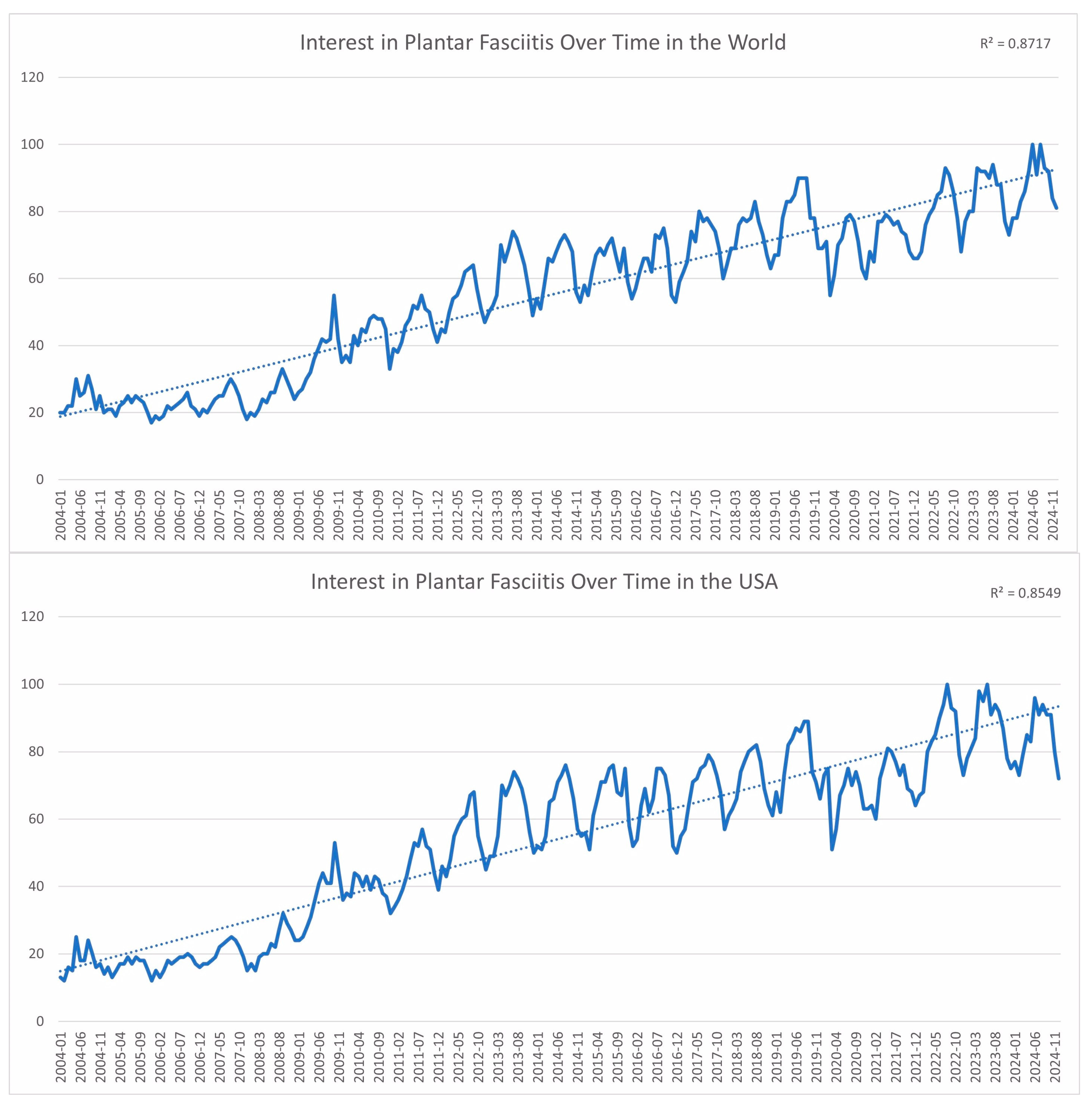
The RSV values indicate that the search volume for plantar fasciitis has steadily increased over the years, both in the USA and globally. A linear regression model demonstrated that public interest in plantar fasciitis has significantly increased over time in the USA (R
2 = 0.854,
p < 0.001) and globally (R
2 = 0.871,
p < 0.001) (
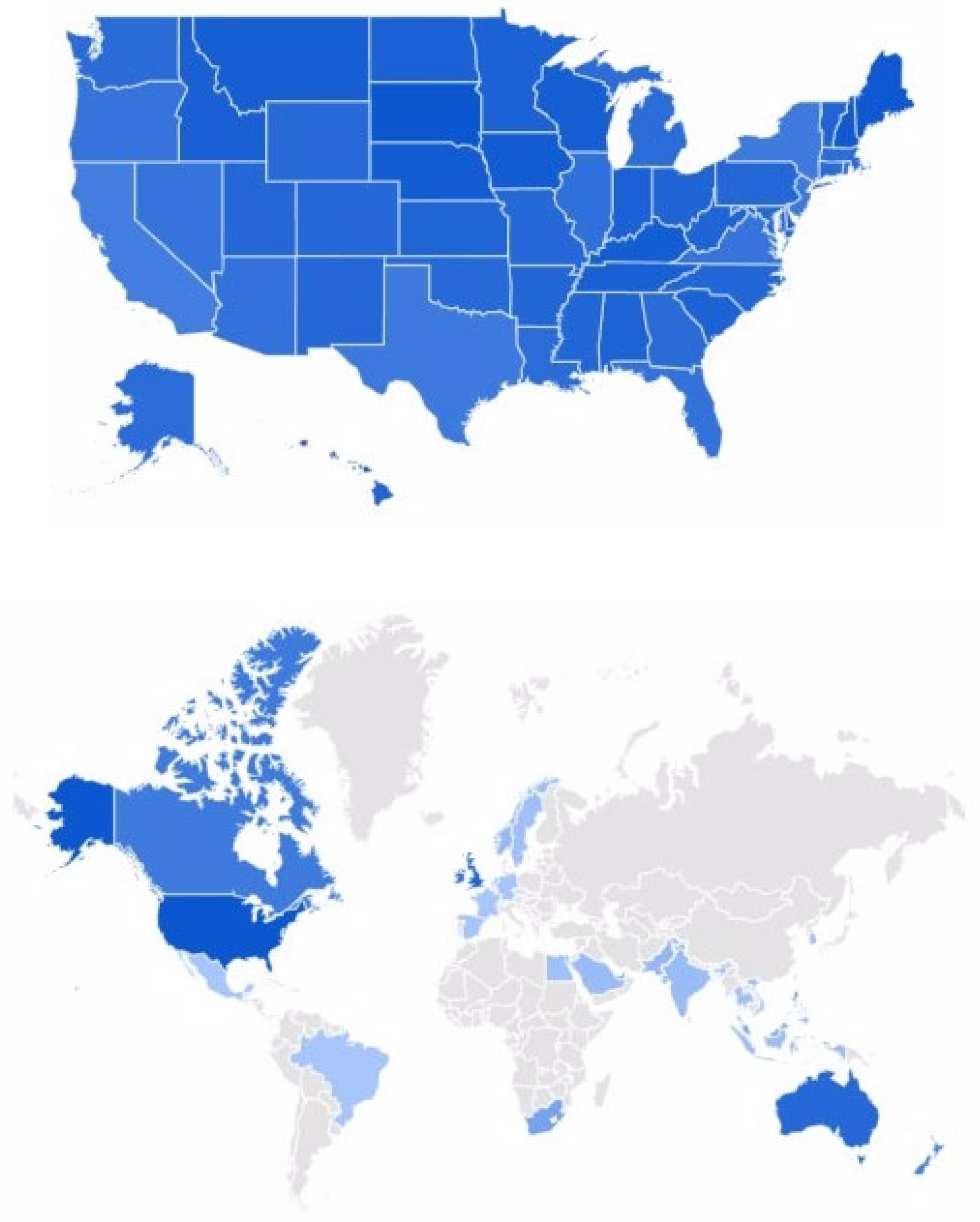
Figure 1). The distribution of public interest in plantar fasciitis was visualized using color intensity across states in the USA and worldwide (
Figure 2).
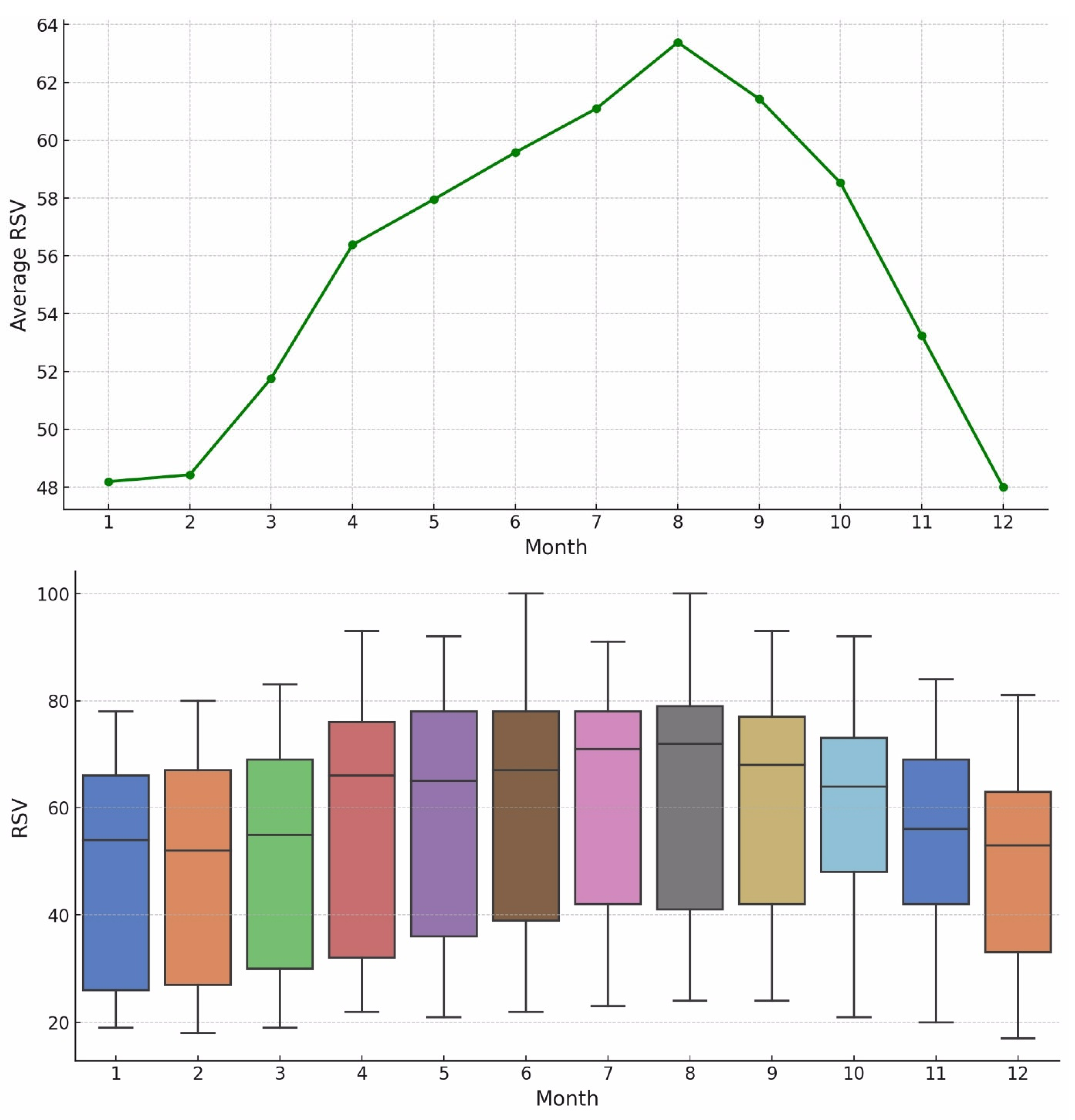
The highest average Google search volume worldwide was observed in August. No statistically significant difference was found between the months of the year in terms of Google search volumes (
p = 0.071) (
Table 1). The monthly average RSV values and their distribution are graphically visualized (
Figure 3).
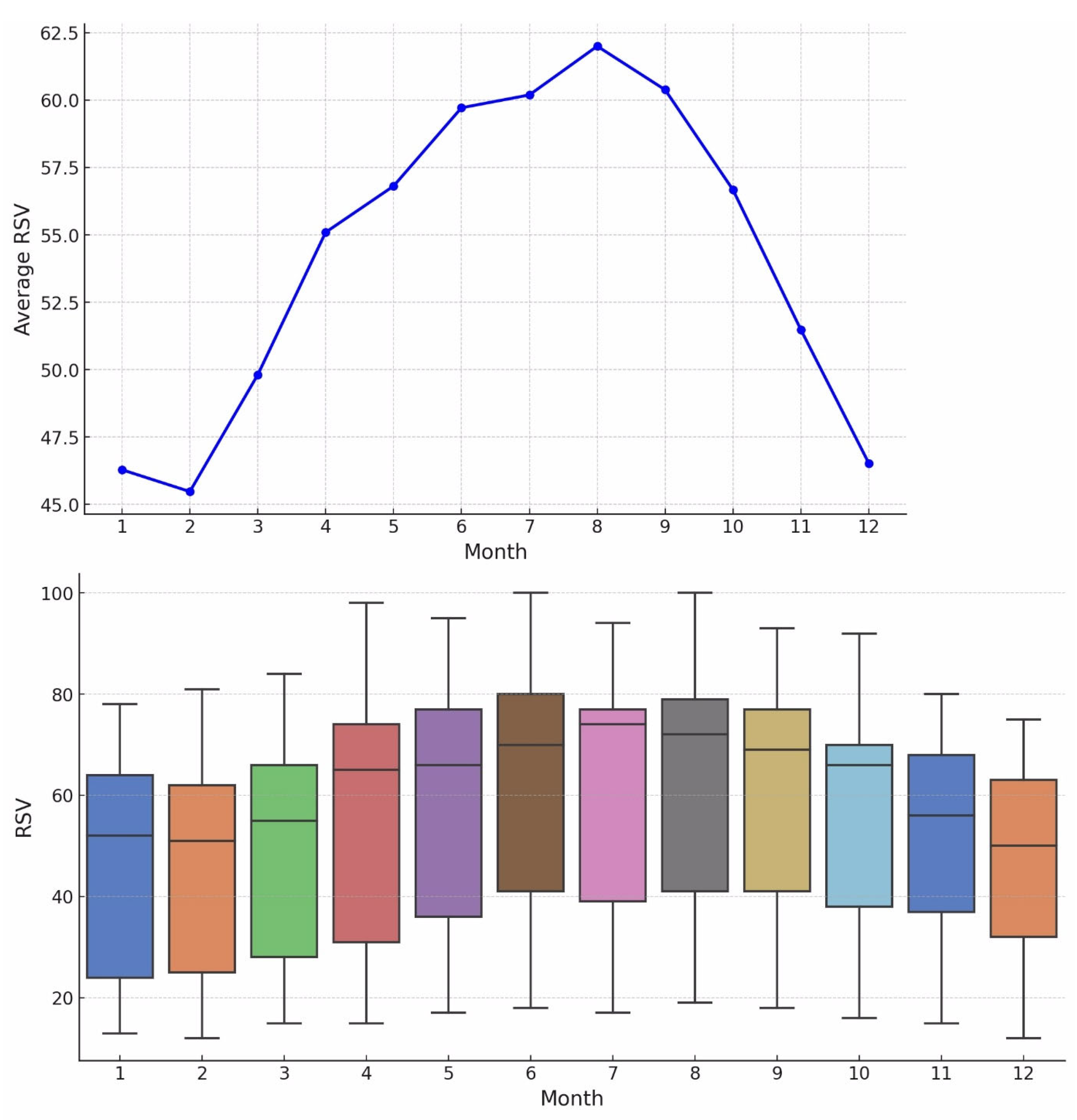
In the USA, the highest average Google search volume was observed in August, while the lowest search volume was recorded in February. Statistically significant differences were found between the months of the year in terms of Google search volumes (
p < 0.05) (
Table 2). To identify which months exhibited significant differences in Google search volumes, a post hoc analysis was performed. The results of the post hoc analysis, indicating the months with significant differences, are presented in
Table 3. The monthly average RSV values and their distribution are graphically visualized (
Figure 4).
Statistically significant differences were observed between seasons in terms of Google search volumes both worldwide (
Table 4) and in the USA (
Table 5) (
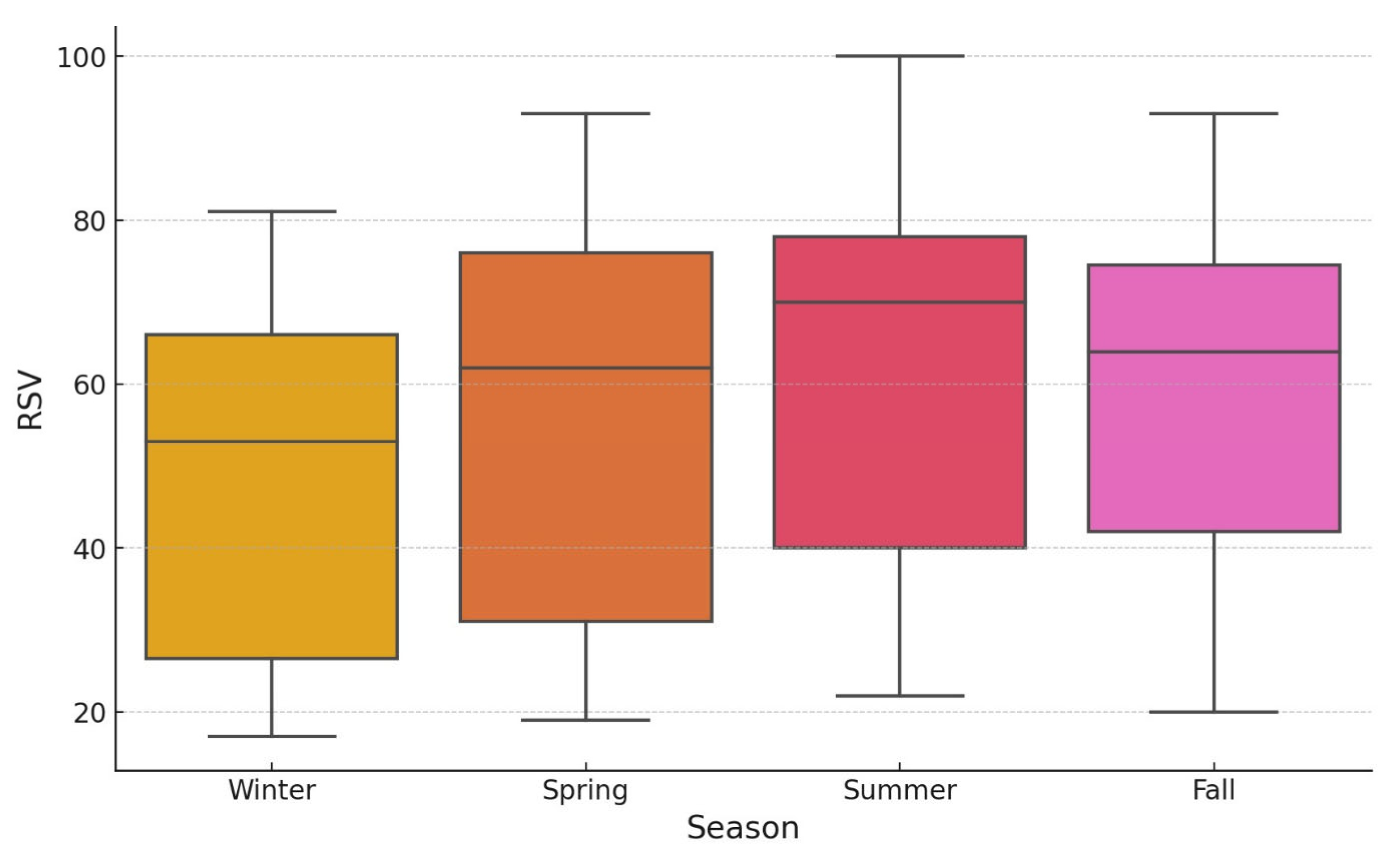
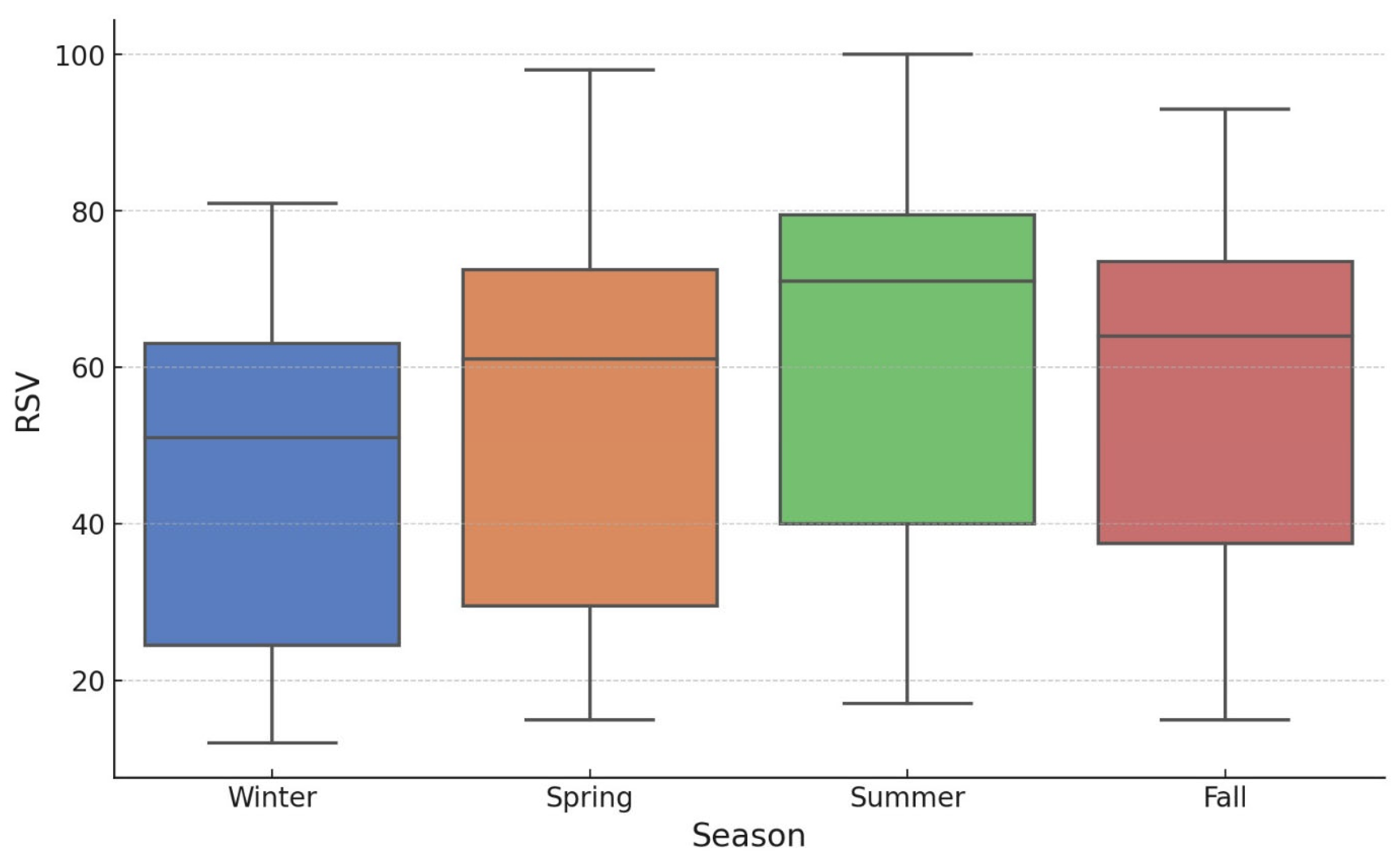
p < 0.05). In both datasets, the highest average search volume occurred during the summer, while the lowest was recorded during the winter. Post hoc analyses were conducted to determine which seasons differed significantly (
Table 6 for global data,
Table 7 for USA data). In both cases, winter search volumes were significantly lower than those in spring, summer, and fall, whereas no significant differences were found among the other three seasons. The most prominent seasonal difference was observed between winter and summer (global:
p = 0.0003; USA:
p = 0.0001). The intensity and distribution of seasonal search volumes are illustrated in
Figure 5 and
Figure 6.
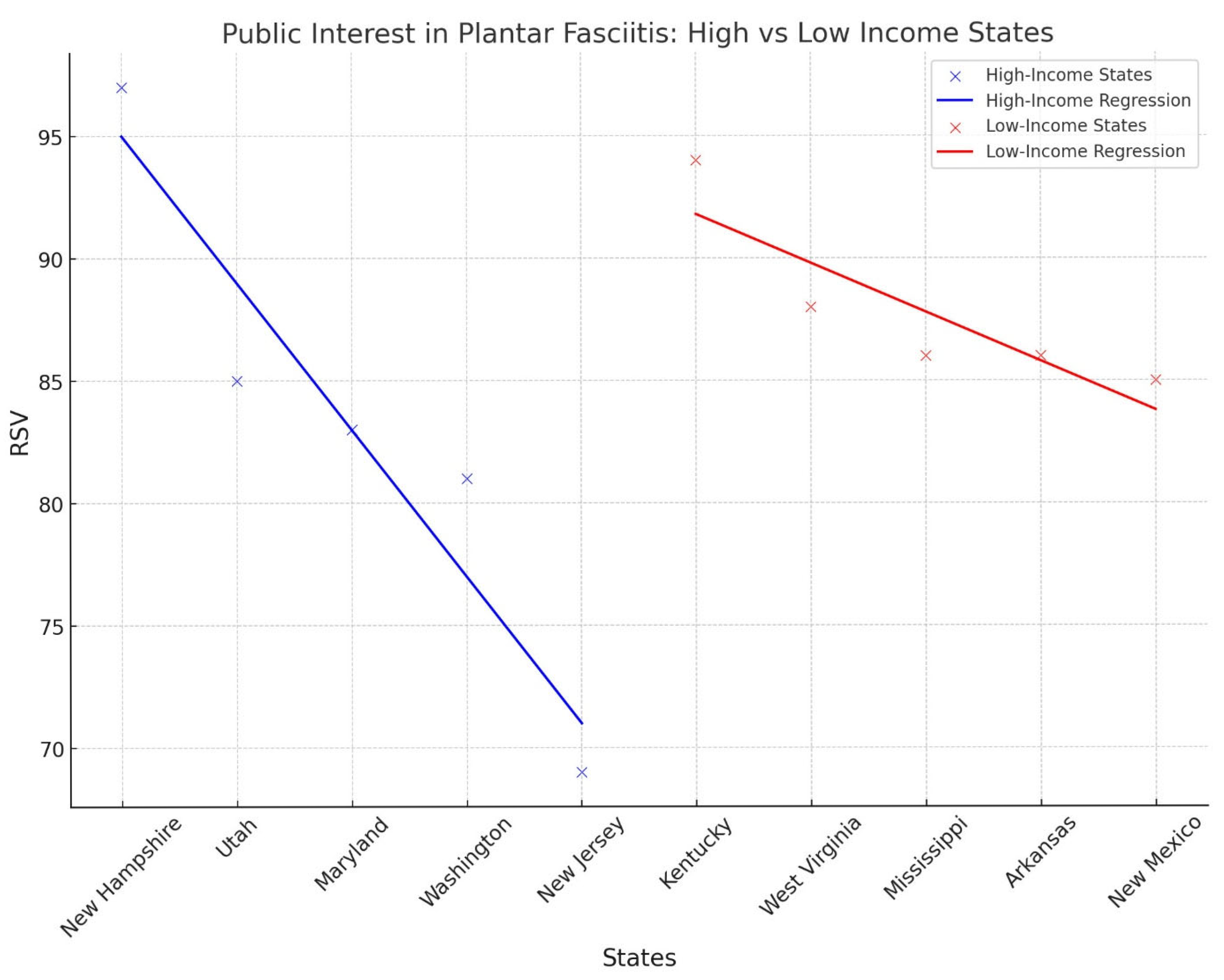
An analysis comparing the RSV values between high-income and low-income states in the USA indicated that there was no statistically significant difference in public interest in plantar fasciitis between these two groups (
p > 0.05). The results, along with visual representations of the data, are presented in
Table 8 and
Figure 7.
4. Discussion
The findings of this study demonstrate a strong upward trend in searches related to plantar fasciitis both in the USA and globally. While seasonal search trends showed statistically significant differences in both the USA and worldwide, monthly search trends were only statistically significant within the USA. Analysis based on median household income revealed a baseline interest in plantar fasciitis across both high-income and low-income states in the USA. However, this trend did not exhibit a statistically significant difference between the two groups. To the best of our knowledge, this is the first study to comprehensively investigate general, income-based, seasonal-monthly, and income-level trends related to plantar fasciitis both globally and within the USA.
The findings of this study indicate a consistent increase in public interest in plantar fasciitis. This rising interest may be attributed to the condition’s significant role as a common cause of medical consultations, its association with substantial workforce loss, and its economic burden. In the USA alone, plantar fasciitis accounts for approximately one million physician visits annually [
16]. This observation aligns with the existing literature, where similar trends of increasing public interest have been noted for other musculoskeletal disorders [
9,
14,
17,
18]. A major contributing factor to this phenomenon is the widespread adoption of the internet and its prominence as the primary resource for health-related information [
19].
Our study’s findings revealed significant differences in seasonal and monthly trends related to plantar fasciitis. The literature provides conflicting evidence on this topic. For instance, while some studies report no seasonal or monthly variations in public interest regarding musculoskeletal pain [
9], others have found such interest to vary by season and month [
14]. In their study, Olivova et al. [
20] reported that interest in foot and ankle pathologies was significantly higher during the summer months. This result aligns with our study, which confirmed this pattern not only in the USA but also globally. Additionally, we demonstrated that public interest changes not only seasonally but also monthly. A study by Hwang et al. [
21] similarly observed that interest in plantar fasciitis peaked during the summer months and declined to its lowest levels in winter. However, they found that the highest interest occurred in July, differing from our findings. It is important to note that their data were not obtained from Google but rather from national databases and a local search engine. Considering that Google is the predominant platform for health-related information globally, these results should be interpreted with caution. In another study, Hwang et al. [
22] evaluated public interest in plantar fasciitis in the USA and five other countries, finding that interest was highest during summer and lowest in winter. These findings further support our results. Abeler et al. [
23] reported that seasonality has a modest impact on pain severity in patients with chronic musculoskeletal pain, whereas Beukenhorst et al. [
24] concluded that there is insufficient evidence to confirm or refute this relationship. However, local weather conditions appear to be significantly associated with online search volumes for specific musculoskeletal symptoms. It has been suggested that the primary driving factor is relative changes in physical activity levels linked to meteorological conditions [
25,
26]. It can be inferred that prolonged physical activity during warmer months may trigger plantar fasciitis and, consequently, increase public interest in the condition. This could explain why interest in foot and ankle pathologies tends to rise during the summer months [
20,
21,
22,
27].
The analysis of data by location provides valuable insights into geographic and income-based differences. States and cities with the highest search volumes appear to be geographically well-distributed across the USA, rather than concentrated in a single region. This finding suggests widespread public interest in plantar fasciitis. Although previous studies have generally shown higher levels of interest in states with higher income levels [
9,
18,
28,
29], our study found no significant difference in search volumes for PRP interest between high-income and low-income states. These results indicate that public interest in plantar fasciitis is nationwide and not isolated to regions with higher socioeconomic status. One possible explanation for this finding is that plantar fasciitis may be more prevalent in low-income states due to higher levels of physical activity and labor-intensive occupations, leading to greater search interest in these areas. However, despite the lack of statistical significance, search volumes were still slightly higher in states with higher income levels. This observation warrants further investigation into the socioeconomic factors influencing public interest in plantar fasciitis.
The growing interest in a treatment method reflects its clinical efficacy and the value attributed to it by patients, making it a socially valid intervention [
30]. With the increasing demand for plantar fasciitis treatment, there is likely to be a corresponding rise in patient requests for this treatment and in the need for clinicians to enhance their practical and theoretical knowledge of plantar fasciitis management. Additionally, the demand for reliable and high-quality information about plantar fasciitis is expected to increase. Healthcare professionals, healthcare organizations, and government bodies play a crucial role in providing accurate and high-quality information about plantar fasciitis [
31]. These findings highlight the potential need for the development of accessible, easy-to-read, and comprehensible resources about plantar fasciitis, created by trusted sources, to meet the growing demand for reliable information.
The primary strength of this study lies in its integration of a broad data source with advanced analytical methods. This approach enhances the study’s relevance and accuracy by incorporating real-time data and societal trends into the analysis. However, certain limitations should be considered. First, relying solely on online search activity may limit the comprehensiveness and generalizability of the findings, as it does not fully capture patients’ personal experiences and treatment journeys. Additionally, data collected from social media, search engines, and forums may not accurately represent the perspectives of all demographic groups, particularly those with limited internet access or those who rarely use these platforms. Moreover, it is important to note that Google Trends does not allow for the separation of search data by hemisphere. Therefore, although this study examined seasonal variations in search volume on a global scale, the results may primarily reflect patterns from countries in the northern hemisphere, where internet search activity tends to be higher. This limitation is inherent to global infodemiological studies and should be considered when interpreting seasonal trends. These factors highlight the need for cautious interpretation of the results, especially when considering diverse populations and offline healthcare behaviors.