The os trigonum is one of the largest accessory bones in the ankle, with an incidence reported between 1% and 25%. [
1–
3] It is thought to be a variation resulting from inadequate fusion of the secondary ossification center of the posterolateral talar tubercle. [
2] Its presence may be asymptomatic, but in some cases, it can lead to pain, referred to as
os trigonum syndrome, often related to repetitive plantar flexion stress. Additionally, fractures of the posterolateral talus (Stieda process fracture), disruption of the fibrous cartilaginous synchondrosis, and avulsion of the posterior tibiofibular ligament can contribute to this syndrome. This condition, described as posterior impingement syndrome, may develop in dancers and athletes due to the challenging plantarflexion mechanism. [
4]
In differential diagnosis, fractures of the posterolateral corner of the talus (Shepherd’s fracture) are considered. While the cortical margins of the os trigonum appear regular, fractures exhibit irregular cortical borders. [
5] Bipartite variations have regular cortical borders, and ultrasound and magnetic resonance imaging (MRI) can help identify associated soft-tissue inflammation. In suspicious cases, computed tomography (CT), MRI, and technetium-99m bone scans may be used as advanced imaging tools. [
6]
Os trigonum fractures are quite rare, [
3] and they have been reported as bipartite or fragmented. [
2] To our knowledge, a bipartite os trigonum with an associated fracture has not yet been reported.
Case Report
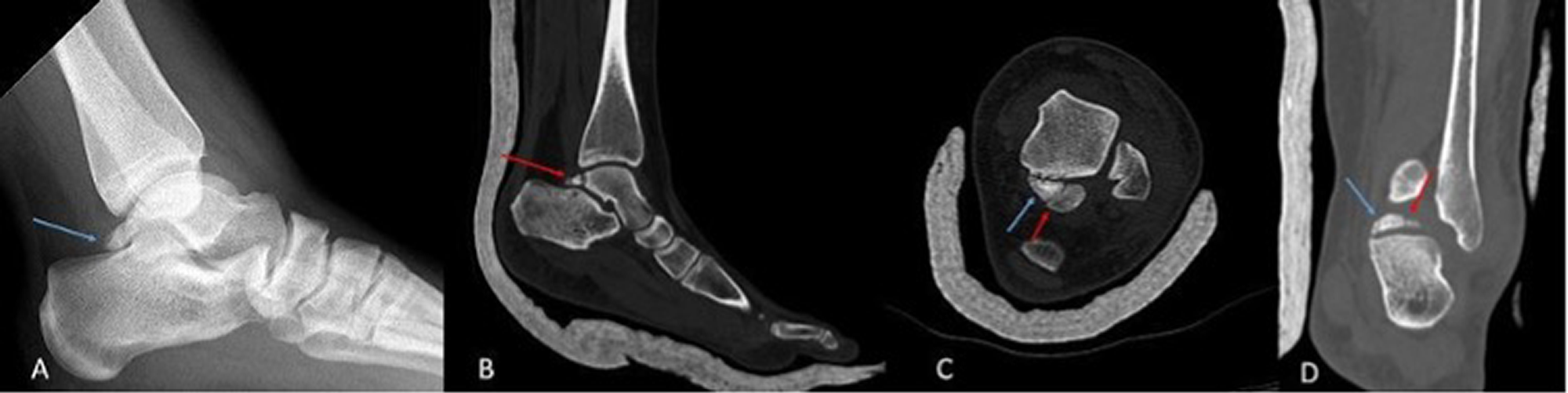
A 21-year-old female patient presented to the emergency department in December 2023 following a pedestrian traffic accident. The mechanism of injury was described as a plantarflexion sprain following the impact of the vehicle. Physical examination revealed widespread swelling of the left ankle and difficulty bearing weight on the left lower extremity. There was significant tenderness on palpation of the posterior and anterolateral aspects of the left ankle. No additional pathologic findings were noted, and the patient had no other known comorbidities. Initial radiographs identified the os trigonum, and a nondisplaced fracture line was suspected, leading to a CT scan. The CT revealed a regular separation in the axial section of the os trigonum, interpreted as a bipartite variation. Additionally, a cortical discontinuity and a sharply defined fracture line in the anteromedial aspect of the medial fragment confirmed the diagnosis of a bipartite os trigonum fracture (
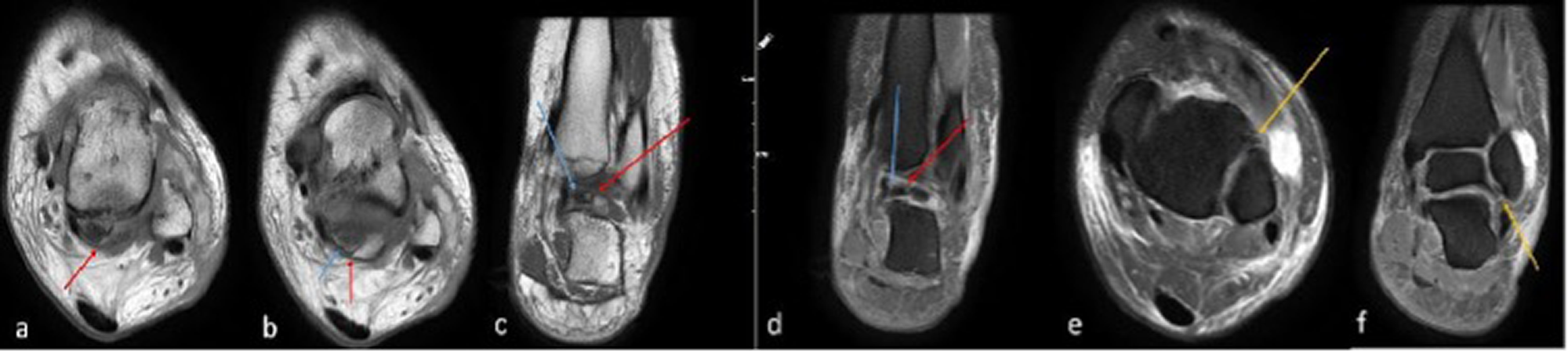
Fig. 1). Treatment included a neutral-position short leg splint. On follow-up, persistent pain led to an MRI, which showed no signal changes in the separation causing the bipartite variation, but a hypointense appearance on T1-weighted images in the anteromedial area of the os trigonum confirmed the acute nature of the fracture and validated the diagnosis. On CT images, the fragment in the lateral area showing sclerosis (
Fig. 1) and appearing hypointense on T1 MRI images (
Fig. 2) suggests that the lateral fragment has undergone osteonecrosis. This osteonecrosis likely acted as a predisposing factor for the fracture. An anterior talofibular ligament (ATFL) rupture was also identified (
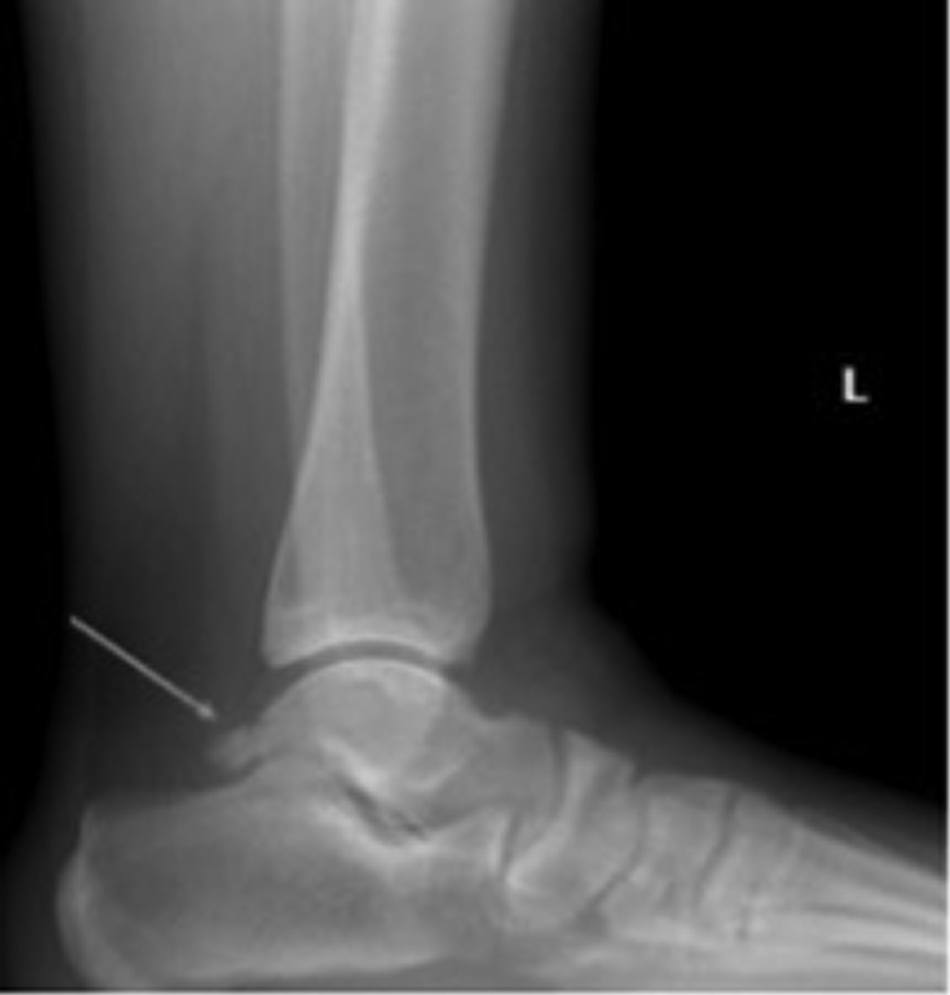
Fig. 2). At the 6-week follow-up, symptom improvement was noted, with callus formation visible on radiographs. The splint was removed, and joint range-of-motion exercises were started. By the sixth month, radiographs showed fracture union (
Fig. 3), and no instability was detected during the examination. The American Orthopedic Foot and Ankle Society (AOFAS) and European Foot and Ankle Society (EFAS) scores were assessed at the time of injury and at 3 months postoperatively. The AOFAS score improved from 38/100 at injury to 96/100 at 3 months, and the EFAS score improved from 3/40 to 35/40.
Figure 1.
Initial lateral radiograph (A) and CT scans (B, C, D) showing the fracture line (blue arrow) and separation causing the bipartite variation (red arrow).
Figure 1.
Initial lateral radiograph (A) and CT scans (B, C, D) showing the fracture line (blue arrow) and separation causing the bipartite variation (red arrow).
Figure 2.
Magnetic resonance images taken during follow-up (a, b, c, d, e, f) showing the fracture line (blue arrow), separation causing the bipartite variation (red arrow), and anterior talofibular ligament rupture (yellow arrow).
Figure 2.
Magnetic resonance images taken during follow-up (a, b, c, d, e, f) showing the fracture line (blue arrow), separation causing the bipartite variation (red arrow), and anterior talofibular ligament rupture (yellow arrow).
Figure 3.
Lateral radiograph taken at the 6-month follow-up showing the healed fracture tissue (blue arrow).
Figure 3.
Lateral radiograph taken at the 6-month follow-up showing the healed fracture tissue (blue arrow).
Informed consent was obtained before all procedures. The participant has consented to the submission of the case report to the Journal.
Discussion
The key point in this case report is that bipartite os trigonum can coexist with a fracture, making differential diagnosis challenging. An MRI can help differentiate acute fractures from bipartite separations, as intraosseous hemorrhage causes a hypointense appearance on T1 and hyperintense on T2 sequences. [
7] Another significant point is the potential for associated ligament injuries. The mechanism of injury should be investigated to identify associated conditions. Excessive plantarflexion can lead to os trigonum fractures, and mechanisms involving supination and inversion can result in ATFL injuries. [
8] Chronic lateral ankle injuries are known to increase the incidence of os trigonum syndrome in athletes. [
4] In this case, symptoms improved, and the condition was not considered os trigonum syndrome. The case also involved an extensor hallucis longus injury alongside the os trigonum fracture. The plantarflexion mechanism caused both injuries concurrently.
A CT is recommended if radiographs are insufficient for diagnosis, as differentiating the os trigonum from the posterior talar process can be challenging, and treatment approaches may differ. [
3] In this case, a CT scan was valuable for three-dimensional evaluation due to inadequate radiographic findings.
Post-acute injury treatment with 4 to 6 weeks of cast immobilization has been shown to be effective, followed by joint range-of-motion exercises to address fibrous adhesions and joint stiffness. [
9] In this case, a short leg splint was used for 6 weeks, followed by range-of-motion exercises, and by the third-month follow-up, the patient was able to resume daily activities.
This case demonstrates that bipartite os trigonum can present with a fracture, highlighting the need for a CT scan in diagnosing this rare condition. Associated soft-tissue problems should be considered. In this case, both os trigonum fracture and ATFL rupture were identified through examination and MRI.
If this injury were solely an os trigonum fracture in the absence of bipartite variation, our treatment strategy would likely not change. However, the bipartite variation is an important differential diagnosis factor. [
5] The presence of bipartite variation can lead to a situation where the existing fracture might be overlooked. This variation could potentially delay and negatively impact the patient’s treatment process if it hinders the identification of the fracture.
Os trigonum is seen in a small segment of the population and fractures are rarely reported. Fracture of the bipartite variation is an important condition to keep in mind in ankle injuries and can be successfully managed with conservative treatment.