Homocysteine (Hcy) is an amino acid homologue of cysteine, characterized by an additional methylene group [
1]. As a naturally synthesised byproduct of methionine metabolism, Hcy is not obtained from dietary sources [
1]. Hyperhomocysteinemia (HHcy) is defined as having over 15 µmol/l of homocysteine in the blood. It is a metabolic disorder caused either by a genetic defect resulting in reduced enzymatic activity, leading to a buildup of homocysteine in the blood, or as a result in either vitamin B6, B12, or folate deficiency, which are cofactors in the Hcy metabolism pathway, among other known causes [
1,
2,
3,
4,
5]. Linked to an increased risk of arterial cardiovascular events, HHcy has been associated with neuropsychiatric illness, compromised bone health, and increased risk of vein thrombosis [
2,
5,
6]. Studies have found that HHcy increases the risk of venous thromboembolism by two to three times compared to the average population, possibly proportionally to the Hcy concentration, with an odds ratio of two to one in favor of affecting women [
3,
6]. Intriguingly, HHcy is linked to venous thrombosis in unusual anatomical locations.
The most common cause of HHcy are enzyme deficiencies in its metabolism pathway, such as cystathionine b-synthase, methylenetetrahydrofolate reductase, methionine synthase, and methionine adenosyltransferase [
1]. Additionally, other factors such as smoking, alcohol consumption, age, medications, chronic diseases, as well as vitamin B6, B12, betaine, and folate deficiencies may also be the cause [
1,
3].
Several neurological disorders such as Alzheimer’s disease, Parkinson’s disease, epilepsy, and cognitive impairment, have been linked to HHcy [
1]. Although the mechanisms are not yet fully elucidated, they are believed to involve HHcy having a role in inflammatory marker gene regulation as well as acting as a receptor agonist [
1]. Furthermore, HHcy is linked to inflammatory bowel disease and other autoimmune conditions, likely due to vascular damage [
1]. Stroke and cardiovascular diseases have also been associated with HHcy, possibly because of endothelial dysfunction mediated by its role as an inhibitor of endothelial nitric oxide synthase [
1].
Another noteworthy association of HHcy is with venous thromboembolism, where it has been linked to thrombi in uncommon locations [
1]. These atypical locations include published cases of thrombosis of the superior ophthalmic vein, superior mesenteric vein, cerebral veins, renal veins, brachial veins and portal veins, often in young patients who are not classically subject to thromboembolic events [
3,
5,
7,
8,
9,
10]. The mechanism by which HHcy increases the risk of venous thromboembolism is thought to involve increasing the activity of coagulation factors and decreasing that of anticoagulation factors, by releasing reactive oxygen species and by causing endothelial cell injury which then impacts of the vessel wall’s antithrombic properties [
4].
In this report, we present a unique case of recurrent venous thrombosis in the plantar veins of a 45-year-old woman diagnosed with HHcy.
Case Report
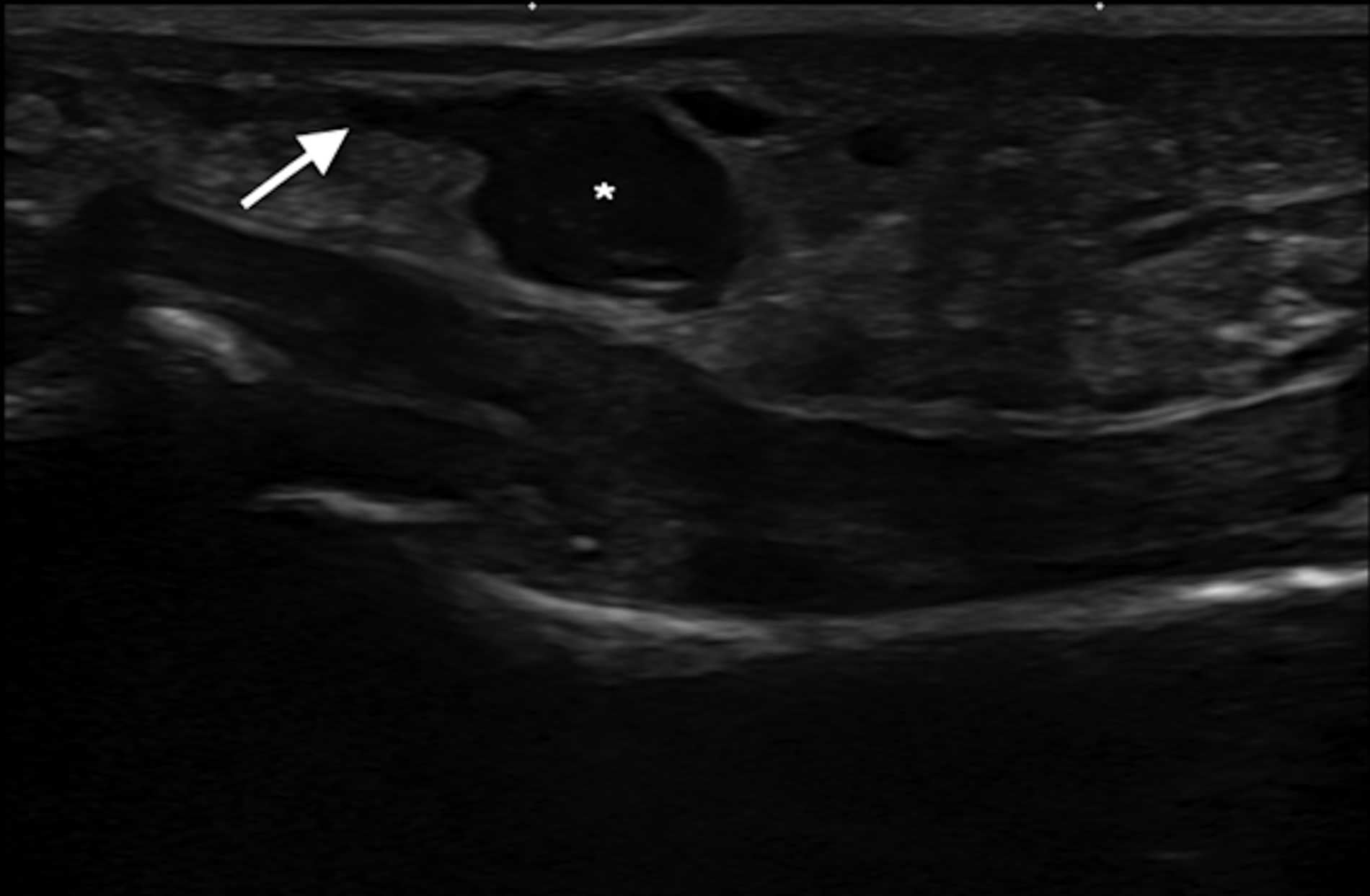
A 45-year-old woman with known HHcy was referred for an ultrasound due to complaints of acute pain on the sole of her right foot near the third toe. The patient had a history of five documented previous superficial venous thromboses in veins of both feet. The patient’s treatment regimen for HHcy consisted of vitamin B6, B12, and folic acid. She had also been taking rivaroxaban up until a month previous, but she had discontinued rivaroxaban due to financial constraints, as her insurance did not cover the medication. Given the patient’s history, a Doppler ultrasound to exclude a venous thrombosis was immediately ordered. The skin overlying the painful area was normal in aspect, having no discoloration or tumefaction. Upon examination with the ultrasound probe, a 3.5-mm hypoechogenic clot in one of the plantar metatarsal veins around her third toe was revealed. This clot appeared to communicate proximally with a vein, though no vein could be found distally, probably due to reduced blood flow diminishing their already small size (
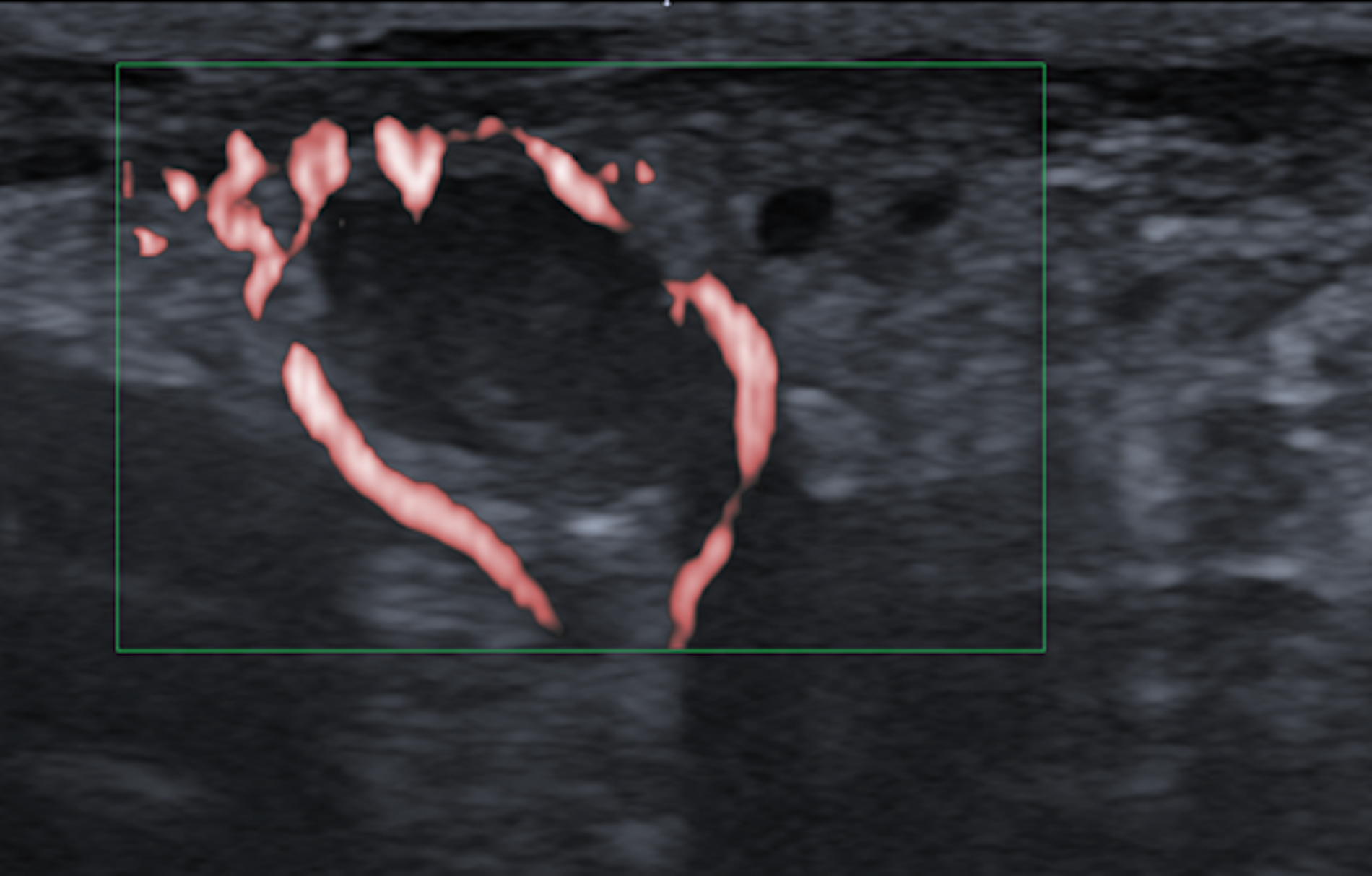
Fig. 1). The hypodermis around the hypoechogenic clot appeared hypervascularized and inflammatory (
Fig. 2). The diagnosis of plantar metatarsal vein thrombosis having been made, the patient proceeded to be treated by anticoagulants, before making a full recovery.
Figure 1.
B-mode ultrasonography using a 17LH7, 17MHz, linear probe on a Canon Aplio a- series machine. The image was acquired in the longitudinal axis of the plantar metatarsal vein thrombosis (asterisk) communicating with a proximal vein (arrow). The center of the thrombosis is located 2.5 mm beneath the surface of the skin, with the thrombosis measuring 3 mm in diameter.
Figure 1.
B-mode ultrasonography using a 17LH7, 17MHz, linear probe on a Canon Aplio a- series machine. The image was acquired in the longitudinal axis of the plantar metatarsal vein thrombosis (asterisk) communicating with a proximal vein (arrow). The center of the thrombosis is located 2.5 mm beneath the surface of the skin, with the thrombosis measuring 3 mm in diameter.
Figure 2.
Superb microvascular imaging ultrasonography using a 17LH7, 17MHz, linear probe on a Canon Aplio a- series machine. The image was acquired in the transverse axis of the hyper-vascularised dermis around the thrombosis. The center of the thrombosis is located 2.5 mm beneath the surface of the skin, with the thrombosis measuring 3 mm in diameter.
Figure 2.
Superb microvascular imaging ultrasonography using a 17LH7, 17MHz, linear probe on a Canon Aplio a- series machine. The image was acquired in the transverse axis of the hyper-vascularised dermis around the thrombosis. The center of the thrombosis is located 2.5 mm beneath the surface of the skin, with the thrombosis measuring 3 mm in diameter.
Discussion
Plantar vein thrombosis is an exceptionally rare form of venous thrombosis, with fewer than 50 reported cases in the literature [
11]. The most common presenting symptom of patients suffering from plantar vein thrombosis was pain on the sole of the foot, which was the presenting symptom of our patient [
11]. Of the presumed etiologies of the cases of plantar vein thrombosis reported in the literature, the most common causes were either mechanical strain or recent surgery, both of which did not seem to be contributing factors for our patient [
11].
The case of our patient represents, to our knowledge, the first reported case of plantar venous thrombosis in a patient with HHcy. This case aligns with the established literature regarding venous thrombosis in unusual locations in patients with HHcy.
Conclusion
Characterized by elevated homocysteine levels, HHcy is known to be associated with several pathologies, including venous thromboembolism. Patients with HHcy are notable in that they are subject to venous thromboembolism in unusual locations, often at a young age and without other major risk factors. We presented the case of a 45-year-old female with HHcy who is subject to recurrent superficial venous thrombosis of the plantar veins. This case serves as a reminder to have a high degree of suspicion regarding the possibility of thromboembolism, often in rare locations, in patients with known HHcy.