Rheumatoid nodulosis has been considered a rare form of rheumatoid disease—a type of rheumatoid arthritis (RA) with multiple rheumatoid nodules but fewer joint and systemic symptoms compared with classical RA [
1]. Rheumatoid nodules occur in 20% to 25% of patients with RA [
2]. These nodules are found most commonly on the extensor surfaces at sites of frequent mechanical irritation [
3], such as the proximal ulna, extensor tendons of the hand, the back of the head and ears, and on the heels. Eighty percent of patients with rheumatoid nodules have at least one nodule at the elbow [
4]. In typical cases of RA, most patients with rheumatoid nodules are rheumatoid factor (RF) positive [
5]. Rheumatoid nodules and serum RF are associated with severe disease, destructive joint changes, and a poor prognosis [
6]. Accelerated rheumatoid nodules, especially involving the hands, has been reported in patients receiving methotrexate, antitumor necrosis factor alpha biological drugs, or leflunomide therapy for RA [
7]. In contrast, rheumatoid nodulosis is considered a benign variant of RA [
1,
2,
8].
We report a case with rheumatoid nodulosis presenting with extensive bone erosion in the foot, which was evaluated by magnetic resonance imaging (MRI) and 18F-fluorodeoxyglucose positron emission tomography/computed tomography (FDG PET/CT).
Case Report
A 61-year-old woman presented with swelling in her right foot and reported pain for the previous 6 months. Subsequently, swelling of the back of her right hand, left wrist, and right tibial tubercle appeared. She presented to a local orthopedic clinic and was referred to our hospital because of a suspected tumorous lesion on the ultrasonography. Her medical history included a gastrectomy for gastric cancer 4 years earlier, with no recurrence to date. Her family medical history was unremarkable.
On admission to the orthopedics department of our hospital, her temperature was 36.4°C, and her pulse was regular at 75 beats/min. Physical examination revealed a soft, elastic, and mobile mass on the dorsum of the right foot (44 × 30 mm); a soft, elastic, and mobile mass on the right knee (20 × 16 mm); a hard, elastic, and immobile mass on the left elbow (20 × 19 mm); a soft, elastic, and immobile mass on the left wrist (24 × 29 mm); and a soft, elastic, and immobile mass on the back of her right hand (25 × 30 mm). Where these lesions were present, the skin was slightly pigmented and not warm. The major laboratory findings are as follows: white blood cell count, 4.8 × 10⁹/L (normal range: 3.3–9.0 × 10⁹/L); C-reactive protein concentration, 0.09 mg/dL (normal ≤ 0.1 mg/dL); erythrocyte sedimentation rate, 50 mm/h (normal range for women: 3–15 mm/h); RF concentration (25.6 IU/mL; normal ≤ 15 IU/mL).
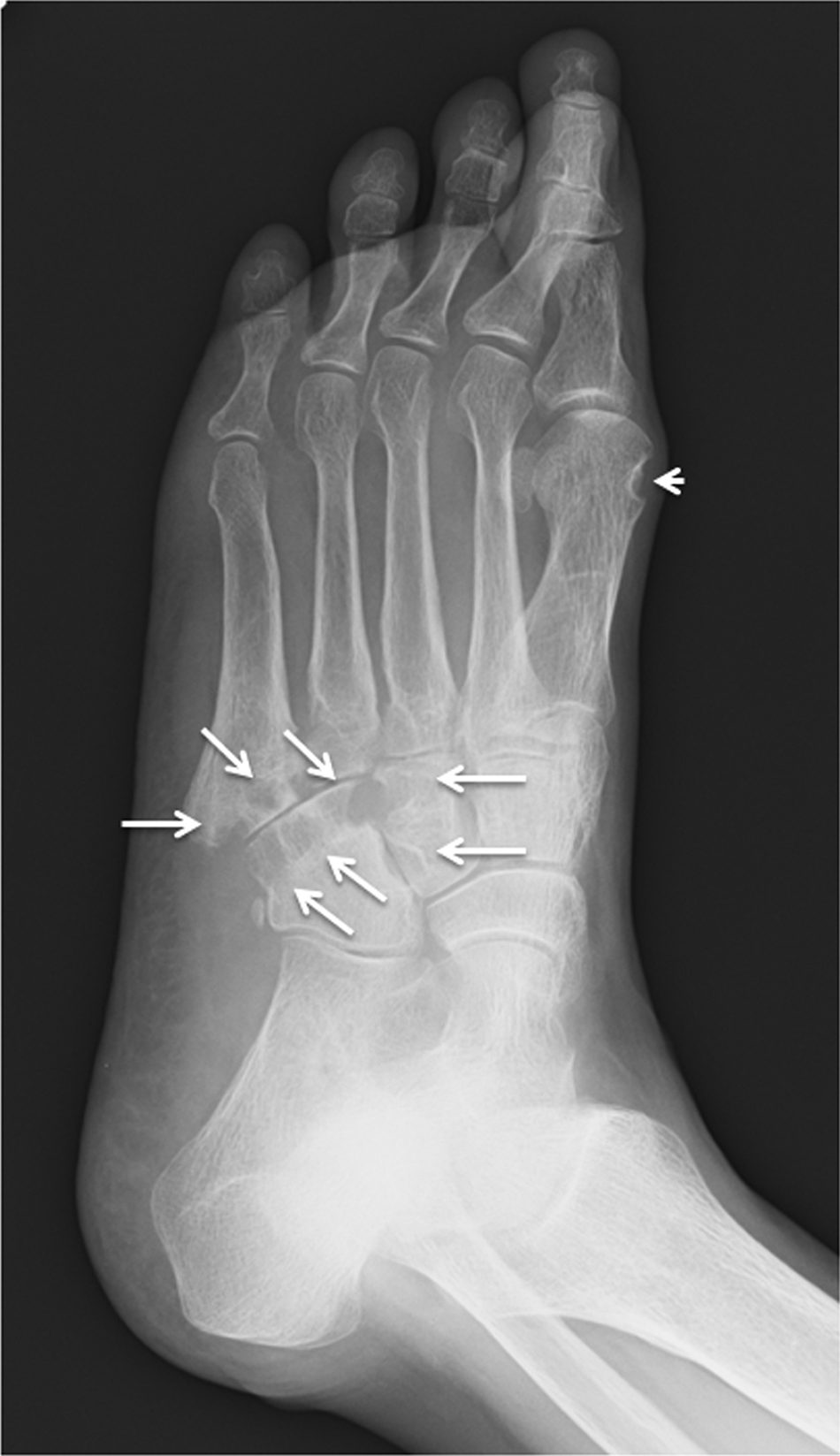
Radiography of the right foot showed multiple well-defined radiolucent lesions in the fourth and fifth metatarsal bone, lateral cuneiform, cuboid, and head of the first metatarsal head without narrowing of joint spaces (
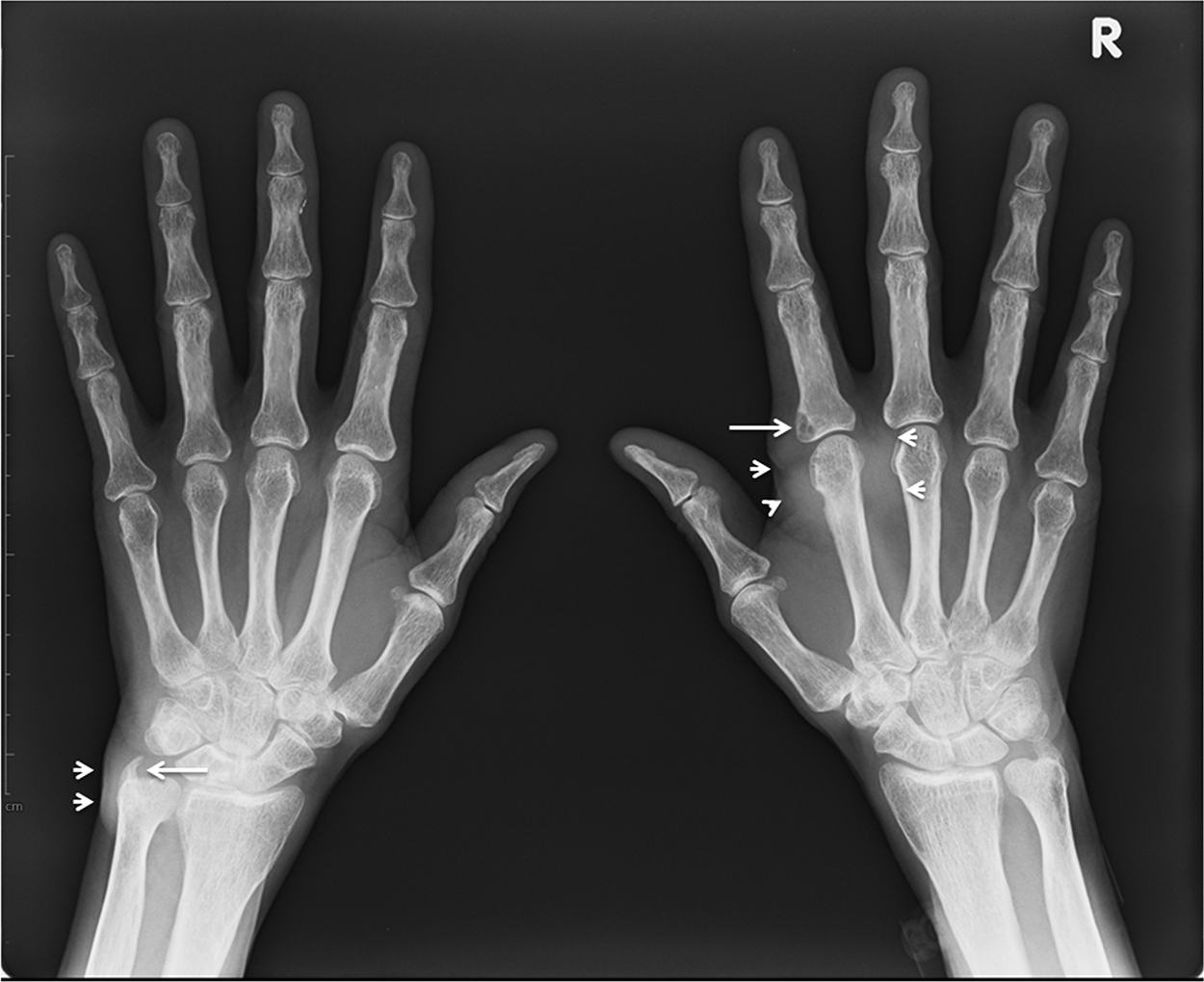
Fig. 1). Radiography of both hands showed a well-defined radiolucent area and erosions in the left ulnar styloid process, base of the proximal phalanx, and the metacarpal head the right index finger with soft-tissue swelling (
Fig. 2).
Figure 1.
Oblique radiograph of the right foot showing well-defined radiolucencies in the fifth metatarsal, lateral cuneiform, cuboid (white arrows), and head of the first metatarsal bones (white arrowhead), with no narrowing of the joint spaces.
Figure 1.
Oblique radiograph of the right foot showing well-defined radiolucencies in the fifth metatarsal, lateral cuneiform, cuboid (white arrows), and head of the first metatarsal bones (white arrowhead), with no narrowing of the joint spaces.
Figure 2.
Radiography of the hands shows well-defined radiolucencies in the left ulnar styloid process and base of the proximal phalanx of the right index finger (white arrows), with swelling of the surrounding soft tissues (white arrowheads).
Figure 2.
Radiography of the hands shows well-defined radiolucencies in the left ulnar styloid process and base of the proximal phalanx of the right index finger (white arrows), with swelling of the surrounding soft tissues (white arrowheads).
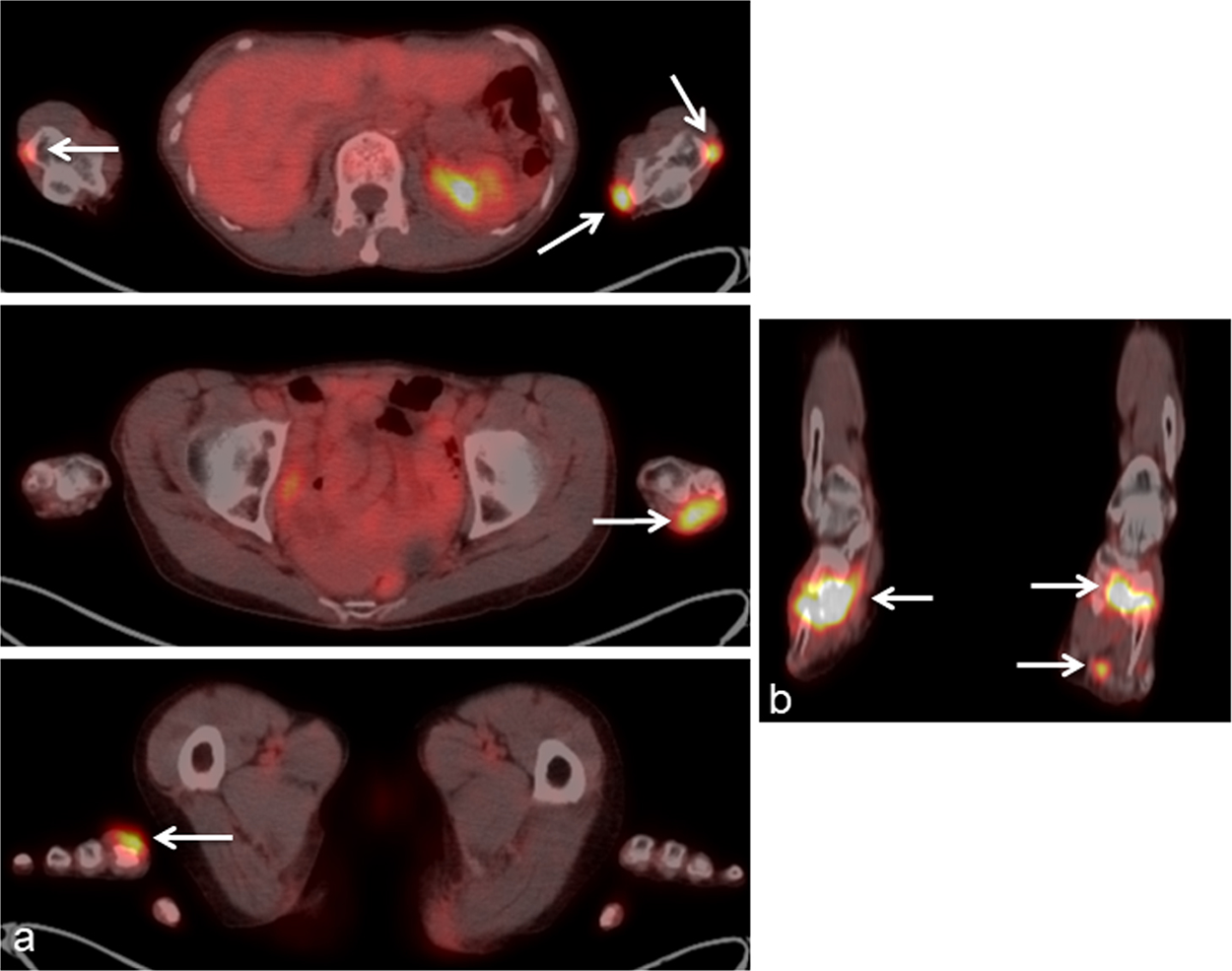
The FDG PET/CT showed strong periarticular uptake in both elbows, left wrist, right index finger, both knees, both ankles, and left fourth toe (
Fig. 3).
Figure 3.
FDG PET/CT axial (A) and coronal (B) images showing strong periarticular uptake in both elbows, left wrist, right index finger, both knees, both ankles, and left fourth toe.
Figure 3.
FDG PET/CT axial (A) and coronal (B) images showing strong periarticular uptake in both elbows, left wrist, right index finger, both knees, both ankles, and left fourth toe.
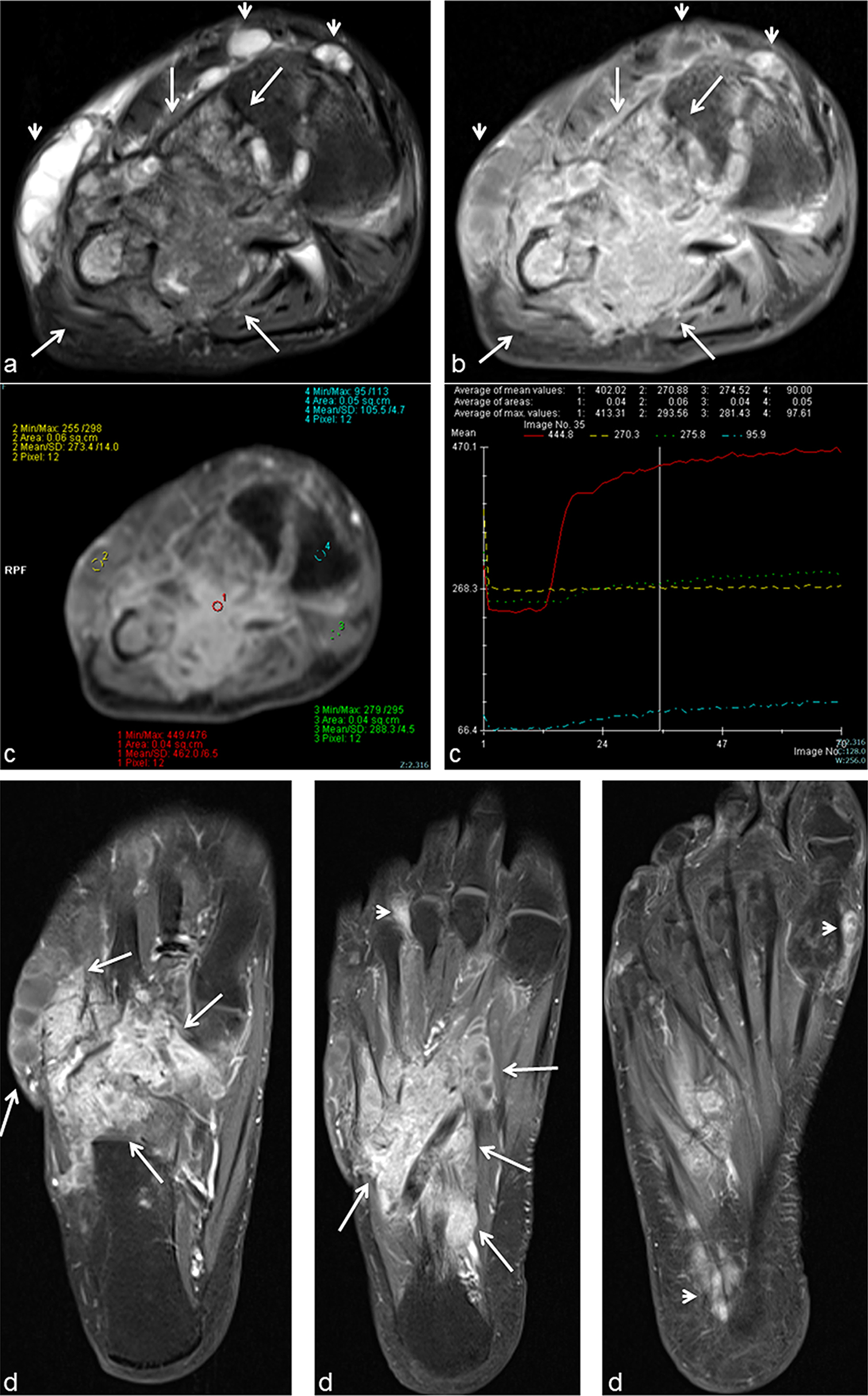
A contrast-enhanced MRI of the left foot showed an ill-defined lobulated mass surrounding the plantar flexor tendons and plantar muscles, extending into the third, fourth, and fifth metatarsal bones, as well as the lateral cuneiform and cuboid. The signals in the lesion were heterogeneous, with uneven contrast enhancement, suggesting a mixture of solid and cystic components, and a multilocular cystic lesion was observed under the skin. A dynamic contrast-enhanced MRI showed a rapid enhancement and a plateau pattern in the solid component, suggesting a hypervascular lesion. Apart from this lesion, there were also nodular lesions between the third and fourth metatarsophalangeal joints on the medial side of the first metatarsal, and on the plantar side of the calcaneus, which were considered a series of lesions (
Fig. 4). Because the right foot lesion extended beyond the Lisfranc joint to multiple bones, metabolic diseases and inflammatory or infectious lesions were considered rather than tumors. Our differential diagnosis included gout, multicentric reticulohistiocytosis, xanthomatosis, amyloidosis, tuberculosis, and fungal infection. Retrospectively, however, rheumatoid nodulosis should be included in the differential diagnosis.
Figure 4.
Magnetic resonance imaging (MRI) (A), T2-weighted fat saturation (FATSAT) sequence, axial section (B), gadolinium-enhanced MRI, T1-weighted FATSAT sequence, axial section (C), dynamic gadolinium-enhanced MRI, axial section, and gadolinium-enhanced MRI, T1-weighted FATSAT sequence, coronal section MRI (D) showing an ill-defined lobulated mass surrounding the plantar flexor tendon, invading plantar muscles and extending into the bones, namely the third, fourth, and fifth metatarsal bones, lateral cuneiform and cuboid (white arrows). The lesion shows heterogeneous signal on T2WI with inhomogeneous contrast enhancement, suggesting a mixture of solid and cystic components. Dynamic gadolinium-enhanced MRI showing rapid enhancement and a plateau pattern in the solid component (red circular region of interest). In addition to this lesion, there were subcutaneous nodular lesions between the third and fourth metatarsophalangeal joints, on the medial side of the first metatarsal, and on the plantar side of the calcaneus (white arrowheads).
Figure 4.
Magnetic resonance imaging (MRI) (A), T2-weighted fat saturation (FATSAT) sequence, axial section (B), gadolinium-enhanced MRI, T1-weighted FATSAT sequence, axial section (C), dynamic gadolinium-enhanced MRI, axial section, and gadolinium-enhanced MRI, T1-weighted FATSAT sequence, coronal section MRI (D) showing an ill-defined lobulated mass surrounding the plantar flexor tendon, invading plantar muscles and extending into the bones, namely the third, fourth, and fifth metatarsal bones, lateral cuneiform and cuboid (white arrows). The lesion shows heterogeneous signal on T2WI with inhomogeneous contrast enhancement, suggesting a mixture of solid and cystic components. Dynamic gadolinium-enhanced MRI showing rapid enhancement and a plateau pattern in the solid component (red circular region of interest). In addition to this lesion, there were subcutaneous nodular lesions between the third and fourth metatarsophalangeal joints, on the medial side of the first metatarsal, and on the plantar side of the calcaneus (white arrowheads).

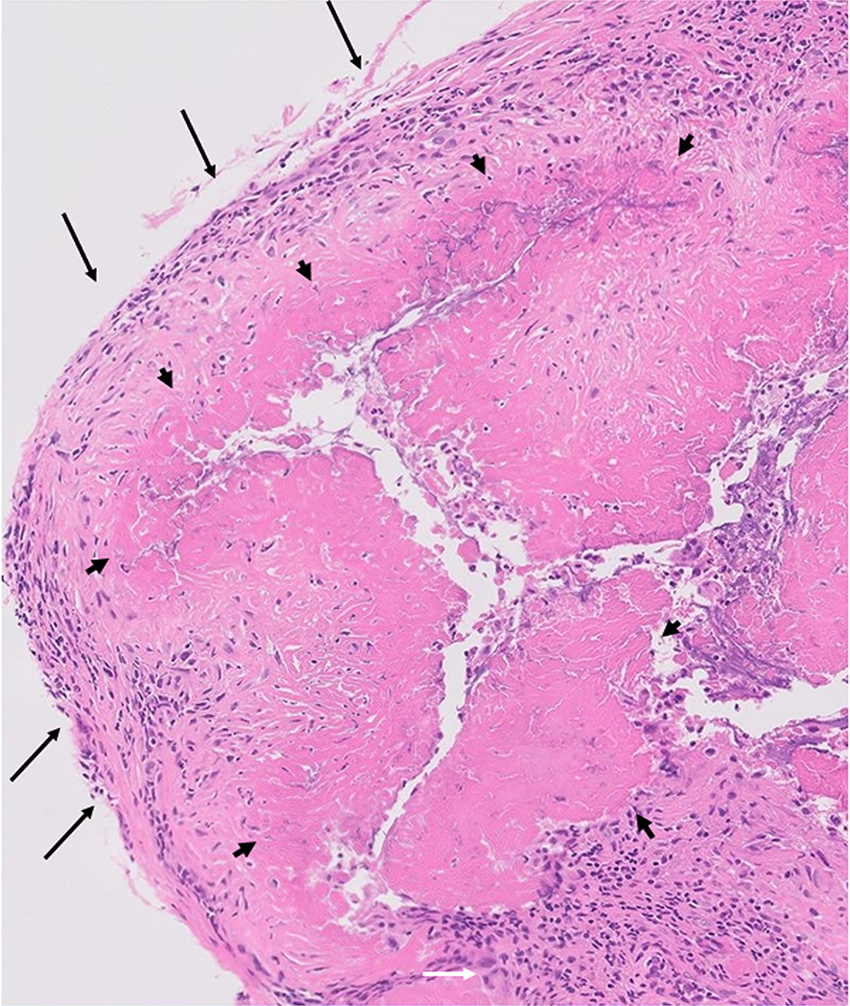
An incisional biopsy of the mass on the patient’s right foot was performed. On pathological examination, areas of fibrinoid necrosis surrounded by palisading histiocytes and giant cells were seen (
Fig. 5). There were no mycobacteria or fungi in this lesion with Ziehl–Neelsen and Grocott’s staining. As a result, this lesion was diagnosed as a rheumatoid nodule.
Figure 5.
Histopathologic findings of an incisional biopsy of the subcutaneous mass from the right foot showing an area of fibrinoid necrosis (black arrowheads) by palisading histiocytes (black arrows) and giant cells (white arrow) (H&E, × 10).
Figure 5.
Histopathologic findings of an incisional biopsy of the subcutaneous mass from the right foot showing an area of fibrinoid necrosis (black arrowheads) by palisading histiocytes (black arrows) and giant cells (white arrow) (H&E, × 10).
Based on the minimal joint symptoms, positive RF, and histopathologic findings, rheumatoid nodulosis was considered as the most possible diagnosis. The patient required no further treatment; the rheumatoid nodules and radiographic findings remained consistent at the 3-month follow-up.
Discussion
Although consensus diagnostic criteria have not yet been developed, Curett et al. [
1] suggested criteria based on the reported cases of rheumatoid nodulosis: multiple subcutaneous rheumatoid nodules on biopsy, recurrent joint symptoms with minor radiological lesions, benign clinical course, and absent or mild systemic manifestations of RA. Our patient fulfilled these criteria except that she had well-defined radiolucent areas of multiple bones radiographically. These bone lesions showed no associated narrowing of the joint spaces and were considered to be a result of nearby rheumatoid nodules. ell-defined radiolucent areas in tarsal and metatarsal bones were closely associated with the rheumatoid nodule on the MRI of the foot in the present case. We speculate that the bone cysts reported in previous studies [
8,
9,
10,
11,
12,
13,
14] may have been due to the development of subcutaneous rheumatoid nodules that were not detectable on physical examination, and this finding of bone cysts and well-defined radiolucency in bones may be important in radiographic diagnosis. Similar to the MRI, the FDG PET/CT was also able to demonstrate rheumatoid nodules near many bone cysts and well-defined radiolucency in bones, and was useful in diagnosing rheumatoid nodulosis.
In contrast to the usual benign course, Maldonado et al. [
15] reported that six of 16 patients (almost 40%) with rheumatoid nodulosis had an aggressive course and developed classic erosive polyarticular RA, long term. Another recent article reported a case of a patient with isolated, painful rheumatoid nodules who subsequently experienced RF, anti-citrullinated protein antibody seroconversion, and finally developed overt RA [
16]. Our patient has been followed-up with for only 3 months to date, and long-term follow up is required.
Rheumatoid nodulosis is an atypical form of RA; therefore, it is difficult to diagnose. However, retrospectively, subcutaneous nodules on the extensor surfaces at both elbows in our patient were typical locations of rheumatoid nodules. To the best of our knowledge, this is the first report of rheumatoid nodulosis with extensive bone erosion of a rheumatoid nodule evaluated by an MRI and FDG PET/CT.