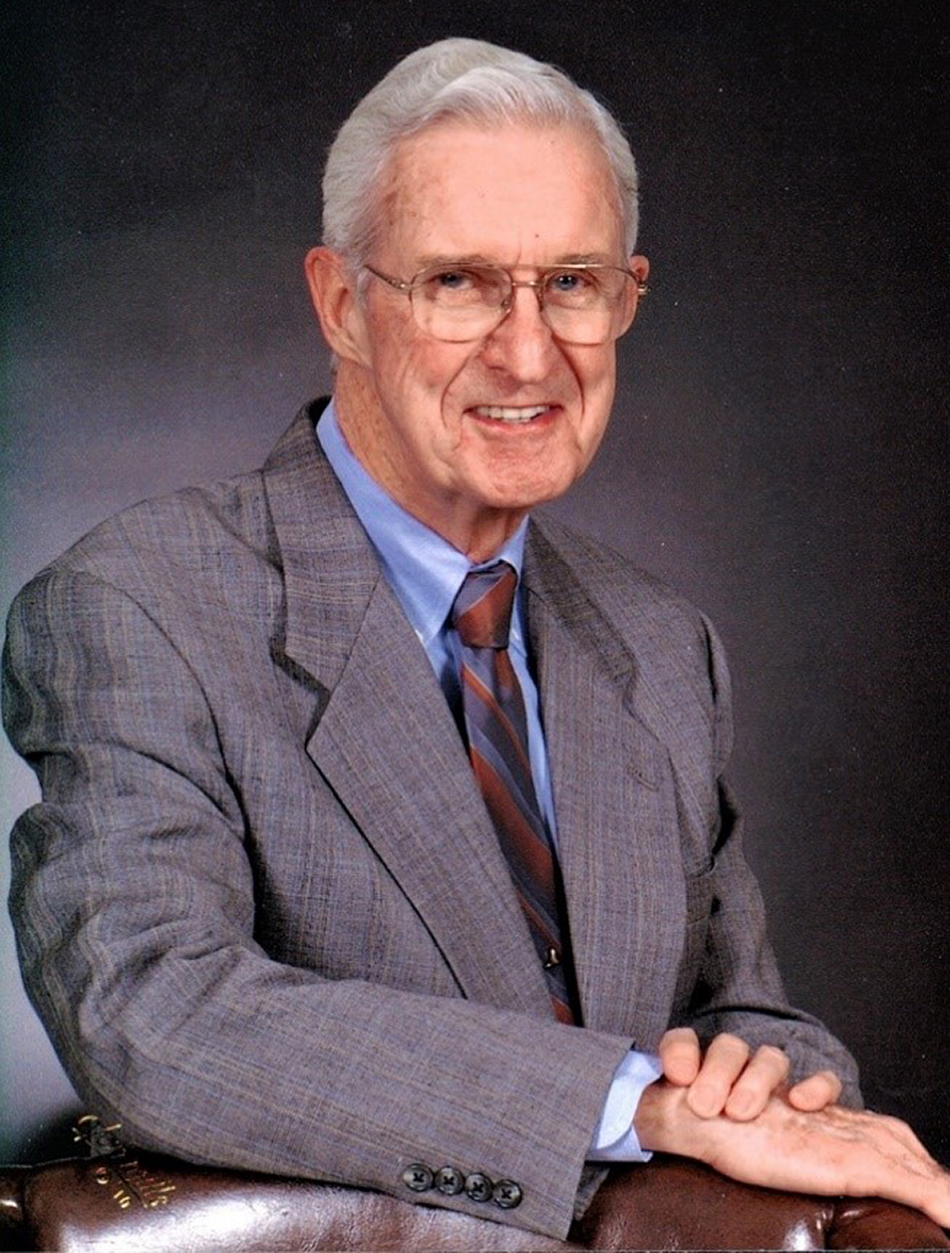
E. Dalton McGlamry was born in 1931, to a poor family in the town of Moultrie, in southwestern Georgia. His humble beginnings could have never foretold the bright future and profound influence that he would have on our profession. His early life was as similarly unremarkable as most of the other poor young people scattered across the rural South in that era. As a dejected young man, he graduated from high school with no real hopes or aspirations for his future. He attempted to enlist in the Army but was rejected. The officials at the recruiting office advised the scrawny teenager to go home, gain a few pounds, and return in 2 years if he was still interested.
His salvation arrived in the form of a phone call from an uncle he could only remember meeting on one occasion. Dr. E.W. McGlamry, a podiatrist in Atlanta, asked the young man what his plans were for the future. He informed “Pop,” the name by which he would later refer to his uncle, that he was at a loss for what to do. The younger McGlamry told Pop of his rejection by the Army, and the fact that he was a poor student, and that neither he nor his family could afford college. Pop indicated that he would pay all of the young man’s expenses for college, and it did not matter if he failed or not, he just had to promise his benefactor that he would give his best effort.
McGlamry enrolled in a junior college, Emory at Oxford, in Oxford, Georgia, then transferred to the University of Georgia, in Athens. After graduation, he studied podiatry at Temple University in Philadelphia. Pop continued his financial support, and the aspiring podiatrist also worked different jobs at night and on weekends. Upon graduation, Dalton McGlamry served a 1-year residency in Philadelphia under the guidance of Louis Newman, DPM. It was during his time at Temple that he married Rebekah Culbreth, who was to become an enthusiastic advocate for the profession in her own right, and whose support and assistance enabled him to achieve his professional success.
After leaving residency, McGlamry served a 2-year term in the US Army. This was a critical interval in the advancement of his surgical career as he honed his skills in a very busy clinic, in part treating a number of patients who required surgical intervention. His superiors were supportive, and one Army Major, who was a plastic surgeon, volunteered to assist him in his cases and teach him how best to dissect and handle soft tissues. This emphasis on soft-tissue layer dissection made a big impression, and McGlamry subsequently taught his surgical residents the technique. John Ruch, DPM, his sixth podiatric surgical resident (1976), expanded and enhanced this concept into what he would call anatomic dissection, a broadly accepted foundational approach to teaching foot and ankle surgery to others.
Following discharge from the Army in 1957, and armed with more surgical training than any of his predecessors or contemporaries in the profession, Dr. McGlamry moved to Atlanta, Georgia, to begin private practice. Initially, local colleagues were standoffish and fearful that his surgical practice would harm the relationships with the medical community at large. However, within 2 years, they were referring cases to him and then asking to come and watch or assist in the procedures. This later turned into weekend seminars, and the forerunner of a program that would eventually evolve into the Podiatry Institute.
During the time he had been a student in college and podiatry school, McGlamry had kept a record of every cent that his uncle, Dr. E.W. McGlamry had paid on his behalf. After saving the money necessary to repay Pop, the younger McGlamry invited his uncle to lunch and presented Pop with a check that covered in full his educational expenses. Pop refused to accept the check and told his nephew that he could not settle his account so easily. Instead, Pop stated that Dr. Dalton McGlamry was expected to do the same for others going forward. “Your own children do not count,” he added, “but there will always be nieces and nephews to help, and it is your job to do so.” In the decades that followed, there would be many family members, and even people in the community at large, who obtained their university or professional degrees as a direct result of Dr. Dalton McGlamry’s generosity.
Professional success continued for the young doctor, and McGlamry was soon selected as a delegate from the state of Georgia to the American Podiatry Association House of Delegates. In 1964, he was elected to the APA Board of Trustees and served through 1974. He was president of the APA for 1 year in 1972. He was particularly gifted in his capacity to collaborate with others, and the APA Board was perfectly suited to his strength. He was surrounded by people with similar goals for advancement of the profession. One of the highlights of his time on the Board was the creation of the Residency Genesis Committee, chaired by friend and colleague James Treadway, DPM, with McGlamry as the other member. In just a few years, as a result of the work of Drs. Treadway and McGlamry, the number of residency positions expanded significantly, truly changing the face of the profession in the years that followed [
1].
After serving as APA president and Trustee, McGlamry was named as the National Consultant in Podiatry, Office of the Surgeon General, US Air Force. He served in that capacity from 1974 until 1991 and created the protocols for entry of podiatrists into the US Air Force. In the same year, The Journal of the American Podiatry Association was in need of an editor, and the manuscript submissions to the Journal were lagging. Having no editorial experience, and uncertain if he was suited for the task, McGlamry agreed to take the job for 1 year for the salary of $1.00. At the end of that year both parties felt he had been successful, and he continued as editor for a total of 10 years. He always credited APA staff members, Louis Buttell and Alice Overton, with his success at the Journal. Simply stated, he viewed Overton as his teacher when it came to editing manuscripts, and he would say that Buttell guided his involvement with the publisher.
As his career progressed, McGlamry was frequently sought after by members of the profession to speak or advocate on their behalf in multiple settings, including testifying to hospital committees, state legislatures, and other governmental agencies or entities. He was the podiatry representative to the National Advisory Council on Health Professions Education of the Health Resources Administration from 1975 through 1978. The committee assessed the physician numbers needed in the various medical fields as the government planned resource allocation for the next several decades. During those days of intense travel in service to others, he became acquainted with many of his colleagues and also other health professionals, scientists, politicians, and government officials. Personally, I was always amazed at his list of contacts across the country, and the people who would call upon him to exchange ideas or seek advice, and those individuals that he would call to discuss a wide range of matters.
In addition to his efforts to advance our profession as a whole, he maintained a busy practice and continued in the training of residents and colleagues. Patients from over 20 states were referred to him by colleagues each year. His role in surgery and education reached an important milestone in 1970, when McGlamry started the first 3-year residency at Doctors Hospital in Tucker, GA. There, his residents received training not only in surgery and medicine, but in teaching and speaking skills as well. This is another one of his huge legacies. A review of the graduates of the program will reveal a large number of those who became educators and leaders in the profession in their own right, many working at some point as full-time faculty members at the colleges of podiatric medicine. Today, some 55 years after its creation, the program is based at Emory Decatur Hospital, in a suburb of Atlanta, not far from the original location in Tucker, GA.
Dr. McGlamry continued to conduct weekend seminars in foot and ankle surgery at the hospital, and the popularity of the meetings led to his founding the Podiatry Institute in 1975. Some of the core teaching modalities for the Podiatry Institute included slide presentations and films of surgical procedures. Both were costly to produce, and McGlamry’s attorney advised that if a nonprofit foundation was created that registration fees for the meetings would be tax deductible for the attendees, and the Podiatry Institute would have the economic means to provide additional teaching materials. In particular, for many years the teaching films produced by McGlamry, and later by John Ruch, DPM, were extremely popular, and some of the films won awards as well.
Initially, membership of the Podiatry Institute was composed purely of graduates of the residency training program. However, over time other members of the profession who shared the same interests regarding teaching and education were invited to join the organization. The Podiatry Institute, another one of McGlamry’s great legacies, remains a leading educational vehicle for our profession, and continues to provide seminars and surgical workshops for foot and ankle surgeons, both nationally and internationally.
During his time as Editor of JAPA, Dr. McGlamry and the journal staff developed a good working relationship with their publisher, Williams and Wilkins. Dr. McGlamry had been thinking about a textbook focusing on foot surgery for several years, although finding a publisher had been unsuccessful. APA and Journal staff members, Louis Buttell and Alice Overton, eventually convinced Williams and Wilkins that if McGlamry would serve as the Editor, then a surgical textbook would be well received by the profession. Shortly thereafter, in 1984, a contract was awarded, and without restrictions relative to the size or number of illustrations, a rarity for textbooks at that time. He had a ready cadre of former residents to assist, and throughout his years of lecturing and while JAPA Editor, McGlamry had developed a good network of talented people within the profession. This facilitated the search for authors for the textbook. In 1987, the first edition of Comprehensive Textbook of Foot Surgery was published. He also served as Editor-in-Chief of the second edition (1992). Beginning with the 3rd edition, (2001), the textbook was entitled McGlamry’s Comprehensive Textbook of Foot and Ankle Surgery. He personally considered this to be his greatest professional success.
The Textbook enhanced the interprofessional and international profile of Dr. McGlamry, the Podiatry Institute, and our profession overall. Foot and ankle surgeons of all backgrounds recognized the unique nature of the Textbook. It was not just a catalog of foot pathology, procedures, or manifestations of systemic disease, but a meaningful surgical text with the applicable mechanical and functional concerns related to the conditions and procedures. It was thoroughly illustrated and beyond compare in that regard as well. The Podiatry Institute began to provide more scientific meetings in Europe, and more international surgeons came to the cadaver course in Atlanta following publication of the Textbook.
The faithful soldier for the profession retired in 1997, at the age of 66, sooner than any of his colleagues would have predicted. In the last 2 to 3 years before his retirement, he was no longer in a leadership position or responsible for anything but his patients for the first time in over 3 decades. He discovered that his newfound free time was satisfying. He loved walking for exercise, and he read books for hours each day. Once retired, he transitioned to his new life quite easily. In retrospect, one can only imagine in the peak of his career, the pressure and stress he experienced as he literally did everything conceivable to advance the profession, and the relief that came after those burdens were in his past.
Colleagues would often ask, “What is he doing in retirement?” Philanthropy was still a part of his essence, and upon moving to an active retirement center he helped to create a nonprofit foundation to pay for educational expenses to any employee, or their family members, to obtain a General Educational Development (GED) credential, or attend trade school or college. He quickly developed a network of friends outside of the profession. There was a group of men who could not drive, and he would carry them grocery shopping each week. In his retirement community, he organized a Thursday morning forum whereby interesting leaders across all walks of life would come and speak to the members. Given the fact that many of those invited speakers were still working, invariably there would be late cancellations periodically, and he would have to find ways to fill the time. He began to create what he would term his “cyber concerts.” Since he was not familiar with downloading or editing video material, he went for a weekly lesson with Bill Boyd, one of the Podiatry Institute staff members with expertise in electronic media production. Whis his new training on computer video editing, Dr. McGlamry would create a 1-hour presentation or biopic of a recording artist or entertainer that was familiar to his generation. These proved to be so popular among the members of his retirement community that they soon became an event unto themselves.
Interestingly, the man who had been so willing to leave home, sometimes on short notice, and drive or fly to wherever he was needed by his colleagues, was anchored to his home and community in retirement. He eschewed traveling other than a trip to the beach. He was asked on many occasions to lecture, but he would always reply that he was “no longer current.” If pressed, he would agree to speak to the residents about sound financial management, as he was worried about the levels of student indebtedness. He would also discuss with them the history of the profession, but he never sought these opportunities, and generally when invited, declined to participate more often than not. The man who everyone thought would be miserable in retirement immensely enjoyed his later years.
There is one final aspect of his retirement years that speaks to his legacy, and how it evolved internationally even after he stopped working, and that was his relationship with the podiatrists in Spain. During his professional life he had only spoken at one conference in Spain, but there were Spanish podiatrists who had participated in the in-house programs at the Podiatry Institute beginning in the late 1980s. Beginning around 2006, the Podiatry Institute began to host Spanish-language cadaver courses each year for the podiatrists in Spain. The most frequently asked question as the attendees arrived for the course was inevitably, “Will we be able to meet McGlamry?” He was universally admired in Spain for the Textbook and his legacy as founder of the Podiatry Institute. To use a sports analogy, he was revered as the founding father and original head coach of a remarkably successful team with a long history of winning championships. The Spaniards knew many of his players by name from textbook chapters they had studied and from which they had learned. In addition, one Podiatry Institute member in particular, Luke Cicchinelli, DPM, lived and practiced in Spain, and disseminated the teachings of Dr. McGlamry to his colleagues there.
When the Spanish podiatrists came to Atlanta for the cadaver surgical courses, there would always be a dinner with Dalton and Becky McGlamry. But this was one circumstance where meeting the actual person exceeded the expectations of their legend. The Spanish could not believe that he was so kind, approachable, entertaining, thought provoking, and relatable. He and his colleagues had won many of the same professional battles that the Spanish were currently facing. His example in surgery and education was already something they admired and wished to model, but now they heard about his humble beginnings and the struggles in the early days of the profession, and it was not just his story, but it was theirs as well. In the United States, the podiatrists had prevailed, and now they had hope that ultimately, in Spain, they could too. They would return to Spain, and their fondest memory of the journey and the course would be the night they met and conversed with Dr. McGlamry. Over time he became even more of an icon in Spain, yet ironically, with each successive year, there would be fewer colleagues in his home country who were aware of his achievements.
In the history of our profession there have been many selfless people who battled for the rights and privileges we now enjoy – inclusion in Medicare, equity regarding participation in private insurance plans, parity in access to hospital privileges, enhanced scope of practice, education, and many other means of enhancing our lives and those of our patients. While his contemporaries excelled in perhaps one or two areas, McGlamry did so in almost every facet of his professional career, if not every aspect affecting our profession. He was unique in that regard. Amazingly, this tribute does not include all of his professional accomplishments.
But more than just a tireless worker and advocate, he was an inspiration to others, bringing out the best in those around him, and in motivating his former residents to continue the tradition of teaching he had established. It would be hard to imagine the world of our profession absent his service and contributions.
In his book,
Lawrence in Arabia, author Scott Anderson noted that upon the death of T.E. Lawrence, Winston Churchill eulogized his fellow countryman. These words are a fitting conclusion to this tribute to E. Dalton McGlamry, DPM, as his work and service for the profession were irreplaceable and remain unparalleled:
“I deem him one of the greatest beings alive in our time. I do not see his like elsewhere. I fear whatever our need we shall never see his like again.” [
2].
Dual Publication: © 2025 The Author(s). Published by Elsevier Inc on behalf of American College of Foot and Ankle Surgeons and American Podiatric Medical Association on behalf of American Podiatric Medical Association. This paper was jointly developed by Journal of Foot and Ankle Surgery, Journal of the American Podiatric Medical Association and jointly published by Elsevier Inc and American Podiatric Medical Association. The articles are identical except for minor stylistic and spelling differences in keeping with each journal’s style. Either citation can be used when citing this article.