Charcot neuropathic arthropathy is a tissue-destructive disease most commonly affecting the connective tissues of the midfoot [
1]. The disease results from repetitive trauma on an insensate extremity, leading to dysregulation of inflammatory mediators and subsequent joint collapse [
2]. Joint collapse results in sudden and progressive development of marked lower-extremity deformity, often leading to ulceration that proceeds to osteomyelitis [
3,
4]
. There is also evidence to suggest diabetic motor neuropathy causes tendon imbalance, especially Achilles tightness, which may play a role in causation of Charcot foot [
5]. Patients with midfoot Charcot collapse, the most common location of this degenerative process, resulting in gross instability, ulceration, or imminent ulceration are candidates for surgical reconstruction with the goal of limb preservation or salvage [
4]. Previous investigations have shown correction of tendon imbalance, especially tight Achilles, can stop progression of Charcot foot at an early stage, prevent ulceration, heal ulcers, and prevent ulcer recurrence and amputation [
5]. Similarly, posterior tibial lengthening can be added for patients with varus deformity and/or lateral foot ulcers.
Surgical management generally involves posterior muscle group lengthening with osseous deformity correction [
6]. This often requires medial and lateral column arthrodesis, as well as subtalar arthrodesis in many cases [
7,
8]. Some patients, such as smokers, and those with ulceration, infection, and absent pulses have high risk of complications, including amputation with osteotomy and fusion surgery [
5]. These procedures have a high risk of complications, and failure resulting in multiple subsequent surgeries or amputation is common [
9]. In high-risk patients with midfoot deformity, it is probably safer to lengthen Achilles tendon and/or percutaneously remove the plantar midfoot bone prominence with a bur. Once ulcer and infection have resolved, osteotomy and fusion can be more safely performed if needed. Additionally, some patients who undergo successful midfoot reconstruction later develop subsequent Charcot collapse of the ankle or subtalar joints [
10]. Successful reconstruction can be cost-effective and improve patient function and quality of life [
11].
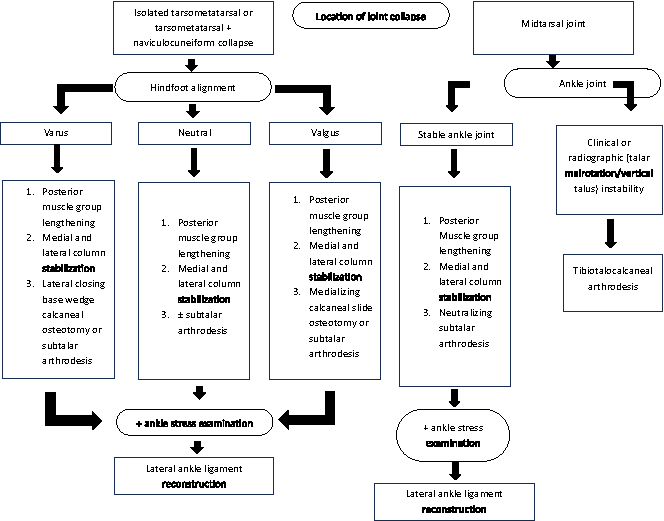
The techniques and algorithm outlined in this report were developed to improve preoperative and intraoperative decision-making with the goals of reducing the need for subsequent surgical intervention or progression to ankle joint breakdown following successful midfoot reconstruction. The algorithm guides decision-making to: first, eliminate deforming forces; second, identify and stabilize at-risk and damaged anatomy; and third, stabilize the ankle joint to reduce the risk of postoperative progression to Charcot collapse of the ankle joint. Prior to following the algorithm illustrated in
Figure 1, perfusion should be assessed to optimize surgical wound healing. Furthermore, the presence of an underlying infection needs to be addressed appropriately when incorporating definitive internal fixation. While this technical note presents a select number of cases to detail respective algorithm pathways, the senior author applied and continues to perform reconstruction using this step-wise approach on more than 100 Charcot reconstructions. Collection and analysis of the following patient information was approved by the University of Maryland School of Medicine Institutional Review Board (HP-00088911).
Figure 1.
Algorithm for order of procedures as indicated to be performed during Charcot reconstruction depending on location of deformity.
Figure 1.
Algorithm for order of procedures as indicated to be performed during Charcot reconstruction depending on location of deformity.
Case 1
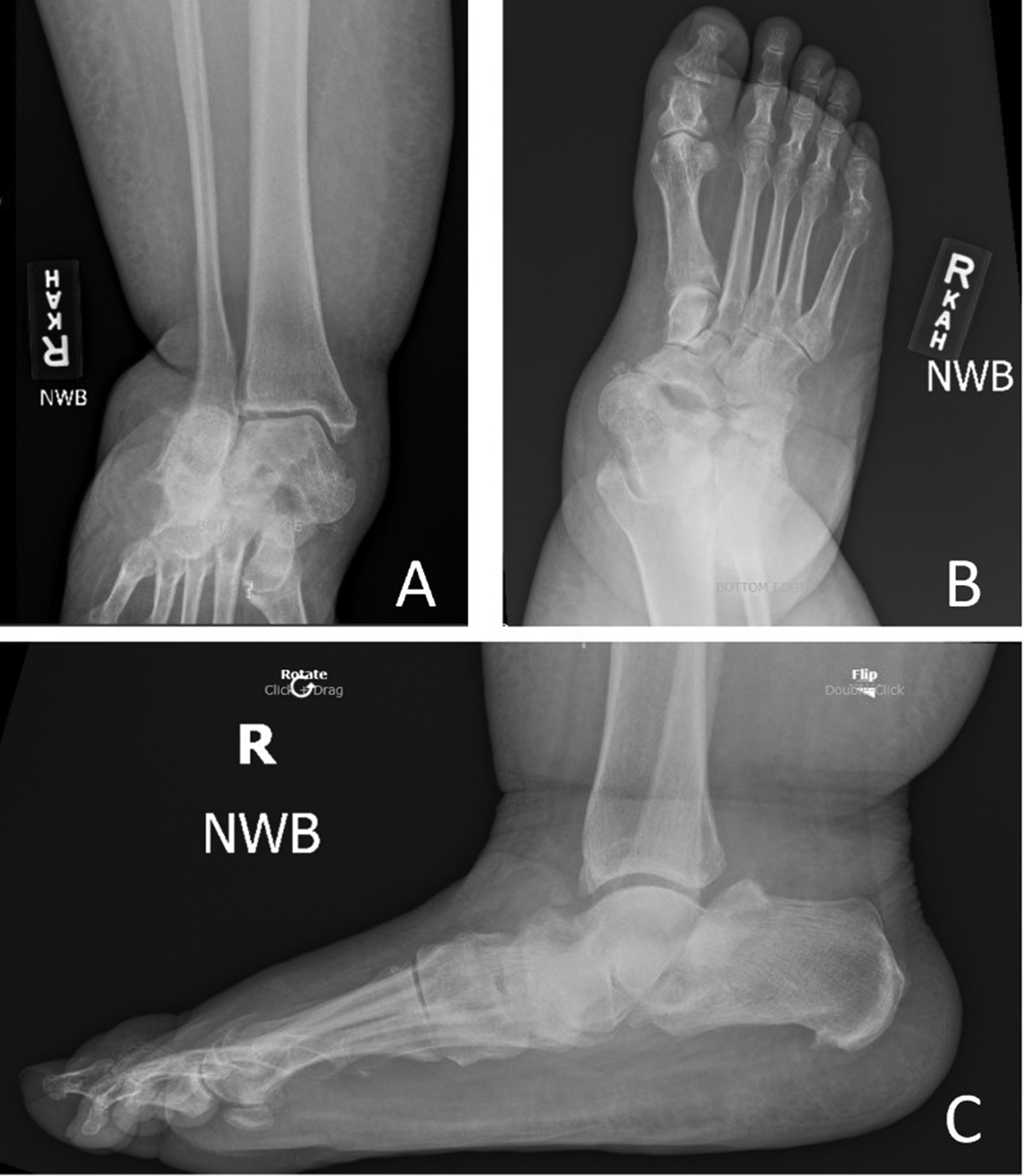
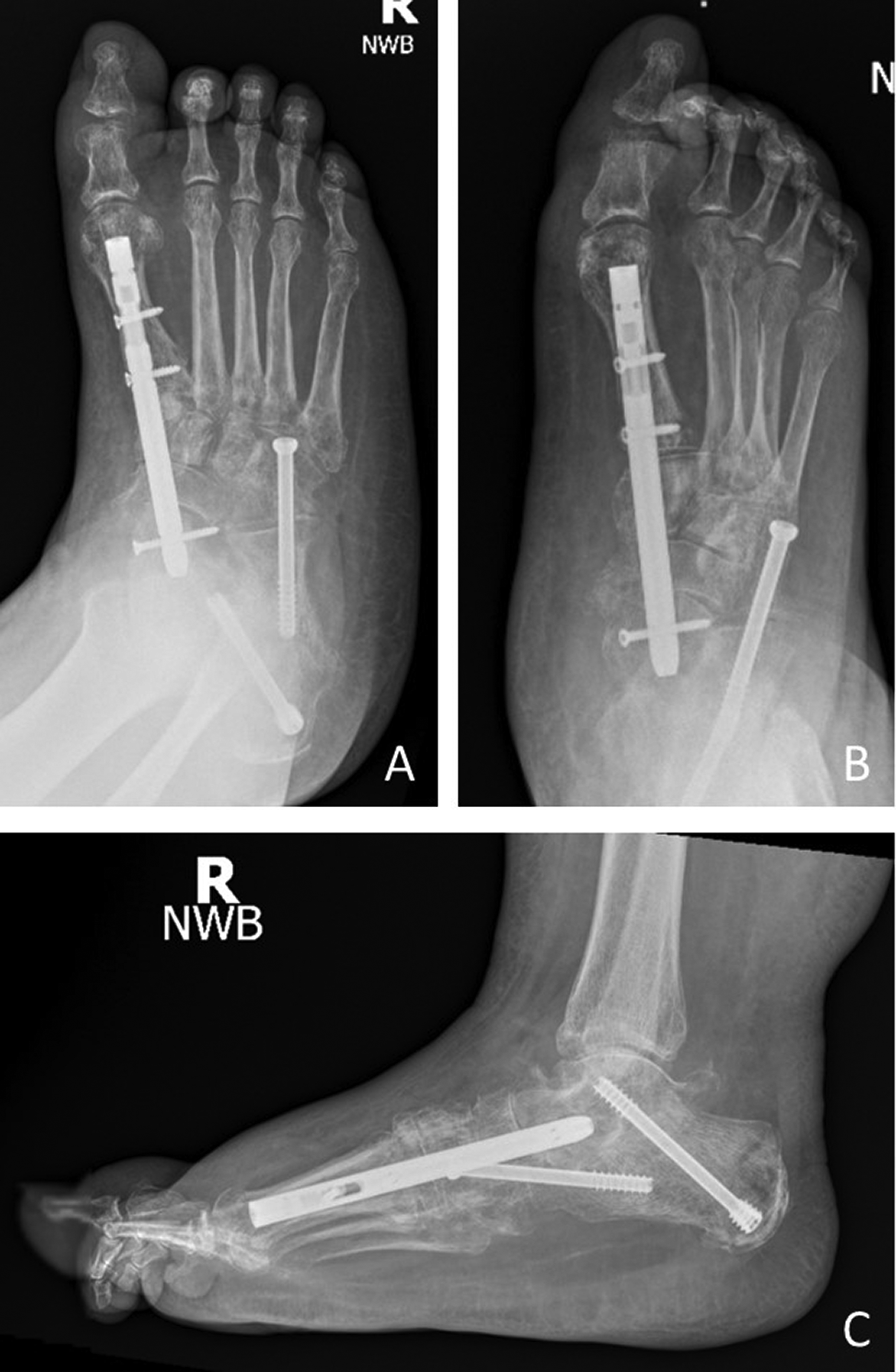
A 47-year-old female patient presented with a grossly deformed, painful, and unstable right foot shown in
Figures 2A and B. She related no history of traumatic injury preceding the encounter. Conservative attempts at bracing, shoe wear modification, and walking with walkers and canes resulted in no improvement to instability or pain reduction. No history of ulceration was reported, though pre-ulcerative plantar foot lesions were noted during the encounter. A semi-reducible hindfoot valgus with forefoot abduction was appreciated. She was unable to perform a single heel raise on the right side, likely secondary to posterior tibial tendon dysfunction given a decrease in strength compared to the contralateral limb. She possessed a positive gastrocsoleal equinus contracture. She reported 0 out of 10 points on the Semmes-Weinstein monofilament test (SWMT) to the right foot and pedal pulses were palpable. Other than type 2 diabetes, past medical history was positive for factor V Leiden mutation and no surgical history was reported.
Figure 2.
Plain (A) anteroposterior ankle (B) foot, and (C) lateral foot nonweightbearing radiographs showing talonavicular and subtalar joint deformity.
Figure 2.
Plain (A) anteroposterior ankle (B) foot, and (C) lateral foot nonweightbearing radiographs showing talonavicular and subtalar joint deformity.
Plain radiographs revealed substantial talar tarsal subluxation, subtalar joint dislocation, calcaneal cuboid derangement, and end-stage degenerative joint disease and narrowing, as shown in
Figures 2A-C. Hindfoot valgus deformity with substantial lateral translation of the calcaneal tuber relative to the tibia was seen. Lack of congruence of the talonavicular joint and posterior facet of the subtalar joint was also appreciated with congruence of the ankle. The patient elected for surgical intervention as she failed a year of conservative management. Specifically, surgery was indicated due to the presence of an unstable foot with pre-ulcerative lesions that offloading or shoe wear modifications could not prevent. In the surgical setting, the order of correction as illustrated in
Figure 1 consisted first of a percutaneous tendoachilles lengthening to address the equinus deformity.
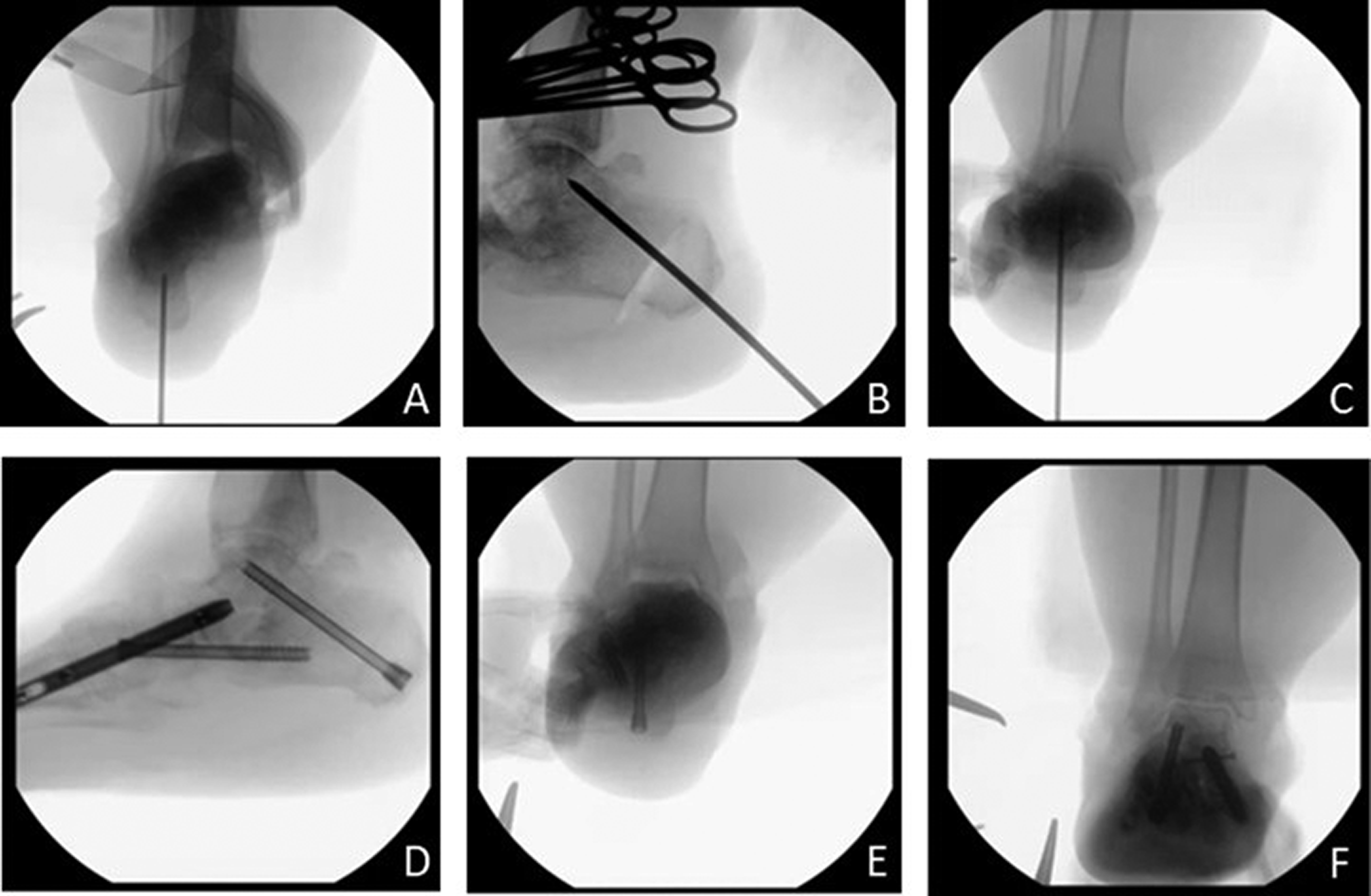
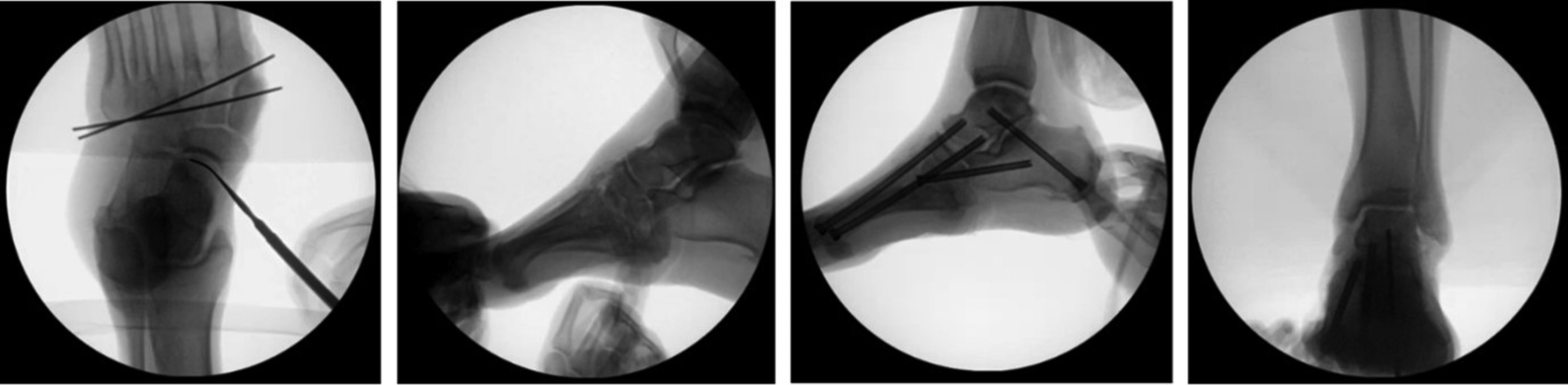
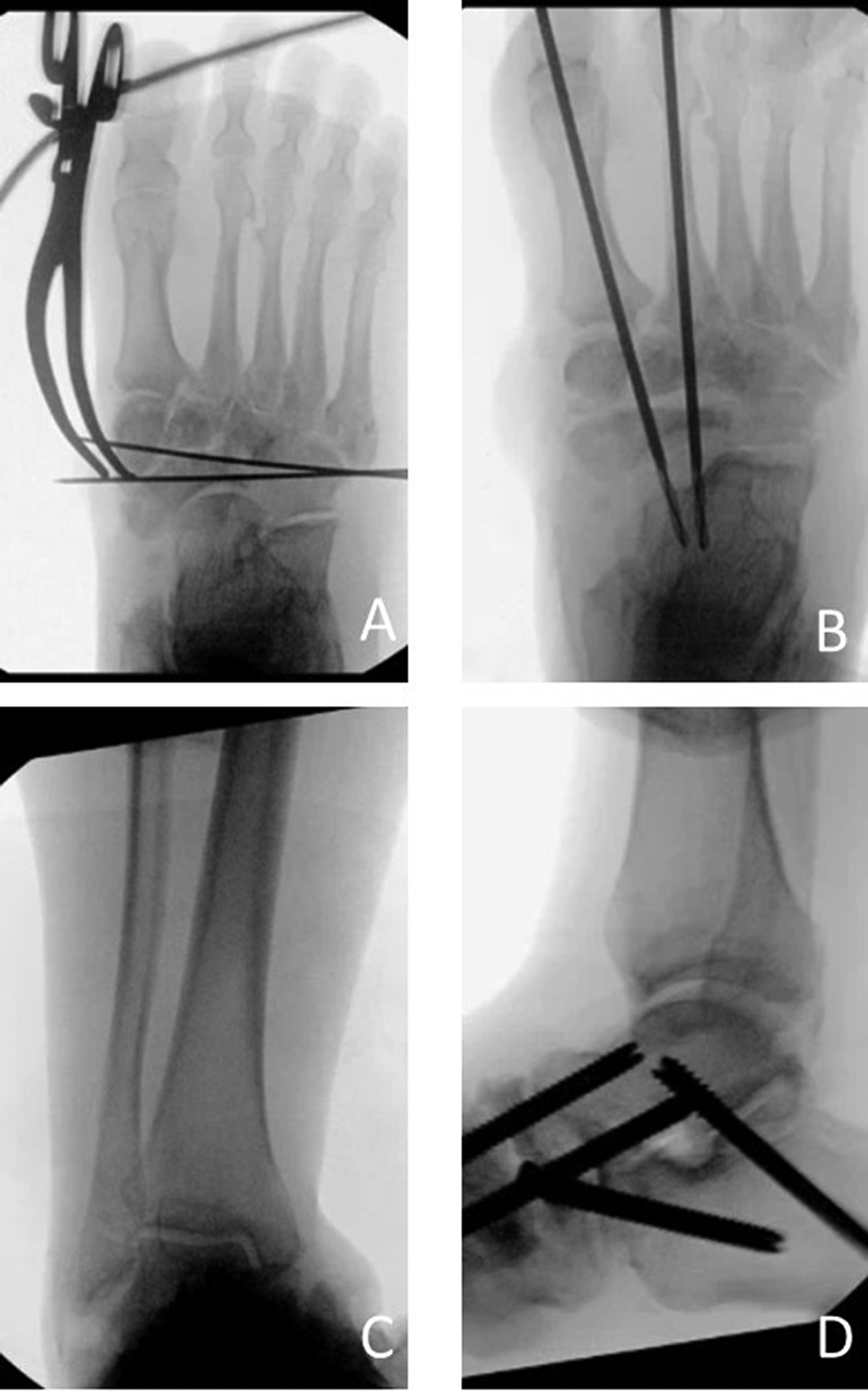
Dissection for both the talonavicular and subtalar joints were performed using a medial and lateral incision, respectively. The hindfoot was then visualized with respect to the tibia, and as the calcaneus appeared lateral to the normal anatomic axis, a medializing calcaneal osteotomy was performed (
Fig. 3A-C). Once neutralized, the tuber fragment was fixated as part of the subtalar joint fusion (
Fig. 3D). Medial column nailing and lateral column beaming were performed to stabilize the midfoot, with attention given to reducing the talonavicular joint by adducting the forefoot while maintaining an elevated talus without inducing a forefoot varus. Inversion stress radiographs revealed an increased talocrural angle (
Fig. 3E). Following an ankle joint capsulotomy, two suture anchors were placed into the distal fibula, with respective sutures passing through the ankle joint capsule and inferior extensor retinaculum and tied down with the foot in a dorsiflexed and everted position (
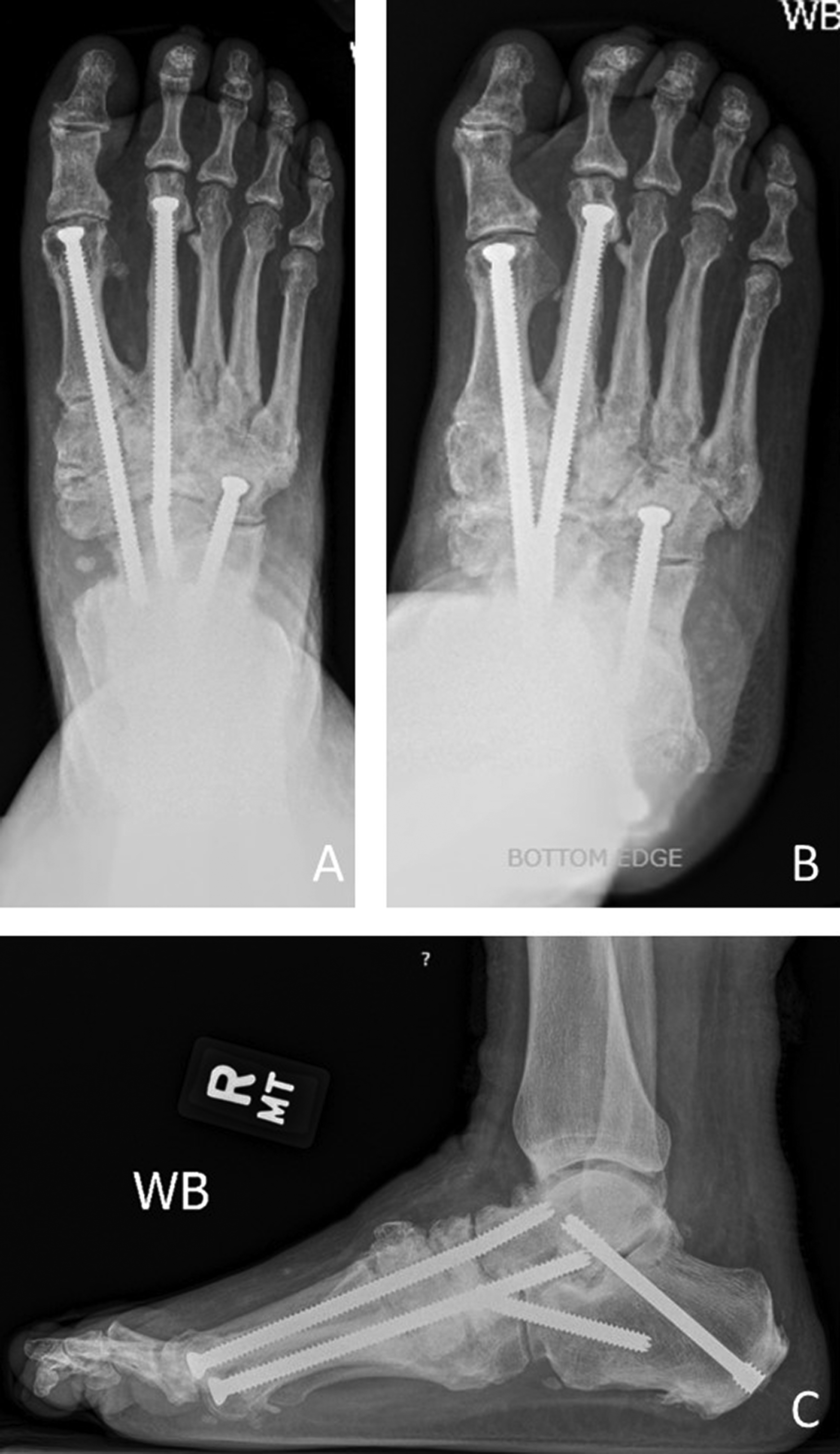
Fig. 3F). The extremity was then splinted for 2 weeks followed by 6 weeks of casting then transitioned into a controlled ankle motion (CAM) boot and finally an ankle-foot orthosis (AFO) (
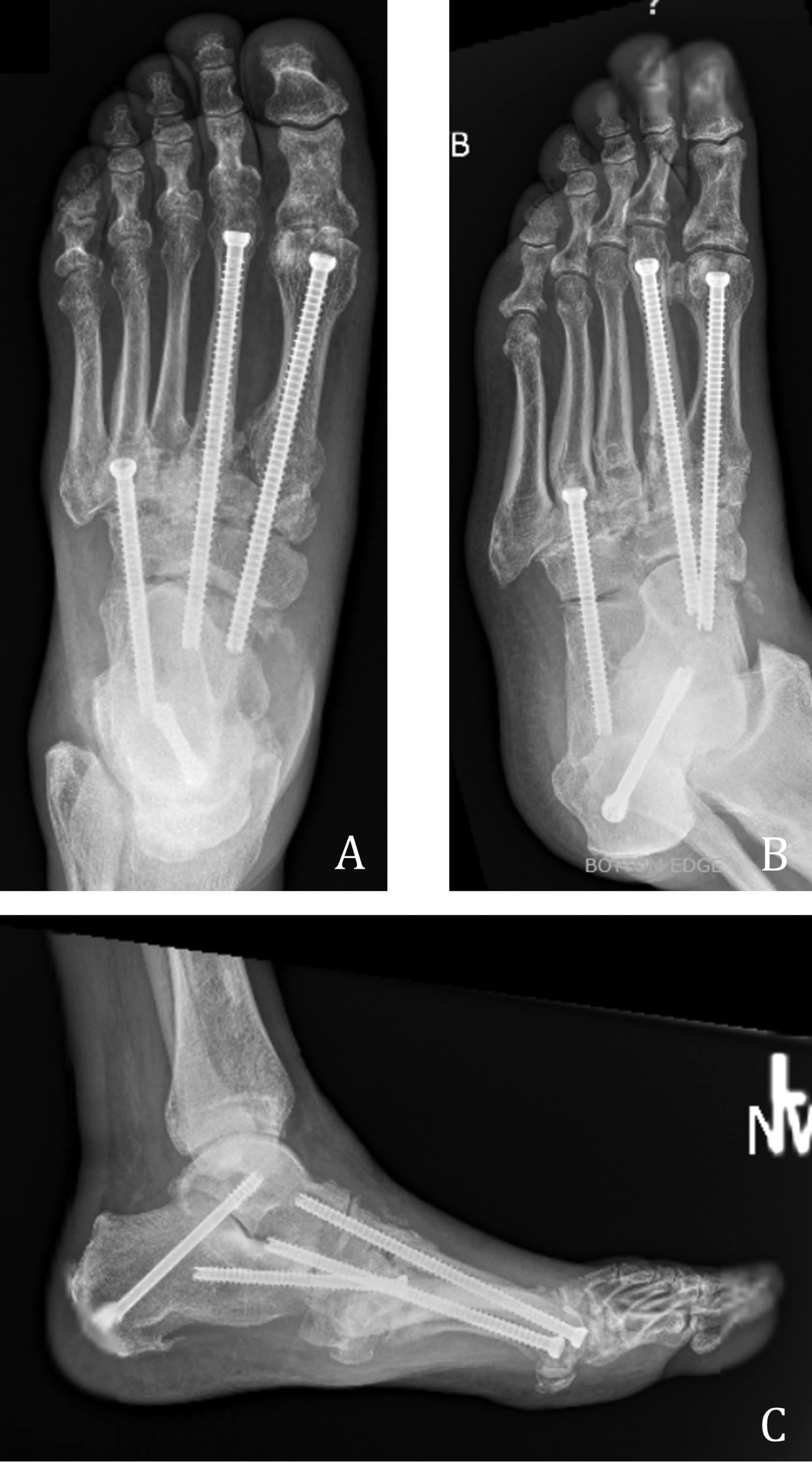
Fig. 4A-C).
Figure 3.
Stepwise reconstruction addressing (A) a laterally translated calcaneus with a (B) calcaneal slide osteotomy and (C) temporary then (D) final fixation followed by stress inversion (E) before and (F) after lateral ankle stabilization.
Figure 3.
Stepwise reconstruction addressing (A) a laterally translated calcaneus with a (B) calcaneal slide osteotomy and (C) temporary then (D) final fixation followed by stress inversion (E) before and (F) after lateral ankle stabilization.
Figure 4.
Postoperative week 4 (A) anteroposterior, (B) oblique, and (C) lateral radiographs evaluating hardware and osseous consolidation progress.
Figure 4.
Postoperative week 4 (A) anteroposterior, (B) oblique, and (C) lateral radiographs evaluating hardware and osseous consolidation progress.
Case 2
A 64-year-old male patient presented with a collapsed medial column and abducted left foot. He had been receiving treatment for an ulceration to the plantar aspect of his medial cuneiform. Conservative attempts at total contact casting assisted with wound closure, but he was unable to transition into other bracing devices without ulceration. He had a grossly deformed, nonreducible forefoot tarsometatarsal dislocation. He was unable to perform a single heel raise on his left side, likely secondary to posterior tibial tendon dysfunction given a decrease in strength compared to the contralateral limb. Furthermore, no equinus contracture was appreciated. He reported no sensation to the left foot, scoring 0 out of 10 on the SWMT. Pedal pulses were palpable. Other than type 2 diabetes, past medical history was significant for atrial fibrillation.
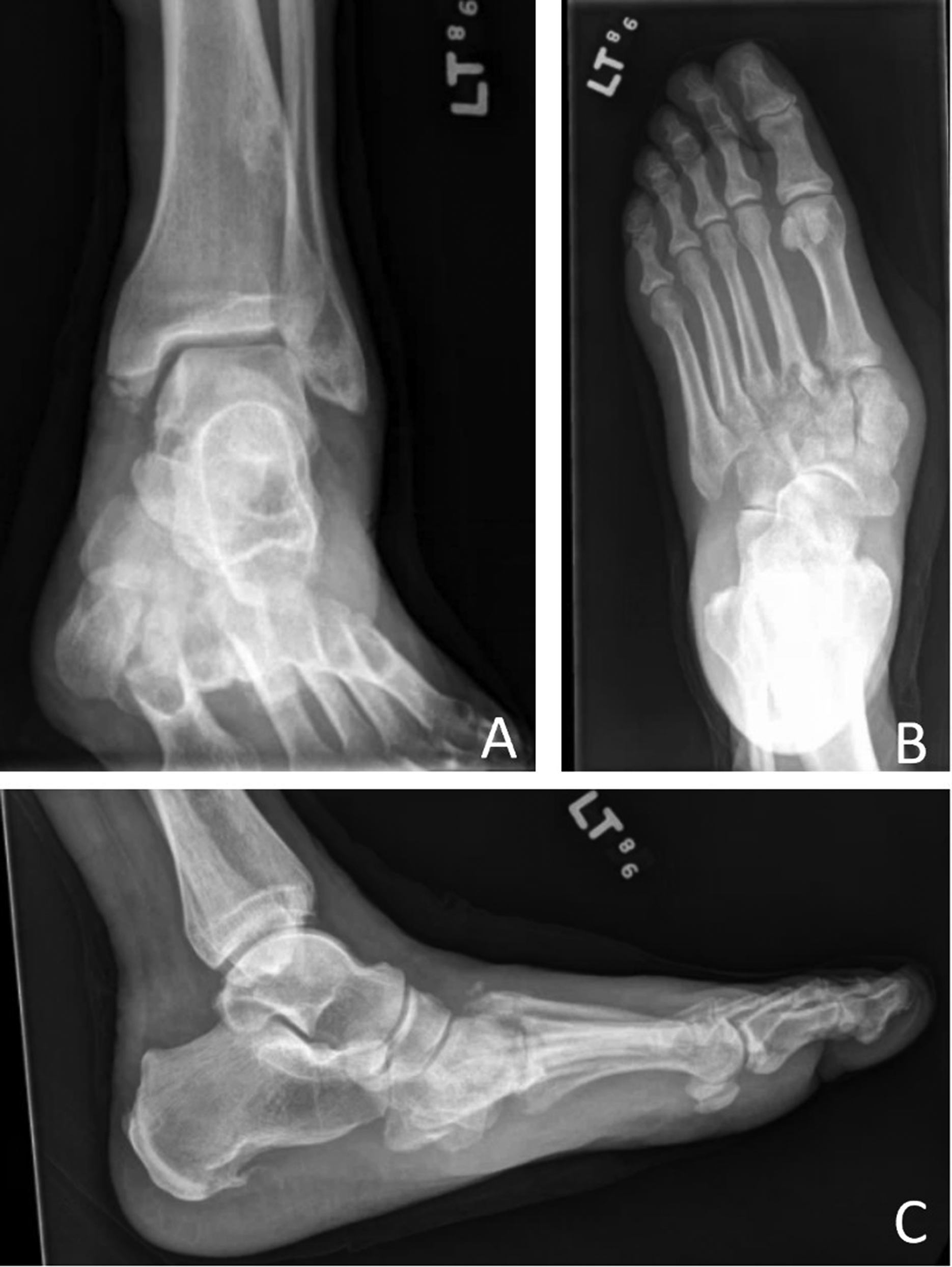
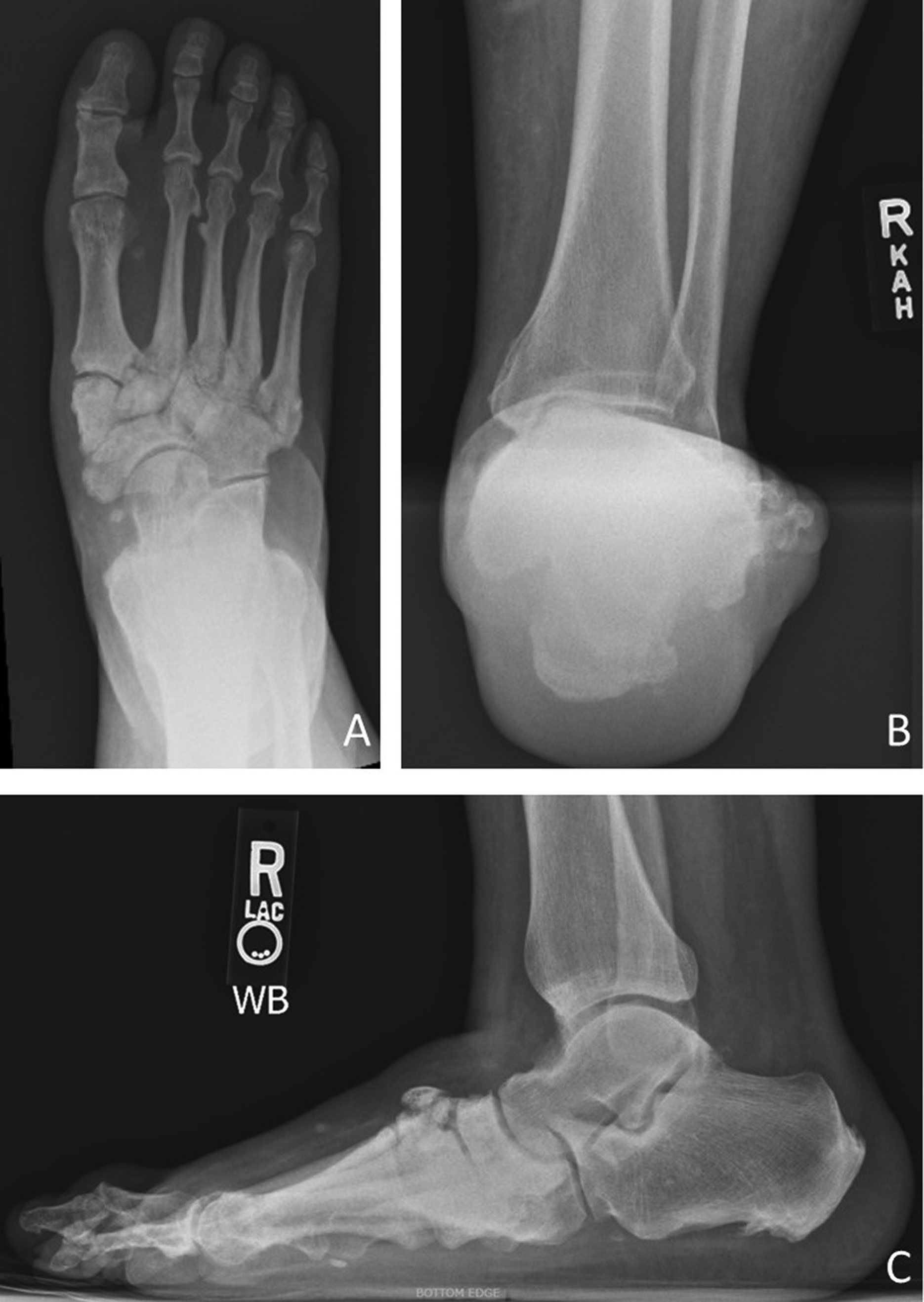
Plain radiographs revealed fragmentation and lateral subluxation of all tarsometatarsal joints with a congruent ankle joint (
Fig. 5A-C). The patient elected for surgical intervention as he failed years of conservative management. Specifically, surgery was indicated due to the presence of an unstable foot in the presence of an open ulceration with concern for deep infection that offloading or shoe wear modifications could not prevent. Prior to the procedure, nuclear medicine scans were performed to rule out any possibility of underlying medial cuneiform infection in presence of chronic ulceration, which were negative.
Figure 5.
Plain nonweightbearing (A) anteroposterior ankle (B) foot and (C) lateral foot radiographs showing tarsometatarsal joint deformity.
Figure 5.
Plain nonweightbearing (A) anteroposterior ankle (B) foot and (C) lateral foot radiographs showing tarsometatarsal joint deformity.
In the surgical setting, the order of correction as described consisted first of a vertical incision made at the level of the tarsometatarsal joint, followed by guidewire placement to allow for the performing of a medial closing wedge osteotomy (
Fig. 6A). A lateral incision was then made to visualize and prepare the subtalar joint for fusion. The calcaneus was already in a neutral position; therefore, a calcaneal osteotomy was not needed as previously indicated prior to fixation. The midfoot, however, was adducted during reduction and fixated with a first and second ray, as well as calcaneal cuboid beam, as shown in
Figure 6B and C. No indication for lateral ligament repair was indicated because there was no increase in talar tilt during intraoperative stress inversion radiographs as shown in
Figure 6D. The extremity was then splinted for 2 weeks, followed by 6 weeks of casting, then transitioned into a CAM boot, and finally an AFO (
Fig. 7A-C).
Figure 6.
Stepwise reconstruction addressing (A) tarsometatarsal abduction with post-wedge resection lateral alignment on (B) simulated weightbearing and (C) fixation followed by (D) stress inversion without need for stabilization.
Figure 6.
Stepwise reconstruction addressing (A) tarsometatarsal abduction with post-wedge resection lateral alignment on (B) simulated weightbearing and (C) fixation followed by (D) stress inversion without need for stabilization.
Figure 7.
Postoperative week 2 (A) anteroposterior, (B) oblique, and (C) lateral radiographs evaluating hardware and osseous consolidation progress.
Figure 7.
Postoperative week 2 (A) anteroposterior, (B) oblique, and (C) lateral radiographs evaluating hardware and osseous consolidation progress.
Case 3
A 57-year-old male patient presented with a collapsed medial column of the right foot. Although he had been diagnosed with Charcot neuroarthropathy for 1 year prior to the encounter, no ulceration ensued. He was placed in multiple bracing devices, however, within the 2 months prior to the encounter, his midfoot became unstable and difficult to brace. He had a grossly deformed, nonreducible tarsometatarsal and naviculocuneiform degeneration. He was unable to perform a single heel raise on his right side without an equinus contracture. He reported no sensation to the right foot, feeling 0 out of 10 points during the SWMT. Pedal pulses were palpable. Other than type 2 diabetes, his past medical history was unremarkable. He underwent a right foot sesamoidectomy 2 years prior to the encounter due to concern for an underlying infection secondary to an open wound.
Plain radiographs revealed sclerosing of the tarsus and tarsometatarsal joints with minimal fragmentation appreciated. There was an observable exostosis noted at the dorsal aspect of the second and third metatarsals bases, with a congruent ankle joint (
Fig. 8A-C). The patient elected for surgical intervention as he failed years of conservative management. Specifically, surgery was indicated due to an unstable foot that could not tolerate bracing or shoe wear modification. In the surgical setting, the order of correction as described consisted first of a vertical incision made at the level of the naviculocuneiform joint, followed by guidewire placement to allow for the performing of a medial closing wedge osteotomy (
Fig. 9A). A lateral incision was then made to visualize and prepare the subtalar joint for fusion. As the calcaneus was already in a neutral position, no need for calcaneal osteotomy was indicated prior to fixation. The midfoot, however, was adducted during reduction and fixated with a first and second ray as well as calcaneal cuboid beam (
Fig. 9B). Though the talar tilt was not necessarily grossly pathologic during stress inversion (
Fig. 9C), a lateral ligament repair was indicated due to increase in anterior talar extrusion with a positive drawer test (
Fig. 8D). The extremity was then splinted for 2 weeks, followed by 6 weeks of casting, then transitioned into a CAM boot, and finally an AFO (
Fig. 10A-C).
Figure 8.
Plain nonweightbearing (A) anteroposterior ankle (B) Saltzman and (C) lateral foot radiographs showing tarsal and tarsometatarsal joint deformity.
Figure 8.
Plain nonweightbearing (A) anteroposterior ankle (B) Saltzman and (C) lateral foot radiographs showing tarsal and tarsometatarsal joint deformity.
Figure 9.
Stepwise reconstruction addressing (A) tarsal abduction with wedge resection (B) temporary fixation prior to definitive beaming (C) stress inversion, and (D) positive anterior-drawer indicating need for stabilization.
Figure 9.
Stepwise reconstruction addressing (A) tarsal abduction with wedge resection (B) temporary fixation prior to definitive beaming (C) stress inversion, and (D) positive anterior-drawer indicating need for stabilization.
Figure 10.
Postoperative week 2 (A) anteroposterior, (B) oblique, and (C) lateral radiographs evaluating hardware and osseous consolidation progress.
Figure 10.
Postoperative week 2 (A) anteroposterior, (B) oblique, and (C) lateral radiographs evaluating hardware and osseous consolidation progress.
Discussion
Surgical reconstruction of the neuropathic midfoot remains challenging with varying rates of complication and failure [
8,
12,
13]. In our experience, the intraoperative decision-making algorithm we present allows for correction of deformity with neutralization of deforming forces and stabilization of at-risk structures. We believe that failure to fully address the components of the algorithm may lead to failure of the reconstruction at the midfoot or progression to postoperative neuropathic collapse of the ankle joint. This algorithm can be applied regardless of ulceration or infection and can be approached in a staged manner. We have used an isolated internal fixation, isolated external fixation, or hybrid internal/external fixation with this approach. Ultimately, by following the described algorithm, these authors found utility in employing step-wise and reproducible methodology to address this deformity.
The historical goal of Charcot foot reconstruction has been to restore the foot to a braceable and plantigrade architecture with elimination of ulceration [
3,
4,
7]. Recent studies support elevating expectations to achieving independent ambulation utilizing commercial shoes, as life-long bracing has a negative impact on quality of life [
14]. Correction of deformity with subsequent breakdown requiring permanent bracing or immobilization can no longer be broadly classified as a surgical success in Charcot reconstruction. Surgical reconstruction must be resilient to future functional requirements. The algorithm discussed here provides an outline to achieve a plantigrade and stable foot through preoperative and intraoperative identification of deforming forces and at-risk structures. When recognized, neutralization of deforming forces and stabilization of at-risk anatomy allows for a more resilient reconstruction.
In our experience, collapse at the midtarsal joint is strongly associated with poor ankle joint integrity and talar insufficiency. For this reason our algorithm illustrated in
Figure 1 begins with identification of the location of joint collapse with breakdown at the talonavicular joint (Case 2) following a different decision-making tree from patients exhibiting breakdown at the and tarsometatarsal joints and naviculocuneiform joints (Case 2). As posterior muscle group contracture has long been accepted as the primary deforming course in the development of midfoot Charcot collapse, this is first universally addressed with posterior muscle group lengthening in either deformity pattern [
4,
15–
17]. Similarly, in the cases presented in this report, the equinus deformity evaluated in Case 1 was addressed with a tendo Achilles lengthening.
Our group also believes that hindfoot alignment has a critical influence on development of the neuropathic midfoot, and we feel neutralization of the hindfoot alignment is critical to prevent recurrent ulceration or progression to Charcot collapse of the ankle joint [
18]. As shown in Case 1, the laterally translated and valgus calcaneus was able to be relocated underneath the talus and tibia to realign with the tibial anatomic axis. Once the foot is stabilized as a single osseous segment following successful reconstruction, any ankle capsular or ligamentous attenuation can lead to neuropathic injury and overload. We routinely evaluate the ligamentous integrity of the ankle joint and augment midfoot reconstruction with ankle ligament stabilization or reconstruction as needed [
18]. Further demonstrated in Case 1, where stress inversion was performed at the end of the reconstruction and subsequently addressed (
Fig. 3 E and F). In Case 2, no instability is appreciated and no need for stabilization is warranted though in Case 3, a positive anterior drawer test required lateral ankle stabilization (
Fig. 9D).
In conclusion, degeneration following Charcot neuroarthropathy affects both osseous and connective tissue and should be addressed accordingly [
1,
19,
20]. We present an algorithm for guidance in surgical treatment of the neuropathic midfoot through both anatomic alignment and soft-tissue reconstruction. The algorithm allows for proximal and distal stabilization of the affected joints, neutralization of the hindfoot alignment, and stabilization of the ankle joint. In our experience this approach minimizes surgical error and can be used to guide preoperative planning and intraoperative decision-making. Combined with a detailed metabolic, infectious, and vascular workup, this algorithm can be used in the comprehensive management of midfoot Charcot.