Cuboid fractures are rare and often are associated with other midfoot injuries [
1]. Overall, there is a low incidence of cuboid fractures compared with other fractures of the foot. Although injuries to the cuboid are relatively rare in incidence, appropriate management remains vital. The lateral column is important biomechanically to overall foot function [
1,
2]. The cuboid is crucial to the lateral column. It contributes to adaptive mobility and is associated with motion to the midtarsal and tarsometatarsal joints [
3]. Historically, surgical management of cuboid fractures has included open reduction and internal fixation, application of external fixation, or primary arthrodesis of the calcaneocuboid joint [
4,
5]. Sequelae from cuboid fractures can be challenging to manage. Secondary procedures for poor outcomes of nonoperative and operative patients have included lateral column lengthening, calcaneocuboid arthrodesis, corrective osteotomy, bone resection, or interposition arthroplasty [
4,
6,
7,
8]. Although the interpositional arthroplasty procedure is not complex, personal clinical experience indicates that when performed, most patients receive only short-term relief. Unfortunately, it is common for pain relief to subside after a year from the procedure. Corrective osteotomies to restore length and morphological features to the cuboid may be more technically difficult to perform. Precision with osteotomies and grafting can be challenging. The exact length and morphological features of pre-injury native cuboid may be difficult to achieve. Although arthrodesis can provide good outcomes, it is not without its own potential sequelae [
6,
9]. As with any attempted arthrodesis, nonunion can be a complication and can be symptomatic postoperatively. Previous literature has documented increased force to adjacent joints surrounding the arthrodesis [
4]. This case study documents a novel technique in the treatment of posttraumatic arthritis with a shortened, deformed lateral column from previous cuboid compression fracture with a custom three-dimensional (3-D)–printed total cuboid replacement.
Case Report
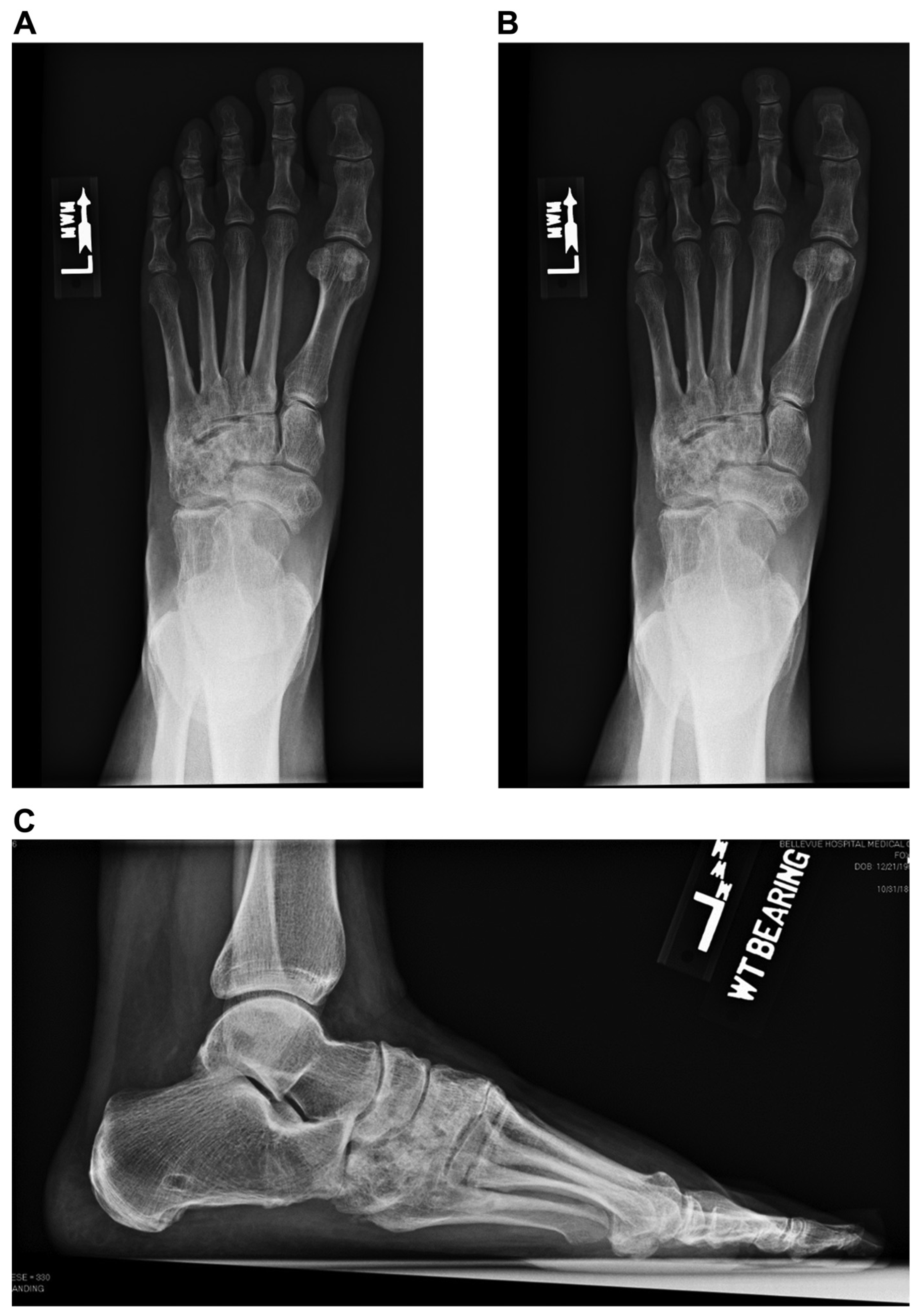
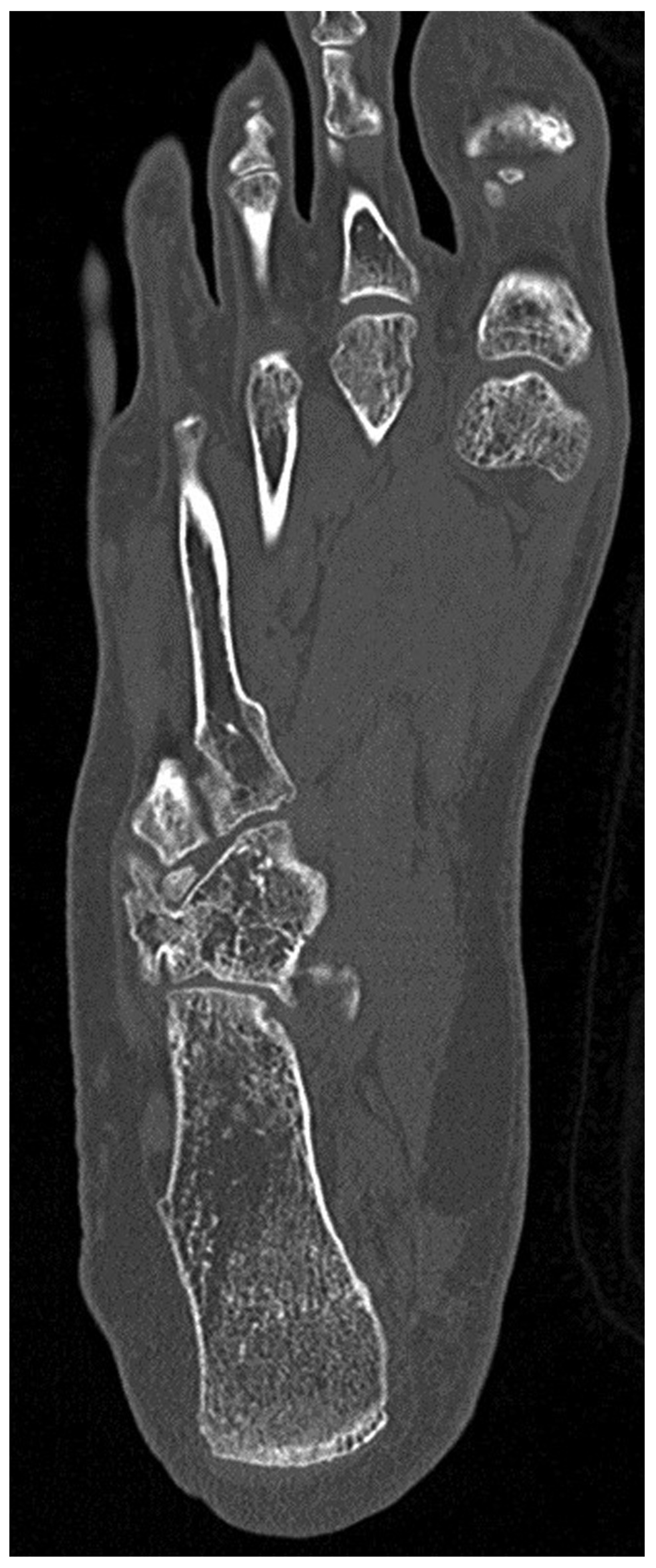
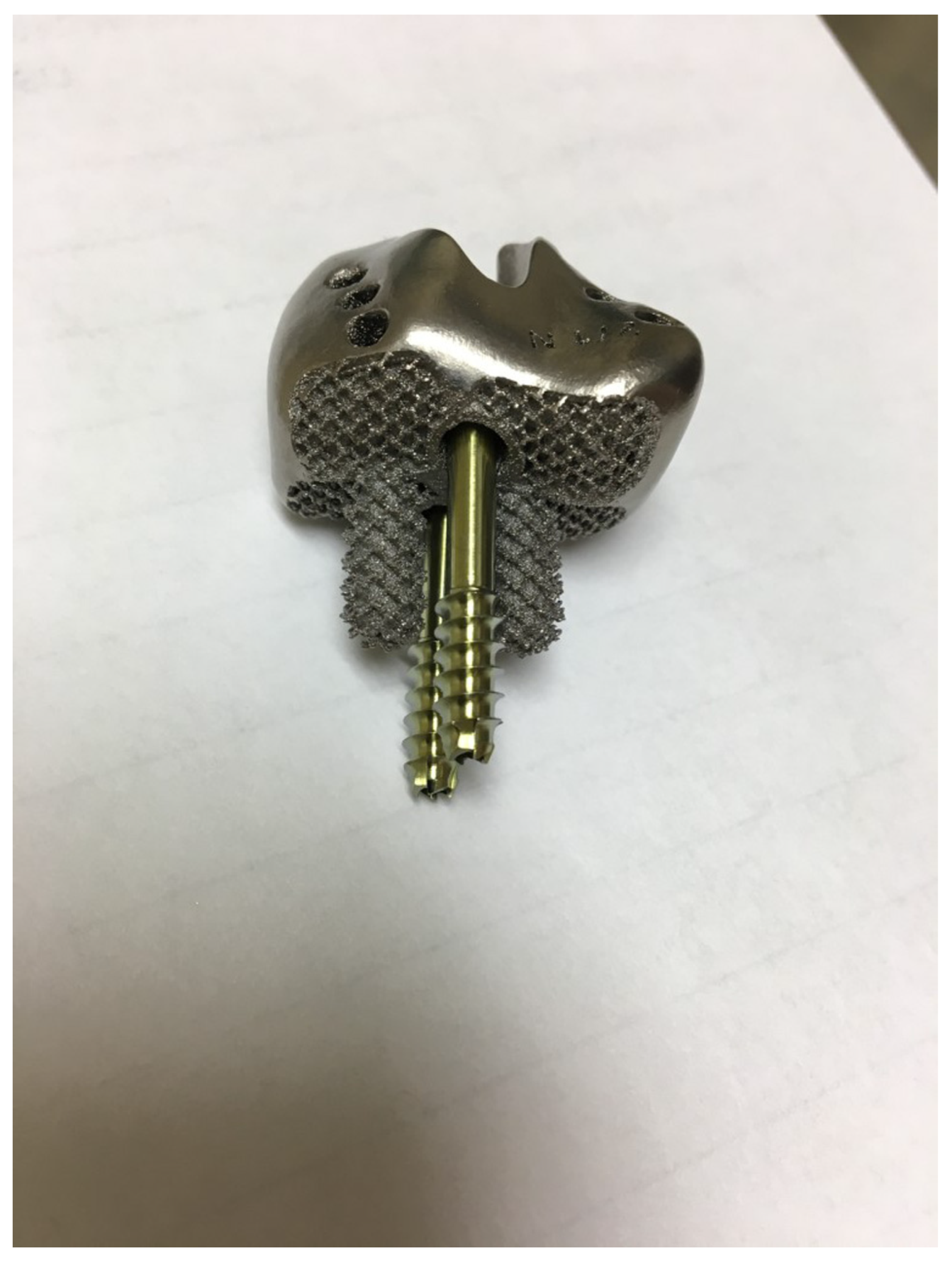
A 51-year-old woman presented with a history of a motor vehicle accident 12 years earlier. She sustained a Lisfranc fracture along with a compressed cuboid fracture. She was treated definitively with external fixation. She noted lateral column pain as well as less severe medial and central column pain of the left foot. She did not experience relief with nonsurgical treatment, including oral nonsteroidal anti-inflammatory drugs, orthotic devices, corticosteroid injections, and a custom Arizona brace. Radiography and computed tomography (CT) demonstrated post-traumatic arthritis and a shortened and deformed lateral column as a result of a cuboid compression fracture (
Figure 1 and
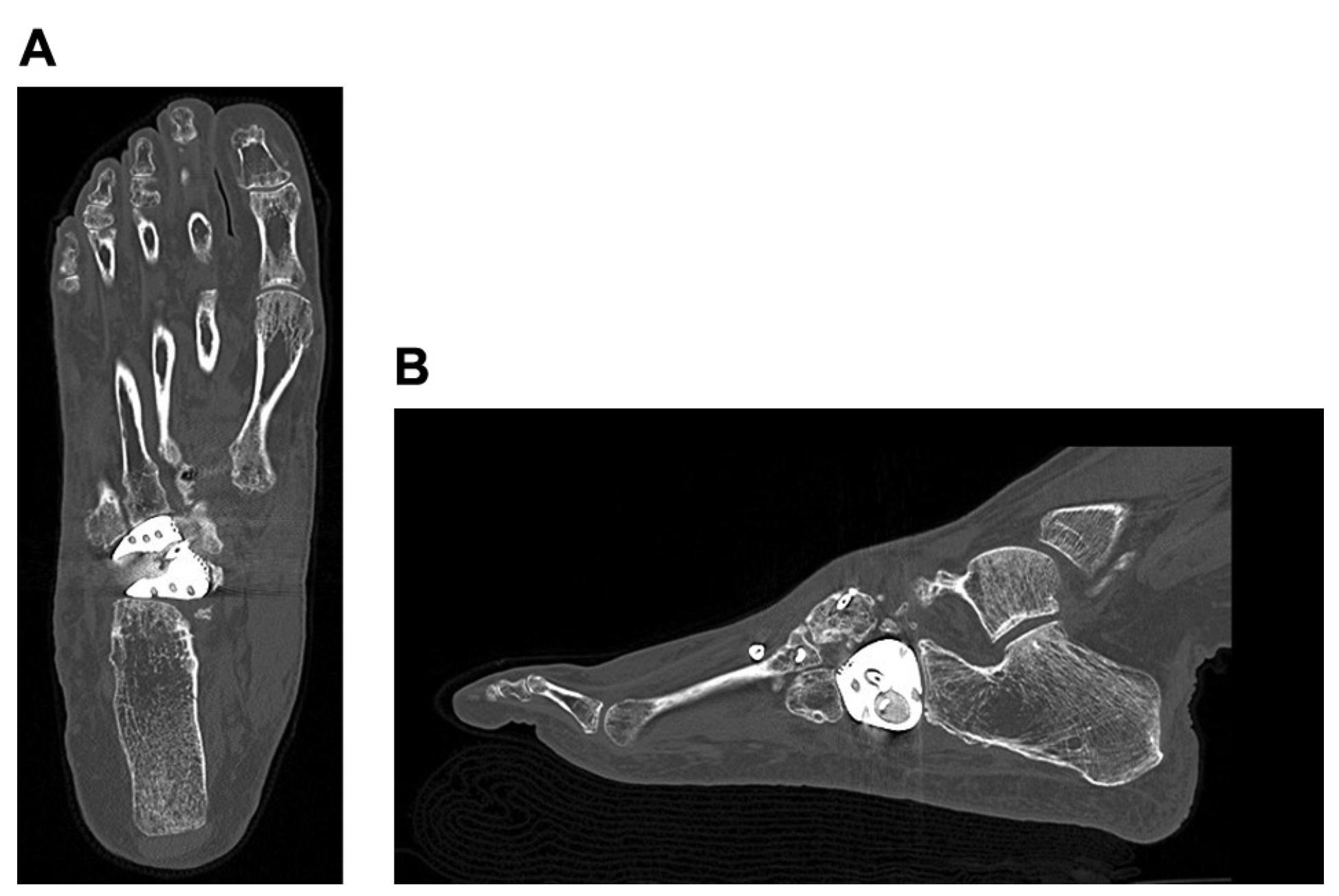
Figure 2). On physical examination, the maximal point of tenderness was located to the lateral column, specifically to the cuboid. There was also associated tenderness to the first, second, and third tarsometatarsal joints, but less severe. Contralateral foot CT was performed to create an inverted variant for nominal anatomy of the affected cuboid. The customdesigned cuboid implant was obtained from Additive Orthopaedics (Little Silver, New Jersey). The design of the custom implant allowed for multiple points of fixation to adjacent osseous structures while also allowing motion with the distal and proximal cuboid articulations. The nonarticular medial aspect, including implant pegs, were designed with porous proprietary lattice structure purposed for promoting bony ingrowth and biological fixation. This aspect of the implant included a rough surface finish to increase friction at the lateral cuneiform and implant interface. The remainder of the implant, including the distal and proximal articulations, had highly polished surfaces to decrease friction at the implant-joint interface. The inferior surface of the implant incorporated a groove for the peroneal longus muscle. Eyelets were also incorporated at articular interfaces to allow for ligament and capsular attachments. Two 6.0-mm pegs were designed to be anchored into the lateral cuneiform. The patient underwent left cuboidectomy with replacement using a custom 3-D–printed total cuboid implant made of titanium alloy. The cuboid implant was secured into the lateral cuneiform using stems as well as additional screw fixation (
Figure 3). Concomitant procedures consisted of first, second, and third tarsometatarsal joint fusions; harvest of distal tibial bone graft; and gastrocnemius recession.
Operative Technique
Surgical treatment of the right lower extremity was performed under general anesthesia, and the patient received a preoperative regional nerve block. The patient was placed into a supine position with the use of an ipsilateral hip bump. A pneumatic thigh tourniquet at 300 mm Hg was used during the entirety of the case. An incision was placed from the distal tip of the fibula to the base of the fourth and fifth metatarsals. Access and complete visualization of the cuboid was obtained. A saw, osteotomes, and bone rongeurs were used to resect the native cuboid. The cuboid was deformed and arthritic, although there were no cartilage defects or fullthickness erosions to the adjacent joint surfaces. Exposure of the lateral cuneiform was obtained, and the lateral facet was prepped with curets and osteotomes. Once the medial three columns at the Lisfranc joint complex were prepped for fusion, cuboid trials were used. Fluoroscopy confirmed that the nominal-sized trial allowed for ideal deformity correction as well as lateral column length restoration. Kirschner wires were used in the guide hole of the cuboid trial for the lateral pegs of the implant. A 5.0-mm cannulated drill was used to create guide holes for the permanent implant’s pegs. The trial was removed and the surgical site was copiously irrigated with normal saline and low-concentration chlorhexidine gluconate 0.05% in sterile water. Distal tibial autograft was obtained by using the Hensler Bone Press (Hensler Surgical Products, Wilmington, North Carolina), which facilitates easy handling of cancellous bone graft by separating morselized bone from the liquid component of harvested autograft. The obtained morselized solid bone graft was packed into the trabecular lattice of the permanent implant including the pegs. The permanent cuboid implant was placed into the previously drilled peg holes. The implant was secured by placing 4.0-mm headed screws into the lateral cuneiform using the predetermined holes in the implant. Fluoroscopy was used to confirm the position of the implant. Adjacent joints were stressed under fluoroscopy, and there was no subluxation or dislocation. Adjunctive procedures were performed, and final stress fluoroscopy demonstrated a stable midfoot with no peri-implant dislocation or subluxation. Final copious irrigation was performed, and incisions were closed in layered fashion.
Postoperative Course
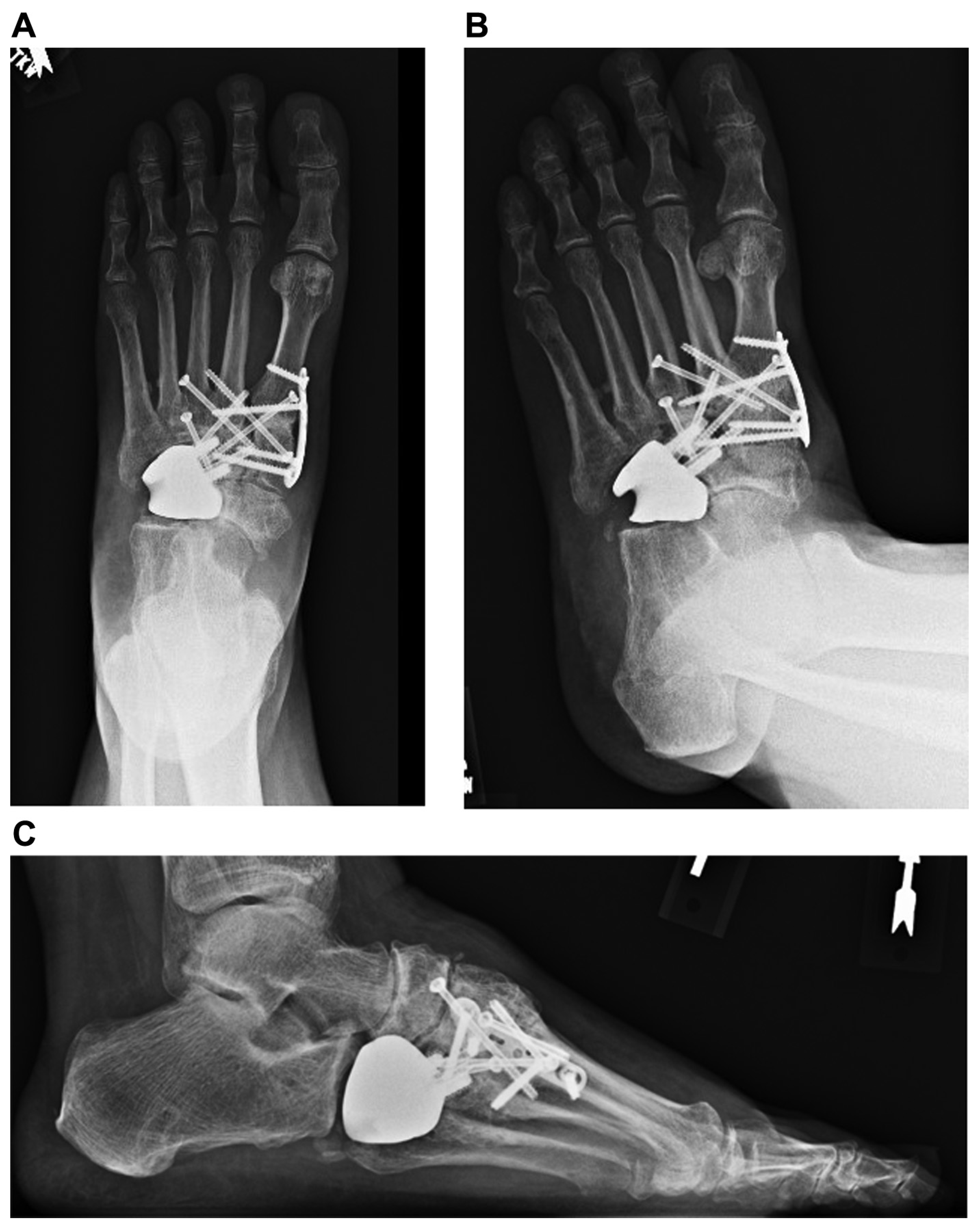
The right lower extremity was placed into a wellpadded splint immediately after the procedure while in the operating room. The patient was nonweightbearing to the right lower extremity and was seen 1 week postoperatively. She was placed into a short-leg cast and continued to be nonweightbearing to the operative extremity. At 3 weeks, all incisions were healed and sutures were removed. At this time, the patient was transitioned to a CAM boot while maintaining her nonweightbearing status. At 6 weeks, the patient was seen and continued to be nonweightbearing, except for using the heel for transferring while in the boot. At 8 weeks, the patient was permitted protective weightbearing only while in the boot as tolerated. At 12 weeks, the patient transitioned into normal supportive shoes as tolerated with the assistance of an ankle-stabilizing brace. Computed tomographic scans were obtained 3 and 12 months postoperatively for further evaluation of bony ingrowth into the medial surface of the implant, including the pegs (
Figure 4 and
Figure 5). At the most recent follow-up, the patient has returned to work in normal shoes and is able to perform walking job duties for 8 hours a day. She uses an anklestabilizing brace with normal shoes for higherdemand activities as needed.
Results
Preoperative American Orthopaedic Foot and Ankle Society, American College of Foot and Ankle Surgeons, physical component summary, and mental component summary scores were 31, 32, 21.99, and 49.10, respectively; postoperative scores at 1-year follow-up were 77, 72, 36.09, and 61.91, respectively. The length of patient follow-up was 18 months. A CT scan was obtained 1 year postoperatively and demonstrated a stable implant with no change in position or alignment (
Figure 5). The imaging also demonstrated some degree of bony ingrowth which is difficult to quantify. The patient is now wearing normal shoes and has a significantly decreased amount of pain from her preoperative status. Also, the patient walks without an assistive device and uses an athletic ankle-stabilizing brace as needed with higher-demand activities. The patient also reports satisfaction with the procedure and would elect to undergo the procedure again. She returned to work at 4 months and performs continuous standing for 40 hours per week.
Discussion
Three-dimensional printing, which is relatively new to foot and ankle surgery, can provide an array of potential solutions to atypical or difficult pathologic disorders in reconstructive foot and ankle surgery. Three-dimensional printing has been documented using patient-specific total talus, revisions with first metatarsophalangeal joint arthrodesis, or as structural scaffolds. In conjunction with advanced imaging, 3-D printing allows for patient-specific designs, which restores exact native morphological features. There is the argument of whether exact restoration of length and morphological features is absolutely vital for improved outcomes. However, displacement of any amount or change in morphological features to the articular surface certainly alters foot mechanics and force. The attempt to restore preinjury range of motion and native length strives to achieve overall asymptomatic foot function. Also, 3-D printing facilitates easier incorporation of other adjunctive procedures requiring potential fixation in the designed implant. Use of a total cuboid replacement is more precise in restoring native lateral column length than is a corrective osteotomy or distraction arthrodesis. Also, it avoids the difficulty of making a precise osteotomy and maintaining exact length with fixation and/or a wedge bone graft. Arthrodesis of the lateral column can result in a variety of symptomatic sequelae, including nonunion, loss of inherent adaptive mobility, and increased force to adjacent joints. The total cuboid replacement maintains adaptive mobility to proximal and distal articulations. Although interpositional arthroplasty to the fourth and fifth tarsometatarsal joints can provide asymptomatic relief, there is a question of its duration for long-term relief. The metal construct of cuboid replacement is designed for longevity, resisting any change in length.
Postoperative imaging, including a CT scan, is useful for evaluation of the implant’s stability. Also, this imaging evaluates bony ingrowth. Although, the degree of bony ingrowth can be difficult to fully evaluate. Further research regarding bony ingrowth into porous implants certainly will be beneficial for further applications and understanding of 3-D– printed implants in foot and ankle surgery.
A custom 3-D–printed cuboid replacement executes precise restored length of the lateral column and maintains adaptive mobility. Due to the ability of 3-D printing, the implant is completely custom, allowing the surgeon to design variations for diverse fixation. This case report demonstrates the use of 3-D printing for a patient-specific implant as a total bone replacement. The patient achieved a significant amount of pain reduction and restored most foot function. The patient continues to be satisfied with the procedure and would elect to have it performed again if given the same circumstances. As with other total bone replacements in the lower extremity, it remains a question of implant wear and durability. The 18 months of follow-up with this patient does show encouraging results for implant wear and durability. Subsidence of the implant and overall failure remain as potential complications. This cuboid replacement with 3-D–printed technology is novel; therefore, future cases and investigations are paramount for determining longevity and wear on adjacent anatomy. Because this is a novel procedure, it is imperative to continue to decide on general criteria for patient selection. This should be addressed moving forward with further applications of 3-D printing for foot and ankle reconstruction. In conclusion, this case study demonstrates safe use of a 3-D–printed total cuboid replacement for a post-traumatic arthritic and shortened lateral column as sequela from a previous cuboid compression fracture.