Calciphylaxis is a rare life-threatening disease of cutaneous ischemic necrosis that presents as painful violaceous plaques that evolve into stellate ulcerations with a predilection for the trunk and lower extremities. The progression of the disease is attributable to arteriolar calcification of small vessels with subsequent thrombosis and skin necrosis. This condition occurs most commonly in those with end-stage renal disease, with prevalence ranging from 1% to 2% and as high as 4.1%.[
1,
2] The disease can also occur without end-stage renal disease, known as nonuremic calciphylaxis, with causes including hyperparathyroidism, diabetes, obesity, liver disease, corticosteroid use, metastatic malignancies, prolonged warfarin therapy, prior gastric bypass surgery, female sex, Caucasian race, hyperphosphatemia, hypercoagulable states, vitamin K deficiency, autoimmune diseases, and ultraviolet ray exposure.[
1,
–
5] The biological explanation for female predominance with a 2:1 ratio and higher prevalence in Caucasian versus nonwhite races is unclear.[
6]
Nonuremic calciphylaxis is more rare than the uremic type. The mortality rate exceeds 50%, with death caused by sepsis in half of cases. Death typically occurs from 2 weeks to 1 year after diagnosis.[
4,
6]
The cutaneous manifestation of calciphylaxis can mimic many dermatologic conditions including venous stasis ulcerations, pyoderma gangrenosum, purpura fulminans, necrotizing fasciitis, cholesterol embolism, cellulitis, lupus panniculitis, and others.[
1,
7] The diagnosis of calciphylaxis should be based on both clinical and pathologic criteria. Warfarin-induced skin necrosis is a differential diagnosis commonly mistaken for or confused with calciphylaxis. Many reports in the literature have discussed these two conditions and how to differentiate between them.[
3,
6,
8] Bataillard et al[
9] discussed the timeline of warfarin therapy being the key difference between the diagnoses. The authors noted that warfarin-induced skin necrosis occurs at the onset of warfarin therapy, with wounds presenting as early as day 1 and peaking at day 3 and rarely presenting beyond day 10. When associated with nonuremic calciphylaxis, however, warfarin therapy is often already long established, with therapy ranging from 1 month to many years.[
3,
6,
8,
10] Saifan et al[
10] stated, however, that warfarin-induced skin necrosis usually presents between days 3 and 10 of warfarin therapy but can occur as late as 15 years. The paucity of citations in the literature and the rarity of cases makes differentiation all the more complicated.
The pathophysiology of calciphylaxis is still not well understood. Several authors have described the accumulation of vascular calcification in either the tunica media or vessel lumen and tunica intima layers of small- and medium-sized arteries.[
3,
7,
8,
10,
11] Warfarin has been linked to this process by many authors in the literature. The drug causes a state of procalcification by inhibiting vitamin K–dependent matrix Gla protein, an extracellular protein that prevents arterial calcium deposition.[
3,
6] Thrombosis is also increased by warfarin by means of decreased secretion of protein S from endothelial cells by more than 90%.[
3,
11] Vascular endothelial cells secrete proteins C and S in response to stress to regulate the local microenvironment of procoagulant and anticoagulant factors. Therefore, warfarin may play a role in inhibiting normal vascular endothelial cell response to stress and calcification by means of inhibition of proteins C and S, favoring thrombosis.[
3]
Once calcification and thrombosis occur and skin manifestations present, the next challenge becomes proper treatment. All reports and reviews in the literature discuss a treatment regimen similar to that of uremic calciphylaxis. With both uremic and nonuremic calciphylaxis leading to extensive tissue necrosis, meticulous local wound care is important for successful therapy. Wound care modalities include surgical excision or debridement versus conservative options consisting of negative-pressure wound therapy, reconstructive procedures such as skin grafts or flaps, and hyperbaric oxygen therapy.[
2,
4,
6,
12] Some authors have warned against surgical excision and debridement because of the chronic and nonhealing nature of the ulcerations. Another common finding in the literature is the push for a multi-interventional approach, as this is a mainstay for successful treatment. Common adjunct therapies include analgesia, control of triggers such as discontinuation of causative medications and treatment of hyperparathyroidism, early recognition and intervention of septic complications, intravenous and topical administration of sodium thiosulfate, and vitamin K supplementation.[
1,
–
6,
12]
Treatment regimens for nonuremic calciphylaxis are derived from those for uremic calciphylaxis. These include careful surgical or chemical debridement of lesions, optimization of analgesia, prompt treatment of sepsis, intravenous and/or topical sodium thiosulfate, hyperbaric oxygen therapy, lanthanum carbonate, statins, bisphosphonates, cinacalcet, and sevelamer.[
4] A combination of treatments are often used to address both the underlying vascular calcification and thrombosis.[
4,
5] We present a rare case of multifactorial nonuremic calciphylaxis with risk factors including prolonged warfarin therapy, metastatic malignancy, prior gastric bypass, morbid obesity, female sex, and Caucasian race with initial presentation in the lower extremity.
Case Report
A 73-year-old Caucasian woman with a known clinical history of morbid obesity, osteopenia, iron deficiency, anemia, vitamin B12 deficiency, atrial fibrillation, mitral valve regurgitation, left ventricular dysfunction, hyperlipidemia, benign essential hypertension, adenomatous polyp of colon, history of gastric bypass surgery, history of right metastatic breast cancer, history of malignant neoplasm of thyroid, and hypothyroidism following radioiodine therapy presented to our office. Chronic medications included anastrozole, apixaban, aspirin, atorvastatin, cholecalciferol, diltiazem, furosemide, levothyroxine, metoprolol, and warfarin. Family history was significant for rheumatoid arthritis and autoimmune disorders.
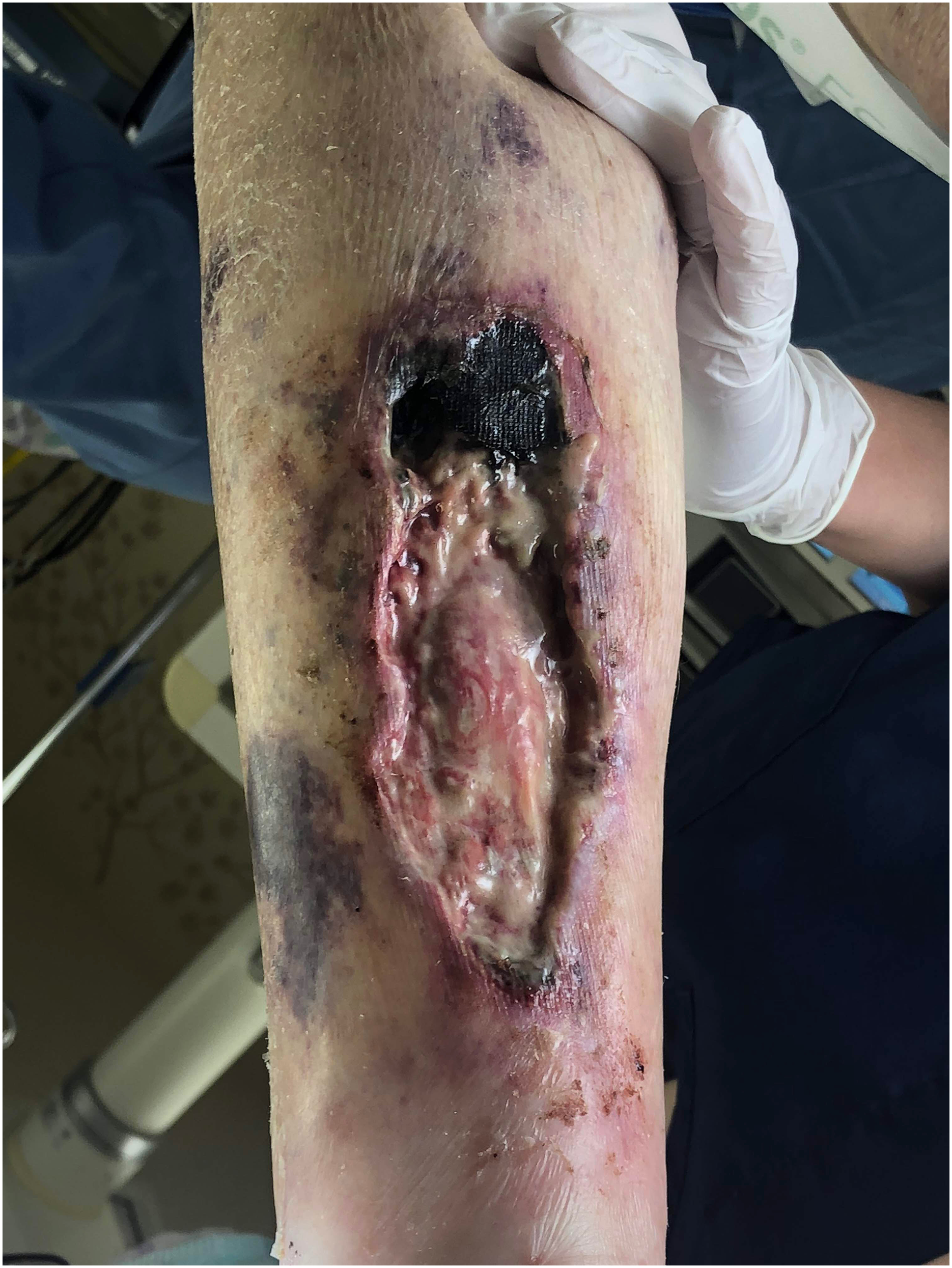
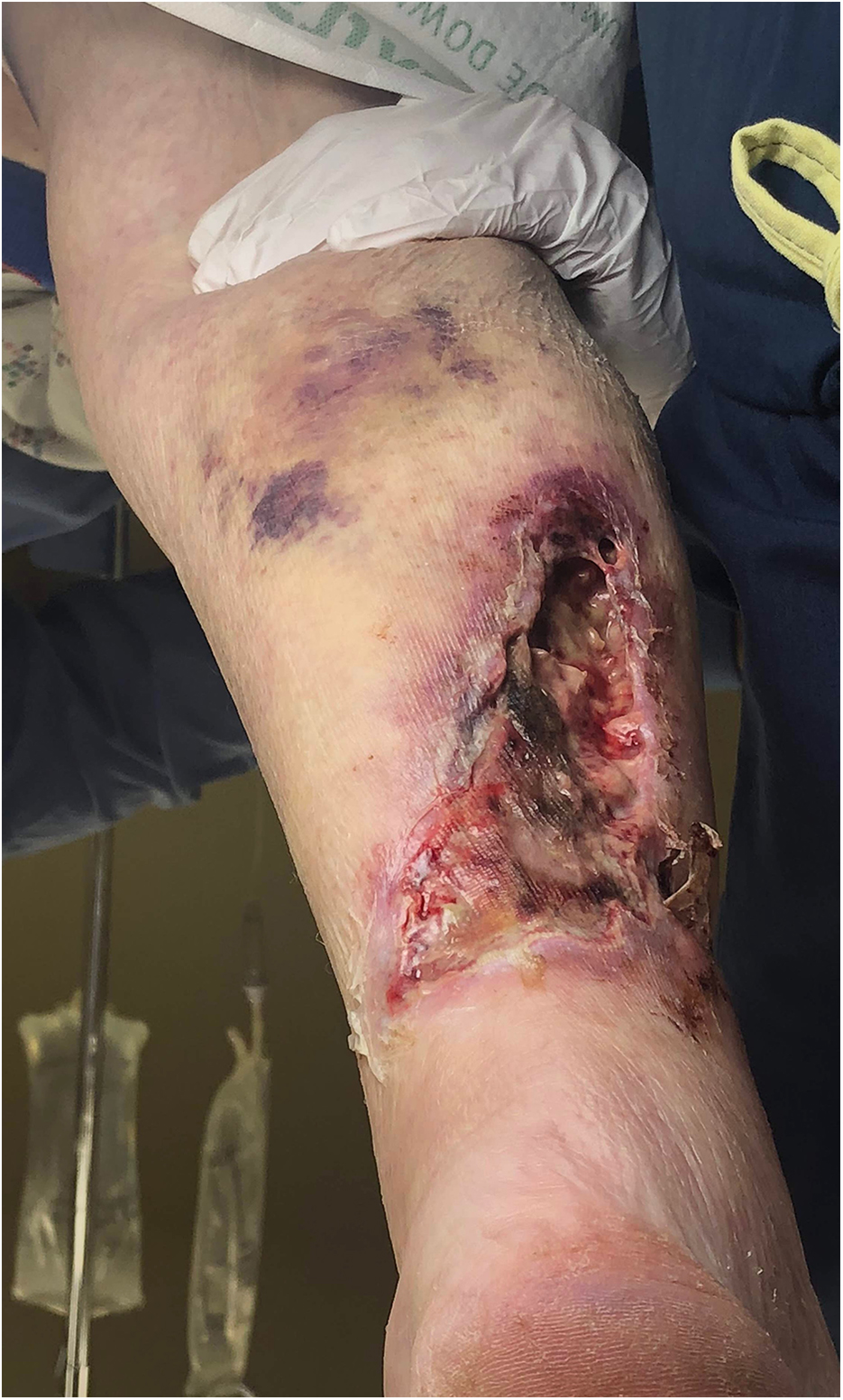
The patient complained of a painful ulcer to her left leg that developed over a period of 2 months. Examination of the left lower extremity revealed a tender stellate-shaped posterior left leg ulceration with a fibrous base and well-defined borders with clear margins. Previously obtained laboratory values showed normal kidney function and serum calcium. She developed a similar right posterior leg ulceration after initial presentation. Because of nonpalpable left lower extremity pedal pulses, the patient underwent angiography 1 week after initial presentation, which revealed popliteal arteries with intact trifurcation and three vessels down to each foot but with sluggish flow. Sharp excisional debridement of bilateral leg ulcerations to the level of muscle with application of a collagen-based bilayer graft to each wound was performed and intraoperative wound biopsy specimens and cultures were obtained. Surgical pathology report of the left leg revealed acutely inflamed and focally necrotic fibroadipose tissue with dense neutrophilic proliferations and calcifications. Pathology report of the right leg revealed acutely inflamed and necrotic skin and subcutaneous tissues with neutrophilia and abscess formation. Cultures revealed Enterobacter and Escherichia coli susceptible to levofloxacin, which was prescribed.
Postoperatively, the patient’s insurance denied coverage of advanced biological wound products. Local wound care was provided until 4 weeks postoperatively, when no wound improvement was appreciated (
Figs. 1 and
2). At that time, pyoderma gangrenosum with possible undiagnosed diabetes mellitus was ruled out. Antinuclear antibodies, basic metabolic panel, C-reactive protein, complete blood count with differential, erythrocyte sedimentation rate, hemoglobin A1c, and rheumatoid factor were obtained and revealed no significant abnormalities. One week later, the patient was prescribed 60 mg of prednisone daily, which provided only slight pain relief and no improvement of the wounds. At the next follow-up, six punch biopsies were performed bilaterally at areas of healthy tissue, transitional tissue, and within the ulcerations. The pathology report of the biopsy specimens was inconclusive for the cause of the wounds, and a dermatology consultation was placed.
Figure 1.
Clinical image of posterior left calf wound.
Figure 1.
Clinical image of posterior left calf wound.
Figure 2.
Clinical image of posterior right calf wound.
Figure 2.
Clinical image of posterior right calf wound.
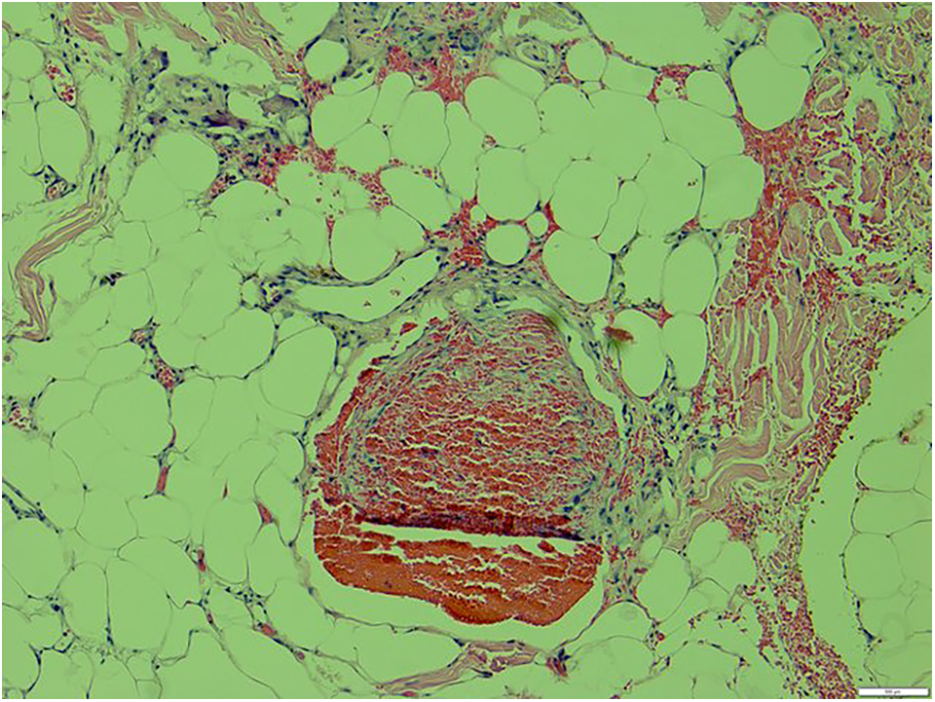
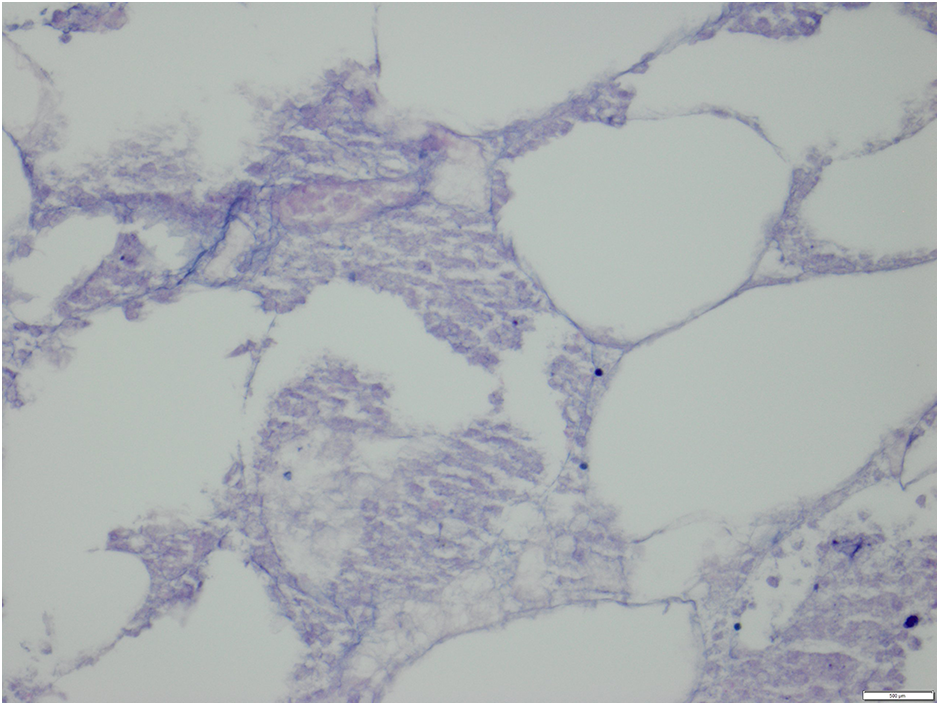
The patient was then referred to the dermatology service, during which time she had developed numerous tender plaques on her thighs. Punch biopsy specimens were obtained and revealed organizing fat necrosis, vascular thrombosis, and focal calcification (
Figs. 3 and
4). Her warfarin was discontinued, and she was prescribed apixaban 5 mg twice daily for atrial fibrillation anticoagulation. The dermatologist referred the patient to a university hospital for management, including sodium thiosulfate therapy and hyperbaric oxygen therapy. One week later, the patient was admitted at our hospital for bilateral leg weakness, infection of bilateral legs, nonhealing lower extremity wounds, and abscess of left thigh. Laboratory tests performed at this time revealed elevated parathyroid hormone (96 pg/mL); prior parathyroid hormone levels were not obtained from any of the institutions in which the patient was treated. The patient was placed on vancomycin and piperacillin/tazobactam and underwent sharp excisional debridement of bilateral lower extremity ulcerations to the level of muscle, with removal of all infected soft tissue. The leg wounds were dressed with sterile compressive dressings, and negative-pressure wound therapy was applied to a left hip wound. The patient was transferred to a university hospital 3 days later, where she was treated with sodium thiosulfate and provided wound care consisting of nonexcisional debridement and application of negative-pressure wound therapy. Three weeks after transfer, the patient was discharged to a hospice center and subsequently died as a result of sepsis from her wounds 2 weeks later.
Figure 3.
Photomicrograph of thrombosed vessel obtained from thigh wound biopsy by means of the dermatology service.
Figure 3.
Photomicrograph of thrombosed vessel obtained from thigh wound biopsy by means of the dermatology service.
Figure 4.
Photomicrograph of fat necrosis with fine calcification obtained from thigh wound biopsy by means of the dermatology service.
Figure 4.
Photomicrograph of fat necrosis with fine calcification obtained from thigh wound biopsy by means of the dermatology service.
Discussion
Calciphylaxis is a rare and devastating disease that can be classified as uremic and nonuremic. Uremic calciphylaxis is associated with high morbidity and mortality, with 1-year mortality ranging from 35% to 55%.[
2] Nonuremic calciphylaxis has a pathophysiology that is not completely understood. Causes and predisposing factors found to be associated with nonuremic calciphylaxis include hyperparathyroidism, malignancy, warfarin therapy, alcoholic liver disease, connective tissue disease, diabetes mellitus, Crohn disease, prior gastric bypass surgery, vitamin D or K deficiency, chemotherapy-induced protein C and S deficiency, obesity, corticosteroid use, autoimmune diseases, elevated alkaline phosphatase, hypoalbuminemia, rapid weight loss, ultraviolet ray exposure, female sex, and Caucasian race.[
1,
–
6,
8,
13] Because nonuremic calciphylaxis is not well understood, an uncommon topic in the literature, and a rare diagnosis, significant diagnostic challenges present when it appears in patients with preserved renal function. Diagnosis can be delayed, and formal treatment protocols and modalities are not well established, with treatment regimens paralleling that of uremic calciphylaxis.
The patient in this case had multiple causative factors for nonuremic calciphylaxis including chronic warfarin therapy, history of malignancy, prior gastric bypass surgery, obesity, female sex, and Caucasian race. In addition, the patient was found to have elevated parathyroid hormone; however, this was not determined until 3 months after her initial presentation to our office. No prior parathyroid hormone levels were obtained from any of the institutions in which the patient was treated. It is also important to note that the patient did not have any documented coagulopathy workup at any of the treating institutions she presented to, despite long-term warfarin therapy for treatment of atrial fibrillation.
With such scarce literature discussing nonuremic calciphylaxis and such little understanding of the condition and its pathophysiology, it is difficult to understand which factors contributed to the patient’s development of calciphylaxis and exactly how they may or may not have contributed. Most studies published thus far cover only one case, or a couple of cases, of nonuremic calciphylaxis. Holtsche et al[
5] described a case of nonuremic calciphylaxis in which the authors initiated intravenous and topical sodium thiosulfate and the patient’s lesions completely healed in 7 months. Maroz et al[
2] described three cases of calciphylaxis in patients with preserved kidney function, two of which were successfully treated with local wound care and intravenous sodium thiosulfate. Patel et al[
1] also presented a case successfully treated in 4 months with wound care and analgesics; these authors also switched the patient’s warfarin to rivaroxaban. Many cases, however, like ours, result in fatal outcomes.
Further mention in the literature is needed to determine more efficient therapeutic measures and evidence-based recommendations. Nonuremic calciphylaxis, although rare, possesses a high morbidity and mortality rate. Studies focusing on this devastating diagnosis could provide more insight into the poorly understood pathophysiology and causation of the condition.
Conclusions
In our case, this patient had multiple possible contributing factors for nonuremic calciphylaxis including extended warfarin therapy, history of malignancy, prior gastric bypass, morbid obesity, elevated parathyroid hormone, female sex, and Caucasian race. Her preserved renal function may have played a role in delayed diagnosis. In addition, pathologic evaluation of tissue in the early stages of her illness was performed on necrotic tissue. Proper diagnosis could have been expedited with excisional biopsy to the depth of the subcutaneous layer of nascent, nonulcerated lesions. We believe it is important for physicians to have a familiarity with this rare and devastating condition to avoid delayed diagnosis and mismanagement. Skin biopsy remains the standard means for proper diagnosis. Treatment modalities include local wound care, pain management, discontinuation of any offending medications, intravenous sodium thiosulfate therapy, and hyperbaric oxygen therapy. We encourage physicians to keep this diagnosis in mind in patients presenting with painful nonhealing or chronic wounds with multiple comorbidities.
Financial Disclosure: None reported.
Conflict of Interest: None reported.