Arch pain induced by exercise is a common complaint often encountered by the sports physician. Although a variety of etiologies may be responsible, chronic exertional compartment syndrome (CECS) should be considered in the differential diagnosis because overlooking this uncommon problem can potentially lead to significant foot dysfunction (
Table 1).
Table 1.
Differential Diagnosis of Chronic Exertional Compartment Syndrome
Table 1.
Differential Diagnosis of Chronic Exertional Compartment Syndrome
Compartment(al) syndrome (CS) is a condition in which increased pressure in a closed space compromises the circulation and function of tissues in that space.[
1] This compromise in circulation (oxygen and supply mismatch) may result in temporary or permanent damage to nerves and especially muscles. There are basically two types of CS: acute CS and CECS. Acute CS is a medical emergency typically caused by a sudden traumatic or exertional event requiring prompt diagnosis and immediate management.[
2] In contrast, CECS typically presents as a longstanding, recurrent problem with insidious onset of severe pain and tightness induced with exercise and relieved by rest. It is most commonly encountered in athletes and military personnel who perform unaccustomed or excessive exercise.
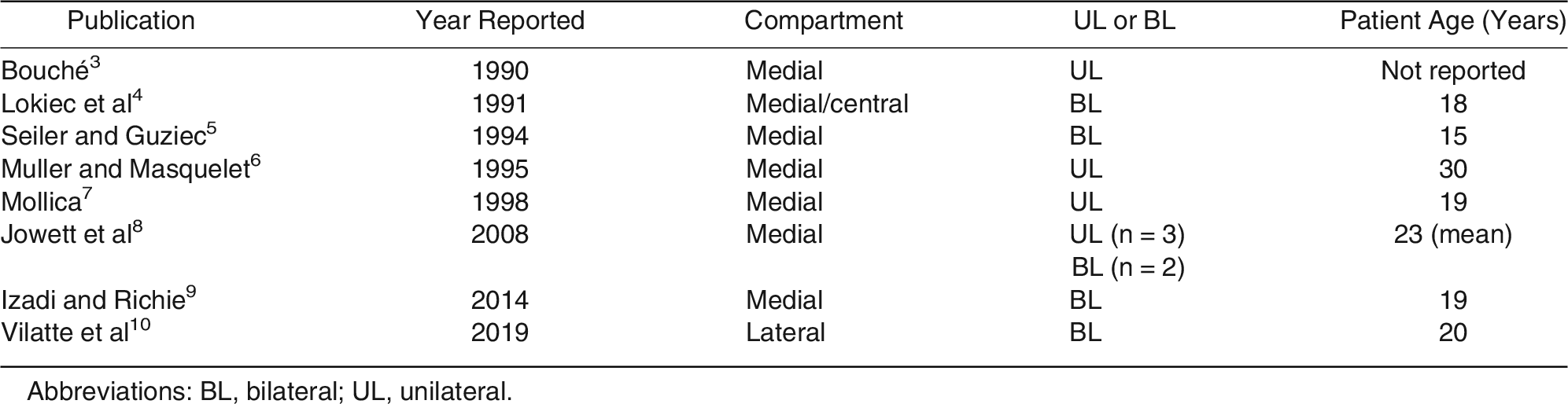
Concerning CECS, only 12 cases (17 feet) have been reported in the literature, with first mention of this entity in 1990 (
Table 2).[
3,
4,
5,
6,
7,
8,
9,
10] A literature review of CECS of the foot in 2009 increased awareness of this condition, but despite this publication, we feel that CECS of the foot remains underappreciated.[
11]
Table 2.
Publications of Chronic Exertional Compartment Syndrome of the Foot
Table 2.
Publications of Chronic Exertional Compartment Syndrome of the Foot
The anatomy of the foot compartments is controversial and beyond the scope of this article. The reader is referred to an up-to-date article by Vasquez-Zorrilla et al[
12] that provides a comprehensive systematic literature review of foot compartment anatomy. Further research is needed to address discrepancies concerning foot compartment anatomy because it may affect treatment of both acute CS and CECS. Acute CS of the foot can involve all ten foot compartments (one dorsal and nine plantar). In contrast to acute CS, CECS of the foot can involve one or more of four plantar compartments: medial, lateral, superficial, and calcaneal. The superficial and calcaneal compartments are subcompartments of the central compartment. Vulnerable muscles contained in each of these compartments can be affected by CECS. The medial compartment contains the abductor hallucis (ABHM) and the flexor hallucis brevis muscles. The lateral compartment contains the abductor digiti minimi and flexor digiti minimi muscles, the superficial compartment contains the flexor digitorum brevis muscle, and the calcaneal compartment contains the quadratus plantae muscle.
Diagnosis of CECS of the foot requires a high index of suspicion and performance of a comprehensive clinical evaluation based on historical findings. A key historical finding is severe pain induced with exercise and relieved by rest. Examination at rest is typically normal. It is necessary to evaluate the patient after an activity known to produce arch symptoms. Generally, there are 4 clinical requisites that need to be present to diagnose CECS[
1]: 1) a localized anatomical area (eg, medial or plantar foot), 2) increased pressure with exercise (complaint of “tightness,” examination reveals induration), 3) ischemia (complaint of severe pain out of proportion, examination may reveal pain on passive stretch, which is a classic sign of ischemia), and 4) neuromuscular dysfunction (weakness of the involved intracompartment muscles, focal area of neurogenic symptoms), which can be challenging to document in the foot. From the discussion previously herein, one should be able to establish a tentative diagnosis of CECS by history and physical examination alone.
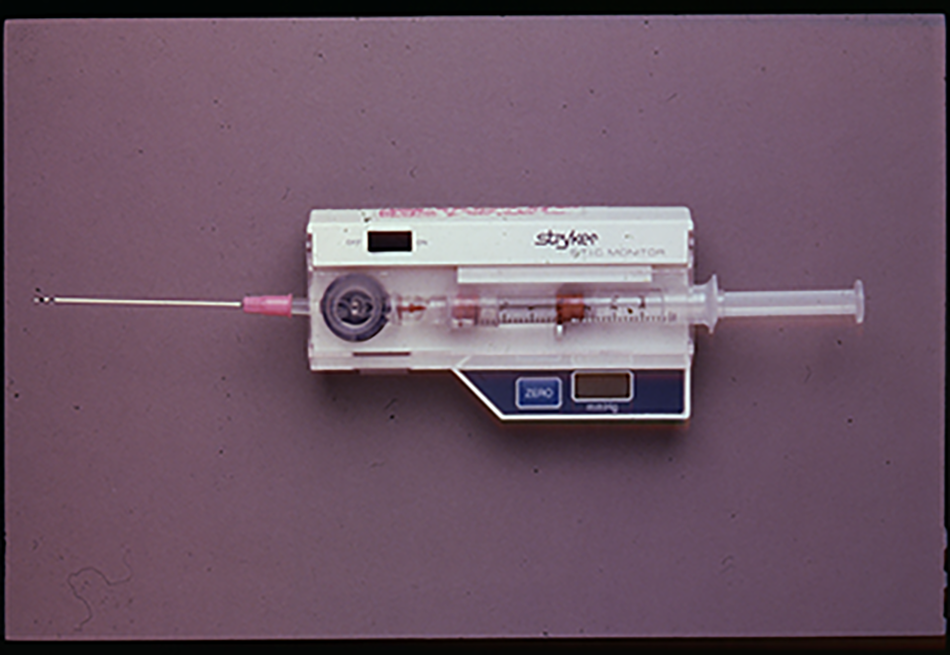
To validate clinical suspicion of CECS, intracompartment pressure measurements (IPMs) at rest and after provocative exercise should be confirmatory. Foot IPM is performed with the patient supine and the feet in a relaxed, slightly plantarflexed position. The most common method of testing is with an intracompartmental pressure monitor (STIC [solid-state intracompartment] monitor; Critical Care Diagnostics [C2Dx], Kalamazoo, Michigan) (
Fig. 1). A noninvasive technique, near-infrared spectroscopy, has been reported, but its use in the foot is unknown.[
13,
14] For IPM, foot compartment access sites have been established based on findings on magnetic resonance imaging (MRI), which provides a helpful guide for directing needles into foot compartments.[
15] Although nine compartments have been reported in the plantar foot,[
16] in our experience, the most common compartments involved with CECS of the foot are the medial, superficial, and calcaneal, with the lateral compartment rarely involved. The medial compartment can be accessed medially by introducing a needle from a point 60 mm plantar from the most prominent point on the medial malleolus to a depth of 11 mm. After the medial compartment is measured, the needle is left in place and advanced another 14 mm to access the calcaneal compartment. The superficial compartment can be accessed midline plantarly, 115 mm distal to the posterior heel at the plantar fat pad insertion. The needle is inserted 10 mm through the plantar skin and plantar aponeurosis.[
15]
Figure 1.
Intracompartmental pressure monitor.
Figure 1.
Intracompartmental pressure monitor.
Normal foot pressures at rest would be 10 mm Hg or less.[
17] Normal values after exercise would be as follows: 1-min pressure, less than 30 mm Hg; 5-min pressure, less than 20 mm Hg; and return to resting pressure, less than 6 min. Of these four criteria, we feel that the two most reliable measurements for diagnosis of CECS are 1-min postexercise pressures greater than 30 mm Hg and 5-min postexercise pressures greater than 20 mm Hg.[
18,
19]
Additional studies can and should be obtained to rule out or validate other conditions. An MRI can aid in identifying hypertrophic or accessory muscles or other soft-tissue abnormalities. If there is loss or alteration of pulse after exercise with or without provocative maneuvers (knee flexion, knee hyperextension, passive ankle joint dorsiflexion, and resistance to active plantarflexion), then a claudication disorder should be suspected. Clinical suspicion can be validated further with arterial duplex Doppler and especially arterial segmental Doppler ultrasonography with ankle-brachial index (ABI) measurements. If these test results are positive, then consultation with a vascular surgeon is recommended. Typically, vascular surgeons will obtain vascular imaging with provocative maneuvers using magnetic resonance angiography, computed tomography angiography, or diagnostic angiography to confirm the diagnosis (Courtney Morgan, MD, personal communication, June 2021).
Once the diagnosis is established, treatment includes nonsurgical or surgical options. Eliminating provocative activities that precipitate symptoms and assessing for factors that cause constriction, including taping, footwear, and/or hosiery, can be helpful. Foot orthoses should be assessed because they can cause more shoe constriction. This issue can be avoided by wearing a larger shoe. Foot orthoses have been reported to increase intracompartment pressures in patients who have been diagnosed as having CECS of the leg (N Padhiar and JB King, unpublished study, 1998), although this has not been documented with CECS of the foot. Additional generic measures that may be of benefit include restructuring training schedules, cross-training activities that are tolerable, stretching exercises, and a progressive strengthening program with slow gradual return to activities. Other conservative measures, such as massage,[
20] manual therapy,[
21] botulinum toxin injection,[
22] and changing running gait[
23,
24] have been discussed for treating anterior/lateral CECS of the leg, but their applications in the foot are unknown. If patients decide to live with their foot CECS, then they need to be aware of an increased risk of acute CS. Educating patient about what to do in this emergency situation is paramount.
In the case of CECS, surgery is definitive and involves performing a fasciotomy of the involved compartment(s) typically through a medial longitudinal incision, which is preferred by us. This procedure can be performed with or without a tourniquet. An additional incisional approach involves placement of two oblique incisions, one over the proximal aspect and a second over the distal aspect of the medial compartment.[
8] The medial longitudinal incision allows good access to the medial, superficial, and calcaneal compartments. If there is a hypertrophic or accessory ABHM, then debulking or excision of accessory muscle can be performed, taking care to preserve the muscular nerve branch from the medial plantar nerve. Having a good appreciation of anatomy, including foot compartments, fascial spaces, muscle layers, and location of neurovascular structures through a medial approach is paramount for efficient and successful fasciotomy. One of us (R.G.R.) recently published a paper on CECS of the foot with a comprehensive review of plantar foot anatomy.[
25] After completing the fasciotomy(ies), closure of the subcutaneous tissue and skin is performed using the Allgöwer-Donati technique, a modified vertical mattress suture that provides strength and preserves blood perfusion to skin.
Postoperatively, a Jones compression dressing is applied for the first week, followed by 2 weeks in a removable splint while the patient is nonweightbearing with the use of crutches and a knee scooter. If a drain is used, it is removed by postoperative day 3, and sutures are removed at week 3. The 3-week nonweightbearing period is followed by weightbearing with use of a removable walking boot for up to 3 additional weeks. Physical therapy is initiated at 1 to 2 weeks with strategies to control swelling and start early range-of-motion exercises. By 4 weeks there is greater emphasis on more aggressive range-of-motion exercises, graduated strengthening, soft-tissue mobilization, and general conditioning. Return to sports is considered on a case-by-case basis but typically occurs around 10 to 12 weeks.
In our experience, complications encountered can include postoperative hematoma, hypertrophic scars, wound dehiscence, and persistent foot pain after fascial release. To prevent hematoma, the tourniquet should be released (if used) and bleeding controlled before skin closure. A surgical drain can be placed if needed. Hypertrophic scars may be prevented by using less reactive subcutaneous sutures. Wound dehiscence can be prevented by performing a muscle debulking or excision procedure when a hypertrophic or accessory ABDM, respectively, is present; using thoughtful suturing techniques (ie, the Allgöwer-Donati suture mentioned previously herein); ensuring that patients strictly follow postoperative nonweightbearing protocols; and leaving skin sutures in place for 3 weeks. Although our combined experience has been excellent with surgical intervention, one study reported that 43% of patients had persistent symptoms after medial foot compartment fasciotomy.[
8] Persistent symptoms can be avoided by adequately validating diagnosis with appropriate IPM testing; using a skin incision that allows adequate exposure of involved areas so that adequate fasciotomy can be performed; recognizing and addressing a hypertrophic or accessory ABHM with a debulking or excision procedure, respectively, which can prevent persistent compartment symptoms; and avoiding small incisional approaches[
8] and endoscopic procedures that may not allow adequate exposure of involved areas.
The purpose of presenting these cases is to increase awareness of CECS of the foot and to underscore the unique clinical presentation of this condition. Three case studies are described with varied presentations of exercise-induced foot pain characterized by severe pain and tightness with exercise relieved by rest. Emphasis is placed on diagnostic evaluation and definitive surgical management consisting of involved foot compartment fasciotomies, which can be curative. The cases presented in this article were randomly chosen and are representative of what one should expect when evaluating patients with suspected CECS of the foot.
Case Reports
Case 1
History. A 32-year-old male long-distance hiker and skier presented with a 5- to 6-year history of pain along the “inside arch of both feet.” Daily walking and short-distance jogging were generally tolerated well. Symptoms have become progressively worse during the past 2 years. Specific symptoms consisted of severe arch pain/cramping, tightness, and swelling after 30 min of hiking. When taking a break while hiking, symptoms resolved within minutes but returned more rapidly when activity was resumed. Symptoms worsened when walking uphill, using a hiking versus an approach (lightweight) shoe, using an over-the-counter (OTC) orthotic device, and lacing shoes tighter. Medical history was unremarkable.
Physical Examination. Results of vascular and neurologic examinations of the lower extremities at rest were normal. Musculoskeletal examination revealed prominent, although supple, ABHMs bilaterally. Walking on a treadmill for 15 min in hiking boots (with OTC orthoses) reproduced pain and tightness in the medial arch of the right and left feet. The patient inverted his right foot during the treadmill walking in an effort to reduce medial arch pain. Postexercise examination revealed normal vascular (aided by Doppler ultrasonography) and neurologic findings, pain to palpation with induration of the medial compartment bilaterally, no pain to the plantar/lateral arches or forefoot area, and no appreciable weakness on strength testing of foot muscles. It was noted that resistance to great toe plantarflexion and passive first metatarsophalangeal joint dorsiflexion exacerbated medial arch pain.
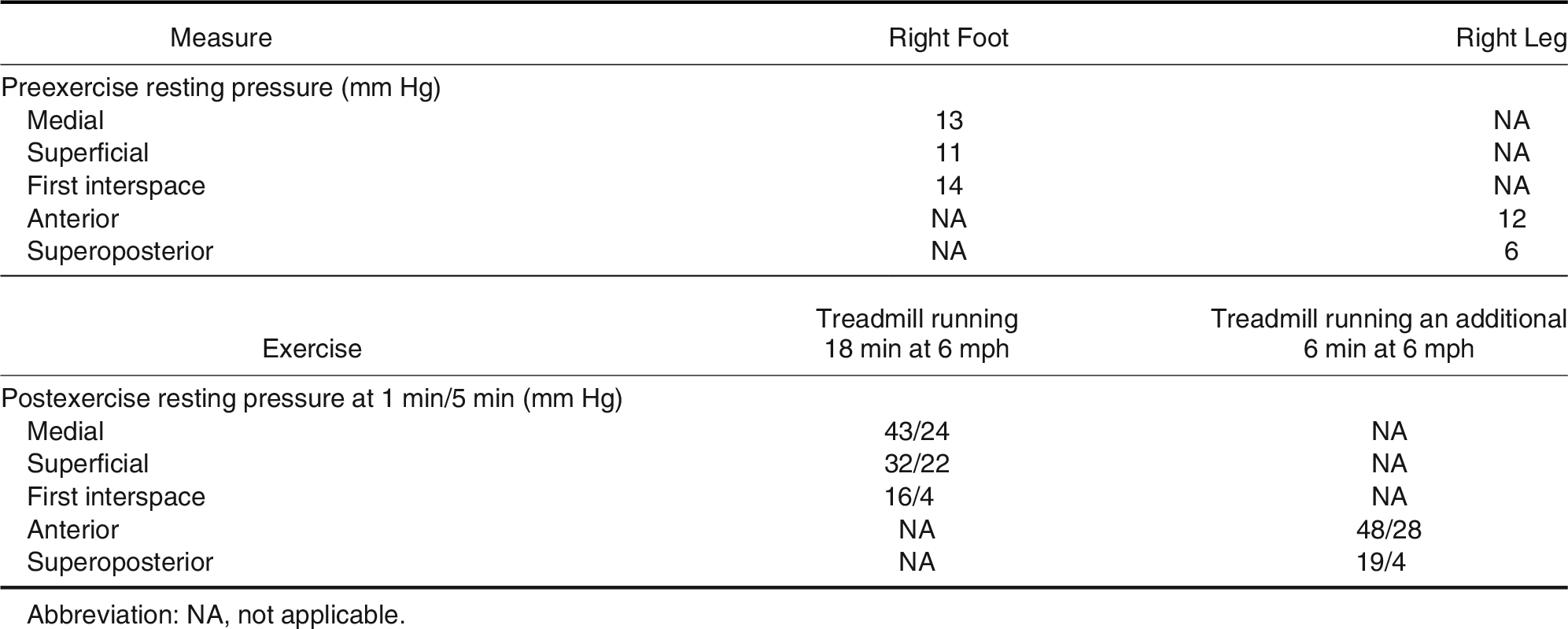
Diagnostic Studies. Radiographs and MRIs of the right foot revealed normal findings except for a “large” ABHM. Resting and postexercise (walking) IPM of the medial and central compartments bilaterally was subsequently performed, with abnormal findings on measurement of the medial compartment and normal findings of the calcaneal compartment (
Table 3). The left foot had similar findings; only results of the right foot are presented.
Table 3.
Case 1: Intracompartment Pressure Measurement in the Right Foot
Table 3.
Case 1: Intracompartment Pressure Measurement in the Right Foot
Diagnoses.
Treatment. Conservative care was continued for 3 months without relief of symptoms. Due to persistent symptoms, surgery was performed consisting of isolated medial compartment fascial release with hypertrophic muscle debulking addressing the more symptomatic right foot initially, then 8 months later fascial decompression of the left foot was performed in an identical fashion.
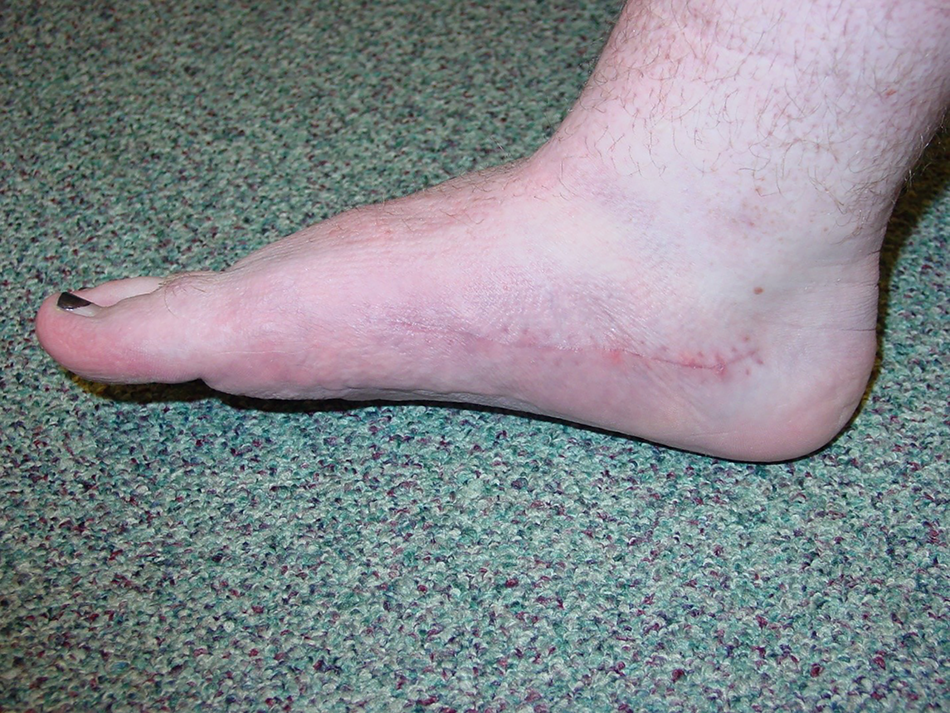
Disposition. At 9-year follow-up the patient is doing well and relates return to all hiking and skiing activities without limitation. Daily shoe choices are without problem, and there are no issues with either hiking or ski boots (
Fig. 2).
Figure 2.
Well-healed medial skin incision 3 months after medial compartment fasciotomy and debulking of the abductor hallucis muscle.
Figure 2.
Well-healed medial skin incision 3 months after medial compartment fasciotomy and debulking of the abductor hallucis muscle.
Case 2
History. A 35-year-old multisport athlete presented with chronic leg and foot pain since elementary school. Sustained weightbearing activities caused significant symptoms, limiting choice of activities. During the past 6 months, the patient experienced activity-induced pain after walking more than 1.5 miles (especially downhill), sustained running (>10 min), and prolonged standing. Pain, tightness, and tingling were localized to the medial/plantar aspect of the foot and the anterior leg bilaterally. “Small lumps” on the anterior leg occurred with standing and worsened with exercise. Aggravating factors included tight shoes, use of foot orthoses, and foot taping. Symptoms lessened within 1 to 2 min of the cessation of exercise; however, symptoms in both the foot and leg persisted for 1.5 to 2 hours before exercise could be resumed. The patient’s medical history was unremarkable.
Physical Examination. At rest, neurovascular status was intact. When standing, there was a prominence on the anterior and posterior aspects of the leg and medial foot bilaterally. There were small prominences at the distal aspect of the anterior compartment of the leg on the right and similar prominences at the mid-lateral aspect of the leg on the left. These prominences were consistent with muscle herniation through the fascia, although they were not painful to palpation. After running 15 min on a treadmill, there was induration and pain localized to the anterior and lateral compartments of the leg as well as the medial and plantar aspects of the arch bilaterally. After exercise, pedal pulses remained intact both without and with provocative maneuvers (including passive ankle dorsiflexion and resistance to active foot plantarflexion). Leg pain was exacerbated with palpation and passive ankle plantarflexion. There was pain when palpating areas of muscle herniation involving the anterior and lateral compartments of the leg. Altered sensation was noted medially and on the dorsum of the foot bilaterally. Medial and plantar foot pain was exacerbated with palpation to the arch, passive hallux abduction, hallux extension, and lesser toe extension. After walking on a treadmill for 20 min, heel walking was not possible due to leg pain and weakness. “Foot slap” developed along with a steppage gait as exercise continued, although toe-walking was performed without difficulty.
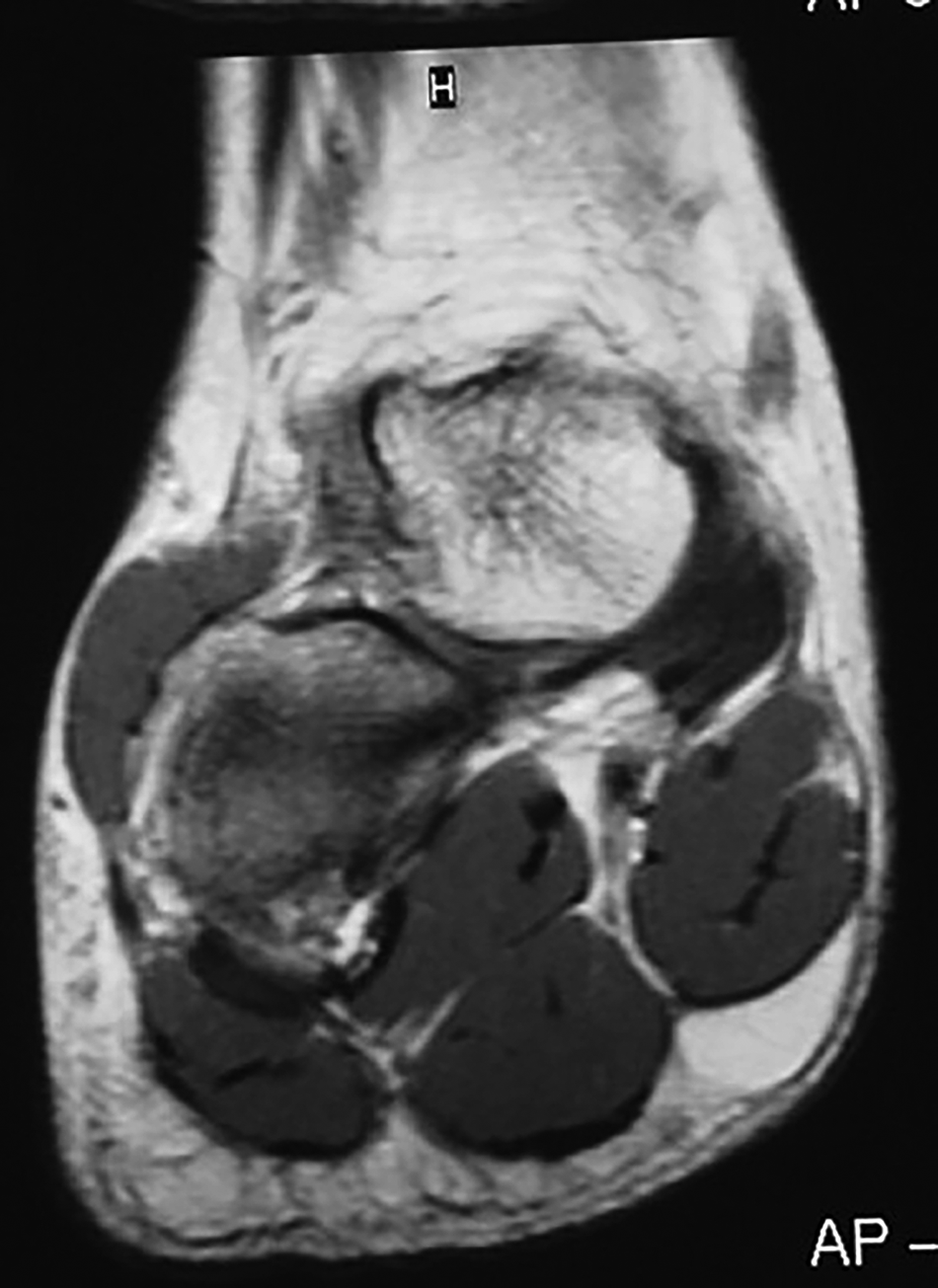
Diagnostic Studies. Foot and leg MRIs revealed large hypertrophic muscles involving multiple compartments of the foot (
Fig. 3) and leg, respectively. Results of electromyography and a nerve conduction study were normal.
Figure 3.
Magnetic resonance image of a hypertrophic abductor hallucis muscle and other plantar compartment muscles.
Figure 3.
Magnetic resonance image of a hypertrophic abductor hallucis muscle and other plantar compartment muscles.
Bilateral IPM of the feet and legs was performed before and after running with reproduction of symptoms (
Table 4). The medial and deep foot compartments were abnormal, and the first interspace compartment was normal. The anterior leg compartments were abnormal, and the posterior leg compartments were normal. Although IPM testing was obtained bilaterally, results are reported on the right only because similar results were found on the left.
Table 4.
Case 2: Intracompartment Pressure Measurement
Table 4.
Case 2: Intracompartment Pressure Measurement
Diagnoses.
CECS of the leg, anterior and lateral compartments bilaterally
CECS of the foot, medial and central compartments bilaterally
Hypertrophic ABHMs bilaterally
Muscle herniations, anterior compartment bilaterally
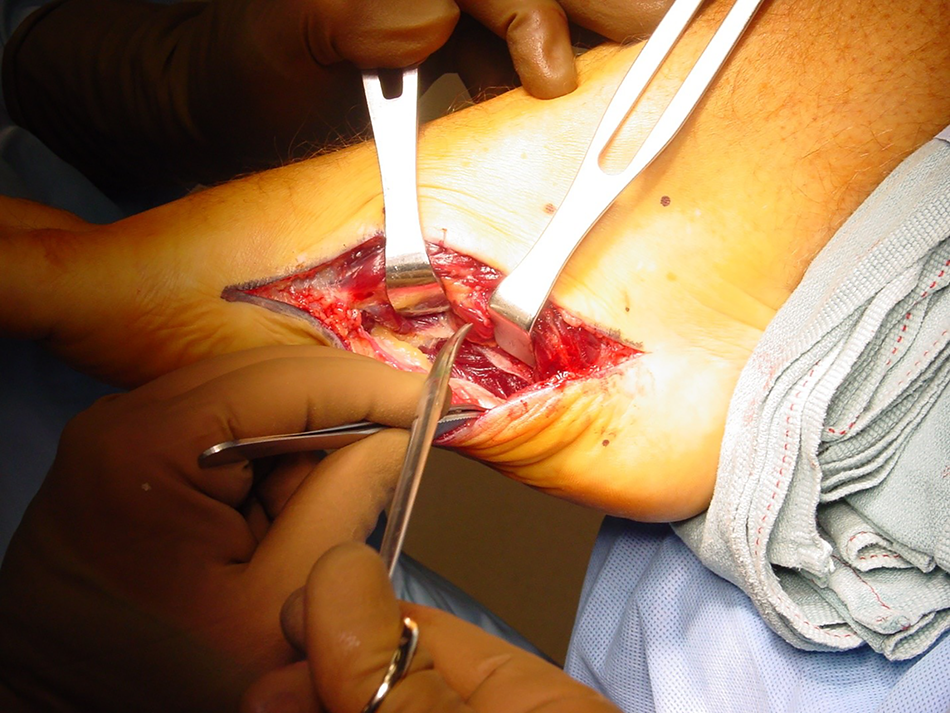
Treatment. Concurrent leg (anterior and lateral compartments) and foot (medial, superficial, and deep [calcaneal] compartments) fasciotomies with hypertrophic ABHM debulking were performed bilaterally. Leg fasciotomies were performed through an anterolateral incision over the fascial herniations in the anterior compartment. Foot fasciotomies were performed through a medial longitudinal incision centered over the medial compartment (
Fig. 4). The right foot was addressed first, and the left foot was released 4 months later.
Figure 4.
After medial compartment fasciotomy and abductor hallucis muscle (ABHM) debulking, the ABHM is being retracted dorsally to expose the superficial foot compartment, which is shown after fasciotomy exposing the flexor digitorum brevis muscle.
Figure 4.
After medial compartment fasciotomy and abductor hallucis muscle (ABHM) debulking, the ABHM is being retracted dorsally to expose the superficial foot compartment, which is shown after fasciotomy exposing the flexor digitorum brevis muscle.
Disposition. The patient had an uneventful recovery on the right but had mild dehiscence of the left leg wound that required local wound care with an additional month on crutches. Eighteen years after the procedures, the patient remains active and participates in walking, hiking, and recreational running activities without limitation.
Case 3
History. A 15-year-old female high school student presented with complaints of “foot and calf pain with walking.” Symptoms have been present since early childhood, with avoidance of all aggravating weightbearing activities. Flat feet have been a concern for a long time. She has been unable to walk long distances or run, although bike riding and swimming are performed without problems. Her symptoms can be reproduced quite easily. After 15 min of sustained walking (especially walking uphill), her arch will become tight, pain will become intense, and she will be unable to continue to exercise. When attempting to exercise through pain, her calf will begin to hurt. Constricting dress shoes and tight-fitting socks aggravate symptoms in her feet. Taking a rest during a walk provides immediate relief in the calf, but she will continue to experience aching in her medial foot for up to 20 to 30 min. Her medical history was unremarkable.
The patient’s family history is significant for CECS. The patient’s high school–aged brother was diagnosed as having CECS of both legs and underwent compartment releases with good results and return to sports activities. The patient’s primary care physician ordered an arterial duplex Doppler ultrasound of both legs at rest and with manual resistance to ankle plantarflexion, and it was reported as normal. An MRI was also obtained of the right leg and was also read as normal.
Physical Examination. The patient exhibited a flatfoot deformity with a vertical heel position in stance bilaterally. Neurovascular status was intact at rest. Walking on a treadmill with a slight incline for 10 min caused medial arch pain. An additional 5 min on the treadmill caused worsening of arch pain and onset of calf tightness and pain. On postexercise examination there was pain with calf compression and passive stretch but no induration, induration with pain on palpation of the medial arch, mild pain with no induration of the plantar arch, and no foot pallor. Dorsalis pedis and posterior tibial pulses remained palpable after exercise. A Doppler examination revealed biphasic dorsalis pedis and posterior tibial pulses that became monophasic with provocative maneuvers (ie, simultaneous passive ankle dorsiflexion and resistance to ankle plantarflexion).
Diagnostic Studies. An arterial segmental Doppler examination with ABI was ordered at rest and after walking. Resting ABIs were normal (1.13 on the right and 1.06 on the left). Walking reproduced symptoms in the foot and calf. The ABIs were abnormal after exercise (0.77 on the right and 0.88 on the left).
Resting and postexercise walking IPM studies were performed on compartments of the foot and leg with reproduction of symptoms (
Table 5). Medial foot compartments were abnormal and calcaneal compartments (central compartment) were normal. Superficial posterior leg compartment pressure was also normal. Although IPM testing was obtained bilaterally, results are reported only on the right because similar results were found on the left.
Table 5.
Case 3: Intracompartment Pressure Measurement
Table 5.
Case 3: Intracompartment Pressure Measurement
Two vascular surgeons were consulted for evaluation of probable popliteal artery entrapment syndrome (PAES). They diagnosed PAES, although they felt that it was “mild and minimally life altering.” There was general agreement that if calf symptoms worsened, further work-up would be mandated. Both vascular surgeons felt that medial foot symptoms were the primary limiting issue and recommended medial compartment decompression.
Diagnoses.
CECS of the foot, medial compartment bilaterally
Claudication with probable PAES bilaterally
Flatfoot deformity bilaterally
Treatment. The surgery performed was isolated medial compartment fasciotomy through a medial longitudinal incision centered over the medial compartment. Initial surgery was performed on the right, and the left was addressed in an identical fashion 5 months later.
Disposition. In the immediate postoperative period, a hypertrophic scar developed that was thought to be due to an idiosyncratic reaction to polyglactin 910 sutures (Vicryl [Ethicon Inc, Somerville, New Jersey]). The scar was symptomatic for 6 months and was treated successfully with nonsurgical interventions. The left foot did well with no scar formation because less reactive sutures were used (poliglecaprone 25 [Monocryl (Ethicon Inc, Cornelia, Georgia)]) for skin closure. At 4-year follow-up the patient is living an “active lifestyle” with resolution of foot pain and increased exercise tolerance. Intermittent calf pain persists (although no foot pain or induration), especially when running more than 1 mile. The patient was cautioned that running more than 1 mile may precipitate worsening calf symptoms and potential foot symptoms due to claudication.
Discussion
Three cases of CECS of the foot have been presented, and although each case is different, the diagnosis can be suspected by taking a careful history and performing a thorough clinical examination. Typically, there are no symptoms at rest; CECS is induced with exercise and relieved with rest. The four requisites discussed previously herein must be present to consider CECS: a localized anatomical area, evidence of increased pressure, ischemia, and neuromuscular dysfunction. In these three cases, the localized anatomical area involved the medial or plantar foot. These areas correlated to the medial and central compartments of the foot, respectively. Concerning evidence of increased pressure, all of the cases exhibited induration (or firmness) of the involved compartments and subjective “tightness.” All of the cases also exhibited evidence of ischemia (with classic subjective pain out of proportion and objective pain on passive stretch). Despite these ischemia findings, in CECS, arterial pulses are preserved and if they are compromised an arterial claudication disorder should be suspected, as underscored in case 3. The most difficult requisite to appreciate with CECS of the foot is neuromuscular dysfunction. Muscular dysfunction is usually manifested with subjective/objective evidence of weakness on muscle testing or subtle compensatory gait abnormality (as in case 1). Nerve dysfunction is manifested with subjective tingling/numbness and altered sensation appreciated on sensory nerve testing (appreciated in case 2 but not in case 1 or 3). Additional “points of interest” from each of the three cases are presented in the following subsections.
Case 1
Case 1 represents a common presentation of CECS of the foot with isolated medial compartment involvement. Identifying specific exercises that precipitate symptoms is important because CECS can be activity specific. Running is typically an aggravating activity, but a variety of art forms (ballet, modern dance, etc) or sports (inline skating, skiing, etc) can be implicated. Having a ballerina run on a treadmill may not reproduce symptoms, but performing repeated dance maneuvers likely will. In case 1, hiking was simulated by having the patient walk on a treadmill at varying velocities and inclines while wearing hiking boots.
Running short distances resulted in minimal symptoms, but walking in hiking boots was prohibitive. This finding underscores the importance of identifying situations in which foot constriction is problematic (eg, tight shoes, hosiery, foot taping, use of orthotic devices). In this case, OTC orthotic devices were added to his hiking boots (increasing pressure to the arch), and the lacing tightness was varied.
This case underscores the clinical challenge of documenting neuromuscular dysfunction. Examination after exercise did not reveal obvious foot weakness or areas of numbness, but during treadmill walking, observable foot inversion was noted and felt to be due to compensation for medial compartment symptoms.
Arch symptoms were primarily medial, affecting only the medial compartment. The patient did not experience plantar arch tightness or pain that may indicate CECS of the central foot compartments (superficial and calcaneal).
An MRI revealed a prominent hypertrophic ABHM. In our experience, a high percentage of patients undergoing fasciotomy of the medial compartment of the foot for CECS require debulking of the prominent ABHM because it facilitates fascial decompression and provides predictable wound healing.
Although preexercise resting IPM was normal, there were elevated pressures 1 and 5 min after exercise. Normal resting pressure is not uncommon because CECS is an exercise-induced condition.
Case 2
Case 2 is remarkable for concurrent CECS of the foot and leg, which is rare, although it has been previously reported.[
8] Concerning the feet, clinical location of pain correlated to compartments involved. The patient had medial and plantar arch pain with diagnosed CECS of the medial and central foot compartments.
The clinical presentation of CECS of the leg was classic, with severe running-induced anterior and lateral leg tightness and pain, with footdrop and a steppage gait. The patient also exhibited small muscle herniations involving the anterior and lateral compartments, which is not uncommon although not specific for CECS. The patient’s history was typical of CECS because chronic problems were present “since elementary school,” although the condition was never recognized or diagnosed.
Pain associated with CECS will subside with rest but can linger for minutes to hours before complete relief is achieved. In contrast, patients with claudication syndromes will generally obtain relief as soon as exercise is discontinued. Foot orthoses made this patient’s foot and leg symptoms worse. In the foot, orthoses likely caused additional constriction in the shoe. In the leg, foot orthoses have been reported to cause worsening of leg CECS (N Padhiar and JB King, unpublished study, 1998), although the mechanism is unknown.
The IPM should be performed on all of the potentially involved compartments that are symptomatic and suspicious for CECS, although there can be exceptions. For example, in this case, the patient’s right foot, superficial compartment pressure was elevated so that the calcaneal compartment was not measured. The calcaneal compartment composes part of the central foot compartment, and the latter would undergo release when the central compartment was decompressed.
Case 3
Case 3 is remarkable for diagnosis of concurrent CECS of the foot and PAES of the leg bilaterally. To our knowledge, this is the first reported case of concurrent involvement of these problems in a single patient.
In patients with CECS of the foot or leg, pulses before and after exercise are normal. In case 3, pedal pulses were palpable on manual examination at rest, but with the aid of Doppler ultrasound there was pulse alteration (biphasic to monophasic) with exercise challenge and provocative maneuvers (simultaneous passive ankle dorsiflexion and resistance to ankle plantarflexion). These maneuvers put tension on the gastrocnemius muscle, which can compromise blood flow through the popliteal artery. Subsequently, this clinical finding was validated with arterial segmental Doppler examination, which revealed normal ABIs at rest and compromised ABIs with exercise.
Once a diagnosis of PAES is established, a vascular surgeon with an interest in exercise-induced lower-extremity disorders should be consulted. Clinically, both CECS and arterial claudication disorders will present with symptoms of tightness and pain out of proportion with exercise. The main differentiating clinical sign would be the presence of induration (firm to touch) in CECS, indicating increased pressure in the compartment. There was medial arch pain with induration and no pain or induration of the plantar arch. The IPM findings were consistent with these clinical findings as medial compartment pressures were abnormal and central compartment pressures were normal.
The PAES can produce symptoms in both the calf and foot muscles. After fasciotomy of the foot there was concern that symptoms could persist in the calf (possibly in the foot) due to a reduction in medial arch pain and increased exercise tolerance after surgery. At 4-year follow-up, there was increased exercise tolerance with no foot pain although predictably persistent calf pain (mild) with running more than 1 mile.
Conclusions
Chronic exertional compartment syndrome of the foot is an uncommon although likely underrecognized condition seen in an active patient population and should be part of a differential diagnosis for patients with exercise-induced arch pain. Clinical evaluation of the entire lower extremity before and after exercise is mandatory along with IPM testing to validate the diagnosis. If there is a loss or altered pulse(s) on examination, claudication syndromes should be suspected and appropriately evaluated. For CECS of the foot, nonsurgical options should be considered first, followed by surgical fasciotomy of the affected compartment(s) along with muscle debulking/excision performed as needed. Surgery can be curative. In the future, as there becomes greater awareness of this condition, larger case series with long-term follow-up are anticipated.