There is an international epidemic of type 2 diabetes. The estimated prevalence of diabetes in the United States is 12% to 14%, equating to approximately 37 to 44 million Americans.[
1] Lower extremity wounds are one of the most common complications in diabetic patients, leading to amputation and hospitalization.[
2,
3] The direct cost of foot ulcers and amputations has been estimated to be approximately
$9.1 to
$13.2 billion, in addition to the direct cost of diabetes.[
4] Furthermore, the annual mortality rate for diabetics who develop a foot ulcer is approximately 11%, and after a lower extremity amputation, annual mortality is doubled to approximately 22% per year.[
5]
In diabetes, infected foot ulcers are one of the most common contributing causes of hospitalization and amputation. In a large cohort study (n = 1,666), over half (56%) of the patients were treated for an infection of their ulceration over the course of 24 months.[
6] Infections (>10
5 organisms per gram of tissue) are associated with delayed wound healing in chronic wounds.[
7–9] However, routine use of antibiotics in uncomplicated ulcers does not improve healing rates or decrease bacterial colonization.[
10,
11] Wound therapies that could be used in conjunction with current modalities, such as negative-pressure wound therapy (NPWT), can accelerate wound healing and reduce bacterial bioburden and could have far-reaching implications to treat chronic, nonhealing wounds.
Negative-pressure wound therapy has become a mainstay of complex lower extremity wound management, where its use has been shown to increase chances of healing by nearly sixfold and decrease amputation risk by more than fourfold.[
12,
13] Although NPWT has been shown to improve outcomes of patients with soft-tissue deficits, by improving wound perfusion and accelerating granular tissue ingrowth, further advances in wound management with NPWT should include methods to address bacterial colonization and infection such as ultraviolet (UV) light therapy.[
12–14]
Ultraviolet-A therapy is a simple, inexpensive, and effective modality for wound healing, with tremendous potential to improve healing and reduce clinical infections in a number of clinical settings. There are several prospective clinical studies that report improved wound healing in surgical wounds, venous stasis ulcers, and burns with UV-A phototherapy.[
15–20] Disinfection by UV-A is accomplished by means of the byproducts of a photoreactive chemical process,[
21] where UV-A phototherapy initiates a chemical cascade ending in the creation of bactericidal hydroxides and reactive oxygen species.[
21–23] To this point, UV-A phototherapy devices have been bulky lamps that have an inconsistent output. Their output levels depend on distance from the wound, angle of incidence, and age of the bulb. Because of this, patients can only receive treatment in a clinical setting, where the frequency and accuracy of dosing is difficult; in addition, an additional transportation burden is placed on the patient. The only UV device currently approved for use in wound care is the Thera-Wand Model C-100 Ultraviolet C (UV-C) Treatment Lamp (Biomation; Almonte, Ontario, Canada),[
24–26] which uses UV-C versus UV-A.
The aims of this study were threefold. The first aim was to test the capacity of UV-A to inhibit growth of two bacterial pathogens (Staphylococcus aureus and Pseudomonas aeruginosa) commonly found in wound environments. Second, this study examines a novel wound healing therapy, NPWT with UV-A fiberoptic therapy (NPWT plus UV-A) against NPWT alone. Finally, we test the level of DNA damage that results from continuous treatment with UV-A therapy as compared to a UV-C device currently approved for treatment in the wound care setting.
Methods
Articulated Arm for Continued Therapy
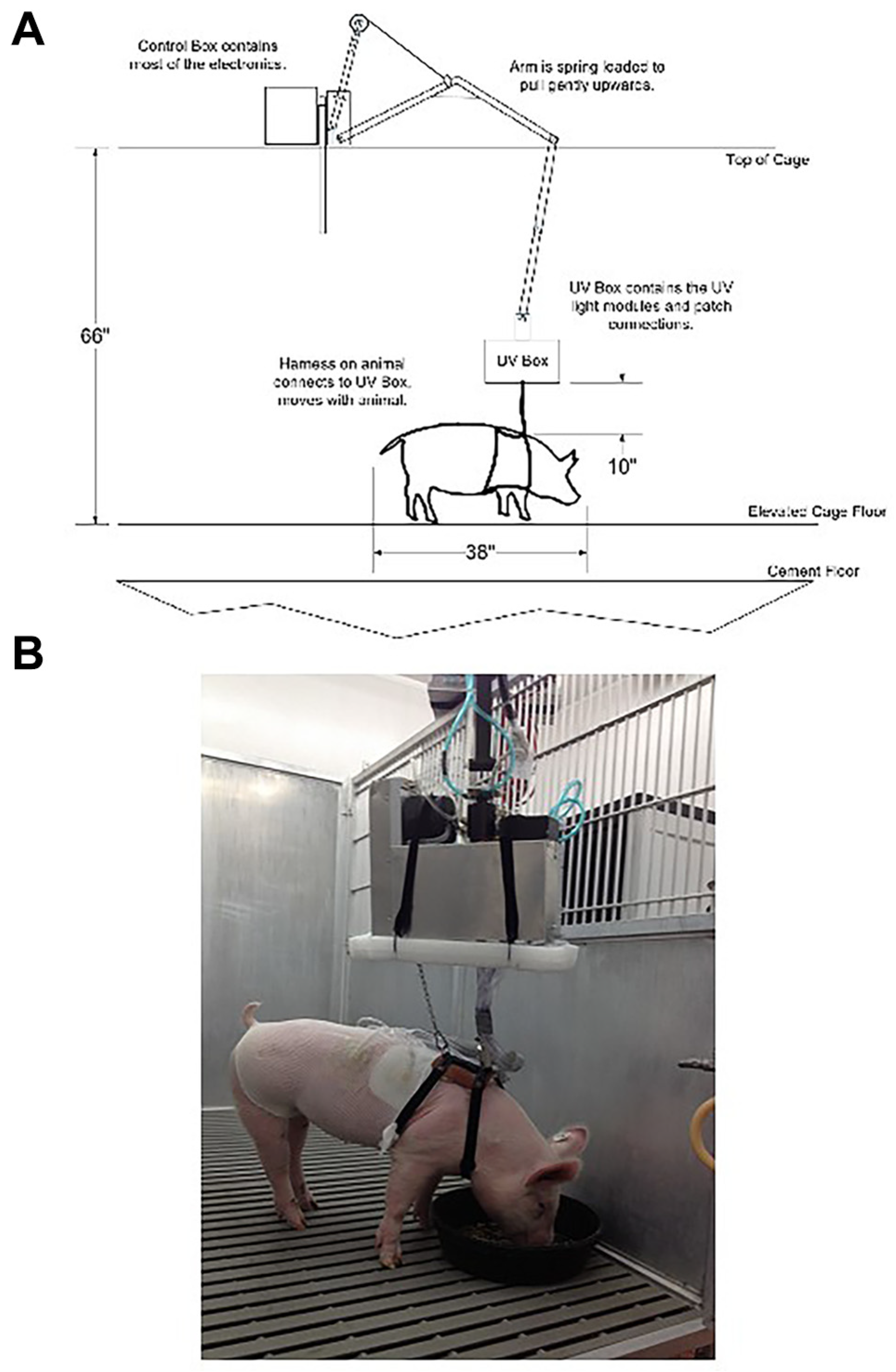
Previous studies have always been short term, up to a few days, in a restrained animal, or in a manner that is obstructive to the animal, causing undue stress. We developed a novel method to study wound-healing therapies in a porcine model for extended periods that involves an articulated freedom-of-motion therapy arm. The arm attaches to the side of the animal cage, has movement in all three cardinal planes, and allows the therapy mechanism to swivel with the pig (
Fig. 1A). This design allows for a safe and stress-free environment during therapy. The animal connects to the arm using a pin-locking mechanism with the D-ring on the dorsal side of a standard dog harness (
Fig. 1B). This allows for a quick-release in the event that the animal needs to be unattached. This novel method for therapy delivery allows our group to accurately and reliably deliver therapies to a large animal without undue stress or intrusion.
Figure 1.
Freedom-of-motion therapy arm. A, Schematic of therapy arm. B, Arm in use for the study.
Figure 1.
Freedom-of-motion therapy arm. A, Schematic of therapy arm. B, Arm in use for the study.
Aim 1: UV-A Administration and Wound Therapy Patches
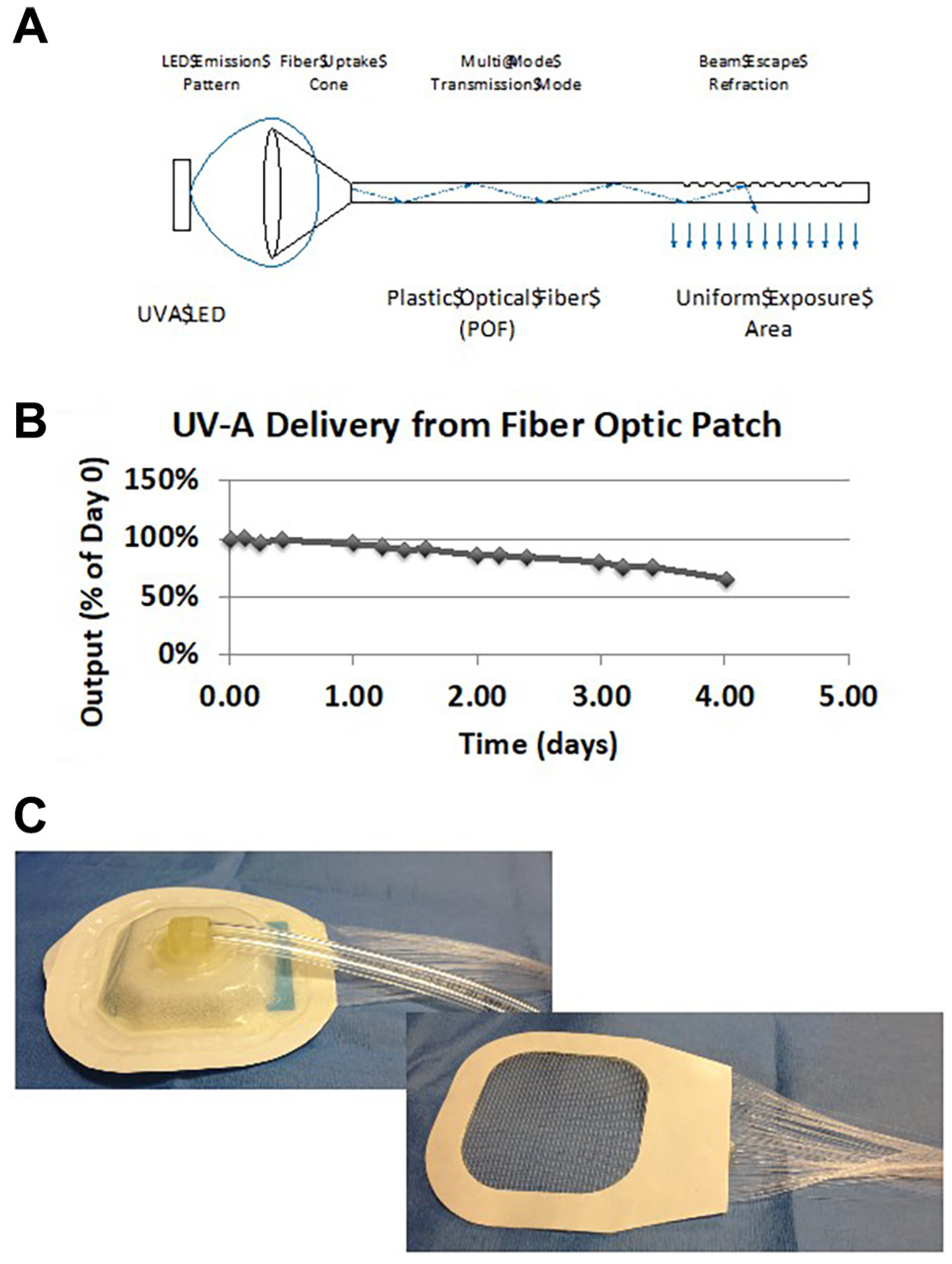
Although medical applications of UV light have existed for many years, our therapeutic approach has a number of novel advantages. The older systems used lamps above the treatment area, had uncontrolled output, and often led to cross-contamination. Previous UV-A phototherapy studies used a large device; thus, therapy was limited to treatments for short periods in a clinic or hospital setting. UV-A was delivered using the UViTEK system (ThermoTek, Inc, Flower Mound, Texas). This system uses a novel method to administer UV-A phototherapy using fiberoptics (
Fig. 2A). These fibers are designed to allow UV-A to escape in only a single direction, thus facilitating more accurate dosing. These fibers transmit UV-A over time with minimal (∼6% loss per day) degradation (
Fig. 2B). For therapy administration, these fibers are incorporated into a patch that can be laid on top of the wound before dressing administration (
Fig. 2C). This system allows for ease of application and administration with other therapies, such as NPWT.
Figure 2.
Fiberoptic ultraviolet (UV)-A delivery patches. A, Fiberoptic design allows for UV-A to escape in a unidirectional manner. B, Delivery of UV-A degradation over time. C, UV-A fiberoptic patches are integrated into a patch that also delivers negative-pressure wound therapy.
Figure 2.
Fiberoptic ultraviolet (UV)-A delivery patches. A, Fiberoptic design allows for UV-A to escape in a unidirectional manner. B, Delivery of UV-A degradation over time. C, UV-A fiberoptic patches are integrated into a patch that also delivers negative-pressure wound therapy.
Animals and Surgical Procedures
A porcine model was used for this study. Five female pigs with a weight between 90 and 120 pounds were purchased from K-Bar Livestock (Sabinal, Texas). Animals were kept in a singly housed, temperature-controlled environment. During a minimum of 5 days acclimation and experimental procedures, pigs were fed ad libitum chow (Harlan, Houston, Texas). The animal was acclimated to the articulated arm that supported the therapeutic devices for 7 days before surgery to ensure minimal distress.
All animals were fasted 12 hours before surgery. Animals were anesthetized using (3 mg/kg) Telazol (Fort Dodge Veterinaria, Fort Dodge, Iowa) and xylazine (10 mg/kg) by intramuscular injection, and the animal was kept on a constant flow of an isoflurane/oxygen mixture by means of face mask followed by intubation. A presurgical injection of atropine (0.04 mg/kg) was also administered intramuscularly. Intravenous access was established for hydration with lactated Ringer solution. A water blanket and Bair Hugger (Arizant Healthcare, Eden Prairie, New Jersey) was used to maintain body temperature. The dorsum of the animal, from below the shoulder blades to the hip bones, was cleaned, shaved and treated with Veet (Reckitt Benckiser, Parsippany, New Jersey) for hair removal. The animal was disinfected with chlorhexidine and alcohol, repeated three times, and draped with sterile surgical drapes. Aseptic technique was used to place three 3-cm-diameter, full-thickness excisional wounds to the level of the muscle fascia on the dorsolateral surface of the animal. After surgery, animals were monitored twice daily for the duration of the study. Wounds were photographed before dressings being applied. To each of these wounds, one of three therapies was applied: –125 mm Hg NPWT (NPWT group), –125mm Hg NPWT plus UV-A fiberoptic therapy (NPWT plus UVA group), or saline-moistened gauze (control) (n = 5 for each treatment group). Care of all animals and procedures were approved by the University of Texas Southwestern Medical Center Institutional Animal Care and Use Committee.
Dressing Change, Wound Assessment, and Sacrifice
Dressings were changed on days 3, 7, and 10. All animals were fasted for 12 hours before dressing change. Animals were anesthetized using Telazol (3 mg/kg) and xylazine (10 mg/kg) by intramuscular injection and kept on a constant flow of isoflurane/oxygen by means of facemask. The skin surrounding the wound sites was cleaned with saline-soaked gauze and treated with Veet (Reckitt, Slough, England) for hair removal. Wounds were assessed for inflammation in or around the wound bed; excessive discharge; and even granulation tissue formation, induration, and general appearance (eg, color, bleeding before or during debridement) in a blinded manner. After assessment, wounds were lightly debrided, and dressings were replaced. Photographs were taken of each wound at each dressing change. Photographs were scaled and analyzed by ImageJ (National Institutes of Health, Bethesda, Maryland) to obtain wound area. Wound area reduction was calculated as percentage change from surgical incision area. Therapies were kept the same for each wound for the duration of the study. Animals were killed 21 days postoperatively. Animals were anesthetized with an intramuscular injection of Telazol (6 mg/kg) and killed with Euthasol (Verbac AH, Inc, Fort Worth, Texas) (320 mg/kg) injection intravenously.
Aim 2: In Vitro UV-A Treatment of S aureus and P aeruginosa
Suspended cultures of S aureus and P aeruginosa (ATCC, Manassas, Virginia) were streaked onto trypticase soy agar plates. Plates were inverted and cultured at 37°C for 24 hours. Half of the plates were incubated over fiberoptic patches delivering UV-A and half were incubated over patches with no UV-A delivery. UV-A light was administered at a daily dose equivalent to what was used in the animal study below.
Aim 3: In Vitro UV-A and UV-C Treatment of Human Fibroblasts
The UV-A fiberoptic system was calibrated and set to a level that would deliver 750 μW/cm2 to the cells plated in a plastic tissue culture dish. Levels were assessed using a UV-A measuring device (model UV513AB; General Tools Corp, Cincinnati, Ohio). Early passage (approximately tenfold) fibroblasts isolated from human foreskin were grown to 70% to 80% confluence and exposed to UV-A fiberoptics for 48 hours (constant exposure), with samples being taken at 0, 24, and 48 hours. UV-C was delivered using the Thera-Wand Model C-100 Ultraviolet C Treatment Lamp (Biomation). The wand was used according to the manufacturer’s instructions at an output of 4 mW/cm2. Cells were exposed for 30 sec with the wand approximately 1 inch above the dish of cells. Cells were then placed back in the incubator and samples were taken at 0- (before exposure), 2-, 6-, 24-, and 48-hour time points. The 48-hour data are not presented because of the level of cell death by this time point and the inability to obtain a sample.
Comet Assay
The comet assay to detect DNA damage was performed using the method of Sasaki et al,[
27] with some modifications. Briefly, fibroblasts were exposed to UV-A or UV-C as noted above. At the end of the treatment, cells were removed from the plates with trypsin. Trypsin was inactivated with serum-containing phosphate-buffered saline (PBS). Fifty microliters of the cell suspension (500,000 cells/mL) were diluted in 500 μL of low-melting-point agarose (0.5% weight/volume in PBS). The resulting suspensions were embedded in previously prepared normal-melting-point agarose (1% weight/volume in PBS) on frosted slides followed by the addition of 75 μL of normal-melting-point agarose (1%). The slides were then immersed in lysis buffer (2.5 M sodium chloride, 100 mM ethylenediaminetetraacetic acid [EDTA] disodium salt, 10 mM Tris-HCl, pH 10) for 0.5 hours at 4°C in the dark. After lysis, slides were placed in alkaline electrophoresis buffer (0.3 M sodium hydroxide, 1 mM EDTA disodium salt) for 20 minutes at 4°C to denature DNA and express alkali-labile sites. Electrophoresis was carried out at 4°C for 20 min at 21 V and approximately 300 mA. The slides were then washed twice in neutralizing buffer (0.4 M Tris-HCl, pH 7.4) for 5 minutes. The DNA was stained by adding 45 μl of ethidium bromide (20 μg/ml) to each slide.
Western Blot Analyses
Cells were harvested by trypsinization, washed once in PBS, and resuspended in lysis buffer (10 mM sodium phosphate buffer [pH 7.2], 1 mM EDTA, 1 mM egtazic acid, 150 mM sodium chloride, and 1% NP-40, supplemented with 10 mM 4-(2-aminoethyl) benzenesulfonyl fluoride, 10 mM β-glycerophosphate, 10 mM sodium orthovanadate, and 10 μg/ml leupeptin and aprotinin). Protein concentrations were determined using the Bio-Rad DC protein assay (Bio-Rad Laboratories, Hercules, California). Samples containing equal amounts of protein were mixed with an equal volume of 2× Laemmli sample buffer (125 mM Tris-HCl [pH 6.8], 4% sodium dodecyl sulfate, 20% glycerol) containing 5% β-mercaptoethanol, boiled, and proteins separated by sodium dodecyl sulfate polyacrylamide gel electrophoresis. Proteins were transferred to nitrocellulose and probed with antibodies against ATM pS1981 (Epitomics, Burlingame, California) and gamma H2AX (Millipore, Burlington, Massachusetts). Ku80 (Cell Signaling Technology, Danvers, Massachusetts) was assessed for equal protein loading.
Statistical Analysis
The data are presented as mean ± SEM. After confirming normal distribution of data, comparisons between conditions were made by the unpaired two-tailed Student t test; repeated-measures analysis of variance were used to compare changes over time between conditions. A value of P < .05 was considered statistically significant. Significance to control is denoted by an asterisk and significance to NPWT is denoted by a number sign.
Results
UV-A Fiberoptic Therapy Combined with NPWT Dramatically Increases Wound Healing Over NPWT Alone
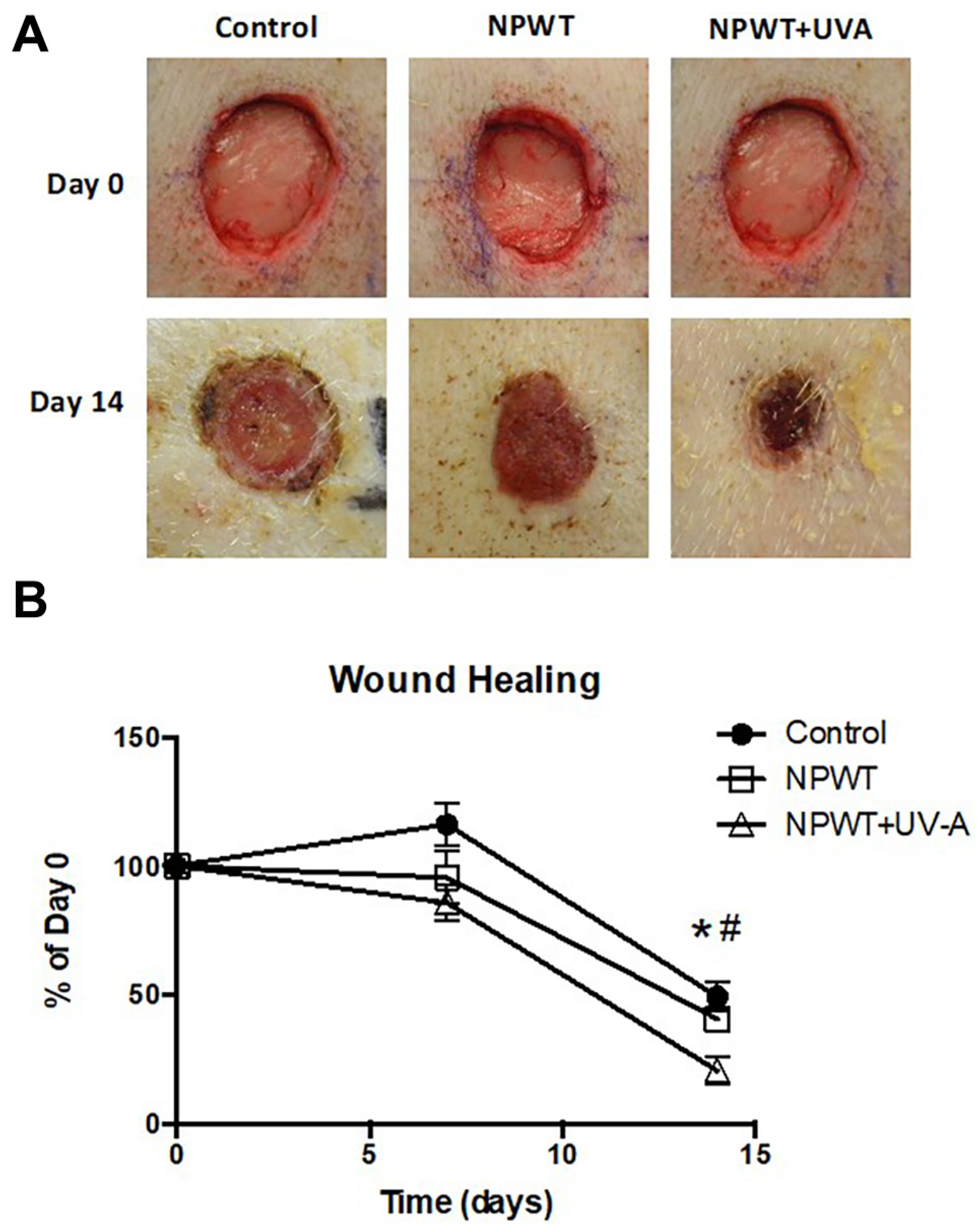
Using a porcine model, we tested the effects of UV-A fiberoptic therapy on wound healing in aseptic full-thickness wounds. After 14 days of treatment with NPWT or NPWT plus UV-A, neither treatment showed any adverse effects, excessive induration, or inflammation (
Fig. 3A). With all treatments, the wounds had significant closure over the time course compared to day 0. Wound area was calculated as a percentage of day 0 (
Fig. 3B). The control wound demonstrated some expansion at day 7, which was not seen in the two groups treated with NPWT. By day 14, however, the wounds treated with NPWT plus UV-A demonstrated a significant reduction in wound area compared to NPWT- or control-treated wounds. These data demonstrate the greater effectiveness of UV-A therapy to heal wounds as compared to NPWT.
UV-A Fiberoptic Treatment Decreases the Growth of S aureus and P aeruginosa In Vitro
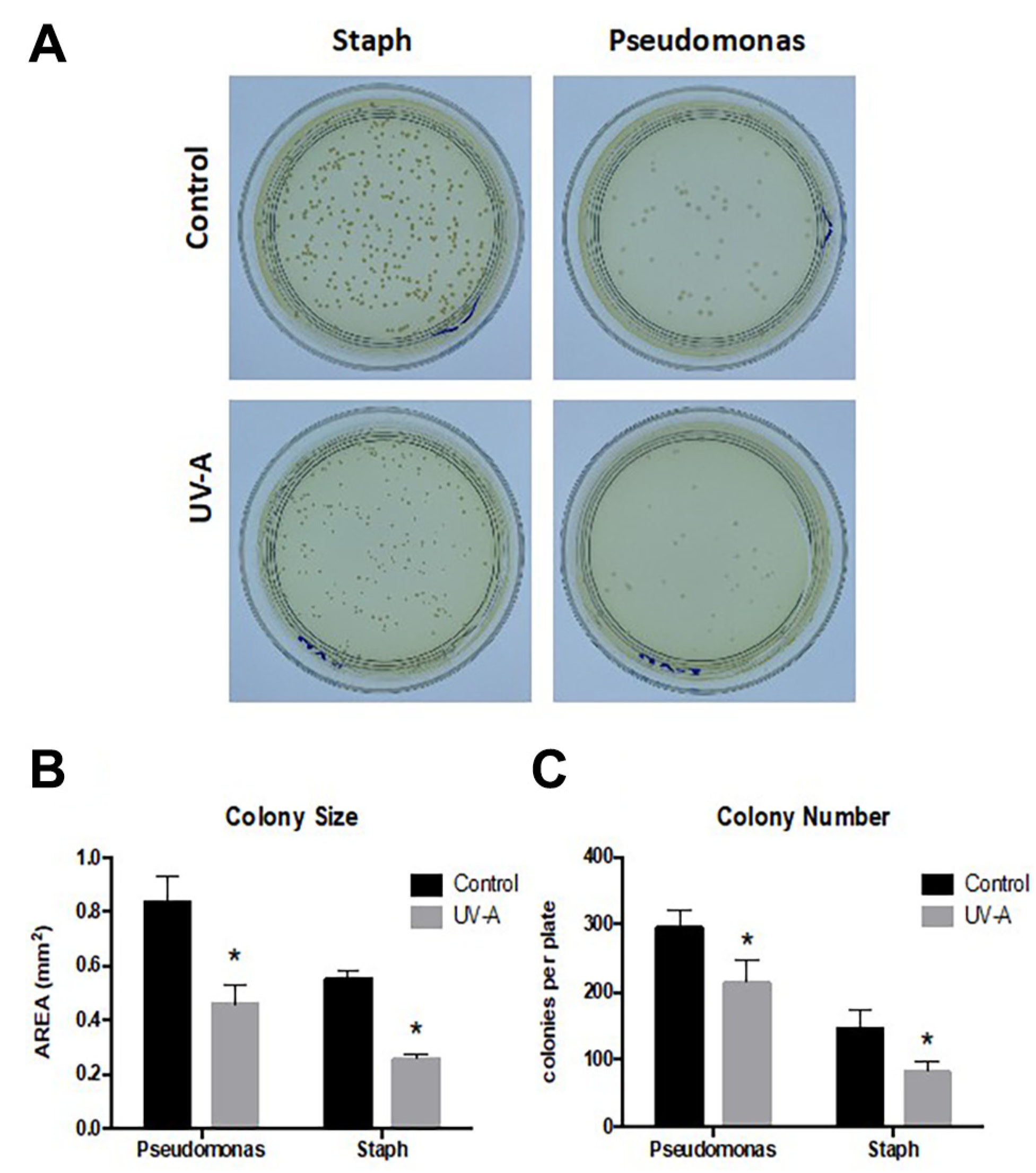
After 24 hours of UV-A (or control) therapy, plates were removed and photographed (
Fig. 4A). Analyses of colony size demonstrate that UV-A fiberoptic treatment results in significantly smaller colonies of
Staphylococcus and
Pseudomonas than control-treated plates (
Fig. 4B). Furthermore, colony number of both strains was reduced with UV-A fiberoptic therapy (
Fig. 4C). These data demonstrate that UV-A fiberoptic therapy reduces proliferation of two skin-borne pathogens,
S aureus and
P aeruginosa, commonly found in wound sites.
Figure 3.
Improved wound healing with ultraviolet-A plus negative-pressure wound therapy (NPWT). A, Representative wound images at days 0, 7, and 14 of NPWT, NPWT plus UV, and control therapies. B, Change in wound area over time (n = 5). Data are presented as mean ± SEM (*P < .05).
Figure 3.
Improved wound healing with ultraviolet-A plus negative-pressure wound therapy (NPWT). A, Representative wound images at days 0, 7, and 14 of NPWT, NPWT plus UV, and control therapies. B, Change in wound area over time (n = 5). Data are presented as mean ± SEM (*P < .05).
Figure 4.
Fiberoptic ultraviolet-A delivery inhibits Staphylococcus aureus and Pseudomonas aeruginosa. A, Photographs of bacterial plates incubated for 24 hours. B, Average colony area (n = 5). C, Average colony number per plate (n = 5). Data are presented as mean ± SEM (*P < .05).
Figure 4.
Fiberoptic ultraviolet-A delivery inhibits Staphylococcus aureus and Pseudomonas aeruginosa. A, Photographs of bacterial plates incubated for 24 hours. B, Average colony area (n = 5). C, Average colony number per plate (n = 5). Data are presented as mean ± SEM (*P < .05).
UV-A Fiberoptic Therapy Induces Minimal DNA Damage as Compared to Established UV-Based Therapies
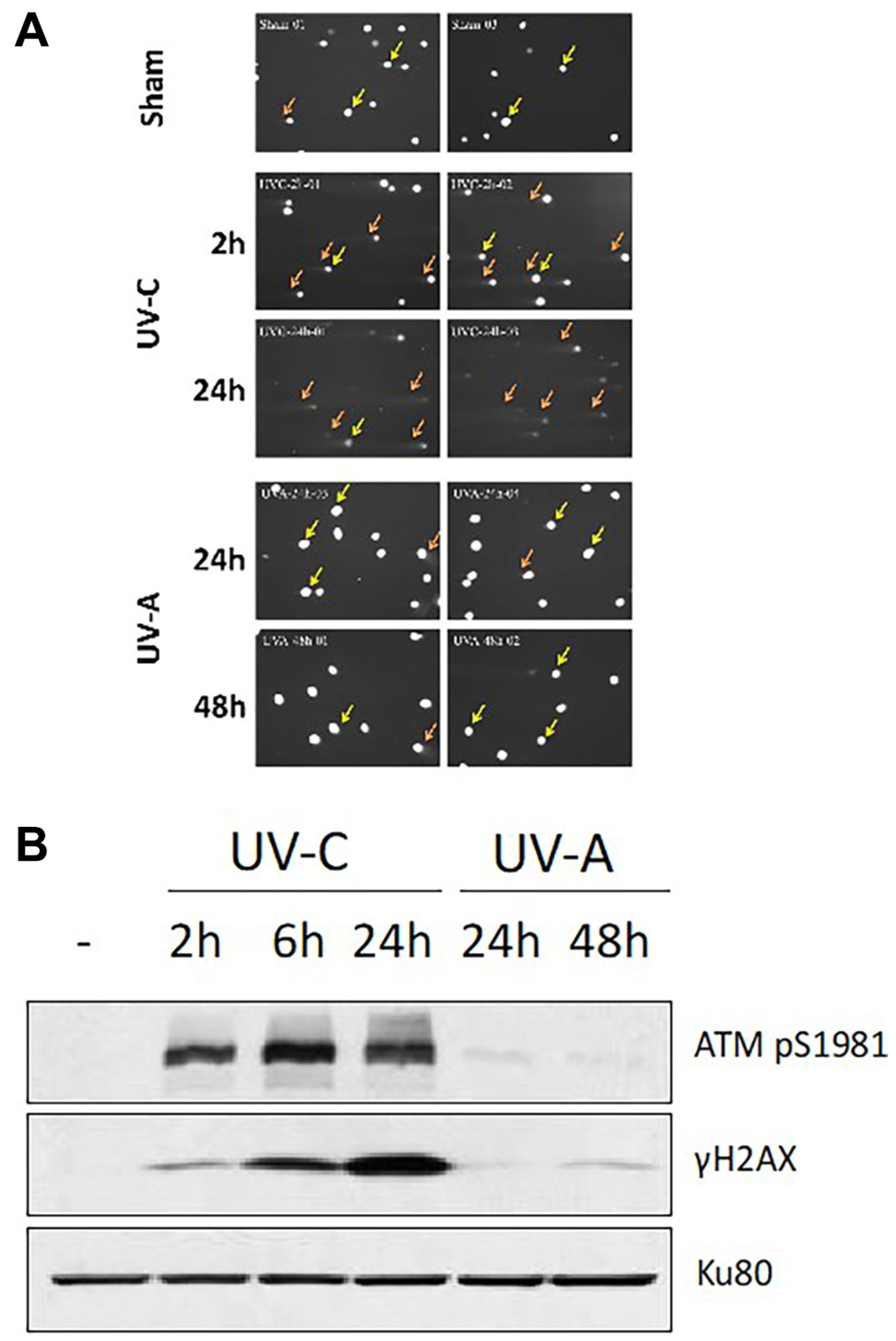
Comet assays were performed on human fibroblasts to assess DNA damage occurrence over 48 hours of exposure to UV-A and UV-C therapy. The levels of DNA damage are correlated to the length and density of the “comet tails” (
Fig. 5A) and inversely correlated to size and density of the comet heads (
Fig. 5A). The comet tails are visibly longer and denser in the UV-C–treated samples than in the UV-A–treated samples. The 48-hour sample from UV-C–treated fibroblasts could not be analyzed because of cell death. The 24-hour UV-C–treated cells display less dense comet heads, which means severe DNA damage occurred in the nuclei. Furthermore, the UV-A–treated samples show only a small number of cells with comet tails, comparable to the sham control. The density of comet heads is similar between the UV-A–treated samples and the sham control, even at the 48-hour time point. These data suggest that significantly more DNA damage occurs with UV-C treatment than with UV-A or sham treatment. To more sensitively assess the degree of DNA damage response, expression of ATM pS1981 and histone H2A variant H2AX (γH2AX) (
Fig. 5B) was determined. Data demonstrate that UV-C induces significant phosphorylation (activation) of ATM 2 hours after exposure, and this activation continues through 24 hours. There is a slight detectible up-regulation of ATM phosphorylation after 24 hours in the UV-A–treated cells but it is far below what is observed in the UV-C–treated condition. These data correlate with the degree of phosphorylated H2AX observed in the UV-C– versus the UV-A–treated cells. Together, these data further support the conclusion that UV-C treatment with the Thera-Wand Model C-100 Ultraviolet C Treatment Lamp for 30 seconds induces far more DNA damage than continuous use of UV-A.
Figure 5.
Minimally detectable DNA damage from ultraviolet (UV)-A therapy. A, Comet assay on human fibroblasts treated with UV-A, UV-C, or control therapy for the indicated times. B, Western blot analyses of human fibroblast cell extract treated with UV-A, UV-C, or control therapies for the indicated times.
Figure 5.
Minimally detectable DNA damage from ultraviolet (UV)-A therapy. A, Comet assay on human fibroblasts treated with UV-A, UV-C, or control therapy for the indicated times. B, Western blot analyses of human fibroblast cell extract treated with UV-A, UV-C, or control therapies for the indicated times.
Discussion
The data presented here demonstrate a novel and efficacious method to administer UV-A phototherapy using fiberoptic technology. In addition, we performed safety and efficacy studies on a novel wound therapy system that combines the benefits of NPWT with UV-A phototherapy. Unlike other therapy devices that use lamps, which are bulky and provide an inconsistent dosage, the NPWT-UV device tested here allows for UV-A therapy to be delivered alongside NPWT 24 hours per day. Furthermore, with this device, the levels of UV-A can be changed to fit the patient’s needs.
There are a few other studies that demonstrate UV effectiveness in promoting wound healing. Wills and colleagues[
28] reported the efficacy of UV light therapy (mixed spectrum of 200–400 nm) from a randomized, placebo-controlled, clinical trial (n = 16) in patients with pressure ulcers. Ulcers in patients treated with active therapy healed faster than those in patients with sham therapy (6.3 weeks versus 8.4 weeks;
P < .02).
Likewise, Nussbaum et al[
29] reported the results of a randomized, placebo-controlled trial (n = 43) of patients with pressure ulcers. The percentage wound area reduction in stage 2 buttock pressure ulcers was significantly smaller in patients treated with active UV-C therapy compared with sham therapy at weeks 3, 5, and 7. For all pressure ulcers, the percentage wound area reduction was 37% for patients that received active UV therapy and 6% for patients that received sham therapy (
P = .09).[
29] The data presented here show that fiberoptic delivery of UV-A results in decreased wound area in a porcine model of aseptic wound healing, and this improvement continues over 2 weeks of therapy.
There are several animal and human studies that report the effectiveness of UV phototherapy to improve or prevent infections.[
23,
31–36] In this study, we show that UV-A delivered through fiberoptics can decrease the proliferative capacity of
S aureus and
P aeruginosa, pathogens commonly found in wounds. Interestingly, the colony formation was not drastically affected by exposure to UV-A. Several factors could explain this. It is possible that higher doses of UV-A could have a more dramatic impact on
Staphylococcus colony formation. To determine this, further dosing studies will need to be performed. In addition, it is possible that the antibacterial effects of UV-A would be more potent in an in vivo wound environment. The presence of blood components and other organic molecules have been demonstrated to be critical in the capacity of UV-A to reduce bioburden.[
18]
We also show that fiberoptic delivery of UV-A is effective in reducing proliferation of
S aureus and P aeruginosa. Studies have demonstrated that the presence of bioburden in wounds results in delayed healing. In a study by Xu et al,[
30] 32 patents with diabetic foot wounds were evaluated for 28 days. The rate of healing had a strong inverse relationship with log colony-forming units. For every log order of colony-forming units, there was a 44% delay in wound healing. Infections complicate the treatment of wounds and impede the healing process by damaging tissue, reducing wound tensile strength, and inducing an undesirable inflammatory response.[
31,
32] It is generally believed that wound infection advances in stages from contaminated, to colonized, to critically colonized, and to infected.[
33] When wound surface bacteria begin to replicate and increase their metabolic activity, the resulting byproducts, such as endotoxins and metalloproteinases, negatively impact all phases of wound healing.[
34] It has been established that UV therapy can reduce bioburden.
Negative-pressure wound therapy has changed how large, complex wounds are treated clinically, and data here demonstrate that addition of UV-A fiberoptic therapy to “traditional” NPWT increases its effectiveness. Early animal studies suggest that NPWT accelerates wound healing and reduces bacteria and biofilm in the wound bed.[
35,
36] However, in clinical studies, there has not been any difference in the incidence of adverse events or infections. In fact, in a randomized clinical trial of diabetic foot wounds treated with NPWT or standard moist wound therapy, patients treated with NPWT had more infections (16.7% versus 9.8%); however, the results were not statistically significant.[
12] The addition of UV-A fiberoptic therapy may improve NPWT outcomes by improving the ability of the therapy to reduce wound bioburden. This combination of NPWT and UV-A fiberoptic therapy would be beneficial in the postoperative period in patients undergoing staged debridement or amputations to treat residual infection or bacterial colonization. This may also have an application outside of the immediate perioperative period for patients requiring extended NPWT courses for large deficits in an effort to reduce colonization and postoperative infections.
Conclusions
Together, these data demonstrate that UV-A promotes wound healing and inhibits growth of Staphylococcus and Pseudomonas. These results are likely to be even more impressive in a chronic wound environment, as often seen in the clinical setting. In fact, NPWT studies with pig models demonstrated at best a 20% reduction in wound healing. The clinical significance of NPWT on healing rates is far more significant. The next step for this type of combination therapy is a translational step to treat complex wounds in humans.
Financial Disclosure: This study was supported by an educational grant from Thermotek, Inc. Kathryn E. Davis, PhD, has research funding from Cardinal Health, Avazzia, EO2 Concepts, MedImmune, Pluristem Therapeutics Inc, Osiris Therapeutics; and consulting agreements with EO2 Concepts, Cardinal Health, Bayer, Medline Industries, Boehringer Ingelheim, and Medimmune. Jessica Bills, BS, and Debby Noble, BS, have no relevant conflicts of interest. Lawrence A. Lavery, DPM, MPH, has research funding from Cardinal Health, KCI, EO2 Concepts, Osiris Therapeutics, Avazzia, and Pluristem Therapeutics, Inc; and consulting agreements with EO2 Concepts, Cardinal Health, Bayer, Medline Industries, Boehringer Ingelheim, and Medimmune.
Conflicts of Interest: None reported.