Next Article in Journal
Arch Height Index, Arch Rigidity Index, and Arch Stiffness Values in a Symptomatic Population
Previous Article in Journal
Knee Pain Reduction Using a Shock-Absorbing Sole
 
 
Journal of the American Podiatric Medical Association is published by MDPI from Volume 116 Issue 1 (2026). Previous articles were published by another publisher in Open Access under a CC-BY (or CC-BY-NC-ND) licence, and they are hosted by MDPI on mdpi.com as a courtesy and upon agreement with American Podiatric Medical Association.
Article

Radiotherapy for Plantar Fibromas (Ledderhose Disease)

by
John D. Mozena
1,*,
Eric K. Hansen
2 and
Paul Clint Jones
1
1
Town Center Foot Clinic, 8305 SE Monterey, Ste 101, Happy Valley, OR 97086
2
The Oregon Clinic Radiation Oncology, Providence St. Vincent Medical Center, Portland, OR
*
Author to whom correspondence should be addressed.
J. Am. Podiatr. Med. Assoc. 2022, 112(1), 19008; https://doi.org/10.7547/19-008
Published: 1 January 2022

Abstract

Ledderhose disease (plantar fibromas) is histologically related to Dupuytren disease, which has been successfully treated for years with radiotherapy. Many conservative treatments have been advanced for plantar fibromas, including accommodative orthotic devices, which help but do not cure the disease. Surgery is considered the mainstay of treatment for this malady, but the failure rate has been as high as 100%, depending on the type of fasciectomy. Radiotherapy is a new, exciting modality that has shown promising results for treating plantar fibromas. (J Am Podiatr Med Assoc 112(1), 2022)

Baron Guillaume Dupuytren described a fibrous constriction of the palm in 1831. Originally this disease process was thought to be different from plantar fibromatosis, but the relationship between the fibroma of the foot and hand was later described by the German physician George Ledderhose in 1897. Eventually Dupuytren and Ledderhose diseases were found to be linked histologically [1,2]. Ledderhose nodules occur most commonly in Northern European men, with up to 40% of that specific population affected. Up to approximately 35% of individuals with Ledderhose develop Dupuytren disease and 5% developPeyronie disease [3,4,5,6].
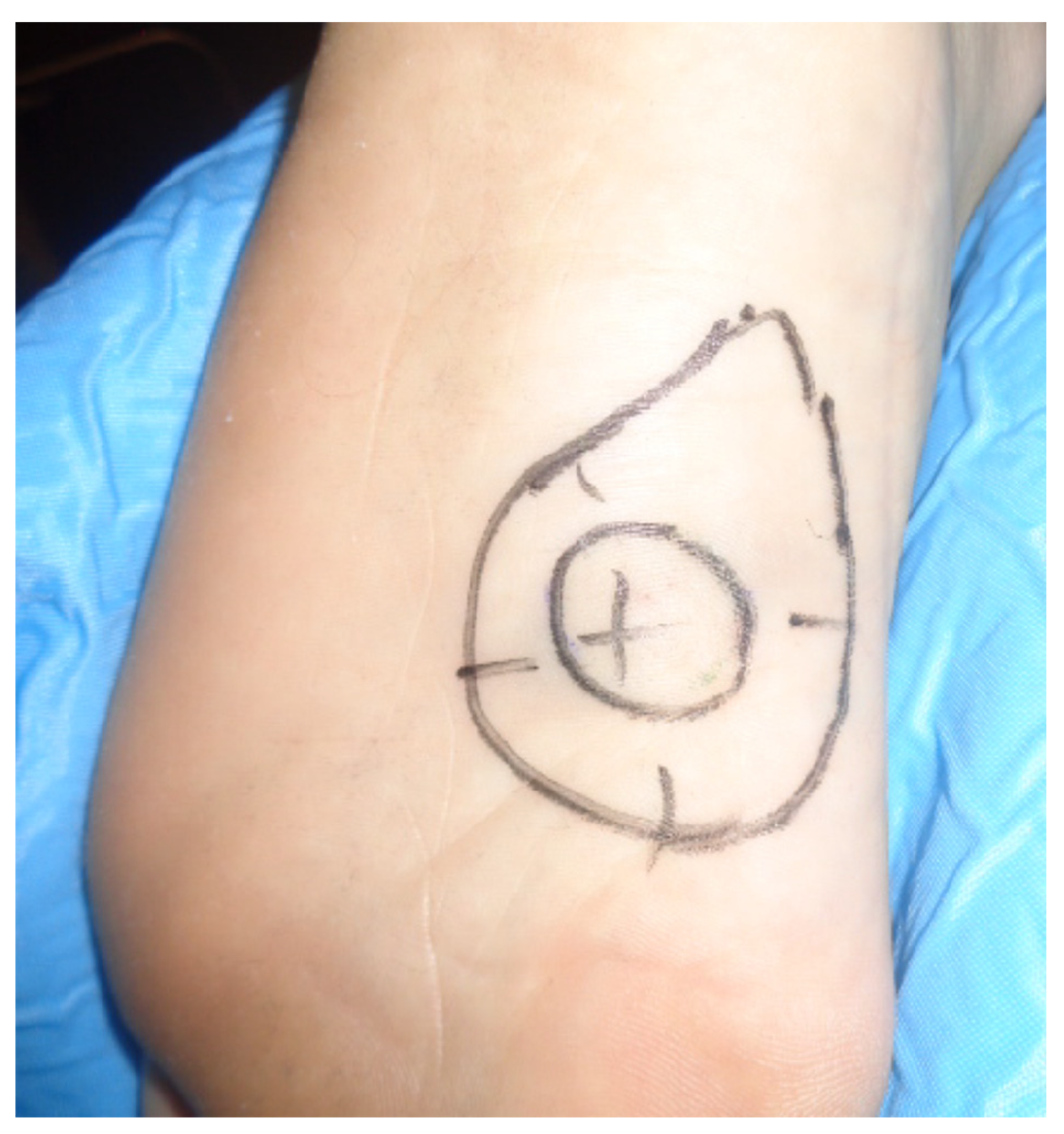
Fibromatosis growth is described in three phases. The first phase begins with proliferating fibroblasts, which often cause rapid nodule growth over a few months. The second phase is called the involutional stage. The fibroblasts differentiate into mitotic and postmitotic myofibroblasts that cause constrictions and form the fibrotic scars and cords seen in Dupuytren and Ledderhose disease. The third phase is the residual stage. This phase is histologically defined as collagenous fibers that resemble scar tissue. Often the second and third phases have slow tendency for growth over many years (Fig. 1) [2,3,4,6,7].
Ultrasonography or magnetic resonance imaging may be considered, but history and clinical examination is usually sufficient for diagnosis of most patients. Multiple conservative care options are available, including corticosteroid injections, vitamin E, weight reduction, and avoiding alcohol and smoking. Accommodative orthotic devices are helpful for off-loading the painful lesions. Other less commonly used treatments include verapamil cream, cryotherapy, shockwave therapy, hyaluronidase, and collagenase injections. Nonoperative management is still the mainstay of treatment for this particular problem. However, none of these therapies have been proved to be curative. Radiotherapy may prove to be a curative, nonoperative option, as described later herein [8].
Surgery is the most commonly accepted, potentially curative treatment. Surgical excision of the fibroma has several approaches: local excision, wide excision, or complete fasciectomy. Local incision has the highest rate of recurrence, which can be up to 100% in some studies. Wide excision is defined as resection of 2 to 3 cm of unaffected fascia margin around the fibroma. The regrowth rate after wide excision has been reported to be up to 80%. Finally, total removal of the fascia has the lowest rate of recurrence at less than 50% [4,5,9].
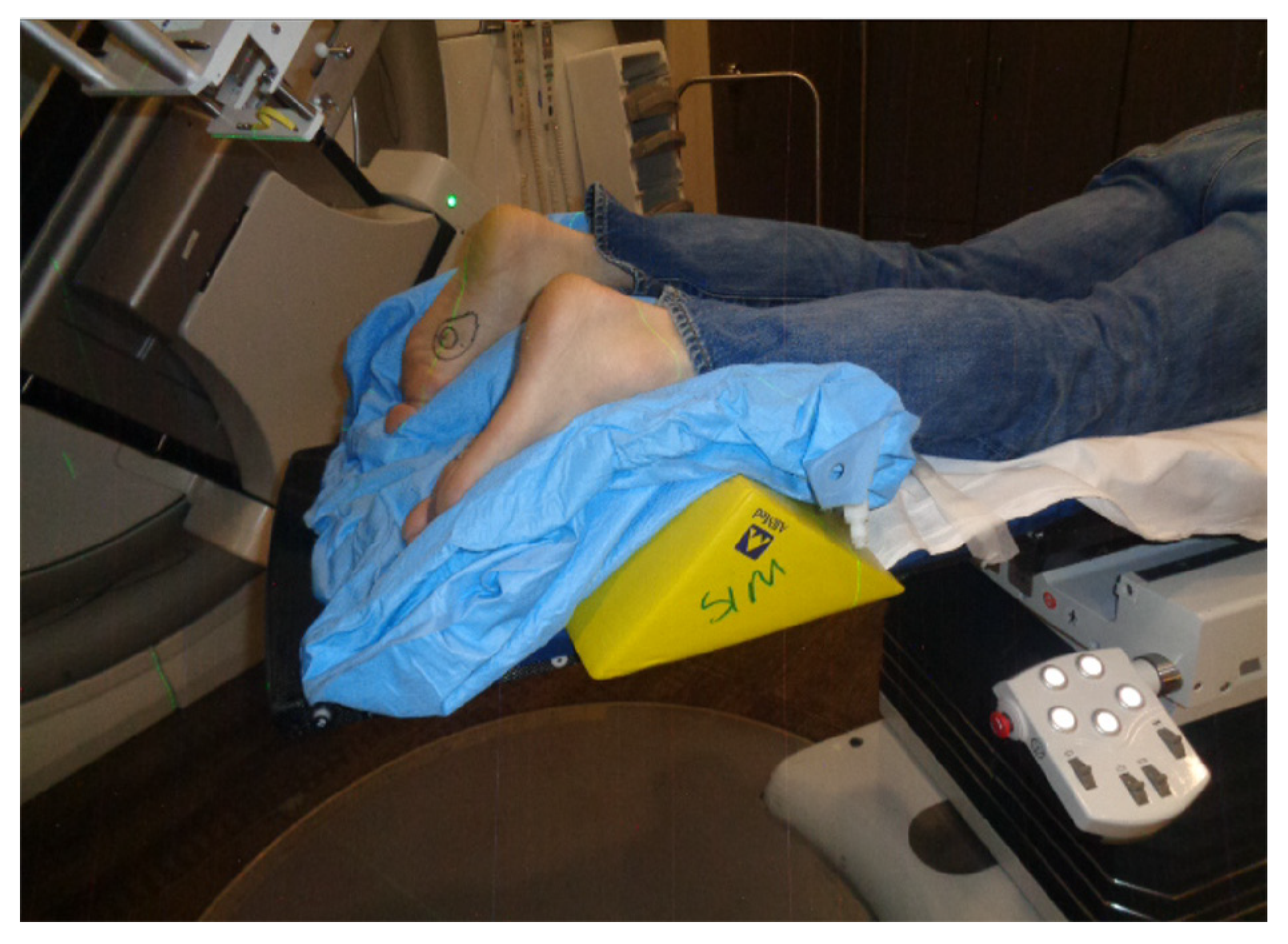
The use of radiotherapy for benign hyperproliferative disorders is a current, evolving concept. Published series of more than 600 patients with early-stage Dupuytren with 8 to 13 years of follow-up report that radiotherapy can halt disease progression in approximately 90% of patients, with most achieving long-term symptom relief. Similarly, three smallerpublished radiotherapyseries on Ledderhose plantar fibromas with 2 to 5 years of follow-up report that disease progression can be avoided in 93% to 100% of patients; 44% to 55% of patients achieve remission, with a reduced number or size of plantar nodules or cords after radiotherapy. The mechanism of action of radiotherapy is not entirely understood, but it is thought that radiotherapy slows proliferation of mitotic fibroblasts and myofibroblasts and causes free radical production that inhibits proliferative activity and interferes with growth factors and cytokines. Radiotherapy seems to be most effective in the active phase of the disease process, when cells are thought to be proliferating the most. Radiotherapy is directed at the palpablelesion(s) with 1- to 2-cm margins. It is typically administered in two 1-week courses to a total dose of 30 Gy in ten treatments: five treatments over 1 week, followed by a 6- to 12-week treatment break, then another five treatments over 1 week (Fig. 2) Each pain-free treatment takes only a few minutes. Typical adverse effects include localized skin erythema and/or dryness within the treatment area. On rare occasions, patients can develop local edema or discomfort. There is less than 1% estimated risk of inducing cancer in the treatment area. Surgery remains the gold standard, but due to frequent recurrences, radiotherapy is considered as a quality,nonoperative alternative to arrest the disease process, especially in itsearly stages [3,4,6,8,9,10,11,12].

Case Report

A 25-year-old man reported that he thought he had a “bump” on the bottom of his foot for several years. Two years earlier it began growing and became painful. He sought medical treatment because it affected his daily life. He described it as “a marble stuck in the middle of the arch of my foot.” Physical therapy provided no relief. A corticosteroid injection helped only briefly. Eventually, pain from the nodule interfered with any type of exercise, and he felt that he could stand for no more than 20 min at a time. Over time, his gait pattern changed to accommodate the plantar pain. Magnetic resonance imaging and physical examination confirmed the diagnosis of plantar fibromatosis. An orthotic device was used to accommodate the lesion. However, the fibroma continued to increase in size, and he developed new nodules on both feet. The patient elected radiotherapy and was referred for radiotherapy evaluation with the intention of avoiding surgical intervention.
The palpable Ledderhose nodule with 1- to 2-cm margins was treated with an en face 6 MeV electron beam field with custom blocks to the 90% isodose line. The total dose was 30 Gy in ten fractions of 3 Gy each delivered 5 days per week with a planned 6-weekbreak betweenthefifthand sixthtreatments.
Shortly after completing radiotherapy, the patient almost immediately noticed less pain with ambulation, and over time the nodules improved. Within 6 months, the size of the nodules decreased, as did the pain in the area. The patient was able to return to normal physical activity, including running. As an adverse effect, the patient has had only dry skin and has not had any regrowth.

Discussion

Plantar fibromatosis is a common malady seen daily in the podiatric medical world. It is not unusual for plantar fibromas to be asymptomatic and for its host to not seek therapy. Therefore, fibromas may be more common in the population than currently listed in the literature. In the case report presented, the patient was in a painful, proliferative phase and had failed previous conservative care. The patient was not amenable to surgical intervention. The patient responded optimally, with decreased lesion size, decreased pain, and return to a prelesion activity level. The noninvasive radiotherapy was painless, during and after therapy.
Currently, the expense, risk, and unacceptable low success rate of conservative and surgical standard-of-care welcomes this technological advancement. Radiotherapy success rates are such that radiotherapy should be presented to patients as an alternative to surgery. The use of radiotherapy does not preclude the use of surgery in cases of radiotherapy failure. It is adaptable to each individual patient and readily available anywhere oncologic radiotherapy is used in modern medicine, making it an optimal therapeutic modality for the treatment of plantar fibromatosis. We believe that radiotherapy warrants being adopted and should be offered as a frontline treatment option for symptomatic Ledderhose disease.

Financial Disclosure

None reported.

Conflicts of Interest

None reported.

References

  1. SCHURER A, MANLEY G, WACH W: “International Patient Survey (Part 2: Ledderhose Disease),” in Dupuytren Disease and Related Diseases: The Cutting Edge, edited by P WERKER, J DIAS, C EATON, ET AL, p 371, Springer International Publishing, Cham, Switzerland, 2017.
  2. RÖ DEL F, FOURNIER C, WIEDERMANN J, ET AL: Basics of radiation biology when treating hyperproliferative benign diseases. Front Immunol 8: 1, 2017.
  3. HEYD R, DORN AP, HERKSTRÖTER M, ET AL: Radiation therapy for early stages of morbus Ledderhose. Strahlenther Onkol 186: 24, 2010. [CrossRef] [PubMed]
  4. SEEGENSCHMIEDT MH, WIELPÜTZ M, HANSLIAN E, ET AL: “LongTerm Outcome of Radiotherapy for Primary and Recurrent Ledderhose Disease,” in Dupuytren’s Disease and Related Hyperproliferative Disorders, edited by C EATON, MSEEGENSCHMIEDT, A BAYAT, ET AL, p 409, Springer, Berlin, Heidelberg, 2012.
  5. GRENFELL S, BORG M: Radiotherapy in fascial fibromatosis: a case series, literature review and considerations for treatment of early-stage disease. J Med Imaging Radiat Oncol 58: 641, 2014. [CrossRef] [PubMed]
  6. SEEGENSCHMIEDT MH: “Morbus Dupuytren/Morbus Ledderhose,” in Radiotherapy or Non-Malignant Disorders, edited by MH SEEGENSCHMIEDT, HB MAKOSKI, KR TROTT, ET AL, p 161, Springer, Berlin, Heidelberg, 2008.
  7. BANKS JS, WOLFSON AH, SUBHAWONG TK: T2 signal intensity as an imaging biomarker for patients with superficial fibromatoses of the hands (Dupuytren’s disease) and feet (Ledderhose disease) undergoing definitive electron beam irradiation. Skeletal Radiol 4747: 243, 2017. [CrossRef] [PubMed]
  8. BREE ED, ZOETMULDER FA, KEUS RB, ET AL: Incidence and treatment of recurrent plantar fibromatosis by surgery and postoperative radiotherapy. Am J Surg 187: 33, 2002. [CrossRef] [PubMed]
  9. YOUNG JR, STERNBACH S, WILLINGER M, ET AL: The etiology, evaluation, and management of plantar fibromatosis. Orthop Res Rev 11: 1, 2018. [PubMed]
  10. SEEGENSCHMIEDT MH, KEILHOLZ L, WIELPÜTZ M, ET AL: “LongTerm Outcome of Radiotherapy for Early Stage Dupuytren’s Disease: A Phase III Clinical Study,” in Dupuytren’s Disease and Related Hyperproliferative Disorders, EATON C, SEEGENSCHMIEDT M, BAYAT A, ET AL, eds, p 349, Springer, Berlin, Heidelberg, 2012.
  11. BETZ N, OTT OJ, ADAMIETZ B, ET AL: Radiotherapy in earlystage Dupuytren’s contracture: long-term results after 13 years. Strahlenther Onkol 186: 82, 2010. [CrossRef] [PubMed]
  12. BREWSTER A: “The Use of Radiotherapy in the Treatment of Benign Conditions,” in Practical Clinical Oncology, p 449, Cambridge University Press, Cambridge, England, 2008. [CrossRef]
Figure 1. Large mid-arch mass of the plantar fascial band.
Japma 112 19008 g001
Figure 2. Positioning of the extremity for repeatable, custom, focal radiotherapy. Outline shows the area of customized collimation.
Japma 112 19008 g002
Disclaimer/Publisher’s Note: The statements, opinions and data contained in all publications are solely those of the individual author(s) and contributor(s) and not of MDPI and/or the editor(s). MDPI and/or the editor(s) disclaim responsibility for any injury to people or property resulting from any ideas, methods, instructions or products referred to in the content.