Systemic lupus erythematosus (SLE) is an autoimmune disorder that affects several organs and systems in the human body. Digital gangrene is known to be a rare and severe complication of SLE that could lead to amputation [
1]. Several factors contribute to the development of digital gangrene, including vasospasm, vasculitis, thromboembolism, and atherosclerosis [
1,
2]. Whenever a patient presents with SLE, one should check risk factors that could contribute to developing gangrene, including how long the patient has had SLE and whether they have antiphospholipid syndrome and/or Raynaud phenomenon (RP) [
2]. Liu et al. [
1] suggest that, in a patient with a long history of RP, elevated C-reactive protein (CRP) and SLE could be precursors to developing digital gangrene. Raynaud phenomenon can affect up to one-third of adults and approximately 10% of patients with adolescent-onset SLE [
3].
We report a case of an adolescent who presented with an autoimmune disorder and multiple comorbidities and developed gangrenous toes. This case highlights how patients with SLE, RP, and antiphospholipid syndrome are at risk of gangrenous toes and should be monitored routinely to save limbs.
Case Report
An 18-year-old African American woman with a 5-year history of SLE, RP, positive antiphospholipid antibody, neuropathic pain, chronic microvasculitis, and microcytic anemia with elliptocytes and schistocytes presented with painful gangrenous toes. Despite taking prednisone, gabapentin, and acetylsalicylic acid (81 mg), she experienced worsening pain in both feet and progressive gangrene of her toes of 10 days' duration and was admitted to our institution for treatment. She described having flare-ups that caused unbearable pain and required hospital admission for pain control. She was not on any long-term anticoagulation medications and also denied history of deep venous thrombosis. She had a family history of SLE.
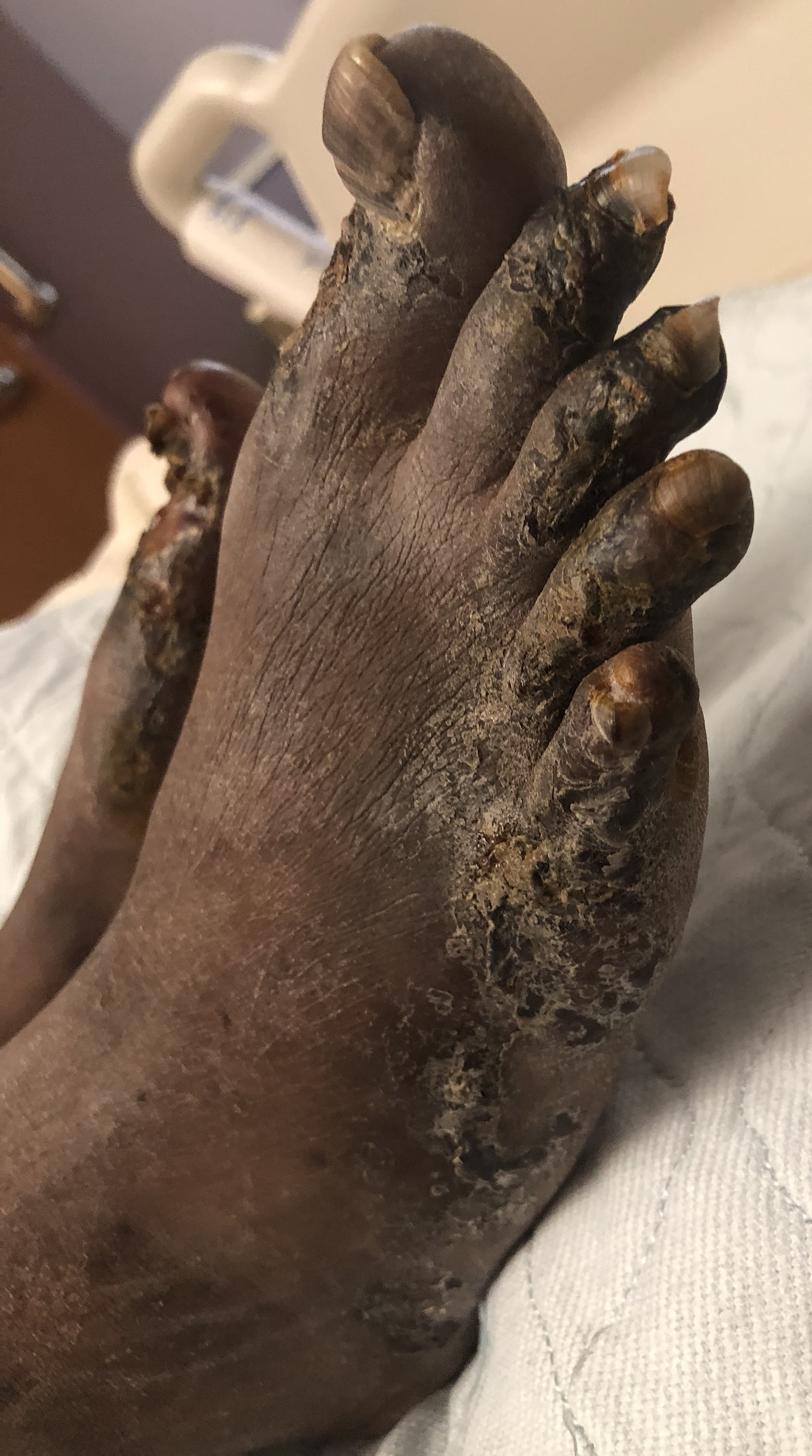
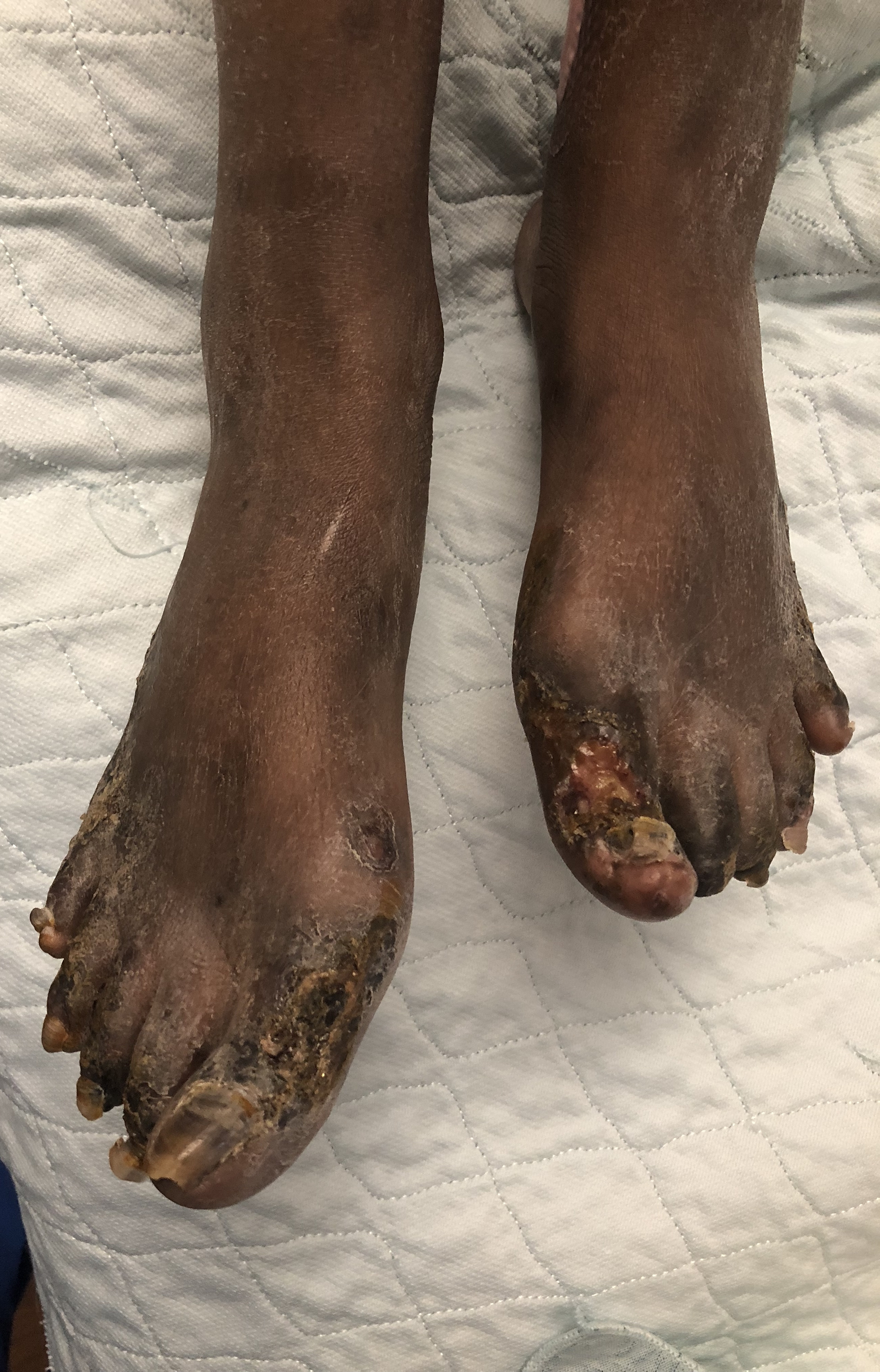
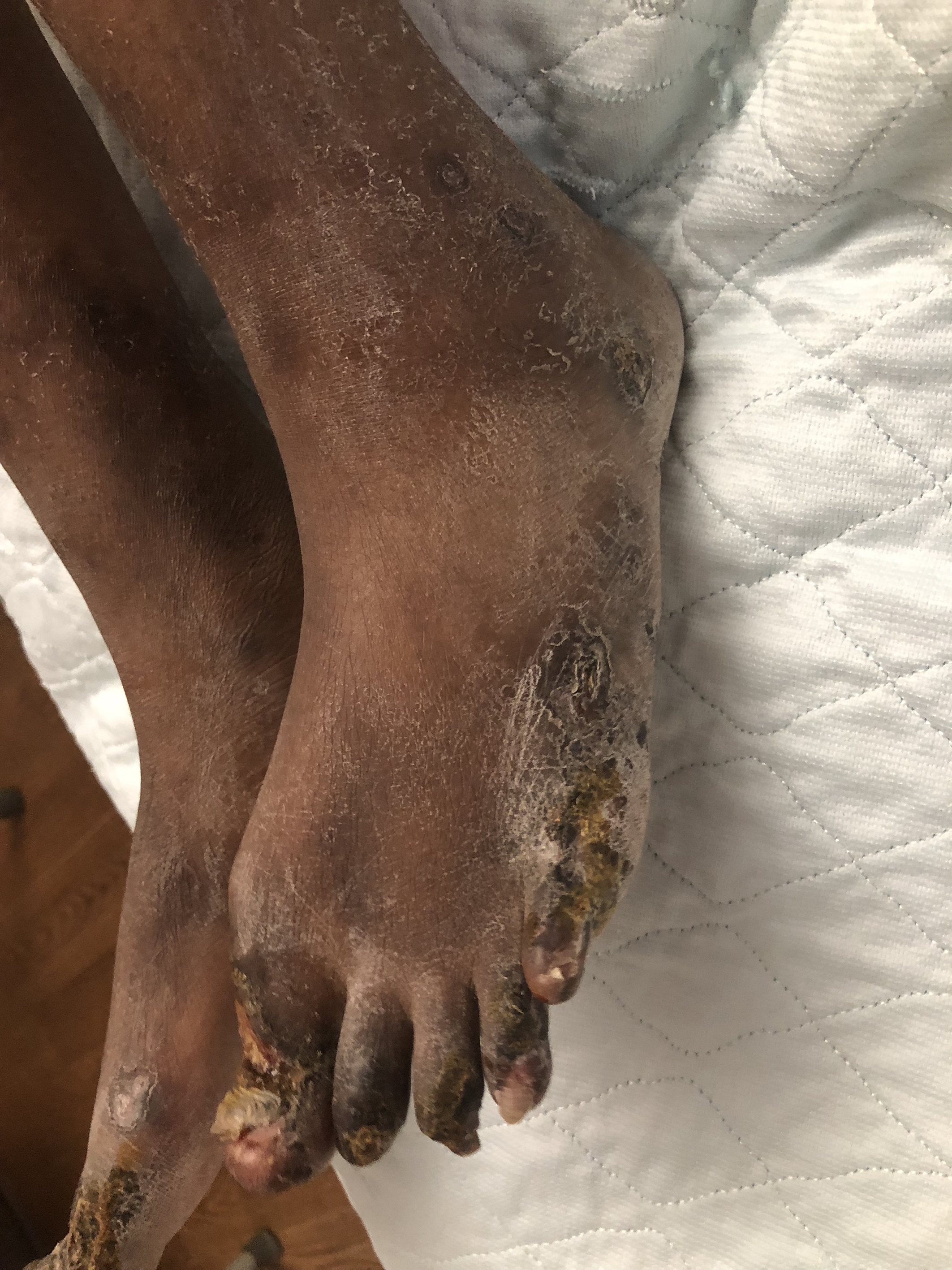
On physical examination, she had bilateral dry gangrenous toes with no active infection (
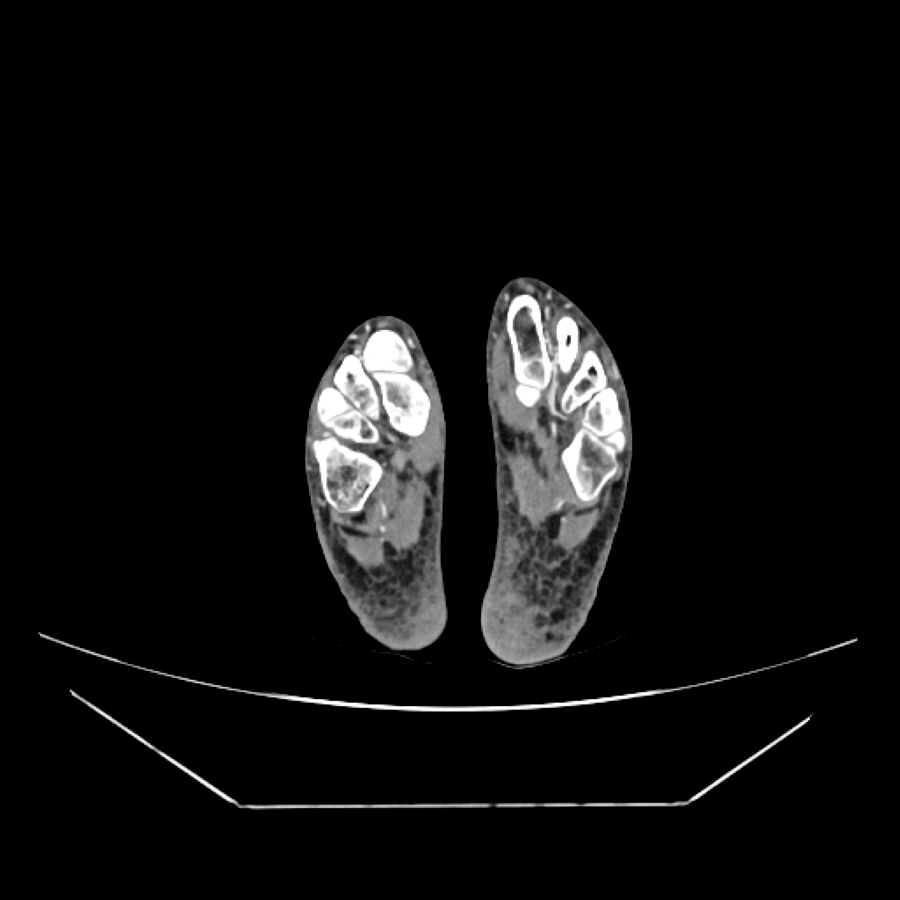
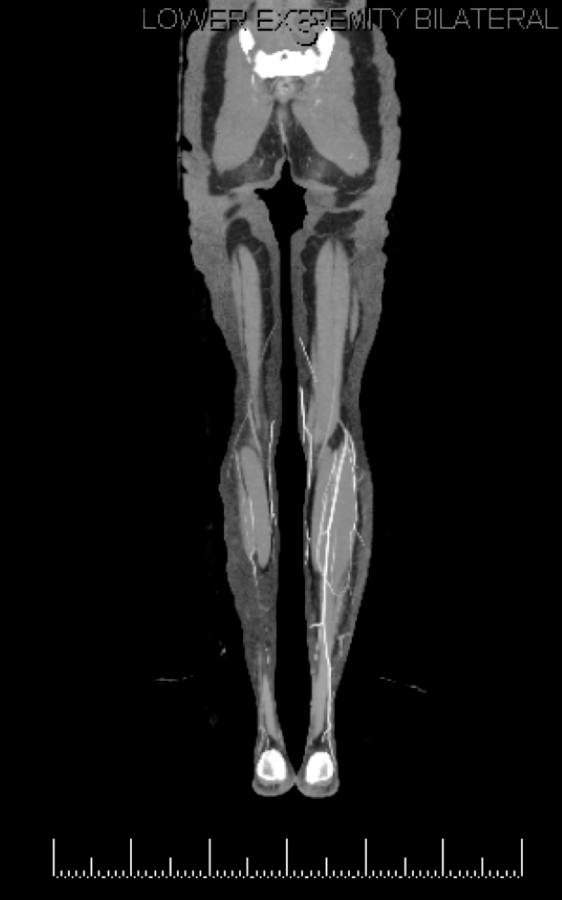
Fig. 1). The patient had bilateral palpable dorsalis pedis and posterior tibial pulses. Radiographs showed bilateral soft-tissue swelling and ulceration, consistent with the history of gangrene. Bilateral computed tomographic angiography of her lower extremities with contrast showed that the posterior tibial arteries were markedly diminutive, without definite opacification of the distal segments. The remaining lower extremity arteries were widely patent, without significant narrowing. Multiple small tortuous vessels seen in the anterior shins were likely small varicosities, versus collateral arterial supply (
Figs. 2 and
3). The patient also had prominent superficial veins, which could be seen in venous insufficiency. The constellation of findings were likely related to an underlying vasculitis. Bilateral venous duplex scanning of the lower extremity showed no evidence of deep or superficial venous thrombosis.
Figure 1.
Bilateral feet with dry gangrene.
Figure 1.
Bilateral feet with dry gangrene.
Figure 2.
Computed tomographic angiography scan showing axial view of left and right feet.
Figure 2.
Computed tomographic angiography scan showing axial view of left and right feet.
Figure 3.
Computed tomographic angiography scan showing coronal view of bilateral extremities.
Figure 3.
Computed tomographic angiography scan showing coronal view of bilateral extremities.
Laboratory results showed white blood cell and platelet counts within institutional reference ranges. The inflammatory marker ESR was noted to be elevated (98 mm/hour; normal range at our institution is >0.8 mm/hour). The podiatry department was consulted and recommended that, because the patient had no acute infection (ie, wet gangrene) and had bilateral palpable pulses, no acute surgical intervention was required (
Figs. 4 and
5). The patient was recommended to rheumatology and vascular surgery for consultation. Vascular surgery found bounding pulses in the feet, with no indication of large-vessel disease. She was advised that she had microvascular disease that led to gangrenous toes, and that there were no surgical options for revascularization. Her gangrenous toes showed no sign of acute infection and did not indicate a need for acute surgical intervention; however, the patient was advised that if she continued to have severe pain to her feet, amputation of her toes would be an option. The patient declined at the time. Pain management was consulted for pain control and recommended continuing hydrocodone (10 mg)/acetaminophen (325 mg) (Norco; Allergan plc, Dublin, Ireland) every 6 hours and starting acetaminophen (300 mg)/codeine (30 mg) tablet when needed for pain 3 hours after starting Norco. Once the patient was discharged, she was advised to continue her pain medicine regimen for 2 weeks at home, then return to the narcotic home regimen after a 2-week period if needed, according to her primary team, and then increase gabapentin to 300 mg three times per day. She was started on the regimen and her pain was better controlled before discharge. The patient was advised to seek further podiatric care but was lost to follow-up.
Figure 4.
Right foot with gangrenous toes.
Figure 4.
Right foot with gangrenous toes.
Figure 5.
Left foot with gangrenous toes.
Figure 5.
Left foot with gangrenous toes.
Discussion
This case report describes a rare presentation of a cluster of medical issues: SLE, RP, positive antiphospholipid antibody, neuropathic pain, chronic microvasculitis, microcytic anemia with elliptocytes and schistocytes, and gangrenous toes. The presence of multiple comorbidities and gangrenous toes in a patient of such a young age (adolescence) is unique. Gangrene of the upper and lower extremities is infrequent, occurring in approximately 1% of SLE patients, and usually affects the upper extremities [
4]. The adolescent patient had SLE and RP for 5 years and, at admission at our institution, elevated CRP. This, and RP causing abnormal blood flow to her feet, could be the cause of her digital gangrene. Liu et al. [
1] stated that antiphospholipid antibodies have been found to cause atherosclerosis, which could cause gangrene in SLE patients. Our patient, too, had positive antiphospholipid antibodies along with SLE.
Conclusions
This case highlights the importance of identifying comorbid conditions and collaborating with multiple specialties in diagnosing complex cases. When a nondiabetic patient presents with gangrenous toes, a list of differential diagnoses such SLE, RP, positive antiphospholipid antibodies, elevated CRP, and elevated erythrocyte sedimentation rate should be considered, and laboratory tests should be performed that would confirm these diagnoses. Once confirmed, a focused and aggressive treatment plan should be determined by consulting the podiatry, vascular surgery, rheumatology, and internal medicine departments for collaborative management and further evaluation. Patients with SLE, RP, and positive antiphospholipid antibodies are at risk of gangrenous toes and should be routinely monitored to save limbs.