Next Article in Journal
Determination of the Effective Site for Percutaneous Achilles Tenotomy in Ponseti Management of African Idiopathic Clubfoot
Previous Article in Journal
The Beneficial Effects of Erbium:Yttrium-Aluminum-Garnet Laser in an Ulcer Caused by Lower Leg Arteriopathy
 
 
Journal of the American Podiatric Medical Association is published by MDPI from Volume 116 Issue 1 (2026). Previous articles were published by another publisher in Open Access under a CC-BY (or CC-BY-NC-ND) licence, and they are hosted by MDPI on mdpi.com as a courtesy and upon agreement with American Podiatric Medical Association.
Article

Management of Periprosthetic Polyvinyl Alcohol Synthetic Cartilage Implant Infection with Staged First Metatarsophalangeal Joint Arthrodesis. A Case Report

by
Korey S. DuBois
1,*,
John Benner
2,
Spencer Monaco
2 and
Michael T Rossidis
1
1
Division of Podiatric Surgery, Penn Presbyterian Medical Center/University of Pennsylvania Health System, 51 N 39th St, Philadelphia, PA 19104
2
Premier Orthopedics, West Chester, PA
*
Author to whom correspondence should be addressed.
J. Am. Podiatr. Med. Assoc. 2021, 111(6), 20105; https://doi.org/10.7547/20-105
Published: 1 November 2021

Abstract

Surgical management of hallux rigidus using a polyvinyl alcohol synthetic cartilage implant has gained popularity among foot and ankle surgeons. Although uncommon, appropriate diagnosis and management of a periprosthetic implant infection is critical in limiting morbidity. We present a case report and staged technique for converting a first metatarsal synthetic cartilage hemiarthroplasty to arthrodesis in the setting of a periprosthetic joint infection.

Controversy remains regarding the optimal treatment for end-stage hallux rigidus. Historically, treatment of hallux rigidus has been arthrodesis of the metatarsophalangeal (MTP) joint. In long-term studies of first MTP joint arthrodesis by Stone et al [1] and Chraim et al, [2] patient-reported outcomes were evaluated at 15 years and 4 years, respectively. Both studies showed improvement in patient function. [1,2]
Surgeons continue to study the use of first MTP hemiarthroplasty to preserve joint range of motion in the setting of hallux rigidus. Most unipolar hemiarthroplasty implants are phalangeal implants, but some metatarsal hemiarthroplasty implants have been studied. Kline et al [3] reported a prospective case series of 26 patients (30 implants) undergoing metatarsal head implant resurfacing hemiarthroplasty. The study's 5-year data reported one conversion to arthrodesis using an interpositional bone graft. [3]
The Cartiva (Wright Medical, Memphis, Tennessee) Synthetic Cartilage Implant (SCI) has become a popular hemiarthroplasty implant for the management of hallux rigidus. Baumhauer et al [4] performed a prospective, randomized, controlled, noninferiority trial comparing the SCI with first MTP joint arthrodesis. This study showed equivalent pain relief and functional outcomes postoperatively at 2 years. In the study, 9.2% (14 implants) underwent implant removal and successful conversion to arthrodesis. These revisions were performed because of persistent or recurrent pain, and there were no reported periprosthetic implant infections. [4] Glazebrook et al [5] prospectively assessed safety and efficacy outcomes at a minimum of 5 years and found the results observed at 2 years were maintained at 5.8 years in 119 patients. This study reported nine patients as having undergone implant removal and conversion to arthrodesis. One patient underwent implant removal secondary to low-grade periprosthetic implant infection (Staphylococcus aureus) at 36 months. [5] Davies et al [6] reported successful conversion of SCI to arthrodesis in three of 27 patients using cancellous calcaneal autograft. [6]
Two-stage management of prosthetic joint infection (PJI) is well established in the knee and hip arthroplasty literature, with success rates of greater than 90% reported. [7-9] Although conversion to arthrodesis is different from arthroplasty exchange, the treatment algorithm remains the same: removal of the infected implant, debridement of nonviable tissue, interim placement of an antibiotic polymethylmethacrylate (PMMA) spacer, and perioperative monitoring of inflammatory markers. Antibiotic management is varied but most often includes a multiweek course of intravenous antibiotics. [10,11]
Cassinelli et al [12] reported outcomes and complications following first MTP joint SCI. A retrospective chart review was performed on 60 patients consecutively treated by a single surgeon with an average follow-up of 18.5 months. Of note, 45% of patients in this study had concomitant procedures performed and 23% had a previous operation of the hallux (ie, 10 cheilectomies, four bunionectomies, and one hallux interphalangeal joint arthrodesis). The authors found a 20% revision rate, and 8% of the patients were converted to arthrodesis. [12]
Prosthetic joint infections may occur in both the acute and the delayed settings. Our patient developed a delayed infection 1 year following implant placement. [10] Hematogenous seeding is rare but possible, as there is at least one reported case of late hematogenous first MTP joint implant infection. [13] In a retrospective study on hip and knee arthroplasties, 551 remote infections were reported to have occurred in 6,101 hip and knee arthroplasties, with only seven documented hematogenous infections. [14] In postoperative patients presenting with persistent pain, swelling, and erythema, there should be a high index of suspicion for infection. Appropriate work-up to rule out PJI is paramount, including clinical and radiographic examination, laboratory work-up, and joint aspiration.

Case Report

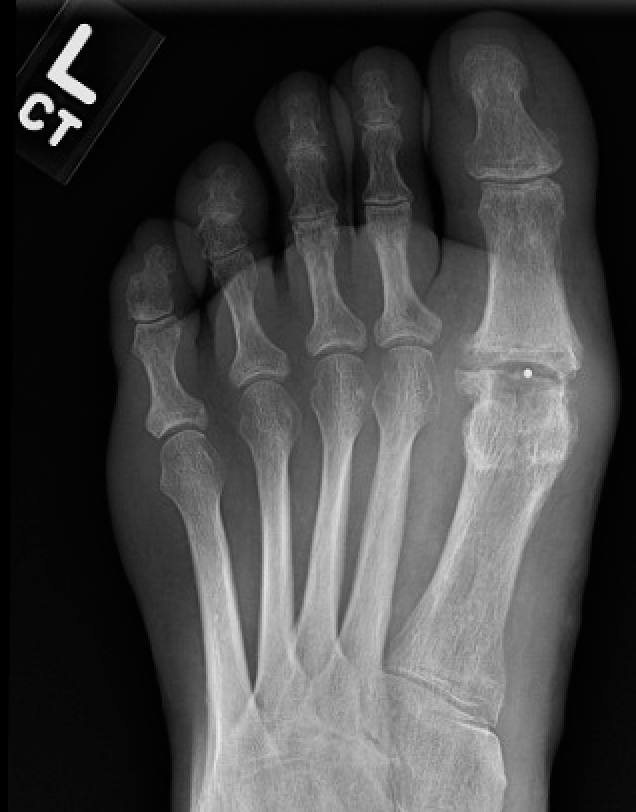
A 61-year-old woman presented to the emergency department with sudden-onset edema and pain to the left first MTP joint. She reported a medical history of hypertension, diverticulitis, basal cell carcinoma, and depression. She reported allergies to ciprofloxacin, metronidazole, and shellfish. One year prior, she underwent a first MTP joint arthroplasty with placement of a polyvinyl alcohol SCI at an outside hospital. The patient initially reported satisfactory pain relief from the procedure, but in the months after the immediate perioperative period, she developed intermittent pain and swelling. She reported that these symptoms were responsive to topical antiinflammatory drugs. She denied a history of trauma, excessive activity, or systemic infection. She did not have a personal or family history of seronegative arthritis or crystal arthropathy. Review of systems was negative for signs of systemic infection. Radiographs were obtained and were consistent with implant placement and degenerative changes of the first MTP joint (Fig. 1). Laboratory tests revealed a white blood cell count (WBC) of 13,810.00 cells/μL, an erythrocyte sedimentation rate (ESR) of 14 mm/h, and a C-reactive protein level of 19.4 mg/liter. Her uric acid level was 6.6 mg/dL. Physical examination showed pain with first MTP joint range of motion and joint effusion. The site of concern did not exhibit erythema, induration, or open wounds. The emergency department could not determine the cause of the patient's symptoms, and the patient was instructed to follow-up in the outpatient setting. Antibiotics were not prescribed.
Figure 1. Preoperative anteroposterior radiograph.
Japma 111 20105 f01
The patient presented to the outpatient clinic the following day without any resolution of symptoms, and with new-onset erythema. A joint aspiration was performed, and analysis showed gram-positive cocci in pairs/clusters, in addition to many white blood cells. This culture ultimately grew methicillin-sensitive S aureus (MSSA). The patient was admitted to the hospital and started on cefazolin. At admission, the patient's WBC had increased to 16,010.00 cells/μL, and her ESR had increased to 58 mm/h. Blood cultures were negative. The infectious disease department was consulted, and the antibiotic regimen was changed to intravenous vancomycin. Once the joint aspiration culture and specificities were complete, the antibiotic regimen was changed back to cefazolin.

Surgical Management

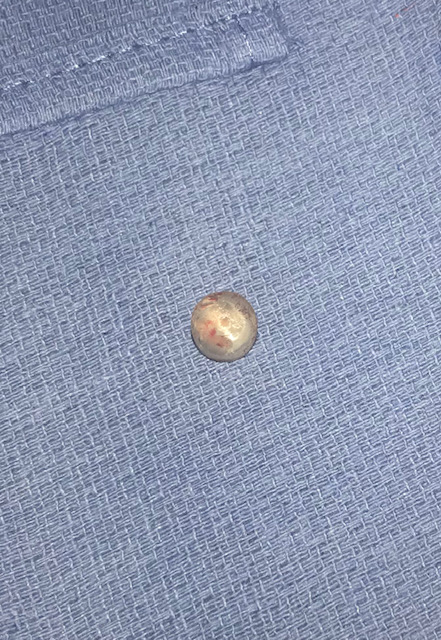
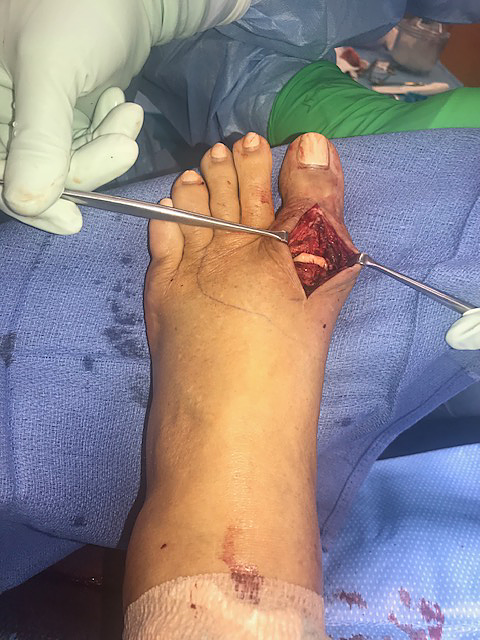
The patient underwent incision and drainage/surgical exploration of the left first MTP joint. Following capsulotomy of the joint, significant purulence was encountered, and a deep wound culture was sent for microbiologic examination. This specimen ultimately grew MSSA. We visualized the implant, which had subsided within the first metatarsal head. The implant was explanted and a bone culture (MSSA) was obtained from the medullary canal where the implant had previously been seated (Fig. 2). All nonviable soft tissue and bone was debrided. The joint was irrigated with 3 liters of sterile saline by means of pulse lavage. Next, a PMMA antibiotic-eluting spacer (vancomycin and gentamicin) was fashioned into a shape similar to a hemi-implant (Figs. 3 and 4) and placed into the metatarsal head void. We felt a spacer of this shape would best preserve joint mechanics before arthrodesis and effectively fill the void. The incision was closed with the exception of the central aspect, which was left open to allow for packing. Two days later, a subsequent irrigation and debridement was performed and the incision was closed primarily. There were no perioperative complications, and the patient was discharged with a peripherally inserted central catheter and a 6-week course of cefazolin. The patient was instructed to ambulate as tolerated using a surgical shoe.
Figure 2. Explanted implant with excoriations and dehydration.
Japma 111 20105 f02
Figure 3. Polymethylmethacrylate antibiotic (gentamicin and vancomycin) spacer.
Japma 111 20105 f03
Figure 4. Postoperative radiograph showing polymethylmethacrylate spacer in place.
Japma 111 20105 f04
Outpatient follow-up showed complete resolution of edema, pain, and erythema. The incision was healed. Following completion of 6 weeks of intravenous antibiotics, the patient's WBC, ESR, and C-reactive protein levels had normalized. The infectious disease team continued antibiotics at this time.
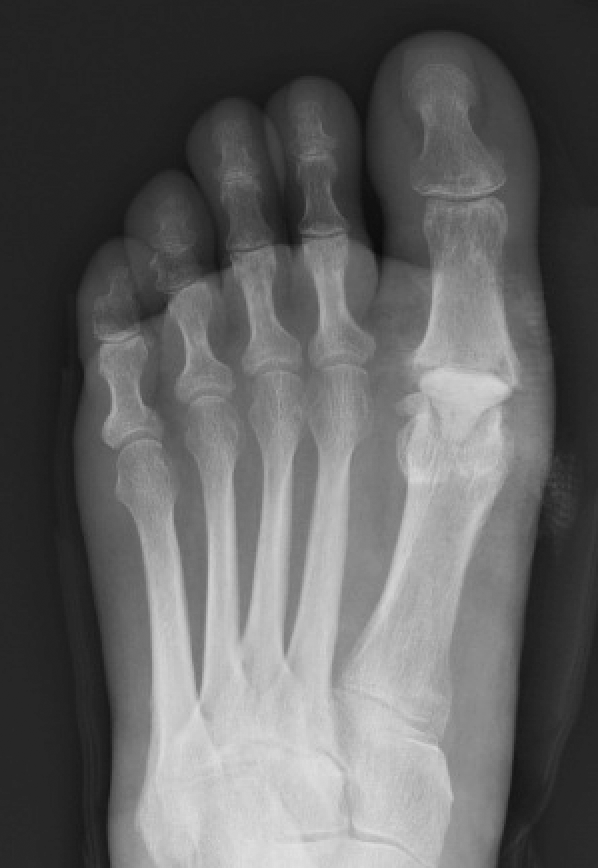
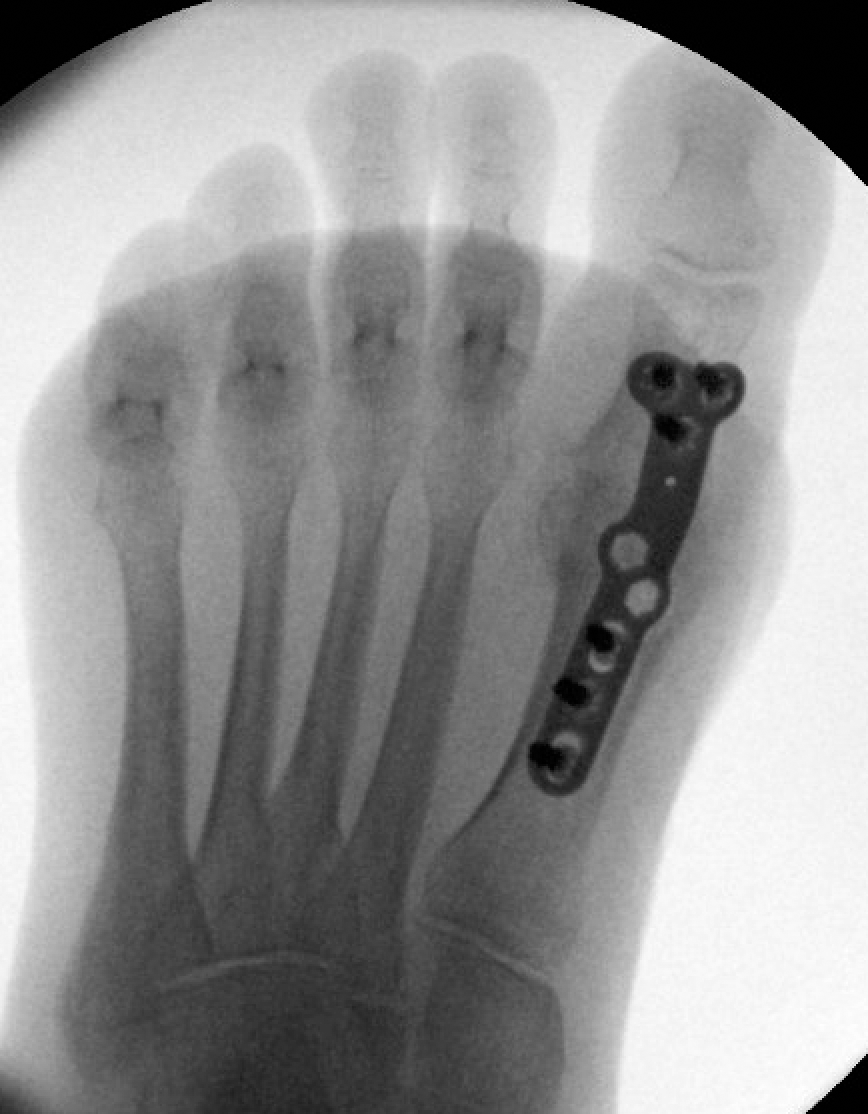
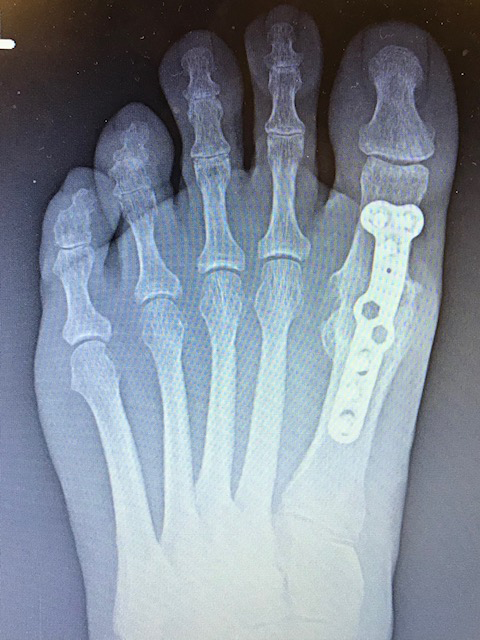
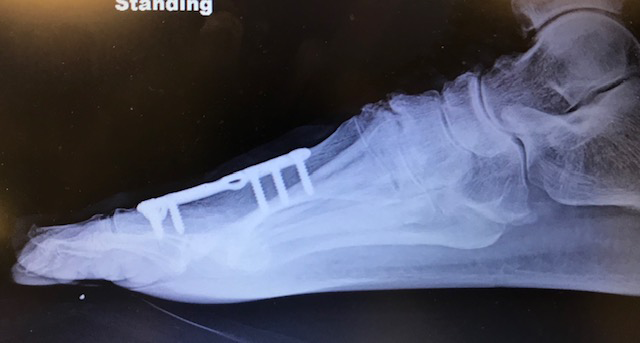
Seven weeks after the patient's index debridement, she underwent explantation of the antibiotic spacer and first MTP joint arthrodesis using cancellous proximal tibial autograft. The surgical site appeared free of infection. The site was irrigated with 3 liters of normal saline. The proximal phalanx was contoured with a convex reamer, and the metatarsal head was debrided and prepared with a rongeur, curettage, and 2.0-mm subchondral drilling. The metatarsal head void was filled with tibial cancellous autograft. The arthrodesis site was fixated with a first MTP reconstruction plate and screws (Fig. 5). The capsule was closed and topical vancomycin powder was placed within the subcutaneous tissue. Finally, the skin was closed, and the patient was placed in a nonweightbearing modified Jones compression splint. After discharge from outpatient surgery, the patient continued intravenous cefazolin for 1 additional week, completing 8 consecutive weeks of intravenous antibiotics. Her sutures were removed after 1 month, and she began full weightbearing in a controlled ankle motion walker. Five weeks after her procedure, she transitioned into a stiff-soled shoe. At her 1-year follow-up visit, the patient had returned to her baseline activity level and reported no pain at the fusion site. The arthrodesis site was fully healed. There were no postoperative complications (Figs. 6 and 7).
Figure 5. Intraoperative image with plate bridging arthrodesis site.
Japma 111 20105 f05
Figure 6. One-year postoperative anteroposterior radiograph showing a healed arthrodesis.
Japma 111 20105 f06
Figure 7. One-year postoperative lateral radiograph.
Japma 111 20105 f07

Discussion

Hallux rigidus is a common pathology affecting the first MTP joint and can severely alter a patient's quality of life. [15] Surgical treatment for end-stage hallux rigidus is typically joint destructive in nature. Techniques include total joint arthroplasty, hemiarthroplasty, or definitive arthrodesis. [1] As newer implants evolve to maintain some joint motion, techniques for management of complications associated with newer implants will need to be developed to reduce morbidity and improve patient outcomes. Complications such as implant failure, persistent pain and swelling, and PJI often require surgical revision. [10,11] We present the first case report to our knowledge detailing the successful management of a PJI associated with a polyvinyl alcohol SCI, using a staged protocol and definitive arthrodesis. The etiology of our patient's delayed presentation is uncertain. She lacked a known postoperative infection, delayed wound healing, or risk factors predisposing her to infections. It is possible the implant was seeded during the initial surgery, or delayed hematogenous seeding occurred at an unknown time in the postoperative period.

Conclusions

We present a case report of periprosthetic joint infection of a first MTP polyvinyl alcohol implant successfully managed with staged conversion to first MTP joint arthrodesis using intravenous antibiotics and a temporary antibiotic-eluting PMMA cement spacer. Cancellous proximal tibial autograft was used to successfully backfill the defect following the cement spacer removal. At the patient's 1-year follow-up visit, the patient exhibited complete radiographic and clinical union without recurrent infection and had resumed normal activity without pain at the surgical site. As management of hallux rigidus by means of first MTP SCI becomes more common, guidelines for management of complications should be established to reduce patient morbidity.

Acknowledgments

Financial Disclosure: None reported.
Conflict of Interest: None reported.

References

  1. StoneODRayRThomsonCE: Long-term follow-up of arthrodesis vs total joint arthroplasty for hallux rigidus. Foot Ankle Int38: 375, 2017.
  2. ChraimMBockPAlrabaiHM: Long-term outcome of first metatarsophalangeal joint fusion in the treatment of severe hallux rigidus. Int Orthop40: 2401, 2016.
  3. KlineAJHasselmanCT:Metatarsal head resurfacing for advanced hallux rigidus. Foot Ankle Int34: 716, 2013.
  4. BaumhauerJFSinghDGlazebrookM: Prospective, randomized, multi-centered clinical trial assessing safety and efficacy of a synthetic cartilage implant versus first metatarsophalangeal arthrodesis in advanced hallux rigidus. Foot Ankle Int37: 457, 2016.
  5. GlazebrookMBlundellCO'DowdD: Midterm outcomes of a synthetic cartilage implant for the first metatarsophalangeal joint in advanced hallux rigidus. Foot Ankle Int40: 374, 2018.
  6. DaviesMBRobertsVIChadwickC: Revision of synthetic cartilage implant hemiarthroplasty of the great toe to metatarsophalangeal joint arthrodesis: technique and indications. Tech Foot Ankle Surg19: 48, 2020.
  7. LangeJTroelsenAThomsenRW: Chronic infections in hip arthroplasties: comparing risk of reinfection following one-stage and two-stage revision. A systematic review and meta-analysis. Clin Epidemiol4: 57, 2012.
  8. HaleemAABerryDJHanssenAD:Mid-term to long-term followup of two-stage reimplantation for infected total knee arthroplasty. Clin Orthop Relat Res428: 35, 2004.
  9. HartWJJonesRS:Two-stage revision of infected total knee replacements using articulating cement spacers and short- term antibiotic therapy. J Bone Joint Surg Br88: 1011, 2006.
  10. TandeAJPatelR:Prosthetic joint infection. Clin Microbiol Rev27: 302, 2014.
  11. OsmonDRBerbariEFBerendtAR: Executive summary: diagnosis and management of prosthetic joint infection: clinical practice guidelines by the Infectious Diseases Society of America. Clin Infect Dis56: 1, 2013.
  12. CassinelliSJChenSCharltonTP: Early outcomes and complications of synthetic cartilage implant for treatment of hallux rigidus in the United States. Foot Ankle Int40: 1140, 2019.
  13. StonePABarnesESSavageT: Late hematogenous infection of first metatarsophalangeal joint replacement: a case presentation. J Foot Ankle Surg49:489.e1,2010.
  14. UckayILubbekeAEmonetS: Low incidence of haematogenous seeding to total hip and knee prostheses in patients with remote infections. J Infect59: 337, 2009.
  15. BaumhauerJFSinghDGlazebrookM: Correlation of hallux rigidus grade with motion, VAS pain, intraoperative cartilage loss, and treatment success for first MTP joint arthrodesis and synthetic cartilage implant. Foot Ankle Int38: 1175, 2017.