Next Article in Journal
Surgical Treatment of Insertional Achilles Tendinopathy: A Systematic Review
Previous Article in Journal
Endoscopic Plantar Fascia Release Versus Cryosurgery for the Treatment of Chronic Plantar Fasciitis: A Prospective Randomized Study
 
 
Journal of the American Podiatric Medical Association is published by MDPI from Volume 116 Issue 1 (2026). Previous articles were published by another publisher in Open Access under a CC-BY (or CC-BY-NC-ND) licence, and they are hosted by MDPI on mdpi.com as a courtesy and upon agreement with American Podiatric Medical Association.
Article

Lower-Limb Factors Associated with Balance and Falls in Older Adults: A Systematic Review and Clinical Synthesis

by
Christopher Neville
1,*,
Hung Nguyen
2,
Kim Ross
3,
Mariana Wingood
4,
Elizabeth Walker Peterson
5,
James E. Dewitt
6,
Jonathan Moore
7,
Michael J. King
8,
Levan Atanelov
9,
Josh White
10 and
Bijan Najafi
2
1
Department of Physical Therapy Education, Upstate Medical University, 750 E Adams St, Syracuse, NY 13210
2
Interdisciplinary Consortium on Advanced Motion Performance, Division of Vascular Surgery and Endovascular Therapy, Michael E. DeBakey Department of Surgery, Baylor College of Medicine, Houston, TX
3
Canadian Memorial Chiropractic College, Toronto, ON, Canada
4
Department of Rehabilitation and Movement Sciences, University of Vermont, Burlington, VT
5
Department of Occupational Therapy, University of Illinois at Chicago, Chicago, IL
6
Advanced Foot and Ankle Associates, Wyoming, MI
7
Cumberland Foot and Ankle Centers of Kentucky, Somerset, KY
8
Upperline Healthcare, Nashville, TN
9
Steady Strides: Fall Prevention and Stroke Rehabilitation Medical Institute; Johns Hopkins Physical Medicine and Rehabilitation, Baltimore, MD
10
SafeStep, Orthotic Holdings Inc, Ronkonkoma, NY
*
Author to whom correspondence should be addressed.
J. Am. Podiatr. Med. Assoc. 2020, 110(5), 19143; https://doi.org/10.7547/19-143
Published: 1 September 2020

Abstract

Background: Despite sufficient evidence to suggest that lower-limb–related factors may contribute to fall risk in older adults, lower-limb and footwear influences on fall risk have not been systematically summarized for readers and clinicians. The purpose of this study was to systematically review and synethesize the literature related to lower-limb, foot, and footwear factors that may increase the risk of falling among community-dwelling older adults. Methods: We searched PubMed, Embase, PsycINFO, CINAHL, Web of Science, Cochrane Library, and AgeLine. To describe the trajectory toward increasing risk of falls, we examined those articles that linked age-related changes in the lower limb or footwear to prospective falls or linked them to evidenced-based fall risk factors, such as gait and balance impairment. Results: This systematic review consisted of 81 articles that met the review criteria, and the results reflect a narrative review of the appraised literature for eight pathways of lower-limb–related influences on fall risk in older adults. Six of the eight pathways support a direct link to fall risk. Two other pathways link to the intermediate factors but lack studies that provide evidence of a direct link. Conclusions: This review provides strong guidance to advance understanding and assist with managing the link between lower-limb factors and falls in older adults. Due to the lack of literature in specific areas, some recommendations were based on observational studies and should be applied with caution until further research can be completed.

Reducing fall risk in community-dwelling older adults has been a long-standing public health objective [1]. Among older adults, falls are the leading cause of fatal and nonfatal injuries [2] and can lead to functional decline [3], disability [4], and psychological sequelae, including fear of falling [5]. In 2015, the direct medical costs for older adult falls exceeded $50 billion [6]. In an effort to improve cost-effectiveness, health-care outcomes, and the health-care consumer's experience, the Patient Protection and Affordable Care Act [7] is focused on rewarding value-based, as opposed to volume-based, care and, thus, incentivizes health-care providers serving community-dwelling older adults to better manage fall risk. In addition, fall prevention is a significant focus of the US Centers for Medicare and Medicaid Services' Quality Payment Program.
To support health-care providers in their efforts to meet the demand for effective fall prevention practice, the Centers for Disease Control and Prevention drew on the American and British geriatric societies' fall prevention guideline to create the Stopping Elderly Accidents, Deaths, and Injuries (STEADI) Toolkit. The STEADI Toolkit includes an algorithm that details each step of screening and assessment and guides interventions based on each individual's level of risk [8]. Key strengths of the STEADI Toolkit are its attention to diverse fall risk factors, including those pertaining to the lower limb and footwear, and its emphasis on interprofessional care. However, the toolkit's breadth limits its ability to focus on the many potential factors in the lower limb and factors related to footwear. The range of potential fall risk factors stemming from lower-limb– or footwear-related influences is abundant when surveyed across the available literature. Examples include foot and ankle deformity, weakness, sensory impairments, high-heeled shoes, pain, and soft-tissue and skin changes. Although there are numerous observational studies and a growing number of clinical trials investigating these factors in older adults, there is a lack of summative findings to guide clinical care.
In an effort to expand the understanding of lower-limb– and foot-related factors linked to falls and fall risk, and to provide clinical guidance on management, the purpose of this study was to conduct a systematic review examining the evidence describing the influence of lower-leg–, foot-, ankle-, and footwear-related factors on balance, gait, and fall risk in community-dwelling older adults. The secondary aim was to synthesize the gathered data and develop pathways to visually inform clinical links between lower-limb factors and fall risk. The hypothesis is that age-related lower-limb problems, such as changes in skin and soft-tissue properties, lower-limb range of motion, lower-limb strength, lower-limb deformity, inappropriate footwear, lower-limb pain, and impaired foot and ankle sensory feedback, could be linked to evidence-based risk factors for falls in older adults. We anticipate that awareness about these lower-limb factors could assist in the detection and management of identified lower-limb factors, which, in turn, could assist in the development of cost-effective solutions to reduce risk of falling in older adults and promote healthy aging. The multidisciplinary group of authors was well positioned to provide a thorough review and inform clinical translation via the development of pathways while remaining critical of the inherent multidimensional nature of assessing and treating fall risk in older adults. The long-term goal is to inform clinical care for identifying and managing lower-limb– and footwear-related factors that affect fall risk in older adults.

Methods

Protocol and Eligibility Criteria

The methods for conducting this systematic review and for assessing the quality of evidence were based on using the PRISMA (Preferred Reporting Items for Systematic Reviews and Meta-analyses) method. The initial search limited inclusion in this review to studies published from 2008 to July 2018 for. However, studies that were older were included when necessary to allow the development of the pathways and to describe results of systematic reviews that were published within the period but included older studies (before 2008). Studies were eligible for inclusion in this review if the following information was present: 1) participants were older than 55 years and were community dwelling; 2) the study included a variable related to the lower limb (defined as below the knee), foot, or footwear; 3) an outcome of balance, gait, falls, or fall risk was included; 4) it was an observational study, clinical trial, systematic review, or qualitative study (case studies and case series were excluded); and 5) it was published in English. Lower-limb factors were generated by the multidisciplinary group of authors before the search but were verified and edited in response to the literature search as described later herein.

Risk Factors of the Lower Limb Related to Fall Risk or Balance in Older Adults Extracted from the Literature

The present review considered studies that evaluated fall risk factors associated with the lower limb, including foot arch, foot pain, foot and ankle range of motion, foot deformities, foot strength, footwear, orthoses, sensory impairment, plantar skin change, and plantar soft-tissue change.
Using the previously mentioned inclusion and exclusion criteria and eligibility criteria, the following search strategy was used.

Search Strategy

A search of Medline, PubMed, Embase, PsycINFO, CINAHL, Web of Science, Cochrane Library, and AgeLine was undertaken using the following search strategy, yielding 4,347 articles. Three separate searches were used. Search 1 was intended to generate articles about fall risk factors. Search 2 was intended to generate articles about interventions to address fall risk and to fill in any gaps in risk factors not found, but previously identified by the group, or to expand on new risk factors identified in search 1. Search 3 was performed because known papers were missed from the first two searches and to fill in key words from papers generated by the first two searches. The three search strategies, including key words and Medical Subject Headings, are included in Appendix 1.
The studies found were compiled and organized using a Web-based organizational tool (Rayyan [9]), and duplicates were removed (Appendix 1 [PRISMA flow chart]). After duplicates were removed, the number of screened articles was 4,281. Two reviewers scanned titles and abstracts to identify papers that would be considered for inclusion in the review. Of those articles, 288 full-text articles were assessed by the group of authors during an in-person meeting to allow efficient review and discussion of each article. Eighty-one articles met the final inclusion criteria. Where disagreement occurred, a third reviewer was brought in to make the final decision. The papers extracted from this process were then scanned in greater detail to ensure that the inclusion and exclusion criteria were met. Finally, the reference list for all identified included papers was searched for additional studies that may have been missed through the database search.

Method of Review

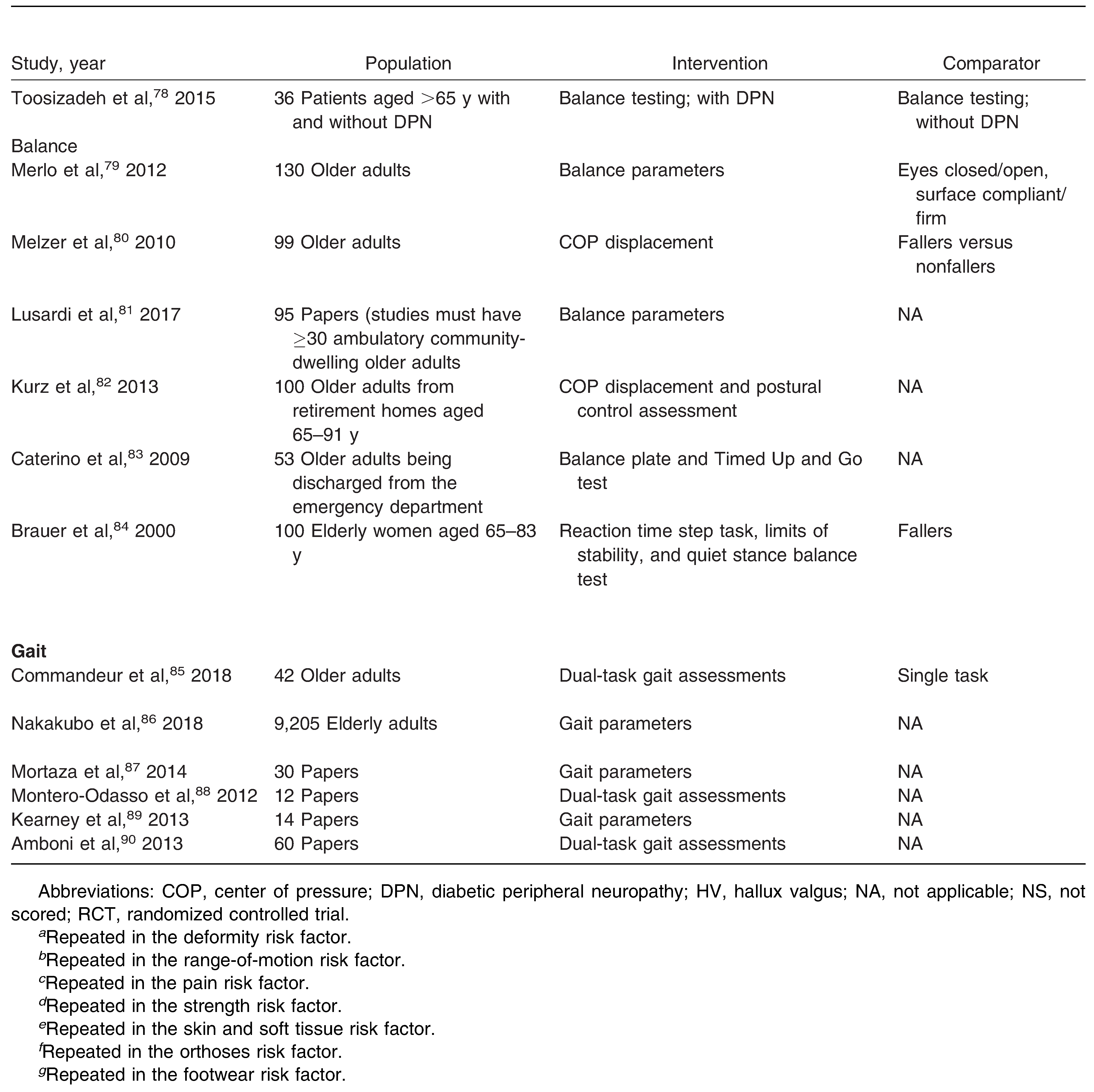
All of the papers were then reviewed for methodological quality by two independent reviewers. Observational studies were assessed using the STROBE (Strengthening The Reporting of OBservational Studies in Epidemiology) tool, randomized controlled trials (RCTs) were assessed using the CONSORT (Consolidated Standards of Reporting Trials) tool, and reviews were assessed using the AMSTAR2 (Assessing the Methodological Quality of Systematic Reviews 2) tool. See Table 1 for a list of articles that were assessed. Where disagreements about assessment scoring occurred, a discussion among reviewers was conducted until agreement was reached.
Table 1. Full List of Assessed Articles by Risk Factor
Japma 110 19143 i001
Japma 110 19143 i002
Japma 110 19143 i003
Japma 110 19143 i004
Japma 110 19143 i005
Table 1. extended 
Table 1. extended 
Japma 110 19143 i006
Japma 110 19143 i007
Japma 110 19143 i008
Japma 110 19143 i009
Japma 110 19143 i010

Outcomes

Studies that supported the relationship between age and the aforementioned factors were included in this review. Studies that reported number of falls or fall frequency were eligible for inclusion in the review. This review also included studies on the relationship between the aforementioned factors and balance and gait characteristics. This was found to be necessary to facilitate the second goal of this study in generating the clinical pathways as described later herein. Finally, the review included studies that looked at the relationships among falls, balance, and gait characteristics.

Clinical Synthesis and Pathway Construction

We divided up into teams of two or three to extract the data from the Results sections of the papers and developed a narrative with an accompanying “pathway figure” for each of the aforementioned factors of interest. All of the 11 authors then edited each risk factor narrative and provided feedback on the pathways. During this process it was decided that “plantar soft tissue” and “plantar skin changes” would be combined into a single risk factor and pathway, resulting in nine risk factors. It was also decided that changes in arch shape (arch lowering or pes planus) would best be included with the foot deformity risk factor because the literature and pathway best aligned with changes in foot structure that occurs with aging. This resulted in a final inclusion of eight risk factors. Furthermore, in the development and discussion of the lower-limb factors it was decided that many of the factors in the articles reviewed link falls or fall risk indirectly through an intermediate measure of balance or gait changes. It was also apparent that the pathway between balance changes, gait changes, and falls or fall risk could also be shared across the eight risk factors. It was determined that it would be most parsimonious if the pathway, and supporting literature, for the link between balance and gait disturbances and falls or fall risk could be referenced for each of the eight risk factors. This would limit redundancy and provide a concise description that is already well studied linking balance and gait disturbances to falls. The characteristics of each study reviewed in the systematic review process, including type of study, participants, and findings, are shown in Table 1. Finally, in the development of the pathways and narrative descriptions it was at times necessary to cite studies that predated that cutoff point for the systematic review process, ie, articles that were older than 2008. This was typically due to studies that were older but were included in newer systematic reviews. The inclusion of older literature was kept to a minimum to allow focus on the current systematic review results but was needed to ensure that the pathways and narratives were inclusive and understandable to the reader. In addition, in some rare cases, expert opinion was also added to describe the pathway, which has been highlighted as a hypothesized link and is illustrated with broken lines in all of the figures.

Data Reporting and Synthesis

Data extracted from the systematic review are presented via summary tables including each of the lower-limb risk factors. In addition, the findings from this review are presented qualitatively as narrative summaries with accompanying pathway diagrams. The goals of this form of presentation are to 1) succinctly present the literature and findings for each of the identified risk factors while 2) providing a visual “road map” for the reader to follow. Each pathway diagram will link each of the lower-limb factors to falls or fall risk in older adults, and the narrative description will provide added details as to how the literature was used in generating the pathway. Before presenting each of the eight lower-limb risk factors, a review of the direct link between balance and gait disturbance and falls is included to provide a foundation for the remaining risk factors to reference.

Results

Balance and Gait Disturbances Linked to Falls and Fall Risk

There were 12 articles reviewed to describe the link between balance and gait disturbances and falls. Overall there were five observational studies and one review article describing the link between balance and falls, and there were two observational and five review articles supporting the link between gait and falls. These articles provide moderate (Oxford rated II and III) evidence when evaluating each of the articles in isolation using the evaluation tools. However, when summarizing the body of work as a whole there are numerous studies that provide evidence of a direct link between balance and gait disturbances and the incidence of reported falls. This is in contrast to the other lower-limb factors reviewed that predominantly support a link to fall risk rather than fall incidence directly.
The assessment of balance in older adults has predominantly focused on the measurement of center of mass or center of pressure (COP) as a surrogate measure of the response to center-of-mass movement. These measures have shown positive links to falls across the following set of studies: Melzer et al [80] showed that older persons who had fallen in the past had a greater mediolateral sway movement and sway area than nonfallers, suggesting high positive predictive value. However, in a study by Brauer et al [84], measures of COP were not able to predict fallers, although they could correctly identify nonfallers, suggesting stronger use as a negative predictor of falls. Merlo et al [79], in a retrospective study, found that when standing on a compliant surface with eyes open, the ability to control balance showed a high degree of association with a fall history. Kurz et al [82] determined that those who went on to fall with serious injury had a greater anteroposterior COP movement than those who fell without serious injury. Contrary to these findings, Caterino et al [83] did not find a relationship with static measures of COP movement or dynamic balance during Timed Up and Go testing, but this study had the smallest sample, consisting of 53 participants, of those reviewed. Compared with the use of COP metrics, studies using more functional screening have also shown positive links between balance and falls. Lusardi et al's [81] well-executed systematic review concluded that a Berg Balance Scale score of 50 or less increases fall probability and a score of 51 or more decreases fall probability. They also found that the single-leg balance test and the five times sit-to-stand test were capable of predicting the likelihood of falls. Overall, balance measures show a strong link to falls and fall risk in older adults but with varying sensitivity and specificity based on samples tested, outcomes measured, and measurement technique.
In addition to measures of balance demonstrating a link to falls and fall risk, dynamic balance typically measured during walking or gait has also shown a strong association with falls and fall risk in older adults. In a systematic review, Mortaza et al [87] concluded that temporal measurements of gait were able to distinguish fallers from nonfallers. Fallers have a tendency toward a slower walking speed and cadence and longer stride time and double support duration. They also show a shorter stride and step length and wider step width. In a study by Nakakubo et al [86], a variable called the walk ratio (step length/cadence) was a specific temporal characteristic that was helpful in identifying fall risk for those who walked at 1 m/sec or faster. Interestingly, if subjects walked slower that 1 m/sec there was no relationship between walk ratio and fall rate, suggesting that some older adults may compensate with slower gait speeds to maintain balance and prevent falls. Another important trend in the literature is that many of the temporal gait parameters used to assess gait in older adults can be paired with cognitive tests with reported improvements in sensitivity and specificity for falls. Montero-Odasso et al [88] wrote a review paper concluding that untangling the relationship between early gait disturbances and early cognitive changes may be helpful for identifying older adults at higher risk for falls. According to Amboni et al [90] in a review article, there is a growing body of evidence indicating a pivotal role of cognition in gait control and fall prevention. In a systematic review by Kearney et al [89] it was determined that studies that looked at executive function and gait found a relationship between poor executive function and declines in gait speed. Impaired executive function was also associated with fall risk, and impaired executive function was associated with more serious fall patterns. Commandeur et al [85], in an observational study, looked at the difference in gait parameters between dual-task gait (walking while counting backward in serial sevens) and single-task gait (just walking). In summary, the variables that correctly identified fallers were stride timing, stride width, stride length, variability in stride width, and stride velocity. These measures could correctly classify fallers and nonfallers with 92.3% sensitivity and 66.7% specificity. There is evidence of a connection between gait disturbances and cognition that is also explored in the pain risk factor.
The relationship between balance and gait disturbance and falls in older adults has been highlighted previously herein and provides a common pathway element for the remainder of the lower-limb factors described in this review. It is understood that although in most cases it is not a direct relationship, the lower-limb factors included herein may play an important role in falls and fall risk in older adults through a pathway that includes altered balance and gait function.

Risk Factor 1. Age-Related Changes in Plantar Skin and Soft Tissues and the Pathway to Increased Fall Risk

Aging has been shown to alter the biomechanical properties of the skin and plantar soft tissue of the foot. These soft tissues, which anchor the plantar skin to the underlying bony architecture of the foot, serve as a protection to the underlying neurovascular structures, provide resistance against frictional shear force, and attenuate the pressure and force during collision impact [20]. Skin changes are among the most visible signs of aging; however, there is limited evidence on how these changes may contribute to increased fall risk.
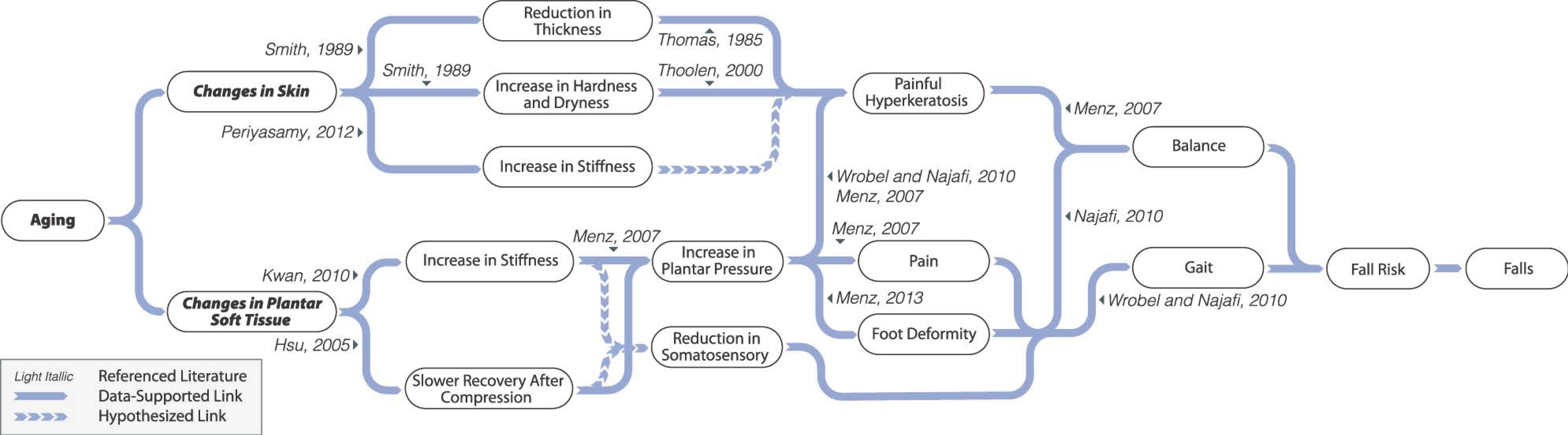
There are numerous changes that occur to the skin and dermoepidermal junction during aging, with some changes linked to impaired balance and falls in older adults (Fig. 1). Smith [91] described the association between age-related plantar skin changes and demonstrated that the dermoepidermal junction of the skin, which provides resistance against shear stress, becomes flattened, thinner, and dehydrated with aging. Periyasamy et al [14] demonstrated the loss of elasticity (increase in stiffness) in the foot sole skin due to aging. Several studies have suggested that age-related changes in plantar skin properties might predispose older adults to develop foot problems such as hyperkeratosis, foot pain, and foot deformity. Thoolen et al [15] described the need for hydration to preserve the resiliency on the sole of the foot. The increase in localized areas of hardness and thickening (keratosis) of the skin can increase the risk of a person developing xerosis and the development of painful hyperkeratosis [92]. Furthermore, Menz et al [16] observed a significant increase in plantar pressure under the callused region of the foot, which if untreated could lead to other consequences, such as foot pain and foot deformities. As discussed in the following sections, foot pain and foot deformities contribute to poor balance, deterioration in gait, risk of falls, and, ultimately, more likelihood of falls.
Figure 1. Pathway for age-related changes in plantar skin and soft tissues linked to falls.
Japma 110 19143 g001
In addition to the changes in the skin noted previously herein there are also changes in the tissue properties interfacing with the plantar surface of the foot. Using a tissue ultrasound palpation system, Kwan et al [12] demonstrated that with aging these tissues under the foot become stiffer. These results suggested that the loss of compliance in the plantar soft tissue due to aging could be one of the factors for the high prevalence of foot problems (eg, foot pain and foot deformity) in older adults. Furthermore, the increase in soft-tissue stiffness could be postulated to contribute to the decrease in tactile sensation and could limit sensory feedback. Over time this change can reduce the load-bearing capacity of the plantar soft tissues, which might result in reduced shock absorption as well as slower recovery after compression [11]. This can result in an increase in plantar pressure [16], leading to foot pain and foot deformity [13]. A systematic review by Wrobel and Najafi [17] demonstrated that the changes in the properties of soft tissues led to impaired gait function and adaptation to uneven or irregular surfaces, which may result in falls. In addition, Najafi et al [10] linked the poor plantar sensory feedback to poor balance.
These studies demonstrate the need to identify problems that may precipitate changes in the plantar skin and plantar soft tissues and their contribution to increased fall risk due to aging. Early identification of changes in plantar skin and soft tissue may provide a time window for an effective and timely intervention to avoid development of these risk factors, which could be harder to manage once they have developed into more severe and irreversible problems, such as foot deformity. Potentially effective solutions to manage risk factors associated with age-related changes in plantar skin properties could be effective footwear/insoles to reduce high plantar pressure because of hardening of plantar skin [17] and regular hydration to retain plantar sensation.

Risk Factor 2. Age-Related Changes in Lower-Limb Range of Motion and the Pathway to Increased Fall Risk

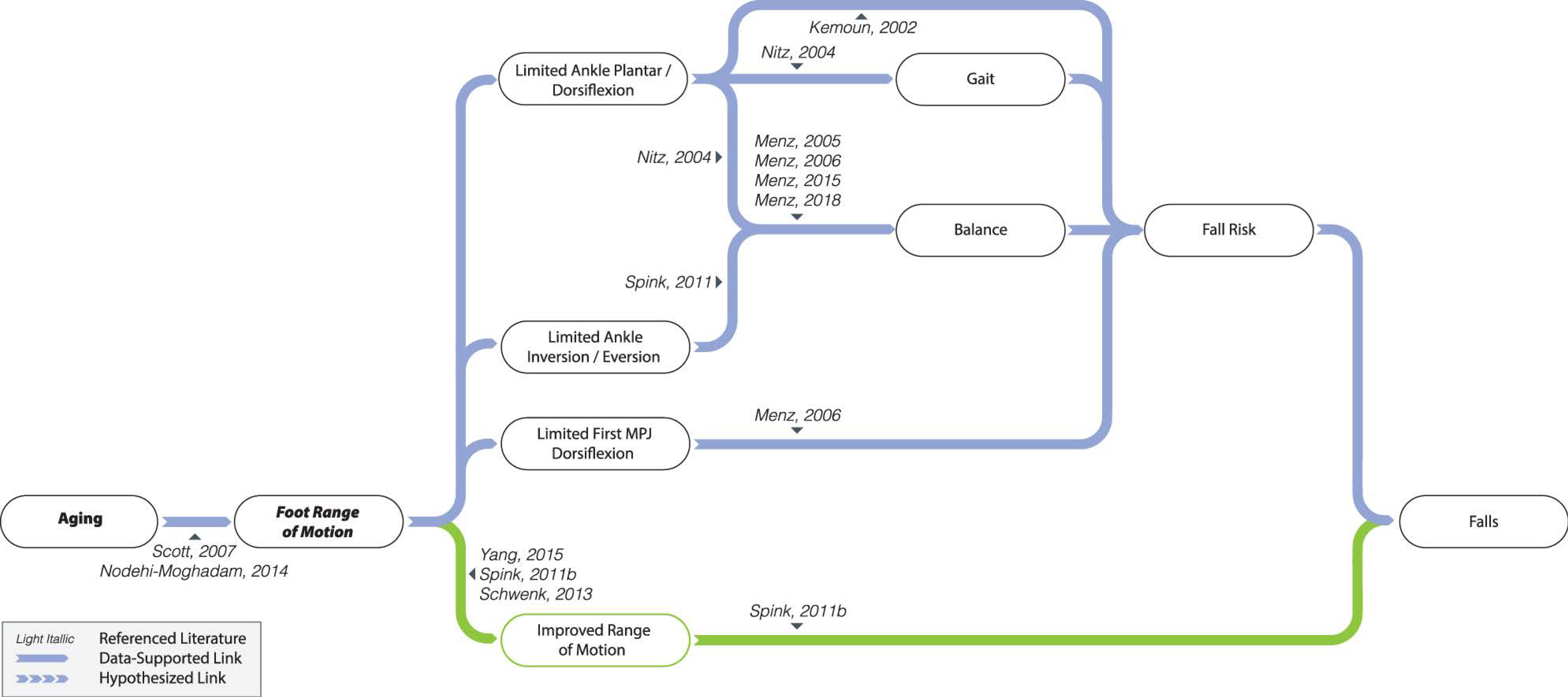
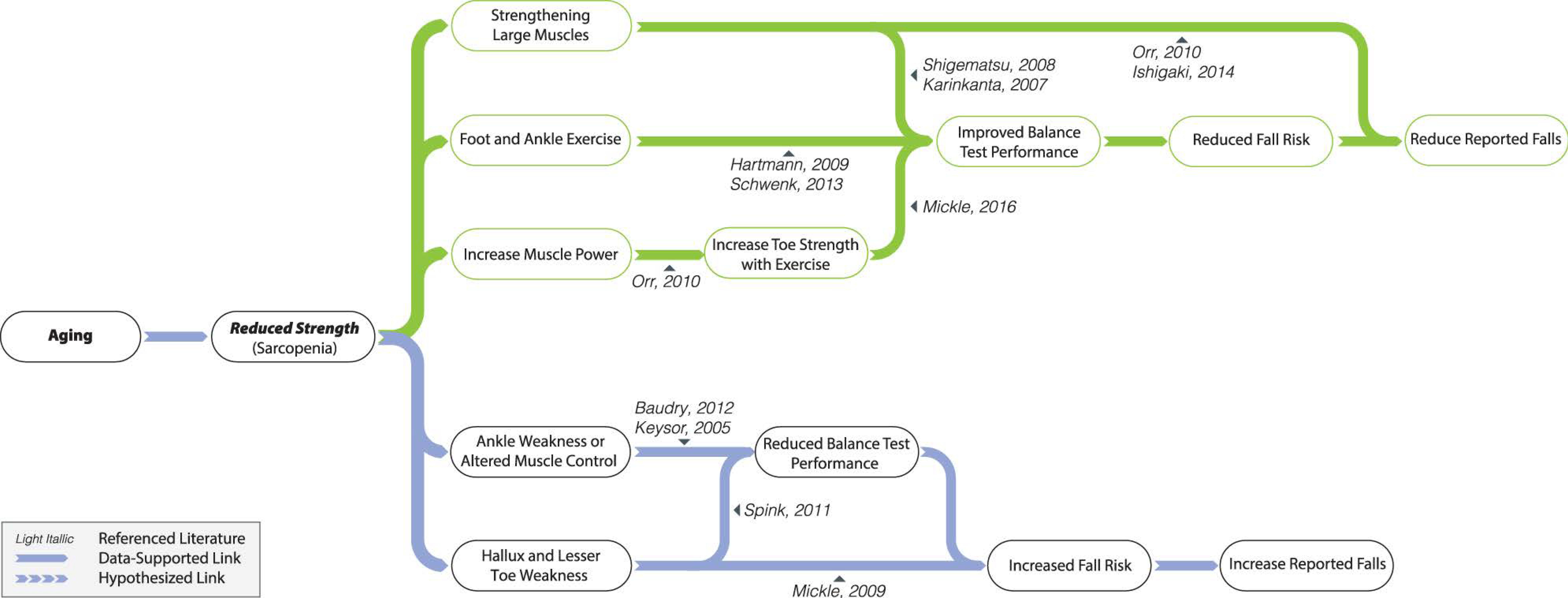
Several studies have shown that age-related musculoskeletal changes occur at specific joints in the foot and ankle that negatively affect balance and gait in older adults. These data inform the three pathways at the top of the range-of-motion diagram. However, there are also data supporting improving range-of-motion that may have a beneficial effect on balance and falls in older adults. These data inform the green pathway at the bottom of Figure 2.
Figure 2. Pathway for age-related changes in range of motion linked to falls. MPJ, metatarsophalangeal joint.
Japma 110 19143 g002
Data across two studies have suggested that older individuals demonstrate a significantly smaller range of motion at the ankle, and particularly a loss in ankle dorsiflexion that limits gait and balance [20,23]. Menz et al [21], in an observational study of independent ambulators, looked at balance in an elderly population using a sway meter and sit-to-stand time. They found that there was a significant negative correlation between ankle and metatarsophalangeal joint flexibility, suggesting that a loss in range of motion was associated with impaired balance. Spink et al [28], in a cross-sectional study of an elderly population, reported similar findings while also demonstrating a significant association between balance and reduced ankle inversion/eversion. These findings support the three pathway items linking ankle plantarflexion/dorsiflexion, ankle inversion/eversion, and metatarsophalangeal joint dorsiflexion to balance. Ankle range of motion during gait has also been linked to falls [22,93]. Participants who had fallen more than twice in the previous year exhibited less ankle range compared with nonfallers. In a prospective observational study, Menz et al [94] measured ankle and first metatarsophalangeal joint range of motion and then recorded the number of falls in the following year. There was no significant relationship between first metatarsophalangeal joint range of motion and falls, but the fallers exhibited reduced ankle flexibility [19].
There is some evidence to support treating ankle range of motion to improve balance, which is included in the green pathway toward the bottom on the range-of-motion diagram. Yang et al [25], in an observational study, looked at the effect of whole-body vibration on ankle range of motion in older adults. They found that after training with this modality, dorsiflexion and plantarflexion increased significantly. In a systematic review/meta-analysis by Schwenk et al [27] it was concluded that there was a small effect of stretching exercise on ankle dorsiflexion and inversion/eversion. There is also evidence relating the effect of treating ankle range of motion for the purpose of reducing falls. Spink et al [28], in an RCT, looked at the effect of a multifaceted podiatric medical intervention on ankle range of motion and determined that those in the intervention group showed significantly increased ankle dorsiflexion, increased ankle inversion/eversion range of motion, and a reduced number of falls. However, this trial included a multitude of interventions, not just those addressing range of motion.
Hence, there is evidence that older individuals demonstrate reduced range of motion of the ankle joint and the first metatarsophalangeal joint and that these age-related changes impair gait and balance. However, there are promising results to address this loss in range of motion with interventions such as vibration and stretching therapy. Because range of motion is negatively correlated with balance and balance as previously mentioned is linked to fall risk, it may be advisable to attempt to improve range of motion for the sake of reducing fall risk. There is some direct evidence that fallers exhibit reduced ankle range of motion and that treatment of this impairment reduces the number of falls.

Risk Factor 3. Age-Related Changes in Lower-Limb Strength and the Pathway to Increased Fall Risk

Loss of muscle mass is an age-related change that has been linked to changes in balance performance and even directly to fall risk in a small sample of studies [28,34]. Type II muscle fibers are lost at a greater rate than type I, resulting in significant decline in force and power production used in the maintenance of balance [36,95]. To provide information about the influence of lower-limb strength in older adults, inferences can be drawn from studies that address strengthening as an intervention and from observational studies that compare older adults who are weak with younger controls or those who are stronger. There is more limited literature on distal musculature that attaches at the foot and/or ankle. The pathway figure included for this risk factor explores lower-limb (foot and ankle) weakness, found along the bottom of the pathway, and is more limited in scope (Fig. 3). A larger body of literature can be referenced and describes various strengthening programs and is included along the top of the pathway, coded in green. This strengthening pathway also includes studies that have included more proximal muscles in the leg for completeness.
Figure 3. Pathway for age-related changes in strength linked to falls.
Japma 110 19143 g003
Decline in force and power production is due to two primary mechanisms, neural and mechanical adaptation, resulting in neuromuscular impairment. [36,96] Age-related reduction of neural activation results from decreases in alpha motor neuron excitability. [36] This decrease in neural drive slows nerve conduction and motor unit discharge rates. Such a decrease results in slower muscle responses and reduced ability to develop rapid muscle activation and power. [36] In addition to age-related decline in the speed of muscle activation there is also impaired coordination of agonist/antagonist muscle contraction, resulting in increased difficulty maintaining and/or recovering from a loss of balance, further increasing an older adult's risk of falling. [36] Mechanical adaption, including muscle fiber atrophy (loss of muscle fibers) and tendon stiffness, change with aging and are correlated with ability to maintain postural control measured by single-limb stance and tandem stance. [29,36]
Major lower-extremity muscle groups required for postural stability include tibialis anterior, gastrocnemius, hamstrings, and quadriceps. [36,95] Distal lower-extremity musculature has been found to be associated with balance impairments and/or gait impairments. A pair of studies by Spink et al [28] and Mickle et al [34] explore the link between hallux and lesser toe weakness, with findings that suggest they are related to impaired balance performance. Of particular interest is the study by Mickle et al [34] that also provides a direct link between findings of hallux and lesser toe weakness and the incidence of falls reported by 312 participants in the study. Ankle weakness has also been linked to impaired balance performance. Data from two studies suggest that altered muscle mechanics (changes in muscle stiffness) and muscle weakness are associated with impaired mobility, either directly measured or reported. [29,33]
Strengthening programs used in subject samples consisting of older adults also suggest a link between lower-limb muscle performance and balance or falls. A pair of RCTs explored the use of foot-specific exercises to improve strength with mixed results. The study by Mickle et al provides data in support of improved foot strength with a supervised strengthening program and improved single-limb balance. However, the study by Hartmann et al [30] provides data of more modest improvements compared with a general strengthening program. Note that intervention groups improved in both of these studies compared with control groups, underscoring the potential positive impact of general strengthening programs in older adults with perhaps more moderate effect that are more protocol specific when looking at targeted foot and ankle exercise. These study results are in agreement with the meta-analysis and systematic review by Schwenk et al [27] and Orr [36], respectively. Overall, small to moderate effects are reported in both reviews in favor of lower-limb exercise positively affecting ankle range of motion, strength, and measures of balance performance. Finally, two RCTs [32,37] and two reviews [31,36] provide evidence of more general lower-extremity and balance interventions used in older adults. The RCTs link exercise to balance outcomes, and the two reviews also provide direct links to reducing the number of reported falls. The interventions in these studies ranged from square-stepping exercise to multicomponent interventions that included strengthening as well as balance training. The study by Ishigaki et al ([31] p111) provides a nice summary of this literature and concluded that “[t]he methodological quality of the studies in this area appears to leave little doubt regarding the effectiveness of lower limb strengthening exercises for preventing falls in elderly subjects, however, the interventions in these studies were poorly reported.”
The previously mentioned evidence highlights the importance of assessing and addressing lower-extremity strength to prevent falls. The best clinical measures of lower-extremity and, more specifically foot, strength continues to be use of standard manual muscle testing. However, the use of handheld dynamometry to objectively measure strength may provide improved clinical assessments. Finally, strengthening programs that focus on large muscles of the lower extremities as well as specific foot and ankle strengthening may improve balance and reduce falls in older adults. Health-care professionals such as physical and occupational therapists may help screen for and manage muscle weakness in older adults, and general strengthening for the lower extremities, and the foot and ankle specifically, should be recommended to all older adults.

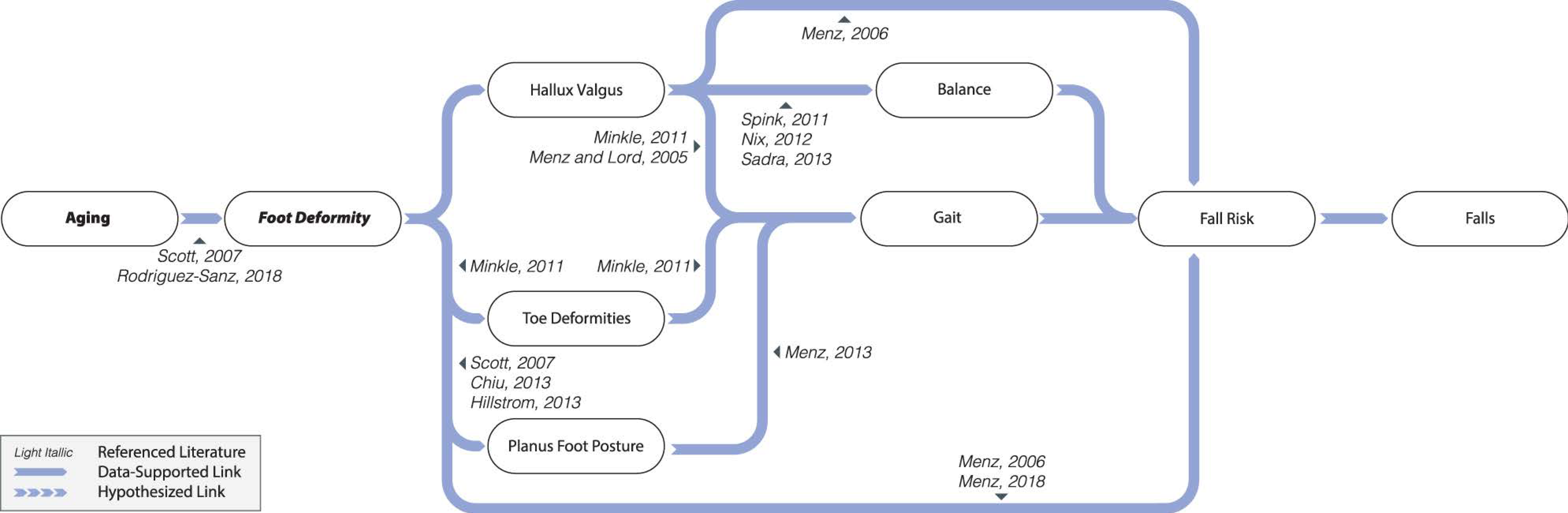
Risk Factor 4. Age-Related Changes in Lower-Limb Deformity and the Pathway to Increased Fall Risk

The aging of the biomechanical structure of the musculoskeletal system could also predispose older adults to a higher risk of developing foot deformity. Scott et al [26] observed more patients with hallux valgus and lesser toe deformities in an elderly population compared with a younger comparison group. The prevalence rates for hallux valgus for older adults in clinical settings can be as high as 74%. [41] Furthermore, hallux rigidus affects approximately one in 40 people older than 50 years, whereas lesser toe deformities (hammer toe, claw toe, and mallet toe) have reported incidences of 24% to 60% in clinical settings. In addition, with advancing age there is a general tendency for the arch to flatten (Fig. 4).
Figure 4. Pathway for age-related changes in lower-limb deformity linked to falls.
Japma 110 19143 g004
Foot deformities have been linked to changes in balance performance. Spink et al [28] and Sadra et al [42] found that individuals with hallux valgus had less lateral stability and greater coordinated stability errors. Nix et al [40] found similar results, with significantly greater sway in the mediolateral direction observed in patients with hallux valgus compared with matched participants without foot deformity. Sadra et al [42], using a cross-sectional observational study, found that older adults who underwent hallux valgus surgery exhibited 29% less center-of-mass sway in double support and 63% less center-of-mass sway in single support than preoperative participants with hallux valgus. Note, however, that some of these findings on foot deformity come from study samples that include participants younger than 55 years.
Minkle et al [39] and Menz and Lord [38] documented an association between foot deformity and gait abnormalities (kinetic and kinematic). Not only have foot deformities been linked to reduced balance performance, but Menz et al [94] determined that fallers had significantly more severe hallux valgus deformity than nonfallers, suggesting that there may be a link. This link was further explored in a meta-analysis (combining data from three studies) indicating that falls were significantly associated with hallux valgus. [19]
With advancing age there is a general tendency for the arch to flatten. The relationship between lowering of the arch, or pes planus as a term used to describe a foot with a low arch, and fall risk is only beginning to be recognized. According to Scott et al [26], older participants exhibit flatter and more pronated feet than younger participants, and this finding is independent of sex and BMI. [26,97] As the foot flattens, loading under the foot moves medially during mobility tasks, such as walking. [43,44] In addition, flattening of the foot is associated with an increase in reports of foot symptoms. [18] Menz et al [18] showed that compared with normal foot posture, a flattened arch was significantly associated with an increased likelihood of foot pain. So, although there may not be a direct link between the height of the arch and falls, the association with pain and altered gait may make older adults at risk for falls. In addition, pes planus foot posture was associated with increased odds of foot deformities, which is also linked to falls. The odds of having hallux valgus and overlapping toes was significantly increased in those with pronated foot function, whereas the odds of having hallux valgus and hallux rigidus was significantly decreased in those with supinated function. [18] These study findings might suggest that supporting the arch using shoes or orthotic devices might be helpful for older adults. In addition, strengthening the foot may help support the arch and be a helpful intervention to mitigate balance and gait disturbance from arch collapse.
The previously mentioned evidence highlights the importance of assessing and addressing lower-extremity deformities to prevent falls. The best clinical measures include assessing for the presence of hallux valgus and pes planus. Health-care professionals such as physicians and physical and occupational therapists can screen for these abnormalities when assessing patients at risk for falls and prescribe appropriate interventions as indicated, which may include orthoses, advice on proper footwear, and activity modifications. Surgical evaluation may be indicated if nonoperative interventions are not successful.

Risk Factor 5. Age-Related Use of Footwear and the Pathway to Increased Fall Risk

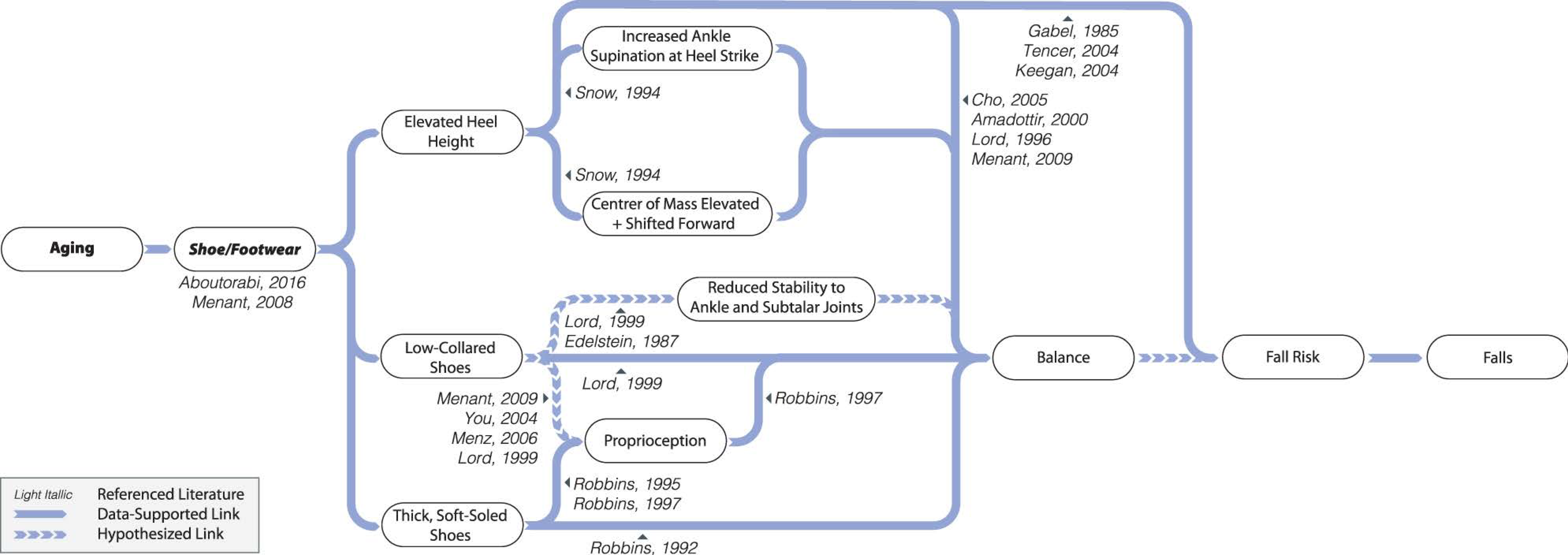
Although the potential for footwear to influence fall risk is widely acknowledged [8] and many effective multifactorial fall prevention interventions include footwear assessments and education [98], the evidence available to inform fall prevention recommendations regarding shoes remains weak. Two systematic reviews [46,55] provide some evidence that elevated heel height, low-collared shoes, and thick, soft-soled shoes may increase fall risk. These three footwear characteristics are featured in the pathway figure presenting potential footwear-related contributions to fall risk (Fig. 5). As indicated by the pathway diagram, compared with studies investigating low-collared shoes and thick, soft-soles shoes, more studies have investigated the association between elevated heel height and compromised balance or fall risk. Based on their review of the literature, Aboutorabi et al [55] and Menant et al [45] concluded that older people should wear low heels. The observational study involving 29 people older than 70 years by Menant et al [47] is cited by both systematic reviews as evidence of the detrimental effect of high heels. Menant et al [45] highlight the fact that Menant et al [47] found that the study participants showed greater postural sway when standing in shoes with elevated heels (4.5-cm heel height) compared with standard shoes (2.7-cm heel height). Shoes with elevated heels also elicited increased double support time, heel horizontal velocity at heel strike, and toe clearance [47] compared with standard shoes. Both the nested case-control study by Tencer et al [99] and the case-control study by Keegan et al [100] were also cited by Aboutorabi et al [55] and Menant et al [45] and are of particular interest. Findings from Tencer et al [99] showed that fall risk was nearly double in persons wearing shoes with a heel height of 2.5 cm or greater. Keegan et al [100] found that medium-/high-heeled shoes and shoes with a narrow heel increased the risk of fractures of the distal forearm, foot, proximal humerus, pelvis, and tibia/fibula. This is not surprising given the well-documented detrimental influence of elevated heels on stability and gait. [101-106]
Figure 5. Pathway for age-related use of footwear linked to falls.
Japma 110 19143 g005
Whereas Menant et al [45] recommend more research to investigate the potential benefits of shoes with high collars on balance, the more recent systematic review by Aboutorabi et al [55] concludes that older people should be advised to wear shoes with high collars to reduce the risk of falling. The relevant published studies typically investigate the effects of low- versus high-collared shoes on variables associated with balance control. Because the pathway diagram related to footwear is highlighting negative influences on balance and fall risk, the pathway for low-collared shoes is presented.
Overall, the evidence regarding the benefits of high-collared shoes compared with low-collared shoes is limited but promising. Both systematic reviews cite Lord et al [107], who conducted a study involving 42 women aged 60 to 92 years and observed significant improvements in postural sway and leaning balance when study participants were in laced boots versus low-collared shoes. Likewise, both systematic reviews point out that Menant et al [46] found no difference in tests of balance and stepping in their study of 29 community-dwelling older adults wearing low-collared shoes versus 11-cm high-collared shoes. Interestingly, the subsequent study undertaken by Menant et al [47] that involved ten young and 26 older adults demonstrated that increasing collar height led to greater double support time and step width. The authors explain that they were unable to infer whether those gait adaptations were constructive in response to increased mechanical and sensory input around the ankle or “maladaptive” to compensate for the restricted subtalar joint inversion and eversion movements. [47] Lord et al [107] concur with the early hypothesis by Edelstein et al [108] that footwear with a high collar probably improves balance stability in older people by improving lateral stability at the ankle, and other researchers offer a hypothesis that is consistent with that of Menant et al [47] that high collars increase proprioception/position sense. [107,109,110]
Collectively, the observational studies cited by Aboutorabi et al [55] and Menant et al [45] demonstrate the detrimental effect of soft and thick midsoles on positional sense [111,112] and balance control. [113] Note that the findings reported by Koepsell et al [114] are not represented in the pathway diagram and were contrary to gait laboratory–based studies. Specifically, in their large, nested case-control study investigating how the risk of a fall in an older adult varies in relation to style of footwear worn, those authors found that athletic and canvas shoes (sneakers) were associated with the lowest risk of a fall. The study was cited by Aboutorabi et al [55] and Menant et al [45] and was discussed in some detail by Aboutorabi et al [55], who concluded that older people should be advised to wear thin, hard-soled footwear.
Additional footwear characteristics that may affect fall risk have been investigated to a limited extent. These have not been included in the pathway diagram due to the limited evidence to guide recommendations but are briefly described here for completeness. Specifically, Brenton-Rule et al [48] found that the ASICS Gel-Odyssey and Cardio Velcro athletic shoes (ASICS Corp, Kobe, Japan) improved postural stability in older adult patients; in another study, Brenton-Rule et al [49] found that sandals may negatively affect postural stability through their study of women with rheumatoid arthritis (mean age, 67.6 years); Thies et al [50] found that sole geometry may have an effect on toe clearance and stability during walking; and finally, Yamaguchi et al [51] found that a small increase in sole width improved postural stability during lateral perturbation and step reactions. Menant et al [45] call for further studies to investigate the potential benefits of tread-soled shoes for preventing slips.
Findings regarding the benefit or risk of going barefoot are heterogeneous [45,55,101,102,107,110-114,115-117], and, therefore, a diagram of the relationship between going barefoot and balance or fall risk is not provided. Note, however, that key evidence regarding the dangers of going barefoot comes from the previously mentioned nested, case-control study by Koepsell et al. [114] Those investigators found that going barefoot or in stocking feet was associated with sharply increased risk, even after controlling for measures of health status (adjusted odds ratio [OR] = 11.2; 95% confidence interval [CI], 2.4–51.8). Furthermore, the recommendation by Menant et al [45] to wear shoes both inside and outside of the home is supported by a later prospective study by Kelsey et al. [52] In that study, among those who fell in their own home, the adjusted OR for a serious injury in those who were shoeless or wearing slippers compared with those who were wearing other shoes at the time of the fall was 2.27 (95% CI, 1.21–4.24). Shoes may be especially important for older adults with diabetic peripheral neuropathy (DPN). [53] Findings from Najafi et al [53] suggest that gait alteration in patients with DPN is most pronounced while walking barefoot over longer distances and that footwear may improve gait steadiness in patients with DPN. Looking beyond footwear characteristics, the qualitative study by Paton et al [54] involving older adults with diabetes and neuropathy who had recently fallen highlights the importance of patient education, as the participants in that study reported that they did not believe that the footwear contributed to their fall.
In summary, older adults should be educated about the importance of avoiding heel height greater than 2.5 cm and low-collared shoes and that thick, soft-soled shoes may increase fall risk. Finally, older adults should be advised to wear shoes inside and outside of the home.

Risk Factor 6. Age-Related Use of Orthoses and the Pathway to Reduce Fall Risk

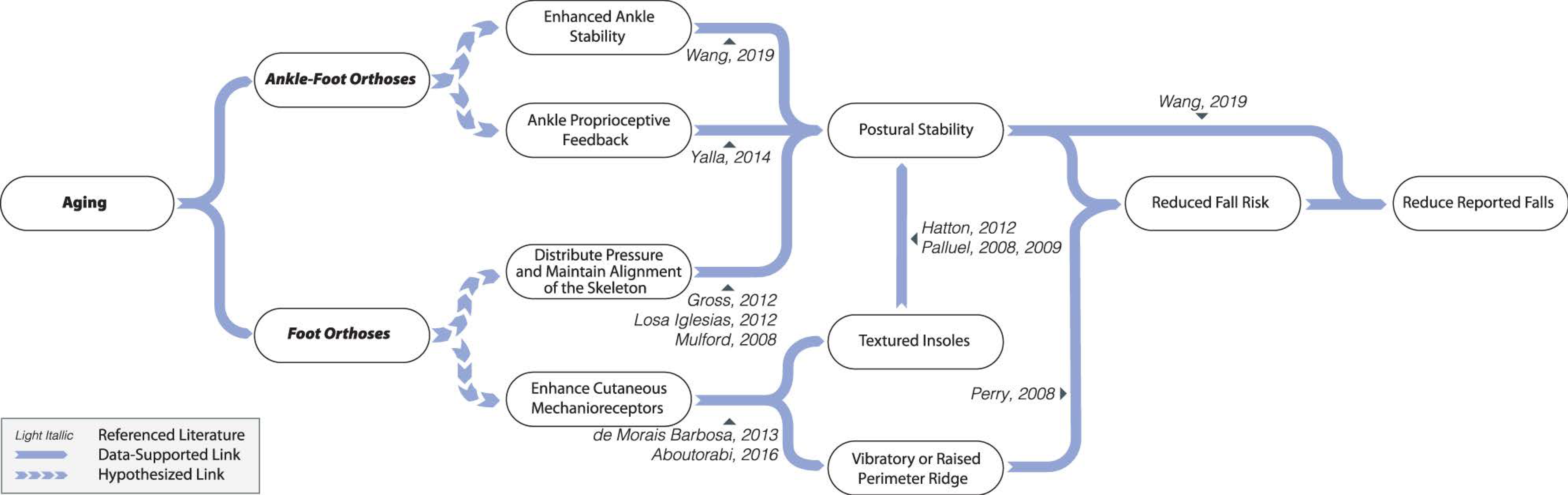
Foot orthoses (FOs) and ankle-foot orthoses (AFOs) are hypothesized to improve balance through multiple mechanisms. Plantar cutaneous information comes from mechanoreceptors that are widely distributed under the foot sole. As the feet interface directly with the ground, cutaneous cues provide detailed spatial and temporal information about the support surface properties. It has been proposed that balance may be improved by supporting and aligning the foot. Joint alignment alone may provide enhanced stability, or the position of the joints may help mechanoreceptors detect sensory information from the floor. Also, numerous studies have proposed improvement in balance as a result of increased tactile stimulation. These mechanisms are hypothesized to explain findings across studies showing improved balance performance with the use of various FO designs. Last, AFOs are thought to most directly affect alignment of the foot similar to FO as described previously herein but may further stabilize the ankle joint. The pathway diagram for this risk factor is first divided by orthosis design (AFO versus FO), and then the pathways are described according to the mechanisms of action cited in the reviewed literature (Fig. 6). This hopefully guides the reader to recognize the hypothesized mechanisms used by various orthoses and helps facilitate clinical use of orthoses through a review of their outcomes.
Figure 6. Pathway for age-related use of orthoses linked to falls.
Japma 110 19143 g006
In a systematic review of the effect of FOs in healthy older adults, Aboutorabi et al [55] reviewed 11 studies and concluded that FOs improve postural stability when tested statically and dynamically. A combined 231 patients were included across this review, which included two RCTs and nine observational studies. An additional RCT [56] of 94 women with osteoporosis and three single-cohort–designed studies [57,59,60] with a total of 102 participants add to the findings that use of an FO improves balance. This literature all focuses on proposed mechanisms such as distribution of pressure, skeletal alignment, or enhanced cutaneous mechanoreceptors to explain the hypothesized improvement seen with the use of FOs.
A series of studies has directly reported on the use of textured insoles to specifically target the proposed mechanism of enhancing cutaneous mechanoreceptors to improve balance in older adults. [58,61-63] Collectively, these studies examined 89 individuals wearing textured insoles or textured sandal foot beds and found mixed effects on the outcomes of balance performance. Hatton et al [58] found that a low-profile textured insert was associated with a lower gait velocity, step length, and stride length compared with smooth inserts, suggesting a limited effect with immediate testing. However, the study by Perry et al [63] reported improved measures of lateral stability during gait, and this effect was sustained after 12 weeks of wear. Measures of postural stability standing and walking were also seen in the study by Palluel et al [62] when tested immediately and after 5 min of walking.
In a series of studies examining a custom AFO, data suggest that postural stability was improved when wearing the AFO bilaterally. It was also noted in the studies that increased stability did not limit functional reach distance or Timed Up and Go test completion times. Furthermore, the study by Wang et al [64] suggests that along with improved balance, performance at 6 months compared with a control group wearing walking shoes alone, the AFO group reported less fear of falling. Finally, in a study by Wang et al [66] the same custom AFO was used while following a group of older adults across 12 months, with findings supporting a reduction in the number of reported falls. Some caution should be used due to the relatively small sample size in the clinical trial, but the results are promising. This study, and others examining the use of AFOs for older adults with neurologic conditions, hypothesizes a mechanism related to ankle stability and improved ankle proprioception. This is in contrast to studies on FOs that rely on theories of cutaneous input.
Most of the data from this body of literature are cross-sectional and observational, making the findings important for advancing our understanding of the mechanisms that may be used while wearing an AFO or FO in older adults. Further clinical validation should be performed using controlled trials to improve the translation of this work to clinical care. The AFO studies cited previously herein are the highest-level evidence using controlled clinical trial designs suggesting the beneficial use of custom AFOs to improve balance, reduce fear of falling, and the potential for a direct reduction in falls.

Risk Factor 7. Age-Related Lower-Limb Pain and the Pathway to Increased Fall Risk

Approximately 76% of older adults struggle with pain [69], and 24% of older adults specify foot pain [68]. This pain is concerning because it increases the odds of falling. According to the meta-analysis by Stubbs et al [69], individuals with foot pain have an increased probability of falling by 87% to 260% (OR = 1.87–3.60) compared with those without foot pain. According to a meta-analysis by Menz et al [19], individuals with foot pain have an increased odds of falling by 38% to 176% (OR = 1.38–2.76) compared with those without foot pain. This finding suggests that older adults with a history of falls are almost twice as likely to report having foot pain than those without a history of falls [19]. Furthermore, comparing acute and chronic pain with no pain, individuals with chronic pain have 80% greater odds of falling and individuals with acute pain have 61% greater odds of falling compared with those without pain [69]. When evaluating this further, it was identified that individuals with plantar fasciitis are at significantly greater risk for falling compared with those with other types of foot pain [67]. More specifically, they found that individuals with plantar fasciitis were 6.8 times more likely to fall compared with those with no pain [67].
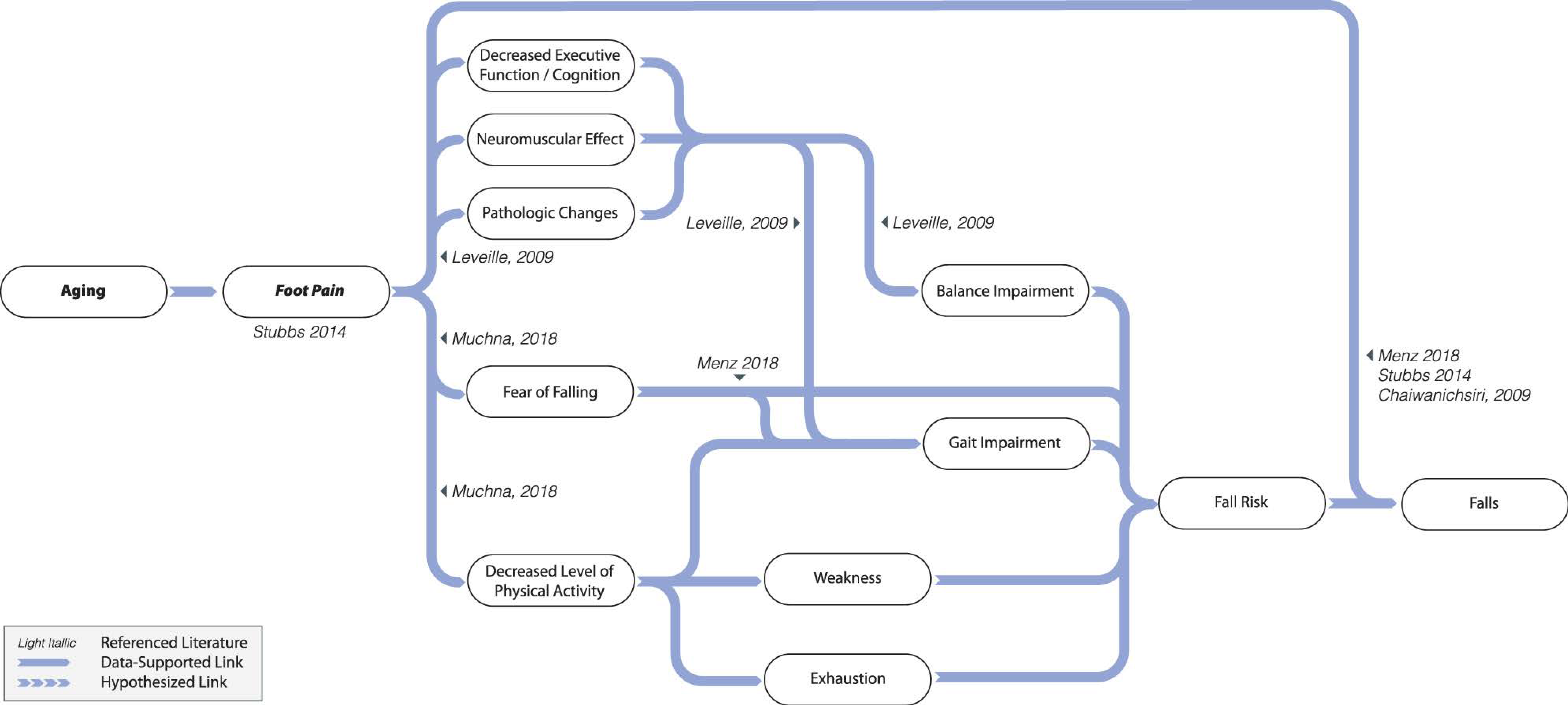
Despite the significant association between pain and falls, the literature examining the mechanisms between the two is limited. Some studies, including a systematic review, have directly associated foot pain and fall rates [19,67,69]. Other studies have identified an association between foot pain and fall-related risk factors that results in impaired balance and gait [68,118]. This has resulted in six different pathways from foot pain to increased fall rate, including a direct link, a link through the associated factors of decreased physical activity level, fear of falling, a neuromuscular effect, and a cognitive factor [68,118].
A population-based longitudinal study that examines the effect of chronic musculoskeletal pain and the occurrence of falls in older adults has found that chronic pain, including foot pain, can be due to three pain-fall relationships. The first relationship is due to the association with local joint pathology, such as arthritis, which has been found to be associated with falls. The second relationship is due to the neuromuscular effects of pain, which can result in increased muscle weakness or slowed neuromuscular response to a perturbation. The third relationship is due to a central mechanism that affects executive function and cognition by serving as a distraction or interference with other cognitive activities [118]. These are all associated with impaired balance, a fall risk factor. Visually, this can be seen through the top portion of the diagram (Fig. 7).
Figure 7. Pathway for age-related lower-limb pain linked to falls.
Japma 110 19143 g007
According to a recent observational descriptive study, individuals who have foot pain illustrate gait impairments, including decreased gait speed (P = .010), decreased stride length (P = .005), increased double limb support (P = .004), and decreased physical activity (P = .007) [68]. In the same article they also identified that older adults with foot pain have 13.3 times greater odds of reporting fear of falling compared with individuals with no foot-related impairments. They then took this information and the other components of frailty and found that compared with individuals without foot pain, individuals with foot pain had 17 times greater odds of being frail. Muchna et al [68] identified an older adult as frail according to the Fried criterion, which is defined as having three or more of the following criteria: unintentional weight loss (10 lb in the past year), self-reported exhaustion, weakness (grip strength), slow gait speed, and low levels of physical activity [119]. The association between foot pain and frailty is not surprising, particularly when examining the previous finding that linked foot pain and decreased physical activity. Decreased physical activity also explains the 17.9 times greater odds of having muscle weakness and the 9.7 times odds of reporting exhaustion [68]. All of these factors are associated with increased fall risk and can be visualized in the bottom two sections of the diagram (Fig. 7).
Although there are multiple consequences of increased foot pain, the fact that so many are associated with increased fall risk or fall rate highlights the importance of including current foot pain level, pain characteristics, and pain-related mobility and balance deficits in fall risk assessments [19,69,118].

Risk Factor 8. Age-Related Changes in Sensory Input and the Pathway to Increased Fall Risk

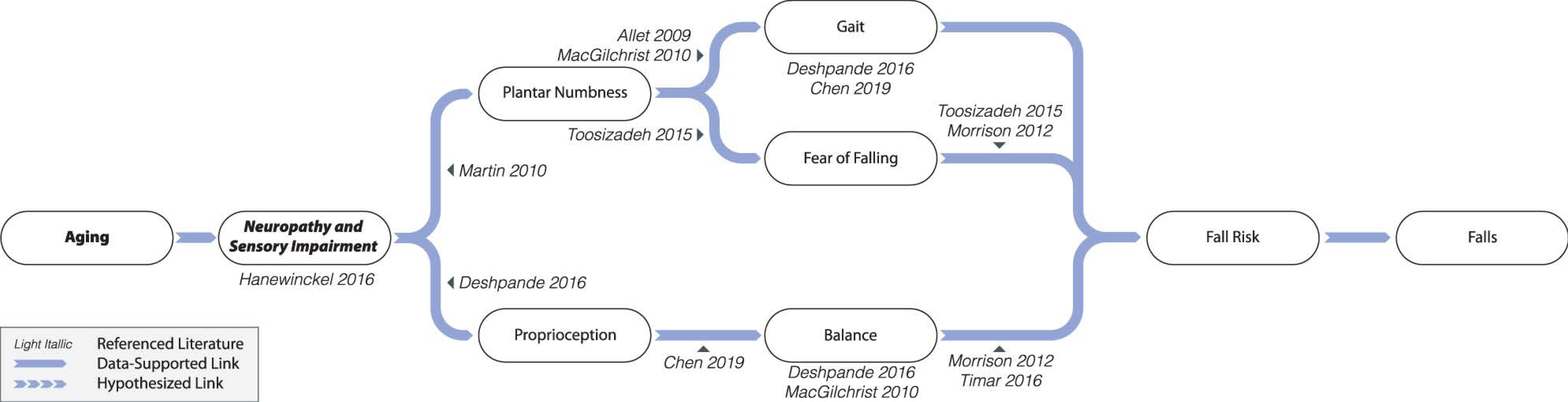
Age-related sensory neuropathy has been associated with a characteristic loss of sensation in the feet, paresthesia, pain, and muscle weakness [73]. These changes may increase the risk of falls for older adults. Loss of sensation may lead to an inability to accommodate or recognize changes in the walking surface. Furthermore, obstacles may not be felt under the foot. Changes in sensation may also manifest as a loss in the ability to determine joint position, known as proprioception. A loss in joint position sense increases the risk of loss of balance due to failure to recognize altered joint position during mobility tasks (Fig. 8).
Figure 8. Pathway for age-related changes in sensory input linked to falls.
Japma 110 19143 g008
Most previous studies linking the association between neuropathy and risk of falling quantified neuropathy by using vibratory perception threshold, with higher thresholds associated with higher plantar numbness. For example, Martin et al [75] showed that there is a higher prevalence of plantar numbness with aging, and these findings are associated with gait changes and poorer balance in older adults who reported falls [74]. Also note that plantar numbness has been correlated with a higher fear of falling, in addition to the number of falls compared with controls [78]. Finally, these findings are also extended to diabetic patients who demonstrate plantar numbness and altered gait parameters [70].
Another component of the sensory system is proprioception, defined as the ability to sense motion and the position of a joint, using feedback from muscle spindles and Golgi tendon organs when visual cues are not available. Deshpande et al [72] determined that age was significantly correlated with a variable called threshold for perception of passive movement. It is the minimum amount of movement to know that a joint has moved. Participants exhibited a larger threshold for perception of passive movement and also showed significantly poorer balance, mobility, and physical function. This finding was recently confirmed in a study by Chen and Qu [71] that also found that older individuals had trouble accurately describing joint position.
There are some early data to support the management of these changes with the use of plantar stimulation to improve tissue perfusion, which may help reduce fall risk in patients with sensation loss and diabetes [120]. With increased plantar numbness and reduced proprioception in the lower extremity there is poorer balance and increased fear of falling (which is a separately identifiable risk factor for falls) [76], both of which lead to an increased risk of falls [77].

Discussion

The purpose of this study was to conduct a systematic review examining the evidence on lower-limb– and footwear-related factors regarding balance, gait, and fall risk among community-dwelling older adults. To meet this purpose, we found 4,281 articles using the search criteria. From these, 81 articles met the inclusion criteria and were included for description in the results of this systematic review. From the search and literature review we identified eight factors that were described using narratives and accompanying pathway diagrams to inform the identification and management of lower-limb and footwear factors related to falls in older adults. Whereas other systematic reviews have clearly described the evidence related to several of these factors individually [20,27,31,36,73], this review was intended to provide an overview of all lower-limb–related factors and to visually link the evidence via pathways. This work will help advance our understanding of the links for clinicians and researchers alike.
This review includes literature that provides an initial link between balance and falls, as well as between gait and falls. This set of articles demonstrates the direct path between the risk factors of balance and gait and falls. Most of these articles included either outcomes of reported falls or samples of fallers, and the eight factors that follow provide many links to balance and gait with an assumption that impairments in balance and gait increase the risk of falls. Note that many of the gait-related studies also include the construct of cognition, with data supporting the interaction that occurs with dual-tasking that links to falls in older adults. Perhaps also interesting is that although gait-related changes (slower walking speed, longer stride times, wider step width) are clearly identified in older adults who fall, it has been concluded that spatiotemporal analysis of walking is not sufficient as a reliable predictor of falls [87]. This perhaps underscores the multidimensional nature needed for identifying fall risk in older adults.
Six of the eight pathways contain studies that support a direct link between the cited lower-limb factor and fall risk, including range of motion, orthoses, strength, footwear, pain, and deformity. These pathways all contained literature that used reported falls or retrospective collection of information from fallers and nonfallers to provide an association between the factor and falls directly. Although all of the literature reviewed also provided data supporting a link between the lower-limb factor and gait and/or balance, these direct links to falls suggest that these factors may be more common and undergo greater investigation. The two remaining lower-limb factors, plantar skin/soft tissue and sensory loss, have clear links to the intermediate factors of gait and balance but lack studies that provide evidence of a direct link. This finding highlights the need for future work in this area, which would add to the current understanding of these factors.
The two pathways for lower-limb strength and lower-limb range of motion were unique in that both contained a path (designated in green) that described modifying the factor through interventions. The remaining pathways did not contain evidence-based interventions that were identified in the systematic review. Stretching and strengthening interventions might be more common clinical interventions currently in use, explaining the unique links in the pathways. Two systematic reviews have been completed looking at the literature for strengthening and exercise programs to reduce fall risk, with some recommendations for specific protocols or interventions that might be most effective [27,31]. Although strength and range of motion might have the most abundant literature supporting interventions, the remaining six factors allowed the clinical interpretation of interventions that may be helpful, but these should be read with more caution because the evidence is still lacking to fully support an evidence-based approach.
Limitations of the present systematic review should be considered when interpreting and using the results. The narratives and pathways developed for this study were the results of the literature included in the systematic review process. There are additional studies that may inform the link between the lower-limb factors identified and falls that were not included because they did not meet the inclusion criteria. For example, studies that included samples of older adults residing in skilled care facilities were not included in this review but may contain data in support of a link between the lower limb and falls. The use of pathways to describe and link the lower-limb factors to falls also required the use of older studies that were included in more current systematic reviews. This choice to include these studies aided in the clear description and development of the pathways but could have been excluded based on date, changing the results and pathways presented.

Conclusions

The link between the function of the lower limb and falls in older adults continues to be explored. However, the existing evidence highlighted in this systematic review suggests that there are clinical links that can be drawn and have been previously explored in both clinical trials and other systematic reviews. The strength of this evidence varies, which allows some clinical recommendations to be stronger than others. Specifically, we found a direct link between fall risk and six lower-limb risk factors: range of motion, orthoses, strength, footwear, pain, and deformity support. In addition, an indirect link was observed between the intermediate-risk factors of gait and balance and two other risk factors, ie, skin/soft-tissue deterioration because of aging and plantar sensory loss. The findings and clinical synthesis reported in this systematic review provide guidance for clinicians and researchers for assessing, treating, and exploring the link between foot and ankle function and falls in older adults.

Acknowledgment

Jesse Carrie, Mark Lipsky, Alex Svechinsky, and Alea Becwar for their ongoing and insightful support in the development and organization of this project; Kent Murnaghan, MA, MISt, Reference Librarian, CMCC Health Sciences Library, for guiding the search strategies used in this project; and Frank G. Scarpaci, who has dedicated countless hours organizing and patiently supporting the authors in the development of this manuscript.

Financial Disclosure

Orthotic Holdings Inc covered author expenses related to printing, copying, and travel for in-person meetings to review papers.

Conflict of Interest

Dr. White is employed by Orthotic Holdings Inc (OHI). Dr. Ross is a consultant for OHI and in this role provides educational seminars and webinars for OHI clients. Dr. Moore has worked with OHI to develop lower-extremity orthotic devices and shoes that may be used in the management of falls for older adults. Dr. Najafi receives research support for ongoing studies from OHI.

Appendix A

Search 1

(‘Fall' OR ‘Fall Prevention' OR ‘Risk of Falling' OR ‘Fall Risk' OR ‘Balance' OR ‘postural control' OR ‘postural orientation' OR ‘postural sway' OR ‘Instability' OR ‘Slip' OR' ‘Accidental' OR ‘base of support' OR 'Accidental Falls' OR 'slip OR 'postural balance' OR 'instability' OR 'Base of support') and (‘neuropathy' OR ‘peripheral ‘neuropathy' ) and (‘foot' OR ‘Leg') AND ('Leg' OR 'Foot' OR 'Ankle joint' OR 'Ankle' OR 'Tarsal bones' OR 'Toes' OR 'Toe phalanges' OR 'Toe joint' OR 'Plantar plate' OR 'Hallux' OR 'Joints' OR 'Patellofemoral Joint' OR 'Subtalar Joint' OR 'Metatarsophalangeal Joint' OR 'Knee Joint' OR 'Foot Joints' OR 'Tarsal Joints' OR 'Achilles Tendon' OR 'Knee' ) AND ('Muscle Weakness' OR 'Paraparesis, Spastic' OR 'Paresis' OR 'Sarcopenia' OR 'Atrophy' OR 'Muscular Atrophy' OR 'Pain' OR 'Acute Pain' OR OR 'Musculoskeletal Pain' OR 'Chronic Pain' OR OR 'Nociceptive Pain' OR 'Patellofemoral Pain Syndrome' OR 'Myalgia' OR 'Arthralgia' OR 'Fibromyalgia' OR 'Bony Callus' OR 'Proprioception' OR 'Sensation' OR 'Sensation Disorders' OR 'Hypesthesia' OR 'Kinesthesis' OR 'Hyperesthesia' OR 'Hyperalgesia' OR 'Peripheral Nervous System Diseases' OR 'Pliability' OR 'Range of Motion' OR 'Muscle Tonus' OR 'Contracture' OR 'Joint Capsule Release' OR 'Equinus Deformity' OR 'Muscle Rigidity' OR 'equinus deformity' OR 'shoes' OR 'slipper*' OR 'footwear*' OR 'sandal*' OR 'flip-flop*'' OR 'Foot Deformities' OR 'Talipes Cavus' OR 'Hammer toe syndrome' OR 'Hallux valgus' OR 'Hallux limitus' OR 'Hallux Rigidus' OR 'flatfoot' OR 'equinus deformity' OR 'bunion' OR 'pes cavus OR 'Pes planus' OR 'Cavus foot' OR 'claw toe*') AND (‘Aging' OR ‘65+' OR ‘Ageing' OR ‘Elderly' OR ‘Older Adults' OR ‘Frail' OR ‘Infirm' OR ‘community-dwelling' OR 'Independent Living' OR 'Aged' OR 'Frail Elderly' ) AND *(‘RCT' OR ‘Randomized Control Trial' OR ‘Clinical Trial OR ‘Systematic Review' OR ‘Prospective Fall' OR ‘Level one Evidence')

Search 2

(‘Fall' OR ‘Fall Prevention' OR ‘Risk of Falling' OR ‘Fall Risk' OR ‘Balance' OR ‘postural control' OR ‘postural orientation' OR ‘postural sway' OR ‘Instability' OR ‘Slip' OR' ‘Accidental' OR ‘base of support' OR 'Accidental Falls' OR 'slip OR 'postural balance' OR 'instability' OR 'Base of support') AND ('Leg' OR 'Foot' OR 'Ankle joint' OR 'Ankle' OR 'Tarsal bones' OR 'Toes' OR 'Toe phalanges' OR 'Toe joint' OR 'Plantar plate' OR 'Hallux' OR 'Joints' OR 'Patellofemoral Joint' OR 'Subtalar Joint' OR 'Metatarsophalangeal Joint' OR 'Knee Joint' OR 'Foot Joints' OR 'Tarsal Joints' OR 'Achilles Tendon' OR 'Knee' ) AND (‘education' OR ‘intervention' OR ‘Strengthening' OR ‘exercise' OR ‘walking aid' OR ‘gait training' OR ‘neuromuscular re-ed' OR ‘coordination' OR ‘orientation' OR ‘postural' OR ‘balance' OR ‘dynamic control' OR ‘ROM' OR ‘flexibility' OR ‘manual' OR ‘manipulation' OR ‘insole' OR ‘insert' OR ‘inlay' OR ‘brace' OR ‘bracing' OR ‘orthotic*' OR ‘footwear' OR ‘shoes' OR ‘socks' OR ‘Vitamin D' OR ‘medical food' OR ‘ nutrition' OR ‘surgery' OR ‘procedure' OR ‘medication' OR ‘pain management' OR ‘home modifications' OR ‘podiatry' OR ‘physiatry' OR ‘ortho*' OR ‘physical therapy' OR ‘chiropractic' OR ‘occupational therapy' OR 'occupational' OR 'therapy' OR 'Movement' OR 'Muscle Stretching' OR 'resistive training' OR 'plyometric Exercise' OR 'canes' OR 'pliability' OR 'flexibility' OR 'Vitamin D deficiency' OR'nutritional status' OR 'nutrition therapy' OR 'nutrition*' OR 'medical food' OR 'General Surgery' OR 'medication' OR 'pain' OR 'acute pain' OR 'chronic pain' OR 'myalgia' OR 'arthralgia' OR 'Fibromyalgia' OR 'range of motion' OR 'ataxia' OR 'Foot Orthoses' OR 'musculoskeletal OR 'Foot Pain' OR 'callosities' OR 'callus' OR 'bony callus' OR 'bony')AND(‘Aging' OR ‘65+' OR ‘Ageing' OR ‘Elderly' OR ‘Older Adults' OR ‘Frail' OR ‘Infirm' OR ‘community-dwelling' OR 'Independent Living' OR 'Aged' OR 'Frail Elderly' )
AND
(‘RCT' OR ‘Randomized Control Trial' OR ‘Clinical Trial OR ‘Systematic Review' OR ‘Prospective Fall' OR ‘Level one Evidence')

Search 3

(((((((((((((((((((((((“Exercise"[Mesh]) OR “Exercise Therapy"[Mesh]) OR “Exercise Movement Techniques"[Mesh]) OR “Physical Therapy Modalities"[Mesh]) OR “Dietary Supplements"[Mesh:noexp]) OR “Vitamin D"[Mesh]) OR “Postural Balance"[Mesh]) OR “Shoes"[Mesh]) OR “Orthotic Devices"[Mesh]) OR “Resistance Training"[Mesh]) OR “Calcium"[Mesh]) OR “Cognitive Therapy"[Mesh]) OR (“Floors and Floorcoverings"[Mesh])) OR “Lavandula"[Mesh]) OR “Plants"[Mesh]) OR “Cataract"[Mesh]) OR “Pacemaker, Artificial"[Mesh]) OR exercise*[Title/Abstract]) OR intervention*[Title/Abstract])) OR (((((((((((((((((((((((((((((((((((((((((((physical therapy*[Title/Abstract]) OR modalit*[Title/Abstract]) OR manip*[Title/Abstract]) OR (mobiliz*[Title/Abstract] OR mobilis*[Title/Abstract])) OR dietary supplement*[Title/Abstract]) OR dietary modif*[Title/Abstract]) OR modify diet*[Title/Abstract]) OR modified diet*[Title/Abstract]) OR “vitamin d"[Title/Abstract]) OR calcium*[Title/Abstract]) OR postural balance*[Title/Abstract]) OR orthotic device*[Title/Abstract]) OR (orthoses[Title/Abstract] OR orthosis[Title/Abstract])) OR (shoes[Title/Abstract] OR shoe[Title/Abstract])) OR muscle strengthen*[Title/Abstract]) OR orthotic*[Title/Abstract]) OR resistance train*[Title/Abstract]) OR insole device*[Title/Abstract]) OR footwear*[Title/Abstract]) OR foot device*[Title/Abstract]) OR ankle device*[Title/Abstract]) OR podiatric assess*[Title/Abstract]) OR podiatry[Title/Abstract]) OR cognitive behavior*[Title/Abstract]) OR alarm[Title/Abstract]) OR hip protect*[Title/Abstract]) OR environmental assess*[Title/Abstract]) OR environmental modif*[Title/Abstract]) OR electromagnet*[Title/Abstract]) OR soft tissue therap*[Title/Abstract]) OR whole-body vibr*[Title/Abstract]) OR flooring*[Title/Abstract]) OR lavender[Title/Abstract]) OR multifactorial assess*[Title/Abstract]) OR osteoporosis treat*[Title/Abstract]) OR social engag*[Title/Abstract]) OR cataract surg*[Title/Abstract]) OR hip surg*[Title/Abstract]) OR pacemaker*[Title/Abstract]) OR usual care[Title/Abstract]) OR vision assess*[Title/Abstract]) OR assess vision[Title/Abstract]) OR assess environment*[Title/Abstract]))) AND ((“Accidental Falls"[Mesh]) OR ((((((((falls[Title/Abstract]) OR fall risk*[Title/Abstract]) OR prevent fall*[Title/Abstract]) OR preventing fall*[Title/Abstract]) OR fall prevent*[Title/Abstract]) OR falls prevent*[Title/Abstract]) OR fall-related*[Title/Abstract]) OR falls-related*[Title/Abstract]))) AND (((((“Review Literature as Topic"[Mesh]) OR “Meta-Analysis"[Publication Type]) OR “Meta-Analysis as Topic"[Mesh]) OR “Review"[Publication Type:noexp]) OR (((((((systematic review*[Title/Abstract]) OR meta-analys*[Title/Abstract]) OR meta analys*[Title/Abstract]) OR systematic mixed stud*[Title/Abstract]) OR systematic literature review*[Title/Abstract]) OR systematic descriptive review*[Title/Abstract]) OR realist review*[Title/Abstract]))

References

  1. SattinRW:Falls among older persons: a public health perspective. Annu Rev Public Health13: 489, 1992.
  2. McCarthyM:Falls are leading cause of injury deaths among older people, US study finds. BMJ354: i5190, 2016.
  3. TerrosoMRosaNTorres MarquesA: Physical consequences of falls in the elderly: a literature review from 1995 to 2010. Eur Rev Aging Phys Act11: 51, 2014.
  4. NilssonMErikssonJLarssonB: Fall risk assessment predicts fall-related injury, hip fracture, and head injury in older adults. J Am Geriatr Soc64: 2242, 2016.
  5. DelbaereKCrombezGVanderstraetenG: Fear-related avoidance of activities, falls and physical frailty: a prospective community-based cohort study. Age Ageing33: 368, 2004.
  6. FlorenceCSBergenGAtherlyA: Medical costs of fatal and nonfatal falls in older adults. J Am Geriatr Soc66: 693, 2018.
  7. FindleyPAWienerRCShenC: Health reform under the Patient Protection and Affordable Care Act: characteristics of exchange-based health insurance enrollees. Soc Work Health Care58: 685, 2019.
  8. PhelanEAMahoneyJEVoitJC: Assessment and management of fall risk in primary care settings. Med Clin North Am99: 281, 2015.
  9. OuzzaniMHammadyHFedorowiczZ: Rayyan: a web and mobile app for systematic reviews. Syst Rev5: 210, 2016.
  10. NajafiBHornDMarclayS: Assessing postural control and postural control strategy in diabetes patients using innovative and wearable technology. J Diabetes Sci Technol4: 780, 2010.
  11. HsuC-CTsaiW-CPai-Chu ChenC: Effects of aging on the plantar soft tissue properties under the metatarsal heads at different impact velocities. Ultrasound Med Biol31: 1423, 2005.
  12. KwanRLZhengYPCheingGL:The effect of aging on the biomechanical properties of plantar soft tissues. Clin Biomech25: 601, 2010.
  13. MenzHBFotoohabadiMRMunteanuSE: Plantar pressures and relative lesser metatarsal lengths in older people with and without forefoot pain. J Orthop Res31: 427, 2013.
  14. PeriyasamyRAnandSAmminiAC:The effect of aging on the hardness of foot sole skin: a preliminary study. Foot (Edinb)22: 95, 2012.
  15. ThoolenMRyanTJBristowI:A study of the skin of the sole of the foot using high-frequency ultrasonography and histology. The Foot10: 14, 2000.
  16. MenzHBZammitGVMunteanuSE:Plantar pressures are higher under callused regions of the foot in older people. Clin Exp Dermatol32: 375, 2007.
  17. WrobelJSNajafiB:Diabetic foot biomechanics and gait dysfunction. J Diabetes Sci Technol4: 833, 2010.
  18. MenzHBDufourABRiskowskiJL: Association of planus foot posture and pronated foot function with foot pain: the Framingham foot study. Arthritis Care Res65: 1991, 2013.
  19. MenzHBAuhlMSpinkMJ:Foot problems as a risk factor for falls in community-dwelling older people: a systematic review and meta-analysis. Maturitas118: 7, 2018.
  20. MenzHB:Biomechanics of the ageing foot and ankle: a mini-review. Gerontology61: 381, 2015.
  21. MenzHBMorrisMELordS:Foot and ankle characteristics associated with impaired balance and functional ability in older people. J Gerontol A Biol Sci Med Sci60: 1546, 2005.
  22. NitzJLow ChoyN:The relationship between ankle dorsiflexion range, falls and activity level in women aged 40 to 80 years. N Z J Physiother32: 121, 2004.
  23. Nodehi-MoghadamATaghipourMAlibaziRG: The comparison of spinal curves and hip and ankle range of motions between old and young persons. Med J Islam Repub Iran28: 74, 2014.
  24. SpinkMJMenzHBFotoohabadiMR: Effectiveness of a multifaceted podiatry intervention to prevent falls in community dwelling older people with disabling foot pain: randomised controlled trial. BMJ342: d3411, 2011.
  25. YangFKingGADillonL: Controlled whole-body vibration training reduces risk of falls among community-dwelling older adults. J Biomech48: 3206, 2015.
  26. ScottGMenzHBNewcombeL:Age-related differences in foot structure and function. Gait Posture26: 68, 2007.
  27. SchwenkMJordanEDHonarvararaghiB: Effectiveness of foot and ankle exercise programs on reducing the risk of falling in older adults: a systematic review and meta-analysis of randomized controlled trials. JAPMA103: 534, 2013.
  28. SpinkMJFotoohabadiMRWeeE: Foot and ankle strength, range of motion, posture, and deformity are associated with balance and functional ability in older adults. Arch Phys Med Rehabil92: 68, 2011.
  29. BaudrySLecoeuvreGDuchateauJ:Age-related changes in the behavior of the muscle-tendon unit of the gastrocnemius medialis during upright stance. J Appl Physiol112: 296, 2012.
  30. HartmannAMurerKde BieRA: The effect of a foot gymnastic exercise programme on gait performance in older adults: a randomised controlled trial. Disabil Rehabil31: 2101, 2009.
  31. IshigakiEYRamosLGCarvalhoES: Effectiveness of muscle strengthening and description of protocols for preventing falls in the elderly: a systematic review. Braz J Phys Ther18: 111, 2014.
  32. KarinkantaSHeinonenASievänenH: A multi-component exercise regimen to prevent functional decline and bone fragility in home-dwelling elderly women: randomized, controlled trial. Osteoporos Int18: 453, 2007.
  33. KeysorJJDunnJELinkCL: Are foot disorders associated with functional limitation and disability among community-dwelling older adults?J Aging Health17: 734, 2005.
  34. MickleKJMunroBJLordSR: ISB Clinical Biomechanics Award 2009: toe weakness and deformity increase the risk of falls in older people. Clin Biomech24: 787, 2009.
  35. MickleKJCaputiPPotterJM: Efficacy of a progressive resistance exercise program to increase toe flexor strength in older people. Clin Biomech40: 14, 2016.
  36. OrrR:Contribution of muscle weakness to postural instability in the elderly: a systematic review. Eur J Phys Rehabil Med46: 183, 2010.
  37. ShigematsuROkuraTNakagaichiM: Square-stepping exercise and fall risk factors in older adults: a single-blind, randomized controlled trial. J Gerontol A Biol Sci Med Sci63: 76, 2008.
  38. MenzHBLordSR:Gait instability in older people with hallux valgus. Foot Ankle Int26: 483, 2005.
  39. MickleKJMunroBJLordSR: Gait, balance and plantar pressures in older people with toe deformities. Gait Posture34: 347, 2011.
  40. NixSEVicenzinoBTSmithMD:Foot pain and functional limitation in healthy adults with hallux valgus: a cross-sectional study. BMC Musculoskelet Disord13: 197, 2012.
  41. Rodriguez-SanzDTovaruela-CarriónNLópez-LópezD: Foot disorders in the elderly: a mini-review. Dis Mon64: 64, 2018.
  42. SadraSFleischerAKleinE: Hallux valgus surgery may produce early improvements in balance control: results of a cross-sectional pilot study. JAPMA103: 489, 2013.
  43. ChiuM-CWuH-CChangL-Y: Center of pressure progression characteristics under the plantar region for elderly adults. Gait Posture37: 408, 2013.
  44. HillstromHJSongJKraszewskiAP: Foot type biomechanics: part 1. Structure and function of the asymptomatic foot. Gait Posture37: 445, 2013.
  45. MenantJCSteeleJRMenzHB: Effects of footwear features on balance and stepping in older people. Gerontology54: 18, 2008.
  46. MenantJCSteeleJRMenzHB: Optimizing footwear for older people at risk of falls. J Rehabil Res Dev45: 1167, 2008.
  47. MenantJCSteeleJRMenzHB: Effects of walking surfaces and footwear on temporo-spatial gait parameters in young and older people. Gait Posture29: 392, 2009.
  48. Brenton-RuleABassettSWalshA: The evaluation of walking footwear on postural stability in healthy older adults: an exploratory study. Clin Biomech26: 885, 2011.
  49. Brenton-RuleAD'AlmeidaSBassettS: The effects of sandals on postural stability in patients with rheumatoid arthritis: an exploratory study. Clin Biomech29: 350, 2014.
  50. ThiesSBPriceCKenneyLPJ: Effects of shoe sole geometry on toe clearance and walking stability in older adults. Gait Posture42: 105, 2015.
  51. YamaguchiTChengKCMcKaySM: Footwear width and balance-recovery reactions: a new approach to improving lateral stability in older adults. Gerontechnology13: 359, 2015.
  52. KelseyJLProcter-GrayENguyenU-SDT: Footwear and falls in the home among older individuals in the MOBILIZE Boston study. Footwear Sci2: 123, 2010.
  53. NajafiBKhanTFleischerA: The impact of footwear and walking distance on gait stability in diabetic patients with peripheral neuropathy. JAPMA103: 165, 2013.
  54. PatonJSRobertsABruceGK: Does footwear affect balance?: the views and experiences of people with diabetes and neuropathy who have fallen. JAPMA103: 508, 2013.
  55. AboutorabiABahramizadehMArazpourM: A systematic review of the effect of foot orthoses and shoe characteristics on balance in healthy older subjects. Prosthet Orthot Int40: 170, 2016.
  56. de Morais BarbosaCBarros BértoloMMarques NetoJF: The effect of foot orthoses on balance, foot pain and disability in elderly women with osteoporosis: a randomized clinical trial. Rheumatology52: 515, 2013.
  57. GrossMTMercerVSLinFC:Effects of foot orthoses on balance in older adults. J Orthop Sports Phys Ther42: 649, 2012.
  58. HattonALDixonJRomeK: Altering gait by way of stimulation of the plantar surface of the foot: the immediate effect of wearing textured insoles in older fallers. J Foot Ankle Res5: 11, 2012.
  59. Losa IglesiasMEBecerro de Bengoa VallejoRPalacios PenaD:Impact of soft and hard insole density on postural stability in older adults. Geriatr Nurs33: 264, 2012.
  60. MulfordDTaggartHMNivensA: Arch support use for improving balance and reducing pain in older adults. Appl Nurs Res21: 153, 2008.
  61. PalluelENougierVOlivierI:Do spike insoles enhance postural stability and plantar-surface cutaneous sensitivity in the elderly?Age (Dordr)30: 53, 2008.
  62. PalluelEOlivierINougierV:The lasting effects of spike insoles on postural control in the elderly. Behav Neurosci123: 1141, 2009.
  63. PerrySDRadtkeAMcIlroyWE: Efficacy and effectiveness of a balance-enhancing insole. J Gerontol A Biol Sci Med Sci63: 595, 2008.
  64. WangCGoelRRahemiH: Effectiveness of daily use of bilateral custom-made ankle-foot orthoses on balance, fear of falling, and physical activity in older adults: a randomized controlled trial. Gerontology65: 299, 2019.
  65. YallaSVCrewsRTFleischerAE: An immediate effect of custom-made ankle foot orthoses on postural stability in older adults. Clin Biomech29: 1081, 2014.
  66. WangCGoelRZhangQ: Daily use of bilateral custom-made ankle-foot orthoses for fall prevention in older adults: a randomized controlled trial. J Am Geriatr Soc67: 1656, 2019.
  67. ChaiwanichsiriDJanchaiSTantisiriwatN:Foot disorders and falls in older persons. Gerontology55: 296, 2009.
  68. MuchnaANajafiBWendelCS: Foot problems in older adults associations with incident falls, frailty syndrome, and sensor-derived gait, balance, and physical activity measures. JAPMA108: 126, 2018.
  69. StubbsBBinnekadeTEggermontL: Pain and the risk for falls in community-dwelling older adults: systematic review and meta-analysis. Arch Phys Med Rehabil95: 175, 2014.
  70. AlletLArmandSde BieRA: Gait alterations of diabetic patients while walking on different surfaces. Gait Posture29: 488, 2009.
  71. ChenXQuX:Age-related differences in the relationships between lower-limb joint proprioception and postural balance. Hum Factors61: 702, 2019.
  72. DeshpandeNSimonsickEMetterEJ: Ankle proprioceptive acuity is associated with objective as well as self-report measures of balance, mobility, and physical function. Age (Dordr)38: 53, 2016.
  73. HanewinckelRvan OijenMIkramMA: The epidemiology and risk factors of chronic polyneuropathy. Eur J Epidemiol31: 5, 2016.
  74. MacGilchristCPaulLEllisBM: Lower-limb risk factors for falls in people with diabetes mellitus. Diabet Med27: 162, 2010.
  75. MartinCLWaberskiBHPop-BusuiR: Vibration perception threshold as a measure of distal symmetrical peripheral neuropathy in type 1 diabetes: results from the DCCT/EDIC study. Diabetes Care33: 2635, 2010.
  76. MorrisonSColbergSRParsonHK: Relation between risk of falling and postural sway complexity in diabetes. Gait Posture35: 662, 2012.
  77. TimarBTimarRGaiţăL: The impact of diabetic neuropathy on balance and on the risk of falls in patients with type 2 diabetes mellitus: a cross-sectional study. PLoS One11: e0154654, 2016.
  78. ToosizadehNMohlerJArmstrongDG: The influence of diabetic peripheral neuropathy on local postural muscle and central sensory feedback balance control. PLoS One10: e0135255, 2015.
  79. MerloAZempDZandaE: Postural stability and history of falls in cognitively able older adults: the Canton Ticino study. Gait Posture36: 662, 2012.
  80. MelzerIKurzIOddssonLI:A retrospective analysis of balance control parameters in elderly fallers and non-fallers. Clin Biomech25: 984, 2010.
  81. LusardiMMFritzSMiddletonA: Determining risk of falls in community dwelling older adults: a systematic review and meta-analysis using posttest probability. J Geriatr Phys Ther40: 1, 2017.
  82. KurzIOddssonLMelzerI:Characteristics of balance control in older persons who fall with injury: a prospective study. J Electromyogr Kinesiol23: 814, 2013.
  83. CaterinoJMKaramanRAroraV: Comparison of balance assessment modalities in emergency department elders: a pilot cross-sectional observational study. BMC Emerg Med9: 19, 2009.
  84. BrauerSGBurnsYRGalleyP:A prospective study of laboratory and clinical measures of postural stability to predict community-dwelling fallers. J Gerontol A Biol Sci Med Sci55: M469, 2000.
  85. CommandeurDKlimstraMDMacDonaldS: Difference scores between single-task and dual-task gait measures are better than clinical measures for detection of fall-risk in community-dwelling older adults. Gait Posture66: 155, 2018.
  86. NakakuboSDoiTMakizakoH: Association of walk ratio during normal gait speed and fall in community-dwelling elderly people. Gait Posture66: 151, 2018.
  87. MortazaNAbu OsmanNAMehdikhaniN:Are the spatio-temporal parameters of gait capable of distinguishing a faller from a non-faller elderly?Eur J Phys Rehabil Med50: 677, 2014.
  88. Montero-OdassoMVergheseJBeauchetO: Gait and cognition: a complementary approach to understanding brain function and the risk of falling. J Am Geriatr Soc60: 2127, 2012.
  89. KearneyFCHarwoodRHGladmanJRF: The relationship between executive function and falls and gait abnormalities in older adults: a systematic review. Dement Geriatr Cogn Disord36: 20, 2013.
  90. AmboniMBaronePHausdorffJM:Cognitive contributions to gait and falls: evidence and implications. Mov Disord28: 1520, 2013.
  91. SmithL:Histopathologic characteristics and ultrastructure of aging skin. Cutis43: 414, 1989.
  92. ThomasSEDykesPJMarksR:Plantar hyperkeratosis: a study of callosities and normal plantar skin. J Invest Dermatol85: 394, 1985.
  93. KemounGThoumiePBoissonD: Ankle dorsiflexion delay can predict falls in the elderly. J Rehabil Med34: 278, 2002.
  94. MenzHBMorrisMELordSR:Foot and ankle risk factors for falls in older people: a prospective study. J Gerontol A Biol Sci Med Sci61: 866, 2006.
  95. HessJAWoollacottM:Effect of high-intensity strength-training on functional measures of balance ability in balance-impaired older adults. J Manipulative Physiol Ther28: 582, 2005.
  96. OnambeleGLNariciMVMaganarisCN:Calf muscle-tendon properties and postural balance in old age. J Appl Physiol100: 2048, 2006.
  97. RedmondACCraneYZMenzHB:Normative values for the Foot Posture Index. J Foot Ankle Res1: 6, 2008.
  98. GillespieLDRobertsonMCGillespieWJ: Interventions for preventing falls in older people living in the community. Cochrane Database Syst Rev2: CD007146, 2009.
  99. TencerAFKoepsellTDWolfME: Biomechanical properties of shoes and risk of falls in older adults. J Am Geriatr Soc52: 1840, 2004.
  100. KeeganTHMKelseyJLKingAC: Characteristics of fallers who fracture at the foot, distal forearm, proximal humerus, pelvis, and shaft of the tibia/fibula compared with fallers who do not fracture. Am J Epidemiol159: 192, 2004.
  101. ArnadottirSAMercerVS:Effects of footwear on measurements of balance and gait in women between the ages of 65 and 93 years. Phys Ther80: 17, 2000.
  102. GabellASimonsMANayakUS:Falls in the healthy elderly: predisposing causes. Ergonomics28: 965, 1985.
  103. LordSRBashfordGM:Shoe characteristics and balance in older women. J Am Geriatr Soc44: 429, 1996.
  104. MerrifieldHH:Female gait patterns in shoes with different heel heights. Ergonomics14: 411, 1971.
  105. Opila-CorreiaKA:Kinematics of high-heeled gait with consideration for age and experience of wearers. Arch Phys Med Rehabil71: 905, 1990.
  106. SnowREWilliamsKR:High heeled shoes: their effect on center of mass position, posture, three-dimensional kinematics, rearfoot motion, and ground reaction forces. Arch Phys Med Rehabil75: 568, 1994.
  107. LordSRBashfordGMHowlandA: Effects of shoe collar height and sole hardness on balance in older women. J Am Geriatr Soc47: 681, 1999.
  108. EdelsteinJE:Geriatrics, If the shoe fits: footwear considerations for the elderly. Phys Occup Ther Geriatr5: 1, 1987.
  109. YouSHGranataKPBunkerLK:Effects of circumferential ankle pressure on ankle proprioception, stiffness, and postural stability: a preliminary investigation. J Orthop Sports Phys Ther34: 449, 2004.
  110. MenzHBMorrisMELordSR:Footwear characteristics and risk of indoor and outdoor falls in older people. Gerontology52: 174, 2006.
  111. RobbinsSWakedEAllardP: Foot position awareness in younger and older men: the influence of footwear sole properties. J Am Geriatr Soc45: 61, 1997.
  112. RobbinsSWakedEMcClaranJ:Proprioception and stability: foot position awareness as a function of age and footwear. Age Ageing24: 67, 1995.
  113. RobbinsSGouwGJMcClaranJ:Shoe sole thickness and hardness influence balance in older men. J Am Geriatr Soc40: 1089, 1992.
  114. KoepsellTDWolfMEBuchnerDM: Footwear style and risk of falls in older adults. J Am Geriatr Soc52: 1495, 2004.
  115. BurnfieldJMFewCDMohamedOS: The influence of walking speed and footwear on plantar pressures in older adults. Clin Biomech19: 78, 2004.
  116. WaddingtonGSAdamsRD:The effect of a 5-week wobble-board exercise intervention on ability to discriminate different degrees of ankle inversion, barefoot and wearing shoes: a study in healthy elderly. J Am Geriatr Soc52: 573, 2004.
  117. WhitneySLWrisleyDM:The influence of footwear on timed balance scores of the modified clinical test of sensory interaction and balance. Arch Phys Med Rehabil85: 439, 2004.
  118. LeveilleSGJonesRNKielyDK: Chronic musculoskeletal pain and the occurrence of falls in an older population. JAMA302: 2214, 2009.
  119. FriedLPTangenCMWalstonJ: Frailty in older adults: evidence for a phenotype. J Gerontol A Biol Sci Med Sci56: M146, 2001.
  120. NajafiBTalalTKGrewalGS: Using plantar electrical stimulation to improve postural balance and plantar sensation among patients with diabetic peripheral neuropathy: a randomized double blinded study. J Diabetes Sci Technol11: 693, 2017.